Angels

Angels Disc 1-3.1.mp4_snapshot_00.24_[2020.05.17_11.24.28]

I’ve just dug out series one of Angels for another watch. Whilst it’s a shame that only the first two series made it to DVD, that shouldn’t dissuade you from picking them up as these early episodes are first rate.

Along with the colour Dixon of Dock Greens, Angels is probably the series I’ve found myself reassessing the most.  Based on hazy memories of the later, twice-weekly soap format, I’d long held the opinion that it was a rather cosy, pedestrian show. Maybe it did later lose its spark, but to begin with Angels is rich in interest in all areas – acting, writing and directing.

That a core group of female writers were assembled (and each assigned one of the main characters to write for) is noteworthy. Others also made valuable contributions, such as P.J, Hammond (who provides a typically disorientating offering later in the first series). I’d previously written about the first two series episode by episode here.

Given that Simply now seem to be out of the DVD game, it might be that their various BBC licensed titles will slowly begin to drift out of print. If so, you may want to pick up their Angels releases (and indeed anything else of interest) sooner rather than later.

The 1970’s Angels fan was well served with merchandise. There were the obligatory tie-in novels as well as annuals and (most eye-opening of all) a range of dolls. That most of the merchandising was aimed at the child market – even though the series wasn’t always child-friendly – is slightly odd, but it was common at the time (various post watershed programmmes like The Professionals and The Sweeney did something similar).

Crown Court – Lieberman v Savage (Part Three – 20th October 1972)

cc01

Mrs Savage’s maid – Florence Ferguson (jean Faulds) – is next in the witness box. Giving off a very Scottish air of respectability, she initially provides strong support for Mrs Savage but is then somewhat picked apart by Helen Tate. Possibly just enough of a seed of doubt has been sown in the mind of the jury by this point – was Mark really sleeping on the sofa all night or could he have been canoodling with Mrs Savage and her radiogram?

We’ve waited long enough and now finally Mark Lieberman gets a grilling. Jonathan Fry has made it back into court and takes charge of the cross examination. I get the feeling they don’t have a great deal in common (Fry begins by pondering about “the lifestyle of the younger generation” with a faint air of distaste and things career downhill from there).

I can’t play the Doctor Who game with Trevor Adams but he racked up a fair number of interesting credits during the seventies. There’s a role in Fawlty Towers but he’ll no doubt be best known for playing Tony Webster in The Fall and Rise of Reginald Perrin.

Although still very early days, the Crown Court formula is now very firmly in place. This one was a decent enough story, although even with the tinges of sex and scandal (cue reporters in the gallery frantically scribbling in their notebooks) it’s still not terribly memorable.

The Verdict

Once again I find myself disagreeing with the verdict. Maybe next time I’ll be in sync with the Fulchester jury.

cc02

Crown Court – Lieberman v Savage (Part Two – 19th October 1972)

cc03

Lieberman’s private detective, Sidney Abbott, is called to the witness stand. He’s played by David Webb, although with a character name like that surely Sidney James should have been given the role.

When watching Crown Court or indeed any archive series of a similar vintage, I like to play a little game of ‘Which Doctor Who story has this actor appeared in?’. Wolfe Morris and Barbara Shelley were pretty easy but David Webb (possibly because his name’s rather nondescript) gave me a little more trouble. But I got there in the end – he was Leeson in Colony in Space. Well, it’s the sort of game that keeps me out of mischief …

Mr Fry has popped out (to powder his nose maybe) so Helen Tate stepped in to ask Abbott a few questions. Although since Barry Deeley handled the cross examination maybe that’s an indication that Abbott wasn’t a prime witness.

That the case isn’t being taken totally seriously can be inferred from the fact that Abbott used to work for P.E.E. (Piccadilly Enquiry Agency).

The focus now turns to the defendant. Delia Savage catches the attention of those watching in the public gallery (especially one old dear with a pair of opera glasses!).

Another time honoured courtroom chestnut occurs when Mrs Savage mentions a popular best combo, The Kitchen Sink. Cue the Judge looking confused and a swift helpful explanation (“a rock group, M’Lord. A musical ensemble, M’Lord”).

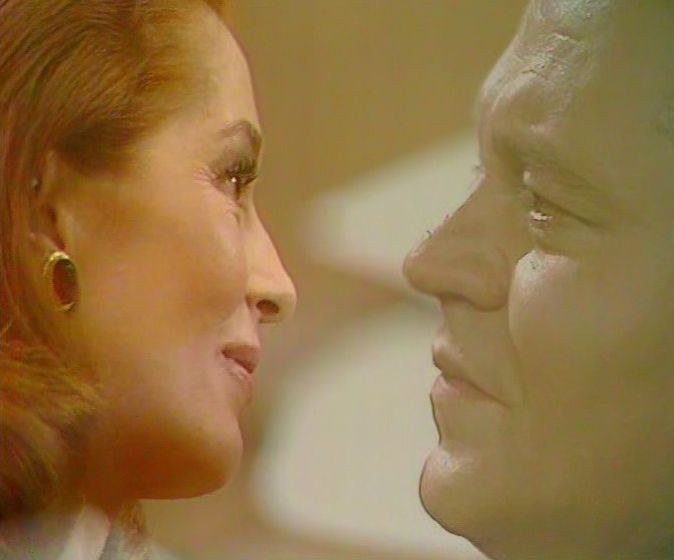
Crown Court  rarely went in for camera tricks or flourishes, but there is a split screen used here (Mrs Savage on the left, Leiberman on the right) which works rather well.

She’s a convincing witness, cool under pressure, although whether she’s telling the truth is another matter. Jonathan Fry does his best to paint her as an unscrupulous gold digger though.

Mmm, both parties are exchanging lingering looks. I’ve a feeling that a reconciliation might be on the cards (depending on the verdict of course).

cc04

Crown Court – Lieberman v Savage (Part One – 18th October 1972)

cc01

Crown Court had plenty of humdrum cases (which nevertheless were often fascinating) but they also liked to chuck in a bit of spice from time to time. Lieberman v Savage certainly falls into the latter category …

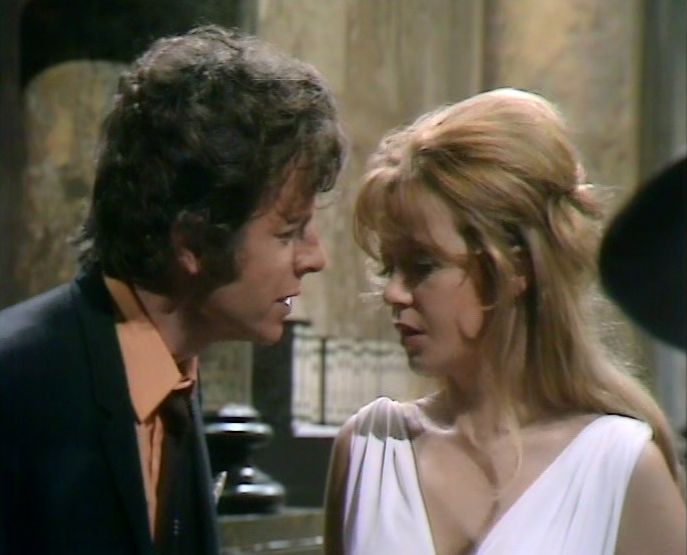
Emmanuel Lieberman (Wolfe Morris) is attempting to evict his former fiance Delia Savage (Barbara Shelley) from his luxury London penthouse apartment. His ardour for Mrs Savage was somewhat dampened when he returned home to find his son, Mark (Trevor Adams), naked in the flat with her. Crumbs.

Given how good David Neal was as Jonathan Fry in the unscreened pilot, it’s very surprising that he never came back to the series. Instead, Bernard Gallagher took over the role of Fry (remaining with the series until 1984).

Charles Keating and John Alkin return as James Elliot and Barry Deeley whilst Helen Vernon debuts as Dorothy Tate. Richard Warner sits in judgement as Mr Justice Waddington.

Distant Hills is present and correct for the first time and we also see the debut of the jury – twelve bewildered souls plucked off the streets of Fulchester. Or in reality, eleven members of the public and one actor (since the foreman was a speaking part, an Equity member was required).

That each case would actually be judged helps to give the series an extra level. Although as time goes on, I’m sure I’ll be scratching my head at some of the bizarre verdicts handed out …

£200,000 for a luxury penthouse flat in London? Cheap at the price.

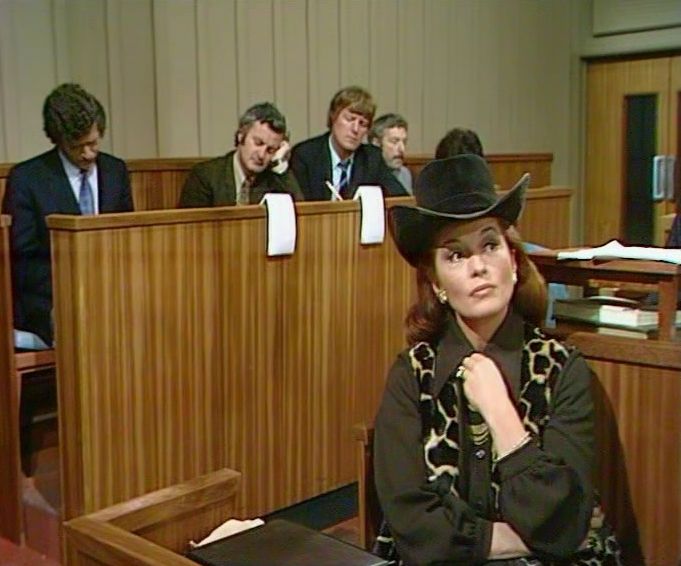
Jonathan Fry begins the case by waving a great many documents around. This is a little low on excitement but things soon pick up as he outlines the relationship between his client (Lieberman) and Delia Savage. Whilst Fry is opening the case, the camera lingers on Mrs Savage. She has a very nice hat.

And into the witness box goes Emmanuel Lieberman (Wolfe Morris). As he begins to give his evidence, his son saunters into the court. With his dark glasses and general slouching air, Mark is so hip and happening it hurts.

We quickly get to the nitty gritty – Lieberman returning home unexpectedly to find his son (stark naked!) emerging from his fiance’s bedroom. There’s a definite ‘oooooo’ reverberating around the courtroom at this point.

The flaw in Lieberman’s case is pretty obvious. As soon as he clapped eyes on his naked son he stormed out without demanding an explanation. If Mark had been innocently spending the night there (sleeping on the couch say) and then wanted to use the bathroom, he’d need to pass through the bedroom first to get to it. Mind you, having only one bedroom and one bathroom in a luxury penthouse seems like something of a design flaw.

cc02

Crown Court – Doctor’s Neglect? (Part Three)

Dr Warner’s still in the witness box and still wilting under a barrage of volleys from Jonathan Fry QC. James Elliot attempts to repair the damage – Mr Simpson’s own impatience to leave the hospital (in order to keep an appointment) is something which helps to strengthen the defence’s case.

We then pop outside for a brief heart to heart with Dr Warner and Nurse Dowling in a scene which helps to humanise them both. I can see why moments like these were swiftly dropped (although they returned much later) as it’s better that the viewers at home receive no more information than those in the courtroom.

The last witness is Mr Frost (George Waring), representing the hospital’s management. An interesting subtext running throughout this story is the suggestion that Mr Simpson was failed by systematic shortcomings (both medical and financial) at the hospital.

These days it’s difficult to imagine a hospital drama not tackling the topic of funding but I’d assume it wasn’t so dominant back in the seventies (certainly not in the episodes of, say, Angels I’ve seen anyway).

With Fry having nipped out of court for twenty minutrs, Frost’s cross-examination is left in the hands of Derek Jones (David Ashford). As Charles Lotterby, Ashford would become one of Crown Court‘s most familiar barristers but poor old Derek Jones is somewhat more hapless. Frost is able to angrily rebuff Jones’ allegations, leaving Jones looking rather small and humbled.

The Verdict

I won’t reveal the verdicts on each case, instead I’ll simply comment whether I agree or disagree with the finding. Today I disagree, although there were well balanced arguments on both sides so it was a tricky one.

Crown Court – Doctor’s Neglect? (Part Two)

We saw his long face in the first episode, but now Dr Warner (Jeremy Bulloch) takes to the witness stand. He comes across as reasonably convincing but there’s also an air of unease about him. This feeling is exacerbated when Nurse Dowling (Jacqueline Stanbury) is then cross-examined.

Jacqueline Stanbury would later be a short-lived regular on Dixon of Dock Green (only one of her episodes – Sounds – now exists). Bulloch’s credits are too numerous to list but they include Doctor Who, James Bond, Star Wars and Robin of Sherwood.

Interesting that Jonathan Fry gave Dr Warner a fairly easy ride before opening both barrels on Nurse Dowling. It was the right course of action though as she quickly folds like a pack of cards and admits that Warner could be rather hot-headed and impulsive at times.

The defence is now rocking, but did Simpson overhear Warner’s angry comment that he should discharge himself and go to another hospital if he wanted better treatment? That becomes a key question.

So Warner goes back into the witness box. There’s something deeply ominous about the way Fry slowly circles around Warner before unleashing his assault. Fair to say that the defence aren’t doing very well for witnesses so far.

Crown Court – Doctor’s Neglect? (Part One)

This first Crown Court serial feels somewhat different to what would come later. For one thing, the familiar theme music (Distant Hills) is noticeably absent.

There’s also a fair amount of whispered chat in the courtroom as Mr Frost (George Waring) has a good old natter to Barry Deeley (John Atkin). He helpfully explains to Frost (and the viewers) various bits of procedure. This was dropped from the series as presumably it was felt the audience would be able to understand how the court functions without these prompts.

Mr Simpson, one of Fulchester’s leading chartered accountants, died after walking out of hospital (he had previously been involved in a car accident). His widow (played by Petra Davies) is suing the hospital for damages.

Mrs Simpson is the very model of middle class respectability and it’s easy to see that Mr Justice Waddingham (Ernest Hare) is rather taken with her. After James Elliot QC (Charles Keating) asks her a somewhat awkward question she appeals to Waddingham and the question isn’t pressed. This seems a little off.

Mrs Simpson comes across as a perfect witness. A little too perfect for me ….

The hawk-like Jonathan Fry QC (David Neal) is representing Mrs Simpson in her quest for damages and next calls an expert witness – Dr Sissons (Basil Dignam). Dignam would return to Crown Court – albeit as the top dog (he’d later play Mr Justice Poynter).

Another unusual aspect of this first serial is the way the action moves outside the courtroom every so often. This wouldn’t happen again in the early stories as they were firmly (and claustrophobically) courtroom bound.

Wogan’s Guide to the BBC (1982)

wogan

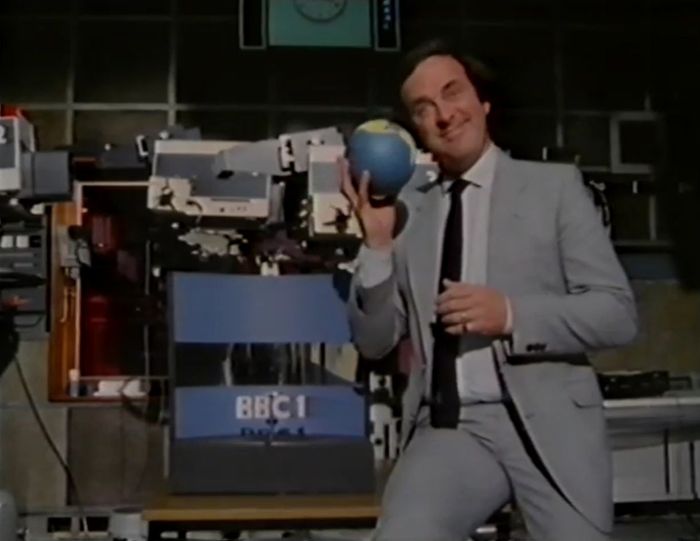
Wogan’s Guide to the BBC is an entertainingly eclectic and idiosyncratic snapshot of the BBC circa 1982. Although Tel doorsteps some of the great and good – including James Burke, Frank Muir and Russell Harty – at the start of the programme (in order to winkle out some quick soundbites about what the BBC means to them) overall it’s a pleasingly unstarry sort of programme.

The two television drama productions covered – The Cleopatras and Beau Geste  – tend to concentrate on the production staff and extras rather than the stars (hard to imagine that sort of focus occurring today). It’s also noticeable that pretty much the same amount of time is devoted to both the BBC’s radio and television output.

For anyone who loves a dollop of Wogan whimsy, this is well worth your time.

Adam Adamant Lives! – To Set A Deadly Fashion

fashion 01

Adam pops along to an Embassy ball and falls into conversation with Oretta (Nancy Nevinson), the wife of the Italian Vice Consul. And after she falls dead into his arms, he instantly turns detective ….

There’s no mystery about Oretta’s death as her conversation with Adam is intercut with shots of two eavesdroppers (Howarth and Watkins) who are able to hear every word that’s spoken. She’s wearing a bugged dress then, that’s different. And not only is it bugged, when it’s decided that Oretta has said too much they’re able to kill her by remote control.

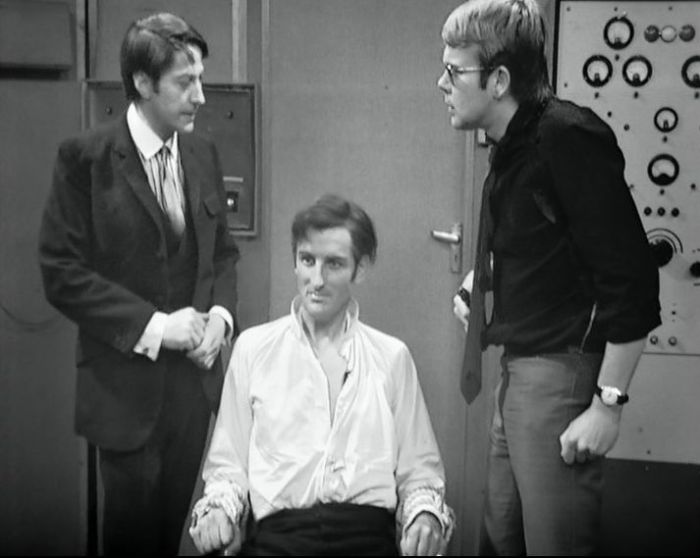
The dress has been designed by Roger Clair (Colin Jeavons), a fashion designer who has plenty of connections in high society. Where do you start with Jeavons’ performance? Calling it camp just doesn’t do it justice – Jeavons is clearly enjoying himself tremendously, periodically winding himself up into explosive paroxysms of petulance.

Howarth (Alister Williamson) is his stolid number two. A much less showy turn, but then there’s only room in the story for one Jeavons-sized character.  Given how prima-donnish Clair is, it’s difficult to credit that he’s responsible for creating such an intricate espionage network – but it seem to be so.

Tony Williamson’s script also seems a little unclear in other places too. We’re told that a number of other society matrons have died in a similar way to Oretta (all apparently from heart attacks) but Clair was deeply upset when Howarth decided to terminate Oretta (Howarth was worried that Adam was getting too close to discovering their operation). So why did the others die? Oh well, possibly you’re not supposed to dig too deeply into the specifics of the story.

Adam toddles along to Clair’s latest fashion show, but is appalled when the models – dressed in bathing costumes – begin to parade themselves. Poor Adam, given a front-row seat, can’t bring himself to look whilst Georgina (it won’t shock you to discover) has signed on as Clair’s latest model.

This turns out to be a godsend for Clair as he’s able to pop the unsuspecting Georgina into a bugged dress. There’s a lovely spot of dialogue from Clair as he first recoils at the notion of Adam living in a car park, before approving of the notion of his flat (“what a ducky idea”).

Another episode highlight occurs when Adam, safely back with Georgina at his flat, suddenly twigs that her dress might be dangerous. He writes her a note (“take off your dress”) only for her to counter with a note of her own (“get lost”). Given she’s been panting over him since the start of the series, I’d have thought she’d have been quite keen to get undressed for him ….

Towards the end of the episode Adam has the chance to indulge in his usual spot of fisticuffs before facing the possibility of a grisly death at the hands of Clair’s wicked invention. Fear not though, the ever resourceful Adam can take just about anything that’s thrown at him and then throw it back with maximum vengeance.

Another solid episode, this one benefits enormously from the performance of Colin Jeavons.

fashion 02


Adam Adamant Lives! – The Terribly Happy Embalmers

happy 01

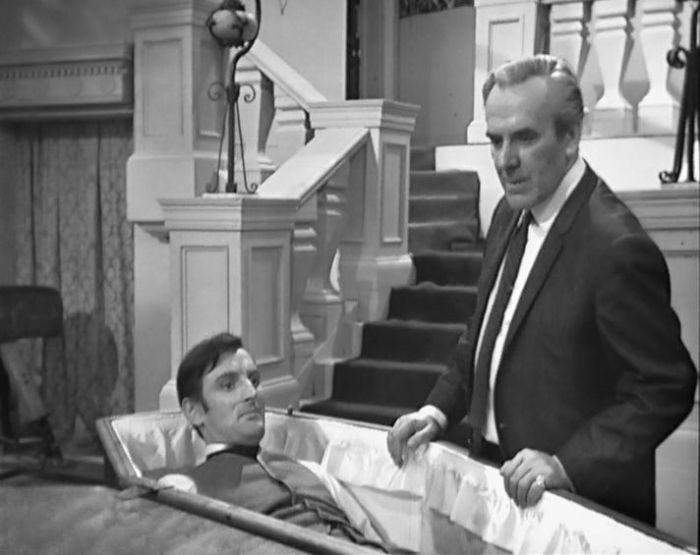
The opening of this episode is AAL! at its most Avengerish (not really surprising of course since Brian Clemens wrote the script). Sir John Marston (John Scott) bids his friends and colleagues a cheerful goodbye before stepping into a comfortable coffin – immediately afterwards he is pronounced dead by Wilson (Jeremy Young).

The coffin is delivered to an undertakers run by Mr Percy (Arthur Brough – glass of water for Mr Grainger please) and is opened to reveal a happy Marston, declaring that it’s good to be alive again. Unfortunately Mr Percy then shoots him dead ….

Now that’s how you write a teaser!

Clemens’ script sparkles throughout. Mind you, it doesn’t hurt that it boasts fine performances from some experienced players. Such as Deryck Guyler as Grantham, the snuff-taking Man from the Ministry who calls in Adamant to solve the mystery of why a number of financiers (including Marston) died immediately before they were due to face charges of tax evasion.

The common link is a psychiatrist called Velmer (John Le Mesurier). His profession serves as a cue for Adam and Georgina to discuss the merits of psychiatry in another comic scene. Georgina’s abuse of Adam’s priceless tea service also raises a smile.

The presence of John Le Mesurier is another major plus point in the episode’s favour. Although for a bright man, Velmer seems to be a little dense (even after learning about Adam’s past life, he doesn’t twig that his subject is actually the celebrated Adam Adamant). This is even odder when it’s later revealed that Velmer knows all about Adam.

Hamilton Dyce, as Mr Percy’s second in command, and Ilona Rogers (Susan) help to fill out the cast.  I have to admit that she looks rather fine in her nurses uniform (which seems to have been designed to maximise her cleavage).

Velmer has sent Adam to a very strange nursing home where Susan is on hand to attend to his every need – although the buttoned up Adam draws the line at being undressed by her! The early dialogue exchanges between Harper and Rogers are a gift for both for them.

It’s nice to see Harper given some good material to get his teeth into – unlike some of the previous episodes Adam isn’t just portrayed as an uptight innocent, he seems to be a more rounded character today (quick witted and easy able to feign madness – Velmer is convinced that Adam’s Edwardian remembrances are simply delusions and Adam is happy to string him along).

Georgina has been sidelined for most of this episode – stuck in the flat with Simms who’s been entertaining her by reciting several of his hair-raising limericks – but eventually she pushes herself into the story by skulking around the offices of the health club. She encounters a strange-looking man rising from a coffin in a shock moment that seems designed to lead into an ad break (before you remember this was a BBC show).

Georgina and Susan later have a brief catfight which is the cue for Georgina to steal her clothes and for Susan to emerge a moment later in a state of undress. The conclusion – with the undertakers perishing in a barrage of friendly fire and Adam and Wilson fencing to the death – is a bit of a cracker.

The Very Happy Embalmers has a rather thin story but since it’s assembled and performed so well I’m not complaining. After a few false starts, this episode pointed a possible way ahead for the series, albeit as an Avengers clone.  If AAL! was going to have a long term future then it would need to find its own voice, but for now this episode is simply content to be nothing less than first rate entertainment.

happy 02

Adam Adamant Lives! – Allah Is Not Always With You

al1

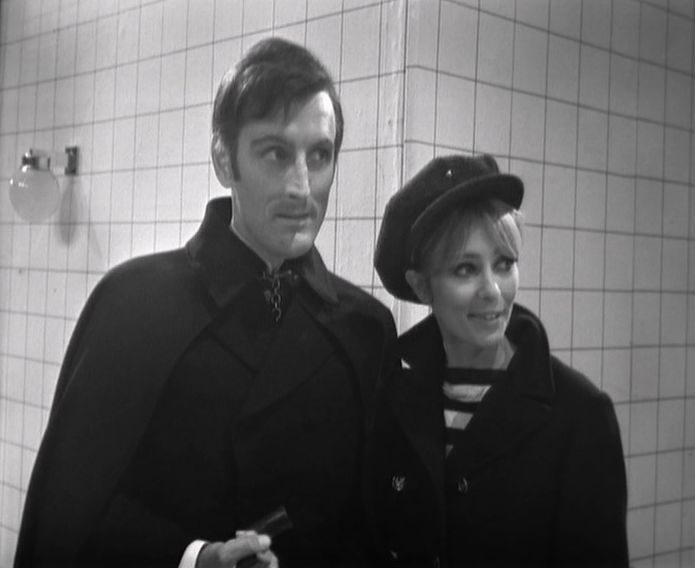
Allah Is Not Always With You opens in eyebrow raising fashion –  an attractive young woman called Linda (Miranda Hampton) is tied to a bed and offered the prospect of torture unless she does as she’s instructed. Golly. The attentive viewer will probably notice that she’s dressed in fishnets and a fluffy upper costume, which raises the kink factor an extra notch.

You have to say though that maybe the baddies’ hearts weren’t in it, as once Linda is left alone she unties herself with embarrassing ease and manages to dodge past the tough guarding the door.  If this is slightly hard to swallow, then more swallowing is required when (fleeing down a long corridor) she’s knifed in the back.  Had the distance between Linda and the knife thrower not been so great then possibly this wouldn’t have come across as such a superhuman feat.

Mortally wounded though she is, Linda still manages to pop on a coat (sorry, I’ll try and stop nitpicking soon) and takes a cab (driven by George Tovey, who always did a very nice line in cabbies) to Adam’s flat.  Her arrival in Adam’s sitting room (her barely conscious form carried over the threshold by Simms) is an amusing moment. It’s also significant, as this caused the original Simms (played by John Dawson) a great deal of trouble – sent off to hospital with a bad back, Dawson was quickly replaced by Jack May.

Everything seems to centre on The Fluffy Club which is a joint where the hostesses are dressed in a fluffy fashion (nothing to do with the Playboy Club, honest). It’s the sort of decadent gambling den you know Adam will find totally abhorrent, even if by today’s standards it looks amusingly tame.  And if it’s somewhat predictable that Adam’s ended up in such a place, then it’s even more predictable that Georgina – having ignored Adam’s order not to get involved – has enrolled at the club as a Fluffy Girl in order to be his inside woman.

She has all the attributes to be a Fluffy Girl, her legs seem to go on forever ….

Kevin Brennan oozes melodramatic menace as Vargos, the club owner who intends to ensnare Ahmed (David Spenser), a wealthy Middle Eastern playboy. Whilst Ahmed heads off to be fleeced in the big card game, Adam is lurking about the corridors. At this point it’s hard to see how he’ll fit into the narrative (he can hardly gatecrash the game) but luckily there’s another damsel in distress close at hand and a few toughs for Adam to duff up.

Adam’s new damsel, Helen (Jennifer Jayne), is – of course – an associate of Vargos (poor Adam always seems to hone straight in on the bad women). So clever, but oh so vulnerable. She manages to snatch a quick kiss with him and he doesn’t pull away. Perhaps Adam is slowly moving into the sixties …..

Fictitious Middle Eastern states were an ever-present staple of sixties adventure series and today’s example is a fairly common one. Ahmed is the headstrong young heir to the Sheikdom who’s been assimilated into – or corrupted by – Western culture whereas his father is much more of a traditionalist.  The Sheik is played by a browned-up John Woodnutt, which is the sort of casting that may look a little odd today but was perfectly common back then.

It’s interesting that whilst Adam finds himself sidetracked by Helen, Georgina is the one who’s doing all the hard graft – taking Ahmed out for a bun in order to find out what Vargos is up to. And once she’s got the info, Georgina scooters off to Adam’s pad to share the news – almost running into Helen who’s just been enjoying an intimate tête-à-tête with Mr Adamant. Frosty stares are exchanged between the two females.

Eventually Georgina is able to persuade Adam that the Sheik’s life may be in danger (in London for a routine operation, if he dies then Vargos will be able to pull Ahmed’s strings and rule by proxy).

Allah Is Not Always With You chugs along quite nicely with all the familiar story beats of the series – easily duped Adam, plucky Georgina, fisticuffs ahoy – firmly in place. It never quite kicks into top gear though since Vargos is too nebulous a villain whilst Ahmed is also quite sketchily portrayed (given this, it’s hard to feel any particular sympathy for him).

The identical pleasures – a horrified Adam meeting the sedate fleshpots of the Fluffy Club, say – are the moments which really stand out. Not bad then, but hopefully more substantial fare will be just round the corner.
al2

Armchair Theatre – Office Party (17th August 1971)
at01

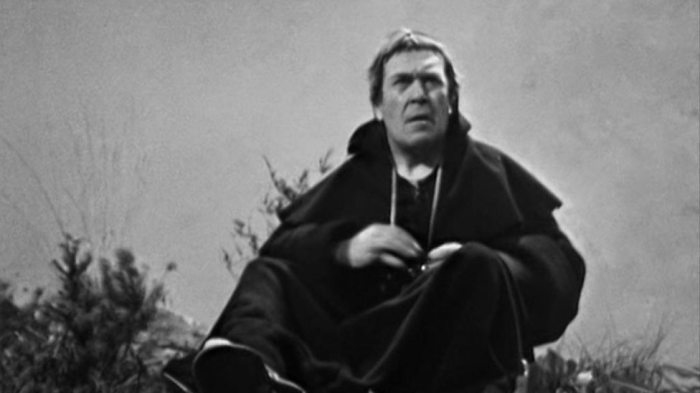
Fay Weldon’s Office Party might not be the sharpest ever AT, but it’s still of interest – partly since it’s a good example of the studio-bound ITV play (something which would gradually disappear from the schedules) but also because Weldon’s script offers up plenty of food for thought regarding gender politics (even if the problems she creates are resolved rather neatly by the end).

The setting is a bank, after hours, where the staff have convened to wish their manager (played by George A. Cooper) a fond-ish farewell.  Cooper plays to type as a plain-speaking man who is well aware that he’s not particularly loved (or even well liked) but still condones the party. Perhaps he likes receiving presents.

Also slotting into a familiar role is Peter Barkworth as his number two, Dickie. Barkworth seemed to spend most of his career playing buttoned-down types who had a distinct code of old fashioned honour.  At first, Dickie seems to regard his secretary, Julia (Angharad Rees), with nothing but contempt, but by the end of the play he’s mellowed considerably.

Rees exudes an undeniable sexiness – especially when she arrives at the party wearing a somewhat revealing dress. This inflames the passions of some of her colleagues (Giles Block and Peter Denyer both give good turns in this respect).  Roy (Block) seems somewhat put out when he tells Julia that he’s placed her top of his list of most desirable office females (she fails to respond in the manner he expects).

If Rees is vulnerable at times then Ray Brooks is rather boorish as Dave (Julia’s boyfriend). He exhibits little loyalty towards her, even after learning that she’s pregnant, and seems much more interested in squiring another young lady round the party and telling Roy all about his liaisons with Julia in the stationery cupboard. Dave is an alpha male – friendship with his male buddies comes first, a relationship with his girlfriend is a distant second.

The clash between Julia and Dave midway through is clearly one of the play’s key points. At this stage it looks as if any sort of relationship between them will be impossible (marriage is certainly out of the question). There’s a happy ending though as the pair reconcile in the last minutes which means that everything seems to be settled. Although given that both have rather volatile natures, possibly we’re invited to not expect them to live happily ever after ….

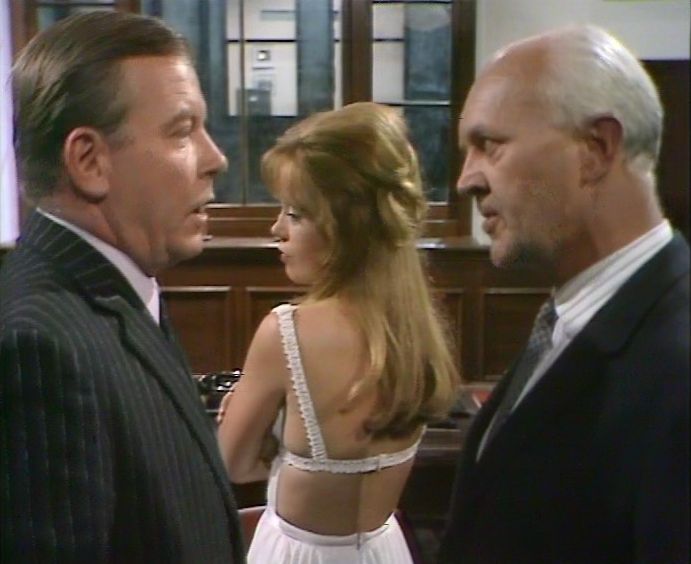
Elsewhere, I did enjoy the confrontation between Barkworth and Cooper late on. Julia is, once again, the topic of conversation, with the outgoing manager insistent that she be sacked whilst Dickie shows a more compassionate side to his nature by standing by her.

That Dickie, when learning of Julia’s pregnancy, offers her a chair feels exactly like the sort of thing you’d expect a character played by Barkworth to do. Julia remains passive as the men debate her fate (at one point turning her bare back on them) but she does eventually speak up.

Office Party has some good comic moments, along with a first rate cast to play them, and overall it still stands up well. As I’ve said, it maybe doesn’t entirely satisfy, but there are far worse ways to spend fifty minutes.

at02

Doctor Who – Galaxy 4. Part Four – The Exploding Planet

After the Doctor and Vicki rescue Steven from the airlock, they leave him to have a chat with the Rill (still voiced in a deep and booming fashion by Robert Cartland).  This is one of the more interesting scenes in this final episode.  Earlier, both Vicki and the Doctor were happy to accept the Rill’s bona fides at face value, but Steven’s a much more cynical sort.

STEVEN: So the Doctor trusts you?
RILL: Why shouldn’t he?
STEVEN: No reason. I suppose you gave right ethical reasons for him, so naturally he does trust you.
RILL: We rescued you from the Drahvins, but you still don’t trust us?
STEVEN: Oh, you could be the same as them – using us for your own salvation.

Steven eventually accepts that the Rills are operating in good faith, but this scene demonstrates Steven’s independence.   Peter Purves’ dislike for the story is well known (he believed his part had originally been written for Barbara and then was hastily rewritten) but little moments like this are good ones for the character.

In the end, the moral of the story is helpfully spelled out after the Doctor, Steven and Vicki have a face-to-face meeting with the Rill.  Even the Doctor is slightly taken aback by his appearance, but after his initial surprise he treats him with equanimity.

Vicki and Steven are equally accepting.  Vicki says that “I mean, after all, we must look just as strange to you” whilst Steven tells the Rill that “what difference does it make what your form is?”  The Doctor is able to cap these noble sentiments off when he grandly proclaims that “importance lies in the character and to what use you put this intelligence. We respect you as we respect all life.”

It’s Maaga’s inability to see past the Rills’ startling experience which seals her fate and that of her soldiers.  The Rills would have been happy to take the Drahvins with them once the Doctor had repaired their ship, but this was never a possibility for Maaga.  For her there was only one answer – kill the Rills and take their ship by force.

But her attempt to launch an attack comes to nothing and she’s forced to watch as the Rills’ spaceship takes off without them.   That we’re denied a pitched Drahvin/Chumbly battle for control of the Rills spaceship feels like a missed opportunity, as is the fact that the Doctor and his friends are able to reach the TARDIS without being stopped by Maaga.

I wonder if some of the other Doctors would have decided to rescue Maaga and the others?  Not Billy though, he’s more than happy to nip off and leave them to their fate.  In the world of the first Doctor it’s plain that the Drahvins had their chance to demonstrate that – like the Rills – they could show compassion for others.  They didn’t, so the Doctor leaves them to face certain death.

With only one extant episode it’s hard to really know how effective the story was.  The Loose Cannon recon certainly makes an heroic effort to provide some visual moments for the other three episodes, but even if the whole story existed I doubt it would be regarded as anything more than a fairly middling story.

The rather simplistic message at the heart of the story (ugly doesn’t have to mean evil) had been covered more fruitfully before – even in the sedate form of The Sensorites.

Doctor Who – Galaxy 4. Part Three – Airlock


Galaxy 4 has never been regarded as one of Doctor Who‘s great tales, something which was made plain when Air Lock was recovered.  The news was met with polite interest, but there was an undeniable feeling that many were wishing something from a “classic” story (like Power of the Daleks) had been found instead.

Hopefully some minds were changed after the episode was released on DVD, as the return of any missing DW episode (even from an obscure and unloved story like this one) should be celebrated.  It’s wonderful to have the audios and recons, but they can only tell half the story – the previously unknown visual moments from Air Lock were a real revelation for me.

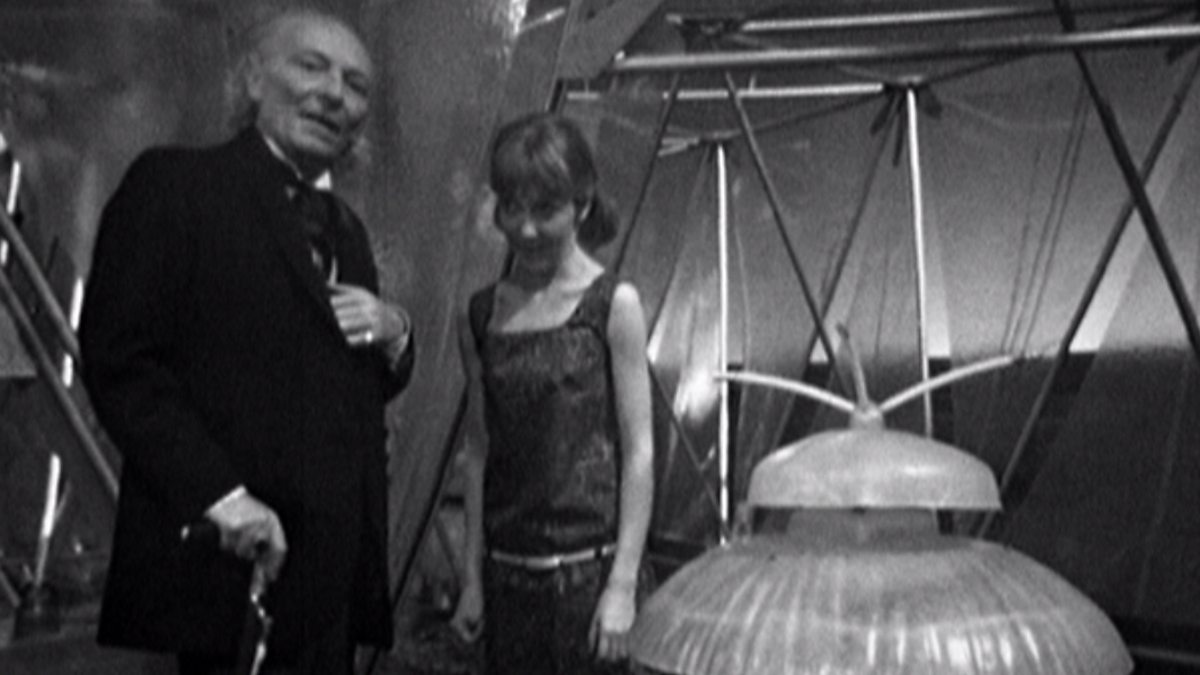
For example, we finally got to see a Rill in all its glory.  One of the series’ more mysterious monsters (for a long time even photographic evidence was sparse) it’s fair to say that the visuals didn’t do it many favours.

It does rather look like a piece of cardboard slowly moving behind a screen (so this was one of those occasions where the static image was preferable).  The voice acting from Robert Carland was powerful though – he certainly put everything he could into the role.

But if the visual representation of the Rill was a little disappointing, then the joy of watching Hartnell in full flow more than made up for it.  I love Hartnell’s Doctor (I may have mentioned this a few times before) and he’s in cracking form in this episode.

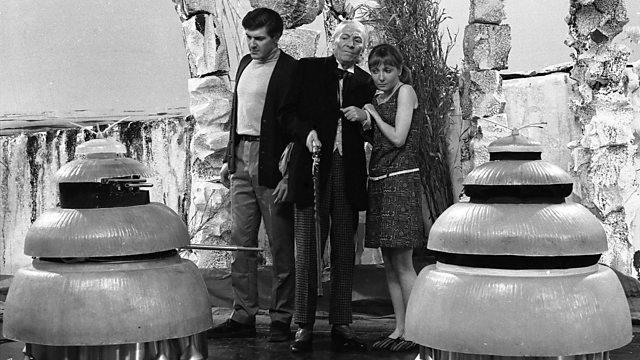
One of my favourite moments (another of those visual touches that we hadn’t previously known about) occurs when the Doctor orders the Chumblies about.  Lovely stuff!  The scene when he tangles with a Drahvin, using his stick as a weapon (and calling her madam!) is another little gem.

This was Derek Martinus’ directorial debut on the series.  He wasn’t the first, and certainly wouldn’t be the last, to find Hartnell rather difficult, but whilst Martinus may have been inexperienced he was still able to produce some interesting moments.

Most notable is Maaga’s monologue which Stephanie Bidmead delivers direct to camera. The flashback scene showing the moment when the Drahvins and Rills both crashed on the planet was another impressive visual touch – shot from the Rill’s POV.

The Doctor’s in a very reckless mood. He decides to sabotage the Rill’s machine which produces ammonia for them. Let’s give him the benefit of the doubt and say that he didn’t realise it was vital to their survival. At least he has the good grace to look a little bashful afterwards!

Peter Purves doesn’t have a great deal to do today.  Trapped in the air lock for most of the episode, he might as well have sat this one out.  This passive role no doubt helps to reinforce his belief that Galaxy 4 was a story that did Steven few favours, but had one of the earlier episodes been recovered then it’s possible that he may have looked a little more kindly on the story (as Steven certainly has a more active role in the first two episodes).

Doctor Who – Galaxy Four. Part Two – Trap of Steel

Maaga has allowed the Doctor and Steven to leave the Drahvin ship in order to establish whether the planet really will be destroyed in fourteen dawns.  The audience is several steps ahead though – we know that this estimate is wildly optimistic (the planet will actually expire in another two dawns).

Vicki’s been left behind as a hostage, but luckily she doesn’t have to bear Maaga’s company for too long as the others return with news.  The Doctor decides to be economical with the truth to begin with and tells Maaga that the Rill’s estimate of fourteen dawns was correct.  The only problem is that Maaga then reveals that the repairs to the Rill’s spaceship will also take fourteen dawns.

Maaga once again repeats what almost seems to be a mantra – the Rills are evil and must be destroyed.  The possibility of working together to leave the planet never seems to enter her head.

But it’s interesting that despite the fact she seems to loathe the Rills, she’s also picked up a certain amount of information from them – the notion that the planet’s lifespan is limited to fourteen dawns and the time needed to repair their ship, for example.  If they’re such implacable enemies it’s a little odd that they’ve been so free with vital information like this.

Maaga is able to winkle out from the Doctor the fact that two dawns is all the time the planet has left to enjoy.  So the Doctor and Vicki (with Steven this time left behind as the Drahvin’s hostage) set out to meet the Rills to see if they can speed up the repairs 

This is not before time – after all, we learnt early in episode one about them and there’s a strong sense that the story can’t advance until we hear their side of things.  But the Doctor, and the story, isn’t inclined to rush so we’ll have to wait until the next episode before the Doctor and Vicki come (sort of) face to face with a Rill.

Whilst the Doctor and Vicki are slowly making their way to the Rill’s spaceship, Steven is attempting to sow discord aboard the Drahvin’s ship.  He’s able to easily manipulate one of Maaga’s footsoldiers, but it doesn’t gain him much of an advantage.

Galaxy 4 has long been one of Peter Purves’ least favourite stories, mainly because he believed it was written for Ian and Barbara (and Barbara’s role was then hastily rewritten for him).  There’s not a great deal of evidence for that in this episode though.  Steven has several very decent scenes – especially when he confronts Maaga – and whilst it’s possible that Barbara could have been as strong, everything we see here is totally consistent with Steven’s already established character.

Little of note happens in Trap of Steel.  Events are moving, but we’ll have to wait until the next episode to see how they pay off.  Since episode three now exists that’s not entirely a bad thing, but it does mean that Trap of Steel is rather forgettable in its own right.

Doctor Who – Galaxy Four. Part One – Four Hundred Dawns

four

Galaxy 4 opens with a scene of domestic life aboard the TARDIS – Vicki is cutting Steven’s hair. Does she also trim the Doctor’s I wonder? But musings about the barbering requirements aboard the ship are (ahem) cut short when they land on what appears to be a completely deserted planet.

The Doctor is convinced there’s no life out there. Ooops. Just a minute later a strange robot is observed slowing moving around the TARDIS. Later Doctors tended to verge on the omnipotent, but this moment is a reminder that the original Doctor didn’t have all the answers (and also had the good grace to admit when he was wrong).

Vicki’s delighted with the small robot, nicknaming it a Chumbley, because it has a sort of chumbley movement. No, me neither. But it’s as good a name as any and it’s helpful to have the device named since it instantly imbues it with more of a personality.

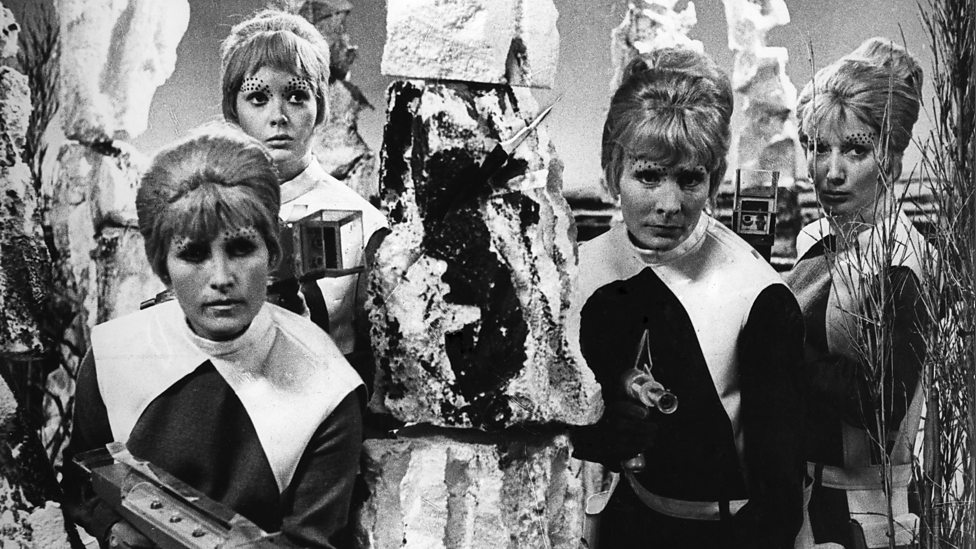
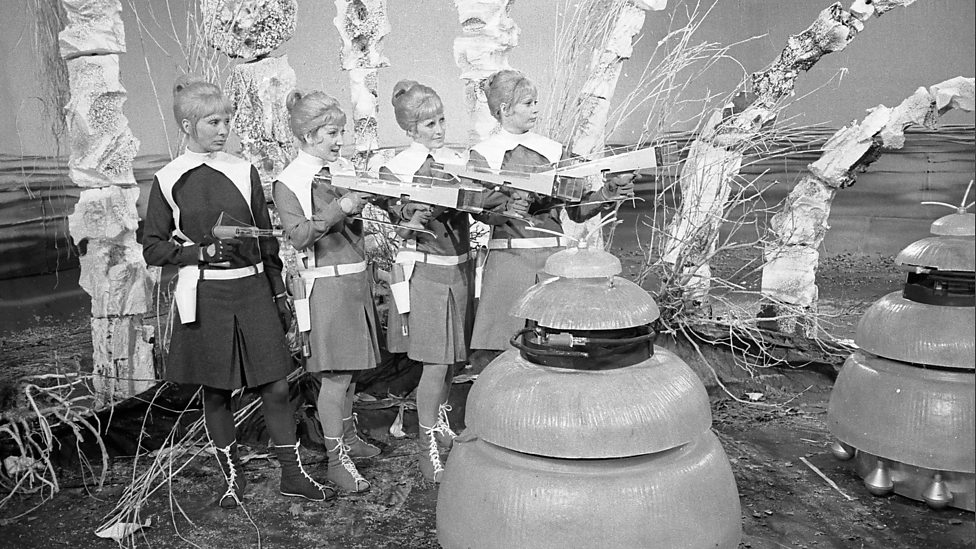
So far we’re about eight minutes in and the story has proceeded in a leisurely fashion. Things start to pick up when two blonde women throw a net over the hapless Chumbley. Steven’s all over them in a rash. “Aren’t they a lovely surprise” he coos and when they introduce themselves as Drahvins he responds “and very nice too.” A smooth talker, that boy.

This early scene helps to establish that there are two factions on the planet – the Drahvins and the Rills (who control the Chumblies). The Drahvins view the Rills with extreme loathing. “They are not people. They are things. They crawl. They murder.”

I wonder if the story was asking the audience to assume that the Rills were evil and the Drahvins good? But since the script makes it plain that both the Doctor and Vicki view the Drahvins, even after this initial meeting, with suspicion that doesn’t seem to be so. They might be superficially attractive but there’s an unsettling coldness to them.

This does sap the suspense somewhat – it may have been more interesting for the Drahvins to be presented as welcoming and friendly, with their true natures only slowly revealed. Of course, another avenue to explore would have been if both sides were as evil and warlike as each other – meaning that the Doctor and his friends were caught in the middle with no potential allies.

Until the recovery of episode three, Airlock, the only surviving visual material had been a five minute excerpt from this episode. After the static nature of the recon, it’s nice to have moving pictures again (albeit briefly) as the Doctor and the others meet the leader of the Drahvins, Maaga (Stephanie Bidmead). She rules her subordinates with fear, but is cordial with the Doctor, no doubt because she believes he could be of some use to her in the war with the Rills.

Maaga chats a little about her home planet, which adheres to various SF clichés. “Oh, we have a small number of men, as many as we need. The rest we kill. They consume valuable food and fulfill no particular function.” Most of the Drahvins are clones – only Maaga is a real person, the rest are bred to fight and die (which handily explains their wooden delivery and lack of spark).

With the planet due to explode in fourteen dawns time, Maaga has a problem. Their ship is damaged, so she has to find some way to force the Rills to take them (or destroy the Rills and commander their ship). If the episode has proceeded in a rather leisurely fashion so far, then the revelation that the planet will actually explode in two dawns does add a little urgency to proceedings ……

Doctor Who – The Time Meddler. Part Four – Checkmate

It’s not too much of a stretch to see the Monk as an inversion of the Doctor.  Wheras the Doctor has had a strong aversion to changing history (although only it seems to apply to the Earth prior to the 1960’s) the Monk is quite the opposite.

He explains his brilliant plan to the Doctor. “Well, for instance, Harold, King Harold, I know he’d be a good king. There wouldn’t be all those wars in Europe, those claims over France went on for years and years. With peace the people’d be able to better themselves. With a few hints and tips from me they’d be able to have jet airliners by 1320! Shakespeare’d be able to put Hamlet on television.”

No surprise that the Doctor is appalled, although one of the problems with stories which address the possibility of changing history is that they pose more questions than they answer.

Doctor Who’s first script editor David Whitaker was quite clear on this point – the Doctor couldn’t change history.  Not wouldn’t, couldn’t.  Several less than convincing reasons were provided to explain this. For example, if they’d attempted to assassinate a key figure like Napoleon then the bullet would have been bound to miss him.

Quite how this would happen is never made clear, unless we assume that that there’s some mysterious force in the universe which knows the “true” course of history and would automatically deal with any deviations.

This isn’t very satisfying and when Dennis Spooner took over from David Whitaker he quickly changed things around.  Now, the Doctor could change history but the question was more whether he should.  The Doctor voices his fear about the Monk’s meddling.  “He’s utterly irresponsible. He wants to destroy the whole pattern of world history.”

Is the Doctor concerned because the Monk’s plans will have a detrimental effect on Earth’s development or is it that he doesn’t want to see established history changed?  If everything the Monk predicted came to pass then it might actually be positive.  But how would anybody know?  As discussed by Vicki and Steven, as soon as a change is made it would become true history and they’d never have known any other.

VICKI: It looks as though that Monk’s going to get away with it after all.
STEVEN: Yes, but he can’t, can he? I don’t know much about history but I do know that William the Conqueror did win the Battle of Hastings.
VICKI: Up till now he did. If the Monk changes it, I suppose our memories will change as well.
STEVEN: What about the history books?
VICKI: That’s all right. They’re not written yet. They’ll just write and print the new version.
STEVEN: But that means that the exact minute, the exact second that he does it, every history book, every, well, the whole future of every year and time on Earth will change, just like that and nobody’ll know that it has?
VICKI: I suppose that’s what I’m trying to say.

Although the Doctor’s still keen to present himself as an observer and not a meddler like the Monk, every time he visits a planet he makes a material difference and therefore changes history. If he hadn’t appeared somewhere then events would have played out differently. How different this is from the Monk’s plans is hard to say. See, time travel is a tricky business …

The Doctor manages to defeat the Monk, although I’ve always found it slightly strange that he elects to strand him on Earth.  He may not have access to his TARDIS, but he still has his knowledge and a stockpile of anachronistic inventions.  Surely he could do some damage to history with these?

Ah well, probably best to think about it too deeply.  The Time Meddler is content to be nothing more than a comic romp, with the main entertainment to be found in the Doctor’s clashes with the Monk.  It’ll never top any favourites poll, but it’s a solid entertainment and brings the second series to a decent conclusion.

Doctor Who – The Time Meddler. Part Three – A Battle of Wits

At the start of this episode it’s clear that Vicki still has the upper hand over Steven.  She’s the one who deduces that the Doctor must have escaped from his cell via a secret passage (and she also manages to find it).

But the roles are reversed later after they return to the beach.  Vicki is appalled to find that the tide’s come in, as it surely must mean that the TARDIS has been washed out to sea.  Steven tries to comfort her by telling her that maybe the Doctor has moved it, but that only upsets her even more.  If the Doctor’s demateralised the TARDIS then he’d have no way of returning and they’ll be stranded in eleventh century Britain forever.

Although Vicki has developed a pleasingly independant streak over the last few stories, her sudden despair and defeatism does suggest that she’s not too far removed from the naive young girl we met in The Rescue.  It seems hard to credit that she’d really believe the Doctor would just leave them – but possibly this doubt can be put down to the lingering trauma of her life on Dido.

The Doctor’s still very much about though and he pays another visit to Edith.  As he takes his leave of her, there’s a nice shot as the camera moves from behind the actors and refocuses with Hartnell framed in a close-up and a puzzled looking Edith placed in the background.

Apart from Douglas Camfield’s undoubted skill with a film camera, he was also someone who pushed hard to achieve interesting picture compositions in the studio.  Due to the hectic nature of Doctor Who‘s production it wasn’t always possible, but scattered throughout his stories are numerous examples (the grouping of the Doctor, Jamie and Victoria at the start of The Web of Fear is a good one).

Given how unwieldy the cameras were in 1965 it obviously wasn’t an easy task to move it so quickly (you can detect a little wobble as it repositions) but I’m glad Camfield made the effort as it just adds a little something to the conclusion of the scene.

The nature of the Doctor’s relationship with the Monk is still a mystery (which is only answered, indirectly, at the end of the episode).  That the Monk knows his name when they meet again might suggest that they already know each other, but this could also be explained away by a conversation earlier in the story which we didn’t see.

It’s interesting that the Doctor gains the upper hand by using the old trick of pointing a stick into the Monk’s back and pretending that it’s a rifle.  If they were old acquaintances then you’d have assumed that the Monk would know that the Doctor wouldn’t pull the trigger.  Unless, of course, the young Doctor was a bloodthirsty sort who’s only recently mended his ways!

The Monk’s plan is becoming clearer though.  He wants to destroy the incoming Viking fleet and has a helpful checklist to aid his memory, which I love.  It starts with his landing in Northumberland and ends with him meeting King Harold (no doubt to receive the King’s grateful thanks).  Clearly the Monk was a little starstruck.

Two less than fearsome Vikings – Sven (David Anderson) & Ulf (Norman Hartley) are still lurking about.  They decide to hide in the monastery, which is a bad idea as the Doctor and the Monk are able, independently, to deal with them.  Both are attended to in the same way – the Doctor and the Monk bash them over their heads with what appears to be very thin strips of balsa wood.  Is this just a coincidence or is the script attempting to show that the two time-travelers are very much the same deep down?

Various clues – a wristwatch in the forest, the record player – have strongly suggested that the Monk isn’t of this time, but we have to wait until the end of the episode before Vicki and Steven make a stunning discovery – the Monk has a TARDIS.  This is something of a game-changer for the series as it’s the first step on the road to introducing the Time Lords.

Doctor Who – The Time Meddler. Part Two – The Meddling Monk

monk

During The Watcher, the monk was presented as something of a sinister figure, but the first minutes of The Meddling Monk portrays the character in quite a different light. We see him pottering about the monastery preparing breakfast (with the unspoken question ligering about how there could be a toaster and other modern appliances in England, 1066). He then toddles along to the Doctor’s cell and cheerily bids him good morning.

Although he’s obviously crowing that the Doctor’s still his prisoner, since he’s gone to the trouble of preparing him a hearty breakfast he can’t be all that bad. Such a pity that his efforts are wasted as the Doctor flings the food back into his face! Pre-recorded lines of dialogue from Hartnell help to create the illusion that the Doctor’s in the cell (whereas we won’t actually see him in person again until the following episode).

Butterworth’s a joy throughout this episode and indeed the rest of the story as well. Little bits of business – such as attempting to take some snuff on the windy mountaintop – might have been the sort of thing worked out in rehearsal, but it helps to fill what would otherwise be a quiet moment.

Butterworth interacts appealingly with the villagers as well as Vicki and Steven but he really shines when the monk and the Doctor clash later in the story . Hartnell and Butterworth spark off each other so well that it’s no surprise that the monk was brought back for a further appearance in season three.

Steven continues to act in a fairly aggressive manner. After they’re apprehended by the villagers he’s quick to react angrily, but the headman of the village, Wulnoth (Martin Miller), believes they’re are innocent travellers and is content to see them on their way.

He provides them with food and drink for their journey, which Steven – first grudgingly and then with more feeling – thanks him for. In parting, Wulnoth and Edith offer their ritual farewell – “god be with you”. Politeness dictates that both Vicki and Steven respond in kind. Vicki does so straightaway, but it’s another nice character beat that Steven hesitates for a few seconds before he gives the response as well.

A small raiding party of Vikings adds an element of danger to the story. They’re a rum looking lot though (beards and eye-patches ahoy). The leader orders his men to remain undetected, as their mission is to gather intelligence for a forthcoming substantial attack. However they don’t really achieve this …..

Two of them attack Edith and although it’s not explicitly stated, it’s plain that she’s been raped. That Vikings enjoyed a bit of rape and plunder is a historical fact, but it’s still a slight surprise to see it in this story (even if it’s done in an understated way).

Eldred (Peter Russell), a beardy, wide-eyed member of the village is convinced that Steven was responsible, but this potential plotline was never developed as Edith quickly confirms that it was the Vikings. Had this been a six-parter, then maybe we might have seen the angry villagers pursuing Steven and Vicki, but this potential plotline is nothing more than a throwaway moment here.

Indeed, the story continues to move at quite a pace – only a few moments after Wulnoth, Eldred and the others set off to look for the Vikings, they find them (and a brief battle ensues). With Eldred injured, Wulnoth takes him to the monastery, where the monk is forced to take him in. Vicki and Steven are also there and find the Doctor’s cell, but the Doctor’s no longer there …..

Doctor Who – The Time Meddler. Part One – The Watcher

The opening moments of The Time Meddler finds both the Doctor and Vicki in a reflective mood.  But this period of quiet (nicely played by both Hartnell and O’Brien) is rudely shattered by noises from within the TARDIS.  Vicki’s convinced that it’s a Dalek and the pair take up defensive postures.  Although had have been, I’m not sure that the Doctor’s coat and Vicki’s shoe would have been adequate weapons!

But of course it’s not, instead a rather disheveled Steven Taylor comes staggering through the door, still clutching his toy panda Hi-Fi.  Our last sighting of Steven came in the previous episode when he was grabbed by the fungoids (insert your own joke here).  So somehow, weak though he was, he was able to stagger into the TARDIS – but rather than remain in the console room, he ventured further inside and managed to remain undetected until after the Doctor had taken off.

It’s a slightly contrived way of reintroducing him, but nonetheless it’s quite effective – I’m sure a large portion of the audience would have assumed he was simply a one-episode character who we’d never see again.

Immediately after Steven makes his presence known, the TARDIS lands on a rocky beach next to the sea.  One the things that most impresses me most about this serial is how Douglas Camfield was able to use a number of simple, but very effective, tricks to create the feel of outdoors locations in this wholly studio-bound story.

The arrival of the TARDIS is a good example – there’s a few seconds of stock footage showing waves crashing on rocks, then a cut to a photographic slide of a rocky outcrop where the TARDIS materialises, followed by  a shot of the monk (Peter Butterworth) observing events from higher up.  Behind the monk, courtesy of back projection, clouds roll past.  The latter was a fairly common trick used at the time, but sometimes – if the backcloth was wrinkled – it didn’t convince.  Here it’s perfect and the illusion is very effective.

Whereas Vicki had little difficulty in her first story about believing that the TARDIS could travel anywhere in time and space, Steven is a lot harder to convince (he’s rather like Ian in this respect).   But whilst Vicki (and later Dodo) were designed to be little more than Susan clones, Steven is a little different from Ian.  Steven is initially presented as brash and arrogant and incurs the Doctor’s displeasure when he refers to him as Doc (something which always irritated the Doctor down the years).

The Doctor’s quickly separated from Vicki and Steven (and isn’t reunited with them until episode four).   This is partly designed to cover Hartnell’s absence from episode two, but it also allows Purves and O’Brien to immediately build a rapport.  Steven and Vicki work well together and there’s a few entertaining sparks in their relationship (something which never happened with the much more settled combination of Ian, Barbara and Vicki).

Meanwhile the Doctor’s wandered off to a small settlement and has made the acquaintance of Edith (Alethea Charlton).  Charlton had appeared in the first story, also in a somewhat grimy role, but Edith is a much more welcoming character than Hur.  The Doctor’s scenes with Edith, as he shares a cup of mead and they chat, are rather charming.  But his time relaxing is cut short when he hears strange noises at the monastery – the chanting monks suddenly dramatically slow down.

This moment marks the first occurrence of what tended to be known as the pseudo historical.  Historical stories had been a feature right from the start of the series, but this is the first time that elements from the future (apart from the Doctor himself) were added into the mix.  Possibly this was done in order to shake up the format – a mixture of history and sci-fi was an obvious move.

During this episode Peter Butterworth’s monk has been a solitary, silent figure (the watcher of the title).  The cliffhanger shows the Doctor trapped in the monastery and the monk laughing at his fate.  We’ve still yet to learn anything about the monk or his motivations though – but the next episode (as Hartnell takes a holiday) will allow him to come to the fore.