The Rivals of Sherlock Holmes – The Horse of the Invisible

carnacki

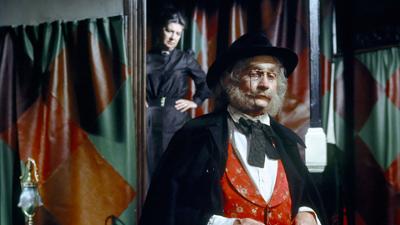
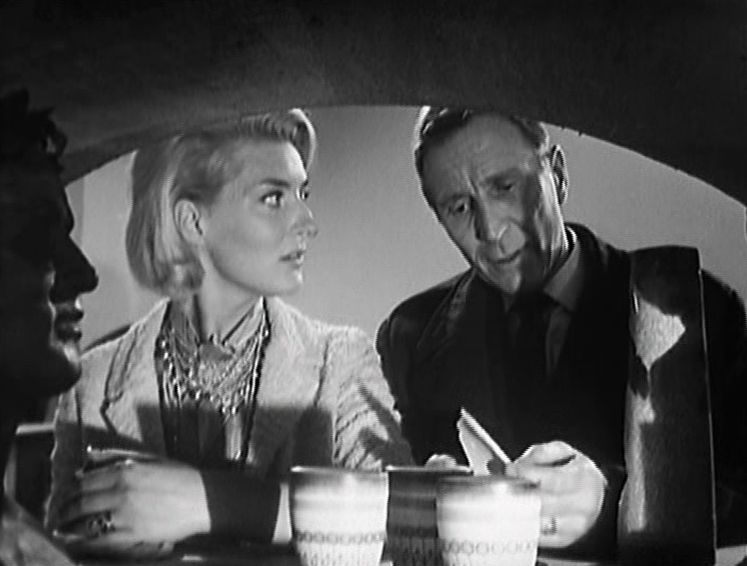
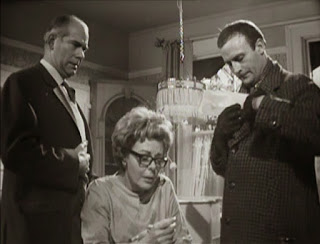
Donald Pleasence as Carnacki in The Horse of the Invisible by William Hope Hodgson
Adapted by Philip Mackie.  Directed by Alan Cooke

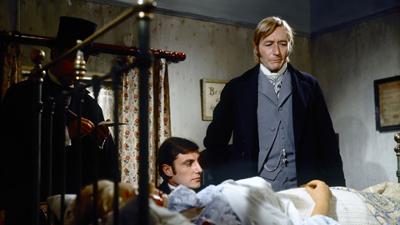
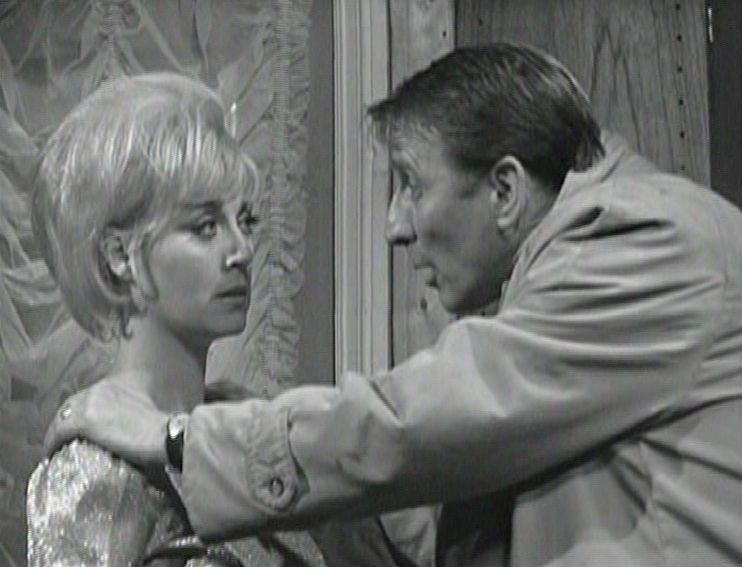
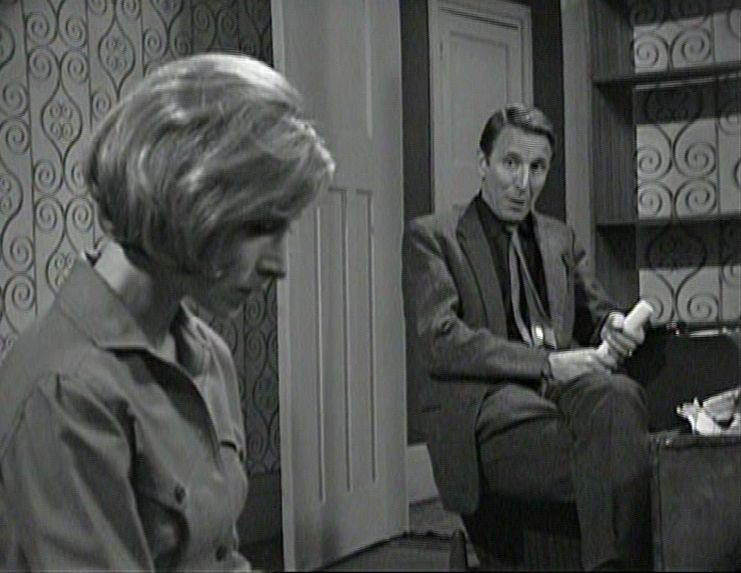
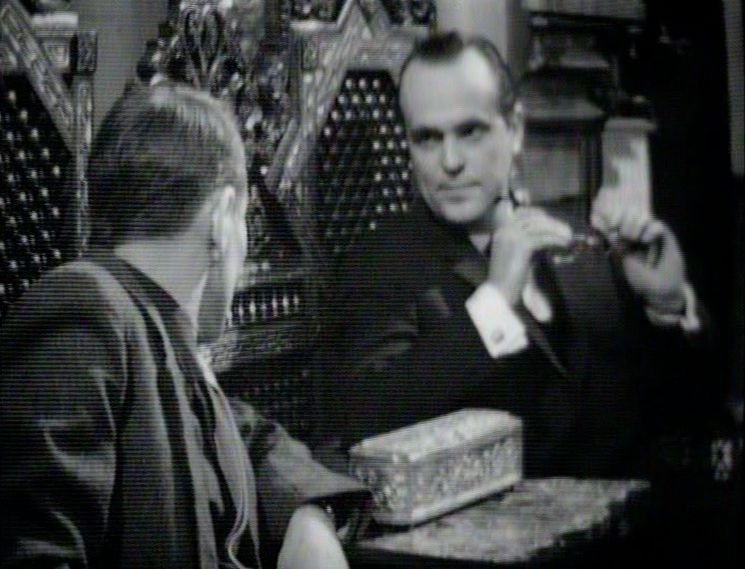
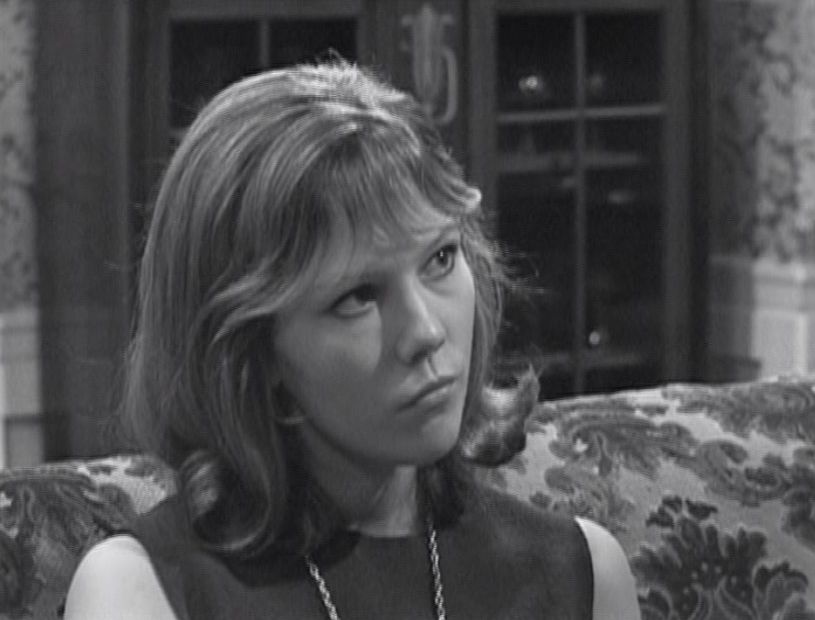
Captain Hisgins (Tony Steedman) is a worried man.  According to family tradition, if the first-born is a female then she will be haunted and ultimately killed by an invisible horse during her engagement.  And for the first time in several generations, there is a first-born female.  Mary (Michele Dotrice) has heard the horse and her fiance Charles Beaumont (Michael Johnson) injured his arm when he tried to protect her from the apparition.

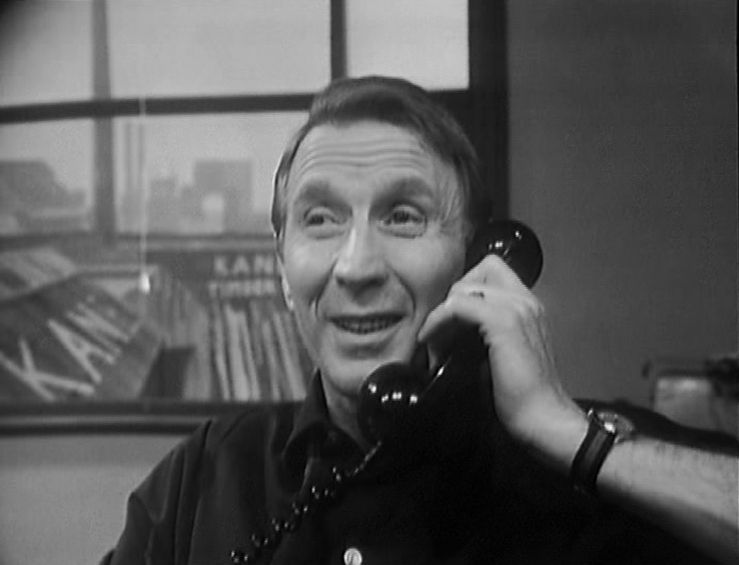
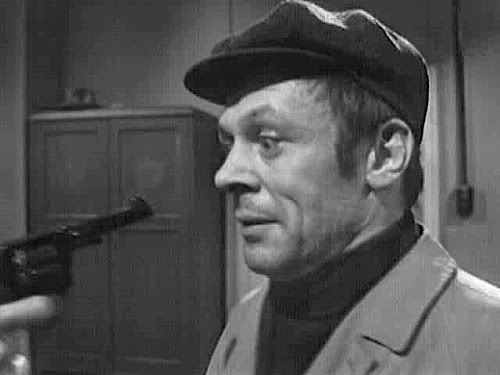
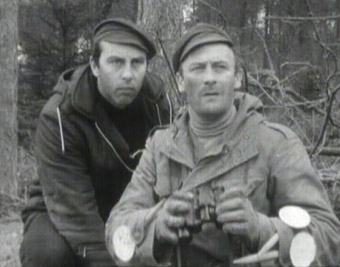
Hisgins doesn’t want his daughter to die, so he calls on Carnacki (Donald Pleasence).  Most detectives would raise an eyebrow at this story, but Carnacki is a ghost detective.  He doesn’t discount the supernatural possibility, although he also concedes that it could all be achieved by trickery.  But as he spends some time at the Hisgins home, the strange events come thick and fast ….

Thomas Carnacki was created by William Hope Hodgson and appeared in a number of short stories published between 1910 and 1912. These were collected together as Carnacki the Ghost-Finder and they can be read here.

The Horse of the Invisible is certainly different, that’s for sure.  It’s pitched at such a level of melodrama (with suitably dramatic music) that it’s difficult to take it entirely seriously.  The major saving grace is Donald Pleasence.  He plays Carnacki in a slightly absent-minded, self-effacing way that’s very effective.  When everyone around him is descending into hysteria, he’s very much the still point.

It’s fair to say that it’s a story that tries to have its cake and eat it – since it’s revealed that some of the hauntings were faked, but at the end we do witness a real ghost horse as well.  And Carnacki is quite honest in admitting that whilst he can explain some of the events, others are a mystery to him.

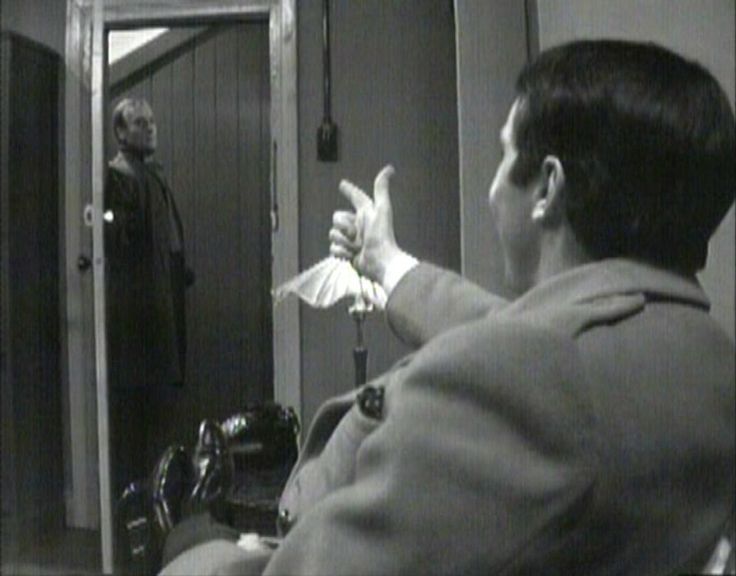
The last five or ten minutes, when we discover the identity of the faker (and for good measure he’s dressed as a horse!) might be the point when many people lose patience with the tale.  Quite why he went through all this rigmarole is something that’s never made that clear – surely there were easier ways for him to achieve his ends?

Michele Dotrice is suitably winsome as Mary, although Tony Steedman is slightly odd casting as her father.  At the time he was only in his early forties and he’s obviously made up to be much older – complete with a false moustache and a white wig.  This is a little distracting, and it begs the question as to why an older actor wasn’t cast.

The Horse of the Invisible is very watchable, thanks to Donald Pleasence, although it’s probably not a story that will appeal to all.

Next Episode – The Case of the Mirror of Portugal

The Rivals of Sherlock Holmes – The Duchess of Wiltshire’s Diamonds

duchess

Roy Dotrice as Simon Carne in The Duchess of Wiltshire’s Diamonds by Guy Boothby
Adapted by Anthony Steven.  Directed by Kim Mills

Simon Carne (Roy Dotrice) is a charming socialite who is totally at ease mixing with the highest in the land.  He’s recently returned to England after a period abroad and is met by his friend, Lord Amberley.  On the journey to Carne’s new flat, Amberley mentions that over the last month all of London has been following the exploits of a detective called Klimo.  Carne professes disinterest in the detective’s exploits and is further dismayed when Amberley tells him that his new flat is next to Klimo’s.

After Carne has heard a little more about the detective, he seems to have slightly amended his views and suggests that the Duke of Wiltshire calls in Klimo to advise on how best to protect the Duchess of Wiltshire’s diamonds.  But nobody realises Carne is living a double life – he’s also Klimo.

Simon Carne and his alter-ego Klimo first appeared in A Prince of Swindlers by Guy Boothby, which was published in 1897.  The concept of the gentlemen thief, able to remain undetected due to his exalted position in society, is a concept that remains familiar today – thanks to A.J. Raffles.  But Carne got there first, as Raffles didn’t appear in print until the following year.  A Prince of Swindlers can be downloaded here.

The opening paragraph of Boothby’s story is interesting, since he dares to compare Klimo to Sherlock Holmes –

To the reflective mind the rapidity with which the inhabitants of the world’s greatest city seize upon a new name or idea and familiarise themselves with it, can scarcely prove otherwise than astonishing. As an illustration of my meaning let me take the case of Klimo – the now famous private detective, who has won for himself the right to be considered as great as Lecocq, or even the late lamented Sherlock Holmes.

Klimo might be a great detective, but he never catches the criminal – understandable since the crimes are carried out by Simon Carne.  In print, the notion of the criminal and detective being the same person works perfectly well, but on television the conceit stands or falls based on how convincing Roy Dotrice is as the two separate characters.

Carne sports a false hunchback which he naturally removes when playing Klimo, which helps to put people off the scent.  How can the youngish, slightly deformed Carne possibly be confused for the older Klimo?  And was the use of disguises another nod from Boothby to Sherlock Holmes?

There are some nice touches in the story, such as the handy idea that Carne and Klimo have adjoining apartments, with a different servant in each (both of whom are aware of the con).  He also has a rotating desk which moves between the two flats, so he can switch disguises and apartments as required!

Carne might be a rogue (like Dorrington) but unlike Dorrington, he’s a charmer who’s very much in the Raffles mode, and it’s easy to cheer him on.  Early on, it’s revealed that he’s taken to crime in order to restore the family fortunes and he admits that it’s particularly satisfying “when it’s done at the expense of those so-called friends who could well have offered to help, when help was needed.  But never lifted a finger”.

Dotrice clearly has some fun playing the aged Klimo, complete with Irish accent and there’s the usual high-quality cast, including Peter Cellier and Barbara Murray as the Duke and Duchess of Wiltshire, John Standing and Felicity Gibson as Lord and Lady Amberley and the always dependable John Nettleton as Belton.

It’s a fairly complicated story, although everything becomes clear at the end (especially the reason why Carne gave his servant, Belton, such detailed instructions).  And if you can suspend your disbelief that nobody guesses that Carne and Klimo are one and the same, there’s plenty to enjoy in this one.

Next Episode – The Horse of the Invisible

The Rivals of Sherlock Holmes – The Affair of the Avalanche Bicycle & Tyre Co. Ltd

dorrington

Peter Vaughan as Horace Dorrington in
The Affair of the Avalanche Bicycle & Tyre Co. Ltd by Arthur Morrison
Adapted by Julian Bond.  Directed by James Goddard

Horace Dorrington (Peter Vaughan) is a private detective who always puts his own interests first.  The information he’s gleaned about a new bicycle company should provide him with a good payday, provided he can outwit an opponent who’s just as double-dealing as he is.

Series one of The Rivals of Sherlock Holmes leant heavily on stories from Arthur Morrison.  There’s another one with Horace Dorrington to look forward to (The Case of the Mirror of Portugal) as well as three stories which Morrison wrote for his other sleuth, Martin Hewitt (Peter Barkworth).  Although not all of those adaptations actually featured Hewitt, which we’ll discuss when we get to to them.

Morrison only wrote seven stories featuring Dorrington and they were published in magazine form in 1897 and were also collected into a book the same year entitled The Dorrington Deed Box.  It can be downloaded here.

Whilst Morrison’s earlier detective, Martin Hewitt, was a fairly conventional sleuth, Horace Dorrington is a much more interesting character.  He’s unrepentantly amoral and is happy to stoop to any means necessary (be it blackmail, murder or theft) in order to achieve his ends.  Such a character gives plenty of scope for a good actor and Peter Vaughan is perfect casting.  Vaughan is a master of sinister charm (for example, his brief, but career-defining appearances in Porridge) and this comes over very well here.  Dorrington is able to appear affable when it suits him, but his true nature shows through from time to time.

There’s a good example of Dorrington’s unscrupulous nature early in the story.   He’s been able to recover a series of incriminating letters stolen from the lovely Mrs Chalmers (Sheila Gish) but he sorrowfully informs her that he had to pay the blackmailer two hundred guineas to get them back.  When she tells him that she would have happily paid double for their recovery, we see a momentarily spasm of pain on his face.  Which is understandable after we learn that he stole them from the blackmailer, so he’s made a tidy profit! This is typical of Dorrington, he’s happy to do the right thing if there’s a decent profit in it for him.

Dorrington is debating whether to invest in the Avalanche bicycle company.  Bicycles are the coming thing and large profits can be made, but he wants to know more.  He cultivates the friendship of Stedman (John Carlisle) who works for a rival company, the Indestructible Bicycle company.  Stedman tells him that he wouldn’t invest in Avalanche himself, although if an Avalanche bike wins the big race on the weekend things would be different.

Gillet (Paul Angelis) is the favourite for the race and since he races for Indestructible, Stedman invites Dorrington to see him train.  As they watch, there’s a nasty crash and Gillet is carried off injured.  It clearly wasn’t an accident, so who was to blame? The boss of Indestructible, Mallows (John Stratton), offers a reward for information leading to the arrest of the perpetrator, but Dorrington has his eyes on a bigger prize.

The Affair of the Avalanche Bicycle & Tyre Co. Ltd
is an enjoyable fifty minutes, mainly thanks to the slimy performance of Peter Vaughan.  Also worth watching are Kenneth Colley and Petronella Barker as his very much put-upon employees, Farrish and Miss Parrott.

Unfortunately for Dorrington, things don’t work out quite the way he’d hoped for.  But he lives to fight and scheme another day and as the episode ends we see him consoling another young woman who’s lost some incriminating letters.  He tells her not to worry, as he’s had plenty of experience in this field ….

Next Episode – The Duchess of Wiltshire’s Diamonds

Doomwatch – DVD now due for release April 2016

doomwatch

Update 27/10/15 – I’m delighted to say that Doomwatch will be released on DVD by Simply Media in April 2016.  More info here.  That happily means that this post, written when a DVD release looked unlikely, is now out of date.  I’ll leave it up though, as some of the info about the archive status of the series may be of interest to some.

As you’ll see, my thoughts were that if any company was going to take a risk on the series it would have been the BFI.  I certainly wasn’t expecting Simply to do so!  But credit to Simply for taking the plunge and I hope that the sales are healthy – if so, it might encourage them to continue digging through the BBC archives.  My DVD review can be found here.

Doomwatch has long been a series that many fans of British telefantasy, and indeed fans of British archive television in general, have wished to see released on DVD.  But it remains unreleased.  Why is this so?  I thought it was worth discussing some of the possible reasons and debating whether this is likely to change in the future.

Firstly, like a great many archive BBC programmes, a major stumbling block is the BBC themselves.  BBC Worldwide (and previously 2Entertain) have tended to only release archive programmes that they expect will sell well (classic Doctor Who, comedies such as Dad’s Army, Fawlty Towers, etc).  This was highlighted a few years back when BBC America released the Douglas Wilmer Sherlock Holmes stories.  2Entertain stated that they didn’t plan to release it in the UK, as they considered it was uneconomic to do so.

BBC Worldwide’s policy is the complete opposite from a company such as Network.  Over the last decade or so, Network have released a staggering amount of titles drawn from the ITV archive.  It must be said that many of them can’t have sold in particularly large quantities (unless I’ve dramatically under-appreciated the popularly of the likes of Yus My Dear for example!).  So Network seem to be happy to make a small profit on a large number of titles, whilst BBC Worldwide appear to be interested in making a larger profit on fewer titles.

This, of course, is frustrating for those of us interested in British archive television.  One of the solutions would be for other companies to licence BBC material – and in recent years there has been a notable increase in this.  Acorn DVD (Z Cars, Dixon of Dock Green) and Simply HE (Softly Softly: Task Force) are two companies that have a growing selection of BBC DVD titles.

And after a gap of many years, the BFI have also started to release BBC titles again.  Last year they had a season of programming entitled Days of Fear and Wonder which covered not only screenings but also DVD releases such as Out of the Unknown, The Boy from Space and The Changes.  They are also planning to release the Douglas Wilmer Sherlock Holmes later this year.

Inevitably, when the BFI announced the Days of Fear and Wonder titles, it was hoped that Doomwatch would be amongst them – but sadly this was not to be.  It would have fitted in with the other programmes released, but as we’ll see, its non-appearance may be due to the amount of work required on some episodes before they could be released on DVD.  First though, let’s see exactly what remains in the archive.  Existing episodes are highlighted in bold –

Series One

The Plastic Eaters
Friday’s Child
Burial at Sea
Tomorrow, the Rat
Project Sahara
Re-Entry Forbidden
The Devil’s Sweets
The Red Sky
Spectre at the Feast
Train And De-Train
The Battery People
Hear No Evil
Survival Code

Series Two

You Killed Toby Wren
Invasion
The Islanders
No Room for Error
By the Pricking of My Thumbs…
The Iron Doctor
Flight into Yesterday
The Web of Fear
In the Dark
The Human Time Bomb
The Inquest
The Logicians
Public Enemy

Series Three

Fire and Brimstone
High Mountain
Say Knife, Fat Man
Waiting for a Knighthood
Without the Bomb
Hair Trigger
Deadly Dangerous Tomorrow
Enquiry
Flood
Cause of Death
The Killer Dolphins
Sex and Violence

Looking at the list above, the first series has a fairly decent survival rate, series two is complete whilst series three is very patchy, with only three existing episodes – although one of them (Sex and Violence) is an interesting curio since it was never transmitted.

But things start to get complicated when we look a little closer at what formats the surviving episodes exist on.  The original videotapes remain in the archives for the following episodes – The Plastic Eaters, Project Sahara, Re-Entry Forbidden, The Devil’s Sweets, The Red Sky, The Battery People, Public Enemy, Waiting for a Knighthood, Hair Trigger and Sex and Violence. So all of these stories exist in a high quality format.

The original videotapes for the other existing stories were wiped in the 1970’s, but luckily NTSC 525-line recordings were made and sold to Canada, who returned them to the BBC in the early 1980’s.  These were then converted back to PAL 625-line recordings, although by then they were already at least three generations down (i.e. the original PAL 625-line tape was convered to NTSC 525-line tape which was then converted back to PAL 625-line tape).  Each conversion would degrade the picture (motion would be blurry, for example) but whilst the picture quality wasn’t perfect, it was still pretty watchable and these copies were broadcast on UK Gold in the 1990’s.

A process called Reverse Standards Conversion (RSC) was developed several years ago and it was designed to restore something of the natural PAL videotape look to programmes like these.  All of the BBC archive holdings of converted 525 NTSC tapes were processed with RSC, but unfortunately many of the original NTSC tapes were then junked – leaving only the new, raw RSC conversions.

The RSC conversions require grading before they can be issued on DVD and this seems to be one of the major factors in preventing the release of a Doomwatch DVD.  All of the Doomwatch RSC episodes can be made ready for DVD release – but it will cost time and money.  And it appears that the amount of money required for grading is greater than the potential profit of a DVD release, so at present it seems that these stories are fated to remain in the archive.  It does seem a shame that the 525 NTSC tapes were wiped, as it would have been possible for them to be released.  They wouldn’t have looked great, but at least they would have been watchable.

The 625 PAL episodes (comprising a good selection from the first series, one episode from series two and the three existing episodes from the final series) could be released on their own though.  And there is a possibility that B&W film recordings of the stories that now only remain as raw RSC dubs are still in the archive.  Black and white copies of these episodes would be better than not having them released at all.  Of course, the best scenario is that we get a fully-restored release, along the lines of OOTU.  For that possibility, the BFI would seem to be our best hope.

The Rivals of Sherlock Holmes – The Missing Witness Sensation

max

Robert Stephens as Max Carrados in The Missing Witness Sensation by Ernest Bramah
Adapted by Philip Mackie.  Directed by Jonathan Alwyn

Dennis Rank (Dave Carter) has been committed to trial, accused of attacking Lizzie Baxter at the Ayr Street post office.  The case intrigues Max Carrados (Robert Stephens) who sees it as more than just a simple robbery gone wrong.  His friend Inspector Beedel (George A. Cooper) agrees and is able to fill in some of the blanks.  Rank is a member of the Irish Republican Brotherhood and although Beedel isn’t sure exactly what he was up to, he’s convinced that they’ve got the right man.

The defence’s case is strengthened by a convincing character witness called Thaxted (John Wentworth).  Thaxted claims that at the time of the robbery he encountered Rank at Richmond Park.  However, Carrados knows that Thaxted is lying since he met him at Richmond Park at exactly the same time Thaxted claims to have met Rank.

Carrados is happy to appear for the prosecution, but Beedel’s one concern is whether the jury will believe him (since Carrados is blind).  But whilst he may lack vision, he makes up for it with his other senses and he’s able to provide a very good portrait of Thaxted.  “The man I sat and walked with is an ardent Carnation grower, smokes Algerian cigars, bites his fingernails, has varicose veins in his left leg and wears an elastic stocking”.

As the Inspector says “you see more with no eyesight than most people with”.  Carrados is in danger though, as he’s kidnapped by members of the Irish Republican Brotherhood who plan to keep him out of circulation until the trial is over.  And since there’s no guarantee that he’ll get out alive afterwards, Carrados will have to use all of his wits to extricate himself from this dangerous situation.

Max Carrados was created by Ernest Bramah and appeared in a series of stories originally published in The Strand Magazine.  This made him a direct contemporary of Sherlock Holmes and his adventures were as popular, if not more so, than Holmes at the time – although like many of the detectives featured in The Rivals, he quickly faded from the public consciousness.  The original short story can be read here.

Robert Stephens is delightful as the rather fey detective genius who has managed to overcome the handicap of his blindness by developing his other senses to an impressive degree, as he demonstrates to one of his captors.  “Did you know that each man’s footstep is individual and unmistakable?”.  This example gives something of an insight into how Carrados is able to make his series of amazing pronouncements.

I recently enjoyed Stephens’ performance in The Box of Delights and Carrados is an equally good turn, although a totally different character.  He’s something of a dandy but also shows his steel when facing down the Irish Nationalists.  Elsewhere in the cast, George A. Cooper is a suitably bluff policeman whilst Christopher Cazenove is a member of Irish Republican Brotherhood who’s afflicted with a conscience.

Thanks to Robert Stephens, The Missing Witness Sensation is an entertaining fifty minutes and it’s a shame that it was Stephens’ only outing as Carrados.

Next Episode – The Affair of the Avalanche Bicycle & Tyre Co. Ltd

The Rivals of Sherlock Holmes – A Message From The Deep Sea

deep

John Neville as Dr Thorndyke in A Message from the Deep Sea by R. Austin Freeman
Adapted by Philip Mackie.  Directed by James Goddard

The Rivals of Sherlock Holmes was a Thames programme which ran for two series during the early 1970’s.  As the title suggests, its aim was to highlight some of Sherlock Holmes’ contemporaries.  A huge amount of crime fiction was published during the Victorian and Edwardian era, but Holmes apart, the popularity of the majority of these detectives didn’t endure.

The Rivals not only showcased some decent stories by largely forgotten authors, it also starred some of the best British actors of the time.  As with any anthology programme, some episodes are better than others – but overall The Rivals is a very strong series.

The first episode was A Message from the Deep Sea, adapted from the story by R. Austin Freeman.  Dr Thorndyke had a lengthy career – with Freeman penning novels and short stories featuring him between 1907 and 1942.  The original short story, together with a selection of others, can be read here.

Dr Hart, one of Dr Thorndyke’s (John Neville) old students asks for his help. Hart is the assistant to the local police surgeon and has just been called to his first case.  Thorndyke is reluctant at first, but when he learns it’s murder he perks up considerably.

Thorndyke and his assistant Dr Jervis (James Cossins) examine the body with Hart.  She’s a young woman, who’s been stabbed through the neck and clutched tightly in her hand are some strands of red hair.  A clue to the murderer maybe?  Thorndyke isn’t convinced, but when Hart’s superior Dr Davidson (Bernard Archard) and Detective Sergeant Bates (Terence Rigby) turn up, they consider it to be an open-and-shut case.

Thorndyke tries to give them a few gentle hints but they aren’t interested.  He claims he’ll walk away and let them make fools of themselves – but he continues to take an interest in the case and it’s his evidence that will be responsible for unmasking the murderer.

A Message from the Deep Sea is something of a joy, thanks to the first-rate cast.  For anybody who loves old British television, there’s a host of familiar faces here.  Apart from Neville and Cossins, we have an impossibly young, fresh-faced Paul Darrow as Dr Hart, who makes the most of his part despite being saddled with some very florid dialogue.  “Good god. Some infernal cowardly beast has done this. He shall hang. My god he shall hang”.

Elsewhere, Ray Lonnen (complete with a very fake moustache), Morris Perry, Nicholas Smith and Stanley Lebor are not a bad supporting cast at all.  Bernard Archard as a police surgeon icily sure of his facts and Terence Rigby as a rather stupid policeman are two more quality actors who find themselves outsmarted by Thorndyke.

And what of John Neville?  Dr Thorndyke is a man with a very high opinion of himself and Neville manages to capture his smug superiority very well. Thankfully though, Cossins’ Dr Jervis is able to direct a few barbs at him, which means he isn’t completely insufferable.  Like Sherlock Holmes, Thorndyke is sometimes exasperated when others can’t see things that are perfectly clear to him.  “My dear Jervis, pray don’t indulge in mental indolence. You have the essential facts as I have them. Consider them separately, collectively and in relation to the circumstances”.

The solution of the mystery is interesting enough but undoubtedly the chief pleasure of the story is watching a fine group of actors at work.  Dr Thorndyke was one of several detectives who would make more than one appearance in The Rivals, although in his series two appearance a new actor – Barrie Ingham – took over the mantle.

Next episode – The Missing Witness Sensation

Public Eye – The Bromsgrove Venus

bromsgrove venus

Written by Anthony Skene
Directed by Jim Goddard

Chief Librarian Paul Ainsworth (Leon Sinden) hires Frank Marker to find out how a picture of his wife Marie (Sylvia Kay) ends up in the Library’s photographic competition.  It’s a tasteful nude portrait (taken from behind) which copies a famous painting – and has been dubbed the Bromsgrove Venus.

Ainsworth is much older than his wife and Frank puts his finger on the nub of the matter.  “You think you don’t deserve her, don’t you? She’s beautiful and French and clever and you’re just a ordinary middle-aged Englishman”.  His first port of call is John Ingleby (Timothy Carlton) who entered the photograph in the competition.  Frank has to work hard to discover the truth and come to a conclusion that will keep the Ainsworth’s marriage intact.

The Bromsgrove Venus is the last surviving ABC episode and the only story to exist from the third series. There’s plenty to enjoy here – such as Frank blackmailing Ingleby in his quest to find out who took the photo.  He knows Ingleby didn’t (he just saw it on display in a local photographic shop, recognised Ainsworth’s wife and pinched it) but he’s no compunction in engaging his unwilling assistance to help to solve the mystery.

The trail sends Frank to a box number at a newsagents where he meets his match.  All of his persuasive charm cuts no ice with the old lady behind the counter (Daphne Heard) who chases him out of the shop with her broom!  Marie is more successful with her (she gives her money) and she manages to get the address of the box number.

Marie then visits Frank with the address (she can’t bear to go herself) and explains that she’s been blackmailed for years – she pays five pounds a month to this box number.  It’s maybe the only weakness of the story that Marie would independently decide to engage Frank’s services (unaware that her husband already has).  The box number leads Frank to a dance studio where he professes a desire to brush up on his Tango skills!  And he’s not a bad mover.

Given how few episodes exist from the first three series, it’s difficult to gauge the overall quality of Public Eye’s early years – but based on the little we do have and the later Thames series, it does seem an awful pity that so much was wiped.

Series four will see Frank Marker relocate to Brighton following his release from prison.  But that’s another story.

Public Eye – Works with Chess, Not with Life

works with chess

Written by Roger Marshall
Directed by Basil Coleman

Marker’s been doing some work for a solicitor called George Faulkner (Laurence Hardy) and he asks him to keep an eye on Dr Alan Skerrett.  Faulkner is concerned about Skerrett’s wife Nancy (Susan Dowdall) as he considers himself something of a god-uncle to her.  Skerrett’s recently cancelled a life insurance policy and also hasn’t renewed his golf club subscription.  That indicates to Frank that he plans to leave, the question is does he intend to take anybody else with him?

Marker quickly discovers that Skerrett’s having an affair, with Ann Lynn (Susan Lambert).  But matters are complicated when Nancy pays him a visit as she also wants to hire him to follow her husband.  She knows he’s having an affair – and who he’s having it with – she wants Marker to force him to choose between her and Ann.

Works with Chess, Not with Life provides us with several good examples of just how good a liar Frank Marker is.  One of his jobs for Faulkner concerns a woman called Miss O’Hara (Valerie Bell).  She’s threatening to sue a local hotel because she claims they gave her food poisoning and she’s been hardly able to eat since.  Frank strikes up a conversation with her in a pub and treats her to a slap-up meal – with Faulkner present to observe her healthy appetite.  With Miss O’Hara, he slips effortlessly into the persona of a commercial traveller, complete with the gift of the gab, and she doesn’t suspect a thing.

The main part of the episode revolves around Skerrett’s infidelities.  To be honest, he’s so weak and indecisive that it’s difficult to understand what either woman sees in him.  Eventually he decides that he can’t leave with Ann and she begins to make things difficult for him.  So he becomes the third person to come to Marker to ask for help.

It’s easy to tell that Frank’s not impressed with him.  “How a so-called intelligent man gets himself … What’s it cost to train a doctor? About ten thousand? Ten thousand pounds worth of education. Do you know how old I was when I left school? Fourteen. And that was an achievement my mother boasted about”.

Marker stops Ann from taking any action (by not strictly ethical means as he admits) and it’s another good example of how he’s able to spin a convincing yarn.  Clearly he could have had another job as a confidence trickster!

This isn’t a particularly Marker-centric episode since it concentrates more on the love triangle.  And as Skerrett’s such an annoying character this doesn’t make it the most compelling of stories.  But even average Public Eye is better than a great many other dramas.

Next episode – The Bromsgrove Venus

Public Eye – Don’t Forget You’re Mine

don't forget

Written by Roger Marshall
Directed by Kim Mills

Marker’s relocated to Birmingham – a new city and a fresh start.  The first job for Frank is to find an office – which he does at the back of a local estate agent.  It’s somewhat dingy and overlooks a timber yard, but it’s still a snip at £4.00 a week, furnished.  His first client is Mrs Jessup (Pauline Delaney) who hires him to find her missing husband.  She asks him if he’s good at finding people and Marker replies it that depends on “how well they’re hidden. How far they’ve gone. How long they’ve been gone and then on whether or not they want to be found”.  It seems a straightforward case, but as so often happens, Frank later finds out that he hasn’t been told the whole story ….

Public Eye would regularly relocate to new cities (later series found Marker in Brighton and then Windsor) and refreshing the location does help to shake the stories up.  We get to see a bit of Birmingham in this story as he walks the streets looking for Mrs Jessup’s husband.

Pauline Delaney would later return to Public Eye during the fourth series as Mrs Mortimer, the closest thing to a friend that Frank ever has.  Here, she plays a completely different character – initially she’s the concerned wife, but later we scratch a little deeper under the surface to uncover the truth.  When Frank learns that Donald Jessup left three years ago, he begins to smell a rat and when he finally tracks him down he understands just how he’s been used

Roy Dotrice is Donald Jessup, or as he’s now called, Donald Scott, and Virginia Stride is Karen Scott.  Roger Marshall plays a good wrong-footing trick as the audience is allowed to make an inference about their relationship, which turns out to be incorrect.

Along the way Frank bumps into various characters, my favourite is Angie (Diana Beevers), who’s intrigued by the notion that Frank’s a private detective, asks him to sample the punch she’s made (judging by his expression it packs quite a kick) and then invites him to stay for her party – the carrot is that afterwards she’ll look for Jessup’s forwarding address.  Marker agrees and Angie asks him to answer the door.  “Don’t forget you’re mine” she says, a sentiment that’s at the heart of the story.

Next Episode – Works with Chess, Not with Life

Public Eye – The Morning Wasn’t So Hot

the morning

Written by Roger Marshall
Directed by Kim Mills

Marker is hired to find Jenny Graham (Carole Ann Ford) a twenty-year-old runaway from Hull.  The chances of tracking her down in London are slim, to say the least, but he takes the case.  Jenny is working for a small-time pimp called Peter Mason (Roland Curram), who haunts the cafes at Kings Cross Railway Station, spotting unattached young girls who’ve run away from home.

Jenny is no innocent though – this is a lifestyle she’s chosen, and she plans to make it to the top.  Mason is invited to a meeting with Dannon (Philip Madoc).  Dannon describes himself as an agent, somebody who provides items for collectors – and the item in question is Jenny.

The Morning Wasn’t So Hot is a bleak little tale.  Philip Madoc is suitably sinister as Dannon, polite and cultured on the surface (and surrounded by valuable antiques) but also quite capable of viewing Jenny as just another item for sale, as he explains to Mason.  “Three, six months, that’s the life expectancy of one of your girls. Ten to one she’s in court by the end of the month or she’s got pneumonia hanging about shop doorways or you’ve done a little crude rolling”.

Mason agrees to sell her for three hundred pounds, but unfortunately for him she’s already gone.  Marker questions Mason and he breaks the bad news to him.  “You sold her. Now she’s welched on you and you’re piggy in the middle. They’re going to be fitting you for an apple in the mush”.

And that’s the last we see of Mason.  When Marker and Dannon meet, Dannon tells him that Mason’s retired and there’s no doubt that it’s a permanent retirement with no plans to return.  Marker agrees to tell Dannon first if he finds Jenny, but it’s obvious that he won’t (and this will spell trouble for Frank).

carole
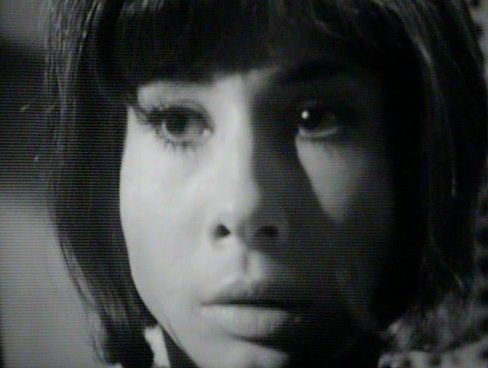
Carole Ann Ford

Marker eventually tracks Jenny down, but she’s not prepared to listen to him or return home to her mother.

MARKER: Look, your friend Mason did a deal with one of the retail flesh merchants. Now according to the agreement you should be working for them.
JENNY: Really? First I heard of it.
MARKER: Well you ran off on the day he made the deal.
JENNY: Tough.
MARKER: Look, these people are not to be fooled about with, you know.
JENNY: I’ll bear it in mind.
MARKER: You’ve heard of the girls who end up in the river, naked and dead? Well it wasn’t Jack the Ripper, it was girls just like you, girls who stepped out of line, who wouldn’t do what they were told.
JENNY: Which was?
MARKER: A girl has a certain lifespan, did you know that? Every now and again they like to juggle the faces.

Dannon obviously had somebody following Marker, as after he left Jenny some of his associates picked her up – and dumped Frank into the river.  Marker then considers the case closed – he tried to persuade Jenny to return home, she refused and he regards his dip in the river as a clear warning.  If he interferes again, they’ll kill him like they did Mason.

So sadly, Jenny has to be written off.  And her meeting with Dannon is a chilling moment.  She tells him that he can’t force her.  “Oh my dear, it’s the easiest thing in the world. I shouldn’t be saying this of course, because I’m only an agent in the transaction, but these people they have their ways. They have, ah, what do they call it? A battery farm. Even the most rebellious become totally compliant”.

If Jenny is now beyond Frank’s assistance, then the episode does end on a hopeful note since he’s able to help another young runaway, Sue Forbes (Susan Burnet).  Which causes him to remark that “the morning wasn’t so hot, maybe the afternoon will be a bit better”.

An uncompromising story, Alfred Burke continues to impress (soaking his feet after a hard day pounding the streets is a nice, realistic touch!).  Philip Madoc is always worth watching, especially when he’s playing menacing (which he did an awful lot).  It’s hard to warm to Jenny, but Carole Ann Ford does manage to express a certain vulnerability in the last few minutes when she realises she’s in too deep.  It’s certainly a change of role following her year on Doctor Who, and was exactly the sort of part she wanted – a chance to do something different.

Next episode – Don’t Forget You’re Mine

Public Eye – Nobody Kills Santa Claus

santa claus

Written by Roger Marshall
Directed by Kim Mills

Public Eye was a hugely popular series, starring Alfred Burke, which ran for seven series between 1965 and 1975.  Burke played Frank Marker, a down-at-heel enquiry agent who possessed a strong moral core as he moved his way through the sometimes seedy underbelly of whatever town or city he was currently working in.  Suffice it to say that if you have the slightest interest in British archive television, then Public Eye (like Callan) is a must watch.

And like Callan, it was originally made by ABC Television, and after ABC lost their franchise it was picked up by Thames.  But whilst all the Thames episodes (series four to seven) exist, sadly only five episodes survive from the first three series (out of a total of forty one transmitted).

The first existing episode is Nobody Kills Santa Claus, the second episode of the first series.  Paul Garston (Keith Baxter) is a successful young businessman.  His success has partly been achieved by riding roughshod over other people – so he’s certainly the sort of person that makes enemies.  When he confides to his managing director Eric Hart (Peter Barkworth) that he’s been receiving threatening phone calls, Hart recommends calling in Frank Marker.

The first ten minutes or so of Nobody Kills Santa Claus focus on Garston which allows us to see the type of person he is.  He’s brash, arrogant and quite happy to engage in underhand dealings if it’s to his advantage.  And although Eric Hart is the managing director, he plays a very subservient role to Garston –  for example, when Garston clicks his fingers, Hart hurries over to light his cigarette.

It’s therefore not surprising that it’s Hart, not Garston, who visits Marker’s office to engage his services.  But Marker doesn’t seem too keen to take on the job.

HART: He’d like to see you.
MARKER: He knows where I am.
HART: Ah yes, but he’d prefer you to go to him, if that’s not asking too much.
MARKER: I’ll try and fit him in.
HART: Oh thanks very much. You know, you make one big mistake, Marker.
MARKER: One?
HART: You like people to grovel. Why? Does it make you feel big?
MARKER: Depends who they are.

Garston wants Marker to act as his bodyguard for the next few weeks.  Marker agrees and he begins to consider the possible suspects.  Garston’s estranged wife Eva (Caroline Blakiston) must be one – although after Marker’s seen her it seems less likely.  She’s well provided for (at least in terms of money) and she declares that “nobody close to him will ever kill him.  Nobody kills Santa Claus”.

Ray Johnson (Robert Tunstall) looks to be a much more likely prospect.  His wife Anne (June Barry) is having an affair with Garston and he pays to him have beaten up.  Fortunately for Garston (and unfortunately for Marker) it’s Marker that receives the beating.  This provides a good closer to the second act.  Garston sees Marker being attacked in the street below, but he doesn’t raise the alarm or attempt to help – instead he goes back to Anne (whilst the sounds of the beating are reverberating in his head).  Marker’s made of stern stuff though.  Although there were two thugs and he took a bad beating, he was still able to scare one off and we see him pull the other one away for some, no doubt, intensive questioning.

Marker does eventually get to the bottom of the mystery of the threatening phone calls (it wasn’t Johnson after all) and Garston is grateful.  He offers Marker a permanent job, which he refuses.  It’ll become a familiar trait throughout the series, but Marker values his independence above everything else (which means there’s conflict in later series when he goes into partnership).  Marker tells Garston that he’s “getting old. Too stiff to lick boots”.  Garston responds by telling him that “you’re not Shane, you know, riding off into the sunset. You’re just another man in a dirty old mac”.

Even this early on, all of the basics of the series are firmly in place.  Marker doesn’t necessarily have to like his clients to work for them – it’s purely a business transaction and he won’t follow their orders blindly, which means he often comes into conflict with them.

Keith Baxter was perfectly cast as the arrogant businessman Paul Garston, whilst it’s always a pleasure to see Peter Barkworth – such a solid and dependable actor.  June Barry was also very good as Garston’s mistress, who candidly told Marker that she’d only be around for a short while and wasn’t intending to leave empty-handed.

Next Episode – The Morning Wasn’t So Hot

Callan – Death of a Hunter

death

Written by Michael Winder
Directed by Reginald Collin

The opposition want Hunter dead – and they decide that Callan is the man for the job.  He’s picked up, taken to a warehouse and pumped full of drugs at regular intervals.  This intensive treatment makes him susceptible to suggestion and over a period of days they manage to convince him that Hunter is a double agent, involved in a plot to assassinate the Russian president.

Callan’s really put through the wringer in this episode and it’s very much a tour-de-force for Edward Woodward.  Whilst there’s a few brief cut-aways to show Meres and Hunter attempting to find him, the majority of the episode is firmly centered on Callan’s brainwashing.

It’s an elaborate plot – maybe too elaborate, you might say (especially since the last Hunter was killed in the street).  One major niggle is that the opposition pick up Lonely and tell Callan that they’re going to kill him.  We hear a shot off-screen and see Callan (already pretty far gone at this point) struggle to reach his friend.  It’s therefore odd, to say the least, that we later learn that they faked Lonely’s death and let him go free.  Logically, Lonely should have been killed (although it would have made a bleak episode even bleaker).

At the time this episode was transmitted, it wasn’t known if Callan would return for a third series, so there were reputably two endings shot – one where Callan died and one where he lived.  We know the answer to that now, but it doesn’t reduce the apocalyptic feeling of the final few minutes as Callan confronts Hunter and Meres is forced to shoot Callan.  The emotion in Meres’ voice clearly shows that he now considers Callan to be a friend – quite a change of events from the early episodes.

Most series wouldn’t have had the nerve to carry this storyline through to its logical conclusion, but then Callan wasn’t most series.  And whilst Callan’s final line is a sign that he’s not totally gone, it’ll be a long road to recovery.

Callan – Nice People Die at Home

nice people

Written by Robert Banks Stewart
Directed by Peter Duguid

Eric Marshall (Harry Towb) and his daughter Nadia (Angela Morant) run a pet shop in Shepherds Bush.  They’re also enemy agents.  The stuff they do is pretty low-grade though, Hunter says that they’re “little more than clerks, transmitting, reducing stuff to microdots and delivering to dead letter boxes around London”.

They have their uses though, as Hunter wants to unwittingly employ them to catch a big fish – Belukov (Frederick Jaeger).  Belukov is a remote figure who never leaves the safety of his Embassy, but when Hunter spreads a story that the Marshalls wish to defect, he hopes it will flush him out.  And Callan will be there to finish him off.  He has a special interest in this mission – six years ago Belukov killed Callan’s girlfriend in Beirut.

As with all the episodes featuring Ronald Radd’s Hunter, it’s the conflict between him and Callan that provides a great deal of the drama.  This is no exception, as once Hunter has told him that his target is Belukov, he’s pleased to see the reaction on Callan’s face.  Callan wants to kill Belukov, of course, but he’s also angry with the way that this Hunter can manipulate him.  “You know, ever since you left, this has just been an ordinary job for me. But no, that’s not good enough for you, mate. You’ve really got to get me going”.  Hunter responds by telling him that “you always work much better that way, Callan”.

Callan replaces an enemy agent called Ross (Roger Bizley) and can’t help but get to like both Marshall and his daughter.  They’re not monsters – just two people working for the interests of their country.  And when Callan realises that Marshall is terminally ill, he tells Hunter that “I wouldn’t have gone within a mile of that place if I’d known. Trust you to use a man who’s only got a few months to live”.

Hunter is unmoved – if the Marshalls have to be sacrificed then they will.  Callan knows what will happen to them if they’re caught.  Eric Marshall will be dead within a few months and his daughter will languish in jail for twenty years.  Later, Callan is able to spirit an injured Belukov away and offers Hunter an ultimatum.  He’ll kill Belukov if Hunter allows the Marshalls’ to leave the country.

Frederick Jaeger is good value as Belukov.  Once he was a top agent, now he’s reduced to pushing paper around the Embassy, although the crisis that Callan and Hunter create does force him into the open.  At the end of the story, Belukov taunts Callan that he’s weak and always has been.  Could Callan kill an injured, unarmed man in cold blood?  The final shot of the episode is interesting, as Callan attempts to wipe the blood (real or imaginary?) from his hands.

There’s also a few decent scenes for Lonely, who’s greeted by Callan with the words “My god Lonely, you smell like rising damp today, you really do”.  We also get to see Meres’ unusual interrogation techniques, which include firing a gun close to the unfortunate individual as well as driving golf balls at him.

Nice People Die at Home is mainly about the relationship between Callan & Hunter and Callan & Belukov.  The three actors are firing on all cylinders, especially Edward Woodward who once again is unforgettable as the complex, conflicted Callan.

Obituary – Bernard Kay (1928 – 2014)

bernard kay - colony in space

I was sorry to hear about the recent death of Bernard Kay.  He had a lengthy career with some notable film appearances (such as Doctor Zhivago & Sinbad and the Eye of the Tiger) but many of his best performances were on television.

And one of his finest small-screen appearances must be the Tweedledum episode of Colditz (transmitted on the 21st of December 1972).  Michael Bryant played Wing Commander George Marsh, who decided to fake madness in order to get released from Colditz and gain repatriation to Britain.  Kay was Hartwig, the German soldier assigned to watch him.  Initially, Hartwig was convinced that Marsh was a fake and sought to prove this by various humiliating means.  Eventually though, he’s convinced and it’s Kay’s compassion that moved the story to another level.

Bernard Kay would become a familiar screen presence for decades, appearing in many popular series such as Out of the Unknown, Redcap, No Hiding Place, The Baron, Adam Adamant Lives!, Softly Softly, The Champions, Budgie, Z Cars, The Sweeney, Space 1999, Survivors, The Professionals, Grange Hill, Dick Turpin, Tales of the Unexpected, The Bill, Juliet Bravo, Remington Steele, London’s Burning, Coronation Street, Jonathan Creek, Foyle’s War and TV Burp amongst many, many others.

He also made four appearances in Doctor Who, between 1964 and 1971.  The first, The Dalek Invasion of Earth was opposite William Hartnell and he played Tyler – a member of the Earth resistance fighting the Daleks.  A few months later he returned to the series, as Saladin in David Whitaker’s The Crusade.

Since Kay (along with several other actors) was browned-up in The Crusade, this might mean that some people would view the story today as politically incorrect, but Whitaker’s script certainly wasn’t.  Kay’s Saladin isn’t a monster – indeed he seems to be just as rational as Julian Glover’s Richard the Lionheart (possibly more so).  As Richard blusters, Saladin is content to remain cold and logical.  It’s Kay’s best Doctor Who performance.

A few years later, he played Inspector Crossland opposite Patrick Troughton’s Doctor in The Faceless Ones and would make his final appearance in the series in 1971.  Jon Pertwee was the Doctor at the time and whilst the story (Colony in Space) is a little dull, Kay was, as usual, very good – this time as Caldwell, a man who finds himself increasingly at odds with his IMC (Interplanetary Mining Company) colleagues.

Kay was born in Bolton in 1928, and following his National Service he trained to become an actor at the Old Vic Theatre School.  Although the majority of his work was either on television or film, he was no stranger to the Theatre.  One notable early performance was as Macbeth in the Nottingham Playhouse’s production of  1952.  When the actor playing Macbeth had to pull out, Kay stepped into the part – with only 24 hours to learn the role.

Bernard Kay was always somebody who spoke his mind – and this is demonstrated in these fascinating interviews, conduced by Toby Hadoke for his Who’s Round Project – Part One and Part Two.  At times painfully frank, they provide a good insight into the personality of a fine character actor.

Callan – The Worst Soldier I Ever Saw

tessa

Written by James Mitchell
Directed by Robert Tronson

Since Colonel Leslie (Ronald Radd) left the post of Hunter, he’s been working for the British government as an adviser on the Middle East.  One particular Middle Eastern country concerns him – it’s oil-rich, but there are indications that the Sultan is keen to expand his empire (which would mean encroaching on areas protected by the British).

The Sultan needs somebody to head his army though and he’s chosen Brigadier Pringle (Allan Cuthbertson).  This automatically puts Pringle in a red file and Callan is assigned to watch him.  He has a way in – it was Pringle who was responsible for Callan’s dismissal from the army.

Posing as a down-and-out, Callan catches the sympathy of Pringle’s daughter Sarah (Tessa Wyatt).  Pringle offers him a job as his valet, but he clearly could use a man like Callan in his new army.  Whilst Pringle might regard him as the worst solider he ever saw, that was only in peace-time.  In war, Callan would be a valuable asset.

The Worst Soldier I Ever Saw sheds some light on Callan’s life in the army.  Pringle’s description of him back then shows that he’s changed very little over the years.

SARAH: He must have been a very good soldier.
PRINGLE: Depends what you mean by a soldier. He was brave enough, certainly, but far too much of an individualist for the army. He always questioned orders, went his own way, that’s why he stayed a private. I made him up to corporal twice and I broke him twice. Finally I got him chucked out.
SARAH: So why do you bother now?
CALLAN: My dear, an army’s simply a device for killing the enemy. And as a killer, Callan was unequaled.

At the end of the episode, Callan is able to forcibly tell Pringle that “you bloody taught me how to kill, and when I got too rough, mate, you didn’t like it, did you?”.  The skills that Callan learnt in the army have subsequently been put to very good use by the Section.  This reinforces the notion that Callan is a man who’s trapped by his past and is therefore reluctantly forced to carry on fighting and killing (something he’s very good at).

Allan Cuthbertson was a familiar face from television and films and he’s characteristically solid as the autocratic Brigadier Pringle.  Tessa Wyatt is his idealistic daughter, who decides that she doesn’t want to follow him to the Middle East. Instead she’d sooner stay in Britain and help those less fortunate than herself.  They live in totally different worlds, he’s a solider through and through – as he admits, it’s the only thing he knows how to do – whilst she’s non-political and views the prospect of war with horror.  Their relationship helps to humanise Pringle as well as providing some dramatic tension.

The episode has some lighter moments – Edward Woodward is good value as a servile domestic who can’t help but let his more truculent nature shine though from time to time.  Anthony Valentine gets to play lower-class for a change, which is quite amusing.

Plot-wise, given that it’s clear from the outset that Pringle is keen to go to the Middle East, why didn’t the Section simply warn him off or take other, more permanent, measures?  As Meres says “there’s no need to speak to him nicely, he’s in a red file”.

The next episode (Nice People Die At Home) was held over from the first series, which explains why Ronald Radd pops up in this one.  As it would have been a bit odd to have a story where Radd returns as Hunter with no explanation, here he’s asked to take over temporarily whilst the current Hunter makes a trip to Russia.

This gives the episode a lovely final scene as Callan comes into the office and is confronted by his old nemesis. Callan’s relationship with Colonel Leslie was always very combative.  So as soon as he sees him, Callan asks for leave – which is refused.  Instead, he’s offered a choice of assignments – all of them in red files.

Callan – Death of a Friend

death

Written by Ray Jenkins
Directed by Peter Duguid

Jean Coquet (Geoff Cheshire), a French agent and a friend of Callan’s, is killed on the way to London.  Hunter assigns him to guard Coquet’s wife Francine (Ann Lynn) who may also be in danger.  Callan has never had a very high opinion of her (“she’s too dedicated … to everything except her husband”).  And his minding job goes sour when he’s surprised by several intruders who spirit Francine away, whilst at the same time a man calling himself Marcel Latour (David Leland) turns up at Callan’s flat.

Lonely is there, tidying up after a break-in, and Latour pulls a gun on him, telling him he’s “the wife of Jean Coquet”.  Meres disarms Latour, but they are ambushed on the way to the Section.  Who attacked Latour and were they the same people who killed Coquet?  And how is Francine involved?

Death of a Friend offers a slight change of pace – whilst it has the usual intelligence trappings, it’s much more of a mystery story, as Callan attempts to find the reason for his friend’s death.  Given how few friends he seems to have, this does help to humanise him a little.

Russell Hunter has some lovely moments.  After he and Callan view the wreckage of Callan’s flat, Lonely looks around before solemnly intoning that “There’s somebody don’t like you, Mr Callan”.  He also seems to make the worst tea in the world.  “Blimey, it’s pigswill” says Callan, after tasting a mouthful.  Once he’s left, Lonely takes a sip (in the manner of a wine buff) and seems to enjoy it.  Just a little throw-away character beat, but it’s a nice one.

There’s some very decent actors (Rex Robinson, Jerome Willis) in supporting roles and the solution of the mystery is unexpected – although it does leave some questions unanswered, especially the reason why they chose to kill Coquet in England and in such a public way (surely they knew that British Intelligence would take a close interest?).

The relationship between Coquet and Latour is handled sensitively.  For Callan, it makes no difference, as he tells Francine “A man is dead, Francine.  A very good man”.  Francine counters that he was a “lover of boys” and this statement is at the heart of the story.

Callan – Heir Apparent

heir

Written by John Kershaw (as Hugh d’Allenger)
Directed by Peter Duguid

After Callan and Meres attend Hunter’s funeral, they are called to see Sir Michael Harvey (John Wentworth) at the Foreign Office.  As Meres says: “Hunters come and go but we go on forever”.  Sir Michael informs them that a new Hunter will be appointed on a temporary basis and it could be that if it works out he’ll be made permanent.

The new Hunter is John Ramsey (Derek Bond) – somebody that Callan knows well (they trained together).  Callan and Meres are set to fetch him, but the problem is that he’s been working in East Germany and doesn’t have the appropriate exit papers – so he’ll have to make an illegal border crossing.  It shouldn’t be too difficult (apart from a minefield to negotiate) – but when Callan and Meres make the rendezvous, they quickly become aware that the area is swarming with troops, making their job considerably more dangerous.

The death of Hunter seems to have hit Callan hard.

CALLAN: That’s just one more reason, isn’t it, for not getting married. Did you see her? Did you get a look at her face?
LIZ: He means Mrs Hunter
CALLAN: Smart, wasn’t she. I bet he had a nice house too. Did you see his boy? And how old was Hunter then? Fifty?
MERES: Well, it’s par for the course, old boy
CALLAN: Par for the course? You know, sometimes Toby your stupid platitudes really make me sick. Par for the course. I mean it could have been either of us, do you realise that? I didn’t even know his real name until this morning

But it’s not only Hunter’s death that’s affected him – it’s made him question his own existence in the Section.  “I am sick of it mate, I am sick of it. I mean week after week, month after month, year after year, living the way we live”.  The job of extracting the new Hunter from the East does give him something to focus on, but it’s not the last time that he’ll express doubts about the job.  It does seem that there’s only a finite amount of time anybody can work in the field before the strain becomes overwhelming.

Heir Apparent is a little different, as a large part of the story is shot on film and is more visual (Callan’s attempt to guide Ramsey to safety) than the regular episodes, which tend to be character and plot driven.  It gives us a chance to see how Callan and Meres work when teamed up – pretty well, it must be said.  They still manage to rub each other up the wrong way before they set off, but they’re professional enough not to let that interfere with the job in hand.

We also get a first look at the new Hunter.  As a contemporary of Callan, he seems sure to have a different management style to the older, more autocratic Hunters.  The episode also allows Liz a little more character time (and indeed this might be the first episode where she’s actually named, rather than just credited as Hunter’s secretary).

The King is dead, long live the King.

Callan – Let’s Kill Everybody

let's kill

Written by Ray Jenkins
Directed by Robert Tronson

The Section is under attack from an unknown enemy.  The only lead they had was a man called Bremer (Peter Welch) who committed suicide whilst being interrogated by Meres and another agent called Gould (Henry Knowles).  But before Bremner died he did divulge one important piece of information – a foreign agent tasked with liquidating all the members of the Section is somewhere in London.

Let’s Kill Everybody was the first of five scripts written by Ray Jenkins.  He would also contribute Death of a Friend later on during the second series as well as two excellent stories for the fourth series (Rules of the Game and If He Can, So Could I).  His other script was Amos Green Must Live for series three, which proves that even good writers can have their off days – but we’ll leave the problems with that one for another time.

This episode was the final story to feature Michael Goodliffe as Hunter.  As he only appeared in five stories (You’re Under Starter’s Orders was sadly wiped) he maybe didn’t have quite enough time to establish a distinctive performance (although he was always very solid). Red Knight, White Knight implied that he was more of an administrator, with little practical knowledge of how the Section worked, but this was rarely touched upon subsequently – in later episodes he proved to be just as ruthless as Ronald Radd’s Hunter.

The next Hunter would be very different. so it’s tempting to think that Goodliffe’s more autocratic Hunter (similar to Radd’s performance) was needed as a stop-gap during the early part of series two, whilst Callan was re-integrated into the Section.  This then gives Derek Bond’s approachable Hunter even more of an impact.

At the start of Let’s Kill Everybody, Callan is a happy man.  He’s just started a relationship with the gorgeous Jenny Lauther (Hilary Dwyer).  Jenny was a nurse at the clinic where Callan had recently been sent for treatment (to have a cyst removed).  Callan’s on sick-leave and is planning to spend it in Jenny’s company when Hunter calls him into the office.  Hunter quotes “Emergency D” which brings an instant response from Callan.

Hunter asks Callan if he’s made any new contacts with the last few weeks – Jenny is the main one.  Could she be the assassin?  On the face of it, it seems ludicrous, but Callan has to be sure.  He does it in the only way he knows how – by asking her point blank and searching her bag.  This upsets Jenny as she sees the affable man she loves transformed into a cold, relentless interrogator.  It’s another indication that normal human relationships are always going to be something that Callan will struggle to maintain.

She appears to be completely innocent – as the assassin turns out to be German academic Dr Paula Goodman (Heather Canning).  Dr Goodman is Jenny’s tutor (she resigned from the clinic to re-enter higher education).  One of the flaws of the story is that although we see Hunter with a file on Goodman early on, he doesn’t make any attempt to have her picked up until much later.  And was it just a coincidence that Jenny was placed with her or did Jenny’s relationship with Callan have something to do with it?

Poor Jenny seems to be another innocent caught in the crossfire, as Goodman drugs her so that she later drowns whilst canoeing.  Edward Woodward’s barely controlled fury when he realises that Goodman killed Jenny is a highlight of the story, as is the scene where Goodman sows seeds of doubt about Jenny’s loyalties in Callan’s mind.

Jenny was a toy. A doll. A doll with an ear for private phone calls. No intelligence, no brain, nothing to match that obscene English exterior. Just a reporting doll. Wound up and taught to walk back to … who? That worries you, doesn’t it? Which side was she on? Was she one of us, but expendable or was she … ?

It’s easy to form the impression that the Section is a little short on good men apart from Callan and Meres.  It isn’t the first time we’ve seen other operatives rather easily dealt with – and their security procedures (one man covers another) does seem to be woefully inadequate to deal with the current crisis.  It’s also a little strange that the job of killing all the members of the Section is given to just one person (although late in the story it is revealed that Goodman does have backup).

These quibbles apart, it’s a tense story with Hilary Dywer making a good impression with her limited screen time.

Callan – The Little Bits and Pieces of Love

little bits

Written by James Mitchell
Directed by Peter Sasdy

Hunter is interested in a Polish physicist named Andrei Brezhevski (Andy Devine).  The Russians have developed a hundred megaton bomb, which according to Hunter would destroy every living thing in the UK.  But although they have the rocket they don’t have the fuel – by the end of the year though, thanks to Brezhevski, they will have.

Hunter wants Brezhevski lifted, so that he can give the fuel formula to the West (thus negating the Russian advantage). And even though he’s closely guarded, Hunter has a lever that will force him into the open – his wife.

During WW2, Brezhevski’s wife Sofia (Pauline Jameson) was interned at Dachau. After the war was over, she was in a highly disturbed state and was slowly nursed back to health by Dr Charles Rule (Laurence Hardy). Believing her husband to have died during the war, Sofia married Rule and they’ve lived together contentedly ever since. Callan forces Sofia to write a letter to Brezhevski which will compel him to make the trip to England.

We’ve already seen how the act of killing has scarred Callan, but in this story the tragedy isn’t just a death – it’s the possibility of what will happen to Sofia after Brezhevski has come to England.  The following exchange between Callan and Hunter makes the situation quite clear.

CALLAN: I should think when all this is all over she’ll finish up in a mental home
HUNTER: That bothers you?
CALLAN: That really bothers me
HUNTER: Try thinking about that hundred megaton bomb. That should bother you even more

Hunter views Sofia as little more than a pawn to be sacrificed – he’s thinking about what would happen if the Russians detonated their bomb.  Callan understands this, but he clearly loathes the job he has to do.  Later on, when the two of them are waiting at the airstrip for Brezhevski’s arrival, he does unbend a little.

CALLAN: Did you know what Brezhevski’s doing?
SOFIA: I knew only that he was famous
CALLAN: Well he’s developing a fuel for a rocket that carries a nuclear warhead
SOFIA: And you want it?
CALLAN: Yeah, we want it
SOFIA: So that you can drop nuclear warheads on them? Your argument does not interest me, I’ve seen too many people die. One day I think it will not interest you either

In many ways, Brezhevski and the rocket fuel are only MacGuffins as the story is more about the question of whether it’s right to sacrifice the innocent (in this case Sofia) for the greater good.  Hunter unshakably thinks so and Callan seems to as well – but he doesn’t have to like it.  At the end, Sofia is still alive (although Brezhevski is less fortunate) but the memories of the last few days will remain with her forever and it’s left to the viewer to decide for themselves whether the cost was worth it.

Apart from the odd loophole (if Brezhevski’s been desperate to locate his wife for the last twenty years, can we really believe that the Russians haven’t been able to find her?) this is another tight, well written script by James Mitchell.  Vladek Sheybal gives his usual, idiosyncratic performance as Dicer, a Polish refugee with a burning hatred of the Eastern Bloc.  David Garfield is a little hammy as a Russian agent, but he’s really the only weak link in the story.

Pauline Jameson is outstanding as a woman forced to confront the ghosts of her past and it’s her performance (along with the usual high-quality acting from the regulars) that makes this episode such a memorable one.

Callan – The Most Promising Girl of Her Year

prom

Written by James Mitchell
Directed by Peter Duguid

Joan Mather (Elizabeth Bell) is a research scientist working at the Biological Research Centre.  Although her project is close to a breakthrough, she tells her superior, Dr Bradford (Raymond Young), that she wishes to leave because she has concerns that their work could developed into a deadly weapon.

But as Joan is blessed with a photographic memory she’s a grave security risk.  And when it’s discovered that her boyfriend Carl Donner (David Hargreaves) is an East German agent, the situation becomes critical.  Callan is designated to watch her – much to his dismay as “birds with brains” are not a combination that appeals to him.

The Most Promising Girl of Her Year is a strong episode with a down-beat ending.  Joan is a naive figure who believes implicitly that Carl Donner is the same sort of person that she is – someone who doesn’t care about politics and is only interested in their relationship.  When the Section pick up Horst (one of Donner’s colleagues) they are able to demonstrate to Joan exactly what Donner’s true feelings for her are.  Horst is pumped full of drugs by Snell (Clifford Rose) and repeats in her presence the joke he had shared before.  “You said to me how did Donner feel about the girl?  And I say how does a carpenter feel about wood?”

Even after this, Joan isn’t convinced and Callan has to keep plugging away – providing an example of a previous girl that Donner had deceived, for example.  “He squeezed her dry and then he left her. She killed herself. I wouldn’t want you to kill yourself, Joan”.  When he tells her that Donner is a highly trained agent who is well versed in killing, Joan still can’t believe him.

JOAN: Carl told me he hated killing
CALLAN: I hate killing, I sometimes do it
JOAN: You don’t hate it, you love it
CALLAN: Look, I don’t have to justify myself to you, darling
JOAN: It doesn’t make any difference what you say, I love him and I trust him.

Although this is a pretty bleak episode, there are a few moments of light relief.  For example, Callan asks Lonely to keep an eye on Joan (and also burgle her flat).  This he does, although he seems more interested in the lingerie of Joan’s flatmate.  “Cor, you wanna seem some of the stuff that Sonia’s got. Well you can hardly see some it it, nearly all transparent it is, with bows on”.  To which Callan asks him whether he’s been eating raw meat again.

We get a first look at Snell in this episode.  He would become a semi-regular character, always on hand when Hunter needed answers from people – although the cost would be high for his unfortunate victims.  Clifford Rose was always chilling as Snell – a man who clearly enjoyed his work and seemed to approach it from the angle of scientific research.  The fact that many of his subjects became vegetables seemed not to be something that overly concerned him.  This is highlighted when Joan tells Snell that the drugs given to Horst will destroy his mind.  Snell agrees but then tells her that it was a rush job, arranged primarily for her benefit.

It’s a slightly messy ending (both story-wise and also the direction, which does seem slightly miscued when the big moment comes).  With only a few minutes screen-time at the end, David Hargreaves still manages to make an impression as Donner.  He’s able to demonstrate to Callan (and the audience) exactly how little he cared for the unfortunate Joan.