Callan – Red Knight, White Knight

red knight

Written by James Mitchell
Directed by Peter Duguid

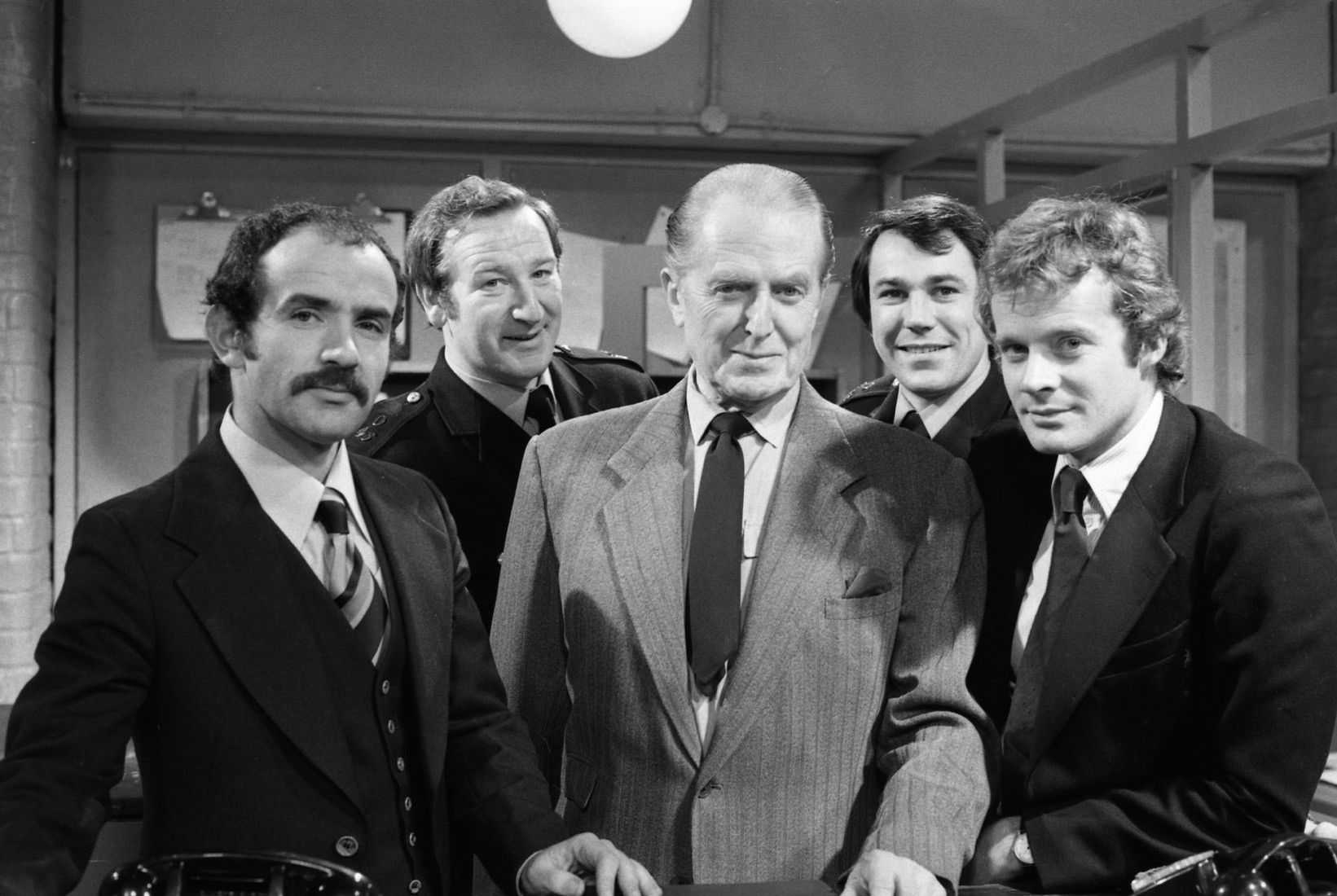
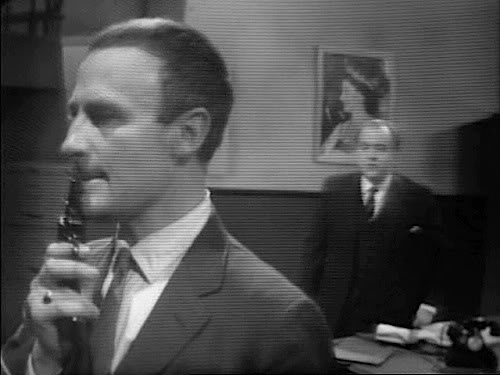
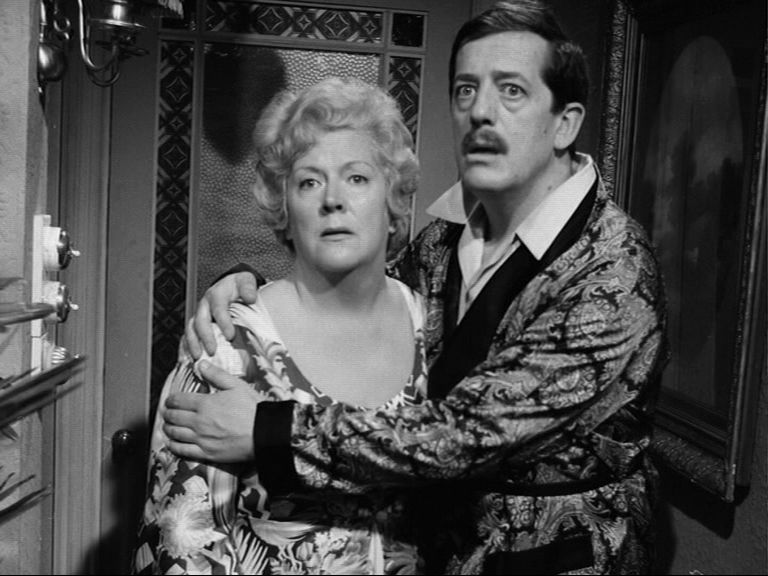
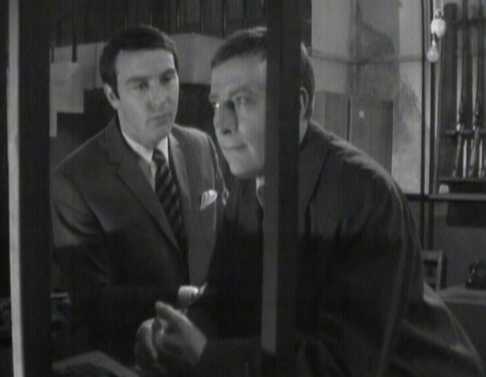
The Section has a new Hunter (Michael Goodliffe).  Meres is present to greet him, although he can’t help grumbling at the early time.  “Why the devil he wants to start at the crack of dawn, god only knows”.  First impressions are that this Hunter will be a stickler for the rules – he berates his secretary (Lisa Langton) for leaving secret files on his desk where anybody can read them and also insists that nobody is let into his office when he isn’t present.

Hunter and Meres review the Section’s personnel files – including Callan’s.  Meres thought that the new Hunter should take a look at him, although not for reasons of friendship, as Meres says, “I detest him. But he knows the job. The only thing is,sir, he likes to know why it has to be done”.

After reading Callan’s file, Hunter sums him up.  “He’s emotionally unstable, a one-time crook, he has a dubious circle of acquaintances and he tends to take the law into his own hands.  We don’t want heroes in the Section, this is a team”.

The new Hunter (Michael Goodliffe)

It doesn’t sound like the beginning of a beautiful friendship and the first meeting between the new Hunter and Callan is as awkward and spiky as you might expect.  It isn’t helped by the fact that Meres didn’t warn him that there had been a change at the top.  But even though Hunter has expressed his doubts over Callan’s character, he still wants him back – he tells him that he’ll be safer in the Section than he would be outside.  And when that doesn’t work, he says it would be quite easy to put him back in prison.

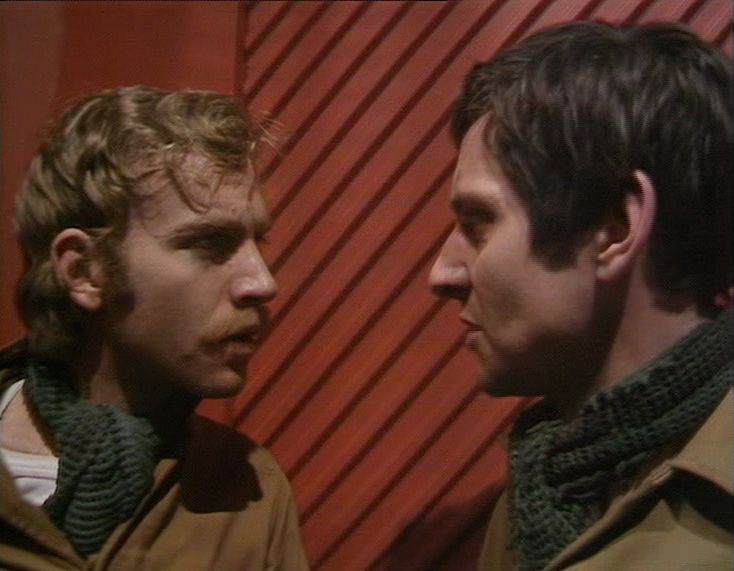
They appear to have reached an uneasy truce for now, although Callan’s interest is piqued when Hunter asks him if the name Bunin (Duncan Lamont) means anything to him.  It certainly does, Callan was sent to kill him in 1963.  Hunter tells him that Bunin wishes to defect – a statement that Callan finds impossible to believe.  When Hunter, Callan and Meres meet Bunin, he has an interesting proposal.  Miersky (a top-ranking Soviet agent) also wishes to defect – but he’ll only do so to the Section’s top man in Russia.

The first story of the second series, Callan was now a Thames production rather than an ABC one.  From the point of view of the quality of the existing prints this is good news (the two surviving ABC stories from series one were both in pretty poor shape, this episode looks much better).
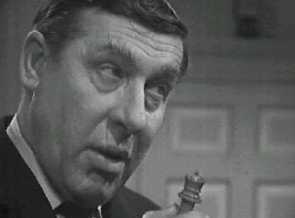
Bunin (Duncan Lamont)

Given how good Ronald Radd had been in the first series, I assume that it was his decision to leave.  In story terms though, it’s a positive plus as a new Hunter allows everything to be shaken up.  Callan may have disliked and distrusted the old Hunter, but at least he knew that he understood the job.  Early impressions are that the new man is more of a civil servant, with no practical knowledge.  “He’s never been out in the field, mate, that’s for sure. He doesn’t know how bloody cold it gets out there”.

When Bunin disappears (after killing a Section operative) Hunter now accepts that Callan’s original idea (Bunin had come to kill him) was probably correct.  And if Miersky had met the Section’s top man in Russia, that would have been two key British operatives neutralised by the Russians.

Hunter decides to act as a tethered goat in order to bring Bunin into the open.  This is something that Callan simply doesn’t understand and his professional sensibilities are also appalled by the risks that Hunter takes (for example, by attempting to open the curtains he provides a clear target for anybody outside).  Hunter is quite calm, though.  “I’m assured you’re the two best men I’ve got. I’ve every confidence. Bunin’s alone, gentlemen. Even if he gets one of you, one of you will get onto him before he can deal with me. I’m quite safe”.

The relationship between Callan and Meres is developing (although it may also have advanced in the four wiped episodes of series one).  Whist Meres still professes to detest him, he does appreciate just how good Callan is, and at the start of the story he’s lobbying hard for him to be reinstated.  They also share a nice moment when Bunin proposes a meeting between Miersky and the Section’s agent in Russia.  It’s just a quick glance – but it’s enough to signify that they both believe that Bunin’s playing them, whilst Hunter still remains convinced he’s telling the truth.

Whilst a good chunk of the story revolves around the relationship between Callan and the new Hunter, there’s also time for some decent two-handed scenes between Callan and Bunin.  They’re very much two of a kind – and Callan is quite clear from the start that he doesn’t believe a word of what Bunin says.  Duncan Lamont is very solid and is a formidable foe.  It’s a pity that he’s killed off at the end of the episode (shot by Callan, of course, as he attempted to assassinate Hunter) as it’s possible to imagine this storyline could have been developed over several episodes.

This is also the first surviving episode where we see Hunter’s secretary (Lisa Langton).  She was a voice on the phone in the two existing series one episodes, and as the series progresses she’ll have her moment in the spotlight (especially the series three episode A Village Called G).

Although Callan has saved Hunter’s life, it’s quite clear that he still doesn’t understand or trust him.  But it seems he’ll have to, as Callan’s now firmly back in the Section.
Callan – You Should Have Got Here Sooner

you should

Written by James Mitchell
Directed by Piers Haggard

Lonely is attacked in his rooms by a mysterious stranger who we later learn is called Loder (Derek Newark).  Loder works for the Section and along with Meres they are minding a man called Pollock (Jon Laurimore).  Lonely broke into the safe house that was being used by Pollock and his description of him (or rather the smell of him) convinced Meres that he knew exactly who the burglar was.

Pollock’s a Russian spy who’s currently front page news – as someone’s just broken him out of prison.  He believes that Meres and Loder are Russians – which is exactly what Hunter wants him to believe.  Before Pollock was captured and sent to prison, Hunter is convinced that he stowed away a nerve gas formula – and Hunter wants that formula.

With Callan still not back in the Section, it’s fair to say that You Should Have Got Here Sooner does require a chain of coincidences in order to bring him into the narrative.  The first is that of all the houses in London to burgle, Lonely should choose one that’s being used by the Section to guard a Russian spy.  The second is that Pollock’s description of Lonely is enough to convince Meres that there’s only one man it can be (presumably Lonely is the only thief in London with a personal hygiene problem).

The initial attack on Lonely does highlight the growing relationship he has with Callan.  In A Magnum for Schneider Callan seems to have barely concealed contempt for him, but by this story there’s certainly more than a spark of affection.  When Lonely thanks him for looking out for him, Callan responds that someone has to.  Although later he does tell Lonely that if anybody’s going to beat him up then it’s going to be him (and it’s said in such a way that it’s impossible to tell if he’s joking or not).
Callan meets with Hunter and Hunter agrees to leave Lonely alone as Callan insists he’ll keep quiet.  However, Meres decides to make sure and attacks Lonely, much more thoroughly than Loder.  When Callan reaches Lonely’s rooms, he’s barely conscious and can only mumble “You should have got here sooner, Mr Callan”.

The following exchange between Callan and Hunter is an interesting one as it highlights the subtleties of the main character dynamics.  What’s the overriding reason for Callan’s anger?  Is it that Lonely was brutally attacked or is it that by attacking Lonely, Meres was making an indirect attack on Callan?

CALLAN: Somebody duffed Lonely and you promised me that wouldn’t happen.
HUNTER: Who?
CALLAN: Somebody called Meres.
HUNTER: You’ve no evidence Callan.
CALLAN: Who else could it have been? Anyway, since when have you needed evidence?
HUNTER: What do you want me to do?
CALLAN: Nothing I’m coming over.
HUNTER: That little man’s so important?
CALLAN: Yeah. Yeah he is to me. Besides, Meres knows I look after Lonely. So when he was beating him up, he wasn’t just attacking him – he was getting at me. Now he’s not going to get that kind of edge on me, Hunter. And neither are you.
HUNTER: What a relief, for a moment you sounded like a knight in armour, it’s only selfishness after all.

The dynamic between Callan, Lonely, Hunter and Meres is the driving force behind this episode, whilst the story of Pollock and the formula is very much secondary.  But although Jon Laurimore doesn’t have a great deal of screen time, he’s such a solid actor that he’s able to make something out of Pollock.  Russian spies (such as George Blake, who had escaped from Wormwood Scrubs in 1966) were familiar news stories at the time, so this story (like many episodes of Callan) was very topical.

Extras announced for Dixon of Dock Green – Collection Three

dixon collection three

Acorn have announced a mouth-watering series of special features for Dixon of Dock Green – Collection Three, due for release in 2015.

Audio Commentary on Domino with actor Stephen Marsh (P.C. Harry Dunne).

Audio Commentary on Alice with director Michael E. Briant.

The Final Cases: Documentary on the making of this last series, with actors Nicholas Donnelly (Sgt. Johnny Wills), Richard Heffer (D.S. Alan Bruton), Gregory de Polnay (D.S. Mike Brewer) and production assistant Vivienne Cozens.

Good Evening All: A tribute to Jack Warner, with Nicholas Donnelly, Richard Heffer, Stephen Marsh, Gregory de Polnay and Vivenne Cozens.

Personnel Files: Extended Interviews with Nicholas Donnelly, Richard Heffer and Gregory de Polnay.

Acorn have also released a teaser video to further wet the appetite.

It can be pre-ordered from Acorn now (for release in early 2015).  If it follows the path of previous Acorn releases. then it should stay as an Acorn exclusive for a few months before going on general release.

Having the episodes themselves would have justified the purchase price, but this set of special features is more than welcome. More information on collection three can be found here whilst there’s an overview of collection one here.

The Two Ronnies Christmas Special 1987

ronnies 87

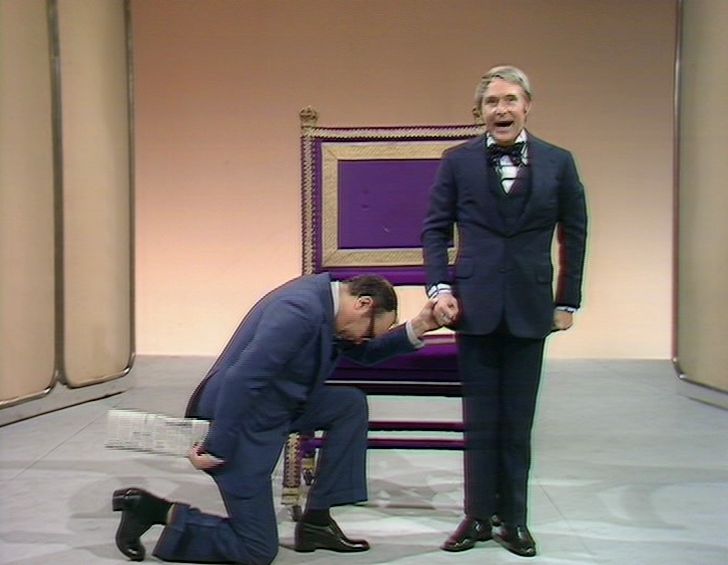
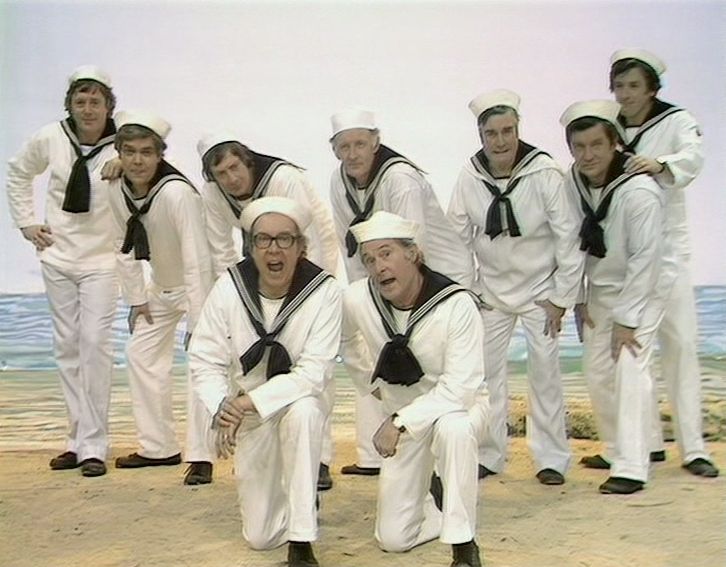
The 1987 Christmas Special was the Two Ronnies’ last hurrah.  This was primarily the decision of Ronnie Barker, who had decided to walk away from showbusiness at the age of 58.  Although the Two Ronnies was still popular, Barker was wise enough to realise that their time was coming to an end and presumably wanted to avoid the treatment meted out to the likes of Benny Hill (who had been unceremoniously dropped by Thames a few years earlier).  Barker would later confirm exactly why he retired.

“The reason I retired was that the material was getting less good. I’d run out of ideas. I was dry of sketches. Plus, I’d done everything I wanted to do. The situation sort of pushed me, goaded me into asking, ‘Well, haven’t you done enough?’ And I had.”

With one more series to come in 1988 (Clarence) and this final Christmas special from the Rons, Barker could ensure that he was leaving at a point where the audience still wanted more – which was much the best way to go.  He was tempted back for a few decent character roles, but in the main he stuck to his decision and enjoyed a long and happy retirement,

None of this would have been known at Christmas 1987, so it was just another special with none of the baggage that would have surrounded the show had it been known it was the last one.  As ever, there’s nothing radical here – no deviations from the tried and true formula.  But what they do, they do so well.

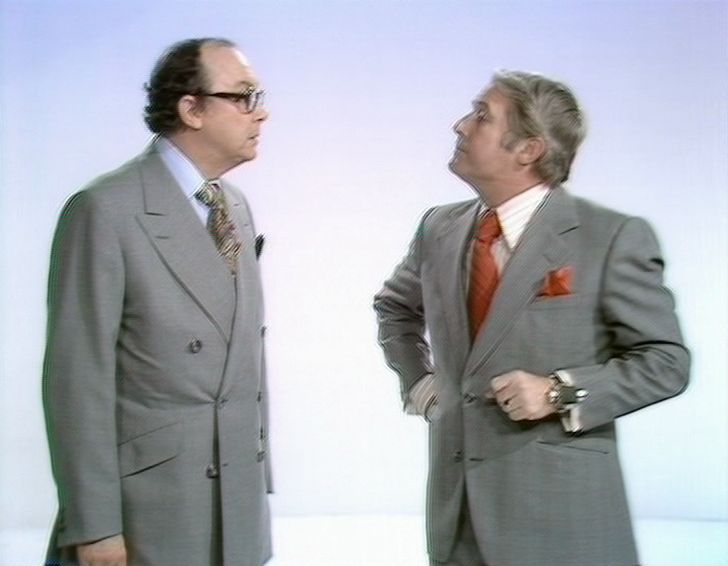
One of my favourite sketches (which reappeared several times down the years) gets one final outing here.  Ronnie C is a man who can never complete his sentences and Ronnie B is his friend who has several attempts at filling in the missing words.

RONNIE C: We had our Christmas party the other night. Funny old do, it was. It’s always the same every year.  Always takes the form of an egg and …
RONNIE B: Egg and … What, egg and spoon race?
RONNIE C: No, takes the form of an egg and …
RONNIE B: Egon Ronay banquet?
RONNIE C: No, no. No, an egg and chip supper

It’s just a pity that the final punch-line was so weak, but then the Rons never went down the Python route of abolishing punchlines, which was sometimes a problem.  The big musical number was set in the Klondyke Saloon, Alaska and goes from black and white to colour as well as featuring some gorgeous girls.

Ronnie Barker always enjoyed writing the Yokels sketches, since it gave him a chance to reuse old jokes and some of them (“‘Ere, the girl I was with last night wouldn’t kiss me under the mistletoe.  She didn’t like where I was wearing it”) would be familiar to anybody who’s been watching these Christmas specials in sequence.

After Ronnie C’s chair monologue, we’re into the big closing film – Pinocchio II – Killer Doll.  No expense was spared (the village set looks very impressive) and whilst it’s quite long (seventeen minutes) there’s more than enough going on to justify the length.

Ronnie C is wonderful as the evil Pinocchio II whilst Ronnie B has, as you might expect, spot-on comic timing as Geppetto.  They’re well supported by the likes of Lynda Baron and Sandra Dickinson and having Ed Bishop as the narrator was another joy.  Unlike Morecambe & Wise, the Two Ronnies didn’t make such a habit of featuring guest stars but there’s cameos here from Frank Finlay, Dennis Quilley and most unexpected of all, Charlton Heston.

It’s a more than decent way to bring their career to a close and whilst it’s interesting to ponder if they could have continued into the 1990’s, they probably made the best decision by deciding to bow out whilst they were still at the top.

Callan – The Good Ones Are All Dead

good

Written by James Mitchell
Directed by Toby Robertson

The Good Ones Are All Dead was the first episode of series one and whilst it follows on directly from A Magnum for Schneider it was obviously also designed to work as an introduction to Callan’s world.

Therefore the first few minutes cover the same ground as the opening of A Magnum for Schneider (and in some parts very similar dialogue) to explain the basics.  Callan used to work for Hunter, but not any more and although Hunter has one more job for Callan – he isn’t interested.  “You sacked me, remember. You said I was too soft. Well I’m still soft, Hunter. I still worry about the people I killed.  I’m done with you mate, I’m finished”.

Hunter is implacable – either Callan does this job or Hunter will destroy him and for once it’s not a wet job (secret service slang for murder).  Instead Callan has to monitor Reinhold Strauss (Powys Thomas).  According to Hunter, Strauss is a Nazi war criminal with three thousand deaths that can be laid at his door.  His current identity is that of a businessman named Nicolas Stavros.

The Israelis are coming to collect Strauss so they can put him on trial – Hunter wants to make sure this happens, a dead Strauss would be no use to anybody.  Callan isn’t convinced that Stavros is Strauss and mentions this to his Israeli contact Avram (Tom Kempinski).  “He doesn’t look like a killer to me. He’s podgy, he’s soft, he’s got a girl.  It’s twenty three years ago”.  Avram counters that “men change, their crimes do not”.

Callan does discover irrefutable proof that Stavros is Strauss – rather foolishly he kept a trunk of Nazi memorabilia – his dress uniform, party card, revolver and a bag containing thousands of gold fillings.  Why does he still have these artifacts?  Is it to gloat over his past crimes or as a reminder of the terrible deeds he committed?

When confronted by Callan, Strauss begs for mercy.  “For twenty-three years I have not harmed a living soul. Right now, Strauss is dead. I am Nicolas Stavros, Callan; and Stavros would not hurt an animal, let alone a human being”.  Strauss then asks Callan “What use is a monster in a cage?”.  Callan allows Stavros to commit suicide with a cyanide capsule, an act that will undoubtedly infuriate both the Israelis and Hunter.

Can a man like Stauss ever be redeemed?  That’s one of the key questions of the episode and Callan seems to ask the same question of himself.  He doesn’t necessarily want to be drawn back into Hunter’s world – although it’s a job that he does supremely well (but at what personal cost?).  There’s a very revealing scene where Lonely asks Callan what it feels like to use a gun.  “What’s it like? It’s like eating your lunch. If you’ve got the stomach for it, it’s easy. Trouble is, you get to like it”.

The relationship between Hunter and Callan is finely balanced, as Hunter confides to Meres, “Callan and I seem to have arrived at a very good working arrangement, what you might call a balance of terror”.

If Powys Thomas is a slight weak link as Strauss, then the regulars (Woodward, Radd, Valentine, Hunter) more than make up for him.  The clip below of the first five minutes is an electrifying tussle between Callan and Hunter that makes me wish that Ronald Radd had stayed with the series for longer.

Armchair Theatre – A Magnum for Schneider

magnum

Written by James Mitchell
Directed by Bill Bain

David Callan (Edward Woodward) used to work for a shadowy section of the British Government, but six months ago he walked away.  Now, his old boss Hunter (Ronald Radd) seems to want him back.

Callan’s currently working in a dead-end job, which he hates.  Hunter professes sympathy, but goes on to tell him that “you chaps don’t have much choice when you leave me.  I do my best of course, but your talents are so specialised.  After all, what can you do?  Use a gun, use your fists, open locks.  Legally, you’re unskilled”.

Does Callan actually want to return? If he does, then it’s plain that he’ll still have strong misgivings about the jobs he’ll be required to do.  This is the driving force behind not only this Armchair Theatre, but the subsequent series.  Callan has undoubted skills, but he also has a conscience and it’s this conflict which provides a great deal of the drama.

Hunter goes on to describe the reason for his department’s existence.  “What’s my section for?  Getting rid of people.  Bribery, frame-ups, deportation and death.  In the last seven years I’ve had ten people killed, you did two of them.  They all had to die Callan.  If they hadn’t they would have killed too many innocent people themselves.  And that’s what security’s for – protecting innocent people”.

There’s a clear distinction between Callan and Hunter’s current right-hand man Meres (Peter Bowles).  Meres, like Cross later on, is a company man – quite happy to obey Hunter’s orders without question.  If Callan doesn’t have all the facts then he’ll always question and then decide on his own course of action.  This makes him something of a loose cannon and a clear liability, but his undoubted skills have kept him alive so far.

Hunter wants Schneider (Joseph Furst) killed but he doesn’t explain why.  Callan has to do it quickly and without any official assistance – not even a gun.  Callan knows Schneider (he works in the office just down the corridor) and he seems a perfectly pleasant man, but for all that Callan dislikes and distrusts Hunter he knows that there has to be a reason why Schneider has been placed in a red file (Hunter’s system for people who demand “special” treatment).

After burgling Schneider’s flat, Callan finally understands why – Schneider is a gun-runner indirectly responsible for the deaths of a number of British soldiers.  Callan therefore accepts that he should die and asks his smelly friend Lonely (Russell Hunter) to get him a special gun – a Magnum, like the ones that Schneider imports.

The relationship between Callan and Lonely would be one of the joys of the series – although here it’s a very hard-edged one.  Callan makes the usual jibes about Lonely’s lack of personal hygiene, but there’s little of the good humour that the pair would share later.

One irony of the story is that Callan is initially reluctant to kill Schneider because he’s got to know and like him.  If Hunter had given him all the information to begin with, he probably would have carried out the mission much earlier.

Callan has told Hunter that he will kill Schneider by 11.00 pm. Hunter then arranges to have the police call shortly after that. Could Callan have shot Schneider in cold blood? The question didn’t arise, because Meres had broken into the flat (ready to kill Schneider, if Callan wasn’t able). When Schneider pulls a gun on Meres, Callan is able to do the deed.

Callan’s well aware that Hunter had double-crossed him.  If he’d killed Schneider by 11.00 pm, then he would have been caught red-handed.  So he exits the flat, leaving an unconscious Meres and the murder weapon behind.  After informing Hunter that he really doesn’t want to work for him, Hunter places Callan’s details into a red file.

Initially a one-off for Armchair Theatre, James Mitchell saw the obvious potential in taking the characters further and Callan would eventually run for four series during the late 1960’s and early 1970’s.  Even here, most of the parts are in place.  Edward Woodward was, of course, perfect as Callan – a man with scruples in a business where that’s a positive liability.  Ronald Radd was the first (and in many ways) the best Hunter – unscrupulous, amoral and totally untrustworthy – although there’s sometimes the odd spark of understanding between him and Callan.

As I’ve said, Lonely is not yet the confidant of Callan that he would become, but Russell Hunter does a great deal with a small role and it may be that the character was developed once Mitchell knew what Russell Hunter could deliver.  Meres would also be a regular in the series, but played by Anthony Valentine and not Peter Bowles.

Here, Callan and Meres barely exchange more than a few words – but their relationship would develop during the first two series.  Initially rivals, they would grow to understand and appreciate each other.  Whilst Peter Bowles is a fine actor, I think that having Anthony Valentine as a regular was something that really benefited the series.  His brand of suave brutality contrasts well with the more down-to-earth nature of Callan.

The plotting does seem a little odd at times. Hunter wants Schneider killed as a warning to others. That’s fine, but why does Hunter insist that Callan operate solely by himself? If Hunter’s plan is to warn off anybody who may be interested in taking Schneider’s place, then surely it has to be clear that this was a state-sponsored execution.

Also, why does Hunter make things more difficult by involving the police? Maybe it was simply to ensnare Callan – but I’m not sure why Hunter would have involved himself in such an elaborate plot to neutralise one of his old employees (Callan’s clearly not regarded as a danger at the start of the story – he’s not in a red file).

The way that Schneider suddenly becomes deeply suspicious of Callan during their second meeting (especially since their first was so affable) also seems a little strange. But these little quibbles notwithstanding, A Magnum For Schneider is still a very solid introduction to the world of David Callan.

It’s a shame that the archive retention of the first two series of Callan isn’t greater (two of the six stories from series one exist, nine of the fifteen from series two) but since other programmes fare even worse, we’ve a decent cross-section of stories from the B&W era, which I’ll be reviewing in the weeks to come.

The Two Ronnies Christmas Special 1984

ronnies 84

As might be expected from the Two Ronnies, there’s several wordplay orientated sketches in the show.  The first (upper class city gents who can’t pronounce their words properly) is amusing enough, but does slightly outstay its welcome.

Ronnie B’s monologue is delivered by a milkman (H.M. Quinn) in the style of the Queen’s Christmas speech.  His delivery clearly appeals to at least one member of the audience (listen out for some very audible female squealing on the most innocuous of lines).  The majority of the monologue doesn’t actually contain any jokes (just some milk-based wordplay). The idea that Barker is talking like the Queen is presumably supposed to do most of the comic heavy lifting.

Next up are a couple of Northern road-workers who exhume some golden oldies from the Old Jokes Home, such as –

RONNIE C: Sithee, does tha believe in reincarnation?
RONNIE B: Well, it’s all right on fruit salad, but I don’t like it in me tea.

Following the very Chrissmassy musical number (the Rons dressed as a couple of Stereo Santas) and a quick Ronnie C solo sketch we move into the best part of the show.  First up is another wordplay sketch – with the Ronnies as two soldiers in a WW1 trench.  Ronnie C has the unfortunate knack of mishearing everything that Ronnie B says, such as –

RONNIE B: God, I wish I were back in Blightly.
RONNIE C: Do you, sir? What sort of nightie, sir? Black frilly one?

RONNIE B: Sounded like a Jerry rifle.
RONNIE C: Bit strange in the trenches, sir. A sherry trifle.

It’s a lovely, typical Two Ronnies sketch.  The courtroom sketch that follows is something a little different.  It opens quite normally, with Ronnie C prosecuting and Ronnie B in the dock, but it quickly becomes a parody of several popular quiz shows (What’s my Line?, Call My Bluff, Blankety Blank, Mastermind, The Price is Right) – it’s also a pleasure to see Patrick Troughton as the judge.

Ronnie B has a solo singing spot as Lightweight Louie Danvers (not too dissimilar to Fatbelly Jones it has to be said).

Following Ronnie C in the chair, it’s the big film –  The Ballad of Snivelling and Grudge.  Guest star Peter Wyngarde is a delight – mainly because he takes the whole thing totally seriously.  There’s no winks to camera and his dead-pan performance is spot on.  And if, like me, you can spot Pat Gorman in the background, then you’ve probably watched far, far too much old British television.  If you don’t know who Pat Gorman is, then you’ve clearly not watched enough!

No news items to end the show – instead it’s a old-fashioned style song about Christmas.  It’s somewhat comforting and sums up the Two Ronnies quite well.  By the mid eighties they were pretty much out of step with contemporary comedy (and Barker knew that their time was nearly up) but it doesn’t really matter – great comedy is timeless, and there’s several examples here that still work thirty years later and will surely endure for decades to come.

The Two Ronnies Christmas Special 1982

ronnies 82

Although the rigidity of The Two Ronnies’ format was sometimes mocked (especially by Not The Nine O’Clock News) it’s always a surprise when a show does depart from what we expect.  The 1982 Christmas Special doesn’t have the usual introductions and farewells (so no “In a packed programme tonight” or “And it’s goodnight from me and it’s goodnight from him”).

Instead we’re pitched straight into a musical number with the Rons dressed as Chas and Dave, entertaining a pub audience with a reasonable facsimile of a typical Chas and Dave song.  It’s entertaining stuff, not only for the cut-away shots of Christmas celebrations but also for the performances of the extras in the pub (some of whom seem to have more enthusiasm than others).

Next door are Sid and George.  Sid guessed that George was in the snug as he saw everybody moving away from there (escaping from the smell of George’s feet) something which George denies.  “There’s nothing wrong with my feet. I’m on the odour eaters now”.  Sid tells him “I had them once. They weren’t half hard to swallow”.

There’s a lovely performance by David Essex of A Winter’s Tale (live and with a full orchestra accompaniment).  Ronnie B doesn’t get his usual monologue, but Ronnie C’s chair ramblings are present and correct.

The film sketch features Ronnie B as a man who travels back in time (thanks to the mysterious Ronnie C) and alters his own personal time-line, so that he was never born.  Thankfully, since it’s Christmas, all is resolved and he ends up back with his wife (Brigit Forsyth) and family, together with a new appreciation of how good his life is.

At just 45 minutes, this is quite a compact special.  Nothing particularly outstanding, but it’s all good solid Christmas fare.

The Two Ronnies Old Fashioned Christmas Mystery (1973)

ronnies 73

Apart from their links and sketches for the 1972 Christmas Night with the Stars, this was the Two Ronnies’ only Christmas special during the 1970’s.  With Morecambe and Wise reigning supreme, there was less need for a Two Ronnies Christmas show as well – but after M&W jumped ship to Thames, the Ronnies would gradually fill the void – with stand-alone specials in 1982, 1984 and 1987 (as well as Christmas shows from other years as part of their regular series).

The 1973 Old Fashioned Christmas Mystery was an attempt to do something a little different from the norm.  It takes place at the country house of Sir Giles (Ronnie Barker) and Lady Hampton.  The year is 1872 and the mystery of the title refers to the Christmas turkey – somebody’s stolen it, so what will Sir Giles’ guests have to eat for Christmas lunch?

He decides to engage the services of that ace detective Piggy Malone (and his trusty assistant Charley Farley).  Given that Malone and Farley appeared in four serials during the 1970’s and 1980’s, it’s a little surprising that none of them were set in Victorian times – maybe something of a missed opportunity.  As might be expected, they bumble about for a while, and the mystery is never really solved (although they do inadvertently provide an alternative for the Christmas dinner).

Although on the surface this looks different from the normal Two Ronnies shows, underneath there’s still plenty that’s familiar.  Ronnie B delivers a monologue, Ronnie C sits in a chair (more comfortable than his usual one) to spin a shaggy dog story and both of them end proceedings with some musical numbers (new words to the familiar tunes of Gilbert & Sullivan).

Along the way there’s some guest stars.  Tux (a man who balances plates on his head) was a throw-back to the specialty acts that were a regular feature during the first series.  Gabrielle Drake is gorgeous as Emma, who has her eye on Ronnie C – although he seems totally immune to her charms.

Cheryl Kennedy provides one of the stand-out moments by performing a monologue, Christmas Bells.  Given the opulent surroundings it’s something that certainly has an impact and serves as a timely reminder that we should always stop to remember (and help) those at Christmas who are less fortunate than ourselves.

Hear the bells are ringing, Bill? That’s cos it’s Christmas Eve. But it ain’t for you and me as there’s a ringing. When we is cold and hungry, Bill, it’s hard to make believe, as we can hear the happy angels singing. If we had a bed to sleep in, and could get a bite to eat, then bells of angel’s voices might remind us. But not when you’re to doss, Bill, in the cold and cruel street, where the Bobbies are nearly always sure to find us. Ah, it’s dreadful hard on you, Bill, cos you’re such a little kid, what didn’t oughta know a bit of sorrow, and wouldn’t if them Christian folks would do as they was bid. Why, him whose birthday’s gonna be tomorrow. But it was him what said, “Let little children come to me.” And meaning just such little coves as you, Bill. But I ain’t got no chance, cos I’m fourteen you see. And I’ll tell you, as I knows a thing or too, Bill, you can’t sell evening papers so as to get a bit to eat, like I done since the time as I was seven, without picking up enough of badness in the street to leave no earthly chance to get to heaven. Them coves what comes around with tracts summed me up a treat. I’m an outcast, little heathen, poor lost sinner.
Perhaps they’d be the same if they’d been brought up in the street and hardly ever had no proper dinner. But Bill, when you and me is dead, I’ll come along wi’ you, and you shall introduce me as your brother. And him who’s knows what sorrow is, he’s sure to let me through. Cos why? We’ve been such pals to one another. Ain’t we, Bill?

The Morecambe and Wise Christmas Show 1977

m&w 77

The 1977 Morecambe and Wise Christmas show was the end of an era – their last before moving to Thames.  It’s well known that this show attracted the largest ever Christmas audience – 28 million viewers – except of course that it didn’t.  The 1977 Mike Yarwood Christmas Show (which preceded M&W) also attracted 28 million viewers – but had a slightly larger audience share. Therefore it’s Yarwood who can said to be King of Christmas.

It’s slightly splitting hairs though – 28 million (at that time roughly half the population of the UK) was an incredible figure.  Yes, it was the pre-digital, pre-internet, pre-VHS age, so the choice of alternative entertainment wasn’t large, but it’s still an impressive achievement that will never be matched.

What would this audience have seen?  The show opens with a Starsky and Hutch parody – Starskers and Krutch.  It’s virtually a shot-by-shot recreation of the Starsky and Hutch title sequence, which works so well due to the attention to detail.  The film work (shots of the car travelling down the street through a blizzard of paper, for example) gives it a glossy, expensive feel.

Elton John’s back – although he finds a great deal of difficulty in locating the studio.  Along the way he meets a variety of familiar faces, such as newsreader Kenneth Kendall as well as John Laurie, John Le Mesurier and Arthur Lowe.  Quite why the three Dad’s Army soldiers are sitting fully-dressed in a sauna is something of a mystery – and the segment seems to have been designed just so Arthur Lowe can call Elton a “stupid boy”.  It’s a nice moment though, and all of Elton’s encounters help to sell the idea that the BBC was one large entertainment factory, with stars lurking behind every corner.

Angharad Rees looks gorgeous and Eric is fulsome in his praise. “I’ll tell you something Hand Grenade. I was thrilled when I realised that you’d escaped from Colditz.”. Eventually, Ern manages to explain that Angharad was the star of Poldark and not Colditz.

Angela Rippon’s back – this time as a member of the chorus line.  They were obviously pleased with this moment – as it’s repeated (slightly faster each time) throughout the show.

The sense that this is the end-of-an-era is strengthened by the final BBC flat sketch.  Everything is packed up as they’re preparing to move.  But there’s still time for Eric to make some familiar digs at Ern’s expense.

ERIC: I remember the first time you ever stuck your head out this window.
ERN: When was that?
ERIC: It was blowing a gale. It blew your wig off. It landed in that garden down there. A little old lady came out and gave it a saucer of milk.

Nothing Like A Dame is one of the crown jewels from Morecambe and Wise’s BBC career.  Apart from the pleasure in seeing some familiar BBC faces, it’s mainly the excellent editing (making the guests appear to be responsible for incredible feats of acrobatic prowess) which is why it’s so memorable.  Eric was famously sure that it wouldn’t look convincing, but it really does work well.  It must have taken time and money to edit and assemble, but it’s another sign that M&W could call on all the available BBC resources.

Penelope Keith and Francis Matthews star in Cyrano de Bergerac.  Several of Keith’s Good Life co-stars make cameos (Richard Briers, Paul Eddington) and it’s an improvement over the 1976 play simply by being a little shorter.  Penelope Keith also wanted to take part in a big song and dance number – and she gets her wish, sort of.  It’s just a pity that somebody forgot to complete the staircase …..

That would appear to be the end of the show, as the then credits roll.  But afterwards we see Elton John reach the studio – but he’s too late.  The show’s over, the audience has gone home and there’s only two cleaners left (played by Morecambe and Wise).  This allows us to see how tatty the audience seating was (i.e. very tatty) and it provides a somewhat melancholy ending to the show as Elton performs his song to an audience of two.  Wisely, they didn’t dub any audience reaction onto this section later.  It’s also noteworthy that Elton’s complete performance was recorded on one camera and with one take – quite impressive.

It’s an interesting ending to Morecambe and Wise’s last hurrah at the BBC.  In retrospect, the 1971 Christmas Show was by far their best (and it seems clear that the pressures of repeating that success caused some problems in the years following) but the 1977 show does run it quite close.  Morecambe and Wise would carry on, but things would never be quite the same at Christmas again.

The Morecambe and Wise Christmas Show 1976

m&w 76

The 1976 Christmas Show was the second that Eddie Braben didn’t write – although it’s certainly better than the previous non-Braben show (1972) and also an improvement on the 1975 show.  Mike Craig, Barry Cryer, Lawrie Kinsley and Ron McDonnell were on writing duties (with additional material from M&W).  Although Ern sometimes seems a little dim (not realising that Eric’s Christmas gift was incredibly duff, for example) overall it’s a good attempt at synthesising the Braben style.

There’s a dress-up sketch, similar to efforts from some of the previous Christmas shows (Turkeys/Reindeers).  Here, Morecambe and Wise are two members of a table-top football team.  Ern’s the new left back, whilst Eric has been there a while.  “42,338 consecutive games. And only had the trainer on once. And that was for a coat of varnish.”

The Nolans sing When You Are A King.  They’re very pink.

Elton John’s good value.  Initially he attempts to provide piano accompaniment for the boys.

ELTON: Do you want this blues, reggae or funky?
ERIC: (looks offstage) Can he say “funky”? No, “funky”. You were close. The studio manager is looking it up. It’s a gift he has.

Eventually Elton gets so frustrated he grabs Eric (although slightly too hard as they bump faces – watch out for Eric and Ernie’s expressions, priceless!).  He then appears a few more times, before getting the chance to sing Sorry Seems to be the Hardest Word.  He obviously made a good impression as he’s back the following year.

By this time, Ernest Maxin had taken over as producer.  He had choreographed some of the musical numbers on previous shows – so it’s maybe not surprising that song & dance numbers tended to feature quite strongly during his time as producer.  Since M&W (especially Ernie) both loved song & dance, it’s something that plays to their strengths and there’s two good examples in this show.

Ernie performs Singing in the Rain whilst staying bone-dry (it’s Eric who gets wet).  As Ernie was always something of a frustrated song-and-dance man, it’s a lovely segment for him.  The street set looked very impressive, especially for such a short sequence – which was a clear indication just how highly the BBC rated M&W (clearly money was no objective when crafting the Christmas show).

The play boasts appearances from John Thaw, Dennis Waterman and Kate O’Mara.  They help to liven things up – especially John Thaw – but like a number of the other plays it’s just far, far too long.  At twenty minutes, it feels very padded out.

Nowadays it’s a common sight for newsreaders to dress up and perform (Children in Need  or Strictly Come Dancing, amongst others).  Back in 1976, it just didn’t happen – which explains why Angela Rippon’s appearance caused such a sensation.  M&W get to dress up in top hat and tails and it provides a nice end to an entertaining show.

The Box of Delights – Episode Six – Leave us not Little, nor yet Dark

box 06

Following his threat in the last episode, Abner Brown now seems determined to stop Tatchester Cathedral celebrating its Thousandth Christmas Midnight Service.  He gains nothing from doing this, but since he seems fated not to have the Box of Delights it’s one way of getting a measure of revenge.  Later, he decides to flood the dungeons when it’s clear he’s lost completely – which is the final sign that his grip on reality has gone.

He dispatches two creatures of the night (both created very nicely with traditional animation and mixed well into the picture) to prevent anybody getting to Tatchester – by road, rail or air.

Abner and Cole Hawlings face off.  It’s at this point that Abner realises he’ll never possess the Box and so he decides to take everybody with him (by flooding the dungeons).  Hawlings and Kay manage to escape and find Peter, Caroline Louisa and the Bishop along the way.

It has to be said, it’s a mystery why Cole Hawlings allowed himself to stay locked up for so long.  He was able to create a key from nothing more than a piece of card and a stub of pencil, not to mention turning his hat into a motorboat – so maybe he just liked the underground ambiance?

Abner Brown’s final moments (as he sinks beneath the cold, dark water) is nicely shot and accompanied by a musical sting from Roger Limb that sounds not unlike the music he composed for Revelation of the Daleks the following year.

So, all’s well that ends well.  Thanks to Herne the Hunter and the old lady everybody gets to the Cathedral in time for the service.  After the adventure, this gives us time to catch our breaths – and it’s suitably Chrissmassy.  It’s even more impressive when you realise that the service was shot during the day and at the height of summer, with black paper over the windows to hide the sunlight!

Not everybody is in favour of the ending, but it’s as good a way as any to conclude the story and bring Kay back to reality.

Thirty years on, The Box of Delights is still as enjoyable as ever.  Whilst the production does occasionally overreach (particularly with the CSO effects) so much is right (the animation, the music and especially the actors) that it seems churlish to complain.  It’s always a Christmas treat.

The Box of Delights – Episode Five – Beware of Yesterday

box 05

Beware of Yesterday is where we really see Abner Brown begin to lose his grip on reality.  His obsession with finding the Box has driven the plot so far, but now even loyal henchman like Joe are beginning to question why he’s scrobbled so many clergymen (not to mention choirboys).  Joe then mentions to Abner that the Church at Tatchester is due to celebrate the Thousandth Christmas Midnight Service this year and all the disappearances have stirred up a great deal of publicity.  But Abner will brook no compromise –

If the Box is not delivered to me by midnight tonight, I will stop their precious ceremony if it’s the last thing I do!

Robert Stephens is gloriously deranged throughout the episode, whether he’s ranting at Joe or counting his jewels and debating whether to leave everybody (including Sylvia) behind.  As I’ve mentioned before, it’s such a wonderful pantomimic performance (apt for the time of year) that really makes the story zing.  I also love the idea that his alter-ego, the Reverend Boddledale leaves to deliver his Christmas lecture to the pensioners.  It would have been lovely to see that!

Apart from showing us Abner’s continuing fruitless searches for the Box, the other major plot-thread concerns Kay’s quest to find a solution.  The Inspector is still no use – he refuses to believe that the Reverend Boddledale (a man he knows well) could possibly be a criminal – considering Kay’s continual accusations to be nothing more than an “hobsession”.  So Kay decides to try and find Arnold of Todi.

This won’t be easy – as Arnold is stranded somewhere back in time.  Herne agrees to send an image of Kay (which will cast no shadow) back – and there’s a possibility that he will be able to return to the present unscathed, although there’s no guarantee.

Although Kay shouldn’t cast a shadow he clearly does (but then it would have been impossible to totally remove it) and he is successful in finding Arnold (Philip Locke) who lives in a fairly unconvincing world of CSO.  It wasn’t uncommon for productions from the 1970’s and 1980’s to somewhat overdose on what CSO could do (and as we can see here, clearly couldn’t) and The Box of Delights certainly used CSO to the limit.

Kay wants Arnold to take the Box back into the past (despite the fact we’ve been told several times that it’s impossible to do so).  Arnold’s not interested, so this whole sequence doesn’t really go anywhere (and could easily have been excised).

Kay does make it back in one piece and returns to spy on Abner.  But he loses the Box – which is a problem since he’s reduced himself to only an inch in height.  Abner has problems too – Charles, Joe and Sylvia are convinced that he’s going to double-cross them, so they decide to double-cross him first.

Next Up – Episode Six – Leave us not Little, nor yet Dark

The Box of Delights – Episode Four – The Spider in the Web

box 04

Maria’s back – and she has a strange story to tell.  She was scrobbled by Abner and his gang and offered the chance to join them.  But Maria had a pretty low opinion of them and refused.  Abner then asked her if she knew anything about the Box.

Although Maria denied any knowledge, Abner wasn’t convinced.  Sylvia then had a suggestion. “You can soon find out if she’s telling the truth! Put her in the scrounger! You know what the scrounger is, my dear. We put you in it, and it has a thing in it that goes round and round. That is the scrounger. And presently you come out as dog biscuit”.

Maria’s interrogation is shot very nicely.  The cell is quite small, with two barred windows (one either side) high up  Sylvia appears first, on the one side and after a few minutes of fruitless questioning Abner appears at the other window (“Ladies, ladies! Do let us have unity”).

The list of Abner’s captives is growing – Cole Hawlings, Caroline Louisa, the Bishop and other assorted clergymen – so it’s somewhat strange that he then allows Maria to go free.  In story terms it makes sense, since she has to return to the others to tell them what she knows, but it does somewhat dent Abner’s reputation as a criminal mastermind.  Still, Peter gets scrobbled later on – so it’s a fair swop, I guess.

As this is the fourth episode of a six part serial, the story can’t really advance too far – therefore this installment has to mark time somewhat.  But the last few minutes do fill in some of the back-story of Arnold of Todi (the original owner of the Box) and Cole Hawlings.  Abner explains this to Joe, who is an odd choice since he’s always appeared pretty much clueless, but we can assume the information is more for our benefit than his.

Have you ever heard of Arnold of Todi? Arnold was a philosopher in the Middle Ages.   Now … did you ever hear of a certain Ramon Lully? He also was a philosopher in the Middle Ages. They show his tomb at Palma.  But in those days, a philosopher studied many things in his endless search for knowledge.  Ramon Lully travelled all through Spain and France and over the Alps into Italy, just to meet this Arnold of Todi, and to offer him his Elixir of Eternal Life in exchange for Arnold’s magic powers, which were contained in the Box of Delights.

Arnold disappeared and he appears to be lost somewhere in the past – as the Box will allow you to travel back in time but you can’t take it with you (you need to find your own way back).  Legend has it that Ramon Lully then took possession of the Box – and the image of Ramon Lully in Abner’s book is clearly that of Cole Hawlings.

So Ramon Lully is Cole Hawlings, a man who’s lived at least 700 years, knows the secret of eternal life and is also is the custodian of the Box of Delights.  This revelation closes the episode and leads us into episode five

Next Up – Episode Five – Beware of Yesterday

Out of the Unknown – The Uninvited

uninvited

Written by Michael J. Bird
Directed by David Chandler

George (John Nettleton) and Millicent (June Ellis) are spending the last night in their old home before moving to Botswana. All of the furniture has already been removed, so the flat is bare. But as they settle down for the night, strange things begin to happen.

For a split second George suddenly sees the flat fully furnished again, but in a style he doesn’t recognise. Later Millicent finds a dead body in a trunk (which vanishes a few minutes later).

They both get back into bed and try to sleep, but then all the strange furniture returns and it appears to be daytime outside. The flat now seems to be occupied by a man called Donald Ramsey (Brian Wilde) and his wife Jessica (Hilary Mason) was the woman that Millicent saw dead in the trunk.

Here, she’s still alive, but clearly in danger from Ramsey. Neither Ramsey or his wife can see or hear them, but that doesn’t mean that they aren’t in danger …..

The Uninvited was the second script for OOTU by Michael J. Bird. Although only the audio exists (and there’s very little photographic material) it appears to be a lot better than his previous effort, To Lay A Ghost.  As with To Lay A Ghost, this is very much a ghost story – but it’s played at a much more intense level than his previous effort.

Due to the lack of photographs, the surviving audio has been synchronized to a copy of the camera script. This enables the viewer to read the stage directions which explain what happens during the visual sequences (and it’s pretty much the easiest way to make things comprehensible – if only the audio was on the DVD it wouldn’t be at all easy to follow).

But with the audio running alongside the script (even though some of the pages are hard to read) everything makes sense. This story was later remade for the series Hammer House Of Mystery and Suspense under the title of In Possession, but going by the audio of the original, it had a creepy intensity that wasn’t bettered by the remake.

The Box of Delights – Episode Three – In Darkest Cellars Underneath

box 03

Director Renny Rye was keen to cast Robert Stephens as Abner Brown, although given his reputation as a heavy drinker, this was seen as something of a gamble.  Rye got his way though and Stephens was no trouble at all – and it’s his brooding performance which adds so much to the quality of The Box of Delights.

Stephens’ Abner is a man constantly on the edge (with only Sylvia being able to restrain him).  It’s not subtle (it veers towards melodrama at times) but it’s perfectly in tune with the tone of the story – and he contrasts well with the apparently servile nature of Charles and Joe.  Frankly, whenever Robert Stephens is on the screen, he tends to act everybody else off it.

Abner’s partner-in-crime is Sylvia Daisy Pouncer (Patricia Quinn).  She was formally Kay’s governess and has a low opinion of the boy.  “That little ruffian.  He was a child for whom I had the utmost detestation and contempt.  A thoroughly morbid, dreamy, idle muff!”.

Events take an unexpected turn when Maria (Joanna Dukes) turns up at Abner’s rooms.  Dukes gives a lovely performance throughout as a girl who appears to have been thoroughly influenced by the latest gangster films (“I’ve generally got a pistol or two on me and I’m a dead shot with both hands”).  Is this the reason why Abner thinks she’ll make a good recruit and decides to scrobble her?  Logically it doesn’t make a great deal of sense, but arguing about logic and The Box of Delights is rather fruitless.

The Christmas celebrations at the Bishop’s palace at Tatchester are delightful – and it’s a chance for the story to stop for a few moments to enable us to enjoy the Christmas mise-en-scene.  But the news that they had a break-in during the party (Abner’s gang looking for the Box) highlights that danger isn’t far away.

Since Abner doesn’t know who has the Box (he discounts Kay as surely nobody would entrust such a precious artifact to a boy like that) he goes through all the other possibilities.  It doesn’t seem to be the Bishop, so maybe Hawlings gave it to Kay’s guardian – Caroline Louisa?

Caroline Louisa’s disappearance en-route from London seems to suggest she’s been scrobbled by Abner, although a telegram for her seems to solve that problem.  There’s still the question about what’s happened to Maria, but Kay and the others apparently forget about her and decide to sail Kay’s new toy boat instead.

Charles, Joe and some others are after them though, so Kay uses the Box to reduce them all in size, enabling them to sail the toy boat down the stream.  It’s an endearing sequence (the CSO looks as effective as CSO always used to do, i.e. not always terribly convincing) but it does work – especially at the end when the boat and its tiny occupants are facing a literal cliffhanger.

Next Up – Episode Four – The Spider in the Web

The Morecambe and Wise Christmas Show 1975

m&w 75

Things get off to a bad start almost straight away.  Somebody decided that the title music needed rearranging – so it’s gone all funky (wah-wah guitars and saxophone).  This is bad enough but the problems are compounded by the fact that when the titles are running there’s no clips of what’s to come (everything we see is of past glories – Andre Previn, Shirley Bassey, etc).  Watching these brief moments of old classics would really only work if the current show was of a similar standard.

And sadly, it’s not.  Eddie Braben might be on writing duties, but he seems to have struggled this year.  It opens brightly enough though.  Ernie’s less than impressed with Eric’s present to him – a ballpoint pen with a piece of chain still attached (“That’s where I snapped the chain at the post office”).  But that’s nothing to the shock Eric receives from Ern’s present – a Des O’Connor record (“God, if you want me to be a goner, get me an LP by Des O’Connor”).

After some more digs at Des (“That’s the best record Des has ever made … You mean there’s nothing on it at all?”) Mr O’Connor turns up to demand an explanation for the years of cruel jokes.  The byplay between Des and Eric & Ernie is one of the best parts of the show, especially when Des seems to go off script, much to the bewilderment of Eric (“This is all new.  You never once said ‘indelible thought’ at rehearsal”).

This then sets up a running gag of Des attempting to sing and getting thwarted each time – until he eventually manages to send the boys off on a wild goose chase, so that he can finally serenade the audience.

Apart from that, there’s not a great deal that’s really memorable.  There’s a quick sketch with Robin Day that descends into a punch-up at the end.  Periodically throughout the show we cut back to them as the fight gets more intense.  Things don’t always become funnier if they’ew repeated – that’s borne out here.

There is one great sketch though – Eric and Ernie visit a maternity shop to buy a present for Ern’s expectant sister.  Ern seems to be totally oblivious to how babies are born (“Hey. Why are those frocks so big?”) and then takes offence to the innocent questions asked by the girl behind the counter (Ann Hamilton).

My sister hasn’t got a husband.  My sister’s not married!  As a matter of fact, my sister will have nothing to do with men.  She doesn’t like men.  She wouldn’t let a man touch her any time, I’m telling you!  I don’t like that sort of thing meself, either.  All that nasty business that goes on.  It’s not nice.  All that fumbling and crumbling that goes on, I know all about that.

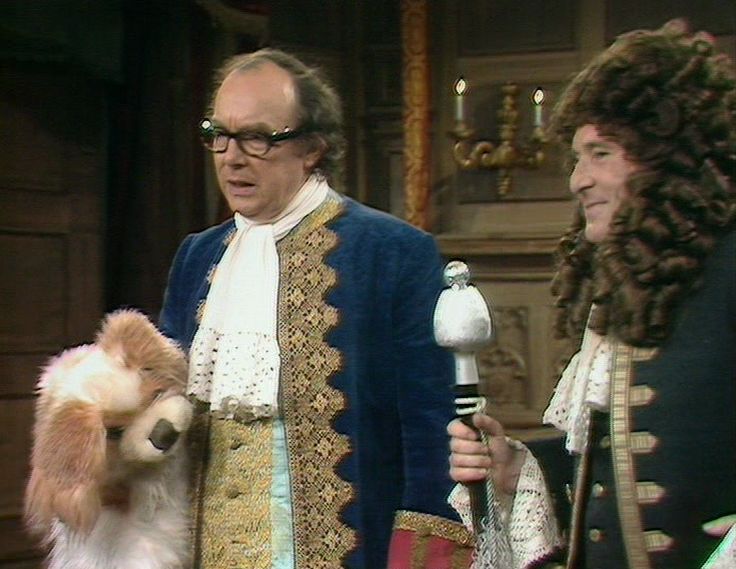
Diana Rigg is the big guest star and rather unusually she first appears, completely unheralded, in a sketch about a psychiatrist before starring in the big end of show play.  Ernie is Samuel Pepys, Eric is King Charles II and Diana is Nell Gwynn.  It’s long – possibly a little too long – running at just under twenty minutes, but there is some filming to break up the studio stuff as well as an unexpected appearance from Gordon Jackson (who was a favourite with the viewers at the time, thanks to Upstairs Downstairs).

If his final line “What would Mrs Bridges say?” is a little obvious, then that sort of sums up the show.  M&W would jump ship from the BBC to Thames a few years later, mainly because they were concerned that their shows were becoming stale and felt that a different network would give them new impetus.  Whether the Thames shows were an improvement over the later BBC ones is a debate for another time, but on the evidence of the 1975 Christmas Show, M&W were somewhat treading water.

Out of the Unknown – The Man in my Head

man

Written by John Wiles
Directed by Peter Cregeen

A group of soldiers led by Brinson (Tom Chadbon) break into a Hydro Electric Plant.  They are members of a Strike Force, an elite group of soldiers who have had their orders subliminally implanted.  Until they receive the appropriate radio signal they don’t know where they are or what they have to do.

If they are captured, they can break a capsule which will automatically create a new reality that will prove to be unshakable under enemy interrogation.

At prearranged times their orders will be automatically relayed to them, but some of them begin to question the reason for the mission.  Or could it be that this dissent has also been programmed?  As these soldiers have had their memories wiped and then reprogrammed, can they tell which thoughts are their own and which have been created for them?

The Man in my Head, written by John Wiles, shares some similarities with another fourth series episode – Welcome Home.  In both stories we see how the human mind can be “reprogrammed” to believe that false memories are true.

Wiles’ script creates conflict between the soldiers, some of whom simply obey whilst others are more questioning.  And one of them, Fulman (Robert Oates), accidentally triggers his cover story, which drives him to the point of madness.

A large part of the story takes place in a single set, which looks very impressive (it has several levels, walkways and was designed to be shot at any angle through 360 degrees).  Although it’s fair to say that some of the CSO work (such as the soldiers climbing down the ladder) is much less convincing.  Tom Chadbon, a familiar television face, is good as Brinson, who like some of the others begins to doubt exactly why they are here and what it is they hope to achieve.  The answers are provided in the last few minutes and this wraps up the story quite well.

Although it teeters on the edge of melodrama occasionally, The Man in my Head is an efficient story – and sadly it’s the last surviving episode of OOTU (the remaining three were all wiped, although The Uninvited does exist as an audio recording).

Next Up – The Uninvited

The Box of Delights – Episode Two – Where Shall The ‘nighted Showman Go?

box 02

Given the potency of his performance, it’s remarkable how small Patrick Troughton’s screen-time in The Box of Delights actually is.  The majority of his scenes are in the first episode, whilst in episode two he only has one scene of importance before disappearing.  He returns at the end of the sixth episode but does little of note.

Basically though, once Cole Hawlings passes the Box to Kay in episode two, his function in the story is over.  And whilst he’s still vague about what’s actually happening, he does share one important piece of information – the Box isn’t his, it belongs to Master Arnold who appears to be stranded somewhere in the past.

After Kay and Peter witness the old man being scrobbled by Abner’s men, they report it to the Inspector (James Grout).  The Inspector, of course, doesn’t believe a word of it, preferring to think that Hawlings was spirited away by some of his friends who were playing a prank on him.  James Grout is lovely in this scene, as he is throughout the story.  There’s a real warmth to his conversation with the children – he may disbelieve everything they say, but he’s never abrupt or unkind.  It’s a staple of children’s literature that adults tend to not to believe anything the children say, forcing them to solve the mystery by themselves and the Inspector falls nicely into this pattern.

There’s a major sequence with the Box in this episode – Kay ventures into the wood to meet Herne the Hunter and both of them are transformed firstly into deer, then into birds and finally into fish.  It’s a gorgeous example of animation that is enhanced by Roger Limb’s fine score.  This sort of animation was never cheap, but it’s immeasurably to the series’ benefit that they spent the money – even if it does look a little the worse for wear on the 2004 DVD release.  If the original elements still exist, it would be nice to think they could be restored one day for a special edition re-release.

The reason for this scene is obliquely explained  to us by Herne.  “Did you see the wolves in the wood?  That is why we became wild duck.  Did you see the hawks in the air?  That is why we became fish in the pool.  Now do you see the pike in the weeds?”  Which seems to imply that there is danger everywhere, even in the Box – it’s not a safe haven.

One thing that the second episode has lacked is an appearance from Robert Stephens.  We have to wait until the final scene before we see him – but even though he has only a brief moment of screen-time he still oozes villainy, which leads us nicely into episode three.

Where is that Rat? And where is the Box? As for the boy … that interfering, overreaching boy … reporting to the police, talking on telephones.  What I won’t do to that boy!

Next up – Episode Three – In Darkest Cellars Underneath

The Morecambe and Wise Christmas Show 1973

m&w 73

After the disappointment of the 1972 Christmas Show, Eddie Braben was back on writing duties for 1973, so there’s a definite upswing in the quality of the material.  The show opens with Eric advising Ernie to check the Stop Press of The Harpenden Bugle and Advertiser.  Ernie has been awarded the following title – Lord Ern of Peterborough (“She was going to make you a sir, but she didn’t think knights were that short”).  There’s some more choice lines, such as –

ERIC: You’ll realise you’ll have to have a monogram?
ERNIE:  I’ll have no time for playing records

It’s this sort of banter that was largely absent from the previous Christmas Show.  Of course, there’s the inevitable disappointment for Ern when he realises that Eric’s put his new present of a typewriter to good use by typing in the Stop Press of The Harpenden Bugle and Advertiser ….

When Ernie introduces John Hanson as England’s number one musical comedy star, that gave me pause for thought.  If that was so, then time hasn’t been kind to him as he’s pretty much forgotten today.  But his M&W appearance will probably continue to keep his name alive, and he does work well with Eric & Ernie.  His chat with them in front of the curtain is a joy.

Eric’s in a particularly playful mood, especially when John has trouble saying The Chocolate Soldier.  Ernie asks him if he meant The Chocolate Soldier, just to make things clear for the audience, but Eric’s not going to let the moment pass, “No, what he said … Socolate Choldier”.  After some more good-natured banter with M&W he gets the chance to sing, backed by Eric & Ernie, who are joined by Edward Heath, Harold Wilson, Jeremy Thorpe and Enoch Powell!

Hannah Gordon’s up next, but she’s surprised to find that she’s not been hired to act – instead they want her to sing, which concerns her (“I can’t sing a note”).  But she’s game, so has a bash at The Windmills of Your Mind.  M&W have built a set for her, which should strike a note of caution for anybody who’s watched the previous Christmas Shows.  It boasts a very impressive windmill which picks up Ern (or at least his stunt double) and whirls him around.

Up next is a bedroom sketch.  It lasts for just over six minutes and I think out of everything they ever did, it’s my favourite bit of Morecambe and Wise.  Virtually every line is a winner –

ERN: Have you cut yourself?
ERIC: No, no no. My face is a bit sore, thanks to that new bathroom cabinet.
ERN: Why, what’s wrong with it?
ERIC: It’s all those fancy designs on the mirror.
ERN: What do you mean?
ERIC: I’ve just spent the last 20 minutes trying to shave a seagull off me left cheek

ERN: You’ll have sciatica in the morning.
ERIC: I won’t, I’ll have shredded wheat like everybody else.

And the best line (as a police car races past the window) from Eric – “He’s not going to sell much ice cream going at that speed, is he?”

No Kenny Ball alas, but The New Seekers aren’t too bad. The last twenty five minutes or so feature Vanessa Redgrave and they get good value from her in both a musical number as well as a play. She’s suitably vampish in the musical number (the part where she makes Eric’s maracas drop off never fails to make me laugh) and playing Josephine she attempts to seduce Eric’s Duke of Wellington. Ernie is a suitably diminutive Napoleon with a fondness for concealing rabbits in his tunic.

If somebody was compiling a Morecambe & Wise best of, possibly only the flat sketch would make the grade. But the rest, whilst not hitting the heights of 1971, is consistently good – which makes this show a pleasure from beginning to end.