The 1987 BBC Classic tation of Vanity Fair will be released by Simply HE at the end of November 2014. Promotional blurb –
Eve Matheson and Rebecca Saire lead the cast in this 16-part adaptation of William Makepeace Thackeray s classic, filmed entirely at the Pebble Mill Studios. Set in the Napoleonic Wars, Vanity Fair is a rich and resplendent satire of English society in which according to Thackeray, there is great quantity of eating and drinking, making love and jilting, laughing and the contrary, smoking, cheating, fighting, dancing and fiddling. Becky (Eve Matheson), the penniless, orphaned daughter of an artist and a French opera dancer, and Amelia Sedley (Rebecca Saire), the sheltered child of a rich City Merchant are unlikely, but firm friends. From the drawing rooms of Regency London to the fields of Waterloo, Vanity Fair tells their story. Becky, an irrepressible schemer one of the most seductive social climbers of all time who will stop at nothing to get what she wants. While her friend, the meek and mild Amelia, pursues the opposite course. In the end both girls get what they want but not quite in the way they planned.
Whilst it’s pleasing to see Simply continue to release television programmes from the BBC archive, their quality control over the past year or so has been rather poor. Various titles (Softly Softly: Taskforce, Spyship, Angels series 2, The Aphrodite Inheritence) have been afflicted by poor encoding which inadvertently “filmized” the VT sequences.
Thankfully, it appears that Vanity Fair doesn’t have these problems – so hopefully Simply have turned a corner with their QC procedures.
I’ve previously touched upon how the Pythons generally eschewed punch-lines in favour of a style described by them as a “stream of consciousness”. So the sketches could be linked by Terry Gilliam’s animations, vox pops from the man and woman in the street or, as in Full Frontal Nudity, a single character interrupting the sketches to complain that everything had got “too silly”.
Full Frontal Nudity treads a difficult path – not only do we have the Colonel bringing the majority of the sketches to an abrupt end with his complaints and criticisms, the Pythons also seem to delight in highlighting the inadequacy of their material. Two sketches are terminated after the line delivered by the token female is criticized – with her wailing that “It’s my only line”. When the Colonel curtails the opening sketch and orders the telecine to be run, Terry Jones comments that “The general public’s not going to understand this, are they?”. And again it’s Jones (towards the end of the Dead Parrot sketch) who is apologetic for the sketch spluttering to an end, since “Oh yeah, it’s not easy to pad these out to thirty minutes”.
If you continually mock your own efforts, then there’s a real danger that the audience will agree – but by dropping this show eighth into the run it works much better than if it appeared earlier. However, the Pythons weren’t the first to play with the format of the sketch show, it was Spike Milligan’s Q5 that really opened their eyes, as Terry Jones explains.
(Spike) made it so clear that we’d been writing in cliches, where we either did three minute sketches with a beginning, middle and end, or we did one joke with a blackout.
Once they found they were free from such self-imposed restrictions, the Pythons were able to experiment even further. Full Frontal Nudity is one of more successful examples of this from the first series.
After a few vox pops on the merits of full frontal nudity, there’s a voice-over played over stock footage from WW2 – “In 1943, a group of British Army Officers working deep behind enemy lines, carried out one of the most dangerous and heroic raids in the history of warfare. But that’s as maybe. And now . . .”
This is the first wrong-footing moment as we jump to unoccupied Britain 1970 and Watkins (Idle) who’s a solider who wants to leave the Army because it’s dangerous (“A bloke was telling me, if you’re in the army and there’s a war you have to go and fight. I mean, blimey, I mean if it was a big war somebody could be hurt”). This is a nice, silly idea and it doesn’t go on too long.
We then meet Luigi and Dino (Palin and Jones), two Italians who are keen to offer the Colonel the benefits of their protection (“You’ve got a nice army base here, colonel. We wouldn’t want anything to happen to it”). The fact that they’re running a protection racket becomes clear very quickly, but the sketch continues for a while longer – possibly it was extended so that when the Colonel brings it to a halt (“No, the whole premise is silly and it’s very badly written. I’m the senior officer here and I haven’t had a funny line yet. So I’m stopping it”) it has a little more impact.
My favourite sketch in this episode is Buying a Bed. Terry Jones and Carol Cleveland are newlyweds keen to buy a bed. The problem is that Mr Verity (Idle) multiplies every figure by ten whilst Mr Lambert (Chapman) divides every figure by three. At the start of the sketch you can’t help making mental calculations to follow the discussion of bed sizes, but this is fairly irrelevant as once Mr Lambert hears the word “mattress” he places a paper bag on his head and Mr Verity has to step into a tea-chest and sing Jerusalem to snap him out of it. Yes, there’s only a illogical logic to this, but it works (I don’t know why, but it does). And presumably the names of the two salesman were deliberately chosen to pay tribute to a certain well-known female television producer.
There’s also a sketch about a dead parrot, which has become quite well known. The Dead Parrot is, of course, one of Python’s greatest hits, although like a lot of the material from the first series it’s received politely, but without wild enthusiasm, by the studio audience. But they do warm up a little as Cleese gets to the end of his rant.
It’s not pining, it’s passed on. This parrot is no more! It has ceased to be. It’s expired and gone to meet its maker.This is a late parrot. It’s a stiff. Bereft of life, it rests in peace. If you hadn’t nailed it to the perch it would be pushing up the daisies. It’s rung down the curtain and joined the choir invisible. This is an ex-parrot.
When performed live it was no surprise that it tended to end after Cleese’s line “If you want to get anything done in this country you’ve got to complain till you’re blue in the mouth” as it meanders on for a few minutes more with the odd nice moment (arguing that the palindrome of Bolton would be Notlob rather than Ipswich) but this may be another sketch that’s been allowed to run on longer in order to justify bringing on the Colonel to stop it.
Hell’s Grannies and the even more bizarre follow-ups (baby snatchers and vicious gangs of keep left signs) end what is probably the best show from the first series of Python and one the strongest from all four series. Others might have equally good sketches, but Full Frontal Nudity flows well from sketch to sketch with very little filler.
Henry VI Part One is generally considered to be the weakest of Shakespeare’s history cycle. This might explain why, uniquely, it was the only play adapted for An Age of Kings to be condensed down to a single episode. This obviously meant that major cuts had to be made – the exploits of Talbot in France are completely removed as are all the battle scenes. What remains are the verbal skirmishes between the nobles in England as they symbolically choose either white or red roses to mark their allegiance.
With the battles in France excised, what’s left are the scenes between the Dauphin (Jerome Willis) and Joan of Arc (Eileen Atkins). These could have been cut too, which would have allowed all the events of the play to be centered in England, but I’m glad they were kept in. Atkins gives a striking performance – her Joan is confident and self-assured and she easily captivates the Dauphin.
Dauphin, I am by birth a shepherd’s daughter,
My wit untrain’d in any kind of art.
Heaven and our Lady gracious hath it pleased
To shine on my contemptible estate:
Lo, whilst I waited on my tender lambs,
And to sun’s parching heat display’d my cheeks,
God’s mother deigned to appear to me
And in a vision full of majesty
Will’d me to leave my base vocation
And free my country from calamity:
Her aid she promised and assured success:
In complete glory she reveal’d herself;
And, whereas I was black and swart before,
With those clear rays which she infused on me
That beauty am I bless’d with which you see.
Ask me what question thou canst possible,
And I will answer unpremeditated:
My courage try by combat, if thou darest,
And thou shalt find that I exceed my sex.
Resolve on this, thou shalt be fortunate,
If thou receive me for thy warlike mate.
One of the drawbacks of such intensive cuts is that it severly reduces her role. But the little we have of Joan is very impressive, all the more so since up until now there have been few decent roles for women in the history cycle. Director Michael Hayes also creates some impressive shots – for example, when Joan’s nearly defeated and attempting to summon up demonic spirits to aid her, he zooms into her eyes and superimposes dancing figures onto her irises. Such a trick would be commonplace now, but to achieve such an effect then and particlarly during a live broadcast is quite noteworthy. Joan’s death is also another stand-out moment. The flames are quite effective, as are her ear-splitting screams as the picture fades to black.
Back in England, the nobles are taking sides. Given the cuts to the play and the number of characters we see, this isn’t particularity easy to follow and is probably one of the major drawbacks of condensing the play. What is clear is that the Duke of Gloucester (John Ringham) is the protector of the young King, Henry VI (Terry Scully), and Winchester (Robert Lang) opposes Gloucester.
Both Ringham and Lang (familiar faces from previous episodes) give good performances and Scully manages (via his high-pitched tones) to indicate Henry’s youth and inexperience. Another notable appearance is that of Mary Morris as Margaret, daughter of the Duke of Anjou. Margaret would prove to be a major figure in the upcoming plays and Morris impresses here as she would do later on. She was always an unusual actresses, with a style all of her own, and there’s more than a hint of that here.
Effectively, The Red Rose and the White stands as a prologue for the battles of the Wars of the Roses which will run for the remaining six episodes of the series. It may not be the most distinguished part of An Age Of Kings, but thanks to some fine performances (particularly Eileen Atkins) it’s not without interest.
In 1988, Doctor Who celebrated it’s 25th anniversary. So bringing back the Daleks (and setting the story in the location and timescale of the first episode from 1963) seemed to be as good a way as any to kick off the anniversary year. Although there are various nods to the past (Coal Hill School, Totters Lane, etc) they aren’t allowed to overwhelm the story, which is traditional in some ways but also quite different in others.
On the traditional side, the Doctor and Ace link up with the military, who function as a surrogate UNIT. Group Captain Gilmore (Simon Williams) is visually and character-wise a dead ringer for the Brigadier whilst Sgt Mike Smith (Dursley McLinden) performs the functions of Yates/Benton. The Doctor’s role as scientific adviser is filled by Dr Rachel Jensen (Pamela Salem) and Allison (Karen Gledhill).
The early action in episode one is impressive. After the fairly lightweight S24, it seems that Remembrance was an attempt to get back to basics. The Doctor is a more withdrawn, mysterious figure than the open and, at times, guileless character from S24. As with some of his earlier incarnations he has a lack of patience with the floundering humans (“Nothing you possess will be effective against what’s in there!”).
The thing “in there” was a Dalek and it’s the first one we see in the story and also the first to be destroyed. This must be the Dalek story, to date, with the highest number of destroyed Daleks. And whilst the Doctor put paid to this one with a few cans of Ace’s Nitro 9, he was mistaken about the military being unable to deal with them. Some of their weaponry would later prove to be very useful.
If you like explosions, then Remembrance is certainly your sort of story, although there’s still time for some quieter, character-driven sequences. One of the best occurs in episode two, as the Doctor is musing over whether he’s right to do what he’s decided to do.
JOHN: Can I help you?
DOCTOR: A mug of tea, please.
JOHN: Cold night tonight.
DOCTOR: Yes, it is. Bitter, very bitter. Where’s Harry?
JOHN: Visiting his missus. She’s in hospital.
DOCTOR: Of course. It’ll be twins.
JOHN: Hmm? Your tea. Sugar?
DOCTOR: Ah. A decision. Would it make any difference?
JOHN: It would make your tea sweet.
DOCTOR: Yes, but beyond the confines of my tastebuds, would it make any difference?
JOHN: Not really.
DOCTOR: But
JOHN: Yeah?
DOCTOR: What if I could control people’s tastebuds? What if I decided that no one would take sugar? That’d make a difference to those who sell the sugar and those that cut the cane.
JOHN: My father, he was a cane cutter.
DOCTOR: Exactly. Now, if no one had used sugar, your father wouldn’t have been a cane cutter.
JOHN: If this sugar thing had never started, my great-grandfather wouldn’t have been kidnapped, chained up, and sold in Kingston in the first place. I’d be a African.
DOCTOR: See? Every great decision creates ripples, like a huge boulder dropped in a lake. The ripples merge, rebound off the banks in unforeseeable ways. The heavier the decision, the larger the waves, the more uncertain the consequences.
JOHN: Life’s like that. Best thing is just to get on with it.
Tea and sympathy
Eventually it becomes clear that the Doctor has lured the Daleks to Earth in order to allow them to steal the Hand of Omega (a mystical Time Lord device that the first Doctor dropped off sometime prior to the events of An Unearthly Child). This story marks the start of the Doctor as a cosmic manipulator which after the series was cancelled was developed much, much further in Virgin’s range of New Adventures novels.
I have to admit to being somewhat uneasy with the Doctor’s actions in this story. All of the deaths can be laid at his door, because if he’d removed the Hand of Omega from Earth then there would have been no reason for the Daleks to come here. And when you tot up the number of people who died (as well as the fact that the Doctor also destroyed an entire planet – Skaro) it’s hard to argue that it was worth it.
The Doctor has been ruthless in the past (destroying the Ice Warriors’ fleet in The Seeds of Death, for example). But at least in Seeds you could say that the Ice Warriors made the first move by attempting to invade Earth. Here, the Doctor appeared to initiate events for no other reason than he fancied wiping out the Daleks.
The original Dalek story was concerned with, as Ian put it, “a dislike for the unlike” or as Ace says, “racial purity”. This is also developed here, as we see two Dalek factions – the Renegades and Imperials. It’s something of a surprise to find that Davros is now leading the Imperial Daleks, particularly when you remember he was captured by them at the end of Revelation of the Daleks. Clearly Davros was a smooth talker!
The Dalek factions are intent on wiping each other out, since both sides consider the other to be an abomination, and this is also paralled with the humans. It may seem a little crude now, but Mike’s views – “You have to protect your own, keep the outsiders out just that your own people can have a fair chance.” and the sign in the boarding house run by Smith’s mother (“No coloureds”) are attempts to connect Doctor Who to the real world, something which had rarely happened in the series before.
On a more trivial level, Daleks can now climb stairs and the cliff-hanger to episode one is a glorious moment. The Daleks’ new extermination effect is very impressive as well and the Daleks themselves look pretty good – although they do have a tendency to wobble when out on the streets. Historically, the Daleks always moved best on a smooth studio floor and whenever they were called out onto location they tended to be placed either on boards or tracks. A new system was tried for this story, which allowed the Daleks to move more freely, although on cobbled streets they did tend to rock from side to side!
From Genesis onwards the Dalek stories were dominated by Davros, so only having him appear right at the end was a good move. The battle computer was a clear attempt to fool the audience into believing that it was Davros, and this works quite well – particularly the creepy moment when the girl (Jasmine Breaks) is revealed. But as she was seen watching Radcliffe in the scene prior to this, it’s something of a mystery how she was able to get back to Radcliffe’s yard before he did.
“That’s some serious hardware. Did you see that, Professor? Unsophisticated, but impressive.”
Sophie Aldred has some good material to work with here. She gets to attack the Daleks with a baseball bat (“Who are you calling small?”) and enjoys a close relationship with Mike that is instantly soured when it’s revealed he’s inadvertently helped the Daleks.
Remembrance also allows us to bid farewell to a number of Doctor Who stalwarts, all making their final contribution to the series. Michael Sheard and Peter Halliday had both appeared in numerous stories dating back to the 1960’s whilst John Scott-Martin and Roy Skelton had also racked up numerous credits since the 1960’s as monsters and monster voices respectively.
Although I have issues with the Doctor’s actions, there’s no denying that Remembrance is a well-made story with some fine performances. The return of the Daleks was a canny move, since it generated some good publicity and as the story didn’t disappoint it was surely responsible for hooking some new viewers into tuning in for the following adventure.
Although the first six episodes of Python had spun about in various different ways, You’re No Fun Anymore is a departure from the norm. The first five minutes or so seem to be operating in the usual way but the remainder is devoted to a single sketch – that of the tennis-playing blancmanges from outer-space.
We open with Eric Idle as a camel-spotter.
Interviewer: Well, now tell me, what do you do when you spot a camel?
Spotter: Er, I take its number.
Interviewer: Camels don’t have numbers.
Spotter: Ah, well you’ve got to know where to look. Er, they’re on the side of the engine above the piston box.
Interviewer: What?
Spotter: Ah – of course you’ve got to make sure it’s not a dromedary. ‘Cos if it’s a dromedary it goes in the dromedary book.
Interviewer: Well how do you tell if it’s a dromedary?
Spotter: Ah well, a dromedary has one hump and a camel has a refreshment car, buffet, and ticket collector.
The sketch terminates with Idle declaring “You’re no fun anymore” which leads into several other sketches where we only see the shots of the same punch-line – much to Idle’s chagrin who’s peeved that everybody else has pinched his line.
After the accountant sketch and a very worthwhile public-service announcement (“And now here is a reminder about leaving your radio on during the night. Leave your radio on during the night“) we’re into the heart of the episode, introduced by Michael Palin’s creepy redcoat.
Now we’ve got some science fiction for you, some sci-fi, something to send the shivers up your spine, send the creepy crawlies down your lager and limes. All the lads have contributed to it, it’s a little number entitled, Science Fiction Sketch.
Englishmen (and women and babies) are being transformed into stereotypical Scotsmen (complete with kilt, bushy red beard and bagpipe accompaniment). The establishment are baffled, but luckily for us Graham Chapman is an expert in why people change from one nationality to the other and Donna Reading is his incredibly dumb (but pretty) girlfriend who asks all the questions you would expect someone to ask in this type of story.
At this point in time the team don’t seem to have settled on Carol Cleveland as their default female performer which is reputably because director Ian McNaughton wanted to hire various different actresses in order to have a variety of pretty faces in the episodes. Reading is fine but she lacks the sense of comedy timing that Cleveland would have brought to the part.
The sketch can be broken down into various smaller sketches, some of which would have worked well by themselves. Probably the best of the bunch is John Cleese’s police Sergeant who simply can’t understand how Eric Idle and four friends can play a game of doubles.
Sergeant: A blancmange, eh?
Girl: Yes, that’s right. I was just having a game of doubles with Sandra and Jocasta, Alec and David…
Sergeant: Hang on!
Girl: What?
Sergeant: There’s five.
Girl: What?
Sergeant: Five people . . . how do you play doubles with five people?
Girl: Ah, well … we were…
Sergeant: Sounds a bit funny if you ask me … playing doubles with five people…
Girl: Well we often play like that… Jocasta plays on the side receiving service…
Sergeant: Oh yes?
Girl: Yes. It helps to speed the game up and make it a lot faster, and it means Jocasta isn’t left out.
Sergeant: Look, are you asking me to believe that the five of you was playing doubles, when on the very next court there was a blancmange playing by itself?.
Girl: That’s right, yes.
Sergeant: Well answer me this then – why didn’t Jocasta play the blancmange at singles, while you and Sandra and Alec and David had a proper game of doubles with four people?
Girl: Because Jocasta always plays with us. She’s a friend of ours.
Sergeant: Call that friendship? Messing up a perfectly good game of doubles?
Girl: It’s not messing it up, officer, we like to play with five.
Sergeant: Look it’s your affair if you want to play with five people … but don’t go calling it doubles. Look at Wimbledon, right? If Fred Stolle and Tony Roche played Charlie Pasarell and Cliff Drysdale and Peaches Bartcowitz… they wouldn’t go calling it doubles.
Girl: But what about the blancmange?
Sergeant: That could play Ann Haydon-Jones and her husband Pip.
There’s a certain wonky logic to the story. The blancmanges are desperate to win Wimbledon and believe that if they turn all Englishmen into Scotsmen (as it’s well known that the Scots can’t play tennis) then they’ll have a clear run to the title. This rather ignores all the other countries that are good at tennis, but this is a story about blancmange’s playing tennis so I’m not going to argue points of logic.
There are some (I assume) deliberately wobbly effects (an unconvincing flying saucer and the blancmanges themselves) which add to the general 1950’s b-movie feel. Although the science fiction sketch isn’t wall-to-wall hilarity, there’s enough good stuff to hold the interest although it would be a long time before the Pythons would attempt something similar.
After some silly captions (Python always loved captions) we move to It’s The Arts, which is designed to see how many times the name of a forgotten composer can be recited before it becomes incredibly irritating. His name? Johann Gambolputty de von Ausfern-schplenden-schlitter-crass-cren-bon-fried-digger-dingle-dangle-dongle-dungle-burstein-von-knacker-thrasher-apple-banger-horowitz-ticolensic-grander-knotty-spelltinkle-grandlich-grumblemeyer-spelter-wasser-kurstlich-himble-eisen-bahnwagen-guten-abend-bitte-ein-nürnburger-bratwürstel-gerspurten-mitz-weimache-luber-hundsfut-gumberaber-shönedanker-kalbsfleisch-mittleraucher-von-Hautkopft of Ulm. Terry Jones is his only surviving relative who pegs out halfway through reciting his name. Interviewee John Cleese doesn’t seem too concerned about this and pops off to grab a shovel to dig him a makeshift grave!
Michael Palin is very good as the boss of a crime syndicate that never actually breaks the law.
Right … this is the plan then. At 10:45 .. you, Reg, collect me and Ken in the van, and take us round to the British Jewellery Centre in the High Street. We will arrive outside the British Jewellery Centre at 10:50. I shall then get out of the car, you Reg, take it and park it back here in Denver Street, right? At 10:51, I shall enter the British Jewellery Centre, where you, Vic, disguised as a customer, will meet me and hand me £5.18.3d. At 10:52, I shall approach the counter and purchase a watch costing £5.18.3d. I shall then give the watch to you, Vic. You’ll go straight to Norman’s Garage in East Street. You lads continue back up here at 10:56 and we rendezvous in the back room at the Cow and Sickle, at 11:15. All right, any questions?
It fits into a familiar pattern for Python – visually they look and sound like criminals, so the reveal that they aren’t is the key. It maybe should have been more of a throw-away, but it’s worth it for Palin’s hysterical reaction when he discovers that one of his gang has left their car five minutes overdue on a parking meter.
Five minutes overdue. You fool! You fool! All right … we’ve no time to lose. Ken – shave all your hair off, get your passport and meet me at this address in Rio de Janeiro Tuesday night. Vic – go to East Africa, have plastic surgery and meet me there. Reg – go to Canada and work your way south to Nicaragua by July. Larry – you stay here as front man. Give us fifteen minutes then blow the building up. All right, make it fast.
Crunchy Frog is one of Python’s stand-out sketches – which is no doubt reinforced since it featured during most of their live performances, up to and including the O2 gigs earlier this year. It’s possible to imagine it being performed by Cleese/Palin with Palin acting shifty and defensive as the Whizzo Chocolates boss (like the Dead Parrott/Chesse Shop sketches) but whilst that would have worked quite well, what we actually had was even better. Terry Jones is proud of his confectioneries and puzzled as to why anybody could find them at all problematic. Add in John Cleese’s pernickety high-pitched policeman and you have a classic sketch.
Most members of Python faced the possibility of a life in a dead-end job after they left University, so it’s not really a surprise that so many of their sketches feature grey little men who tend to be either Stockbrokers or Chartered Accountants. One of these is Michael Palin in The Dull Life of a City Stockbroker who blithely ignores all the excitement around him (a wonderfully made-up John Cleese as Frankenstein’s monster killing people at the bus-stop and a topless lady in the newsagents, for example) and instead retreats into the excitement of his DC-style comic. This leads into some nice Gilliam animation which then segues into the theatre sketch.
Graham Chapman is an inoffensive chap waiting for the curtain up and Eric Idle is a Red Indian who sits next to him. This bizarre culture clash (“Me heap big fan Cicely Courtneidge. She fine actress … she make interpretation heap subtle … she heap good diction and timing … she make part really live for Indian brave. My father – Chief Running Stag – leader of mighty Redfoot tribe – him heap keen on Michael Denison and Dulcie Gray”) is the motor which drives the sketch. It’s also of interest, since Chapman and Idle appear to be sitting in the Python audience which allows us a quick look at the people who came to these early recordings.
Graham Chapman (as in the Theatre sketch) tended to play the more normal, grounded characters (see The Holy Grail and The Life of Brian for further examples of this). So Twentieth Century Vole allows him a more grotesque character – the despotic film producer Irving C. Saltzberg. This sketch allows us to see all six Pythons together (as well allowing Terry Gilliam his most lines to date) plus guest Ian Davidson. The premise is simple – Saltzberg is a tyrant and his employees are all frightened yes-men who attempt to interpret their boss’ whims and provide him with the answer they think he wants.
Twentieth Century Vole has some good moments, although once you understand the premise of the sketch there’s no real surprises and it doesn’t spin off into an unexpected direction. But it’s worthwhile for Saltzberg’s increasingly bizarre story ideas and, of course, “Splunge”!
Well now we’re getting somewhere. No, wait. A new angle! In the snow, instead of the tree, I see Rock Hudson, and instead of the dog I see Doris Day and, gentlemen, Doris Day goes up to Rock Hudson and she kisses him. A love story. Intercourse Italian style. David Hemmings as a hippy Gestapo officer. Frontal nudity. A family picture. A comedy. And then when Doris Day’s kissed Rock Hudson she says something funny like…
Back in 1987 Dragonfire topped the DWM best story poll. Maybe this was because it was the most “traditional” story of the season and that was why it appealed to the fans. But though it’s a decent enough romp, the lack of logic in the plot (and some of the performances) are a bit of a problem.
Edward Peel, as the villanious Kane, is one of Dragonfire’s highlights though. Peel doesn’t have to do a great deal – except loom menacingly – but he looms very well. He does has the benefit of playing against Patricia Quinn as Belazs, who has a nice line in frustration and despair. Tony Osboa as Kracauer isn’t so good though – he’s rather overplaying throughout all his scenes. And Kracauer is clearly not too bright. Having agreed with Belazs that it would be a good idea to kill Kane, he then waits around after sabotaging the temperature controls for Kane to wake up and kill him. Not a good move!
I also have to mention the ice statue created of Kane’s dead partner, Xana. He’s clearly delighted with it – “A work of artistry, my friend. Incandescent artistry. I could almost believe Xana lives again.” – but it doesn’t look very impressive to me and not even a terribly good likeness of Xana from the brief picture of her that we see.
The Doctor and Mel are on the hunt for a Dragon, assisted, in his own unique way, by Glitz (Tony Selby) and Ace (Sophie Aldred). The icy lower levels allow McCoy plenty of opportunities to slip and slide, whilst episode one ends with a notorious cliffhanger – as the Doctor, well, hangs off a cliff. Apparently it should have been made clear that the Doctor had to go down since he couldn’t go back – but why wouldn’t he have waited for Glitz? And how did Glitz get down in order to rescue the Doctor?
Bonnie Langford was uncertain for a long time whether or not to return for S25. When Dragonfire was written it still wasn’t decided, so there were two endings scripted – either Mel went off with Glitz and Ace joined the Doctor, or Ace left with Glitz. As it was, shortly after the first studio session Langford decided to leave after all, so Ace would become the Doctor’s new traveling companion.
Kane has a tempting offer for Ace
Sophie Aldred was incredibly inexperienced (Dragonfire was the first time she’d been inside a television studio) but she acquits herself well. The character of Ace is not as well defined in this story as it would become – but given the fact that many companions never develop at all during their time on the show, the growth and journey of her character is quite remarkable. For some fans in the late 1980’s, it was Aldred’s show with McCoy playing second fiddle.
Some of the plot-threads in this story will be picked up and developed across the next two seasons, and already we have the sense of a damaged girl hiding behind a tough, streetwise facade.
MEL: You’re from Earth?
ACE: Used to be.
MEL: Whereabouts on Earth?
ACE: Perivale.
MEL: Sounds nice.
ACE: You ever been there?
MEL: No.
ACE: I was doing this brill experiment to extract nitroglycerine from gelignite, but I think something must have gone wrong. This time storm blows up from nowhere and whisks me up here.
MEL: When was this?
ACE: Does it matter?
MEL: Well, don’t you ever want to go back?
ACE: Not particularly.
MEL: What about your mum and dad?
ACE: I haven’t got no mum and dad. I’ve never had no mum and dad and I don’t want no mum and dad. It’s just me, all right?
MEL: Sorry. What about your chemistry A level, then?
ACE: That’s no good. I got suspended after I blew up the art room.
MEL: You blew up the art room?
ACE: It was only a small explosion. They couldn’t understand how blowing up the art room was a creative act.
Things tick along quite nicely for the first two episodes. The Doctor/Glitz and Mel/Ace make two good teams but everything collapses in episode three as there’s no escaping the major plot flaws. Kane’s been imprisoned on Svartos for three thousand years, so why has he only decided now to escape? And if the Dragon (the biomechanoid) is his jailer (and how exactly does this work?) then why does it contain the key which enables him to escape his exile?
And the silliest part of all – are we really supposed to believe that during the last three thousand years, when he’s been running the galactic equivalent of Bejam, he’s never once checked to see how things were going on his home planet of Proamon? It was destroyed by a super-nova two thousand years ago and nobody thought to tell him or he didn’t discover this for himself?
There’s an echo of The Hand of Fear here, but at least Eldrad had a good excuse for not knowing about the current situation on Kastria as only his fossilised hand remained, buried deep in the Earth’s surface for millions of years. Therefore you can’t blame him for not keeping up to date with the latest news (unlike Kane, of course).
Episode three also has the rather uninspiring bug hunt with McLuhan and Bazin and rather too much of the cutesy Stellar (Miranda Borman) for my taste. So ultimately Dragonfire is a bit of a damp squib, though the future was looking brighter.
S23 and S24 had been difficult times for the series, but S25 and S26 would see something of a creative rebirth. As it remained scheduled against Coronation Street there was a general public indifference and the critics were rarely kind either. Doctor Who might have become a beleaguered and largely unloved series, but it still had a few tricks and surprises up its sleeve.
Gerry Anderson’s Into Infinity (also known as The Day After Tomorrow) is to receive a rare television screening. BBC4 will broadcast it on Sunday, 9th November at 10:50 pm.
Since the DVD has only been made available to Fanderson members, this terrestrial outing is very welcome.
Into Infinity was written by Johnny Byrne, directed by Charles Crichton and was originally broadcast on BBC1 in 1976. Planned as the pilot of a possible series, it featured some familiar names from previous Anderson ventures, such as Nick Tate and, as narrator, Ed Bishop. Brian Blessed, a guest star from Space 1999, also features.
Post Space 1999. Anderson was to find funding for his projects hard to come by, so Into Infinity never got beyond the pilot stage. But it’s certainly an interesting curio that’s worth a look.
EDIT – it will shortly receive a wider DVD release, see here for details.
The long opening sketch, Confuse a Cat, seems to be an excuse for a sequence of frankly bizarre images, such as a penguin on a pogo stick (not a sentence that tends to get typed very often!).
Before this though, Graham Chapman’s vet is able to put his finger exactly on the cat’s problem.
You see …. your cat is suffering from what we vets haven’t found a word for. His condition is typified by total physical inertia, absence of interest in its ambiance – what we Vets call environment – failure to respond to the conventional external stimuli – a ball of string, a nice juicy mouse, a bird. To be blunt, your cat is in a rut. It’s the old stockbroker syndrome, the suburban fin de siecle ennui, angst, weltschmertz, call it what you will.
The rest of the episode contains shorter sketches linked by a series of vox-pops. The Cleese/Palin sketch with Palin as the world’s most inept smuggler and Cleese as the customs officer is probably the best of the bunch, although as it features a punch-line it feels a little out of place as a Python sketch. Possibly, like some of the other early sketches, it predated the series?
After this, Terry Jones attempts to chair a discussion on the points raised with a duck, a cat and a lizard. Since all are stuffed, this doesn’t generate a great deal of debate. Luckily though, there are plenty of men in the street who are able to offer an opinion, such as this stockbroker (played by John Cleese).
Well I think they should attack the lower classes, first with bombs and rockets, destroying their homes and then when they run helpless into the streets, mowing them down with machine guns. Ad then of course releasing the vultures. I know these views aren’t popular, but I have never courted popularity.
A Cleese/Chapman sketch featuring Cleese as a bizarre interviewer and Chapman as a bewildered interviewee doesn’t really go anywhere – there would be better examples of the domineering Cleese to come in future episodes.
Like a lot of Man’s crisis etc, the Encyclopedia Salesman sketch is a throwaway, but I’ve always rather liked it.
Delta and the Bannermen is another good story from Doctor Who’s most unfashionable season. It may be pretty light fare but there’s something infectious about the production that induces a feel-good factor. Well, for some people anyway. Others can’t get beyond the Ken Dodd factor.
Doddy is something of an infamous guest star, but he’s only on screen for a couple of minutes so he’s not really much of a problem. His appearance does indicate that this isn’t going to be the most serious of stories, but while there may be plenty of comic moments everybody tends to play it pretty straight, well most of them anyway.
Richard Davies, as Burton, was a familiar face from British sitcoms (a regular on Please Sir and a guest at Fawlty Towers, for example) and his performance is pitched at that level. After all, it’s difficult to deliver lines such as “now, are you telling me that you are not the Happy Hearts Holiday Club from Bolton, but instead are spacemen in fear of an attack from some other spacemen?” without having a certain comedy knack. Davies has the knack and his bewildered but enthusiastic presence is one of Delta’s many strengths.
Hawk (Morgan Deare) and Weismuller (Stubby Kaye) are also good value, although they don’t have a great deal to do with the main plot and their subplot (looking out for an American satellite) is rather odd, to say the least. But it’s Stubby Kaye! In Doctor Who! He may be dressed as the oldest teenager in town but he gives a charming turn.
The main plot (Gavrok hunting down the Chimerons) remains somewhat vague. We never know why Gavrok hates the Chimerons, so he’s ultimately a rather sketchy villain. This lack of motivation meant that it required a good actor to make something out of a fairly nothing role and Don Henderson certainly delivers. Henderson was a popular television face (The XYY Man, Strangers and Bulman) and he’s able to generate a suitable level of boo-hiss villainy.
Sadly, the object of his pursuit (the Chimeron Queen, Delta) is something of a weak link. Belinda Mayne gives a rather colourless, passionless performance and it’s hard to really connect with her or sympathise with the plight of her people. The other main female lead (Sara Griffiths as Ray) was much better. It’s easy to see why Ray was originally planned as companion material, although if she had joined she would needed to have brushed up on her end of episode acting. At the end of episode one she’s threatened with death, but there’s a singular lack of anxiety on her face – just a look of mild inconvenience!
The rather lovely Sara Griffiths
Given the comic-strip nature of the story, Gavrok’s destruction of the Nostalgia Tours bus at the end of the second episode is very jarring. The murder of thirty or forty people should be shocking (particularly those we know, like Murray) but it never really registers. Partly because the effect doesn’t convince but also because it seems out of place in the story to date.
The likes of The Myth Makers had three episodes of comedy followed by a dark, violent fourth episode. If things had taken a similar turn in Delta then this scene may have worked better, but events carry on as normal in episode three (with, for example, the bees attacking the Bannermen – a rather silly scene).
With two female guest roles and only three episodes, Bonnie Langford is a little sidelined in this story (she doesn’t do much at all in the last episode). Sylvester McCoy is on fine form though. I love his scenes with Ray in episode one, where he does his best to console her after she’s discovered that Billy (David Kinder) only has eyes for the lady from another planet. His hesitant comforting of the sobbing girl shows a tender side to the Doctor that we don’t see very often.
“Love has never been known for its rationality”
And his confrontation with Gavrok at the end of episode two is very good, especially the last line.
GAVROK: Give me Delta and I will give you your life.
DOCTOR: Life? What do you know about life, Gavrok? You deal in death. Lies, treachery and murder are your currency. You promise life, but in the end it will be life which defeats you.
GAVROK: You have said enough. I have traversed time and space to find the Chimeron queen. I will not be defeated.
DOCTOR: As you will. I came here under a white flag and I will leave under that same white flag, and woe betide any man who breaches its integrity. Now step aside! Release those prisoners.
(A Bannerman moves to obey.)
DOCTOR: Gavrok, it’s over. You’re finished, and we’re leaving.
(But as the Doctor, Mel and Burton walk to the motorbike and sidecar, they hear the sound of cocking weapons behind them.)
DOCTOR: Actually, I think I may have gone a little too far.
All this, plus a guest appearance by the legendary Hugh Lloyd (Hugh and I, Hancock’s Half Hour) and a stack of great 1950’s music makes me genuinely puzzled as to why this remains amongst the also-rans in every Doctor Who poll. You wouldn’t want every story to be like it, but once in a while it’s good to let your hair down and have a bit of a party – and Delta and the Bannermen certainly delivers that.
Like the rest of S24, Paradise Towers remains somewhat unloved by Doctor Who fandom. Out of 241 stories, the 2014 DWM poll places Time and the Rani at 239, Paradise Towers at 230, Delta at the Bannermen at 217 and Dragonfire at 215.
Is Paradise Towers really the 11th worst Doctor Who story of all time? I don’t think so, and whilst it has serious faults (hello Richard Briers, especially in episode four!) there’s plenty of things that do work.
Firstly, Sylvester McCoy is very good. His performance is far removed from the prat-falling Doctor seen in Time and the Rani. Here, the Doctor is content to watch and listen, and at times there’s a nice sense of stillness from him. As will become clear when we move through his era, McCoy is at his best when he’s downplaying and at his worst when he has to shout and emote.
Most of his best scenes are with the Caretakers, and this one is a particular favourite.
DOCTOR: I suppose how you guard me is in that rulebook.
DEPUTY: Yes. Rule forty five B stroke two subsection five.
DOCTOR: I wouldn’t mind having a look at that rulebook, if that’s not against the rules. I mean, after all, I am a condemned man.
DEPUTY: Hmm.
(The Deputy consults the rule book.)
DEPUTY: Yes, we can count that as your last request. You’re entitled to one if you’re to undergo a three two seven appendix three subsection nine death. Not a pretty way to go.
(The Deputy passes over the rule book and the Doctor leafs through it.)
DOCTOR: How extraordinary. No, no. It can’t be true.
DEPUTY: What’s that?
DOCTOR: Oh no, no. It’s. You couldn’t possibly.
DEPUTY: If it’s there, it’s true. Rules are rules. Orders are orders.
DOCTOR: If you say so. I don’t want to make a fool of you.
DEPUTY: Read out what it says.
DOCTOR: Oh, very well, but I find it hard to credit
DEPUTY: Read it!
DOCTOR: It says here about a three two seven appendix three subsection nine death, that after you’ve been guarding the condemned prisoner for (checks his wristwatch) thirty five minutes, you must all stand up.
DEPUTY: But if we
DOCTOR: Yes, I know, I know, I find it extraordinary. I don’t really expect you to do it. But it is in there.
(The Deputy and the Caretaker stand up.)
DOCTOR: The Caretakers present must then move five paces away from the prisoner.
(They do so.)
DOCTOR: Five. Close their eyes and put their hands above their head.
(The Doctor tiptoes up to the back of the Deputy and carefully picks his trouser pocket, removing his wallet containing a selection of cards.)
DEPUTY: How long do we do this for?
DOCTOR: For about a minute and a half. You see, that’s how long the prisoner needs.
(The Doctor takes his umbrella from the Caretaker.)
DEPUTY: To do what?
DOCTOR: Find the key card to the door and escape.
DEPUTY: Sorry?
DOCTOR: Find the key card to the door and escape.
Rules are rules
Clive Merrison, as the Deputy Chief Caretaker, gives a lovely comic performance throughout. As everybody’s come up against the relentless grind of bureaucracy at some time, the rule-book spouting Deputy is something of a joy. Richard Briers, as the Chief Caretaker, is pretty good in the first three episodes (although there are signs of the problems to come) but everything falls to pieces when he gets to episode four.
Once the Chief has been taken over by Kroagnon, Briers’ performance goes into free-fall. It’s astonishingly bad and the question has to be why did JNT and director Nick Mallet allow him to do it? This is probably the reason why the story is so poorly regarded, but even so, there’s some good material and performances in the rest of the story.
Tilda (Brenda Bruce) and Tabby (Elizabeth Spriggs) are great fun as the two old dears who want Mel to stay for lunch, as it were. Their eventual fate (vanishing down the waste-disposal unit) is one of many points in the story which signify that this isn’t a Doctor Who that’s operating on a realistic level. The tone of the piece and the performances are pitched more in the style of a slightly twisted fairy tale rather than the straight-ahead realism of, say, The Caves of Androzani.
The Kangs are interesting, with a slang language all of their own – but the casting seems a little off. They appear have been written as gangs of teenage girls, but the actresses playing them look too old and sound too middle-class. There’s possibly nothing that could really have been done though, since younger actresses would have had limitations on the hours they could have worked, which would have been a problem for the production.
There’s some nice satirical points in the story, particularly on the problems of urban decay. At one time, tower blocks were seen as the only solution to the post-war housing problem, but only a few years after they were built they had become virtual prisons for some of their inhabitants. Kroagnon’s opinion that Paradise Towers would be fine if only it wasn’t full of people is one that was shared by certain other architects. But a building has to be designed to be lived in, not just to exist as a form of modern sculpture.
This type of tale is naturally not going to be to everyone’s tastes. A frequent criticism of Paradise Towers is that it looks and feels like a children’s programme (an odd comment to make about a Doctor Who story surely) but I’d sooner have something like this, which is attempting something different, than another Dalek or Cybermen story.
Back in the late 1980’s, a term was coined for these types of stories – “Oddball”. And whilst the series would later give the fans some of the things they wanted – the return of the Daleks, Cybermen, the Brigadier, etc – they would also throw a few Oddball stories into the mix. And some of the Oddballs have aged pretty well, certainly they stand up to scrutiny better than the likes of Silver Nemesis or Battlefield.
It’s hard to imagine Paradise Towers ever being reclaimed as a classic (or even a halfway decent story) by most people, but thanks to some good performances (McCoy and Merrison particularly) it’s well worth pulling off the shelf and revisiting.
The Band of Brothers concludes the adaptation of Henry V. It opens with the Chorus’ description of the English camp on the night before the Battle of Agincourt. Henry (in disguise) moves around the camp to gauge the thoughts of his men. One of them, Williams (another fine performance from Frank Windsor), is most eloquent on the subject of whether they are right to face the French on the following day.
But if the cause be not good, the king himself hath
a heavy reckoning to make, when all those legs and
arms and heads, chopped off in battle, shall join
together at the latter day and cry all ‘We died at
such a place;’ some swearing, some crying for a
surgeon, some upon their wives left poor behind
them, some upon the debts they owe, some upon their
children rawly left. I am afeard there are few die
well that die in a battle; for how can they
charitably dispose of any thing, when blood is their
argument? Now, if these men do not die well, it
will be a black matter for the king that led them to
it; whom to disobey were against all proportion of
subjection.
The next dawn dawns and Henry has one final chance to rouse his men before they do battle. This is another of Shakespeare’s most famous speeches – the St Crispian’s Day speech – and Robert Hardy attacks it full-bloodily.
This day is called the feast of Crispian:
He that outlives this day, and comes safe home,
Will stand a tip-toe when the day is named,
And rouse him at the name of Crispian.
He that shall live this day, and see old age,
Will yearly on the vigil feast his neighbours,
And say ‘To-morrow is Saint Crispian:’
Then will he strip his sleeve and show his scars.
And say ‘These wounds I had on Crispin’s day.’
Old men forget: yet all shall be forgot,
But he’ll remember with advantages
What feats he did that day: then shall our names.
Familiar in his mouth as household words
Harry the king, Bedford and Exeter,
Warwick and Talbot, Salisbury and Gloucester,
Be in their flowing cups freshly remember’d.
This story shall the good man teach his son;
And Crispin Crispian shall ne’er go by,
From this day to the ending of the world,
But we in it shall be remember’d;
We few, we happy few, we band of brothers;
For he to-day that sheds his blood with me
Shall be my brother; be he ne’er so vile,
This day shall gentle his condition:
And gentlemen in England now a-bed
Shall think themselves accursed they were not here,
And hold their manhoods cheap whiles any speaks
That fought with us upon Saint Crispin’s day.
Whilst we’ve discussed before the problems of staging battles with such limited production resources, it’s disappointing that the Battle of Agincourt is so limply presented. There surely should have been a way to present it better than this. We see a shot of feet walking on the spot facing right and then switch to another shot of feet walking on the spot facing left. The shot then cuts back and forward several times – which is meant to illustrate the two armies marching towards each other. Then there’s a tight shot of soldiers engaged in a very slow battle, whilst Henry is placed in the foreground, looking towards the camera. The whole battle sequence lasts only twenty seconds or so.
There’s a number of cuts to the text made – some scenes with Pistol, Gower and Fluellen are excised and Henry’s reaction (“I was not angry since I came to France. Until this instant.”) now occurs immediately after we’ve seen the luggage boys killed, which is used to underscore why he is so keen to ensure that not one Frenchman is left alive.
But the battle’s over, although it takes a little while for it to sink in. When Henry realises he’s won, he sinks to his knees and accepts the congratulations of Fluellen (Kenneth Farrington) who claims Henry as a true-born Welshman. With so much of Fluellen’s role cut (including his duel with Williams in Act Four, Scene Eight) it’s difficult for Farrington to make much of an impression – but at least he manages it here.
The confrontation between Fluellen and the “turkey cock” Pistol in Act Five, Scene One doesn’t play terribly well. Fluellen seems too aggressive and Pistol (George A. Cooper) plays it too broadly. It really needed a lighter comic touch than was presented here. And given that many of Fluellen’s lines have been cut, it probably would have been better to lose this as well, since it really only works when we’ve seen more of Fluellen.
Things improve when we move to the French court and Henry attempts to woo Katherine. As with Signs of War, Judi Dench impresses as Katherine. After their courtship, the Chorus returns to being the play to its conclusion by resting a hand on a coffin which contains Henry. So as the Chorus concludes the tale of Henry V, Henry VI is waiting in the wings.
Next up – Episode Eight – The Red Rose and the White
As I pulled Monty Python’s Flying Circus Series One down from the shelf for a rewatch, I was thinking about this recent article in the Guardian which examined ten comedy shows and asked were they still funny? The verdict on Monty Python was a resounding no – because it was the typical sort of unfunny self-indulgent stuff dreamt up by university types, apparently.
Although it’s easy to dismiss this as the usual Guardian space-filler, it’s true that Monty Python is very much a marmite show, you either seem to love it or hate it. Me? I love it, particularly the first series. This is probably because I taped the first thirteen episodes when they were repeated in 1989 (to celebrate the 20th anniversary of Python) and I did tend to rewatch them an awful lot during the 1990’s.
Looking back at the earliest episodes, the muted studio audience response is quite noticeable. According to legend, the first audiences for Python were bus-loads of pensioners who were disappointed that it wasn’t an real circus. Whether this is true or just a story that’s grown in the telling is debatable, but some sketches (which during their later stage shows would be greeted with rapturous approval) are played to near silence, with the odd laugh occurring every so often.
A typical Monty Python audience
As word of mouth concerning Python grew, the audiences for later series became much more vocal and appreciative. This isn’t always a good thing though – the somewhat boisterous and sycophantic audience on I’m Sorry I’ll Read That Again didn’t necessarily add to the quality of the programme, for example.
The other notable thing about these episodes is that they’re somewhat rough around the edges. The numerous film inserts are fine, since they could be edited at leisure, but the studio footage does have a rawer feel, with the odd missed cue or wonky camera angle. Retakes could be done, although like all programmes of this era there was a strict timescale allocated to record the studio material and over-runs wouldn’t have been appreciated by the BBC management.
So is there anything funny in the first four episodes? Let’s find out.
Episode One – Wither Canada?
After Wolfgang Amadeus Mozart introduces some famous deaths (to a rather nonplussed studio audience) we move to a more traditional sketch, featuring Terry Jones as the tutor of an Italian language evening course. The simple comedy device used here (and in many other Python sketches) is one of reversal – as all of his class (with the exception of Helmut) are Italian.
Terry Jones attempts to take coals to Newcastle
Teacher: Well, now, this week we’re going to learn some useful phrases to help us open a conversation with an Italian. Now first of all try telling him where you come from. For example, I would say: ‘Sono Inglese di Gerrard’s Cross’, I am an Englishman from Gerrard’s Cross. Shall we all try that together?
All: Sono Inglese di Gerrard’s Cross.
Teacher: Not too bad, now let’s try it with somebody else. Er… Mr… ?
Mariolini: Mariolini.
Teacher: Ah, Mr Mariolini, and where are you from?
Mariolini: Napoli, signor.
Teacher: Ah … you’re an Italian.
Mariolini: Si, si signor!
Teacher Well in that case you would say: ‘Sono Italiano di Napoli’.
Mariolini: Ah, capisco, mile grazie signor…
Francesco: Per favore, signor!
Teacher: Yes?
Francesco: Non conosgeve parliamente, signor devo me parlo sono Italiano di Napoli quando il habitare de Milano.
Teacher: I’m sorry … I don’t understand!
Like the majority of early Python it’s quite short and compact. Although some of the shows do have longer sketches (The Funniest Joke In The World, The Mouse Problem) it’s surprising how much is packed into each thirty minutes at this point in the series’ history
The good stuff keeps on coming – Whizzo Butter (“You know, we find that nine out of ten British housewives can’t tell the difference between Whizzo butter and a dead crab”) and Sir Edward Ross/Arthur “Two Sheds” Jackson. The Ross/Jackson sketches are essentially the same and playing them back to back is an early mission statement that the series wouldn’t be as linear as some of the Python team’s earlier efforts.
Next up is my favourite sketch from episode one, the Picasso cycling race. For those who view the Pythons as elitist, it’s probably the sort of thing they detest, particularity when John Cleese, in the guise of a reporter, gives a breathless summary of the group of cycling painters zooming past him.
It’s Kandinsky. Wassily Kandinsky, and who’s this here with him? It’s Braque. Georges Braque, the Cubist, painting a bird in flight over a cornfield and going very fast down the hill towards Kingston and… Piet Mondrian – just behind, Piet Mondrian the Neo-Plasticist, and then a gap, then the main bunch, here they come, Chagall, Max Ernst, Miro, Dufy, Ben Nicholson, Jackson Pollock and Bernard Buffet making a break on the outside here, Brancusi’s going with him, so is Gericault, Ferdinand Leger, Delaunay, De Kooning, Kokoschka’s dropping back here by the look of it, and so’s Paul Klee dropping back a bit and, right at the back of this group, our very own Kurt Schwitters.
Some Terry Gilliam animations and The Funniest Joke in the World bring the first episode to a satisfying conclusion. Well, so far it all seems funny to me.
Episode Two – Sex and Violence
There’s slightly less here that appeals, but Terry Jones with two large mallets encouraging his trained mice to squeak “The Bells of St Marys” is an appealing little throwaway. Cleese and Palin’s French aviation experts who demonstrate how sheep can fly is another nice sketch which doesn’t outstay its welcome.
Buried in the middle of this episode is a real gem, the Working-Class Playwright. It gives Graham Chapman the chance to do a little bit of acting (no real surprise he took the lead in both Holy Grail and Life of Brian as he was always the Python who seemed the best suited to being, as it were, a straight actor). Terry Jones drags up well, as he would so many times in the future, as the mother, and Eric Idle is suitably wide-eyed as the son unable to convince his playwright father that coal-mining is a wonderful and worthy job. Another simple inversion sketch, which works a treat.
Another long sketch closes proceedings, this time it’s The Mouse Problem (“Well, we psychiatrist have found that over 8% of the population will always be mice, I mean, after all, there’s something of the mouse in all of us. I mean, how many of us can honestly say that at one time or another he hasn’t felt sexually attracted to mice. I know I have. I mean, most normal adolescents go through a stage of squeaking two or three times a day.”)
Episode Three – How To Recognise Different Types of Tree From Quite A Long Way Away
The linking device of the trees (“Number One. The Larch. The Larch”) is probably the sort of thing that those who dislike Python would sieze upon. It’s not funny in itself, but then the question should be whether every single moment in each episode should contain a rib-tickling gag. But the device helps to bind the episode together.
This episode has a couple of good shorter sketches, Michael Palin as the modest Bicycle Repair Man and Eric Idle as a children’s story-teller, totally unable to find a tale that doesn’t descend into filth (“One day Ricky the magic Pixie went to visit Daisy Bumble in her tumbledown cottage. He found her in the bedroom. Roughly he gabbed her heavy shoulders pulling her down on to the bed and ripping off her…”).
It’s all in a days work for Bicycle Repair Man
The episode is dominated by three sketches, one of which would become an ever-present regular favourite in their stage shows.
We open with a courtroom sketch. This is the longest single sketch we’ve seen so far (running for about ten minutes) but it doesn’t feel drawn out. Although Harold Larch is only charged with a parking offence, his counsel has lined up an impressive list of character witnesses, including the late Arthur Aldridge (complete with coffin) and Cardinal de Richelieu.
Counsel: Er, you are Cardinal Armand du Piessis de Richelieu, First Minister of Louis XIII?
Cardinal: Oui.
Counsel: Cardinal, would it be fair to say that you not only built up the centralized monarchy in France but also perpetuated the religious schism in Europe?
Cardinal: (modestly) That’s what they say.
Counsel: Did you persecute the Huguenots?
Cardinal: Oui.
Counsel: And did you take even sterner measures against the great Catholic nobles who made common cause with foreign foes in defence of their feudal independence?
Cardinal: I sure did that thing.
Counsel Cardinal. Are you acquainted with the defendant, Harold Larch?
Cardinal: Since I was so high (indicated how high).
Counsel: Speaking as a Cardinal of the Roman Catholic Church, as First Minister of Louis XIII, and as one of the architects of the modern world already – would you say that Harold Larch was a man of good character?
Cardinal: Listen. Harry is a very wonderful human being.
Dirty Fork has a familiar comedy construction, as from a mundane start (a slightly dirty fork) it escalates into a major crisis as each subsequent member of the restaurant staff becomes more and more frantic – “You bastards! You vicious, heartless bastards! Look what you’ve done to him! He’s worked his fingers to the bone to make this place what it is, and you come in with your petty feeble quibbling and you grind him into the dirt, this fine, honourable man, whose boots you are not worthy to kiss. Oh… it makes me mad… mad!”
One of Python’s most famous principles was the abandonment of the punch-line (although Spike Milligan in his “Q” series had beaten them to it). There weren’t adverse to the odd punch-line though, particularly when it could be used for additional comic effect. Here, the upcoming punch-line is advertised with a caption and after Chapman has delivered it – “Lucky we didn’t say anything about the dirty knife” – the audience is free to register their disapproval.
The show ends with Nudge Nudge, which is probably something that many people can repeat, virtually verbatim.
Episode Four – Owl-Stretching Time
I love the Pepperpots at the Art Gallery sketch. A typical clash between two types of culture that shouldn’t co-exist, which is probably the reason why it appeals.
Janet: ‘Allo, Marge!
Marge: Oh hello, Janet, how are you love?
Janet: Fancy seeing you! How’s little Ralph?
Marge: Oh, don’t ask me! He’s been nothing but trouble all morning. Stop it Ralph! (she slaps at unseen infant) Stop it!
Janet: Same as my Kevin.
Marge: Really?
Janet: Nothing but trouble … leave it alone! He’s just been in the Florentine Room and smeared tomato ketchup all over Raphael’s Baby Jesus. (shouting off sharply) Put that Baroque masterpiece down!
Marge: Well, we’ve just come from the Courtauld and Ralph smashed every exhibit but one in the Danish Contemporary Sculpture Exhibition.
Janet: Just like my Kevin. Show him an exhibition of early eighteenth-century Dresden Pottery and he goes berserk. No, I said no, and I meant no! (smacks unseen infant again) This morning we were viewing the early Flemish Masters of the Renaissance and Mannerist Schools, when he gets out his black aerosol and squirts Vermeer’s Lady At A Window!
Marge: Still it’s not as bad as spitting is it?
Janet: (firmly) No, well Kevin knows (slaps the infant) that if he spits at a painting I’ll never take him to an exhibition again.
Marge: Ralph used to spit – he could hit a Van Gogh at thirty yards. But he knows now it’s wrong – don’t you Ralph? (she looks down) Ralph! Stop it! Stop it! Stop chewing that Turner! You are … (she disappears from shot) You are a naughty, naughty, vicious little boy. (smack; she comes back into shot holding a copy of Turner’s Fighting Temeraire in a lovely gilt frame but all tattered) Oh, look at that! The Fighting Temeraire – ruined! What shall I do?
Terry Jones gets to undress in public, or at least he attempts to do so. This is an odd one, a purely visual sketch (unlike the usual verbal fare) which is full of seaside humour and could have easily turned up in an episode of Benny Hill. And there’s not many Python sketches you can say that about!
Some sights just linger in the memory
Self Defence Against Fresh Fruit is another of my favourite Python sketches, principally for Cleese’s full-throated self defence instructor who’s keen to defend himself and his class against the dangers that fresh fruit can bring. Not one of the most famous sketches maybe, but it’s good fun.
Secret Service Dentists is a slightly rambling way to close the show (and maybe a sign of the self-indulgence to come) but it still has some good moments, espcially the catchy Lemming of the BDA song.
Althogh Ghostwatch was only screened once on British television (exactly twenty two years ago) it’s certainly a programme that remains lodged in the public imagination. It was a drama, made for the BBC Screen One strand, but was recorded to look like a live, factual piece and this blurring between reality and fiction proved to be highly controversial.
Whilst there was a Screen One caption and a writers credit (for Stephen Volk) at the start, anybody who missed this and tuned in a few minutes later could easily have been forgiven for thinking this was a live broadcast. It employed the narrative of a typical show of this type – Michael Parkinson is ensconced in the studio with an expert on the paranormal whilst Craig Charles and Sarah Greene are on location and reporting back events as they happen.
There are numerous examples of the television grammar that’s been employed to help “sell” the illusion that everything is happening live (although it was all recorded beforehand – and the location scenes were shot some six weeks before the studio action). The camerawork is frequently out of focus, there are technical break-downs as well as several brief delays between the studio and location as communication is lost.
And like many live programmes there are periods when nothing much seems to be happening. Essentially the first sixty minutes are all about establishing what we might see and the last thirty minutes ramp up the tension as the strange events start to happen. During the final half-hour there’s an increasingly unsettling atmosphere as everything spirals out of control – this works so well because the previous hour was (deliberately) relatively mundane.
Sarah Greene is on location at a house in North London, where poltergeist activity is plaguing the Early family (mother Pamela and her two daughters Suzanne and Kim). Craig Charles is also on the spot, chatting to locals whilst Michael Parkinson is in the studio, linking events and talking to an expert on the paranormal, Dr Lyn Pascoe. Also present in the studio is Sarah Greene’s husband, Mike Smith, helping to field calls that Parkinson invites from viewers.
I remember watching this back in 1992. I can’t remember if I knew beforehand that it was a drama, but for me this was very obvious as soon as the Early family are introduced. There’s a certain staginess about their performances which made it clear to me that this was drama and not real life. However, some people treated it as very real indeed and the atmosphere created was certainly vivid enough to generate nightmares. There were reports that somebody committed suicide shortly after Ghostwatch was transmitted and the British Medical Journal reported that several children showed signs of post-traumatic stress disorder after they watched it.
Writer Stephen Volk would later profess surprise that anybody was taken in by it.
One thing I can say categorically is that, in all our many discussions at the BBC, we never, ever used the words “hoax” or “spoof.” To us, Ghostwatch was a scripted drama that we decided to make in a certain form – that of a “live” TV show – in order to make it more effective. We thought that people might be puzzled for two, perhaps five minutes, but then they would surely “get” it, and enjoy it for what it was – a drama. The curious thing about Ghostwatch is that while one part of the audience didn’t buy it for a second, another part believed it was real from beginning to end.
It’s interesting to draw parallels between Ghostwatch and that other great controversial drama broadcast around Halloween time – namely Orson Welles’ radio adaptation of The War of the Worlds. Like Ghostwatch, it was made clear at the start that it was a drama, but some people who missed that announcement were clearly fooled into believing that aliens had landed in Trenton, New Jersey. Although it’s outside the scope of this blog, if you’ve never heard it before then I recommend you have a listen here.
Given that nothing scary is ever really seen (the ghost, nicknamed “Pipes” appears briefly a dozen or so times, but each manifestation is only a brief flash so you really need to pause and rewind to spot him) the power of Ghostwatch seems to be derived from the performances, visuals and sounds.
Key to selling the idea that something strange is really going on is Sarah Greene. By this time, Greene had been a familiar face on British television for over ten years (Blue Peter, Saturday Superstore) and her increasing anxiety is communicated clearly to the audience. She’s somebody that the viewers know and trust, so to see her rattled and uncertain helps to sell the illusion.
The ending, with strange events happening in the studio and Michael Parkinson taken over by the ghost, should have signified to most people that this was very much a drama but it’s still a rather unsettling end. Twenty two years on, Ghostwatch retains the power to chill and it’s recommended viewing – on Halloween or indeed any other dark night.
Time and the Rani seems to be nobody’s favourite Sylvester McCoy story (including McCoy himself). It was a rather uneasy collaboration between old-school writers Pip and Jane Baker and the new script editor Andrew Cartmel. Although I’m sure we’ll have more to say on Cartmel’s work as we move through the McCoy era, one positive step he took was to find and encourage new writers.
Eric Saward had always found the job of locating new writers to be a problem, but everything Cartmel commissioned (Time and the Rani was in preparation before he joined the series) was from writers new to Doctor Who. And although Cartmel had a fairly low opinion of Time and the Rani there wasn’t time to do a major re-write, so the story went into production pretty much as written.
This, of course, marks Sylvester McCoy’s debut as the Doctor and his performance is, broad, to put it mildly. There’s plenty of clowning and pratfalls (which naturally didn’t please some sections of Doctor Who fandom at the time) and it doesn’t take long before the new Doctor demonstrates his ability to play the spoons (twice!). But buried amongst the humour are some quieter, still moments which hint at the Doctor he will become.
Mel gets to scream (an awful lot) and forge a friendship with the hot-headed rebel Ikona (Mark Greenstreet). Like the other main characters, Ikona is very much a generic Doctor Who character (we also have Donald Pickering as the noble leader and Wanda Ventham as the proud, supportive wife and mother). There’s a slight sense that three good actors are being wasted in fairly nothing roles, but the story does benefit from having them here.
The Rani’s back! And since she’s no longer has the Master hanging around, she needs another Time Lord to help her with the fiddly bits of her master-plan (this all gets explained in the last episode but it’s not really worth waiting for). She snares the Doctor by diverting his TARDIS with a very small gun. It’s worth wondering how long she spent on the planet’s surface, looking up to the heavens, waiting for the Doctor’s TARDIS to appear. Actually, it’s probably best not to dwell on this, because it is a very silly idea.
Seemingly unconcerned that she’s triggered a regeneration for the Doctor, the Rani then plays dress-up (see The Mark of the Rani for another example of her cosplay skills). This time she’s dressed as Mel and there’s some fun to be had with Kate O’Mara’s wicked mimicking of Bonnie Langford.
Although the story is fairly derided, it does chug along quite nicely. The small cast means that the focus is very much on the Doctor, Mel and the Rani. How much this appeals does depend on your opinion of all three actors – so for some this is clearly not a good thing at all. The Tetraps are a bit iffy though – they look like men in costumes, wearing masks (which is what they are, but it’s a bad sign when they look so fake).
But whilst I can’t make the case that this is an overlooked classic, it’s possibly not quite as bad as some would have you believe. It’s certainly not Underworld bad, which is one of those stories where I find my brain switching off during episode two and by the time the credits for episode four have rolled it’s very hard to remember exactly what’s happened during the last 75 minutes (apart from bad CSO, rocks, more bad CSO and more rocks).
Given the rather indifferent nature of The Trial of a Time Lord, S24 really needed a substantial opening story that would refire the public’s imagination. Time and the Rani certainly wasn’t it (in fact we’d have to wait another year and Remembrance of the Daleks for the first signs that Doctor Who was starting to recover it’s strength) but Time and the Rani is a diverting enough way to spend 100 minutes.
Episodes seven and eight of An Age Of Kings adapt Henry V, one of Shakespeare’s most popular and enduring plays. Possibly part of the reason for its appeal is that, like so many of Shakespeare’s works, it is open to various different interpretations. It can be played as a straightforward heroic piece (as this adaption does) but it also contains darker sequences which explore both the folly and the bitter consequences of war.
The Henry presented across these two episodes is a fairly unambiguous character (similar to Olivier’s performance in his 1944 film) with many of the more questionable points concerning his conduct either downplayed or cut. But although there are some trims, the bulk of the play is presented here very well – especially considering the limitations of the television studio.
Shakespeare was obviously aware of the problems that existed in attempting to re-create the battle of Agincourt on stage, so the Chorus appears at the beginning of the play to crave the audience’s indulgence in exercising their imagination.
But pardon, and gentles all,
The flat unraised spirits that have dared
On this unworthy scaffold to bring forth
So great an object: can this cockpit hold
The vasty fields of France? or may we cram
Within this wooden O the very casques
That did affright the air at Agincourt?
O, pardon! since a crooked figure may
Attest in little place a million;
And let us, ciphers to this great accompt,
On your imaginary forces work.
Given that this television play would also need to call on the audience’s suspension of disbelief, the Chorus is retained and, as played by William Squire, he is able to take us through the early action and operates as a narrator. A more filmic dramatisation could have dispensed with this device, but the theatrical nature of this play suits the Chorus well.
Many familiar faces from previous episodes (John Ringham, Frank Windsor, Julian Glover, Jerome Willis, etc) fill out the minor roles and there are also several new faces, most notably Judi Dench as Katherine. She has a single scene here, played with Stephanie Bidmead, and delivered entirely in French – but she manages to light up the screen even in such a short space of time.
Henry V is one of Shakespeare’s most quotable plays and one of the most famous speeches comes in the middle of this episode.
Once more unto the breach, dear friends, once more;
Or close the wall up with our English dead.
In peace there’s nothing so becomes a man
As modest stillness and humility:
But when the blast of war blows in our ears,
Then imitate the action of the tiger;
Stiffen the sinews, summon up the blood,
Disguise fair nature with hard-favour’d rage;
Then lend the eye a terrible aspect;
Let pry through the portage of the head
Like the brass cannon; let the brow o’erwhelm it
As fearfully as doth a galled rock
O’erhang and jutty his confounded base,
Swill’d with the wild and wasteful ocean.
Now set the teeth and stretch the nostril wide,
Hold hard the breath and bend up every spirit
To his full height. On, on, you noblest English.
Whose blood is fet from fathers of war-proof!
Fathers that, like so many Alexanders,
Have in these parts from morn till even fought
And sheathed their swords for lack of argument:
Dishonour not your mothers; now attest
That those whom you call’d fathers did beget you.
Be copy now to men of grosser blood,
And teach them how to war. And you, good yeoman,
Whose limbs were made in England, show us here
The mettle of your pasture; let us swear
That you are worth your breeding; which I doubt not;
For there is none of you so mean and base,
That hath not noble lustre in your eyes.
I see you stand like greyhounds in the slips,
Straining upon the start. The game’s afoot:
Follow your spirit, and upon this charge
Cry ‘God for Harry, England, and Saint George!’
This is a speech that defines Henry and Robert Hardy delivers it with passion and relish. The staging of the scene is done very effectively – the camera is placed behind a group of soldiers and Henry stands directly in front of them. The camera therefore acts as a member of the crowd and the tight nature of the shooting helps to disguise the small scale of the set and the limited number of extras.
By the end of the episode we have reached the conclusion of Act III and the fields of Agincourt beckon.
Uneasy Lies The Head concludes the tale of Henry IV Part Two. As the episode opens, a sickly Henry (Tom Fleming) is still awake in the early hours of the morning and muses on why everybody should be asleep but he.
Canst thou, O partial sleep, give thy repose
To the wet sea-boy in an hour so rude,
And in the calmest and most stillest night,
With all appliances and means to boot,
Deny it to a king? Then happy low, lie down!
Uneasy lies the head that wears a crown.
As with the previous episodes, Fleming is very good and whilst he doesn’t have a great deal to do (this scene and his deathbed scene are his two main moments) he’s still compelling to watch.
But as with The New Conspiracy the focus of the piece (at the start anyway) is concerned with Falstaff’s misadventures. But he’s met his comic match when he comes up against Justice Shallow (William Squire). Squire delivers a fine performance as the fussy, reflective Shallow and he’s one of the highlights of Uneasy Lies The Head.
The heart of the piece, though, is the death of the King and Hal’s elevation to the throne. Believing the King to be dead, Hal takes away the crown, but Henry still has breath in his body and is dismayed to find his crown missing. Hal explains his actions (some quality acting here from both Robert Hardy and Tom Fleming) and they are reconciled just before Henry’s death.
Once Hal has become King Henry V there is one important matter to be dealt with – that of Falstaff. Although I can’t confess to have been greatly enamoured with Frank Pettingell’s performance during the last few episodes, he does manage to capture very well Falstaff’s shock and hurt when Henry publicly disowns him. Hardy’s delivery here is spot on – and his journey from wastrel Prince to King Henry V is completed.
I know thee not, old man: fall to thy prayers;
How ill white hairs become a fool and jester!
I have long dream’d of such a kind of man,
So surfeit-swell’d, so old and so profane;
But, being awaked, I do despise my dream.
Make less thy body hence, and more thy grace;
Leave gormandizing; know the grave doth gape
For thee thrice wider than for other men.
Reply not to me with a fool-born jest:
Presume not that I am the thing I was;
For God doth know, so shall the world perceive,
That I have turn’d away my former self;
So will I those that kept me company.
As the credits roll, there’s one more surprise. We see the actors removing their stage clothes and talking amongst themselves whilst the camera gradually focuses on William Squire. Squire removes the white wig and false nose of Shallow and after the credits have finished he steps forward to deliver the epilogue of the play which promises the return of Falstaff (something which didn’t happen as Shakespeare obviously changed his mind – Falstaff dies off-stage in Henry V).
The breaking of the fourth wall is somehow in keeping with the theatrical tradition of the piece and it’s an interesting conclusion to the episode.
If The Ultimate Foe brings The Trial of a Time Lord to a slightly disappointing conclusion, the somewhat chaotic nature of the scripting of the story is probably the reason why.
Eric Saward had commissioned Robert Holmes to write the two concluding episodes. Holmes was mid-way through episode thirteen when he was hospitalized and sadly, he was to pass away shortly afterwards. With Holmes in hospital, Saward completed episode thirteen and, working from Holmes’ story outline, wrote the concluding episode.
JNT wasn’t happy with Saward’s ending (the Doctor and the Valeyard were trapped, apparently for ever, in a Time Vent) and asked for it to be changed. Saward refused and then resigned as script editor, taking his script with him. He also attempted to stop his section of episode thirteen from being used, but was unsuccessful.
Pip and Jane Baker were commissioned to write a new concluding episode. For copyright reasons they couldn’t be given any details of Saward’s script. So all they had to go on was episode thirteen and to make matters worse they had only a few days to deliver a workable episode.
Holmes’ section of episode thirteen runs up until the Doctor enters the Matrix. After that (with one exception) the rest was scripted by Saward. What’s interesting about Holmes’ scenes is how he takes yet another opportunity to tarnish the reputation of the Time Lords. Holmes had started this process some ten years earlier with The Deadly Assassin. And in many ways, The Ultimate Foe is really The Deadly Assassin II.
Episode thirteen answers some of the unanswered questions from The Mysterious Planet (although it’s debatable how many people actually remembered the points that are tidied up). Glitz and Mel are called as star witnesses and the Master pops up. I love the reveal of Ainley on the Matrix screen as well as his comment that he’s been sat in the Matrix watching everything and “enjoying myself enormously”.
The Master has the best seat in the house
All of the Time Lords’ dirty schemes are revealed (they’re somewhat complicated it has to be said) and there then follows a scene which could have been a game-changer in the direction of the series.
MASTER: You have an endearing habit of blundering into these things, Doctor, and the High Council took full advantage of your blunder.
INQUISITOR: Explain that.
MASTER: They made a deal with the Valeyard, or as I’ve always known him, the Doctor, to adjust the evidence, in return for which he was promised the remainder of the Doctor’s regenerations.
VALEYARD: This is clearly
DOCTOR: Just a minute! Did you call him the Doctor?
MASTER: There is some evil in all of us, Doctor, even you. The Valeyard is an amalgamation of the darker sides of your nature, somewhere between your twelfth and final incarnation. And I may say, you do not improve with age.
The origin of the Valeyard is something of a mystery and is never addressed. There was further mileage in an evil anti-Doctor (possibly taking over from the Master as the Doctor’s main nemesis) but it was never explored again (on television at least). But these two episodes do give Michael Jayston a chance to flex his acting muscles (and lose the hat!) and whilst the Valeyard never develops beyond a fairly stereotypical villain, Jayston does give him a bit of class.
Mel – “As truthful, honest, and about as boring as they come.”
Given the scripting race against time, episode fourteen is actually a lot better than it could have been. There’s some nice set-pieces (the Doctor apparantly convicted in a fake trial room and the unmasking of Popplewick aka the Valeyard) but the Valeyard’s ultimate plan (to assassinate various key Time Lords) is a little less than impressive. But there’s some prime examples of the Bakers unique use of the English language to enjoy – “a megabyte modem” and “there’s nothing you can do to prevent the catharsis of spurious morality” amongst others.
And then it’s all over. The Doctor is free to go and leaves with Mel (paradoxically before he’s actually met her!) and the Valeyard lives to cackle another day. Colin Baker’s final words “carrot juice, carrot juice, carrot juice” are perhaps not the most impressive last words he could have had – but, of course, it wasn’t planned to be his final story.
Over the last three weeks or so, I’ve really enjoyed revisiting all of Colin Baker’s stories for the first time in a number of years. He was something of a victim of circumstances and had things been different he could have gone on for several more years and really established himself as one of the best Doctors. But even given his rather compromised stint, there’s still plenty to enjoy in S22 and S23 and it’s with a little regret that I bid him farewell.
Anybody who’s ever studied the tortured production history of S23 will probably be aware that Eric Saward had some trouble in finding workable scripts. Various writers were approached and submissions were made, but many of them came to nothing. So it’s fair to say that Pip and Jane Baker weren’t his first choice to fill episodes nine to twelve – they were commissioned more as an act of desperation when everything else had fallen through.
Not that Saward had much to do with the story. The dispute over his script for episode fourteen (which I’m sure we’ll touch upon when we reach The Ultimate Foe) triggered his resignation and Terror of the Vervoids went through the production process without a designated script-editor (JNT assumed these duties).
The lack of Saward isn’t really notable – as the Bakers were quite able to script a decent story off their own bat (although as per all their stories, sometimes the characters are saddled with very unnatural sounding dialogue). Vervoids is an entertaining whodunnit, packed with suspects and red-herrings galore. It may (like the rest of S23) look a little cheap (some of the Hyperion III seems to be cobbled together from stock) but there’s a decent set of actors and minimal interference from the trial, which makes this one of the highlights of S23.
Professor Lasky gets caught by the Vervoids
Chris Clough was assigned director of the final six episodes and his influence is notable from the first shot – he’s turned down the lights in the Trialroom and everything instantly looks a great deal better. Although there are a few instances when it appears that the Matrix has again been tampered with, this doesn’t impact the story as badly as it did Mindwarp. And episode nine allows the story time to develop with the trial sequences book-ending the episode – it’s nice, for once, to have an episode where there aren’t delays every few minutes which are devoted to discussing meaningless points.
It’s maybe just as well that the Internet didn’t exist in 1986, as the casting of Bonnie Langford would have caused it to melt. She wasn’t exactly welcomed with open arms by a certain section of Doctor Who fandom (who clearly saw her casting as the final straw) but looking back at this story she’s perfectly fine. She does lack any sort of background (inevitable since we’re introduced to her cold in this story) but Mel’s young, keen, headstrong and with a knack for getting into trouble. She can also scream in tune with the closing sting on the theme music, which is a good trick!
True, her opening scene is somewhat iffy –
MEL: This will wake you up.
DOCTOR: Carrot juice?
MEL: It’ll do you good. Honestly, carrots are full of vitamin A.
DOCTOR: Mel, have you studied my ears lately?
MEL: It’s your waistline I’m concerned about.
DOCTOR: No, no, seriously, though. Is it my imagination or have they started to grow longer?
MEL: Listen, when I start to call you Neddy, then you can worry. Drink up.
DOCTOR: You’ll worry sooner when I start to bray.
But things do pick up after this. It’s also interesting to note how mellow Colin Baker’s Doctor is – he’s a million miles away from the abrasive character of S22, all his previous arrogance and bluster have gone.
Once aboard the Hyperion, the Doctor and Mel mix with the guests and staff and start to uncover various conspiracies. Clearly one whodunnit wasn’t good enough for the Bakers, so there’s a diverse series of events and problems which need to be solved.
Honor Blackman and Michael Craig are the main guest stars. Blackman is good fun as the constantly bad-tempered Lasky, whilst Craig (although he sometimes has the air of a man who wishes he was elsewhere) is solid enough as Travers. David Allister is quite compelling as Bruchner, the scientist with a conscience, whilst the late Yolande Palfrey manages to make something out of nothing, as the stewardess Janet.
Lurking in the air-conditioning are the Vervoids, who aren’t the most impressive monsters that the series has produced. They’re just too polite to be particularly threatening (“we are doing splendidly”) and it doesn’t help that the actors in the suits tend to do typical monster acting – lurching from side to side and waving their arms about.
A scary cliff-hanger (something of a rarity in S23)
But if the Vervoids do lack a little something, then there are still a few scares to be had in the story. Since the majority of cliff-hangers this season have ended on a crash-zoom of the Doctor’s pouting face, it’s nice to have two that buck the trend. Episode nine gives us a chance to hear Mel’s ear-splitting scream as the Hydroponic centre explodes whilst episode ten has the creepy reveal of Ruth Baxter.
After twelve weeks, we’re now into the trial’s endgame. Episodes thirteen and fourteen will either provide a satisfying conclusion to the previous three months or, well, they won’t. The ultimate foe awaits ….
The New Conspiracy picks up from where The Road To Shrewsbury left off. The rebellion, lead by Hotspur, has been crushed but the danger to the King is far from over. The Earl of Northumberland (George A. Cooper) and others still plot to overthrow him – but these machinations are very much placed in the background as this part of the play focuses on Falstaff and his friends.
Any scenes with Falstaff tend to be played very broadly, but Frank Pettingell does have some good actors to play off against. Angela Baddeley (best known for playing Mrs Bridges in Upstairs Downstairs) has several lovely scenes opposite him, as does Hermione Baddeley as Doll Tearsheet. George A. Cooper also manages to change performances totally (he’s the Earl of Northumberland at the start of the episode and the rampant Anicent Pistol at the end). Geoffrey Bayldon, as the Lord Chief Justice, also gets to cross swords with Falstaff. And Bayldon, like the majority of the actors, continues to impress me.
Robert Hardy, as Prince Hal, doesn’t appear until mid-way through the episode, but he still dominates proceedings. There’s a certain steel in Hardy’s performance when he believes that Poins has been ill-using him (Falstaff writes that Poins has made it known that Hal will marry his sister, Nell – much to Hal’s surprise). He also confides to Poins the reason why he isn’t outwardly grieving about his father’s ill-health.
PRINCE HENRY
By this hand thou thinkest me as far in the devil’s
book as thou and Falstaff for obduracy and
persistency: let the end try the man. But I tell
thee, my heart bleeds inwardly that my father is so
sick: and keeping such vile company as thou art
hath in reason taken from me all ostentation of sorrow.
POINS
The reason?
PRINCE HENRY
What wouldst thou think of me, if I should weep?
POINS
I would think thee a most princely hypocrite.
PRINCE HENRY
It would be every man’s thought; and thou art a
blessed fellow to think as every man thinks: never
a man’s thought in the world keeps the road-way
better than thine: every man would think me an
hypocrite indeed.
Although The New Conspiracy feels something like an interlude before the main action, it still moves along quite nicely – and is another step in the journey of Hal from Prince to King.
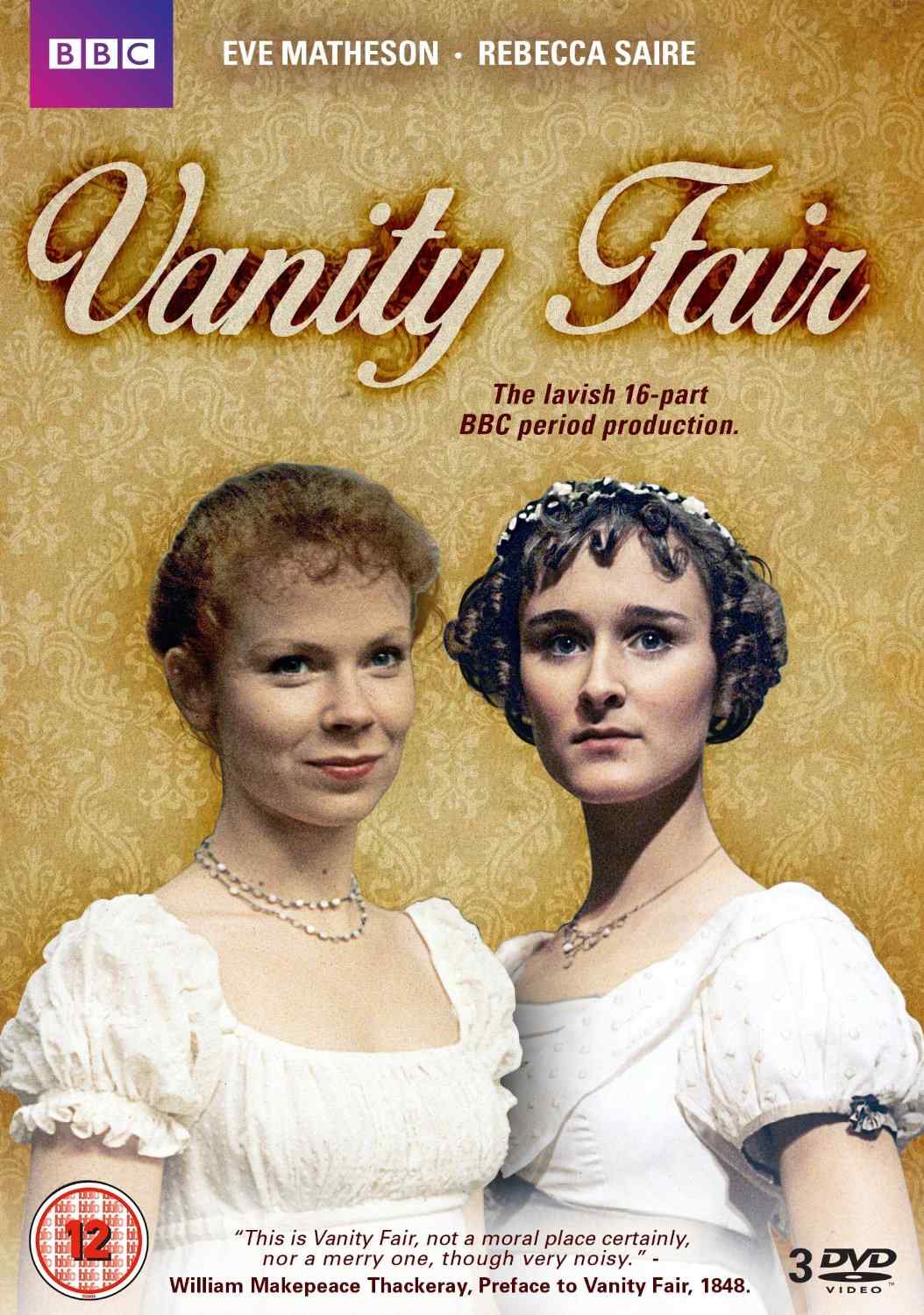
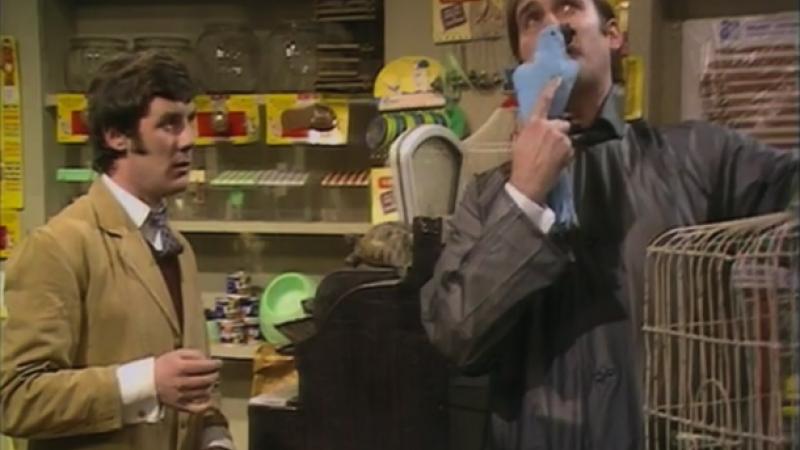
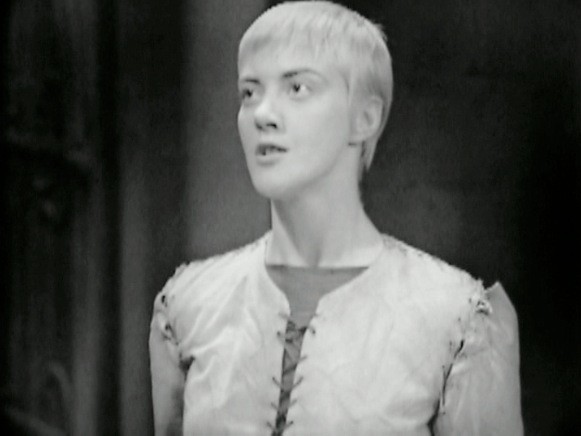
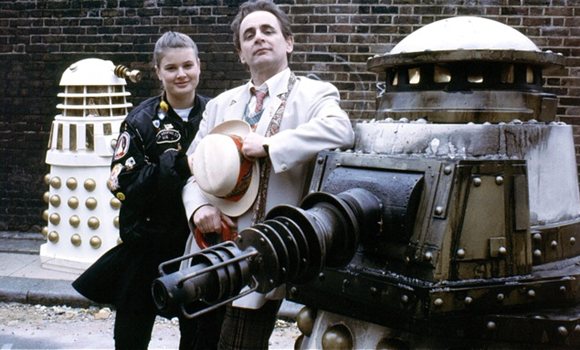
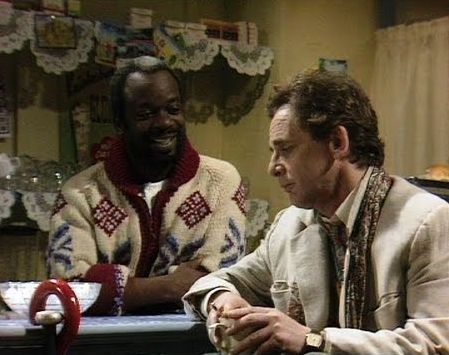
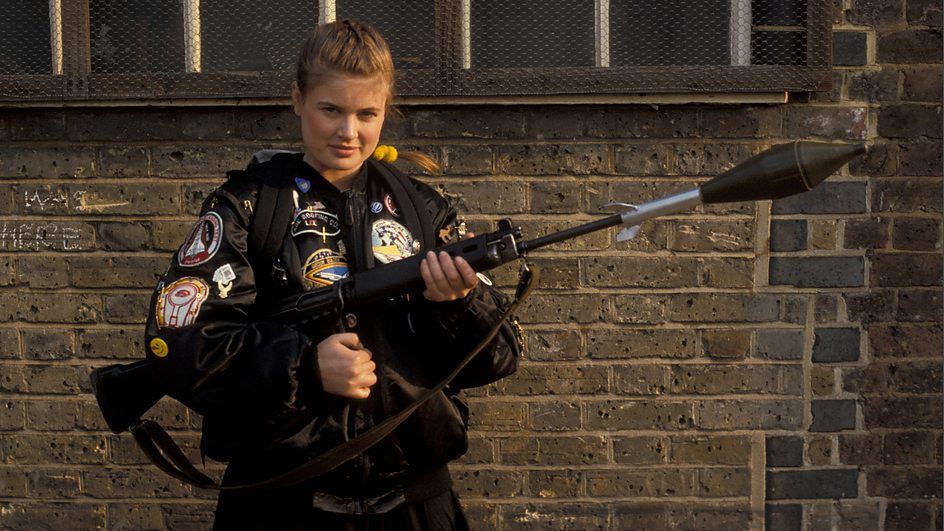


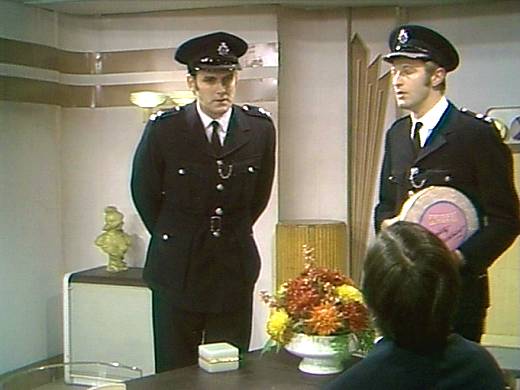
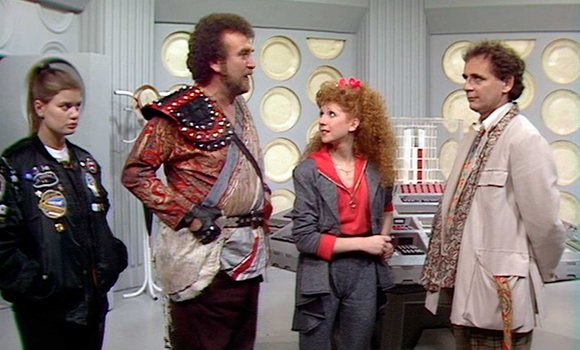
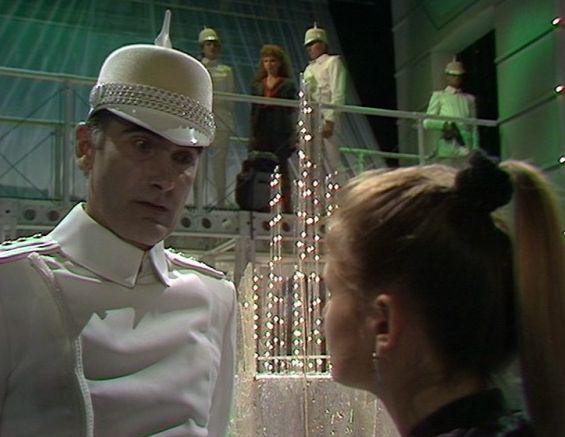
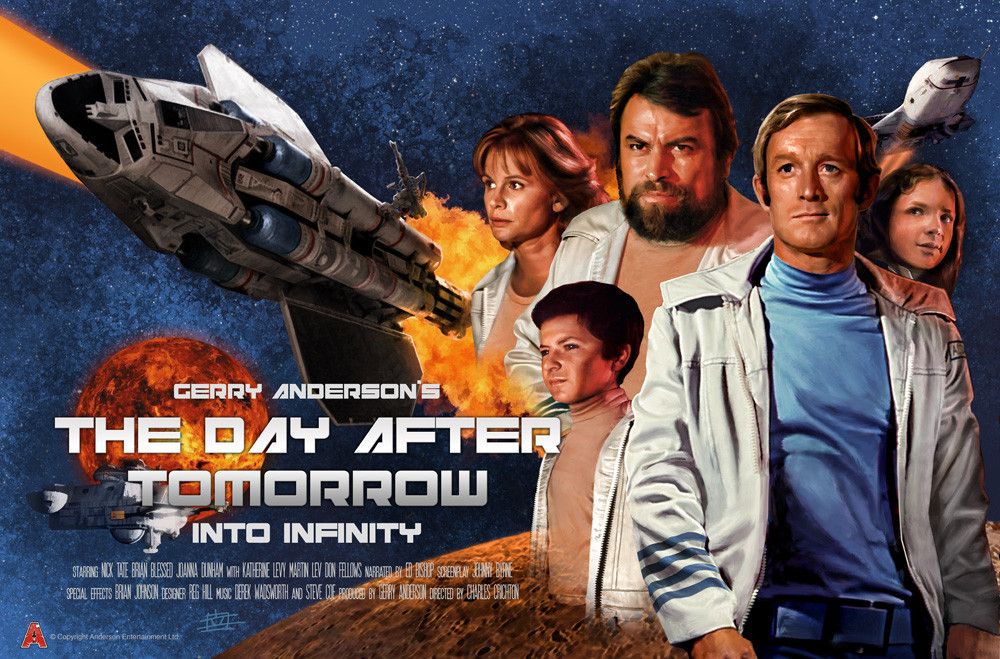
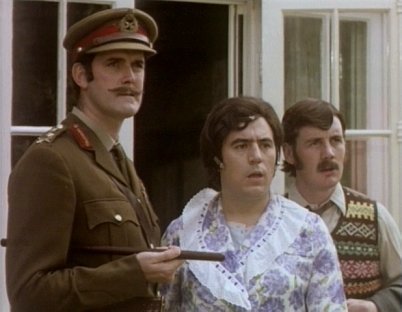



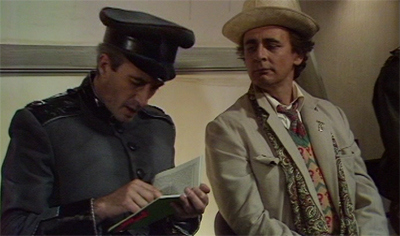
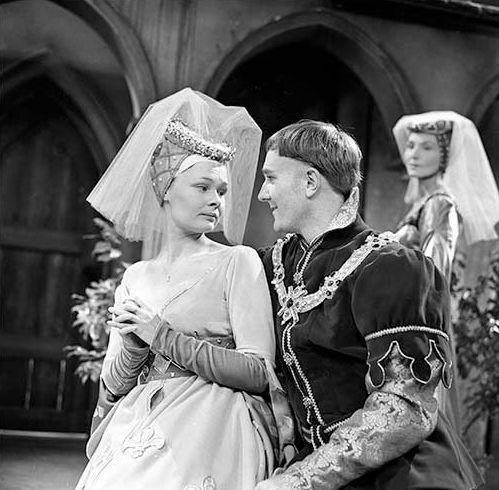

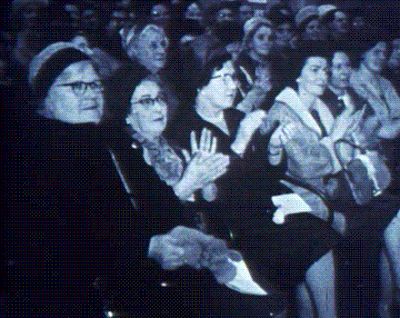
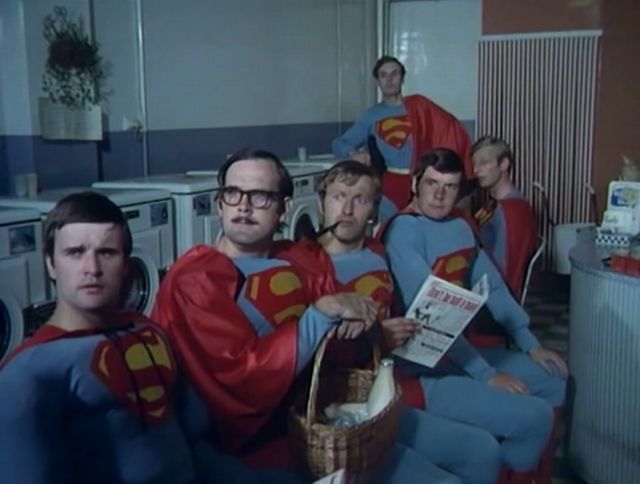
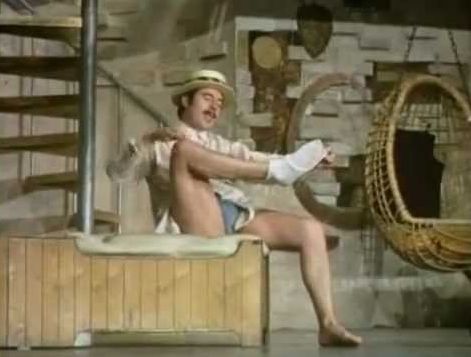


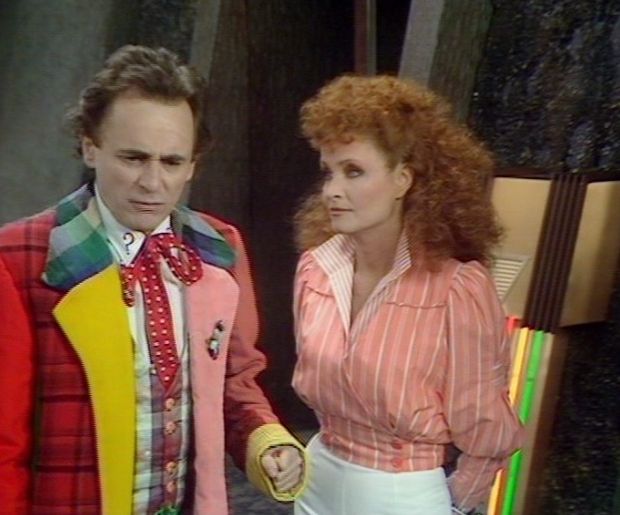
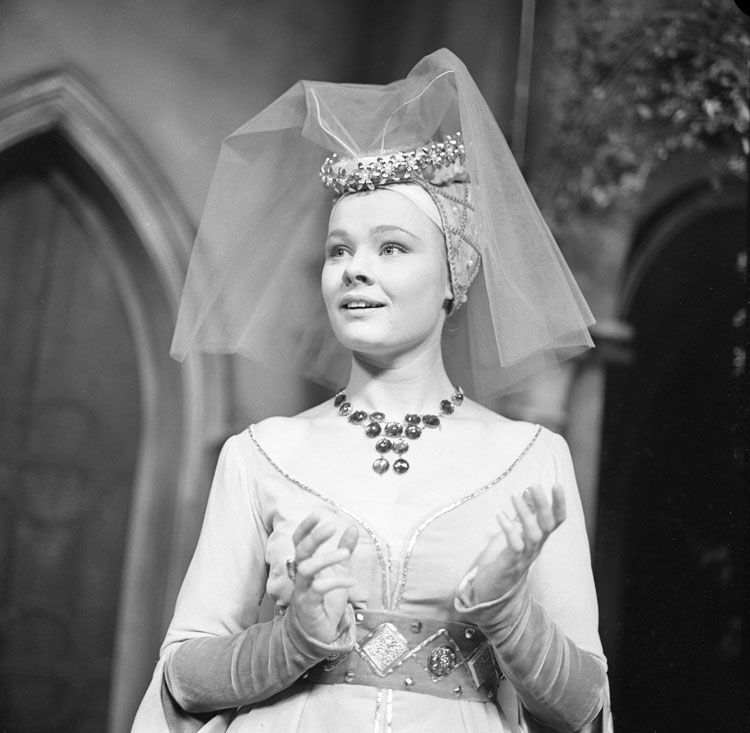
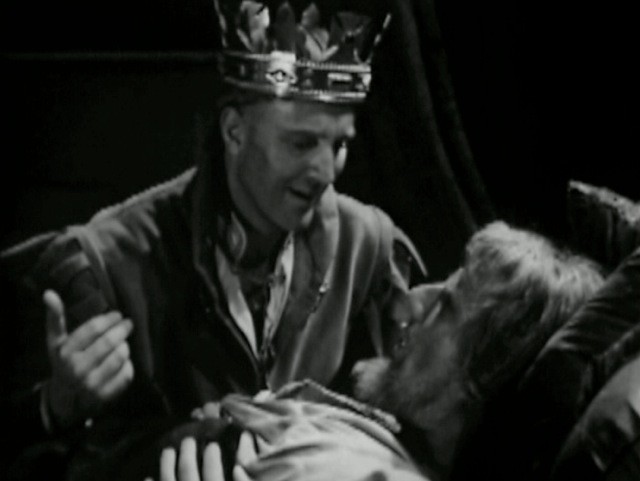
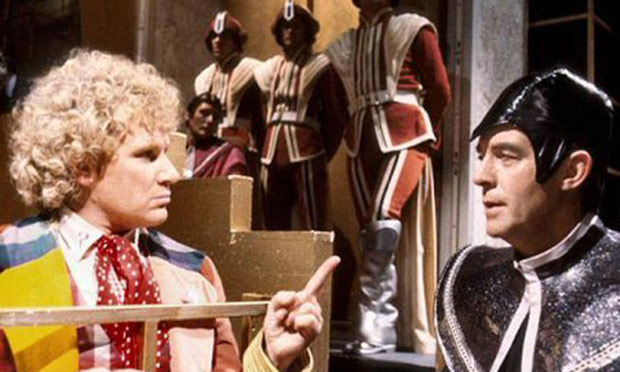
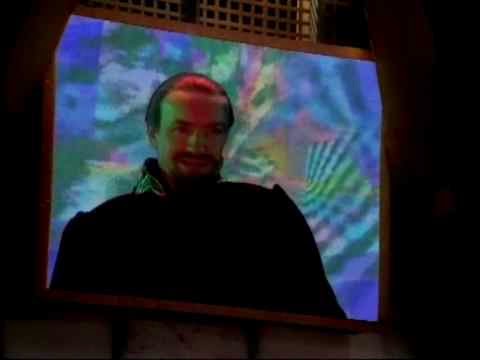
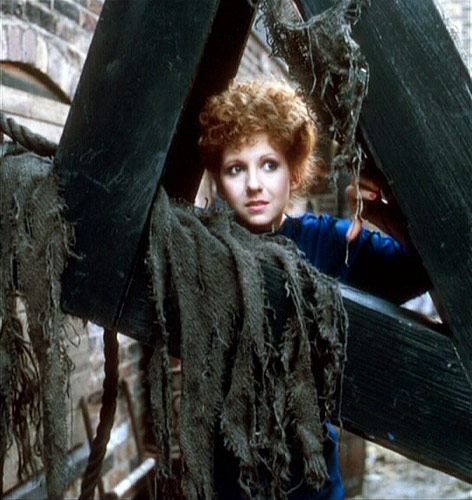

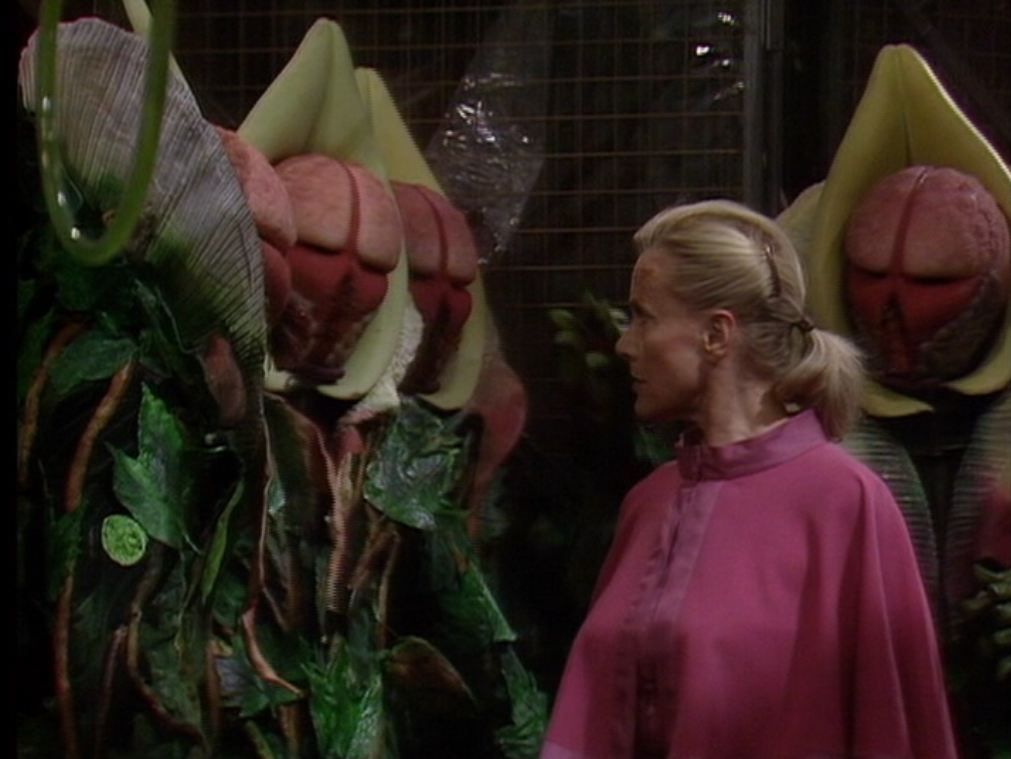
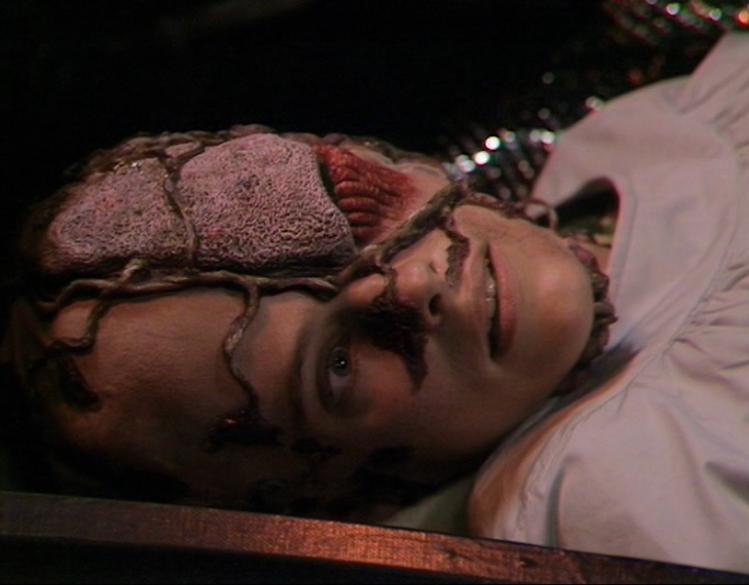
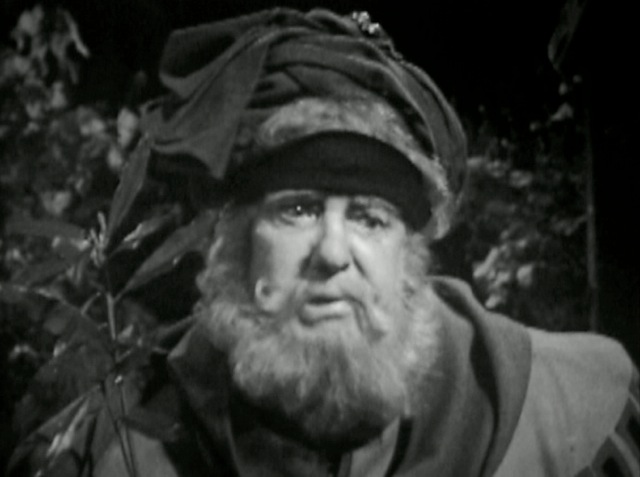
 Archive Television Musings