25 Years of Rock – 1970 – 1974

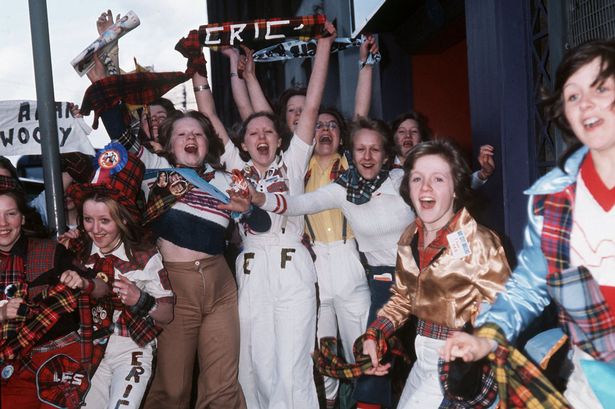
BN-DY626_CAPJOU_GR_20140804102944.jpg

1970

After the Gold Rush – Neil Young

Apollo 13 expedition abandoned

All Right Now – Free

Chicago Seven tried for inciting riots

Ball of Confusion – the Temptations

President Nixon send troops into Cambodia. Four students at Kent State
University, Ohio shot dead by national guard

Ohio – Neil Young

Interview with father of dead student

Fire and Rain – James Taylor

Nigerian Civil War ends

Dead Parrot Sketch – Monty Python’s Flying Circus

Black Night – Deep Purple

Storms and flooding in Belfast. Bernadette Devlin on trouble in Northern
Ireland.

Let It Be – the Beatles

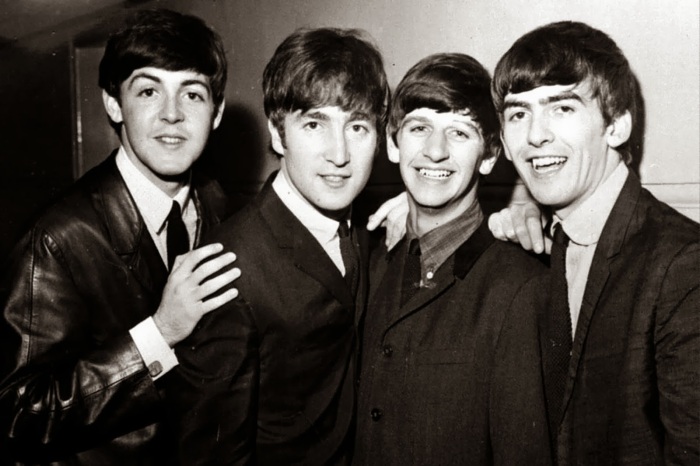
Apple deny reports that Paul McCartney has left the Beatles. Beatles film Let It Be released. Paul McCartney releases solo album.

Maybe I’m Amazed – Paul McCartney

Germany beat England in World Cup quarter final Tony Jacklin wins US Open golf
tournament

I Want You Back – the Jackson Five

Harold Wilson calls general election. Voting age lowered to eighteen. Interview with first time voter. Edward Heath becomes prime minister, and forms new cabinet.

Big Yellow Taxi – Joni Mitchell

Isle of Wight Pop Festival. Interviews with attendees, and Caroline Coon from
Release. Anti-drug message from Mark Farner of Grand Railroad Funk.

In the Summertime – Mungo Jerry Rag

Mama Rag – the Band

Government introduces industrial relations bill. Interviews with Robert Carr and Vic Feather.

Question – the Moody Blues

Jimi Hendrix dies

Voodoo Chile – Jimi Hendrix

Janis Joplin dies. Palestinian guerrillas hijack aeroplanes

Ride a White Swan – T Rex

President Nasser of Egypt dies

Bridge Over Troubled Water – Simon and Garfunkel

Aleksandr Soltzenitsyn wins Nobel Prize for Literature

The beginning of the first half of the thirty part series.

It’s interesting to hear the 1970s editions of Twenty-five Years of Rock now. At the time the music of the early to mid seventies was too old to be up to date, but not old enough to be nostalgia, and with the later seventies
editions some records and events included in the programmes would be now long forgotten, while other records and events would be conspicuous by their absence.

1970 was the tail end of hippy era. A lot of the music is folk rockby people like Neil Young, Jon Mitchell, James Taylor and the Band, or heavy rock by Free and Deep Purple. It was the year that the Beatles split, and Jimi Hendrix and Janis Joplin died (although they didn’t play any of her music in the series).

It was also the start of the seventies. If the 1960 programme gave little indication of the type of music that was coming in the next decade, the 1970 programme features two influential new acts. T Rex had one of the first
glam rock hits, and there’s the Jackson Five, featuring Michael Jackson who was still a big star long after the seventies.

Britain got a new Conservative government, and the programme includes a newsreel clip of Edward Heath’s new cabinet, which included Margaret Thatcher.

But Monty Python’s Parrot Sketch was definitely first broadcast in 1969. Surprisingly there’s no mention of the death of General De Gaulle, or the skinhead craze.

1971

Layla – Derek and the Dominoes

Edward Heath applies for Britain to join the Common Market.

Imagine – John Lennon

Beatles’ split official. Interview with John Lennon.

My Sweet Lord – George Harrison

Earthquake in California

Your Song – Elton John

Postal workers strike. Britain changes to decimal currency Mick Jagger marries Bianca de Macias

Brown Sugar – the Rolling Stones

England win the Ashes. D B Cooper robs plane over Seattle. Arsenal win FA Cup and
Champions League Cup

Hot Love – T Rex

Rolls Royce gets into financial difficulty

Get It On – T Rex

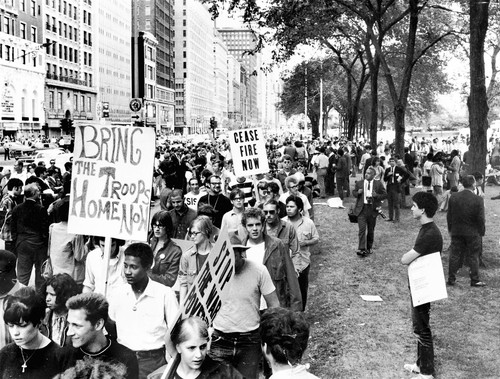
Princess Anne presents Society of Film and Television Arts Awards. Clip from Dad’s Army. Anti-Vietnam War demonstration in Washington erupts into violence

Theme from Shaft – Isaac Hayes

Jim Morrison dies in Paris

Riders on the Storm – the Doors

Edward Heath on trouble in Northern Ireland. Pub bombed in Belfast. Minister of Home Affairs announces internment order.

It’s Too Late – Carole King

Homes bombed in Derry. Civilians attack British troops.

Won’t Get Fooled Again – the Who

Black Panther George Jackson shot dead while escaping from prison

Yours Is No Disgrace – Yes

Attica State Prison riot

Black Magic Woman – Santana

Oz editors charged with obscenity and jailed. Richard Neville, Felix Denis and Jim Anderson interviewed.

Hors D’Oeuvres – Sid Phillips Band

Women’s Liberation Movement in Hyde Park’s Speakers’ Corner.

Resurrection Shuffle – Ashton, Gardner and Dyke

Hot pants. Clockwork Orange released. Festival of Light rally in Trafalgar Square

Get Down and Get With It – Slade

Voting age in the USA lowered to 18. School leaving age to be raised to 16. Interview with education secretary Margaret Thatcher

Maggie May – Rod Stewart

East Pakistan becomes Bangladesh following civil war

Bangla Desh – George Harrison

Milton Obote of Uganda ousted in military coup led by General Idi Amin. President Nixon announces he will visit China in 1972

Stairway to Heaven – Led Zeppelin

The Beatles’ solo careers started. The Oz magazine trial was another sign that the sixties were over. The Rolling Stones started their own label, and Rod Stewart and Elton John made their breakthrough. The glam rock movement was taking off with Marc Bolan having more hits, and Slade joining the glam scene. The American
rock scene was getting more mellow.

Britain was entering another new era with the changeover to decimal currency, parliament voting for Britain to join the Common Market, and the rise of the feminist. But the troubles in Northern Ireland, and the anti-war protests and racial tensions in America got worse.

1972

All the Young Dudes – Mott the Hoople

Students’ Union protest in London

School’s Out– Alice Cooper

Andreas Baader and Ulrike Meinhoff arrested. Miners’ strike leading to energy crisis in
Britain

Heart of Gold –Neil Young

Miners return to work

Vital Transformation – John McLaughlin and the Mahavishnu Orchestra

Trident crashes in Staines, Middlesex. Japanese terrorists, recruited by PLO, shoot passengers at Lod Airport in Tel Aviv

Without You – Harry Nilsson

British soldiers shoot 28 unarmed civilians in Derry. Interview with Father Edward Daly, and other witnesses.

Lady Eleanor –Lindisfarne

IRA bomb parachute regiment headquarters. Edward Heath announces plans to solve troubles in Northern Ireland.

Big Eyed Beans From Venus – Captain Beefheart and his Magic Band

Silver Machine – Hawkwind

Racial tension in Alabama. Governor George Wallace shot.

Do It Again – Steely Dan

Gravelly Interchange, aka Spaghetti Junction, opens

Spam – Monty Python

Thick as a Brick – Jethro Tull

Karin Janz, Olga Korbut, Mark Spitz win medals at Munich Olympics

Goodbye to Love – the Carpenters

Palestinian terrorists murder Israeli athletes at Olympic village

American Pie – Don McLean

One million people unemployed in Britain. Interview with Anthony Barber over “floating the pound”.

Money Programme sketch – Monty Python

I Saw the Light – Todd Rundgren

George Best suspended by Manchester United

Mama Weer All Crazee Now – Slade

Bobby Fischer interviewed after beating Boris Spassky in World Chess Championship

Ziggy Stardust – DavidBowie

The Jean Genie – David Bowie

George McGovern runs for president. Break-in at Democrat Party’s Watergate office. President Nixon re-elected.

Merry Xmas War Is Over – John Lennon

Vietnam War statistics. Last American infantry unit leaves Vietnam. Henry Kissinger negotiates end for Vietnam War.

Virginia Plain – Roxy Music (The original broadcast also included Rock n Roll by Gary Glitter.)

The 1971 programme ended with President Nixon announcing he would visit China in 1972, but we don’t hear about his visit in the 1972 programme. He did manage to get re-elected that year, but news came out about the Watergate break-in that would lead to his downfall.

1972 also saw the start of the industrial unrest in Britain that would lead to Edward Heath’s downfall. Bloody Sunday should have been included in the introduction in the first programme as the troubles in Northern Ireland was one of the main news stories of the seventies. The 1972 Olympics are remembered for the wrong
reason.
Three years after his Space Oddity David Bowie re-emerged as one of the leading lights of the glam rock era. As well as his own hits he wrote a song for Mott the Hoople. Roxy Music followed to Bowie style, while glam rockers like Gary Glitter and Slade drew on old style rock n roll. The biggest glam rock star from America was Alice Cooper.

1973

Reelin’ in the Years – Steely Dan

Nixon states that he is not a crook. Britain joins Common Market. Interview with Edward Heath. President Nixon’s inauguration. Six men charged over Watergate break-
in.

You’re So Vain – Carly Simon

USA ends its involvement in Vietnam War. Train drivers’ strike

Part of the Union – the Strawbs

Edward Heath announces wages squeeze

Money – Pink Floyd

Red Rum wins Grand National

Superstition – Stevie Wonder

Bob Halderman and John Ehrlichman resign over Watergate. Sam Ervin presides over Watergate hearing. Interview with John Dean.

Stuck in the Middle With You – Stealers Wheel

Nixon denies involvement in Watergate break-in. Watkins Glen Rock Festival

Jessica – the Allman Brothers Band

Interview with organiser Jim Koplik, and festival attendees

Ramblin’ Man – the Allman Brothers Band

Northern Ireland referendum. IRA bombings in London. Tu-144 crashes at Paris Air Show

Whiskey in the Jar – Thin Lizzy

Clashes between Protestant extremists and British army in Northern Ireland. Uri Geller demonstrates fork bending

Papa Was a Rolling Stone – the Temptations

Sioux Indians take hostages and demand rights for Red Indians. Academy Awards.
Marlon Brando refuses Oscar for The Godfather.

Long Train Runnin’ – the Doobie Brothers

Vice President Spiro Agnew resigns

Knockin’ on Heaven’s Door – Bob Dylan

Gerald Ford becomes Vice President

Hocus Pocus –Focus

Blockbuster – the Sweet

Princess Anne marries Captain Mark Phillips

Get Down – Gilbert O’Sullivan

Nixon interviewed over Watergate scandal

Desperado – the Eagles

Cod War between UK and Iceland. Marjorie Wallace, Miss USA, is crowned Miss World. Fashions news, including coloured hair

Walk on the Wild Side – Lou Reed

Yom Kippur War

Tubular Bells – Mike Oldfield

Fuel shortages in USAand Europe. Edward Heath meets Arab oil ministers. Nixon asks Americans to cut down on fuel for heating.

Angie – the Rolling Stones

Edward Heath announces three day week

Merry Xmas Everybody – Slade

Radio 1 review of the year. Interviews with Emperor Rosko and David Hamilton.

Let Me In – the Osmonds

Eclipse – Pink Floyd

“It’s 1973, and a very happy New Year to everyone.”

Britain joined the Common Market on New Year’s Day, but the story that dominates this programme is the Watergate scandal. America finally got out of the Vietnam War, but more wars started in the Middle East, leading to a fule crisis in the USA and Europe, and more industrial unrest in Britain.

In Britain 1973 is also remembered for the royal wedding. There are some memorable records from Stevie Wonder, Thin Lizzy, and Lou Reed, but You’re So Vain was
definitely a hit in 1972. There’s not as much glam rock in this programme as you might expect. Glam rock group reached its peak in 1973, but then glam was overshadowed by punk for a long time.

Country rock was big. The Watkins Glen Rock Festival was, at the time, the biggest rock festival ever held, but it’s less well remembered than Woodstock. The programme ends with an extract from Radio 1’s review of the year. It mentions that 1973 was the year that
Radio 1’s Newsbeat started, and Newsbeat was still going strong in the early eighties.

Since this programme was made Jessica became the theme tune to Top Gear, and Stuck in the Middle With You has become synonymous with Reservoir Dogs.

1974

You Ain’t Seen Nothin’ Yet – Bachman-Turner Overdrive

Britain suffers from fuel crisis and industrial disputes. South Eastern Gas Board recommends couples share baths. Interview with Joseph Kinsey.

Rebel Rebel – David Bowie

Edward Heath calls general election. Speeches by Edward Heath, Harold Wilson and Jeremy Thorpe.

Election Night Special – Monty Python

Waterloo – Abba

Richard Skinner presents election edition of Newsbeat. Harold Wilson becomes
prime minister

I Can Help – Billy Swan

Three day week ends. IRA bomb in Tower of London. Martial arts craze

Kung Fu Fighting – Carl Douglas

Rugby match disrupted by streaker. Marcus Lipton MP urges Home Secretary to deal firmly with streakers.

The Streak – Ray Stevens

President Nixon visits Leonid Brezhnev for peace talks Aleksandr Soltzenitsyn
expelled from Soviet Union

This Town Ain’t Big Enough For the Both of Us – Sparks

Patty Hearst kidnapped by Symbionese Liberation Army.

Killer Queen – Queen

Message from Patty Hearst. Interview with Randolph Apperson Hearst. The Exorcist banned by several councils after boy dies after watching the film.

Remember You’re a Womble – the Wombles

Sugar shortage ends

I Shot the Sheriff – Eric Clapton

Mulberry Bush pub in Birmingham bombed by IRA. DC-10 crashes in Paris

Cajun Moon – J J Cale

President Nixon on Watergate investigations. Impeachment process against President Nixon

How Long – Ace

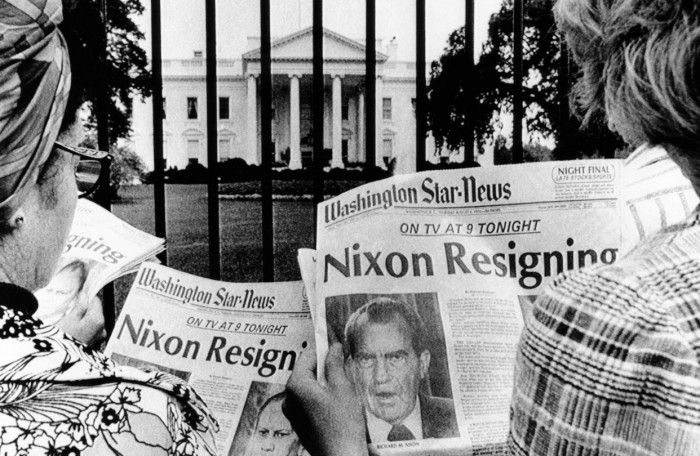
President Nixon resigns

The Show Must Go On – Leo Sayer

Gerald Ford becomes president and pardons Richard Nixon

Gonna Make You a Star – David Essex

Muhammad Ali regains world heavyweight title. Court Line goes bankrupt, leaving British holidaymakers stranded

Y Viva Espana –Sylvia

Package Holiday sketch – Monty Python

The Joker – the Steve Miller Band

Lord Lucan disappears. Harold Wilson calls second election. Labour wins again.

The Wall Street Shuffle – 10cc

Pound falls to its lowest ever level. Vox pops on what people want to see in 1975

Down Down – Status Quo

Can’t Get Enough – Bad Company

John Stonehouse disappears, and later is found and arrested in Australia

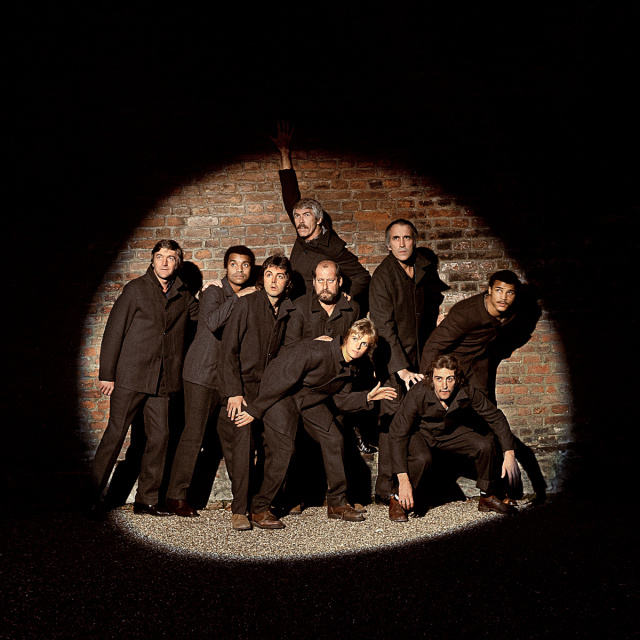
Band on the Run – Wings

1974 is remembered as the year the President Nixon resigned. In Britain it was the year that we had two general elections. But the Monty Python sketches were definitely earlier than 1974.

Another news story here is the IRA pub bombing in Birmingham. As with the pub bombing in Guildford the same year, it transpired over a decade later that the people who went to prison for this crime were innocent.

This is the first programme in the series to feature a song from the Eurovision Song Contest. Queen also had their first hit. There are several records in this programme based on the crazes of the year such as kung fu, streaking and the Wombles, the last of these being one of the most successful novelty acts. The programme plays out with Wings’ Band on the Run, one of the first concept singles.

ob_48a968_band-on-the-run1

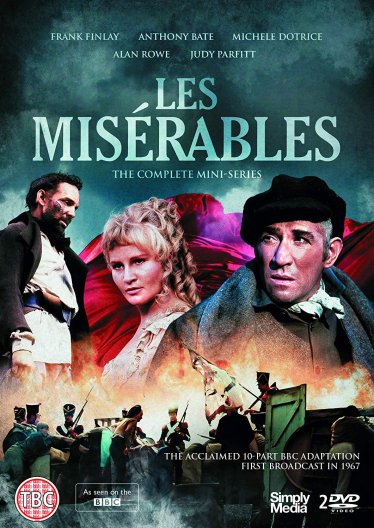
Les Misérables (BBC, 1967) – Simply Media DVD Review

There have been countless film, stage and televison adaptations of Victor Hugo’s epic 1862 novel (indeed, a lavish BBC1 adaption has just finished its run on Sunday nights). This 1967 BBC Classic Serial might have been mounted on a fairly modest scale, but where it scores – as these serials so often did – is in the quality of the actors, their performances and the fidelity of the adaption to its source material.

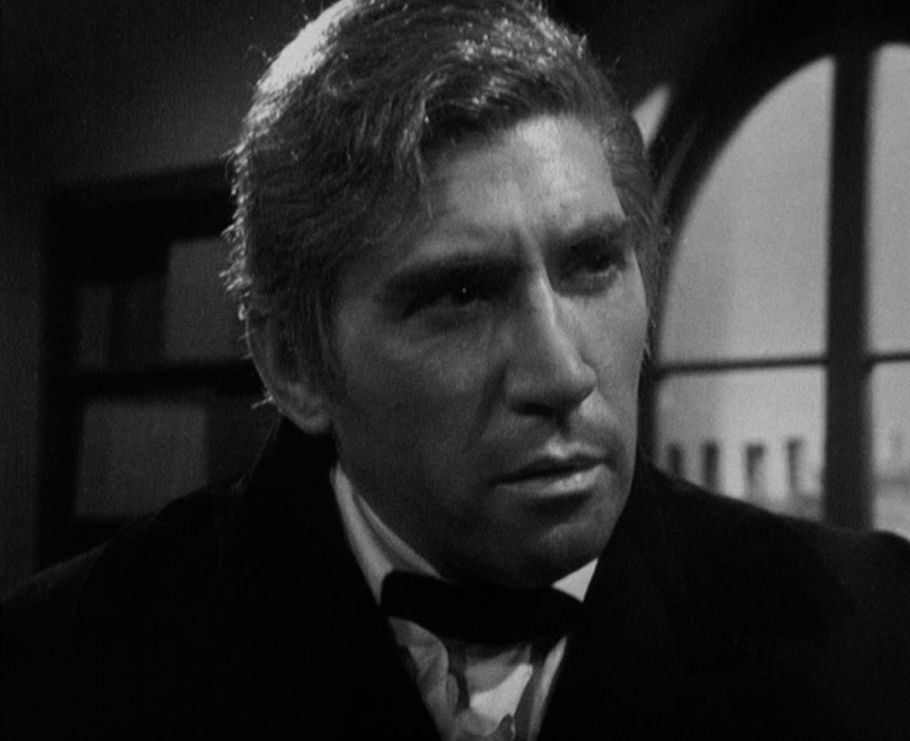
Frank Finlay is mesmerising as Jean Valjean. A former convict, Valjean has forged a successful new existence as a pillar of society – a mayor and magistrate – but remains haunted by his past experiences.

It’s such a shame that the original film inserts are long gone, as the opening episode has some remarkable film work (courtesy of director Alan Bridges).  The somewhat grubby telerecordings are obviously preferable to nothing (a fate which has sadly befallen so many 1960’s television programmes) but to have seen these impressionistic sequences in a pristine state would have been fascinating.

Frank Finlay

At first, Finlay is barely recognisable (the haunted Valjean when released from fifteen years hard labour is a bedraggled and violent soul)  but by the second episode he’s undergone a remarkable transformation into a cultured man who dispenses charity and understanding to all.

Anthony Bate, as Inspector Javert, is a fine match for Finlay. Javert is the direct opposite of Valjean (Valjean dispenses compassion, Javert cold justice). This sort of role – icy, detached – was one that Bate played time and again, so as you might expect he’s incredibly good value. The clashes between the two are a key part of the story (initially uneasy allies, in the fourth episode Valjean admits his true identity in open court and flees, with Javert dogging his footsteps thereafter).

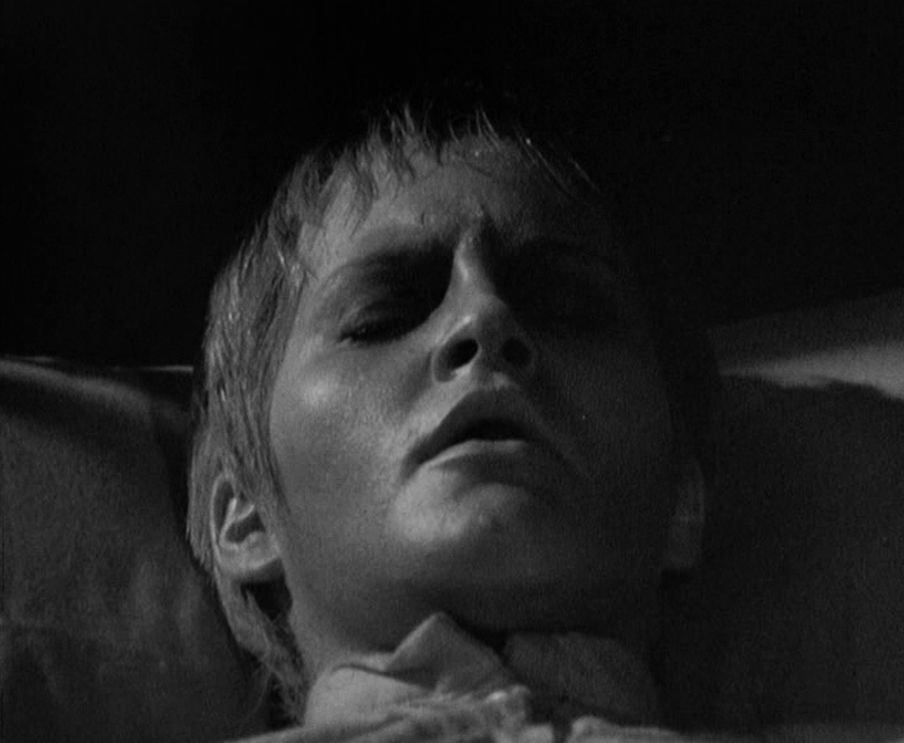
Excellent performances abound. Michele Dotrice, for example, as the increasingly wretched Fantine. A rapid downward spiral sees her forced to sell everything she has – hair, teeth – in order to provide for her daughter.  Dotrice throws herself wholeheartedly into the role and makes an indelible impression across these early episodes.

Michele Dotrice

Clifford Rose’s monologue in episode four – Buried Treasure – is another early highlight (he plays Champmathieu, a man accused of being the notorious Jean Valjean). It’s a role far removed from the later ones for which he’s best remembered for (Callan, Secret Army).

Coincidence tends to play a part in many novels from the nineteenth century and Les Mis is no exception. Having been unable to save Fantine, Valjean (now an outcast once more) just happens to run into Cosette (Lesley Roach), Fantine’s young daughter.

Left in the cruel care of an innkeeper called Thenardier and his wife (splendidly evil turns from Alan Rowe and Judy Parfitt), Cosette becomes the latest waif to be taken under Valjean’s wing. Finlay’s cool self-control as Valjean faces down the grasping Thenardier is expertly played. Yet another coincidence sees them run into each other years later, when it appears that Thenardier has gained the upper hand.

At the start of episode seven, Cosette has suddenly grown up into a beautiful young woman (like Fantine, played by Michele Dotrice). It seems odd that Valjean seems not to have aged compared to his adopted daughter, but this isn’t uncommon in serials of this type.

The last batch of episodes relocates the action to Paris and introduces some key new characters – like Marius (Vivian MacKerral) – as various plots and counter-plots come to fruition. Revolutionary Paris might only be glimpsed in snatches, but this isn’t a disappointment. On the contrary, the serial’s low budget ensures that character drama remains at the forefront right until the conclusion.

As previously discussed, the picture quality is somewhat variable. It looks pretty much like you’d expect an unrestored telerecording from the late 1960’s to look – there’s intermittent film damage, dirt and tramlining. But anybody familiar with archive television of this era should know what to expect and the occasional picture issues didn’t impair my enjoyment.

Running for ten 25 minute episodes (five each across two discs), this version of Les Misérables boasts a series of excellent performances and comes warmly recommended.

Les Misérables is available now from Simply Media. It has a RRP of £24.99 and can be ordered directly here (quoting ARCHIVE10 will apply a 10% discount).

The Two Ronnies – Sid & Lily, George and Edie

r1

Trawling through the British Newspaper Archive on a separate research project, I stumbled across this interesting article from the Daily Mirror, dated the 29th of October 1979.

It reported how the death of Freddie Usher (who wrote the Lily & Edie segments of these joint sketches) might mean the characters wouldn’t be seen again  (John Sullivan was responsible for writing the Sid & George parts).

Whenever I watch these sketches I’m always conscious of the fact that I enjoy the segments with Sid & George much more than Lily & Edie’s contribution.  I’d previously thought that this was down to the fact that the Rons in drag never quite convinced (at least outside of their barnstorming musical numbers).

Certainly compared to the masters of the genre during the seventies – Les Dawson and Roy Barraclough – the Rons never seemed totally at ease during the Lily & Edie sketches, with the laughs (such as they were) being somewhat muted.

But this new nugget of information about the different writers could explain the disparity between the two halves.

I’d love to have a complete breakdown of the writing credits for The Two Ronnies but (unless anybody knows differently) there’s not one in circulation. A fair few sketches can be credited (most of Ronnie Barker’s contributions for example and various others, such as David Renwick’s Mastermind) but a fair few are less certain.  Even identifying which sketches were penned by the Pythons isn’t clear cut.

Moving back to Sid & Lily, George and Edie, it’s interesting that their slot in series seven (broadcast between December 1978 and February 1979) is right in the middle of the programme, exactly where – in previous series – the film serial would have been.  Since inflation was biting and budgets were being cut, I can only assume that this year the Rons weren’t able to afford the type of lavish serial they’d previously enjoyed.

So this cheap studio sketch had to suffice (the running time of each episode tended to be about five minutes shorter than previous years as well).

A last point – if there’s one thing that’s always irked me, it’s the fact that the doubles of Barker and Corbett (seen in the opening titles) look nothing like them.  The double of Barker is somewhat on the thin side whilst the faux Corbett seems a little tall.  Never mind, one day I’m sure I’ll get over it ….

25 Years of Rock – 1965 – 1969

viet prot.jpg

1965

Vietnam War

Eve of Destruction – Barry McGuire

Lyndon Johnson announces decisions to bomb North Vietnam, and to raise the draft call.

Lyndon Johnson Told the Nation – Tom Paxton

Ways to avoid the draft

My Generation – the Who

US Marines fire on Viet Cong. Beethoven’s Fifth Symphony. Sir Winston Churchill dies. Richard Dimbleby provides commentary for Churchill’s funeral. Richard Dimbleby dies.

Catch the Wind – Donovan

Martin Luther King leads civil rights march from Selma to Montgomery, Alabama

You’ve Lost That Loving Feeling – the Righteous Brothers.

Riots in Los Angeles, Watts District

We Gotta Get Out of This Place – the Animals

Help! – the Beatles

Beatles perform at Shea Stadium. Paul McCartney introduces…

Ticket to Ride – the Beatles

Interview with the Beatles

I’m Down – the Beatles

Beatles interviewed after receiving MBEs. Objection to Beatles reciving MBES.

I Got You Babe – Sonny and Cher

Diana Rigg joins The Avengers. PJ Proby ordered off tour after trouser ripping incident. The mini skirt

I’m Alive – the Hollies

Ronnie Biggs escapes from prison

Subterranean Home Sick Blues – Bob Dylan

President Johnson’s State of the Union address

The Last Time – the Rolling Stones

Edward Heath elected leader of the Conservative Party

Like a Rolling Stone – Bob Dylan

Interview with Mick Jagger

I Can’t Get No Satisfaction – the Rolling Stones

North Sea oil rig Sea Gem. Northeast power cut affects parts of USA and Canada

Go Now – the Moody Blues

Conservatives win Leyton by-election. Rhodesia declares UDI

For Your Love – the Yardbirds

Ed White makes the first walk in space. Gemini 7 and Gemini 6A make first rendezvous in space

Mr Tambourine Man – the Byrds

Anti-Vietnam War demonstrations in Washington. Robert McNamara predicts increase in American military efforts. Vietnamese villagers rendered homeless.

Yesterday – the Beatles

Beatles’ Christmas Record

The main new story in this edition is the Vietnam War. In Britain 1965 is remembered as the year that Winston Churchill died.

Pop music was becoming more sophisticated. The Beatles’ music was becoming more sophisticated (although I don’t think it was a good idea to have another programme ending with a Beatles’ Christmas record). The Rolling Stones were writing their own songs, and the Who made their breakthrough. Surprisingly James Brown, the pioneer of soul music, wasn’t included. There was already a hippy sound coming into pop music, and in America the folk-protest music scene lead by Bob Dylan was really taking off, but then there was a lot to protest about.

1966

The Sound of Silence – Simon and Garfunkel

England wins the World Cup. Kenneth Wolstenholme’s commentary.

England Swings – Roger Miller

Carnaby Street fashions

Dedicated Follower of Fashion – the Kinks

Radio London jingle. Vitalis shampoo commercial. Radio Caroline marooned. Radio Caroline jingle.

Wild Thing – the Trogs

Edward Short, postmaster general, presents white paper outlawing pirate radio, but allowing local radio stations

Paint It Black – the Rolling Stones

Over five hundred billion dollars spent on Vietnam War. Bombing in Vietnam continues. Interview with President Johnson.

The Ballad of the Green Berets – Staff Sergeant Barry Sadler

Charles Whitman shot dead by police after shooting spree at University of Texas

Hey Joe – Jimi Hendrix

Eight students murdered in Chicago. Hendrik Verwoerd stabbed to death. Indira Ghandi elected prime minister of India. Mao Zedong’ Cultural Revolution

For What It’s Worth – Buffalo Springfield

John Lennon gets into trouble after saying the Beatles are more popular than Jesus

Eleanor Rigby – the Beatles

Calls for sanctions against Rhodesia. Speech by Ian Smith.

Summer in the City – the Lovin’ Spoonful

The Man From UNCLE – Montenegro

David McCallum visits Britain before making film in Italy

River Deep Mountain High – Ike and Tina Turner

Muhammad Ali refuses to join US army on religious grounds

Reach Out I’ll Be There – the Four Tops

You Keep Me Hangin’ On – the Supremes

Safari park opened at Longleat. Chi Chi the panda sent to Moscow Zoo to be mated with An An

Good Vibrations – the Beach Boys

Interview with juvenile delinquents

California Dreamin’ – the Mamas and the Papas

Ronald Reagan becomes governor of California. Lurleen Wallace succeeds her husband as governor of Alabama. Edward Brooke becomes first black senator. Labour wins general election

Taxman – the Beatles

Harold Wilson opens new Cavern Club in Liverpool

Rainy Women – Bob Dylan Doctor

Timothy Leery appeals against sentence for drug offences

Eight Miles High – the Byrds

Timothy Leery describes LSD experience

Tomorrow Never Knows – the Beatles

Psychedelic craze

1966 was a transitional year. The Beatles stopped touring. This is the fifth consecutive edition of Twenty-five Years of Rock to end with the Beatles, but the song is nothing like anything they recorded before. The Rolling Stones and the Beach Boys joined the psychedelic bandwagon, as did new acts like Jimi Hendrix and Buffalo Springfield.

1966 was the year that the phrases ‘Swinging Sixties’ and ‘Swinging London’ were coined, and it was an optimistic time for Britain with Britain leading the worlds of pop music and fashion, England winning the World Cup. The programme even includes a couple of animal stories.

The US mid-term election results included the former actor Ronal Reagan (surname pronounced incorrectly in the new report) being voted governor of California. A few months after this programme was broadcast he was elected president of the United States.

1967

Magical Mystery Tour – the Beatles

Last Train the Clarksville – the Monkees

The Monkees perform in Britain

Theme from The Monkees – the Monkees

Interview with Davy Jones

I’m a Believer – the Monkees

Israel fights Arab nations in Six Day War

A Whiter Shade of Pale – Procol Harum

Race riots in Detroit

Light My Fire – the Doors

Anti-Vietnam War protests

Al Capone – Prince Buster

Che Guevara killed in Bolivia. SS Torrey Canyon runs aground and creates massive oil spillage

Waterloo Sunset – the Kinks

Hi Ho Silver Lining – Jeff Beck

Interview with American visitors to Carnaby Street. Interview with Twiggy.

Let’s Spend the Night Together – the Rolling Stones

Interview with Mick Jagger after controversy over lyrics of Let’s Spend the Night Together. Mick Jagger and Keith Richard avoid being jailed for drug offences.

We Love You – the Rolling Stones

British Medical Journal warns of dangers of taking LSD. Flower people have love-in at Woburn Park. Interview with Duke of Bedford.

San Francisco – Scott McKenzie

Ed Stewart appeals to listeners to save Radio London

Sweet Soul Music – Arthur Conley

Radio London Jingle. Radio London closes down.

We Shall Overcome – Pete Seeger

Johnnie Walker on Radio Caroline. Radio One is launched

Radio One is Wonderful – Kenny Everett

Beefeaters – Johnny Dankworth

Tony Blackburn introduces…

Flowers in the Rain – the Move

Radio One – Jimi Hendrix

Purple Haze – Jimi Hendrix

Till Death Us Do Part

See Emily Play – Pink Floyd

Interview with Maharishi Mahesh Yogi. Brian Epstein dies. Interview with the Beatles.

Within You and Without You – the Beatles

Third phase of LSD

Cliff Richard says Paul McCartney was wrong to admit to taking LSD, and will be giving up show business career for the church.

Lucy in the Sky With Diamonds – the Beatles

Harold Wilson announces devaluation of the pound. Coronation of the Shah of Iran. Steve Race goes behind the scenes on Beatles’ latest record…

All You Need is Love – the Beatles

Doctor Christian Barnard carries out first heart transplant. Canada celebrates centenary, and hosts Expo ’67. Charles De Gaulle supports Quebec separatists.

Itchycoo Park – the Small Faces

Beatles open Apple Boutique. The Fool play at the opening party.

White Rabbit – Jefferson Airplane

This was the middle episode of the original twenty-five part series.

Rather incongruously the programme begins with Magical Mystery Tour which was the Beatles’ Christmas special. It was a mixed year for the Beatles, they made their most celebrated album, and their most famous tv appearance, but they lost their manager.

There are a lot of anthems here from the hippy/psychedelic era by the Beatles, Jimi Hendrix, Scott McKenzie, the Pink Floyd, Procol Harum, Jefferson Airplane and others. Jimi Hendrix should have featured in the introduction in the first programme.

Al Capone was probably included because it was the inspiration for the Specials’ then recent hit Gangster.

1967 was the year that Radio 1 started, and the programme includes the station’s opening moments. In 1987, to mark Radio 1’s twentieth anniversary, this edition only was repeated under the title The Year in Rock.

1968

Lazy Sunday – the Small Faces

Government cuts. Harold Wilson endorses “I’m Backing Britain” campaign.

Mrs Robinson – Simon and Garfunkel

US sends warships to North Korea following capture of USS Pueblo. Viet Cong launch Tet Offinsive

Dance to the Music – Sly and the Family Stone

Student demonstrations in Paris

Revolution – the Beatles

Anti-Vietnam War protest in London turns into riot outside American Embassy. Student unrest in Berlin following assassination attempt on student leader Rudi Dutschke

Fire – the Crazy World of Arthur Brown

Malcolm Muggeridge resigns as rector of Edinburgh University over students taking drugs

Jumpin’ Jack Flash – the Rolling Stones

Brian Jones fined for possession of cannabis resin. Mick Jagger and Marianne Faithful bailed for drugs charges. Eugene McCarthy and Bobby Kennedy run for Democratic presidential candidate. Lyndon Johnson announces he will not stand for re-election.

All Along the Watchtower – Jimi Hendrix

Martin Luther King assassinated

We’re Going Wrong – Cream

Bobby Kennedy assassinated. Edward Kennedy speaks at his brother’s funeral.

Hey Jude – the Beatles

Demonstrations outside Democratic convention. Hubert Humphrey becomes Democratic presidential candidate.

Fire Brigade – the Move

Sabre Dance – Love Sculpture

Soviet troops invade Czechoslovakia

Alabatross – Fleetwood Mac

Protests against government’s immigration policy. Enoch Powell makes “Rivers of Blood” speech.

On the Road Again – Canned Heat

Ian Paisley speaks out against nationalist march in Derry.

The Mighty Quinn – Manfred Mann

Men of the Year Lunch. Melody Maker Readers Pop Poll Awards

This Wheel’s on Fire – Julie Driscoll, Brian Auger and the Trinity

Richard Nixon becomes Republican candidate, with Spiro Agnew as his running mate. Nixon elected president.

With a Little Help From My Friends – Joe Cocker

Jackie Kennedy marries Aristotle Onassis

Everlasting Love – Love Affair

Apollo 8, the first manned orbit of the Moon

Nights in White Satin – the Moody Blues

Vietnam peace talks in Paris become deadlocked

In 1968 the hippy movement went from love-ins to protests. It was a violent year with the assassinations of Martin Luther King and Bobby Kennedy, the continuing Vietnam War, protests against the Vietnam War, the Soviet invasion of Czechoslovakia, and the start of the troubles in Northern Ireland. The best news of the year was the first manned orbit of the Moon, another stage closer to getting men on the Moon.

The music in this programme is almost the start of the early seventies rock and pop scene. The main charts were moving from rock to pop, the Rolling Stones had jumped on the psychedelic bandwagon but quickly returned to their rhythm and blues style, Sly and the Family Stone were making funk music, and Cream and Can were the roots of prog rock. It also marked the start of a new era in American politics.

1969

Something in the Air – Thunderclap Newman

President Nixon on first Moon landing. London School of Economics closes after students break down protective gates. London Street Commune in Piccadilly, interviews with squatters. Ronald Reagan imposes curfew at University of Berkley

Street Fighting Man – the Rolling Stones

Rolling Stones give free concert in Hyde Park and pay tribute to Brian Jones

Honky Tonk Woman – the Rolling Stones

Prince Charles invested as Prince of Wales

Je t’Amie Moi No Plus – Jane Birkin and Serge Gainsbourg

Charles de Gaulle resigns. Bernadette Devlin becomes Britain’s youngest ever MP. British Troops sent into Northern Ireland

Bad Moon Rising – Credence Clearwater Revival

Concorde’s maiden flight. Boeing launches 747.

Get Back – the Beatles

Paul McCartney marries Linda Eastman. John Lennon marries Yoko Ono and stages bed-in for peace

The Ballad of John and Yoko – the Beatles

Interview with John Lennon

Give Peace a Chance – Plastic Ono Band

Reports of atrocities in South Vietnam. Second Lieutenant William Calley court martialled following My Lai Massacre.

Also Sprach Zarapthrustra – Richard Strauss

Neil Armstrong and Buzz Aldrin become first men on the Moon

Space Oddity – David Bowie

President Nixon speaks to Apollo 11 astronauts

Star Spangled Banner – Jimi Hendrix

Country Joe McDonald addresses audience at Woodstock Music and Art Fair. Interviews with attendees at Woodstock.

Soul Sacrifice – Santana

Country Joe McDonald introduces…

I Feel Like I’m Fixin’ to Die – Country Joe and the Fish

Nixon announces plan to withdraw American troops from Vietnam

I Heard It Through the Grapevine – Marvin Gaye

Rolling Stones fan stabbed to death at concert in Altamont, California

Sympathy For the Devil – the Rolling Stones

Charles Manson and five followers charged with the murder of Sharon Tate

Hare Krishna Mantra – Radha Krishna Temple

Pinball Wizard – the Who

The Who perform their rock opera Tommy. Edward Kennedy interviewed after Chappaquiddick incident

Oh Well – Fleetwood Mac

Melody Maker Readers’ Awards

Living in the Past – Jethro Tull

Benjamin Spock addresses largest anti-Vietnam War demonstration in Washington

A Whole Lotta Love – Led Zeppelin

Something in the Air sets this programme up very nicely for the last year of the sixties (and the end of the first half of the thirty part series). It was a bad year for the Rolling Stones, Brian Jones died and the Altamont concert ended in tragedy. The Who broke new ground with the first rock opera, and Oh Well by Fleetwood Mac was the theme tune to Twenty-five Years of Rock. But the biggest pop music event of 1969 was Woodstock, and we hear performances by Jimi Hendrix, Santana and Country Joe McDonald and the Fish.

If the 1960 programme gave little indication of the type of music that was coming in the next decade, the 1969 programme features two influential new acts. The programme plays out with Led Zeppelin who were a major influence on some of the rock bands of the early seventies, and there’s David Bowie who would be a major influence in the seventies and beyond.

Space Oddity ties in with the biggest news event of the year, the first Moon landing. Oddly the series doesn’t include any of the other Moon landings apart from the failed attempt in 1970. Meanwhile back on Earth President Nixon pledged to end the United Sates’ involvement in Vietnam, but it would be a slow process.

25 Years of Rock – 1960 – 1964

fabs

1960

Cathy’s Clown – the Everly Brothers

Sergeant Elvis Presley leaves the army and starts a career as a film actor.

Interview with Elvis Presley.

It’s Now or Never – Elvis Presley

Cassius Clay wins gold medal at Rome Olympics. Commentary by Eamonn Andrews.

Tell Laura I Love Her – Ricky Valance

Eddie Cochran killed in a car crash. Gene Vincent injured.

Three Steps to Heaven – Eddie Cochran

Francis Powers captured by Soviets after U2 crash lands in USSR

Apache – the Shadows

Francis Powers sentenced to ten years in prison

Only the Lonely – Roy Orbison

Queen and Prince Philip attend Royal Variety Performance

Walk Don’t Run – the Ventures

Italian suits and college boy haircuts

Itsy Bitsy Teenie Weenie Yellow Polka-dot Bikini

Stay – Maurice Williams

Sharpville massacre. Hendrik Verwoerd survives assassination attempt. Harold Macmillan’s “Winds of Change Speech”.

Chain Gang – Sam Cooke

Britain’s first Traffic wardens

Sweet Nothin’s – Brenda Lee

Investigations into payola scandal. Lady Chatterley’s Lover published

Poetry in Motion – Johnny Tillotson

Pioneer 5 and Discoverer 11 launched. USS George Washington fires first Polaris missile

Shakin’ All Over – Johnny Kidd and the Pirates

Nikita Kruschev makes speech on 66th birthday. Kruschev hits desk with his shoe at United Nations session. Guiseppe Bianco, aka Brother Emin, predicts end of the world

Please Don’t Tease – Cliff Richard

Birth pill becomes available in USA. Caryl Chessman executed.

Good Timin’ – Jimmy Jones

Princess Margaret marries Anthony Armstrong-Jones. Beatnik wedding in Soho

You’re Sixteen – Johnny Burnette

Two planes collide at Idelwild Airport, Brooklyn

Save the Last Dance For Me – the Drifters

Floyd Paterson regains work heavyweight title

Hit and Miss – John Barry

John F Kennedy and Richard Nixon run for US president. Kennedy wins election.

Will You Still Love Me Tomorrow – the Shirelles

In 1960 people were still listening to Cliff Richard and the Shadows, the Everley Brothers, Eddie Cochran who died in 1960, and Elvis Presley who was changing direction musically after coming out of the army. There were some good new acts, such as Johnny Kidd and the Pirates and the Shirelles, but they were mostly following in the style of the older acts.

1960 was the start of a new era in American politics. Funnily enough three of the news stories, Kruschev’s birthday speech, the Discoverer 11, and the death of Eddie Cochran, happened during Easter. I liked the way that they contrasted Princess Margaret’s wedding with the beatnik wedding. Was that Cliff Michelmore looking at young people’s fashions?

But there was no excuse to include to include Itsy Bitsy Teenie Weenie Yellow Polka-dot Bikini.

1961

President Kennedy’s inaugural speech

Runaway – Del Shannon

President Kennedy’s inauguration

The Twist – Chubby Checker

New dance craze called the twist. Teddy boys, modernists, beatniks, ravers and squares

FBI – the Shadows

Tottenham Hotspur win League Challenge Cup and FA Cup. Danny Blanchflower thanks the supporters.

Mary Lou – Ricky Nelson

Yuri Gagarin becomes first man in space

Blue Moon – the Marcels

President Kennedy pledges to get men on the Moon. Virgil Grissom becomes second American in space. Freedom Riders protest against segregation on buses. South Africa leaves the British Commonwealth

The Lion Sleeps Tonight – the Tokens

Chuck Berry convicted

Runaround Sue – Dion

Teenage girl interviewed about going out with boys

Don’t Treat Me Like a Child – Helen Shapiro

Helen Shapiro voted best female singer in New Musical Express poll. Barricade erected in Berlin

Wild Wind – John Leyton

US sends troops into Vietnam

President Kennedy on nuclear fallout shelters

Civil Defence – Beyond the Fringe

Beyond the Fringe tour America

Take Good Care of My Baby – Bobby Vee

Rudolph Nureyev requests political asylum

Stranger on the Shore – Acker Bilk

Interviews with jazz fans

Take Five – the Dave Bruebeck Quartet

Bertrand Russell sentenced to prison after anti-nuclear demonstration. Ban the Bomb demonstration in Trafalgar Square.

Hit the Road Jack – Ray Charles

Polaris submarines stationed in Britain. Dag Hammarskjold killed in plane crash

Ebony Eyes – the Everly Brothers

United States supports bid to overthrow Fidel Castro. President Kennedy on Bay of Pigs incident.

Who Put the Bomp? – Barry Mann

Tony Hancock in The Blood Donor

Calendar Girl – Neil Sedaka

Berlin Wall goes up

Wooden Heart – Elvis Presley

Variety Club luncheon. Cliff Richard returns from tour of Australia and attends premiere of his latest film

The Young Ones – Cliff Richard and the Shadows

Speech by President Kennedy

There are some memorable records in this programme from Del Shannon, the Marcels and the Tokens. (I was surprised that Stand By Me wasn’t played, but then it became more famous later when it was used in a film of the same name and a pretentious jeans advert.)

As Cliff Richard pointed out in an interview in the next programme, the music scene had moved from rock n roll to pop, although some young people preferred to listen to the rock n roll records from a few years earlier, and others preferred jazz. And of course Chubby Checker popularised the twist.

This is one of the few programmes in the series to begin with spoken words rather than music. Outside the world of pop music the sixties were starting to take shape as John F Kennedy was sworn in as the new United States President, the USSR and the USA sent their first men into space (although oddly they played a clip of Virgil Grissom’s space flight rather than the first American space flight by Alan Shepard), and the Beyond the Fringe team kicked off the satire boom.

On a less happy note the Berlin Wall went up and the United States sent their first troops into Vietnam.

1962

Talkin’ New York – Bob Dylan

Bob Dylan emerges from New York folk scene. Princess Margaret attends Cliff Richard concert.

The Young Ones – Cliff Richard

Interview with Cliff Richard

Wonderful Land – the Shadows

John Glenn makes first manned orbit of the Earth

Let’s Twist Again – Chubby Checker

Twist marathon in Harlow, Essex

Twistin’ the Night Away – Sam Cooke

Twist banned in dance halls. Interview with Mary Quant

Come Outside – Mike Sarne

Andy Warhol paints pop art

James Bond Theme – John Barry Orchestra

William John Vassall imprisoned for spying. Francis Powers released in exchange for Vilyam Fisher. President Kennedy attends Atlas missile launch. Nuclear shelters made in Britain

It Might As Well Rain Until September – Carole King

Marilyn Monroe dies

A Picture of You – Joe Brown

Communications satellite Telstar launched

Telstar – the Tornados

Vice President Johnson speaks to Frederick Kappel via Telstar

The Locomotion – Little Eva

Black student tries to enrol at all-white Oxford College, Mississippi

Oxford Town – Bob Dylan

He’s a Rebel – the Crystals

Plymouth mail robbery. Thalidomide tragedy

Twist and Shout – the Isley Brothers

Liberal Party win Orpington by-election. Communists demonstration in Paris against French government policy on Algeria. Escape tunnels dug under Berlin Wall

West of the Wall – Toni Fisher

Cuban missile crisis

Booker T and the MGs – Green Onions

Cuban Missile Crisis continues

Let’s Dance – Chris Montez

Bertrand Russell sends messages to Kennedy and Kruschev. Kennedy calls for end to missile crisis

Talkin’ World War III Blues – Bob Dylan

Atomic Survival Instructions

Nut Rocker – B Bumble and the Stingers

Kruschev calls for withdrawal of missiles in Cuba. Richard Nixon loses bid the become governor of California

Crying in the Rain – the Everly Brothers

The Beatles perform in Hamburg

Twist and Shout – the Beatles

EMI signs up the Beatles

Love Me Do – the Beatles

A lot of people regard 1962 as the real beginning of the 1960s. Andy Warhol and Mary Quant made their breakthrough into the worlds of art and fashion, the James Bond films started, and there were two ground-breaking pop acts, starting off with Bob Dylan.

The biggest news story was the Cuban Missile Crisis, but then it was the year of the Cold War, with missile tests, people preparing for nuclear war, spy scandals, and the Berlin Wall. When former Vice President Richard Nixon lost a bid the become governor of California some people thought his political career was over. How wrong they were.

The twist became even more popular. Someone said the most famous twist record was Let’s Twist Again by Chubby Checker, the best twist record was Twistin’ the Night Away by Sam Cooke, and the most influential twist record was Twist and Shout by the Isley Brothers. The last of these was covered by a group called the Beatles, and the programme ends with the second record that changed everything forever.

1963

Please Please Me – the Beatles

Britain has one of its coldest winters

Surfin’ USA – the Beach Boys

Cassius Clay versus Henry Cooper

Come On – the Rolling Stones

Peace treaty between USA, Britain and USSR signed in Moscow. Speech by President Kennedy.

Fingertips – Stevie Wonder

Stevie Wonder and Murray the K plug Big Holiday Show at Brooklyn Fox Theatre. WMCA radio jingle. South Coast Broadcasting Company campaign for independent radio. Saturday Club is one of BBC’s most popular radio shows.

He’s So Fine – the Chiffons

Medgar Evers assassinated. Martin Luther King prays for Evers.

Only a Pawn in Their Game – Bob Dylan

Interview with white supremacist. Civil Rights march in Washington. Martin Luther King has a dream.

We Shall Overcome – Pete Seeger

You’ll Never Walk Alone – Gerry and the Pacemakers

I Like It – Gerry and the Pacemakers

That Was the Week that Was – Millicent Martin

David Frost on Britain’s remaining colonies

Surf City – Jan and Dean

John Profumo resigns after affair with Christine Keeler

Do You Want to Know a Secret – Billy J Kramer and the Dakotas

Harold Wilson on becoming leader of the Labour Party

It’s My Party – Lesley Gore

Doctor Beeching announces closure of British stations and railway lines. Harold Macmillan resigns and appoints Alec Douglas-Home as successor. Interview with new prime minister.

Wipeout – the Sufaris

Da Doo Ron Ron – the Crystals

Great train robbery. Cleopatra premieres in New York

Big Girls Don’t Cry – the Four Seasons

Lord Stansgate renounces his peerage and becomes Anthony Wedgewood Benn. Vietnamese Buddhist priest burns himself to death President Kennedy visits West Berlin

From Me to You – the Beatles

Interview with Beatles fans. Interview with the Beatles.

She Loves You – the Beatles

President Kennedy assassinated

Blowing in the Wind – Bob Dylan

Lyndon Johnson’s inaugural speech. Lee Harvey Oswald shot dead by Jack Ruby

Be My Baby – the Ronettes

Record companies sign Liverpool groups following success of the Beatles

Please Please Me – the Beatle

Beatles wigs. Interview with Beatles fans. Beatles’ Christmas record.

I Want to Hold Your Hand – the Beatles

Two names dominate this programme, the Beatles and President Kennedy.

Apart from the Kennedy assassination, one of the biggest news stories of 1963 was the rise of the civil rights movement and Martin Luther King’s “I have a dream.” speech. In Britain 1963 is remembered for the Profumo affair, which along with Harold Macmillan’s controversial decision to appoint Alec Douglas-Home as his successor led to the Conservative part losing the following year’s election.

The Radio Times article on Twenty-five Years of Rock mentioned that Pope John XXIII died in 1963, yet this new story didn’t appear in the programme.

Following the success of the Beatles other Liverpool groups such as Gerry and the Pacemakers and Billy J Kramer and the Dakotas had hits. From America there was folk music, a proliferation of female vocal groups, and the surf sound, although we only hear a tiny bit of Wipe Out. But the programme ends with an extract from the Beatles’ first fan club Christmas record.

1964

I Get Around – the Beach Boys

I Want to Hold Your Hand – the Beatles

The Beatles tour America. Interview with the Beatles.

Can’t Buy Me Love – the Beatles

Beatles dominate US pop charts. Breathalyser test. Rolling Stones play in Hull

Not Fade Away – the Rolling Stones

Great train robbers sentenced. Charles Wilson escapes.

You Really Got Me – the Kinks

Carnaby Street fashions

All Day and All of the Night – the Kinks

Needles and Pins – the Searchers

BBC2 launched. Dennis Tuohy introduces belated opening night. Shindig! starts on ABC tv.

Where Did Our Love Go? – the Supremes

Elizabeth Taylor marries Richard Burton. Mods and rockers clash on British beaches. Interview with mods.

Martha Reeves and the Vandellas – Dancing in the Street.

Interview with rockers.

Leader of the Pack – the Shangri-Las

Radio panel discussion on mods and rockers. Pirate station Radio Caroline goes on air, including Simon Dee programme.

As Tears Go By – Marianne Faithful

Tony Blackburn on Radio Caroline

Bits and Pieces – the Dave Clark Five

Tokyo Melody – Helmut Zacharias

Ann Packer wins gold medal at Tokyo Olympics

A Hard Day’s Night – the Beatles

Interview with John Lennon after writing his first book. Cassius Clay become world heavyweight champion. Cassius Clay recites poem. Cassius Clay converts to Islam and changes his name to Muhammad Ali. Sportswriters’ dinner and awards.

It’s All Over Now – the Rolling Stones

Labour win general election. Harold Wilson becomes prime minister. Nikita Kruschev deposed

House of the Rising Sun – the Animals

President Johnson denies that USA is planning an attack on North Vietnam. Barry Goldwater opposes US intervention in Vietnam

The Times They Are a Changing – Bob Dylan

Barry Goldwater and Lyndon Johnson run for president. Johnson re-elected. Robert and Edward Kennedy elected to the Senate.

5-4-3-2-1 – Manfred Mann

Do Wah Diddy Diddy – Manfred Mann

Harold Wilson supports the Beatles

I Feel Fine – the Beatles

Ringo Starr has his tonsils out

Eight Days a Week – the Beatles

The Beatles went from strength to strength, with a successful tour of America and their first film. In the interview with John Lennon he says that he doesn’t care if he’s remembered or not after he’s gone, and that was more poignant when the programme was repeated the year after his death.

There was a proliferation of British groups known as the British Invasion. A lot of groups such as the Searchers and the Dave Clark Five were very Beatles influenced, but one group who were distinctly different were the Rolling Stones, although in 1964 they were mainly a cover versions band. Britain in 1964 saw the rise of pirate radio and the mods and rockers. They mention the launch of the American pop show Shindig!, but not the launch of the longest running pop show Top of the Pops.

One of the main news stories was Labour winning the general election, and most of the social reforms in Britain in the sixties happened under Harold Wilson’s government.

25 Years of Rock – 1955 – 1959


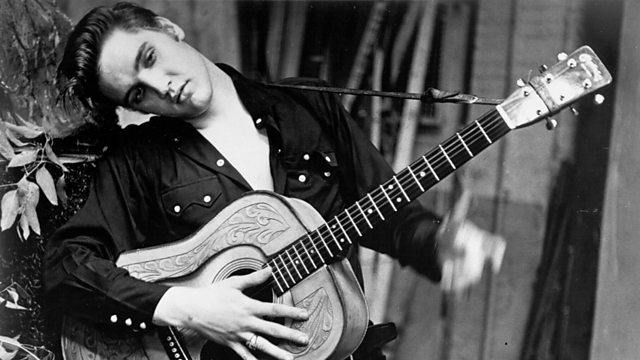
elvis

Guest contributor Zanyhorse takes a look at the radio series 25/30 Years of Rock. This first part examines 1955 to 1959

25 Years of Rock was originally broadcast on Radio 1 in 1980, and was a twenty-five part series looking at the music and news events of each year from 1955 to 1979. In 1985 the series was repeated as 30 Years of Rock which comprised the original twenty-five programmes plus an additional five programmes looking at the years from 1980 to 1984.

The series has recently been repeated on BBC Radio 6.

If you listen to the series now it helps if you bear in mind when it was first broadcast. In 1980 rock n roll was just over twenty-five years old, it was less than twenty years since the first Beatles’ record and ten years since the Beatles split, it was less than five years since the punk explosion. When 25 Years of Rock was first broadcast Bill Haley and John Lennon were still alive. The last programme in the series was more or less up to date with the current pop scene.

With each programme I have provided a playlist plus some additional comments.

1955

Introduction:

Rock Around the Clock – Billy Haley and the Comets

Anthony Eden on the Suez Crisis

Hound Dog – Elvis Presley

Interview with Elvis Presley

Hail Hail Rock n Roll – Chuck Berry

Bye Bye Love – the Everley Brothers

John F Kennedy on the Cuban Missile Crisis

The Times They Are a Changing – Bob Dylan

President Kennedy assassinated

She Loves You – The Beatles

Interview with the Beatles after receiving MBEs

I Can’t Get No Satisfaction – the Rolling Stones

My Generation – the Who

Vietnam War

San Francisco – Scott McKenzie

Country Joe McDonald at Woodstock

I Feel Like I’m Fixin’ to Die – Country Joe and the Fish

President Nixon announces troops to return from Vietnam

Space Oddity – David Bowie

Neil Armstrong lands on the Moon Edward Heath announces three day week

Bohemian Rhapsody – Queen

President Nixon Resigns Jimmy Carter runs for president

Anarchy in the UK – the Sex Pistols

Margaret Thatcher becomes Conservative Party Leader Interview with Johnny Rotten

Another Brick in the Wall – Pink Floyd

(When the first edition of 25 Years of Rock was repeated as 30 Years of Rock the introduction was extended to include: Ronald Reagan’s inauguration Fame – Irene Cara Interview with John Lennon. John Lennon assassinated. Just Like Starting Over – John Lennon Wedding of Prince Charles and Princess Diana Romeo and Juliet – Dire Straits The Falklands War Two Tribes – Franke Goes to Hollywood)

Main programme:

Alan Freed introduces…

Rock Around the Clock – Billy Haley and the Comets

Winston Churchill resigns as prime minister

Ain’t That a Shame – Fats Domino

Churchill announces Anthony Eden as successor. Conservatives win general election Leaders of USA. USSR, Britain and France meet at Geneva Summit

Sh-Boom – The Chords

Atom Bomb tests in Nevada Rolls Royce TMR, aka the Flying Bedstead, makes first vertical take-off

Bo Diddley – Bo Diddley

ITV launched (including Take Your Pick) Donald Campbell breaks waterspeed record in Bluebird

Maybellene – Chuck Berry

James Dean killed in road accident

Earth Angel – The Penguins

Royal Command Performance

On the Waterfront wins seven Oscars

Only You – The Platters

Billy Graham speaks in New York French evacuation of Vietnam

Hernando’s Hideaway – The Johnston Brothers

Start of Cyprus Crisis Juan Person ousted in military coup

Roll With Me Henry – Etta James

Prince Charles and Princess Anne make their first flight. Princess Margaret decides not to marry Captain Peter Townsend

See You Later Alligator – Billy Haley and the Comets

I Got a Woman – Ray Charles

Heathcote Elementary School wins architectural award

President Eisenhower suffers heart attack, but soon recovers and returns to work. Harry S Truman among attendees at Democratic Party dinner.

Adlai Stevenson announces intention to run for president.

Sixteen Tons – Tennessee Ernie Ford

British migration to Australia is highest for three years Borough of Lambeth organises inter-racial dance

Tutti Frutti – Little Richard

Harold Philby denies connection with Burgess and Maclean spy ring

The Great Pretender – The Platters

Jonas Salk develops polio vaccine. Rocky Marciano defends world heavyweight title

Elvis Presley introduces…

That’s Alright – Elvis Presley

USA and USSR announce plans to launch first space satellites by 1957

Mystery Train – Elvis Presley

Each programme plays out with Oh Well by Fleetwood Mac.

The first programme in the series, and one of the best.

Rock n roll started before 1955 and Rock Around the Clock wasn’t the first rock n roll record, but it was the first rock n roll record to be a major hit, so it was chosen as the starting point. Some music in this programme is the type of music that was the forerunner of rock n roll. But we also have the real thing from Chuck Berry, Bo Diddley, Little Richard, and somebody called Elvis Presley.

The news events put the music into some sort of context. When Bill Haley recorded Rock Around the Clock Winston Churchill was still prime minister. When this programme was first broadcast in 1980 the Burgess/Mclean/Philby story would have rung a bell with some listeners who didn’t remember the events of 1955, because a year earlier Anthony Blunt was exposed as the fourth man in the spy ring. And this isn’t the last we’ll be hearing about Vietnam.

1956

Roll Over Beethoven – Chuck Berry

Bikini Atoll H-Bomb test, Anthony Eden announces plan for Britain’s H-bomb, Editor of Steel predicts nuclear planes and homes heated by nuclear fuel

Let the Good Times Roll – Shirley and Lee

Smog causes disruption to train service and cancelled flights High-rise flats opened in Toryglen, Glasgow

Blueberry Hill – Fats Domino

Rocky Marciano retires British Sports awards. Freddie Laker takes ten wickets in one innings. Floyd Paterson wins heavyweight boxing title

Blue Suede Shoes – Carl Perkins

Prince Rainier of Monaco marries Grace Kelly

Why Do Fools Fall in Love? – Frankie Lymon and the Teenagers

Marilyn Monroe marries Arthur Miller, and makes The Prince and the Showgirl with Laurence Olivier

Be Bop a Lula – Gene Vincent

Nikita Krushchev visits UK, Commander Lionel Crabb disappears

Green Door – Jim Lowe

Cecil Reid, acting president of American Federation of musicians, announces that communists will be expelled from federation. Soviet Union invades Hungary

My Prayer – The Platters

Court in Montgomery, Alabama makes injunction against segregation on buses, Protesters picket Bill Haley concert in Birmingham, Alabama

The Saints Rock n Roll – Bill Haley and his Comets

Film Rock Around the Clock released, causing riots in cinemas

Rip It Up – Little Richard

Desmond Tee, King of the Teddy Boys, fined, and later imprisoned, for assault, Manuel Shinwell discuses rock n roll craze on Any Questions

Rock With the Caveman – Tommy Steele

Teddy boys talk about rock n roll, Lord Boothby discuses rock n roll craze on Any Questions, Egypt takes Suez canal

It’s Almost Tomorrow – The Dreamweavers

Israel invades Egypt. Anthony Eden on Suez Crisis.

Hound Dog – Elvis Presley

Suez crisis escalates

I’ll Be Home – Pat Boone

Fuel rationing announced by Aubrey Jones, minister of fuel and power, Underwater prospecting for oil

Rock Island Line – Lonnie Donegan

Rock n Roll festival in Sydney, Elvis Presley returns to Mississippi. Elvis makes his first film, Love Me Tender.

Love Me Tender – Elvis Presley

Interview with Elvis Presley

Don’t Be Cruel – Elvis Presley

President Eisenhower on being re-elected, Anthony Eden takes holiday in Jamaica

Heartbreak Hotel Elvis Presley

1956 was the breakthrough year for rock n roll, and the breakthrough year for Elvis Presley, already called the King of Rock n Roll. Britain got in on the act with Tommy Steele and Lonnie Donegan. In Britain there were the teddy boys. It’s amazing how they dug up that clip from the panel show Any Questions.

The main news story of the year was the Suez Crisis. The other big event was also the Soviet invasion of Hungary. I’m surprised that the sports roundup didn’t mention the Olympic Games.

1957

All Shook Up – Elvis Presley

Anthony Eden resigns. Harold Macmillan becomes prime minister.

Six-Five Special – Don Lang

Inflation hits Britain

Singing the Blues – Guy Mitchell

Singing the Blues – Tommy Steele

Tommy Steele and his mother move from Bermondsey to Catford, Rock n roll concert on channel ferry Teddy boy suits banned at Stafford RAF Station. Tailor discuses teddy boy suits.

Puttin’ on the Style – Lonnie Donegan

Vox pops on youth culture

School Days – Chuck Berry

Inauguration of President Eisenhower

Bye Bye Love – the Everley Brothers

Little Rock High School integration crisis.

Keep a Knockin’ – Little Richard

Little Richard throws jewellery into Hunter River as symbol of his faith in God, Sophia Loren attends Hollywood Party

Little Darlin’ – the Diamonds

Jellyfish on south coast of Britain British emigrate to Canada

That’ll Be the Day – Buddy Holly and the Crickets

Buddy Holly and the Crickets visit Britain

Peggy Sue – Buddy Holly and the Crickets

Interview with Buddy Holly, IRA bow up Dungannon Barracks in Northern Ireland, Mayflower II lands in Plymouth, Massachusetts

Whole Lotta Shakin’ Goin’ On – Jerry Lee Lewis

Nuclear accident at Windscale Lewisham rail crash Chris Brasher becomes Sportsman of the Year

Diana – Paul Anka

Wolfenden report recommends changes in law on prostitution on homosexuality, Link between smoking and lung cancer confirmed

Teddy Bear – Elvis Presley

First premium bonds draw. Bill Haley tours Britain. Bill Haley explains rock n roll.

Rock n Roll Music – Chuck Berry

Sunderland Football Club officials suspended for making illegal payments to players. Interview with Jimmy Hill. Juan Fangio wins German Grand Prix

Reete Petite – Jackie Wilson

Americans work on their first space satellite. Russians launch Sputnik.

Great Balls of Fire – Jerry Lee Lewis

Laika the dog sent into space on Sputnik II

Wake Up Little Susie – the Everley Brothers

Rock n roll was going from strength to strength. New acts included Buddy Holly, Jerry Lee Lewis, and the Everley Brothers who appear to be favourites of the series producer. The BBC launched Six Five Special, their first rock music programme.

People complained about inflation during the seventies, but it was nothing new. But the biggest news story of 1957 was the launch of Sputnik I. It’s clever how they use some of the records to fit in with the events, for example Great Balls of Fire being played after the Sputnik story.

Twenty-five Years of Rock was a bit like a serial with some of the ongoing stories such as the development of space flight, the comings and goings of the prime ministers and presidents, and the careers of some of the more famous rock acts like Elvis Presley.

1958

Rave On – Buddy Holly

Juno I rocket launches Explorer I satellite from Cape Canaveral

You Send Me – Sam Cooke

Members of Manchester United killed and injured in plane crash in Munich

Rumble – Link Wray

Bolton Wanderers beat Manchester United in FA Cup Final. Rise in crime figures following temporary suspension of death penalty. Interview with Fabian of the Yard.

Jailhouse Rock – Elvis Presley

Bridge Over the River Kwai wins seven Oscars. Elvis Presley receives call up papers.

King Creole – Elvis Presley

Elvis Presley begins basic training. Interview with Elvis Presley.

Move It – Cliff Richard and the Shadows

Report from jazz club

Why Don’t They Understand?

Interview with beatniks. Interview with Lady Lewisham.

Chantilly Lace – the Big Bopper

The sack dress

No Chemise Please – Gerry Granahan

Doctors warn of dangers of using hula hoops

Poor Little Fool – Ricky Nelson

Vice President Nixon returns from tour of South America.

He’s Got the Whole World in His Hands – Laurie London

Bony Maronie – Larry Williams

Vivian Fuchs reaches South Pole. Alaska becomes 49th State of America

At the Hop – Danny and the Juniors

Lebanon crisis. Interview with Private Elvis Presley

To Know Him is to Love Him – the Teddy Bears

Jayne Mansfield gets engaged to Mickey Hargitay

Stupid Cupid – Connie Francis

Sweet Little Sixteen – Chuck Berry

Six Five Special Roadshow. Britain’s first motorway, Preston By-pass. Opens Ford cars advert. Stirling Moss wins Morocco Grand Prix

Splish Splash – Bobby Darin

Comet 4 and Boeing 707 launched.

All I Have To Do Is Dream – the Everley Brothers

It’s Only Make Believe – Conway Twitty

Race riots in Notting Hill

Tom Hark – Elias and his Zig Zag Jive Flutes

Tommy Steele gets wax statue in Madame Tussauds. CND organises Aldermaston March

Summertime Blues – Eddie Cochrane

Worst unemployment figures in UK since records began. Teenagers spend more money on clothes and records

High School Confidential – Jerry Lee Lewis

Jerry Lee Lewis UK tour cancelled after revelation that he has married his thirteen year old cousin

Good Golly Miss Molly – Little Richard

In 1958 Elvis Presley put his career on hold when he joined the army, but he predicted that rock n roll would still be around for a long time. The two most notable new rock n roll personalities were Cliff Richard and Phil Spector, the latter the writer and producer of the Teddy Bears’ first hit.

I think this is the first edition of Twenty-five Years of Rock to feature a novelty record, Gerry Granahan’s ode to the sack dress. It’s also the first to feature a speech by Richard Nixon.

It was around this time that teenagers came into their own. Lady Lewisham later became better known as the step mother of Princess Diana.

1959

It Just Doesn’t Matter Anymore – Buddy Holly

Interview with Buddy Holly. Buddy Holly, the Big Bopper and Ritchie Valens killed in a plane crash

Three Stars – Tommy Dee

Alan Freed leaves WABC after being accused of involvement in payola scandal

What Do You Want? – Adam Faith

Vice President Nixon visits Dallas State Fair

What Do You Want to Make Those Eyes at Me For? – Emile Ford and the Cherckmates

Nixon visits Moscow and meets Nikita Khrushchev

Charlie Brown – the Coasters

NASA predicts men will land on Moon by 1969. Luna 3 transmits photographs of the Moon.

Kookie Kookie Lend Me Your Comb – Edward Byrnes and Connie Stevens

Does Your Chewing Gum Lose its Flavour? – Lonnie Donegan

Conservatives win general election

Mack the Knife – Bobby Darin

Harold Macmillan forms new cabinet

C’mon Everybody Eddie Cochrane

EMI to discontinue 78rpm records. Diesel and electric trains start to replace steam

Travellin’ Light – Cliff Richard

M1 motorway opened. Earl’s Court motor show

Kansas City – Wilbert Harrison

SRN1 hovercraft makes first channel crossing. Mike Hawthorn honoured by British Sporting Club. Mike Hawthorn killed in car crash.

Peter Gunn – Duane Eddy

Ingemar Johasnson wins boxing heavyweight title. England, led by Billy Wright, beat Scotland

Oh Carol – Nail Sedaka

Oh Donna – Ritchie Valens

Queen Elizabeth and President Eisenhower open Saint Lawrence Seaway in Canada

The Battle of New Orleans – Johnny Horton

Fidel Castro becomes Cuban prime minister following revolution. General De Gaulle becomes president of France

One Night – Elvis Presley

Tibetans rise up against China Communist rebellion in Laos

Dream Lover – Bobby Darin

Marty Wilde announces he is giving up rock n roll for classier style of music. Academy Awards

Living Doll – Cliff Richard

I Shall Not Be Moved – Million Dollar Quartet

CND organise second Easter march to Aldermaston

Down By the Riverside – Alexis Korner, Bill Colyer, Dick Smith, John Bastable and Ken Colyer

Government announces abolition of national service

Teenager in Love – Dion and the Belmonts

1959 saw the first major tragedy in the history of rock n roll when Buddy Holly, the Big Bopper and Richie Valens died in a plane crash. And there’s a rare chance to hear the tribute record Three Stars.

Vice President Richard Nixon was making a name for himself. This is the first programme in the series where we hear the Queen.

There was definitely a folk music scene in Britain in 1959. And Britain was heading towards a new era with the CND movement, the new motorways, the modernisation of the railways, and the imminent abolition of national service.

According to the entry for this programme in Radio Times Cliff Richard, Adam Faith, Bobby Darin and Neil Sedaka were producing “a mellower style of pop”. And Elvis Presley joining the army, the Jerry Lee Lewis scandal, the payola scandal, and the death of Buddy Holly all contributed to the decline of the first wave of rock n roll.

Doctor Who – The Romans. Episode Four – Inferno

inferno

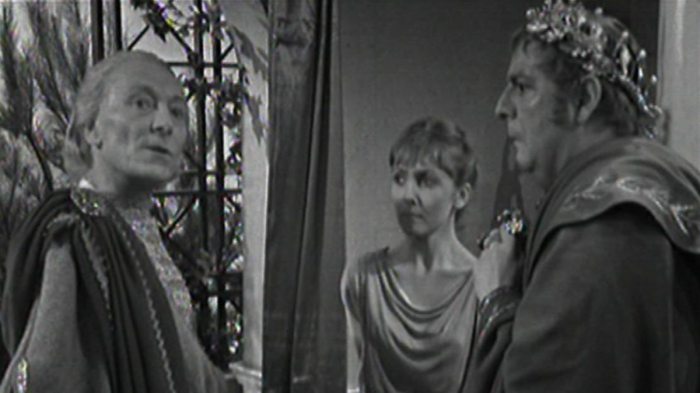
Inferno opens with another demonstration of Nero’s ruthlessness. Ian and Delos have escaped and Nero’s none too impressed with Barbara (Barbara couldn’t help but shout out to Ian, which infuriated Nero). “So you’re a friend of the gladiators are you?” He then asks a soldier for his sword and looks set to murder Barbara.

The scene is blocked well, as Nero stands in front of both Barbara and the solider when he strikes the killing thrust. We hear Barbara scream and it’s possible to wonder for a split second if he has actually done the unthinkable – but no, it’s the guard that’s died. “He didn’t fight hard enough” mutters Nero as he looks at the (presumably) blood-covered sword whilst Barbara looks suitably sick.

Although The Romans is generally regarded as a comic gem today (although some people will never accept that Doctor Who could or should be a comedy) there’s plenty of evidence that viewers back in 1965 were rather nonplussed. The audience research report includes a number of unfavourable responses, such as “this programme gets more and more bizarre; in fact it’s so ridiculous it’s a bore” and someone else declared that the series “was only fit for morons”. The report summed up that most of the respondents felt that “the story had steadily declined to a farcical and pathetic anticlimax”. Oh dear!

It’s difficult to see exactly what they found to be so irritating, as the script is still bubbling along nicely with some excellently played comic gems. Nero, tiring of the acclaim heaped on the Doctor, decides to throw him to the lions. But he doesn’t directly tell him, all he says is that he wants him to play in the arena. The Doctor knows what’s going on though and Hartnell and Francis share another classic two-handed scene. Francis’ hangdog expression is priceless!

DOCTOR: Yes, well I promise you I shall try to make it a roaring success.
NERO: You’ll have to play something special, you know.
DOCTOR: Oh, yes, of course, of course, yes. Something serious, yes. Something they can really get their teeth into, hmm?
NERO: You can’t know, you can’t. I’ve told no one.

The major weakness with the story is the revelation that Maximus Pettulian had come to Rome to murder Nero – since the real Pettulian was so feeble it’s rather a stretch to imagine he could ever be a successful assassin. The burning of Rome isn’t quite as successful as it could have been either – but on Doctor Who‘s budget this isn’t too much of a surprise. It’s worth reflecting that later prestige serials like I Claudius had similar production standards so if you place them side by side, The Romans stands up quite well.

But as we’ve seen, most of the viewers questioned in 1965 weren’t impressed and seemed to be bored of historical stories – much preferring the Doctor’s trips into the future. But they should have been careful what they wished for, as we now jump headlong into six episodes of The Web Planet …….

Lorna Doone – Simply Media DVD Review

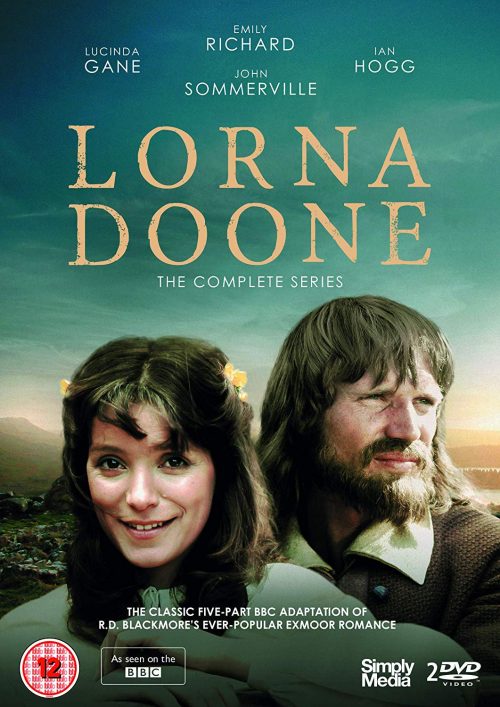
John Ridd (John Sommerville) was just a boy when his father, a good and honest man, was brutally murdered by Carver Doone (John Turner). Despite an outward display of respectability, the wealthy Doone family delight in creating havoc and mischief.

As John grows up, he vows to avenge his father’s death. But matters are complicated when he falls deeply in love with the young Lorna Doone (Emily Richard) whose hand in marriage has been promised to her cousin, Carver ….
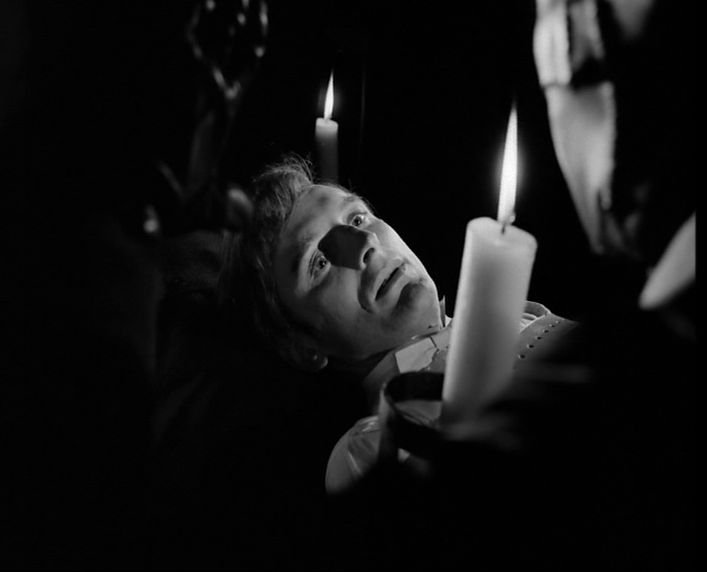
Subtitled A Romance of Exmoor, Lorna Doone by R.D. Blackmore was originally published in 1869. An instant success, it has spawned numerous television and film adaptations over the last hundred years or more. It’s easy to see why, since it’s a heady mixture of action, adventure, revenge and romance.

This 1976 BBC Classic Serial version is a faithful adaptation (always a hallmark of the Classic Serials) although it does take a short time to tune in to the style of production. Even for those well used to the delights of archive television, some of the 1970’s Classic Serials initially appear to be rather earnest and mannered (the numerous very fake-looking beards are also a hindrance). But it doesn’t take long before the story starts to engross and the small niggles fade away.

Richard Beaumont, as the young John, carries most of the first episode. Although still a teenager, he’d already enjoyed a decent career stretching back to the late 1960’s (including a brief recording contract with Decca records). His John is a pleasing mixture of youthful impatience and innocence and such is the impression he makes that it’s almost a shame when John suddenly turns into the much older John Sommerville.

This slideshow requires JavaScript.

It’s slightly odd that none of the other characters seem to age though (which makes John’s transformation from scrawny youth to strapping young man all the more jarring). Possibly it would have been better to have staged this transformation at the start of the second episode, rather than at the end of the first.

Episode one also gives us a brief glimpse of the young Lorna, played by Jennifer Thanisch (best known for appearing as Anne in the Southern series of The Famous Five). John Somerville’s John Ridd is a stolid enough creation but it’s Emily Richard’s Lorna Doone who really catches the eye. Easily the more experienced actor of the two, Richard had just starred in The Glittering Prizes and would later appear in the well-remembered WW2 drama Enemy At The Door.

Plenty of familiar faces are on show. Patrick Troughton plays Councillor Doone, not a terribly large role but Troughton was always good value whatever part he played. Ian Hogg is very appealing as the roguish highwayman Tom Faggus whilst Lucinda Gane (later to play Miss Mooney in Grange Hill) appears as Lizzie, one of John’s sisters. David Garfield, Max Faulkner and Trevor Baxter are amongst those who contribute to a strong supporting cast.

The romance between John and Lorna is a key part of the narrative, with various other subplots – the infighting amongst the Doones, rumbles of unrest in London about the King ‘s conduct – also bubbling away nicely throughout the episodes.

Whilst it’s true that some of the rustic supporting characters err on the ripe side, Lorna Donne boasts some fine performances amongst the principals. If you love the 1970’s era of the BBC Classic Serials then this should certainly appeal.

Lorna Doone is available now from Simply Media, RRP £24.99. It can be ordered directly from Simply here (quoting ARCHIVE10 will apply a 10% discount).

Pinter at the BBC – BFI DVD Review

This is an incredibly welcome release, as it brings together a very healthy chunk of Harold Pinter’s BBC output (none of which has been commercially available before). Indeed, Pinter’s television work on DVD has, until now, been rather sparse (a few isolated offerings from Network – the Armchair Theatre production of A Night Out and the Laurence Olivier Presents staging of The Collection – have been the highlights so far).

Disc One

Leo McKern in Tea Party

Tea Party (25th May 1966). 76 minutes

Tea Party was commissioned for a prestigious Eurovision project, entitled The Largest Theatre In The World, which saw the play performed in thirteen separate counties over the course of a single week (some took a subtitled version of the BBC original whilst others staged their own adaptation).

It’s a layered and uncompromising piece, with Leo McKern mesmerising as a self-made businessman who begins to lose his sense of reason (and also his sight). Has he been destabilised by inviting his brother-in-law Willy (Charles Gray) into his business or has his infatuation with his new secretary, Wendy (Vivien Merchant), pushed him over the edge? Do his two young sons from his first marriage really harbour evil intentions towards him or does his new wife, Diana (Jennifer Wright), possesses secrets of her own?

So there are plenty of questions, but as so often with Pinter the answers are less forthcoming. The final scene is extraordinary. Disson (McKern) – his eyes firmly bandaged – sits immobile in the middle of a party held in his honour. Although Disson plainly can’t see, we’re privy to his thoughts (he imagines a three way intimate exchange between his wife, brother-in-law and secretary) as he slowly regresses into a catatonic state.

All of the principals offer polished performances, with Merchant – Pinter’s first wife – especially eye-catching. Given the subject matter and the already rocky relationship she was enjoying with Pinter, it’s fascinating to ponder just what she made of the material. Tea Party is fluidly directed by Charles Jarrott and given that the cameras of this era were bulky and not terribly manoeuvrable, some of his shot choices are quite notable.

It’s a shame that the telerecording isn’t of the highest quality (a new 2K transfer was struck for this release, but given the issues with the original recording the benefit of this was probably minimal). A pity, but at least the worst of the print damage occurs early on.

The Basement (20th February 1967). 54 minutes

Harold Pinter contributed three plays to the Theatre 625 strand in 1967. For some reason the third of these plays appears on the first disc whilst the first two are featured on the second. That’s slightly odd, but since all three aren’t linked in any way it doesn’t matter which order they’re watched in.

We’re in absolutely classic Pinter territory here as Law (Derek Godfrey) discovers his cosy basement flat has been invaded by an old friend, Stott (Pinter) and Stott’s young and mainly silent girlfriend Jane (Kika Markham). Initially pleased to see Stott, Law is less enthused – at first – about Jane ….
The arrival of an outsider into a settled domestic setting is a dramatic device that Pinter would use time and again, but The Basement – the only one of his three Theatre 625 plays to be an original work – is notable since it plays with the artifice and techniques of television.

Even more so than Tea Party, the line between reality and fantasy becomes increasingly blurred as the play continues. Some scenes (such as when Law and Stott, both stripped to the waist, fight each other with broken bottles) seem obviously fantastical, but what of the others? Time certainly seems to move in a disjointed fashion (one moment it’s winter, the next summer) whilst the final scene posits the possibility that everything we’ve seen has been a fantasy.

Pinter is menacing and monosyllabic as Stott but not as monosyllabic as Markham’s Jane, who is passive throughout whilst Godfrey has most of the dialogue and seems to be the most decipherable character of the three. A tight three-hander, The Basement has aged well.

Special Feature

Writers in Conversation – Harold Pinter. A 1984 interview with Pinter, running for 47 minutes.

Disc Two

Hazel Hughes and Maurice Denham in A Slight Ache

A Slight Ache (6th February 1967). 58 minutes

Another three-handed play which also pivots on the arrival of an disruptive outsider, A Slight Ache boasts remarkable turns from both Maurice Denham and Hazel Hughes. Husband and wife – Edward and Flora – they seem reasonably content in their country cottage, but when they invite a nameless and mute matchseller (Gordon Richardson) into their home everything changes.

Denham’s fussy, pernickety Edward is slowly destroyed by the matchseller’s ominous silence whilst Flora finds that her long-dormant sexuality has been reignited by his presence. Some contemporary reviewers found this a little hard to swallow, but realism isn’t the chief component of this play. The matchseller simply serves as a catalyst for Edward and Flora to indulge in several powerful monologues.

Despite its radio origins, A Slight Ache has a much more of a theatrical feel than The Basement. Barry Newbery’s sets (especially the lush garden) are a highlight of the production.

A Night Out (13th February 1967). 60 minutes

It’s interesting to be able to compare and contrast this production of A Night Out to the 1960 Armchair Theatre presentation. Honours are pretty much even, with Tony Selby here proving to be equally effective as the repressed mummy’s boy as Tom Bell was back in 1960.

Anna Wing, as the mother in question, makes for an imposing harridan – although wisely she doesn’t overplay her domineering nature. Albert (Selby) is all she has left, but she ensures that her psychological games comprise honeyed words and pitiful entreaties rather than abuse.

Albert’s humiliation at an office party eventually leads him to a prostitute (Avril Elgar). That she, in her own way, is just as controlling as his own mother unleashes his ugly side. All the pent-up emotions he can’t express at home are unloaded on this poor unfortunate.

Well-cast throughout (John Castle and Peter Pratt catch the eye) A Night Out is the most straightforward of the three Pinter Theatre 625 productions, but is no less fascinating.

Disc Three  

Henry Woolf in Monologue

Monologue (13th April 1973). 20 minutes

We’re now in colour for the fifth play in the Pinter set. At just twenty minutes it’s one of the shortest and only features a single actor – Henry Woolf, but it still packs plenty of content into its brief running time though.  An unnamed man (Woolf) addresses an empty chair, which is standing in for his absent friend.  Or does he believe that his friend is actually sitting there? Or is his friend simply a figment of his imagination?

As so often, several readings can be made, each one equally valid.  The story which unfolds – male friendship disrupted by the arrival of a female – echoes back to the likes of The Basement and is skilfully delivered by Woolf.  One of Pinter’s oldest friends (the pair enjoyed a relationship for more than fifty years) Woolf doesn’t really put a foot wrong (he later reprised this piece at the National in 2002).

This might be a Pinter in miniature, but is certainly deserving of attention.  Something of a neglected piece (there’s no listing on IMDB for example) hopefully this DVD release will shine a little more light on it.

Old Times (22nd October 1975). 75 minutes

Old Times has a very theatrical feel.  This form of television staging would eventually fall out of fashion – for some it was simply electronic theatre (a bad thing apparently).  But it’s always been a style that I’ve enjoyed – when there’s no location filming or clever camera angles, the piece has to stand or fall on the quality of the writing and acting.  

It’s another triangle story – married couple Deeley (Barry Foster) and Kate (Anna Cropper) find their status quo disturbed by the arrival of Kate’s old schoolfriend Anna (Mary Miller).  With Kate remaining passive for most of the play she becomes an object that both Deeley and Anna seek to claim as their own.

Several theories have been propounded to explain the meaning of the play. When Anthony Hopkins tackled the role of Deeley in 1984 he asked Pinter for some pointers. The playwright’s advice? “I don’t know, just do it”.  

Anna’s presence at the start of the play (standing at the back of the living room in darkness and immobile) is a early indictor that the production isn’t striving for realism.  She shouldn’t be there – the dialogue between Deeley and Kate makes it clear she’s yet to arrive – so her presence ensures that a tone of oddness and disconnection is set.  Foster and Cropper duel very effectively (a lengthy scene where Deeley and Anna discuss the best ways to dry a dripping wet Kate is just one highlight).

Puzzling in places (has everything we’ve witnessed simply been Deeley’s imaginings?) Old Times is nevertheless so densely scripted as to make it a rewarding one to rewatch.

Landscape (4th February 1983). 45 minutes

Landscape is a two-hander shared between husband and wife Duff (Colin Blakely) and Beth (Dorothy Tutin).  Both indulge in separate monologues which never connect to the other person’s conversation.  Beth in fact never acknowledges Duff’s presence, although he does appear to know that she’s there (or at least that someone is).

The Lord Chamberlain’s office, back in 1967, found itself unimpressed with Landscape. “The nearer to Beckett, the more portentous Pinter gets. This is a long one-act play without any plot or development … a lot of useless information about the treatment of beer … And of course, there have to be the ornamental indecencies”.

A little harsh maybe. Landscape is plotless but leaves a lingering impression. The music, composed by Carl Davis and played by John Williams, helps with this.

Special Feature

Pinter’s People – four animated short films (each around five minutes) from 1969.  A pity that a fifth – Last To Go – couldn’t be included for rights reasons, but the ones we do have are interesting little curios (Richard Briers, Kathleen Harrison, Vivien Merchant and Dandy Nichols provide the voices, so there’s no shortage of talent there).

Disc Four

Derek Newark in The Hothouse

The Hothouse (27th March 1982). 112 minutes.

Watching these plays in sequence, what’s especially striking about The Hothouse is just how funny it is.  There have been moments of levity in some of the previous plays, but the farcical tone seen here is something quite different.  Originally written in the late fifties and then shelved for twenty years, The Hothouse is set in a government rest home which, it’s strongly implied, uses any methods necessary to “cure” its unfortunate patients (who we can take to be political dissidents).

Although a dark undertone is always present (indeed, the play concludes with the offscreen deaths of all but one of the senior staff) there’s also a playful use of dialogue and even the odd slapstick moment.  Derek Newark as Roote, the hopelessly out of his depth manager, steamrollers his way through scene after scene quite wonderfully.

A man constantly losing a running battle to keep his anger in check, Roote seems incapable of understanding even the simplest of things. Although he may not be quite as dense as he appears (his culpability in the death of one patient and the pregnancy of another is certainly open to interpretation).

With a strong supporting cast, The Hothouse was certainly the most surprising of the main features.

Mountain Language (11th December 1988). 21 minutes.

A one-act play which was first performed at the National Theatre in late 1988, it swiftly transferred to television just a few months later with Michael Gambon and Miranda Richardson reprising their stage roles. One of Pinter’s more political pieces, Gambon and Richardson (along with Julian Wadham and Eileen Atkins) all offer nuanced performances.

Gambdon and Wadham are soldiers, facing down a group of prisoners who include Richardson and Atkins. Language, so often key in Pinter’s works, is once again pushed to the forefront.

“Your language is forbidden. It is dead. No one is allowed to speak your language. Your language no longer exists. Any questions?”

Mountain Language is another prime example of the way Pinter could make an impact in a very short space of time.

Disc Five

Colin Blakely, Kenneth Cranham and Harold Pinter in The Birthday Party

The Birthday Party (21st June 1987). 107 minutes.

Written in 1957, when Pinter was touring in a production of Doctor In The House, The Birthday Party was Pinter’s first full length play.  Revived thirty years later for this Theatre Night production, it’s plain that time hadn’t diminished its impact.

Kenneth Cranham is mesmerising as Stanley, a man haunted by vague ghosts from his past.  Treated with stifling maternal love by his landlady Meg (Joan Plowright), the arrival of two mysterious strangers – Goldberg (Pinter) and McCann (Colin Blakely) – marks the beginning of a nightmarish twenty four hours.  Also featuring Julie Walters and Robert Lang, The Birthday Party baffled many critics back in the late fifties – the reason why Goldberg and McCann have decided to target Stanley and the others is just one puzzle – but in retrospect it’s fascinating to see how key Pinter themes, such as the reliability of memory, were already firmly in place.

Special Features

Face To Face: Harold Pinter. Sir Jeremy Isaacs is the out of vision interviewer since – as per the style of all the programmes in this series – the camera remains firmly fixed on Pinter throughout.  Some decent ground is covered across the forty minutes of this 1997 interview.

Harold Pinter: Guardian Interview. Audio only, 73 minutes. This is selectable as an additional audio track on The Birthday Party, even though it doesn’t directly refer to that play (or run for its whole length). 

It might only be January, but this looks set to be one of the archive television releases of the year. Highly recommended.

Pinter at the BBC is released by the BFI on the 28th of January 2019.  

Harold Pinter, 1997

Take Me Home – Simply Media DVD Review

Tom (Keith Barron) is eking out a living as a cab driver in the Midlands town of Woodsleigh Abbots.  It’s something of a comedown for a skilled man, but since all the traditional trades have disappeared he has little choice. Life with his wife Liz (Annette Crosbie) is settled but rather humdrum.

However, when he meets Kathy (Maggie O’Neill) everything changes. Kathy, half his age, is a newlywed who has recently moved to the area. Having had an argument with her husband, Martin (Reece Dinsdale), she scrambles into Tom’s cab in a highly distressed state. He initially treats her with fatherly concern, but over time this transforms into a dangerous passion which begins to eat away at him ….

Originally broadcast in 1989, Tony Marchant’s three part drama stands as a document of the dying days of the Thatcher era.  Previously an industrial town, the arrival of Chinese computer firm InfoCo has transformed Woodsleigh Abbots, bringing in an influx of upwardly mobile white collar workers like Martin.

Martin and his friends are the winners at present leaving Tom, having seen the industry he spent his life working in evaporate, very much on the debit side of the ledger. As for Liz, she’s embraced InfoCo and enjoys working in their canteen, even if the rank and file staff members – such as Martin – treat her with indifference or mild contempt.

The company offers nothing for Tom though, so armed with his favourite Dusty Springfield cassette he’s chosen the job of cabbie.  But the recent regeneration has transformed the town to such an extent that he sometimes struggles to find his way. The irony in this is quite clear.

The contrast between Martin and Kathy, with their badminton and dinner parties, and the humbler pleasures of Tom and Liz is marked.  Clearly Martin and Kathy are on their way up whilst Tom feels that he’s being left behind.  His bitterness at the way that technological progress has halted his career, allied to his suspicion about the ever-encroaching InfoCo, positions him as a skilled man who has come to realise that his skills are no longer needed.

Keith Barron was one of those actors who could convey a whole range of emotions with just a single look. There’s an excellent example at the beginning of the first episode as Tom drops a couple (older man, younger woman) off at a motel. The waves of disapproval emanating from Tom (the man’s old enough to be the girl’s father for goodness sake) is palpable. But that was before he’d met Kathy of course ..

The clash of opposites is one of the things which makes Take Me Home so compelling.  Tom and Kathy have little in common – the age gap is just one example whilst their divergent musical tastes (he favours Dusty whilst she loves Deacon Blue) is another. 

Reece Dinsdale has a difficult role to play since Martin, initially at least, is portrayed as a wholly unlikeable type. Forcing Kathy to have an abortion (telling her that he wouldn’t be able to love their child and would also end up hating her) sets the tone. As befits a computer operator (or at least the 1980’s vision of one) Martin is coldly logical. They can’t afford a baby at the moment, so the “mistake” has to be dealt with.

The relationship between Tom and Kathy is a slow burn. But once they do connect, everything happens in a rush. Subtitled “a love story” in the Radio Times, it’s probably best not to expect a happy ending – it’s plain that when the affair is revealed the fallout will be dramatic.

It’s hard to fault any of the main performers. Barron is perfect as the essentially decent, but utterly conflicted Tom (a man unable to tear himself away from Kathy, even though he’s well aware that he’s destroying his marriage). Crosbie’s slowly dawning comprehension that something is badly wrong is also skilfully played.

O’Neill has to tread a difficult path, but she ensures that Kathy is more than simply an attractive piece of totty (or a helpless victim of either of the men in her life). And although Martin is initially portrayed in a deeply unsympathetic light, as time goes on the script (and Dinsdale) teases out his damaged, fragile side.

By the final episode the truth is out and events spiral further and further out of control before some sort of compromise is reached (although it’s debatable who the winners and losers are).  Barron and Crosbie share several pulsating scenes early in the episode.  Crosbie is never better than here – displaying a mix of emotions (denial, anger, forgiveness) in quick succession. The sight of a glammed-up Liz (maybe partly done to genuinely tempt Tom, but mainly to taunt him) is a haunting and faintly disturbing one.

Uncompromising and skilfully acted, Take Me Home still has considerable impact, nearly thirty years down the line. Recommended.

Comprising three episodes each of approximately sixty minutes duration, Take Me Home comes on a single disc. There are no special features but – as per all BBC titles – it’s subtitled.  The picture quality is fine (albeit a little grainy) with no noticeable issues.

Take Me Home is available now from Simply Media. It can be ordered directly from Simply here (quoting ARCHIVE10 will apply a 10% discount).

Doctor Who – The Romans. Episode Three – Conspiracy


Conspiracy opens with another clandestine scene between the Doctor and Tavius.  The obvious joke is that the Doctor still has no idea what Tavius is talking about.  Tavius imparts the following vital information “I haven’t got long, so listen carefully. I’ve managed to get rid of that body and I don’t think anyone suspects. But if you delay your action, it will be safer.”

Every time that Tavius appears he hisses in a most unsubtle manner (in order to catch the Doctor’s attention).  It’s interesting that this bit of business wasn’t present in the script, so presumably Hartnell and Michael Peake worked it out in rehearsals.  Much later, Tom Baker’s willingness to treat the rehearsal script as simply a jumping off point for his own improvisations and suggestions would become legendary, but there’s no doubt that the four days rehearsal each episode was given during this period did allow for a certain leeway which sometimes benefited the story.

This episode sees the farce quotient ramped up another couple of notches as Barbara is presented to Nero’s wife Poppaea (Kay Patrick).  Poppaea’s not terribly impressed with Barbara, no doubt because she’s witnessed Nero’s instant attraction to her.  This wasn’t the first time that Barbara had found herself the object of male lust, although the others – Vasor in The Keys of Marinus and El Akir in The Crusade – weren’t played for laughs like Nero’s pursuit is here.

There’s a level of innuendo in the script for those who want to look for it (for example, Nero tells Barbara to “close your eyes and Nero will give you a big surprise”) and the farce element is at its most obvious as Nero pursues Barbara through the palace (she just avoids bumping into the Doctor or Vicki each time).  That Barbara remains unaware that the Doctor and Vicki are at court (and vice-versa) hardly seems credible – but that’s the whole joke and it’s delightful to see how the actors throw themselves wholeheartedly into the swing of things.

Derek Francis is a joy to behold in these scenes, he plays Nero as a little boy who’s anxious not to be found out.  But his other, more ruthless side, is demonstrated at the end of the episode as he watches Delos and Ian fight as gladiators.  Delos gains the upper hand and Nero has no hesitation in ordering Ian’s head to be cut off.  Whilst this seems at odds with the amiable, befuddled ruler we’ve previously seen, it actually fits in very well – Nero (like most Emperors) had lived so long with the gift of absolute power that he could be either cruel or compassionate, depending on his mood.  That so much power could be in the hands of such an unbalanced individual seems remarkable – but for all the comic stylings of the script, that part of The Romans is probably historically accurate.

Ian’s rather sidelined in this episode.  Locked up with Delos for most of the duration, he faces an uncertain future as a gladiator.  These scenes are most notable for the shots of two gladiators practising – unfortunately the way they fight is so feeble that it’s hard to imagine either would be capable of punching their way out of a paper bag …

Back at court, Vicki confesses to the Doctor that she might have poisoned Nero(!) which leads into another scene which is comic and dark at the same time.  The Doctor warns Nero and he passes his cup to the unfortunate Tigilinus (Brian Proudfoot).  Tigilinus drinks and plummets to the floor, dead.  “He was right” deadpans Nero as he shrugs and moves off.  What’s remarkable is that Vicki nevers seem to realise or indeed care that her actions cost the life of the court poisoner Locusta (Ann Tirard).

It’s finally time for the Doctor to demonstrate his non-existent skills as a lyre player.  “I would like to play my new composition in honour of this occasion. The music is so soft, so delicate, that only those with keen perceptive hearing, will be able to distinguish this melodious charm of music.”  Delightfully, he then proceed to play not a single note aloud, but since nobody wishes to admit that they lack the perceptive hearing required, everybody (including Nero) pretend to be entranced.  “He’s all right, but he’s not all that good” mutters Nero testily.  Brilliant!

Doctor Who – The Romans. Episode Two – All Roads Lead To Rome

Although the main plot of The Romans is straightforward enough, the various palace intrigues which bubble below the surface are slightly more opaque.  At the start of this episode it’s confirmed that the Centurion we met in the previous episode wanted Maximus Pettulian dead and he’d commissioned a mute assassin called Ascaris (Barry Jackson) to do the deed.  The joke being of course that Ascaris is unable to tell him that he’s already killed Pettulian once!

So he has to kill him again (in the shape of the Doctor) but the Doctor offers more evidence that he’s handy in a scrap.  The fight scene between Ascaris and the Doctor is a comic highlight of the episode and although it was designed to put as little stress onto Hartnell’s shoulders as possible, it still works very well.  When Vicki enters the room, Ascaris has clearly had enough and heads for the nearest window.  The Doctor’s rather disgruntled.  “Young lady, why did you have to come in and interrupt? Just as I’d got him all softened up and ready for the old one, two.”  Lovely stuff.

And what of Ian and Barbara?  Ian’s been sold as a galley-slave and quickly strikes up a friendship with Delos (Peter Diamond).  Although Diamond was a bit-part actor, he spent most of his time working as a stuntman/arranger (amongst his numerous film credits was the first Star Wars movie).  Delos performs much the same function as Larry did in The Dalek Invasion of Earth – he’s someone for Ian to talk to as he searches for the others.  Diamond’s a solid presence though and manages to be something more than just a line-feed.

Barbara’s landed on her feet as she’s been bought by Tavius (Michael Peake) and brought to the court of Caesar Nero.  Tavius is an interesting character – he’s someone who has an agenda of his own (which is connected to Maximus Pettulian) although his ultimate aims remain nebulous for a while.  And is he Barbara’s friend or foe?  Peake had an imposing physical presence and would clearly have found no difficulty playing the heavy, but we’ll see that there’s more to Tavius than meets the eye.

Nero (Derek Francis) makes an impressive entrance (he belches loudly).  “Royal felicitations” murmurs the Doctor.  Amongst a host of sparkling performances, Francis’ is the jewel in the crown and his byplay with Hartnell is delightful.  From their first meeting, the running gag of Maximus Pettulian’s skill (and the Doctor’s total lack of skill) as a lyre player is established.  Nero is keen to hear Pettulian play, but the Doctor manages to cleverly sidestep this potentially awkward moment by asking Nero to go first.  Another nice comic moment occurs when Nero calls for a stool – the Doctor begins to sit down on it, but it quickly becomes clear that Nero wanted it to balance his leg upon, causing the Doctor to rise again with a disgruntled expression!

Doctor Who – The Romans. Episode One – The Slave Traders

The literal cliffhanger from the previous episode (which saw a lovely model TARDIS falling down a ravine) is negated here in the most offhand way – although this very much fits in with the tone of the episode.  We open on a close-up of Ian, apparently unconscious, but it then becomes clear that he’s simply closed his eyes for a moment – he’s relaxing on a couch and is decadently maneuvering a whole bunch of grapes towards his mouth.

The Doctor has shamelessly moved into a villa on the outskirts on Imperial Rome (luckily for them, the owners are away).  It’s clear they’ve spent a few months here, doing nothing but overindulging in both food and drink (quite where all this comes from is a mystery that’s never solved – either the unfortunate householder had an extensive larder and wine-cellar which they’ve ruthlessly plundered or the Doctor has a large supply of Roman currency aboard the TARDIS).

Although Ian and Barbara are enjoying this unexpected lull, Vicki is bored. Vicki’s written here as rather more childlike than she’d later become – for example, she’s so keen to get to the market she tugs Barbara along and later reacts with glee when the Doctor agrees to take her to Rome – but as she’s such a novice time-traveller, that’s reasonable enough.

As for the Doctor, he also seems to be tiring of this inactive life and, with Vicki in tow, heads for Rome.  The Romans was Doctor Who‘s first overtly comic script and it’s clear that Hartnell’s in his element.  It would have been a story that demanded even more concentration from him than usual – the interplay between characters only works if the dialogue is delivered accurately (something that he sometimes had trouble with) but there’s no real problems in this episode.

After the Doctor and Vicki depart for Rome, Ian and Barbara remain behind at the villa.  William Russell has the chance to essay a few lines of Julius Caesar and narcissistically preen at his appearance, whilst Barbara is able to get in a few decent gags (like asking him to get some ice from the non-existent fridge).  As per the rest of the episode this chugs along comedically but events soon take a darker turn.

Two slave-traders, Sevcheria (Derek Francis) and Didius (Nicholas Evans), capture Ian and Barbara and intend to make a healthy profit out of them.  The fight scene is a comic one – Barbara accidentally knocks out Ian, rather than Sevcheria – but after that the reality of their situation hits home.  Chained up together, then separated, Ian and Barbara face an uncertain future.

Meanwhile the Doctor and Vicki find a murdered man in the bushes at the side of the road leading to Rome.  It clearly wasn’t robbery as his lyre wasn’t taken, so it remains a mystery (for a while at least) what the motive could have been.  The man was Maximus Pettulian from Corinth, whose skill as a musician was talked about even in Rome.  As luck would have it, he bore a certain resemblance to the Doctor and so the Doctor decides to assume his identity – since Pettulian was en-route to play for Nero, it’s a golden opportunity to meet the emperor.

Amongst the many nice little touches peppered throughout this episode, watch for the look between Hartnell and O’Brien after the Doctor confides to the Centurion (who’s appeared to escort Pettulian to Rome) that Vicki “keeps her eye on all the lyres”!

Until Nero appears in episode two the story never quite kicks into first gear, but there’s still plenty to enjoy in The Slave Traders.

Adam Adamant Lives! – The Sweet Smell of Disaster

Benjamin Kinthly (Charles Tingwell) has a dream. He plans to take over the country with the help of some addictively perfumed plastic flowers (which are given away free with his washing powder Cloud 7). Only one man – and his sometimes annoying female sidekick – stands in his way ….

This is rather more like it. Robert Banks Stewart’s script is ploughing a very definite Avengers furrow, but that’s a plus for me rather than a minus. And given that plastic flowers are key to the story (although these are beguiling rather than killers) I wonder if Robert Holmes happened to tune in? Holmes’ later Doctor Who story Terror of the Autons also had a key role for plastic flowers.

For once, Adam has to face a male protagonist, although a wily female – Shani Matherson (Adrienne Corri) – operates as his sidekick. Once again, it’s best not to study the plot in too much detail – Kinthly is convinced that his scented flowers have now contaminated the whole country. So when he suddenly withholds supply, the nation (by now nothing more than hopeless addicts) will agree to his every demand. Everybody in the country? That’s a bit difficult to swallow.

The Sweet Smell of Disaster works on one level as a sly satire of the advertising world. Kinthly’s buzztalk and the advert we see at the end (which Adam and Georgina watch on a television screen) are good examples of this. Mind you, given how addictive the flowers are, I’m not quite sure why Kinthly’s wasting his time with such an extensive advertising campaign.

The series’ low budget means that we’re denied the vision of the whole country in turmoil, so we have to rely on the sight of Georgina and Simms – both, unlike Adam, affected – to sell the notion that the flowers really are addictive. Of course once Georgina is cured then she can assist Adam (something which the long-suffering Adamant is less than delighted about). However, since this allows her to dress up as a flower girl in a rather brief costume I was quite content. Adam himself seems to be a quick learner about the ways of the 1960’s as her attire seems to pass him by. A couple of episodes ago he probably would have been horrified.

When the episode moves onto film it’s possible to guess that a set-piece scene is coming. Given all the detergent lying around, Adam’s decision to mix it with water and then stage a foamy fight with Kinthly was an inspired one. The foamy catfight between Georgina and Shani was quite eye-opening too ….

An assured effort, the series now seems to be finding its feet.

Adam Adamant Lives! – More Deadly Than The Sword

Adam (with Georgina tagging along of course) heads off to Tokyo to deal with an evil blackmailer who spells trouble for the British government ….

Oh dear. After two pretty entertaining episodes we hit something of a speed bump with the third. Terence Frisby’s other writing credits include a couple of (wiped) episodes of Public Eye but he’s easily best known for penning the play There’s A Girl In My Soup. His sole contribution to AAL! is a curious thing, although the major problem is one key casting decision.

Things start sprightly enough. Sir Ernest Hampton (Maurice Hedley) is an important government official who’s been unwise to find himself ensnared in a honey trap. But rather than do the decent thing and resign, he wants Adam to find the blackmailer and kill him! Another series might have made more of the notion of a Government sponsored killer, but the breezy comic-strip nature of AAL! means that it’s not something that’s dwelt on for more than a moment.

It seems odd for the blackmailer to be out in Tokyo and unlike Blackpool last time, we’re denied any scene-setting. I wouldn’t have expected the production team to jump on a plane to the East, but at least a few stock shots might have sold the illusion. As it is, we simply travel from one studio set to the next (most of the action taking place in a Geisha house) which just as easily could have been anywhere in the world.

Some comedy is extracted from Adam’s horror at being asked to consort with Geisha girls, although he quickly adjusts. He’s a fast learner that boy. There’s no room for Simms in this adventure (although possibly it was written before Death Has A Thousand Faces). There should really be no place for Georgina either, but she rather improbably manages to shoe-horn herself in. The moment when – dressed as a Geisha – she confronts Adam is rather nicely played though.

Given the dearth of ethnic actors in the UK during the sixties and seventies it was common to see British actors playing a variety of nationalities (blacking up as and when required). On the plus side, More Deadly Than The Sword does boast many ethnic supporting actors, it’s just a great pity that the major role of Madame Nagata was played by the very English Mary Webster.

Her cod Japanese accent becomes wearisome very quickly and it’s this one performance which really torpedoes the episode, although Barry Linehan as McLennon doesn’t help either. He was a familiar television face, but I have to confess that his performances often seemed a little off-key. Margaret Nolan (as Sadie) provides one bright spot. Probably best known for playing Dink in Goldfinger, she doesn’t have to do anything except play a dumb blonde, but she livens up proceedings for a few minutes.

Easily the least engaging of the surviving episodes, let’s hope that the next is somewhat better.

Adam Adamant Lives! – Death Has A Thousand Faces

Adam and Georgina head off to Blackpool in order to foil a deadly scheme to blow up the Golden Mile ….

After the lovely picture quality of the first episode, the murky gloom of Death Has A Thousand Faces comes as an unpleasant surprise. Unlike A Vintage Year For Scoundrels, it doesn’t appear that the film inserts for this one still exist – a shame, as it would have been nice to see the Blackpool travelogue scenes in better clarity.

They’re still good fun though – the incongruous sight of Adam and Georgina strolling down the Golden Mile doesn’t advance the plot at all, but it generates a spot of local colour and gives us a breather before the main plot kicks in. As for the story, it’s probably best not to ask why a vital clue was contained within the middle of a stick of Blackpool rock which was then taken to London. This seems a very strange way of going about things.

Once Adam has dispatched the two Hells Angels (one played by the distinctly unthreatening Geoffrey Hinsliff) who were pursuing Georgina (who just happened to have come into contact with the mysterious rock) the pair head off to Blackpool. It might be a big place, but it isn’t long before they stumble across the villains – Madame Delvario (Stephanie Bidmead) and her henchmen Jeffreys (Michael Robbins) and Danny (Patrick O’Connell).

As with the previous story, we see how a female villain causes problems for Adam (his Edwardian mindset makes it difficult for him to process the concept that a lady could be evil). This would be a theme that would run and run throughout the series. Bidmead (who had played the villainous Maaga in Lambert’s last Doctor Who story as producer – Galaxy Four) offers a subtler performance than the scenery-chewing of Freda Jackson and she’s given strong support from both Robbins and O’Connell.

Apart from those already mentioned, another familiar face – Sheila Fearn – appears as Susie, an apparently sympathetic character, but another who turns out to be on the side of the ungodly. Poor Adam, if this goes on he’s going to develop a complex about the female of the species.

The most important new arrival is, of course, Jack May as William E. Simms. Simms is currently plying his trade as a Punch and Judy performer but by the end of the episode he will have wangled himself a new position as Adam’s valet. May’s performance across the series is idiosyncratic – sometimes cultured, sometimes crude – but never, ever dull.

There’s another round of fisticuffs (plus Georgina nearly gets stretched on the rack) before order is restored. Madame Delvario’s plan – blowing up the Golden Mile with black lightbulbs filled with explosives in order that a rival area can take over – is one that you’re not likely to see anywhere else.

A step up from the debut episode, although the series is still on somewhat shaky ground. Alas, the next episode doesn’t mark an upswing in quality ….

Adam Adamant Lives! – A Vintage Year For Scoundrels

Having worked on Doctor Who, Verity Lambert was already well versed in the difficulties of bringing a television concept to the screen. Like Who, Adam Adamant Lives! had a “pilot” episode which was reshot, but in the case of AAL!, the changes were rather more dramatic ….

Donald Cotton’s original script was deemed to be unworkable, so the majority of his work was binned (only the opening ten minutes – set in 1902 – were retained). Also deemed surplus to requirements was the original Georgina (Ann Holloway). With only a handful of production photographs existing to document her brief association with the show, it’s impossible to know for sure why she didn’t work out. Lambert’s assertion that Holloway simply wasn’t sixties enough has always seemed a little odd to me.

But with a new script and a fresh Georgina (Juliet Harmer) the series could try again. Cotton’s surviving material (all shot on film) is rather entertaining – it firmly establishes the 1902 Adam, a man who tends to throw his assailants off high balconies at Windsor Castle and then ask questions later. But his sense of honour is obvious – an adversary can be respected if they play the game, but a traitor is beyond the pale.

So when his one true love – Louise (Veronica Strong) – turns out to be in cahoots with the evil Face (Peter Ducrow) poor Adam is rather distraught. Never raising his voice above a whisper (as well as being shot out of focus) the Face makes the most of his limited screentime. His masterplan (encasing Adam in a solid block of ice, thereby ensuring he exists forever in a living hell) does beg a few questions mind you, such as how the ice never melts.

This question was still bothering me some sixty years later when a group of workmen uncovered Adam – still perfectly frozen. Oh well, you have to accept that plot vagaries are part and parcel of AAL! Now we’re in 1966, there’s one more notable film sequence – this occurs  as Adam wanders dazedly around the West End of London, encountering Georgina for the first time – before the series largely switches over to videotape.

Contemporary reviews noted that Adam’s disorientated stumbling went on a bit (which it does) but it’s still an interesting spot of guerrilla filming. Lambert and Gerald Harper had different recollections about it – Lambert was sure that they had permission before shooting, whilst Harper remembered dashing from one location to the next in order to keep out of the clutches of the police. Certainly most of the passers-by seem to be simply ordinary members of the public, unaware they’ve briefly become television stars, rather than extras.

The comic possibilities between the upright Adam and the groovy Georgina are successfully mined. Adam’s shock at being left with an unattended Georgina in her flat (not to mention his amazement that she wasn’t – as he first thought – a boy) are entertaining. Although the entertainment ratchets down a notch when the main plot comes into play.

If the story of the villainous Margo Kane (Freda Kane) and her dopey henchman was really a step up from the storyline in the pilot then goodness knows how feeble that must have been. The shock of switching from film to videotape is most obvious during the fight sequence in Georgina’s flat. Even though the VT sequences were transferred later to film to allow for tighter editing, there’s only so much than could be done – so they end up looking a little rough round the edges.

But overall it’s not a bad debut and given the production difficulties it’s possibly surprising that it turned out as well as it did.

Doctor Who – The Rescue. Episode Two – Desperate Measures

The Rescue was the first story of Doctor Who‘s second production block, but it was touch and go for a while as to whether the series would continue after The Dalek Invasion of Earth.  During the last twenty years or so a considerable amount of information has come to light concerning the lengthy birth pains of the series – most of which flatly contradicts the accepted view of Doctor Who‘s history which had formed during the 1970’s and 1980’s.

Back then it was generally believed that the success of the second serial, featuring the Daleks, had secured the series’ future, but the truth was rather more complicated.  To begin with, Verity Lambert was only offered a four week extension after DIOE.  She countered that if that was all that was on offer they might as well just go ahead and cancel the series.  Lambert wanted a firm commitment for thirteen weeks with an option for another thirteen.  This was eventually agreed and Doctor Who‘s future was further strengthened when Hartnell’s agent insisted on a confirmed twenty six weeks before his client would re-sign.  The BBC agreed again and so planning for series two could begin in earnest.

The most pressing requirement was for a story to introduce the new companion and that was The Rescue‘s main function.  There was also a minor mystery to be solved (Bennett = Koquillion and it’s revealed that he’d murdered all the inhabitants of the spaceship – including Vicki’s father – in order to escape justice) but Maureen O’Brien is the focus of the story.

In episode two we see some further examples of Vicki’s hysterics – especially when Barbara kills Sandy the Sand Beast.  Vicki’s penchant for giving things pet names was retained, although it’s just as well that her hysterical outbursts weren’t (Vicki certainly spends less time collapsing at the drop of a hat than Susan did).  Her anger with Barbara for killing Sandy allows her character to be developed a little further – Vicki’s extreme emotions demonstrate that she’s been isolated from human contact (apart from the surly Bennett) for too long.  It takes the gentle words of the Doctor (a lovely scene from Hartnell) to start to break down these self imposed barriers.

Although the focus of the story is on Vicki, the Doctor has a key scene as he confronts the mass-murderer Bennett.  It’s another opportunity to see an aggressive Doctor – although his fight with Bennett is naturally brief (and could be said to be motivated by self-defence, as it seems obvious that Bennett intends to murder the Doctor in order to preserve his secret).

Given the short running time, The Rescue is obviously not the most complex of stories, but the fact that there’s only five speaking parts means that each character has a decent amount of screen time.  Vicki and the Doctor come off best, although Ian and Barbara also enjoy some entertaining scenes (Ian gets to tussle with the unconvincing spikes of death whilst Barbara gets a little gung-ho with Sandy) and Ray Barrett is imposing in his duel role.

Doctor Who – The Rescue. Episode One – The Powerful Enemy

Following the epic nature of the previous serial, The Rescue is a much lower-key story.  The brief running time (two episodes) is one of the reasons why – a fifty minute slot doesn’t allow time to develop a particularly complex story.   But that doesn’t really matter as it mainly exists to introduce the new companion,  Vicki (Maureen O’Brien).

The initial shot of the model spaceship is impressive (even if it does look a little too much like a model).  We then get our first glimpse of Vicki – a young, eager and somewhat naive girl.  O’Brien would tone down this characterisation once she settled into the role, but based on what we see during this episode it does seem strange that the production team had decided to replace Susan with a character who’s so similar.

The moment when the Doctor asks Susan to open the TARDIS doors before remembering that they left her behind on Earth is a touching one, as is the way that Ian and Barbara rally round to subtly support and comfort him.  There’s also a lovely comedic feel to this opening TARDIS scene.  Barbara, referring to the ship, tells the Doctor that the trembling’s stopped and the Doctor, completely misunderstanding, pats her cheek and tells her he’s glad she’s feeling better!

Vicki and Bennett (Ray Barrett) are the only survivors from a crashed ship.  They live in fear from a mysterious creature called Koquillion.

Director Christopher Barry uses a similar inlay shot here to one he used in The Dead Planet.  Ian and Barbara look down from the caves and see the crashed ship in the valley below.  Although it’s a basic effect, it works very well.

Barbara meets Vicki.

BARBARA: Tell me more about this Koquillion .

VICKI: He just keeps us here, Bennett and me. There’s a rescue ship on the way. He doesn’t know about that. But he’ll find out. I know he will.

BARBARA: But why does he keep you here?

VICKI: They…they killed all the crew. We…when we landed we, we made contact here. Everyone on board was invited to a grand sort of meeting. I couldn’t go, I was ill, a fever or something. I stayed here that night. I remember waking up, a thunderstorm I thought, but is was an explosion. Bennett…Bennett…dragged himself back. I was ill for days, I didn’t know about it ‘til later. I came around and…found Bennett. He can’t walk.

There scenes almost play out as an audition piece for O’Brien.  It’s fairly overwrought stuff, but she handles it pretty well.

The Rescue is the first time we see the Doctor land on a planet that he’s visited before.  Last time he was here he was struck by the friendliness of the locals, so the bloodthirsty antics of Koquillion baffles him.

There’s a literal cliffhanger as the Doctor and Ian are trapped by some highly unconvincing metal spikes which emerge from the rockface.  It’s all good b-movie stuff.

Blakes 40. Blakes 7 40th Anniversary Rewatch – Series Three, Episodes Eleven to Thirteen

Moloch

Any clues that this is a Ben Stead script? Well, one or two ….

Sardos is a planet where the gross Section Leader Grose (John Hartley) rules with an iron hand although the unseen Moloch seems to be pulling most of the strings. Moloch doesn’t do much though, apart from occasionally piping up off-screen to advise that any miscreant female should be handed over to Grose’s men. It hardly needs to be spelled out what their fate will be.

Servalan later sums up the state of affairs on Sardos. “Well, Section Leader, the records were accurate. Women, food, and inflicting pain – in no particular order”. At least with Power, Stead would subvert expectations from time to time – sadly there’s no examples of that here. When Grose slaps a serving wench on the bottom and suggests that she’d look better with a “bit of dressing, and an apple between her teeth” we have to take his comments at face value.

The expectation is that one of the downtrodden females, such as Chesil (Sabina Franklyn), will be the one to strike the killer blow and bring Grose’s misogynistic empire crashing to the ground. That would have been something, but it wasn’t to be.

Vila later makes friends with Doran (Davyd Harris), an initially affable rogue who later turns out to be far less affable (that fact he hates women shouldn’t really come as any surprise – even though he’s not one of Grose’s men). Michael Keating is a little better served by this script than the previous one. His best moment comes when Vila runs into Servalan and the pair form an uneasy (and very brief) alliance. A whole episode featuring a team-up between Vila and Servalan would have been delicious, a pity it never happened.

The fortunes of the Federation have fluctuated during series three, mainly depending on who was writing the script. In Moloch, things seem so bad that Servalan has traipsed across the galaxy in order to retrieve Grose’s legion of ships. That doesn’t exactly chime with what we’ve seen previously, but that’s the least of this episode’s problems …

As we lurch towards the conclusion, things get more and more lunatic. The appearance of Colonel Astrid, Grose’s former commander, is bad enough but then we finally get to see Moloch himself. If you’re going to hold something back for a shock reveal at the end, you need to make sure that it’s worth waiting for. Oh dear.

Mind-boggling stuff. What were Chris Boucher and David Maloney thinking?

Death Watch

Armed with nothing more than a bad wig, Steven Pacey very credibly manages to make Deeta Tarrant seem like a very different character from his younger brother Del. The Deeta scenes give Pacey better material to work with than he’s had for most of series three and it’s one of the obvious highlights of the episode.

Vila’s amazing range of drinks and snacks is another and I also like the rare example of playful banter between Vila and Cally – which ends when the pair, acting like a couple of children, chase each other off the flight deck!

There’s some nice self-referential touches in this story. The commentator (David Sibley) serves a dual purpose – not only does he info-dump a considerable amount of detail about the upcoming combat, but when that’s over there’s time for a few sly digs at the artifice of television broadcasting (“it was your usual delicate mixture of enthusiasm and dignified cliché”). The portentous voice-over (“Space, the final frontier”) is another obvious bit of mockery.

Servalan does very little, but her scene with Avon is worth the price of admission alone. Paul Darrow manages to overcome the handicap of looking ridiculous (that jacket isn’t the best thing he’s ever worn) as he spits out his dialogue in trademark fashion. You just knew that another snog was around the corner and he didn’t disappoint on that score. Two other moments are especially delightful – the way Avon holds Servalan in an embrace whilst at the same time calling the Liberator for teleport as well as Servalan’s smile after he departs.

The POV shots during the Deeta/Vinny battle are nicely done, as are Deeta’s final moments which the audience are invited to share. A pity that the space suits are all a bit glam rock though.

Overall, there’s not a lot wrong with this one. It’s certainly rich in small character moments which means that it’s a rewarding story to revisit.

Terminal

Terminal offers us a preview of the irrational Avon we’d see in series four. The destruction of the Liberator is a direct consequence of his overweening hubris – had he taken the advice of the others and steered the ship around the unidentified particles then the Liberator would have lived to tell the tale. But Avon knew best, or thought he did …..

“Well, you certainly took your time finding me”. It’s the briefest of scenes, but even this small dose of Gareth Thomas is a sharp reminder of what the series has lacked this year. Although a few half-hearted attempts had been made to strike up a rivalry between Avon and Tarrant, it never sprung into life. Had – as originally intended – an older actor been cast as Tarrant then possibly their spats might have been more impressive. But Steven Pacey always seemed like a lightweight when lined up alongside Paul Darrow.

The plot’s a little loose in places. Did Avon really just track Blake down in order to take part in his get-rich plan? We’ve previously been told that the Liberator contains untold wealth, so this seems unlikely. Or did Avon – even after all their squabbles – really want to reconnect with his former ship-mate? Again, this is slightly hard to swallow but it seems the more likely reason of the two.

But I do like the way that Avon’s motives are rather cloaked – when Servalan (shock, horror) makes an appearance, she wonders if Avon teleported down alone because he didn’t want to share Blake’s spoils with the others (Avon maintained it was because he didn’t want to put them in danger). The brief smile on his face after Servalan’s comment leaves this point moot.

Of course, there was no Blake, it was all an illusion conjured up by Servalan in order to (yawn) capture the Liberator. The only good thing about the destruction of the ship in this story is that we’ll be spared any more of these Servalan-hatches-a-crazy-plan-to-steal-the-Liberator plotlines in the future.

Best not to question why neither Servalan nor her minions notice that the Liberator’s not exactly looking in tip top shape. She’s been onboard before, so surely all the gloopy pustules on the walls should have started the alarm bells ringing.

Terminal’s ominous and constant heartbeat (which only increases the closer that Avon gets to his prey) works well and it’s nice to see Vila take charge for once. Left on the ailing Liberator with Dayna, he hatches a plan to hopefully buy them some more time.

The death of Zen (“I have failed you. I am sorry”) has always been more upsetting to me than the death of Gan. Sorry David.

Terminal does sag in parts (it takes an awfully long time for Avon to reach faux-Blake and the less said about the links the better) but it’s still a good’un.

So that’s that. The final end. At least until there was a last minute reprieve ….