Sez Les – Series Four, Show Five

l1

The fun starts right from the opening few seconds, as Les comes crashing through the YTV indent! Kenny Everett later did this with the Thames logo, but did anybody do it before Les, I wonder? It’s only a throwaway gag, but the concept of disrupting the established grammar of televison is an unusual one for this era of Sez Les – the surviving episodes so far tend to contain much more traditional comic fare.

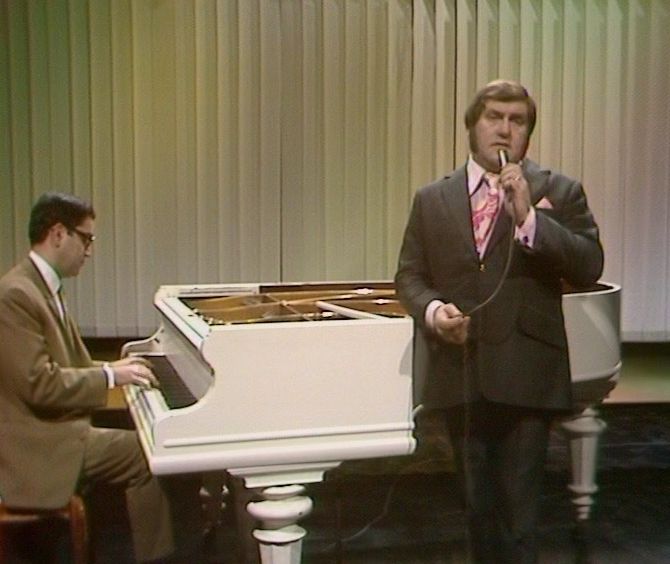
The fact that Dawson wears the same suit and tie each week when delivering his monologues and links is slightly intriguing me. Did he only have the one suit and tie or was it because all his studio work was shot over a short period and then spread out through the whole series? The Two Ronnies did something similar when they had regular musical guests (that way the artist wouldn’t have to return week after week). Possibly Louis Barfe’s excellent book on Les Dawson might contain some of the answers, I think I’ll have to dig it out for a re-read.

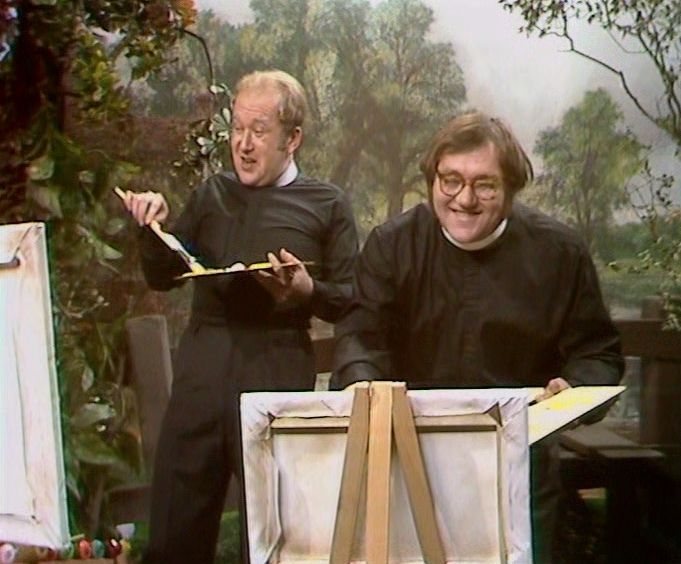
Roy Barraclough returns to the fold in a sketch which features him and Les as a pair of clerical artists. It’s another cheaply mounted studio skit – the countryside is represented by a painted backdrop and some sound effects – which relies on wordplay to begin with. Although it doesn’t take long before it descends into slapstick (like most of the S4 sketches have done) with the pair putting more paint on each other than on their canvases. I’d have preferred more wordplay than slapstick, to be honest. The chief pleasure I derive from this sketch is watching Les’ inability to keep a straight face as he gets messier and messier.

The lovely Aimi Macdonald returns for another large-scale song and dance number. And very nice it is too. Les’ other guest today is New World. If you’re a Two Ronnies fan then they should be familar (the previous year they had guested throughout the first series). As with their Two Rons appearances, NW offer a very laid back performance, although they seem to be cut off a little abruptly.

Dawson’s monologue today is all about love.

The one person who loved me was my grandfather. He stood six foot four and had a hamster. He was a boyhood dream, he was a Red Indian chief and he came from the Who-Ha-He-Ha tribe. So called because they used to run through long grass with no underpants on.

l2

Sez Les – Series Four, Show Four

l1

The lovely Aimi Macdonald is one of this week’s guests. She performs a song with the backing of both the Syd Lawrence Orchestra and the Denys Palmer dancers. It’s a big production number – at one point the dancers move away to a separate set – so it seems that most of the budget for this show was spent right here (today’s sketch by contrast is a simple affair – only utilising a small set).

David Mallet continues to pull out some unusual camera angles – during this sequence there’s a series of crane shots, for example – which helps to give the performance a little more impact. As do the few clothes which Aimi just about manages to wear ….

Given her skills as a comedy performer, it made sense to recruit her for the sketch (and probably saved a little money too). The premise is simple – Aimi is a hotel guest who has lodged her toe in the bathtap and Les is the helpful plumber who comes to assist her. She’s naturally a little reluctant to let him in, but is reassured when he tells her that he’ll be blindfolded the whole time.

There’s something a little queasy about this sketch. Not only the way that Dawson “accidentally” drops his tools into the bath so that he’s got an excuse to give Aimi a quick fondle, but also the final reveal – when we realise that Dawson was only blindfolded in one eye (he gives the camera a self-satisfied leer to hammer this point home). Not something that’s aged very well then although neither has the brief musical skit featuring Les as a Chinaman(!).

Ah well, there are better pickings elsewhere – a few brief film sketches amuse, my favourite being the one featuring two doctors operating on a car … they eventually extract a baby car. Silly, but amusing.

Today’s other guests are The Peddlers. No, me neither, but they’re good fun – a musical trio who favour the organ very highly. I’m going to have to dig into their history, this website looks to be a good place to start.

One of Les’ monologues is directed towards a familiar subject – marriage. It offers a selection of choice cuts, such as this one.

I was reading a horror story the other day, it was a terrifying account of a man who was trapped under a ton of whale blubber. And it reminded me it was me wedding anniversary. That’s ten years, which is a decade, and you’ve never seen such a decayed looking woman.

l2

Sez Les – Series Four, Show Three

l5

This week’s sketch features Les as a myopic waiter in a curiously empty restaurant. Either this was done for comic effect or it was simply because the show couldn’t afford any extras. Never mind, it’s not long before two customers (played by Hugh Walters and Joan Savage) wander in. From the moment she opens her mouth for the first time it’s clear that she’s the dominant one (no surprises there, since Walters excelled at playing hen-pecked and inconspicuous types). It’s always a joy to see Walters – but his one-off appearance as a Dawson stooge makes it clear that, as yet, Sez Les didn’t have a regular group of comic performers (Roy Barraclough would later fill one of those roles, but at present he was only one face amongst many).

Dawson – dressed in an impossibly small waistcoat – creates the expected level of comic mayhem due to his inability to see anything at all. He affects an Italian accent for a few seconds before dropping it (although there doesn’t seem to be any comic reason for this). Since Savage is so incredibly shrill and annoying it’s no surprise that the audience approves when most of the food ends up in her lap rather than on the plate.

Walters is positioned as the sympathetic one (I like his plaintive statement that he should have listened to his mother and stuck with his whippets!) with the eventual punchline reveal being that he’d paid Dawson specifically for this service. With Dawson concentrating on crafting his monologues, a small group of writers were responsible for the sketches. At present they’re workmanlike but not terribly inventive (fresh blood in later years would see the standard rise).

Dawson’s close encounters with pianos were always notable, but one of the best gags from this second half sequence comes before he sits down – he flicks the tails of his evening dress so hard they fly off!

There’s only one guest today – Miss Shirley Bassey. Possibly she was more expensive than some of the previous acts (if so, they got their money’s worth out of her as she performed two songs). She closes the first half with Till Love Touches Your Life but the main point of interest is that she opens part two with Diamonds Are Forever, just a week after the Batchelors performed the same song.

If these shows were recorded in order then this seems a little odd. True, the Bachelors had released it as a single, but with La Bassey due to appear the week after, it’s a strange duplication. No prizes for guessing who comes out on top – backed by the Syd Lawrence Orchestra, Bassey’s live vocal has all the punch and control that you’d expect. Easily the highlight of the show.

l6

Sez Les – Series Four, Show Two

l3

There’s an interesting moment early on, when during a sketch featuring Les as a clerical golfer, his comment of “balls” is muted. Given this was such a mild profanity it’s surprising to see it taken out. Especially since it was plain what the word was (especially the punchline is that he’s then pelted with golf balls from a helpful God).

The set-piece sketch of this show is a two-hander between Dawson and Kenneth Connor. Connor is an earnest academic lecturing about the mechanics of comedy …

What makes this sketch work is that whilst both continue to soberly discuss the nature of comedy, their actions (involving an ever increasing cycle of slapstick abuse) are in such sharp contrast to the serious tone. Dawson’s inability to keep a straight face as the pair get messier and messier is a joy as is Connors’ straight-faced control. The climax of the sketch – Connor attempts to light a bomb – seems to be scuppered after he’s unable to get the matches to work. He carries on in character (berating the props man) whilst Dawson dissolves into a fit of giggles. If this sketch teaches us anything then it’s how actors and comedians react differently to the same series of events.

A familiar part of Dawson’s act was to start a monologue with a deluge of evocative wordplay before bringing the tone right down. There’s a perfect example in this show, as he discusses how evocative memory can be. “A drift of perfume on the stairs, a snatch of laughter on a balcony or a song in the night can evoke forgotten memories. This happened to me the other week – I was watching the wife suck a hot chop with her teeth out”.

The Skylarks and The Bachelors are this week’s guests. I’m not sure why three of the four male Skylarks are wearing the same sort of jacket, but the fourth isn’t. Either dress the same or don’t! Their performance is enlivened by the Denys Palmer Dancers (the regular dance troup) who flounce about in green whilst the Skylarks are warbling.

Now this is mildly noteworthy. The Bachelors (whom I’m glad to report were clothes coordinated – all wearing nice pink shirts) perform Diamonds are Forever. Quite good it is too, even if they do have to change all the “I’s” and “me’s” to “she” or “her”. This won’t be the last time we hear this song though – stay tuned ….

l4

Sez Les – Series Four, Show One

l1

Returning in early 1972 for a run of six episodes, the format’s pretty similar to what has gone before – the Syd Lawrence Orchestra (“the only musicians I know who are mentioned in the Doomsday Book”) are still in residence, although the Skylarks are nowhere to be seen (but fret not, Skylarks fans, they’ll be back next week).

David Mallet continues to feature unusual shot selections at various points (fish-eye lenses, for example) whilst one innovation is that there’s now a selection of “quickie” sketches. These provide a change in pace between the longer items.

One of my favourite short sketches from the whole series features Les as a roadsweeper who lifts up the pavement in order to shovel the dirt underneath! It’s a lovely moment which Dawson later used (during an interview with Michael Parkinson) as an example of the difference between British and German humour (German televison executives didn’t believe this sketch would work in their country as their pavements didn’t lift up …)

As for the longer sketches (still only one each edition) today’s features Roy Barraclough as the impossibly camp owner of a crockery shop. Les, the flat-capped handyman, doesn’t tell his workmate to watch his back in so many words, but the inference is there. As a time-capsule it’s interesting, as a piece of comedy rather less so (partly because it’s obvious that everything in the shop will be destroyed somehow. It would have been more of a surprise if they hadn’t gone down this route).

Musical guests for this first show are Jeannie Lamb and Gilbert O’Sullivan. O’Sullivan I was familar with, but Jeannie Lamb didn’t really ring a bell. A quick search on the internet hasn’t left me much wiser (apart from a few scattered references to her jazz career and a collaboration with Ray Davies). But my researches continue ….

l2

Sez Les – Series Three

l1

Broadcast during August and September 1971 and running to a measly four editions, series three of Sez Les clips along at a fair rate of knots (although Dawson himself is in short supply). This is due to the fact that he has to share the stage with regular acts The Skylarks (a rather decent vocal harmony group) and the Syd Lawrence Orchestra as well as a number of guest performers. With each edition only running for twenty five minutes, there’s a fair amount to be crammed in …

The formula tends to run as follows. After the Syd Lawrence Orchestra and the Skylarks have welcomed him to the stage, Dawson kicks off proceedings with a short monologue (returning in the second half with a longer monologue). Each edition has a single sketch with the remainder of the time being taken up with the guest performers as well as spots for the Skylarks and the Syd Lawrence Orchestra (who close proceedings). The final two editions also have some brief film inserts, showing Dawson interacting with ordinary members of the public.

Luckily I have an almost unquenchable thirst for 1970’s LE, so the number of musical performers isn’t really a problem for me. But for those who are interested in seeing more of Dawson, you might be advised to skip ahead to one of the later series (plus the arrival of David Nobbs helped to sharpen the series’ comedy sensibilities quite markedly).

Guest wise, Manitas De Plata strums a mean Spanish guitar, Dana has a very credible stab at a George Harrison song (Isn’t It A Pity), Frank Ifield warbles in an entertaining fashion, Anita O’Day jazzes things up (her obituary makes for interesting reading) whilst Georgie Fame and Alan Price are good value in the final edition, as is Kathy Kirby. For those familiar with other LE programmes of this era (such as The Two Ronnies or The Morecambe & Wise Show) many of those names will be familiar.

Brian Glover assists Dawson with the sketches seen in the first two editions – the second (Dawson as an extremely nervous dentist attempting to remove Glover’s tooth) being the better of the two. It’s not subtle, but it’s good fun. After leaving Monty Python John Cleese would become a Sez Les regular, but it’s slightly more surprising to see him pop up here in a couple of brief sketches.

It’s likely Cleese recorded his contributions in something of a hurry. The train sketch in show three should have been tailor-made for him, but it’s rather thrown away and there’s little bite to his reactions of Dawson’s improbably dressed Highlander – complete with caber! The second sketch with Cleese is rather better (it also switches from VT to film in a way that’s almost Pythonlike).

Maybe the budget for the last few episodes was a little greater. In addition to this brief film insert, Dawson also went out and about on the streets, ensnaring unsuspecting members of the public with hidden camera stunts. Presumably these gags were real and not staged (although since Dawson had been a television regular for a few years it’s surprising nobody seemed to recognise him).

Producer/Director David Mallet had worked with Dawson before on Joker’s Wild. Knowing that Mallet would later pursue a career as a top music promo director (Queen and David Bowie were amongst his clients) it’s interesting to look back at his early work to see if there’s any visual flair in evidence. For Joker’s Wild, probably not – but then it was a rather static sort of series (the main highlight being a wobbly camera zoom into Barry Cryer at the start of the show).

He had more to work with during Sez Les though and the Syd Lawrence interludes do have some fast intercutting and unusual camera angles, suggesting that Mallet was interested in shaking up the visual grammar of this type of show.

Not a rib-tickling 100 minutes then, but entertaining nonetheless. As my occasional rewatch continues, it’ll be interesting to see the point at which the series began to grow. Several changes – increasing the running time, dropping the musical acts for a while – helped to shake the format up.

Blakes 40 – Blakes 7 40th Anniversary Rewatch: Series One, Episodes Eleven to Thirteen

Bounty

b11

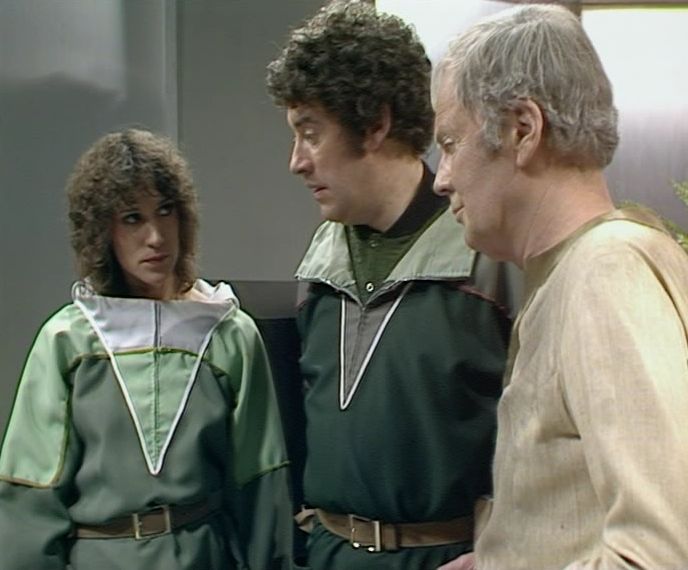
Terry Nation’s draft of Bounty was one of his shortest (running to around 25 minutes) which meant that it had to be considerably bulked out. This probably explains why the story proceeds at such a leisurely pace (it takes Blake fifteen minutes to reach Sarkoff – in another episode he might have teleported to him straight away).

But the early part of the episode has some nice film work, which is a small recompense. The Federation guards – remarkably inept – are good for a chuckle as well.

T.P. McKenna is a class act. As soon as he appears the story moves up several gears (he’s perfect as a defeated, tortured politician, surrounded by trinkets of a vanished age) and it’s fair to say that without him Bounty would be much weaker. Carinthia West is really rather lovely, so that’s another good reason why I can’t dislike this one too much.

The other plotline – the Liberator’s been captured by space pirates! – is less involving. If you see a mysterious vessel floating in space, for goodness sake leave it alone ….

But no, they can’t do this. Gan pops over for a look and reports back that everything’s fine. Except, of course, it’s painfully obvious from the tone of his voice that something’s badly wrong. That nobody – not even Avon – picked up on this is difficult to credit.

Blake and the others returning to an apparently deserted Liberator is nicely done, but things wobble downhill after that. Gareth Thomas’ funny faces following his gassing by the Amagons is memorable in one way though.

From the later part of the story, it’s – yet again – the interactions between the regulars which provides the best moments. For example, Gan and Cally declaring how they’d like to revenge themselves against the Amagons (“companions for our death”) which causes Vila to mutter that the conversation’s suddenly turned rather morbid.

Pretty average, but perfectly watchable.

Deliverance

b12

Deliverance is quite dull. From our first sight of the primitives on Cephlon, it’s plain they’re not going to be great conversationalists (it’s poor Jenna’s fate to be mauled by them). At least it gets her off the Liberator, but it’s not really much of a storyline.

Avon, naturally, has a better time of it (although it doesn’t quite ring true that he’d be so keen to teleport down to Cephlon in order to lead the rescue party). His interaction with Meegat (a nice performance from Suzan Farmer) is easily the highlight of the episode – the feeling of ambivalence at being cast in the role of “Lord Avon” for example.

For once, Travis is isolated from the main storyline. His contribution is quite small but both Greif and Pearce play off each other very well, as they always do. During their scenes there’s some unusual incidentals playing – it doesn’t appear to be in the style of Dudley’s usual score, so presumably Servalan likes a bit of ambient music when she’s working.

Fair to say that Servalan’s plan doesn’t make a lick of sense. Given that Maryatt was a not unimportant figure, he seems to have been sacrificed for no good reason. Why didn’t Servalan detain or kill Ensor Jr after he’d offered her Orac? That way she could have simply waited for Ensor Sr to die and then stroll in and pick up Orac.

That’s pretty much her plan anyway, so there was no reason to faff around with bombs, etc. Also, it’s a tad convenient that Blake and the others just happen to stumble across Ensor Jr’s distressed ship.

Probably my least favourite S1 episode, this one’s sadly a bit of a chore.

Orac

b13

An air of lassitude and despair permeates this episode. And that’s just the script ….

It’s pretty clear by now that Terry Nation was running on empty, since he falls back on some old favourites (radiation sickness!). But it’s a plot thread that doesn’t really work – not only is it hard to believe that the Liberator is out of radiation drugs in the first place, it’s also pretty obvious that Ensor will have a supply, hence the tension generated by this story point (will Avon and the others live or die?) isn’t very effective.

It’s interesting that Servalan shows fear when groped by the Phibian (incredibly silly though the scene is). Seeing her out of her comfort zone is one of the memorable parts of the episode. When Servalan asked Travis what it was and Stephen Greif deadpans “some kind of lizard” you do get the sense that Greif was counting down the days before he’d be free of the series. A pity that he wasn’t able to get his teeth into the meaty Travis stories of S2, like Trial, but he would also have had to trawl through some rubbish too (Hostage) so you can’t blame him for jumping ship.

Travis’ series arc concludes with a bit of whimper here. The fact that Greif wasn’t available for the studio session didn’t help (nor did his flat-footed stand in) but even had he been present I doubt it would have been that much more effective.

Derek Farr’s good, but the plot of Orac is little more than Blake paying a visit to an elderly man. Amazing they managed to spin it out to fifty minutes really.

At this point it’s clear that the series needs a varied mix of writers. Luckily series two was just around the corner …..

Blakes 40 – Blakes 7 40th Anniversary Rewatch: Series One, Episodes Eight to Ten

Duel

b8

This is a good episode for Travis – especially since for once he doesn’t have to run around after Servalan. Although even this early on it’s easy to see just how limited a character he is (something which Greif had quickly picked up on – pondering just how credibility could be maintained if every time Travis and Blake met, Blake ended up winning). The answer, of course, is that it couldn’t – but we’ll leave that topic until series two ….

Although the duel part of the story was clearly designed to be the showpiece, I prefer the earlier dogfight in space scenes. With Dudley absent (although not, as long assumed, because of his feud with Camfield) the selection of discordant stock music helps to raise the tension nicely. A number of simple visual effects – slowing the camera down, coloured lights – are cheap but effective ways of showing the ships – post intervention by Sinofar and Giroc – stuck in space.

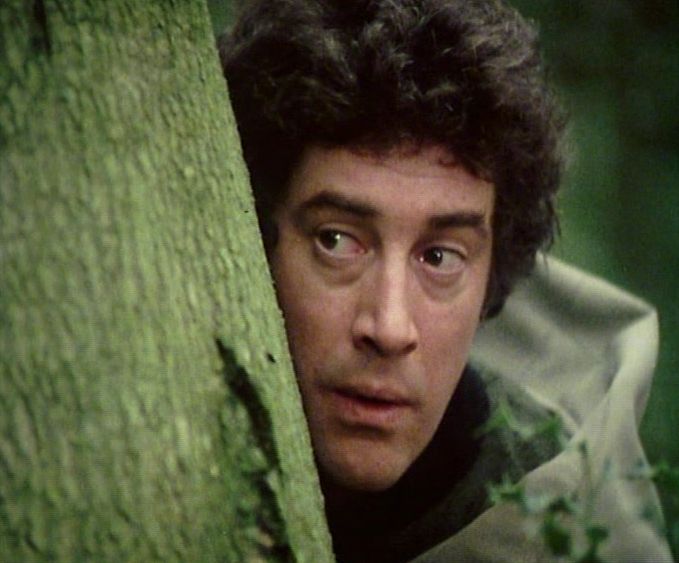
Given Camfield’s skill with a film camera, it’s maybe a little surprising that there’s not a great deal from the woodland scenes that’s terribly memorable. It’s also a shame that the climatic fight between Travis and Blake is a little rushed (and Travis’ grand plan to ensnare Blake – a spiky trap – looks a little feeble too).

Avon might be playing second fiddle today, but he still gets some very decent moments. His “nuts” speech (cut from the original compilation VHS) is one and I also love his brief smile and headshake when he realises that Blake won’t be able to kill Travis. The fact that Vila, Gan and Cally were all urging Blake on at this moment is another example of Avon’s self-imposed distance from the others.

Solid, but it’s possible that Douglas Camfield helped to cover a few cracks. With a more run-of-the-mill director it may have been rather more forgettable.

Project Avalon

b9

Although the plot is a bit thin, as so often with B7 the performances make up for it. Stephen Greif continues to impress, especially when he’s teamed up with Glynis Barber’s icy Mutoid. Barber doesn’t have anything much, dialogue-wise, to work with, which means she has to work extra hard to make an impression. A pity she didn’t return as a Mutoid, since she and Greif made a good double-act.

Less impressive is Julia Vidler’s Avalon. I’m not sure when she’s more wooden – during the scenes when she’s playing Avalon, or later when she’s Robot-Killer Avalon. True, her one big showdown scene with Travis is somewhat compromised by the fact she’s been reduced to her underwear and strapped to an operating table, but even had she been fully clothed I’ve a feeling her delivery would still have been as stilted as it is.

Wookey Hole, as ever, is a good-looking location and Stuart Fell falls very nicely. The late twist – Chevner (a slightly underused David Bailie) is moved into position for a few seconds as the baddy – doesn’t really work as it needed more of a build up or a tense hunt through the corridors to sell it. And the way that poor old Travis is humiliated again at the end seems to have been the point when Greif decided he wouldn’t have a long term future with the series.

Breakdown

b10

Breakdown is something of a bottle show (and a cheap one). Largely set onboard the Liberator, when they do reach their destination (XK-72) it’s nothing more than a few studio flats, populated by a couple of actors. The Federation ships are represented by reused footage, which makes it all the more surprising that they decided to splash out on some filming (the scenes in the medical wing could just have easily have been shot in the studio).

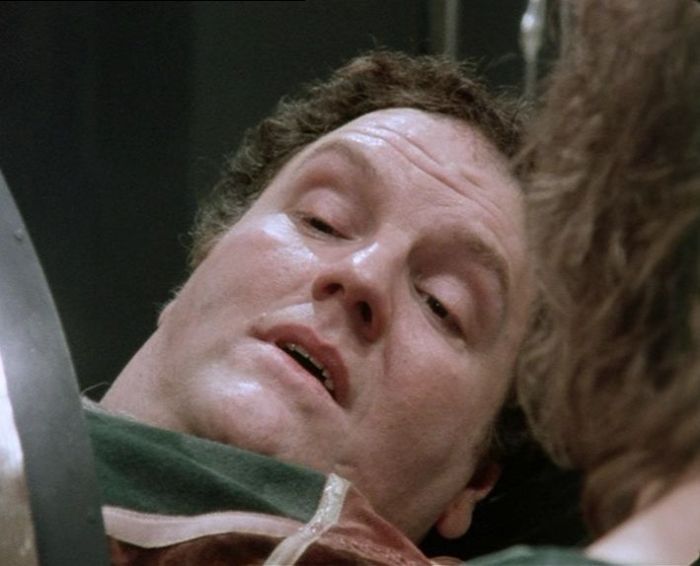
This sort of budget scrimping isn’t necessarily a problem though, since it enables the regulars to have more screentime than usual. But it’s ironic for a story where Gan is the plot motivator that he spends most of it either unconscious or dangerously feral. Poor Gan never got a decent crack of the whip.

He does have one standout scene though – the moment when he gleefully throttles Cally in the medical centre. His sudden switch, from the apparently recovered Gan to an implacable killer, is more than a little disturbing.

Gan’s fight with Blake in the first few minutes is also good – thanks to the hand-held camerawork. Although whenever Blake is thrown against the Liberator’s controls it’s impossible not to worry that they’ll break ….

Avon, as always, shines. His continuing distance from the others (markedly telling Blake that “you” rather than “we” are running out of time to save Gan) is thrown into sharp relief later on when he elects not to hide away on XK-72 but take his chances with Blake instead. Blake and Avon continue to clash entertainingly, this following exchange being one of my favourites –

AVON: Blake, in the unlikely event that we survive this ….
BLAKE: Yes?
AVON: I’m finished. Staying with you requires a degree of stupidity of which I no longer feel capable.
BLAKE: Now you’re just being modest.

Julian Glover adds a touch of class as Kayn. I love the face-off between Kayn and Blake where our hero threatens to destroy Kayn’s hands if he doesn’t operate on Gan.

Breakdown is a little slow but, as noted in some of the previous episode summaries, the interactions between the regulars always helps to shore up an average episode. A few points off for the chucklesome ending though – considering that XK-72 had just been blown to smithereens it hardly seemed the right time.

Blakes 40 – Blakes 7 40th Anniversary Rewatch: Series One, Episodes Five to Seven

The Web

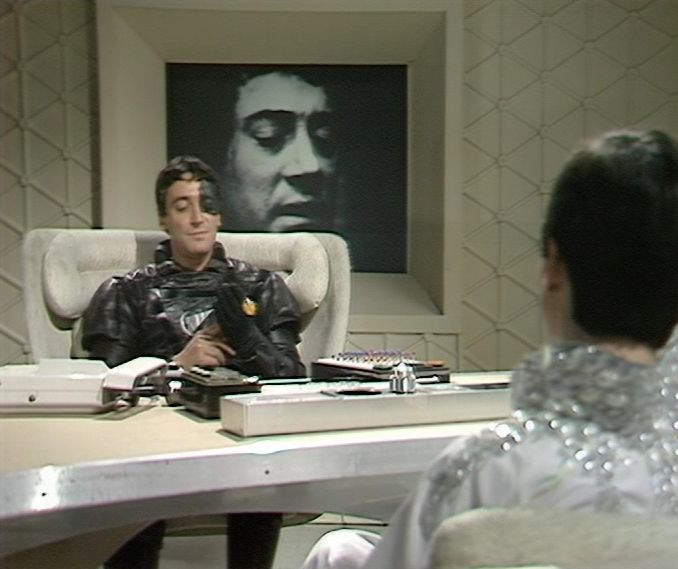
The Web has a rather creepy opening – albeit somewhat negated by the sight of Saymon. Poor Richard Beale has a pretty thankless role to play during this story – but although visually Saymon is a bit of a disaster, Beale (always a very decent voice actor) impresses whenever we don’t see too much of the silly body in the tank (as above, close-ups are quite effective though).

Odd that Michael E. Briant chose to reveal Saymon so early on. Presumably he felt that it was best to get it out of the way ….

The first half of the story is Liberator bound. There’s a healthy dose of bickering and character conflict which, as always, is rather entertaining. Gan and Avon briefly team up (Avon is very sarcastic towards Gan) whilst Jenna seems to relish bringing Cally to her senses via a good hard slap! The controlled Cally’s gleeful smile as she advances on an unsuspecting Vila is another nice touch.

It feels slightly contrived that Cally’s only been onboard the Liberator for a short time before mystical legends from her past start calling to her. But on the plus side, it does raise the possibility (quickly negated, though) that Blake’s judgement was flawed when he asked her to join the crew. Having Cally as an unpredictable character for a few episodes could have been the spur for some decent character development – but it wasn’t to be.

The Decimas may, like Saymon, look rather silly, but elsewhere Miles Fothergill and Ania Marson (as the emotionless Novara and Geela) are both rather good. Even though Fothergill was masked when he appeared in Doctor Who, it’s easy to work out the Who role he played. Did he specialise in emotionless roles?

Odd and faintly disturbing, The Web has its moments although it’s never been a top tier S1 episode for me.

Seek-Locate-Destroy

Seek-Locate-Destroy opens with our first sight of the very silly-looking security robot. Complete with a fixed grin and flappy arms, it’s fair to say it was never going to rival the Daleks ….

Blake and Vila make for an interesting combination (a shame we didn’t see them team up more regularly). The first fifteen minutes are similar to the events seen in Time Squad – Blake and the others penetrate a Federation top security establishment with embarrassing ease – but at least there’s a wrinkle here (Cally is overpowered and left behind when the others teleport back).

Minus points for the others not realising at first that Cally was missing. It’s also a pity that Cally (presented to us only two episodes ago as a fanatical freedom fighter) now seems to have regressed somewhat – she really does fight like a girl (her tussle with a Federation trooper isn’t one of B7‘s greatest ever action scenes). But she partially redeems herself with some nice taunting of Travis at the end of the episode.

One moment which has stuck in my memory since the original transmission is when the Federation trooper removes his helmet to reveal …. a very ordinary looking man. Whether this was intentional or not, I don’t know, but it’s always resonated with me. With their helmets on, the troopers are faceless goons who can be mown down with impunity by Blake and the others. But when we can see their faces, they become people.

The introduction of Servalan and Travis helps to raise the stakes as now Blake has tangible opponents to fight against. Both Jacqueline Pearce and Stephen Greif make strong first impressions and they help to turn what would otherwise be a fairly straightforward run-around into something much more satisfying. Travis is a paper-thin character but Greif – right from his wonderfully camp, hands on hips, introduction – certainly catches the eye. Pearce’s silkily smooth delivery is equally as compelling. Over time both would become overused, but we’ll leave those debates for another time. One of my favourite S1 episodes.

Mission to Destiny

Mission to Destiny boasts an impressive guest cast of familiar faces. No stars names, but a good selection of decent actors – although it’s a slight shame that their characters are all very thinly drawn. Terry Nation ladles on the murder mystery cliches (the dying man writing a clue in his own blood) but as most of the crew are pretty unlikable it’s hard to be too concerned about whodunnit.

After sharing a few knowing looks in The Web (although Cally was under the influence back then) Avon and Cally team up for the first time. Avon’s in his element playing detective (“we all know that one of you is the murderer”) and he and Cally share some lovely moments together. The look he gives her when she blithely tells the crew that they should consider them to be hostages is one …

This exchange is another:

Cally: My people have a saying. A man who trusts can never be betrayed, only mistaken.

Avon: Life expectancy must be fairly short among your people.

It’s never been a favourite (the plot is rather loose) but there are worse episodes.

Blakes 40 – Blakes 7 40th Anniversary Rewatch: Series One, Episodes One to Four

b1

Since 2018 marks the fortieth anniversary of Blakes 7, it seems like the ideal time for a complete series rewatch (and as there are 52 episodes in total, it fits nicely into a one-a-week watching pattern). I’ve been logging very brief capsule reviews elsewhere on the Internet with fellow travellers since January, but I thought it would be handy to re-publish them all here – with possibly the odd tweak or two along the way.

The Way Back
b2

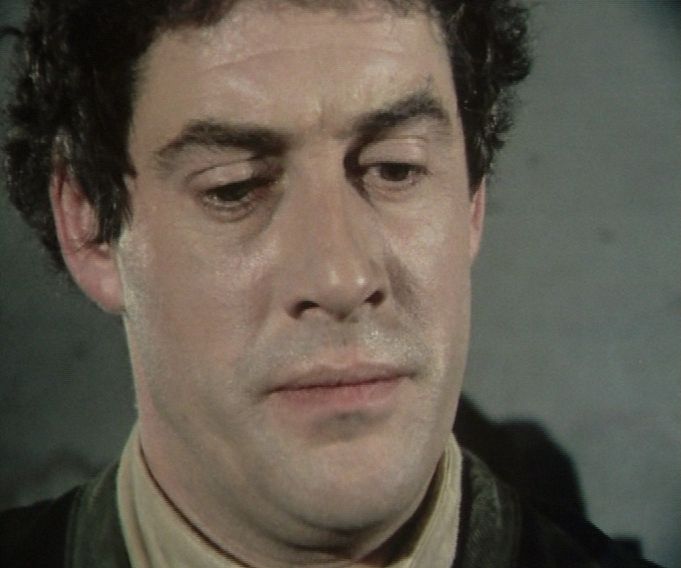
A nicely twisted dystopian opener, even if there are a few plot points which have always niggled. Clearly the Federation’s brainwashing process isn’t terribly effective (Blake quickly regains all his forbidden memories shortly after his meeting with Foster). And since the children have had false impressions planted, why not do the same with Blake – thereby convincing him that he did assault them?

The child abuse angle is rather jarring and it’d be interesting to know whether it was originally intended to reference it in later episodes. Blake attempting to clear his name would have been a decent running theme, but the matter is quietly forgotten after this episode.

Being generous, you could take it as an early example that the Federation aren’t terribly efficient at smearing their political opponents (clearly they don’t know how to work the media). As the series progresses, Blake quickly builds a legend – but it’s for all the right reasons (striking a blow against his oppressive Federation overlords) rather than the wrong ones (nobody ever asks him if he’s Blake the convicted paedophile).

Wonky logic aside, The Way Back boasts some impressive modelwork (the Dome) which helps to balance out some of the more threadbare studio sets. Gareth Thomas is suitably impassioned whilst Michael Keating and Sally Knyvette – with their limited screentime – both catch the eye. A pity that the borderline psychotic Vila we see here didn’t last long.

Space Fall
b3

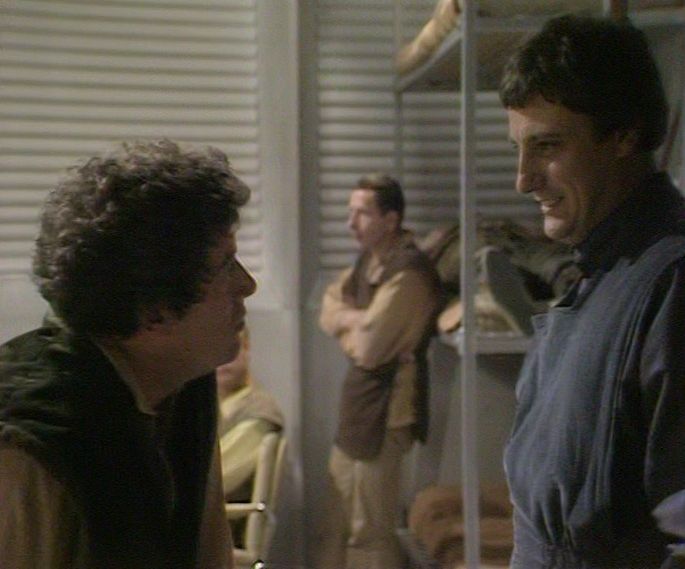
Leylan is an interesting character. At heart he seems like a decent man, but he allows his subordinate – the sadistic Raiker – free reign across the ship. The moment when Leylan tells Raiker to be “discreet” with their female prisoner is an oft quoted one. It’s easy to see parallels between the Federation and the Nazis (with Nation scripting, possibly not a surprise).

Leylan is positioned in the narrative as the complicit German/Federation type. Not intrinsically evil himself, but willing to turn a blind eye to the misdeeds of others. What strikes me most about this sort of character is that whilst Blake seems to believe that the Federation is a monolithic entity with a single voice or heart (“I intend to see that heart ripped out!”) people like Leylan suggest that Federation society is much more complex than the black and white picture painted by Blake. So every time he goes on a killing spree, Blake might be mowing down careerists such as Leylan and Artix.

When we first see the prisoners on the flight deck, it’s not surprising that our eyes are drawn to those we’ve met before – Blake, Jenna and Vila. Apart from these three, Gan is prominent in the frame (the camera very much favouring him) whilst we don’t see Avon at all to begin with. It can’t be a coincidence that he’s disconnected from the others, even when he’s only sitting in his flight seat …

Once Blake and Avon meet, the series begins to pick up momentum. Was it scripted or an acting choice that Avon didn’t look at Blake during their first conversation? Either way it’s a nice touch which – right from the start – tells us that their relationship is fated to be an uneasy one.

Cygnus Alpha
b4

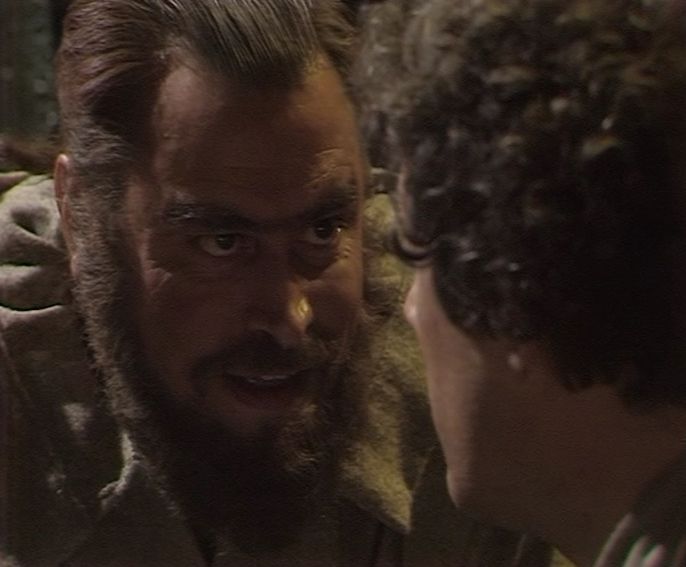
Cygnus Alpha has two main plot threads – Blake, Avon and Jenna getting to grips with life aboard the newly christened Liberator and the power struggle down on Cygnus Alpha.

It’s the former which is by far the most engaging. The continuing bubbling conflict between Blake and Avon – with Jenna caught in the middle – is nicely done. It’s interesting that both Blake and Avon discover they worked on the same project (a teleport system) which implies that they’re more similar than either would like to admit.

The timescale of this episode and the previous one makes no sense. In total, it takes the London eight months to reach Cygnus Alpha, yet it seems like Blake and the others have only been onboard the Liberator for a few hours. Are we to believe that Blake waited nearly eight months before inciting the others to take over the London? That seems barely credible, but neither does the notion that Blake’s spent months kicking his heels in the Liberator whilst following the London at a snail’s pace ….

Cygnus Alpha may be a quarry, but the night filming – and the well executed glass shots – ensures that it’s a memorable location (the model shots are excellent too – plain to see that a fair chunk of the budget was spent on these early episodes). It’s notable that once the prisoners are released from the London, Gan is easily the most proactive. He’d rarely get the opportunity again to be quite so front and centre.

With Blake looking for his “people” down on the surface, that leaves Avon and Jenna alone on the ship. The scenes where they debate whether to cut and run are amongst the most memorable of the episode. Easy to believe that Avon would, but Jenna already seems to be hero-worshiping (at the very least) Blake so it’s just as easy to understand why she wouldn’t.

It’s a pity that – although we didn’t know it at the time – Jenna’s character had already peaked. When Vila comes aboard, the pecking order of Blake/Avon/Vila with Jenna and Cally jostling for position lower down and Gan a very distant last was pretty much established. Given this, it’s not surprising to learn that Sally Knyvette was keen to leave at the end of the first series.

Once Brian Blessed begins ranting and raving then my interest begins to dip a little, but overall this is a pretty decent episode. Especially when compared to the next two ….

Time Squad
b5

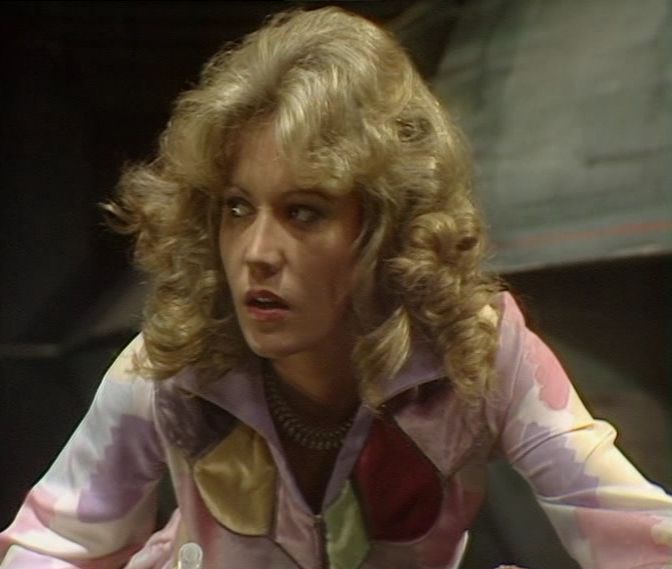
Time Squad has two separate plotlines, neither of which are completely successful. The first five minutes or so, which takes place on the Liberator flight deck, might be mostly info-dumping but the dialogue is nicely sparky.

The communications centre on Saurian Major is rather like a proto Star One. Destroy it, says Blake, and the Federation will be crippled. The problem is that when they do this, life in the Federation goes on as normal. This is either sloppy scripting from Nation or it’s an early example that Blake really doesn’t know what he’s talking about. I prefer to think it’s the latter.

The Saurian sequences are mainly memorable for Cally’s debut and the location filming at Oldbury. A pity that Cally is fooled by Blake’s look over there trick, but the arrival of a fanatical, obsessive freedom fighter (happy to die for her cause) promises to shake things up. Sadly her character loses this early aggressive spark very quickly.

Security at the base isn’t very good is it? Blake and the others just swan in and reach their destination with embarrassing ease. This rather beggars belief and helps to blunt the effectiveness of the Saurian subplot.

But Blake’s adventures do rather play second fiddle to the saga of a space capsule which contains a number of deep-frozen homicidal warriors, who – once they’ve been thawed out – jerkily spring into life and menace Jenna and Gan. This is the first – but by no means the last – time our heroes come across a derelict object floating in space. You’d have thought that the hard lesson they learn here would make them more cautious in future – but no, every time they spot a piece of space flotsam they can’t help but poke their noses in (always with disastrous results).

Jenna, unusually, gets to drive the action. With Gan fainting all over the place she has to step up to the mark and demonstrate her unarmed combat skills. Thanks to a few decent camera moves and Dudley laying on the tense music, these scenes are, at times, quite good. No classic then, but decent enough fare.
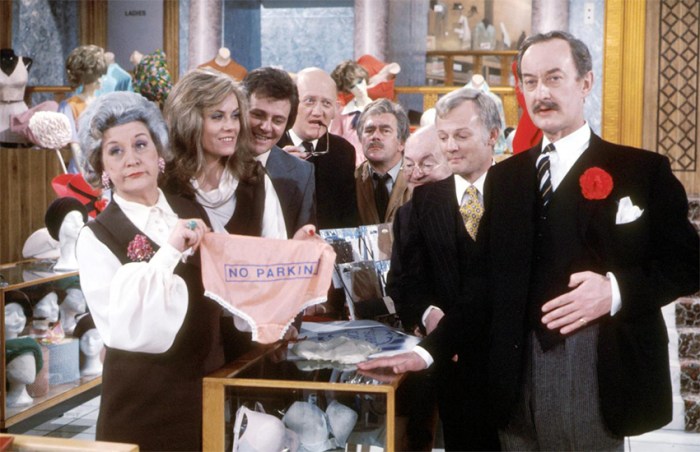
Are You Being Served?

served.jpg

Are You Being Served? is a series I’ve never added to my DVD collection – mainly because the R2 sounded a little unappealing (certain episodes used shorter edits prepared by David Croft for a nineties repeat season) and in the past I didn’t have a R1 compatible player, so the uncut American release was out of reach.

Which meant that I’ve come to the recent Gold repeats pretty fresh and – so far – AYBS? has proved to be a more than pleasant surprise. Of course, it’s early days yet (I’m currently on series three) and there will no doubt come a point – as happens with most Croft/Perry and Croft/Lloyd sitcoms – where the show starts to run out of steam.

Often it’s cast changes which seem to signal the beginning of the end. Dad’s Army was never the same after James Beck’s death, although it’s true that his absence wasn’t the only reason why the post Beck episodes lacked a little spark. On the other hand, the departure of Simon Cadell from Hi-De-Hi! was a major tipping point. When Jeffrey Fairbrother was replaced by someone more streetwise and less vulnerable it was a blow which the series never recovered from.

I’m expecting the post Trevor Bannister years to be a little tricky and I can’t say I’m looking forward to the introduction of Old Mr Grace. Young Mr Grace (Harold Blewett) was always a charming character, but Old Mr Grace (Kenneth Waller) was just a nasty type.

But one piece of replacement casting which I think did work was that of Arthur English stepping in for Larry Martyn (as the general handyman/dogsbody character). Martyn’s Mr Mash stands out during the early series, mainly because Martyn is playing much broader than the others (had he appeared during the later run this might not have been such a problem). Another issue with Mash is that Martyn’s clearly been made up to play older, which didn’t work very well. So the later hiring of a more mature actor (English) made sense.

If the Gold repeats continue, then I await with interest the numerous replacements for Mr Grainger, none of whom lasted very long.

The innuendo of AYBS? started fairly mildly, although you can see that series by series things are getting broader. One such barometer is Mrs Slocombe’s pussy, whose misadventures become much more suggestive over time ….

Apart from the increasing lashings of sexual innuendo, highlights so far have included Camping In (S01E04). There’s something rather charming about the way that the members of staff – forced as they are to sleep in the store overnight – reminisce about the good old days of WW2 and engage in a spot of Blitz-era spirt with a good old singalong. This one also ties the programme to another specific moment in British history – namely the early seventies when strikes and power shortages were increasingly common (other episodes also make capital out of this).

Several episodes focus on work/office politics in a way that’s still highly recognisable today. How the others react unfavourably to Captain Peacock being rewarded for twenty years loyal service (with the key to the executive washroom) will no doubt strike a chord with many. The travails of Coffee Morning (S02E02) is another one which seems just as relevant today as it did then. Stores like Grace Brothers might be long gone, but companies who react unfavourably whenever workers elect to nip off for a tea break or a visit to the toilet are still very much with us ….

The last word should be left to Mrs Slocombe.

It’s a wonder I’m here at all, you know. My pussy got soaking wet. I had to dry it out in front of the fire before I left!

My 2018 DVD wishes

z cars.jpg

Inspired by a post over at LouReviews, I’ve been having a ponder about which unreleased television series I’d like to see pop up on shiny discs. And this is what I’ve come up with ….

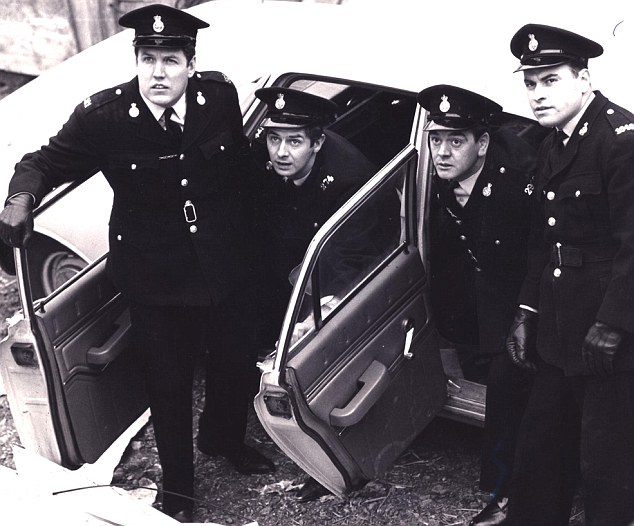
Z Cars

Acorn, before they sadly stopped releasing archive titles, did issue a selection of early seventies episodes – but the original run from the sixties (Barlow, Watt, Fancy Smith, et al.) remains out of circulation. Given how ground-breaking the series was, it’s difficult to understand why Z Cars remains so under-represented on DVD. A few have been repeated over the years, a few more are available on YT, but most of the surviving episodes are simply gathering dust.

Blood Money/Skorpion/Cold Warrior

Possibly I’m the only person hoping these three series (all starring Michael Denison as SIS agent Captain Aubrey Percival) eventually resurface, but it’d be nice to think that there’s a few other people out there who’d also buy it! If you didn’t know they were produced by Gerard Glaister, then a glance at the cast lists (Juliet-Hammond Hill, Stephen Yardley, Bernard Hepton, etc, etc) might give you a clue. Simon May penned the title themes, which is another pointer ….

The Secret Servant

A three-part adaptation of Gavin Lyall’s novel, featuring Charles Dance as Harry Maxim, The Secret Servant was originally broadcast in 1984, repeated in 1987 and then vanished. Adapted by Brian Clemens, my memory of the 1987 repeat is that it was a more than decent spy thriller with a muscular turn from Dance.

Pulaski

Another of those series which has dropped off the radar somewhat (only thin pickings on YT, alas) Roy Clarke’s 1987 series starring David Andrews as Larry Summers (who plays the wisecracking PI Pulaski) should be worth a release. Co-starring Caroline Langrishe, it might not have set the schedules alight back then but I’ve a feeling that it’s probably aged quite well. Ace theme by the Shadows as well.

Blankety Blank

No really! I’ve previously praised the series here and those comments still stand. It’s just great fun, packed – especially in the early years – with some top guests and is high on rewatch value.

Spycatcher

I’m not sure how many episodes of this WW2 psychological series, starring Bernard Archard as Lt. Col. Oreste Pinto, exist but one featured in the BBC Archive Trial a few years back, so hopefully there’s enough remaining to make up a decent set. The episodes were re-recorded for radio (these versions remain easily accessible) and whilst the visuals might not add a great deal, it would be nice to see some of these stories in vision.

Moonstrike

Another Gerard Glaister series. Despite its science fiction name Moonstrike was set during WW2. Glaister, of course, would later mine this era very successfully in both Colditz and Secret Army, so it would be fascinating to see how this series (broadcast in 1963) compares.

Of course this only scratches the surface – restored versions of At Last The 1948 Show and Do Not Adjust Your Set would also be high on my wants list as would the black and white Dixon of Dock Green‘s. The BBC work of Les Dawson, Mike Yarwood and (provided the rights can be negotiated) Dave Allen would also be welcome.

That’s one of the problems with wish-lists of course, once you start it’s difficult to stop …

Juliet Bravo – Family Unit

jb01.jpg

John Murphy (Rio Fanning) is a regular at Hartley police station. A widower with a young family of four, his fondness for a drink coupled with his inability to hold it means that he’s often to be found overnight in the cells. When he attacks his teenage daughter Maeve (Rebekah Blair), social services – in the form of Tom – are brought into the picture. It quickly becomes obvious that Jean and Tom view Murphy’s case very differently ….

Family Unit opens with a tracking shot showing a sizeable chunk of Hartley. Although it’s set up to establish a specific plot point (Jean notices smoke coming from the chimney of a house that should be empty) it helps to once again remind us of the sort of environment Hartley is.

The stuttering relationship between Jean and Joe is teased out a little more during the opening few minutes. Although they’ve been on a fairly even keel since the third episode, there does seem to be slightly more bite to their conversations here. Was this script originally planned to air earlier in the run?

Jean sends Joe out to look at the house, but doesn’t tell him why. When he radios in to query, she then suggests he walks across the street – once he does so, he spies the smoke and the penny drops. During their dialogue, Joe is the model of stolid efficiency, but there’s something about the way he pauses every so often which borders on the insolent.

Hiding in the house is a bruised and battered Maeve. Whilst Joe escorts her to the hospital, the character of Murphy is developed. It’s striking that Jean and Tom see very different sides of his character. Resident in the cells, Murphy views Jean with extreme disfavour (wondering how such a terrible woman could have snared a lovely man like Tom).

But when Tom later runs him down, he’s contrite and tearful as he explains the reason for the attack (he came home to find Maeve playing records in her bedroom with a Pakistani boy and snapped). Murphy’s racial hatred is never far from the surface – later he confides to a drinking buddy that he’s going to track the boy down and “descend on him, mangle him and give him a biblical pasting”. The irony that Murphy – as an Irishman – would also be viewed as an outsider by many isn’t overtly commentated upon, but the inference seems to be there.

We do later see Maeve’s friend (he receives a few punches from an incensed Murphy before she intervenes). But since he never speaks he serves no other purpose than to illustrate Murphy’s simmering anger. Maeve herself is similarly never really developed as a character in her own right – she exists purely to bring her father to both the police and the social sevices’ attention.

If Jean’s job sees her interact with Murphy once he’s broken the law, then Tom’s working from the opposite end. This explains why they’re on very different sides – Tom doesn’t want to see the family unit broken up and the children placed into care, whilst Jean isn’t prepared to let a potentially unstable father continue to live with them. Both, of course, are right in their own way, and this conflict helps to generate the main drama of the episode.

A little extra spice is added by the fact that Jean is concerned about the possibility that her confrontation with Tom, once it becomes public knowledge during the court hearing, might have a negative impact on her career. She worries that an enterprising newspaper reporter could spin it into an embarrassing story, thereby damaging her reputation at Headquarters. This isn’t something which shows Jean in a very good light, although as the script was written by series creator Ian Kennedy-Martin it’s not possible to argue that it’s the work of a writer unfamiliar with the series or characters. Clearly this is a side of Jean’s character that Kennedy-Martin was keen to touch upon.

Just a couple of episodes after another female office was attached to Hartley, Sergeant Margaret Cullinane (Maggie Ollerenshaw) turns up for a short transfer. She’s a very different proposition from the naïve WPC Hannah Maynard though. Experienced, confident and plain speaking, she wastes no time in telling Jean that she’s keen to take her job! Jean responds with icy politeness. Unlike Hannah in Expectations, Margaret is a fairly peripheral character, although the pair do have a brief late-night conversation in Jean’s office (this is after she’s had yet another run-in with Tom and is feeling somewhat emotionally bruised).

George Parrish might continue to play second fiddle to Joe Beck, but Noel Collins is gifted a lovely scene in which he harangues the ever-hapless Roland (Mark Drewery). Roland’s complaint that he doesn’t think it’s fair he has to make the teas and coffees for everybody (it’s not what he joined the force for, he says) is viewed with a definite lack of compassion by George. The scene is capped by George sending a severely ticked Roland out to the shops to buy some biscuits!

The court hearing is an uncomfortable experience for both Jean and Tom. Tom especially, who finds himself as the sole Social Services representative. Jean continues to paint Murphy in the worst possible light – acidly commentating, after his appearance in the witness stand, that he’s “a better actor than Laurence Olivier”.

After making an impassioned plea that he’ll never drink again or hit Maeve, it’s easy to see her point though (especially when a jubilant Murphy invites Tom to join him for a victory drink). In addition to this, the way Murphy brusquely instructs Maeve to take the other children home suggests that his contrite statements in court will prove to be worthless. Jean and Tom both witness this scene, with the inference being that Jean was in the right all along, although a more philosophical Tom is of the opinion that there were no winners, only losers.

What might happen to Murphy’s family in the future is left dangling, but from Jean’s point of view this case has damaged her relationship with Tom. “I can’t count on you 100 percent in the future, count on your 100 percent support”. Tom considers this to be a good thing though, the fact that they both have principles and are prepared to stand by them.

Rio Fanning gives a good performance, but it’s really the Jean/Tom dynamic which is the main focus of another decent series one episode.

jb02.jpg

Alan Bleasdale Presents: Self Catering

164454- Chief Crazy Horse Sleeve.indd

A plane crash leaves five survivors stranded on a desert island. It’s a paradise – or would be if it wasn’t for the absence of food. As the deeply mismatched quintet consider their options, they decide to adopt the names of their favourite film stars ….

Another entry in the short-lived 1994 C4 anthology series Alan Bleasdale Presents, Self Catering chugs along very agreeably thanks to the number of excellent lines contained within Andrew Cullen’s script. The ninety minute screenplay is packed with quotable moments, such as this reaction from the narcissistically self-obsessed Marilyn (Jane Horrocks) to the prospect of having to become a forager. “We’re not hunter/gatherers anymore, we’re shoppers. My idea of a marathon is walking from Boots to C&A, realising I’ve forgotten the deodorant and having to walk back to Boots”.

In addition to Marilyn (who has adopted the name of Marilyn Monroe), we also have a movie buff who has decided he’d like to be Henry Fonda (John Gordon Sinclair), the womanising Clint Eastwood (Andrew Schofield), the acerbic Joan Crawford (Noreen Kershaw) and the unconscious (although she wakes up eventually) Meryl Streep (Jennifer Ehle).

If Cullen’s script is good – creating a group of hopelessly incompatible people (Marilyn detests heavy lifting or indeed any sort of work, Clint can’t keep his eyes off all the females, Joan loathes Marilyn, Henry is a film obsessed bore, etc) – then the actors take the material they’ve been given and run with it.

s5.jpg

Jane Horrocks is a total treat as Marilyn as is Noreen Kershaw as the foul-mouthed Joan. All three females find themselves caught up in an unlikely love-quadrangle with Clint (Joan at one point telling him that he’s “got a great body. But you’ve got a sick mind. But you’ve got a great body”).

It’s hard to imagine any better than John Gordon Sinclair in the role of the deeply pernickety Henry. “Does no-one like Henry Fonda these days? Rocky, Rambo, Robocop. They are nothing compared to Henry Fonda”.

I also love Henry’s doom-laden pronouncement from the opening few minutes. After considering the unconscious Meryl, who appears to be dead, he declares that they shouldn’t bury her too deep. With the only food available being the limited supplies on the plane, pretty soon they’re going to have to tuck into human flesh. It gives a new spin to the title Self Catering.

Robin Lefevre would later direct Alan Bleasdale’s Jake’s Progress (he had also acted in Requiem Apache) whilst Andrew Schofield had earlier prominently featured in G.B.H as well as Requiem Apache, suggesting that Bleasdale liked to work with a core group of creatives on a regular basis.

Jennifer Ehle (who would also appear in another Alan Bleasdale Presents, Pleasure) has the hardest role, since Meryl (who wasn’t even granted the ability to re-christen herself – Henry chose the name Meryl Streep since he liked the actress) is insensible for the first half of the story. After Meryl wanders off and then wanders back, it does allow John Gordon Sinclair the chance to riff in an amusing manner (wondering if the approaching figure might be an android!)

But once Meryl does regain consciousness, she makes up for lost time by indulging in flings with first Clint, then Joan (who promises to teach her about the birds and the birds) before moving on to the voluble, if deeply sexually repressed, Henry. As she slowly unzips his trousers, she asks him if he minds. He responds that he has “the gravest doubts on the subject, by I intend to crush them”. This, like many of his other utterances, derives from one of his favourite films.

Although Self Catering is played as a comedy, it’s sometimes a rather dark one. Both Clint and Marilyn venture, at different times, into the wrecked cockpit. Moving their way through the dead bodies, Marilyn (to the strains of Elvis Costello’s I Can’t Stand Up For Falling Down) amuses herself by taking a selfie, whilst Clint is more interested in the contents of a ladies blouse.

Clint’s later madness (he elects to wall himself off from the others) and Henry’s bizarre dreams are some of the later highlights. Lacking a straightforward narrative, Self Catering is more of a collection of character set-pieces with an open-ended conclusion. This isn’t really a problem though – since the cast are firing on all comic cylinders it’s another DVD from the series which is well worth your time.

Alan Bleasdale Presents: Self Catering is released by Simply Media on the 4th of June 2018, RRP £14.99. It can be ordered directly from Simply here (quoting ARCHIVE10 will apply a 10% discount).

Alan Bleasdale Presents Requiem Apache

apache.jpg

Hamish (Alfred Molina) has left his former life as a getaway driver far behind. Now ensconced in a bucolic English village and living a contented existence with his wife and baby daughter, everything seems perfect. Which it is until his old friends come calling and ask him to join them in one final job. But with his wife away he’s been left holding the baby – so even if he wanted to, juggling the twin demands of a life of crime and baby care might turn out to be a little tricky ….

Alan Bleasdale Presents was a short series of C4 television films broadcast during 1994. With Bleasdale acting as producer and mentor, the series gave a handful of young writers valuble exposure and the opportunity to hone their talents. And there’s no doubt that his name on the project helped to attract the cream of the acting profession (Requiem Apache, for example, featured brief appearances from the likes of Julie Walters).

This appears to be Raymond Murtagh’s only script for either film or television, which is a slightly surprising since it’s a quirky and entertaining piece (Murtagth’s other credits were all on the acting front – he appeared in various series including Crown Court, Juliet Bravo and Doctor Who).

Once Hamish’s wife swiftly departs aboard for a foreign trip, he throws himself into the task of looking after his daughter Laura (Aimee and Lynsay Bullard) with gusto. There’s a definite “aww” factor to these scenes, helped no end by the baby actor. The scene where Hamish engages Laura in conversation and she turns to stare at him could clearly never be scripted, but is a lovely moment nonetheless!

r1

Elsewhere though, storm clouds are brewing. A mysterious individual, credited only as the Juice Man (Robin Lefevre) is putting the squeeze on Hamish’s old boss, Tony (Kenneth Cranham), who in turn decides to put the squeeze on Hamish. The Juice Man certainly makes an impact with his handful of scenes. He gets his name from the way he intimidates a hapless barman (Christopher Ryan – another well known face appearing in a fairly small role) into giving him an immaculately poured glass of orange juice. The Juice Man also has a unique way of disposing of people who displease him ….

As good as Alfred Molina is, Requiem Apache really springs to life whenever Kenneth Cranham is on the screen. Effortlessly stealing every scene he appears in, he gives a beautifully judged performance which adds an extra level of quality to the production. Andrew Schofield and Ralph Brown (as Tony’s fixers, Rocky and Mick) are also good value – they’re mainly cast as comic foils, but are also responsible for the occasional darker moment (these brief bursts of violence are especially jolting given that the majority of the story is played almost like an Ealing Comedy).

The climatic bank robbery, with Hamish as the driver and Tony, Rocky and Mick cast in the unlikely roles of three blind men (all the better for confusing the bank staff) then leads into a final payoff which I doubt many would have seen coming. But whilst it might be unexpected it’s also a satisfying conclusion which ties up all the loose ends.

As touched upon before, there’s plenty of quality in this cast. Along with Julie Walters’ cameo (which doesn’t advance the plot at all, but passes a few minutes very agreeably) it’s also nice to see Sam Kelly, Chris Ryan, Peter Benson and Jon Laurimore passing through and at just 77 minutes the story doesn’t outstay its welcome.

An amusing comedy romp which isn’t afraid to go dark at times, Requiem Apache is a brisk treat, powered along by the excellent cast. Recommended.

Requiem Apache is released by Simply Media on the 28th of May 2018, RRP £14.99. It can be ordered directly from Simply here (quoting ARCHIVE10 will apply a 10% discount).

Juliet Bravo – Home-Grown or Imported?

jb01

Peter Palin (Ivor Danvers), a newcomer to Hartley, hasn’t made himself popular with the locals. Having bought Tarn Hill House, he plans to turn it into a swanky country club, something which Greenwood (Allan Surtees), a farmer and Palin’s nearest neighbour, is less than happy about.

When Palin is later found unconscious and badly injured, Greenwood is an obvious suspect. But he’s not the only one – an escaped criminal called Martin Wright (an old business associate of Palin’s) had a score to settle with him. Plenty of possibilities then, but it could it be that there’s yet another reason for the attack which nobody has considered?

Like a few previous episodes, Home-Grown or Imported? is a slightly wrong-footing story. The opening few minutes sets up the conflict between Palin and Greenwood, but although that looks set to be the dominant theme, the story quickly veers in a different direction.

The difference between their characters is quickly delineated. We see Greenwood and his son in a Land Rover, slowly herding sheep down a narrow country lane with Palin stuck behind them. With the road blocked by sheep there’s no alternative for Palin but to sit and wait, something which obviously irritates him greatly (the number of angry toots he gives on his horn is some indication of this).

More possibly could have been made of the conflict between the pair. Greenwood’s disdain at the way his rural life is being threatened by this interloper is certainly a theme, but it isn’t central to the story.

Twelve episodes in, and this is the third to feature coppers from London. DI Winder (John Judd) and DS Fournel (Eric Richard) are easily the most objectionable seen so far though. Right from their first scene it’s clear that they regard the local force with the upmost contempt. Their baiting of Joe being a case in point.

Fournel confides to Joe that Jean’s “a bit of all right, isn’t she?”. Fournel’s unreconstructed mindset is further demonstrated when he then mentions that he couldn’t “take orders from a skirt”. This is the cue for Joe to launch a spirited defence of Jean. “The only thing that counts is how well the job gets done. Inspector Darbley’s as good as any male boss I’ve known”. High praise from Joe, especially given his attitude towards her which we witnessed in the opening episode.

Joe later gains his revenge by sending the two officers on a wild goose chase around Manchester. Interesting that when Jean learns about this she gives him her tacit approval. A sign of the growing respect between them maybe, or possibly it’s just that she’s becoming more relaxed now that she’s settled into the job.

Geoffrey Larder makes his third appearance as the constantly vague DS Melchett. We’re given a rare early glimpse into the CID room at Hartley (eerily deserted) as Melchett takes down the message that Winder and Fournel are in the area. But his inability to tell Jean about this earns him a scathing dressing down later. “Our two visitors from London … no doubt think we’re just clodhopping country cousins. You had a clear duty to give me that information at the earliest moment and not just when it suited you, sometime never”. Ouch!

Home-Grown or Local? boasts some very familiar faces. Ivor Danvers (best known for Howards’ Way) drops a few rungs down the social ladder (Palin is something of a wide-boy). Meanwhile Eric Richard warmed up for his later role as Bob Cryer in The Bill by playing another copper. Although as we’ve seen, Fournel’s character is a million miles away from that of Uncle Bob.

Martin Wright’s backstory is delivered in detail by Winder and Fournel. Remembering that a previous episode also saw two London officers on the trail of a criminal who never actually appeared, the attentive viewer might have been wondering if the same trick was going to be pulled twice. And so it was, which is slightly surprising.

With Wright a no-show, it seems obvious that Greenwood will turn out to be Palin’s attacker. This doesn’t turn out to be the case, although there’s still a connection to the farmer. The link may feel a little contrived (Roland notices a van without a windscreen and follows his nose) but since real-life policework also thrives on coincidences like this, it’s not too outrageous.

Winder and Fournel might not have got their man, but without their presence Home-Grown or Imported? would have been a rather thin story. But with them, it’s a rich and entertaining yarn (even if, not for the first time, the actual crime element isn’t dominant).

jb02.jpg

Juliet Bravo – Expectations

jb1.jpg

Hannah Maynard (Rosalind Wilson) is a green young WPC, temporarily seconded to Hartley. She’s keen, very keen, but quickly learns that there’s a wide gulf between theory and practice ….

Expectations, like a number of other episodes, juggles several plotlines. The slightly testy relationship between Tom and Jean is teased out in the opening few minutes. At present he’s got an even heavier workload than she has (Tom tells her that he’ll need to work this weekend). His desire to make a success of his new career in Social Services is clear, but so is the feeling that everything’s starting to slip away from him.

His office is a glimpse into the long vanished, pre computer age. Apart from whispered conversations and ringing phones, the only sound is the gentle click clack of manual typewriters. With no computers available to store or collate data, it means that everything has to be written down – hence why everybody is drowning in reams of paperwork.

There are several examples of this – a message from Jean on Tom’s desk (reminding him about their lunch date) becomes buried under a bunch of files whilst his fumbling with more files during a case conference draws expressions of disapproval from some of the others present.

Tom’s current case concerns Laura Cartwright (Jean Rimmer) and her husband Jack. He’s confined to a wheelchair, but this doesn’t prevent him from lashing out viciously at her. Laura later tells Tom that she allows Jack to hit her for the simple reason that if he didn’t attack her then he might do something to himself. A bleak moment with no closure, it’s another of those well-mounted kitchen sink drama scenes that the series excelled at.

It’s interesting that despite this being a major plot point, it isn’t a police matter (they aren’t involved at all) and indeed the travails of Laura and Jack are somewhat secondary to the examination of Tom’s working practices. His desire to prove himself has led him to take on more and more cases (since he believed that refusing any would be a signal that he wasn’t up to the job).

With Tom’s colleague, the ever patient Jennie Randall (Wendy Allnutt), also present, Laura directs a diatribe at poor Tom – describing how his visits are perfunctory at best and useless at worst. She may be being a little hard on him, but for a man who’s always prided himself on his ability to work with people (and joined the Social Services in order to make a difference) it’s something of a hammer blow.

Whilst this is going on, Jean welcomes WPC Maynard to the team. She clearly heroine worships Jean – confirmed by the fact that she requested a secondment to Hartley precisely because she wanted to serve under an officer whom she admired. Jean isn’t especially delighted to hear this and gently tries to explain to Hannah that the job is the important thing, not personalities. It’s left unspoken, but there’s the inference that it’s rare to ever be in a position to pick your superiors (we’ve seen how the likes of Superintendent Lake are – at best – rather condescending towards Jean). Rosalind Wilson is excellent as the keen as mustard Hannah, who manages to exasperate the phlegmatic Roland with her attention to detail.

Youth culture isn’t something that the series has tackled so far, but today we see two punky teenagers – Mo (Clare Toeman) and Laura (Sarah Sugarman) – which proves that Hartley does have its share of disaffected adolescents. They mooch around the perimeters of the plot for a while – trying the doors of locked cars on a grimy housing estate, running through a bleak concrete shopping centre – before they come face to face with Hannah.

Left to her own devices by Roland for thirty minutes, it’s plain that she’s no match for Mo and Laura. The pair, apprehended for shoplifting, are marched to the manager’s office – but when he has to leave, Hannah is left alone with them, which is where the trouble starts. The manager locks them in – a strange move since it means that once the punky pair turn on her, Hannah has nowhere to run.

The sight of a dishevelled Hannah, “pig” written across her forehead, slowly walking through the store (with an amazed Jean looking on) is a memorable one. Hannah’s reason for not cleaning herself up first – she wanted to public to see the dishevelled, other side of police work – is given short shrift by Jean. She considers this to be a highly melodramatic way of proving a point.

If the title of the episode could easily relate to Hannah’s experience, then equally it fits Tom’s nightmare of a day. The episode ends as it began, in the bedroom, although this time Tom is in a reflective mood. “I was incompetent and irresponsible” he tells Jean. His long suppressed resentment of her more successful career also bubbles to the surface but as they settle down for the night, there’s the sense that they’ve turned a corner and more positive times lie ahead.

jb2.jpg

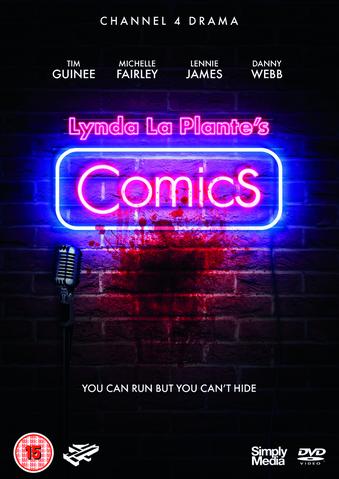
Comics – Simply Media DVD Review

American comedian Johnny Lazar (Tim Guinee) recently arrived in the UK, observes a gangland killing on the streets of Soho. As a witness, Johnny finds he’s a person of interest from both sides of the law ….

Simply Media continues to trawl through the Channel 4 back-catalogue with this two-part serial from 1993, written by Lynda La Plante and produced by Verity Lambert.

Within the first few minutes Johnny’s character has already been deftly painted – he’s an uncontrollable loose cannon (shooting his mouth off on a top American chat show is one of the reasons why he finds himself unemployable in his own country).

Given the generous running time (two episodes each of approx. 107 minutes) it’s slightly odd that Johnny witnesses the murder so early on in the first episode. The story might have benefitted from having a little more time to set up the characters and the milieu.

But even though the first twenty minutes seems to fly by at breakneck speed, all the essentials are put in place. We meet some of Johnny’s fellow comics, such as the cynical Haggis (Alex Norton) and the firmly traditional Graham Redcar (Graham Fellows). Fellows, no stranger to comedy himself (Jilted John, John Shuttleworth) was a wonderful casting choice. Graham is a strictly old-school turn, dressed in a smart dinner jacket he seems very out of place amongst his shabbier fellow performers. His insistence that you don’t have to descend to gutter language in order to amuse (instead he puts his faith in his hand puppet) is another obvious way in which he differs from the crowd.

Whilst it’s true that Londoners are very phlegmatic, it slightly stretches credibility that somebody could be shot multiple times right in front of a crowd of people with nobody reacting. You’d have thought somebody might have screamed at least once ….

But then some of the plotting of Comics is slightly suspect. We see the murdered man, Johnny Fratelli, walking past Anthony Fratelli’s (Stephen Greif) car. Given that Johnny was shot on his cousin’s orders (and that a briefcase was the prize) why choose to murder him in such a public place? It would have been far wiser to dispose of him in secret, that way obtaining the briefcase would have been straightforward (whereas here it’s not picked up in the melee).

It’s always nice to see Stephen Greif and although he’s rather typecast as a villain, since it’s a role he always plays so well I’m not going to complain. A number of other familiar faces (some already established, others just making a start) also appear – such as Danny Webb and Lennie James.

Brian Duffield (Webb) thinks that Johnny has the potential to hit the big time. The culture clash between the two – Johnny’s never heard of the likes of Rik Mayal, Ben Elton or the BBC – is nicely done, leading us to the punchline where Brian proudly tells him that he should be able to get him a spot on the Des O’Connor show. Needless to say, Johnny’s never heard of Des either ….

One plus point of Comics is the way that it intercuts an examination of the comedy scene in the UK with a straightforward police procedural (as the hunt for Johnny Fratelli’s killer begins in earnest). There’s some spiky satire directed at the comedy world – Duffield, with his brick like mobile phone and his rampaging desire to make Johnny a star, is the archetypal manager whilst the appearance of Michael Aspel helps to anchor the serial to the real world.

Johnny’s meltdown on the Aspel show (launching into a routine about guns and sex which I assume was intended to be shocking but today seems rather tame) shows the way his mind is currently functioning, i.e. not very well. But with one of his fellow comics recently murdered (he was mistaken for Johnny) it’s possibly not surprising that he’s becoming increasingly flaky.

Tim Guinee had to tread a delicate line. Johnny is often boorish and monosyablic, but Guinee also has to make him sympathetic, otherwise Comics would be a slog with an unlikable character at its heart. Guinee succeeds in teasing out the more vulnerable side of Johnny’s nature from time to time, so overall he gives a very rounded performance.

Although a little unfocused in places, there’s still a great deal of interest to be found in Comics, especially the depiction of the seedier end of the comedy circuit featuring a disparate group of characters all dreaming of a chance to make it big. Having the likes of Graham Fellows in the cast helped to add a layer of authenticity and it’s interesting to learn that Jo Brand was also approached.

Comics features a female performer, Rebecca (Jenny Galloway), who has more than a touch of Brand about her. It looks as if the part was originally written with Brand in mind, as touched upon during this interview.

A favourite of LaPlante’s, Comics slowly ramps up the tension before climaxing with a more than satisfying conclusion (followed by a touching coda). Propelled along by a very strong cast, Comics is an intriguing drama from the earlier days of C4 and is well worth your time.

Comics is released by Simply Media on the 21st of May 2018, RRP £19.99. It can be ordered directly from Simply here (quoting ARCHIVE10 will apply a 10% discount).

Cinderella – Simply DVD Review

164454- Chief Crazy Horse Sleeve.indd

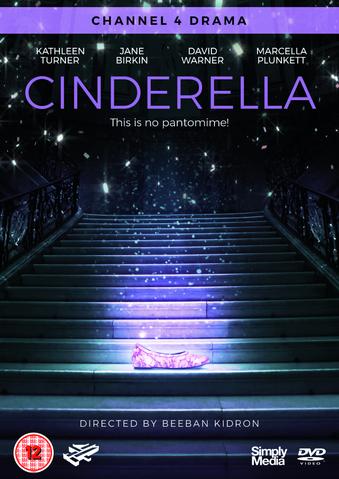
Nick Dear’s reimagining of Cinderella relocates the story to mid twentieth century Britain. Young Zezolla (Marcella Plunkett) tangles with her new stepmother, Claudette (Kathleen Turner), an evil woman who has the unsuspecting Martin (David Warner) firmly in her grasp.

Zezolla, nicknamed Cinderella after she’s given the task of stoking the coal boilers of her father’s sprawling mansion, also has to contend with Claudette’s two scheming sisters – Goneril and Regan (Katrin Cartlidge and Lucy Punch) A fairy godmother would be handy, but surely that would be expecting too much …

Whilst Cinderella draws much of its inspiration from the original fairy tale, it also delights in mixing and matching elements from various other stories. King Lear is an obvious inspiration – the names of Claudette’s daughters and the way that Zezolla becomes estranged from her father (in true Lear style) are the most obvious nods.

Kathleen Turner adds a touch of Hollywood glamour to the production. Bedecked in a series of eye-catching costumes, Claudette is depicted as a top class schemer. Although briefly disappointed when she discovers that her new husband might be aristocratic but is also pretty much broke, she soon recovers. Once she’s managed to dispose of him (poison should do the trick) she’ll be free to remarry and if one of her daughters could snag a young and handsome Prince, all the better ….

Karen Cartlidge and Lucy Punch as Goneril and Regan are a hoot. Just as wicked and narcissistically self-obsessed as their mother, they delight in taunting their new, downtrodden sister-in-law. An early scene, where the pair – cavorting on their bed in stockings – ponder whether they should corrupt the innocent Zezolla is nicely done.

As for Zezolla – or Cinderella as she becomes known – she’s deftly brought to life by Marcella Plunkett. Although this was an early screen credit for Plunkett, she doesn’t seem at all fazed by sharing the screen with vastly more experienced actors.

c1.jpg

The casting for Cinderella was very strong. David Warner has a tricky job as Martin (it’s difficult to believe that anybody could be quite as dim and trusting as he is) but Warner’s a class actor who just about gets away with it. Leslie Phillips has a nice role as Felim, Martin’s faithful family retainer. Although it does seem a bit harsh that a man as old as he is has been given the job of stoking the boilers ….

Felim acts as Cinderella’s confidant, which is perfect casting for Phillips who twinkles away very appealingly. When advising her about the pleasures and pitfalls of love, he lets slip that he has form in this matter – most notably Mab (Jane Birkin).

Another strong addition to the cast, Mab occupies the role of Cinderella’s fairy godmother, although she – like a great deal of the story – is far removed from the traditional image. Living in an underground cave, Mab’s delightfully disconnected (telling Cinders at one point that she can’t rustle her up a pair of shoes – she never bothers with them herself since shoes are only for people who don’t like the look of their feet). Several other familiar faces pass by later on, such as Sharon Maughan, Michael Medwin, Nickolas Grace and Jenny Tomasin.

Prince Valliant (Gideon Turner) enters the picture mid-way through. An unconventional Prince Charming, he’s portrayed as a bored and idle lounger. I’m not sure whether Turner’s playing is supposed to be off-kilter or if it was just a case of bad acting. I suspect the former, and this thought was strengthened by the memorable moment when the Prince elects to serenade the alluring Cinderella with a rock song and an energetic guitar solo. He does later roam the Kingdom (albeit on a motorbike) with a slipper, looking for a foot that will fit it – so at least in that instance he does conform to the traditional story.

With a woozy, non-naturalistic feel, Cinderella doesn’t outstay its welcome at 83 minutes. It may be fairly short, but is decidedly sweet and – thanks to the first-rate cast – is something of a treat. Recommended.

Cinderella is released on the 21st of May 2018 by Simply Media, RRP £14.99. It can be ordered directly from Simply here (quoting ARCHIVE10 will apply a 10% discount).

Juliet Bravo – The One Who Got Away

jb1

It’s a busy time in Hartley. A group of international counterfeiters have moved into the area, a vicious murderer is on the run and Jean’s interest is piqued by a smooth con-man who targets rich widows ….

The One Who Got Away is content to slowly introduce and manoeuvre its guest characters, meaning that it takes a while before we understand exactly who they are and what their function in the story will be. A couple, who we later discover are Detective Inspector Harry Connor (Walter McMonagle) and Detective Sergeant Annie Aspen (Stephanie Fayeman), are shown selecting an isolated cottage (which looks perfect for a stake out) whilst a confident middle aged man, Commander Scott (Geoffrey Hutchings), checks into the Highwayman hotel.

The episode will spend a fair amount of time in the lounge of the Highwayman (which is a nicely realised studio set). For Hartley it’s clearly an upmarket sort of place – albeit with fake rustic overtones – which looks to be positioned slightly out of town. The cheesy muzak which constantly plays in the background is a nice touch, setting up the atmosphere perfectly.

Everything about Scott screams con-man, which is reinforced when his dinner guest – Colette Newby (Shirley Stelfox) – arrives. Scott spins a yarn that he served with Colette’s late husband on the Ark Royal and although there’s no obvious flaws in his story, something seems slightly off-key about him.

At this point, it might be expected that Harry and Annie have arrived in Hartley on Scott’s trail, but that’s not the case. Although when Harry later sees him (coincidentally he’s entertaining Jean at the Highwayman) he does comment that he seems familiar.

If The One Who Got Away has a theme, then it’s about subverting our expectations. Not only is Scott not Harry’s target, but Scott proves to be less in control of the situation than he thinks. Colette might be an imposing and respectable figure – chairman of the Townswomen’s Guild – but she came up the hard way and is more than capable of spotting a confidence trickster when she sees one. Bedecked in a wonderful fur coat, Shirley Stelfox is good value for money.

So although the viewer might have expected Colette to be the victim, she instead turns out to be, if not the hunter, then not exactly a passive character either. Colette (real name Mavis) offers Scott (real name Trunky Porter) a job. As a smooth salesman at her second-hand car lot, he seems set to make a go of things. It may not quite be that she’s going to make an honest man of him, more a case of thieves together ….

The way that Scott/Porter drops his cultured air when later confronted by Jean is nicely done, as is his reaction after he learns that his prey’s real name is Mavis! A con-man conned back.

The return of Superintendent Lake (John Ringham) has primed the audience to expect that the arrival of Harry and Annie from the Crime Squad is big news. Their action against the counterfeiters seems set to be the major theme of the story and yet – in another example of subverted expectations – it turns out to be almost totally a MacGuffin. We do briefly see the counterfeiters, but their presence has no impact on the plot.

Instead, the latter part of the episode focuses on Annie (maintaining the stake-out, all by herself) encountering the runaway murderer (played by Andrew De La Tour). It’s already been established that the house has no phone (which Harry seemed unconcerned about) so when the wild-eyed fugitive breaks in it appears that Annie’s going to have to face him on her own. It’s a slight shame that Annie is transformed into a victim during these scenes (she manages to beat him off before Roland arrived in the nick of time).

Odd that Annie would be left by herself with no means of communication. Whilst Harry is depicted as a secretive type – only Lake and Jean know why the Crime Squad are in the area – this is stretching credibility a little too far. Andrew De La Tour casts an imposing shadow though – and he’s all the more effective since his character never utters a single word.

The meeting between Jean and Harry is one of the most interesting parts of the episode. It’s plain that they have a history, with the clear inference being that they were lovers at one point (Harry waxes lyrical about the time they were snowed in at Merthyr Tydfil during an operation). In his presence Jean is almost girlish whilst the later arrival of Annie casts a slight chill over proceedings. When Harry wanders off, Jean and Annie start a faltering conversation which seems to have a clear subtext (both, in own their way, are keen to prove that they know Harry best). Despite vanishing for a section of the story, Walter McMonagle is another strong addition to the guest cast.

Mixing several different storylines, The One Who Got Away, thanks to its wrong-footing ways, is a very decent story.

jb2