Howards’ Way. Series Five – Episode Four

hw s05e04a.jpg

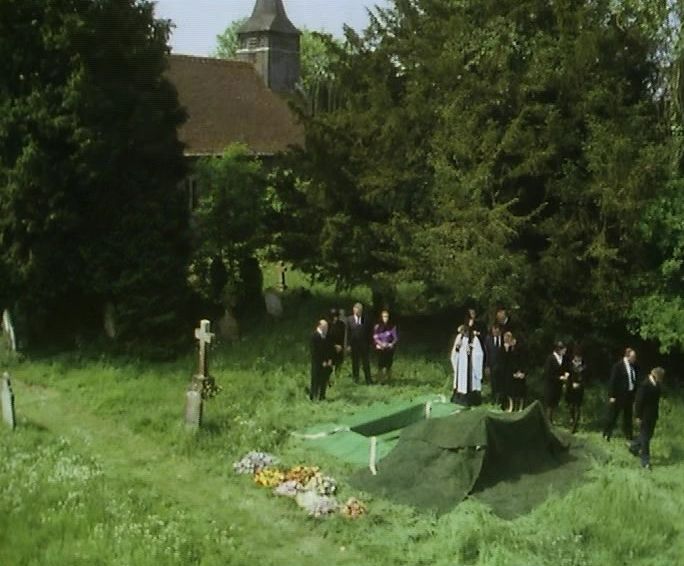
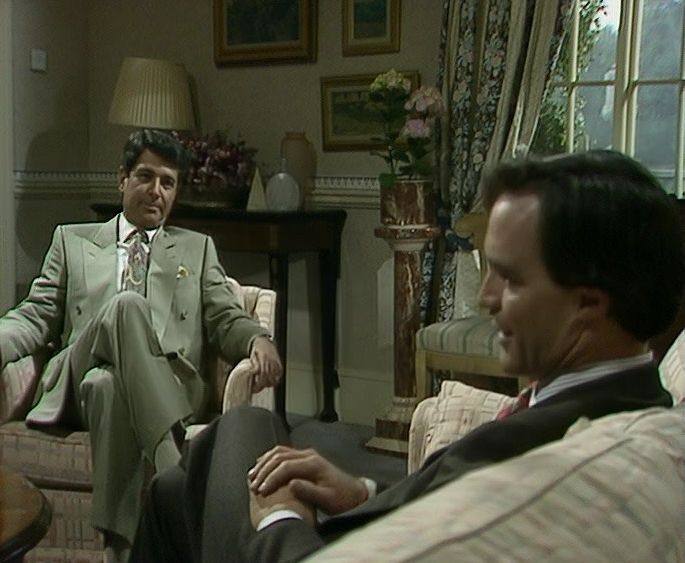
This episode opens on a sombre note as Laura’s father, Jimmy, is laid to rest. It’s an impressively mounted crane shot – beginning high up before zooming into the graveside, where, one by one, the other mourners leave until just Laura – dressed in purple with a black headscarf – remains. No words are spoken until Laura has left the churchyard (and then, Laura only briefly pauses to thank Jack and Avril for coming) but the expression of pain on Laura’s face tells its own story.

The unusual camera angles continue in the next scene, as we cross to Gerald and Polly’s house. The initial shot is taken from the first floor, as a silent Polly observes her daughter. The soundtrack (and Polly’s expression) helps to give this brief moment a sense of menace. Although when Polly comes down to talk to Abby, she seems more like her old self.

Polly wants Abby to come to America with her and start a new life (interestingly, Polly also claims that she has no plans to divorce Gerald – but unless he moves out to Americs as well it’s hard to reconcile this). Long-term Leo and Abby watchers will no doubt have picked up on Abby’s comment to her mother about Leo, as she refers to him as “the man I’m going to spend the rest of my life with. He doesn’t know that, but that’s how it’s going to be”.

This is a fascinating little moment. Abby may appear on the surface to be a more relaxed character than her mother, but this autocratic statement suggests otherwise. What Abby wants, Abby tends to get.

To date, James has been a very passive character, content to let Jan lead the way, but today he makes his first stab for independence. He introduces her to Sophie Westbrook (Fran Lima). Sophie is a talented designer and Howard Brooke need a new designer, so a meeting seems logical. But since it wasn’t Jan’s idea, she’s very resistant. This is a good example of Jan’s control-freakery. If she’s the one giving the orders then all is fine, but when somebody else dares to suggest anything, things don’t run so smoothly ….

Jan’s not keen on her designs. Is this because she really didn’t like them or was it more to do with the fact that she didn’t choose her? True, Sophie’s portfolio contained a few topless dresses(!) but the rest of the (unseen) designs seemed to be decent. Jan complains that James is attempting to steamroller her, only for James (at last) to snap back that Jan’s already done more than a little steamrollering of her own. After the last few episodes I was beginning to wonder if James would ever spark into life – happily, it’s eventually happened.

Charles and Avril clash again. Returning from the funeral, Avril is more than a little put out to find Charles lounging in her office.

Orrin (Jeff Harding) arrives back in Tarrant. He’s colder and more arrogant than before (no doubt in part due to the fact that he’s now being played by a different actor). Whatever else he’s here for, a tearful reunion with Abby doesn’t seem to be on the cards.

More unusual camera angles are on display when Orrin and his entourage pull up at Leisure Cruise. With the camera placed very low on the ground, shooting upwards as Orrin gets out of his car, it helps to give him a sense of stature. Orrin’s meeting with Ken is something of a treat (with Ken on the one side gently mocking Orrin and Orrin on the other, implacable and cold) even if it doesn’t make a lick of sense.

The Hudsons are keen to bring down Charles (fair enough) but have decided that Ken is the only one who can help them (by passing on Eckhardt Sahnn’s name to the police). Are we really to suppose that they couldn’t have tipped off the police themselves?

Polly and Jan meet. It starts off in an extremely chilly fashion, before suddenly they have a good giggle and become much more convivial. A slight contrivance maybe, but a necessary one, since Polly needed somebody to explain the ins and outs of of the plot to.

Ken and Laura are now partners. Whilst you should never underestimate Ken’s underhand dealing, at present it seems that Laura holds the upper hand. She’s quickly able to connect the earlier presence of the Fraud Squad at Leisure Cruise with their investigation into Charles. Of course, Charles has been chomping at the bit to find out who shopped him – Laura doesn’t intend to do so (or so she says) it’s simply that she wants Ken to know that she knows. Fifteen love to Laura.

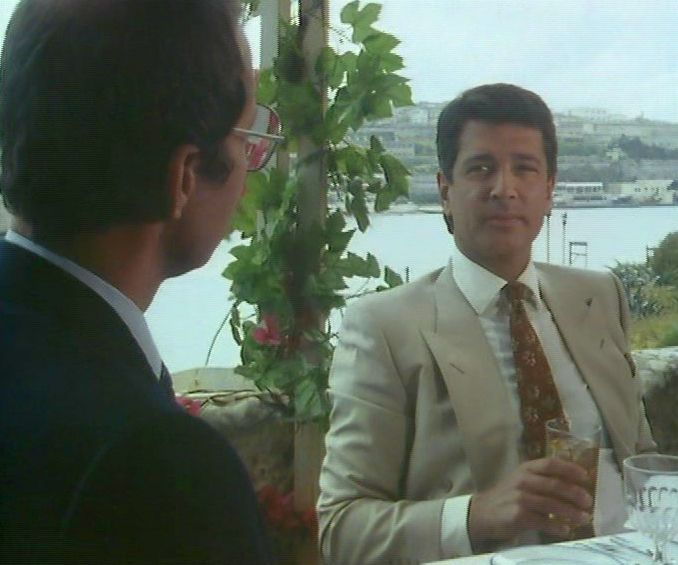
Avril’s gone on a little foreign jaunt, to meet a smooth type called Sabio Fernandez (Franco Rey). Funnily enough, it looks a lot like Malta ….

This episode has a bit of racing action, but it’s so intercut with the other plot threads that it tends to get lost. Good news though, Tom wins his class in Barracuda as does Leo in Spring. But the main point of interest during these scenes is that Abby, crewing with Leo, felt suddenly sick and had to return to shore. Hmm, since she never gets seasick, I wonder what this could be. I wonder.

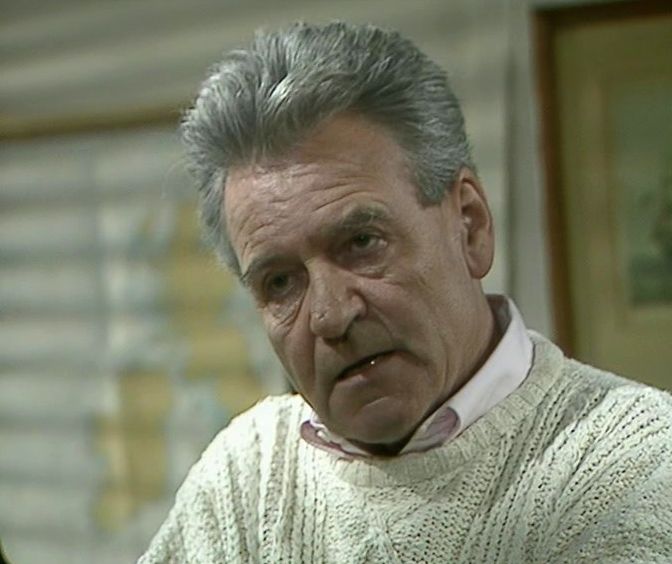
Charles and Gerald are slightly irked to be called to a meeting with Orrin, but they go anyway. This is a good indication that Charles’ position isn’t quite as secure as it used to be. Gerald is once again uncharacteristically forceful – telling Orrin in no uncertain terms that he wants her out of Abby’s life once and for all. Gerald’s come a long way from S1, when it appeared that he only ever saw Abby on a handful of occasions each year.

Later, Charles and Orrin face off in secret as Sahnn’s murky dealings with Charles are brought to the surface. We close the scene with Charles looking slightly perturbed – something which we rarely see. And since Orrin was secretly recording the meeting it appears that he, at present, is in the driving seat ….
hw s05e04b

Howards’ Way. Series Five – Episode Three

hw s05e03-a

Jack’s in a reflective mood. “My daughter. The worse Charlie Frere treats her, the better she likes it”. This doesn’t seem like an accurate reading of the situation (I’ve never really thought that Avril’s Relton struggles with Charles were some sort of elaborate foreplay) but then Jack has often mused on the unpredictability of women, so he’d probably agree that he may not have read the situation correctly.

As if to hammer this point home (re Jack and his inability to read the moods of the opposite sex) he offers to take Vanessa out for a sail on her new purchase The Proud Lady (one of Jack’s old boats) but she recoils with terror on her face. This is something of an overplayed moment (the very dramatic music doesn’t help) although it does suggest, none too subtly, that something’s troubling her.

Later they do go out, but when the weather gets a bit choppy Vanessa goes very wonky. It’s not really Lana Morris’ fault (this sort of scene is very hard to play) but she doesn’t really convince during this scene. She’s much better later on when Vanessa confides to Jack that ever since her husband, Klaus, was killed in a boating accident she’s been somewhat apprehensive about taking to the water. This is a nicely played two-hander between Owen and Morris.

Vanessa later has a chance to beat her fear of the water after a dinghy overturns in a small lake and a youngster pitifully screams for “help, help”. Several points spring to mind here – firstly that the submerged mariner seems to be pretty close to the bank (and if they can’t swim that short distance to safety, surely they shouldn’t have been out on the water in the first place). The extra in front of Vanessa (an old boy with a cap and binoculars) slightly amuses me. Presumably he rushes off in a panic as Vanessa seems to be the only one left to help – as she eyes a small sailboat and sets off on a rescue mission.

This isn’t the most dynamically directed of scenes it has to be said. We cut away before Vanessa actually ventures out, which seems to be a bit of a cheat. And if this one action has cured her fear of the water then we can chalk it down as yet another instance of the series setting up an interesting plot point, only to resolve it almost straightaway. Which is a little odd.

Leo seems to have clicked back into being the dutiful son (we see him doing the wiping up at home). He’s curious about his mother’s new business partner, James Brooke, which is understandable since some of Jan’s previous liaisons have mixed business with pleasure. “Is he married?” he enquires. And then James pops up and Leo exits. One in, one out.

I wonder what Jan and James will call their new, merged business. Oh, what about Howard Brooke. That’s quite snappy. James doesn’t seem to query this (Brooke Howard would sound just as good) and he also doesn’t seem too concerned when Jan steamrollers ahead with her plans for redecoration, branding, etc. At the moment, Jan seems to be very much the dominant partner.

The dramatic music makes a return when Tom tells Laura that Ken might use her the health of her ailing father, Jimmy (Walter Sparrow), in order to gain a business advantage. Once again, it’s a pity that the incidentals are rather strident at the moment.

Avril’s looking lovely again today, dressed in a tight skirt which seems to be designed purely to show off her slim waist. Her meeting with Leo (it’s almost as if he’s the only other person who works for Relton) is interrupted by a phone call from Ken. Feet up on the desk, his casual manner belies the fact that he clearly feels he has a trump card to play.  He’s able to convince Avril that a meeting is in her best interests. With Avril’s position at Relton somewhat shaky thanks to Charles, this possibly isn’t too surprising.

Lord Runswick (Harry Beety) is the sort of blunt Northern salt of the earth type made good who is so much of a cliché that it’s impossible to take him seriously. His parting comment to Charles (he declines to join his crusade to oust Avril) deserves quoting. “But you start playing this sort of game for revenge, you’ll wind up searching for tanners in your turn-ups”. Happen as maybe he’s right, by gum.

Ken continues to be haunted by Laura. The ever-loyal Vicki attempts to cover for him, pretending to Laura (who’s on the phone) that he’s not in the office. But as she’s sat outside in her car and can see his car, this isn’t a very convincing lie. Poor Ken. A minute later we see him looking plaintively out of the Leisure Cruise office window at Ms Wilde.

Sir John Stevens doesn’t appear in person until episode nine, but even offscreen his presence is still felt. Here, he’s the buffer between Ken and Laura. She’s miffed that Ken’s already told Sir John that the purchase of Wilde Mouldings is a done deal when that’s not the case at all. Even if Laura agrees, the ultimate decision will have to come from her father (although he does seem keen to sell).  But since he doesn’t seem long for this world, it might end up as her decision after all.

Jack, back at the Mermaid, chats to Tom about Vanessa. What begins as a two-handed scene quickly focuses on Jack, as he begins to look backwards – at how he decided to “marry the yard” when he married his late wife Eileen. The way that the camera slowly closes in on Glyn Owen’s face as he delivers his monologue is such a simple trick, but it’s so effective. Owen, whenever he’s given a dramatic scene, never fails to deliver.

Do you know, sometimes I walk through that yard, I turn … expecting her to be there, looking at me. And asking the same old question, why I let her down. And I did, you know.

Apart from taking a few snaps, we don’t see Abby until we’re thirty minutes in. She and Leo are in a very affectionate mood (their on/off/on/off/on relationship is somewhat confusing to keep track of) but after a minute the real reason for their sofa canoodling becomes obvious – it’s so Polly (yes she’s back) can stroll into the living room and shake her head in dismay. “I hope I’m not disturbing you” she mutters icily ….
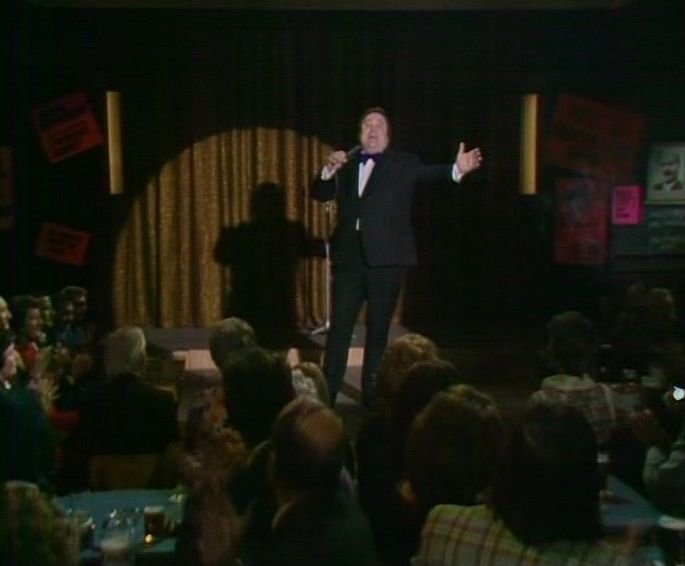
Abby and Polly have regressed to their S1 relationship (in other words, not good). Their brief moments of rapprochement from more recent times seem to have vanished as Abby (Cindy Shelley looking rather lovely when she’s angry) rails against her mother for apparently leaving her father. But Polly’s gloriously unrepentant.

Given that the major reason for Polly going to America was in order to try and intercede with the Hudson family over William, it’s slightly surprising that Abby doesn’t bring this up. But there is a possible explanation –  after she declines to view a series of new photographs of her son (dashing them out of her mother’s hand) it might be that her disdain for Polly’s actions are stronger than her maternal instincts. Or has she finally accepted that William is out of reach? That’s a moot point at the moment, but two and a half episodes in it’s noticeable that Abby’s hardly mentioned William.

Polly’s gleeful, mocking expression after Abby leaves the room is slightly disturbing. In the past, Polly has been thoughtless, snobbish and self-obsessed but this is something new. Evil Polly seems to have arrived ….

The reunion between Polly and Gerald is just as dramatic. At present it seems that Gerald has recovered his faith in Charles and lost his faith in his wife. The way that Gerald shouts at Polly – demanding to know whether she’s having an affair with Sir Edward – is a notable moment. Sadly, we’re now into the endgame with Polly (after episode six she’ll be gone for good).

Another year, another Marina development for Charles to obsess about. This necessitates more meetings with humourless foreign types, today it’s the impressively named Eckhardt Sahnn (Carl Rigg). And fancy that, they’ve gone all the way to Malta just for this meeting.  HW clearly had a decent budget this year.  This Marina development has a bonus for Mr Frere, since it will enable Sahnn to force Avril out of Relton.

hw s05e03-b.jpg

Howards’ Way. Series Five – Episode Two

hw s05-02a.jpg

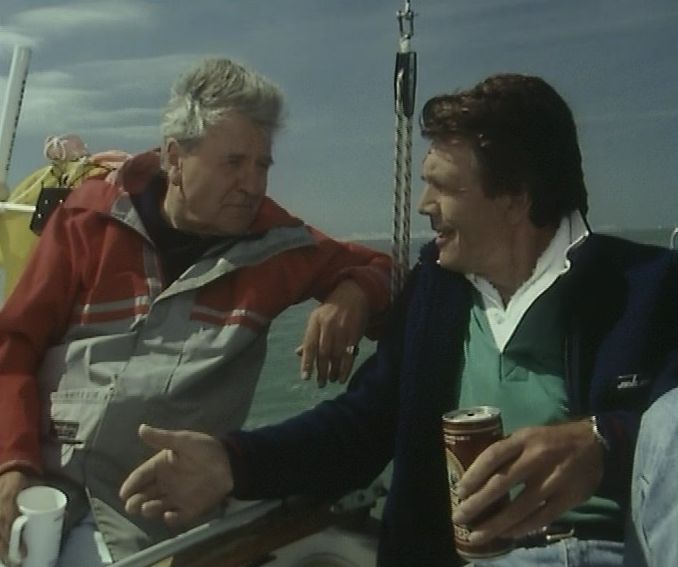
Tom, out in the Flying Fish, is looking a little down in the dumps. You know what he needs? A chortling Jack to turn up alongside, offering to cheer him up. “You look bloody awful” is Jack’s opening gambit. I love Jack ….

Tom’s rejoinder (“Jack, will you belt up?”) is delivered by Maurice Colbourne with a chuckle. Was this as scripted, or was some of Colbourne’s real character breaking through? It doesn’t really matter either way, as it works very well.

Charles and Gerald’s lawyer, Thornton (Andrew Burt), seems confident that they have no case to answer. It’s a sunny day in Tarrant when the three have their breakfast meeting (which makes the scene an attractive one). It’s rather disconcerting that the brief exterior shot of the court is on videotape (virtually all of HW‘s location work was done on film) but this makes sense when we see that the court interiors were also shot on videotape at the location and not in the studio.

Gerald continues to twitch whilst Charles is gloriously unconcerned. Will they ramp up the tension and keep us hanging on for a verdict? No, not really. Thirteen minutes in and the case in thrown out. We don’t see inside the courtroom, so once again a dramatic moment is missed (but on the plus side, it saved the production some money). The dogged Inspector Daniel Morris (Kenneth Lodge) vows to continue the fight, but as this is Lodge’s final episode he’d better hurry up.

This plotline is mainly interesting for exposing the cracks in the professional relationship between Charles and Gerald. Once, Gerald would have trusted Charles without a second thought, but not any more. The way that Gerald firmly tells Charles that he can’t work tonight (he’s arranged a dinner with Abby and Leo) is striking. The worm has turned.

Gerald is very merry when he, Abby and Leo return home. This is good to see, as it’s been a while since Gerald’s been able to relax. His melancholy is never far from the surface though. He tells Abby that he’s really sorry that Polly isn’t here (Abby tells him to thank his lucky stars she isn’t!).

James Brooke (Andrew Bicknell) is a major rival of Jan’s (with a string of boutiques) but Jan seems drawn towards him. Mind you, he’s a bit slow on the uptake – at first he doesn’t have a clue who she is! Or does he actually know more than he’s letting on? Time will tell ….

He also doesn’t seem aware that Jan – like a predatory fish – is eyeing up his business hungrily. She wants to expand, he’s got financial problems, so a merger might be in both their interests. That Jan’s considering this mere minutes after meeting him is slightly hard to take – at present, HW seems to be rattling through various storylines.

The convivial lunch between Jan and James comes to an abrupt end when Tom pops by. Tom doesn’t express any overt jealousy, but James seems to be able to sense straight away that Tom and Jan still have a very strong connection. Tom’s not convinced that this merger is wise (or maybe he’s slightly disconcerted by James’ good looks).

Avril continues to look rather foxy (today, in a red dress) as she and a sharply-suited Leo settle down to discuss their powerboat racing strategy (now that Leo’s retired from racing he’s moved up to an executive level). Their meeting is cut short when Charles comes calling though. Personal and professional bitterness causes this short scene to crackle. This is one plotline that looks to have some legs.

Charles wants to regain Relton, Avril isn’t prepared to give an inch, so I think we should settle back and enjoy the battles to come. “If I have to break you in the process, believe me I will” he tells her.

Glyn Owen’s marvously expressive face is put to good use during a scene when Vanessa ponders on the road not taken (in another life, someone like Avril could have been her daughter). Jack, of course, doesn’t have a great deal of time for this sort of talk, it’s just not in his nature.

Today’s random observation. Somebody coughs very audibly at 43:46, at the start of the scene with Charles. Was it the off-camera Gerald or a member of the camera crew?

We end this episode with the unforgettable sight of a topless Ken and the equally impressive visage of Laura squeezed into a teeny-tiny leopardskin bathing costume. Crickey, that’s something you don’t see every day. Moored on a yacht at sea with (of course) plenty of champagne, they have a bit of a smooch. Laura’s still not selling her company though (even though Ken’s turning on the charm) but she wouldn’t be adverse to a merger.

She then elects to leave Ken, who’s gone for a swim, all alone, whilst she toddles off in the yacht for a while. Poor Ken, it’s not his day ….

Howards’ Way. Series Five – Episode One

hw 05-01a

Oh, I say! HW has ventured abroad in the past, but those jaunts were always something of a cheat – a quick flash of stock footage and then we’d cut to a chilly part of England dressed with a few palm trees in order to create an exotic illusion.

But not today. We open in Malta with Charles exiting the airport whilst a bearded stranger follows his every move (his face a study in concentration). The incidental music is turned up to the max as well, just to hammer the point home that this is a significant moment. And if you needed a reminder that we’re in 1989, then the ginormous brick-like mobile phone that the beardy man pulls out of his pocket should give you a clue.

Malta will feature in a number of episodes this year, so it’s obvious that the production team took the opportunity to shoot material for several episodes at the same time. This does give the slightly unfortunate impression that the inhabitants of Tarrant only visit Malta when they venture abroad, but I’m not one to carp ….

You might remember that we left Leo at the end of series four in something of a bad way. Badly mangled after his speedboat crash, it wasn’t clear how serious his injuries were. Would he ever walk again? His opening scene here (jogging furiously on a treadmill) answers that question, so clearly it was decided not to spin his incapacity out for any length of time.

But it’s also plain that not all’s well with the lad. Chided for running on the treadmill when he should have been walking, this exercise is then revealed to be part of his rehabilitation. And when it’s suggested that he should then take a dip in the pool, he snarls “stuff the swimming pool” before storming off. Whatever happened to the nice young Leo we used to know and love?

Possibly he’s a little irritated that he’s still not 100% (his dramatic limp makes that clear, although he doesn’t keep up the limping for long). When Abby comes to pick him up, he complains that he’s not recovering as quickly as he’d like. But the real reason for his angst seems to be that Avril’s told him he won’t be racing speedboats again. By the expression on Abby’s face it seems that he’s been giving her a rough time recently.

If these few opening scenes are a little disconcerting, then we’re on firmer ground when we check in at the Mermaid. Jack’s just strolled in (for him it’s still early – around noon) and he begins to cross swords with Emma. He then berates Bill quite forcibly before exiting. Jack’s looking very dapper today, it has to be said. Clearly he’s not dressed for the office ….

We then get our first sight of Jan and Ken this year. They’re having a bite to eat in Tarrant’s ever popular restaurant (I wonder how many times it’ll turn up this year?) with Ken – white jacket, rolled-up sleeves – still attempting to woo Jan (in a business sense anyway). Does Jan – nice purple jacket – want to pump a great deal of money into Ken’s business? Hmm, no, not really.

Avril – looking rather lovely today in a shortish skirt – and Gerald have a frank exchange of views. He knows where Charles is, but isn’t prepared to pass that information on. Gerald – who earlier had clucked down the phone to Charles – is a little frantic that his employer is swanning around in Malta whilst he’s back in the UK, fending off numerous interested parties (all interested in the continuing fraud case). When Charles suggests he hops on a plane to Malta he’s only slightly mollified.

With Polly absent (she’s still in America attempting to get William back) Gerald is even more isolated than usual. He cuts a rather forlorn figure and although Abby attempts to bolster his flagging confidence, she doesn’t have any success. It seems that he’s already picturing life behind bars.

I love the fact that when Gerald later clambers aboard Charles’ yacht he’s wearing his suit and tie and clutching his briefcase! His tie is slightly askew though, which seems to be his sole concession to the fact he’s in sunny Malta. Charles, cool as a cucumber, tells him to drink his drink and not worry, everything’s going to be fine. You do get the feeling though that Charles is in for a nasty shock later.

It seems to be business as usual with Tom and Emma – he’s unable to make their dinner date because he has to see Jan (although it’s more about providing Leo with moral support). But it turns out that their relationship is very much on borrowed time. By the end of this episode she’ll be gone forever ….

But for every departure, there’s usually a new arrival. Victoria Burgoyne makes her debut as Vicki Rockwell. With Sarah having left at the end of S4, Vicki (as Ken’s assistant) operates as his new business confidant – although since she’s got a boyfriend, she’s not interested in anything else. Which slightly takes the wind out of his sails.

The next new arrival is rather more significant. Kate O’Mara had previously appeared in another Gerard Glaister series, The Brothers, back in the 1970’s, but it was her 1980’s American adventure in Dynasty which really cemented her soap credentials (there was also Triangle, but funnily enough nobody ever talks about that now). Laura Wilde, owner of the impressively named Wilde Mouldings, is an old friend of Avril’s, but it’s plain from their first meeting that her destiny is going to be intertwined with Ken’s.

There’s an early highlight of the joys to come when Laura comes sniffing around Leisure Cruise. Ken approaches her from behind, but without turning round she senses that he’s there. When he wonders whether she’s got eyes in the back of her head, she tells him that “no, I just happened to be downwind of your aftershave”. Kate O’Mara’s also sporting the most wonderful pair of sunglasses during this scene.

Laura later demonstrates that she’s no pushover, easily being able to see through Ken’s transparent desire to buy her company. Random observation – Ken obviously likes the colour red. In his office, his chair, in-tray, desk phone, mobile phone and desk lamp are all red. It makes the scene at his desk rather striking.

Strictly speaking, Vanessa Andenberg (Lana Morris), isn’t a new character (she’d appeared in a couple of series three episodes) but she’s now back as a regular. Recently widowed, it seems that finally she and Jack will be able to get together. Their initial meeting, in her new Tarrant home overlooking the marina, is nicely shot – it’s just a pity that the day was so overcast (had the sun had come out it would have looked spectacular). Jack’s downcast face when Vanessa, toying with him, doesn’t instantly accept his dinner invitation suggests that there will be some scope in this plotline – Jack in Love – as a way to show a radically different side to the blustering man we know and love.

I wonder where have Jack and Vanessa go to eat? Hmm, three guesses …..

It’s slightly odd that we never actually see Jan and Tom’s uncomfortable dinner with Leo. Instead, we have to learn second-hand from Tom that Leo (still operating in full headstrong mode) wasn’t prepared to listen to their advice. A dramatic possibility missed.

Tom and Jan, post divorce, continue to enjoy a very cordial relationship. Tom’s now become her sounding board, the one person she knows will give her honest advice. Had Maurice Colbourne lived, would Tom and Jan have remarried? Many believe so, but it’s interesting to ponder how that would have affected the dramatic impetus of the series.

But if Tom’s managed to rebuild bridges with his ex-wife, then his other relationship seems to be built on rockier foundations. As has been seen time and again, tact is something that Tom Howard has never really possessed. His opening gambit to Emma (“I suppose you realise how ridiculous you’re being?”) probably wasn’t his wisest move.

Tom’s closeness to Jan is the reason why Emma’s upset but his next offering (“if you can’t accept that, then tough”) is another example of Tom’s incredible stubbornness. It’s Tom’s way or no way (as per the series’ title maybe). But it’s possible that this side of his character was ramped up here in order to provide a good reason for Emma to depart.

Although she’d been with the series for a while, had Emma not returned for series five I don’t think too many people would have particularly noticed or been too concerned. No slight intended to Sian Webber, but Emma was never really anything more than an Avril substitute (both at the Mermaid and in Tom’s life).

Leo continues to be a concern to everybody. Despite not being fit, he elects to take a speedboat out in order to prove that he hasn’t lost his nerve. Whilst Tom, Jan and Avril look on, the soundtrack steps up a gear as Leo begins to have flashbacks about the last time he tangled with a marker buoy. This time he manages to make it though (“I’ve cracked it!”) but since it wasn’t under race conditions (or with a pack of other boats in the water) it seems – at best – a hollow victory.

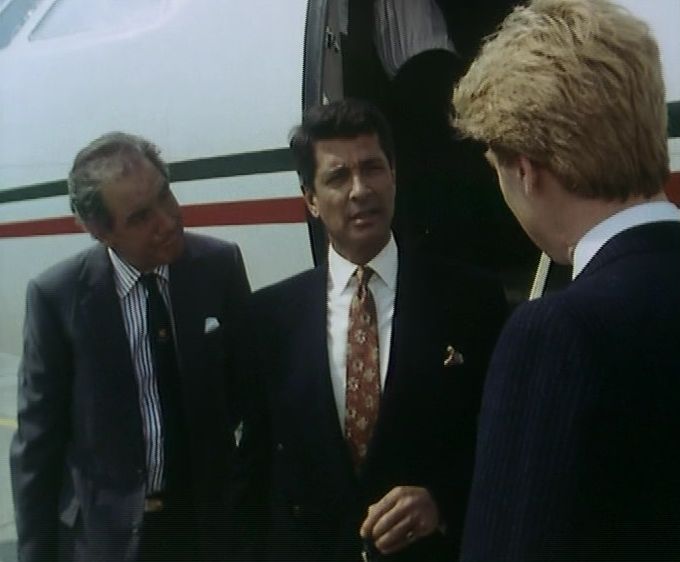
Charles and Gerald touch down in Tarrant, only for them to then be carted off to the local police station. For Charles, earlier so confident that his lawyers had found all the answers, it’s something of a rude awakening. He lowers his sunglasses to look at the officer, then raises them again as the pair are escorted away ….

hw 05-01b.jpg

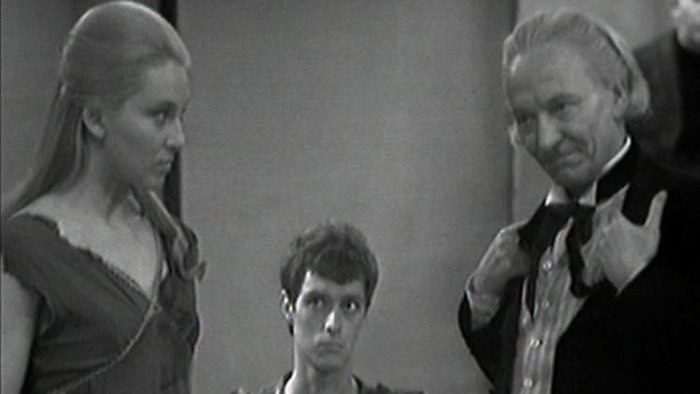
Doctor Who – The Keys of Marinus. Episode Six – The Keys of Marinus

keys.jpg

It’s fair to say that the whodunit mystery in this episode and the previous one is hardly of an Agatha Christie level. Barbara, Altos and Sabetha decide to speak to Aydan’s wife Kala to see if she knows anything. But it it seems not. “Leave me alone. I do understand and I sympathise with you. You must have been sick with worry since you spoke to Susan, but I just can’t help you. I know nothing.”

Of course, she couldn’t have known that Susan and Barbara had spoken (on the space-phone, after Susan was kidnapped) so it proves she was involved – and as it turns out was the one who murdered Aydan. Doh!

Kala’s accomplice is unmasked (not the greatest shock in the world) and the Doctor and the others are then free to return to Arbitan. But none of them know that he’s dead – murdered by Yartek (Stephen Dartnell). Or to give him his full name – Yartek, Leader of the Alien Voord. If my memory serves me right this phrase first pops up in The Making of Doctor Who by Terrance Dicks and Malcolm Hulke, but wherever it first surfaced it’s remained pretty much the only way to refer to him for decades. Or if you prefer the shorterned version – YLOTAV.

Yartek isn’t terribly convincing when he pretends to be Arbitan, but it still seems to good enough to fool Ian, who hands over the final key to him. When he and Susan leave the Conscience Machine he still seems to be putting the pieces together – but afterwards he tells the Doctor that he only handed over a fake key (so was he pretending he didn’t know what was going on to Susan?)

Arbitan wanted all the keys so he could restart the machine and control the Voord. But the Voord had proved to be immune to the machine’s control, so how would that work? But since Yartek planned to use the machine, it seemed that he knew that he and the other Voord wouldn’t fall under its control. Somehow. Possibly after six episodes, Terry Nation had begun to find his attention wandering a little.

What’s slightly irksome is that after they’ve spent weeks searching for the keys, the machine is destroyed – so they might as well not have bothered in the first place. The Doctor then says “I don’t believe that man was made to be controlled by machines. Machines can make laws, but they cannot preserve justice. Only human beings can do that.” A pity he didn’t say that in episode one, it would have saved them a fair amount of trouble!

The Keys of Marinus might be a low-brow romp, but it’s never less than thoroughly entertaining. However, as we prepare to enter the temple of evil, the tone of the series is set to change again.

Doctor Who – The Keys of Marinus. Episode Five – Sentence of Death

sentence.jpg

The search for the final micro-key takes place over the course of the next episode and a half (this extra time allows for a slightly more involved plot). We’ve reached the city of Millenius and Ian finds himself accused both of murder and the theft of the micro-key. And here, the accused is guilty until found innocent.

Hartnell’s back from his holidays! It’s lovely to see the Doctor again and he turns up at just the right time since he’s the ideal person to speak for Ian at the tribunal. The Doctor’s in his element here. “My Lords, I cannot defend a man when I have not considered every aspect of the case. I must have time to examine witnesses, read statements and to prepare my case.” He just loves the whole court atmosphere, doesn’t he?

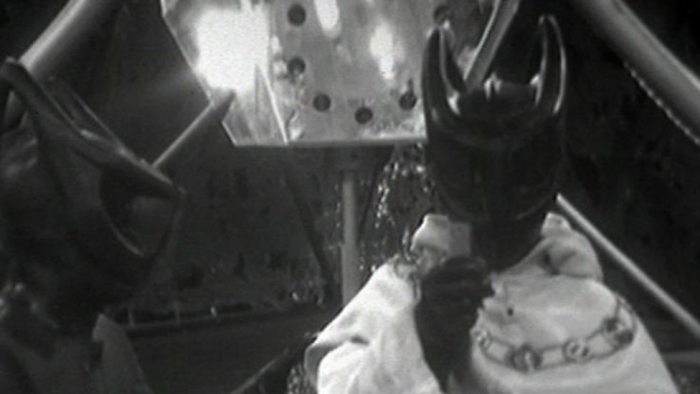
Things to love about this episode number one – the hats of the three judges. You don’t often see hats as impressive as this.

Things to love about this episode number two. Raf De La Torre is the senior judge and the only one to have a speaking role. The other two (played by Alan James and Peter Stenson, who doubled up with other roles as well, playing Voords, Ice Soldiers, etc) are noteworthy for several reasons. The first is their stick-on beards and the second is their excessive head movements when Raf De La Torre confers with them. Neither are allowed to speak, as they’re just lowly extras, so they indulge in manic head bobbing instead. It’s a lovely moment of unintentional comedy.

The Doctor’s pretty smug. He’s convinced he knows who committed the murder (it’s elementary, he says) but he has no evidence. Using Barbara and Susan he demonstrates exactly how the crime was committed – but the problem remains, how to prove it?

Things to love about this episode number three – a classic Billyfluff. “I can’t improve at this very moment. I can’t prove this very moment.”

There’s some familiar faces to spot. Fiona Walker, who returned to the series twenty four years later as Lady Peinforte in Silver Nemesis, is Kala. Donald Pickering, whose Doctor Who career culminated (if that’s quite the right word) with Time and the Rani is Eyesen. I love watching Pickering as he’s always a compelling screen presence. It’s not much of a role, but with a less skilled actor it wouldn’t have been half as interesting.

And what’s the Doctor’s plan to prove Ian’s innocence? He gets Sabetha to perjure herself by pretending that Aydan (Martin Cort) gave the key to her. Not quite the sort of thing that you’d expect to see at the Old Bailey. Aydan’s startled admission of guilt (and his murder immediately afterwards) moves the case on a little. But it doesn’t prove that Ian is innocent, so his execution will take place at the designated time. Ian looks at the Doctor, who can only shake his head sadly, which isn’t very encouraging.

And then Susan is kidnapped. Eek!

Doctor Who – The Keys of Marinus. Episode Four – The Shows of Terror

snows.jpg

It was David Whitaker’s idea that the locations of the story should be quite varied – one week a jungle, the next desolate snowy wastes. This is something that doesn’t occur very often in Doctor Who – normally when the TARDIS lands we’re never expected to wonder what the rest of the planet might be like. Often (picking a few random examples – say, The Daleks and The Krotons) it’s strongly implied that everywhere else is of little interest and where the Doctor is now is all that matters. But The Keys of Marinus, which shows us several cities ruled by different people as well as more barren locales, is quite different and should be applauded for that.

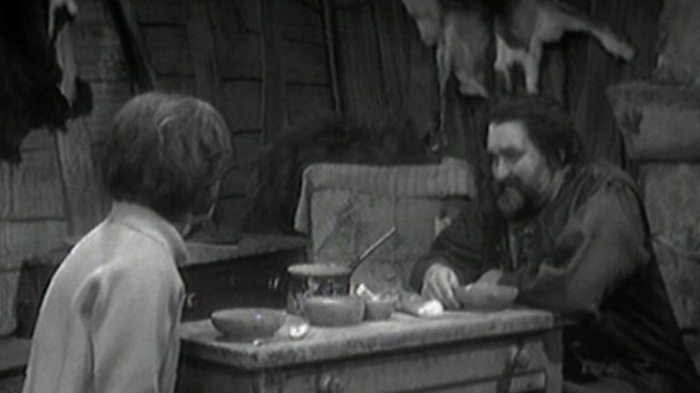
Last time, we left Ian and Barbara freezing to death in the fake snow. Luckily(?) they’ve been rescued by Vasor (Francis de Wolff) a man who lives in a hut all by himself in the middle of the snowy wastes. He shows Barbara how to restore life to her frost-bitten hands (doing so in a way that carries a certain overtone – it’s clear that he enjoys holding her hands in his). Indeed, there’s no two ways about it – Vasor is clearly keen for Barbara to spend some quality time with him (just as soon as he’s got Ian out of the way) and it’s equally clear what he wants to spend this time doing. It’s not spelt out, but then it doesn’t really need to be.

Ian sets out to find the others and hands over his travel dial in exchange for some of Vasor’s furs. Although Vasor, as scripted, tells Ian to pick up a coat and gloves, he only puts on a ratty piece of fur – which can hardly be expected to offer a great deal of protection (a poor bargain for his travel dial). Once Vasor and Barabara are alone he insists on feeding her some more food. “We must fatten you up, eh?” Brrrrr, I don’t fancy Barbara’s chances ….

Ian discovers Altos unconscious in the snow, but once Ian’s rubbed some life into his legs he seems able to carry on (yes, you can read something homoerotic into this if you wish). Luckily for Barbara, the two of them get back to the hut before Vasor’s been able to have his wicked way and the four of them then go back out to look for Susan and Sabetha.

They’re taking shelter in the ice caves, which is a decent-looking set. The Ice Soldiers, frozen warriors who are guarding the micro-key, aren’t quite so impressive though. This is another of those inexplicable Arbitan moments. The micro-key is contained within a solid block of ice, but if they melt the ice then the homicidal Ice Soldiers will wake up. Arbitan certainly didn’t like to make things easy, did he?

The excitement level as our heroes are pursued is fairly low – although Vasor gets his long overdue comeuppance from the Ice Soldiers (a sword in the back). Not the best episode of the story then, but Francis de Wolff (at times overacting like a good-un) is entertaining enough.

Next time, Ian faces a sentence of death.

Doctor Who – The Keys of Marinus. Episode Three – The Screaming Jungle

screaming

It’s not really correct to think of the Voord as the villains of the story as they only appear briefly in episode one and then not again until episode six. Had they decided to shadow the Doctor and his friends as they quested for the keys that would added a little extra excitement, although with their wetsuits and big flippers they probably would have stood out somewhat.

Carole Ann Ford wasn’t particularly enamoured of the way Susan was portrayed in this story and it’s not hard to see why – she seems to be written down in age somewhat (acting more like a very young child at times). So given how hysterical she is in the jungle setting, it’s a blessed relief she’s packed off to the next location pretty quickly.

Things to love about this episode number one – the jungle vines that attack Susan in a less than convincing way.

Things to love about this episode number two – the statue with human arms which gives Jacqueline Hill a quick grope (although in the interests of decency it’s lucky that it could only reach her lower legs).

When they find the micro key in the first few minutes, it appears that this episode will be ending twenty minutes early. Sabetha, Altos and Susan head off for the next location whilst Ian stays behind to look for Barbara. But the key is a fake, meaning that Barbara and Ian still have to find the real one. Slimming down the cast at this point isn’t a bad move since it would have been a stretch to find something for five characters to do (even worse if the Doctor had been there as well).

And since Ian and Barbara are left alone it allows them a decent share of the action. Indeed, had it been decided at the end of The Velvet Web that Sabetha, Altos and Susan should search for the third key, whilst the Doctor went off to look for the fourth, then they could have dispensed totally with the services of Carole Ann Ford, Robin Phillips and Katherine Schofield for this episode and the production would have saved itself some money.

What Ian and Barbara find is a building full of traps. At times, all the suspension of belief you can muster is required – especially when Barbara is menaced by slowly descending spikes (of the patently rubber variety). It’s the sort of thing you might expect to see in a 1940’s Flash Gordon serial, although done somewhat better. And whilst Barbara faces death of an especially unconvincing kind, Ian is struggling to free himself from a prison of solid iron bars.

Except that they’re not solid – it looks like one sneeze would cause them to collapse. Just as it takes all of Jacqueline Hill’s professionalism to make us believe that the spikes are dangerous, so William Russell has to call on his acting experience to make the bars seem solid. Bless them both, they don’t quite succeed but it’s fun to watch them try.

All these traps have been set by Darrius (Edmund Warwick). Rather oddly he tells Ian and Barbara that only couriers sent by Arbitan would have been able to negotiate the hazards that he’s set. But Arbitan didn’t pass this information on – simple absent-mindedness maybe?

The silliest episode so far, it’s somewhat disposable fare – but at least one of the good things about this story is that we’re never too far away from a new location. And as the cliffhanger looms, Ian and Barbara find themselves menaced by some fake snow …..

Doctor Who – The Keys of Marinus. Episode Two – The Velvet Web

velvet.jpg

The first stop on their quest to recover the keys of Marinus takes them to Morphoton. It’s a place where every whim and request is able to be indulged – although if this seems too good to be true it’ll probably comes as no surprise to learn that it is.

This episode is notable for having more edit points than was usual at the time – this was in order to demonstrate the difference between Barbara’s viewpoint (she can see their room for what it is – dirty and bare) and the others (they’re conditioned to view it as opulent). In later years this would be a scene that wouldn’t be at all remarkable, but when watching sequentially it’s another of those small moments which does stand out.

It’s maybe right that Barbara – the voice of reason – should be the one not to fall under the spell. But this wasn’t through any demonstration of free will, it was only because the conditioning disc placed on her forehead slipped off during the night. Note to the brains of Morphoton – it might be better to find a more effective way of conditioning your subjects (or at least use better glue).

The episodic nature of the serial means there’s not really time to develop the horror of Barbara being totally isolated.  She’s the only one of the four to retain her own memories (the Doctor, Ian and Susan have all been thoroughly brainwashed). This is a pity as the concept would have produced good material for several episodes. But there’s still the odd creepy moment, such as when Barbara rushes to the reassuring presence of Ian – but immediately after she’s embraced him it’s clear from his immobile stance that he’s no longer the man she knew.

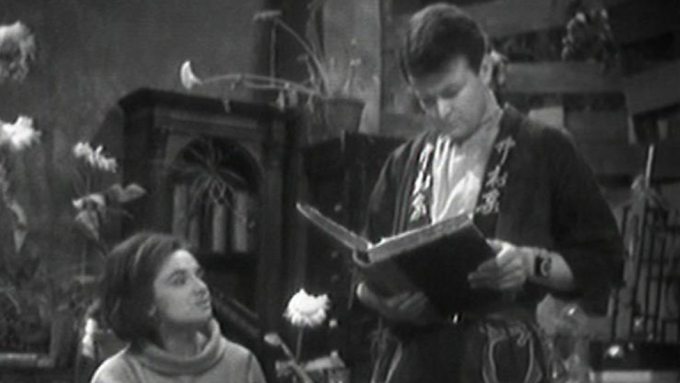
We meet Altos (Robin Phillips) and Sabetha (Katherine Schofield). Both will join the others on the quest (Sabetha is Arbitan’s daughter and Altos is one of Arbitan’s couriers). Their presence is a good thing, especially as Billy’s shortly off for a two-week holiday. They’re fairly stock Terry Nation characters, so how well they come across depends on the actors (who do the best they can).

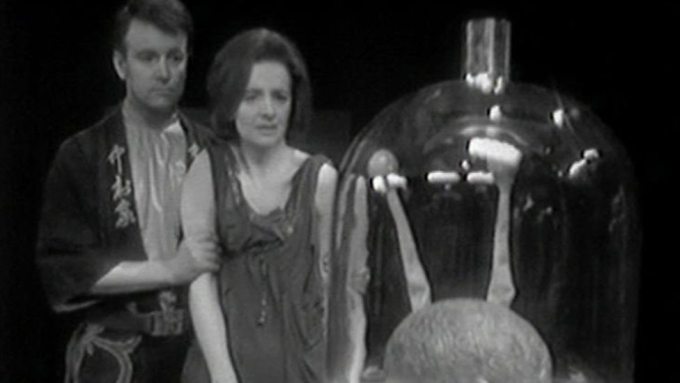
The brains of Morphotron are a little disturbing (especially the way they’re voiced by Heron Carvic) although the black and white picture does rob them of some of their impact. Barbara saves the day by smashing their brain cases and killing them. Or, at least, that was how it was scripted – alas, Jacqueline Hill only managed to smash one of the four cases and there was clearly no time for a retake. Oh well.

The Doctor’s decided to nip ahead and look for the last key (so we won’t be seeing Hartnell for a few weeks) whilst the others head to their next destination.

And it’s a Terry Nation favourite – a dangerous jungle!

Doctor Who – The Keys of Marinus. Episode One – The Sea of Death

sea.jpg

By going from Marco Polo to The Keys of Marinus we’ve taken a trip from the sublime to the ridiculous. That’s not to say that Marinus is bad – it’s good, pulpy fun – but when watching the series sequentially it’s a little jarring to have this sudden shift in tone. But that’s one of Doctor Who‘s great strengths – the fact that every new adventure might play out in a totally different way from the previous one.

You have to admire the ambition of Verity Lambert’s time as producer. It seems that no story was too ambitious to mount (think of the expertly created props in Planet of Giants or the sheer weirdness of The Web Planet) and Marinus is another example of this. With such a tiny budget the notion of creating a new environment in episodes two, three, four and five obviously placed a huge strain on the meagre resources of Ray Cusick. He manages to pull it off quite successfully, although there are times when you do need to be a little forgiving.

The miniatures that open the story are excellent though. The shot of the island – with a model TARDIS (light flashing) then appearing – is a lovely one. The sight of the Voord’s submersibles traversing the sea of acid is less effective though – mainly because it’s painfully obvious they’re being pulled along by wires (and one of them is reluctant to move, so requires a few hard tugs to enable it to reach the beach!)

The sight of the Doctor, Susan, Ian and Barbara surveying this strange new planet shows how far we’ve come since The Daleks. Back then, Ian and Barbara were wracked with fear and doubt (hating the fact that they’d been uprooted from their safe, 20th century existence) but now they regard this bizarre island with nothing more than mild curiosity.

Hartnell’s a bit stumbly over his lines in the early part of the episode (which gives us one of his classic Billyfluffs – “yes, and if you’d had your shoes on, my boy, you could have lent her hers”). This part of the story – as the four examine the beach – is a little problematic. Given that the studio was so small, the beach set couldn’t be particularly large either – which becomes painfully obvious when everybody has to walk around rather slowly.

The moments when they notice the Voord’s submersibles and Arbitan’s building both seem false – there’s no way to imply that they’ve travelled any distance from the TARDIS, so these things must have been under their noses all the time.

I know that examining logical loopholes in a Terry Nation script is a little futile, but the sight of the Voord suit – which contained a man who’s been destroyed by acid – has always irked me. If the suit had a rip then that would have let the acid in, but he was inside a submersible – so that too, must have had a hole (which is rather unlucky really). And if that was the case, wouldn’t the submersible have been full of acid?

Why does Arbitan’s building allow people to enter? You’d have thought it would have made much more sense to keep them outside (and since the Voord don’t seem to have any particular weapons, an impenetrable wall seems as good a barrier as any). Instead, its obvious that although there’s interior defences, sheer force of numbers will allow the Voord to succeed once they do get inside.

It was a bit of a coup to get George Coulouris to appear as Arbitan, although he was no stranger to low-budget British science fiction, having appeared in ITV’s Pathfinder trilogy. He’s the Keeper of the Conscience of Marinus and he explains to the Doctor and his friends exactly what the machine does. “At first, this machine was simply a judge and jury that was never wrong or unfair. And then we added to it, improved on it, made it more and more sophisticated so that finally it became possible to radiate its power and influence the minds of men throughout the planet. They no longer had to decide what was wrong or right. The machine decided for them”.

And Arbitan wants the Doctor’s help to restore the machine’s power! The notion of anybody being denied free will would later become something the Doctor would fight against time and time again (for example, The Masque of Mandragora) so it’s astonishing that he sees nothing wrong with this machine.

Thanks to a handy bit of blackmail with the TARDIS (the Doctor’s still the type of person not prepared to launch into a dangerous adventure just for the fun of it – that will come a little later) Arbitan persuades the four time-travellers to set off for a jaunt around Marinus to recover the four keys that will restore the machine to its former glory.

Blankety Blank – Series One

DW-3ehjX4AAZtsB.jpg

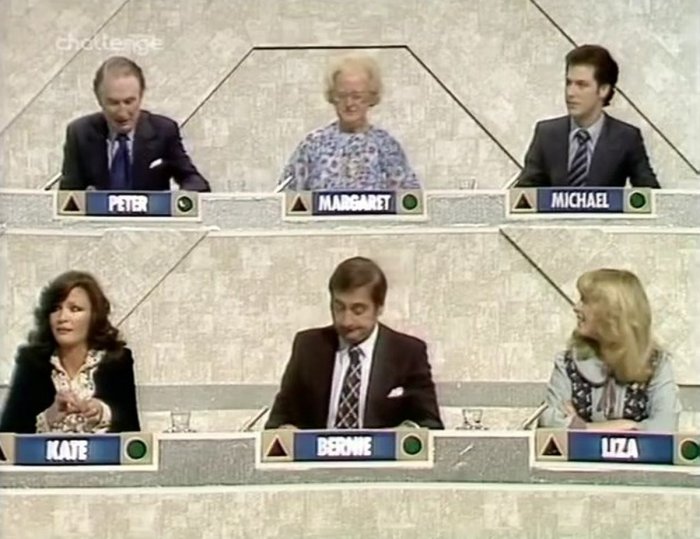
Those hardy souls who’ve been keeping an eye on my Twitter feed recently will have noticed that I’ve been tweeting screencaps from the first series of Blankety Blank (I cater for very niche interests it has to be said ….)

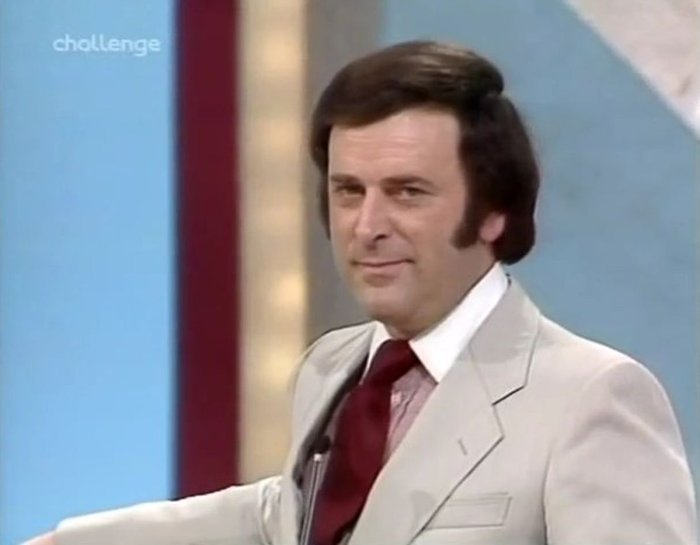
Although I’ve a great deal of time for the later Dawson incarnation, my heart really belongs to the Wogan era of Blankety Blank. And thanks to Challenge broadcasting a selection of shows a few years ago (although they could really do with digging out some more) I’ve now got most of the first series available whenever I need a BB fix.

And I do tend to give them a spin quite regularly. Why should a quiz game, no doubt seen at the time as rather disposable, still work so well for me today? I’ll try and explain …..

The presence of Terry Wogan is an obvious plus. Relaxed and jocular, he’s nevertheless quite happy to be the butt of endless jokes from the more boisterous panel members (Paul Daniels springs to mind). On the one hand this shows a refreshing lack of ego, but Wogan was canny enough to realise that by playing the victim he could gain a good deal of audience sympathy (which he does). But whilst he may be a ham (witness his endless array of funny voices when reading out the questions) he’s an endearing one.

DXW_Pe9XUAAz3mS

The range of guests across this first series is another major plus. There’s plenty of faces that you’d expect to see on a show of this type (Bernie Winters, Lennie Bennett, Lorraine Chase, etc) but it’s the more leftfield choices which really catch the eye. George Baker and Ron Moody are two actors who would appear to be fishes out of water in this sort of environment, but both throw themselves into the spirit of the game with gusto.

The real stars are some of the more regular players. Beryl Reid appears to be gloriously disconnected from reality whilst Peter Jones’ cutting wit always entertains. It’s always good to see Bill Tidy and his cartoons whilst David Jason (not really a quiz game regular outside of BB) seems to acting a part (that of the abrasive quiz game celeb) but he’s still good value.

But goodness, Paul Daniels is irritating. I’ve always been very appreciative of Daniels the magician, but he’s at his impish worst here. Position five, where Daniels sits, quickly came to be seen as the place where you plonk the comic/disruptive element (lest we forget it was Kenny Everett’s favourite seat).

I have to confess that I found the presence of the likes of Shirley Ann Field, Alexandra Bastedo, Diane Keen and Wanda Ventham to be rather pleasing ….

Jon Pertwee only made one appearance during this first series, but it’s a good ‘un. He decided to come along dressed as the Doctor (or maybe that was his usual evening leisurewear) and couldn’t help but aim a sly dig at Who mid way through. It clearly always rankled with him that Tom Baker was more popular in the role than he was.

The Generation Game had already presented us with the spectacle of the contestant as star, but Blankety Blank is more of a throwback to an earlier age. Most of the contestants (bar the odd confident chap – such as the Taxi Driver of the Year) seem more than a little overawed. This is best seen during Terry’s introductory chat, which always tends to be brief and to the point.

Generally Terry has three questions for them – finding out the quaking contestant’s name, the place where they live and then either their job or whether they’re married. For some, even this brief (but very gentle) interrogation seems like a terrible ordeal.

It’s interesting that much later quiz/panel shows have come in for criticism due to the dominance of male players. Blankety Blank never had that problem – the celebrities were always split equally as were the contestants. True, it’s noticeable that Terry is always keen to clutch the younger, female contestants tightly (plus they also run the risk of attracting the attention of the likes of Paul Daniels) but it was the 1970’s, so that sort of treatment was no doubt par for the course.

If you haven’t seen it for a while, then you could do much worse than seeking it out on YouTube. Genuinely entertaining, series one of Blankety Blank is something of a keeper.

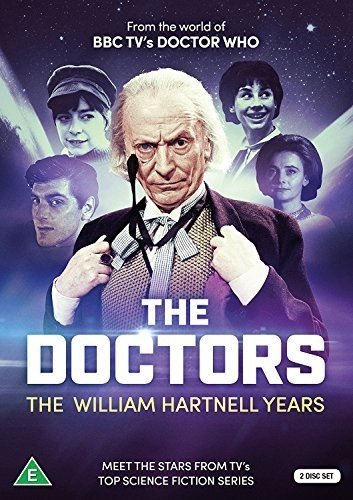
The Doctors – The William Hartnell Years

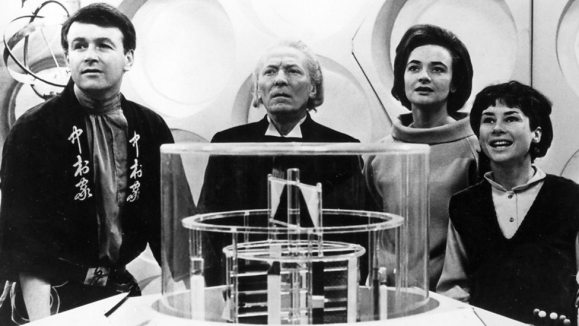
doctors.jpg

Many fans of a certain age will probably remember buying Reeltime’s range of Doctor Who interview videos from the mid-eighties onwards. In the early days, you could expect to pay ten pounds for a half hour interview – today, thanks to Koch Media’s range of re-releases, you can pick up six titles (each running between fifty and sixty minutes) on a double DVD for around the ten pound mark. I love progress ….

Despite some slightly sloppy back cover blurb (Hartnell was the Second Doctor apparently) The Doctors – The William Hartnell Years is a very decent package. It comprises a tribute to Hartnell, another to Jacqueline Hill and four interviews – with Carole Ann Ford, William Russell, Peter Purves and Jackie Lane.

It’s the Hartnell tribute which I’m going to touch upon today. Prior to the original release (in June 1999) Reeltime had already interviewed a number of Hartnell era actors and production personnel and this enabled them to bank comments from a range of interviewees about their memories of the man (with the result that their soundbite thoughts could then be sprinkled throughout the one hour programme).

The main interviewee is Jessica Carney, William Hartnell’s granddaughter, who in 1996 penned a biography of her grandfather. Recorded especially for the original release, Carney’s reminisces fill the bulk of the programme. Offering unique insights into Hartnell’s early life and his emergence as an actor, this documentary would have been much poorer without her.

It’s pleasing that a good chunk of the running time (around the first twenty minutes) is devoted to his pre Who life and career. It’s a reminder that there was a good deal more to him than just Doctor Who whilst Carney’s detail about Hartnell’s life outside acting helps to build a rounded picture of the man.

It’s not always a flattering one though – he gambled heavily on the horses (and rarely won) whilst he also was rather fond of a drink (although he wasn’t, claims Carney, an alcoholic). The likes of Anneke Wills and Michael Craze are also on hand to paint a portrait of Hartnell’s rather desperate final days on Who – when, due to ill health, he was very difficult to deal with. But Carney is able to put this behaviour into context, meaning that it’s difficult to come away from the documentary without a deep feeling of sadness that his time on Doctor Who came to such an awkward end.

But there are plenty of positives too – a typically relaxed and urbane William Russell warmly praises Hartnell’s acting pedigree whilst Maureen O’Brien’s contributions are simply delightful – her deep love for Hartnell shines through very clearly. A shame that, as yet, O’Brien hasn’t recorded her own Myth Makers release. Maybe one day ….

Carole Ann Ford, Verity Lambert, Christopher Barry, Peter Purves, Shaun Sutton, Jack Pitt (extra extraordinary) and Donald Tosh are amongst the others who also pay tribute.

This is a warm appreciation of Hartnell that still stands up well today. Some of the Myth Makers catalogue may have been superseded (certainly in production terms) by the numerous interviews and featurettes included on the DVD range, but since the DVDs never really looked at Hartnell outside of Doctor Who, this one is still of considerable interest.

The Wheeltappers and Shunters Social Club – 31st December 1974

wheel s02e08

Tonight’s Turns:

Design
Charlie Williams
Kristine Sparkle
Brother Lees
Matt Monro
Freddie Garrity

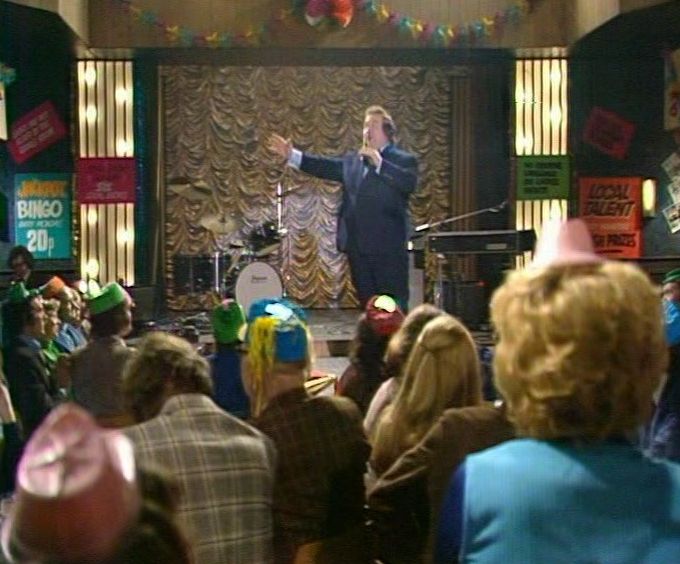
It’s New Years Eve at the Wheeltappers, so decorations, party hats and Auld Lang Syne are all to the fore. But this merriment has to come to an end eventually as it’s time for the turns to do their thing. First up are “one of Great Britain’s top recording groups” Design. Active between 1968 and 1976 (and across a range of record companies including Epic, Capitol and EMI) they may not have had many hits but thanks to a string of television spots (they appeared with Morecambe and Wise, Reg Varney, Vera Lynn, Tommy Cooper, Val Doonican, The Two Ronnies and many others) Design would have been a familiar sight to most the watching audience.

On a slightly melancholy note, it seems that this Wheeltappers performance of Listen to the Music was their final television jaunt. It’s an energetic canter through the song and kicks off proceedings in a decent, upbeat way. Design have a very comprehensive website for those who want to dig a little deeper into their history.

Receiving a typically mocking introduction from Bernard, Charlie Williams’ first point of business when reaching the stage is to thank his fellow comedian (whilst likening him to Humpty Dumpty at the same time). A former professional footballer, when he retired from the game in 1959 he decided to pursue a career as a singer. But when he discovered that his between song banter was going down better than his crooning, he switched to comedy full time.

In one respect he was certainly a trailblazer – black comics were thin to non-existent during the 1970’s – although there’s something slightly uncomfortable about hearing him use the same sort of racist jokes (albeit of a mild variety since this was the Wheelappers) that his fellow, white comics would also have been peddling at the time. But due to his genial, inoffensive nature (“hello flower”) he just about gets away with it.

When Kristina Sparkle’s music career failed to take off, she pursued a parallel career on the impressions show Who Do You Do. Indeed, her Wheeltappers appearance shows that impressions were already part of her act – her spot here culminates with a medley where she mimics the likes of Cilla Black and Lulu. Fairly broadly it has to be said (whilst the way that the cameraman lingers on her rather shapely bottom for several seconds is quite noteworthy).

The Brother Lees mix comedy and impressions. Good to see that they do both Frank Spencer and Tommy Cooper (a seventies impressionist just isn’t a seventies impressionist otherwise). They take it in turns to do various celebs individually – including Roy Orbison and Harold Wilson – whilst also tackling others such as Ken Dodd, Bruce Forsyth and Max Bygraves in triplicate. None of their impressions are stunning, but since their act is so quickfire you don’t really notice – by the time you’ve registered their current impression, they’ve already moved onto the next. An above average turn.

Matt Monro adds a touch of class to proceedings with a trio a well-performed songs – Around The World, Let Me Sing (And I’m Happy) and Born Free. For once, the band all seem to be on the same page and this part of the show slips down very easily.

Normally you’d have expected Matt Monro to have been the headliner, but today there’s one more treat. And what a treat it is. Billed as Freddie and the Nightmares, Freddie Garrity, Frank Carson and Duggie Brown (all dressed as chickens) squawk their way around the stage. Mere words alone can’t do this justice, you simply have to see it (at least once). Colin succinctly sums them up. “We’ve had some bloody rubbish here, but that beats the lot”.

The Wheeltappers and Shunters Social Club – 7th September 1974

wheel s02e07

Tonight’s Turns:

Morton Fraser Harmonica Gang
Mike Reid
David Whitfield
Marion Ryan
Max Wall
Stuart Damon

Through the decades, the basic premise of the Morton Fraser Harmonica Gang never changed – one member of the group (Royston Smith) was somewhat diminutive in size, meaning that he was unable to get his fair share of the limelight (or indeed the microphone). Equal parts slapstick and music, they’re a decent opening act. This Pathe newsreel from 1947 shows them in earlier days.

Given a typically ironic introduction from Bernard, Mike Reid’s opening comment to him is delivered with a singular lack of warmth (“ever thought of lacing your mouth up and using it as a football?”). A genuine spot of needle or were they the best of showbiz mates? Hmm, not sure. Unlike some of the other comedians who appeared at the Wheeltappers, Mike Reid never gave the impression that he wanted the audience to love him. The jokes may be average, but it’s all about the delivery and Reid’s extraordinary vocal gymnastics makes this a memorable spot (and he does a spot of singing too).

David Whitfield, born in North Yorkshire, was a tenor who had a string of hits in Britain during the 1950’s and also cracked the American market at the same time. Straddling the advert break, he’s another good addition to the line up – clearly entertaining the audience not only with his singing but also with his convivial attitude. Drink, Drink, Drink, a whistle of the Colonel Bogey March and The Soldier’s Dream comprise his act today.

Dubbed “the Marilyn Monroe of popular song”, Marion Ryan (like Whitfield and a number of other Wheeltappers acts) had been a big star back in the fifties. She had her own television show and also notched up appearances in The Army Game and Six-Five Special, amongst many others. Multiple Royal Command Performances and guest appearances in specials featuring the likes of Bob Hope and Bing Crosby followed.

Her Wheeltappers appearance proved that she still had a decent singing voice, although having to contend with the house band (who sometimes appear to be pulling in different directions) couldn’t have been that easy. But her performances of I Can’t Give You Anything But Love and The More I See You manage to overcome any musical backing deficiencies.

Bernard. as ever, is charm personified when introducing Max Wall. “Can we have a nice welcome … probably one of his last”. Although Bernard’s genuine look of delight and hearty clapping when Wall takes to the stage suggests that he was only joshing.

Wall’s career encompassed both music hall and the legitimate theatre (appearing in Beckett’s Waiting for Godot and Krapp’s Last Tape, for example). His dead-pan delivery is spot on (although it’s slightly strange that his stream of one-liners has a musical accompaniment – this isn’t really needed). Although one of his gags (“yesterday in the city of Manchester, I saved a lovely girl from being sexually assaulted. I controlled myself”) hasn’t aged well, the rest of his act is a joy.

Best known from The Champions (indeed, Bernard introduces him as such and his walk-on music is Tony Hatch’s familiar theme tune) Stuart Damon bounds onto the stage to entertain the audience with a handful of familiar songs. With a number of Broadway musical appearances under his belt from the 1960s, he obviously knew how to belt out a song. He kicks off with Bad Bad Leroy Brown before finishing up with The Yellow Rose of Texas and a snatch of The Battle Hymn of the Republic (where once again the band, led by Derek Hilton, goes somewhat off-key).

Damon’s performance style is best described as “full-on”. He certainly gives his all (and then some) and also can’t resist moving into the audience from time to time. A curious turn that’s for sure, but whatever else it is, it’s certainly not dull.

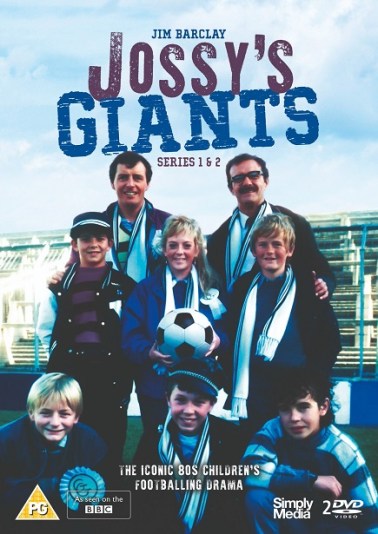
Jossy’s Giants – Series One and Two. Simply Media DVD review

jossy dvd

Sid Waddell (1940 – 2012) might be best remembered as the voice of darts (“the atmosphere is so tense, if Elvis walked in with a portion of chips, you could hear the vinegar sizzle on them”) but there were several other strings to his bow – Jossy’s Giants being one of them.

Graduating from St John’s College, Cambridge with a degree in modern history, Waddell worked in academic circles for a few years before joining Granada Television in 1966 (moving to Yorkshire Television two years later). He produced the news programme Calender as well as creating the well-remembered children’s serial The Flaxton Boys in addition to the cult classic The Indoor League (which is available on DVD for the terminally curious).

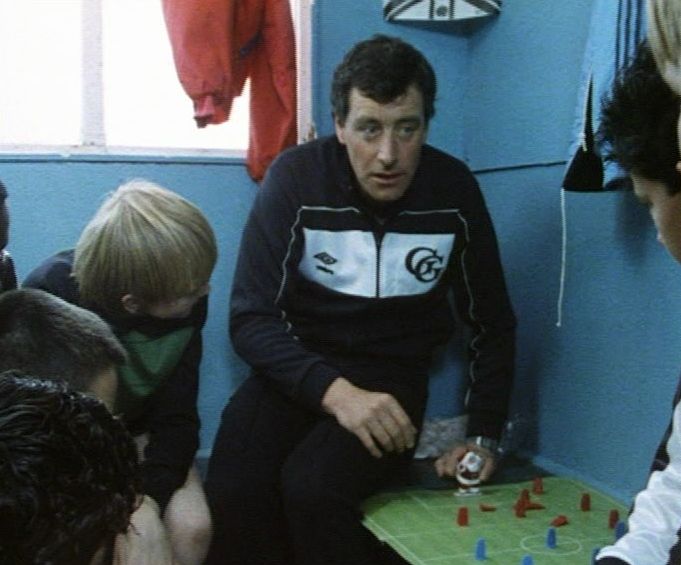
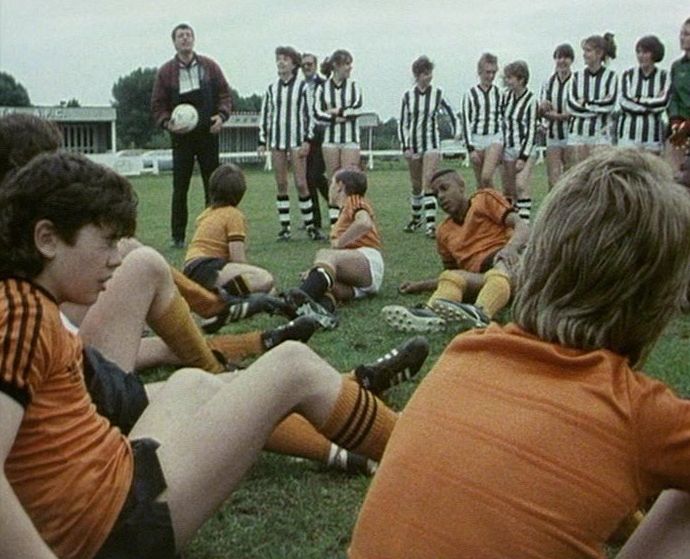
The growth of darts in the late seventies kept him busy, but by the middle of the following decade he was obviously keen to spread his wings, so Jossy’s Giants was born. Running for two series on CBBC during 1986 and 1987 (both of five episodes duration) Jossy’s Giants is centred around a boy’s football team. Led by the charismatic Joswell ‘Jossy’ Blair (Jim Barclay) they may be somewhat lowly ranked when he takes charge, but he has big plans for them.

The series one opener, Hungry for the Game, establishes the parameters of the series. Albert Hanson (Christopher Burgess) is the manager of the beleaguered Glipton Grasshoppers but he’s having trouble moulding them into a cohesive fighting unit. Losing has become too much of a habit and it seems that only a miracle will save them …

But wait, who’s this singing stranger limbering up on the touchline? Why it’s Jossy, who’s been watching the Grasshoppers for twenty minutes and now ambles over to give them the benefit of his advice. He’s a plain-talking man, not backwards in handing out brickbats, but maybe this is precisely what they need.

jossy 01.jpg

We also get some backstory about Jossy. A promising youth player, during his first match for Newcastle United at St James Park he was tackled from behind and never played again. So the disappointment of his own curtailed playing career no doubt makes him keen to mould the next generation of hopefuls.

But what of his raw material? It doesn’t look promising. Goalkeeper Harvey McGuinn (Julian Walsh) seems to have an aversion to handling the ball (a slight problem) and would much rather go ice skating instead. Glenn Rix and Ian ‘Selly’ Sellick (Stuart McGuinness and Ian Shepherd) are the team’s two strikers – but they’re more memorable for their outlandish haircuts than their goal-scoring skills.

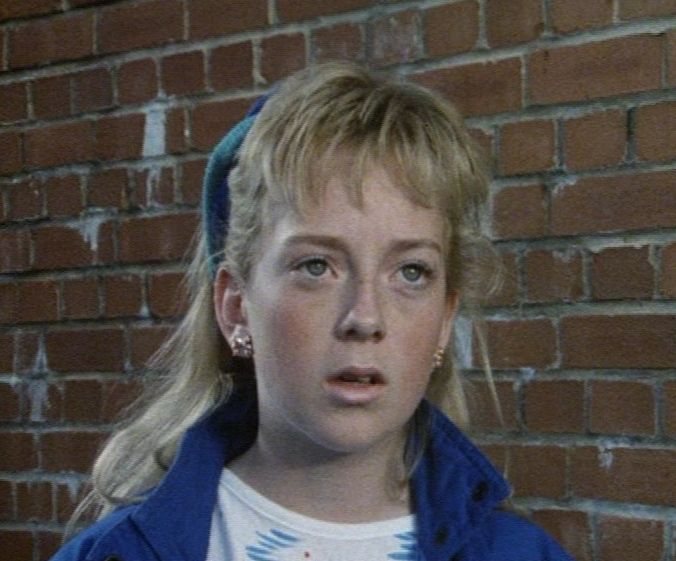
Ross Nelson (Mark Gillard) is the Grasshoppers flair player – but boy, does he know it. Best to say he’s a little conceited, whilst his ambitious bookmaker father, Bob (John Judd), is a complicating factor. Captain Ricky Sweet (Paul Kirkbright) tries to keep it all together whilst their number one fan – Tracey Gaunt (Julie Foy) – is always on hand with a touch of moral support or a magic sponge. You get the impression that she’d like to play for the team, but this seems unlikely. After all, she’s only a girl ….

It falls to Tracey – easily the most proactive of them all – to ask Jossy if he’d be interested in the job of manager. Some of the dialogue is a little eye-opening (when Tracey interrupts Jossy on his jog, she tells him that she’s been waiting for him – only for him to reply that she’s a little young for him). Hard to imagine that sort of implication, even if it’s only made in a subtle way, would be repeated today.

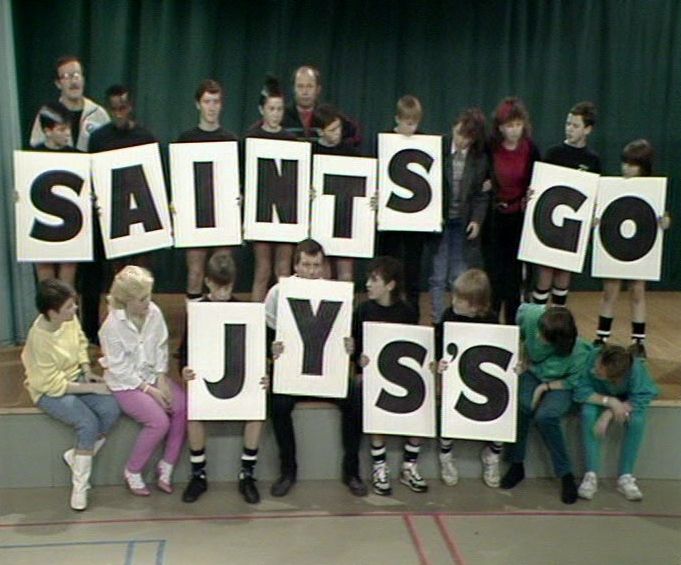
Tracey has a convincing argument for him though. They need a nasty and bossy manager, so Jossy seems ideal! This is a lovely comic moment, typical of Waddell’s style. Eventually Jossy’s worn down and so one change of name later (to the Glipton Giants) he begins to mould them in his image.

jossy 02.jpg

Foul Play sees star player Ross defect to another team (he’s disgusted at not starting their latest five a side match). Of course, Ross’ new team ends up meeting the Giants in the five a side cup final. Can Jossy’s boys win their first trophy? A lovely turn from Tony Melody as the rival manager (he’s something of a martinet) and some lengthy football action (shot on VT and cut very rapidly) are two reasons why this one’s entertaining.

The Battle of St James’ has some delightful moments as Jossy – anxious to prevent the council from redeveloping their football pitch – pays a visit to an amorous female councillor, Glenda Fletcher (Jenny McCracken), who may just be able to help. Mind you, it seems unlikely that when he goes along to her house (for some wine, nibbles and Sade on the stereo) he’d have invited the whole team plus Tracey (and all dressed in balaclavas) to maintain a watching brief outside the window. Never mind, it’s the excuse for some lovely character comedy. Unsurprisingly, the always-sensible Tracey eventually saves the day.

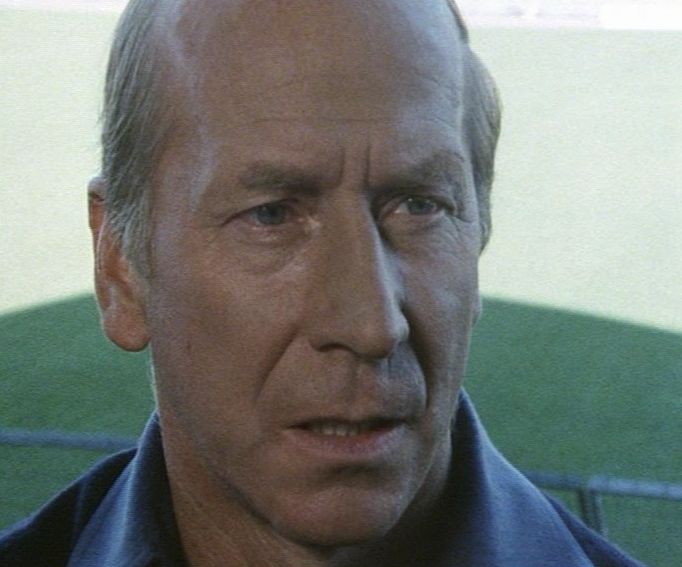
The Promised Land sees Glenda and Tracey take on Jossy and the boys at netball (no prizes for guessing who comes out on top). Although when Glenda is elected vice-chairman of the Giants, her female solidarity with Tracey begins to crumble (“give a dictator an inch” mutters Tracey darkly). Later, Jossy and the lads receive a guided tour of St James’ Park from Bobby Charlton. As a non-actor he’s a little stilted, but it’s still a wonderful scene.

jossy 03.jpg

A couple of familiar faces – Tony Aitken and Harry Towb – guest-star in the series one closer Final Demand. There’s a big match coming up, but Jossy’s gambling (a running thread throughout the series) comes to a head here. If Jossy agrees to throw the cup final, then his gambling debts will be written off. It’s another of those plot-lines that seems a little less than credible, but the performances carry the story along.

The rejigged theme tune at the start of series two indicates that girls will prove to be more of a distraction than they were during the first series. The opening episode, The Glipton Romeos, develops this, as Jossy discovers that all of his team have been bitten by a bug (of the love variety) and so have forsaken the beautiful game. Since Jossy’s only been gone two weeks, clearly the lads are all fast movers.

Mind you, if the concept of Jossy’s Giants as ladykillers is odd, then that’s nothing to the revelation that Jossy and Glenda have become engaged (at the end of series one they were barely speaking to each other!) The love bug means that Jossy has to recruit another team for a match on Saturday (otherwise they’ll lose their ground) and so with Tracey’s assistance rounds up a scratch team of girls ….

jossy 04

Like series one, the second series has a celebrity football cameo. Bryan Robson, no less, who Jossy and the Giants meet before the recording of A Question of Sport. Robson, like Bobby Charlton, is a little wooden, but that’s all part of the fun. It’s also a lovely treat to see inside the Question of Sport studio (and the legendary David Coleman too).

The Italian Take-Away find the Giants tackling a crack Italian team (although the lads are more concerned about the way these smooth-talking foreigners are making eyes at their girls) whilst Home and Away finds Jossy still attempting to corral his distracted team back into shape. Will a trip to the seaside (with plenty of fresh air) do the trick? Or will they find other distractions beside the sea?

The final episode, A Perfect Match, sees Jossy stretched to the limit. There’s a big match on Saturday, but there’s also the little matter of his wedding to Glenda on the same day. What could possibly go wrong?

Most of the youngsters weren’t terribly experienced, acting-wise, and occasionally this shows (some of the performances are a little broad). But they also feel natural and some – especially Julie Foy – handle the material very well, demonstrating real comic flair. Jim Barclay’s Jossy is the glue that binds the series together, the very experienced Christopher Burgess is another plus on the acting front whilst Tony Melody, always a joy, returns for several entertaining appearances during the second series.

Although some of the plotlines are a little unrealistic, the sheer fizz of Sid Waddell’s scripts, the number of good one-liners and the interplay between the cast more than makes up for this. Jossy’s Giants is a comic delight and comes warmly recommended.

Jossy’s Giants is released by Simply Media on the 12th of March 2018, RRP £24.99, and can be ordered directly from Simply here.

jossy 05

The Wheeltappers and Shunters Social Club – 31st August 1974

wheel s02e06

Tonight’s Turns:

The Wheeltappers Waiters
Syd Francis
Peter Gordeno
Dermot O’Brien
Wilma Reading
Enrico
Marty Wilde

There seems to be a lack of turns tonight, so Colin and Bernard are forced to let the Wheeltappers waiters take to the stage. And wouldn’t you know it, they turn out to be a very passable barbershop quartet. The audience seems to enjoy them (as ever, watching the audience is sometimes more entertaining than watching the acts) and they happily join in with a good old singalong. I’m not sure why the waiters all had to sport stick on moustaches though.

Next, Colin – still desperately short on turns – gives a plucky member of the audience, Syd Francis, a chance to shine. He’s a pretty decent trumpet player as well as being a comedian. A memorable contributor to The Comedians, this means that Francis is subjected to a certain amount of heckling from Bernard (who often gave his fellow comics a hard time). A few gags and The Entertainer played on the trumpet. If that’s not entertainment, I don’t know what is.

Peter Gordeno might be best remembered today for his short stint on UFO, but his main talents lay more in the direction of singing, dancing and choreography. Rather oddly introduced by Bernard as “Peter Gardinia” (a genuine mistake or a spot of Bernard’s mickey-taking?) Gordeno can certainly hold a tune (kicking off with One Is One). Mind you, it’s hard not to focus on his appearance just as much as his vocal skills – he’s sporting an impressive head of hair (complete with massive sideburns) as well as a frilly white shirt and medallion.

He then brings on four attractive young ladies for another song (I Taught Them Everything They Know) which then merges into When I’m Sixty Four and Rock-a-Bye Your Baby With A Dixie Melody. With Gordeno displaying a well-developed sense of humour, this is a pretty long spot but also one of the more entertaining seen so far during the second series. For those looking for more info on him, Gordeno’s Guardian obituary makes for interesting reading.

Variety is the spice of life at the Wheeltappers, so next up is Dermot O’Brien, an Irish accordion player who leads his band through a spirited rendition of Orange Blossom Special. The ladies in the front row seem very taken with this, as they’re clapping for all they’re worth.

The music continues with Wilma Reading, who treats the audience to The Ends of the Earth. Barely wearing a blue dress, she’s an energetic performer who seems to draw the best out of the house band (especially the bongo player). She certainly makes a memorable impression with her three minutes.

Up next is Enrico, a diminutive juggler. Dressed as a clown, he’s a more than decent spesh act and helps to keep the audience warmed up before the appearance of the headliner.

One of the original wave of British rock’n’rollers (and still going strong today) Marty Wilde offers us a whistle-stop trot through four classic songs (Mean Woman Blues/Rubber Ball/Teenager In Love/Oh Boy) within the space of his six minutes. The ladies in the front row seem particularly energised by his turn – especially Oh Boy. A cracking end to a very strong show.

The Wheeltappers and Shunters Social Club – 24th August 1974

wheel s02e05

Tonight’s Turns:

Sheps Banjo Boys
Dave Evans
Rain featuring Stephanie De Sykes
Malcolm Roberts
Johnny Hackett
The Kaye Sisters

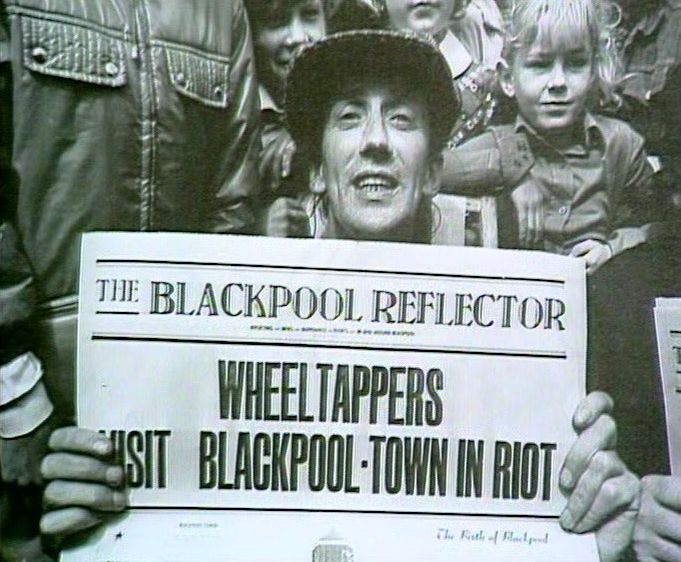
The Wheeltappers hits the road today, as they visit Blackpool. We open with a lovely series of black and white stills of Colin and Bernard enjoying the various Blackpool amenities before crossing over to the Layton Institute (Affiliated) where the Wheeltappers faithful have set up for the night.

Shep’s Banjo Boys, still going strong today, keep the audience entertained with a burst of banjo favourites. I wouldn’t have minded a bit more from them, but as always the turns tend to be wheeled on and wheeled off.

Unless I’ve got him mixed up with another Dave Evans, then the young impressionist second on the bill here is the father of Lee Evans. Will Dave be giving us Tommy Cooper and Frank Spencer (as all 1970’s impressionists had to do?). He starts off with a pretty decent Eric Morecambe before moving onto Groucho Marx (you can’t beat the classics). That he’s got a slightly different list of victims from many of his peers is demonstrated when he then takes off Acker Bilk (he may not sound too much like him, but he can handle a clarinet quite well). So no Frank Spencer and Tommy Cooper then, but a more than decent spot.

This year – 1974 – Stephanie De Sykes hit number two with the song Born With A Smile On Your Face (penned by Simon May). She sings it here, with vocal support from Rain (three gentleman who all wear shirts with very wide collars). Very nice performance too, although not for the first time it’s an irritation that a good song is faded out (here because it’s time for the adverts). Unusually, De Sykes and Rain continue after the break (once again though, we don’t get the full song as this one is faded up). Rain take more of a prominent role on Golden Day, the theme song to The Golden Shot (written by Lyndsey de Paul and Barry Blue).

Bernard cajoles Colin up onto the stage. The first part of his act is basically what he does throughout all the other shows – reading out messages and resolutions from the committee – the difference here that he’s standing up on the stage rather than sitting down and ringing his bell. Instead, Bernard’s the one sitting down and enjoying himself enormously by lobbing several well-timed heckles Colin’s way! But Colin then does something different, singing With My Little Stick of Blackpool Rock. Crompton does a very fair impression of George Formby, it has to be said.

Malcolm Roberts had three hit singles in the late sixties, although like so many who appeared on the Wheeltappers he found chart success harder to come by in the seventies and beyond. Today he performs She (which was his current single). From such a brief appearance it’s hard to get too much of an impression of him, but it seems that he carved out a decent living in clubland and also went on to have a few Eurovision adventures. This website will enable the curious to dig a little deeper.

Johnny Hackett notched up a series of appearances on various series during the 1960’s and 1970’s (including The Good Old Days, Dee Time and David Nixon’s Magic Box). Mixing comedy and music, he’s a convivial type – not exactly my thing, but he’s amiable enough.

The Kaye Sisters (who weren’t actually sisters, what a swizz!) had several hits during the late fifties and early sixties. Their spot is quite jolly, although since they’re the headliners it does seem a little stingy to give them less than three minutes.

The Wheeltappers and Shunters Social Club – 17th August 1974

wheel s02e04

Tonight’s Turns:

Aphrodite and the Grecian Kings
Los Magicos
The Crickets
The Grumbleweeds
Yana
Johnnie Ray

Unusually, today Bernard gets an introduction at the top of the show (normally, we cut into his song when it’s already in full swing). The audience have clearly been primed to wave red cards at him whilst he’s in mid-croon (the reason for this is lost in the mists of time).

With a name like Aphrodite and the Grecian Kings you’re primed for something special – and they don’t disappoint. There’s three chaps – all visions in white – whilst a blond lady sings a song in Greek (at least to begin with). When she’s not singing she gyrates around in a fashion that I’m sure the males in the audience appreciated.

Are they being serious or is it a comedy act? I’d say the latter, but with some of the turns you get at the Wheeltappers you can never be sure. It’s a rum old opening that’s for sure – when this lady sings, nobody sleeps.

Magic’s up next, with Los Magicos taking to the stage. He’s dressed in a stunning white suit, complete with flares, whilst his female helper has a similar (if somewhat abbreviated) outfit. He’s a dove man – he makes the birds appear, then he makes them disappear. Scarves and more birds (for variety, an owl) are also pulled out of a box. Fair to say that these are only modest thrills.

After the fairly average entertainment derived from the first two acts, things pick up with the arrival of the Crickets. Although a number of new members had joined during the 1960’s, the presence of Jerry Allison was a direct link to Buddy Holly which therefore makes them slightly more than just another covers band. It’s only a short spot – two songs – but it’s pretty decent.

The conceit of the Grumbleweeds’ act is that their stage clothes haven’t turned up, so they’ve been forced to use whatever they can find backstage. This includes a Musketeers costume, what seems at first to be a football kit (but turns out to be a dress), a nappy(!), a school uniform and a swimming costume. Their song routine – based on endless repetition – isn’t subtle but it’s funnier than many of the comedians who have graced the Wheeltapppers stage so far.

Given that they clearly had some visual flair, it’s slightly surprising that they never really seemed to be at their best on television (their 1980’s ITV series was only fitfully amusing). Instead it was radio where they made their mark.

The Wheeltappers, no doubt reflecting the reality of clubland, tended to feature a fair few acts who had been famous once upon a time but who had then faded into obscurity. Yana is an excellent example of this. At the height of her fame – in the late 1950’s – she had her own BBC television show and also crossed over to America, appearing with both Ed Sullivan and Bob Hope, but by the following decade she had become yesterday’s woman.

So by 1974, possibly only the older members of the audience (which, luckily, tended to be most of them) would have remembered her. Yana’s style was to breathe out a song (like Move Over Darling) whilst fondling and kissing various men in the audience. She also invites one lucky chap onstage, where he gets right into the swing of things (jigging in time to the music like nobody’s business). Possibly he was a plant, but I like to think he was simply an ordinary punter who had one drink too many. This is an odd little sequence, but one that also perfectly sums up the Wheeltappers experience.

Another blast from the past – Johnnie Ray – is today’s top of the bill. Cited by Tony Bennett as being the true father of rock ‘n’ roll, he rattles through a few familiar songs (most notably his UK number one, Just Walking in the Rain). It’s a slightly wonky listen, mainly because the regular house band aren’t the tightest, but Ray’s star quality – like Yana, he works the crowd well – shines through.

The Wheeltappers and Shunters Social Club – 10th August 1974

wheel s02e03-01

Tonight’s Turns:

Remember This
Duggie Brown
The Multichords
The Playmates
Roy Orbison

Remember This open the show with a bracing blast of Rock ‘n’ Roll nostalgia. It seems odd to think that by the mid seventies this type of music had already become a period piece, but I guess that’s musical trends for you. The band are dressed like a scruffy version of Showaddywaddy and if their energetic performance isn’t eye-catching enough then there’s two dancers – a man and a woman – placed centre stage to inject a little more oomph. It’s good stuff (Rock ‘n’ Roll Music is the main song they cover) although Colin Crompton (reading the Beano) seems less impressed with them ….

An old face from The Comedians, Duggie Brown faces attacks on two fronts – Bernard on the left and Colin on the right. Presumably his put-downs to them were off the cuff (like all club comedians he no doubt had to face down his fair share of hecklers). That’s easily the best part of his spot, as his gags are fairly ordinary (but his confidence and sheer personality enables him to make a decent impression). Since there’s only five acts today, this allows some turns to get a little longer – Brown is one recipient of this generosity as he’s able to close his act with a fairly straight song at the piano.

The Multichords are up after the commercial break. There’s two of them, playing their harmonicas for all they’re worth (and not just through their mouths either). Don’t worry, it’s nothing too terrible – one of them elects to play Wooden Heart via their nose. This is the sort of act I find fascinating – not least since you can’t help but wonder whether they were able to sustain a decent living from it. I’ve not been able to find out too much about them, but my researches continue.

Described by Bernard as a “knockabout act”, the first member of the Playmates (she’s blonde and wearing very little) draws an appreciative ripple from the audience. The other playmate – he’s small and goofy – isn’t likely to stir any hearts but the incongruity of their partnership is no doubt what makes it work. There’s a few decent acrobatic moves thrown in, but it’s mainly an excuse for the man to race around the audience prodding the females. Well, it’s a living.

Quite what Roy Orbison, waiting backstage, would have made of this is anybody’s guess but by the mid seventies he would have been quite familiar with the typical clubland bill. After the hits dried up, he made a decent living (if not an artistically satisfying one) by touring venues like the Wheeltappers.

Needless to say, The Big O is the class act of tonight’s show. Gifted ten minutes (a generous amount of time for this era of the programme) he sings three songs – Lana, Sweet Mama Blue (the current single) and Oh Pretty Woman. It’s just annoying that Oh Pretty Woman plays over the credits (and is cut short as well). Baffling that Orbison’s biggest hit received this treatment – maybe in retrospect trimming a few minutes from Duggie Brown’s act would have been the sensible move.

The Wheeltappers and Shunters Social Club – 3rd August 1974

wheel s02e02

Tonight’s Turns:

Amazing Bavarian Stompers
David Copperfield
Barbara Sharon
Susan Maughan
Paul Wynter
Winifred Atwell

What can you say about the Amazing Bavarian Stompers? If you like oom-pah music then this is the act for you. They’re still going strong today, with a website and Twitter feel, which obviously suggests there’s a market for this sort of thing. The Wheeltappers crowd, pints in one hand and pennies in the other, seem to be enjoying themselves tremendously as they use the coins to tap out a relentless beat.

The one from Three of a Kind who wasn’t Lenny Henry or Tracy Ullman, David Copperfield has tended to exist in the shadows of his more illustrious later co-stars, but his solo spot here (which would seem to be his earliest television appearance) isn’t too shabby at all. A mixture of music, comedy, magic and ventriloquism, it’s very decent. His red suit is nice as well.

As has happened before, when it’s adverts time Colin Crompton announces that they’ll entertain themselves with a nice game of bingo. But this is only a cover story, as they’re really enjoying the stripper (Barbara Sharon) and it’s only due to a spot of miscuing from the vision mixer that the punters at home receive a flash – as it were – of anything titillating.

Like a number of other Wheeltappers acts, Susan Maughan’s career peaked in the 1960’s with success a little harder to find in the following decades. She’s still able to entertain the packed crowd though and her two songs are passable fare.

Twice a winner of the Mr Universe contest, Paul Wynter’s appearance has to be one of the strangest seen so far on the Wheeltappers. He begins by flexing his impressive muscles and then moves on to bending a nail. It’s a pity that the camera isn’t able to pick up the bent nail, so we have to assume from the warm applause that he actually did bend it. Wynter then uses a karate chop on a piece of wood, shattering it in two, before bending an iron bar. Well it was the 1970’s, so possibly people were more easily impressed. As Wynter doesn’t speak, it’s down to Colin Crompton to keep the audience informed (“he’s now pulling a funny face”).

Pianists are obviously a big draw at the Wheeltappers. Last week it was Russ Conway, today it’s Winifred Atwell who tickles the ivories. She had a string of instrumental hits throughout the 1950’s and as her performance here demonstrates, still had the magic touch. An entertaining end to a bill which is a typical Wheeltappers mixed-bag.