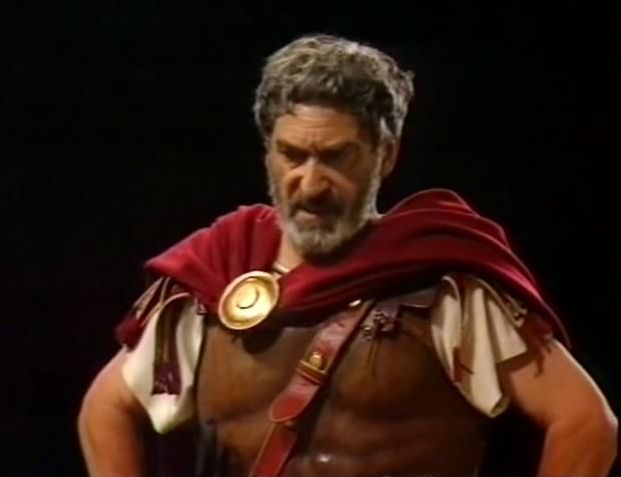
The Cleopatras – Episode Three

cleopatras 03.jpg

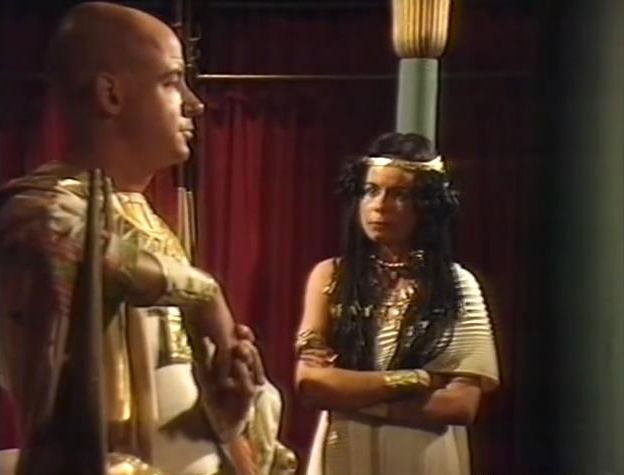
Episode three opens with Theodotus continuing to teach the young Cleopatra about the history of her strange and bloodthirsty family. At this point in his story, Pot Belly is approaching death. I’m going to miss him (and Richard Griffiths too of course). Griffiths has been a constant source of delight during the series so far, thanks to the entertaining dialogue provided by Philip Mackie. His opening words here are a case in point. “I wonder if I ought to be dying more publically? In a more public place, under an awning with a vast multitude hanging on my every word. Filled with admiration at the sight of how nobly a truly good man could die.”

Griffiths, like the rest of the cast, didn’t make any effort to do “noble” acting. Instead, everyone plays in a modern conversational style, which is quite unlike, say, the more stilted delivery of Biblical classics from the Golden Age of Hollywood. This may be another reason, along with the camera effects and impressionistic sets, why the series received such a muted reception.  The Cleopatras doesn’t feel like the traditional historical drama that many were no doubt expecting and it’s mixture of ripe acting and dark humour seemed to have caught many by surprise.  Make no doubt, it is a funny series.  Some may contend that it’s unintentionally so, but I think that both Philip Mackie and director John Frankau knew exactly what they were doing.

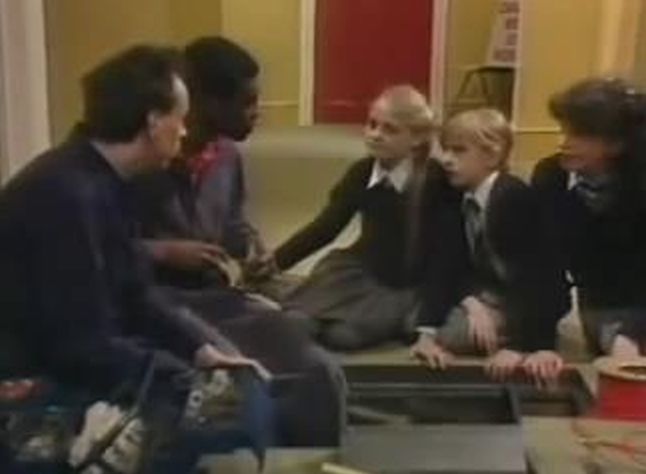
The scene where Cleopatra’s eldest daughter (Sue Holderness) and her husband Chickpea (David Horovitch) visit the dying Pot Belly is a good case in point.  They bound into the room, hand in hand, to ask how he is.  When he tells them that he’s dying, she bursts into hysterics.  Her histrionics are so utterly false (and Pot Belly isn’t taken in for a moment) that you can view this moment one of two ways – either Sue Holderness was indulging in some ripe overacting or she was playing to the script (which strongly implies that everybody’s constantly playing games with everybody else, but etiquette means that they can’t publicly say so).

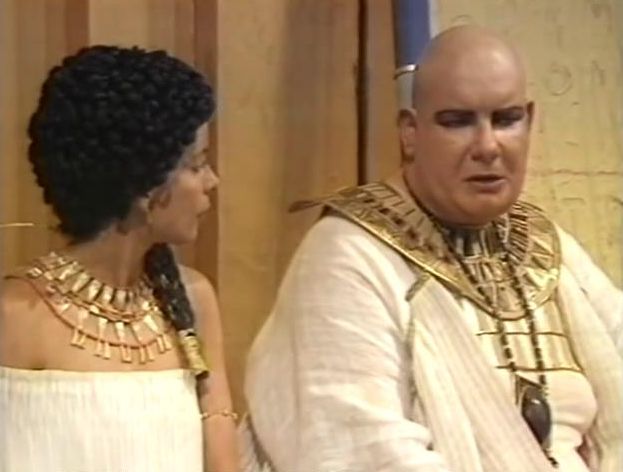
It’s highly entertaining to see Marlene and Chief Inspector Slack in such unusual garb and there’s some other familiar faces who find themselves with shaven heads and remarkable – and brief – costumes.  Alexander (Ian McNeice) is another of Pot Belly’s sons who, like Chickpea, has his eyes on the throne.

Pot Belly’s dying words (his death scene is another hysterical moment) creates a storm of controversy, which is exactly what he wished.  He commands his wife to choose which of their two sons should rule.  By right of succession the throne belongs to Chickpea, but Cleopatra chooses Alexander instead.  This sparks a storm of protest and Cleopatra is forced to back down.  The discontent of the mob and their delight when Chickpea is confirmed as ruler is largely achieved via sound effects.  It’s a theatrical – and low budget – solution, but it works.

I love David Horovitch’s impossibly wet Chickpea.  Horovitch plays him as a thoroughly decent sort of chap, which means he’s totally out of his depth in Cleopatra’s court, where everybody seems to be plotting against everybody else.  Eventually Cleopatra orders his death and sets the mob on him.  His reaction when he’s told this by a loyal servant is another comic moment – he changes in a minute from an autocratic ruler to a lost child.

If The Cleopatras lacks the depth of I, Claudius (characters feel more insubstantial) then there’s still plenty of incidental pleasures to be enjoyed along the way.  Ian McNeice’s impressive dancing at the end of this episode being a case in point!

The Cleopatras – Episode Two

cleopatras 02

The studio-bound nature of the series meant that it would have been difficult to illustrate battles or major upheavals convincingly, so The Cleopatras tended not to bother.  With Theodotus on hand to push the story along you just have to fill in the blanks yourself.

So at the end of episode one Cleopatra’s mother ruled Egypt, whilst Cleopatra and Pot Belly were exiles.  In the space of a few seconds at the start of this episode Theodotus informs us of a total reversal – Cleopatra and Pot Belly have regained the throne whilst Cleopatra’s mother is the one who now finds herself in exile – in Syria.

Needless to say, she’s not best pleased about it and Elizabeth Shepherd continues to wring every last drop of emotion from the role.  I can’t honestly say it’s good acting, but she’s highly entertaining.

One of the joys of the series is that there’s a constant stream of first-rate actors who pop up for an episode or two.  Due to the amount of fake facial hair (for the men, anyway) it’s sometimes hard to identity them immediately, but their voices tend to be a giveaway.  One notable new arrival is Stephen Greif as Demetrius, the King of Syria.  Greif’s excellent as the weak-willed king, easily manipulated by Cleopatra’s mother into attempting to invade Egypt and dispose Pot Belly.  It’s not a success, alas, and Demetrius finds himself deserted by his men and then executed.

Demetrius’ widow, Cleopatra Thea (Caroline Mortimer), is a chip off the old family block.  Her elder son Seleucus (Nicholas Greake) has automatically ascended to the throne, but this doesn’t please her.  Her younger son, Grypus (James Aubrey), seems to be much more malleable, so she decides to poison Seleucus.  She does so in such a blatant way that it’s more than a little surprising that nobody seems to twig.

Richard Griffiths continues to impress.  Pot Belly is a curious mixture of diplomat and tyrant (somewhat similar to Brian Blessed’s Augustus in I, Claudius).  He agrees to Cleopatra’s mother’s request to return as Queen for one key reason.  “The people are tired of chaos. Oh it’s fun for a time, throwing people out of windows, rioting, looting, burning, refusing taxes. But eventually the people long for peace. And what better symbol can there be of the return to orderly life than the reconciliation of those two great enemies, their King and Queen?”

A peculiarity of the series is that although years have passed since the events of the previous episode, nobody looks any older.  This is particularly noticeable when we see Cleopatra and Pot Belly’s children, who are now grown up. When Cleopatra’s daughters look as old as Cleopatra herself it’s slightly odd.  She does have a little bit of make-up applied in the next episode, when Cleopatra is an old woman, but Pot Belly (on his deathbed) looks pretty much as he did in the first episode.

Most amusing picture transition in the series so far occurs forty five minutes in, as the picture contracts into a ball and appears to disappear down Cleopatra Thea’s throat!

Simply Media BBC DVD releases for April 2016. The Ginger Tree, Charters & Caldicott, Next of Kin and Nature Boy

Simply Media continues to be one of the few companies to mine the BBC archives and they’ll be adding another four releases to their increasing range of BBC DVDs next month.

The Ginger Tree, Charters and Caldicott, Next of Kin and Nature Boy are four very different series which should offer something for most tastes.  I have to confess that I’m most looking forward to Charters and Caldicott, thanks to the wonderful combination of Robin Bailey and Michael Aldridge (although the supporting cast, including Tessa Peake-Jones and Caroline Blakiston, is very decent as well).

All four DVDs are due to be released on the 25th of April 2016 and below are some more details on each of them.

ginger

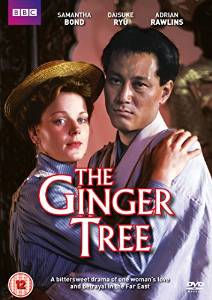
The Ginger Tree, broadcast in 1989, is a historical drama set in 1903.  It stars Samantha Bond as a young Scottish woman, Mary MacKenzie, who travels to Manchuria to marry a British army officer.  But she grows disenchanted and begins an affair with a married Japanese nobleman, Count Kentaro Kurihama (Daisuke Ryu).  After bearing his child, she finds herself ostracised by Japanese society.  DVD Review.

Title: The Ginger Tree. Certificate: 12
Release Date: 25 April 2016. Cat No: 166312
Running Time: 240 mins approx. RRP: £19.99


cc

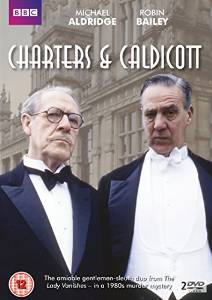
Robin Bailey and Michael Aldridge star as Charters and Caldicott.  The characters first appeared in Alfred Hitchcock’s film adaptation of The Lady Vanishes, although this serial finds them living in the modern (1985) world.  After a young girl is found murdered in Caldicott’s flat, the pair turn detective to solve what turns out to be a complex mystery.  DVD Review.

Title: Charters and Caldicott. Certificate: 12
Release Date: 25 April 2016. Cat No: 166313
Running Time: 300 mins approx. RRP: £24.99


kin

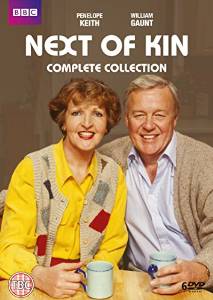
Sitcom stalwarts Penelope Keith and William Gaunt take the lead roles in Next of Kin which ran for three series during 1995 and 1997 (all the episodes are included on this DVD).  Maggie and Andrew Prentice are forced to put their plans for an early retirement on hold when they reluctantly find themselves – following the death of their son – the guardians of their grandchildren.  Gaunt was no stranger to the family sitcom (having starred in No Place Like Home) but the unusual theme of this series makes it worth a look.  Although it managed three series (not unusual for even middling sitcoms back then) it seems to have disappeared without trace since, so it’ll be interesting to see how it stands up today.  DVD Review.

Title: Next of Kin: The Complete Collection Series 1-3). Certificate: 12
Release Date: 25 April 2016. Cat No: 166314
Running Time: 660 mins approx. RRP: £39.99


nature

David (Lee Ingleby) only has vague memories of his father (played by Paul McGann) who left home when he was a young child.  Now seventeen, David (endowed with a love of nature thanks to his father’s influence) vows to track him down.  Along the way he finds love, pain and a new life as an environmental campaigner.  Nature Boy, broadcast in 2000, won the Royal Television Society Award for Best Drama in 2001.  DVD Review.

Title: Nature Boy. Certificate: 15
Release Date: 25 April 2016. Cat No: 166412
Running Time: 240 mins approx. RRP: £24.99

The Cleopatras – Episode One

cleopatras 01

They don’t make them like this any more.  Indeed, they didn’t make them like this very often back then.

The Cleopatras, written by Philip Mackie and directed by John Frankau, is a series that delights in its own artifice.  At a time (1983) when British television was slowly moving towards film as the dominant medium for drama, The Cleopatras was an all videotape production which used every available video effect to create a unique atmosphere.

The series makes its intentions clear in the first few minutes – various picture dissolves and wipes (which are also used throughout the eight episodes) instantly tell us that this isn’t a run-of-the-mill production.  The sets at times appear more impressionistic than realistic and doses of CSO help to heighten the unreality.

All this helps to place the series firmly in the camp of electronic theatre rather than the naturalistic world of filmic drama (such as Tinker, Tailor, Soldier, Spy) which was increasing in popularity at this time.  Serials like I, Claudius had shown that videotaped historical drama could be compelling, but The Cleopatras – although it had a similar mix of power-struggles, incest and murder – never had the same impact.

Looking at it today, you have to be able to embrace the production (or at least to tolerate it) and ignore some of the riper overacting.  If you can do that then it’s possible to derive a considerable amount of enjoyment from all eight episodes.  And if not, you can at least admire their ambition.  Today, many dramas look pretty much identical, but for better or worse you could never say that about The Cleopatras.

Philip Mackie had previously penned a six part series called The Caesars (Granada, 1968) and it’s possible to regard The Cleopatras as something of a companion piece (both were studio-bound productions, although The Caesars didn’t indulge in trippy camera effects).

Although Mackie’s name isn’t that well known today (even amongst the select band of archive television enthusiasts) there’s plenty of interest to be found in his cv.  The Naked Civil Servant is one of his most high-profile screenplays, whilst I’d strongly recommend An Englishman’s Castle, a taut three-parter starring Kenneth More, set in a Britain where the Germans had, thirty years earlier, won WW2.

The premise of The Cleopatras is simple.  Theodotus (Graham Crowden) is instructing the latest Cleopatra (Michelle Newell) about the history of her family.  He tells her (and us of course) that the kings of Egypt, who are all called Ptolemy, almost always marry Queens called Cleopatra. The latest Cleopatra will ascend to the throne when her father dies and she marries her brother. Otherwise how will the royal blood line be kept pure? But before that happens Theodotus takes some time (the first five episodes in fact) to tell her the histories of some of her famous predecessors.

We travel back to 145 BC for the first of these history lessons. It opens with Cleopatra’s mother (played by Elizabeth Shepherd – doomed to be known as the actress who was Emma Peel for a very short while) who’s emoting in a most peculiar fashion. She tells her daughter (Michelle Newell, who plays all the Cleopatras) that her father is dead. We briefly see his death scene, but it’s presented in the characteristically abstract way that’s a feature of the series.

Eupator (Gary Carp) is in line for the throne, but Pot Belly (Richard Griffiths) is chosen ahead of him by Cleopatra’s mother. “He’s revolting. He’s so fat and horrible” says Cleopatra in disbelief. Griffiths is great fun and a highlight of these early episodes.

Eupator doesn’t last long (a mercy since Carp’s very shrill). He’s murdered in his bed in a scene that’s just as artificial as the rest of the series. We don’t see his murderers, but we hear one of them, although the voice sounds like it’s been dubbed on. Why this would be I don’t know, but it creates a strange sense of disconnection.

This continues when Theodotus pops up to explain the current state of the plot. Graham Crowden appears in a small box which then increases to fill the size of the screen. Once he’s imparted a vital nugget of information the box then shrinks before vanishing.

Cleopatra’s clearly power-hungry. She attempts to resist Pot Belly’s attentions, but ends up being raped by him. It might be expected that she’d treat him with contempt afterwards, but that’s not the case. When she tells him she’s pregnant it’s plain she’s delighted as it gives her a chance to move closer to the throne.

Cleopatra manages to easily dislodge her mother and proves to be an ideal helpmate for Pot Belly. This is demonstrated when they both attempt to bribe a visiting Roman official called Scipio Africanus (Geoffrey Whitehead). Pot Belly offers him gold (which is refused) and then a selection of topless serving girls (there’s an awful lot of bare breasts in this series, maybe one reason why it achieved a certain notoriety). When Scipio declines them, Pot Belly desperately wonders if he’d fancy boys instead! A nice comic moment from Griffiths.

There’s predictable familial strife ahead as Cleopatra’s mother doesn’t intend to lose her position of power. Cleopatra and Pot Belly are forced to flee Egypt, but we haven’t heard the last of them. And the final image – Cleopatra and Pot Belly send Cleopatra’s mother a memorable birthday present – ends the episode in an unforgettable way.

Grange Hill. Series Five – Episode Eighteen

grange hill s05e18

Written by Alan Janes.  Tx 5th March 1982

The end of term exams offers Pogo a sure-fire way to make some money.  Which unsurprisingly ends in total disaster.

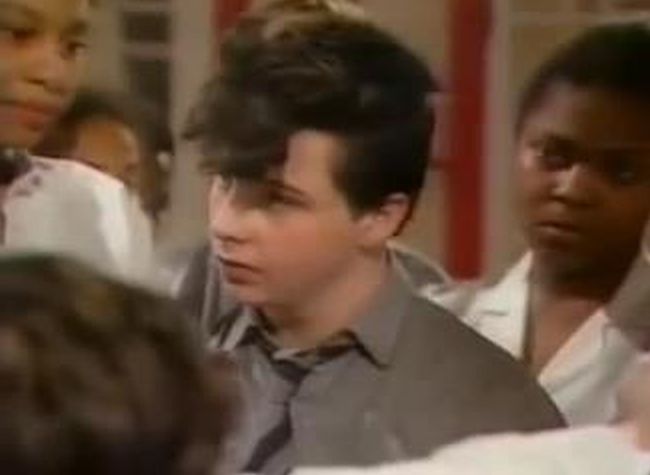
Pogo’s always looking for a way to buck the system.  In one exam we see him with possible answers written on his shirt cuffs, but he knows that the only way to achieve fool-proof results is to know the questions in advance.  His prayers seem to have been answered when he stumbles on some exam papers in an unlocked cabinet.  Along with Stewpot they sell the answers at ten pence a time, written on the inside of chewing gum paper (sweets are allowed in the exams so this is an ideal way not to attract attention).

If the punchline isn’t hard to guess (Pogo had found the previous years exam papers and therefore all his hard work was for nothing) it doesn’t diminish the comedy, as everybody looks increasingly puzzled as to why the answers supplied by Pogo bear no relation to the questions!

A more dramatic beat is provided when Claire comes under increasing pressure from her mother to do well in all the exams.  Although these end of term exams aren’t terribly important in the general scheme of things, to Mrs Scott they are.  Grange Hill would understandably recycle plots down the years, mainly because they were still relevant to each new generation of children tuning in.  So Mrs Scott bears a strong resemblance to Mrs MacMahon, as both failed to see that whilst the pressure of the exams was bad enough, the additional pressure they were heaping on their children only served to make matters worse.  And Claire’s bedroom, where she spends her time miserably attempting to drum some facts into her head, simply screams early eighties – there’s a poster of Adam Ant on the wall, whilst Duran Duran and the Human League play on the radio.

Elsewhere, the relationship between Mr Sutcliffe and Miss Mooney seems to be finally off.  Mr Sutcliffe clearly had commitment issues as he was much more interested in going to see a film than looking for a flat.  I’m assuming that it was already known that James Wynn wouldn’t be returning for series six (although many characters – both pupils and staff – tended to get written out in a much more unceremonious fashion.  Usually by the audience being told they’d left at the start of the first episode of the next series).

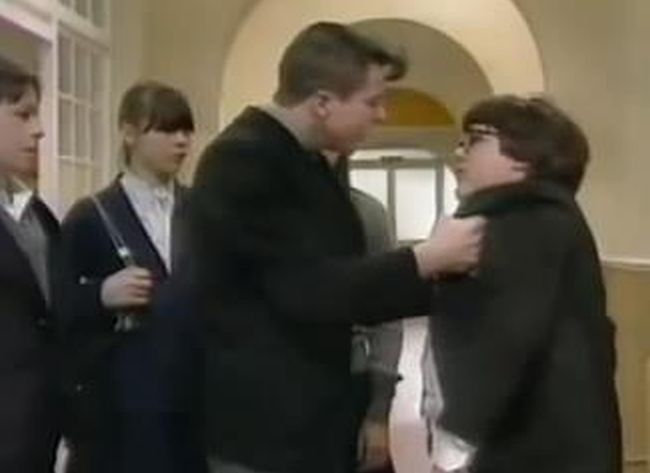
Perhaps the most noteworthy aspect of the episode is the way that all the class comes together at the end to confront Gripper.  One of the mysteries of the series to date is why this hasn’t happened very often before – it’s true that Gripper’s an intimidating figure, but weight of numbers would be able to defeat him.  There’s a nice camera pan from Gripper’s viewpoint as he observes the ring of faces surrounding him.

It’s an interesting point on which to close what has been a strong and consistent series.  Gripper will be back next year, but his targets will have changed and it’ll herald a run of episodes that rank with the best that Grange Hill ever produced.

Grange Hill. Series Five – Episode Seventeen

grange hill s05e17.jpg

Written by Alan Janes. Tx 2nd March 1982

Roland’s out of his coma, although he won’t be back at school for some time.  Mrs McClusky suggests to N1 that they send him some get well cards (it’s possibly telling that none of them have thought to do this before).  It’s decided to make one large card and Annette (the best at art) is asked to do it.  Annette, still the class strop, isn’t keen but eventually Fay manages to persuade her.  It’s Annette who first voices the opinion that Roland might have stepped out into the path of the car on purpose and her disdain for him is made clear.

But then Annette doesn’t seem to like anybody very much.  When Belinda announces that she’s leaving, Annette pulls a lovely face when Fay announces they should buy her a going-away present.  Fay collects money from Zammo and Jonah for the present which Jonah promptly gets back when he tells her that he’s also collecting money for a present – for Roland.  And although it started as simply a way to get their money back, Zammo decides it’s a good idea.  “Roly’s really took a lot of stick from us in the past, and this’ll make up for it, this will.”

When Gripper pinches the money they’ve collected (telling them that Roland owes it to him anyway) Zammo and Jonah have a problem.  How can they buy a present with no money?  Together they cook up a wheeze – Zammo’s mother gets boxes of broken biscuits from the place where she works.  Nobody would buy them, but if they swop one of these boxes with a good box from the school tuck-shop then they can flog the good box and the school will send the broken box back for a replacement.  It’s the perfect victimless crime.  What could possibly go wrong?

Alan Janes’ script recycles a story element from Jane Hollowood’s Minto bars episode.  Just as Roland’s deception with the Minto wrappers was discovered thanks to the code on the box, so a similar thing happens here.  The biscuit box has a code which leads back to Mrs McGuire (Jenny Twigge) and she’s not best pleased.  “Don’t you stare at me all innocent boy, or I’ll smack you so hard you’ll come round next Christmas.”

After Mrs McGuire takes the money they got from Junky Meade (a nice bit of continuity to mention him) that leaves the boys back at square one.  So they have to resort to pinching whatever they can from the kitchen.  “You bought him a lemon and half a packet of biscuits?” asks Annette unbelievingly!

Grange Hill. Series Five – Episode Sixteen

grange hill s05e16

Written by Barry Purchese. Tx 26th February 1982

It’s the day of the school revue and tempers are becoming more and more frayed.  There’s a very decent turn out though, which is a little surprising as at the start of the episode we’re told that very few tickets have been sold.  This is due to the fact that Pogo’s been given the sole rights to sell the tickets and he’s put his own mark up on the price.

Tucker and Alan take over the ticket sales and in a very short time they manage to ensure that the event is a sell out.  They achieve this by offering a bottle of champagne to one lucky ticket holder, although it’s not really champagne and only cost two pounds – which probably gives a fair indication of its quality.  I love the scene in the off licence as the man behind the counter (John Tordoff) looks at the pair of them dead-pan as they proudly plonk down the money – in mostly pennies and halfpennies.  He fastidiously removes a piece of fluff from the pile, before Tucker and Alan cheerly saunter off.

Tucker’s certainly changed from the tearaway we saw in series one.  His desire to ensure that the school revue is a success is his only motivation and he certainly goes to some effort to achieve this.  Most amusingly, he wangles Pogo a role in the revue (in exchange for the tickets).  Pogo’s far from impressed though, he has to dance with girls and complains non-stop that he’s unable to lift Claire – claiming she’s too heavy!

In order for the episode to work you have to believe that Mrs McClusky has no idea what the content of the revue will be.  This is hard to accept, especially since previously there were fears voiced that she’d attempt to censor the production.  But if you can swallow this then there’s a great deal of pleasure to be derived from her discomfort as the evening wears on (for extra comedy value she’s sitting next to a vicar).

The opening number has a mild bit of raunch, thanks to Precious, Suzanne and Claire (the camera drops down several times to their tight, jeans-clad bottoms) as Mrs McClusky’s smile becomes ever more fixed.  Next, Hopwood, Sutcliffe and Baxter are all ridiculed by Trisha (they’re depicted as stuffed dogs).  The first two take it in good heart, but it’s characteristic that Mr Baxter remains firmly unamused.

Cathy’s impression of Margaret Thatcher seems to be a riff on the Prime Minster’s comment that a return to Victorian values would be a good thing, except it seems that the first time Mrs Thatcher mentioned it was a year later, in 1983.  Grange Hill‘s ahead of the game then.  And broad though this section is – with gruel flying around – it does have a barbed political point to make.

It’s nice to see Tucker, Alan, Trisha and Cathy for the final time at Grange Hill, but the most unexpected appearance is that of Penny Lewis.  Last seen at the end of series three, she was then replaced by the suspiciously similar character of Pamela Cartwright for the fourth series.  And it’s probably apt that the last few minutes are Tucker’s (he launches into a song in praise of Mr McGuffy) as he was the hub of the series during the first four years – if you mention the “Tucker era” then most people will know what you mean.

Grange Hill. Series Five – Episode Fifteen

grange hill s05e15

Written by Alan Janes. Tx 23rd February 1982

Roland’s counselling with the education psychologist Miss O’Keefe continues.  You do get the sense that she’s beginning to despair a little, as the boy is lethargic and uncommunicative.  Miss O’Keefe is convinced that Roland would be much happier if he made friends and lost weight.  That many of his problems are caused by Gripper’s bullying seems to be something that hasn’t been picked up by the school.

But it’s reasonable to assume that if he had friends then he wouldn’t feel so isolated when Gripper comes calling.  At least one person (Janet) wants to be his friend, but he’s vehemently opposed to this, as he tells Miss O’Keefe.  Roland regards Janet as a busybody, always fussing and asking questions.  He denies that he doesn’t want to be friends because she’s a girl (and the colour of her skin doesn’t seem to be an issue either) so maybe it’s because she’s simply raising points about his behaviour that he’d sooner not answer?  In some ways Roland is a perfect victim – although we can argue that the system lets him down he also definitely contributes to his own downfall.

His misery increases after he walks through some scenery at the school revue rehearsals and Mr McGuffy, likening him to a baby elephant, tells him to leave.  His participation in the revue – even if it was only tapping a tambourine in an off-key manner – had helped to bolster his self-esteem, so his abrupt removal is obviously a blow.  That Gripper then appears, crueler than ever, is just another nail in the coffin.

With Denny and a couple of silent schoolgirls in tow, Gripper forces Roland to show them his belly.  Gripper then tells the girls that Roland’s so fat he doesn’t have to walk home, he can roll and proceeds to demonstrate this by rolling him down the corridor.  The non-speaking female extras look a little perturbed by this, but it’s Denny who tells Gripper that Roland’s had enough.  Had all four of them delighted in Roland’s humiliation the scene would have seemed far too bleak – so this helps to soften the impact a little, as well as demonstrating that Gripper (like Booga Benson before him) is an unpredictable loose-cannon who sometimes goes further than his henchman ever would.

We once again see Roland’s rather wretched home life.  In the Browning family the television is king – all the family take their meals in front of it, which has the effect of deadening their conversations.  So Roland finds it hard to catch his parents’ attention as they always seem more interested in the goggle box.  He’s a boy who doesn’t seem to want for material things – he’s clearly well fed and is supplied with a decent amount of pocket money – but even at home he has no-one he can really talk to.  His parents listen to him, but only when they can bear to tear themselves away from the tv.

The following day, Roland doesn’t have the seventy pence that Gripper’s demanded.  Gripper, holding court in the toilets, decides to punish Roland by writing that he visits a shrink on his form-room blackboard (it’s a running gag that Gripper’s not academically bright – confirmed by his poor spelling).  This taunt finally makes the younger boy snap and he aims a volley of blows at Gripper.  But Roland, despite his weight, is no fighter and Gripper regards the attack with contempt, soaking up the meagre punishment before turning the tables.  Although the wobbling sinks – an obvious sign that this was a studio set – are a little distracting, it doesn’t really detract from the power of the scene.  Gripper doesn’t hit Roland very hard – a few slaps on the face – but it’s the humiliation (being forced to the ground as well as his fear that his secret will be revealed to his classmates) that’s the key moment.

Annette’s the keenest to find out if it’s the truth but it’s notable that the others don’t make that big of a deal about it.  Fay’s curious, but that’s all, and Jonah tries to stop Annette’s questioning.  It’s a sign that the taunting Roland received from his classmates has diminished and if they’re not all exactly friends then there’s some form of acceptance.  Although it’s true that both Annette and Jimmy crack gags at his expense later on and for Roland this seems to be the final straw.

So does he deliberately walk in front of the car?  Earlier in the episode his father told him that the only way he’d be able to take time off school was if he was seriously ill.  A car accident certainly qualifies, but there was another close shave before this one and it was clear then that Roland was simply not paying attention when crossing the road.  It’s hardly a surprise that we don’t see the accident – finding a stutman to double for Roland would have been tricky – so that leaves the moment open to interpretation.  But I’ve always been slightly baffled as to why the boy is lying behind the car.  That would imply that it completely ran over him, which doesn’t seem likely.

Closing on a freeze-frame of Mrs Browning’s shocked face, it’s a dramatic ending – slightly negated by the shocking pink colour used for the end credits and the jaunty theme music instantly crashing in.

Grange Hill. Series Five – Episode Fourteen

grange hill s05e14

Written by Margaret Simpson. Tx 19th February 1982

There were few taboo subjects which Grange Hill didn’t tackle during its thirty year run.  Inappropriate relations between staff and pupils was no doubt one of the trickiest – bearing in mind that a certain section of GH‘s audience would have been preteen – but it still did so on several occasions.

Later, we’d see the likes of Mr King and Fay enjoy a close out-of school relationship (although presumably a non-sexual  one – I don’t think the series was ever prepared to go down that route).  In this episode, although it’s clear from the outset that Mr Hopwood is simply the unwitting victim of Claire’s diary wish-fulfilment it’s still dramatically satisfying, since it clearly demonstrates how a teacher’s unblemished career could be destroyed by nothing more than gossip and innuendo.

It’s the first time this year that Paula Ann Bland has been at the centre of the story.  During series four, Claire was much more prominent (partly because Suzanne was so pallidly written).  With Susan Tully coming more to the fore during series five, Bland had to wait a little longer for a starring role.  It was worth waiting for though as she’s excellent as the dreamy Claire, who seems to have overdosed on magazines like Jackie.  Since she lacks a real boyfriend (Duane seemed positioned for this role during the previous series, but it never happened) she’s latched onto the next best thing – her form tutor.

Claire’s secret diary, in which she paints herself as the heroine of the story (with Mr Hopwood as her dashing white knight) is packed with some wonderful gushing prose. “He came up close to me and drew me to him. His sweater prickled against my face. He lifted my chin and kissed me very gently. ‘Darling Claire’ he said. ‘I’ve been in love with you for so long.'”

Years before he gained notoriety as the evil Richard Hillman in Coronation Street, Brian Capron was undoubtedly best known for his four year stint in Grange Hill.  Although Mr Hopwood could be strict (and wasn’t averse to the odd physical confrontation with pupils – such as when he discovered Alan smoking) he was generally an easy-going and well-liked teacher.  Which makes his problems in this episode even more dramatic.

It’s obvious from the first scene that Claire has developed an unhealthy interest in him. He’s aware of it, but is unsure what to do for the best. It’s also generated debate amongst her classmates which results in them teasing her (Suzanne characteristically sticks up for her).

Whilst her diary remains her secret, it’s harmless enough. But once her mother finds it, things take a more serious turn. The diary seems to document Mr Hopwood’s seduction of the girl and it’s so convincing that it fools a number of people for a short while. Claire’s caught in a dilemma – she doesn’t want to see Mr Hopwood falsely accused, but neither does she want to admit that it’s just the product of her overheated imagination.

Mr Scott (Malcolm Terris) is certainly taken in and storms to the school to confront the man he believes has seduced his daughter. Terris, a television and film regular since the 1960’s, is intimidating in his sole appearance as Claire’s father. Bristling with indignation (“how many other little girls have you been corrupting?”) you certainly get the feeling he’s capable of inflicting serious damage!

All’s well that ends well, as Mrs McClusky is quickly able to deduce that Claire’s diary is a work of fiction. But Mr Hopwood still has to endure the sniggering and finger-pointing from some of the pupils (although since everything’s wrapped up neatly by the end of the episode this is never developed as fully as it could have been).

But it’s still another strong, stand-alone episode from Margaret Simpson, one of Grange Hill‘s most prolific scriptwriters.

Grange Hill. Series Five – Episode Thirteen

grange hill s05e13

Written by Margaret Simpson. Tx 16th February 1982

This episode focuses on Suzanne’s increasing disenchantment with both Grange Hill and life in general.  Early on we see her (along with two other girls) rehearsing a sketch for the school revue.  It’s a satire on the need to wear school uniform and features a very thinly disguised caricature of Mrs McClusky.  Such barbed criticism of the head seems unlikely to make the final show, as the girls are convinced that Mrs McClusky will insist on its removal.  Mr McGuffy seems totally unaware that she’d be concerned (to him, free speech is something to be taken for granted).

That he could be at Grange Hill this long and have not realised that Mrs McClusky runs the place in an autocratic and dictatorial fashion speaks volumes for his unworldliness.  Her management style is once again made quite clear at the school council meeting where she rides roughshod over all the points raised by the pupils.  Suzanne, as an observer, is far from impressed.  “I just don’t see the flipping point of it. You rabbit on and at the end of it she gets her own way.”

Suzanne’s bad-girl ways are first demonstrated when she pinches some pens from the local corner shop.  Goody-goody Claire tells her she’ll pay for them and the moment is rather flatly played – Suzanne really should be angrier at being taken back to the shop, instead she’s too compliant and it doesn’t feel right.

A sign of the times is the ubiquitous Space Invaders machine in the local cafe (although by this time you’d have thought it would have been superseded by the likes of Galaxians).  But it still holds a deep fascination for many – especially Gripper – who’s reputed to be something of an expert.  Is this the reason why he extorts money from so many unfortunates?  He admits that much of it does go into the machine, so the impression is that Gripper just enjoys bullying people and the money he gets off them is of little interest.

Suzanne attempts to break into this male dominated world, but her efforts on the Space Invaders machine are met with derision.  Together with Christine (Linda East) they hatch a plan to get more money to practice – by extorting it from Roland (they tell him they’re collecting for Gripper).  Christine would return during series six and seven, although she’d later be a more conventional character (here she’s an obvious delinquent).  And it’s Christine who is the prime-mover in extracting money with menaces from Roland, Suzanne does have the good grace to look slightly apprehensive and doubtful.

When Gripper learns that she’s been collecting money that’s rightfully his, he gives her a slap.  It’s not a graphic moment but it’s still slightly shocking (although Gripper probably does much worse to many other unfortunates off-camera).  The episode ends with Suzanne bemoaning her life as a girl.  Everything upsets her, not least period pains.  “I can’t bear the thought of having that having that curse every four weeks for the next thirty years”  Some of the other dialogue is equally bleak – Suzanne tells Claire that her mother takes “loads of pills” (presumably antidepressants?) and one of the ways that Claire manages to snap Suzanne out of her depression is to tell her that if she’s chucked out of Grange Hill she’ll end up in a dead-end job, just like her mother.  We briefly see Mrs Ross when she attends the Parent/Teacher evening.  She’s presented as a nervous, pallid character who not only seems unable to control her daughter but is also obviously no role-model for her.

An all-film episode, the real school locations help to give Margaret Simpson’s script even more of a depressive feel.  There’s something about the crumbling and institutionalised look of the interiors that fits the despairing tone of this installment very well.

Grange Hill. Series Five – Episode Twelve

grange hill s05e12

Written by Jane Hollowood.  Tx 12th February 1982

N1 pay a visit to Chessington Zoo and it’ll come as no surprise to learn that there’s various hi-jinks along the way, although Mr Sutcliffe and Miss Mooney remain oblivious to most of them.

As it’s a location shoot, it’s all on film (GH wouldn’t switch to VT for outside recording until 1986).  Probably the most notable thing about the episode is that, according to Lee Macdonald, it was the first thing they recorded.  It’s easy to spot that it’s early on, since Zammo sports his very severe haircut which gradually grew out as the series progressed.  Presumably they’d always intended to hold the episode back until the second half of the series, although this continuity problem does make it stick out a bit.

Roland’s the butt of most people’s jokes – he’s too fat to fit through the turnstile and is later likened to a hippopotamus.  He does have one ally though – Janet.  Although as will happen time and time again he doesn’t welcome her attention.  She’s very blunt, telling him that if he didn’t eat so much then he wouldn’t be so unhappy, which is probably the reason why he’s so unresponsive to her. It might be the truth, but as Janet has all the subtlety of a sledgehammer her good intentions don’t have the results she hopes.  Roland ends up in a wretched state, sobbing to Mr Sutcliffe.

Whilst Roland’s having a miserable time, Jonah and Zammo are enjoying themselves by having running battles with a rival school.  This culminates when the other boys throw Jonah’s schoolbag into the sealion enclosure and he unwisely decides to go and get it back.  It’s all going so well, until one of the zoo keepers spots him and he ends up in the water!  He then has to spend the rest of the afternoon attempting to dry off whilst avoiding the keeper.  And just to show that a good gag is always worth repeating, we once again see two boys (in this case Zammo and Jonah) squeeze into a toilet cubicle and pretend to be one.  See the series three shopping precinct episode for another example of this.

Apart from Gavin Campbell as Mr Stuart, the overbearing teacher from the other school, the main guests are the animals themselves.  Some of the shots presumably came about by sheer good luck – for example, as the children rush over to see the hippo it obligingly opened its mouth wide.

Annette catches the eye of  a boy from the rival school, Carotts (David Jewell).  He has red hair, unsurprisingly.  She’s something of a minx, promising to write but then giving him a false name and address!  We also learn that she wants to be a trapeze artist when she grows up (or anything that’s not conventional).

Miss Mooney and Mr Sutcliffe’s on/off relationship seems slightly more off than on, although both Fay and Annette are fascinated to know when they’re going to get married.  She tells them that no date’s been set and as will become clear in the next series it never will.

Running at just under thirty minutes, this is a long episode (although nominally each one ran for twenty five minutes, it could vary between twenty and thirty).  It’s good stuff though and after a few mainly studio-bound installments it’s nice to get out into the open again.

Grange Hill. Series Five – Episode Eleven

grange hill s05e11

Written by Jane Hollwood.  Tx 9th February 1982

Education cuts, as previously discussed in episode four, once again get an airing here.  Miss Mooney tells N1 that they don’t have enough science equipment to go round.  “We get so much money to spend over the year on science equipment and I’m afraid it’s gone already.”  The discussion about the politics of this is kept to a minimum but it’s still there (Zammo. “How are we supposed to learn without the proper gear and all?”  Fay. “It’s the education cuts innit?”)

Miss Mooney has a suggestion.  A local company is offering money if they can collect Minto Bar wrappers.  Six hundred wrappers equals thirty pounds – it seems like a good idea and when the boys and girls decide to have a competition to see who can collect the most wrappers that just adds a little extra spice.

Although she’s previously been a non-speaking background character, this episode sees Janet St. Clair (Simone Nylander) utter her first lines.  Janet starts as she means to go on as she wonders if encouraging them to eat more chocolate is a good idea!  Later she pops up at the tuck shop counter, asking anybody who buys a Minto Bar to pass their wrapper over.  Nylander’s performance, even this early on, is so earnest that it’s undeniably comic and this will prove to be a rich seam of comedy over the next five years (often featuring Janet’s attempts to make friends with the unwilling Roland).

The one dissenting voice is Annette’s.  Like Mr Stewart in episode four she’s not happy with the concept of fundraising – she believes that the authorities should provide the equipment they need.  Although Fay dismisses her comments as simply Annette being in a mood, it’s clear that she has a point.

When Roland claims he can lay his hands of three hundred wrappers he becomes the class hero.  But can he really follow through?  Well, yes and no.  Roland sees this as his big chance to be popular for once, but it’s no surprise that things aren’t quite straightforward as they seem.  His father works for a company that delivers the bars and he has a box in his van – but he tells Roland he can’t just give him a whole box.  They might not miss one or two bars, but if a whole box goes missing then he’ll lose his job.

Roland’s downcast, but even knowing this he still goes in the dead of night to the van and begins to slowly remove the wrappers.  It’s another memorable moment in the character’s development – he’s promised Zammo, Jonah and the others and doesn’t want to let them down, but he also knows that his actions will probably cost his father his job.  In this case, it’s clear that attempting to curry favour at school is the most important thing to him.

As an aside, this episode is a rarity as we see both parents of a schoolchild at the same time.  Mr Browning (Mike Savage), Mrs Browning (Jo Kendall) and Roland are shown enjoying the evening’s television whilst also partaking of some treats from Mr Browning’s van.  Although Mrs Browning would later leave home, one parent families were still unusual during this period of the programme, but for some reason (presumably budget-related) we tended to only see one parent of any given family.  So the likes of Mr Tucker, Mrs Humphries and Mr McMahon might be mentioned occasionally, but were never glimpsed.  It also caught my attention that we never see what the Brownings are watching – instead the illusion of their television viewing is created by sound effects and some evocative library music.  Also telling is that neither parent pays their son very much attention as both are much more interested in the television.

Roland’s pilfering of his dad’s stock comes to light and Mr Browning storms to the school, demanding to be recompensed.  Whilst this is going on the managing director of Minto Bars, Mr Brocklehurst (Peter Dennis), is arranging some nice publicity shots with the class and the attractive Miss Minto Bar (Liz D’Esterre).  Delightfully, Miss Minto Bar has even had the front of her hair sprayed green – all the better to match the colour of the wrappers!  Peter Dennis gives a nice comic turn as the rather slimy Brocklehurst, who clearly cares more about publicity than he does about doing good for local schools.

Although he is the one who’s able to suggest a solution that allows Mr Browning to keep his job, the school to get their science equipment as well as provide him with plenty of good publicity – so in the end everybody (including Roland) ends up as a winner.

Grange Hill. Series Five – Episode Ten

grange hill s05e10

Written by Barry Purchese.  Tx 5th February 1982

Annette’s especially annoying during this episode, although to be fair she was pretty annoying during the four years she spent at Grange Hill.  Some pupils developed during their time at the school but Annette tended to always remain an irritant (although she was later granted the odd episode which explained that her behaviour was, in part, due to the abuse she suffered at the hands of her mother).

Here, she delights in needling Belinda.  Everything about the Canadian seems to upset her – not least that Fay’s friendly with her.  Annette’s extreme neediness (and the fear that maybe Fay might become more friendly with Belinda than with her) seems to be at the root of this.

The tale of the Grange Hill Phantom (who, according to the workmen, lurks in the tunnels below ground) catches Annette’s imagination and she asks Fay and Belinda to accompany her in a little investigating that evening, once everyone’s gone home.  But Annette continues to annoy the world at large and this time she manages to drive Fay off, which leaves just her and Belinda.

It’s an unsurprising twist that when the two girls go underground it’s Annette who becomes the more frightened while Belinda steps up to take command which shows that Annette’s hard-woman act is little more than an act and it also gives Belinda a little leverage (as Annette will be anxious to keep her misadventures quiet).  This might have been enough to pad out the episode, but Barry Purchese – somewhat unwisely – decided to throw a couple of burglars (played by John Blundell and Gareth Milne) into the mix.

They’ve been given the layout of the school by Gripper and have come to steal the cups from the trophy cabinet (which by a remarkable coincidence was discussed earlier).  The pair are rather lacking in menace, and this section – as they get outsmarted by Belinda and Annette – is played for laughs, rather than drama.

The other notable part of this one is that following his first lines in the previous episode, Jimmy Flynn (Terry Kinsella) has a little more to do.  Kinsella would become an instantly recognisable figure during his four years at Grange Hill – thanks to his impressive teeth – and would become a classic GH supporting character.

Grange Hill. Series Five – Episode Nine

grange hill s05e09

Written by Barry Purchese.  Tx 2nd February 1982

The episode opens with Roland sitting underneath the stairs, eating.  His location is an interesting one.  We can hear the sounds of the rest of the school enjoying themselves but Roland has deliberately isolated himself.  No doubt this is partly to escape Gripper’s attention (although if so it doesn’t work as he’s discovered by both Gripper and Denny) but it also implies that he’s an outcast from the school community at large.

Roland’s not been able to keep his regular appointments with Gripper because he’s been seeing Miss O’Keefe (Penny Casdagli).  Gripper knows who she is.  “Kids get sent to her if they’re a bit loopy.”  It’s ironic that when Gripper discusses his own encounters with Miss O’Keefe he obviously doesn’t class himself as loopy – in his world he’s quite sane.  He explains to Denny that he deliberately acted stupid – putting square bricks into round holes – and his behaviour was so infuriating that he was eventually slung out.  If true this is another example of the system failing both Gripper and the rest of the school.  Knowing about Roland’s visits is a useful nugget of information for the pair though, since it means they’ll be able to extort a little more money from Roland in exchange for keeping quiet about his meetings.

Elsewhere, Jonah is chaffing at not being able to wear his badges, although this is quickly forgotten as Annette introduces him to the wonderful world of stickers.  Soon, N1 have established a competition – to find out who can put a sticker in the most daring place.  Before that happens though there’s still plenty in more obvious places (which naturally upsets Mr Thomson).  “Oh I’ve had about enough of this. If it’s not rice all over the floor it’s stickers. On the floors and ceilings. Tch! ‘Rest assured Mr Thomson when we catch the culprits they’ll be made to feel sorry for what they’ve done’. Huh, that’s a laugh.”

Gripper’s next encounter with Roland takes place in his classroom, with the rest of N1 looking on.  It’s obvious that by now Gripper is so convinced of his invulnerability that he’s happy to bully people with witnesses present.  Zammo and Jonah look on horrified (at one point we see Zammo hide his eyes in the back of the shot – an unscripted move, maybe?)  Gripper’s taunting is his harshest yet.  “What a big, fat dummy. Ugly, repulsive and mental. If I was like you I wouldn’t have the cheek to go out of the house.”  Jonah and Zammo don’t say anything, but the expression on their faces makes their feelings clear enough.

Afterwards they help to clean Roland up and a relationship between the three of them seems to be developing.  Roland suggests that the most daring place to place a sticker would be Mr Keating’s classroom and Zammo and Jonah head off to do so.  But Gripper overheard them and is delighted for several reasons – it gets Zammo and Jonah into trouble and he can claim that Roland grassed on them, thereby preventing the boy from the sort of friendship he may have hoped to develop.

Jonah tells Zammo that he doesn’t intend to speak to Roland anymore.  His friend’s reply is quite telling.  “You don’t speak to him anyway. Nobody does.”

Grange Hill. Series Five – Episode Eight

grange hill s05e08

Written by Barry Purchese. Tx 29th January 1982

Mr McGuffy’s traumas with H3 continue and it’s no surprise that Gripper’s at the heart of it (with questions like “are you a hippy?”).  The rest of the class are keen to play along though and McGuffy’s inexperience and credulity are demonstrated quite clearly after Gripper fires some grains of rice at the back of his neck.  He turns around and asks the culprit to step forward and when Gripper and his henchmen turn deliberately to look at Matthew Cartwright, McGuffy is convinced that he’s the guilty party.

That McGuffy could be taken in by such an obvious ploy doesn’t really ring true.  You’d have expected by now that he’d have gained a certain understanding of the personalities of H3 and would therefore know that class swot Matthew would never do such a thing.  Coincidentally, it appears that Matthew has suffered badly at the hands of Gripper and has written an article about bullying for the school magazine.

Unsurprisingly, Mrs McClusky vetoes its publication, regarding the matter of bullying to be a matter for internal discipline rather than public debate.  Given that Gripper continues to rampage unchecked through the school (and it’s difficult to imagine he’s the only bully in a school the size of Grange Hill) it’s possible to wonder whether she’s more interested in suppressing the article in order to pretend that bullying is not really an issue.

We’ve certainly not seen any proactive measures from the teaching staff to combat this problem – indeed the message clearly given by the series so far this year is that if you want to beat the bullies you have to stand up for yourself.  Mr Baxter gave Matthew this very message a few episodes ago and Suzanne tells him exactly the same thing in this one.  “You wanna stand up to him. I mean it, all right you have a fight with him and he beats you right? That don’t matter. Look, bullies like an easy target and if he knows you’ll have a go back at him he’ll leave you alone.”

Suzanne continues to buckle against the system.  She’s in school, but refuses to wear school uniform.  Mr McGuffy’s lack of sartorial elegance also catches Mrs McClusky’s eye and he too is given a dressing down about standards.  This helps to connect Suzanne and Mr McGuffy – in a way they’re both misfits, but he takes the time to talk to her as a person and suggests they work on a piece about school uniform for the revue.

Mr McGuffy and Mrs McClusky share several lovely comic scenes.  She’s in full-throttle attack as she lambasts the unfortunate English teacher over his general attitude and the fact that he’s come to school wearing jeans!.  There couldn’t be two more diametrically opposed characters and the probability of  future ructions seems highly likely.  The school revue will be an obvious flashpoint as I don’t think Mrs McClusky has any idea exactly what’s being planned ….

Grange Hill. Series Five – Episode Seven

grange hill s05e07

Written by Barry Purchese.  Tx 26th January 1981

After being very much a background character during series four – existing mainly to line-feed Claire – this episode is where Suzanne Ross begins to emerge as a character in her own right.  Maybe it was felt that since Trisha was no longer around they needed another stroppy pupil – if so, Susan Tully certainly delivered.  Tully would be handed the occasional challenging storyline (not least the period pains topic later in this run) and her performances obviously didn’t go unnoticed as she was one of the first actors to tread what would become a familiar path – from Grange Hill to Eastenders.

Like Trisha, Suzanne has a disdain for the rigid discipline of school life, but unlike Trisha (who was much more of a conformist) Suzanne has little compunction in playing truant.  This seems to have been going on for some time, since Mr McGuffy doesn’t know who she is!

But that’s the least of Mr McGuffy’s problems, as he’s finding it difficult to get H3 tune into Shakespeare.  Hardly surprising, you’d think, although matters aren’t helped by Gripper’s disruptive antics.  This isn’t something we’ve seen before, as normally Gripper keeps a low profile in class (when he bothers to turn up at all).  But he, along with the rest of H3, can clearly smell blood.  Mr McGuffy has yet to prove that he can keep order and in the nature of schoolchildren down the ages they will continue to needle him until he either breaks or establishes his authority.

Mr Hopwood eventually runs Suzanne to ground.  “It’s the oldest trick in the book, getting your mark and then bunking off.”  Although when she mutters that it’s taken him long enough to find out, you have to agree.  Unless she’s just been skipping Mr McGuffy’s English classes?  Mr McGuffy has proven to be so disorganised that this would make sense. She also isn’t the first (and certainly won’t be the last) Grange Hill pupil to express a nihilistic attitude to life after school.  Why bother to study and pass exams when you’re just going to end up on the dole?  This is a clear indication that we’re in the early years of Margaret Thatcher’s reign as prime minster, where such remarks – even in a children’s series – were commonplace.

Tully’s gloriously pouty in her scenes with Brian Capron’s Mr Hopwood.  Suzanne spends her time rolling her eyes and looking in every direction except at Mr Hopwood.  “Look at me Suzanne, you can study the ceiling later.”  They reach an uneasy compromise and she promises to attend school on a regular basis (“I might as well be bored here as out on the streets”) but it’ll become clear that it’s only a temporary ceasefire.

Grange Hill. Series Five – Episode Six

grange hill s05e06

Written by Margaret Simpson.  Tx 22nd January 1982

Roland continues to be an outsider, although it’s clear that he’s making something of an effort to integrate as he attends both the meeting of the school play (which Mr McGuffy explains will be a revue) and the sports trials.

Roland’s isolation is made plain as the camera spies him silently watching the others on several occasions.  Firstly, he observes Zammo and Jonah having a food fight in their cookery class and later, as all three queue to get food from the van, Roland (further up the queue than they are) is again seen silently watching Zammo and Jonah’s animated conversation.

This episode also shows that Zammo and Jonah are in some ways quite different – although the tensions that briefly bubble to the surface aren’t exploited very often in the future.  Zammo loves sports – he’s awed that Benny Green asked him to join in a kickabout – whilst Jonah doesn’t.  Zammo plans to attend the sports trials (as does Roland) whereas Jonah indicates that the whole thing’s beneath him.

Gripper briefly pops up to torment Roland once again, but most of the bullying he receives comes from his own classmates.  Zammo, Jonah and Annette are all  merciless in their taunting of him, but after the sports trials there’s just a hint that maybe a corner has been turned.  Zammo doesn’t distinguish himself by coming fifth in the 1500 metres, but it’s a better result than Roland’s efforts in the shot put.  He falls over on both attempts and doesn’t register a throw – to the jeers of those watching – but as he dejectedly trudges off Zammo appreciates that he at least took part (unlike the still-mocking Jonah) and commiserates with him.

But there is a silver lining, as he gets picked for the school revue (although he doesn’t know that this is only because Miss Mooney pulled some strings and asked Mr McGuffy to find him a place).  The expression of joy on Roland’s face is priceless and it seems that maybe this could be the making of him.  Although with Gripper still hovering about, possibly one shouldn’t expect a happy ending anytime soon.

There’s also a brief mention of the dreaded clarinet, although this episode the dilemma that Belinda has to face is whether she’ll decide to attend hockey practice or orchestra practice after school, since they both take place on Tuesday evenings.  It’s another moment that I doubt had many people on the edge of their seats ….

Grange Hill. Series Five – Episode Five

grange hill s05e05

Written by Margaret Simpson. Tx 19th January 1982

It must be said that the saga of Belinda’s missing clarinet doesn’t rank as one of Grange Hill‘s dramatic highlights.  Belinda (Paula Taras) was the sort of character that we’d seen before in the series and would see again in the future.  They hover around the fringes for a while – maybe with the odd line or two – before stepping into the limelight for a few episodes. And after their brief moment of fame they return to the shadows.

The episode opens with a music lesson in which we hear N1 murder Yesterday.  It’s ironic that Miss Griffiths (Anni Domingo) stops the recital to criticise Annette’s playing – that’s surely the least of their problems!  They serve up a horrendous performance (I assume deliberately) that seems to last forever.  It’s interesting that the school could afford to supply a whole class with a variety of musical instruments.  Given the budget cuts that we saw in the last episode (where even books were hard to come by) this seems a little unlikely and my own memory of school music lessons from this era is that instruments were always in very short supply.

Quite how Miss Brooks could detect any sort of musical quality in that cacophony is a mystery, but she picks out Belinda’s tootling on the recorder as having some sort of merit and suggests to the girl that she tries the clarinet.  She dangles the possibility that Belinda could join the school orchestra, but Belinda’s family would have to pay for the clarinet themselves.

The issue of the clarinet shines a light onto Annette’s character (and it’s not a flattering one).  Fay and Belinda have become friendly and this is possibly one of the reasons why Annette persuades Fay that they should hide the instrument in the boy’s changing rooms for a laugh.  It should come as no surprise to learn that when Belinda goes to retrieve it she discovers it’s no longer there.

Luckily it was insured, so Annette and Fay have to fork out ten pounds each from their savings to help cover the premium.  The comedy highlight of the episode has to be Belinda shielding her eyes, desperately looking for the clarinet, whilst a topless Pogo looks quite puzzled!

It seems a little unfair that Annette and Fay have to pay the money.  Yes, the clarinet was stolen from the unlocked boy’s changing rooms (and why was it unlocked? Mr Baxter never explains why) but had Belinda left it in the girl’s changing rooms then (had that been unlocked too) it could have easily have been stolen from there and Belinda would have had no-one but herself to blame.

Of much more interest than the missing clarinet is that this episode marks the first appearance of Mr McGuffy (Fraser Cains).  With the general appearance of an unmade bed, Mr McGuffy is an enthusiast who sometimes struggles to make himself understood.  He’s asked everybody to write about their first impressions of Grange Hill and is especially enthusiastic about Janet’s piece.  “It give me the feeling of what it would be like to be a small, insignificant person in a large, bewildering community. One can feel small, confronted by the large, social units of today’s society. The individual shrinks, he becomes insignificant, a termite.”  This goes way over the heads of Annette and Fay (“what’s he talking about?”)

Jonah’s piece is less than flattering to Mr McGuffy, but he’s not bothered about this.  As he tells them, he wants the class to express themselves honestly and doesn’t want them “trammelled, constrained, fettered, held back” by what they think they should say, even if it’s uncomplimentary to him.  This is a clear sign that he’s far from a run of the mill teacher and if he sticks around (watching the series for the first time you could never be sure if a character would become a regular, a semi-regular or would just make a one-off appearance) he’ll be one to watch.

As we know, he did stay with the series for the next three years and whilst they don’t meet here it’s clear that his free-and-easy attitude is not going to sit well with the autocratic Mrs McClusky.  There’s going to be stormy times ahead.

Grange Hill. Series Five – Episode Four

grange hill s05e04

Written by Margaret Simpson. Tx 15th January 1982

Cutbacks are the main topic of this episode.  The school has a lack of textbooks, they only have one computer (which is a terminal they have to share with other organisations) and some lessons can’t be taught because they haven’t replaced departed teachers.

Mr Keating decides that their remaining maths textbooks will have to be shared one between two pupils.  Although I have to confess that when it’s later revealed that they only cost about £1.50 it’s hard to imagine that they couldn’t find a little extra money to buy a few more copies.  But maybe that price isn’t correct (it was only an offhand comment from Stewpot) as that does seem very cheap, even for 1982.

Gripper’s once again on hand to make a little money as he decides to steal textbooks from St Mary’s schoolgirls.  He and Denny waylay them on a railway bridge and threaten to throw the girls over if they don’t comply.  The reactions from the girls vary – some are clearly frightened, whilst others are only too glad to hand over the books.  Gripper then passes them over to an obviously reluctant Pogo to sell.

The computer issue is slightly puzzling.  In previous years the school seemed to have a number of computers, but now we’re told that they only have one.  1982 would have been around the time when computers really started to feature in schools, so it doesn’t seem credible that a place as large as Grange Hill wouldn’t be better equipped.  It also seems to be rather primitive, since it sports a very small screen.  I remember using computers in 1982 and they weren’t quite as basic as that!

The school has the opportunity to buy another computer, for a bargain price of twelve hundred pounds, and everybody rushes to raise money.  When they fall a little short of their target Mrs McClusky elects to use the cash to buy textbooks instead (this is supported by most of the PTA).  Needless to say this doesn’t go down well with the pupils and it also isn’t welcomed by Stewpot’s father, who’s the current chairman of the PTA.

Mr Stewart is something of a  political firebrand and is keen to make his point.  “Look, we’re in a situation here where education is supposed to be free for everyone, right? And yet the more I hear about this school at the moment the more I realise that principal’s being eaten away. I mean you’ve got no Spanish specialist, you’re a metalwork teacher short and now you say you’ve got no books!”  When others suggest that they club together to buy new books he reacts with disgust, observing that if they subsidise the local authority, then they’ll simply be doing so for evermore.

The irony is that whilst education should be free, they do end up using their own money (raised for the computer) to buy the books.  It’s easy to sympathise with Mr Stewart’s opinion that this is a slippery slope and could encourage the education authority to cut back even further in the future, but Mrs Scott also has a point when she says that the children can’t be deprived of books, especially on a point of political principal.  The political subtext of the episode is fairly light, but it’s certainly there and might very well have struck a chord with any adults who had been watching with their children.

Grange Hill. Series Five – Episode Three

grange hill s05e03

Written by Jane Hollowood. Tx 12th January 1982

Sex education raises its head in this episode and you get the feeling that it’s going to be something of a struggle for Mrs Thomas (Susan Porrett) to get through to her unruly band of third years.  She tells them that “over the next few weeks we’ll be discussing how the human body creates new life, something which is at once miraculous, joyous and very beautiful.”  Alas, this uplifting statement is greeted with a comment of “give us a kiss love”!

The class have to take a slip home to their parents or guardians to sign, agreeing that they can be taught the lesson (which causes Anita to mutter darkly she doesn’t know what her gran will say).  Anita’s gran remains a never glimpsed figure, although a traumatised Mr Baxter tells Mr Hopwood that he spent half an hour in her company (she seems to have given him a considerable ear-bashing).

The upcoming lesson gives Gripper the chance to victimise Matthew Cartwright by taunting him that he doesn’t know the facts of life.  It’s no surprise that money’s never far from Gripper’s mind and he tells Matthew to bring twenty pence in the following day and Uncle Gripper will tell him all he needs to know.  This seems to involve Matthew losing his trousers, which Mr Baxter retrieves.  He then gives the boy the following advice.  “Look son, if somebody has a go at you don’t just stand there. No matter how big they are give them some back, right?”  Typical Baxter, but Matthew’s the last person in the world to do so.

It’s also no surprise that Pogo eyes an opportunity to make a little money and he steals one of Mrs Thomas’ sex education books and offes to show it to the first years for a price.  Claire’s mother isn’t happy about the lessons, telling Mrs McClusky that her daughter is “young and idealistic and very innocent.  I don’t want her to be spoiled, not just yet.”  When Claire finds out her mother has come to school she’s far from pleased.  Mrs Scott tells her that they’ll discuss it at home later.  “Stuff it” responds Claire, which indicates that her daughter is growing up, whether she likes it or not.

Mr Cartwright is disturbed about the victimisation his son has received at the hands of Gripper and makes an appointment to see Mrs McClusky.  Is it too much of a stretch to say that she’s prepared to take action immediately because the Cartwrights are a nice, middle-class family?  Roland’s tales of bullying seemed to be dismissed out of hand in the last episode, so it’s possible.

What’s clear is that the school’s sex education policy has been something of a disaster, although Mrs McClusky attempts to paper over the cracks by offering to host a meeting where the parents can air their views and also discusses the classes with the pupils.  One positive outcome is that Gripper is run to ground, but whatever punishment he received obviously didn’t curb his behaviour, as we’ll see.