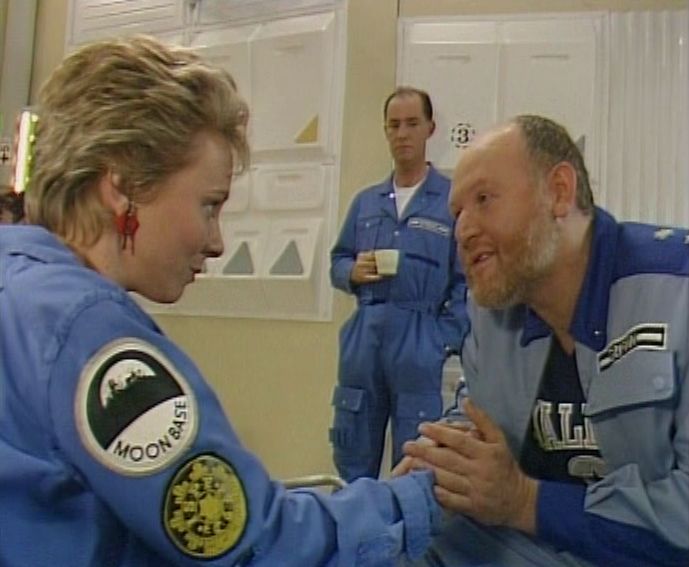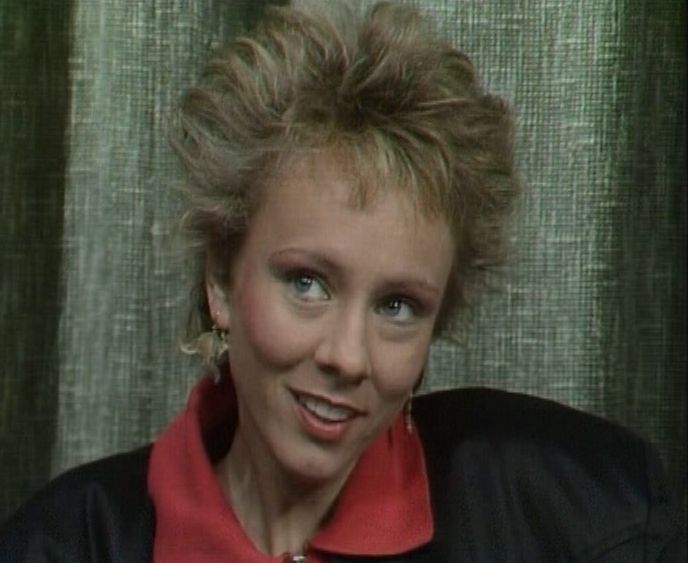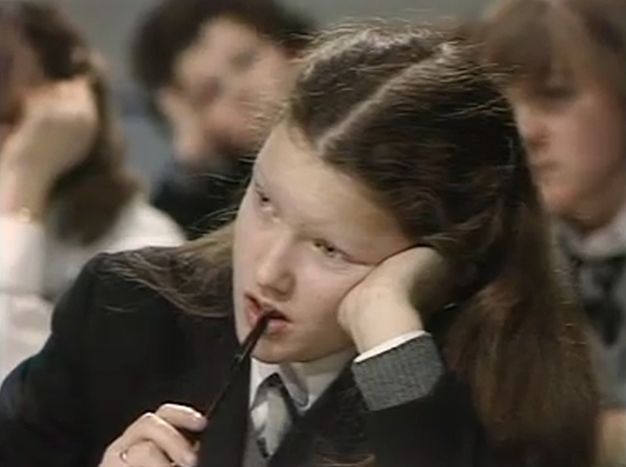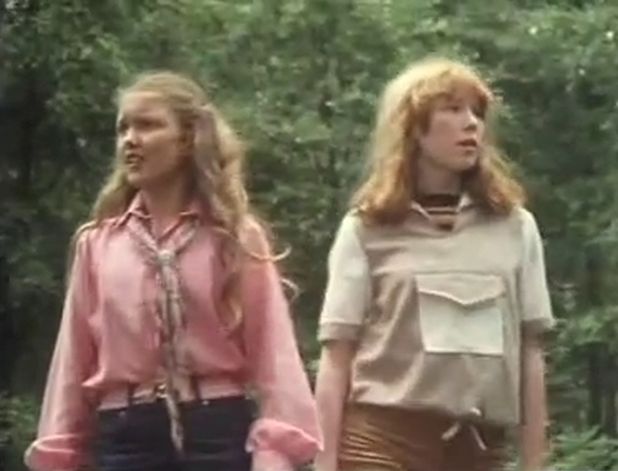
Grange Hill. Series Three – Episode Three

grange hill s03e03

Written by Phil Redmond. Tx 15th January 1980

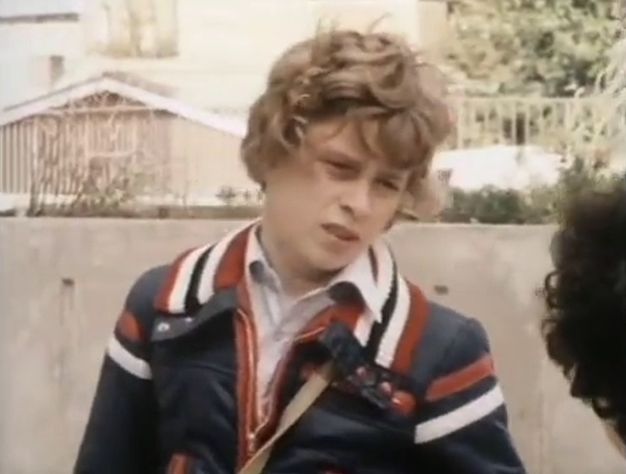
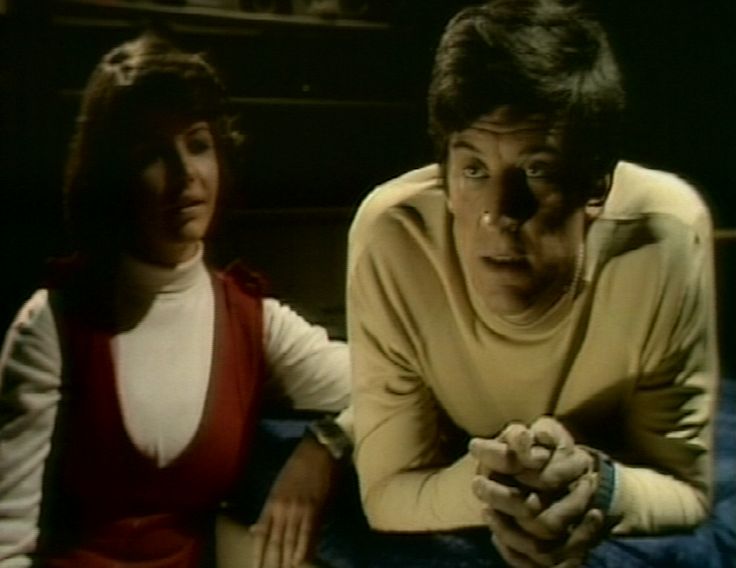
Mr Hopwood (Brian Capron) makes his first appearance in this episode.  Like Mr Sutcliffe, he’s a teacher who’s got the best interests of the children at heart – although he’s clearly no pushover.  In his first scene he berates Andrew and Alan for giving Justin the birthday bumps, but after he’s done this he casually tells the class it’s far too nice a day to stay inside and suggests they might as well go for a walk.

They venture out to a piece of wasteland where, as part of their environmental studies, they look at the local wildlife.  Alan nips off for a cigarette – which is the start of a long-running storyline that continues well into the fourth series. Since this brief ramble was a success, Penny and Susi ask Mr Hopwood if they can venture out into the proper countryside.  Mr Hopwood agrees, so next week the trip goes ahead.

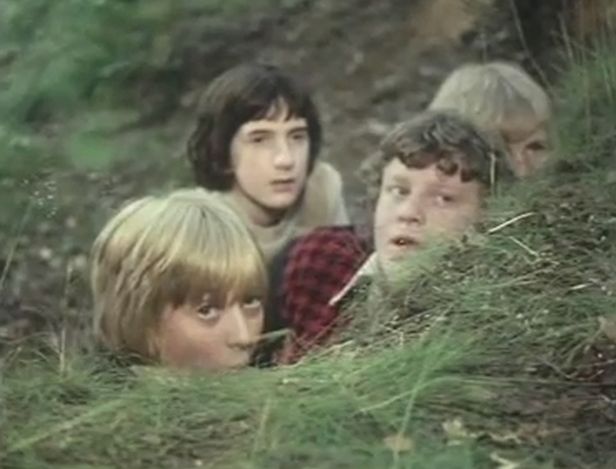
Naturally enough it doesn’t all go smoothly – Justin steps in a cowpat and Alan and Andrew cause a fire. Alan and Andrew head off into the forest to have a cigarette, but unluckily for them Penny and Susi are also there.  Susi’s been complaining about her new bra, so Penny suggests they go somewhere quiet where she can look at it.

A comedy of embarrassing errors then occurs as the girls realise that they’re being inadvertently spied upon and the boys beat a hasty retreat – not knowing that their dropped cigarette was smouldering. It’s another example of Grange Hill’s moral tone – as the message is clearly spelt out that just one cigarette could quickly cause a blaze which might spiral out of control. But there’s a positive solution as the pupils rally round to help to put out the fire.

Susi, Penny, Alan and Andrew come to an understanding – the boys won’t tell anybody about Susi’s bra problems if they promise not to reveal how the fire started. Given how the relationship develops between Susi and Alan, it’s interesting that this episode ends with a glance between Susi and Andrew – hinting that there might be the spark (no pun intended) of attraction between the pair of them.

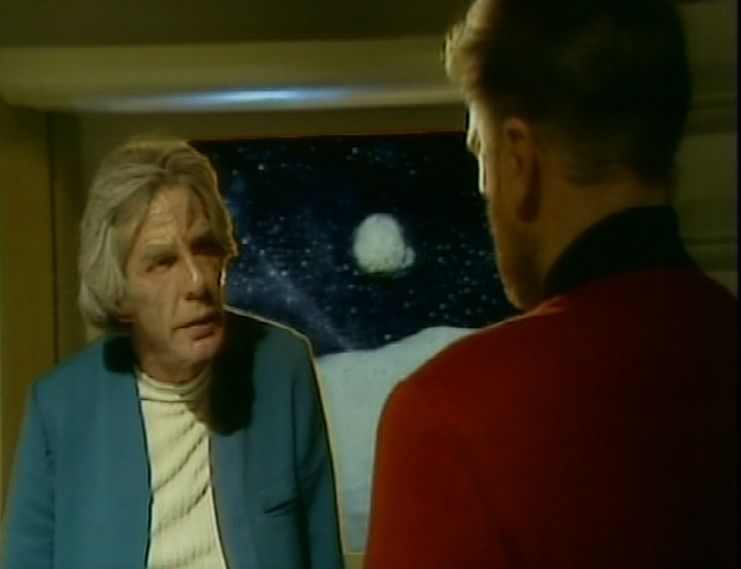
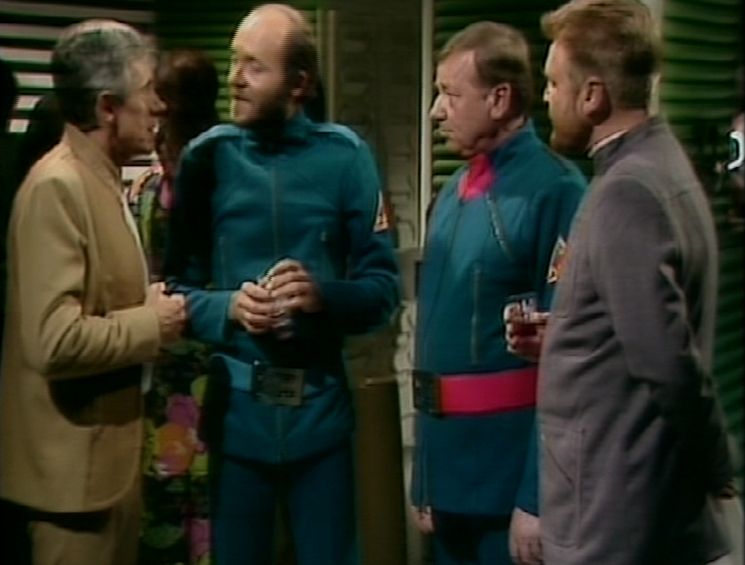
Star Cops – In Warm Blood

warm

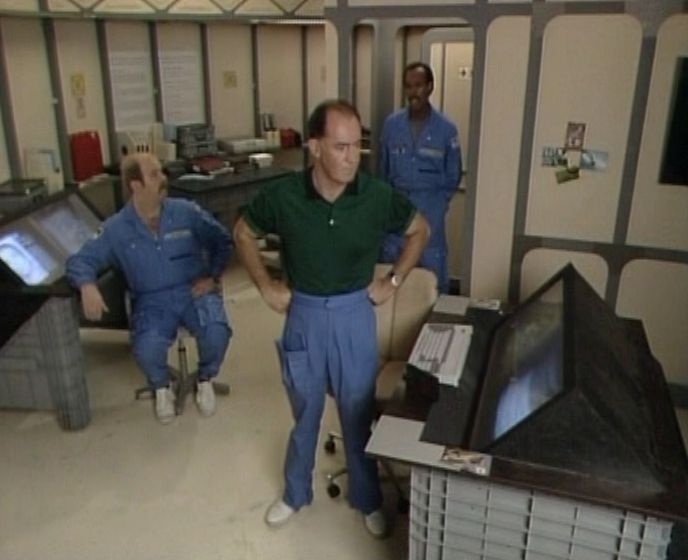
Pluto 5 is a survey vessel which has returned to the Moon’s orbit after a journey of several years.  After they fail to respond to hailing calls Theroux is sent up to investigate.  A macabre sight awaits him – all eight members of the crew are dead, and they now resemble little more than mummified corpses.  Pluto 5 was owned by Hanimed, a multinational drug company who are a generous sponsor of space research.  They send one of their junior employes. Dr Anna Shoun (Sayo Inaba) to investigate.

A the same time, Krivenko is concerned about Christina Janssen (Dawn Keeler).  Janssen is a respected research scientist working in isolation who hasn’t responded to any calls for the last sixty hours.  Nathan is persuaded to investigate, but he’s too late – Janssen is dead (and in circumstances similar to the deaths on Pluto 5).  When Nathan learns that Janssen has a connection to Hanimed it seems to be far too much of a coincidence.  He believes that Anna might be able to uncover the truth, but her fierce loyalty to Hanimed makes her vetry reluctant to betray any confidences.

In Warm Blood was the first of three consecutive scripts written by John Collee.  It’s a decent effort, although there’s no real mystery to the story.  The connection between Hanimed, Pluto 5 and Christina Janssen is established very early on – so it’s not difficult to work out the way the plot will develop (especially when taken in context with a news clip which mentions that Janssen had previously been criticised for using unsuspecting people as guinea pigs in medical trials).

Sayo Ibaba isn’t terribly good in a rather unrewarding part, since Anna is painted as a literal, humourless, one-dimensional character.  She’ll have a few nice scenes over the closing three episodes but she’s easily the most superfluous of the regulars and had the series been commissioned for a second run it’s easy to imagine Anna would have been quietly dropped.

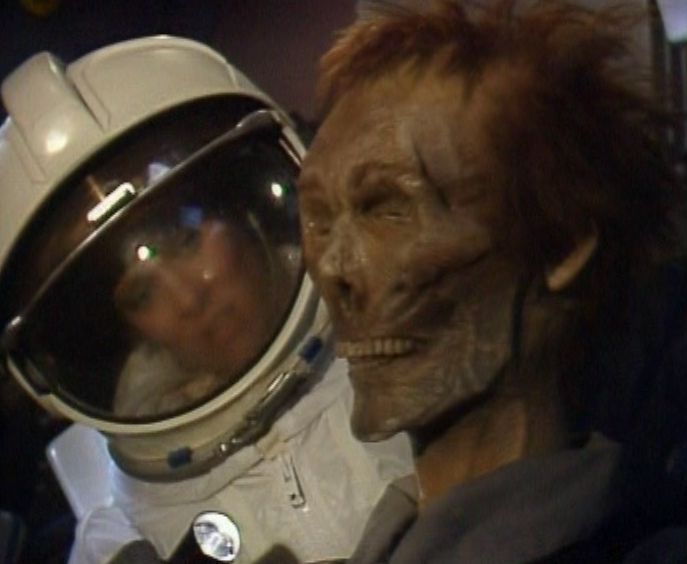
The scenes aboard the Pluto 5 are nicely shot by Graeme Harper, who manages to ramp up the tension and claustrophobia as Anna, Kenzy and Theroux investigate the stricken vessel.  The realisation that one of the crew members is unaccounted for is the setup for a classic horror-movie shock as the decayed corpse makes an unexpected appearance!

Even though the body count in this episode is quite high, there’s still quite a humourous edge to the story.  Colin Devis is primarily used as comic relief, although his casual racist attitude towards Anna, whilst in character, is somewhat wince-inducing.  Another strange move is Nathan’s decision to send him to infiltrate Hanimed HQ back on Earth.

Devis is many things, but an undercover operative he is not.  As in previous episodes, Star Cops seems to operate in a world where the internet doesn’t exist.  Nathan wants the inside scoop on Hanimed, so he has to send Devis to their building in order to tap the main computer (nowadays, of course, somebody would just gain remote access).

His brilliant plan for gaining access to Hanimid’s inner sanctum also has to be seen to be believed – he boldly strides up to a visual recognition screen and claims to be Richard Ho.  Ho is the president of Hanimed and it’s fair to say that nobody would ever confuse the two.  Devis gets himself arrested and Nathan is forced to go Earthside.

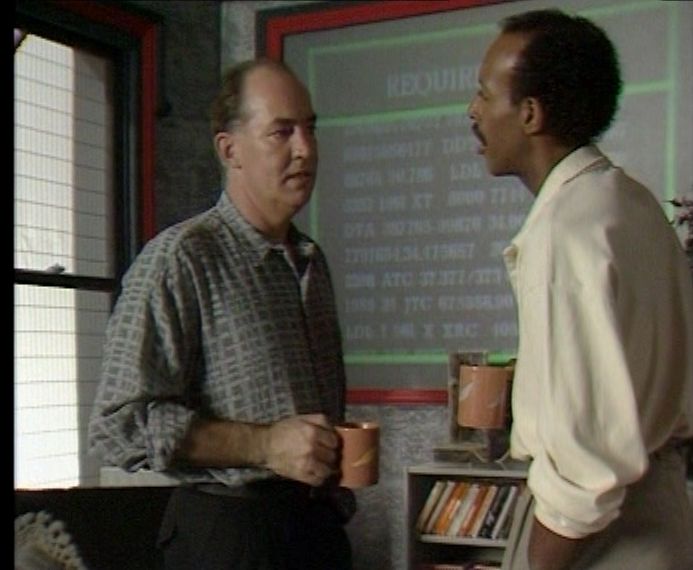
This leads into a very decent climax, which sees Nathan and Ho (Richard Rees) clash.  Nathan now knows that it’s a Hanimed drug which is responsible for the deaths and he convinces Ho that he’s spiked his drink with the same drug.  It’s a very maverick cop approach, but it does gain results (even if in real life you know that Nathan would be, at best, suspended for pulling such a stroke).  Calder’s top-notch in this scene as he mercilessly baits the unfortunate Ho.

Anna finds herself out of a job after passing information to Nathan, so he offers her a job with the Star Cops.  Like Devis, she had nowhere else to go – but only time will tell whether she’ll make a good Star Cop or not.

Grange Hill. Series Three – Episode Two

grange hill s03e02

Written by Phil Redmond. Tx 11th January 1980

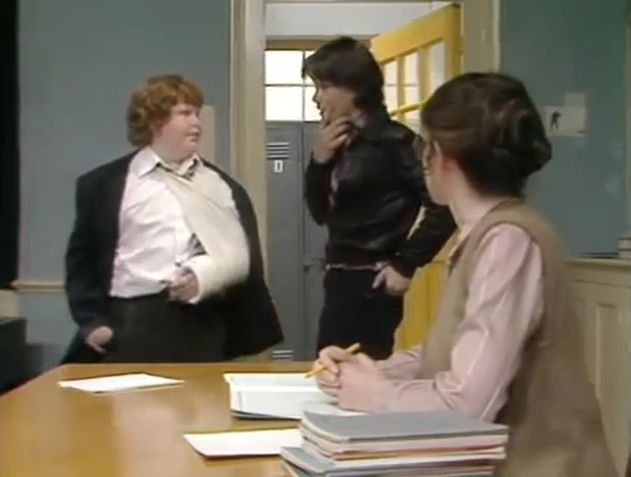
Tracey asks Duane how his father reacted to the loss of his bike.  When he turns around she can clearly see – he’s sporting a black eye.  Today this would have been developed as a major plot point, but here it’s just a fact and isn’t followed up.  It’s not the first time during the early series that children either fear, or receive, domestic abuse from their parents.  And as we’ll see later in this series, some of the teachers are also quite handy as well.  It’s one of the clearest examples of how times have changed.

When the first year head Mr Curtis (Neville Barber) spots Duane’s black eye he asks how he came by it.  When Duane tells him, all he does is sigh and lets the boy leave.  He then shakes his head sadly at Miss Mooney and the matter is closed.

The friendship between Tracey and Duane is put under strain.  Tracey finds herself teased by Karen, taunting her that Duane’s her boyfriend, whilst Duane becomes friendly (after a shaky start) with Pogo.  We also see the first signs of Pogo’s acquisitive nature – he sees putty in the windows and decides to take it.  The downside of this is that it makes the new windows fall out!

Whilst Tracey and Duane had been friends at primary school, different interests now push them into different directions – and eventually Duane will team up with Pogo whilst Tracey and Karen will become best friends.

At present, Karen is also friendly with Sally Forsyth (Sarah Summerfield).  She’s complained of feeling ill and faint several times – this is another example of seeding a plot-point which will only come to fruition in a later episode.

The putty pilfering comes to an end after Mr Curtis impresses on everyone how dangerous it can be.  But it’s put to good use by defacing the pictures of the teachers on the notice board.  Mr Baxter, for example, is given a very fetching set of horns!

Star Cops – This Case To Be Opened In A Million Years

case

An aborted launch of a Santoni-Italia rocket triggers a radiation alert (Santoni-Italia have a contract to transport some of the Earth’s nuclear waste out into deep space).  Luckily there was no leak, but the question is, what went wrong?

By a strange coincidence, Krivenko had already asked the Star Cops to examine the workings of Santoni-Italia.  As Nathan is forced to return to Earth for seven days leave, Theroux and Devis pay a visit to Carlo Santanini (Michael Chesden).  They find him less than helpful and the enquiry isn’t helped by Theroux’s strange behavour – ever since the radiation scare he’s been deeply distracted.

En-route to Earth, Nathan decides to spend his holiday in Italy – thanks to a chance meeting on the Moon shuttle with Lina Margello (Vikki Chambers).  But once he arrives he’s attacked and almost killed by a disgruntled ex-Santoni-Italia employee and it’s only the start of his nightmare.  Drugs are planted on him and large sums of money are deposited into his account.  He’s clearly being set up – but why and by who?

This Case To Be Opened In A Million Years was the first episode of Star Cops not to be written by Chris Boucher.  Philip Martin had been commissioned to write two scripts, but the second (Death on the Moon) was never made due to industrial action.

This story is notable for the many and varied bad Italian accents and the rather clumsy plotting.  Last episode it was the Americans who were painted with a broad stereotypical brush, here it’s the Italians.  There’s some gloriously ripe fake Italian accents, but the best (or worst, depending on how forgiving you are) must surely be Carl Forgione’s tour guide.

As I’ve said, the plotting on this one is a little suspect.  Immediately after the launch accident Nathan is required to return to Earth, which does leave virtually no time for Santoni-Italia both to decide they need to discredit him and to work out a plan.  Lina is planted to subtly guide him to Italy, but what would have happened if he’d gone somewhere else for his holidays?  Presumably they would have pursued him, but it still seems an incredibly long-winded and inefficient way of doing things.  And just because they target Nathan, do they think that would stop the investigation?  Surely they realise he’s not the only Star Cop on the Moon?

Erick Ray Evans doesn’t have a particularly impressive episode as Martin’s script asks a lot of Theroux and sadly Erick Ray Evans’ limitations are rather exposed.  Linda Newton and Trevor Cooper are much more solid though.  With Nathan on leave, Devis basically acts as Theroux’s deputy and Cooper’s comic timing is certainly in evidence.

Time seems to have passed since the events of the last episode as Nathan has lost the antagonism he felt towards Kenzy.  This thawing of relations is reciprocated by Kenzy, who obviously feels comfortable enough to tease him (telling him at one point that Aunty Pal knows all about relationships!)  This is quite a change from the barely concealed dislike they both had for each other in Trivial Games and Paranoid Pursuits.

There’s no particularly familiar faces amongst the small guest cast, but for me the most notable appearance was from Stewart Guidotti.  For those with a love of pre-Doctor Who British science fiction, he’s best remembered as Geoffrey Wedgwood from the Pathfinders trilogy of the late 1950’s/early 1960’s (a clear influence on the early days of Doctor Who).  But I have to admit that without spotting his name in the credits I’d never have twigged, since by 1987 he was definitely no longer the fresh-faced lad from Pathfinders!

This Case To Be Opened In A Million Years is watchable enough, but outside of the interaction of the regulars it’s pretty undistinguished stuff.

Grange Hill. Series Three – Episode One

grange hill s03e01

Written by Phil Redmond. Tx 8th January 1980

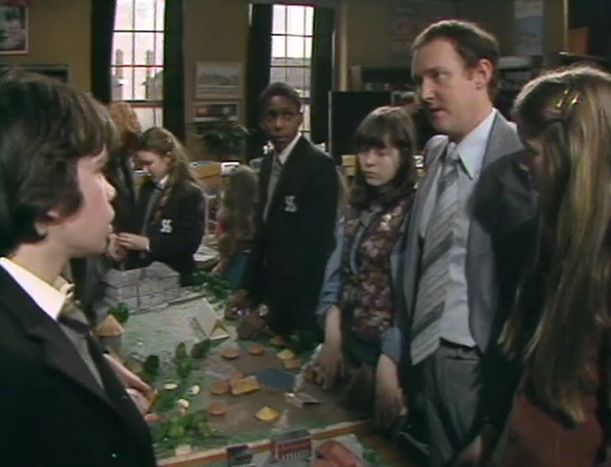
It’s the start of a new school year and Grange Hill is preparing itself for an influx of fresh first years.  Mr Sutcliffe has spent hours going around the school putting up signs to help the newcomers, but unfortunately things don’t quite go to plan.

As with the notices seen in the very first episode, the arrows can be moved in the opposite direction – and Cathy does so here.  When will people learn that it’s a much better idea to draw the arrows on!  Mr Sutcliffe also attracts the ire of Mr Garfield and his colleague – since all the notices (affixed with sellotape) have damaged the walls.  This allows Mr Sutcliffe to make some forceable points to both of the caretakers, about how a school exists to serve the interests of the pupils (leaving you with the feeling that all school caretakers would much prefer it if there were no children about …)

Amongst the influx of new arrivals are Michael Green (Mark Bishop) and Karen Stanton (Carey Born).  Both are escorted to school by their older brothers, Benny and Andrew – but once they arrive things are very different.  Andrew is overprotective to a ridiculous degree, which irritates the independent Karen no end, whilst Benny leaves the overawed Michael very much to his own devices.

The other main characters in the first form are Duane Orpington (Mark Baxter), Tracey Edwards (Amanda Mealing) and Douglas “Pogo” Patterson (Peter Moran).  Out of this crop of newcomers, only Pogo and Duane would reach the fifth form – poor Karen and Tracey don’t even manage to make it to the second half of this school year!

This was a common problem during the series’ entire run – children would drop out for various reasons (exams, etc) and replacements would have to be drafted in.  In series four, it’s clear to see that Tracey’s place was taken by Clare Scott (both of them were friends with Duane, for example) whilst Karen was replaced by Suzanne Ross.

On the teacher front, Miss Peterson (Cheryl Branker) attracts some casual racist comments from Doyle, although he’s wise enough to make them just out of her earshot.  Our first sight of Miss Mooney – dropping a pile of textbooks with an annoyed comment of “bother” – is a characteristic introduction to someone who always seems slightly disorganised, but is also a first-rate teacher who cares for her pupils.

Since the first two series covered one school year, series three and four cover another – and in the gap between the second and third series the original influx of pupils have moved from the first form to the third.  The only time this gap doesn’t quite work is when Trisha asks Sudhanami Patel (Sheila Chandra) why she’s still wearing school uniform, since it’s now been made optional.  She’s had a whole (unseen) year to ask that question!

The theft of Duane’s bike seems to be an isolated incident, but we’ll see that the bike thefts become a running theme through the early episodes – culminating in Madelin Tanner receiving her long-awaited comeuppance.

Grange Hill. Series Two – Episode Eighteen

grange hill s02e18

Written by Phil Redmond. Tx 2nd March 1979

The end of the school year is approaching and Grange Hill chooses to mark it with an open day and a series of projects. The first years project is “The History of Grange Hill” – a subject which doesn’t fill Cathy with a great deal of enthusiasm. She wonders which crawler thought that one up (possibly it’s not a surprise that it was Penny Lewis – embarrassingly she happened to be sitting opposite Cathy at the time she made the comment!)

For many of the first years, it’s the last time we’ll see them in school uniform as when series three opens, uniform has been made optional. Cathy and Trisha are given the job of designing a project about school uniform through the ages, which gives them an early chance to wear something a little more casual.

There’s a nice bit of continuity as Judy Preston makes a reappearance. Along with a few of her classmates at Brookdale, she’s come to propose a quiz between Brookdale and Grange Hill. Mr Llewellyn agrees and this brings the series to its conclusion.

It’s also the last time we’ll see Sean Arnold as Mr Llewellyn. Although Llewellyn remains headmaster for series three, he’s only ever referred to and never actually seen (after a while this becomes obvious – he’s always away at conferences or otherwise unavailable). And it won’t be the last time that Grange Hill will have a head teacher who’s conspicuous by their absence.

There’s a bit of a kerfuffle at the quiz after Doyle and his friends lock Hughes (who’s dreading taking part anyway) in a cupboard. With the clock ticking down to the start, there’s a mild crisis when he can’t be found. It’s very mild, to be honest, as it’s hardly the most gripping of plots, but it fills a few minutes.

The news that Mr Mitchell is leaving comes as a surprise, although Doyle (thanks to his family connections) already knew. But whilst teachers and pupils come and go, life at Grange Hill goes on.

Star Cops – Trivial Games and Paranoid Pursuits

trivial

After firing the American Star Cop Kirk Hubble, Nathan isn’t exactly flavour of the month with the U.S. government.  Paying a visit to the American Space Station Ronald Reagan, Nathan admits to Commander Griffin (David Benzali) that he’s not sure whether he’s now regarded as the anti-Christ or just anti-American.  To Griffin, the two are pretty much interchangeable.

Nathan’s diplomatic overtures to Griffin aren’t helped by his obvious dislike of the man and the later arrival of Pal Kenzy is yet another complication.  Both Griffin and the Star Cops have been contacted by Dilly Goodman (Marlena Mackey) who tells them that her brother, Dr Harvey Goodman, working on the Ronald Reagan, has gone missing.  But Griffin, and his subordinate Pete Lennox (Robert Jezek), claim there’s no record of him ever having stepped foot on the station.  Nathan and Kenzy have to form an uneasy alliance in order to uncover the truth.

It’s fair to say that Star Cops painted various nationalities with a rather broad brush – clearly demonstrated here by Commander Griffin.  He’s an incredibly xenophobic, resolutely patriotic American, with no time for anybody else’s point of view (and holding, of course, a particular hatred for the Russians).  Because it’s such a two-dimensional character, it’s lucky that director Graeme Harper was able to cast a good actor – Daniel Benzali.

Although born in Brazil, Benzali later carved out a successful career in American television (he’s probably best known for playing Ted Hoffman in the first series of Murder One).  Benzali is able to bring some much needed depth to the cigar-chomping cliche that is Griffin and this makes the sparring between him and Nathan much more palatable.

It’s obvious right from Nathan’s arrival at the Ronald Reagan that he’s not a welcome visitor.  His shuttle is allowed to dock at the furthest port away from the living quarters and there’s nobody to meet him when he steps onto the station.  Griffin’s attitude is that he can find his own way, since he’s a detective.  Characteristically Nathan isn’t perturbed by these slights and when he eventually reaches civilisation he’s greeted by Lennox who seems surprised he didn’t lose his way.  “Did you expect me to?” asks Nathan.

The conflict between Nathan and Griffin is at the heart of the episode and it’s certainly much more interesting than the crime (the disappearance of Harvey Goodman).  What’s particularly entertaining about their verbal jousting is how so much is left unsaid – the inferences are clear, but the specifics are rarely spelled out (at least not until the end).

The arrival of Kenzy is greeted with very different emotions by Nathan and Griffin.  Nathan might have had to take her back on the force after she saved the day at the end of episode three, but he’s kept her strictly office-bound and given her nothing more exciting to do than filing.  So when he realises that Threoux’s sent her out to join him, with details of Dr Goodman’s disappearance, to say he’s far from pleased is a considerable understatement.

Griffin, on the other hand, couldn’t be more delighted to see her and it doesn’t take a mind-reader to understand the reason why.  Nathan’s also keen for the two of them to spend some quality time together – that way he can tap the Commander’s computer to find out if there’s any information on the missing Dr Goodman.

Back on the Moon, the new Moonbase commander Alexander Krivenko (Jonathan Adams) arrives.  Viewed with suspicion by some, especially Devis, he seems fascinated by all aspects of police procedure and is keen to treat the Goodman disappearance as a test case.  Judging by some of Devis’ dialogue, it would seem that in the Star Cops universe, the repressive polices of the Soviet Union are still alive and well – although Krivenko is an open and straightforward man.  But it’s not surprising that the likes of Commander Griffin view him with extreme disfavour.

Slight though the mystery part of the episode is, the interactions of Nathan/Griffin and Nathan/Kenzy make this well worthwhile.  This was the first of Graeme Harper’s four episodes and there’s some nice directorial flourishes – for example, the shots of the viewscreen as seen from behind the screen.

Not the best that the series has to offer then, but solid nonetheless.

Star Cops – Intelligent Listening for Beginners

intelligent

Nathan and Theroux travel to one of the Moon’s distant outposts to speak to Michael Chandri (David John Pope).  The work that Chandri is conducting is highly secret, and also hidden behind many layers of security, but eventually Nathan is able to prise some facts from him.

Chandri has developed an intelligent listening system which can scan the world’s chatter and isolate key words.  By using this, Chandri says he’s discovered that a group of terrorists – named the Black Hand Gang – plan to hijack an Earth to Moon shuttle.

Elsewhere on Earth, a series of accidents (at an industrial plant and in the Channel Tunnel) are attracting attention.  Computer failure is given as the official reason, but maybe there’s a more sinister explanation.  And Nathan also has some personnel issues to deal with, namely two crooked Star Cops – Hubble and Kenzy.  He decides to fire both of them – but Pal Kenzy isn’t going to take her dismissal lying down ….

When Intelligent Listening for Beginners was scripted many of the concepts were definitely futuristic – indeed, the Channel Tunnel wouldn’t open until 1994, some seven years after the episode was transmitted.  And the notion of a computer which could isolate words from the world’s chatter was also pure science fiction (or if it was a reality it was kept tightly under wraps).

The revelation that the computer failures at the chemical plant and the Channel Tunnel were caused by a worm (also referred to as a virus) seem obvious from a modern perspective, but back in 1987 this was something else that would have been new to many people.  It’s notable that the internet doesn’t seem to be part of the future we see here – in both cases the computer virus was hard-wired into the system and triggered by a code-phrase (a quote from William Blake).

It later becomes clear that Chandri’s intelligent listening system doesn’t work and he’s engineered these disasters himself.  The reason?  He remains in thrall to his dead father and always lived in fear of his father’s disapproval.  So if he can generate disasters and claim that his intelligent listening system was on the brink of locating the terrorists (before it too succumbed to the worm) then he can somehow save face.

Yes, Chandri is quite, quite mad.   David John Pope does manage to invest him with character though, rather than just portraying him as a gibbering lunatic.  Also, it’s nice to see what the Kandy Man looks like in the flesh.

There’s some slightly clumsy scripting, such as when Nathan first meets Chandri.  He admires his collection of books and just happens to select a volume by Blake.  So when it’s later discovered that each disaster is preceded by a computer message quoting Blake it’s easy to put two and two together.

In fact there’s some general clumsiness all round in this one.  Erick Ray Evans sometimes struggled to deliver his dialogue naturally (but when you have lines like “don’t patronise me, you supercilious bastard” it’s understandable I guess).

The highlight of the episode is Nathan’s first meeting with Pal Kenzy.  Nathan’s convinced that she’s crooked and fires her.  But she’s not prepared to go quietly and tells him she’ll be back (Pal has friends in high places apparently).  As luck would have it, Kenzy and Devis are both traveling back on the shuttle when it’s hijacked.  Quite why terrorists would attempt to hijack a shuttle is a bit of a mystery – it’s only traveling from the Earth to the Moon, so it’s not as if they could really turn it around and pilot it somewhere else.

Ignoring the whys and wherefores (and also that the terrorists are pretty inept) Kenzy and Devis are able to save the day.  The resulting publicity makes them both heroes and Kenzy cannily uses it to praise her boss Nathan Spring.  When Theroux asks him if he’s planning to reinstate her, Nathan wearily tells him that she’s reinstating herself.

There’s some impressive model-work in the story (although the model of the lunar buggy does look rather too much like a model, it’s still impressive).  The opening at the chemical factory is quite energetic, as various stuntmen fling themselves off buildings and fly through the air with great abandon.  Chandri’s motivations are a little strange (although after watching some of the erratic characters in Moonbase 3 maybe less so) but by the end of the episode the core team – Nathan, Theroux, Devis, Kenzy – are present and correct (although Kenzy has yet to earn Nathan’s trust).

Grange Hill. Series Two – Episode Seventeen

grange hill s02e17

Written by Margaret Simpson. Tx 27th February 1979

The end of year exams are fast approaching and Susi’s feeling the strain.  Miss Summers later tells her that the first year exams aren’t terribly important, but Susi’s mother is putting considerable pressure on her.

Next year she’ll be in the top set in French and English, but in a lower set in Maths.  This comes as a disappointment to her (although it’s clear that it’ll be more of a disappointment to her mother).  Miss Summers is able to explain that it’s no disgrace to be in a lower set in some subjects, it simply means that she’s not quite as good at Maths as she is in other subjects.  Therefore it’s better that she’s placed in a set with others of a similar ability, rather than struggle along in a higher set.

There’s a clear divide made between Mrs McMahon and Penny’s mother, Mrs Lewis.  Mrs McMahon never seems to give her daughter any encouragement at all and also tells her that she’ll be voting to keep school uniform in the upcoming referendum.  Mrs Lewis is a much more relaxed character (for example, she’s quite happy to vote for the abolition of uniform).  The juxtaposition between the two mothers makes a telling point – if Susi didn’t feel her mother’s constant disapproval thenno doubt she’d be a much happier person.

Mr McMahon (Bill Treacher) is more supportive, telling Susi she can only do her best, although he’s rather distant, which seems to make it clear that Mrs McMahon is the driving force of the family.  This is Mr McMahon’s only appearance and it does come as a slight shock to see a rather well-spoken turn from Treacher (later to become very familiar thanks to his decade or so as Arthur Fowler in Eastenders).

Elsewhere, Tucker finds an exam paper which he’s convinced is the one they’re about to sit.  We’ll revisit this plot-line in later years when Pogo tries to make a profit by selling questions from a paper he found. Here, Tucker doesn’t attempt any such free enterprise – he’s happy to share for free – but it doesn’t take a mind-reader to work out that it’s clearly not going to end well.  Mr Mitchell’s reluctance to act, although he knows that something’s going on, makes it plain that whatever Tucker’s found, it’s not that year’s paper.

This is made quite obvious when none of the questions come up in the paper they take – resulting in poor Tucker suffering attacks from all of his angry classmates!

The referendum to make school uniform optional votes in favour of the proposal by a narrow majority, to the delight of many.

Star Cops – Conversations with the Dead

conversations

After Nathan’s girlfriend, Lee, is murdered at Nathan’s home back on Earth, a distraught Spring returns to assist.  But the officer leading the investigation, Colin Devis (Trevor Cooper), is very antagonistic towards Nathan.  Does he believe that Nathan is implicated or is he simply enjoying the chance to needle a superior officer?

Meanwhile, the Star Cops have moved to a permanent base on the Moon.  Theroux, now acting as Nathan’s deputy, has a strange case to deal with.   A freighter bound for Mars fired its rockets too early which means there’s no way for them to regain their course – and with only a limited oxygen supply the two occupants face certain death.  That is, until Professor Paton (Alan Downer) makes a suggestion …..

Conversations with the Dead manages to juggle two plots simultaneously and by the end of the episode Nathan has another new recruit – Colin Devis.  He’s not someone who Nathan would necessarily have chosen if he’d had a free hand though.  Earlier on, Nathan tells Theroux that Devis is “one of the department’s all time cretins. British, native and all-time record holder. A cretin’s cretin in fact “.  After hearing this, Theroux ironically ponders if Nathan’s going to recruit him.  But since Devis later puts his own career on the line to help Nathan, it’s obvious that he feels honour bound to offer him a job.  So the “cretin’s cretin” does end up with the Star Cops after all.

The feeling that the Star Cops are something of a home for waifs and strays is further reinforced in the next episode, Intelligent Listening for Beginners, as Pal Kenzy cannily manages to manipulate the media in order to force Nathan to reinstate her.  And later on in the series, Anna Shoun is another officer who Nathan recruits mainly because his investigation has caused her to lose her existing job.

Lee’s death is a jarring and unexpected moment and it puts Nathan very much on the back foot.  Calder is, as might be expected, excellent throughout the episode – as Nathan gropes around in the dark for a reason why “the only friend he had” was killed.  But whatever is happening seems to be targeting him as well, which is confirmed by an enigmatic message – “Lee Jones has been dealt with. You are next.”

His quest for the truth is hampered by Devis though and his hostility towards Nathan doesn’t quite ring true.  If he’d had been part of the conspiracy it would have made sense, but since he’s not it just implies he’s not a very good copper (something he glumly admits at the end).  Given this, it makes him even more of a lame duck appointment to the Star Cops.

Back on the Moon, Theroux is kept busy investigating the mystery of the malfunctioning freighter.  It’s interesting that we never see the interior of the freighter – instead we only ever hear the voices of the two crew-members as the (admittedly very nice) model flies through space.  Was this a budget choice or as scripted I wonder?

The freighter story is very much the “b” plot as all the action is still taking place on Earth, although some of it could have been staged better.  I’m thinking particularly of the attack on Nathan in the park, which looks terribly unconvincing.  But better is to come when Nathan returns to Space and is later joined by Devis’ assistant Corman (Sian Webber).

Lee’s murderer is heading for a top-secret unmanned American Orbital Station and Corman, along with Nathan and Theroux, are in pursuit.  Since the police are politically neutral, they have a perfect right to approach the station and extricate the murderer.  And boarding the station is exactly Nathan is supposed to do.

Lee’s murder took place for precisely this reason – to give a British intelligence agent (Lee’s murderer) a legitimate pretext to approach the station.  Once on-board, he’ll attempt to learn everything he can about the installation before he’s arrested and taken for trial – later, no doubt he’ll mysteriously disappear.  But Nathan isn’t prepared to be a pawn in anybody else’s game and his solution will ensure that the secrets of the station remain with the Americans.

Given Chris Boucher’s previous writings (especially Blakes’ Seven) it’s no particular surprise that Conversations with the Dead demonstrates a deep distrust of authority.  Exactly who Corman works for isn’t made clear, but it’s obvious that she belongs to a shadowy part of the British government.  The murder of an innocent (Lee Jones) appears to be regarded as a small price to pay for the intelligence that could be gleaned from the station.

The personal angle of the case, and how it impacts Nathan, is the best part of the story.  Trevor Cooper’s first appearance as Devis is, as I’ve said, a little off – but over the next few episodes he’ll strike a better balance between portraying Devis’ less appealing character traits and his skills as an officer (especially when the core team are all together on the Moon).

Grange Hill. Series Two – Episode Sixteen

grange hill s02e16

Written by Alan Janes. Tx 23rd February 1979

Although the boys make it back safely, there’s no sign of the girls – so a full-scale search is initiated.  Justin wants to tell Mr Mitchell that they saw Penny and Susi in the forest, but the others aren’t keen as they know how angry he’ll be.  So for the moment they all keep quiet.

Apart from the natural dangers of the forest, an extra level of jeopardy is introduced when it’s revealed that a puma has escaped from a local wildlife park and is roaming around.  Since we never see it (we’re told later that it’s been caught) it turns out to be something of a red herring, especially when there are other dangers – such as marshlands – which could be equally as dangerous.

Eventually Justin decides to speak up – despite Doyle’s threats and this marks something of a turning point in Justin’s character.  He’s always been portrayed as rather weedy (in the previous episode the coach had to stop as he was feeling sick, for example) but he stands up to Doyle here and threatens to smash his face in if he doesn’t stop complaining.

Dramatically there’s not a great deal of tension during the search, since we can confidently assume that Penny and Susi are going to be found safe and well (a similar problem occurred in a later episode when Mr Baxter and Roland were lost on an outward bound course).  But the hunt for the girls is quite effectively staged – especially when it gets darker.  The only problem is that they presumably couldn’t afford to shoot at night, so instead a dark filter is placed over the camera to simulate the night-time ambiance.  The dead giveaway is the fact that the blue sky can still be seen (an unavoidable side effect of day for night filming).

Mr Mitchell is all for punishing the boys when they get back to school but Miss Clarke (Jill Dixon) is much more forgiving, considering that if the trip was partly to teach the kids about the countryside, then they’ve certainly learnt how dangerous it can be.  Her counsel wins the day and the pupils return to London a little wiser.

Star Cops – An Instinct for Murder

instinct

Star Cops, like Moonbase 3, only lasted one series and during its original transmission attracted fairly lukewarm approval and low ratings.  But unlike Moonbase 3, over the last few decades Star Cops’ critical reputation has slowly risen.  In 1999, SFX Magazine asked a panel of experts (including Stephen Baxter and Terry Pratchett) to rate the fifty best science fiction series of all time.  Star Cops was a very respectable nineteenth and SFX wrote that it was “the SF TV show SF writers love. It wasn’t perfect but it’s as close as TV will ever get to producing proper written SF.”

Series creator Chris Boucher had been a script-editor on both Blakes’ Seven and Bergerac, so he certainly had the experience to craft a SF detective series.  Set in 2027, it depicts a future where space travel is now an everyday occurrence.  There are thriving colonies on the Moon and Mars, five space-stations operated by various countries and deeper space-bound explorations are also becoming more common.  But with the increased number of people making regular trips into space there’s an obvious need for a professional space police force.

Up until now, the International Space Police Force (ISPF) has consisted of twenty or so part-timers, disparagingly nicknamed the Star Cops.  This needs to change – and what’s required is a permanent force of full time professionals, led by a new Commander.  It’s decided that Nathan Spring (David Calder) is the ideal man for the job – although Nathan is far from keen.  For one thing, he’s a most reluctant spaceman (he says that he always preferred Sherlock Holmes to Dan Dare) and for another he rightly suspects that he’s being pushed sideways by his boss (Moray Watson) who simply wants to get rid of him.

Nathan is an oddity – he’s a detective that prefers to think for himself, rather than let the computer make his decisions for him, which on Earth makes him something of a misfit.  Hence the title of the episode, An Instinct for Murder, which shows us two murders (one on Earth and one in Space) that are only solved by human ingenuity.  In both cases, there’s a plausible computer solution, but Nathan isn’t convinced by either and eventually he’s proved right.

On Earth, his maverick nature is seen as a liability, but out in Space – the new frontier – it’s an asset.  Or that’s how his boss tries to spin it to him.  It’s clear that Space is the new Wild West – somewhere which has been largely unregulated until now, but the arrival of a new Sheriff (Spring) will bring law and order firmly back.  And since he’s far away from any interference from his superiors, he can dispense his own brand of justice without constantly having to seek approval from the computer.

The episode opens with two murders.  Since they’re identical, you could be forgiven for thinking that there’s a connection between them, but that’s not the case.  The point that’s being made is that crime in Space is just the same as crime on Earth.  Despite the different environment, solving it will need precisely the same skills.

On Earth, we see a man out for a swim.  Two others catch up with him and drown him.  In Space, we see a man in a spacesuit orbiting the Earth.  Two others catch up with him and remove his oxygen supply.

Nathan isn’t convinced that the drowning was an accident (as the computer suggested) and urges his subordinate to investigate further.  In Boucher’s original draft, the first story was spread over two episodes and it would have seen Nathan investigate the murder himself.  As it is, the compression of the story to fifty minutes meant that he only has a peripheral interest the case.  To be honest, it’s not terribly central to the story (the man was murdered on the instructions of his wife) and neither are the Space murders (a series of deaths which the computer decides were caused by space-suit failures).  The murders simply exist to demonstrate Spring’s philosophy of detection.

Chris Boucher’s relationship with producer Evgeny Gridneff was uneasy from the start (apparently when they first met, Gridneff told him that all his scripts would need to be rewritten).  Although he was generally positive about many of the cast, especially David Calder, other aspects of the series irritated Boucher – especially Justin Hayward’s theme tune.  I like it, but I suspect I’m in something of a minority.  What’s interesting about it is that it may have been written very early during the production of the series.  The lyrics of “It Won’t Be Easy” seem to refer to how difficult it will be to maintain a relationship when there’s an Earth/Space divide.  I assume it’s about Nathan and Lee Jones (Ginnie Nevinson).  Possibly Heyward assumed that Nathan and Lee would remain an item throughout the series – as we’ll see though, her story has a very finite end.

Nathan’s rather a cliched figure (although thankfully Calder is able to make something out of even the most routine material) and his relationship with Lee is a prime example of this – he’s portrayed as a workaholic who has little time for anything else.  He clearly loves her, in his own fashion, but lacks the same insight with her that he brings to his police work.  The most obvious example is when he continues to book them into a restaurant which Lee dislikes!  After Nathan’s transfer to the ISPF is ratified, it means leaving her behind.  Boucher could have kept her as a regular during the series, but he does something much more interesting – which will pay off in the next episode.

Once Nathan’s “out there” he has to start assembling his force.  Some of the existing ISPF officers are worth keeping – such as David Theroux (Erik Ray Evans).  Others, like Pal Kenzy (Linda Newton), will later be viewed with more caution.  Kenzy only has a cameo here, but from her first scene it looks highly likely that she’ll be headed on a collision course with Nathan (although after a few episodes it’s just as clear that eventually, after many trials and tribulations, they’ll form a close working relationship).

As previously touched upon, the mystery of the murders very much takes second place to setting up the series format.  But thanks to the quality model-work (which remained consistently good throughout the run) and Calder’s strong performance, An Instinct for Murder is an impressive opener.
Grange Hill. Series Two – Episode Fifteen

grange hill s02e15

Written by Alan Janes. Tx 20th February 1979

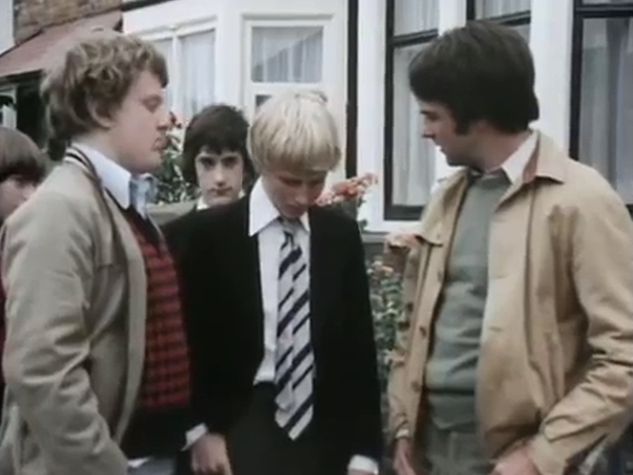
School trips offer a chance to see both the pupils and teachers in a different environment, so it’s no surprise that Grange Hill would return to the school trip plot-line again and again over the years – since it always provided the writers with numerous dramatic possibilities.

One notable person missing from the trip is Tucker – which is a shame because there’s no doubt he’d have found numerous ways to liven things up.  We do have Doyle though – who also likes to be the centre of attention.  His first scene is lovely, as we see him marched to the coach by his mother who’s determined to put him on it, despite his protests.  He manages to break free from her, leaving her running after the coach brandishing his forgotten wellington boots!

He later antognises Penny and Susi – which is an early sign of the feud that he’d enjoy with Penny during series three (especially when he becomes a school rep, much to Penny’s irritation).  Penny’s at her most studious here – she’s puzzled as to why Susi decided to go on the trip since she doesn’t seem to have a great deal of interest in archeology.  Susi’s reply is telling – her mother told her to.

Although Susi’s mother hasn’t featured greatly so far, everything we’ve seen of her suggests that she’s keen to dominate her daughter but also can’t resist belittling her achievements.  She doesn’t believe Susi is particularly bright – even though Susi is that the top of most of her classes, Mrs McMahon is convinced that that’s more to do with the relative lack of ability from the other pupils than Susi’s own intelligence.

Doyle, Alan, Andrew and Justin decide to break free from Mr Sutcliffe’s party to explore the forest.  Since they’ve been expressly forbidden from going off by themselves, you know this is going to end in trouble.  Later, they spy Penny and Susi who have also wandered into the forest.  Doyle makes various animal noises which frightens the girls, causing them to run even deeper into the forest, where they find themselves hopelessly lost.

I wonder if this episode was originally scripted with Tucker, rather than Doyle, in mind.  Everything that Doyle does (placing a fake plastic spider on Penny, for example) could have also been done by Tucker and it’s unusual to see Alan team up with Doyle.  Possibly it was decided to change things around in order to move Doyle more into the centre of the action or maybe Todd Carty wasn’t available for the filming dates.

Whatever the reason, the episode ends with Penny and Susi lost, but the real danger they face only becomes clear at the start of episode sixteen.

Grange Hill. Series Two – Episode Fourteen

grange hill s02e14

Written by Phil Redmond. Tx 16th February 1979

Following SAG’s recent disruptions of school-life, Mr Llewellyn has instigated various procedures which he hopes will tighten up the pupils behaviour.  These include a zero-tolerance policy on late arrivals – which means that Mr Baxter is present at the front gate, making a gleeful note of every latecomer!

This is bad news for Tucker, who turns up some twenty-five minutes late.  Partly this is because he’s missed the bus, but it’s also because he was waylaid by three Brookdale boys on the way to school.  The running battles between the Grange Hill pupils and the Brookies would be a recurring theme during the next few years and even when the schools were merged in series eight the arguments and fights would rumble on for a time.

Tucker, Benny, Alan and Hughes are at their most boisterous in this episode.  A spot of fighting during lunch time is spotted by a teacher who decides they can drop a letter off at the secretary’s office since they’ve clearly not got anything better to do.  Tucker decides that if they do they won’t have time to go to the chippy, so Benny pops the letter into his blazer pocket to deliver later (the fact they don’t deliver the letter straight away seems set up to be important, but it later turns out to have no bearing on the plot).

They’re just as uncontrollable when they get to the chippy.  Tucker declares that he won’t have the chop-suey as he’s convinced that cats and dogs are put into it.  Instead, he decides he’ll have something that you can be sure is fine – a sausage (even though Hughes tells him that it’s made up of sawdust!).  Tucker’s slitty-eyed impersonation of the Chinese owner of the shop (highly politically incorrect of course) proves to be the final straw and all of them are forced to leg it.

More battles with the Brookies on the way back to school result in them taking Benny’s blazer.  This means that Tucker, Alan and Benny have to infiltrate the enemy territory of Brookdale in order to retrieve it.  As they pace the unfamiliar school corridors, there’s a rare use of incidental music to heighten the tension.  Since music wasn’t something the series used at this time it’s a little jarring to hear it in these scenes – but it does help to enhance this largely dialogue free section of the episode.

This episode is rather a throwback to the rough-and-tumble Tucker of series one, but since there hasn’t been a decent Tucker-centric episode for a while it’s a welcome one.

Grange Hill. Series Two – Episode Thirteen

grange hill s02e13

Written by Margaret Simpson. Tx 13th February 1979

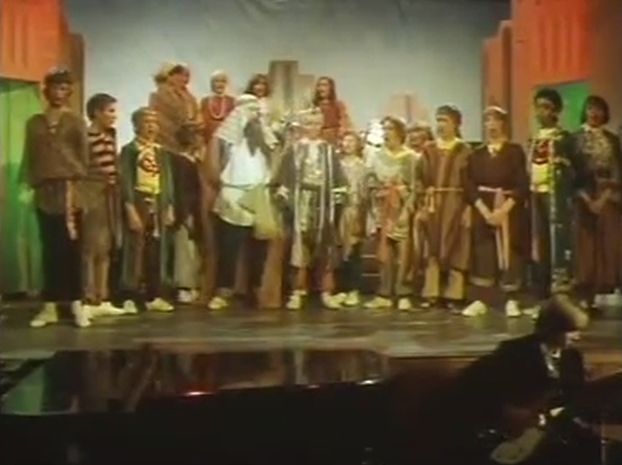
It’s the day of the school play, Joseph and his Amazing Technicolor Dreamcoat, and Joseph (Andrew Stanton) is feeling the pressure.  But is he really sick or is it just nerves?  But even though Andrew seems a little listless, others continue to put maximum effort into ensuring that everything goes right on the right.

None more so than Tucker, whose artistic side is displayed after he customises a bike to serve as Joseph’s chariot.  But his well-intentioned efforts to ensure that everything is perfect means that he decides to skip Mr Keating’s maths class to finish off working on the bike – which naturally doesn’t go down very well with the intimidating teacher.

This is the first real chance we’ve had to see Mr Keating at work.  Robert Hartley is spot on at portraying the type of teacher that every school seemed to have – you just know there would never be any disruption in his class as he’d have no qualms in issuing detentions to any miscreants.  He does so to Tucker when he tracks him down and after the boy complains that this means he’ll miss his tea, Mr Keating remorselessly tells him that he’ll just have to miss his tea!

Aside from enjoying a lengthy acting career, from the early 1950’s to the early 1990’s, he also spent the latter part of his career, during the 1980’s and 1990’s, composing music for various television series (including all fourteen episodes of the Keith Barron vehicle Haggard).

If Andrew’s complaints of feeling sick and his flat-as-a-pancake singing in the final rehearsals aren’t enough to drive Mr Sutcliffe to despair, then there’s worse to come.  Jackie Heron and her friends, having been irritated at being put into detention by Miss Summers, decide to wreck the props and costumes for the play.  Tucker’s chariot is damaged and paint is thrown over the coat of many colours as well as the scenery.

It’s Tucker who discovers the devastation, closely followed by Mr Sutcliffe who instantly decides that Tucker must have been responsible.  Thankfully, Miss Summers also turns up and is able to convince Mr Sutcliffe that there’s no way that Tucker would have done this – he certainly wouldn’t have damaged his own bike, not after all the hard work he put into it.

James Wynn has some good comedy moments in this scene. They work especially well since Mr Sutcliffe is usually a rather laid-back person – but with everything collapsing in disaster around him, the increasing irritation he feels (only compounded when he sits down on Tucker’s chips!) rings the changes somewhat.

As might be expected, it all works out fine in the end – Tucker repairs the bike and he manages to find a replacement coat.  Although it comes as a surprise to his mother when she realises that Tucker’s taken one of her coats without asking.  But as so often with Peter Jenkins, she regards him more with indulgence than irritation.

Moonbase 3 – View of a Dead Planet

view

The Arctic Sun Project is a highly controversial scheme which has divided opinion .  The plan is to detonate a hydrogen bomb above the Arctic Circle and the resulting explosion will melt the polar ice-caps and create vast areas of new land (dubbed the new Garden of Eden).

The creator of the project, Sir Benjamin Dyce (Michael Gough), has just arrived on Moonbase 3 for a visit and Caulder is naturally keen to hear directly from him about this tremendous feat of scientific endeavour.  But he, and the rest of the team, are surprised and perturbed to be told by Dyce that the Arctic Sun Project will destroy all life on Earth.

Dyce is a brilliant scientist (amongst his many distinctions is a Nobel prize) but after his diatribe some of the others decide that he’s lost his grip on reality.  However, when all contact with Earth is lost and the whole planet is engulfed in a peculiar mist, it appears that his doom-laden predictions have come true …..

View of a Dead Planet was Arden Winch’s only script for Moonbase 3.  It’s notable for presenting us with a much more affable and pleasant Lebrun than we’ve previously seen.  He spends the early part of the episode making ironic remarks and is later pleased when the others decide to surprise him by celebrating Bastille Day.  It’s hard to imagine them making any sort of effort for the distant and surly Lebrun we saw in previous episodes!

The opening few minutes also gives us a rare glimpse of the Moonbase 3 personnel at rest and play.  We see Tom Hill playing a game of long distance chess with his opposite number in the Russian Moonbase.  I wonder if this was a homage to a similar scene in the Hancock classic The Radio Ham?

But there’s not too much time for fun as within a matter of hours the Earth looks to be dead.  It’s a staggering coincidence that the architect of the Arctic Sun Project happened to be on the Moon at precisely the right time and was therefore able to explain to the staff (and the viewers at home) exactly what he believes would happen – via a large info-dump.

Michael Gough’s not terribly good in this, which is strange because he was usually such a reliable actor.  Maybe part of the problem is that Dyce is supposed to be a much older man than Gough (he was fifty seven when this was made).  The wig doesn’t help either.

Once all hope looks like it’s lost, it’s instructive to see how everybody copes.  Lebrun gets drunk and demands to know when Caulder plans to kill them all, whilst Bruno Ponti (Garrick Hagon) gets drunk and mauls Dr Helen Smith.  It’s rather eye-opening that his attempted rape of Helen is later dismissed quite casually (he was under pressure, like the rest of them, but it still seems remarkable that no further action was taken).

Caulder and Tom Hill meet to discuss what they should do.  With limited food and oxygen, they can only last for a few weeks at most.  Caulder isn’t keen for everybody to carry on until the final scrap of food is eaten, so the ever-practical Tom suggests introducing carbon-monoxide into the atmosphere.  It’ll just make everybody drowsy and they’ll gradually drift away into a sleep they’ll never awake from.

View of a Dead Planet has more of a hard-SF edge than some of the earlier episodes, although human interaction is still very much to the fore.  Since the acting is rather variable (always a slight problem with Moonbase 3) it’s not the strongest episode, especially thanks to the rather cop-out ending.

If Barry Letts and Terrance Dicks had been aware that the show wouldn’t be recommissioned, it would have been suitably bleak (rather like most of the series) to have ended with the complete destruction of the human race.  As it is, just before Caulder orders everybody to be gassed, communication is restored with Earth.  The detonation of the bomb caused considerable atmospheric disturbances, but this seems to be only temporary, so in time everything should return to normal.

After being so certain the the end was nigh, Dyce has to back-peddle somewhat – but he’s still able to provide the moral of the story (which sounds like it might have come direct from Barry Letts himself) by stating that mankind has been lucky this time, but they can’t afford any more mistakes.  With such potent and powerful methods of destruction, all humanity is placed on a knife’s edge. Another miscalculation could result, next time, in complete annihilation.

It’s not perfect, but Moonbase 3 is a programme that’s well worth your time.  And it wouldn’t be the last time that the BBC would create a SF series based on the Moon.  Fourteen years later, Star Cops would have an equally brief run (clearly Moon-based shows just aren’t popular!) and that’s going to be the next series that I’ll dig out to rewatch.

Grange Hill. Series Two – Episode Twelve

grange hill s02e12

Written by Phil Redmond. Tx 9th February 1979

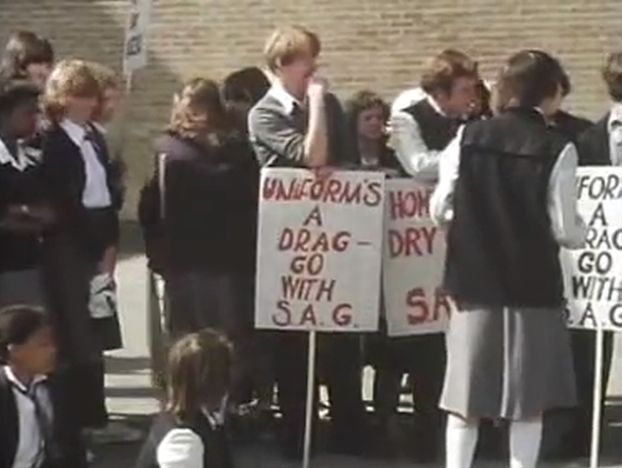
SAG continues to demonstrate (with placards bearing the catchy slogan “Uniform’s a drag – go with SAG”).

The noise irritates the mild-mannered Mr Sutcliffe, but Mr Llewellyn seems quite unconcerned, regarding it as “one of the problems of living with democracy, having to tolerate elements you don’t agree with.”  He asks for a delegation to air their grievances – which is led, of course, by the young militant Jessica Samuels.  We know by now exactly what Jess will say (and the Headmaster knows as well, hence his slightly mocking tone).

He makes the point that he’s not prepared to do anything until it can be proved that the majority of pupils are in favour of abolishing uniform – a concept which SAG never seem to have contemplated.  He offers to raise it at the next staff/pupil council meeting – where the proposal to abolish uniform is defeated by nine votes to two.  Coincidentally, Penny Lewis is gathering support for a referendum to accurately gauge everybody’s opinions (which would seem to be the obvious way to prove, once and for all, what the majority of pupils actually want). It’s therefore odd that neither SAG or Mr Llewellyn ever seem to consider the possibility of a referendum themselves.

Naturally, Jess and the others don’t take this latest setback at all well and decide to organise a sit-in, barricading themselves into the secretary’s office.  Maximum embarrassment is created for Mr Llewellyn when Jess calls the local paper – but he’s able to diffuse the situation by telling the reporter that it’s hardly a full-scale riot – just a handful of individuals.  When the SAG members sees the reporter has left without speaking to them, this is the final straw and they begin to wreck the office (much to the dismay of Trisha and Cathy).

After the heavy artillery (Mr Baxter) is brought in to restore order, the SAG leaders are expelled whilst Trisha and Cathy are suspended for seven days.  It brings to an end one of the most confrontational plot-threads that the series would ever attempt.  Off hand, it’s difficult to recall any other teacher/pupil conflicts on such a scale as this. Although Grange Hill would deal with many contentious issues in the decades to come, this sort of open disobedience would rarely be seen again.

Moonbase 3 – Castor and Pollux

castor

Moonbase 3 hosts a reception for a group of Russian dignitaries.  Their party includes the top cosmonaut Colonel Dimitri Gararov (Milos Kirek) who’s delighted to finally get the chance to meet Tom Hill.  In his day Tom was a notable astronaut and Gararov makes no attempt to hide the admiration he feels for him.  As he said, during training whenever a tough question was posed, he’d ask himself what Tom Hill would have done in such a situation.

The leader of the Russian Moonbase, General Alexis Trenkin (George Pravda), has an interesting meeting later with Caulder.  Caulder is very keen to try and interest the Russians in a joint project.  Since Europe are very much the poor relation in space, teaming up with the Russians on a prestigious venture would be a certain way to increase their funding.  Trenkin casually tells him that for 350 million they could be a partner in a proposed manned flight to Venus.

But any thoughts of co-operation seem to be unlikely after Tom runs into difficulties whilst on a routine mission to service a malfunctioning satellite.  A faulty computer command has sent his capsule spinning out into deep space.  He can be rescued, but it would take a top astronaut to do so – somebody like Gararov.

Trenkin flatly refuses to send him as Gararov is soon to depart for a new orbital station, so he’s not prepared to risk his life.  But Gararov decides to go anyway, which naturally pleases Caulder – but Trenkin’s displeasure becomes apparent when he requests that Caulder is removed from command during the remainder of the rescue mission.  Lebrun therefore takes charge, but since he’s already questioned the wisdom of the mission, will he be prepared to make the right call at the critical moment?

After a run of episodes with similar themes, John Lucarotti’s Castor and Pollux makes a refreshing change.  For once, there’s no unstable personalities – instead the drama comes from the rescue mission.

The debate over how to rescue Tom highlights the differences between Caulder and Lebrun.  Caulder will not accept for even a moment the possibility that a rescue is impossible and he’ll do anything in order to make it happen.  If it means that his cherished dream of collaboration with the Russians is scuppered, then so be it.

Lebrun, on the other hand, maintains an icy detachment for most of the story.  He professes to be sorry about Tom, but he considers that he’s as good as dead – and if so, why risk more lives in a futile rescue attempt?  The irony is that he’s the one who finally orders Gararov to make the very risky manoeuvre that ultimately saves Tom’s life.  He later says that it was the logical choice, but it was still a gamble – and had it not worked it would have been his career on the line.

Castor and Pollux is a good story for Barry Lowe.  Tom Hill’s by far the most naturalistic of the male leads (Donald Houston’s Caulder frequently lurches over the top whilst Ralph Bates’ Lebrun tends to be rather wooden) and this episode helps to fill in some of his back-story.  A respected and highly experienced astronaut, his current work on Moonbase 3 might be seen as something of a comedown, but Caulder is well aware just how important he is.  As he says, it’s Tom that keeps them all alive – and in the unforgiving vacuum of space that’s a vital skill.

Moonbase 3 was never the fastest paced of series and it’s fair to say that this episode is slower than most.  Since the bulk of it revolves around Tom’s problems, there’s an awful lot of scenes showing people gazing anxiously into monitors whilst Tom flicks buttons in his capsule.  Modelwork is also fairly limited, which probably reflects the series’ fairly low budget.

It’s always a pleasure to see the dependable George Pravda.  Born in Hungary, he carved out a very decent career playing a variety of East European nationalities, including Russians of course.  And whilst he stumbles over a few early lines, Milos Kirek is solid as Gararov.

Although the current political climate is rarely touched upon during the series, we can assume that by 2003 (the year in which Moonbase 3 was set) the Cold War has ended.  There seems to be no mistrust of the Russians, for example, and Caulder’s desire to work with them (plus Trenkin’s comment that if the Europeans aren’t interested in a joint venture to Jupiter, they’ll approach the Americans instead) confirms that.

With the fairly down-beat endings we’ve seen so far, you could be forgiven for expecting this one to finish badly as well.  But for once, there’s a positive outcome – Tom is rescued and both he and Gararov make it back safely.  Trenkin is pleased and this demonstration of European/Russian co-operation only seems to have strengthened any possible future alliance.

Grange Hill. Series Two – Episode Eleven

grange hill s02e11

Written by Phil Redmond. Tx 6th February 1979

SAG are becoming increasingly militant.  The first flashpoint occurs over a dispute in the school canteen, but much to their dismay Mr Llewellyn accedes to their demands.  So they decide to target extra-curricular sport activities – which means that they’ll meet Mr Baxter head on …..

This episode is a fascinating time capsule of the period.  Industrial unrest was an everyday occurrence in late 1970’s Britain and here we see that Grange Hill isn’t immune.  SAG decide to organise picket-lines across the changing-rooms and do their best to stop their fellow pupils crossing them.  The rhetoric spouted by Jess and her followers has become increasingly heated.  Whereas in the earlier episodes it was possible to believe that they had a genuine desire to abolish school uniform on a point of principle, here it appears that they’re simply looking for any cause that’ll allow them to create the maximum amount of disruption.

Was this Phil Redmond having a none too subtle dig at the unions?  The speedy resolution of the canteen crisis seems to confirm this, as Jess seems very disappointed that Mr Llewellyn accepted that all their points were valid.  The problem centered around a table designated for those (such as Benny) who were receiving free school dinners.  The stigma this causes, which Doyle gleefully uses to pick a fight with Tucker and Benny, has been a bone of contention for some time.

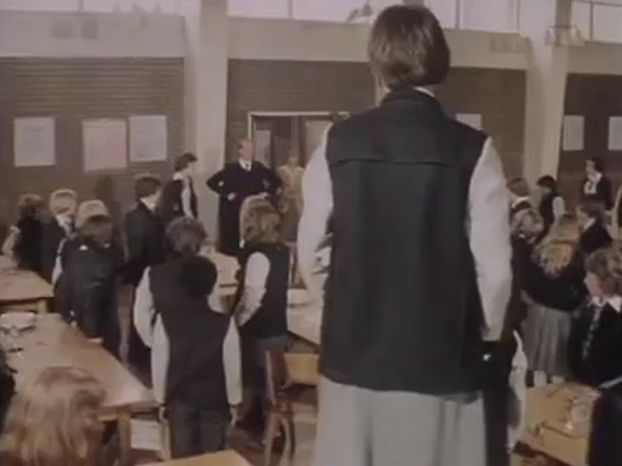
There’s another example of (mild) bad language, which is nevertheless a surprise to hear.  But this pales into insignificance when Jess stands on the table, insisting that the Headmaster is brought to them immediately.  Others follow suit and all of the pupils make a lot of noise.  It’s not exactly a riot, but it’s still a scene that would have no doubt provided more ammunition for those who contended that Grange Hill was a bad influence.

When Mr Llewellyn arrives, Jess outlines their grievances.  “This is merely a demonstration to highlight the humiliation, the degradation and the embarrassment a lot of students have to suffer. Not only due to their family circumstances, but because they’re forced into a situation which stigmatizes the poor.”  It’s another dramatic moment which shows how the series had evolved from the fairly low-key first series.

Tucker is also able to wring from the Headmaster another concession – that the older pupils will no longer serve the younger ones with their meals.  He’s unhappy that some, like Booga Benson, have been short-changing them.  This is the first time that Booga (later to become Tucker’s nemesis) is mentioned but it’ll be some time before we actually see him in the flesh.

Mr Baxter later refers to the SAG committee as louts and there’s a telling confrontation between him and the SAG leaders on the playing fields.  They might be able to intimidate some of the other teachers, but there’s no doubt that Mr Baxter isn’t going to back down.  However, he does require the help of some of the older pupils (led by Gary Hargreaves) to ensure that the cricket team (heading off to play a match against Brookdale) are able to reach the school bus unmolested.

Several players are pressurised to step down, so Tucker, Alan and Justin step in.  This leads to some classic comedy moments between Tucker and Mr Baxter.  Tucker is keen as mustard – he wants to be the wicket-keeper, but Mr Baxter tells him to get out into the field instead.  And when it’s their turn to bat, he’s constantly trying to get onto the pitch, but Baxter tells him that he’ll only get a turn when he’s given up hope!

Moonbase 3 – Outsiders

outsiders

Moonbase 3 is under pressure.  Part of the reason for the base’s existence is to carry out scientific research projects – several look promising, but Caulder needs one of them to show definite results.  And the sooner the better since Franz Hauser (Victor Beaumont) is on the way from Earth for an inspection.

Hauser is one of the people responsible for Moonbase 3’s appropriations budget.  If Caulder can’t prove that any progress is being made, it’s possible their funding will be drastically cut.  Mineralogist Peter Conway (John Hallam) may be close to a breakthrough, but he tells Caulder that nothing’s certain yet.  When Caulder complains that they’ve spent too much money for negligible results, Conway counters that that’s the price you pay for research.

Stephen Partness (Tom Kempinski) is also working hard and seems close to success in his field.  Partness has ruffled more than a few feathers, including Caulder’s, but if he can come up with something then presumably all would be forgiven.

Outsiders was the second script penned by John Brason.  Whilst the three previous episodes have all had their dark sides, Outsiders is the bleakest yet as there’s precious little comfort that can be taken from the conclusion of the story.

Peter Conway seems, at times, to be a deeply unhappy man – although his lapses into melancholy are only temporary.  But Dr Smith has noticed his changing moods and is concerned.  It doesn’t appear that his problems are connected to the stresses of living on the Moon – it’s probable that he would feel the same back on Earth.  Conway is just grasping for the reason why – there must be some other truth, he says, than just scientific truth.  During the course of an intimate counseling session with Helen in his cabin he remarks that “I can see that a tap for water is a great convenience, but something went out of the world when we stopped going to the communal well.”

Hallam’s excellent in this scene, as he is throughout the story.  Helen decides he’s a man out of time – a romantic – who seems to be cast adrift in a hostile environment.  She ends their discussion by kissing him on the lips.  It’s notable that this is the second episode in a row where she’s become attracted to one of her subjects.

The uneasy compromise between pure scientific research and the necessity to generate a profit is an interesting theme which is well developed here.  Given the expense of space research, it’s reasonable that the European government would seek to try and recoup as much money as possible – but research isn’t something that can be hurried (or if it is, then mistakes can occur).

But everything seems to be going Caulder’s way when both Conway and Partness announce that they’ll be able to demonstrate their successful processes to Hauser. However, Partness has faked his work in order to try and keep his career afloat.  He was on the verge of something, but the pressure of having to produce instant results meant that he resorted to subterfuge in order to buy himself a little more time.

It doesn’t take long before the truth comes out, although Caulder is able to keep it away from Hauser.  And whilst Caulder is a moral and honest man, he has no scruples in covering up Partness’ falsifications for the good of the base.

Conway’s breakthrough is highly significant, but he’s become increasingly detached and decides that he no longer wishes to continue living.  He dons a spacesuit and walks out onto the Moon’s surface, leaving the following note behind.

It is the coming of a new age in which I have no place. The new truths are not my truths. I think I am the perennial dodo. I belong to a thing like Athens, a mother of a mode of life which shall renew the youth of the world. A thing like Nazareth. Change is a delusion. It is of new things that Men tire, of fashions and proposals and improvements. ‘Tis the old things that are forever young. I have no place here. It is time to leave.

The death of Conway does give Partness a second chance.  Caulder was initially planning to send him back to Earth as soon as possible, but partly because Conway respected him, Caulder allows him to stay and finish his research.  It’s about the only crumb of comfort that can be taken from the events of the episode.

Outsiders might just be my favourite episode of Moonbase 3, thanks to the fine performance of John Hallam.