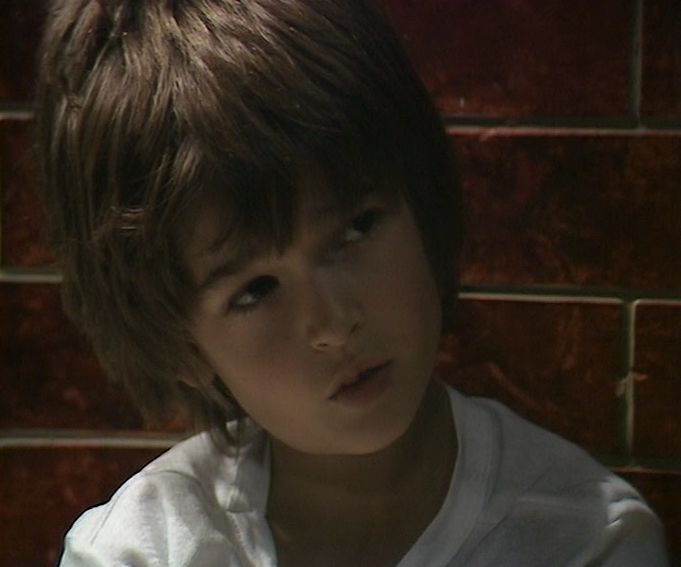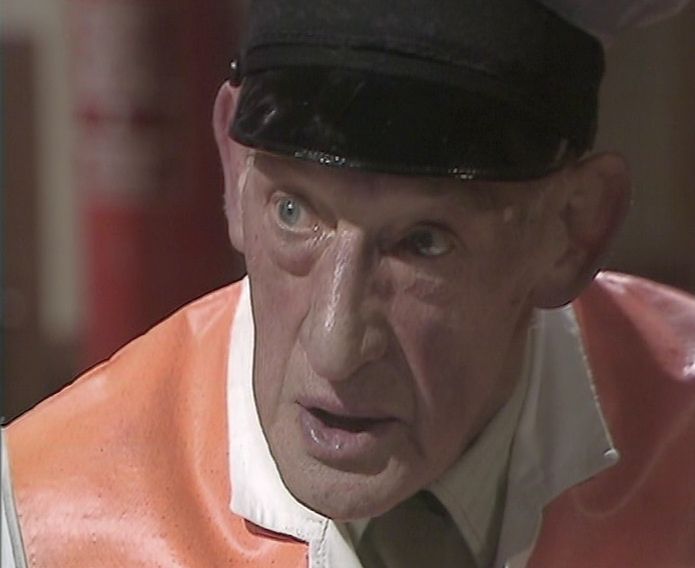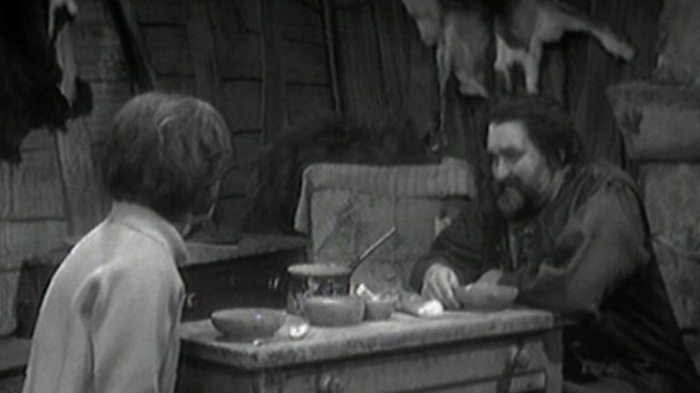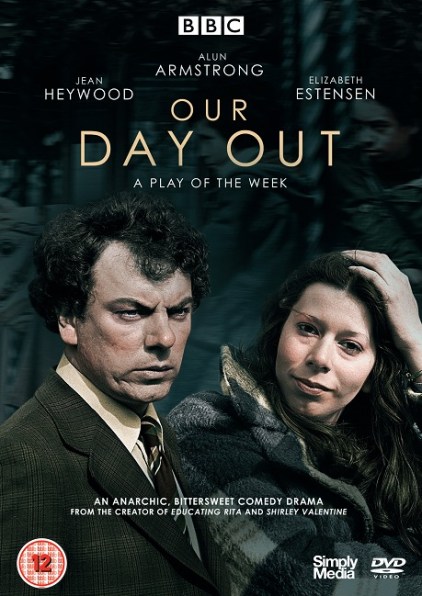
Play of the Week – Our Day Out. Simply Media DVD Review.

day out

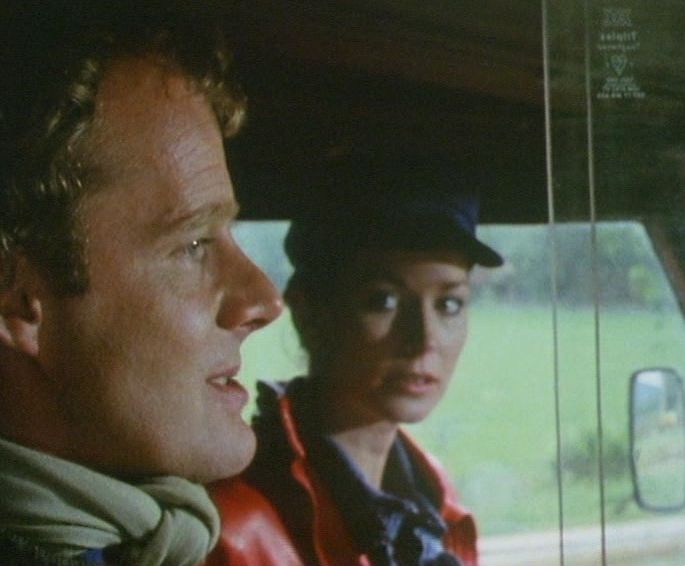
Mrs Kay (Jean Haywood) runs a remedial class for illiterate children.  Along with the long-suffering Mr Briggs (Alun Armstrong) and two younger teachers – Susan (Elizabeth Estensen) and Colin (Lennox Greaves) – she escorts her unruly mob on a day trip from Liverpool to Conwy Castle in North Wales.  For Mr Briggs, it’s a day of considerable stress ….

Drawing on his own experiences of school trips (both as a teacher and a child) Our Day Out is a typically perceptive slice of drama from Willy Russell. Originally broadcast in December 1977 as part of the Play of the Week strand, it obviously struck an immediate chord with the audience as it was swiftly repeated just a few months later (this time as a Play For Today).

Although he wrote the play in just four days, it was a subject he’d been mulling over for some considerable time. Later turned into a musical, the original BBC play is one which Russell still regards with fondness today.  “The performances are exquisite. Shot on 16mm in just three weeks by a first time director working with a largely untrained cast it just seemed to be one of those charmed ventures in which everything just fell into place”.

Mrs Kay and Mr Briggs are two very different types of teacher – she’s the free and easy type whilst he’s stern and controlling. Which method works best? Mr Briggs maintains that you need discipline in order to make any headway in teaching these types of children but Mrs Kay – in a late set-piece monologue – is totally dismissive of this attitude.  Society at large, she maintains, doesn’t want them schooled – after all, if they were then where would the next generation of factory fodder come from?
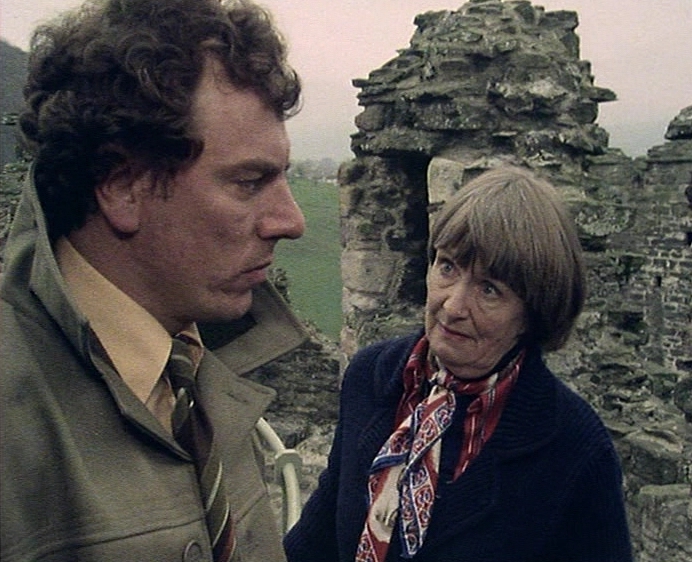
o4.jpg

This is the most overtly political point in a play where the thorny topic of inner-city deprivation is never far from the surface. The difference between the streets of Liverpool (shown here in all their grimy 1970’s glory) and the countryside of Wales is marked, especially since it’s made plain than most of the children have never gone further than Birkenhead before. There’s a yearning melancholy on display from some of them which is heartbreaking – they want a better life, but there’s a sense that the system just won’t allow it.

The gulf in acting experience between the adult cast and the children is one of the most intriguing things about Our Day Out.  None of the children had acted before (and most wouldn’t again) which gives their performances a very natural and unaffected air.  To balance this, you have experienced actors such as Jean Haywood and Alun Armstrong in the central roles as well as decent cameos from the likes of George Malpas, Robert Gillespie and Peter Tilbury.

En route to the castle, they stop off twice – first at a motorway cafe and then at a zoo.  It does beggar belief that both times Mr Briggs would let them roam unsupervised – with the result that they pilfer all the sweets from the cafe and later attempt to steal half the zoo! This latter moment is high on comic value but low on credibility.  However it allows Armstrong (who is excellent throughout) a moment of high intensity as he roundly berates the children.

As you might expect, he eventually begins to relent and it’s his clifftop encounter with young Carol (Julie Jones) which is key. Jones tackles the substantial role of Carol with such gusto that it’s a real shame she didn’t continue acting.  Desperate to stay in Wales rather than return to her miserable existence in Liverpool, there follows a tense scene where Mr Briggs attempts to talk her back from the cliff edge.  This he does and the emotional connection he makes with her helps him to finally unbend.

A late visit to the funfair – his idea – ends the day on a happier note, but as the coach returns to Liverpool it’s easy to see Mr Briggs’ relaxed spirit slowly dissipating.  Will he modify his approach in future or simply revert to his stern ways once they’re back at school? This is left unresolved, but there’s one key moment which suggests that the latter course is the most likely.

Deftly juggling comedy with more serious themes, Our Day Out is a gem of a play which at 67 minutes doesn’t outstay its welcome.  Alun Armstrong is outstanding, but none of the cast disappoint and it’s the sort of play which should have considerable replay value.

Our Day Out is released by Simply Media on the 1st of October 2018, RRP £9.99. It can be ordered directly from Simply here (quoting ARCHIVE10 will apply a 10% discount).
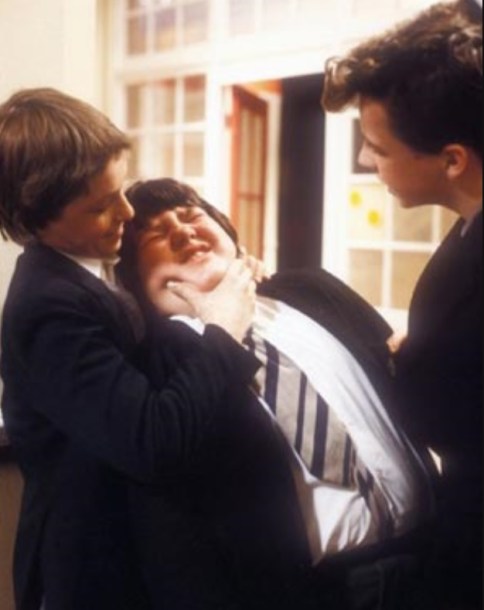
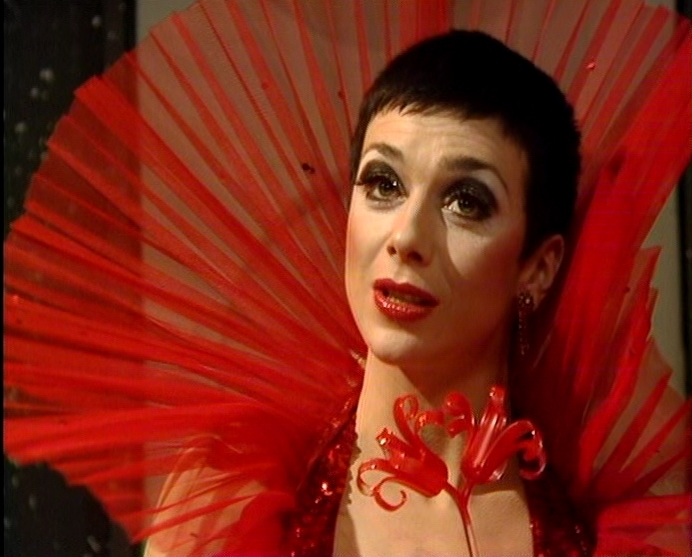
Grange Hill – The Rise of Gripper

gh gripper roland denny.jpg

With Eureka due to release series five and six of Grange Hill on DVD later in the year, it seems like the ideal time for an irregular series of quick posts looking at some of the key themes developed across these two years. To kick off – the rise and rise of Gripper Stebson (Mark Savage).

GH had tackled bullying before (as early as the third episode of series one) but there was something very different about Gripper. Since the first series was episodic in nature, there wasn’t any room to develop the plot-thread of first-former Judy being targeted by the mean fifth-former Jackie Heron in any great depth.  One intervention later, everybody lived happily ever after ….

Gripper would prove to have much more staying power. Indeed, although he had appeared in a handful of series four episodes and would go on to cameo in a few post series six ones (“oy! that’s my bike!”) the story of Master Stebson is also, in part, the story of series five and six.

Previous victims of bullying – such as Judy and Benny (who had been targeted by Doyle) – found they had others (Trisha/Tucker) who were prepared to stand with them. Poor Roland Browning (Erkan Mustafa) had nobody and this made all of his wretched misfortunes throughout 1982 even more disturbing. If the message from series one (delivered by Trisha’s older sister to Judy) seemed just a little too pat (report a bully and all will be well) then Roland’s silent suffering had more of the ring of truth.

It’s tempting to wonder if the change in tone was initiated by Susi Hush, the new producer for series five.  It’s telling that the previous producer, Colin Cant, had – back in 1980 – cast severe doubts about whether GH could ever show the reality of bullying.

And yet that’s what was achieved throughout 1982 and 1983.  Possibly this was simply an indication of the series’ increasing confidence – although GH had had long-running plot-threads before, this was the period when they started to elongate even further. With an established audience base, it seems likely that Grange Hill had no qualms in pacing certain storylines quite slowly.

In later years this could sometimes turn out to be more of a curse than a blessing (Gonch’s interminable money-making schemes became tiresome very quickly) but Roland’s apparent suicide attempt at the end of S05E16 has a special resonance due to the fact that it was placed towards the end of a run of episodes which had featured him under attack from Gripper on so many occasions.

Blakes 40 – Blakes 7 40th Anniversary Rewatch: Series Two, Episodes Eleven to Thirteen

Gambit

b9.jpg

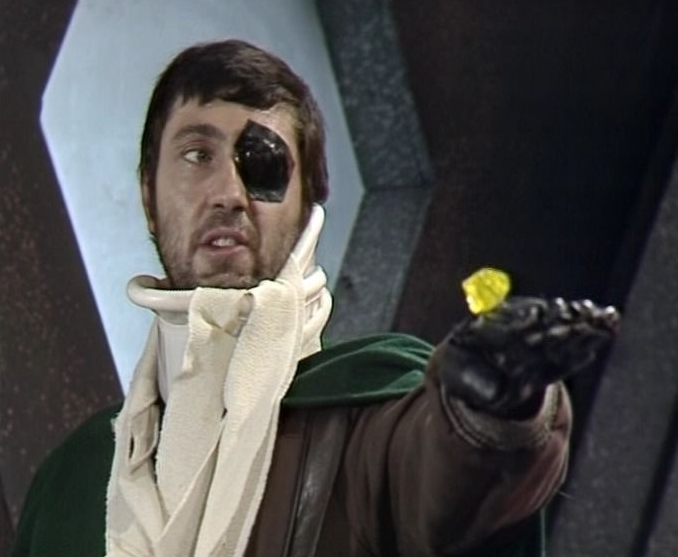
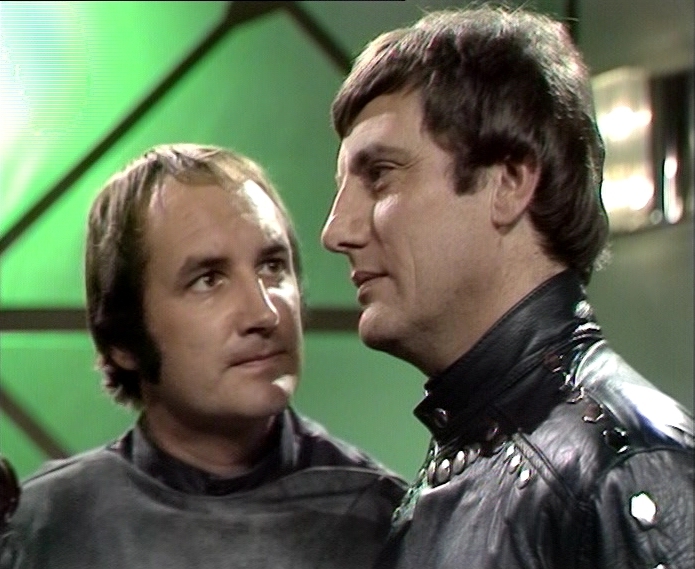
Gambit‘s an odd one. The main plot – the hunt for Docholli – moves very slowly whilst the production design is somewhat on the tacky side. But since Robert Holmes’ script is packed with entertaining one-liners this isn’t really a problem.

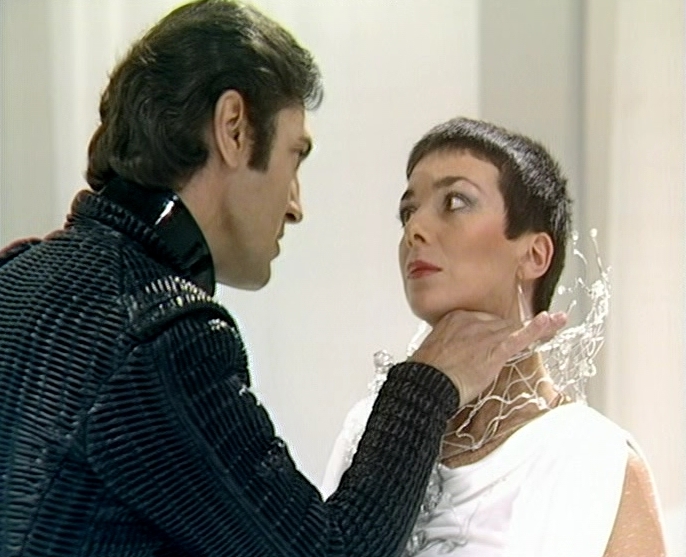
If you like your B7 stories on the gritty side, then you’re out of luck. Aubrey Woods’ overpowering Krantor sets the tone. Woods is clearly having a great deal of fun – the banter between Krantor and Servalan being one of the episode highlights.

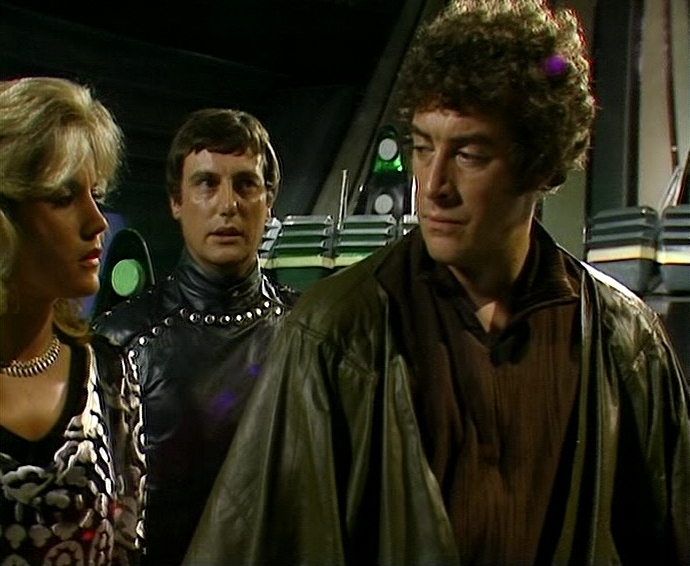
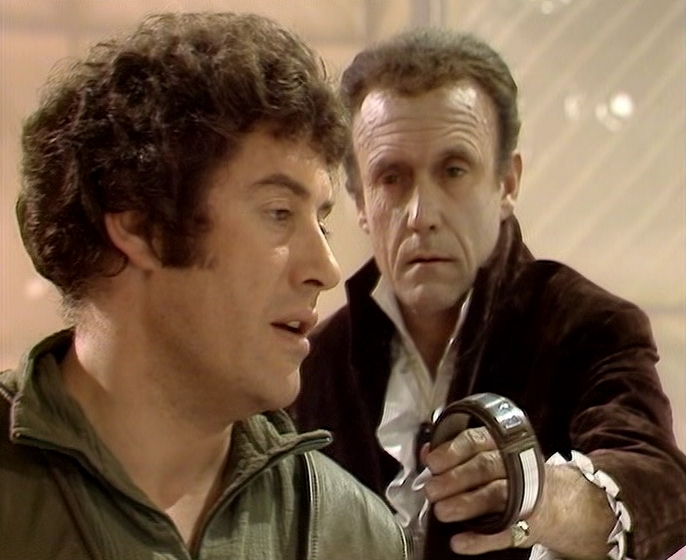
Blake, Jenna and Cally (the two girls glammed up to the nines) are involved in the main plot, but it’s Avon and Vila (attempting to break the bank at the casino) who get all the best scenes. The Avon/Vila subplot is so played for laughs that it feels more like a parody than proper B7 – the notion of Avon sneaking down to Freedom City (is he afraid of getting a ticking off from Blake?) and the way he persuades Orac to shrink himself (how handy and how odd it was never done again) are just two examples of this.

Oh, and the moment when he spits out his food after learning that Vila’s been tricked into playing the Klute at speed chess ….

With Holmes scripting, it’s possibly not surprising that the dialogue is a little different from the norm (Avon’s comment of “you dummy” doesn’t feel like something he would ever say).

There are also some prime examples of Holmes’ colourful command of the English language. Servalan’s thoughts on Krantor for one. “He is a despicable animal. When the Federation finally cleans out this cesspit, I shall have that vulpine degenerate eviscerated with a small and very blunt knife”.

Krantor’s counter-comments are equally as eye-opening (“one of these days, Toise, I am going to have Supreme Commander high-and-mighty Servalan ravaged until she does not know what month she’s in. I’ll have her screaming for death …”).

With an unforgettable turn from Sylvia Coleridge, an appearance from Bill Filer and Travis in a silly hat, Gambit is top class entertainment.

The Keeper

b12.jpg

If you’ve seen The Pirate Planet then you’ll know what to expect from Bruce Purchase’s Gola – except that the Captain had hidden depths, whilst there’s no such luck with Gola (who’s just all bluster). The Keeper is another example of Blake’s shaky leadership qualities – no sooner has he, Vila and Jenna teleported down to the surface of Goth than they’re overpowered with embarrassing ease.

Vila (obviously) becomes the King’s new fool whilst Jenna becomes the King’s new … well, you can probably guess. Sally Knyvette manages to mine a few comic moments from this fairly unpromising scenario. Meanwhile, Blake mooches about doing nothing much whilst Avon, aboard the Liberator, leaves the others on Goth to fend for themselves as he sets off to destroy Travis’ ship. One point, how did he know that the ship belonged to Travis?

If you like ripe overacting then you’ve come to the right place. In addition to Purchase there’s also Freda Jackson as Tara (she has a nice line in cackles). Servalan’s on/off relationship with Travis is now back on, since he’s once again at her side (Travis changing from being Servalan’s enemy to her ally multiple times since Trial has been decidedly odd). The way he cuts and runs some twenty minutes in does generate the episode’s only surprising moment though.

Fifty minutes of running on the spot, The Keeper ends up as something of an also-ran although with Derek Martinus onboard as director there’s some decent camerawork in evidence.

Star One

b13.jpg

Star One (rather like Terminal and Blake in fact) does indulge in a fair amount of running on the spot. Some of the scenes set on Star One (especially the hunt for Lurena) aren’t that interesting, but since the episode also features several of B7‘s most memorable moments the good outweighs the bad. Despite the fact that this is Blake’s last hurrah as a regular, Avon is still the one who gets all of the best lines. “As far as I am concerned you can destroy whatever you like. You can stir up a thousand revolutions, you can wade in blood up to your armpits. Oh, and you can lead the rabble to victory, whatever that might mean”.

His face-off with Travis (“Now talk or scream, Travis, the choice is yours”) is also rather good.

But at least Blake does have that brief chat with Cally, where the pair discuss the ethics of destroying Star One. It’s a fascinating scene – not least for the fact that Cally (next to Blake the most fanatical) was the only one to voice a tentative concern that killing millions of people might possibly be a bad thing.

Some of Star One’s functions are discussed in the opening few minutes. They seem rather benign (climate control) rather than oppressive and domineering. And the way the episode begins with Servalan effectively cast in the role of the goodie (discussing how to bring Star One under control in order to prevent further deaths) before crossing over to the Liberator (where Blake and the others are plotting to destroy it in order to generate chaos) shows how far the lines between good and evil have become blurred.

Servalan’s surprisingly a fairly minor character in this one, but the moment when she instigates a palace revolution is chillingly played by Jaqueline Pearce. “The President and those members of the Council who are unable to accept the realities of the situation are even now being arrested, as are those of our own people whose loyalties may be divided. At a time like this complete unity is an absolute essential”. The inference is that under military rule the Federation will become an even more oppressive force, although the aftermath of Star One rather negates this.

Travis’ death is a mercy killing (both for the character and the audience). A shame the effects shot of him tumbling to his doom isn’t terribly effective though.

And that cliffhanger ….

Blakes 40 – Blakes 7 40th Anniversary Rewatch: Series Two, Episodes Eight to Ten

Hostage

b8.jpg

Oh dear, this isn’t very good is it? Plus points, we get a brief smidgen of Kevin Stoney whilst Servalan placed under a little pressure is always good to see.

Continuity isn’t a strong point of this story. Servalan reacts with amazement when Joban tells her that Blake’s become a hero amongst the rank and file of the Federation, which flatly contracts previous stories where Blake’s growing reputation was becoming a problem.

I don’t know if it was ever seriously considered, but the possibility of Travis teaming up with Blake would have been very interesting. Having Travis as a new crewmember aboard the Liberator opens up all sorts of possibilities (which would have been more satisfying than the increasingly odd way his character was used – Voice From The Past, anyone?).

The crimos are pretty rubbish, as are the polystyrene rocks, whilst Travis seems stupider than usual (does he really not know who is weakest out of Blake, Avon and Vila?).

So not good, but there’s a few good one-liners scattered about and – as ever – great interaction between the regulars, so it’s not completely unwatchable.

Countdown

b9.jpg

The main drawback with a story which has a ticking countdown throughout is that things only really get exciting during the last few seconds. And so it proves here – even though we know that Avon and Del will save the day just in the nick of time, there’s still some decent tension wrung out as the clock ticks down to zero.

As for the rest of the episode, the development of Avon’s character (especially the revelation about his love for Anna and his uneasy relationship with her brother) is clearly the main point of interest. Darrow and Chadbon spar very effectively and it’s a pity that Del was never seen again (although given what we learn about Anna in Rumours of Death that’s possibly not too surprising).

Elsewhere, the characterisation of the remainder of the guest cast is pretty sketchy. Provine is a nasty piece of work and that’s about it – his only function in the plot being to give Blake another clue to the location to Star One (which is done in a highly unconvincing way). The locals are all pretty forgettable as well but I’ll give a bonus point out for the fact that there’s a female amongst their number (I’ll then deduct a point for the fact she’s such a wet lettuce).

Once again the girls are stuck by the teleport whilst the boys go down to play. This is becoming rather monotonous. Since it was already known that Sally Knyvette wouldn’t be returning for S3 (indeed she wouldn’t have done S2 had her contract not forced her to) it almost looks like all the writers had given up any interest in developing her character.

I do like the way that the Federation troops (supposed to be the best of the best) spend the opening few minutes doing nothing except running away as fast as they can from the advancing rebels!

Decent enough, but never a favourite.

Voice From The Past

b10.jpg

It may be mad as a box of frogs, but it’s impossible not to love Voice From The Past. I like the notion that Cally has badgered the others into doing exercises although it doesn’t seem to be agreeing with Blake, who is having the funniest of all funny turns.

Gareth Thomas goes right over the top and then back up again during the first fifteen minutes or so. It’s great stuff, as are Paul Darrow’s karate chops when Avon attempts to subdue a hysterical Blake!

Given Blake’s often arbitrary command style, it’s surprising that the others twig quite quickly that he’s not himself. Avon, as so often, is gifted most of the best lines (“Well, he’s certainly not normal, not even for Blake”).

Jenna, looking especially lovely today, is persuaded to share Blake’s nightmares (so she too gets the chance to register high on the hysteria scale). But once that moment of fun is over, the plot starts to fall apart somewhat.

It’s barely credible that Avon would leave Vila in sole charge of Blake. Equally hard to believe is the fact that a gullible Vila swallows Blake’s story that Avon and Cally are the guilty ones. Also, why are Avon, Cally and Jenna all sitting in a room with a door that Blake can lock? A touch careless of them ….

All of this messing with Blake’s mind ultimately does feel like filler, since when the main plot kicks in – Blake is invited to join a cabal of notable Federation types who plan to bring down the current administration – it seems clear that Blake would have been happy to join them without any manipulation.

What can you say about Shivan? Words fail me ….

Servalan’s tussle with Governor Le Grand tops the episode off in style. Servalan on the big screen is some sight.

Something of a messy episode, but it’s also great fun.

Blakes 40 – Blakes 7 40th Anniversary Rewatch: Series Two, Episodes Four to Seven

Horizon

b4.jpg

I love the opening ten minutes or so, which shows that tempers aboard the Liberator are getting rather frayed, with the result that everybody – especially Jenna – has become rather snippy. Well, everybody except poor Gan, who’s been exiled to the teleport bay for no good reason.

Horizon might be a fairly unsubtle colonial satire, but both Darien Angadi and William Squire are very watchable. Angadi’s Ro is a fascinating character – when he displays disinterest in the continuing deaths of his people at the mine (whom he refers to as primitives) is this an example of his Federation indoctrination or is he genuinely unfeeling about their fate?

Squire’s Kommissar oozes seductive villiany (a much better role than the Shadow in The Armageddon Factor – especially since this time he’s not hidden behind a mask).

The one part of the plot which doesn’t quite hang together is the revelation that Blake was intimately acquainted with one of Ro’s best friends. It’s far too much of a coincidence to be credible (unless Blake knew about Ro and Horizon all along and simply pretended to the others that he didn’t).

The scenes of Avon alone on the Liberator, debating whether to cut and run, are a highlight as is his explosive appearance on the planet, where he mows down a number of Federation troopers in his best Clint Eastwood style.

Not as bad as its reputation suggests, this is pretty decent fare.

Pressure Point

b5

Brian Croucher’s performance is considerably dialled down compared to Weapon. He still doesn’t quite convince, but a calmer Travis is a better Travis for me. It seems barely credible that Servalan would have hung about for eighteen days, waiting for Kasabi to turn up. She’s the Supreme Commander for goodness sake, who’s doing all the paperwork?

Jacqueline Pearce’s crocodile smile is on overdrive today – and she’s the recipient of some dramatic scenes with Jane Sherwin’s Kasabi. It’s always good to see Servalan slightly discomforted.

The main plot’s a bit of a run-around which doesn’t make a great deal of sense. If Central Control is only a shell, why does Servalan have so much trouble in getting the barriers deactivated? And since Travis has already snaffled the teleport bracelets from Blake and the others, he doesn’t actually need to follow them down – all he has to do is wait at the entrance, as eventually they’ll all have to come back up that way.

Blake’s cry (“We’ve done it! We’ve done it! We’ve done it! I’ve done it!”) and his subsequent collapse to the ground is a S2 highlight. That one of Blake’s merry gang dies in a totally pointless way seems apt – from start to finish this was a doomed exercise. For all of Blake’s optimism (his year of secret planning) his lack of foresight and tactical planning has been cruelly exposed.

Trial

b6.jpg

It’s hard to get too invested in the travails of Blake and Zil, so it’s lucky that the other plotline is rather stronger.

Travis gets his moment in the sun (explaining that his misdeeds are a direct result of his Federation training). Croucher starts to go way over the top here, whereas earlier in the episode – possibly because he didn’t have too many lines – he was somewhat more restrained.

Surprising that Servalan doesn’t feature more, but presumably there were political considerations precluding her appearance at court. Kevin Lloyd gives a nice performance as Trooper Parr – it’s always good when the Federation rank and file are given a voice.

Pretty watchable, but not a favourite.

Killer

b7.jpg

No surprise that Holmes quickly latched onto Avon and Vila as a team. Both are given plenty of good lines (such as Vila’s “When Avon holds out the hand of friendship, watch his other hand. That’s the one with the hammer”). This does mean that the others (especially Jenna and Cally) are somewhat sidelined though.

Ronald Lacey and Paul Daneman are both decent guest stars, Lacey as the untrustworthy “friend” of Avon and Daneman as a “good” Federation man. Given the way that Blake in the past has tended to regard the Federation as a single evil entity, it seems a little out of character for him to be so keen to warn the base about any possible danger from the mysterious vessel.

Some of the costumes are rather silly, but this is an occupational hazard with B7, especially during the second series.

Killer feels pretty trad – it’s almost as if Holmes was feeling his way at this point (crafting a story that wasn’t too dissimilar to what had gone before, but with a little extra twist). It’s his next one where he really starts to cut loose …

Blakes 40 – Blakes 7 40th Anniversary Rewatch: Series Two, Episodes One to Three

Redemption

b1

Redemption is a slightly odd way to kick off series two. Mainly because the first thirty minutes are Liberator bound, which gives it the feel of one of S1’s cheaper bottle stories (like Breakdown). Still, this does give us plenty of time to goggle at everybody’s new togs whilst the Liberator moves very slowly to a mysterious destination.

Avon – as usual – gets most of the best lines. His needling of Blake (“well now, you only had to ask”) is a delight. Sadly, the amount of time spent aboard the Liberator means that by the time we get to Space World there’s no time to explore it in any detail. Harriet Philpin and Sheila Ruskin look very nice but since the Altas are slaves to the machine they aren’t gifted distinct characters (so the creators of the Liberator remain just as much of a mystery at the end of the story as they were at the beginning).

There’s a nice bit of location filming, but Redemption doesn’t really amount to anything more than an amiable run-around.

Shadow

There’s a harder and more cynical edge to this story, which after a few fairly generic Terry Nation romps is more than welcome.

Blake’s desire to deal with the Terra Nostra, despite knowing exactly what they stand for, is a highly revealing character moment – clearly the ends justify the means for him. That Gan is the one who expresses the most vehement disapproval is a nice touch (this allows him to emerge as a character in his own right for once, but alas it’s too little and too late).

Blake is proved to be completely wrong, which demonstrates just what a flawed “hero” he is. Vila may be acting early on from self interest (he’s desperate to get to Space City) but his assessment of Blake – a pampered Alpha grade who wouldn’t last a minute amongst the underclass that Vila used to hang out with – seems spot on.

Avon delights in later telling Blake “I told you so”. And his ironic comment (“law makers, law breakers, let us fight them all. Why not?”) when learning of Blake’s next crazy scheme is a typically good Darrow moment.

Space City might be rather underpopulated (we have to rely on Vila’s vivid imagination to fill the gaps) and the subplot with Cally and Orac does seem rather bolted on to fill up an underunning script, but overall Shadow is a good-‘un and a favourite from S2.

Weapon

b3.jpg

Travis, after getting out of rehab, looks strangely different …

Brian Croucher doesn’t have a particularly auspicious debut (Travis here has all the subtlety of a bull in a china shop). Luckily, he would settle down a bit in later episodes.

The plot doesn’t make a lick of sense. If a perfect facsimile of Blake (or indeed two) can be whipped up, you’d think they’d be put to better use than what we see here. Clone Blake’s sole function is to inspect Coser’s wonderful weapon, IMIPAK, for a few minutes before Servalan arrives and takes it off him. Eh?

The earlier scenes with the Clone Master are fun though – all moody lighting, dry ice and Dudley going overboard on the organ ….

John Bennett does his best as Coser, despite the character’s funny clothes and the fact he’s only got one mood – very, very angry. Candace Glendenning also doesn’t have much of a part but is really rather lovely, so I’ll cut her some slack.

Scott Fredericks, despite his limited screentime, makes easily the best impression as the supremely confident puppeteer Carnell.

And what of our heroes? Well, they spend most of the episode on the Liberator, having a chat. Which sort of sums this one up, it’s mostly talk with little action.

Easily Chris Boucher’s least engaging story.

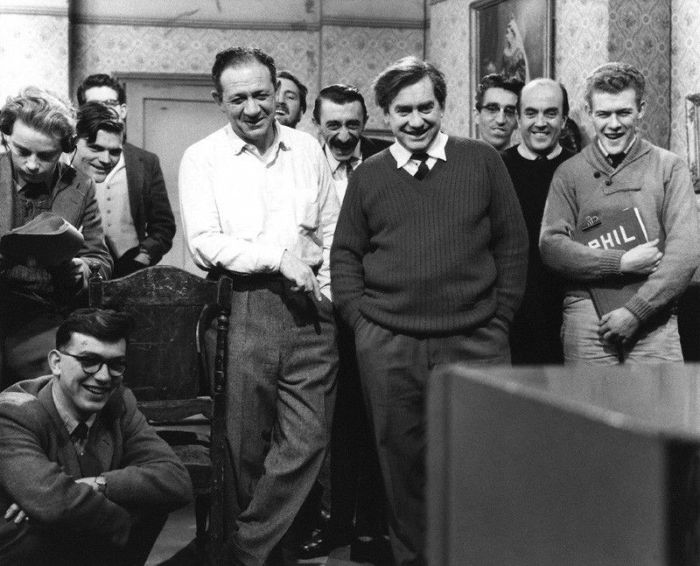
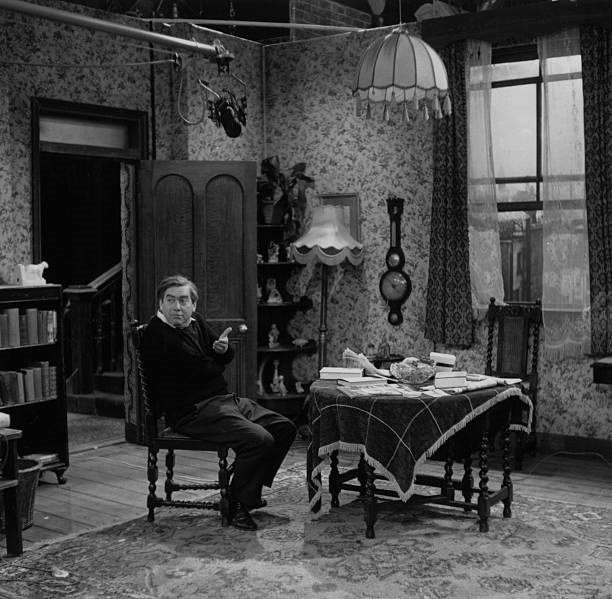
Tony Hancock (12 May 1924 – 25 June 1968)

608e273e4a0ec5b4ee1de9b0c9599a3b.jpg

Today marks the fiftieth anniversary of Tony Hancock’s death. This has generated a crop of newspaper and magazine articles, some – unsurprisingly – focussing on his sad demise.

The essential beats of the story should be familiar to most – the way his decision to gradually divest himself of all his comedy associates (first Kenneth Williams, then Sid James and finally Galton and Simpson) sparked a slow but inevitable decline. Spike Milligan’s famous quote (“he shut the door on all the people he knew, and then he shut the door on himself”) seemingly provides the final word.

And yet … this has always seemed to be not quite the whole picture. For one thing, it’s hard to argue against Hancock’s assertion that his comic character needed to grow and change. Sir Peter Hall (speaking in the Heroes of Comedy programme on Hancock) labelled the Lad as a product of the fifties (comparing him to Kingsley Amis’ Lucky Jim). If so, then carrying this persona unchanged throughout the next decade simply wouldn’t have worked.

The assumption seems to be that Galton and Simpson could just have continued churning out comedy classic after comedy classic for Hancock, but how many more stories were there left to tell? Possibly a move into a regular film career would have been best. It’s well known that Hancock grew to dislike and fear the pressure of the television studio environment – not least due to the problem of having to learn so many lines. Whilst The Government Inspector (bafflingly, still not available on DVD) suggests that – like Max Wall – he could have pursued a dramatic career.

It’s all what ifs of course, but the notion that if only Tony had stuck with the old team everything would have been fine does seem a little flawed. For those who want to dig into the story deeper, there are a number of books available (some much more lurid than others). John Fisher’s biography is by far the best – an unashamed fan and admirer, he nevertheless didn’t shy away from the darker moments. But he also made the observation (which few others have) that Hancock’s life, post Galton & Simpson, wasn’t all downhill. During the later years there were still high spots to be cherished.

But even when the details of Hancock’s final years have been picked apart for the umpteenth time, we still have most of his best work available to enjoy. And this should always be Tony’s enduring legacy.

For any newcomers, a few suggestions to get started.

The Blood Donor/The Radio Ham

These two television episodes, from his final BBC series, were later re-recorded for an LP release and it’s these audio re-recordings (released and re-released numerous times over the years) which are my preferred versions. Slightly tighter and better performed than the television originals (plus The Radio Ham has a little extra value – “If I’d had me key I wouldn’t have knocked on the door, would I?”) they’re an excellent introduction to the world of Tony Hancock.

The Last Bus Home

One of the later radio HHH‘s with the core team of Tony, Sid and Bill, this is simply a joy. Like Sunday Afternoon At Home, it makes a virtue out of the fact that very little happens (they wait for the bus, they can’t get on the bus, they have to walk home). But there’s still so much to enjoy – especially Tony and Sid’s punch-up (“at least I know where I stand”). The way that Sid dissolves into giggles after Bill announces that the bus is finally coming is a lovely unscripted moment.

The Missing Page

An obvious television HHH choice, but that’s because it’s very, very good. Tony and Sid work beautifully together and if the plot doesn’t quite hold water, with so many wonderful lines (not to mention Tony’s beautifully performed library mime act) I’m not complaining.

th

Juliet Bravo – Family Unit

jb01.jpg

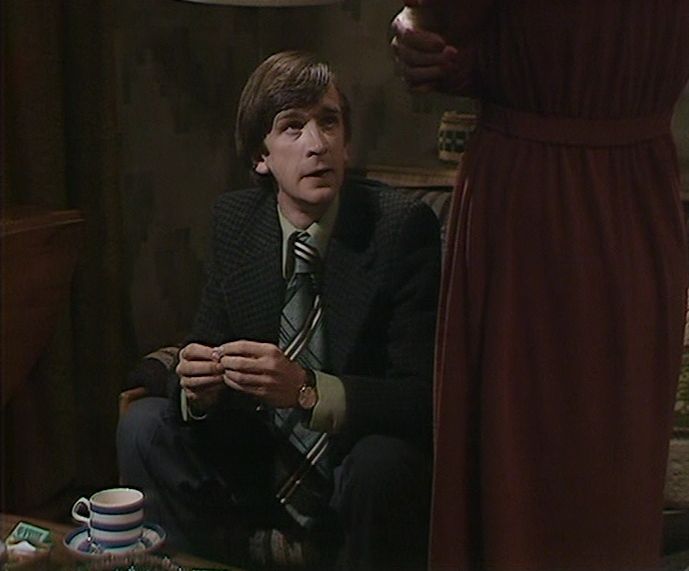
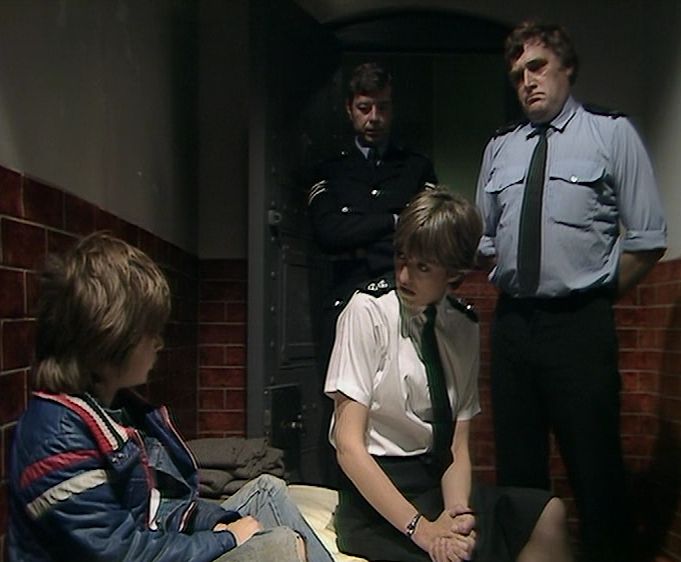
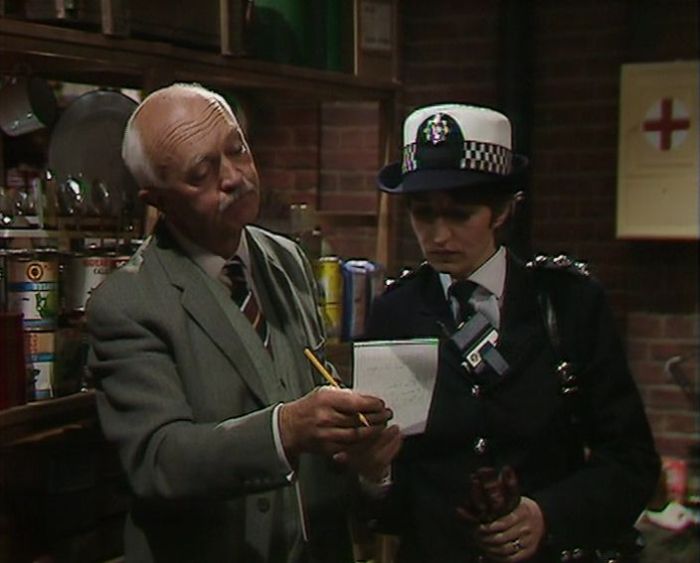
John Murphy (Rio Fanning) is a regular at Hartley police station. A widower with a young family of four, his fondness for a drink coupled with his inability to hold it means that he’s often to be found overnight in the cells. When he attacks his teenage daughter Maeve (Rebekah Blair), social services – in the form of Tom – are brought into the picture. It quickly becomes obvious that Jean and Tom view Murphy’s case very differently ….

Family Unit opens with a tracking shot showing a sizeable chunk of Hartley. Although it’s set up to establish a specific plot point (Jean notices smoke coming from the chimney of a house that should be empty) it helps to once again remind us of the sort of environment Hartley is.

The stuttering relationship between Jean and Joe is teased out a little more during the opening few minutes. Although they’ve been on a fairly even keel since the third episode, there does seem to be slightly more bite to their conversations here. Was this script originally planned to air earlier in the run?

Jean sends Joe out to look at the house, but doesn’t tell him why. When he radios in to query, she then suggests he walks across the street – once he does so, he spies the smoke and the penny drops. During their dialogue, Joe is the model of stolid efficiency, but there’s something about the way he pauses every so often which borders on the insolent.

Hiding in the house is a bruised and battered Maeve. Whilst Joe escorts her to the hospital, the character of Murphy is developed. It’s striking that Jean and Tom see very different sides of his character. Resident in the cells, Murphy views Jean with extreme disfavour (wondering how such a terrible woman could have snared a lovely man like Tom).

But when Tom later runs him down, he’s contrite and tearful as he explains the reason for the attack (he came home to find Maeve playing records in her bedroom with a Pakistani boy and snapped). Murphy’s racial hatred is never far from the surface – later he confides to a drinking buddy that he’s going to track the boy down and “descend on him, mangle him and give him a biblical pasting”. The irony that Murphy – as an Irishman – would also be viewed as an outsider by many isn’t overtly commentated upon, but the inference seems to be there.

We do later see Maeve’s friend (he receives a few punches from an incensed Murphy before she intervenes). But since he never speaks he serves no other purpose than to illustrate Murphy’s simmering anger. Maeve herself is similarly never really developed as a character in her own right – she exists purely to bring her father to both the police and the social sevices’ attention.

If Jean’s job sees her interact with Murphy once he’s broken the law, then Tom’s working from the opposite end. This explains why they’re on very different sides – Tom doesn’t want to see the family unit broken up and the children placed into care, whilst Jean isn’t prepared to let a potentially unstable father continue to live with them. Both, of course, are right in their own way, and this conflict helps to generate the main drama of the episode.

A little extra spice is added by the fact that Jean is concerned about the possibility that her confrontation with Tom, once it becomes public knowledge during the court hearing, might have a negative impact on her career. She worries that an enterprising newspaper reporter could spin it into an embarrassing story, thereby damaging her reputation at Headquarters. This isn’t something which shows Jean in a very good light, although as the script was written by series creator Ian Kennedy-Martin it’s not possible to argue that it’s the work of a writer unfamiliar with the series or characters. Clearly this is a side of Jean’s character that Kennedy-Martin was keen to touch upon.

Just a couple of episodes after another female office was attached to Hartley, Sergeant Margaret Cullinane (Maggie Ollerenshaw) turns up for a short transfer. She’s a very different proposition from the naïve WPC Hannah Maynard though. Experienced, confident and plain speaking, she wastes no time in telling Jean that she’s keen to take her job! Jean responds with icy politeness. Unlike Hannah in Expectations, Margaret is a fairly peripheral character, although the pair do have a brief late-night conversation in Jean’s office (this is after she’s had yet another run-in with Tom and is feeling somewhat emotionally bruised).

George Parrish might continue to play second fiddle to Joe Beck, but Noel Collins is gifted a lovely scene in which he harangues the ever-hapless Roland (Mark Drewery). Roland’s complaint that he doesn’t think it’s fair he has to make the teas and coffees for everybody (it’s not what he joined the force for, he says) is viewed with a definite lack of compassion by George. The scene is capped by George sending a severely ticked Roland out to the shops to buy some biscuits!

The court hearing is an uncomfortable experience for both Jean and Tom. Tom especially, who finds himself as the sole Social Services representative. Jean continues to paint Murphy in the worst possible light – acidly commentating, after his appearance in the witness stand, that he’s “a better actor than Laurence Olivier”.

After making an impassioned plea that he’ll never drink again or hit Maeve, it’s easy to see her point though (especially when a jubilant Murphy invites Tom to join him for a victory drink). In addition to this, the way Murphy brusquely instructs Maeve to take the other children home suggests that his contrite statements in court will prove to be worthless. Jean and Tom both witness this scene, with the inference being that Jean was in the right all along, although a more philosophical Tom is of the opinion that there were no winners, only losers.

What might happen to Murphy’s family in the future is left dangling, but from Jean’s point of view this case has damaged her relationship with Tom. “I can’t count on you 100 percent in the future, count on your 100 percent support”. Tom considers this to be a good thing though, the fact that they both have principles and are prepared to stand by them.

Rio Fanning gives a good performance, but it’s really the Jean/Tom dynamic which is the main focus of another decent series one episode.

jb02.jpg

Juliet Bravo – Expectations

jb1.jpg

Hannah Maynard (Rosalind Wilson) is a green young WPC, temporarily seconded to Hartley. She’s keen, very keen, but quickly learns that there’s a wide gulf between theory and practice ….

Expectations, like a number of other episodes, juggles several plotlines. The slightly testy relationship between Tom and Jean is teased out in the opening few minutes. At present he’s got an even heavier workload than she has (Tom tells her that he’ll need to work this weekend). His desire to make a success of his new career in Social Services is clear, but so is the feeling that everything’s starting to slip away from him.

His office is a glimpse into the long vanished, pre computer age. Apart from whispered conversations and ringing phones, the only sound is the gentle click clack of manual typewriters. With no computers available to store or collate data, it means that everything has to be written down – hence why everybody is drowning in reams of paperwork.

There are several examples of this – a message from Jean on Tom’s desk (reminding him about their lunch date) becomes buried under a bunch of files whilst his fumbling with more files during a case conference draws expressions of disapproval from some of the others present.

Tom’s current case concerns Laura Cartwright (Jean Rimmer) and her husband Jack. He’s confined to a wheelchair, but this doesn’t prevent him from lashing out viciously at her. Laura later tells Tom that she allows Jack to hit her for the simple reason that if he didn’t attack her then he might do something to himself. A bleak moment with no closure, it’s another of those well-mounted kitchen sink drama scenes that the series excelled at.

It’s interesting that despite this being a major plot point, it isn’t a police matter (they aren’t involved at all) and indeed the travails of Laura and Jack are somewhat secondary to the examination of Tom’s working practices. His desire to prove himself has led him to take on more and more cases (since he believed that refusing any would be a signal that he wasn’t up to the job).

With Tom’s colleague, the ever patient Jennie Randall (Wendy Allnutt), also present, Laura directs a diatribe at poor Tom – describing how his visits are perfunctory at best and useless at worst. She may be being a little hard on him, but for a man who’s always prided himself on his ability to work with people (and joined the Social Services in order to make a difference) it’s something of a hammer blow.

Whilst this is going on, Jean welcomes WPC Maynard to the team. She clearly heroine worships Jean – confirmed by the fact that she requested a secondment to Hartley precisely because she wanted to serve under an officer whom she admired. Jean isn’t especially delighted to hear this and gently tries to explain to Hannah that the job is the important thing, not personalities. It’s left unspoken, but there’s the inference that it’s rare to ever be in a position to pick your superiors (we’ve seen how the likes of Superintendent Lake are – at best – rather condescending towards Jean). Rosalind Wilson is excellent as the keen as mustard Hannah, who manages to exasperate the phlegmatic Roland with her attention to detail.

Youth culture isn’t something that the series has tackled so far, but today we see two punky teenagers – Mo (Clare Toeman) and Laura (Sarah Sugarman) – which proves that Hartley does have its share of disaffected adolescents. They mooch around the perimeters of the plot for a while – trying the doors of locked cars on a grimy housing estate, running through a bleak concrete shopping centre – before they come face to face with Hannah.

Left to her own devices by Roland for thirty minutes, it’s plain that she’s no match for Mo and Laura. The pair, apprehended for shoplifting, are marched to the manager’s office – but when he has to leave, Hannah is left alone with them, which is where the trouble starts. The manager locks them in – a strange move since it means that once the punky pair turn on her, Hannah has nowhere to run.

The sight of a dishevelled Hannah, “pig” written across her forehead, slowly walking through the store (with an amazed Jean looking on) is a memorable one. Hannah’s reason for not cleaning herself up first – she wanted to public to see the dishevelled, other side of police work – is given short shrift by Jean. She considers this to be a highly melodramatic way of proving a point.

If the title of the episode could easily relate to Hannah’s experience, then equally it fits Tom’s nightmare of a day. The episode ends as it began, in the bedroom, although this time Tom is in a reflective mood. “I was incompetent and irresponsible” he tells Jean. His long suppressed resentment of her more successful career also bubbles to the surface but as they settle down for the night, there’s the sense that they’ve turned a corner and more positive times lie ahead.

jb2.jpg

Juliet Bravo – Coming Back

jb 03.jpg

Having served a ten year sentence for armed robbery, Mick Grainger (Ron Bain) is heading home. He has a wife, Judy (Rachel Davies), waiting for him, but his reintegration into society isn’t straightforward. Especially since some people, such as Joe Beck, aren’t prepared to forgive or forget ….

There’s not a great deal of film in one, but what we do have is used very effectively. The episode opens with a panning shot, moving from a group of industrial chimneys to a bleak block of flats which are carved unappealingly out of concrete. The eerie silence is a signifier that it’s early in the morning and as the camera closes into one specific flat, we see that Chris Evans (Kevin Whately) is preparing to take his leave of Judy.

It’s plain that they’re in a relationship – which is a complicating factor since her husband is due home any day. The fact that Evans is a constable at Hartley nick adds another layer of complexity to the problem.

An early screen credit for Kevin Whately, his role in the story isn’t terribly large (although it’s an important one – especially the closing scene). Many series tended to feature one-off characters, like Evans, who have clearly been around for some time but were never actually seen by the viewers either before or after their single appearance. This always feels less than satisfactory and since Evans is a fairly peripheral character for most of the story there seemed to be little value in making him a policeman. Given that he hardly interacts with any of the regulars during the bulk of the story – apart from one scene where he asks Jean for a transfer – he could have worked anywhere.

One of the striking things about Coming Back is that it’s not afraid to use silence. Mick’s eventual return home to Judy is a halting affair – punctuated by awkward gaps in their conversation. As we progress through the episode, various people have their say about him – Judy’s employer Mr Lawrenson (Bernard Gallagher) considers Mick to be a dangerous man whilst Joe Beck can’t forgive him for attacking one of his best friends on the force (Mick’s assault meant that the officer was forced to retire due to ill health).

And yet Mick now hardly seems to pose a threat to anyone. True, he’s capable of getting drunk and riled, but his health issues (a major operation in prison has hit him hard) seems to have curtailed his previous wild spirit. Of course, we have no way of knowing just what sort of a character he really was before this current prison spell. Joe fills Jean in with Mick’s career highlights – but given Joe’s obvious bias it’s possibly not surprising that he delights in painting as black a picture as possible.

Crime is not central to Coming Back. Joe might be convinced that Mick is already planning another job, but that’s not the case. In fact, the only crime occurs in the last minute or so (and doesn’t concern Mick). Instead we have a character based drama which just as easily could have been a Play for Today or an Armchair Theatre. Ron Bain and Rachel Davies make for an intriguing pair – the dynamic between their two characters shifts somewhat during the course of the fifty minutes – and they’re the ones who really drive the episode along.

The Hartley regulars have no interaction at all with either Mick or Judy – only Mr Lawrenson bridges the gap (a nice performance by Bernard Gallagher as a rather pompous and self-important type). There’s some decent character building moments at Hartley nick though – we see Jean relaxing with the others in the kitchen, mock annoyed at George because he had the temerity to call her a Liberal! George also has a lovely line after he turns his nose up at the news that a new wine bar’s opened in town. He sorrowfully shakes his head and declares that Hartley’s becoming more like Morecambe every day ….

The aforementioned wine bar is where Jean and Tom head off for lunch, although it’s something of a stormy meal. Their argument – mainly about whether they should take Jean’s (unseen) mother on holiday with them – continues when they get home. So far Tom’s been a rather placid character, so it’s not a bad thing to see a bit more spark from him.

Those who enjoy the rough and tumble, cops and robbers, aspect of police series won’t find much of interest here (this one couldn’t be further removed from The Sweeney). But as a piece of kitchen sink drama, Coming Back stands up very well.

jb 06.jpg

Juliet Bravo – The Runner

jb 01

Johnny Duffield (Julian Briercliffe) is a nine year old tearaway who’s been in and out of trouble ever since he was six. Currently in care, he delights in absconding and sleeping rough. He comes to Jean’s attention after stealing an invalid car – she’s determined to get him back on the straight and narrow, but he proves to be a tough nut to crack ….

Regarded with weary resignation by Joe and George, Johnny immediately piques Jean’s interest. She finds it impossible to believe that the system is incapable of keeping him under control, but it quickly becomes clear that there are no easy answers. Jean’s husband, Tom (David Hargreaves), has recently taken up a job at social services and this provides the plot with a little dollop of friction. Jean and Tom could be said to be on different sides, although it turns out that they want the same thing (although Tom’s colleagues aren’t averse to using him in order to neuter Jean’s sting!)

This was Julian Briercliffe’s sole acting credit. He certainly makes an impression as the bold, but vulnerable Johnny. We’re told that Johnny’s constructed a wall between himself and the rest of the world – with his mother dead and a father (played by John Rees) who’s been unable to control him, his immediate horizons seem rather bleak.

Mr Duffield might be initially presented as an unsympathetic type, but his character is given some dashes of light and shade as the episode progresses. Due to his busted legs, he’s forced to take in any work he can get – at present he’s button carding (“women’s work” he bitterly tells Jean). When he later confesses that Johnny never loved him, it’s possible to wonder whether he’s telling the truth or if he’s simply hardened his heart to save himself from further pain.

The title suggests one of the main features of the episode. Police walls can’t hold Johnny, as he’s apt to make a dash for freedom at the drop of hat. The first time it happens – outfoxing Joe at Hartley nick – is somewhat embarrassing for all concerned. And the sight of Joe and George (puffing down the high street after him) is a little embarrassing too. Jean’s obviously not too pleased, but when he absconds later, she’s the one who was closest to him. This is something that Joe can’t help but mention ….

If the story has a slight weakness then it’s the fact that mid-way through Johnny suddenly gains a friend from nowhere. In plot terms this makes perfect sense – as it allows Johnny to unburden himself (talking about his mother and his future plans) – but it can’t help but feel a little clunky.

This slight niggle apart, we see some nice performances throughout the episode. David Ashton plays Mr MacRae, the social worker at Johnny’s care home. Like everybody else he’s concerned about him – but he’s also confident that if anybody can fend for themselves out on the moors, then it’s this boy. It’s not really an uncaring attitude, since MacRae has attempted – and failed – to get through to him. A few years later Ashton would be a regular in Brass, playing Doctor MacDuff.

Another familiar face making an appearance is Robert Vahey (later to be the long suffering Bill Sayers from Howards’ Way). Vahey is Tom Collinson, a local reporter who’s convinced that Hartley is the location of a major IRA arms dump. His obsession has nothing at all to do with the main story, but his regular appearances help to sprinkle the episode with a dash of comic relief.

Martin Matthews is very solid as Jim Naylor. Naylor, along with his wife Cynthia (Eileen Helsby), is interested in fostering Johnny. His wayward streak doesn’t bother them and Naylor, as a former orphan, knows better than most how Johnny’s mind works. It’s interesting that he seems to be the first person to get through to the boy – this is despite the fact that everybody else (both the police and social workers) have been equally as patient. Fair to say that this is a story which isn’t criticising the system (Johnny is shown to be something of an anomaly). Since everybody’s done their best to help him, the finger of blame isn’t pointed at any specific person or organisation.

It’s maybe just a little pat that Johnny lands on his feet with a warm and loving couple who are so keen to look after him. But although we end on an optimistic note, there’s still the possibility that things might not work out in the future ….

Not a story that has too many surprises, but the major location shoot (we see plenty of Hartley and the surrounding moors) keeps the interest ticking along.

jb 02.jpg

Juliet Bravo – Trouble at T’Mill

jb 01.jpg

Issy Smethurst (John Barrett) is an elderly, set in his ways, lollipop man. Many passing motorists catch his ire, but none more so than Ted Galway (Alan Lake). Galway, a flashy self made man, represents everything that Issy despises. And when Galway buys the factory where Issy works part time (tending the engines) it only serves to deepen their feud ….

The character conflict between Galway and Issy is at the heart of the episode. Issy stands for tradition and continuity – although the engines he so lovingly tends (when he’s not harassing passing motorists) are contained within an eerily quiet factory. Once it was a thriving hub of activity, but now it stands idle. The current owner explains that it’s simply not cost effective to keep it running. When a smaller plant space, with newer equipment, can turn out more textiles at a cheaper cost and with far less manpower, the economic argument for its closure is strong.

The facts don’t concern Issy though. For him, it represents a lifetime of toil (he recalls how he first arrived at the factory, as a seventeen year old). To see those engines broken up – which seems likely after Galway (via proxy) buys the place – is heart-breaking for him.

Ted Galway is Issy’s complete opposite. Having disappeared to London for a few years, he returned as a self made man of considerable means. Now he owns the flashiest house in the neighbourhood (complete with a swimming pool and a snooker room), runs with the local hunt and numbers several high-ranking police officers – such as DCI Logan – amongst his friends.

Logan gently suggests to Jean that Issy needs to be warned against bothering Galway in the future. That Logan’s never even considered the possibility that Galway might be crooked seems barely credible (Logan seems to have swallowed Galway’s story that he made his fortune in a London casino hook line and sinker). Issy might be motivated (in part) by spite, but he’s plainly right when he claims that Galway’s crooked.

Although it might be expected that Issy would be the audience identification figure, there’s also something about Galway which incites a certain sympathy. This is no doubt down to Alan Lake, who manages to make Galway a curiously vulnerable figure.

There’s something ever so slightly pathetic about Galway’s delight in the trappings of his success. From his Rolls Royce (complete with an eight track cartridge system!) to the fact that he now hob nobs with all the local worthies, he leads a comfortable and law-abiding existence. So the arrival of Walter Hancock (Antony Carrick) who’s come up from the smoke is an unwelcome one – since Hancock forces him back into a life of crime.

Galway would like nothing more than to be left alone, but he owes some powerful people some favours, so has no alternative but to get involved in a furs robbery. Which happens to be observed by Issy – who by this point is keeping Galway under constant surveillance!

There are some fascinating incidental details in this story – one which stood out for me is Jean’s assertion that Hancock may very well be a criminal since he has tattooed arms. Today, tattoos are commonplace, but rewind nearly forty years and it’s plain that they were far less socially acceptable. The way we observe how Galway has moved upwards (he likes to indulge in dinner parties with jugged hare, after dinner mints and cigars) is another lovely touch.

Trouble At T’Mill possibly doesn’t show Hartley’s police force at their finest, since it’s Issy who does all the work for them. This is something that annoys Joe immensely – if Issy was a nuisance before, imagine what he’s going to be like now he’s been proved right ….

John Barrett’s a little shaky on his lines from time to time, but considering that he’s got the largest role in the episode that’s possibly not too surprising. Issy’s gifted several nice monologues and shares some decent two-handed scenes with Jean. Knowing about Alan Lake’s untimely death, it can’t help but make his later television appearances (such as this one) seem very bittersweet. Ted Galway is a fine creation – with Lake deftly shading in the nuances of his fluctuating character very well.

Lake would go on to appear in another two Juliet Bravo episodes playing different characters as would Christine Hargreaves who in this one plays Galway’s wife, Vera. You might have expected that Galway would have found himself a young, trophy wife, but not so – Vera is middle-aged and running a little to seed (and whilst Galway has assimilated himself amongst the upper echelons, Vera has remained resolutely working-class). With a cigarette never far from her lips, she seems somewhat out of place in their palatial home. Hargreaves who, like Lake, would pass away in the mid eighties, is probably best known for being one of the original cast members of Coronation Street.

Trouble At T’Mill is low on crime, but high on character conflict and is yet another strong episode from the early part of the first series.

jb 04.jpg

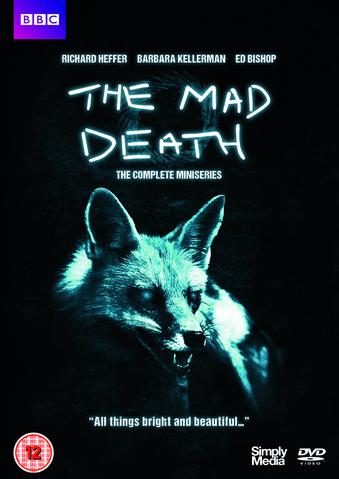
The Mad Death – Simply Media DVD Review

164454- Chief Crazy Horse Sleeve.indd

It always seemed that it could never happen here, but when a cat infected with rabies is smuggled into Britain it triggers a major crisis. Facing hostility from the public (angry that some of their pets have been impounded) the authorities struggle to stop the outbreak from spinning out of control ….

Tom Siegler’s (Ed Bishop) decision to befriend an apparently benign wolf he discovers at the side of the road has far-reaching consequences. By now the audience has already been primed to expect something awful to happen, although the tension is eked out for a few minutes longer (Tom, having cut his finger slicing a lemon, then goes over and pets the fox – although at this point there’s no reaction).

The boiling point isn’t far away though. Animal wrangling must have been an issue for the serial, as attempting to depict rabid beasts would require considerable co-operation from the animal actors (which no doubt couldn’t always be guaranteed). Director Robert Young keeps the tension bubbling along though, thanks to rapid cuts and close-ups, with the result that the action scenes feel viscerally real.

Young had cut his teeth on horror films (directing Vampire Circus for Hammer in 1971) before moving into television in the early eighties. Robin of Sherwood, Bergerac, Jeeves & Wooster and G.B.H. all benefitted from his presence. Possibly it was his work on The Mad Death which made him an ideal fit later for Robin of Sherwood, as both had – at times – a woozy, non-naturalistic feel.

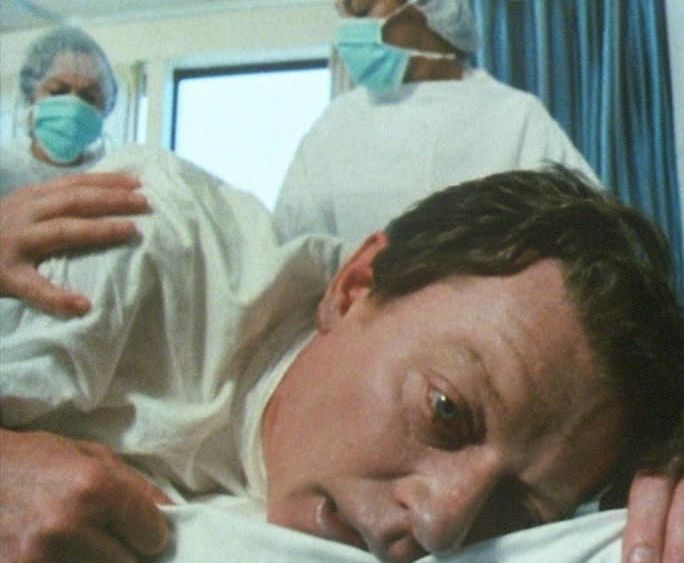
This is first seen in The Mad Death after Tom, by now seriously ill after being bitten by the fox, is hospitalised following a car crash. The hospital should be a place of safety and security, but instead it’s a hallucinogenic nightmare for him. The mere act of reaching for a glass of water becomes overwhelming (he’s then pictured drowning in a bed of water – a technically impressive shot) whilst other visions are equally as disconcerting (his wife and his mistress both pay him uncomfortable visits). It’s interesting that during these scenes we often switch in and out of reality (with the result that the viewer is privy to Tom’s fevered imaginings). This simply adds to the sense of horror.

mad 03
Ed Bishop

Bishop, a sometimes underrated actor, is excellent as the increasingly tortured Tom. Another stand-out scene for him occurs earlier in the opening episode when he attempts to dispose of the fox. First with a broom handle (that was never going to work) and later with his car. Eventually he does manage to drive him off, but by then the damage has been done.

Although Tom’s story dominates the first episode, the two central characters of the serial – Michael Hilliard (Richard Heffer) and Dr Anne Maitland (Barbara Kellerman) – are also introduced. They first appear during the opening few minutes in a rather clumsy way. It might have been better to cut this scene and hold them back until they actually started to interact with the main plot (for example, when Anne was dispatched to the hospital to confirm the diagnosis that Tom is suffering from rabies).

If Anne has the medical knowledge, then Michael is her equal when it comes to the veterinary angle. But he’s refusing to get involved ….

Richard Heffer was by this time a very familiar television face. A regular in several 1970’s WW2 dramas (Colditz, Enemy at the Door) he’d also made several appearances in Survivors and had appeared throughout the final series of Dixon of Dock Green. Barbara Kellerman had also notched up some notable television appearances during the seventies (The Glittering Prizes, 1990, Quatermass) and would later go on to appear in the BBC’s C.S. Lewis adaptations during the late eighties and early nineties.

mad 06
Richard Heffer and Barbara Kellerman

The beginning of the second episode brings any latecomers up to speed with a summation of the events so far, before looking ahead to the current measures being implemented to control the outbreak. This is done quite neatly via a news report (a very effective way of info-dumping).

Episode two also sees a rabid dog terrorising a group of customers in a shopping centre. With a fair number of extras deployed, it’s a good indication that The Mad Death had a very decent budget. Robert Young once again crafts some striking shots – a slow plan past several shop window dummies (stopping eventually on what initially appears to be another dummy but turns put to be a heavily suited dog handler) is especially memorable. A series of jerky cuts gives these scenes a naturalistic, documentary feel.

Anne continues to prove that she’s no shrinking violet by driving a jeep containing Michael and a number of marksmen at high speed through the shopping centre (in a desperate attempt to get to the dog). This is something of a wish-fulfilment scene, since most of us have probably wanted to do this at some point.

Inbetween the moments of terror are longer periods of reflection. Animal lovers, such as Miss Stonecroft (Brenda Bruce), are appalled at the way their pets are being treated (chained up like prisoners twenty four hours a day, she says) whilst Michael and Anne eventually fall into each other’s arms. This always looked inevitable, but it seems sure to annoy Anne’s partner Johnny (Richard Morant). And the fact he’s an arrogant member of the landed gentry who isn’t prepared to take any precautions with his animals is guaranteed to get Michael’s back up ….
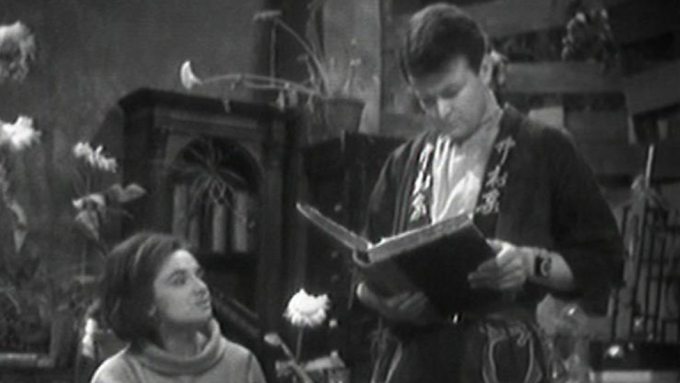
The third and final episode ramps up the action another few notches after Miss Stonecroft lets a whole pound full of dogs loose. With the animals roaming the countryside, Michael takes to the skies, coordinating a team of armed soldiers. Their instructions are clear – all animals are to be shot on sight. The filmic sweep of these scenes is another example of the serial’s healthy budget.

Meanwhile, Anne finds herself tangling with an increasingly detached Miss Stonecroft whilst Johnny, also doing his bit to deal with the dogs, eventually runs into Michael. The question is, will he use his gun on the animals or on his love rival? These interlocking plot threads help to keep the interest ticking along until the final few minutes.

Shot on 16mm film, the picture quality is generally pretty good considering the age and unrestored nature of the material. I did notice one picture glitch – at 18:38 during episode three there’s a slight picture breakdown (a brief loss of sound and a blank screen for a second or two).  After the blank screen, we see Michael raising a glass of scotch to his lips but before the glitch he wasn’t holding one, so a short section of this scene is missing (Michael being offered and then accepting a drink).  Luckily it’s not a vital moment, but If I learn any more about this issue then I’ll update this review.

Thirty five years down the line, The Mad Death is still a tense and disturbing watch, thanks to Robert Young’s skilled direction and the performances of the cast. It remains a powerful serial and is well worth adding to your collection.

The Mad Death is released by Simply Media on the 7th of May, RRP £14.99, and can be ordered directly from Simply here. Quoting ARCHIVE10 will add a 10% discount to the order.

mad 04
Barbara Kellerman

Juliet Bravo – Coins

jb 01.jpg

Major Adams (George A. Cooper), convinced that the Russians will attack sooner rather than later, has prepared for this eventuality by stockpiling an impressive array of food and other provisions. This proves to be an irresistible temptation for two young teenagers – Carol (Diana Walker) and Kenny (Mark Price) ….

The first of two episodes written by Ray Jenkins (a writer with an impressive track record across many popular series) Coins is a pretty low-key story which focusses more on the characters involved than it does the crime. The pilfering is pretty petty – some tins of food, a primus stove, etc – and is mainly of interest since it suggests that the perpetrator is somebody living rough.

Cooper’s role in the story is quite small (once Carol and Kenny are identified, Adams fades away) but as might be expected he’s terribly good value with what he is given to do. Adams (rather like Cooper’s most famous creation, Grange Hill’s Mr Griffiths) is somewhat pompous and self-important, but scratch a little below the surface and there’s hidden depths.

Adams’ war service and the things he saw might very well explain why he continues to run his life along such strict lines. His bachelor status and his self-professed pride in doing everything for himself is both admirable and slightly tragic.

There’s something of a jump (almost as if there was a missing scene) after Adams suggests that the young female thief might have been a papergirl who used to work the area. The long-suffering Roland is sent off to check this – but in the next scene we’re at the local care home, where Jean has arrived to speak to Carol. A spot of bridging dialogue, explaining that the ex paper girl was Carol, would have made this part of the story flow a little better.

Diana Walker’s acting career only encompassed this episode of Juliet Bravo and a limited run in Brookside a few years later. Her lack of acting experience helps to give Carol a natural, unforced air – with her mother in hospital (and unlikely to ever come out) she faces a bleak and uncertain future, with Kenny being the one bright light in her life.

Kenny’s disappearance drives the later part of the story, but it’s never suggested that he’s in any danger (or indeed is dangerous himself). His eventual discovery is more the solution to a puzzle, whilst his continuing absence allows the spotlight to be shone on his estranged parents – Bob (David Boyce) and Pat (Deidre Costello).

Joe Beck doesn’t take to Bob at all. Granted custody of his son, Bob seems to be a pretty decent sort of chap – true, he doesn’t often get to see his son (but that’s mainly because he’s working night shifts and sleeping during the day). As he tells Joe, he has to earn money to put food on the table. There’s something in Joe’s expression which suggests this is something of a feeble excuse and the way Boyce plays the scene does suggest that Bob is an inherently weak man.

But he must have seemed a better bet than Pat, since the court decided not to grant her custody. If Bob’s pallid and faded then Pat’s bold and brassy. But her confident public image proves to be decidedly brittle ….

Roland continues to provide a dollop of comic relief. Once again he demonstrates that he’s lacking in a sixth sense (referring to Jean as Wonder Woman, whilst unaware that she’s standing right behind him). But she keeps on giving him chances and decides to take him along to Pat’s house in order to discover whether Kenny is hiding out there. He’s told to dress in plain clothes – well, what he arrives in certainly isn’t a police uniform, but it couldn’t really be classed as plain clothes either.

It’s a slight frustration that this episode introduces us to the very capable WPC Gilbert (Helen Duvall) as sadly this would be her one and only appearance. Possibly it was felt that one female regular was sufficient, but these early episodes would have been stronger if there had been at least one female amongst the rank and file officers.

Fairly forgettable crime-wise then, but Coins is a decent character study.

jb 03.jpg

Doctor Who – The Aztecs. Episode Two – The Warriors of Death

warriors.jpg

The Doctor is furious with Barbara for halting the sacrifice. We’ve seen an angry Doctor before, but not like this and it’s clear that Hartnell relishes the opportunity to really go for it. Hill is excellent as well and it’s one of those scenes that crackles with energy, although it’s notable that the Doctor doesn’t remain angry for very long (another sign of the general softening of his character).

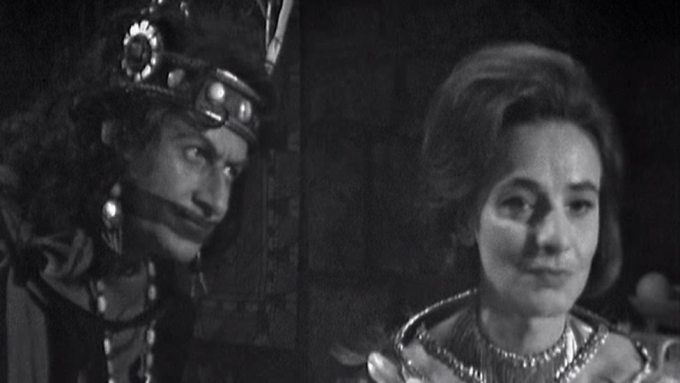
TLOTOXL: I would ask you, how shall a man know his gods?
BARBARA: By the signs of their divinity.
TLOTOXL: And what if thieves walk among the gods?
BARBARA: Then indeed, how shall a man know?

This short exchange, beautifully delivered by Ringham and Hill, tells us everything we need to know. Tlotoxl is convinced that Barbara isn’t the spirit of Yetaxa, but lacks any proof. This means he’ll spend the remainder of the story using whatever means are at his disposal (in this episode it’s Ian) to chip away at the composure of the false goddess.

Having won a victory over Ixta with his magic thumb, Ian then faces a rematch – but Ixta will have a secret weapon (the unwitting help of the Doctor). It’s a slight contrivance that Ixta is the son of the man who built the temple, which means the Doctor (in exchange for non-existent temple plans) hands over a plant that will disable his opponent (who turns out to be Ian). Two coincidences, that’s rather a lot!

I like the way the Doctor describes himself to Cameca. “I am a scientist, an engineer. I’m a builder of things.” There may be the hint of pretence here, as he’s attempting to explain his interest in the temple, but there’s an essential truth to this statement. Much, much later he’ll become the defender of the universe (whose name alone makes monsters tremble in fear) and part of the charm of the series will be lost forever.

Carole Ann Ford’s off on holiday, so only appears in a single pre-filmed scene. It’s another nod back to Lucarotti’s previous story, as Susan reacts in horror to the thought of an arranged marriage (much as she did when she learnt of Ping-Cho’s intended fate).

The Doctor, realising that Tlotoxl means them great harm, asks Barbara to play up to Autloc. The more she can convince Autloc that she is Yetaxa, the more it will help them. Barbara’s happy to do this, no doubt because she still clings to the hope that she can bring about a fundamental change in their society, but it already poses the uncomfortable question about what Autloc’s fate will be once he realises his faith in Barbara was misplaced.

AUTLOC: If your words are denied, shall we not be living in defiance of the gods?
BARBARA: Famine, drought and disaster will come, and more and more sacrifices will be made. I see a time when ten thousand will die in one day.
AUTLOC: Where will it end, Yetaxa?
BARBARA: In total destruction. Your civilisation will pass forever from the land.
AUTLOC: You prophesy our doom.

Even this early on, we’ve been primed that there won’t be a happy ending. In this era of the programme, the Doctor’s main focus is survival – fighting injustice is something he does rather as an afterthought. But whilst later stories might see him toppling entire civilisations with a few words, you do get the sense that this isn’t going to happen here.

The fight between Ian and Ixta goes on a little too long (and like Ixta’s fight in the previous episode suffers from being shot on VT) but it does leave us with an excellent cliffhanger. As Ian faces death, Tlotoxl taunts Barbara to use divine intervention to save him ….

Doctor Who – The Keys of Marinus. Episode Five – Sentence of Death

sentence.jpg

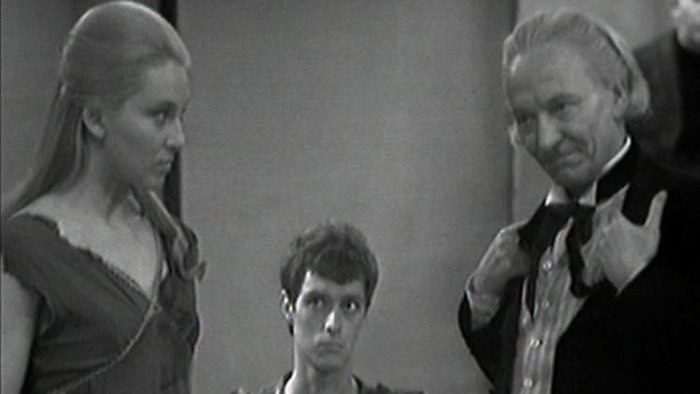
The search for the final micro-key takes place over the course of the next episode and a half (this extra time allows for a slightly more involved plot). We’ve reached the city of Millenius and Ian finds himself accused both of murder and the theft of the micro-key. And here, the accused is guilty until found innocent.
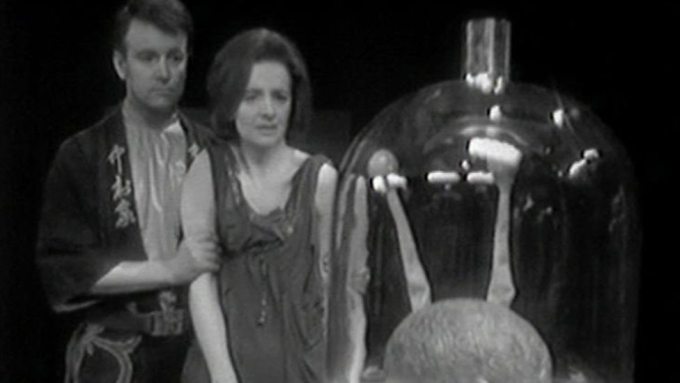
Hartnell’s back from his holidays! It’s lovely to see the Doctor again and he turns up at just the right time since he’s the ideal person to speak for Ian at the tribunal. The Doctor’s in his element here. “My Lords, I cannot defend a man when I have not considered every aspect of the case. I must have time to examine witnesses, read statements and to prepare my case.” He just loves the whole court atmosphere, doesn’t he?

Things to love about this episode number one – the hats of the three judges. You don’t often see hats as impressive as this.

Things to love about this episode number two. Raf De La Torre is the senior judge and the only one to have a speaking role. The other two (played by Alan James and Peter Stenson, who doubled up with other roles as well, playing Voords, Ice Soldiers, etc) are noteworthy for several reasons. The first is their stick-on beards and the second is their excessive head movements when Raf De La Torre confers with them. Neither are allowed to speak, as they’re just lowly extras, so they indulge in manic head bobbing instead. It’s a lovely moment of unintentional comedy.

The Doctor’s pretty smug. He’s convinced he knows who committed the murder (it’s elementary, he says) but he has no evidence. Using Barbara and Susan he demonstrates exactly how the crime was committed – but the problem remains, how to prove it?

Things to love about this episode number three – a classic Billyfluff. “I can’t improve at this very moment. I can’t prove this very moment.”

There’s some familiar faces to spot. Fiona Walker, who returned to the series twenty four years later as Lady Peinforte in Silver Nemesis, is Kala. Donald Pickering, whose Doctor Who career culminated (if that’s quite the right word) with Time and the Rani is Eyesen. I love watching Pickering as he’s always a compelling screen presence. It’s not much of a role, but with a less skilled actor it wouldn’t have been half as interesting.

And what’s the Doctor’s plan to prove Ian’s innocence? He gets Sabetha to perjure herself by pretending that Aydan (Martin Cort) gave the key to her. Not quite the sort of thing that you’d expect to see at the Old Bailey. Aydan’s startled admission of guilt (and his murder immediately afterwards) moves the case on a little. But it doesn’t prove that Ian is innocent, so his execution will take place at the designated time. Ian looks at the Doctor, who can only shake his head sadly, which isn’t very encouraging.

And then Susan is kidnapped. Eek!

Doctor Who – The Keys of Marinus. Episode Four – The Shows of Terror

snows.jpg

It was David Whitaker’s idea that the locations of the story should be quite varied – one week a jungle, the next desolate snowy wastes. This is something that doesn’t occur very often in Doctor Who – normally when the TARDIS lands we’re never expected to wonder what the rest of the planet might be like. Often (picking a few random examples – say, The Daleks and The Krotons) it’s strongly implied that everywhere else is of little interest and where the Doctor is now is all that matters. But The Keys of Marinus, which shows us several cities ruled by different people as well as more barren locales, is quite different and should be applauded for that.

Last time, we left Ian and Barbara freezing to death in the fake snow. Luckily(?) they’ve been rescued by Vasor (Francis de Wolff) a man who lives in a hut all by himself in the middle of the snowy wastes. He shows Barbara how to restore life to her frost-bitten hands (doing so in a way that carries a certain overtone – it’s clear that he enjoys holding her hands in his). Indeed, there’s no two ways about it – Vasor is clearly keen for Barbara to spend some quality time with him (just as soon as he’s got Ian out of the way) and it’s equally clear what he wants to spend this time doing. It’s not spelt out, but then it doesn’t really need to be.
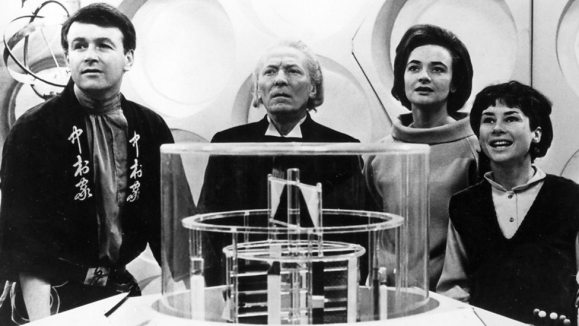
Ian sets out to find the others and hands over his travel dial in exchange for some of Vasor’s furs. Although Vasor, as scripted, tells Ian to pick up a coat and gloves, he only puts on a ratty piece of fur – which can hardly be expected to offer a great deal of protection (a poor bargain for his travel dial). Once Vasor and Barabara are alone he insists on feeding her some more food. “We must fatten you up, eh?” Brrrrr, I don’t fancy Barbara’s chances ….

Ian discovers Altos unconscious in the snow, but once Ian’s rubbed some life into his legs he seems able to carry on (yes, you can read something homoerotic into this if you wish). Luckily for Barbara, the two of them get back to the hut before Vasor’s been able to have his wicked way and the four of them then go back out to look for Susan and Sabetha.

They’re taking shelter in the ice caves, which is a decent-looking set. The Ice Soldiers, frozen warriors who are guarding the micro-key, aren’t quite so impressive though. This is another of those inexplicable Arbitan moments. The micro-key is contained within a solid block of ice, but if they melt the ice then the homicidal Ice Soldiers will wake up. Arbitan certainly didn’t like to make things easy, did he?

The excitement level as our heroes are pursued is fairly low – although Vasor gets his long overdue comeuppance from the Ice Soldiers (a sword in the back). Not the best episode of the story then, but Francis de Wolff (at times overacting like a good-un) is entertaining enough.

Next time, Ian faces a sentence of death.

Doctor Who – The Keys of Marinus. Episode Three – The Screaming Jungle

screaming

It’s not really correct to think of the Voord as the villains of the story as they only appear briefly in episode one and then not again until episode six. Had they decided to shadow the Doctor and his friends as they quested for the keys that would added a little extra excitement, although with their wetsuits and big flippers they probably would have stood out somewhat.

Carole Ann Ford wasn’t particularly enamoured of the way Susan was portrayed in this story and it’s not hard to see why – she seems to be written down in age somewhat (acting more like a very young child at times). So given how hysterical she is in the jungle setting, it’s a blessed relief she’s packed off to the next location pretty quickly.

Things to love about this episode number one – the jungle vines that attack Susan in a less than convincing way.

Things to love about this episode number two – the statue with human arms which gives Jacqueline Hill a quick grope (although in the interests of decency it’s lucky that it could only reach her lower legs).

When they find the micro key in the first few minutes, it appears that this episode will be ending twenty minutes early. Sabetha, Altos and Susan head off for the next location whilst Ian stays behind to look for Barbara. But the key is a fake, meaning that Barbara and Ian still have to find the real one. Slimming down the cast at this point isn’t a bad move since it would have been a stretch to find something for five characters to do (even worse if the Doctor had been there as well).

And since Ian and Barbara are left alone it allows them a decent share of the action. Indeed, had it been decided at the end of The Velvet Web that Sabetha, Altos and Susan should search for the third key, whilst the Doctor went off to look for the fourth, then they could have dispensed totally with the services of Carole Ann Ford, Robin Phillips and Katherine Schofield for this episode and the production would have saved itself some money.

What Ian and Barbara find is a building full of traps. At times, all the suspension of belief you can muster is required – especially when Barbara is menaced by slowly descending spikes (of the patently rubber variety). It’s the sort of thing you might expect to see in a 1940’s Flash Gordon serial, although done somewhat better. And whilst Barbara faces death of an especially unconvincing kind, Ian is struggling to free himself from a prison of solid iron bars.

Except that they’re not solid – it looks like one sneeze would cause them to collapse. Just as it takes all of Jacqueline Hill’s professionalism to make us believe that the spikes are dangerous, so William Russell has to call on his acting experience to make the bars seem solid. Bless them both, they don’t quite succeed but it’s fun to watch them try.

All these traps have been set by Darrius (Edmund Warwick). Rather oddly he tells Ian and Barbara that only couriers sent by Arbitan would have been able to negotiate the hazards that he’s set. But Arbitan didn’t pass this information on – simple absent-mindedness maybe?

The silliest episode so far, it’s somewhat disposable fare – but at least one of the good things about this story is that we’re never too far away from a new location. And as the cliffhanger looms, Ian and Barbara find themselves menaced by some fake snow …..

Doctor Who – The Keys of Marinus. Episode Two – The Velvet Web

velvet.jpg

The first stop on their quest to recover the keys of Marinus takes them to Morphoton. It’s a place where every whim and request is able to be indulged – although if this seems too good to be true it’ll probably comes as no surprise to learn that it is.

This episode is notable for having more edit points than was usual at the time – this was in order to demonstrate the difference between Barbara’s viewpoint (she can see their room for what it is – dirty and bare) and the others (they’re conditioned to view it as opulent). In later years this would be a scene that wouldn’t be at all remarkable, but when watching sequentially it’s another of those small moments which does stand out.

It’s maybe right that Barbara – the voice of reason – should be the one not to fall under the spell. But this wasn’t through any demonstration of free will, it was only because the conditioning disc placed on her forehead slipped off during the night. Note to the brains of Morphoton – it might be better to find a more effective way of conditioning your subjects (or at least use better glue).

The episodic nature of the serial means there’s not really time to develop the horror of Barbara being totally isolated.  She’s the only one of the four to retain her own memories (the Doctor, Ian and Susan have all been thoroughly brainwashed). This is a pity as the concept would have produced good material for several episodes. But there’s still the odd creepy moment, such as when Barbara rushes to the reassuring presence of Ian – but immediately after she’s embraced him it’s clear from his immobile stance that he’s no longer the man she knew.

We meet Altos (Robin Phillips) and Sabetha (Katherine Schofield). Both will join the others on the quest (Sabetha is Arbitan’s daughter and Altos is one of Arbitan’s couriers). Their presence is a good thing, especially as Billy’s shortly off for a two-week holiday. They’re fairly stock Terry Nation characters, so how well they come across depends on the actors (who do the best they can).

The brains of Morphotron are a little disturbing (especially the way they’re voiced by Heron Carvic) although the black and white picture does rob them of some of their impact. Barbara saves the day by smashing their brain cases and killing them. Or, at least, that was how it was scripted – alas, Jacqueline Hill only managed to smash one of the four cases and there was clearly no time for a retake. Oh well.

The Doctor’s decided to nip ahead and look for the last key (so we won’t be seeing Hartnell for a few weeks) whilst the others head to their next destination.

And it’s a Terry Nation favourite – a dangerous jungle!

Doctor Who – The Keys of Marinus. Episode One – The Sea of Death

sea.jpg

By going from Marco Polo to The Keys of Marinus we’ve taken a trip from the sublime to the ridiculous. That’s not to say that Marinus is bad – it’s good, pulpy fun – but when watching the series sequentially it’s a little jarring to have this sudden shift in tone. But that’s one of Doctor Who‘s great strengths – the fact that every new adventure might play out in a totally different way from the previous one.

You have to admire the ambition of Verity Lambert’s time as producer. It seems that no story was too ambitious to mount (think of the expertly created props in Planet of Giants or the sheer weirdness of The Web Planet) and Marinus is another example of this. With such a tiny budget the notion of creating a new environment in episodes two, three, four and five obviously placed a huge strain on the meagre resources of Ray Cusick. He manages to pull it off quite successfully, although there are times when you do need to be a little forgiving.

The miniatures that open the story are excellent though. The shot of the island – with a model TARDIS (light flashing) then appearing – is a lovely one. The sight of the Voord’s submersibles traversing the sea of acid is less effective though – mainly because it’s painfully obvious they’re being pulled along by wires (and one of them is reluctant to move, so requires a few hard tugs to enable it to reach the beach!)

The sight of the Doctor, Susan, Ian and Barbara surveying this strange new planet shows how far we’ve come since The Daleks. Back then, Ian and Barbara were wracked with fear and doubt (hating the fact that they’d been uprooted from their safe, 20th century existence) but now they regard this bizarre island with nothing more than mild curiosity.

Hartnell’s a bit stumbly over his lines in the early part of the episode (which gives us one of his classic Billyfluffs – “yes, and if you’d had your shoes on, my boy, you could have lent her hers”). This part of the story – as the four examine the beach – is a little problematic. Given that the studio was so small, the beach set couldn’t be particularly large either – which becomes painfully obvious when everybody has to walk around rather slowly.

The moments when they notice the Voord’s submersibles and Arbitan’s building both seem false – there’s no way to imply that they’ve travelled any distance from the TARDIS, so these things must have been under their noses all the time.

I know that examining logical loopholes in a Terry Nation script is a little futile, but the sight of the Voord suit – which contained a man who’s been destroyed by acid – has always irked me. If the suit had a rip then that would have let the acid in, but he was inside a submersible – so that too, must have had a hole (which is rather unlucky really). And if that was the case, wouldn’t the submersible have been full of acid?

Why does Arbitan’s building allow people to enter? You’d have thought it would have made much more sense to keep them outside (and since the Voord don’t seem to have any particular weapons, an impenetrable wall seems as good a barrier as any). Instead, its obvious that although there’s interior defences, sheer force of numbers will allow the Voord to succeed once they do get inside.

It was a bit of a coup to get George Coulouris to appear as Arbitan, although he was no stranger to low-budget British science fiction, having appeared in ITV’s Pathfinder trilogy. He’s the Keeper of the Conscience of Marinus and he explains to the Doctor and his friends exactly what the machine does. “At first, this machine was simply a judge and jury that was never wrong or unfair. And then we added to it, improved on it, made it more and more sophisticated so that finally it became possible to radiate its power and influence the minds of men throughout the planet. They no longer had to decide what was wrong or right. The machine decided for them”.

And Arbitan wants the Doctor’s help to restore the machine’s power! The notion of anybody being denied free will would later become something the Doctor would fight against time and time again (for example, The Masque of Mandragora) so it’s astonishing that he sees nothing wrong with this machine.

Thanks to a handy bit of blackmail with the TARDIS (the Doctor’s still the type of person not prepared to launch into a dangerous adventure just for the fun of it – that will come a little later) Arbitan persuades the four time-travellers to set off for a jaunt around Marinus to recover the four keys that will restore the machine to its former glory.