Ghostwatch (BBC 1992)

A good evening for a rewatch of this, I think,

archivetvmusings's avatarArchive Television Musings

ghostwatch

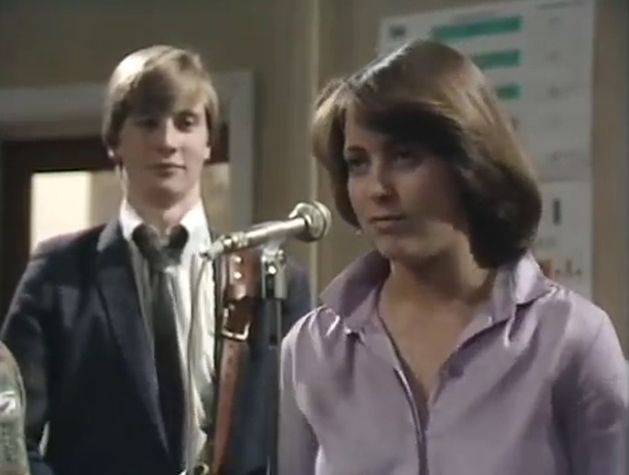
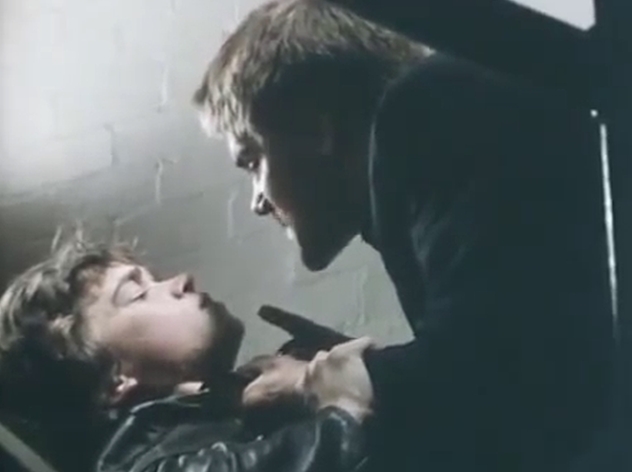
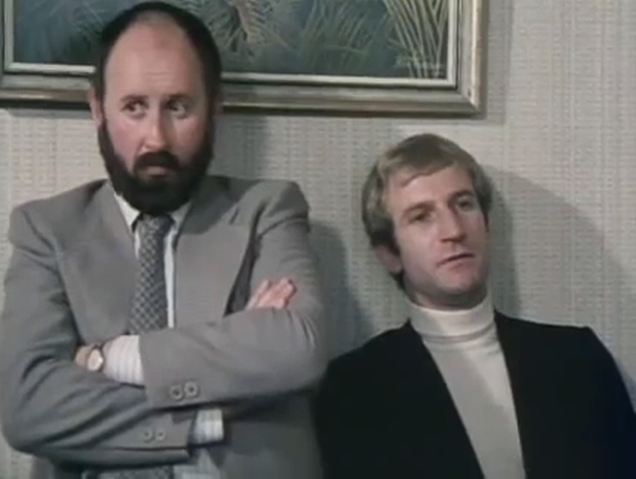
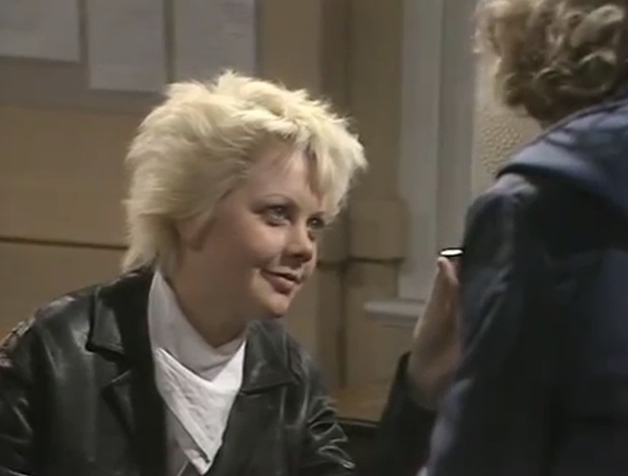
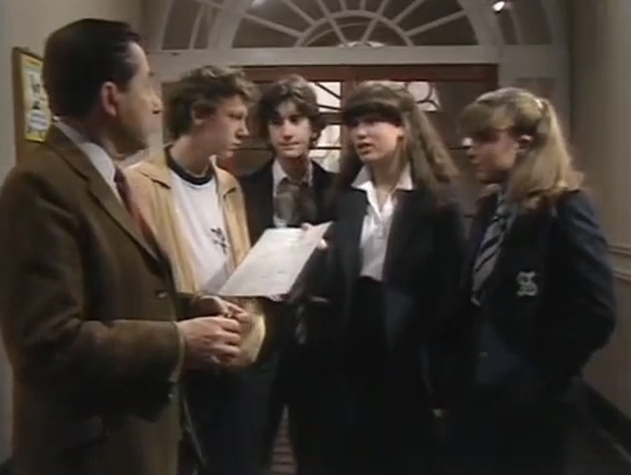
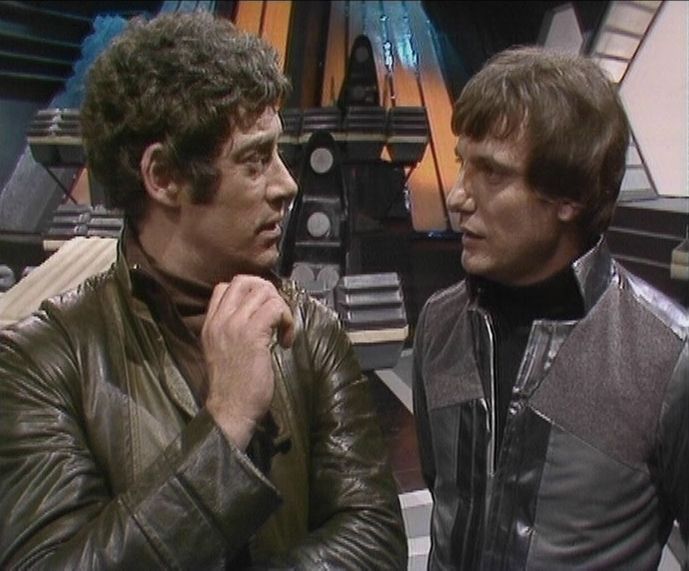
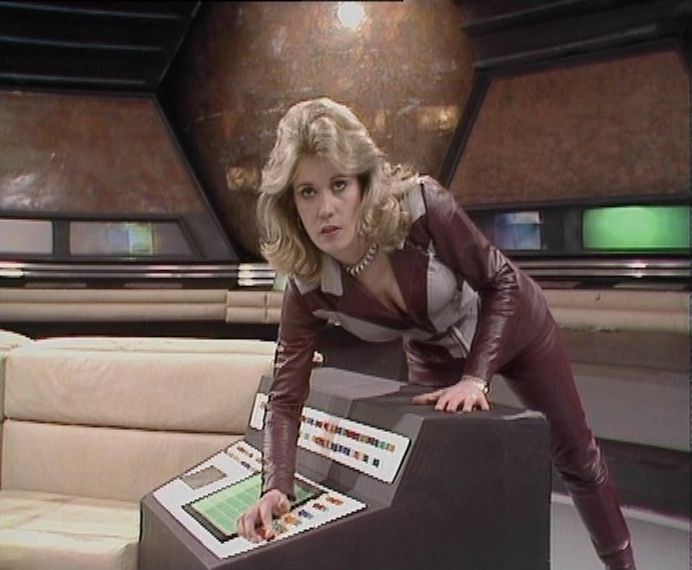
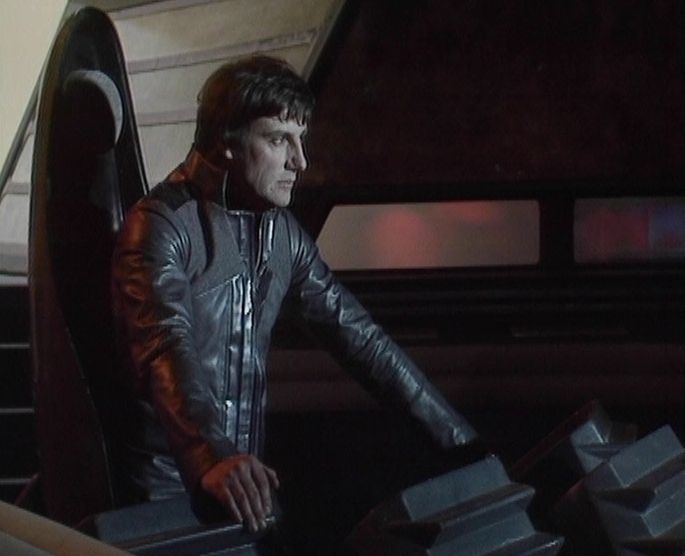
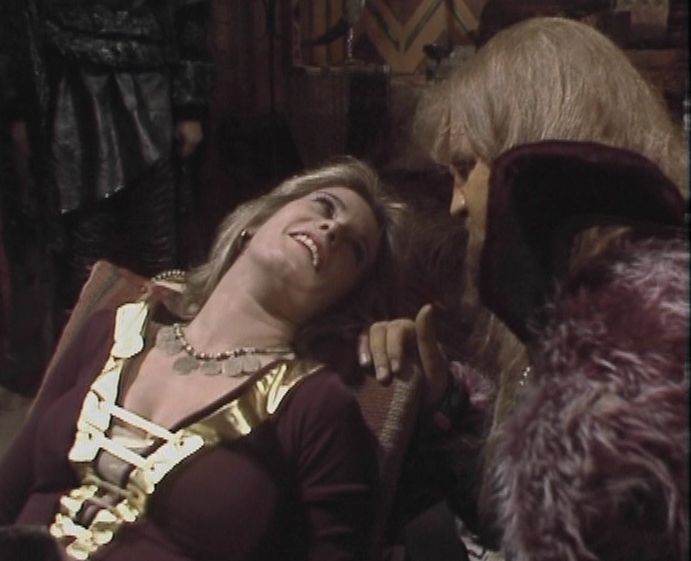
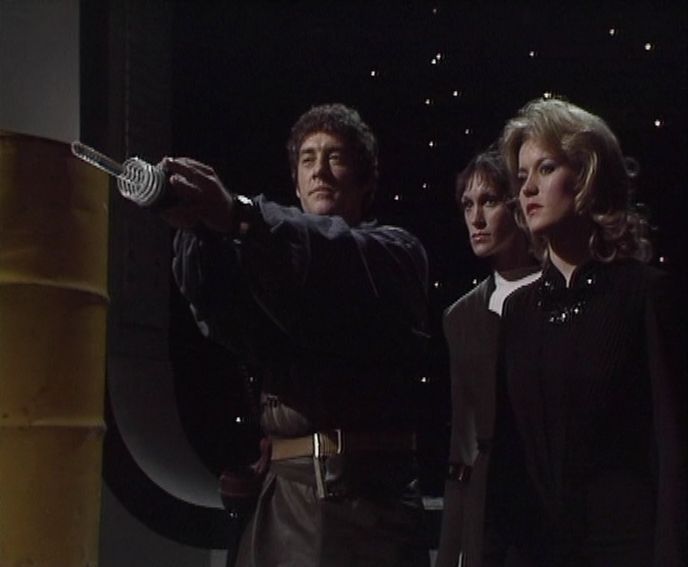
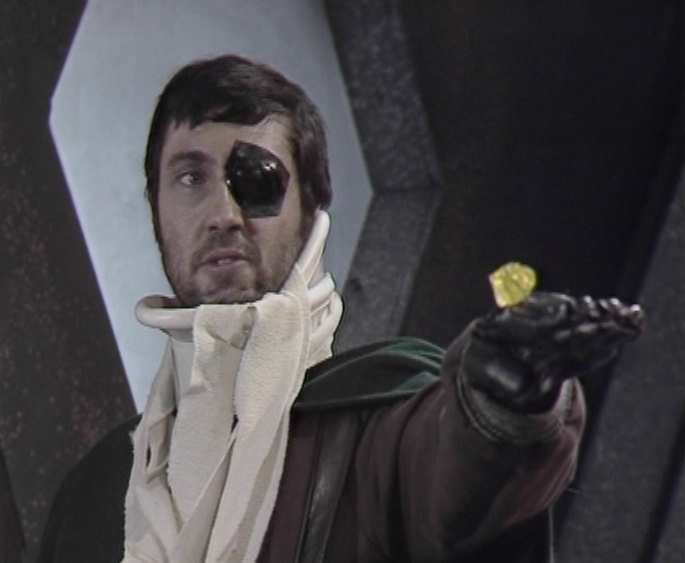
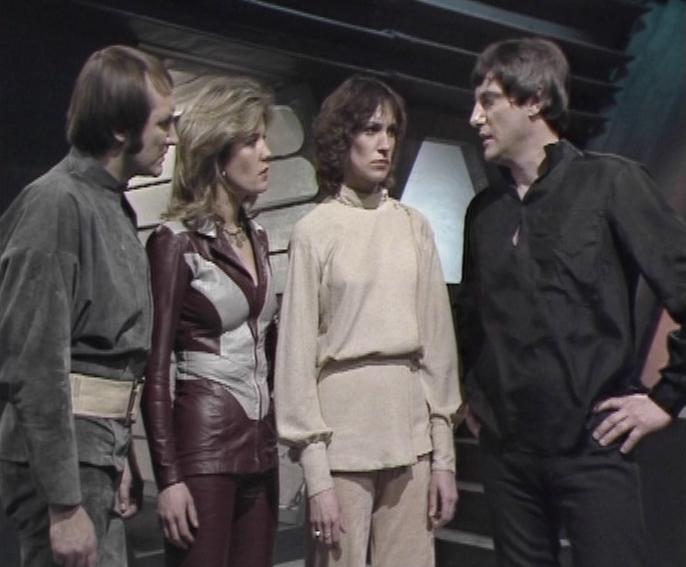
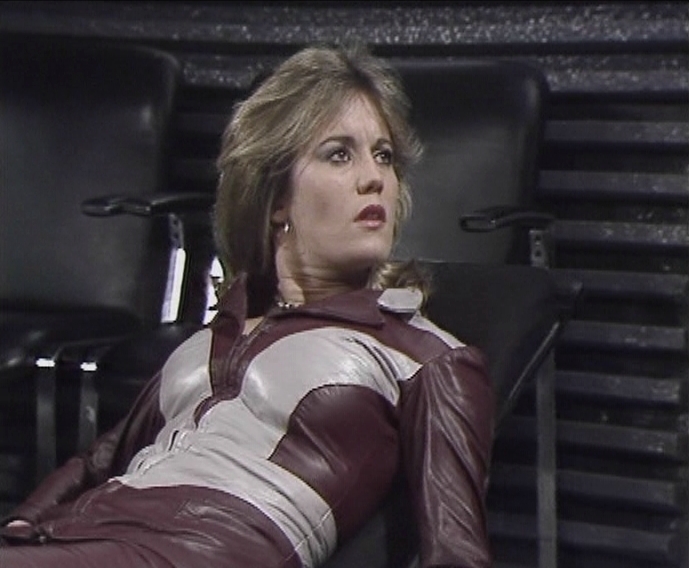
Althogh Ghostwatch was only screened once on British television (exactly twenty two years ago) it’s certainly a programme that remains lodged in the public imagination.  It was a drama, made for the BBC Screen One strand, but was recorded to look like a live, factual piece and this blurring between reality and fiction proved to be highly controversial.

Whilst there was a Screen One caption and a writers credit (for Stephen Volk) at the start, anybody who missed this and tuned in a few minutes later could easily have been forgiven for thinking this was a live broadcast.  It employed the narrative of a typical show of this type – Michael Parkinson is ensconced in the studio with an expert on the paranormal whilst Craig Charles and Sarah Greene are on location and reporting back events as they happen.

There are numerous examples of the television grammar that’s been employed…

View original post 675 more words

Grange Hill. Series Four – Episode Eleven

grange hill - s04e11

Written by Alan Janes. Tx 3rd February 1981

There’s something rather endearing about the low-level villainy of Michael Doyle.  He did issue a few racial taunts to Benny during series one but that was pretty much his worst deed.  Otherwise it’s all pretty low-key stuff – stealing Penny Lewis’ project or, as in this episode, pinching light-bulbs so he can make a small profit by selling them to Junky Meade (Harry Webster).

Doyle doesn’t just take the bulbs though – he leaves a faulty one in its place, which causes no end of confusion for Mr Thompson as he tries to work out exactly why so many light-bulbs are failing.  Timothy Bateson is once again remarkably entertaining as Mr Thompson and what’s even better is that in this episode he has an assistant to vent his frustrations to.  Norman (Leslie Hull) is young and gormless and obviously irritates the older Thompson.  Hull has a nice sense of comic timing and it’s a pity he didn’t return in the future.

There are two other highlights in the episode – the first is Cathy singing Queen Bee.  Originally recorded by Barbra Streisand in 1976, it’s certainly a good showcase for Lyndy Brill’s vocal abilities.  Had this been a few years later then it’s highly likely a tie-in record would have been released (ala the Grange Hill album or, shudder, those EastEnders singles) but there was nothing here, alas.

Perhaps the most eye-opening moment is Mr Hopwood’s confrontation with Alan.  Alan’s smoking habit has been a running theme for a while and when Mr Hopwood catches him, his displeasure is plain to see (he gives Alan a clip on the top of the head, knocking him over).

It’s remarkable that this assault is simply accepted by both parties and not taken any further – particularly since Mr Hicks was dismissed for doing something similar in an earlier episode.  But then Mr Hopwood is positioned as a good and positive character and Alan’s smoking is “wrong” so it’s clear to understand the moral tone that the episode takes.

Even more jaw-dropping is that Alan turns up for school the next day sporting a black eye.  This was given to him by his father after Mr Hopwood told him about his son’s smoking habit.  This isn’t the first time that we’ve seen a pupil physically abused by their parent (Duane was given a black eye in series three after his bike was stolen).

There’s never even a hint that Mr Humphries might have been in the wrong for hitting his child – Alan shouldn’t have been smoking and therefore has been taught a lesson he won’t forget.  It’s a fascinating look at a vanished age.

Grange Hill. Series Four – Episode Ten

grange hill - s04e10

Written by Margaret Simpson. Tx 30th January 1981

What’s notable about this era of Grange Hill is that the pupils always seem to be campaigning about something.  School uniform was an ongoing issue during series two, the outdoor centre was key to series three and already in series four we’ve had campaigns for common rooms, saving the school magazine and also protests about the cost of the new sports kit.

I wonder if this simply was a sign of the times (late seventies and early eighties Britain certainly had a militant atmosphere – there always seemed to be plenty of strikes and industrial disputes) or whether it’s due to the influence of series creator Phil Redmond.  As the eighties wore on and Redmond’s influence lessened it’s notable that pupil militancy does seem to reduce – so maybe its safe to assume he was the driving force behind these plotlines.

Either way, this is yet another episode which is dominated by unhappy pupils – in this one its school dinners that they find it hard to stomach (as it were).  No doubt this would have struck some chords with the viewers at home since school dinners of this era could be a grim affair.

There’s something of a feel of deja vu as Trisha again teams up with Susi and Pamela (both viewed as the enemy by Cathy) to try and harness support for their proposals.  But an increasingly irritated Cathy decides to restart the banned SAG (student’s action group) in order to achieve change by force rather than reason.

Although the series was often criticised for having an anti-establishment atmosphere, there’s a very clear sense that order will prevail here.  Cathy’s abortive attempt to harness support with SAG is quickly snuffed out (indeed, it would have been interesting to develop this thread over a couple of episodes) whilst the efforts of Trisha, Susi and Pamela are given tacit approval by Mrs McClusky.

Although she characteristically isn’t terribly pleased that they went ahead and distributed a questionnaire to staff and pupils without asking her permission!

Grange Hill. Series Four – Episode Nine

grange hill - s04e09

Written by Margaret Simpson. Tx 27th January 1981

The rumour that school uniform might be brought back is naturally not viewed with much enthusiasm by the pupils.  Trisha, as one of the prime-movers in ensuring it was made optional is particularly perturbed.  Amongst the first-years it’s also discussed, but here it’s used more as an excuse for Pogo to bait Richard Marks.

Marks, like Benny Green before him, comes from an impoverished background and would therefore struggle to afford to buy a school uniform.  There’s something rather disquieting about watching Pogo bait Richard, partly due to Pogo’s unflattering nickname for him (“Pongo”) but also for the reactions of the other members of the class – who are all happy to laugh along with Pogo at the unfortunate Richard.

But this is a scene where Miss Mooney shows a little steel.  Up until now she’s been portrayed as rather a scatter-brained and ineffectual teacher, but after Richard leaves the room (she asks him to take the register to Mr Keating) she rounds on the remainder of the class.  “Well I must say I’m appalled at what I’ve just heard.  I can think of nothing more small-minded than getting on to a boy or a girl because they come from a poor home.”  And she reserves most of her ire for Pogo.  “What a spoilt, smug little boy you are Douglas Patterson.  Have you ever stopped to think for a moment what it must be like to come from a home less privileged than your own?”

Cathy’s continual lateness and lack of attentiveness has become something of a talking point among both her friends and the staff.  Lyndy Brill is rather good in these scenes – she manages to give Cathy just the right amount of insolent disdain, even when she’s talking to her favourite teacher Mr Sutcliffe.

But whilst Cathy exhibits little interest in any school affairs, her best friend Trisha is the complete opposite.  She becomes the third year school council rep and persuades Justin to take the vacant boys position (which has remained empty since Michael Doyle’s dismissal at the end of series three).  And as the next school council meeting has a motion tabled by Mrs McClusky to reintroduce school uniform it’s possibly just as well that Trisha was present.  Mrs McClusky’s irritation at not being able to immediately have her own way is quite evident and she’s then further dismayed when everybody votes to use several empty classrooms as common rooms.

The mystery of Cathy’s lateness is explained – along with Gerry, Ruth and a couple of boys they’ve restarted their group and so spend all their available spare time rehearsing.  Miss Peterson offers to see if she can find somewhere for them to rehearse during the lunchtime – and that way Cathy might be able to concentrate on her lessons.

Grange Hill. Series Four – Episode Eight

grange hill - s04e08

Written by Alan Janes.  Tx 27th January 1981

Danny Taylor (Peter Hopwood) is a Grange Hill archetype – the money-making entrepreneur.  He doesn’t reappear after this episode though, which makes me wonder if he was drafted in as a late replacement for Pogo – who’s already shown an interest in get-rich schemes (which fail dismally, of course).

Danny’s wheeze is to organise a lottery, but he falls foul of Gripper who has his eyes on the main prize.  The most interesting part of this section of the episode are the opening moments – Stewpot calls round for Danny and is waved into the house by Danny’s father (who is obviously something of a wheeler-dealer himself).  Danny has inherited his father’s drive to make money and this is viewed with irritation by Stewpot.  He reckons that within a few years Danny will be sitting behind a desk and making money from other people’s efforts.  Stewpot tells him that come the revolution things will be very different!

When Gripper’s not attempting to rig the lottery (although it’s interesting that his plan is somewhat elaborate – in years to come he’d just have taken the money) he’s running foul of Mr Baxter on the football pitch.  After Gripper harshly tackles Matthew Cartwright, Mr Baxter makes it plain that he won’t tolerate any repetition.  And if it did happen again, Gripper would be the one on the ground and Mr Baxter would be standing above him, putting the boot in.  Nowadays any threat of violence from a teacher to a pupil would be viewed as an empty one – but 1981 was a different era and Gripper takes Mr Baxter’s words seriously.

Karen Stanton (Carey Born) makes her only series four appearance.  She cuts a very woebegone figure as she confides to Claire that all is not well at home – thus sowing the seeds for a later episode featuring Karen’s brother, Andrew.

Miss Lexington continues to be an object of fascination for many of Grange Hill’s pupils.  Duane’s puppy love is quite evident (he’s always popping up and asking to carry her bags) but there’s other examples as well.  Two older pupils use their time in Miss Lexington’s computer club to program a rough approximation of the female form with the words “Sexy Lexi” next to it.  But when Miss Lexington sees it she simply gives them an indulgent smile and moves on.  Is she something of a tease or simply unaware of the effect she has on certain people?  However you want to interpret her character there’s no doubt that Allyson Rees’ wide-eyed performance is terribly appealing.

Miss Lexington’s later run-in with Mrs McClusky is a highlight of the episode.  What makes their clash so intriguing is the fact that they’re such different character types – Miss Lexington is relaxed and carefree whilst Mrs McClusky is strict and unyielding.  The headmistress views the scruffy appearance of Miss Lexington’s class with extreme disfavour and she tells the younger teacher that their planned trip to the Silicon Chip factory is cancelled.  Mrs McClusky is simply not prepared to let such an untidily dressed bunch of pupils represent the school.

This is the first step in Mrs McClusky’s desire to bring back school uniform.  That obviously wouldn’t go down well with the pupils, but on the evidence of these early series four episodes it’s plain that Mrs Clusky is someone who is always determined to get her own way …..

Doomwatch to be released on DVD by Simply Media – April 2016

doom

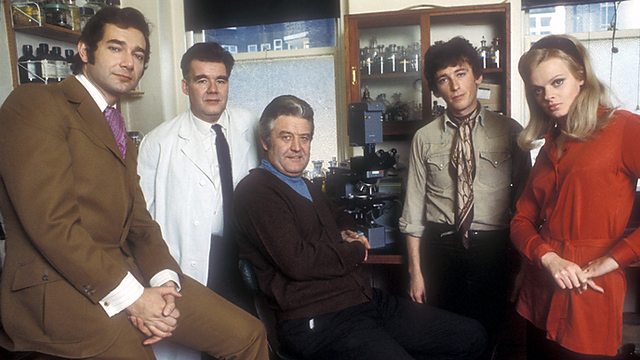
My article about Doomwatch and its current lack of availability on DVD is one of the most read posts on this blog.  That does seem to confirm that many people are still very interested in this classic early 1970’s series.

So it’s extremely welcome news that a six disc Doomwatch set will be released by Simply in April 2016.  It will contain all the existing episodes (including the untransmitted episode Sex and Violence as well as a documentary – The Cult of Doomwatch).

In all, twenty four episodes remain in the archives.  They are as follows –

Series One

The Plastic Eaters
Tomorrow, the Rat
Project Sahara
Re-Entry Forbidden
The Devil’s Sweets
The Red Sky
Train And De-Train
The Battery People

Series Two

You Killed Toby Wren
Invasion
The Islanders
No Room for Error
By the Pricking of My Thumbs…
The Iron Doctor
Flight into Yesterday
The Web of Fear
In the Dark
The Human Time Bomb
The Inquest
The Logicians
Public Enemy

Series Three

Waiting for a Knighthood
Hair Trigger
Sex and Violence

As can be seen from the above list, the archive status for series one is pretty good (eight out of the thirteen episodes exist), series two is complete whilst series three is by far the patchiest (only three of the twelve episodes remain, although it’s slightly curious that one of the survivors – Sex and Violence – was never transmitted.  You’d have assumed It would have been one of the first to be wiped).

As I discussed here, when it comes to picture quality, what we have left is something of a mixed bag.  Ten episodes exist on their original format – 625 PAL videotape and so should look pretty good (although the film inserts will no doubt have deteriorated over the past four decades).  The remaining fourteen episodes were returned to the BBC from Canada and it’ll be interesting to see what they look like.

The Canada episodes would have been converted from 625 PAL to 525 NTSC before they were sold, then converted back to 625 PAL when they were returned to the UK.  It was these converted copies that were broadcast on UK Gold in the mid 1990’s (and a couple of episodes were also released on VHS a few years prior to that).

The conversions from PAL to NTSC and back again to PAL would have degraded the picture somewhat, although a process developed several years ago called RSC (Reverse Standards Conversion) has been applied (this should restore something of the original PAL look).  Examples of RSC can be seen on various Doctor Who DVDs, although I have to confess that the results haven’t always pleasing to my eyes (especially the three episodes on The Sea Devils release).

As it’s doubtful that Simply will have a particularly large budget for restoration it’s probable that the RSC episodes will look a little rough around the edges, but if it’s a choice between having them in a less than ideal state or not at all then it’s a no-brainer.

Update 25/3/16 – My DVD review can be found here.

Grange Hill. Series Four – Episode Seven

grange hill s04e07

Written by Alan Janes. Tx 20th January 1981

The themes of this episode fit neatly into the topic of staff/pupil consultation which has been bubbling away for a few episodes.

The pupils are appaled to be told they have to buy new sports kit from Hayes Green Sports. It’s quickly established that they aren’t the cheapest of shops and since they’re the only ones supplying the new kit it does seem obvious that they’re making a profit at the pupil’s expense. Susi quickly writes an article about this for the school magazine, only to be told shortly afterwards by Mrs McClusky that the magazine will have to close due to lack of funds.

Is there a connection? It could be, or possibly it’s because Mrs McClusky simply doesn’t like the thought of the pupils having any voice at all. In this respect, she’s a far cry from the open Mr Llewellyn as she seems very keen to stifle any debate – her word seems to be law.

But it only has the opposite effect and the usual suspects now have another couple of causes to fight for. Not only common rooms, but saving the school magazine and also investigating whether the new sports kit is being offered at a rip-off price.

Susi and the magazine’s editor Rosie (Nicola Wright) ask Mrs McClusky is they can continue the magazine if they could find a way to make it self financing. She can’t do anything but agree – so if her plan was to shut down the magazine in order to stifle dissent then she’s been circumvented. We don’t know for sure, since Mrs McClusky doesn’t have anybody here that she confides her thoughts and feelings to, so it’s up to the viewer to make their own mind up.

Although there is a scene where she asks Mr Sutcliffe if he wouldn’t mind attending the save the magazine meeting – and he rather brusquely refuses, telling Miss Mooney that he’s not prepared to do Mrs McClusky’s spying for her.

Alan and Susi rope in Mr Humphries to find out what the wholesale prices for the sports kit are. He learns that Hayes Green Sports are making over 100% profit – and he tells them that he’ll bring this up at the next PTA meeting. His obvious anger (and mutterings of rank exploitation) leave us in no doubt that more affordable sports kits will soon be available.

It’s not something that shows the Headmistress in a very good light, but it’s hard to credit that she would have colluded with Hayes Green Sports to artificially raise the price just so they could make a healthy profit. But the notion that she simply didn’t care about the cost of the kit doesn’t ring true either.

Grange Hill. Series Four – Episode Six

grange hill s04e06

Written by Phil Redmond. Tx 16th January 1981

Another wave of vandalism causes the school dance to be cancelled. Tucker knows who was responsible – Booga Benson and Gilbo – but also knows what will happen to him if he speaks out. He tells Mr Sutcliffe that he’ll get his legs busted.

Another all-film episode, it’s a memorable installment – not least for the Tucker/Booga confrontation. Up until now Booga’s been little more than a menacing background character – who seems to mainly have existed to provide a reason to lock the younger pupils out of the school during break and lunchtimes.

He now moves into the centre of the action and starts by destroying Tucker’s magazine cover entry. Given all the hard work he put into it this is a bitter blow – although he’s able to produce another, almost identical version, very quickly – even if he has to bunk off school to do it. Of course he does win the first prize (ten pounds) and impresses Mrs McClusky by telling her that he’s going to buy some premium bonds with it.

Afterwards, he goes back to helping Mr Sutcliffe set up the hall for the dance, but it all seems to be in vain once everything is cancelled. We then see him struggle with his conscience as he makes his way along to Mrs McClusky’s office – he just has to give her a name and the dance will be back on. But the consequences to him could be fatal.

He does the right thing and the evening is a great success – not least for the impressive vocal stylings of Mr Sutcliffe, Cathy, Gerry and Ruth. Everything seems to be fine as Tucker, Alan, Benny, Tommy, Susi and Pamela leave the hall at the end of the night.

But the sudden and unexpected appearance of Booga wipes the smile from everybody’s faces. There then follows a frantic chase through the school, culminating in both Booga and Gilbo giving the unfortunate Tucker a good kicking.

Another notable aspect of the episode is that it marks a rare series four appearance by Terry Sue Patt as Benny.  I don’t know whether his sporadic involvement was his own choice or it happened because he was now judged to be surplus to requirements. Either way it’s a shame that someone who was a focal character for the original run just seems to fade away quite abruptly.

Grange Hill. Series Four – Episode Five

grange hill s04e05

Written by Sandy Welch. Tx 13th January 1981

Trisha and Cathy are still irritated at not being allowed into the school until the fifth and sixth-formers let them in. One obnoxious older pupil (played by Peter McNamara) is especially officious, although Trisha takes her revenge by aiming a swift kick at his shins as she walks past him!

The plan of action, headed by Trisha and Susi, continues to rumble on – as they attempt to organise a fact-finding mission to establish whether everybody is in favour of common rooms. It’s not easy going though and Susi begins to have doubts about the effectiveness of what they’re doing.

This then leads into a very interesting two-handed scene between Tucker and Susi. Since they’re diametrically opposed characters it’s rare that they’ve ever shared any scenes together. What’s even more noteworthy is that Tucker is supportive towards her. He tells her he has no doubts about his abilities (he’s in the library working on his design for the cover of the school magazine) and urges her to have more confidence as well. Had any of the other pupils been present it’s unlikely he would have been so forthcoming, so this offers a nice insight into the more thoughtful side of Peter Jenkins.

Of course, when the others are around Tucker can’t help himself by bragging that his design is bound to win the competition. Such obvious boasting naturally irritates Doyle and together with his two new henchmen – Robo (Neil Rogers) and Macker (Alan Gibson) – he plans to do something unpleasant to Tucker’s design. This is signposted so clearly that it’s a little surprising when it doesn’t happen – and a further wrong-footing move happens in the next episode (somebody does destroy it, but it’s not Doyle).

There’s a small, but significant, character moment when Doyle senses that the others are reluctant to help – he reminds them that he’s paying them so he expects their full co-operation. Is Doyle such an awful person that he can’t even find a single friend without a monetary inducement? It’s just a throwaway touch, but it’s quite illuminating.

We also get a taste of the song that Cathy, Ruth (Paula Harris) and Gerry (Karen Saunders) will be performing in the next episode.

Re-watching this episode, something which stands out is that both Miss Mooney and Susi McMahon are present but neither utter a single word. It does seem strange to have two regulars in the studio but for them both to remain mute – so maybe scenes for several episodes were shot on the same studio day? That would make some sort of sense.

In many ways this episode is merely setting the ground for the next one – which will conclude a number of plotlines (notably it’ll see the final confrontation between Booga and Tucker).

Grange Hill. Series Four – Episode Four

grange hill s04e04

Written by Phil Redmond. Tx 9th January 1981

This is a memorable episode for several reasons. Firstly, it introduces us to Gripper Stebson (Mark Savage). His character is made plain from his very first appearance – we see him indulging in a spot of shoplifting from the local newsagents whilst Pogo, Duane and Stewpot (Mark Burdis) look on. He later confronts the three of them and tells them in no uncertain terms to keep quiet – all of Gripper’s trademark menace is already well displayed.

But it won’t be until series five (when Gripper and the others move into the third year) that he’ll really develop into the monster who’ll dominate the series for a couple of years. Like all bullies he’s at his most effective when picking on those younger than him, so he’s somewhat impotent during series four (since he’s only a first-year and the other first-years outnumber him).

The computer teacher Miss Lexington (Allyson Rees) makes the first of her six appearances (four during the fourth series and one apiece in both series five and six). It’s easy to see why she quickly acquired the nickname of “Sexy Lexi”.

But the heart of the episode revolves around the sadistic games master Mr Hicks (Paul Jerricho). After a swimming lesson in which Stewpot, Duane and Pogo lark about, Mr Hicks confronts Stewpot and the boy cuts his head after Mr Hicks shoves him.

This scene, like the rest of the episode, is shot on film and there’s no doubt that the all-film nature is very much to the benefit of the drama (it allows for better timing on close-ups and reactions shots than would be possible in a multi-camera studio TV setup). There’s a lovely sense of tension after the incident – the pupils are appalled and Mr Hicks clearly realises he’s gone too far, but his authority and intimidating presence mean that they can’t directly challenge him.

But the full story comes out when Stewpot talks to his mother (played by Helen Cotterill) and she goes to the school to demand answers. This is an intriguing scene – Mr Hicks is confronted by Mrs Stewart, Stewpot and Duane but he’s easily able to browbeat both Stewpot and Duane into changing their story. Mrs McClusky and Mr Baxter are also present and seem quite happy to accept both the boy’s retraction and Mr Hicks’ comment that Stewpot “slipped on the wet floor” at face value.

But since Mr Hicks’ treatment of Stewpot isn’t an isolated case – we later see him (off-screen) slipper a pupil and there’s plenty of other anecdotal evidence of his misdemeanours – it’s a worrying thought that his reign of terror has been ongoing for some time with nobody picking it up.

Eventually, both the protestations of Miss Lexington and comments from some of the other pupils are enough to make Mr Baxter keep a close eye on Mr Hicks. And when he sees him push another boy, Mr Baxter springs into action. He calls Mr Hicks from the gym and punches him to the ground, with the ironic comment of “slipped on the wet floor, did you?”

Hicks is dismissed, whilst both Mrs McClusky and Mr Baxter offer Mrs Stewart their sincere apologies. She’s happy to consider the matter closed – but it’s plain from Mr Baxter’s final words (“skin of our teeth”) and Mrs McClusky’s expression that they both realise the fall-out that they and the school would have suffered had Mrs Stewart decided to take the matter further.

Grange Hill. Series Four – Episode Three

grange hill s04e03

Written by Sandy Welch.  Tx 6th January 1981

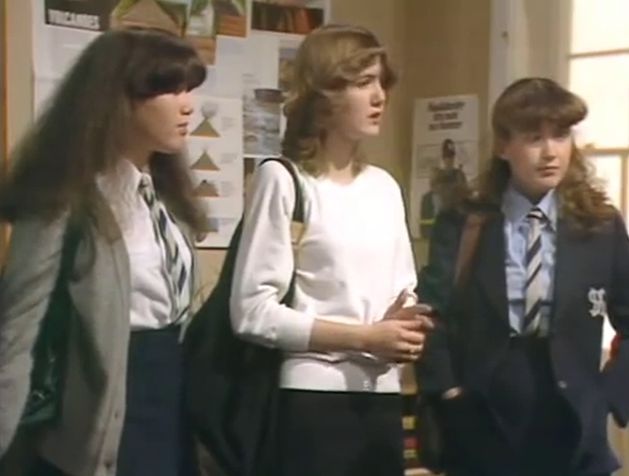
Episode three gives us our first chance this series to catch up with the first years. As has happened before, and will happen again and again in the future, various characters have dropped out and new ones have been drafted in to replace them with no explanations about these various departures and arrivals.

Tracy Edwards and Karen Stanton have vanished (although Karen must presumably still be somewhere in the school since she pops up briefly in a later episode). They’ve been replaced by the somewhat identikit characters of Claire Scott (Paula Ann Bland) and Suzanne Ross (Susan Tully).

Claire, like Tracy, is an old friend of Duane (it’s easy to believe her scripts were originally written for Tracy) whilst Suzanne at present exists mainly to line-feed Claire and join in the general banter, mainly about how fat Pogo is!  It’s difficult to imagine that Suzanne would later become a key figure in the series (during series five to seven) as she’s a very minor character during series four’s run.

But there are some new arrivals in Miss Mooney’s class who are commented on. Julia Farley (Sarah Attwood) is a second year pupil who has been forced to drop down a year due to her poor results. She’s a potentially intriguing character, but sadly only has a major speaking role in this one episode.  Her Grange Hill appearances were Sarah Attwood’s only television or film credits.

Another fairly short-lived pupil is Richard Marks (David Doyle). He’s a pupil who was created to serve a single function – he comes from a poor background and is teased by the others because of this – and once that storyline has concluded there’s nothing else left for him to do.

Most of the episode revolves around a forthcoming school medical and the concerns of some of the pupils. Alan’s worried it’ll reveal his smoking habit whilst the younger girls have other issues. It’s interesting to see how the topic of period pains is delicately handled – the reason for their pains are never spelled out, but it’s still covered quite well.  Claire becomes the audience identification figure – she’s concerned about what’s happening but doesn’t feel she can talk to anyone about it. Eventually she speaks to Susi who’s able to answer her questions and calm her fears.

Pogo manages to lighten the mood after he overhears a girl telling Miss Peterson she’s unable to do games because of the time of the month. He decides that this is a wonderful excuse and tries it with Mr Sutcliffe, with notably less success!

Grange Hill. Series Four – Episode Two

grange hill s04e02

Written by Phil Redmond. Tx 2nd January 1981

The continuing vandalism has meant that more and more restrictions are being placed on the pupils. This doesn’t please Trisha, who teams up with Pamela, Susi and Justin to work out a way to change things – much to Cathy’s disgust.

Since Andrew Stanton is absent for some reason, the character of Christopher (Paul Ellison) seems to have been created to perform exactly the same function – to be Justin’s friend and feed some lines to him. After appearing in three of the early episodes he returns later on for the French trip episode (although he has little to do in that one).  It’s another example of someone who just appears out of nowhere but has apparently always been there.

Booga and Tucker continue to clash, whilst Trisha and Cathy’s friendship is put under more strain due to their differing interests (a storyline that will develop for a while).

There’s a nice run-in between Thomson and Tucker, which occurs when Thomson incorrectly believes that Tucker’s been writing on the wall. Bateson continues to wring every comic drop out of the character that he can (such as calling Tucker “Jasper” for no particular reason!)

Their confrontation becomes slightly physical when they both get involved in a shoving match, although Tucker claims that Thomson hit him first. But it’s no surprise that authority wins out and Tucker is forced to scrub down the wall. This whole incident makes Tucker more than keen to join the campaign of school rights (whereas he’d previously been less than keen on the idea).

Grange Hill. Series Four – Episode One

grange hill s04e01

Written by Phil Redmond. Tx 30th December 1980

There’s a bleak feel to this opening episode. A wave of vandalism over the holidays has meant the school is looking even more dilapidated than usual. The money isn’t available to make all the repairs straightaway, so some windows remain boarded up – creating an oppressive atmosphere.

This is one of the immediate problems to be faced by the new head, Mrs McClusky (Gwyneth Powell) and the new caretaker, Mr Thomson (Timothy Bateson).

The McClusky years start here. Due to her longevity, Gwyneth Powell would become by far Grange Hill’s most recognisable head-teacher. Is it too fanciful to say there’s more than a touch of Mrs Thatcher about her? Certainly both women would remain dominant in their respective empires during the remainder of the 1980’s ….

Mr Thomson didn’t last as long, but I think he’s probably my favourite caretaker. Pompous and pernickety, he’s played to absolute comic perfection by Timothy Bateson who is always such a joy to watch.

It eventually becomes clear that the vandalism is being carried out by Booga Benson (David Lynch), an unstable fifth-former. The fact that he’s older than Tucker and co means that our heroes can’t tackle him direct – which is an interesting development. Previously Tucker has tangled with the likes of Doyle, but as they were of a similar age it was an equal clash. Booga is another matter altogether and every time he runs into Tucker he gains the upper hand.

It’s remarkable that Booga only appears in a few episodes, since he casts a long shadow over the series (maybe featuring in spin-off novels such as Grange Hill For Sale by Robert Leeson helped to create the impression he was a more regular character) .

But he certainly makes the most of his handful of episodes and is by far the nastiest person we’ve seen in the series to date – anytime he’s on screen there’s an uncomfortable sense that he’s barely managing to keep his instability in check . Although he’ll be eclipsed later on by Gripper (who makes his début in series four, although only as a background character with little to do) it’s an excellent performance by Lynch

Elsewhere, Cathy and Trisha (along with Gerry and Ruth) form a group, with the aim of performing with Mr Sutcliffe at the forthcoming school dance. But as we’ll see, Trisha’s heart isn’t in it.

Blakes 7 – Star One

star 01

There are two key scenes in Star One – both of which take place on the Liberator during the opening minutes.  The first demonstrates Avon’s wish to end his association with Blake.

AVON: We can take Star One, let’s get on with it.
JENNA: Very stirring. When did you become a believer?
AVON: Are you just going to sit there? You have led them by the nose before.
BLAKE: Excuse me, are you going to answer her question?
AVON: Show me someone who believes in anything and I will show you a fool.
BLAKE: I meant what I said on Goth, Avon. We are not going to use Star One to rule the Federation, we are going to destroy it.
AVON: I never doubted that. I never doubted your fanaticism. As far as I am concerned you can destroy whatever you like. You can stir up a thousand revolutions, you can wade in blood up to your armpits. Oh, and you can lead the rabble to victory, whatever that might mean. Just so long as there is an end to it. When Star One is gone it is finished, Blake. And I want it finished. I want it over and done with. I want to be free.
CALLY: But you are free now, Avon.
AVON: I want to be free of him.
BLAKE: I never realised. You really do hate me, don’t you?

Blake agrees that Avon will take him back to Earth after the destruction of Star One and that the Liberator will then be Avon’s.  This is a pointer towards the general direction that series three will take.  With Blake absent it wouldn’t have been credible for Avon to simply inherit his crusading zeal, so we see a shift towards more SF stories and less battles with the Federation (the balance changes again in series four).  Paul Darrow is excellent in this scene and it easily demonstrates that he’s more than capable of carrying the series.

Even more fascinating is the following exchange between Blake and Cally.

CALLY: Are we fanatics?
BLAKE: Does it matter?
CALLY: Many, many people will die without Star One.
BLAKE: I know.
CALLY: Are you sure that what we’re going to do is justified?
BLAKE: It has to be. Don’t you see, Cally? If we stop now then all we have done is senseless killing and destruction. Without purpose, without reason. We have to win. It’s the only way I can be sure that I was right.

This is such a key moment, as it shines a very cold and clear light on Blake and his convictions.  Earlier in the episode Servalan is shown examples of what happens when Star One fails – droughts, storms, terrible devastation, etc.  If Blake destroys Star One then these disasters will just be the tip of the iceberg.  Can any cause possibly justify this loss of life?  It’s hard to agree with Blake that it does – his sole motive for continuing is because he’s gone too far down the road of freedom fighter/terrorist (delete as applicable) to stop now.  It seems a monumentally poor reason for such wholesale destruction.

As we’ll see, Blake doesn’t destroy Star One.  Aliens have infiltrated the complex and the Liberator finds itself allied with a fleet of Federation ships in a desperate attempt to stop a massive alien invasion.  It’s possible to argue that the unexpected appearance of aliens is something of a cop-out.  The Federation in series three is shown to be in disarray following the battle with the aliens and had Blake destroyed Star One there would have been a similar amount of disruption.

star 02

Star One is manned by a small number of Federation personnel, most of whom have been replaced by the shape-shifting aliens.  This makes no sense – we’re told nobody ever visits, so why didn’t the aliens simply kill everybody and then take over?  It’s also not clear why Star One has been failing recently – were these problems caused by the aliens or was Star One starting to run down of its own accord?

It also seems that quite a few events have been happening off-screen – when did Travis decide to ally himself with the aliens and why should he now wish to destroy all humanity?  He’s always been more than a little unstable, but this sudden desire to kill everybody doesn’t really sit with what we’ve previously seen.

With Gareth Thomas’ departure it was decided that Travis’ main function in the series was over.  And it’s difficult not to raise a cheer as Avon finally kills him off and sends him spinning down a very deep hole (via some very unconvincing CSO).  The problems with Travis during series two weren’t all down to Brian Croucher, but there’s no doubt that Travis’ death is a mercy killing (both for himself and the audience).

We end with a cliffhanger as Avon leads the Liberator in an apparently hopeless battle against the oncoming alien fleet.  There’s one final moment between Blake and Avon (“Avon, for what it is worth, I have always trusted you, from the very beginning.”) and then the credits roll.

After some wobbles in the second half of the season (Hostage, Countdown, Voice from the Past, The Keeper) Star One manages to close the second run on a high.  It’s a very talky episode, with little in the way of impressive visuals or effects (the alien fleet looks to be cobbled together from whatever was lying around the Special Effects workshop for example).  But the dialogue heavy nature of the story isn’t a problem as it allows all the regulars a chance to shine.

star 03

Blakes 7 – The Keeper

keeper 01

The Keeper isn’t a story that has a great deal going for it.  The setting is the planet Goth and its inhabitants, led by Gola (Bruce Purchase), clearly favour a faux-medieval feel (plenty of flickering torches and over-ripe dialogue).

Purchase, who’d played the Captain in the Doctor Who story The Pirate Planet shortly before, approaches this role with a similar lack of subtlety.  But whilst there was slightly more to the Captain than initially was apparent, Gola is just a blustering fool who spends his time shouting – it’s almost as if he’d taken lessons from Brian Blessed.

Blake, Vila and Jenna teleport down to find the brainprint of cyber-surgeon Lurgen.  Once they have that they’ll be able to establish the location of Star One.  Avon asks Blake what they’ll do once they know where Star One is.

BLAKE: Finish what we started.
AVON: Destroy it?
BLAKE: Of course. And the entire Federation with it. Does that bother you suddenly?
AVON: Star One is the automatic computer control centre for the entire Federation.
BLAKE: Get to the point, Avon.
AVON: That is the point. Through Star One we could control everything. The Federation could belong to us.
VILA: I could be president.
AVON: Ah.

Blake and the others are only on the planet’s surface for a few minutes before they’re overpowered – it’s a remarkably inept display by Blake (strategic planning has never been one of his strengths).  Vila and Jenna are carried off whilst they leave Blake behind (why?).  Blake urgently requests teleport, but Avon and Cally have moved out of teleport range in order to destroy Travis’ ship.

How Avon manages to identify the ship as Travis’ is never explained – surely there must be others in the galaxy that are similar?  It probably won’t come as a surprise that Travis wasn’t on board – he and Servalan are both on Goth.  Their on/off working relationship is now back on and Travis is in a remarkably mellow mood as he attempts to forge a more permanent alliance with Servalan.

keeper 02

TRAVIS: Look, Star One is the computer control centre. It controls the climate on more than two hundred worlds, communications, security, food production, it controls them all. It is the key to our very lives. Think of all that power.
SERVALAN: You can see why the Council themselves don’t know where Star One is. In the wrong hands …
TRAVIS: Yes, but in the right hands: yours and mine.
SERVALAN: Be very careful you don’t overreach yourself, Travis.

One part of the story that does work very well is Travis’ contribution to it.  It seems obvious that he’ll be around for the duration, tangling with Blake and the others, but about twenty minutes in he disappears and it slowly becomes clear that he’s not coming back.  He’s already found Star One’s location and not only has he betrayed Servalan but as the next episode makes clear he’s betrayed the whole human race …..

A quick mention for his personal communicator, which is the size of several house-bricks (almost like the most primitive mobile phone).  Considering that Kirk and the Enterprise had pocket sized communicators a decade earlier you’d have imagined B7 could have done something similar. It’s hard to imagine him putting that into his pocket!

Whilst Blake runs around achieving very little, Jenna and Vila are making the acquaintance of Gola.  Vila becomes the King’s fool, supplanting his existing one (played by Cengiz Saner) whilst Jenna immediately attracts Gola’s attention.  It’s a good thing that The Keeper gives Sally Knyvette something to do, it’s a bad thing that she has to spend her time as the object of Gola’s attentions.  But Knyvette does manage to mine some comic moments from this fairly unpromising material.

Elsewhere, Blake meets Rod (Shaun Curry) who is Gola’s brother and plans to challenge him for the throne.  It won’t come as surprise that Rod is a bluff and hearty fellow (he’s not quite in the Purchase/Blessed camp for loudness, but he comes close).

Blake also runs into an old man locked in the dungeon (played by Arthur Hewlett) who turns out to be Gola and Rod’s father – and so is the old, disposed king.  Hewlett’s performance is notable for his moaning (he may be playing for laughs or he may not, I can’t be sure).  Also eschewing any subtlety is Freda Jackson as Tara, Gola’s sister.  She can cackle with the best of them and when she’s not doing that she maintains a baleful watch over the unfolding events.

Eventually (thank goodness) Blake discovers the location of Star One, which means we can happily leave the planet of Goth far behind and journey onwards to the climax of series two.

keeper 03

Blakes 7 – Gambit

gambit 01

Gambit is an unusual story, certainly for the series to date.  Robert Holmes’ script is laced with his usual love of wordplay and the camp quotient is set to eleven.  Krantor (Aubrey Woods) and Toise (John Leeson) are an unforgettable double-act – both actors seem to delight in upstaging the other (not least with their costumes – Leeson’s headgear is especially memorable).

There’s a throwaway line that it’s Mardi Gras time at Freedom City, which explains why they’re dressed as they are – and presumably all the extras (dressed as clowns, nuns, etc) are entering into the spirit of the occasion as well.  Or their costumes could have just been pulled off the shelves – this is Blakes 7, so it’s always a fair bet that money was tight.

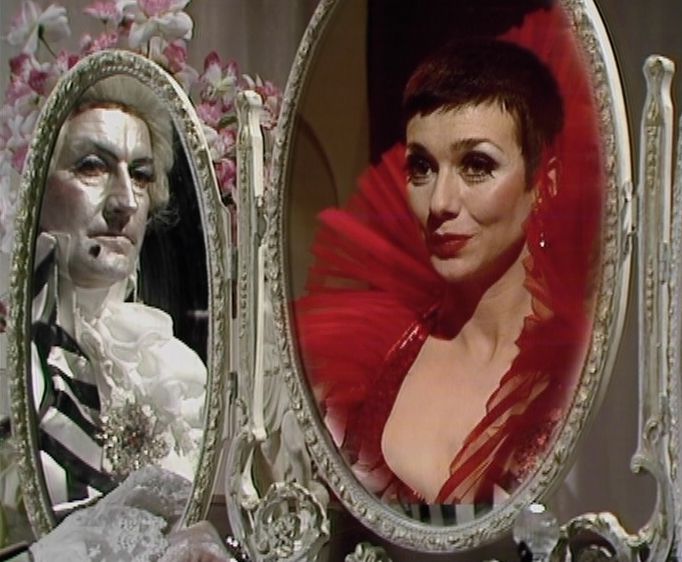
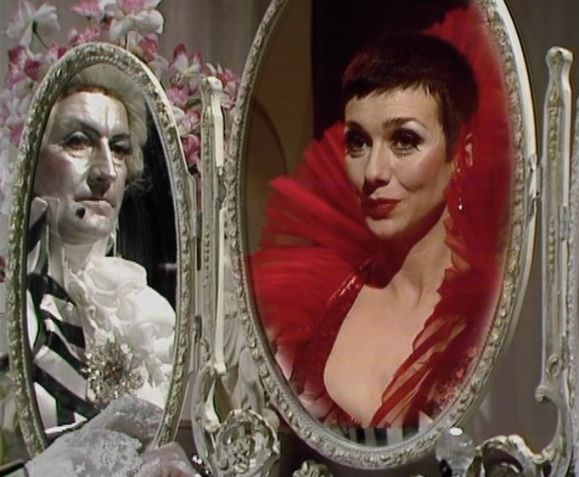
The lack of a decent budget is probably best reflected in the main room of Freedom City’s casino, which is pretty sparsely decorated.  So what funds were available seem to have been spent on a handful of new costumes (especially Servalan’s stunning red number).

Servalan, and her assistant Jarriere (Harry Jones), have travelled to Freedom City to find both Travis and cyber-surgeon Docholli (Denis Carey).  It’s believed that Docholli knows the location of Star One – so Servalan is anxious to locate him before Blake does.  She offers Krantor a substantial sum of money in exchange for his co-operation, but whilst they’re perfectly pleasant to each other on the surface it’s plain that neither trusts or likes the other an inch.

Servalan on Krantor.  “He is a despicable animal. When the Federation finally cleans out this cesspit, I shall have that vulpine degenerate eviscerated with a small and very blunt knife.”

Krantor on Servalan.  “One of these days, Toise, I am going to have Supreme Commander high-and-mighty Servalan ravaged until she does not know what month she’s in. I’ll have her screaming for death.”

This is typical Holmes, although it’s a little surprising that Krantor’s wish to ravage Servalan made it to the screen.  He always delighted in putting lurid dialogue into his scripts and sometimes (especially when Terrance Dicks was script-editing his work on Doctor Who) the more extreme examples were excised.  Here, it seems that Chris Boucher was happy to keep them in (unless of course he removed even worse!)

If Krantor and Toise are a great double-act, then so are Servalan and Jarriere.  Harry Jones couldn’t have looked less like a Federation trooper if he tried, but maybe this is why he was cast.  Jarriere is present mainly to listen admiringly to Servalan’s increasingly convoluted plans about how she intends to deal with both Docholli and Travis.  Delightfully, after she’s explained herself in great detail he then admits he doesn’t understand a word of it!

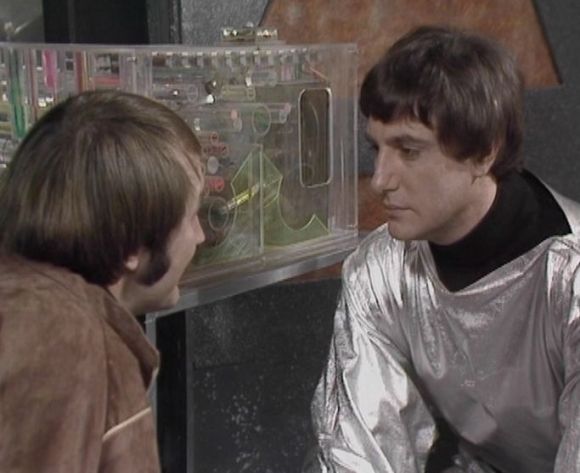
The third excellent double-act in the story are Avon and Vila.  Homes had already latched onto the comic possibilities of teaming them up in Killer and he wastes no time in doing so here as well.  Their subplot is a little bizarre, but it fits into the odd nature of the story.
gambit 02

Both are aggrieved at having to remain behind on the Liberator with Vila complaining that “if it was a desert down there, so hot your eyeballs frizzled, poisonous snakes under every rock” then Blake would have sent the pair of them.  Avon agrees and then decides they should teleport down and break the bank at the casino.

Why they should want to do this (the Liberator possesses untold wealth) is never made clear, plus the concept of Avon sneaking down is also bizarre – it’s difficult to imagine he cares that Blake would disapprove.  Some of his dialogue (“you dummy”) seems out of character too.

Avon and Vila intend to win a fortune at the roulette table with the aid of Orac.  But since Orac’s rather bulky, after a brief discussion about molecular reduction the computer obligingly reduces himself to one eighth of his normal size.  You can either enjoy the comic moment or fret that the episode once again isn’t taking itself seriously.

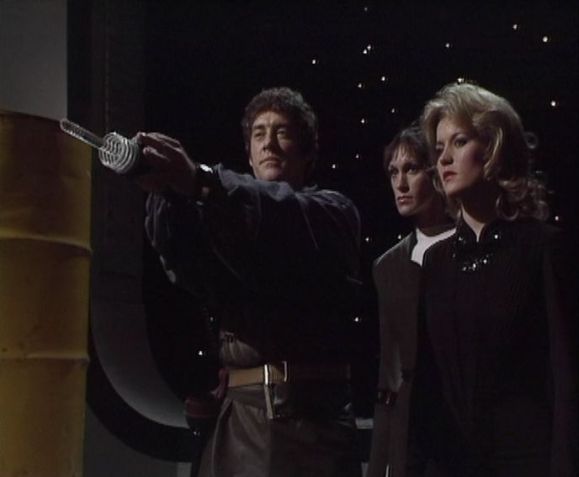
Blake, Cally and Jenna’s search for Docholli doesn’t last very long (they find a trace of him in the first bar they come to) so they don’t really have a great deal to do.  Jenna and Cally’s brief staged cat-fight is easily the highlight of their scenes.  Travis skulks about, wearing a silly hat, guarding Docholli as he knows that Blake will turn up to find the surgeon (although how Travis knows about Docholli is never explained).

Thanks to Orac, Vila wins a fortune but then finds himself conned into playing speed chess with the Klute (Deep Roy).  If he wins or draws he’ll earn another fortune, but it he loses it’ll cost him his life.  Naturally with Orac on hand to whisper suggestions, Vila manages to earn a draw and he and Avon return to the Liberator a good deal richer.

Blake, Cally and Jenna have returned too, with information that will send them off to the planet Goth to locate a tribal chief who wears the brain-print of someone who knew the location of Star One around his neck. When Blake asks Avon and Vila if anything’s happened he’s immediately suspicious by the sight of their innocent expressions (Darrow deadpans terribly well).

If you like your Blakes 7 on the gritty side, then Gambit may not appeal but everyone else should find something to enjoy here.
gambit 03

Blakes 7 – Voice from the Past

voice 01

Where to start with Voice from the Past?  There’s some good ideas in Roger Parkes’ script but ultimately the story is incoherent and illogical.  It does have a decent opening hook though – Blake starts acting oddly and changes course from the idyllic sounding Del Ten to a lifeless asteroid called PK One One Eight.  He offers no explanation, beyond “try trusting me.”  Paul Darrow has the best of the early exchanges especially when he decides that Blake is “certainly not normal, not even for Blake.”

This is somewhat ironic, since Blake’s command style has so often kept everyone in the dark whilst he formulated elaborate plans that sometimes (as in Pressure Point) end in disaster.  So his behaviour here isn’t particularly out of character, though Cally picks up a faint tone oscillation which suggests somehow he’s being manipulated.

With the unstable Blake under restraint it falls to Vila to look after him.  Bad move.  It recalls a similar scene in Breakdown, where Gan was restrained and Cally was monitoring him.  Both Gan and Blake appeared quite normal and asked to be freed, but Vila proves much more gullible than Cally was – he not only releases him but also swallows his story that Avon and Cally have been plotting against the rest of them.  This whole part of the story does no favours at all for Vila, since it portrays him as an easily duped simpleton.

With Avon, Cally and Jenna locked up, Vila teleports Blake down to the surface of the asteroid.  The opening shot of Blake on the asteroid’s surface is a stunning example of incredibly poor CSO – not helped by the fact that the background image seems to have been drawn by a child.  Things then get stranger still when he meets the people who have summoned him.

Ven Glynd (Richard Bebb) was the arbiter at Blake’s trial, but he’s now defected from the Federation and has in his possession information which he claims will bring down both the civil administration and the space corps.  Also present is a broken, bandaged figure who we’re told is Shivan, a notable resistance leader.

Sadly Robert James wasn’t able to reprise his role as Ven Glynd, so Richard Bedd stepped into the part.  Whilst he’s not as compelling an actor as James, he still manages to do his best and there are the odd signs of just how wily an operator Ven Glynd is (he wants Blake to rule as a puppet leader whilst he enjoys the real power).  Glynd asks Blake and the others to accompany him to the Governor’s Summit Meeting at Atlay.  There, along with a powerful ally, Governor Le Grand (Freda Knorr), they will present their evidence.

One of the most obvious plot-flaws is why Ven Glynd and Le Grand should attempt to manipulate Blake by beaming messages into his mind.  Why not just contact the Liberator direct?  The most obvious answer is that they’re not telling the truth, but although they have agendas both are honest in what they want Blake to do – so why attempt to brainwash him, when he probably would have agreed to help anyway?

voice 02

Le Grand explains to Blake what will happen and that they want him to be the new ruler of the Terran administration.

LE GRAND: For years now, the Arbiter General and I have prepared for this moment. He gathering evidence of the Administration’s infamies, while I lobbied the support of my fellow governors. However, we could not challenge and discredit the Administration until we had found an alternative leadership, capable of uniting all factions.
BLAKE: Well, you, Governor.
LE GRAND: No. He who leads must be from Earth. Someone of renowned integrity, someone who has become a legend of hope to the great mass of the oppressed. A messiah.

It all comes to nothing though, since Servalan has been pulling the strings all along.  Shivan is really Travis in disguise(!) and Servalan seems to have allowed Ven Glynd and Le Grand to hatch their plot just so she can enjoy crushing their feeble attempt at rebellion in the most dramatic way.  Again, this doesn’t make much sense – why not simply arrest Ven Glynd and Le Grand?  Even if the evidence wasn’t particularly strong we’ve seen how the Federation can easily trump up charges, so the only possible reason for letting them live was so Servalan could enjoy their ultimate humiliation.

As for Shivan really being Travis …. words almost fail me, but it’s an undeniably enjoyable piece of very bad acting.  His initial scene is notable for the appearance of two of the most familiar faces from this era of television – highly experienced walk-ons Harry Fielder and Pat Gorman (who between them racked up hundreds of television and film credits).  They don’t do anything, but their presence is remarkably comforting.

Gareth Thomas struggles somewhat in this one.  Blake’s sudden mood swings would be difficult for any actor to cope with, so I wouldn’t want to be too hard on him.  Paul Darrow gets some great lines and makes the most of them whilst Michael Keating isn’t best served with a script that turns him into a credulous fool.

Jan Chappell and Sally Knyvette both have a little more to do in this episode.  Especially Jenna, who agrees (rather reluctantly) to undergo dual therapy with Blake in order to probe the reason for his erratic behaviour.  But Brian Croucher need not have taken part at all – Travis serves no useful function in the story which means that Shivan might just as well have been the man he claimed he was.  Jacqueline Pearce’s role is quite small, but her scene at the end (as her image is presented in widescreen) is a memorable one.

Not an episode you could say is actually good, but it’s certainly never dull.

voice 03

Blakes 7 – Countdown

countdown 01

The major flaw with Countdown is the countdown itself.  The planet of Albian has a population of around six million but the Federation have been able to keep control with a very small force of troops due to their ultimate deterrent.  Somewhere on the planet is a bomb which will destroy all life at the first attempt at insurrection.  A group of rebels, lead by the mercenary Del Grant (Tom Chadbon) manage to take control but they’re just too late to stop the countdown from being activated.

One of the odd things about the countdown is that the time remaining seems to jump about somewhat.  It starts at 1,000 and as each digit doesn’t seem to last more than two seconds there should be about half an hour left to diffuse the bomb.  However, we’re told that the time in hand is double that – sixty minutes.

But the main problem is that there’s very little tension about this part of the story.   You know that the bomb’s not going to explode (the idea that six million people could be killed – even if most of them exist off-screen – wouldn’t be something that the series would ever contemplate).  So if the bomb part is a bit of a damp squib (as it were) where does the drama come from?

It’s the meeting between Avon and Del Grant which forms the heart of the episode.  It could be that Terry Nation created this sub-plot with no thought of a sequel and it was Chris Boucher who decided that the story of Avon and Del’s sister, Anna Grant, could be further developed (see the series three episode Rumours of Death).  That would make sense, as the later episode does throw up some continuity issues – not least concerning Del himself ……

countdown 02

But here, the story of Avon and Anna seems to have been crafted purely to open up the character of Avon a little.  Although he’s always completely self-contained it’s clear he does possess feelings – he’s just incredibly guarded and has never let any of the Liberator crew close enough to find out exactly what he thinks or feels.

His chance meeting with Del, a man who’s vowed to kill him, therefore provides us with a opportunity to understand a little about what makes him tick.  Del believes that Avon ran out on Anna, leaving her to the mercy of the Federation and is therefore directly responsible for her death.  Avon obviously carries a burden of regret but insists that the true events were somewhat different.

GRANT: There’s one thing I never understood. Why did you leave her alone?
AVON: I had arranged to buy some exit visas, but I had to go right across the city to collect them. It was safer for Anna to stay out of sight.
GRANT: What happened then?
AVON: There were patrols out everywhere looking for us. I was late at the rendezvous. And then the man from whom I was buying the visas increased the price. He wanted ten times what we had agreed. He said he could get even more if he turned me in and collected the Federation reward.
GRANT: You should have killed him.
AVON: I did.
GRANT: So you got the visas. Why didn’t you go back for her?
AVON: Killing the dealer wasn’t quite so straightforward. He was expecting something and fired first. I started back but I was losing a lot of blood. Somewhere along the way I passed out. I was lucky. Some people found me and got me under cover.
GRANT: You could have got a message to her, told her to get out.
AVON: I was unconscious for more than thirty hours.
GRANT: You used the visa and got out of the city. You left her there.
AVON: That’s right. But that was a week later. Anna was already dead.
GRANT: You’re lying. You left the city the same day, before the Federation found Anna. You could have got her out.
AVON: No. She came looking for me, the patrols found her. It was only after we got word that she was dead that I left.

It shouldn’t come as a surprise that Avon and Del Grant are the only two people that can diffuse the bomb and have to forget their differences and work together.  And it also should come as no surprise that by the end Del Grant has accepted Avon’s story and they part on friendly terms.

The other main plot element is Blake’s search for Control.  A number of episodes from now to the end of the second series contain hints and information about Star One (the new name for Control).  These various plot-threads do feel a touch contrived though – we’ve been told that Star One is the most closely guarded secret in the Federation, so why have various clues been scattered about like breadcrumbs?

In Countdown, Blake arrives at Albian to find Major Provine (a boo-hiss turn from Paul Shelley).  Provine served at Control and Blake hopes that he’ll be able to tell him where it’s now located.  He doesn’t do this, but he does give him a lead. “Docholli. Cybersurgeon. Only Docholli knows.”  Quite why Provine should decide to assist Blake with his dying breath is a mystery – and it’s even harder to swallow that he would be allowed to walk about with such a vital piece of information.

It’s very noticeable that this is the third story in a row where Blake, Avon and Vila teleport down and enjoy all the action whilst Jenna and Cally remain marooned on the Liberator.  So it’s easy to believe that around this time Sally Knyvette decided not to return for series three.

Countdown is fairly formulaic stuff then, enlivened only by the insight into Avon’s character.  In many ways it’s a taster for the way the series would develop once he moved centre-stage following Blake’s departure.

countdown 03

Blakes 7 – Hostage

hostage 01

Hostage was something of a troubled production.  Duncan Lamont had been cast as Ushton but he died after completing the location filming, necessitating a remount with John Aberini stepping into the part.

The episode opens brightly enough though, with the Liberator coming under attack from a mass of Federation ships.  The unnamed Federation commander (played by Andrew Robertson) seems close to destroying the Liberator, but Blake and the others just manage to sneak away.

The all-out attack does contradict the likes of Project Avalon, which saw Servalan insistent that the Liberator had to be captured, not destroyed.  But if her objectives have now changed it does beg the question as to why she hasn’t ordered attacks of this magnitude before, as it’s clear they stand a good chance of succeeding.

Servalan is seen to be under some pressure in this episode.  It was hinted in Trial that the enquiry into the continuing inability of the Federation to catch Blake could be damaging for her and the visit of Councillor Joban (Kevin Stoney) restates this.  He’s only onscreen for a few minutes but it’s a pleasure to watch Stoney at work, especially since Hostage tends to be blessed with fairly indifferent performances from the guest stars.  John Aberini was a fine actor, but his part was rather limited.

There’s another lapse in continuity during the following exchange between Servalan and Joban –

JOBAN: Some members of the council are concerned. Many of our citizens now know of Blake’s activities, and those of the renegade Travis.
SERVALAN: But there have been no public spacecasts on either Travis or Blake.
JOBAN: People talk, Servalan. There’s no way of stopping them.
SERVALAN: This is a major breach of security. The punishment is total. Who are these people who have been talking? I want their names, councillor.
JOBAN: All sorts of citizens from Alphas to labour grades know of Blake’s defiance of the Federation. They talk of him as a sort of hero, many of them.
SERVALAN: What rubbish.
JOBAN: His men impede progress and more importantly order. Order, order Servalan. It is all that matters.

It seems strange that Servalan should react with surprise to the news that Blake has become something of a hero, since she’s commented on this fact several times before.  Only a minor point, but it does appear that Chris Boucher’s attention was elsewhere when this script was written.

Following the attack on the Liberator, Blake is surprised to receive a message from Travis.  He’s on the planet Exbar and he is holding Blake’s cousin Inga (Judy Buxton) hostage.  He asks Blake to come to Exbar to talk and maybe join forces – if he doesn’t, the girl will die.

hostage 02

Five of the last six stories of series two feature Travis and that’s at least two too many.  Hostage is one of the episodes when it would have been nice to take a break from Travis’ painfully obvious villainy (and Brian Croucher’s not at his best in this one anyway) but it wasn’t to be.

The notion that Travis might be interested in teaming up with Blake was a fascinating one which I’m sorry wasn’t developed.  With them now both renegades it would have made sense – plus it would have provided the later stories with a great deal of dramatic tension.  But Travis (as might be expected) wasn’t really interested in an alliance – he merely wanted to steal the Liberator.

What happened to his Muto crew from the end of the last episode is never made clear, instead he’s recruited a number of crimos (criminal psychopaths).  They’re hardly the most threatening bunch – despite the odd half-hearted attempt to show how truly evil they are (slapping the unfortunate Inga, for example).

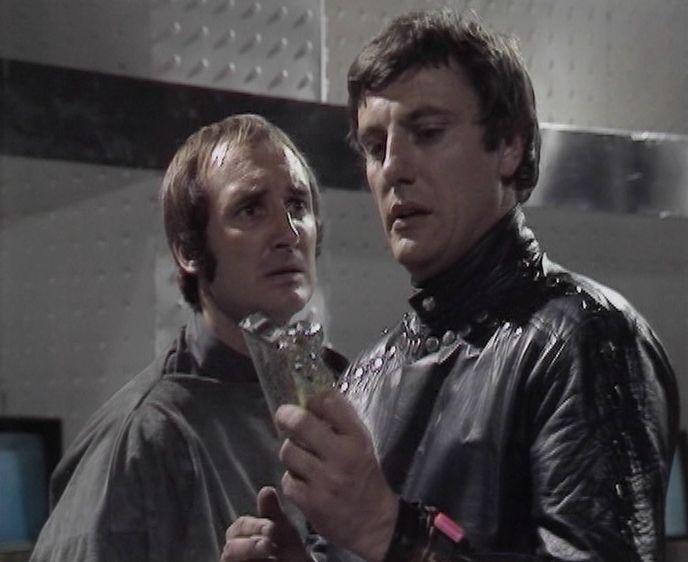
Also present on Exbar is Ushton, Blake’s uncle.  It’s revealed early on that he’s working with Travis (who’s agreed not to hurt Inga if he co-operates).  His betrayal of Blake is rather pointless as Blake was coming to meet Travis anyway.  John Aberini does his best, but Ushton isn’t much of a part and his mild betrayal is later forgotten when he and the others battle with Travis and the crimos.

Forty four minutes into the episode, Blake, Avon and Ushton send a number of the most painfully obvious polystyrene rocks ever seen on film down a slope to frighten away Travis and the crimos.  It’s a moment that never fails to amuse – not least for the crimo who runs away with his hands high in the air.  The scene where they throw a crimo down a cliff (so obviously a dummy) is comedy gold as well.

Yet another odd lack of continuity occurs when Travis asks Ushton which of the three members of the Liberator crew he holds prisoner (Blake, Avon, Vila) is the weakest.  Travis has been pursuing them all for some considerable time, can we really believe he didn’t know the strengths and weaknesses of all of them?

The final scene is nice though, with Jenna very huffy towards Blake.  This always seems to happen whenever he meets or talks to an attractive woman, clearly her unrequited love remains unrequited.

But all in all this is a somewhat forgettable episode.  The brief meeting between Servalan and Travis at the end is possibly the most significant moment.  He asks if they’re still enemies and she replies that “officially, yes. Unofficially, you lead me to Blake whenever you can. If you help me get him I’ll see you officially listed as dead. There’s no one as free as a dead man.”

Although his next appearance (in Voice from the Past) shows him working closely with Servalan, which is a far cry from how matters were left here.  Maybe that’s another case of slightly inconsistent script-editing.
hostage 03

Blakes 7 – Killer

killer 01

Killer was the first of four Blakes 7 scripts written by Robert Holmes.  He’d recently finished a lengthy stint as script-editor on Doctor Who and was looking for some freelance writing jobs.  Chris Boucher, who’d been commissioned by him on Doctor Who, was naturally keen to bring him aboard.

Holmes’ strengths were many, but strong characterisation was always key.  It’s therefore no surprise that he latched on immediately to the possibilities of teaming up Avon and Vila (three of his stories feature them together).  It’s a joy to watch Darrow and Keating sparking off each other and it’s one of the main pleasures of the episode.

Killer is an interesting script for several reasons.  It does feel slightly different to what we’ve previously seen (although it’s not as much of a departure as Holmes’ next story, Gambit).  This difference is mostly due to the way Blake is portrayed.

The Liberator has travelled to the planet Fosforon where Avon and Vila teleport down to meet with Tynus (Ronald Lacey).  Tynus is the commander of a Federation scientific research base and is an old friend of Avon.  Vila’s delighted to hear that Avon has a friend (“I always knew you had a friend. I used to say to people ‘I bet Avon’s got a friend, somewhere in the galaxy'”.) but within minutes we learn their friendship doesn’t run very deep.

Avon and Tynus were involved in a fraud some years back and Avon kept quiet about Tynus’ part.  Now he expects Tynus to do him a favour (otherwise he’ll have no qualms about reporting him to the authorities).  The reason for Avon’s visit (he needs a TP crystal) is little more than a MacGuffin to pad the story out – the main plot concerns a mysterious and deadly virus which is unleashed on the base.

Whilst orbiting the planet, Zen picks up a Wanderer spacecraft apparently drifting.  Blake’s amazed to see it – since it must be over seven hundred years old – and he’s also baffled as to how it reached this part of the galaxy.  There’s some brief debate about whether they should investigate (clearly nobody remembers the problem they had in both Time Squad and Bounty when they were curious about derelict crafts).

Luckily for them it’s salvaged by a colleague of Tynus, Dr Bellfriar (Paul Daneman).  But Blake remains worried that it could be dangerous (thanks to a rare display of Cally’s telepathy) and decides to warn the base.  This is highly unusual – it’s a Federation base so it’s strange that he should be concerned.

killer 02

Whilst it’s possible to argue that this is due to Holmes’ unfamiliarity with the series (although presumably Chris Boucher would have rewritten the script had he felt it didn’t fit with established continuity) maybe it’s actually another stage in humanising the Federation.  Exactly what research they do is never really specified, but Bellfriar is both urbane and welcoming.  Blake does tell him he’s a wanted criminal but Belfriar responds by muttering that he’s an absent-minded scientist who’s forgotten his name already.

But presenting the Federation as rounded characters, rather than mindless killers, does create something of a problem – it makes Blake’s various attempts to disrupt the natural order (especially as seen in Star One) seem much more like acts of terrorism than blows for freedom.

If his interest in the fate of the people on the base is a touch uncharacteristic, so is his explanation about what he thinks is happening.  It’s the first and last time that Blake ever referenced old-Earth history and is pure Holmes.

BLAKE: Have you ever heard of Lord Jeffrey Ashley?
BELLFRIAR: Who?
BLAKE: Mm, pre space age, planet Earth. He was the commander of a British garrison in America, having trouble with hostile natives, redskins. Ashley ordered blankets from smallpox victims to be baled up and sent to the hostile tribes.
BELLFRIAR: Germ warfare.

Killer is an excellent story for Thomas, Darrow and Keating.  Alas, it’s much less satisfying for both Jan Chappell and Sally Knyvette, both of whom remain on the Liberator not doing much.  Ronald Lacey is typically slimy as Avon’s fair-weather friend whilst Paul Daneman is impressive as the acceptable face of the Federation.  His eventual fate (and that of everybody else on the planet) is very grim.

There’s some bizarre looking costumes (Michelin Men in space!) and a rather unconvincing matte painting at the start which looks like it was put together by a child in about five minutes, but apart from these minor niggles it’s a solid production and an impressive debut script from Holmes.

killer 03