Although Secret Experiment retains some story elements from the pilot, it’s still a significant retooling which results in a much stronger episode.
Here, both Brady’s employers and the government show immediate interest in the possibilities and dangers of an invisible man (the pilot never touched upon this). In the aftermath of the experiment, Brady finds himself held prisoner as both parties debate the implications. The government are keen to keep the news under wraps, so no newspaper headlines or television vans are seen.
There’s no suggestion that they want to use Brady’s invisibility as a weapon, it’s simply that they don’t want others to do so. Brady manages to escape quite easily (he is invisible after all) but he’s now a hunted man. Later he sums his situation up. “I’ve become an official secret. I’m to be filed away, locked and guarded.”
As in the pilot, Brady calls his sister (renamed Diane) to warn her that he’s not the man he was, although this story element now makes more sense (here the phone box is some distance from their home, in the pilot it was just a few paces away. Why bother to phone when you’ve virtually arrived home?)
Brady doesn’t want to remain invisible and with his employers appearing to be somewhat unfriendly there’s only one man he can turn to – Dr John Crompton (Michael Goodliffe). Crompton, like Brady, has been working in the field of invisibility, but he turns out to be a treacherous ally.
Our initial sighting of Crompton provides us with several signifiers which appear to suggest that he’s a decent type – he lives in a comfortable cottage, smokes a pipe, etc – but for him invisibility is simply a tool for personal gain (no door, not even the Bank of England would be closed). Brady isn’t interested in exploiting his new-found skills though, he’d trade them in a heartbeat for a normal life again. The two scientists are therefore diametrically opposed – Brady is altruistic, Crompton avaristic.
Goodliffe always had a considerable screen presence and he’s his usual reliable self here, even managing the tricky feat of convincing us he’s being attacked by an invisible man! As we’ll see again and again, the twenty-five minute format is a restrictive one – most especially it limits character development. So the series needed strong actors, like Goodliffe, who could make an immediate impression.
By focusing on Brady’s plight, with no bank robbery diversions, Secret Experiment turns out to be a much more satisfying introduction to the series than the unaired pilot was. It’s just a pity that the subplot of Brady being an outsider, on the run from the authorities, was dispensed with so quickly.
Upon hearing the news of Peter Vaughan’s death, I decided to grab one of his performances off the shelf to watch as a tribute. But as you’ll see from a quick skim of his résumé on IMDB, he was an incredibly prolific actor (over two hundred individual film and television credits), so which one to choose?
He’s solid throughout The Gold Robbers (1969) as DCS Craddock. It’s a series that I’ve now moved a little higher up my rewatch pile and I’d certainly recommend picking it up if you don’t own it. Another memorable performance came in the 1985 BBC adaptation of Bleak House, where he played Tulkinghorn. Vaughan’s trademark menace is clearly in evidence as he dominates every scene he’s in (frankly he makes Charles Dance, Tulkinghorn in the more recent adaption, look very ordinary).
Vaughan also graced numerous series with fine guest appearances. One such was The Casebook of Sherlock Holmes in 1991, where he played John Turner in The Boscombe Valley Mystery, opposite Jeremy Brett as Holmes . Generally, the last few series of Brett’s Sherlock Holmes are a little patchy – partly this was because of various real-life factors (Edward Hardwicke’s availability, Brett’s illness) but it’s mainly because most of the really good stories had already been adapted. The Boscombe Valley Mystery is something of a rarity then, a decent early tale that hadn’t been tackled, featuring a brief – but compelling – turn from Vaughan.
Having considered these and more, in the end I plumped for one of his signature roles – Grouty in Porridge. That Vaughan remains indelibly linked to Porridge is all the more remarkable when you consider that he only appeared in three television episodes (this one, No Way Out and Storm in a Teacup) as well as the feature film. But although his screentime is incredibly limited, it’s interesting how Genial Harry Grout casts a shadow over the whole series. He’s mentioned in several episodes before he makes his debut (quite late in fact, The Harder They Fall came towards the end of the second series) so the audience has already been well primed about exactly who he is.
Genial Harry Grout’s place in the narrative is quite straightforward. He always pops up to ask Fletch to do him a little favour, making Fletch an offer he can’t refuse. As seen throughout the series, Fletch either likes to steer clear of trouble or initiate it himself – only Grouty has the power to manipulate him. Most of Vaughan’s scenes in Porridge were played opposite Ronnie Barker and it’s a treat to watch the pair of them at work.
Grouty’s first scene is a case in point. Unlike every other prisoner, he has an impressively decorated cell – pictures on the wall, a bird in a cage, an expensive hi-fi system – which are clear signifiers of his special status. Quite why Mackay and the Governor turn a blind eye to this is a mystery that’s never answered (there are a few possibilities though – all of them sinister).
Offering Fletch a cup of cocoa and a Bath Olivier, Grouty settles down for a chat. He reminisces about his time in Parkhurst, this provides Vaughan with a killer line as he tells Fletch what happened to the pigeon he kept there. This is a mere preamble though, as Grouty soon makes his intentions clear – he has a rival (Billy Moffatt) who’s running a book on the inter-wing boxing tournament. Grouty wants him taken to the cleaners – so they have to nobble one of the boxers. The scene’s desgned to set up the premise of the episode, but thanks to the writing and playing this never feels obvious – instead, the audience is invited to enjoy the dangerous charm of Harry Grout.
Young Godber is the one chosen to take a dive and it’s down to Fletch to break the bad news. Both Barker and Beckinsale are wonderful throughout this later scene – capped by the revelation from Godber that he can’t take a dive for Grouty in the second round, because he’s already agreed to take a dive for Billy Moffatt in the first!
The exceedingly good Cyril Shaps plays the twitchy Jackdaw, the newest and weediest of Grouty’s gang, whilst Fulton Mackay has a couple of decent scenes (Brian Wilde only pops up briefly – on film – at the start though).
If the ending’s a little weak (it’s hard to believe that everyone – especially Grouty – was happy with the outcome) then thanks in no small part to the interplay between Barker and Vaughan, The Harder They Fall is still a classic half-hour.
Broadcast in early 1974, series three of The Brothers continues to chronicle the travails of the Hammonds, a family who are often at loggerheads as they squabble over the best way to run their business – Hammond Transport Services.
As seen in series one, the death of Robert Hammond initiated considerable strife and internecine bickering. Hammond’s eldest son Edward (initially played by Glyn Owen, but from series two by Patrick O’Connell) assumed he’d have sole responsibility of the company, so was more than a little taken aback when the terms of his father’s will were divulged. Equal shares were also left to his two brothers – Brian (Richard Easton) and David (Robin Chadwick) – as well as to his father’s secretary and mistress, Jenny Kingsley (Jennifer Wilson).
Mix in Robert Hammond’s widow Mary (Jean Anderson), an imposing matriarch keen to interfere at any given moment, as well as Brian’s rather forceful wife Ann (Hilary Tindall) and David’s more pliant wife Jill (Gabrielle Drake) and you have a combustible mixture with plenty of dramatic possibilities.
This helps to explain why The Brothers was a popular success, running for seven series between 1972 and 1976 (and indeed could have carried on a little longer still – there’s no sense by series seven that the concept had run out of steam). But although it clicked with the public it doesn’t seem to have been highly regarded by the BBC themselves. They appeared to have forgotten about it when preparing the drama budgets for 1977, meaning that there wasn’t any money left to commission an eighth series. It sounds barely credible, but it seems to be the case that one of the BBC’s top-rated dramas of the mid seventies ended because of an accounting quirk.
And it wasn’t just a success in the UK. Colin Baker delights in telling the following story. “A phone call came in from the foreign minister of Israel. He said that not only was he devastated not to be able to come and meet us as he was such a fan, but he suggested that had the Six Day War been launched on the Arab nations on the day that The Brothers was being shown instead of Yom Kippur, they would have had more of a chance of taking the nation by surprise because everybody watched The Brothers!” This seems so ridiculously unlikely that it must be true ….
The series also generated a rather bizarre spin off – an LP entitled Christmas with the Hammonds. Offering such delights as Edward ‘Ted’ Hammond and Paul Merroney warbling their way through Good King Wenceslas and a full-cast assault on The Twelve Days of Christmas it’s a wonky treat from beginning to end. Alas, it’s unavailable on CD, but the dedicated treasure hunter should be able to track down the original vinyl.
Created by Gerard Glaister and N. J. Crisp, it’s always interested me how Glaister could create and produce series such as Colditz and Secret Army on the one hand, but also dabble successfully in soap-like drama like as The Brothers and Howard’s Way as well (Trainer was something of a misfire though).
By the third run of The Brothers everything’s clicked nicely into place, although the introduction of Colin Baker as Paul Merroney (a character dubbed by some as a proto JR Ewing) is still a series away. Others yet to appear include Kate O’Mara (a regular from series five onwards) and Liza Goddard (who debuts in the sixth series). Hopefully if Simply keep up a healthy release rate then we’ll soon have the chance to enjoy all of their performances (Colin Baker fans won’t have too long to wait though, as series four is due for release in January 2017).
Richard Easton, Gabrielle Drake and Hilary Tindall
The third series opens with N.J. Crisp’s The Hammond Account. Brian has never been the most dynamic of characters, which means he tends to be manipulated by his much more ambitious wife Ann. Here, she’s keen that Brian should be managing director, rather than Ted. Several key threads are also introduced – such as the brothers debating how advertising could help to grow the company’s fortunes whilst Jill and David’s marriage starts to fray at the seams. Meanwhile on the shop floor, the trusty Bill Riley (Derek Benfield) is concerned that a new boardroom initiative will have a detrimental effect on driver recruitment ….
The first few moments of The Hammond Account also serves as a good introduction for new viewers, as we see David and Ted show a potential client, Mr Rogers (Robert MacLeod) around their site, explaining to him exactly how Hammonds operates. Shot on 16mm film, it’s a lovely slice of grimy seventies working life. Bill’s reluctance to countenance management employing non-union drivers is another reflection of that era.
Temptation is in the air in these early episodes. The smooth-as-butter advertising man Nicholas Fox (Jonathan Newth) is interested in Ann whilst David continues to find himself pursued by Julie Lane (Gillan McCutcheon). Hilary Tindall gives a wonderfully layered performance throughout the series as Ann. Given that Brian is a bit of a wet lettuce, you might expect that she’d be keen to seek solace elsewhere, but Ann does genuinely seem to love him. This is touched upon when she wonders why he doesn’t kiss her more often – he replies that he never knows whether she wants him to or not. Just a couple of lines of dialogue, but it illuminates both their characters very well.
Gabrielle Drake
Sadly, Jill is a much more pallidly drawn character than Ann. Gabrielle Drake is lovely of course, but she doesn’t have a great deal to work with (and since Jill rather devolves as time goes on, fading more and more into the background, it’s no surprise that Drake decided to leave after the next series). By contrast, Julie is a much more vivid presence, who also sports some rather fetching clothes. David’s tank top, which appears in episode two, is memorable too, albeit for a different reason.
The quartet of company directors – the three brothers plus Jenny – provides the series with plenty of decent character conflict. One such flashpoint occurs when Brian’s desire to move into Europe is temporarily blocked by David. Thanks to some dense plotting from the previous series, Hammond’s financial future has been secured by Jill (who has provided a substantial amount of capital to guarantee their loans). This becomes a source of considerable tension between the brothers. Both Richard Easton and Robin Chadwick raise the roof during these scenes.
Moving onwards, it’s pretty obvious from the title of the first non-Crisp story, Hijack, what direction Eric Paice’s story will take (we see a Hammond lorry, driven by Bill, hijacked and the goods stolen). There’s a decent amount of location filming as we follow Ted and Bill from Dover to Boulogne as Hammonds start to push into Europe.
Derek Benfield excels during the next episode, Riley, as Bill’s criminal conviction (even though it was all the way back in 1948) is raked up by the police, who decide he’s implicated in the hijack. Hugh Sullivan and Brian Grellis play the two coppers who delight in making Bill sweat. Grellis (DS Pritchard) is the good cop whilst Sullivan (DI Parsons) is most definitely the bad cop. Temporarily moving the focus away from the boardroom and bedroom squabbles and onto Bill Riley is a good move – since it helps to shake up the narrative a little.
The later part of series three sees the tensions in David and Jill’s marriage continue to simmer away (David’s always been more than a little smackable, so Jill has all my sympathy) whilst Ann finds herself increasingly drawn to the cravat-wearing Nicholas. And there’s a marvellously awkward dinner party as Mary entertains Jenny for the first time. Given that Jenny had a long-term affair with Mary’s late husband it’s not a surprise that their relationship has rarely ventured above glacial. But this brief moment of rapprochement quickly fades after Mary lends Jenny’s daughter, Barbara (Julia Goodman), a substantial sum of money to settle her new husband’s debts. It’s fair to say that Jenny’s not pleased about this ….
Because Jenny has no desire to be in debt to Mary, she decides to sell her Hammond shares – this sparks off an entertaining round of infighting which boils over in Conspirators. It’s a wonderfully entertaining 45 minutes from Eric Paice, packed with incident as David and Brian join forces to bid for Jenny’s shares (they also hope this will force Ted to leave the company). Ted reacts in fury when he learns what his brothers are planning, storming home and knocking back the scotches like they were water. In the end he persuades Jenny not to sell and clearly enjoys passing the news onto David and Brian.
Series three concludes in a suitably dramatic fashion with Return to Nowhere, which opens with the focus on Ann and ends with a cliffhanger centered around Mary.
With the writing credits shared pretty evenly between N.J. Crisp and Eric Paice, there’s a cohesive and coherent feel to the series. All of the regular cast get a good crack of the whip, but Hilary Tindall as Ann particularly impresses.
Picture quality across the thirteen episodes is generally very good. There’s the occasional spot of tape damage on a few episodes, but any such issues are quite brief.
Thanks to a first-rate cast and strong scripting, The Brothers – Series Three is consistently entertaining. It’s good news that the fourth series will follow shortly and also that the remaining three series are slated for release later in 2017.
The Brothers – Series Three is available now from Simply Media. RRP £29.99.
Although H.G. Wells’ name was prominent in the titles, apart from the presence of an invisible man, this 1958/59 series bore little resemblance to Wells’ original novel. Wells’ scientist was a man tipped over into madness after his experiments with invisibility proved to be unreversable – with the result that he ended up as a danger both to himself and those around him.
The television Invisible Man, Peter Brady (normally voiced by Tim Tuner, here it’s Robert Beatty), had a much more even temperament. He adjusts to his new life remarkably well, with no mental anguish at all and (unlike in the story which eventually aired first) seems to be unconcerned that he’s now permanently invisible.
With only twenty five minutes to play with, this pilot doesn’t have time to hang about – within the opening few minutes we witness Brady’s experiment going somewhat awry and he quickly heads home to speak to his sister Jane Wilson (Lisa Daniely) and her daughter Sally (Deborah Watling).
They both take the news of Brady’s invisibility very calmly, even young Sally – after he unwraps his bandages to reveal there’s nothing there, it only elicits mild curiosity. One of the joys of the series is the various different ways in which Brady’s invisible state was realised. There’s something rather appealing about the sight of him sitting at the typewriter (since it appears to be a headless body tapping away!)
You’d have assumed that Brady’s invisibility would have been kept secret, but no – it’s all over the papers and a pack of hungry reporters (along with an ATV television van) pull up outside the house, anxious for a scoop.
Sally has been abducted by Crowther (Willoughby Goddard). Goddard oozes villainy as he persaudes the reluctant Brady that he should put his invisible skills to good use – robbing banks, say. It doesn’t make a great deal of sense for Brady to be wearing clothes when he robs the bank – surely being invisible would have been more sensible? But the camera has to follow something, and a bobbing suit of clothes is certainly an arresting image.
This is moderately diverting stuff, although the bank-raid subplot never really clicks, possibly because the crooks aren’t depicted as being very formidable. It was obviously felt that they could do better, so another origin story was crafted …..
The Temple of Screams is populated by some rubbery-looking bats. Also present is Otolmi, absent from the last few episodes, who is able to rescue Chimalma. He manages to convince the Princess that when she emerges from the temple in the morning she should declare she was mistaken about Nasca. This will give them a little breathing space to organise a plan to remove him permanently.
Mahoutec finally learns the truth about Nasca, but Nasca and Chadac ensure that he doesn’t live long enough to tell anyone. Once again there’s an ominous sound of drumbeats on the soundtrack as Mahoutec fights and dies (in a rather bloody manner, it has to be said). Nasca seems delighted with the outcome, clasping Chadac’s shoulder (a bit of business added by Troughton maybe?)
We finally discover what the Feathered Serpent is. He’s the old, discredited god and Heumac will take his place and wear his robes as he’s taken to the Pyramid of the Sun for sacrifice. Nasca matter-of-factly tells Heumac that he intends to rip out his heart and later we see Nasca planning to arrange the sacrifice to coincide at the precise moment of an eclipse. It’s an interesting moment – Nasca might believe totally in his god but this shows that he’s not averse to using natural events in order to manipulate the populace.
The Pyramid of the Sun is seen in all its glory only briefly, but it’s a very effective use of CSO. Heumac steps up to the mark to deal with Nasca, although the mere fact of Nasca’s death doesn’t stop him from returning for series two …..
It’s a pity about the dozen or so overacting extras (who are called upon to represent the thousands watching the attempted sacrifice). Their allegiance switches from Nasca to Chimalma rather too quickly for my tastes.
If the conclusion of the story feels a little rushed, then The Feathered Serpent is still very effective, thanks in no small part to Patrick Troughton’s dominant performance as Nasca. By the conclusion of the story it appears that good has triumphed over evil but the sequel series, broadcast in 1978, will show that the evil has yet to be defeated. Even after his death, Nasca continues to threaten the rule of Chimalma and Heumac.
The episode four cliffhanger was a good one. We see Chimalma poisoned with a dart blown by the hidden Chadac at exactly the same time that Nasca and Mahoutec enter the room. With the senseless Chimalma falling into Heumac’s arms, Nasca is quick to accuse him – although Heumac attempts to convince Mahoutec that if he dies then the chance to save Chimalma will be lost forever.
Heumac tells Mahoutec that Nasca is his enemy, not him. Troughton starts to ramp up the intensity once more as Nasca begins to see his position come under threat. At present, Mahoutec doesn’t believe Heumac’s claims of secret passages in the temples nor that Nasca murdered the Emperor, but maybe, at the very least, a seed of doubt has been sown.
Following the attack on Chimalma, Mahoutec is finally convinced that an attack on Heumac’s army is justifiable. Unsurprisingly for a studio-bound production it’s a case of tell, can’t show.
Like Tozo in the last episode, Chimalma is totally immobile and unable to speak, although she remains conscious and aware of her surroundings. Diane Keen has an easy time of it in the early part of the episode, having to do little else but lie down, but after Tozo finds the antidote, Chimalma is able to renter the narrative in a dramatic fashion.
Before that, there’s more examples of Nasca’s eloquent oratory as he urges Teshcata to “play the music of destruction for us now. Play it loud so it reaches the ears of our enemies. Let them hear the sound that destroyed the god they worship. Let the weapons fall from their hands and let them sway to the music and let their partners in the dance be death and despair.” During this scene there’s an overlay of flickering flames on Troughton as the camera slowly zooms in on him. This, together with an ominous drumbeat, helps to create a very effective sense of menace.
The return of Chimalma temporarily puts a dampener on Nasca’s dreams of conquest. Diane Keen shows Chimalma’s core of steel as she orders that Nasca and Chadac be arrested and Mahoutec banished. Unfortunately her guards don’t respond (watch the flicker of amusement that plays around Troughton’s face as Nasca realises that he still holds the upper hand). Has Nasca’s influence spread so far that it now infects the palace guard? Given that Chimalma rules by right of succession it does seem strange that she appears so powerless. There’s a bevy of important nobles milling about, but as they’re unspeaking extras it’s probably best not to expect a great deal of help from them (they can only manage some rhubarbing).
With Chimalma accused of being mad, she’s taken to spend the night in the Chamber of Screams ….
Once more Nasca attempts to manipulate Mahoutec. As expected, Troughton gives a mesmeric performance in this early scene – he’s very still, not offering any excessive movements, with his rich, deep voice pitched especially low. Nasca might be a dangerous fanatic but he’s wise enough to know that at this time he needs to appear to be the voice of reason.
Mahoutec might have been presented up until now as a narrow-minded and jealous man but, unlike Nasca, he didn’t seek the Emperor’s death in order to further his own ambitions. Nasca and Mahoutec are presented as uneasy allies, with Mahoutec still in ignorance about the true course of events – believing Nasca’s story that the Emperor was killed by a vengeful spirit.
There’s further opportunity for Troughton to show Nasca’s evil side as he interrogates the unfortunate Tozo. Tozo is unwilling to speak, so Nasca’s shadow, the mute Chadac (George Lane Cooper) steps up to apply some torture. As might be expected, Chadac’s ministrations (a series of needles) isn’t presented in an explicit manner, but the fact that it’s there at all in a children’s series (and that the child identification figure is the one to suffer) is interesting. Richard Willis is able to show Tozo’s pain and suffering which, along with Troughton’s silky-voiced villainy, gives the moment a certain impact.
That Chimalma is of royal blood is made clear after she autocratically orders Heumac to search the temple for hidden passages. If they can find them, then it’ll prove that her father was murdered by an assassin, not the spirits of the dead. It all seems rather convenient that he’s able to do so with great ease (also finding the paralyzed Tozo along the way) but even with six episodes to play with you have to expect a few plot contrivances.
But this episode really belongs to Troughton. Nasca has another key scene where, dressed in a ceremonial mask and with an oppressive chanting soundtrack, he utters the following at Kukulkhan’s funeral. “Before the coming of Teshcata, the plains of death were a desolate place. There was no shade and the tears of the dead burnt the soil. But Teshcata came and said let the sun weep tears of blood and blood fell upon the plains of death and the desert became a paradise. And Teshcata said let all those who have blood shedded for me and those who have none, let them give me their hearts that I may look upon the love therein.”
Lurid stuff, especially after Nasca rips out Kukulkhan’s heart (which thankfully happens off-screen). With Kukulkhan’s death, Nasca is a step closer to absolute power but there’s still the problem of Chimalma. So she must die as well ….
Having made the decision to temporally abandon human sacrifice, Kukulkhan agrees to spend the night alone in the temple, where he will receive council from the Spirits of the Dead. Kukulkhan certainly receives judgement, albeit of a very grim kind, but it was dispensed on the orders of the corporeal Nasca.
A pity that Tony Steedman exits the story so early, but the removal of Kukulkhan allows Chimalma to move into the centre of the narrative as she and Nasca find themselves on opposite sides. Troughton continues to impress as he takes full advantage of John Kane’s well-crafted dialogue. Here, Nasca explains to Chimalma and Heumac that although he has total faith in his god, this isn’t necessarily a blessing. “It is a torment. To be so close to divinity, to share in his mysteries and yet to be a man amongst other men with their weaknesses and squalor. It is an agony of longing.”
Mahoutec agrees to attack Heumac’s army, camped outside the city walls. Nasca wants all of Heumac’s men – numbering one thousand – sacrificed, which causes Mahoutec pause for thought. But he agrees anyway.
Events once again take place at night. Moody lighting, judicious use of sound effects and a subtle instrumental track all help to create a sense of unease. The drama continues to bubble along nicely as Mahoutec and Heumac clash. Mahoutec dislikes and distrusts Heumac’s people (calling them scum) and personally detests Heumac since they both wish to marry the same woman. But does Mahoutec desire Chimalma personally, or does he simply want to sit on the throne?
Mahoutec and Heumac duel, although it’s over very quickly. Heumac wins but spares Mahoutec’s life. This infuriates Mahoutec – when it is known he lost but wasn’t killed he won’t be able to face his men. He demands that as the vanquished he has the right to insist Heumac kills him, but the other man declines. “You must find your own end.”
As I’ve said, Kukulkhan departs the story with something of a whimper rather than a bang and the duel between Mahoutec and Heumac is a disappointingly brief one. But there’s still plenty to entertain here, not least when Chimalma, Nasca and the others discover Kukulkhan’s body. This gives Troughton an opportunity to notch his intensity level up to eleven as Nasca declares that judgement has been carried out.
George Cormack’s film and television credits were relatively few in number, but quality certainly made up for quantity. He was one of the few members of the guest cast in the Doctor Who story The Time Monster to emerge with any dignity, for example, and his turn here as the blind ex-priest Otolomi, is another strong performance.
Otolomi befriends Tozo and explains a little of his history to the boy. “For more than half my life I was Quala’s priest. Then my people turned to Teshcata. They staked me out in the desert with my face turned to the sun and there they left me until the power of sight was burned forever from my eyes.”
The appearance of Heumac in the throne room causes a little bit of a stir. His likeness, via a carving, had preceded him, but it wasn’t one that had impressed Chimalma. In the flesh Heumac is rather personable, a far cry from the rather ugly carving. He explains that this was done deliberately, and Chimalma (who last episode wasn’t exactly looking forward to her marriage) seems to perk up a little at the sight of him!
Nasca manipulates Mahoutec whilst continuing to clash with Kukulkhan. Nasca’s more than a little upset that he’s only been given three sacrifices rather than the ten he wanted. The plot also begins to move as Otolomi and Tozo gain position of a map which shows that the new temple, built to honour Teshcata, has secret passages which were inserted on the orders of Nasca. Otolomi believes that possession of the map will enable him to break Nasca’s power once and for all.
Taking place during the night, this episode drips with atmosphere as shadows, lighted torches and unsettling sound effects abound. I also like the way that Nasca skulks around the palace at will, removing stones in the walls so that he can communicate with Kukulkhan. Nasca, of course, denies this, insisting that it must have been a spirt that the Emperor heard.
Kukulkhan makes public his desire that Chimalma and Heumac should be married. The people approve, which means that both Kukulkhan and Heumac are now in grave danger from Nasca. And when Kukulkhan decides that there will be no sacrifices until after their marriage that only serves to infuriate the High Priest even more ….
Broadcast on ITV during June and July 1976, it’s a little difficult to believe that The Feathered Serpent was a children’s series. Throw in a little gratuitous nudity and it wouldn’t have looked too dissimilar to the later prime-time serial The Cleopatras.
Set in Ancient Mexico, the early episodes of series one of The Feathered Serpent revolve around the power struggle between the Emperor Kukulkhan (Tony Steedman) and the High Priest Nasca (Patrick Troughton). Kukulkhan is a wise and enlightened man who’s grown tired of conquest and bloodshed. He knows that the more territories they conquer, the more difficult it will become to keep their subjugated peoples suppressed, which in turn will mean that more and more brutal methods of punishment and domination will have to be found. This doesn’t concern Nasca – he’s a man who revels in death and destruction and was instrumental in ensuring that Kukulkhan’s people turned away from worshipping Quala, a god of peace, in favour of Teshcata, a god who demands human sacrifice.
It should go without saying, but Troughton is mesmerising as Nasca. He can do eye-rolling villainy with the best of them, but he’s also capable of stillness and subtlety. The moment, early on here, when he plaintively asks Teshcata why he no longer speaks to him is one such example. And his realisation that his god will only be satisfied with blood – and royal blood at that – is chilling.
This initial episode covers a lot of ground. We meet Nasca and Kukulkhan and are quickly made aware that they have diametrically opposing views – basically offering a choice between darkness and light. Kukulkhan’s daughter, Princess Chimalma (Diane Keen) also enters the frame. If Troughton’s one reason for watching these two serials, then Keen is most certainly another. Although Chimalma has a certain doe-eyed beauty, she’s also a woman of spirit. Kukulkan is keen to marry her off to Prince Heumac (Brian Deacon) a member of a rival tribe who still worships the old, peaceful, god Quala.
Kukulkhan hopes that their union will not only help to bring peace between their two tribes but will also lead his people back to the worship of Quala. This begs one question – since Kukulkhan, even though he’s just and fair, has total autocratic power, why did he allow Nasca to replace Quala with Teshcata? Like Troughton and Keen, Tony Steedman offers an impressive performance, raising the studio roof with an powerful display of histrionics.
One person who’s far from happy with the news of Chimalma and Heumac’s intended nuptials is Mahoutec (Robert Gary). He’s the brave, if not particularly diplomatic, leader of Kukulkhan’s army. Mahoutec has always believed that he would marry Chimalma, so when Nasca gleefully tells him what Kukulkhan intends, it’s plain that sparks will fly.
Tozo (Richard Willis) is a young boy in the employ of Heumac. Outspoken and aggressive, it seems impossible for him to keep out of trouble. Tozo serves as the audience identification figure, being the one younger member of the cast.
Despite being studio-bound, it’s plain that a little more money than usual for a children’s series was thrown at The Feathered Serpent. The sets are substantial and impressive, although the harsh studio lighting – no doubt intended to simulate bright sunshine – does tend to give some scenes a rather theatrical, unreal air. Night-time sequences, when the lighting can be brought right down, are naturally much more atmospheric.
With lashings of make-up (and that’s just on the men) and some odd-looking costumes, on one level this is a series that looks faintly ridiculous. But the quality of the story and the core cast ensures that by the end of episode one most viewers should be firmly hooked.
Once again, the Squire is forced to count the human cost of his quest for gold, since all three of his servants now lie dead. “Old Redruth. Joyce. And now Hunter. Loyal souls, all of them, who served and trusted me. I have much to account for, Livesey.”
The Doctor offers a brief word of comfort, but maybe Livesey’s gesture here is just an automatic one. It’s certainly debatable that Trelawney’s escapade can be judged to be an honourable one – as his intention was to keep the plundered gold for himself (after, presumably, sharing out a small portion to the others) he can hardly claim the moral high ground over Silver and his men.
Jim decides to take Ben Gunn’s boat and return to the Hispaniola. It’s a brave, if foolhardy venture, since it brings him into contact with the murderous Israel Hands. Patrick Troughton once again is on good form as Israel, reacting calmly to Jim’s statement that he’s returned to take possession of the ship.
Exactly why Jim decided that the pirates onboard would be happy to receive him is a slight mystery. True, Israel seems harmless enough to begin with (he’s incapacitated after a fight to the death with another pirate) but Jim wasn’to know this. You’d have assumed that after the horror of the stockade battle, with death all around him, Jim would have been a little more cautious. But if Trelawney has begun to learn the true cost of adventure, maybe Jim hasn’t.
All that we’ve seen of Israel has primed the audience to expect that he’ll turn on Jim when the moment is right, and so it proves. Israel’s pursuit of Jim is a nicely shot sequence from Michael E. Briant, especially as the pair climb the rigging to face their final reckoning.
The ever resourceful Jim returns to the island, only to find that Silver and the others have taken possession of the stockade. Alfred Burke is at his most affable, as Silver appears delighted to see the boy and offers him a chance to join them. Jim refuses and furthermore tells them all that they’ll never see the Hispaniola again.
This is something of a turning point – Jim’s life should now be forfeit, but Silver won’t kill the lad, which displeases the others intensely. Silver has been tipped the black spot, but even with his back to the wall he’s still able to run rings around the rest of his crew.
Silver, with his keen sense of self preservation, is looking to change sides and Jim is an important part of this. Ashley Knight is never better than In the scene where Livesey attempts to forcibly remove Jim from the stockade. Jim refuses, biting the Doctor’s hand at one point, because he gave Silver his word he wouldn’t attempt to escape. This action bounds Silver and Jim even tighter together.
The sting in the tail – the treasure is gone from its resting place – is the prelude for the final (albiet brief) bloody battle. Ben Gunn, of course, found the treasure nine months ago and brought it back to his cave. The reveal is done in a highly theatrical manner – a seemingly never-ending stream of coins gush out onto the cave floor as the faces of Silver, Livesey, Ben, Trelawney and Jim are overlaid. It was surely intentional that Livesey’s face was impassive whilst both Trelawney and Jim showed great pleasure.
As I said earlier, it doesn’t get much better than this. It’s something of a mystery why this excellent version of Treasure Island hasn’t appeared on DVD before, but it’s something that any devotee of this era of British television should have in their collection.
Most of the crew have decided to throw their hand in with Silver. Most, but not all. One whose loyalty remains undecided is Tom (Derrick Slater). He knows and respects Silver of old, but will he elect to join the others in mutiny?
The question of Tom’s allegiance brings the character of Silver into sharp focus. Silver is fond of Tom and seeks to win him over – to this end, along with some of the others they make for the island (leaving Smollett, Livesey and the others aboard the Hispaniola, guarded by a small number of pirates). Silver believes that away from the ship he’ll be able to talk Tom round.
Given all the quality character actors seen throughout the serial, it’s slightly surprising that the relatively undistinguished Slater was given this role. True, Tom’s screentime is very limited, but since the confrontation between Silver and Tom allows us – and Jim – a chance to witness Silver’s ruthless side, it’s therefore a pity that Slater’s performance is on the lifeless side.
Tom tells Silver that “you’re old and honest too, or has the name for it. And you’ve money, which many a poor sailor hasn’t. Brave too, or I’m mistook. You tell me why you let yourself be led away by that kind of mess of swabs.” During this monologue Silver has lain a friendly arm on him, but pulls away once he realises that Tom won’t be won over. With a horrified Jim watching from his hiding place close by, Silver stabs Tom to death. Given that the battle seen later in the episode is fairly bloody, it’s interesting that Tom’s murder occurs off camera. We see Silver stabbing something, but we never see what it is.
Captain Smollett and the others make their way ashore. Smollett really begins to take charge (Richard Beale is first class during these scenes) and they elect to use Flint’s old stockade as their base. But even before they’ve secured it there’s a brief battle and Squire Trelawney’s loyal servant, Tom Redruth (Royston Tickner), lies dying.
Tom’s barely had a handful of lines, but he does get a good death scene. Up until now it seems as if the Squire hasn’t really grasped the reality of the situation – it’s been little more than a game to him (finding a ship, employing a tailor to make him the grandest uniform, etc). It takes the death of a loyal family retainer, someone uprooted from his settled life in Britain and fated to die a lonely death on a distant island far away from his family, to bring him back to reality. He asks Tom to forgive him (and is insistent that he does so). Tom, loyal to the last, insists there’s nothing to forgive and, as Trelawney recites the Lord’s Prayer, Tom gently slips away. Beautifully played by both Tickner and Thorley Walters.
We meet Ben Gunn (Paul Copley). He’s Irish and speaks in a remarkably high pitched voice, which is a little odd. But then Ben Gunn’s supposed to be odd (what with his cheese fixation) and after a while his voice lowers a little, so a little bit of normality is restored. His cave – a studio set – looks very good (another design triumph for Graham Oakley).
John Dearth was one of those utility actors who was always worth watching, even in the smallest of roles. He was a regular during the first series of the ITC Richard Greene Robin Hood’s, playing a different role each week (and sometimes two in the same episode!) Various personal problems meant that he later sometimes found work hard to come by, but he was lucky to have several loyal supporters – one of whom was Barry Letts. Both Briant and Letts had directed him in Doctor Who, so like many of the cast it’s not unexpected that he turns up here. Dearth’s character (Jeb) mainly seems to exist in order to stress how dangerous Silver is – Jeb states that the only man the vicious Captain Flint ever feared was Long John Silver.
I’ve already touched upon how good Richard Beale has been and he’s never better than in the scene where Smollett and Silver face off. Both have their own set of demands and neither is prepared to give the other any quarter. Alfred Burke switches from smiling affability to snarling disdain in a heartbeat. This then leads into the sequence where the pirates attempt to storm the stockade. It’s slightly jarring that the outside is on film whilst the stockade interior is on videotape – the rapid switching between the two is a slight problem.
But no matter, Michael E. Briant still manages to choreograph a decent action sequence with a liberal dose of blood (nothing explicit, but it still manages to create the impression that a short – and brutal – battle has taken place). The pirates are beaten back, which infuriates Silver – so he elects to send for reinforcements from the ship ….
Since Treasure Island is packed with character actors of distinction, it’s easy to overlook the young actor who played Jim Hawkins. But Ashley Knight more than holds his own amongst such august company, possessing just the right amount of youthful spirit and innocence.
That he’s deceived by Silver shouldn’t come as too much of a surprise, since Long John also managed to fool Squire Trelawney (Thorley Walters). But, to be fair, fooling the Squire probably wasn’t too tricky for Silver, as Trelawney (as per Stevenson’s novel) is portrayed as the sort of trusting, loose-mouthed individual you really wouldn’t want to entrust with the delicate matter of finding a ship and crew to sail to the Spanish Main in search of buried treasure. Walters is a delight as the Squire, he may be pompous and vain but he’s also curiously lovable.
The way that Silver manipulates Trelawney into engaging him as the ship’s cook and then agrees that he can handpick the crew provides us with another opportunity to witness the apparently charming and helpful side of Silver (although he’s only serving his own interests of course). His charm is seen again when the wily Long John takes Jim under his wing. There’s no reason why Silver should seek to deceive Jim, which leads us to assume that his friendly stories have no ulterior motive. But there’s a sting in the tail – at the same time he’s regaling Jim with yarns about the sea, Silver is planning to murder Trelawney, Livesey and Captain Smollett (Richard Beale) and anyone else who stands in his way.
Would he also do the same to Jim? It’s not explicitly stated, but he does confide to Israel (the ever-watchable Patrick Troughton) that he doesn’t intend to leave any witnesses, so we can pretty much take it as read. This dichotomy in Long John’s character is what makes him so fascinating – the other pirates make little or no attempt to hide their evil intent, but it’s the way that Silver can wear different masks at different times that makes him such an enduringly appealing creation. And of course, in the hands of an actor as good as Alfred Burke it’s just a pleasure to watch.
Not all of the crew are content, like Silver, to wait for the right time to make their move, some want action now. Prime amongst the malcontents is Merry (Roy Boyd) who paces the ship with a murderous look on his face, but you get the feeling that he’s never going to be any sort of match for Long John.
During this era of television, directors tended to have a “rep” of actors who they employed on a regular basis. If you’re familiar with some of Michael E. Briant’s previous productions then names such as Roy Evans, Richard Beale, Royston Tickner and Alec Wallis will be familiar ones. Alec Wallis has a nice little cameo as Patmore, a corrupt tailor who Silver deliberately sends along to Trelawney, just so he can denounce him before the Squire and therefore gain his trust. Beale is suitably upright as the incorruptible Smollett, a man who sets to sea with the gravest misgivings about the crew (a pity nobody listened to him).
Before the ship sets sail there are several scenes which take place within the Squire’s cabin. Thanks to a very simple CSO effect (bobbing waves outside the cabin window) the illusion at being on the water is created very effectively. But there’s no substitute for the real thing and it’s the later filmwork aboard the Hispaniola, as it makes it way towards Treasure Island, which really opens up the production.
Treasure Island, an evergreen classic of children’s literature for more than a century, has generated more film, television and radio adaptations than you could shake a cutlass at. But even though there’s many versions to chose from, this one (broadcast in four episodes on BBC1 in 1977) has to rank amongst the very best.
Like the majority of the BBC Classic Serials from the sixties, seventies and eighties, the adaptation (this one from John Lucarotti) displays considerable fidelity to the original source material, although Lucarotti is unafraid to build upon the original narrative. In a way this isn’t surprising, since the book was told from Jim’s perspective it’s inevitable that it has a somewhat restricted viewpoint.
Lucarotti’s additions begin right from the start, as Jim’s father, Daniel (Terry Scully), someone who merited only a handful of mentions in Stevenson’s original, is fleshed out into a substantial character. Scully excelled at playing people who suffered – he had one of those faces which could express a world of pain – and Daniel is no exception. Daniel is clearly far from well and concern that he’s unable to provide for his family is uppermost in his mind. So the arrival of Billy Bones (Jack Watson) seems to offer a chance to extricate himself from his financial problems.
Watson’s excellent as Bones. With his weather-beaten face and the addition of a wicked-looking scar, he’s perfect as the rough, tough, seaman with a secret. Bones’ decision to recruit Daniel (an invention of Lucarotti’s) is quite a neat idea, since it explains how Long John Silver and the others came to learn where Bones was (Daniel heads off to secure passage for himself and Bones to the Caribbean, not realising that Silver is monitoring the port for any unusual activity).
Lucarotti also elects to bring Silver and his confederates into the story very early, making it plain that Bones has absconded with something of great value that they’d all like back. If you love British archive television of this era then the sight of Silver’s gang will no doubt warm the cockles of your heart (step forward David Collings, Patrick Troughton, Stephen Greif and Talfryn Thomas amongst others).
Alfred Burke’s Long John Silver impresses right from the off. He doesn’t have Robert Newton’s eye-rolling intensity, nor does he have Brian Blessed’s physical presence – but what Burke’s Silver does possess is great charm and a rare skill at manipulating others to do his will. But although he seems pleasant enough to begin with, it doesn’t take long before he demonstrates his true colours.
Bones’ run-in with Doctor Livesey (Anthony Bate) is kept intact from the original. Bate is yet another wonderful addition to the cast and Livesey’s stand-off with Bones is a highlight of the episode. Lucarotti’s subplot of Daniel’s doomed night-time misadventure slots into the original story very well, as it explains why his health suddenly took a turn for the worse, which then resulted in his death shortly afterwards.
A member of Silver’s gang, Black Dog (Christopher Burgess), arrives to confront Bones. Burgess was a favourite actor of the producer, Barry Letts, so it’s maybe not too much of a surprise that he turns up. He and Watson step outside (and therefore onto film) for a duel, which leads to Bones’ stroke. Watson’s particularly fine as the bedridden Bones, suffering nightmares accrued from the horrors of a life spent on the high seas and dreading the arrival of the black spot.
David Collings’ nicely judged cameo as the malevolent Blind Pew is yet another highlight from a consistently strong opening episode.
The television series Callan seemed to have come to a pretty permanent end with A Man Like Me in 1972, but that wouldn’t be the last we’d hear of David Callan. First came the 1974 movie, adapted by James Mitchell from his 1969 novel Red File for Callan, which in turn had been based on his 1967 Armchair Theatre pilot A Magnum for Schneider. Despite the rehashed plot, the film probably works better as a coda to the television series than it did as an introduction (since it features a retired Callan brought back, unwillingly, for one final mission).
Mitchell would continue to pen a number of novels featuring Callan (Russian Roulette, Death and Bright Water and Smear Job) during the 1970’s, which suggested that he felt there were still stories to tell. So it wasn’t too much of a surprise when David Callan returned to television in 1981, in a one-off eighty minute ATV play entitled Wet Job. Unfortunately, it wasn’t the conclusion that anybody – not James Mitchell, Edward Woodward, Russell Hunter or indeed the audience – deserved.
Before we look at what didn’t work, let’s consider the positives. Nearly a decade has passed since the events of A Man Like Me and Callan is a changed man. Physically he looks older (he has grey hair and glasses) and he’s also somewhat better dressed than he used to be. It would have been easy enough for Woodward to dye his hair, put in contact lenses and pretend that no time at all had passed, but there’s something pleasing in the way that Mitchell acknowledges that he’s not the man he was.
Callan, now lodging in a plush house owned by Margaret Channing (Angela Browne), also moves in more rarefied circles than before and jokes with one of Margaret’s party guests that he hasn’t killed anybody for years. This throwaway moment is touched upon later, when he has a rare spasm of self doubt – after being dragged back into Section business against his will he has to face that fact that he may be forced to kill again, but can he do so? This is an interesting point, but alas it’s never really developed – which given the lengthy running time is a disappointment. We do get flashes of an older, wearier Callan, but it shouldn’t come as any surprise that when the firing starts he’s still as deadly as ever.
The main joy of Wet Job is the reunion of Callan and Lonely. The obvious respect shared by Woodward and Hunter is plain to see and this means that their scenes together are wonderfully entertaining. Again, Mitchell is keen to show how time has moved on – Lonely is now a man of means with a successful business and an impending marriage. We never see his fiancé, but Callan’s reaction to her photograph indicates that Lonely’s a lucky man.
My favourite moment of the story comes during Callan and Lonely’s first meeting. Lonely admits that Margaret is quite a looker, although he goes on to say that she’s rather old (after all, she won’t see forty again). Callan, who sometimes shares her bed, is rather affronted by this, asking Lonely how old his fiancé is. When he’s told she’s twenty seven it’s yet another indication that Lonely’s far removed from the man we knew.
He makes that point himself – it’s not the old days anymore and he has no wish to get dragged back into Callan’s illegal activities. There’s something a little tragic in the way that Callan admits there’s no-one else he could ask (the power dynamic in that relationship has certainly shifted). In plot terms, Lonely does nothing of significance but the story would have been much poorer had he not been there.
Hugh Walters as the latest Hunter is also a plus. Walters had a habit of playing effete characters and his Hunter is no different (it’s a little jarring to hear Hunter refer to Callan as “dear heart”). Much may have changed, but the Section is still a cheerless and impersonal place and the lengthy early scene between Callan and Hunter is another highlight (even if, as we’ll come to soon, the incidental music does its best to destroy the mood).
Wet Job has two main plot-threads. The first concerns Daniel Haggerty (George Sewell), an ex-MP who blames Callan for the death of his daughter and is writing his memoirs which threaten to expose Callan as a government assassin. Margaret’s niece, Lucy Robson Smith (Helen Bourne), is helping Haggerty with the book and she’s also attempting to ensure that a dissident Russian philosopher, Dobrovsky (Milos Kerek), gains safe passage to the UK.
It’ll come as no surprise to learn that Hunter (who called Callan in to warn him about Haggerty’s book) hasn’t told him everything, but because both plot-lines are so drawn out it’s probable that eventually the audience will cease to care. Sewell’s solid enough as Haggerty, but apart from one scene early on, he’s kept apart from Callan until the very end. Kerek makes little impression as Dobrovsky, so it’s hard to feel invested in his fate.
There are a few nods to the past – Hunter tells Callan that Meres is dead (this may be a joke though) and Callan has a brief reunion with Liz. But since Liz is now played by Felicity Harrison rather than Lisa Langdon, it rather falls flat.
Wet Job was shot entirely on videotape. This wouldn’t necessarily be a problem (quite a few of the Thames Callan episodes were as well) but everything looks dull and lifeless – when the early 1970’s VT Callan‘s look sharper and more vibrant than this 1981 effort you know you’re in trouble.
The worst thing about Wet Job is, of course, the music. Firstly, it’s a shame that Jack Trombey’s iconic library track – used as the series’ theme – wasn’t pressed into service again, but that’s a minor irritation compared to the horrors of Cyril Ornadel’s incidental score. If the music could be removed then there’s no doubt that my appreciation of the story would increase considerably. Any time that Ornadel can spoil the mood he does so – tinkling piano, electronica, it’s a masterclass in awfulness.
There are so many examples, but I’ll restrict myself to three. The first meeting between Callan and Hunter is a cracking scene, but what it didn’t need was a heavy piano underscore. Watch from 17:20 as the camera focuses on Callan, musing how he’ll never be free of the Section (without the music this moment would play so much better). The end of part one (from 26:00) as Haggerty confronts Callan is another time when the intrusive music is simply breathtaking. And the moment where Haggerty discusses Callan with Lucy (55:50) is just a cacophony of noise – electric piano, twanging guitar – that builds to a crescendo until (at 56:22) it suddenly and unexpectedly stops and the relief felt is palpable ….
There was a decent fifty minute episode here, but unfortunately it was expanded to eighty. Edward Woodward and Russell Hunter are their usual immaculate selves, but it’s sad to say that this is a very average story. There was plenty of scope to really dig into Callan’s character – showing that whilst he may now have a veneer of respectability, underneath the darkness still lurks – but sadly Mitchell didn’t go down that route. And any goodwill that the audience has towards the project is surely slowly sapped as Cyril Ornadel’s music drones on and on (he certainly should have gone into a Red File).
Broadcast in six episodes during May and June 1991, All Good Things by Lesley Bruce is a rather obscure piece of archive television, which given its cast-list – Brenda Blethyn, Warren Clarke, Ceila Imrie, Ron Pember, Jemma Redgrave, Ken Stott and Barbara Young amongst others – is a little surprising.
Lesley Bruce’s television credits aren’t too extensive (although she did contribute to popular drama strands such as Play for Today, Screenplay, Screen Two and Theatre Night). We open with a married couple, Shirley Frame (Blethyn) and Phil (Clarke), who are seen arguing as they drive towards an unknown destination. The reason for this isn’t made clear until Shirley opens the car door and we observe that she’s heavily pregnant.
Phil’s not keen about the baby’s impending arrival (their other children are now in their teens and he was looking forward to a little bit of peace and quiet – and possibly taking up a hobby, like the saxophone). Shirley, en-route to the ante-natal class, admits – presumably for the first time – that she also doesn’t want the child (although they’ve left it far too late to do anything about this).
A sharp gear-change from comedy (Shirley’s rant is observed by all the other attendees of the ante-natal class who stare silently at her) to potential tragedy occurs when she suddenly collapses. Is she going to lose the baby? Well no, everything turns out fine – meaning that the scene feels a little forced and manipulative. In drama there’s a sense that you have to “earn” moments like this, by developing your characters and the way they interact with each other. If you just drop events casually into the narrative with no preparation it just doesn’t feel right.
But after this slightly shaky start, the opening episode – The Blessing – develops well. Both Blethyn (b. 1946) and Clarke (1947 – 2014) were well established actors at the time and this is possibly why they’re able to quickly make Shirley and Phil seem like a real couple. Although possibly the method of recording (All Good Things was an all-videotape production) also helped. This was a style of television drama that (soaps apart) would vanish a few years later (from then on, drama tended to be shot either on film or tape processed to look like film) but it’s not a handicap here – videotape has an immediacy which film lacks, thereby giving the series something of a documentary “real” feel.
With a gorgeous new baby, Shirley should be the happiest woman in the world, but she’s not. “Sometimes I feel so lonely, and bored, and bad-tempered, I could scream and yell and tear my hair out in great huge hulking handfuls!” So Shirley needs a new direction in her life, but what?
After a little consideration she decides to go and help people – there must be plenty who need help she reasons, they just have to be found. Naturally she begins close to home, but things don’t go well after she makes a start with her mother, Hetty Snr (Barbara Young). Hetty, still smarting from a painful divorce, is brought to tears after Shirley loses her temper and shouts at her. Shirley’s attempts to help her sister-in-law Elaine (Jemma Redgrave) ends in much the same way, with Elaine left a sobbing mess.
Some people might possibly decide after this that being a Good Samaritan isn’t the wisest career move but Phil – always one to attempt to put a helpful spin on matters – suggests that maybe they didn’t respond because they were family. He’s clearly only saying this to make her feel better, but she takes it to heart and it sets up the premise for the remaining episodes – Shirley will venture out into the world, meeting total strangers and attempting to fix their lives. But given her lack of success so far (and the fact that her own life is far from perfect) what are her chances of success?
In The Suicide, Shirley prevents a young man, Vincent Gibney (John Lynch), from committing suicide. She wants to prove to Vincent that there’s still good in the world (something he doubts) and to this end she gives him her phone number, telling him that he can call on her anytime. The inevitable happens of course, Vincent arrives and makes himself at home (much to Phil’s growing exasperation). Once again there’s a sharp disconnect between Shirley’s hopes and the reality of the situation. Lynch is entertaining as Vincent, but once again it’s Blethyn who receives all the best lines. Here, she’s finally reached the end of her tether. “My God, I can see now why everyone else gave up on you! You’ve got to be the blindest, most self-regarding, insensitive wimp anyone’s ever dragged back from the edge of the parapet.”
It might be expected that Vincent would vanish after this episode, to be replaced by a new poor soul for Shirley to look after next time. But that’s not the case as he’s present for the remainder of the series, as is Karen (Liza Hayden), who features in the next episode, Reading Lessons. This interconnectivity is a definite strength as it allows the narrative to become denser as the episodes tick by. Karen’s another lost sheep who Shirley scoops up, but once again her good intentions seem to bring nothing but discord and discontent.
If Warren Clarke has been a little overshadowed so far, then that’s redressed somewhat in The Flat. Phil’s irritation that, thanks to Vincent and Karen, he can no longer call his house his own finally bubbles over. Clarke and Blethyn excel towards the end as they both consider the state of their marriage. Earlier, Jemma Redgrave and Ken Stott impress again as Elaine and Lawrence’s marriage continues to buckle under the strain.
In The Trip North, Shirley heads off for a bonding weekend with one of her sons (which, unsurprisingly has some rocky moments) leaving Phil at home holding the baby, literally. I love the scene where Phil’s shaving, crooning Teddy Bear whilst holding baby Hetty at the same time. The baby clearly finds this fascinating! This leads onto a more dramatic scene where baby Hett’s facial expressions ensure that she remains the centre of attention. Never work with children or animals ….
The series concluded with Marriage Guidance. Whilst Shirley has expended all her energies into helping others, her own life has fractured (a bitter, if obvious, irony – something which is also spelled out visually in the opening credits). Phil’s relationship with Doll (Deborah Findlay) offers him peace and security – two things which are now in short supply at home. Doll and Phil are work colleagues and their affair has slowly developed over the course of the series as Shirley’s drive to help others has also increased. Finally he elects to tell Shirley that he’s leaving her, but when it comes to the crunch will he have the guts to come right out and say it?
It’s a disquieting and bleak conclusion, which leaves the viewer free to decide what happened next. There was certainly scope for a second series to pick up where this one left off, but despite the excellent cast and generally strong writing, this was the end of the line for All Good Things.
Headed by Blethyn and Clarke, this is a series that certainly doesn’t lack on the acting front. The layered developing narrative is another plus and although it’s not always an easy watch, it is a rewarding one. With the emphasis more on drama than comedy, All Good Things is an interesting archive curio which I’m glad Simply have brought blinking out into the light.
All Good Things is released by Simply Media on the 28th of November 2016.
Lady Alex Lindo-Parker (Ophelia Lovibond) works as a curator at the British Museum, but she’d much rather be looking for treasure out in the field. So that’s what she does, heading to the Amazon in search of El Dorado, the legendary lost city of gold. En-route she runs into the rugged American adventurer Hooten (Michael Landes) and as might be expected, sparks fly ….
Unashamedly retro in tone, Hooten & the Lady offers no surprises at all, but that’s not unexpected with genre television (or indeed, television in general – how many bleak police procedurals have there been during the past few years?). H&tL is a heady brew, mixing elements from Indiana Jones, Romancing the Stone, Tomb Raider and the short-lived series Relic Hunter to produce a brash swashbuckling adventure series of the sort that’s rarely seen today.
The love/hate relationship between Alex and Hooten is such a familiar one (complete opposites who end up with a grudging respect for each other) that it immediately begs the “will they, won’t they?” question. Interestingly, co-creator Tony Jordan (Hustle) has already been at pains to point out that no, they won’t. “I think it’s lazy to have a male and a female and just do, ‘When will they shag?’ We’ve seen it, hundreds of times. Alex and Hooten have a very different bond – they want to spend time together, but it doesn’t have to be that they want to get into each other’s pants.”
Clearly the series has a healthy budget, as Hooten and Alex’s globe-trotting exploits are mostly filmed on location (Rome, Moscow, Cambodia and Namibia amongst others). This adds a considerable sheen to proceedings and it also means that even if the story isn’t particularly original you can just goggle at the scenery instead.
The series’ hyper-reality is evident from the first few moments of the debut episode The Amazon. Alex might be an office-bound expert, but she has little difficulty in convincing her employers that she’s quite capable of taking a quick trip up the Amazon and returning in six weeks time with some precious artifacts which will add considerable lustre to the Museum’s reputation. And (off-screen) everything seems to be going swimmingly as she makes contact with the Yuruti tribe. But then Hooten comes blundering in and things take a turn for the worse.
Hooten’s introduction comes via a diamond trade with a couple of shady types. You get the sense it’s not going to be his day when he pulls out a knife to confront one of the heavies, only for his opponent to brandish something much larger! Within a short space of time both Hooten and Alex find themselves tied up by the Yuruiti and facing very different fates.
Alex spells it out. “They’re going to stake me over that fire-ant’s nest. It’s their standard punishment for errant women. ” And what about Hooten? He’s going to be smeared in monkey blood and sent into the chief’s hut for sex. But there’s one way out – if Hooten can defeat their mghtest warrior then they’ll be set free.
This opening is a perfect mission statement and it has to be said that the nicely shot action sequence (as they escape from the angry tribe and sail away to safety down the Amazon) looks very impressive. Tony Jordan’s script zings along very nicely and both Lovibond and Landes make an immediate impression. It’s also fair to say that Lovibond looks incredibly cute in her sweaty top (others may enjoy the clothes-less Landes shots at the end).
Jane Seymour guests in Rome as Alex’s mother, making the first of three appearances. Naturally, Hooten runs into her without realising who her daughter is (coincidence, eh?) Hooten needs Alex’s help in tracking down the mythical Sibylline books and it’s not long before they find themselves running into the Mafia and tangling with a sewer alligator. If this one has a fairly low-key feel (although the alligator scene is good fun) then the final few minutes – as Hooten attempts to extricate Alex and her mother from the Mafia – is pretty arresting.
Hooten’s unique approach to archeology (explosives and a fork-lift truck) is put to good use in the pre-credits of Egypt. It’s one of a number of episode highlights, which also includes a classic bar-room brawl as Hooten and a new lady-friend, Melina (Angel Coulby), are forced to beat a hasty retreat after a dice game goes badly wrong. But even better than this is the following scene – their attempts to become intimately acquainted are scuppered by Alex, who is lurking in Hooten’s hotel room, waiting patiently for him to return. She then claims to be his wife, which rather puts a dampner on things!
Of course there’s more to Melina than meets the eye (it wasn’t Hooten’s rugged good looks that attracted her, rather it was a priceless artifact he’d recently “acquired”) and she later returns with a blowtorch for some friendly persuasion. Alex also comes back (Lovibond looking rather fetching in a pair of pyjamas) and the ensuing catfight between her and Melina is another standout moment. The stunning Egyptian location filming isn’t too shabby either.
More impressive location work can be seen in Bhutan as Alex and Hooten search for a scroll that may have been written by Budhha himself. We also get our first glimpse of Alex’s fiancee, Edward (Jonathan Bailey) and Hooten is allowed some quieter character moments as Kapila (a local woman who may hold the key to the scroll’s location) seems to be able to see deep within his soul. “You lost someone? But you still feel the pain. In there, inside, it burns. When you have known love, you know that nothing dies. It just goes to another place.”
Up until now, Jessica Hynes and Shaun Parkes (as Ella Bond and Clive Stephenson) have had fairly thankless roles. Ella and Clive are Alex’s colleagues at the British Museum, largely existing in order to push the plot forward when some exposition is required. But in episode five, Ethopia, Ella finds herself captured by Ethopian bandits, which means that Alex is forced to steal a precious artifact in order to secure her release. I love Hooten’s reaction when he sees what it is. “That’s a spoon. She’s being held ransom for a spoon?” It’s a very large spoon though ….
Anton Lesser appears in Moscow as Hercules Rudin, “the finest of thieves” and the man who taught Hooten all he knows. He may not be a household name, but Lesser’s film, television and radio credits are highly impressive, which means that he provides a touch of class during his brief appearance as Hooten’s mentor. Olivia Grant as Valerya, a leather-clad rogue Russian archeologist who has a history with Alex, also catches the eye (she appears to have modelled her look on Emma Peel). The pair come to blows at a Russian wedding party where – to Alex’s amazement – Valerya pulls out a miniature crossbow from her handbag and starts to track her prey (i.e. Alex).
The opening of Cambodia finds Hooten and his new friend Jian (Jay Heyman) deep in Indiana Jones territory – complete with precious jewels that bestoe immortality and traps which snare the unwary. Hooten and Alex, following the events in the previous episode, have been somewhat estranged but you can’t keep a good woman down and Alex (to Hooten’s less than total delight) pops up to see what he’s up to. It’s been bubbling away for the last few episodes, but Hooten’s quest for revenge against the man who murdered his family comes to a head. The man now has a name – Kane (Vincent Regan) – and he casts a menacing shadow over proceedings
The series finale – The Caribbean – finds Hooten and Alex on the trail of the lost treasure of a notorious pirate called Captain Henry Morgan. The hunt for pirate treasure is rather irresistible (although Alex puts a slight dampner on things by stating that, strictly speaking, Morgan was a privateer, not a pirate). After Alex declares that a chicken is cleverer than Hooten, they decide to search for the treasure independently. It may not come as too much of a shock to learn that they eventually bump into each other though ….
Brief making-of featurettes for all eight episodes (each running for approx nine minutes) are included on the two discs. They’re fairly breezy and lightweight, but it’s nice to have them anyway. Both discs also feature picture galleries.
Hooten and the Lady is a wonderful romp . With two excellent leads, more stunning location work than you can shake a stick at and some nicely executed stunts, it’s a treat from start to finish.
Hooten and the Lady is released by Acorn/RLJE on the 28th November 2016. RRP £24.99.
As touched upon in my review, the recent release of Meet the Wife was missing an episode. Simply have now issued a statement on their Facebook page, as below, with details about how to obtain a corrected copy.
“Unfortunately due to an authoring error an episode was missed off the release of MEET THE WIFE.
For your replacement, which has the error corrected, please contact us either by private message on Facebook, or by emailing hannah.page@simplymedia.tv with your order number and where your DVD was purchased from, along with an address to send the replacement to.
Many thanks, and Simply Media apologise for any inconvenience caused.”
Peter Tinniswood (1936 – 2003) first came to prominence in the 1960’s, collaborating with David Nobbs on The Frost Report and also penning Lance at Large, a sitcom built around the talents of Lance Percival. He also pursued a career as a novelist and two of his books – A Touch of Daniel (1971) and I Didn’t Know You Cared (1973) – would form the basis of his most enduring television creation.
The television version of I Didn’t You Know Cared, adapted loosely by Tinniswood from his novels, ran for four series between 1975 and 1979 (a third novel, Except You’re A Bird, was published in 1976). Although the series was popular at the time, it sadly doesn’t have a very high profile these days. Some maintain this is because of its strong Northern atmosphere, but I’m not sure this is so – after all, it bears some similarities to Last of the Summer Wine, and that’s a series which has always had broad appeal.
The comparison with LOTSW is a fair one (and not least because John Comer appeared in both series). They both depict worlds where married life is a constant battle, with neither side giving any quarter. In I Didn’t Know You Cared it’s the formidable Annie Brandon (Liz Smith) who rules the roost with considerable relish.
The opening episode, Cause for Celebration, sees Uncle Mort (Robin Bailey) bury his wife Edna (who had the bad luck to fall off a trolleybus onto her head). Mort doesn’t exactly seem heartbroken – fretting that because the funeral’s taking so long he’s going to miss the football results – but later does admit that he’ll miss her. “She was a dab hand at plumbing you know. God knows who’s going to paint the outside of the house now she’s dead.” But every cloud has a silver lining and he’s happy that from now on he’ll be able to wear his cap at the dinner-table.
Bailey tended to play upper-class most of the time, so the earthy Northerner Mort was something of a departure for him. But he’s never less than excellent and thanks to Tinniswood’s pithy dialogue he’s always got plenty of good material to work with.
Mort sneaks away from the funeral party with his brother-in-law Les (John Comer). If Mort is starting to relish his new found freedom, then spare a thought for Les, shortly due to celebrate twenty five years of marriage to Annie. She wants a second honeymoon, whilst Les doesn’t seem to have recovered from the first. As Mort and Les seek refuge and a nice cup of tea in the comfortable hut at Mort’s allotment (Mort grows weeds, explaining to Les that they’re much better than sprouts) they muse over the mysteries of marriage. Les believes that having to marry a woman is where the trouble starts – if he could have chosen anyone, he’d have picked King George VI! They’re joined by Les’ son Carter (Stephen Rea), and after a few moments Mort decides that “t’fly in ointment is the human reproduction system.”
How much better would it be, Mort says, if a woman laid an egg and sat on it for nine months. “Just think, she’d be stuck in t’house for nine months, sat on her egg. She’d have no excuse for coming to t’pub with you then.” Carter sees a flaw in this admirable idea though – why couldn’t she put the egg in the oven for a bit? After considering this, Mort decides that it wouldn’t work, not with the way that gas pressure is like these days. “You couldn’t rely on it. Just think what would happen. You’d put your oven on at regulo 2, you’d stick you egg in it, you’d nip out for a couple of gills. When you come back you find t’gas pressure’s gone up and your potential son and heir’s turned into a bloody omelette.”
Alas, their peace and quiet doesn’t last for long as Annie tracks them down. She depresses Mort by telling him that he’s going to come and live with her and Les (so he won’t be sneaking down to the pub every night and doing exactly what he pleases). Carter also has the sense that the walls are closing in on him after he’s forced to stop prevaricating and propose to Pat (Anita Carey). Well I say propose, but his mumbled words fall a little short of that – no matter to Pat though, she’s now steaming full ahead and starts by asking him if he’d like a son or a colour television first …
In the space of thirty minutes Tinniswood has set everything up nicely – Annie and Les, Carter and Pat, plus Uncle Mort. Not to mention Uncle Staveley (Bert Palmer) hovering in the background, constantly asking “pardon?”
During the first series we see the preparations for Carter and Pat’s marriage. Mort and Les, old hands in the marriage game, are keen to give him the benefit of their experience (they both think it’s a very bad move). Unsurprisingly Pat don’t find this terribly helpful. By series two they’ve tied the knot, although Carter’s finding it rather difficult to adjust to married life. Both Rea and Carey left after the second series, so Keith Drinkel and Liz Goulding took over the roles for the final two series (Leslie Saroney replaced Bert Palmer as Uncle Stavely for the fourth and final series).
The endless conflict between men and women is explored in the series two episode A Woman’s Work. Mort is depressed at having to spend all day trapped in the house with only Annie and Pat for company. He eyes Les and Carter with envy – they’ll soon be setting off to the factory for a day of filth and squalor (he tells them they don’t know how lucky they are!)
Familiar Tinniswood tropes come to the fore – not only do the women do all the housework (which goes without saying) but they also deal with the household maintenance as a matter of course. Annie recalls the problem they had with the guttering, which wasn’t helped by the fact she was stuck on the roof for six hours after Les took the ladder away. He tells her there was a good reason – he had to repair a hole in the snooker club roof – and he doesn’t seem to appreciate that she may have had different priorities.
Carter and Pat are now married and Pat is eyeing their new home. Anita Carey continues to impress as Pat, an upwardly mobile woman who embraces the new. She’s very taken with the qualities of their potential new neighbours (mainly because of the gadgets on their cars) and is also keen to mould the reluctanct Carter into a new man. This isn’t going to be easy though ….
Mort’s reminisces of his married life are another of the episode’s highlights – especially the moment when he recalls how Edna would demand her conjugal rights every Saturday evening. “Oh ‘ell, I’d say. Can I keep me pyjama jacket on? Undiluted bloody agony.”
Paul Barber pops up in a couple of episodes, including this one, as Les and Carter’s factory colleague Louis St. John. The dialogue Barber has is a little awkward (for example, when asked if he had a good weekend he says that he “took the awd lady to t’witch doctors on Saturday, had a couple of missionaries for Sunday lunch”). Another familiar face lurking in the factory is John Salthouse as the impressively-named Rudyard Kettle. Salthouse would later play DI Galloway in The Bill.
Tinniswood’s dialogue remains endlessly quotable. In a later series two episode, You Should See Me Now, Annie recalls that the last time her husband took her out alone was the week after the Second World War ended. “We went to hotpot supper at Moffat Street tram sheds.” With just a single line Tinniswood is able to paint a very vivid picture.
Taking over roles played by someone else is never easy, but both Keith Drinkel and Liz Goulding fit very nicely into the third series as the new Carter and Pat. The opening episode – Men at Work – develops the theme from A Woman’s Work. There we saw Mort going a little stir-crazy, trapped in the house all day, now matters are made even worse as he’s joined by Les and Carter, both of whom are out of work. They react to the spectre of unemployment in different ways – Carter is building a model battleship painfully slowly whilst Les becomes an efficient house-husband (Comer looking fetching in a pink pinny).
The fourth and final series opened with The Love Match. This sees the Brandons throw a posh dinner-partly at which Les mournfully notes that they must be having peas since there’s three forks on the table. Annie is in a much more positive mood though. “It must be years since I got dressed up in a long frock and squirted scent under me armpits.” It must be said that Liz Smith does look rather, well rather …..
Other highlghts later in the series include Mort’s unexpected expressions of love (given all he’s previously said about the horrors of married life this is more than a little surprising). An especially strong episode is The Great Escape, which sees Pat tell Carter that she’s planning to spend two nights away on business. Poor Pat wants Carter to be absolutely incensed and jealous with rage, but the phelgmatic Carter is his usual calm self. There’s a darker tone to this one though, as Carter’s eyeing the voluptuous charms of Linda (Deidree Costello) even as he’s bidding Pat farewell. But when Pat is hospitalized shortly afterwards, a stricken Carter is forced to abandon his escape plans. Drinkel, sitting by the unconscious Pat’s bedside, plays the scene very well.
With uniformly strong performances from all of the main cast (especially Bailey, Comer and Smith) and sparkling dialogue from Peter Tinniswood, I Didn’t Know You Cared is an obscure sitcom gem. But with writing and acting as good as this it deserves to be much better known.
I Didn’t Know You Cared is released by Second Sight on the 28th of November 2016. RRP £24.99.
Count the number of Welsh clichés in the opening thirty seconds. Male voice choir, check. Shot of the village with the colliery prominent, check. A full house at the chapel, check. If this one had ever gone to a series then goodness knows how many more clichés it would have racked up.
At least it has a decent number of Welsh actors. Talfryn Thomas, at times the BBC’s stock Welshman, naturally appears as does the always watchable Emrys James as Reverend Simmonds. Barker, of course, wasn’t Welsh but he manages a decent accent (which he’d later revive for the largely forgotten Roy Clarke sitcom The Magnificent Evans). Barker plays Grandpa Owen (who doesn’t last long) as well as the younger Evan Owen.
Gambling fever has long gripped the village and the late Grandpa Owen leaves his family with a problem. His son Evan realises that just before he died his father had a big win on the horses. But where is the betting slip? After searching the house with no success, Evan decides that the slip must be in the coffin, meaning that Grandpa Owen’s peace has to be disturbed ….
The second of two Seven of One scripts penned by Dick Clement and Ian La Frenais, this was the one that Barker felt had the best chance of going to a series (he had to be persuaded that a prison-based comedy had legs). And if it had moved away from the rather limiting topic of gambling then the quality of the cast (including Richard O’Callaghan and Beth Morris as Evans’ son and daughter) would have been a major plus point.
O’Callaghan may not be Welsh, but he still makes a good impression as Mortlake, a man just as keen as his father to dive into the coffin to see if the betting slip is there. Although since the coffin isn’t yet screwed down you have to wonder just why they just don’t open it up and be done with it. The lovely Beth Morris doesn’t have a great deal to do except stand around and look lovely (especially at the end, where her low-cut dress has Talfryn Thomas’ Mr Pugh rather lost for words).
Apart from Prisoner and Escort and Open All Hours, Seven of One offers up fairly forgettable fair. I’ll Fly You For a Quid is one of the stronger later entries, but overall the series lacks the consistency of Six Dates with Barker.
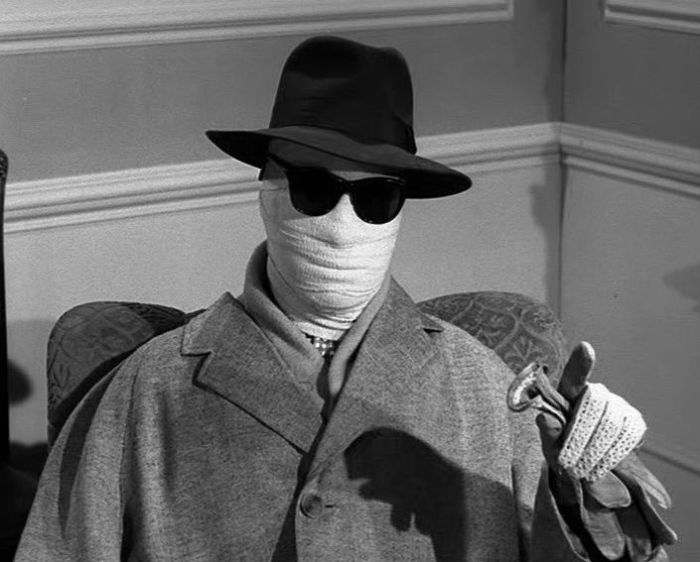
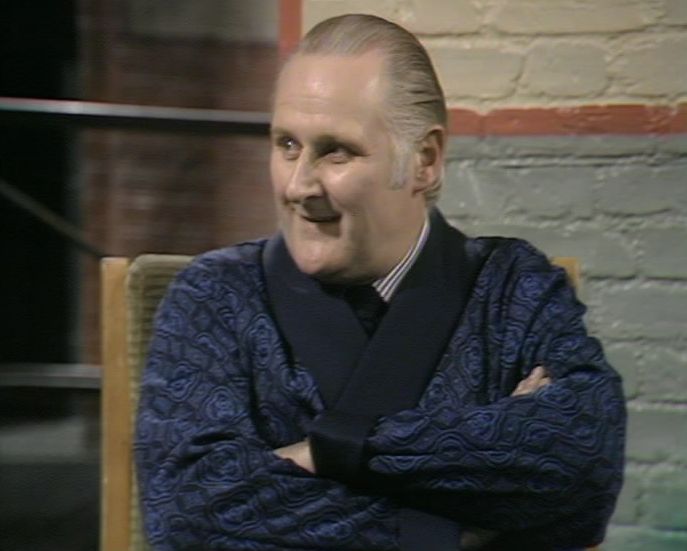
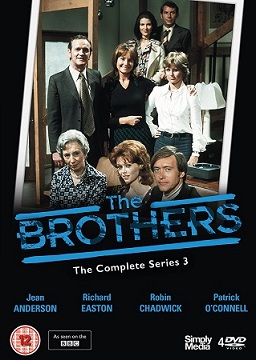
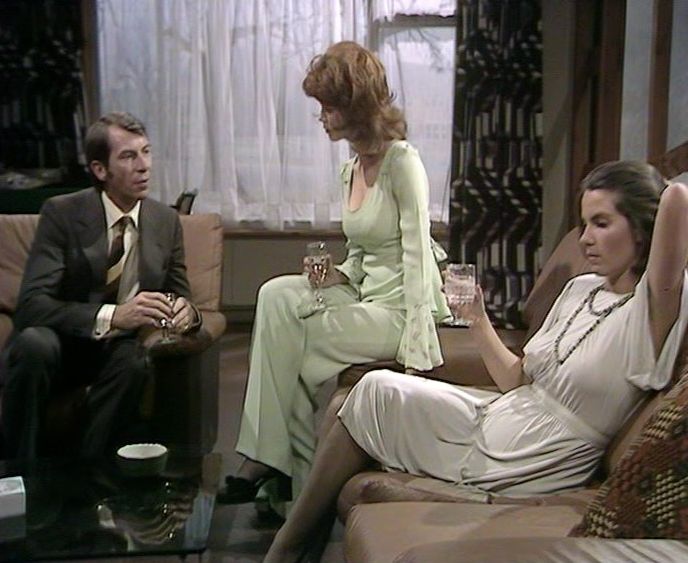


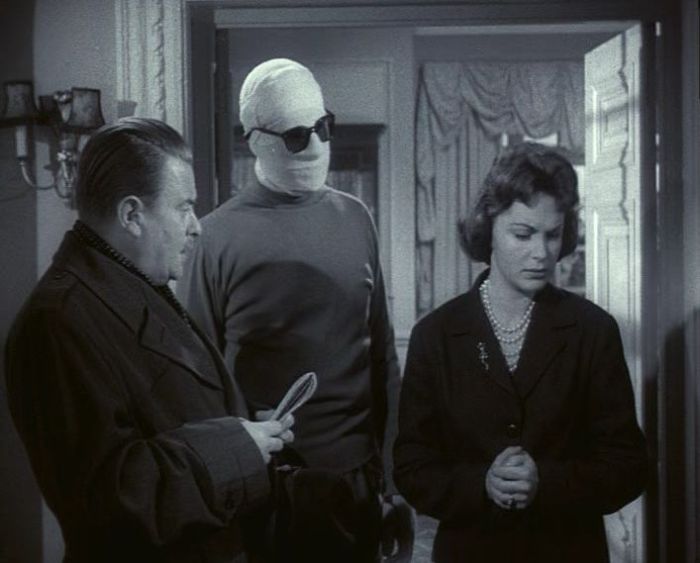
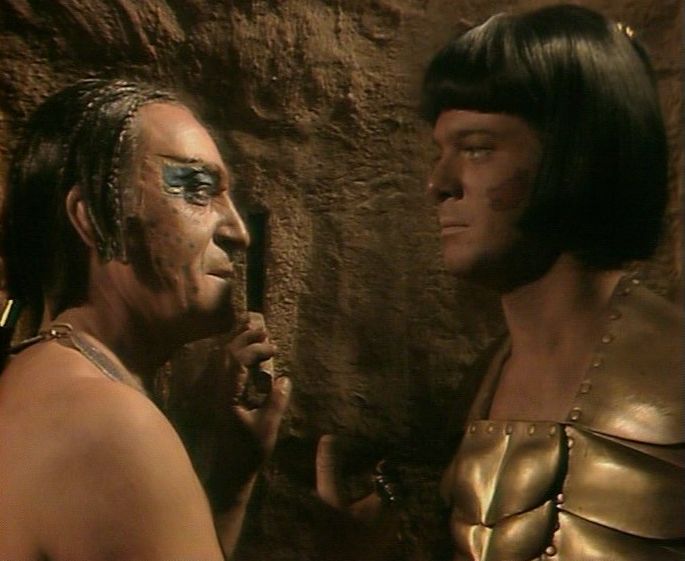
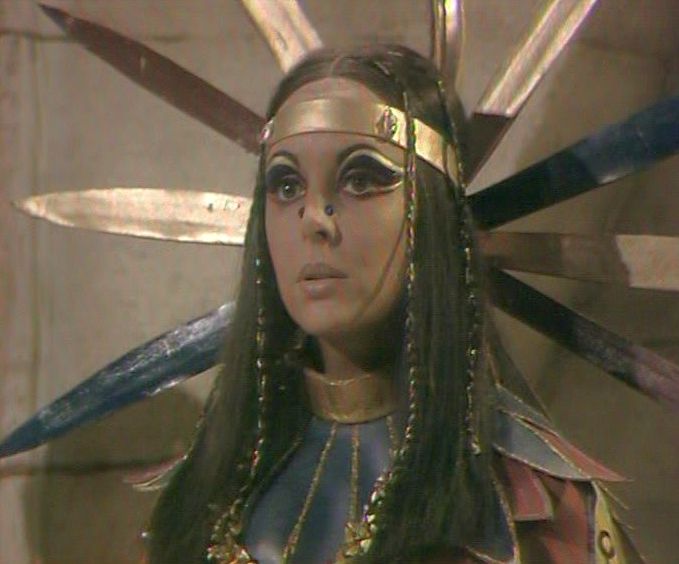
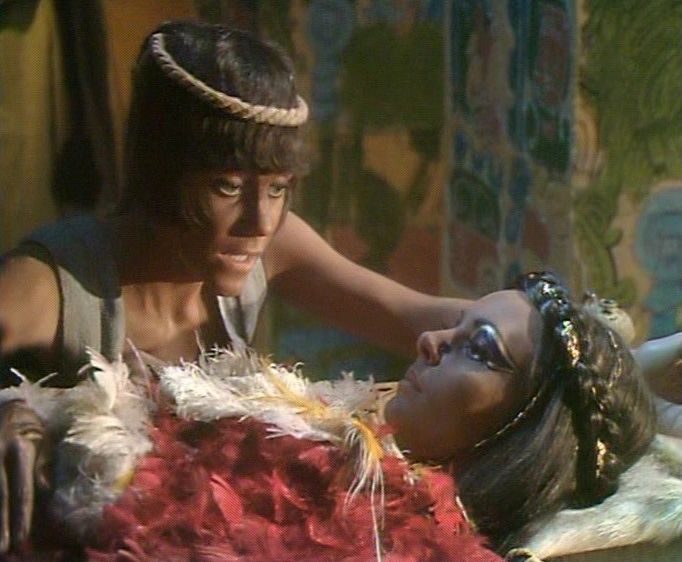
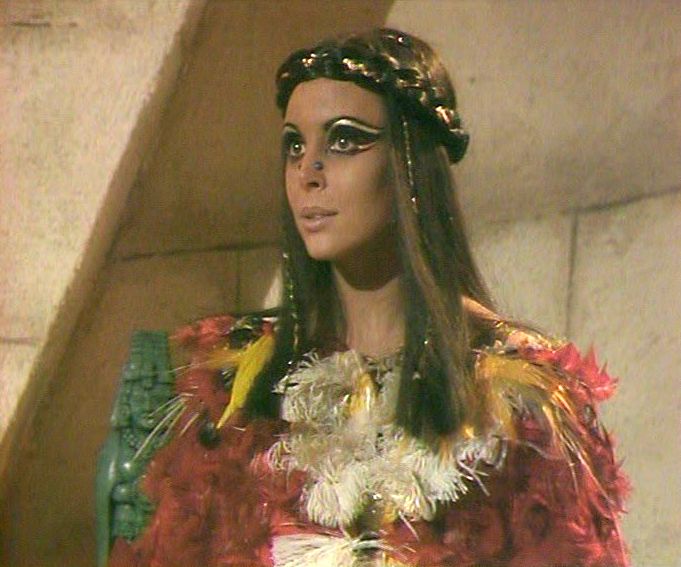
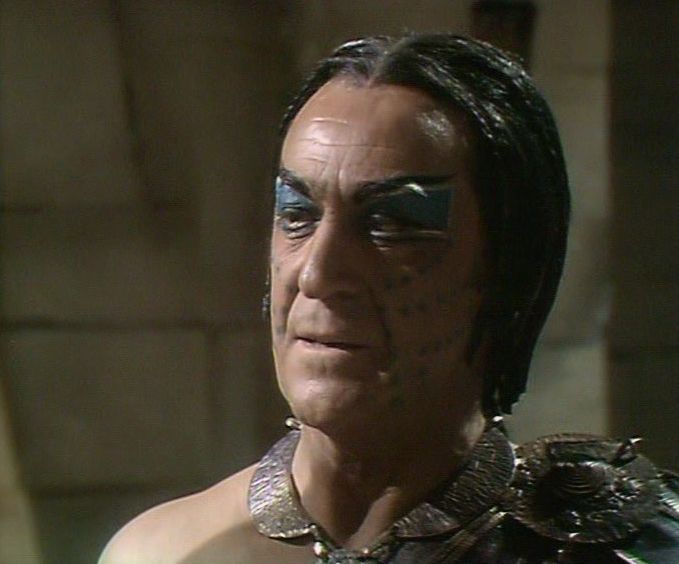
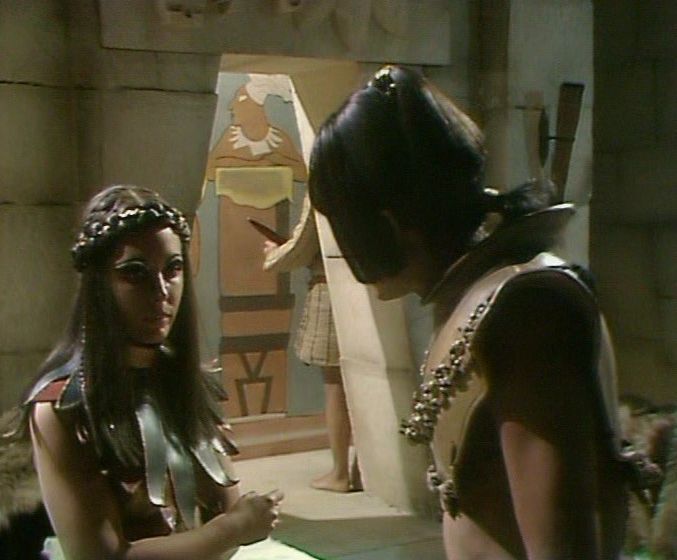
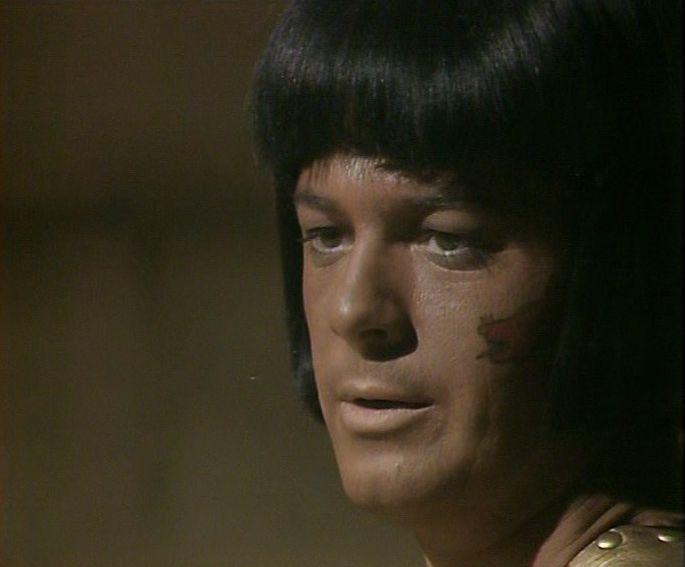
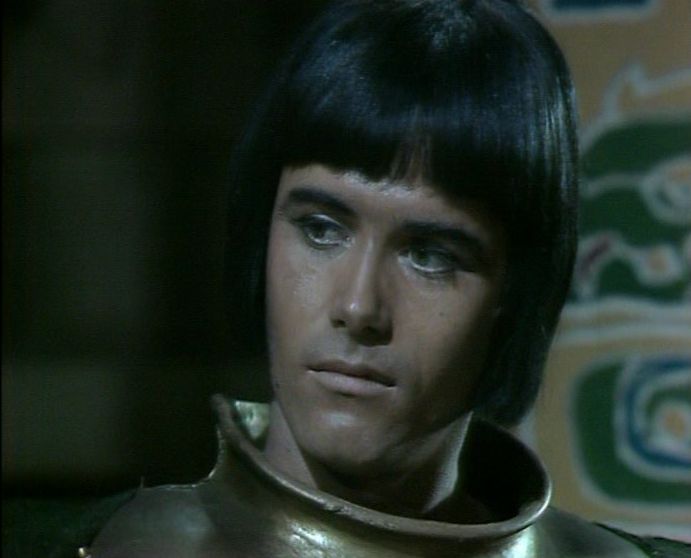
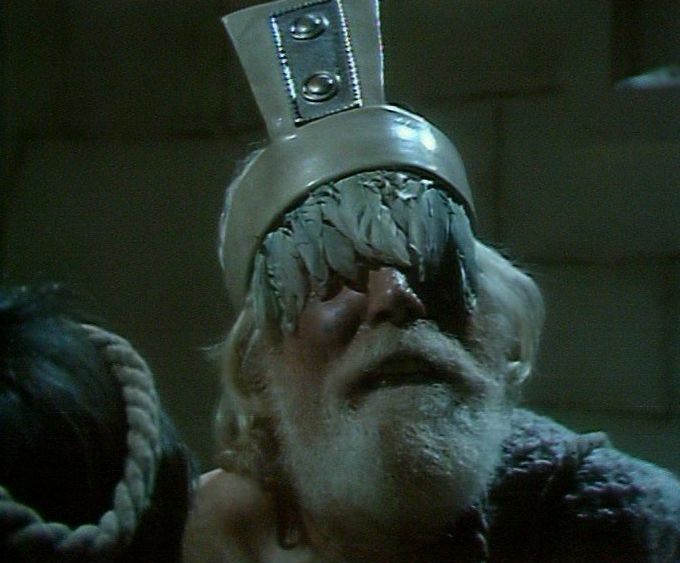
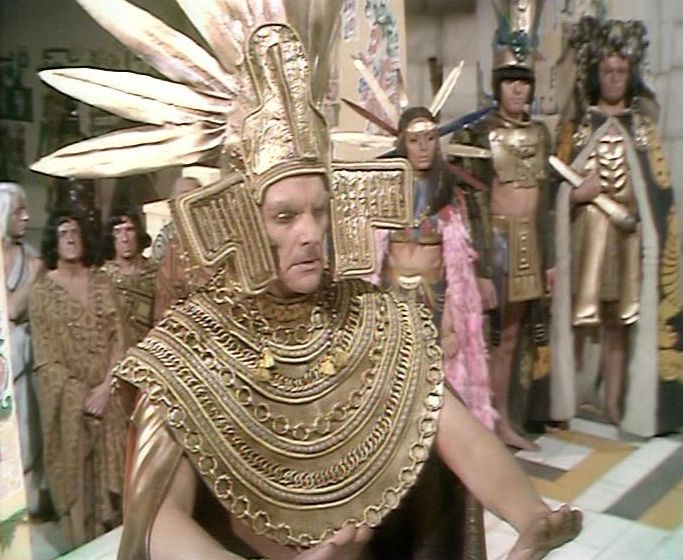
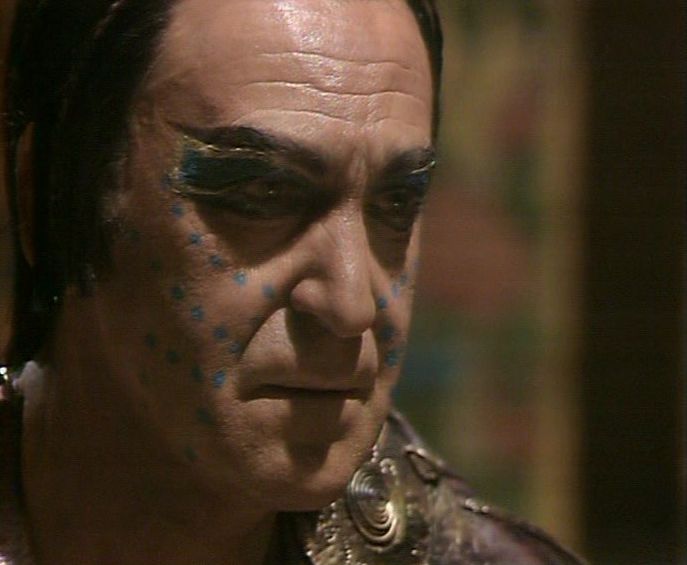
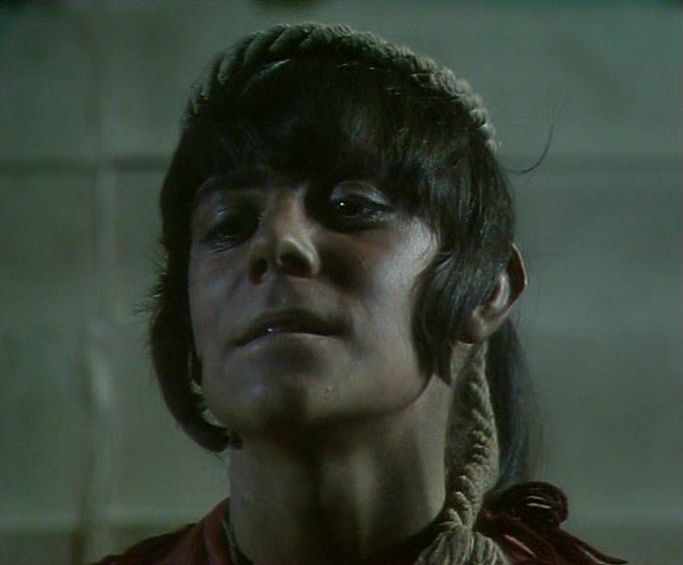
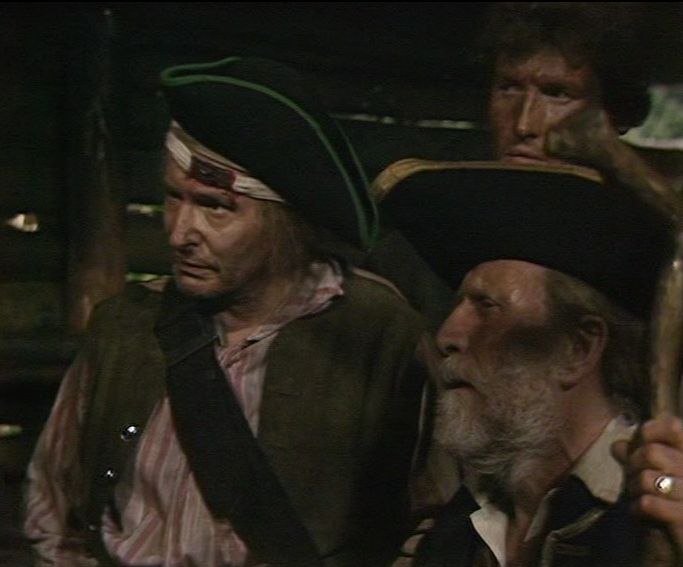
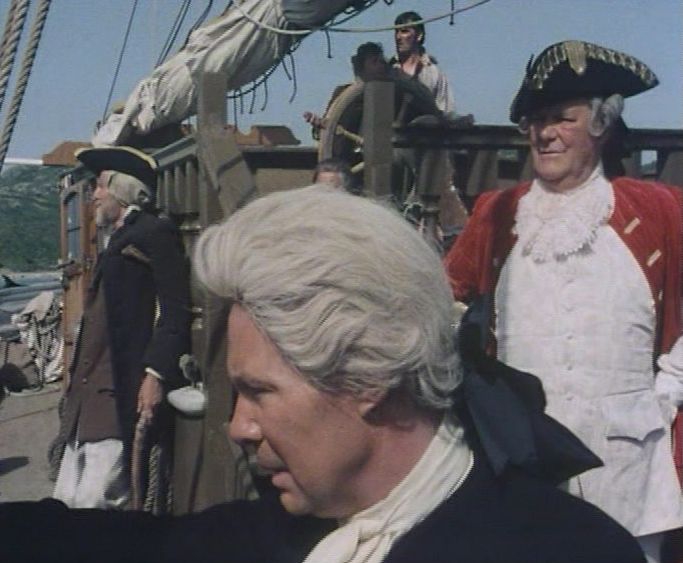


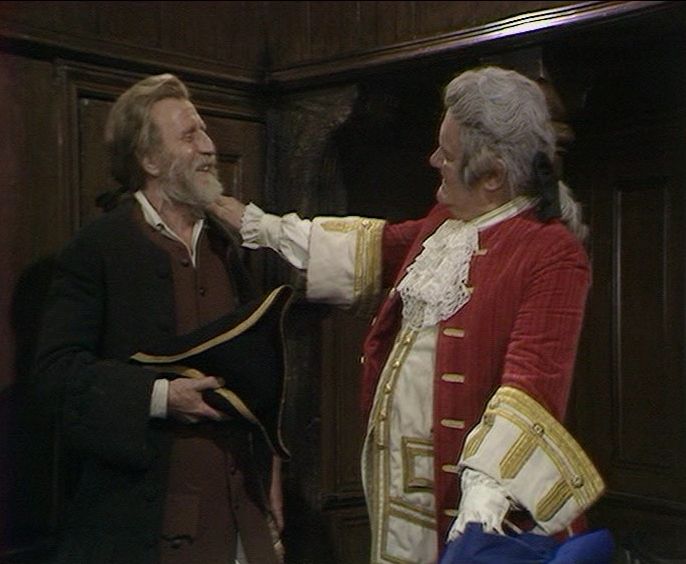
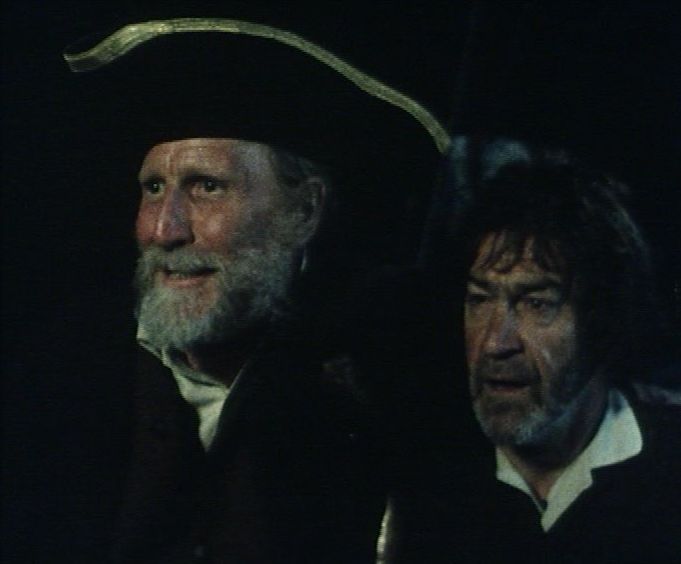
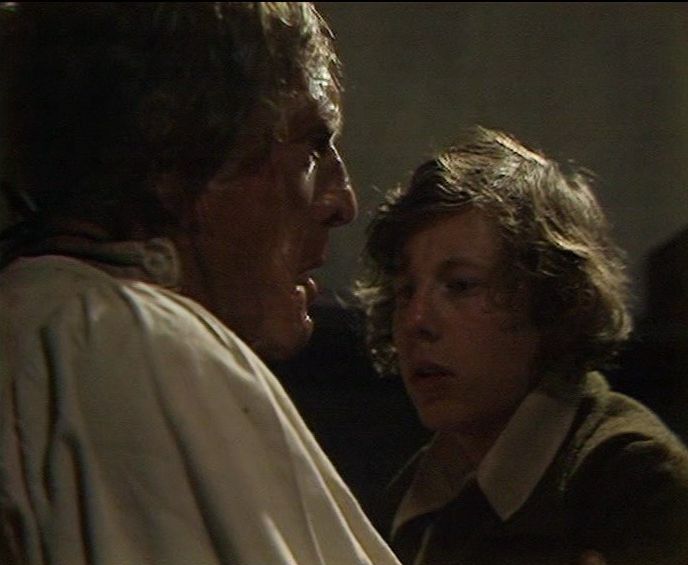
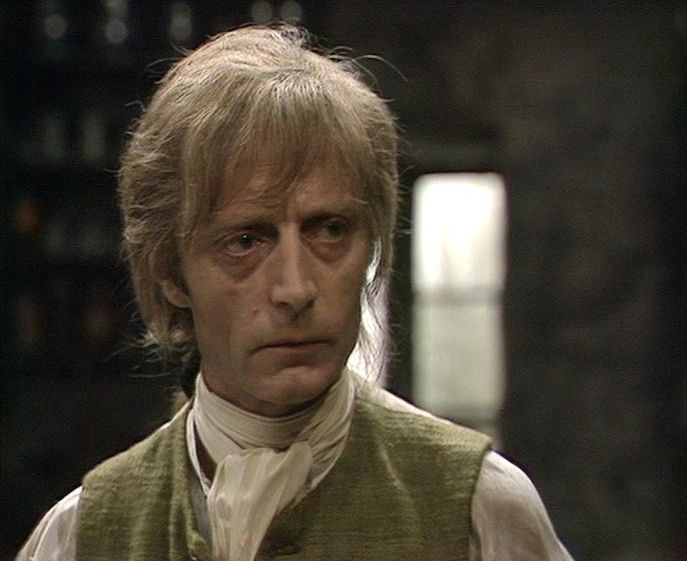
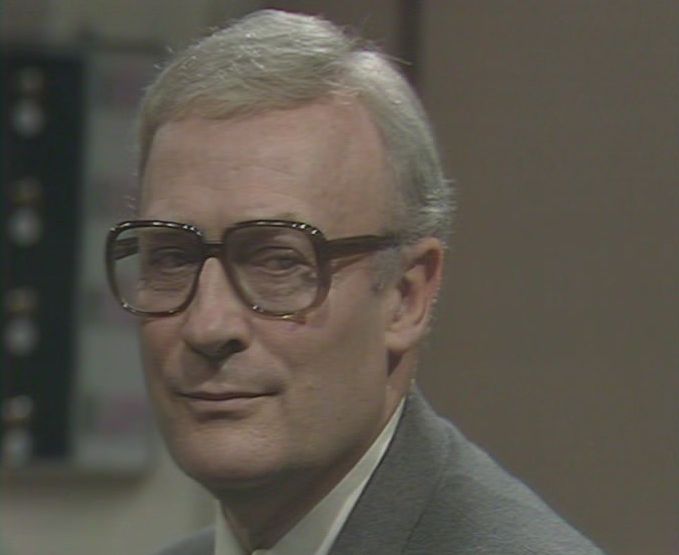
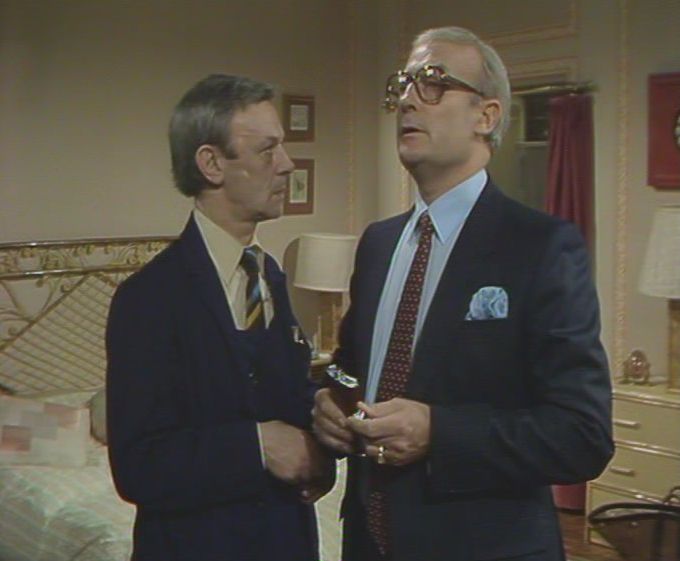
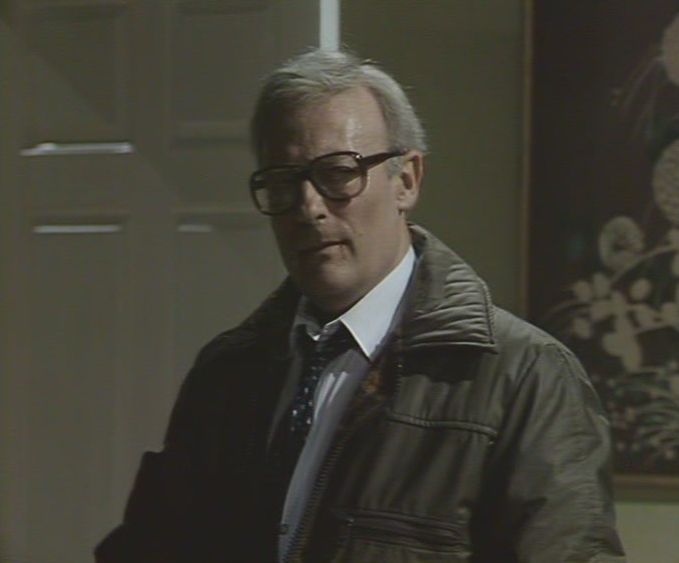
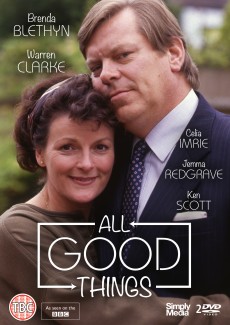
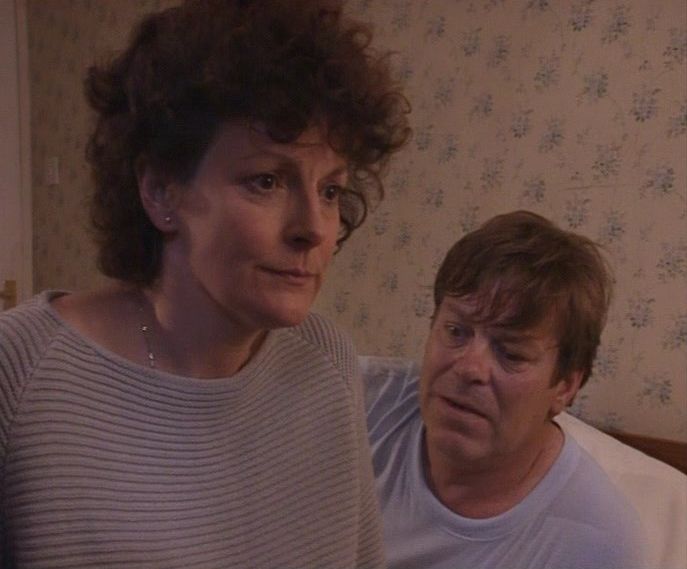
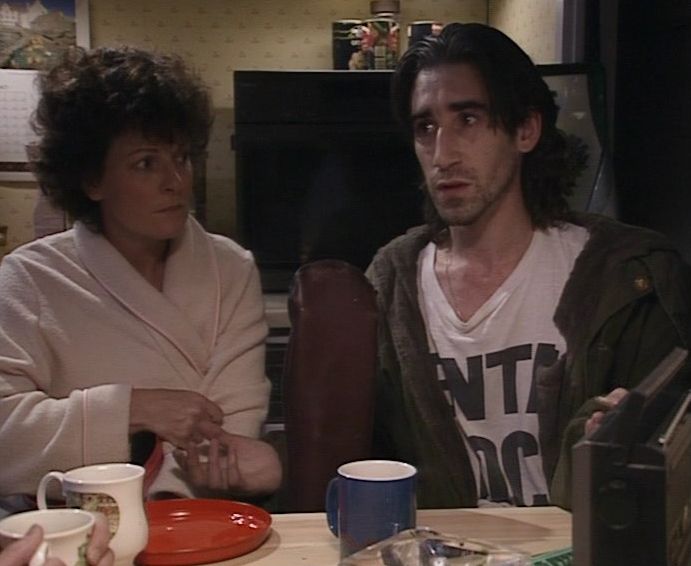
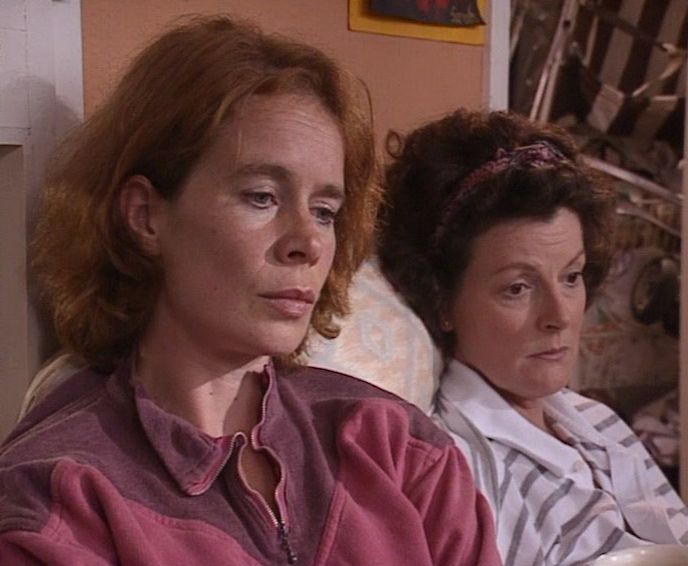


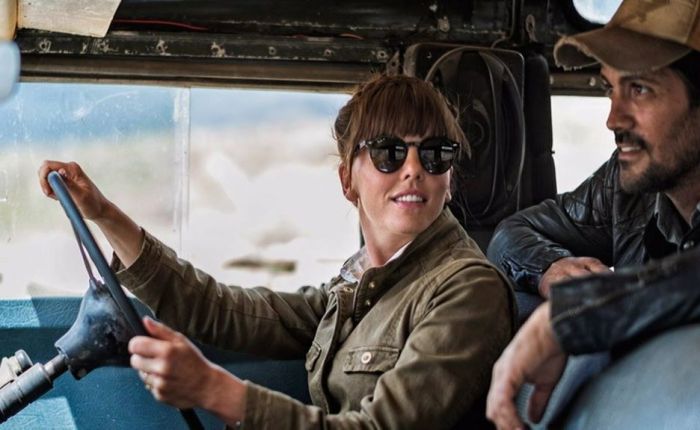

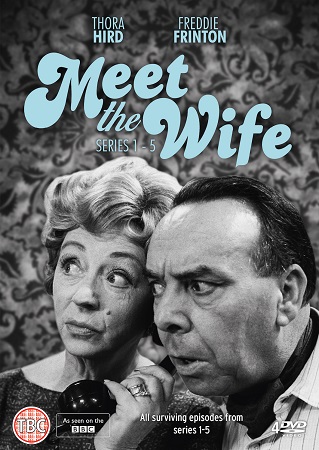
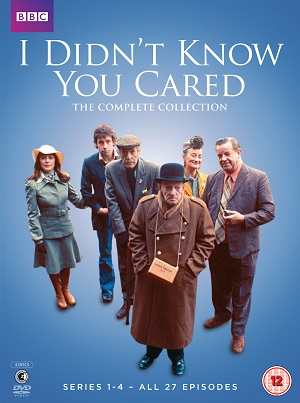
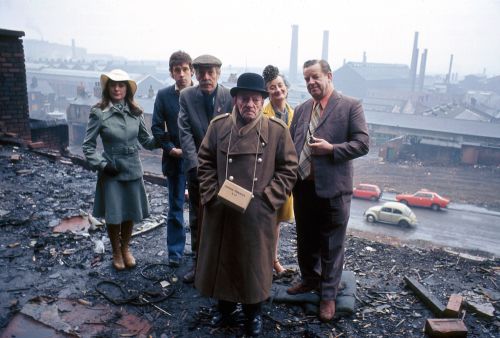
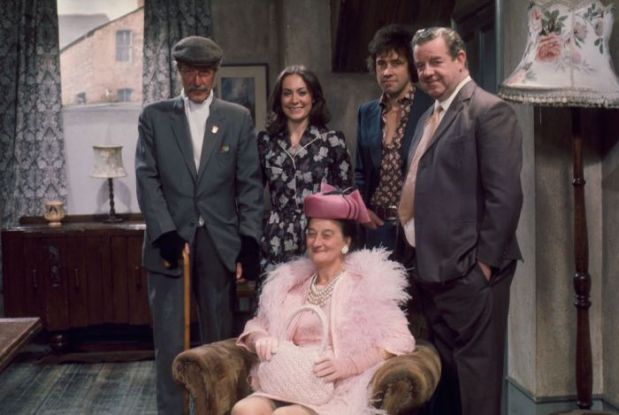
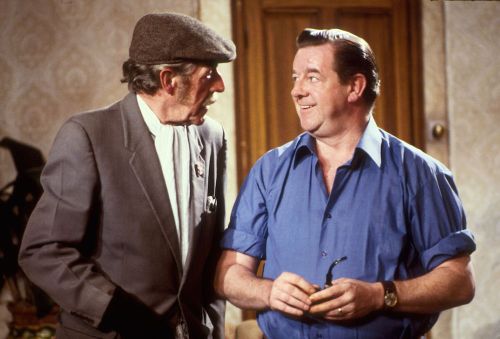
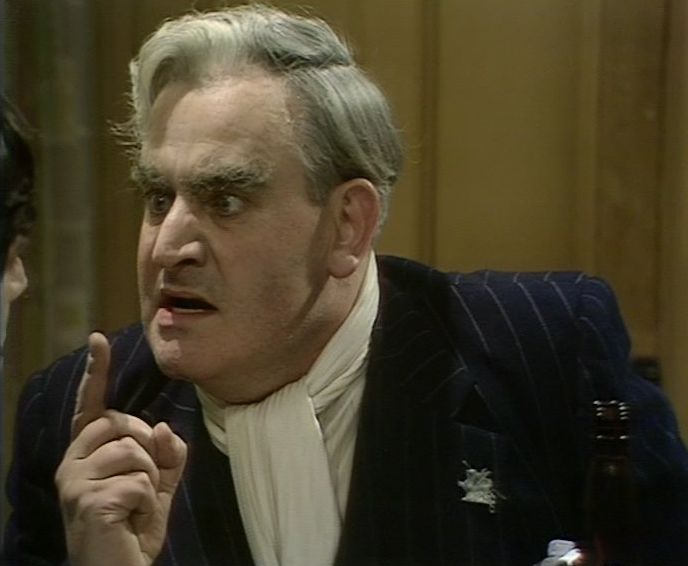
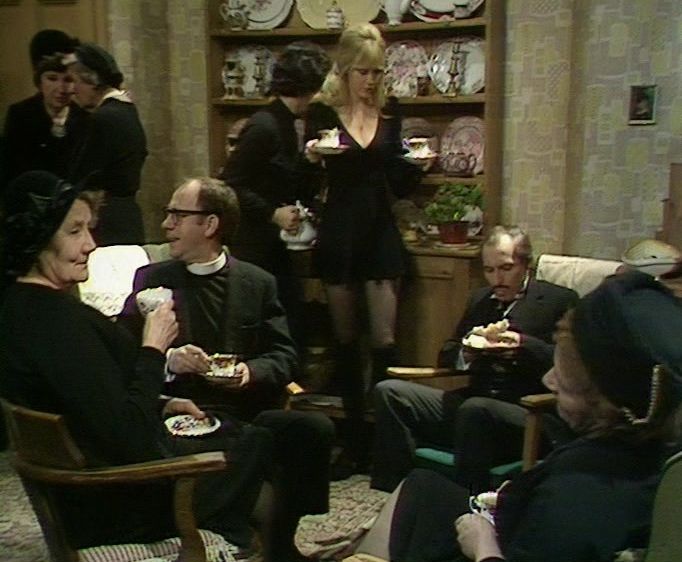
 Archive Television Musings