Having reached the end of the series, I’ve found that a Brothers fix is still required, so I naturally turned to the 1976 long-playing extravaganza that is Christmas with the Hammonds.
Colin Baker’s website has done a wonderful public service by making it available for everybody to enjoy. If, for example, you’ve ever wondered how Paul Merroney would wrestle White Christmas to within an inch of its life, then this is the disc for you.
Without further ado, let’s jump straight in ….
Winter Wonderland, Sleigh Ride – Bill & Gwen Riley
Derek Benfield and Margaret Ashcroft favour a soft duet singing style and they also both handle individual lines with aplomb. A very solid start.
The Holly and The Ivy – Jane Maxwell
I don’t believe I’ve ever heard Kate O’Mara sing before, so I wasn’t sure what expect. She can certainly handle a tune and together with a tasteful string arrangement it seems that Kate was taking it very seriously. Two out of two so far, can this good run continue?
We Need A Little Christmas – David Hammond
Robin Chadwick may be slightly flat, but how can you not love the jaunty backing track? It’s only two minutes long, which means it doesn’t outstay its welcome.
The Christmas Story – Mary Hammond
Jean Anderson is spared the ordeal of singing as instead her track tells the story of the birth of Jesus. You can imagine Mary telling this story to her three sons every Christmas, whether they wanted to hear it or not. Good old Mary.
The Twelve Days of Christmas – 1: Jane 2: Bill 3: Gwen 4: April 5: All 6: Jenny 7: Ted 8: Mary 9: Brian 10: Paul 11: David 12: All
It’s tag-team time as everybody pitches in. It gives us our first opportunity to hear the vocal talents (ahem) of Patrick O’Connell and Colin Baker, whilst it also confirms that a whole track of Jean Anderson singing might have been a step too far.
Cantique de Noel – Brian Hammond
Decades later, during The Cult of the Brothers documentary, Richard Easton still seemed to regard his major contribution to the album with fondness and a little pride. And why not? He can hold a tune well and, as befits his character, adds a touch of gravitas to proceedings.
Have Yourself A Merry Little Christmas – Jenny Hammond
With only a piano accompaniment, Jennifer Wilson is a little exposed, but thanks to her breathy singing style she just about pulls it off.
Good King Wenceslas – Ted Hammond and Paul Merroney
Nice to see that Ted and Paul managed to bury the hatchet in order to contribute to this duet. It’s fair to say that neither Patrick O’Connell or Colin Baker were blessed with angelic singing voices, so their decision to keep their tongues firmly in their cheeks was the only possible option. It’s certainly memorable.
Rudolph the Red-Nosed Reindeer – April Hammond
It’s slightly surprising that April and Paul didn’t have a duet together. Singing is clearly not Liza Goddard’s strength, so the clip-clop backing attempts to cover some of the cracks.
White Christmas – Paul Merroney
After the delight of Good King Wenceslas, it seemed obvious that the world needed more of Colin Baker’s unique vocal talents. Fair play to the man for sharing this track in all its grisly glory (instead of claiming that it had somehow been lost). It’s three minutes which defy description (but once again I have a feeling Mr Baker wasn’t taking it entirely seriously, or possibly a little alcoholic refreshment had loosened him up somewhat). The line – “may all your days be Merroney and bright” – is sheer genius.
Good Wishes For the Season – Gwen, Bill, Jenny, Ted, Jane, Brian, April, Paul, David & Mary
This is lovely as all the cast – in character – take turns to wish the listeners the compliments of the season. Naturally enough Mary gets the last word whilst Jane (“keep the men in their place and have a fantastic time”) has the most memorable message.
A treat from start to finish, it feels a little odd to be listening to it in July, but come December I’m sure I’ll be revisiting Christmas with the Hammonds again.
Within the first few minutes of the series seven opener – To Honour and Obey – it’s plain that change is in the air. First we have a new title sequence which acknowledges that Hammond Transport is now about more than lorries (shots of swooping aircraft makes that plain).
But even more startling is the fact that we’re presented with the sight of Paul Merroney (Colin Baker) having a shave. All of the main characters (with the exception of Paul) have previously had their private lives investigated in exhaustive (and some might say exhausting) detail. Up until now Paul’s has been exempt from this – indeed the others have unkindly referred to him as a robot on more than one occasion, suggesting that he doesn’t have a private life at all.
Seeing Paul Merroney in any other setting than a purely business one is something of a jolt, but since this episode is concerned with his wedding I guess we’re going to have to get used to it. Brian (Richard Easton) is his best man, which rather implies that poor Paul is somewhat lacking in friends. Although his bride-to-be April (Liza Goddard) might make up for that. Or maybe not, let’s wait to see how their marriage plays out ….
Liza Goddard & Colin Baker
Given Brian’s previous problems with the bottle, it’s a little strange that he got drunk at Paul’s stag party (a pity we didn’t see it, I’m sure it would have been a hoot – no doubt Paul was stuck in the corner, sipping a tomato juice). Paul then discusses his father (in the first five minutes we learn more about Paul the man than we had in the last two and a bit series).
We’re quickly introduced to members of April’s family. Her father, Lord Winter (Anthony Nicholls), has little time for his son-in-law-to-be and April’s brother, Simon (Terence Frisby), shares his disdain – although since Simon and Paul are involved in a power-struggle at the bank, at least their conflict is professional rather than personal (Lord Winter just considers him to be a dull fellow).
Brian’s children have been conspicuous by their absence for most of the series to date. Even when he and his former wife, Ann, were together we never saw much of them. So when Brian’s daughter Carol (Debbie Farrington) suddenly turns up, it’s a bit of a jolt. Mind you, that’s nothing compared to the shock when Ann (Hilary Tindall) also reappears ….
I’ve missed Ann, so it’s lovely to see her again – even if it’s only a fleeting visit. With Brian now entering a tentative relationship with Jane Maxwell (Kate O’Mara), Ann’s presence certainly helps to shake up the status quo, although Carol is the key figure here – seemingly undecided about whether to live with her mother or father.
Carol’s now a new-age hippy chick but Ann’s still the same old Ann. They both bow out in episode four, The Female of the Species, with Carol rather bamboozling Brian before she goes. And before Ann leaves she has the chance to confront Jane (Hilary Tindall and Kate O’Mara – an implacable force meeting an immovable object).
Happy marriages are something of a rarity in The Brothers. This series Ted (Patrick O’Connell) and Jenny (Jennifer Wilson) are the first to suffer a few bumps in the matrimonial road. Although they’ve always seemed well-suited, it should be remembered that as soon as they tied the knot Jenny became incredibly bossy (her ill-fated desire for a child was just one of the times when Ted – a hard-case in business but a teddy-bear at home – gave way).
Patrick O’Connell & Jennifer Wilson
This year Ted’s showing signs of mellowing on the business front. Spending time away on a business course helped him to finally release that Paul Merroney wasn’t quite the villain he always believed him to be (something the viewers twigged some time back). When he returns home, Jenny’s off to visit her daughter, Barbara, in Canada (and more than a little irritated that Ted’s changed his mind about joining her). Barbara (Julia Goodman) is another familiar face from the past to make a return this year (her marriage – surprise, surprise – has hit something of a rough patch).
A little extra spice is added to Ted and Jenny’s relationship after April, at a loose end during one of Paul’s numerous foreign trips, offers to cook Ted dinner. There’s no strings attached – it’s just a friendly offer from April who’s concerned that Ted will waste away if he has to fend for himself – but the reactions of their respective spouses are quite instructive. Paul’s coolly amused (his long-standing disdain of Ted still stands) whilst Jenny doesn’t say a great deal (although it clearly rankles, as we’ll see during the next few episodes).
Of course it was Paul who mischievously told Jenny that her husband and his wife had enjoyed a meal together rather than the hapless Ted, who no doubt would have much preferred to have kept quiet. This leads April to liken Paul to one of the Borgias – which he takes as a rich compliment!
Regular viewers will probably be expecting several long-running plot-threads to rear their heads one last time. And you won’t be disappointed as yet again Mary’s (Jean Anderson) health takes a turn for the worse, leaving the brothers to play nursemaid, although neither Brian or David (Robin Chadwick) are falling over themselves to volunteer. The sight of Brian and David tossing a coin (Brian lost, so he had to stay at home with her) is a nice comedy moment.
The saga of Gwen Riley’s (Margaret Ashcroft) new house also continues to rumble away – every time she seems to be on the verge of moving, something happens to prevent her (this time she’s been gazumped). Once again, Ashcroft (and Derek Benfield as Bill Riley) impress as the one couple who somehow manage to juggle their work and private lives without resorting to taking lumps out of each other. Ashcroft gets to flex her acting muscles a little more towards the end of the series after Bill and Gwen’s son is involved in a motorbike accident.
Margaret Ashcroft
Later series of The Brothers tended to be shared out amongst a pool of writers who would then pen a block of consecutive episodes. For the seventh and final series this was split as follows – Ray Jenkins (episodes one to three), Brian Finch (episodes four, five and nine to twelve), Elaine Morgan (episodes six to eight) and N.J. Crisp (episodes thirteen to sixteen).
Elaine Morgan’s three scripts – Arrivals and Departures, The Distaff Side and Cross Currents – are of particular interest. Although this was her only contribution to The Brothers, her extensive career spanned the mid fifties to the late eighties with many notable credits. The Life and Times of David Lloyd George is an obvious career highlight, with top-quality literary adaptations (including The Diary of Anne Frank, Testament of Youth and How Green Was My Valley, amongst others) also featuring heavily on her CV.
Christine Absalom appears in Morgan’s three episodes as temporary secretary Judy Vickery. It’s fair to say that she and Paul don’t hit it off – possibly it’s her toy Snoopy (a good-luck mascot, she tells him) or maybe it’s because she appears to be slightly flustered (although she assures him that once she settles down she’ll be fine). As an outsider, Judy allows us to see the regulars through a fresh pair of eyes – especially the martinet Paul Merroney (the way she mispronounces his name to begin with is a lovely comedy touch).
Paul, enroute to Istanbul, calls April from the airport. She has bad news for a him (a family bereavement) and is appalled when he doesn’t cancel his flight and return home This is a key moment, as although Paul shows a spasm of pain at the news, business comes first. It’s an attitude which April finds incomprehensible and serves to sow the first seed of disharmony between them.
The unexpected arrival of Paul’s mother in The Distaff Side throws the Hammonds into a tizzy. With Paul still away and April uncontactable, Ted and Brian attempt to play pass the parcel with her. Luckily, Mrs Merroney (Norah Fulton), a plain-speaking Geordie, takes up Gwen’s offer of a bed for the night (much to Brian’s obvious relief!)
Mrs Merroney’s conversations, first with Gwen and Bill and then later with April, help to shed considerable light on Paul’s character. A sickly, bookish child, he found himself teased by the local children – therefore his drive to succeed in business was partly borne out of a desire to prove his parochial home-town rivals wrong. These are further strong scenes from Elaine Morgan.
Liza Goddard & Colin Baker
Elsewhere, there’s a nice spark of jealously directed towards Jane by Jenny. Jane’s arrival in series five generated a certain amount of friction amongst all the members of the Hammonds board, although it was rather downplayed the following year. Quite why Jenny should be so set against the possibility of Jane becoming a Hammond (after all, that’s precisely what she did by marrying Ted) is a bit of a mystery but it helps to give Jenny a little more to work with on the character front.
Jenny’s paranoia keeps on bubbling away (she’s convinced that everybody is plotting against her). The best moment comes when she confides to Mary that Brian and David are locked in a bizarre love triange with Jane! That’s somewhat far from the truth – since Brian’s long-relationship with Jane has been platonic, David sees nothing wrong in inviting her out for a couple of meals.
The result of Jenny’s rash comment puts Mary on the warpath. She attempts to rope Ted in, but he’s less than keen to get involved – although their conversation sets up a pulsating later scene which sees Ted accuses Jenny of spewing posion. With their marriage already a little rocky, this simply adds to the pressure. Jenny has the last word as she cruelly, but maybe accurately, labels the Hammond brothers as “a lush, a failure and a has-been!” Wonderful stuff.
Everything then kicks off in typical Brothers style as Mary confronts Jane, Brian confronts David and David, in a huff, packs his bags and leaves home.
Kate O’Mara, Richard Easton & Colin Baker
Episode ten – Celebration – is ironically titled, as Jane receives the bad news that one of her new C41s has disappeared somewhere in the Atlantic, Jenny receives a summons for dangerous driving whilst Paul and April’s marriage seems to have hit a brick wall.
Possibly this was art imitating life, as Colin Baker and Liza Goddard had married for real shortly after Paul and April tied the knot in the series. Baker would later acknowledge that their union was probably a mistake as it sadly didn’t last very long.
April is a rather passive character to begin with – content to wait at home for her husband to return from the office (although capable of becoming annoyed when he’s late). April bemoans the fact that their luxury flat has become a gilded cage for her, but she seems unable or unwilling to do anything to rectify the situation, such as finding a job. Given that the role isn’t terribly interesting for large stretches, it’s lucky that Liza Goddard was on hand to breathe a little life into her. Goddard does icy detachment better than anybody and some of her later scenes suggest that April could have developed into quite the bitch had the show gone to an eighth series.
Paul Merroney’s latest scheme is to expand into the Middle East. From a modern perspective, setting up bases in places such as Baghdad and Kuwait seems to be asking for trouble, but it’s true that it was a different time back then. Only Brian opposes the plan, whilst the others see a chance to make a handsome profit (although the risk factor is great).
Whilst the cast were confidently expecting an eighth series, I wonder if the return of co-creator N.J. Crisp to write the last four episodes was something of a sign? Crisp had only penned a handful of episodes during the previous couple of runs, so it could be that he had an inkling the series was reaching the end and wanted to be the one to conclude it.
Whilst a continuing drama can never come to a compete stop, there’s a sense that The Brothers was reaching a natural conclusion. We’ve seen over the years how Hammond Transport had changed from a privately owned company to a publicly owned one, but the Middle East scheme serves as the catalyst to finally wrest control away from the Hammond family (via a new share option which will raise much needed capital but will also serve to dilute their majority share-holdings).
But various questions remain unanswered as the credits rolled for the final time. How would Paul and April’s wobbly marriage have resolved itself? Most intriguingly, would Paul’s Middle Eastern escapade have been a disaster? If so, then he might have been eased out and maybe the Hammonds would have attempted to regain control of the company.
Although there were plenty of options for future storylines it wasn’t to be, so The Brothers came to an end on the 19th of December 1976 with The Christmas Party. Final treats include Brian’s quite astonishing moves on the dance floor and Ted’s firm rejoinder after Paul suggests that Hammond Transport Services Ltd is a rather old-fashioned name. Surely something like Worldwide Transport Services would be better?
Another strong collection of episodes, this seventh and final series of The Brothers is just as addictive as the previous runs. It’s easy to why it captivated a generation back in the 1970’s and forty years on it’s still as entertaining. If you’ve been collecting the DVDs then you’ll know how good the show is, if not then I’d strongly recommend picking up series one and making your way through a classic slice of seventies drama from there.
The Brothers – Series Seven is released by Simply Media on the 10th of July 2017. RRP £29.99. It can be ordered directly from Simply here.
Paul Dombey’s (John Carson) fondest wish is for a son to carry on his thriving business. As the story opens, his wife duly delivers a baby boy who is swiftly named Paul after his doting father. Although Mrs Dombey dies shortly afterwards, this seems to have a negligible impact on Dombey as his son quickly becomes the centre of his life (with the result that his daughter Florence is pushed even more into the background).
When young Paul dies at the age of six, Dombey Snr is devastated. Florence attempts to comfort him but he continues to rebuff her, which eventually leads to a seemingly irrevocable split between father and daughter ….
Originally published in nineteen monthly instalments between October 1846 and April 1848, Dombey & Son, despite being regarded by many as one of Dickens’ best works, has generated surprisingly few film or television adaptations. In the cinema, a 1917 British silent film and a very loose 1931 adaptation (which was renamed Rich Man’s Folly and saw the action transferred to the United States) are the only examples. On television there have been just two English-language versions – this one and a later BBC Classic Serial adaptation in 1983.
The first episode quickly defines Dombey’s character. He’s a proud, dignified and extremely humourless man who treats his young daughter, Florence (played to begin with by Vicky Williams and later by Kara Wilson), with at best indifference and at worst contempt. John Carson, an actor who was seemingly incapable of giving a bad performance, impresses right from the start. Unbending as Dombey might be, Carson doesn’t play him as simply a monster, instead he offers a much more nuanced performance.
John Carson
Although Dombey is something of a dull fellow, as compensation there’s a number of sparkling comic performances sprinkled throughout the thirteen episodes. Two sitcom favourites – Hilda Braid and Pat Coombs – form a wonderful double-act as Louisa Chick and Lucretia Tox. Louisa (Braid) is Dombey’s sister, a woman who shares her brother’s low opinion of Florence whilst Lucretia (Coombs) is her friend, a somewhat simpleminded person who simpers delightfully over Dombey and harbours a hopeless secret desire to become the next Mrs Dombey.
William Moore, another actor probably best known for his sitcom work (for example, the long-suffering Mr Lumsden in Sorry!) is padded up as the hearty seadog Captain Cuttle. Complete with a hook for a hand, Moore gives an unsubtle, but highly entertaining performance.
The first meeting between Dombey and Cuttle is an absolute gem. Dombey, taking afternoon refreshment with Paul and Florence in a Brighton tearoom (young Paul has been sent to the coast in the hope that the sea air will restore his failing health), is appalled when the colourful Captain Cuttle sidles over to his table. Cuttle is introduced to Domby by Walter Gay (Derek Seaton), one of Dombey’s clerks. The best moment of all is when Walter first mentions Cuttle’s name and the Captain raises his arm (the one with the hook, naturally) in response. Lovely!
William Moore
Vicky Williams, as young Florence, doesn’t have a great deal of screentime (Kara Wilson would take over the role by the middle of the second episode) but she still makes an impression. The scenes where she’s lost in the city after being robbed of her clothes by an old crone, Mrs Brown (Fay Compton), are heartbreaking. Equally affecting is Ronald Pickering as young Paul. When Paul asks Dombey (in response to being told that money can buy anything) whether it can buy good health, his father is temporarily speechless.
When Dombey decides to send his young clerk, Walter, to the West Indies, it’s a story-beat which intrigues on several levels. Firstly, it’s another example of the way that Dombey cares little for other people (apart, of course, from his son) since it never seems to cross his mind to canvas Walter’s opinion first. Secondly, since Walter has shown interest in Florence, dispatching him abroad serves to sever their tentative relationship. Considering that he seems to care little for his daughters happiness, this appears to be an act of deliberate cruelty.
The fourth episode tugs at the heartstrings as young Paul begins to fade. His death is an understated moment – the camera moves away from his bed to focus on the window as the sound level reduces. The next scene, as Dombey stands by his son’s grave, is a sharp and jolting cut, but it works well.
Christopher Sandford as Mr Toots helps to lighten the mood following Paul’s funeral. Mr Toots, a former schoolfriend of Paul, is a kind-hearted, vague and twitchy young man who loves Florence dearly (but although she always treats him kindly it’s plain that she doesn’t feel the same way). But the ever-optimistic Mr Toots is never downhearted and can always be guaranteed to come bouncing back. Sandford provides a delightful comic performance in a serial which has an abundance of them.
Towards the end of this episode there’s the first hint that Dombey isn’t quite as unbending as he might appear. He decides not to send Walter to the West Indies after all, but it’s too late – his ship has already sailed, much to Florence’s anguish (which only increases when the vessel is feared to have been lost at sea). Kara Wilson, as befits the character she plays, may be somewhat placed in the background but she still essays a subtle performance as a young woman constantly rebuffed by a father who finds it impossible to communicate with her on anything but the most rudimentary level.
Kara Wilson
Clive Swift is yet another quality addition to the cast. He plays the bluff and hearty Major Bagstock, who seems to be Dombey’s only friend. The restrained Dombey and the ebullient Bagstock would seem to have little in common, but it’s their very differences which help to generate an entertaining spark between them.
The middle part of the serial sees Dombey remarry. He selects Edith Granger (Sally Home) who seems in every way to be an ideal choice – as she’s a skilled artist and musician as well as being a refined conversationalist. Nestling amongst some deliciously broad comic performances, Home offers a sharp contrast as the second Mrs Dombey.
Although she accepts Dombey’s proposal, it’s plain that – on her side at least – it’s not a love match. Manipulated by her mother from an early age (in order to ensnare a rich husband) Edith is a weary and embittered figure. But the one bright spark in her new life is her relationship with Florence.
Whilst some children might regard a new step-mother with mistrust, Florence is plainly overjoyed – partly because she hopes it will enable her father to find new happiness but also because there’s no doubt that her lonely existence would be enriched by a mothers love. The way that Florence instantly refers to Edith as Mama is touching (Kara Wilson is excellent again here).
Sally Home
But any happiness that Dombey might have hoped for is short-lived, as Edith runs away with the slimy and manipulative Caker (Gary Raymond). Dombey, with the assistance of Alice Brown (also played by Sally Home) and her mother (who coincidently robbed the young Florence earlier in the serial) vows to track them down.
Gary Raymond seems to delight in playing the boo-hiss villain who, as tradition demands, meets a sticky end. And although Home plays both roles well, it probably would have been better had another actress played Alice (a woman who had a special cause to dislike Caker). This is mainly because it’s more than a little odd that no-one who ever meets Alice comments on her remarkably strong resemblance to Edith ….
Edith’s departure finally severs the already fraying relationship between Dombey and Florence. Whilst a distraught Florence is taken under Captain Cuttle’s wing (William Moore once again marvellous value at this point in the serial) Dombey faces severe business traumas due to Caker’s rash profiteering. And as Dombey’s own health takes a turn for the worse, a now happily-married Florence attempts one final reconciliation. Will the patrician Dombey deign to acknowledge his daughter and her children?
Runnng for thirteen 25 minute episodes, Hugh Leonard’s adaptation manages to skillfully fillet Dickens’ novel and thereby retain everything of interest. A fine rogues gallery of comic performers – headed by the peerless William Moore as Captain Cuttle – helps to keep things ticking along nicely although the family drama between Dombey and Florence is never overshadowed. In general, performances across the serial are very strong although Douglas Mann as young Rob Toodle does overact somewhat (luckily his part isn’t a particularly large one).
Director Joan Craft had already helmed a number of Charles Dickens adaptations, although the survival rate of her serials is sadly quite low. Both The Old Curiosity Shop (featuring Patrick Troughton as Quilp – his favourite role) and Martin Chuzzlewit are completely missing although odd episodes from A Tale of Two Cities and David Copperfield do exist. More encouragingly, her 1968 version of Nicholas Nickleby remains in the archives, so hopefully a release from Simply might occur in the future.
Her directorial style isn’t dramatic or showy (there’s few of the flourishes that can be seen in Alan Bridges’ Great Expectations) but she still manages to ensure that the story unfolds at a decent pace. The production style is as you’d expect from a programme of this era – mostly studio sequences recorded on videotape, with occassional brief film inserts.
The episodes are a mixture of telerecordings and original videotape masters. The episodes which still exist on videotape are obviously the best quality ones. although since the telerecordings are also of a very high standard the jump between the different formats isn’t as great as it could have been. Overall, the picture quality (considering the unrestored nature of the source materials) is very good. The sound is generally clear although some of the telerecorded episodes (episode eleven especially) are somewhat crackly in places.
Thanks to the first-class cast who rarely put a foot wrong, Dombey & Son is another impressive Dickens adaptation. Highly recommended.
Dombey & Son is released by Simply Media on the 3rd of July 2017. RRP £19.99. It can be ordered directly from Simply here.
When young Phillip Pirrip, nicknamed Pip, meets a strange, reclusive lady called Miss Haversham (Maxine Audley) it opens up a new world of possibilities. Miss Haversham’s ward, the beautiful Estella (Francesca Annis), bewitches him from the first time they meet, although she is unable to return his love.
As the years pass by and the boy grows into a man, Pip learns that he has “great expectations” and will shortly come into the possession of a handsome property. Since his most heartfelt desire is to become a gentleman (only then, he believes, will he be able to win Estella’s heart) it seems like a dream come true.
So he moves to London and at first all seems well. But later he receives a shock – his anonymous benefactor turns out not to be Miss Haversham after all, but a convict named Magwitch (John Tate) ….
Originally published across 1860/61, Great Expectations was Charles Dickens’ penultimate completed novel (Our Mutual Friend and the incomplete The Mystery of Edwin Drood would follow). A popular success at the time of its original publication (unlike Our Mutual Friend, which received a much more muted reception) Great Expectations has proved to be one of Dickens’ most enduring works.
Its popularity can be judged by the number of film and television adaptations it has inspired. Great Expectations made its debut in the cinema all the way back in 1917, whilst on television the 1959 BBC adaptation, with Dinsdale Landen as Pip, was the earliest. Sadly, the 1959 Expectations is missing one of its thirteen episodes (episode eight) so it looks unlikely to be released on DVD. Some eight years after the BBC first tackled the novel they did so again – with this 1967 ten-part adaption by Hugh Leonard.
Since so much of the impact of Great Expectations comes from the travails of Pip, strong casting of the character is essential. Luckily this production managed the feat twice – Christopher Guard played the young Pip, whilst Gary Bond took over when he reached adulthood. Guard had already appeared as David Copperfield the previous year, so was clearly well versed in the world of Dickens. Bond had racked up a varied list of credits since his screen debut in 1962 (including a notable film appearance in Zulu as Private Cole).
The first episode opens with Pip’s graveyard encounter with Magwitch. It’s a sequence that required a certain amount of skill on the part of the vision mixer, due to the way it frequently cuts from film (establishing shots of Pip) to videotape (the studio dialogue between Pip and Magwitch) and then back to film again. It’s a pity that the entire scene wasn’t shot on film, but presumably this was a matter of cost. There’s more filmwork across the serial than there was in Our Mutual Friend, but the studio scenes still dominate.
John Tate & Christopher Guard
John Tate makes for a menacing Magwitch, although even in this intial scene there’s a feeling of conflict in his character. He might issue bloodcurdling threats against Pip, but he also holds him close in a way that almost seems to be tender. And when he’s later recaptured (Tate excellent again here, mudcaked and weary) he chooses not to mention that he forced Pip to fetch food for him.
Young Pip’s homelife is pretty grim. He’s abused by his sister (played by Shirley Cain) although her husband, Joe Gargery (Neil McCarthy), is a much more genial – if simple-minded – chap. McCarthy, like so many of the cast, impresses with a deftly sketched performance.
Sound effects and music are prominent right from the start. The music is dramatic (possibly over-dramatic at times) although the sound effects are more successful in creating mood and atmosphere. The constant wailing of the wind throughout the early episodes helps to create the impression that Pip lives in a cold, desolate and foreboding area. Visual signifiers – a rotting corpse hanging on a roadside gallows – reinforces this.
If Pip’s first meeting with Magwitch is a signature moment, then so too is his initial encounter with Miss Haversham. As Pip approaches her intimidating house the music swells and then abruptly cuts off as Pumblechook (Norman Scase) lays a hand on him. This could be intentional, although it seems more likely that it was a grams error.
Whilst Maxine Audley’s Miss Haversham is muted to begin with, the meeting between her and Pip still has a uncomfortable, off-kilter feeling. Not least because of Francesca Annis’ cold and abusive Estella who treats Pip with the utmost contempt.
Francesca Annis, Maxine Audley & Christopher Guard
Christopher Guard gives a very internal performance as Pip. Since he’s only a young boy (and one you can imagine has beaten into obedience from a very early age) Pip is unable to talk back to his elders and betters. So Guard has to either suffer in silence or express his true feelings somewhat obliquely.
The third episode – Apprenticeship – sees the mantle of Pip pass from Christopher Guard to Gary Bond. It’s done in a visually striking way as we see Pip, apprenticed as a blacksmith to Joe, toiling in the forge. Overlaid smoke effects and mournful music create a weary mood as the camera moves down to focus on the metal he’s hammering. And when it moves back up, the boy has become a man (thereby not only solving the problem of how to move from one actor to another, but also neatly suggesting that Pip has spent years in a form of stasis – doing the same thing, day-in and day-out).
Great Expectations boasts many fine performances across its ten episodes. Ronald Lacey casts a menacing shadow as the drunken and violent Orlick (who, like Pip, starts off as an apprentice to Joe) whilst Hannah Gordon radiates honest goodness as Biddy, a maid who helps to keep Joe’s household together after Mrs Gargery is left insensible after a violent attack from an unknown assailant.
The always dependable Peter Vaughan has a nine line in icy disdain as Mr Jaggers, the solicitor who informs Pip of his great expectations. Bernard Hepton, another fine actor, plays Jaggers’ clerk, Wemmick, a much more approachable and amusing fellow. After they’ve become better acquainted, Wemmick takes Pip on a tour of his house – a wonderfully eccentric creation which features a drawbridge, waterwheel and a gun on the roof (which he fires every day at 9.00 pm). And all this in the heart of London!
Richard O’Sullivan is a pleasingly jaunty Herbert Pocket and sharply contrasts with a brooding Jon Laurimore as Bentley Dummle
Pip remains a curiously unlikable character for most of the serial. His desire to better himself and become a gentleman is generated purely by the hope it will win Estella’s approval (although given her utter indifference for him, he seems doomed to failure). Her mocking laughter at the end of the fifth episode – The Betrayal – shows that while Pip may have changed, she hasn’t. Unlike some of Dickens’ other novels, where you sensed that the author approved of and supported his hero, there’s a much icier feeling here as well as a deep sense of melancholy.
Maxine Audley, Francesca Annis & Gary Bond
The seventh episode – Pip’s Benefactor – helps to pivot the story into new and unexpected directions. The return of Magwitch is heralded by a brief burst of icy wind on the soundtrack (a nice, understated nod back to their initial graveyard meeting).
Pip’s horror that Magwitch is his benefactor is plain to see. Is it because Magwitch, although wealthy thanks to his efforts as a convict in Australia, is still somewhat uncouth? Or does it have more to do with the fact that transportation is a life sentence and so by returning to England, Magwitch faces certain death if he’s caught? Initially there’s no doubt that he’s somewhat repulsed by Magwitch but eventually he acknowledges the sacrifices the older man had made for him, which is a key moment (from this point on Pip becomes much less self-centered).
Alan Bridges peppers the ten episodes with some interesting directorial flourishes. Miss Haversham’s mausoleum of a house offers plenty of unusual camera angles whilst elsewhere (Mr Jaggers’ office, for example) the use of projected light helps to create striking shadows on the wall. Miss Haversham’s death in episode eight is another standout moment, although like Pip and Magwitch’s first meeting it’s puzzling that the scene (mostly shot on film) still has a few brief videotape inserts.
This adaptation of Great Expectations has no weak links on the performance front – Peter Vaughan, John Tate, Bernard Hepton, Richard O’Sullivan, Neil McCarthy, Francesca Annis and Maxine Audley are especially noteworthy – whilst both Pips, Christopher Guard and Gary Bond, acquit themselves well. Bond is especially impressive in the closing episodes as Pip faces one reversal of fortune after another, although they do help to deepen and strengthen his character.
The prints are of a pretty consistent quality throughout – there’s the occasional sign of dirt and damage, but given that the materials are some fifty years old that’s not too surprising. In general the picture is clear and watchable although there’s always a slight drop in quality during the film sequences (not surprising, due to the way that the film inserts would have been telecined in during the recording session).
Even with so many different adaptations of Great Expectations jostling for position, this 1967 serial – although it may lack the budget and scale of some of the others – is still worthy of attention. Tightly scripted and well acted, it’s a very solid production which still stands up well today. Warmly recommended.
Great Expectations is released by Simply Media on the 3rd of July 2017. RRP £19.99. It can be ordered directly from Simply here.
Following the death of a rich miser, his substantial fortune is willed to his estranged son, John Harmon (Paul Daneman), on one condition – that he marries, sight unseen, Miss Bella Wilfer (Zena Walker). But when Harmon is believed drowned on his journey home to England, the inheritance passes to Mr and Mrs Boffin (Richard Pearson & Marda Vanne), the loyal and faithful former employees of Harmon Snr.
The Boffins are good-hearted people, happy to share their new-found wealth with others. To this end they adopt Bella as their daughter and employ the one-legged pedler Silas Wegg (Esmond Knight) to read to them in the evenings. They also engage a mysterious young man now going under the name of John Rokesmith (who in reality is John Harmon) as their secretary.
Our Mutual Friend was Charles Dickens’ final completed novel and was originally published in nineteen monthly instalments between May 1864 and November 1865. The thorny topic of inheritance, a familiar Dickens theme, is a major feature of the story as is the notion that wealth can have a corrosive effect on those it touches.
Film or television adaptations of Our Mutual Friend have been fairly thin on the ground with this 1958/59 BBC adaptation by Freda Lingstrom marking the first time the novel was tackled (two further television adaptations, in 1976 and 1998, would follow).
Things begin a rather arch way, as the Wilfer family consider their lack of money. George Howe as Reginald Wifer, the nominal head of the family, has a nice henpecked comic touch but Daphne Newton, as Reginald’s domineering wife, does declaim in a somewhat stagey fashion.
The Wilfer Family
The first episode also allows us an early insight into Bella’s character. She tells her father that she’s “nether reasonable nor honest. One of the consequences of being poor and of thoroughly hating and detesting it”. She then goes on to describe herself as a horrid, mercenary little wretch.
Compare and contrast her attitude with that of John Harmon. On his way back home to England via a sea journey (the onboard sequences are effectively mounted, despite the confines of the studio) he explains to a fellow traveller that his inheritance is dependent on his marrying Bella. The fact he’s returning to England suggests that he’s considering acceding to his late father’s request, but he then explains this is dependent on Bella’s character. If she turns out to be an objectionable person then he’d be happy for his old friends, the Boffins, to receive the money instead.
This might suggest that John is a wiser and more noble person than Bella, but since he has the choice of returning to his vineyard in South Africa it’s plain that he has options, whilst she doesn’t.
Both Paul Daneman and Zena Walker make strong early impressions whilst Bruce Gordon, as George Sampson, gives a nice turn as Bella’s devoted suitor. When Bella breaks the bad news that she’s planning to marry for money, he’s a picture of angst (sucking his walking stick as a child might suck his thumb!). George contributes little to the story, but can be guaranteed to pop up from time to time in order to provide a spot of comic relief.
Richard Leech casts a menacing shadow as ‘Rogue’ Riderhood, a waterman who was part of a conspiracy to murder John (another of the conspirators – Radfoot – planned to take John’s place, marry Bella and claim the inheritance). Leech gives a performance that’s somewhat on the ripe side but after a few episodes either he settles down a little or I just became more accustomed to it.
But if there’s ripeness from some, there’s subtler playing from others. Peggy Thorpe-Bates makes an immediate impression as Miss Abbey, the innkeeper of a raucous riverside tavern. Miss Abbey may be physically slight but she’s more than capable of dealing with her customers, even the intimidating Riderhood.
The first meeting between Bella and John isn’t auspicious. She later confesses that there were few people she disliked more at first sight. It might not be a surprise to learn that her feelings change as the serial wears on ….
As the episodes progress we’re introduced to all of the main characters. Richard Pearson is very agreeable as the generous and good-natured Nicodemus Boffin whilst Esmond Knight has delightful comic timing as Silas Wegg, an untrustworthy wooden-legged vagrant with a veneer of literary education. Malcom Keen (whose career began in silent movies, Hitchcock’s The Lodger amongst them) also impresses as the sympathetic Jewish moneylender Riah.
Esmond Knight
David McCallum (whom the credits inform us was appearing courtesy of the Rank Organisation) plays Eugene Wrayburn, a well-educated barrister who falls in love with Lizzie Hexam (Rachel Roberts). Eugene is a somewhat arrogant person to begin with but, as with Bella, over time he grows and develops. It can’t be a coincidence that, like John, he is nearly drowned in the river (his near-death experience seems to trigger something of a rebirth in him, just as it did with John).
Eugene’s pursuit of Lizzie is complicated by Bradley Headstone (Alex Scott), who is also besotted with her (although she has little time for him). This love triangle, along with John’s continuing close observation of Bella, are major main plot-threads whilst other subplots (the machinations of ‘Rogue’ Riderhood and Silas Wegg amongst others) also simmer away nicely.
Although John Harmon might be the nominal central character, the conflict between Eugene Wrayburn and Bradley Headstone for Lizzie’s hand in marriage is another highlight of the serial (both McCallum – even though he’s sporting a silly beard – and Scott provide standout performances).
Considering the limitations of this era of television, Our Mutual Friend is a polished production. If it wasn’t broadcast live, then it would have been recorded as-live (with only limited opportunities for retakes and editing). But across the twelve episodes there’s few obvious production stumbles (fluffled lines, miscued shots, etc) which is impressive.
Paul Daneman
That studio space was at a premium can be surmised by the fact that each episode restricts itself to a handful of locations. A sprinkling of filmed material helps to open the production up a little, although a number of backdrops, used in the studio to create the illusion of scale and depth, aren’t always terribly convincing. But that’s hardly a problem unique to this serial and after a while it ceases to be an issue.
There are many fine performances scattered throughout the twelve episodes. Paul Daneman had a fairly thankless task, since John Harmon/Rokesmith is a very colourless sort of fellow (often a fate suffered by Dickens’ heroes) but he still manages to make something out of the role. David McCallum has more to work with, as Eugene is a complex, dissolute character who eventually finds redemption and love. Esmond Knight is simply a treat, meaning that whenever Silas Wegg shuffles onto the screen you know that something entertaining is going to happen.
Many strong character actors – Rachel Gurney, Basil Henson and William Mervyn, amongst others – pop up from time to time. Another brief but vivid performance comes from Wilfred Brambell as Mr “Dolls”, the alcoholic father of Jenny Wren (Helena Hughes). Hughes herself is also noteworthy as the young, crippled dolls-clothes maker who has reversed roles with her father (she calls him a “bad child” and bosses him about without mercy).
The picture quality is pretty good throughout. The telerecording might show the limitations of the original 405 line transmission, but it’s still perfectly clear (some blurring on the bottom of the frame in the penultimate episode is probably the most visible fault). The soundtrack, apart from the odd crackle, is quite audible.
Freda Lingstrom’s adaptation manages to retain the flavour of Dickens’ dense novel and the generous running time (twelve half-hour episodes) is more than sufficient to ensure that all the characters are dealt with sympathetically. The serial-like nature of the original novel is kept intact, meaning that some characters may feature heavily in one episode but then not appear in the next as others take their place. It’s true that everything gets wrapped up rather too neatly at the end, but that’s a criticism that needs to be laid at Dickens’ door rather than Lingstrom’s.
Lingstrom was a fascinating character. She created the BBC Radio strand Listen with Mother in 1950 and shortly afterwards became Head of BBC Children’s Television. Watch with Mother was a logical development for television and Lingstrom, in partnership with Maria Bird, would devise two of the most enduring of all pre-school children’s programmes – Andy Pandy and The Flower Pot Men. This adaptation was therefore an unusual entry on her CV (and also her final television writing credit).
It’s fascinating to observe how the production battled to transcend its limited production values (most notably the lack of studio space) and whilst it may feature a few broad performances from the minor players there’s little else to find fault with here. With so little 1950’s BBC drama available, it’s very pleasing to see Our Mutual Friend released and despite the six-hours running time the story rarely seems to flag. Highly recommended.
Our Mutual Friend is released by Simply Media on the 3rd of July 2017. RRP £19.99. It can be ordered directly from Simply here.
When a crashed foreign airliner is found to contain parts which could form an atomic bomb, the authorities fear that further attempts might be made to smuggle parts into the UK. So Peter Brady is put on the case ….
This is a rum old story and no mistake. Thanks to a very unconvincing piece of stock footage we see Helen Peversham (Barbara Shelley) triumph in a big golf tournament in France. Helen’s heading back to Britain, but by the shifty way her chauffeur – Hanstra (Terence Cooper) – is behaving, it’s obvious that he’s stashed something inside her golf bag.
The authorities have clearly moved at lightning speed since the custom points have now been fitted with Geiger counters, thereby allowing all luggage to be scanned. Hmm, okay then. When MacBane (Edward Hardwicke) checks Helens golf bag the counter goes crazy. He doesn’t say anything to her, but quickly gets on the phone to Sir Charles (Ewan McDuff) at the Ministry. Sir Charles then tells Peter that Helen was carrying a canister of Uranium 235. Sorry? How exactly did he work that one out?
Helen’s husband, Lord Larry Peversham (John Arnatt), is an ardent peace campaigner, but he’s been duped into helping the baddies. They’ve told him that atomic bombs will be placed in the capital cities of all the major powers (in order to create an atmosphere of stalemate) but they’re obviously lying and he was remarkably trusting to believe them ….
Rather wonderfully, the bomb is installed in the basement of the Peversham’s house, which allows a shocked Helen to discover it. By now I have to confess that nothing in this loopy story could possibly surprise me.
Barbara Shelly and John Arnatt help to paper over the cracks as does William Squire. He plays Waring, the Peversham’s valet, who – like Hanstra – is also involved in the plot. Is every person on Peversham’s payroll a baddy? It would be a remarkable coincidence if so, but this story has something of an “end of term” feel, so maybe logical thought had taken a slight holiday. Squire’s good fun as the glowering Waring anyway – he was always an actor you could depend upon to provide a spot of top-class villainy.
Brady is, ahem, rather invisible in this one and does little which the authorities couldn’t have done themselves. Which in a way rather sums the series up. By not concentrating on Brady’s invisible plight, the show instead tended to shoehorn him into generic crime/thriller plots where he didn’t always fit.
Few of the stories are valueless – the guest casts are always worth watching at least – although it’s fair comment that the show does sometimes settle into a rut. But whilst it can be a little samey and predictable, it’s also well-made and entertaining. It’s certainly one that I’ve enjoyed revisiting and no doubt I’ll come back to it again in the future.
When a light-sensitive bomb malfunctions, Brady (because he doesn’t cast a shadow) is the only one who can disarm it before darkness makes it detonate ….
It’s slightly eye-opening that Brady is more than happy to work with the military on this new bomb (he’s responsible for designing the detonator). It was obviously a very different time – WW2 would have been a very recent memory for most – but it’s hard to imagine a modern series featuring a scientist quite so keen to design weapons of destruction. True, it’s suggested that the shadow bomb would be ideal for clearing a path through minefields – but it could just as easily be used for offensive purposes.
You’ll have to forgive me if I’ve been something of a stuck record throughout these posts, but once again we’re treated to a wonderful cast of players. The previous year Anthony Bushell had memorably appeared as Colonel Breen in Quatermass and the Pit – here he’s the rather similar General Martin. Martin is slightly less pigheaded than Breen, but since he possesses the same bite and aggression it’s rather hard to distinguish between the two.
Conrad Phillips is the dashing Captain Barry Finch, who ends up being trapped by the bomb, whilst Jennifer Jayne adds a touch of glamour as Captain Betty Clark. Walter Gotell is pressed into service as the latest Man from the Ministry whilst Ian Hendry pops up as Lieutenant Daniels. As I said, a pretty decent cast ….
When Brady hears the news of Finch’s plight, he’s so agitated that he rushes out to the test ground without applying his bandages – which presents the strange sight of an apparently empty suit of clothes bobbing about. We didn’t see this happen too often (no doubt because it would have been hard to realise) so this is a noteworthy little sequence.
Shadow Bomb has one pretty obvious problem. If the bomb explodes then Brady goes up with it (thereby bringing the series to a rather abrupt conclusion). But although we can guess that everything will work out fine in the end, the maximum amount of tension is still generated during the closing minutes (we’re presented with multiple close-ups of Finch’s anxious, sweaty face).
Co-written by Brian Clemens (under the pen-name of Tony O’Grady), this isn’t a story that springs any surprises, but a race-against-time to diffuse a ticking bomb is always a good source of drama – as it proves here.
Ronald Smith’s (Glyn Owen) heavy gambling debts make him susceptible to an approach from Reitter (Russell Waters). Smith is the transport officer responsible for the movement of a new rocket (due in Scotland for further tests) and when his information allows it to be stolen en-route, the Invisible Man sets off in pursuit ….
The first few minutes sees Smith sweating at the casino table, losing heavily at baccarat. A favourite game of James Bond (it was featured heavily in Ian Fleming’s debut novel Casino Royale) possibly it was felt that the rules were already well-known, since they’re not explained here Smith draws an eight and is understandably pretty confident (only a nine could beat it) although his later downcast expression confirms that’s exactly what must have happened. An uncredited John Standing makes a brief appearance as the croupier.
Smith then decides to throw himself off a nearby bridge, but the coolly seductive Reitter stops him. We never learn precisely who Reitter works for (an unfriendly foreign power no doubt) but he’s quickly able to convince Smith that his debts could be cleared if he divulges the following information – the time and route that the rocket will take. Reitter insists that no suspicion will fall on Smith, although as we’ll see, Smith rather betrays himself ….
The rocket test scenes in London with Brady, Professor Howard (Robert Brown) and (somewhat oddly) Smith are very evocative of the era. The surroundings are rather tatty and makeshift (old-fashioned telephones and a general feeling of decay) but the message seems to be that British ingenuity has made up for a lack of money and facilities.
There’s also a delightful later scene when Brady and Howard demonstrate the rocket to a number of Military and Whitehall bigwigs. None of them speak, so they were either deeply impressed by the brilliance of the invention or were non-speaking extras (the latter I guess). Keep an eye on the gentleman on the far right, who throughout the demonstration wears an expression of shock. I assume he was aiming for an engrossed countenance, but didn’t quite manage it.
Sally pops up for a single scene in which she and Brady are attempting to knock down a series of wooden skittles. Brady, being invisible, cheats terribly and when Sally points this out he appears to give her an invisible smack on her bottom. Which wasn’t fair or friendly, poor Sally (and Deborah Watling didn’t even merit a credit for this appearance, which seems a little odd).
There’s one major plot-hole with the story. Despite the fact that Smith’s been told he only has to pass on the transport details of the rocket, he decides to advance its departure time, thereby bringing intense suspicion on himself. Had he not done this then the baddies would probably have succeeded.
I love the fact that the lorry carrying the rocket is so poorly guarded (one single motorbike rider!). Mmm, given that we’ve been told how terrible it would be if the rocket fell into the wrong hands, I’ve a feeling that a touch more protection would have been advisable.
The second half of the episode follows a predictable route – Brady tracks the villains down, gives them an invisible beating and wraps everything up by the time the end-credits roll. But whilst this part is less compelling, I’ve still got a lot of time for The Rocket. Glyn Owen doesn’t have a great deal to do, but he still manages to sketch Smith’s character very effectively (Smith’s conscience later kicks in and he ends up redeeming himself). It’s also nice to see Robert Brown (later to star as M in the 1980’s Bond films) although his role is also pretty slight.
Some nice location work, decent actors and a good punch-up. There are worse ways to spend twenty-five minutes.
The small Middle Eastern country of Barat is in crisis. The hard-line Army leader, General Shafari (André Morell), wants to see them break their agreements with the West and then play East and West off against each other. When the moderate King disagrees, Shafari has him brutally murdered. No doubt Shafari hopes that the new ruler, Prince Jonetta (Gary Raymond), will be more pliable – but Jonetta (known as Johnny) has a powerful ally – Peter Brady, the Invisible Man ….
We’re once again heading off to a fictitious ITC Middle Eastern state, so expect to see British actors browned up and lashings of stock footage. But our stay in Barat is made very bearable by the presence of André Morell . Morell was one of those actors who could have read the phone book and made it worthwhile (although fortunately his character here is slightly more interesting than that).
Only just though. Shafari is never developed in any great detail – we do learn that Barat is a poor country and no doubt Shafari hopes that an alliance with the East would be more profitable for them (or more likely, just him) but beyond that he’s a nebulous figure. This doesn’t really matter though, since Morell invests every line of dialogue he’s given with gravitas and meaning and even when Shafari has nothing to say, Morell still captures the eye by glowering memorably in the background. Without him, this one would probably be much more of a struggle.
Gary Raymond is perfect as Johnny – he’s boyish, open and honest (making it perfectly plain that he’s keen to put the interests of his people first and would turn out to be an enlightened and progressive leader if he’s given the chance) whilst Nadja Regin as Johnny’s sister, Princess Taima, is on hand to provide a touch of glamour, moral support for her brother and to function as this week’s damsel in distress. When Taima is kidnapped by Shafari, he no doubt hopes it will serve as the lever to force Johnny not to accept the throne – but luckily Brady’s on hand to dish out some invisible fisticuffs and so he calmly rescues her.
If Regin seems familiar, then it’s probably due to her several small, but eye-catching, appearances in the early James Bond films. The most memorable one came in the pre-credits sequence for Goldfinger where she acted as the decoy for Alf Joint’s swarthy assassin. “Shocking”.
It’s something of a treat to see two Professor Quatermasses sharing the screen. Not only Morell (who played the Professor in the television version of Quatermass and the Pit) but also Andrew Keir (who would later play the Prof in the Hammer film adaptation of Pit). Keir’s role of Hassan, a supporter of Johnny, isn’t terribly interesting but it’s nice to see him nonetheless.
As so often, we’re left with a rather pat ending. After Shafari is captured and led away we’re led to believe that the crisis is now over. But this supposes he was the only bad apple and that the rest of the army will now be loyal to Johnny. Real-life would suggest he’s got troubles ahead, but Man in Power elects to close on an optimistic note.
Although some of the stock footage really stands out (it’s so scratchy that it doesn’t convince for a minute) the presence of André Morell adds more than a touch of class to the episode. Another very enjoyable twenty five minutes.
After a crook masquerades as the Invisible Man in order to smuggle a supply of cocaine from Paris to London, Brady teams up with the police, in the form of the attractive Sergeant Winter (Jeanette Stark), in order to run them to ground ….
There’s a nice touch of continuity here as Man in Disguise clearly follows on from the events of the previous episode. Brady, heading home to England after solving the case of the vanishing rabbit, is waylaid at the airport by a conniving femme-fatale, Madeline (Leigh Madison). It’s plain to see that she’s a wrong ‘un – maybe it’s the fur coat that does it – and within a matter of minutes she’s allowed her associate Nick to nip off with Brady’s bag (and passport).
The smugglers – Madeline and Nick (Tim Turner) – have clearly identified Brady’s Achilles heel (he can’t resist helping a damsel in distress). So when Madeline pretends to faint, Brady instantly dashes over to lend his assistance. Luckily for them, he kept his passport in his bag (if he’d had it in his pocket then their brilliant plan wouldn’t have worked).
It’s surprising that more criminals haven’t attempted to impersonate Brady. All you need are some bandages, dark glasses and a hat and voila – you’re instantly transformed into Peter Brady, the Invisible Man. Thus disguised, Nick finds he can waltz through the customs at London, since the officer knows that Brady wouldn’t be mixed up in any drug shenanigans.
Tim Turner, of course, voiced the Invisible Man for the majority of the series (there’s the odd episode where Brady sounds rather different, so presumably other actors occasionally stood in). It’s therefore rather neat that Turner plays Nick since not only does it allow us to see, for once, the man behind the voice but it ensures that Nick’s masquerade is quite convincing.
Brady’s eye for the ladies is once again evident after he’s introduced to Sergeant Winter. Along with Sergeant Day (Howard Pays) the three of them go undercover as they hit London’s fashionable nightspots to investigate the drug trade. This is an irresistible part of the story as it’s just so polite and of its time. The fantastically named Golden Monkey nightclub is where the action is and Sergeant Winter (after transforming herself into a well-heeled addict) infiltrates the joint.
If Tim Turner was something of a voice expert (in addition to this series he also narrated a considerable number of Rank’s Look at Life cinema documentary short films) then so was Robert Rietty, here playing the club’s waiter, Victor. For many, he’ll probably be best remembered for dubbing a number of characters for the James Bond films (most notably in Thunderball and You Only Live Twice).
When the drug smugglers realise that Brady’s after them, they become desperate. They plant a bomb in his car but unfortunately they choose to do this in broad daylight and with the inquisitive Sally watching on. This leads into my favourite line in the episode as Sally picks up the phone and informs the caller that her uncle is otherwise engaged. “I’m afraid he’s busy. He’s taking a bomb out of his car”.
Man in Disguise is able to pause for a few seconds to consider the cost of the drug trade (when flicking through a series of photographs in order to identify the woman who stole his bag, Brady is shocked to see that many of them are very young) but apart from this brief reflection, the episode is pretty straight-ahead fare.
The criminals might be bumbling and written rather broadly, but the time-capsule aspect of this one makes it very appealing. Certainly one of the stronger episodes from the later run of the series.
Brady heads over to France after a story surfaces about an invisible rabbit.
That’s one of the most succinct story synopsis I’ve had to type for this series, but it seems to cover everything. I love the opening few minutes, which sees Suzanne Dumassie (Marla Landi), out walking her dog, suddenly watch with incredulity as a rabbit appears before her eyes. I think it’s the juxtaposition between the rabbit’s sudden materialisation and the dramatic music which is rather amusing.
Normally in a series like this you’d expect to see a collection of British actors putting on French accents. That’s generally what happens here, although with one exception – Marla Landi was Italian. Quite why an Italian was playing French is anyone’s guess (but I assume that genuine French actors were thin on the ground in late 1950’s Britain).
Keith Pylott, here playing Suzanne’s father, had a very long career although with my Doctor Who hat on he’ll always be the Aztec High Priest Autloc to me. Austin Trevor is another very decent actor attempting a mild French accent (luckily nobody goes overboard with comedy accents – although Paul Daneman comes closest).
As so often with the series, the mystery is easily solved. The rabbit was observed in a field opposite a large, heavily guarded, chateau. It therefore seems plain that invisibility experiments are taking place inside. But even if this were so, why would it concern Brady? Have invisibility experiments been outlawed? If not, then there’s no reason to suppose that the work in the chateau is anything but disinterested, scientific research. Of course it turns out to be part of an evil masterplan – but Brady and the others weren’t to know that …..
Rocher (Daneman) is a fascist politician who dreams of taking over the country with a handpicked team of invisible men. Given that Brady’s the expert in this field (even if his self-inflicted invisibility was accidental) it’s strange they didn’t attempt to lure him over from Britain in order to pick his invisible brains.
The plot plays out as you’d expect – damsel in distress Suzanne is abducted and taken to the chateau. Bound and gagged, she’s due to be used as an unwilling guinea pig (or white rabbit) unless Brady can save the day. Hmm, I don’t think she has anything to worry about.
Another efficient, if somewhat unremarkable, story. As touched upon before, there’s not always the time to develop characters in any depth, so Rocher remains a rather mysterious figure. He wants to take over the country because, well, just because.
Brady teams up with American investigator Zena Fleming (Louise Allbritton) to investigate the gun-running activity which is occurring in the small Mediterranean state of Bay Akim.
Given the recent terrible terrorist activity in the UK, the opening of The Gun Runners has now been granted an added resonance. We see a British engineer and his wife gunned down in a foreign market whilst their horrified young child looks on. Whilst there’s no blood, it’s still an extremely jolting moment, especially the aftermath which shows the uncomprehending child desperately attempting to shake his dead father back to life.
It’s an interesting dramatic touch that we see the murders taking place. They’re not the focus of the episode (since Brady reads about them in the newspaper, this second-hand report could have sufficed). But the fact we witness the crime provides the episode with a dramatic impetus it otherwise would have lacked.
There seems to be a simple solution to the problem – the terrorists are only a threat if they have guns in their hands, so if their weapons supply could somehow be cut off then they’d be nullified. Sadly, real-world events have shown that guns aren’t necessary to create mayhem ….
Zena, an accredited investigator, has already been out to Bay Akim and remains convinced that someone there is gun-running, although she found no evidence to support her belief. Now she wants to go back in an unofficial capacity and has very little difficulty in persuading Brady to join her. But when she returns, the gun-runners are uncovered with such ridiculous ease that it makes you wonder just how incompetent she must have been in the first place not to discover them.
Bay Akim is your typical ITC Middle Eastern country. It’s populated by British actors putting on funny accents (and who are slightly browned up to boot). Fezzes are also very much in evidence. James Booth has a certain swarthy villainy as Ali whilst Paul Stassino has the most substantial role as Sardi. Whilst he initially appears to be on Zena’s side, in possibly the least unsurprising twist ever he’s revealed to be one of the baddies. You can almost guarantee that in adventure serials like this, the authorities will turn out to be corrupt.
The fact that Brady is invisible and incognito during his time in Bay Akim is the cue for plenty of invisible fighting. It also means that Sardi is somewhat perplexed as to how a mere woman like Zena could possibly beat up his men (he’s in one room, listening with incredulity as Brady’s next door and giving them an invisible going-over!)
As so often with the series, The Gun Runners is good, solid fare. Ian Stuart-Black ended up writing thirteen episodes for the show (which included some of the best instalments) and it seems clear that he had a very definite ideas about what would work and what wouldn’t. As with many of the better episodes, The Gun Runners doesn’t attempt to overextend itself – it’s content to tell a fairly simple, linear story in an efficient way.
Toni and Terri Trent (both played by Betta St. John) are a successful American singing duo who have just arrived in London. When Terri disappears, Toni and Brady join up to find her ….
The first few minutes sets up the story. Terri, looking out of her hotel-room window, witnesses a murder. She reports this to the hotel manager, Stavros (Philip Leaver), but since he’s an accomplice this wasn’t the wisest of moves. When the murderer, Andreas (Wolfe Morris), realises that she can identify him, Terri needs to disappear. Given that Andreas has a very prominent scar, Terri is able to describe him very easily (perhaps choosing someone more nondescript would have been a better idea).
The plot of this one isn’t quite watertight. We later learn, thanks to Brady’s invisible shadowing, that the dead man was executed by his (unnamed) government. That’s reasonable enough, but since they balk at killing Terri exactly what are they going to do with her? In the short term she’s kept prisoner on an island, with Andreas and others in attendance, but that clearly can’t go on forever.
When Terri is reunited with Toni, the underlings then decide it would be better if both girls were disposed of. If only they’d killed Terri to begin with then they wouldn’t have had all this trouble ….
But the meeting of the two sisters at least allows us to enjoy a touch of split-screen photography (pretty impressive) as well as a few scenes where St. John shares the screen with a double (not so good as her double seems to be about a foot shorter!)
Brady’s pretty invisible (sorry) in this one. His dialogue is kept to a minimum as the other characters drive the plot. He does have a few good moments though – an invisible punch-up at the end and an amusing sequence earlier on when he fails to hail a cab (one of the drawbacks of being an invisible man).
The Decoy makes a change from the spy stories of the last few episodes, but it’s another entry which struggles to rise above average.
On the eve of demonstrating the results of his groundbreaking research into electromagnetism, Dr Steve Stephens (Geoffrey Keen) disappears. Brady, a close colleague, attempts to locate him before his work is appropriated by foreign agents ….
The first scene makes it plain that all is not well with Stephens – although Brady tells him how important his work is, Stephens seems subdued and non-committal. And after Stephens is left alone he smashes up his lab and destroys his papers. It has to be said that Keen does this in a rather half-hearted way – rather than acting in a mad frenzy, there’s almost an apologetic air as Stephens destroys various instruments and eventually manages to set fire to his papers. Stephen’s fake-looking beard is a touch distracting (although this is addressed in a few scenes time after we see him clean-shaven, no doubt because he’s attempting to go incognito).
When Stephens doesn’t show up the following day, Brady steps in to demonstrate his work. It’s certainly eye-opening – you’ll believe a guinea pig could fly – and the men from the ministry can quickly see the possibilities. Eh? The ability to levitate guinea pigs isn’t something which has many practical advantages, unless it could also be applied to men ….
And this is the crux of the story. Stephens is a scientist interested only in pure research – the thought of his work being used in any sort of military or offensive context disgusts him (although it’s odd that he’s never considered this before – after all he’s been working in this area for five years).
Stephens’ research would naturally be of great interest to unfriendly powers, which means that foreign agents such as Wilson (Esmond Knight) are doing their best to obtain it. Wilson, posing as a member of a peace organisation, attempts to convince Stephens that it would be better if his invention was shared with the entire world. This is a familiar theme – if a scientist can’t be bought with money, then appealing to his peace-loving nature might just work instead. To his credit, Stephens sees right through Wilson and even the attentions of Sewell (Colin Douglas) who’s armed with a nasty-looking cosh doesn’t change his mind.
Flight into Darkness raises some interesting points, such as the moral dilemma faced by scientists who risk having their discoveries misused, but there’s simply not the time to develop this in any detail. The reason for Stephens’ sudden breakdown isn’t at all clear (it’s suggested at one point that Wilson’s earlier arguments had turned his head, but since we later see him reject Wilson’s request for the formula this can’t be so).
Wilson isn’t the most nuanced of characters and by the end of the episode he’s become a frantic, gun-waving heavy. Stephens’ daughter Pat (Joanna Dunham) adds a touch of glamour as the damsel-in-distress who inevitably falls into the clutches of the baddies, but it’s not long before Brady turns up to rescue her, so only minimal tension is created.
The cast, as so often, can’t be faulted but this is pretty thin stuff. A trip to Covent Garden market is one highlight from a pretty average episode.
Brady is concerned to hear about the fate of the Russian writer Tania Roskov (Mia Zetterling). Due to attend a prize-ceremony in the West, at the last minute she was intercepted at the border by the cruel Commisar Gunzi (Anton Diffring). Brady sets off to rescue her, but it won’t be easy – first he’ll need to cross a minefield, but even if he gets that far then his problems will be far from over ….
The Prize is another Invisible Man Iron Curtain tale. As before, everything is seen in stark black and white – West equals good and just whilst East stands for oppression and persecution. Quite why the state should act in such a draconian fashion towards Tania isn’t too clear – handled differently, her prize could have been a propaganda coup for them.
That Brady’s only too keen to risk his life for her is also a part of the story that’s rather undeveloped. Had he been quaffing too much champagne prior to the awards ceremony? If not, it’s hard to see why he’s prepared to go to such lengths (especially since they’ve never actually met).
From Ingmar Bergman’s dark 1944 film Torment to the lighter fare of 1962’s Only Two Can Play (appearing opposite Peter Sellers), Mai Zetterling had a pretty varied career. She’s suitably winsome and determined as Tania, a woman of conviction who isn’t prepared to renounce her writings. Unsurprisingly we never see any pressure, other than verbal, applied to her – although it’s possible to imagine that other forms of persuasion could have happened off-screen.
Gunzi is the sort of role that Anton Diffring could have played in his sleep (a single-minded instrument of state, totally without mercy or humanity). But although Diffring’s on very familiar ground he’s still an imposing screen presence. You know that Brady will get the better of Gunzi eventually, but he’s shown to be no pushover to begin with (he successfully manages to lock Brady up). Round one to Gunzi then. But Brady manages to escape and then locks Gunzi up. Round two to Brady.
Tania isn’t the only dissident held by Gunzi, but she’s the only one that Brady’s interested in. A pity that all the others are left to suffer their fates, but presumably they weren’t as pretty as Tania ….
The Prize is an efficient runaround with plenty of guards and guns. It’s not a terribly deep story – the political angle is quite slight and neither of the main characters (Tania and Gunzi) ever feel like real, three-dimensional characters – but as so often with this series it’s breezy enough fare.
When a colleague of Brady’s is murdered and the secret formula he was working on stolen, the Invisible Man is sent on a mission to Amsterdam. The authorities are hopeful that they’ll be able to retrieve the papers from the thief, Peter Thal (Charles Gray), and they need Brady on hand in order to verify that they’re genuine. But when the agent tasked with recovering the papers, Jenny Reyden (Sarah Lawson), is forced to kill Thal, Brady has to somehow work out a way to get the papers out of Thal’s safe as well as ensuring Jenny is released from the clutches of the authorities ….
Thal might have gained access to Professor Harper’s (James Raglan) house on the pretext that he was a fellow scientist, but it’s pretty obvious within the first few seconds that he’s a wrong-‘un. Even with a slightly dodgy foreign accent, Gray is his usual sinister self – best seen when Thal casually confirms that nobody else worked with Harper on the project and also that all the papers are sitting on his desk (a tad convenient, it must be said). Once he’s satisfied about these points, he shoots Harper in cold blood and coolly walks out with the formula.
It’s a pity that Thal doesn’t stick around the episode longer (he’s killed some ten minutes in) but at least he has a memorable death scene. After realising that Jenny is a spy rather than his contact, they have a brief struggle. Physical violence wasn’t really a feature of this era of television (at least not in drama of this type) so it’s slightly unusual to see Thal manhandle Jenny quite so roughly (grabbing her by the throat). But she’s no shrinking violet – she’s able to reach into her bag, pull out a gun and shoot him.
Thal takes a long time to die, it must be said. He’s able to stagger about the room, open the window, throw the safe key out of the window, leer at Jenny in a self-satisfied way and then grab the curtains before collapsing. If you’re going to go, then go in style ….
I don’t quite understand why Jenny, if she’s a spy, also appears to be something of a celebrity. She’s featured on the front page of a magazine, which enables the hotel porter (played by Michael Ripper) to easily identify her.
Ripper, a very familiar Hammer stalwart, is great fun. Subtle he isn’t, but entertaining he is. When the gunshot rings out, the porter becomes boggle-eyed, dashing about in a frenzy. You can also guess the way he’s going to react when Brady starts doing some invisible antics in front of him (and he doesn’t disappoint). Michael Ripper, master of the shocked and surprised expression. For some reason, Brady elects to play two invisible people (a man and a woman) whilst lifting Thal’s flat key from under the porter’s nose – all the better to bamboozle him I guess.
Sarah Lawson had plenty of credits to her name, although for me her role as Flo Mayhew in Callan was especially noteworthy. The always dependable Ewen Solon appears as Superintendent Van Reyneveld whilst Peter Illing somewhat chews the scenery as Inspector Strang.
This is another story where Brady’s invisible abilities are somewhat underused (yes, he breaks into Thal’s flat to get the papers, but since he took the porter along it was hardly clandestine). It’s also a pity that the oddities of Jenny’s character are never addressed. Not the best story then, but a substantial comic role for Michael Ripper helps to soften the blow a little.
Ellen Summers (Lana Morris) approaches Brady on his train journey home with a very strange story. She’s just escaped from a sanatorium, where she claims that she’s been kept prisoner for months. Ellen insists she’s not mad and tells Brady that she’s the only one who can prove that her boyfriend George Wilson (William Lucas) is innocent of murder ….
Brady’s a touch tardy when he gets off the train. He heads off to speak to Dee, not noticing that Ellen isn’t by his side. Still if Ellen had stayed with him then I guess the story would have been much more straightforward!
Death Cell is another episode which doesn’t have a great deal of mystery. If George is innocent then Dr Trevor (Ian Wallace), the sanatorium’s director (as well as the chief prosecution witness during George’s trial) is clearly guilty. When Brady meets him, Dr Trevor claims that Ellen is suffering from persecution mania, but it’s not a terribly convincing performance. Dr Trevor I mean, not Ian Wallace, who’s perfectly fine.
The later sight of a recaptured Ellen, bound in a straightjacket, gagged and about to receive a hefty injection of something which will no doubt quieten her down is a somewhat disturbing one (and serves as a very effective cliffhanger into the episode break). Luckily Brady’s lurking about and dishes out some invisible justice (striking Dr Trevor with a chair!)
William Lucas (probably best known for The Adventures of Black Beauty amongst many other credits) nicely underplays as the innocent George. The news that he’s due to be hanged the following day serves as a reminder that this was a very different time as well as providing the story with considerable dramatic impetus – a race against the clock to save a man’s life.
Lana Morris started her career as a supporting actress in a number of British films during the 1940’s and 1950’s. However she never seemed to find the major role that would have catapulted her to stardom and so like many others later pursued a successful television career. She appeared as Helene in the classic 1967 adaptation of The Forsythe Saga whilst her last role was as Vanessa in Howards’ Way. Since that’s a series that’s on my rewatch pile, I look forward to making her acquaintance again shortly.
Ellen has proof of George’s innocence – a photograph hidden behind the wallpaper in her old flat. Luckily it’s still there, even though a new tenant has moved in, and Brady is the one who scrapes the wallpaper away to find it (a blatant excuse for a touch of invisible shenanigans, but why not).
To misplace Ellen once is unfortunate, but to lose her a second time smacks of carelessness. Brady sends Ellen out of the flat whilst he tidies up, but wouldn’t you guess it – Dr Trevor and his devoted assistant Nurse Beck (Bettina Dickson) are waiting outside, complete with a fast car and knock out drops.
The action comes thick and fast as Ellen escapes from Dr Trevor yet again, only to be knocked down by another car. Luckily there’s a policeman close at hand, who isn’t happy for her to be whisked off yet again by Dr Trevor (the officer is concerned that she was running away from him). Dr Trevor’s reply is succinct. “She’s a mental case”.
If some of the plotting is rather convenient – Dr Trevor is a murderer who just happens to own a sanatorium (all the better for confining the likes of Ellen) – then there’s a good level of suspense which is maintained until the closing minutes. With Ellen injured in hospital and Dr Trevor now in possession of the photograph, all seems lost for George.
True, it’s a tad convenient that Brady turns up just in the nick of time. Dr Trevor’s about to burn the negative, but Brady pulls it out of his hand (“oh no you don’t!”) The following scene, with George about to set off for the scaffold, is chilling in it’s own curtailed way, but once again Brady pops up at just the right moment. A few quibbles about the story apart, Death Cell packs a lot into its twenty five minutes.
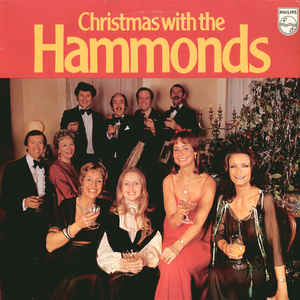
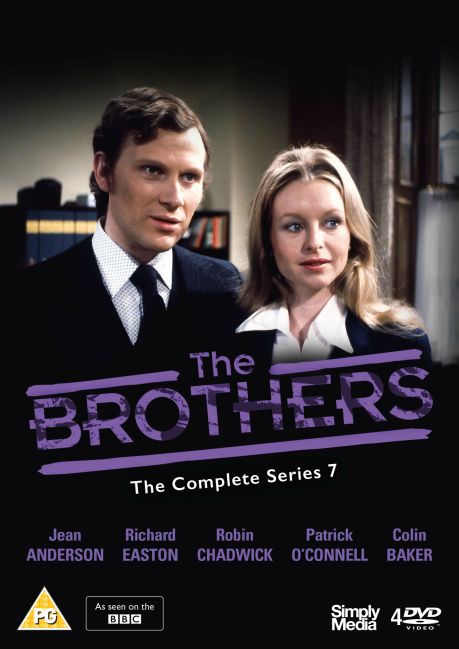
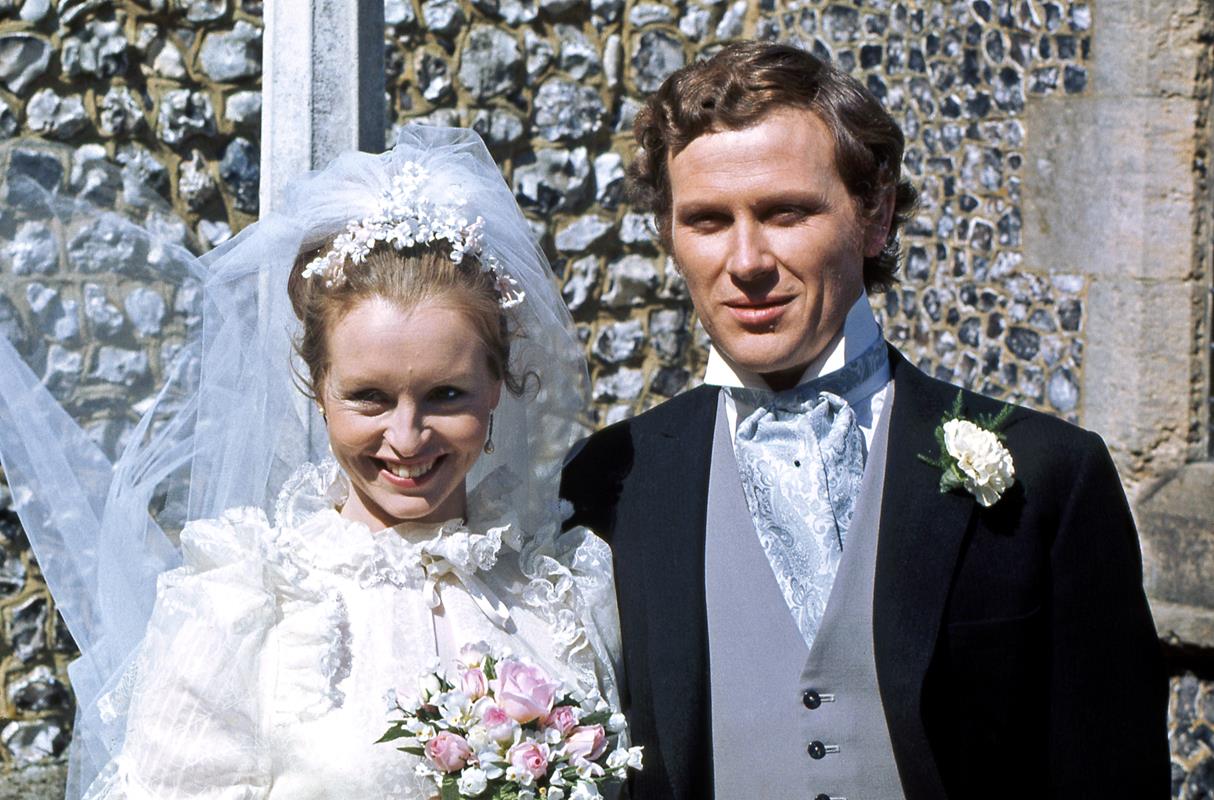
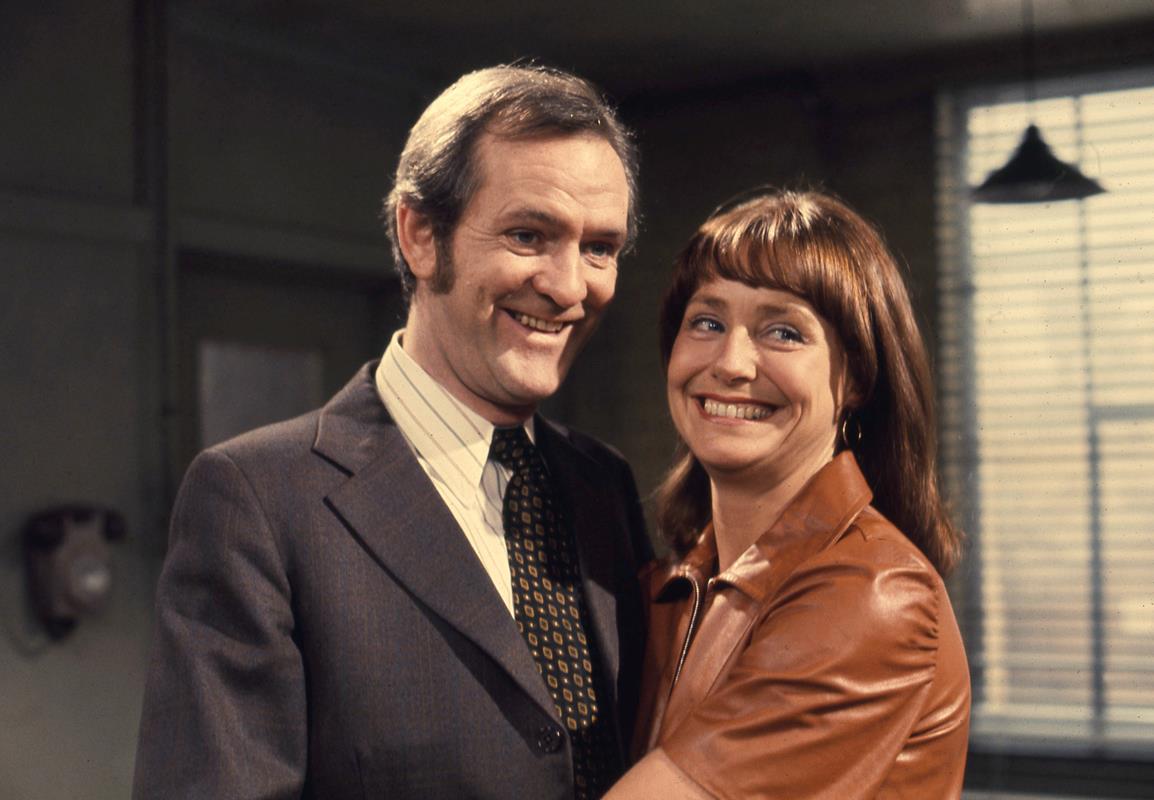
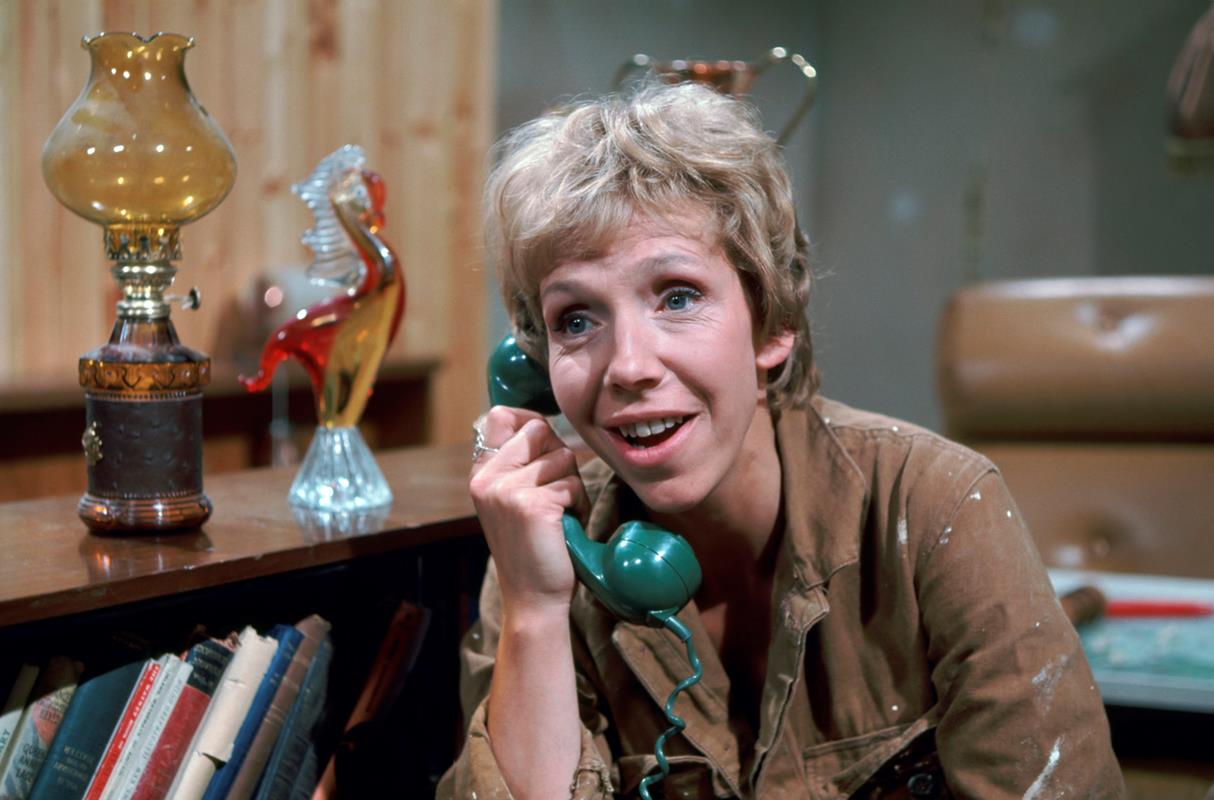
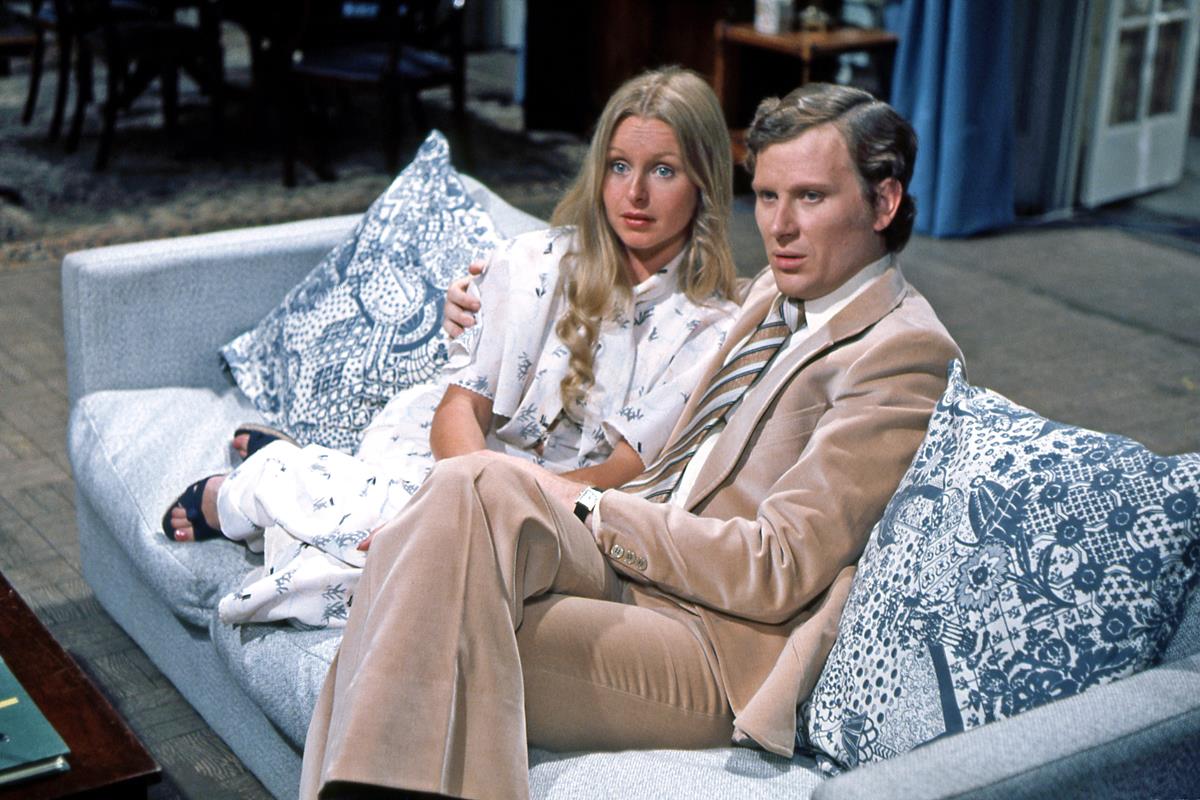
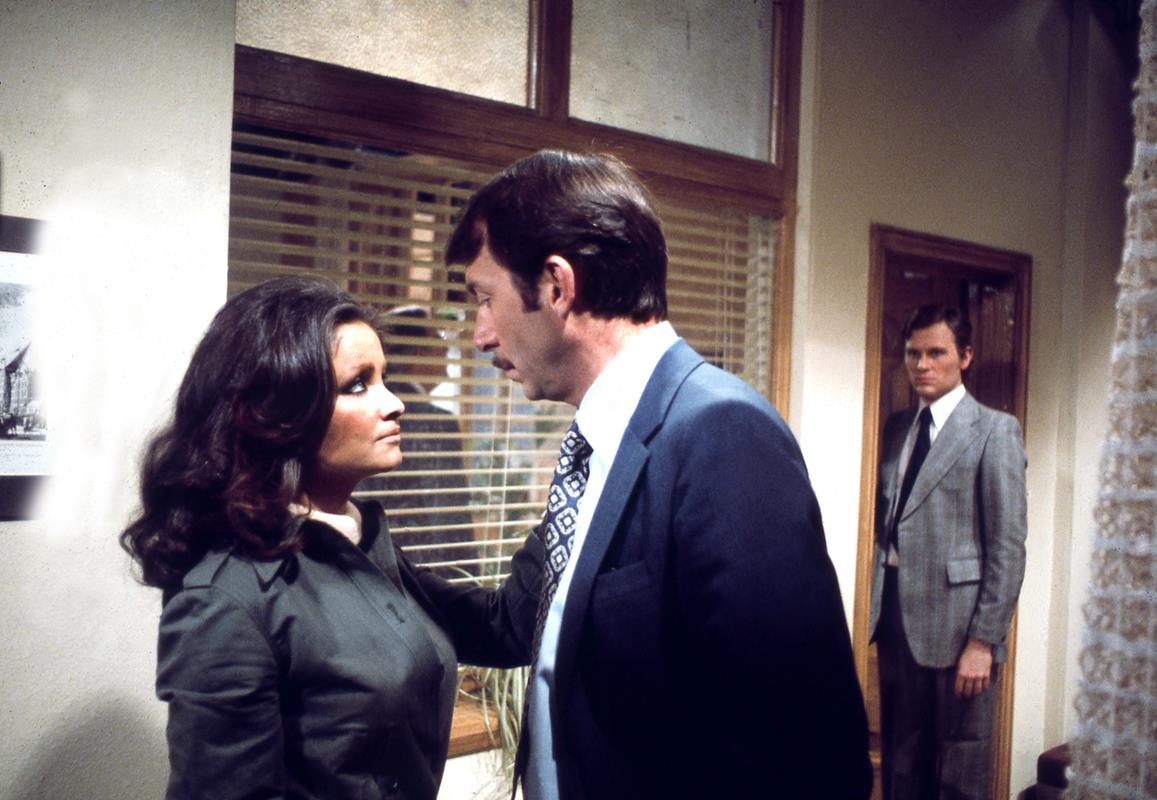
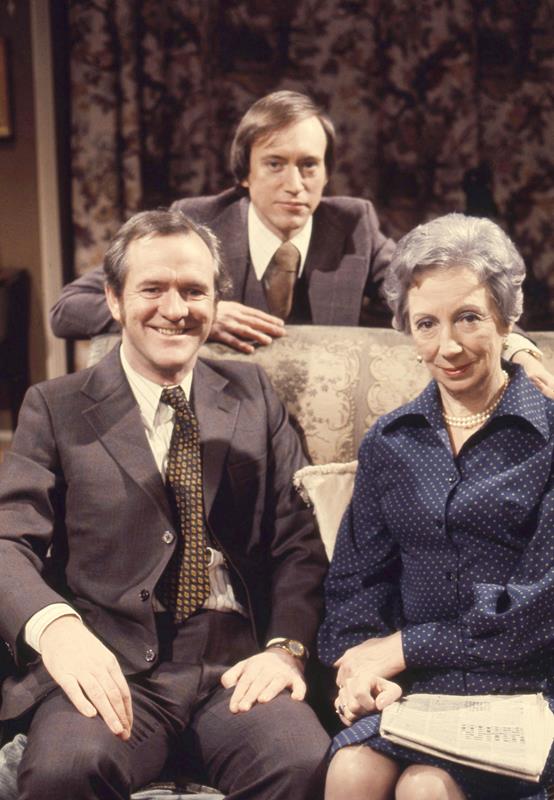


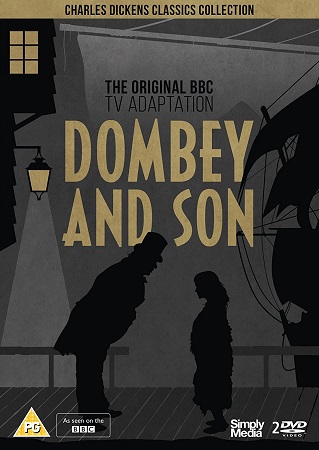

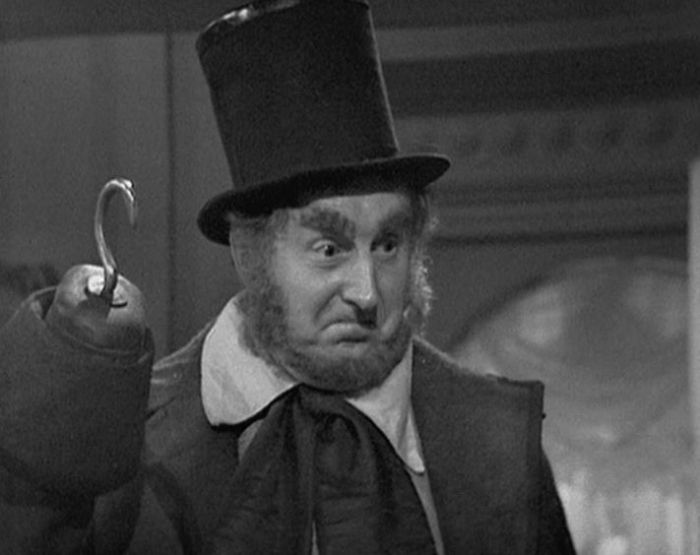
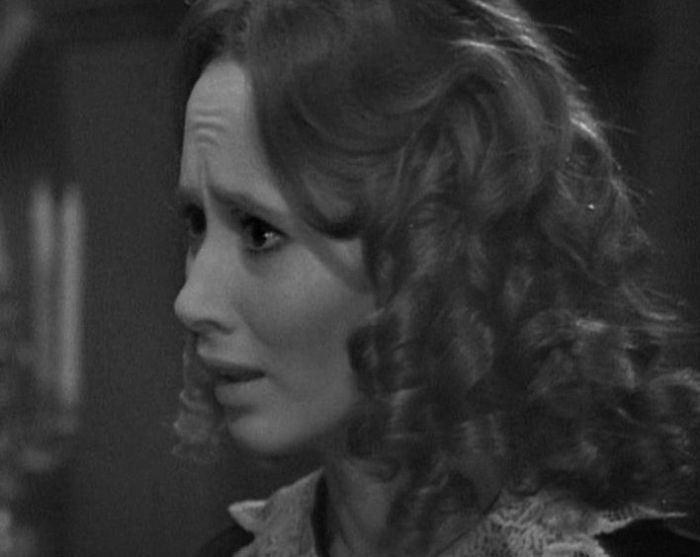
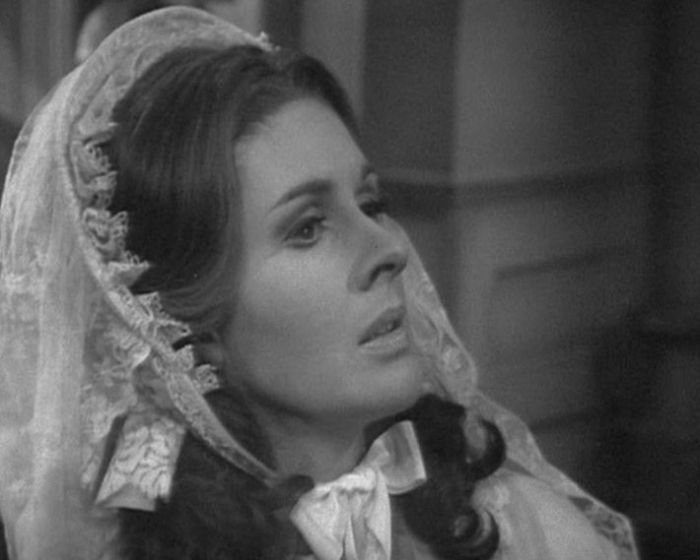
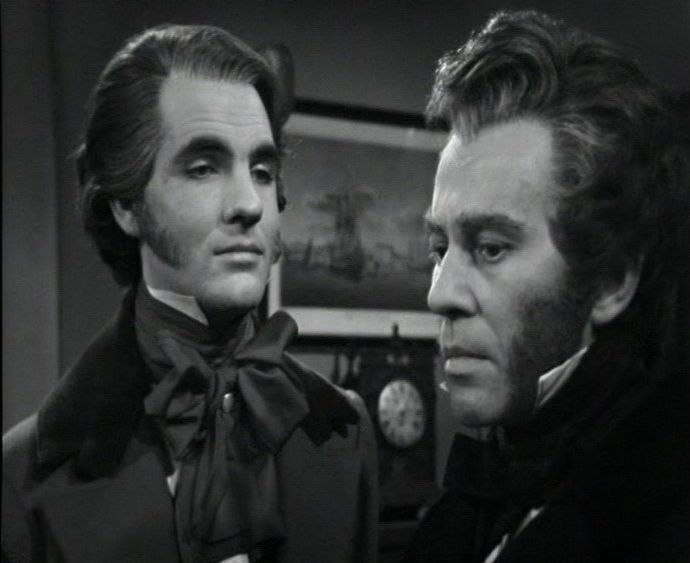


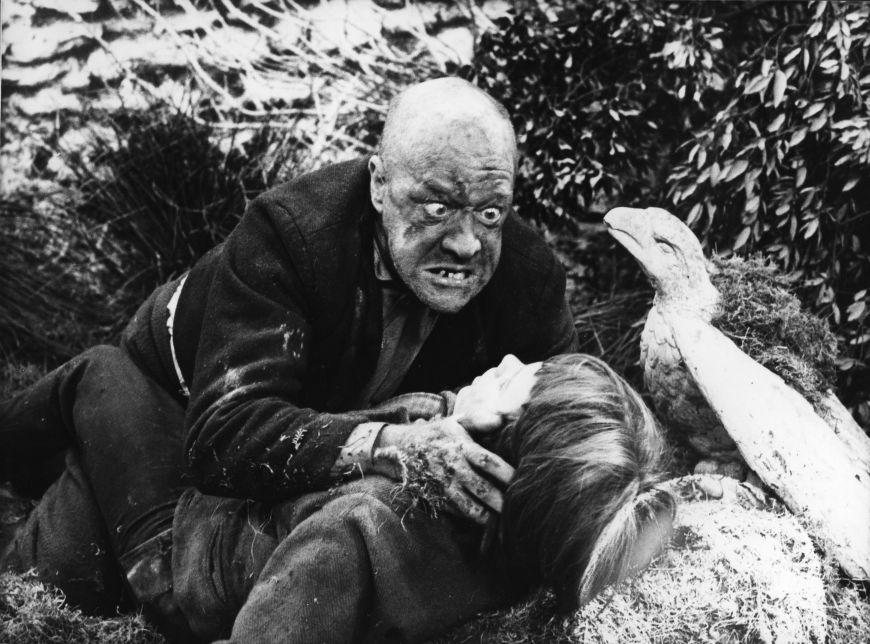
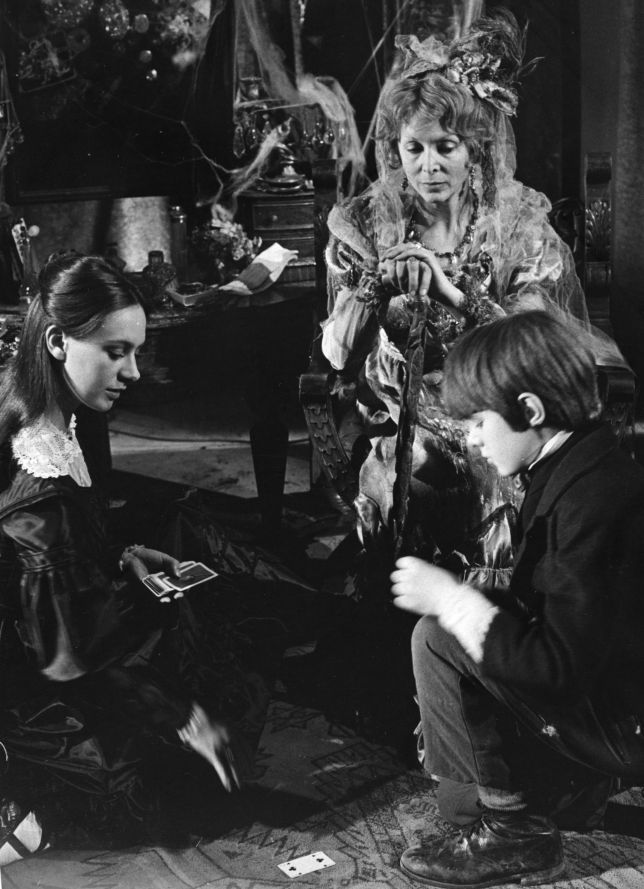
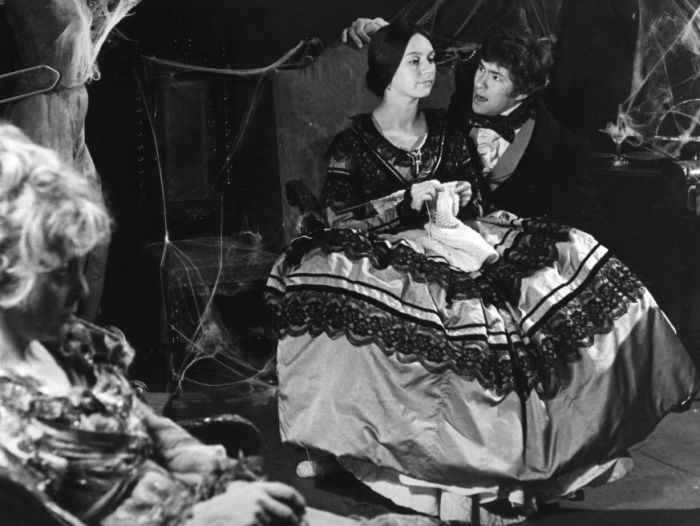


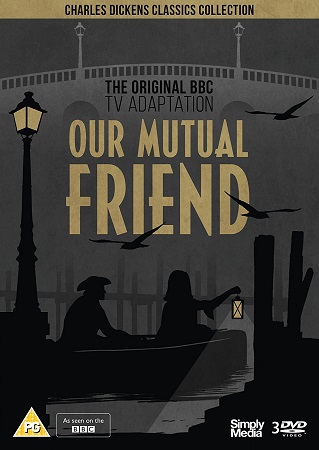
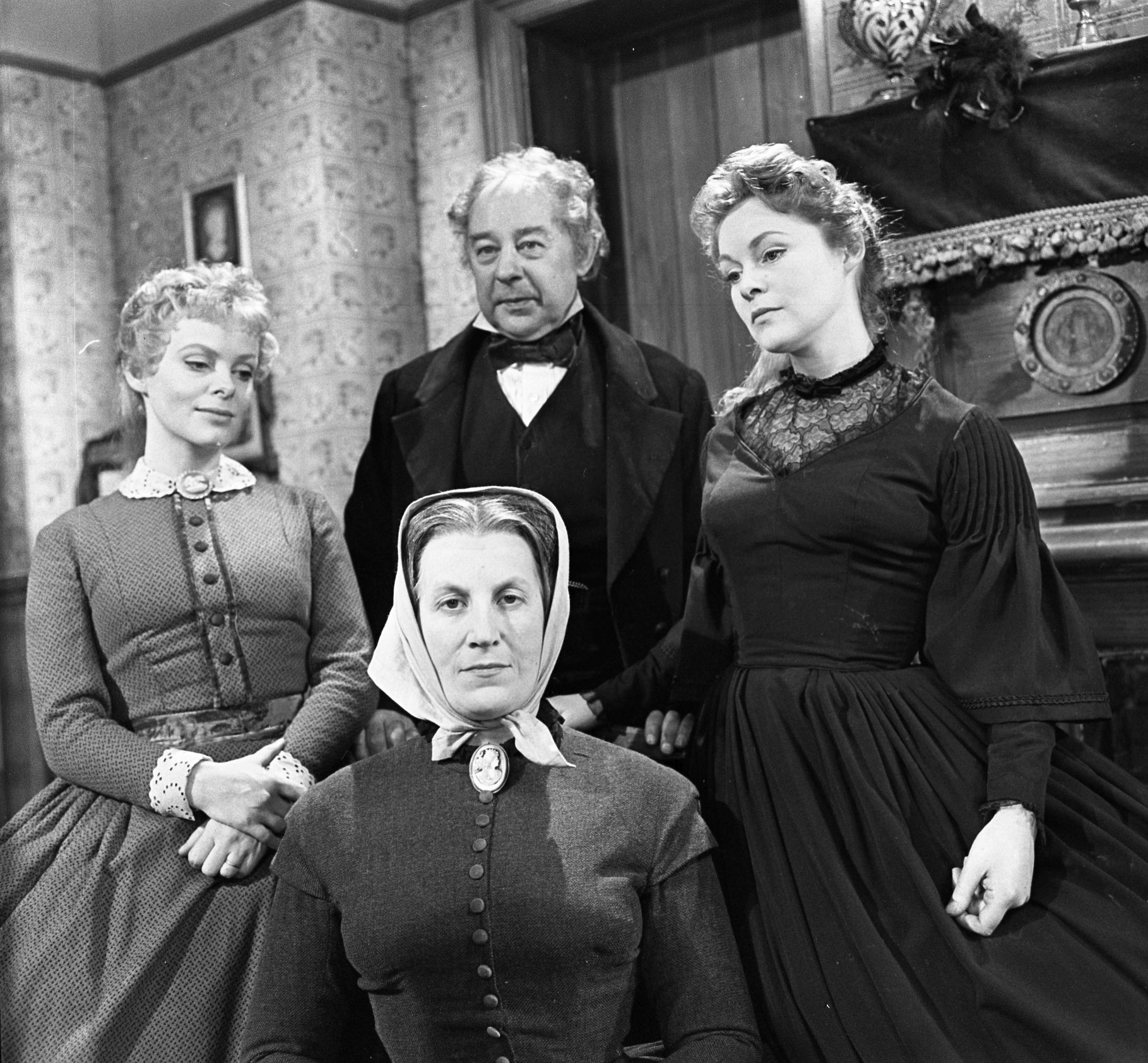
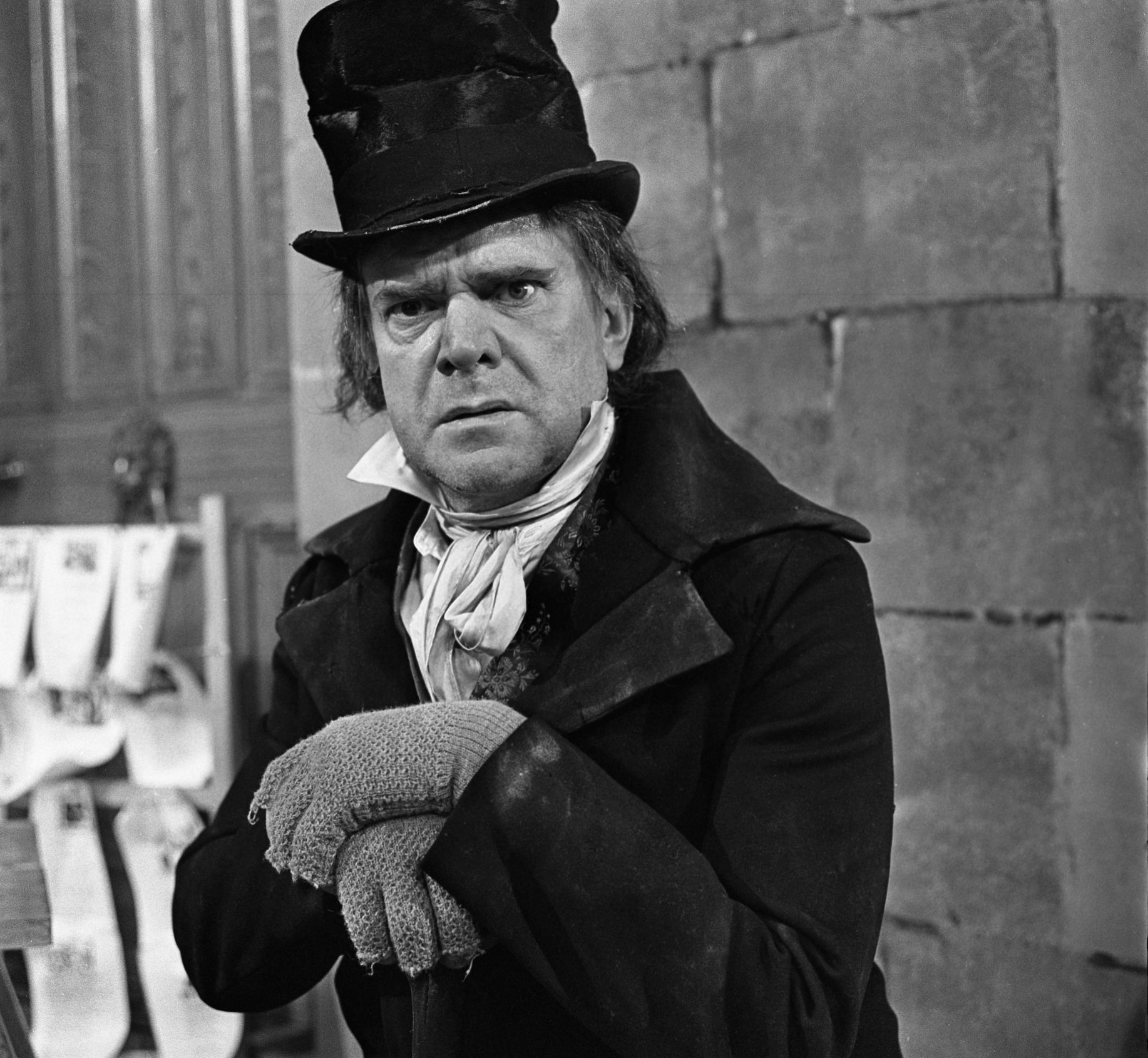
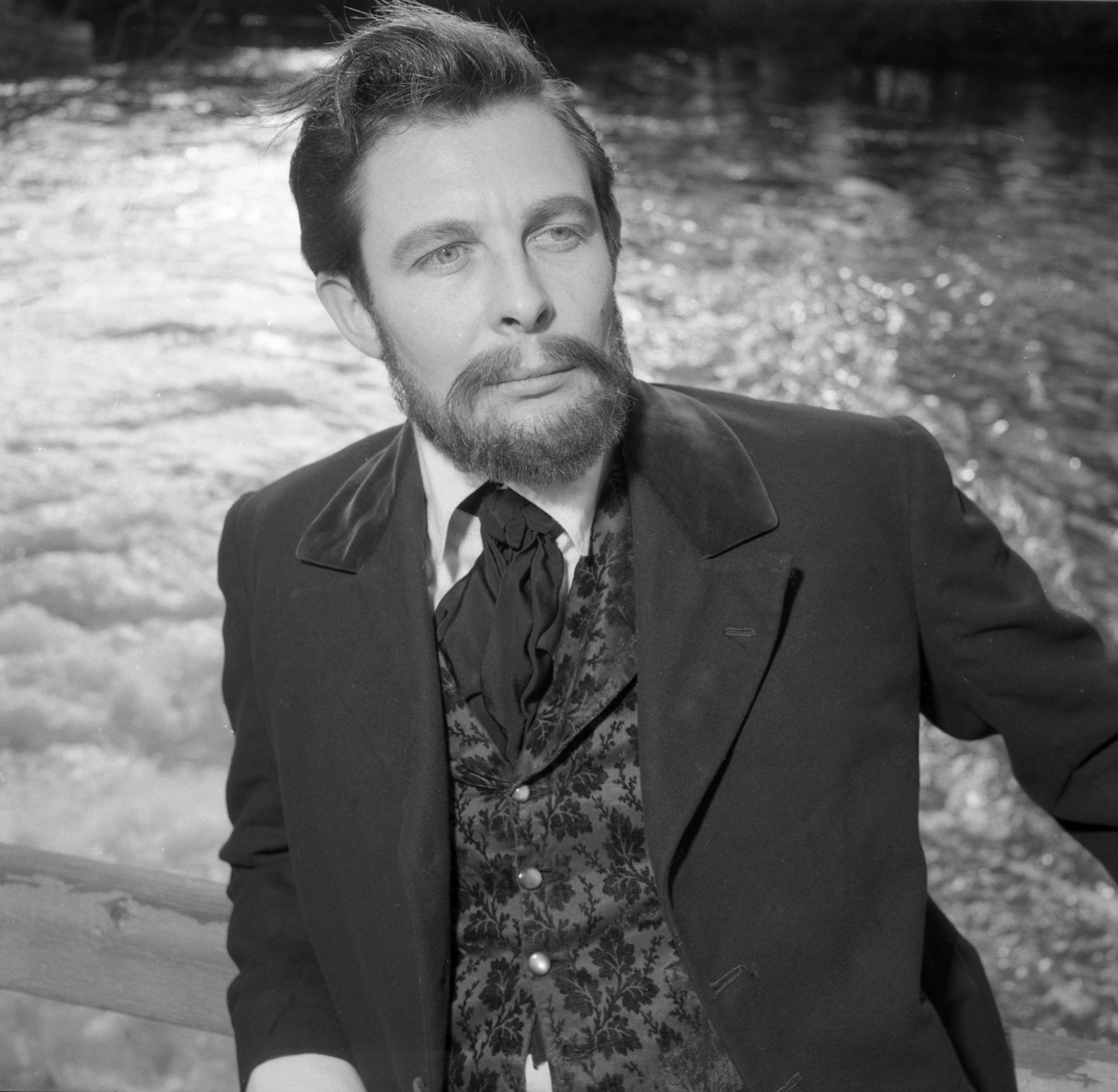
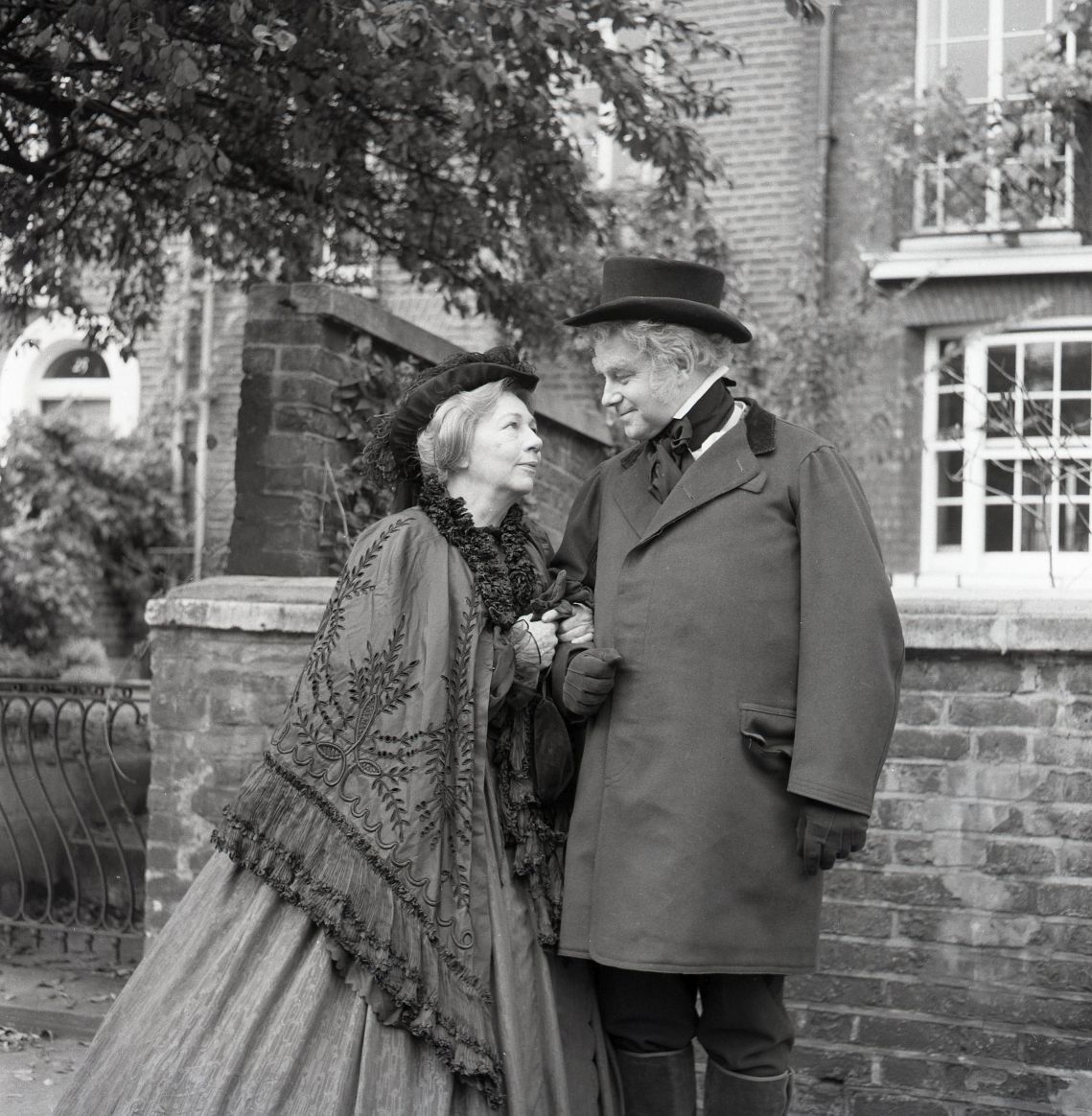
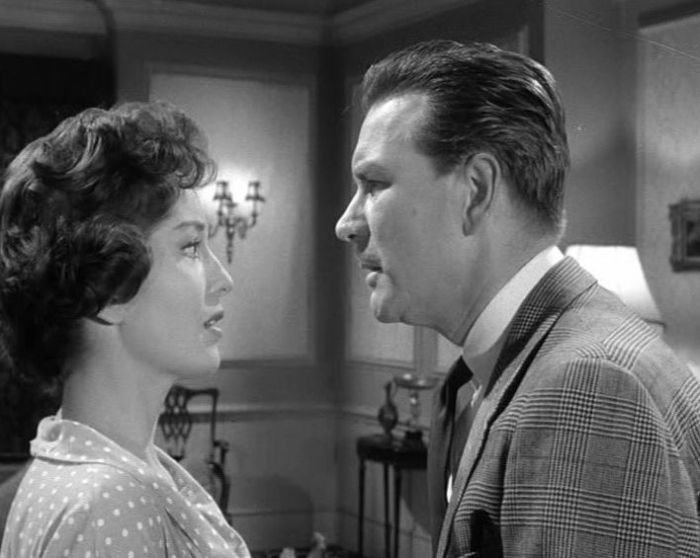
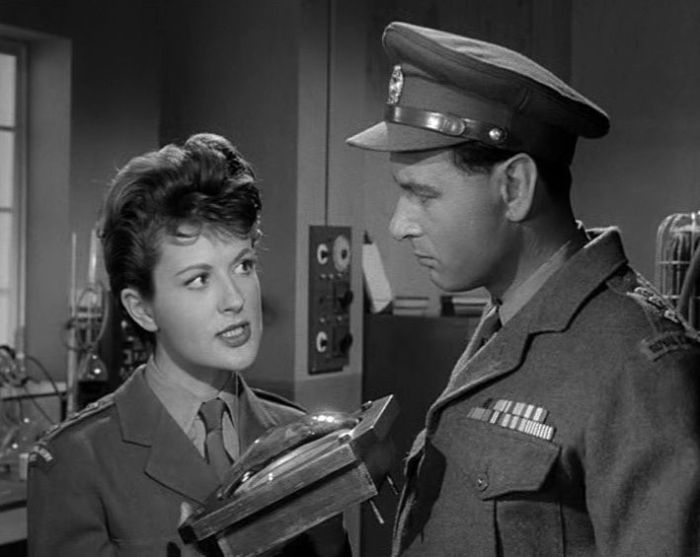
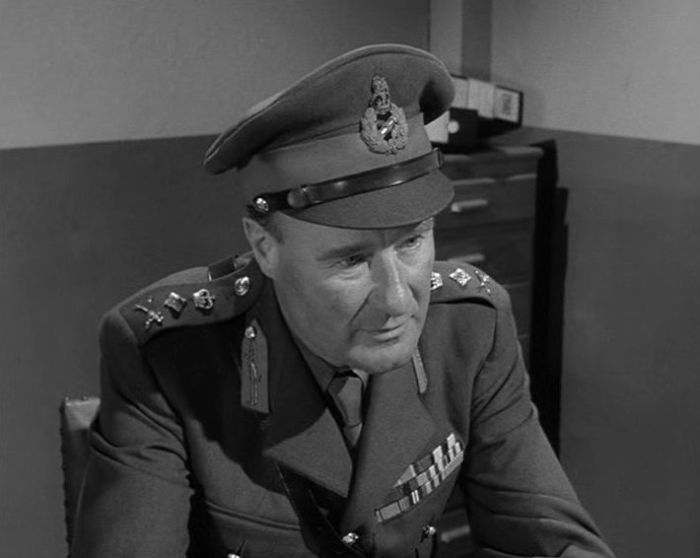
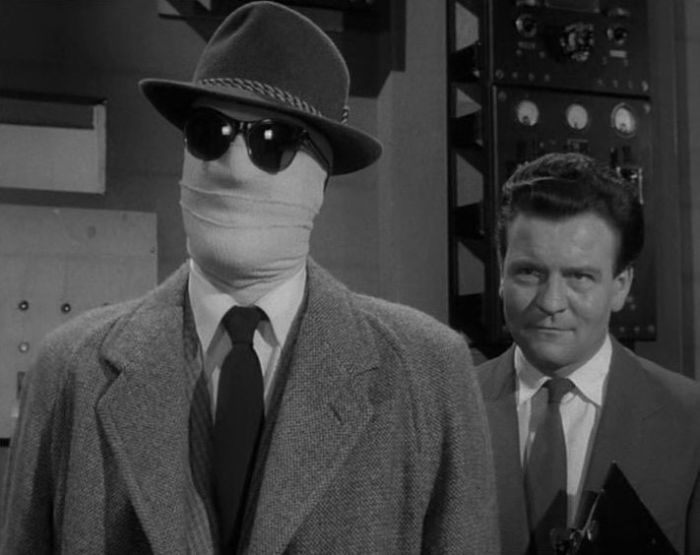
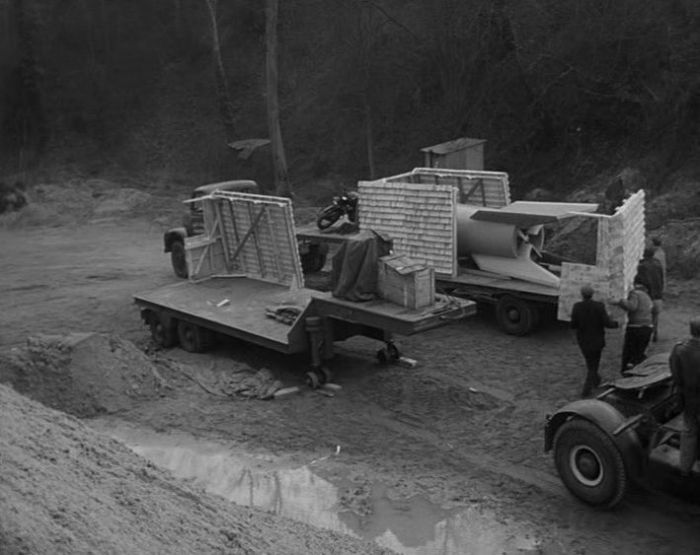
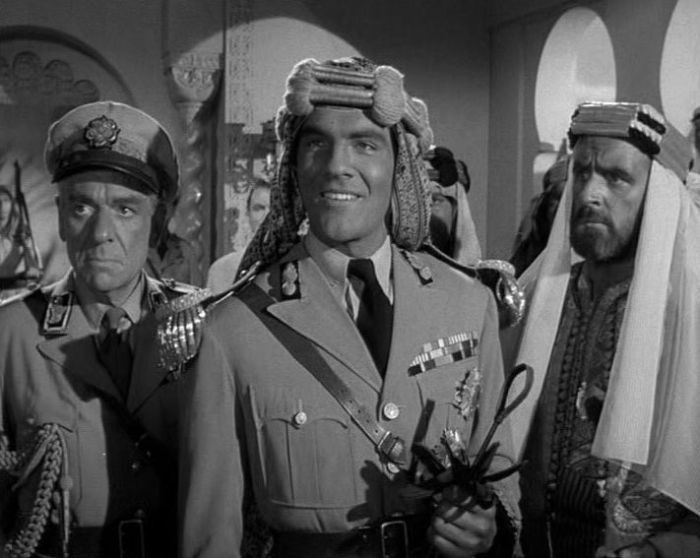
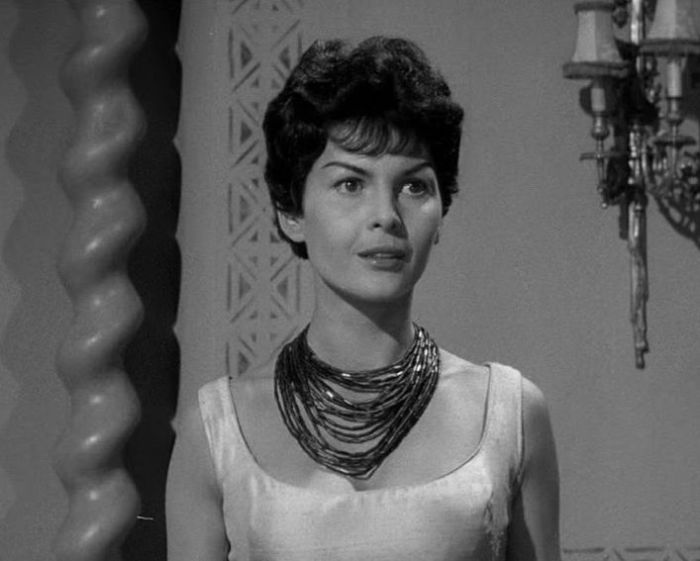
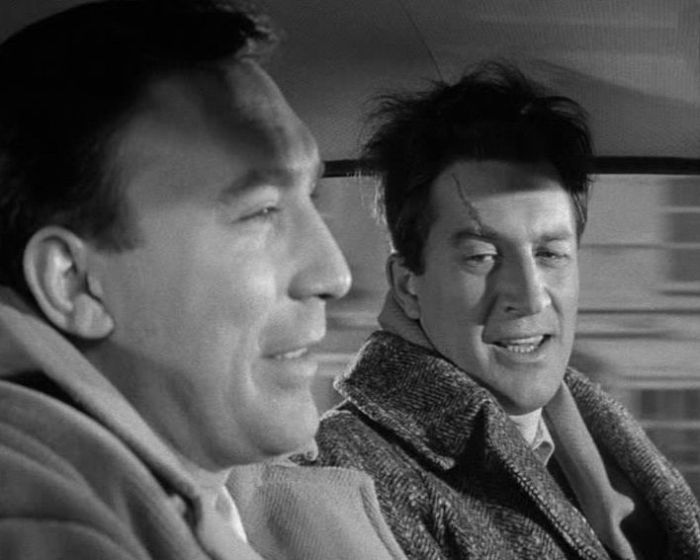
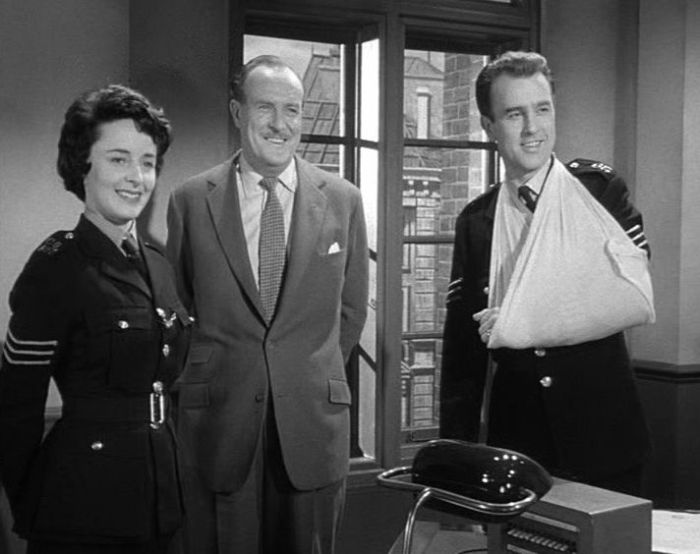
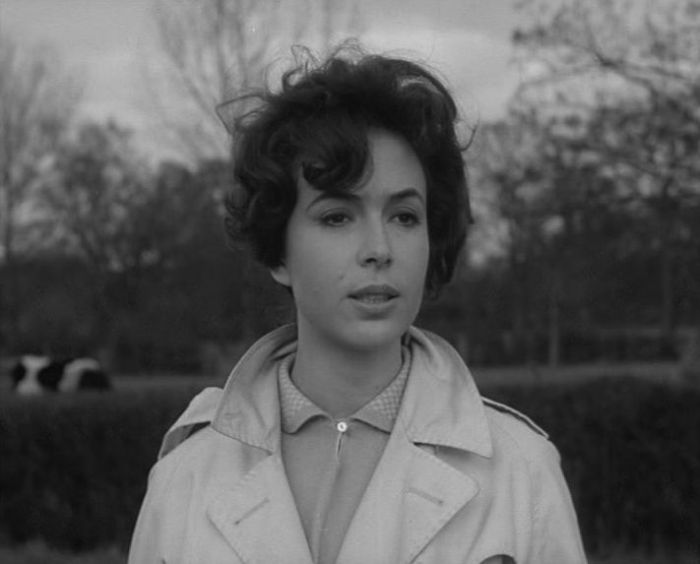
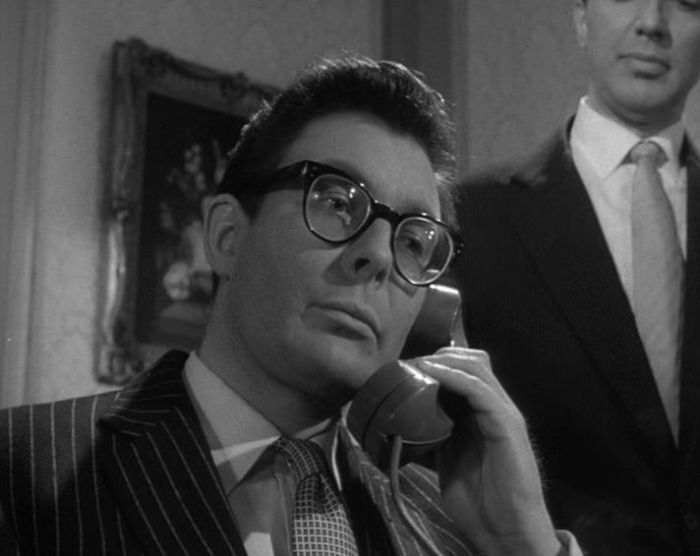
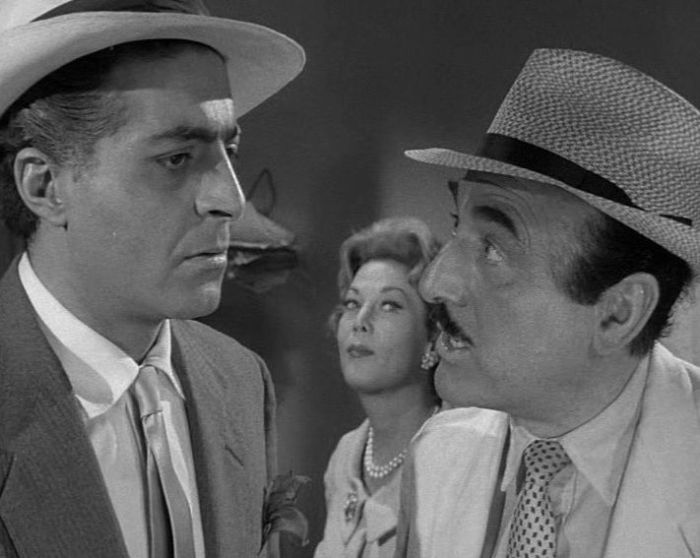
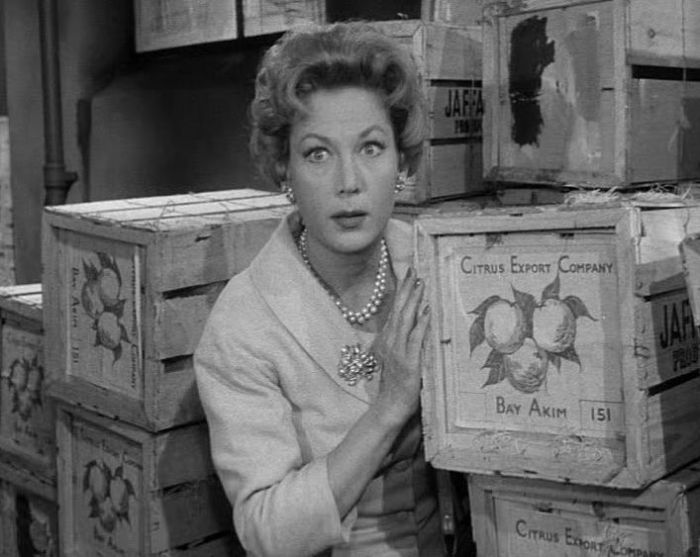
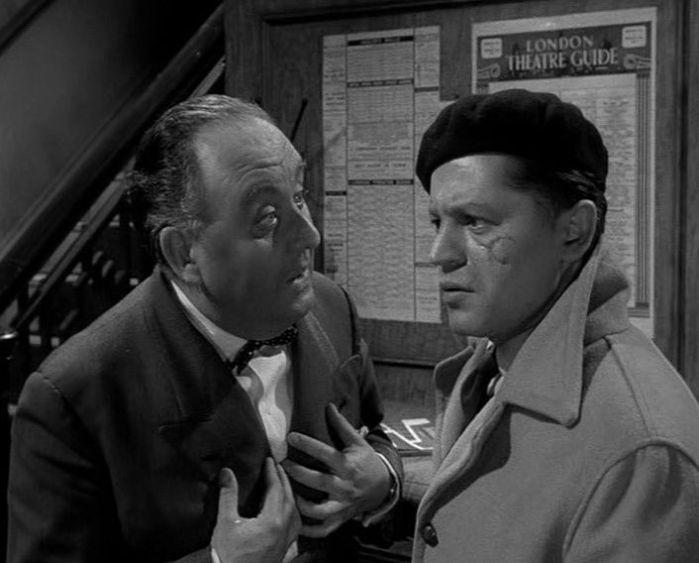
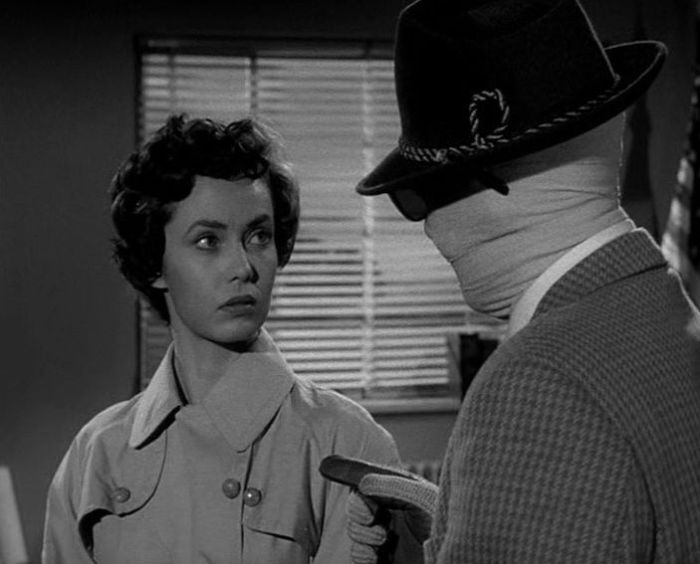
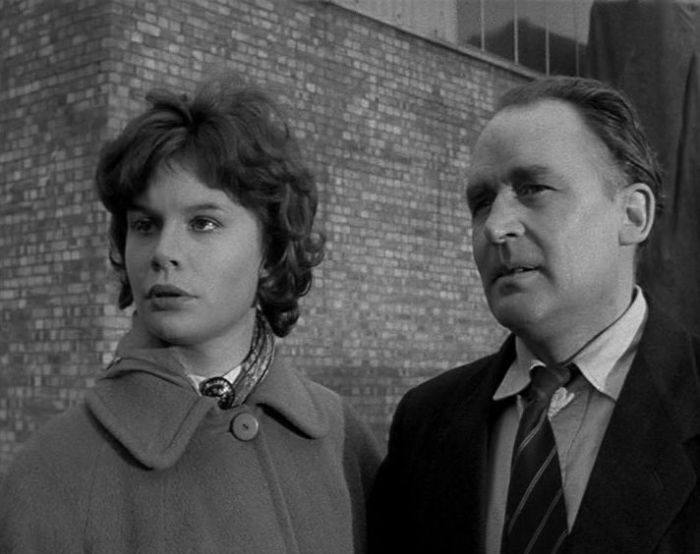
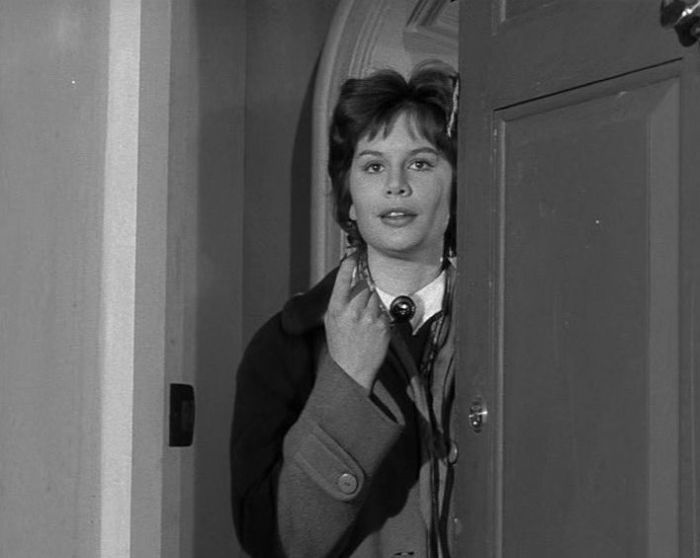
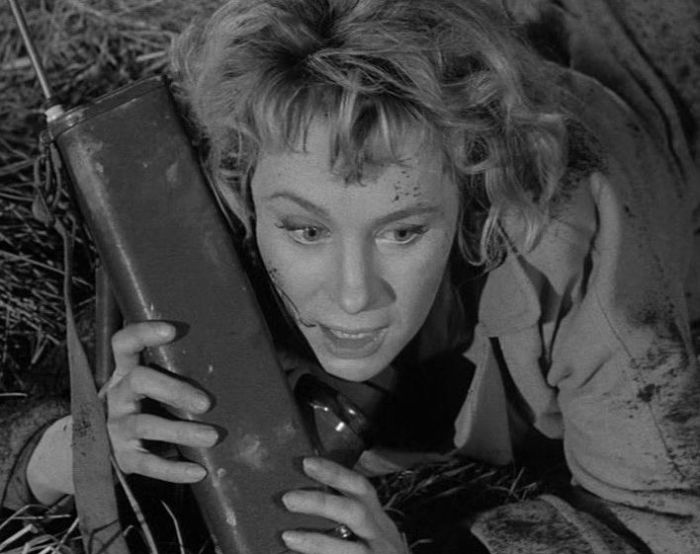
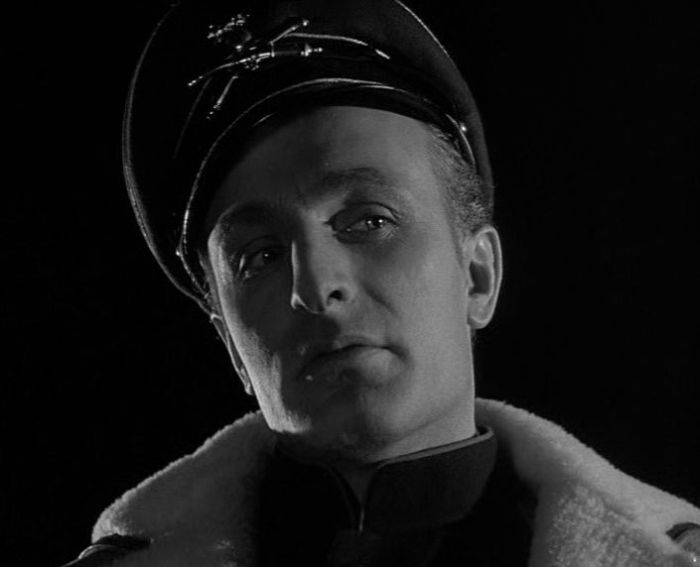
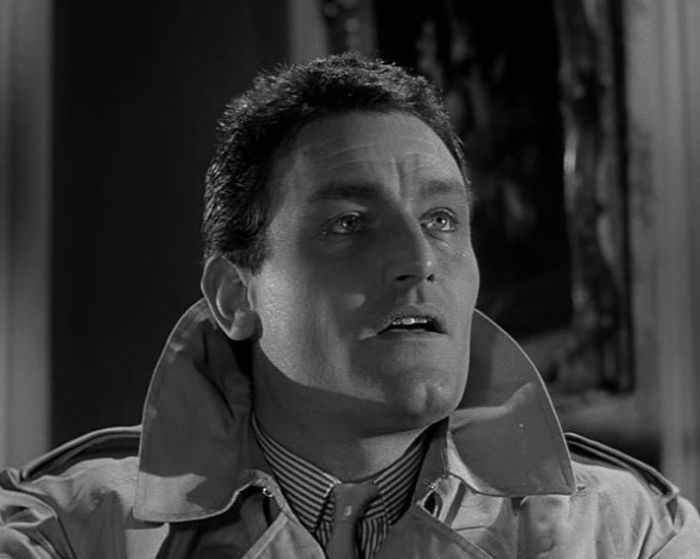
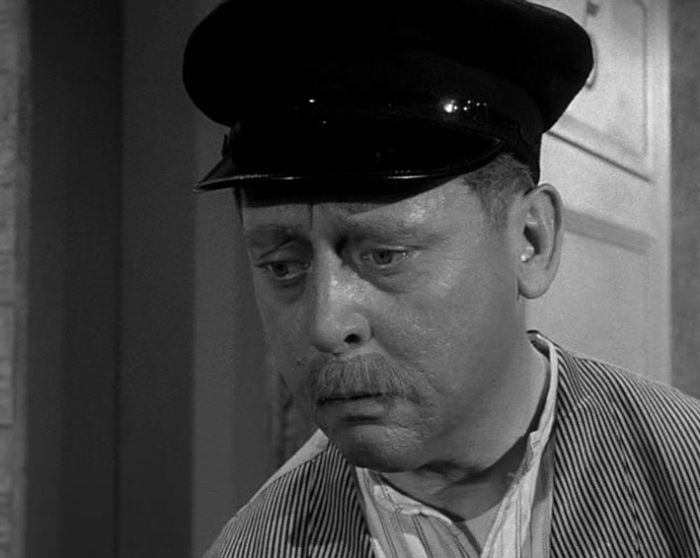
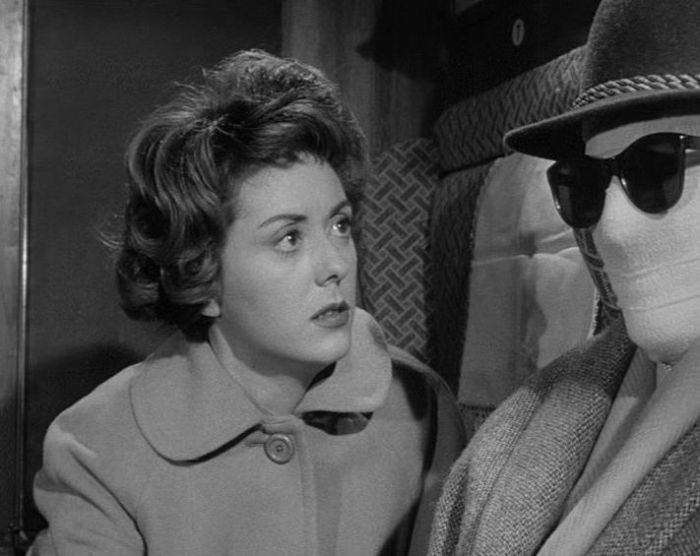
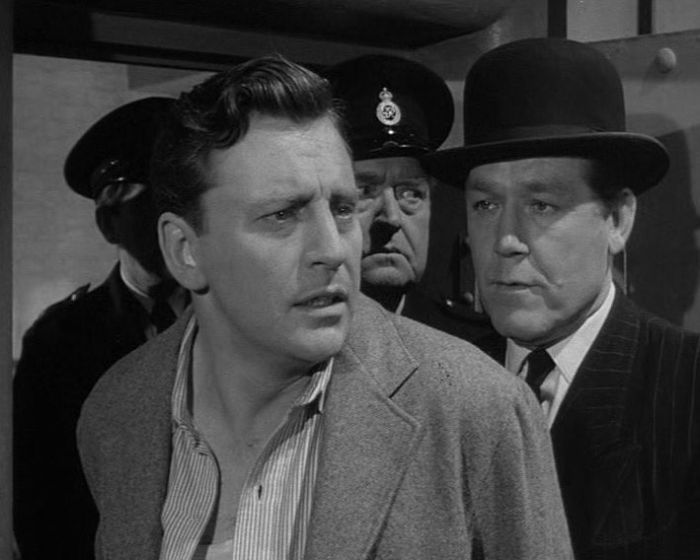
 Archive Television Musings