Back to November 1982 (27th November 1982)

There’s only a few options available to me today, but luckily they’re all more than decent.

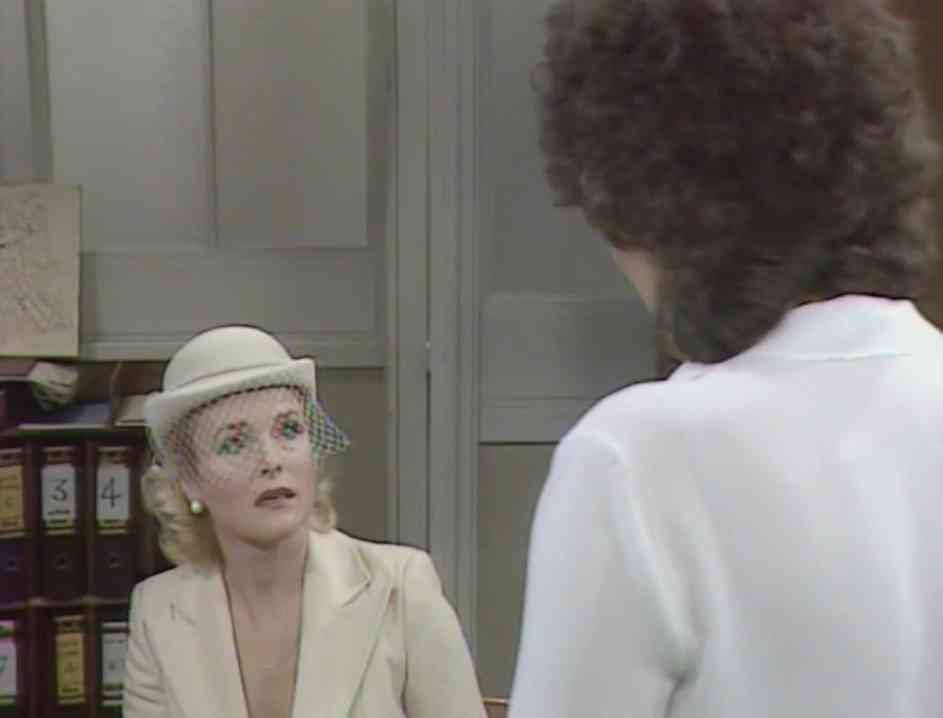
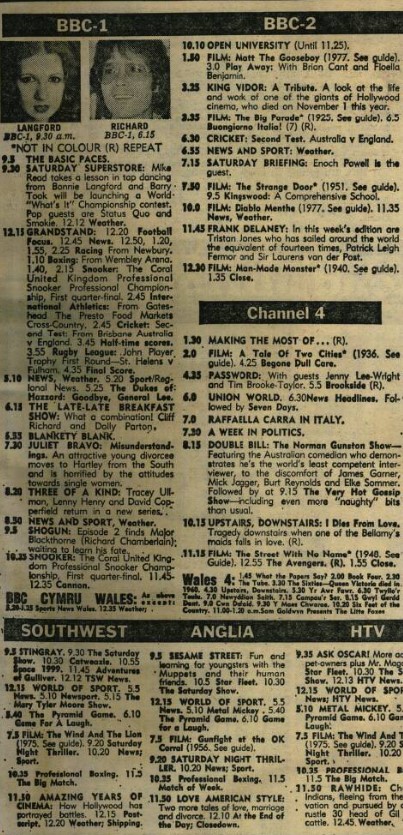
First there’s Juliet Bravo on BBC1.  JB is an interesting series. Its countryside setting and early Saturday evening timeslot has tended to see it retrospectively labelled as a cosy type of show (similar to the later Heartbeat) but that’s not really the case at all. And although it was created by Ian Kennedy Martin, the show couldn’t be further removed from the frenetic swagger of The Sweeney.

Instead, JB tended to tell bleak and unsettling character stories which are far removed from what we think of today as typical Saturday evening programming. Misunderstandings by Valerie George (her sole script for the series) is an excellent example of this, featuring strong guest performances (especially from Valerie Georgeson).

Repeats will have to suffice for the rest of today’s viewing. They’re both on C4 – first Upstairs Downstairs and then The Avengers. If you’re feeling a little down after Juliet Bravo, then I Dies From Love isn’t going to cheer you up. But it’s a powerful script by Terence Brady and Charlotte Bingham, featuring a heartbreaking performance from Evin Crowley as the doomed scullery maid Emily.

Happily, we’ll be rounding off the evening on a lighter note. The Hidden Tiger is this week’s Avengers repeat. I find that the colour Diana Rigg series can get a little monotonous if watched too quickly, but dipping in and out you’ll almost always find something of interest. Today, Ronnie Barker and Gabrielle Drake are amongst the guest artists, so that bodes well.

Back To November 1982 (26th November 1982)

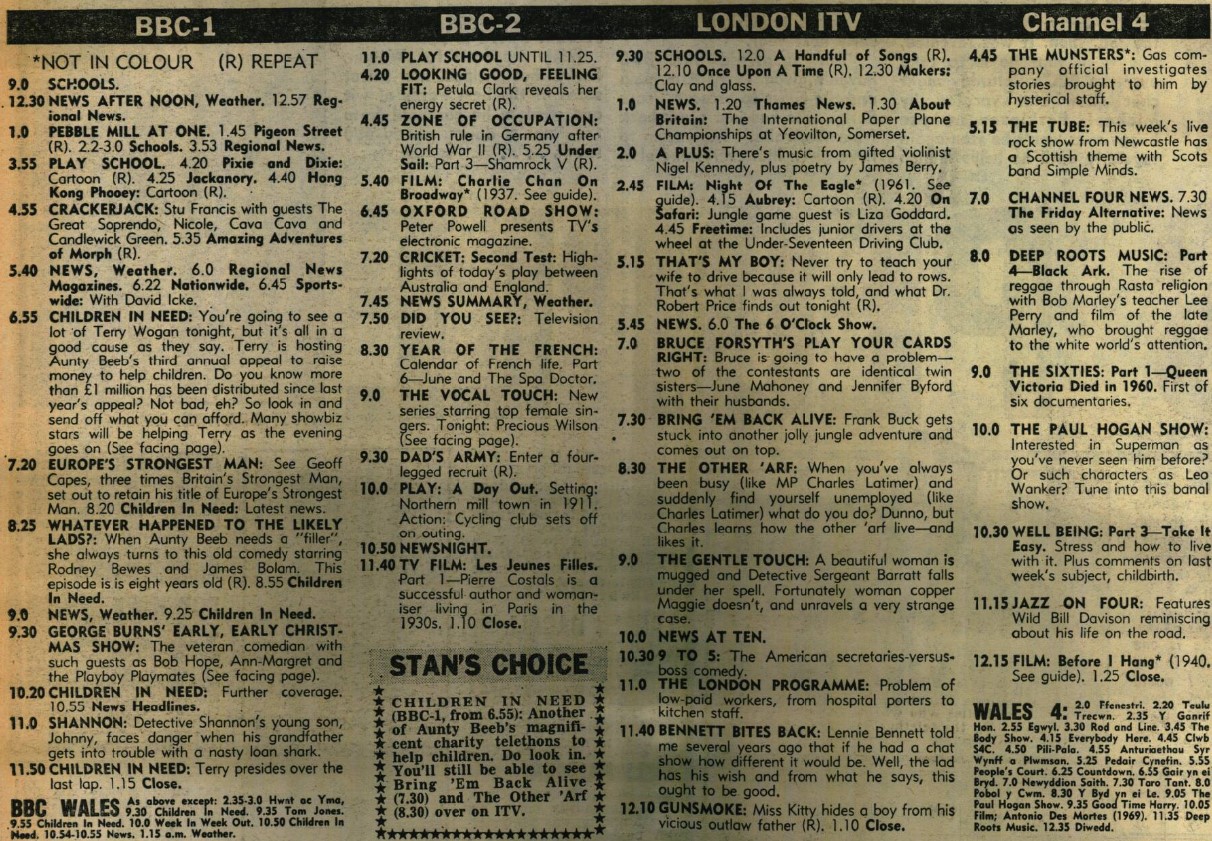
We’re back in the days when Children In Need didn’t dominate the entire BBC1 evening schedule. Indeed, it’s surprising just how little coverage there is (less is more, maybe?). From the available programmes, I’ll be taking Whatever Happened To The Likely Lads? 

Whenever I tweet something about the series, you can guarantee that someone will pop up to tell me that nasty old James Bolam blocked any repeats. But there’s no evidence of this (indeed, the fact that the Daily Mirror’s Stan bemoans the fact that WHTTLL? is often dug out as a schedule filler rather proves the opposite).

There’s another old sitcom repeat on BBC2 (Dad’s Army). The series wasn’t quite as obliquitous in re-runs during the early eighties, which meant that this was probably when I saw a lot of these episodes for the first time. Today’s offering is Man Hunt from 1969, not a stellar episode, but it’ll still pass thirty minutes very agreeably.

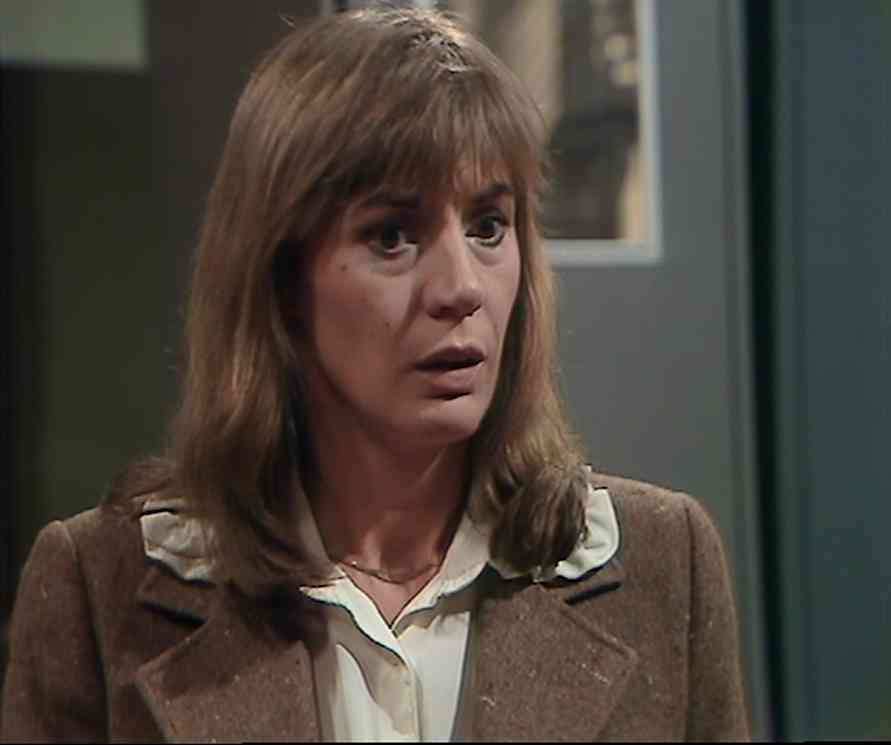
Finally there’s a new programme to enjoy. ITV at 9.00 pm is Gentle Touch time. P.J. Hammond is scripting, which is the guarantee for an odd and unsettling fifty minutes (today’s ep features a very effective guest turn from Sheila Gish as Adela Baker).

Network’s Greatest Hits

I was very sorry to hear that Network’s founder, Tim Beddows, recently passed away at the very early age of 59 (click here for more info). The fact that I have multiple shelves groaning with Network’s DVDs is testament to just how much this one company has been responsible for developing my appreciation for archive television over the past few decades.

Network have always been a company that’s delighted in championing the obscure, which is one of the main reasons why I love them.  Their archive television releases may have slowed down in recent years, but you can never guess what might pop up next. Give Us A Clue, for example. I wasn’t expecting that, but I’ll certainly take it.

What follows is a quick list of just a few of my favourites from their back catalogue – some were titles new to me, others were ones where I was happy to upgrade from VHS to DVD (or BD). Let’s dive in ….

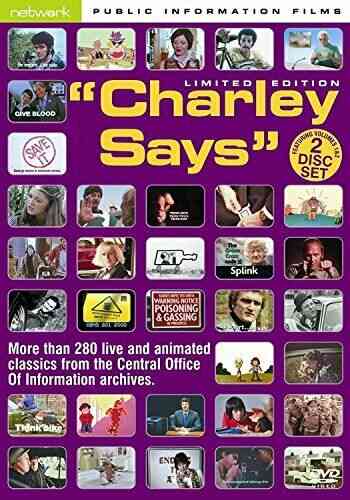
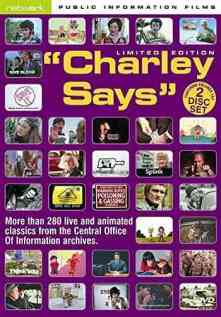
Charley Says

This might very well have been the first Network DVD I bought, certainly it was one of the earliest. I do remember that the original pressing had a rather eccentric menu selection page, meaning that selecting a specific PIF was something of a challenge. Thankfully, some years later the disc was repressed with a bonus second volume, and this is the one that I keep returning to on a regular basis.

Public Eye

I loved the early years of Network, which saw a regular stream of releases that I had no prior knowledge of (but was more than happy to take a chance on). More often than not, as with Public Eye, I came up trumps. For some reason the repeats back in the day totally passed me by, but from the first episode I saw (Welcome to Brighton?) I was hooked.

Sergeant Cork

This was another, equally obscure series to me (and I guess to most of the target audience). Series one was another blind buy, but again it was money well spent and Cork now ranks as one of my favourite 1960’s drama series. A production line series, with episodes churned out regularly over several lengthy periods, it’s slightly astounding that the quality always remained so high. And the fact that every episode was eventually located is another miracle for a drama series of this era. If you haven’t seen it, then I’d heartily recommend it.

Gideon’s Way

Thanks to Network, I’ve a large chunk of ITC’s film series output. I remain very fond of the big hitters (like The Saint) but equally I’ve a lot of time for shows like Gideon’s Way. More kitchen-sink than ITC’s usual crime shows (although the series lacked the dark edge found in John Creasey’s novels) it’s another series which has withstood multiple rewatches.

Crown Court

When I bought volume one of Crown Court, I didn’t really imagine I’d be that interested in picking up any further releases. Like many, I had dim memories of the series from times spent at home as a child (either from being sick or at half term) and assumed that this first release would be enough to quench my thirst. Wrong! The quality of the scripting and acting came as a real surprise and I hungrily snapped up the subsequent seven releases. I still pine today for further DVDs. Maybe one day.

There are so many others bubbling under this top five list – Sunday Night at the London Palladium, The Beiderbecke Trilogy, The Plane Makers, The Power Game, The Main Chance, Callan, Special Branch, Redcap, Star Cops, The Feathered Serpent, Sykes, Sez Les, etc, etc.

If there’s any I’ve missed (and I’m sure there’s plenty) please feel free to leave a comment below.
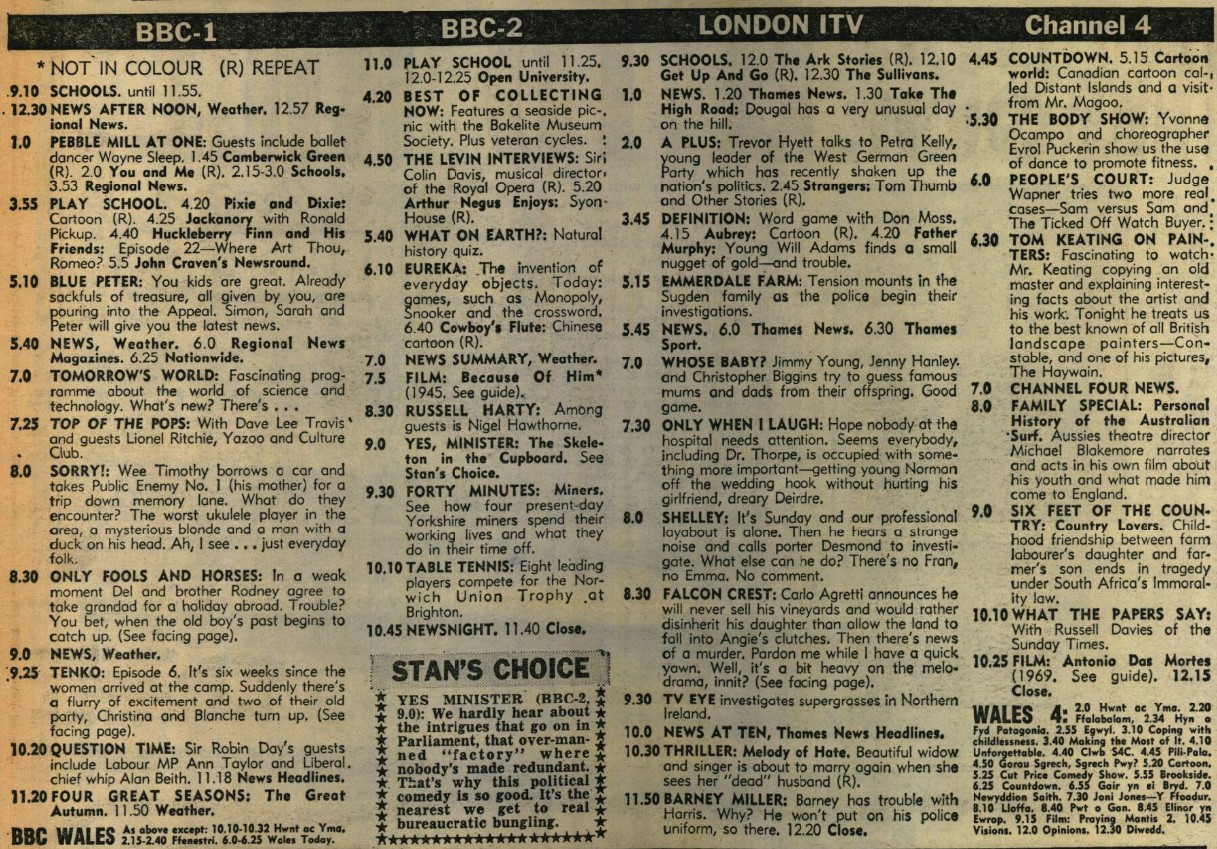
Back to November 1982 (25th November 1982)

I’ll be kicking off the evening with TOTP. Not a classic edition but studio performances by Talk Talk (Talk Talk) and A Flock of Seagulls (Wishing If I Had a Photograph of You) ensure that it’s not a total write-off.

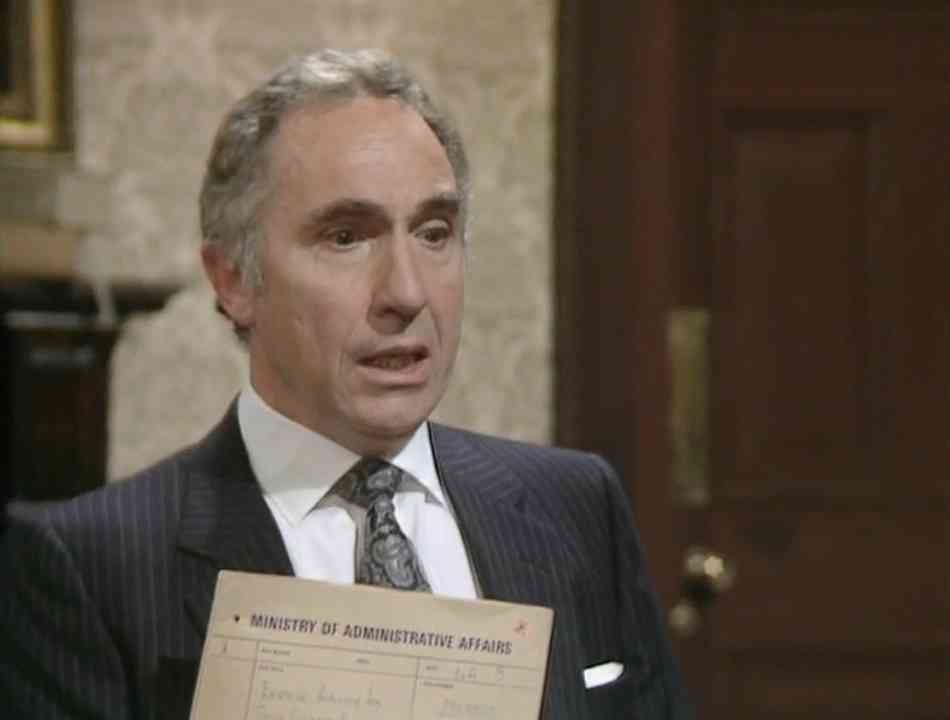
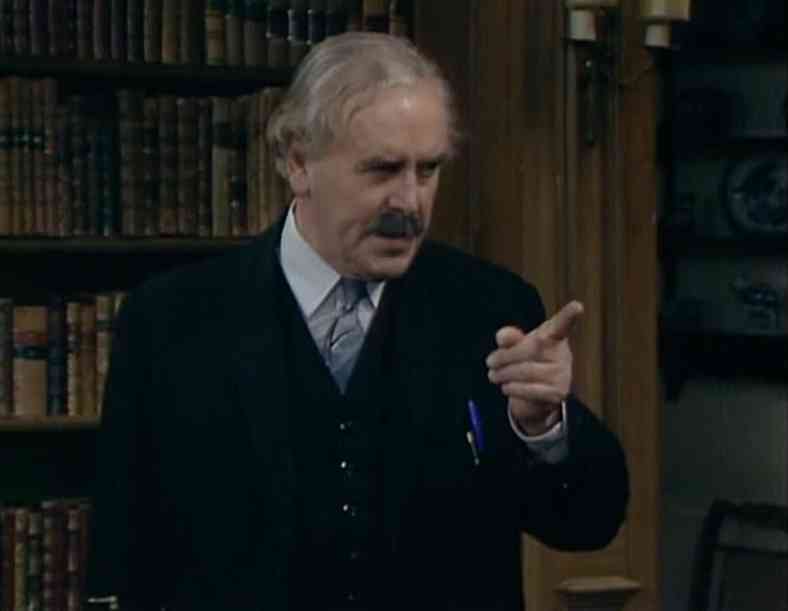
From then on, it’s sitcoms all the way. There’s an embarrassment of riches tonight, beginning with Only When I Laugh and Shelley on ITV. Then it’ll be over to BBC1 for Only Fools and Horses before the highlight of the evening (both mine and Stan’s) which is Yes Minister on BBC2.

Tonight’s episode is The Skeleton in the Cupboard and offers Jim the satisfaction of gaining the upper hand over Sir Humphrey. The episode has two plotlines which are only tenuously connected (either could have worked just as well in another episode without the other) but when there’s so many quotable lines flying about, I’m not too concerned about plotting. To give just two examples ….

Sir Humphrey Appleby: If local authorities don’t send us the statistics that we ask for, then government figures will be a nonsense.
Jim Hacker: Why?
Sir Humphrey Appleby: They will be incomplete.
Jim Hacker: But government figures are a nonsense anyway.
Bernard Woolley: I think Sir Humphrey want to ensure they are a complete nonsense.

Jim Hacker: Bernard, how did Sir Humphrey know I was with Dr. Cartwright?
Bernard Woolley: God moves in a mysterious way.
Jim Hacker: Let me make one thing perfectly clear: Humphrey is not God, OK?
Bernard Woolley: Will you tell him or shall I?

The first storyline concerns a local council which has attracted Sir Humphrey’s ire (because they never send their paperwork back to the DAA). This hasn’t stopped them from becoming the most efficient council in the country though, but that’s something which cuts no ice with a bureaucratic mandarin like Sir Humphrey.

Jim is reluctant to censure the council simply because they can’t fill in forms, but he’s pressured by Sir Humphrey to do so. Jim seems to have no choice, but then a gift (evidence of Sir Humphrey’s incompetence from thirty years ago) is dropped into his lap. This is the cue for some exquisite squirming from Nigel Hawthorne as he reluctantly confesses all (equally good as ever, of course, is Paul Eddington as we see Jim delight in twisting the knife).

It’s difficult to say that Hawthorne didn’t deserve the four BAFTAs he won for Yes Minister and Yes Prime Minister, but it’s a bitter irony that Paul Eddington had to lose out to his colleague on each occasion (in the years that Hawthorne won, Eddington was always also nominated). If Jim and Sir Humphrey were a double act, then you could say that Eddington tended to play the feed at times (but though he had the less showy role, he was always excellent value). Indeed, one of the pleasures of rewatching the series is simply to appreciate just how good they both were.

Back to November 1982 (24th November 1982)

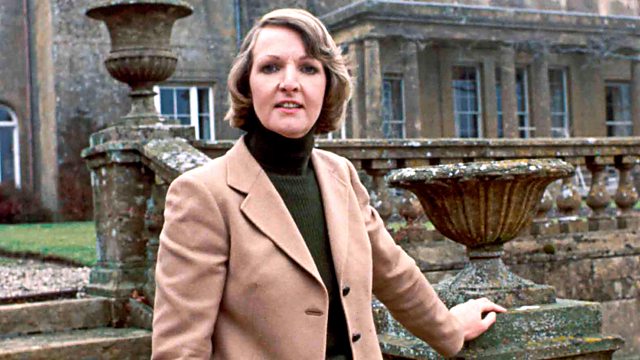
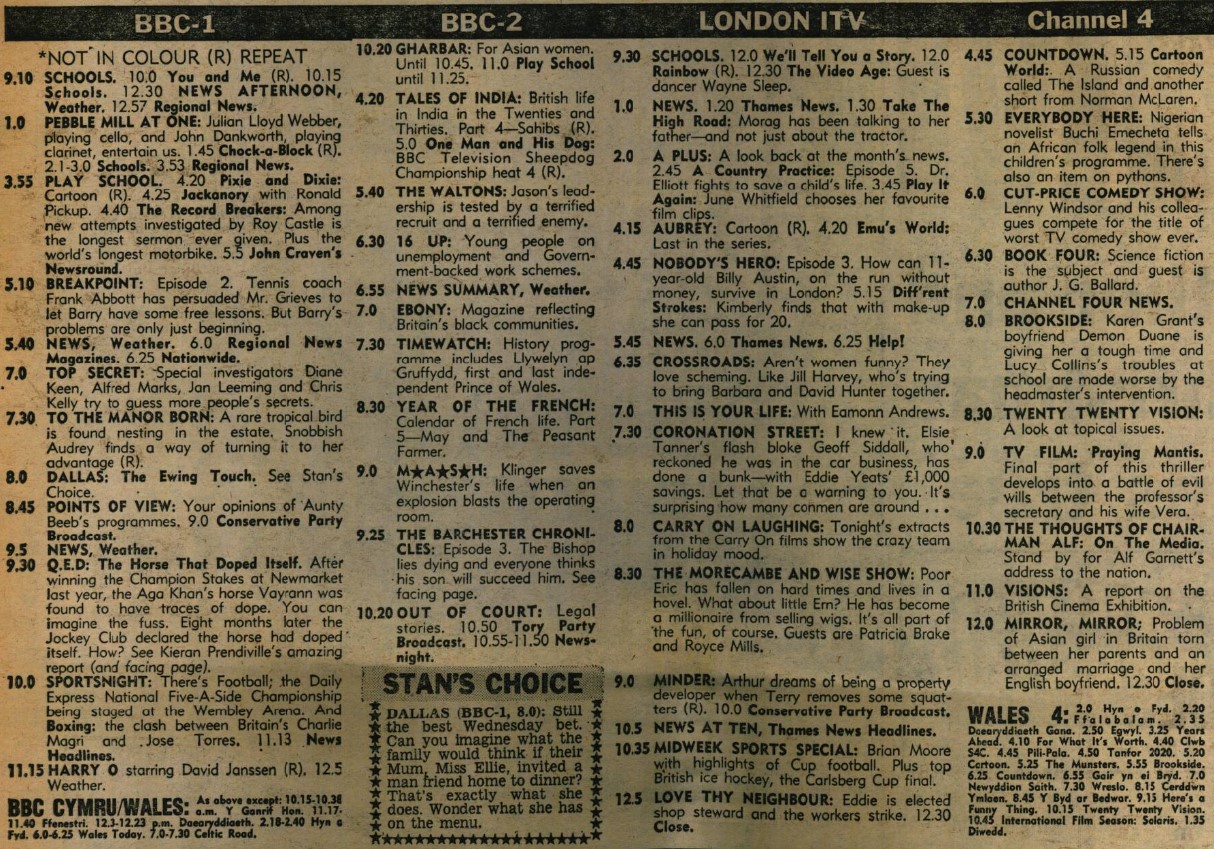
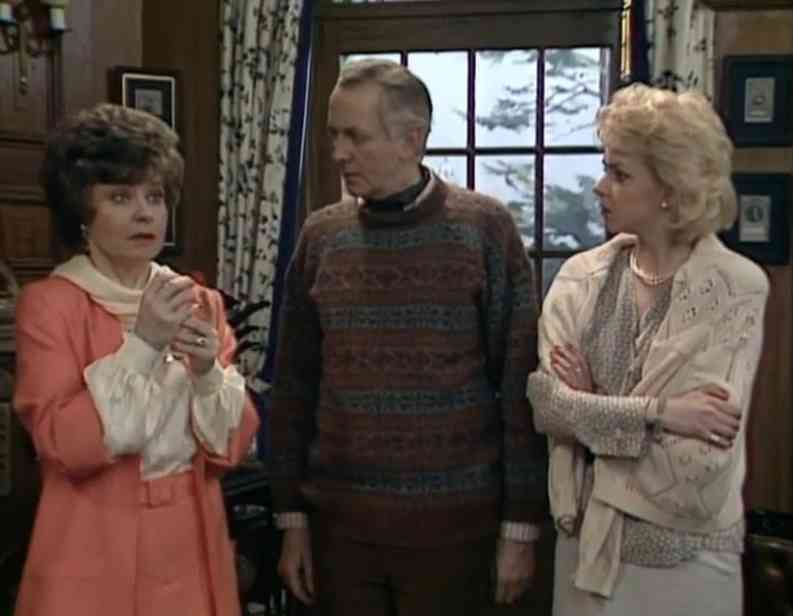
Tonight I’ll be catching To The Manor Born and Dallas on BBC1. To The Manor Born was incredibly popular at the time (the final episode in 1981 pulled in a staggering 27 million viewers) but it hasn’t retained the same profile today. The fact it doesn’t get re-run has something to do with this, of course. The performances are the thing which still engage the interest – especially Penelope Keith as the horrendous and self-centered Audrey fforbes-Hamilton. It’s Keith’s skill (not to mention the more sympathetic characters played by Peter Bowles and Angela Thorne) which ensures that Audrey is more than a one-dimensional snob. Although there are times when I have to confess I find her very irritating ….

I’ve been meaning to make a real dent in my Dallas boxset for some time, so maybe dipping into this episode will provide the spark to get me going. Possibly yet another programme to add to the 2023 pending rewatch pile.

I’ll set the VHS to record M*A*S*H on BBC2 whilst I switch over to ITV for The Morecambe & Wise Show and Minder. It’s noticeable how peak time repeats (today it’s To The Manor Born and Minder) are quite common in this era. Patricia Brake and Ruth Madoc are Eric and Ernie’s guests today. As I’ve said before, I think the Thames era deserves a little more love than it generally receives – yes, the rehashes of old scripts do become very noticeable at times (as in this episode) but the BBC series also did this from time to time (hello, Greig’s piano concerto).

All Mod Cons (S02E08, original tx 30th October 1980) is today’s Minder repeat. Toyah Wilcox guests as Kate, with Michael Robbins, Simon Cadell, Tony Osoba and Harry Towb also featuring. My thoughts on this one can be found here.

Back to November 1982 (23rd November 1982)

BBC1 offers another episode of Angels, followed by Terry & June. We’ve reached S05E06 where T&J suspect there’s skullduggery occurring at the church social’s bingo drive and set out to investigate. Fairly low-key stuff as ever then, but familiar faces (like Ronnie Brody and Patsy Smart) make appearances, which helps to enliven the half hour.

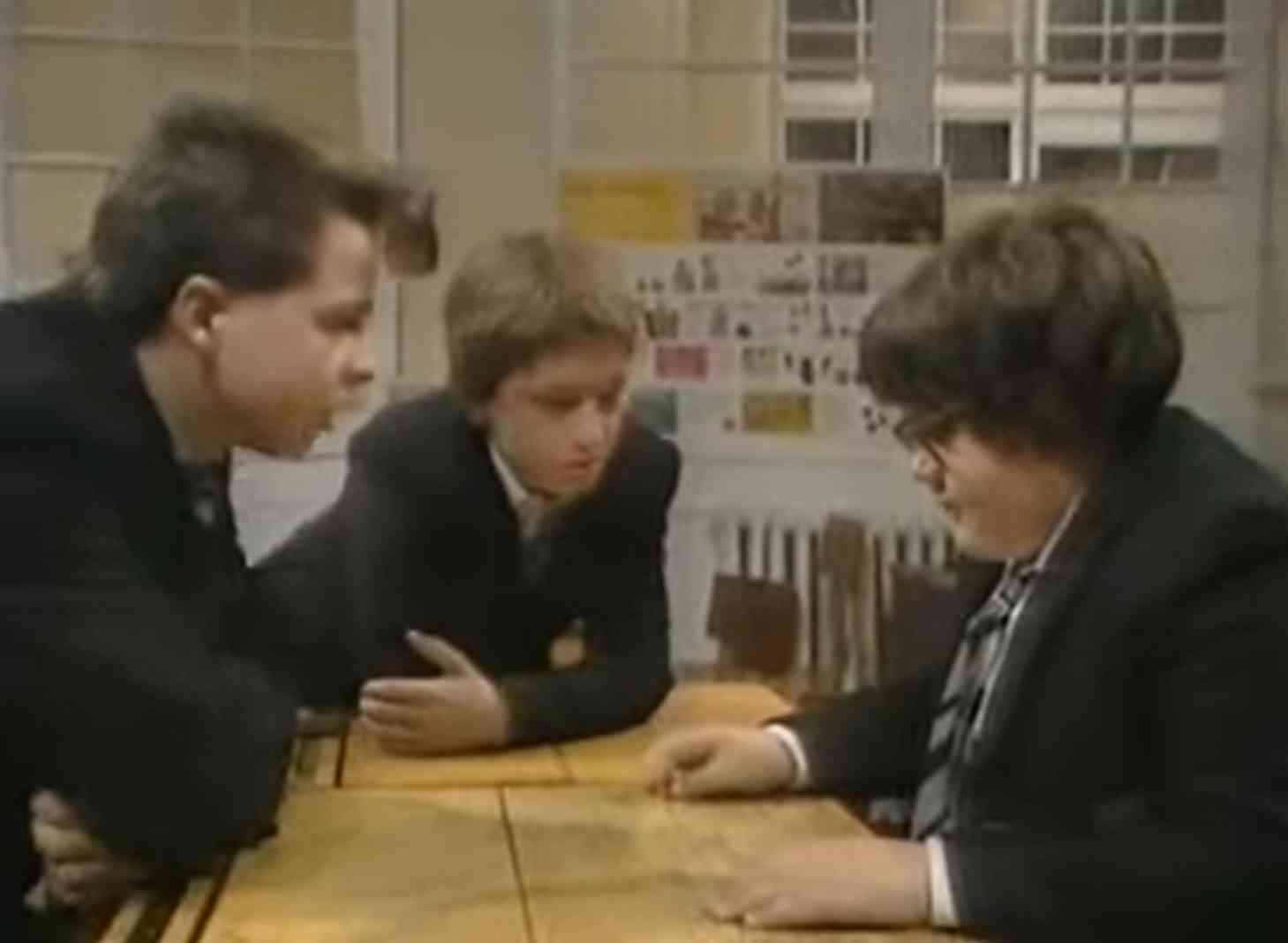
There’s another Grange Hill repeat to enjoy – we’ve reached episode ten of series five, which sees the Grange Hill Phantom lurking about. Ghosts in the school was a storyline that would haunt (sorry) the show in the future, but at least back in 1982 they had the decency to deal with it in just one episode and not eke it out over a longer length of time.

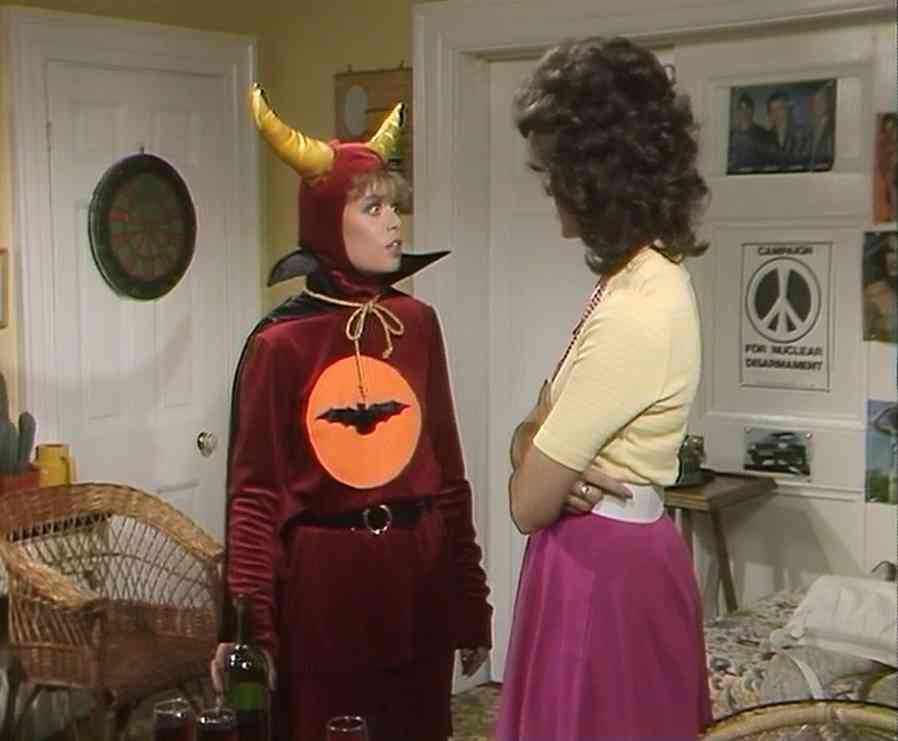
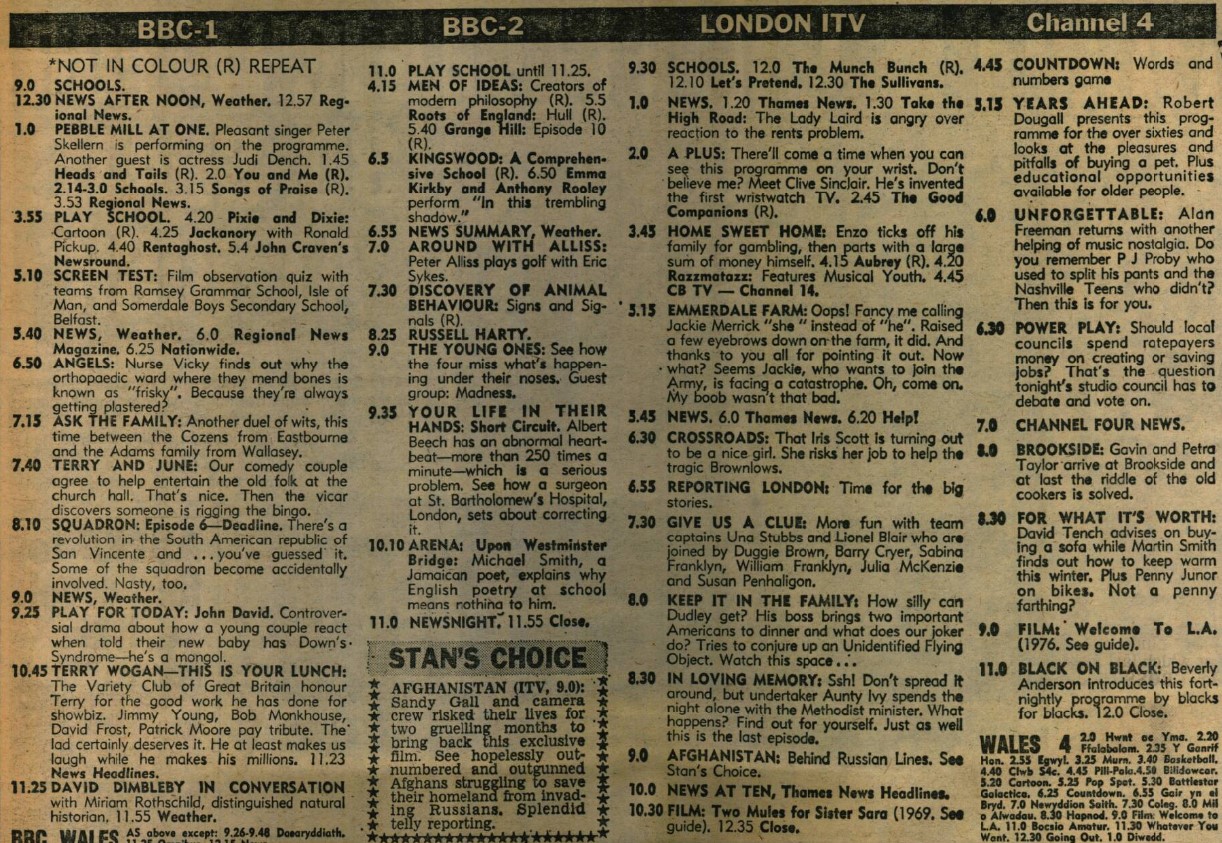
When dipping into 1982’s schedules, it’s very noticeable just how many sitcoms are available each day. Apart from Terry & June, the 23rd also offers The Young Ones, Keep It In The Family and In Loving Memory. Out of those, I think I’ll add Keep It In The Family to my list. Today, Dudley (Robert Gillespie) has decided to go UFO spotting whilst Susan (Stacy Dorning) is playing dress up ….

Back to November 1982 (22nd November 1982)

Up first this evening is Angels, and an episode from the series’ penultimate run. I’ve yet to find Angels‘ reformat into the ‘soap’ format (2 x 25 minute episodes each week) that engrossing, although maybe I’ve yet to give it a fair chance. It’s another of those series that I need to really find the time to watch consistently in sequence. Maybe it’ll be another one to attempt next year. I’ll add it to the list ….

BBC2 offers a Grange Hill repeat from series five, originally broadcast earlier in the year. It’s this one, which continues the harsher tone that’s quite noticeable this year. I’ve no doubt touched upon this before, but it’s interesting to wonder just how much input GH‘s producer (this year was Susi Hush’s sole year in charge) had in the direction of the series. Possibly the scripts had already been locked down before she arrived, but the emergence of Gripper as Roland’s nemesis throughout series five was something new for the series (previously, bullies had tended to restrict their reign of terror for only a few episodes).

The Further Adventures of Lucky Jim is on at 9.00 pm. Given that it was written by Clement and Le Frenais it’s a curiously forgotten sitcom, although it’s true that the pair do have a number of equally obscure entries in their back catalogue. It’s certainly worth checking out, even if it’s easy to initially miss that the series was set in the late sixties. Today’s episode can be found here.

Over on ITV, it’ll just be Coronation Street for me.


Back to November 1982 (21st November 1982)

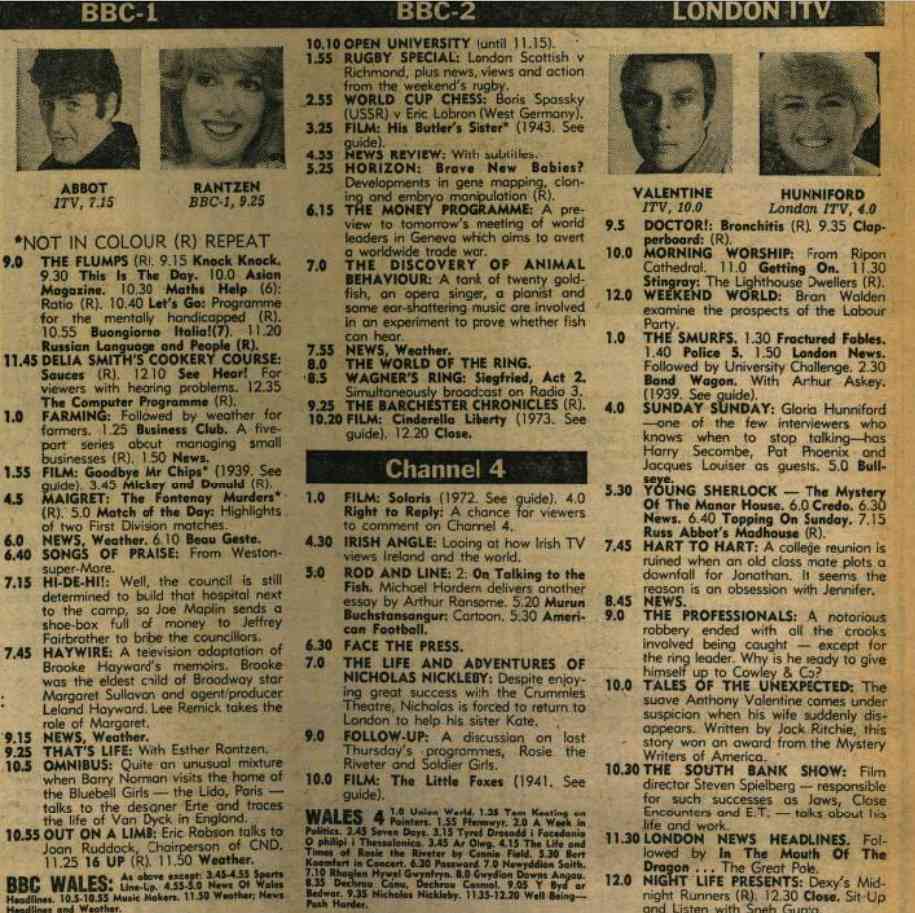
I’ll be spending the next seven days in 1982. As before, I’ll only be highlighting programmes that I have access to and can actually watch. Let’s dive into Sunday’s schedule ….

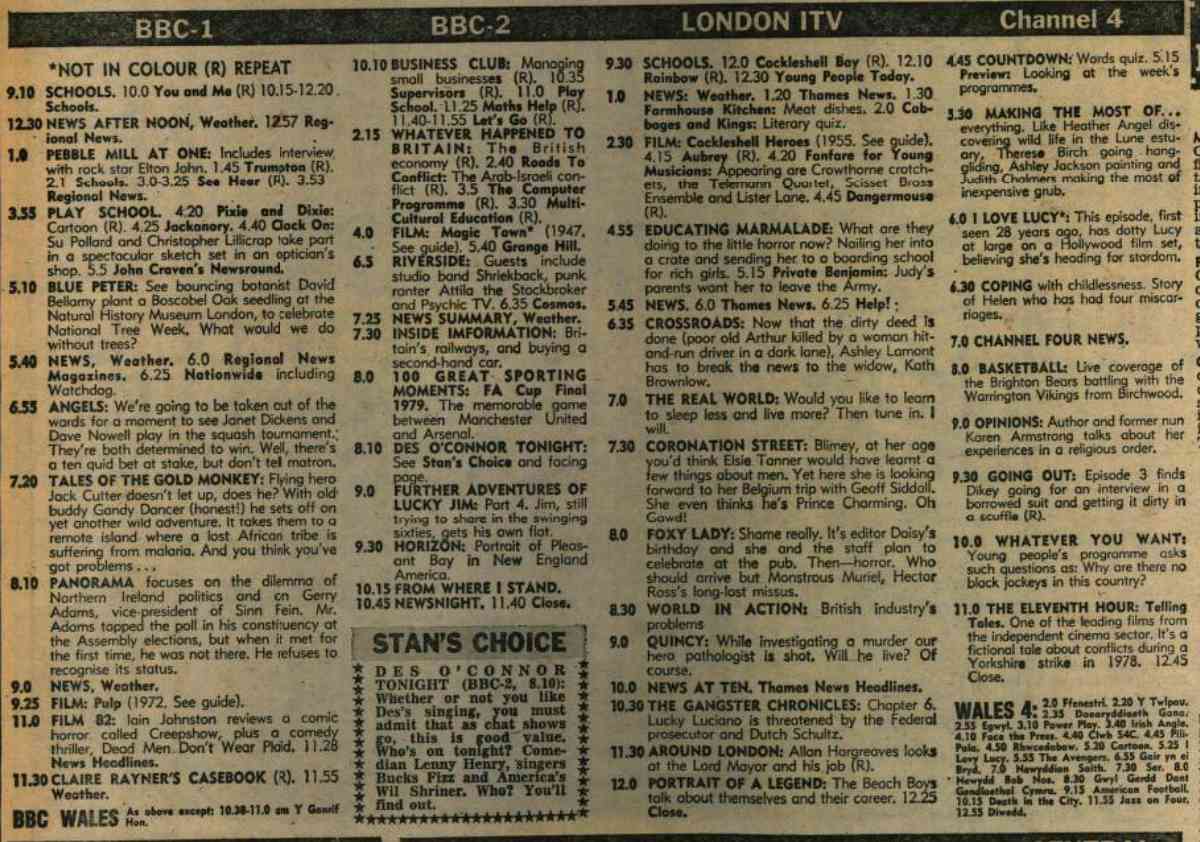
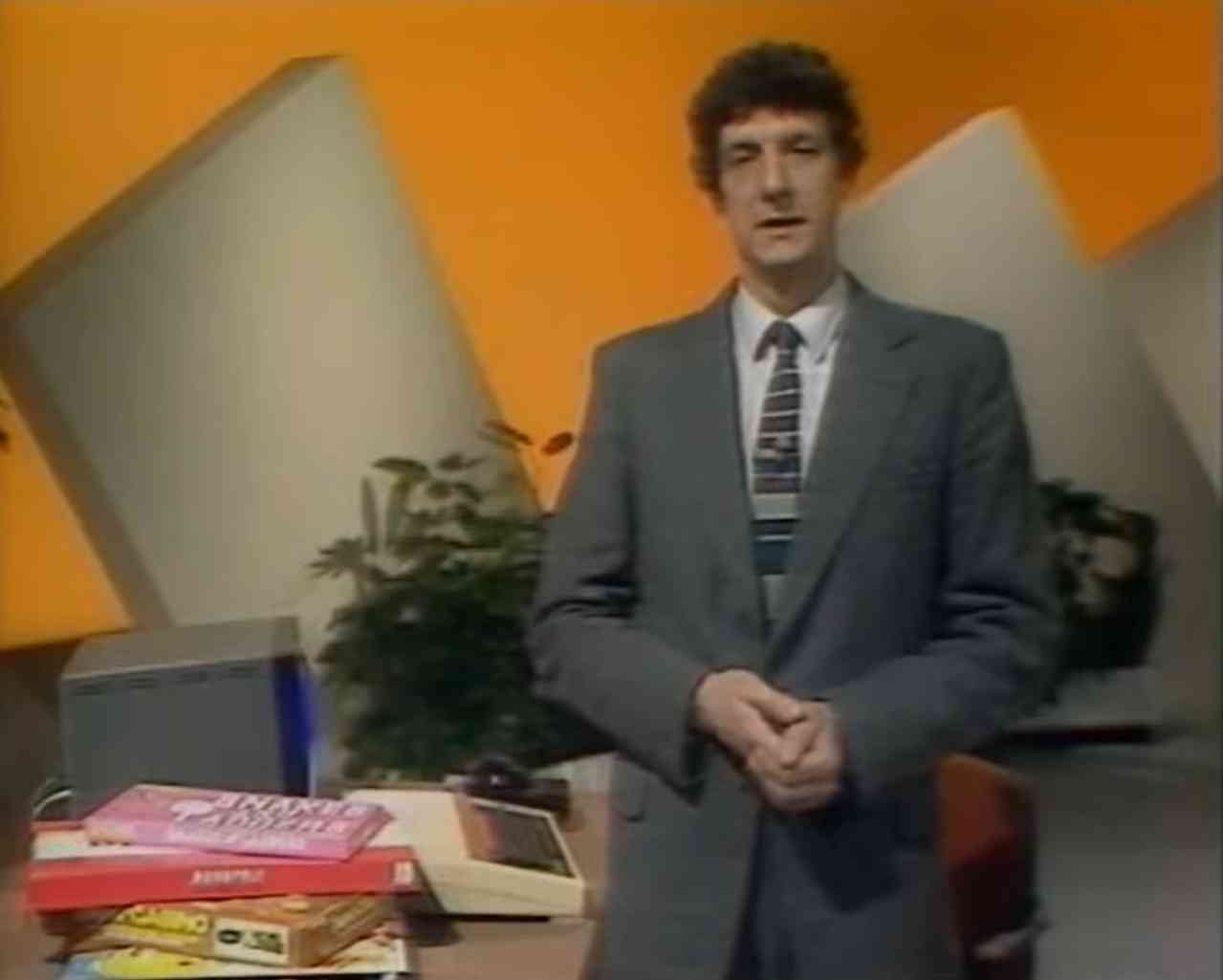
First stop is a re-run of The Computer Programme. We’ve reached episode seven – Let’s Pretend in which Ian Macnaught-Davis and Chris Searle look at computer modelling and simulations. That’s the cue for Macnaught-Davis and Searle to spend more time huddled round a BBC B computer, although slightly more powerful systems are also available. I’ve recently rewatched the whole series but it’s never a chore to dip into it again.

There’s an episode of Maigret repeated at 4.05 pm on BBC1 – The Fontenay Murders. Having been unavailable for so many years, the series has been dragged back into the light recently – it’s now available on Blu Ray and DVD from Network and is also running on Talking Pictures TV. Truth to tell, I’ve found it to be something of a disappointment – I love 1960’s tv in general and there’s no shortage of appealing guest stars, but many of the episodes are rather dull and stodgy. Still, I’ll give this one a go and maybe it’ll appeal.

I’ll be sticking with BBC1 later for part four of Beau Geste. It’s from that endearing era of television where an English sandpit could be pressed into service as the unforgiving Algerian desert and no-one would bat an eyelid. Still, with Douglas Camfield directing a host of familiar faces (hurrah, there’s Pat Gorman!) I’m not complaining.

Today’s Hi-De-Hi! story carries on from last week. Jeff is still caught on the horns of a moral dilemma thanks to the machinations of Joe Maplin (which is the cue for more letters from the Maplins boss which have to be read out by the squirming Jeff).  This is still the imperial era of the series, with all the original cast members present and correct (as mentioned before, most Croft/Perry and Croft/Lloyd never knew when to stop and tended to carry on past their sell by dates).

Then it’ll be time to switch over to ITV for The Professionals and Tales of the Unexpected. You’ll Be All Right was the fifth and final Professionals script by Gerry O’Hara. It’s not quite the series at its peak but still passes an hour very agreeably.

Tales of the Unexpected is a series that was always incredibly uneven (one day I’ve promised myself I’ll watch all 112 episodes in order – maybe next year). Today’s offering is The Absence of Emily with Anthony Valentine and Francis Tomelty and it looks to be decent, so hopefully it’ll end the evening off with a chill or two.

Whodunnit? – Series One

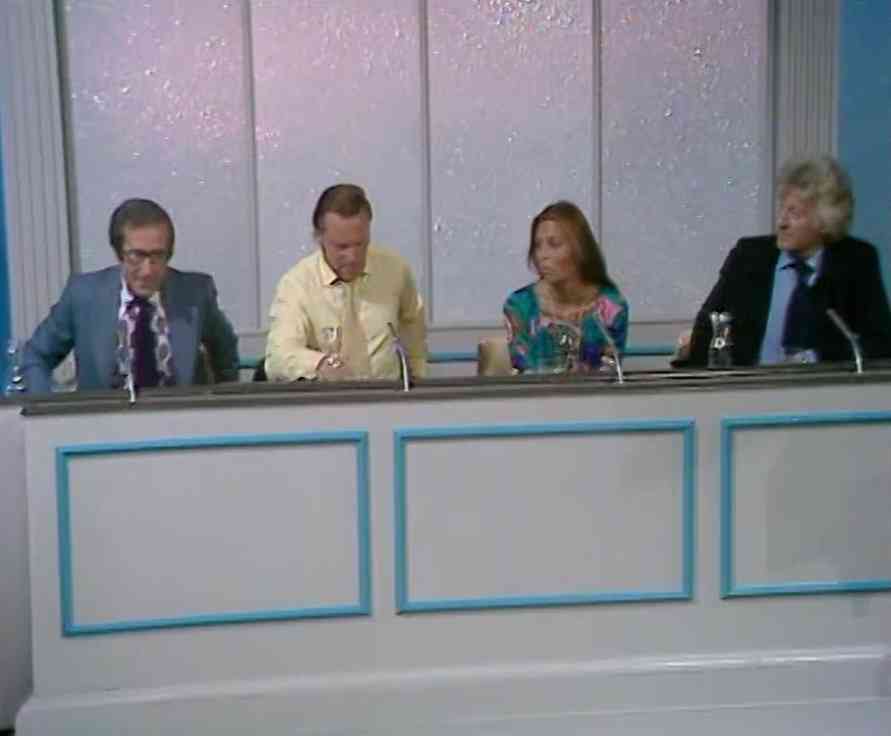
I’ve recently been revisiting the first series of Whodunnit? The pilot, with Shaw Taylor in the host’s chair, aired in 1972 and there was a full series the following summer (this time with Edward Woodward as mine host).

Woodward might have been a fine actor but he was endearingly out of his depth here (think of Charlie Williams hosting The Golden Shot or Max Bygraves’ stint on Family Fortunes and you’ll get the general idea).  It’s not a total car crash as he does manage to get through each show without too many mishaps (apart from the classic moment when he bumps into the furniture and hops about in agony for several seconds) but Whodunnit? is not his finest hour.

There’s something of a stilted air about many of these early shows – partly because some of actors playing the suspects didn’t appear to be too comfortable improvising during their questioning by the panel but also because some of the panelists were rather dour types.

There were exceptions though. Jon Pertwee was irreverent throughout Knife In The Back (clearly he was eying Woodward’s job and imagining that, post Doctor Who, it would suit him quite nicely). Alfred Marks was another panelist whose tongue remained firmly in his cheek throughout.

Kevin Stoney was good value on the suspect front during the final show – Happy New Year – and indeed a number of his colleagues also joined in the fun in an episode which suggests the way the series will develop.

As for the mysteries, some (Missing on Voyage) were obvious whilst others were more of a lottery. Sometimes the clues made little sense to me (although it may be that I was watching too late at night and my senses weren’t at their sharpest). I found it irksome that Woodward forgot to mention any of the clues on one of episodes (presumably he accidentally skipped over that part, and it was decided that a retake wasn’t worthwhile) and he would have done the same at the end of Knife In the Back had Pertwee not prompted him.

So, this early run is a real curate’s egg. Enjoyable enough, especially for the familiar faces turning up as suspects and on the panel, but some of the playlets are a little underwhelming (Jeremy Lloyd and Lance Percival, creators and writers, weren’t going to give Agatha Christie any sleepless nights).

Natural Causes by Eric Chappell

Broadcast in 1988, Natural Causes is a rather obscure entry from Eric Chappell’s back catalogue. That’s not terribly surprising as it was given the less than primetime slot of 11.30 pm (although it still managed to pull in an impressive 6.5 million viewers).

It began life as a play in 1985 with Ian Lavender and Michael Robbins. Chappell’s television adaptation boasts an equally impressive cast – George Cole, Benjamin Whitrow, Prunella Scales and Leslie Ash.

Walter Bryce (Whitrow) is keen to help his neurotic wife, Ceilia (Scales), depart this vale of tears, as waiting in the wings to comfort him is his young secretary Angie (Ash).

And that’s where Vincent (Cole) comes in. He works for a company called Exodus which exists to facilitate suicides. But although things initially seen straightforward, a myriad of complications soon ensue …

The theatrical origin of the story Is quite obvious, as the production remains studio-bound throughout with no attempt made to open it up. That’s not a problem for me though as it means the play has to stand or falls on the quality of its performances.

George Cole leads the way as the pernickety Vincent. Sounding not unlike Arthur Daley, Cole gives a highly effective turn, doing most of the comic heavy lifting during the early part of the story.

He initially forms a strong double-act with Whitrow, who’s entertainingly twitchy as the unfaithful husband attempting to persuade himself (and Vincent) that the death of his wife will be a mercy for her. But the first problem occurs when she decides that they should die together. He’s not keen …

Prunella Scales, like Cole, seems to be operating well within her comfort zone but that’s not really a criticism as she does what she does so well. Leslie Ash has the lesser of the four roles but there’s still a faint air of Lady Macbeth about Angie which is appealingly teased out.

The ending doesn’t come as a huge surprise but overall the 78 minutes slipped by very agreeably. Well worth a look.

BBC Schools drama productions (1950’s – 1980’s)

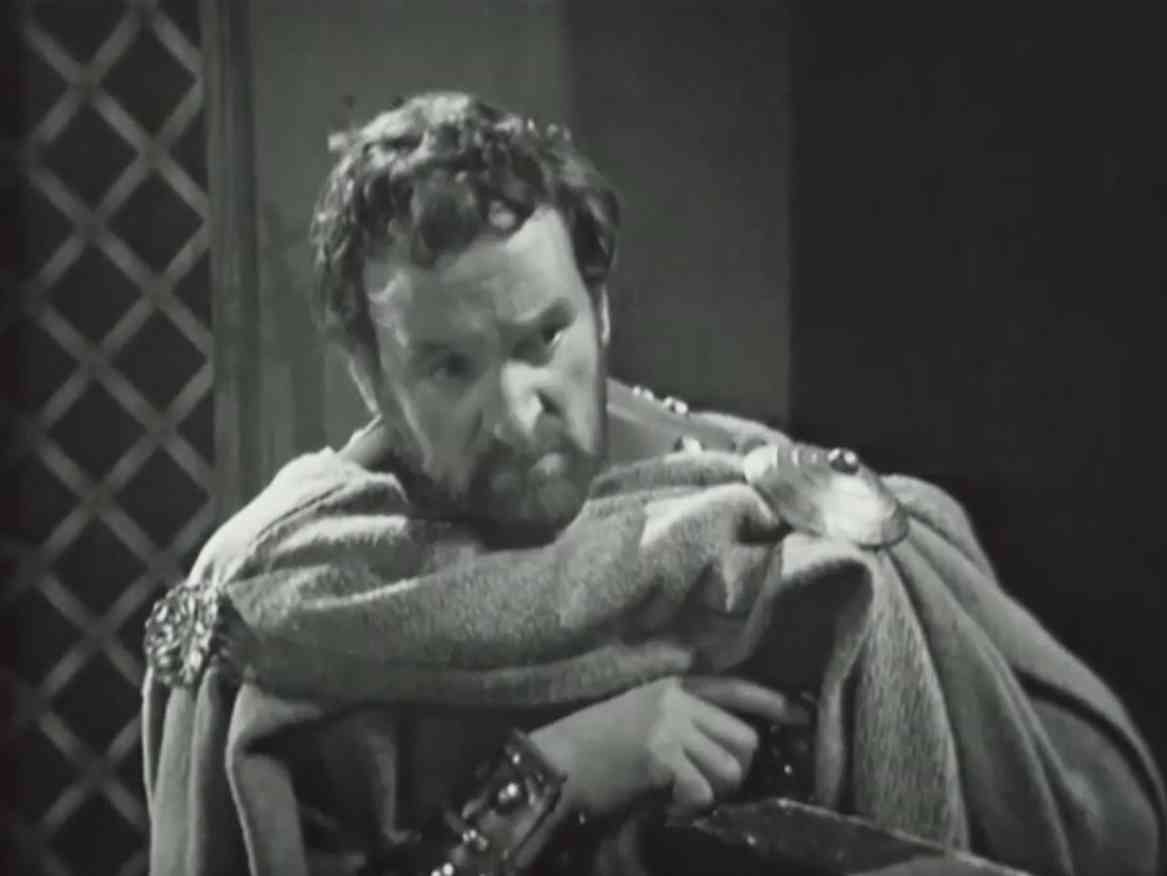
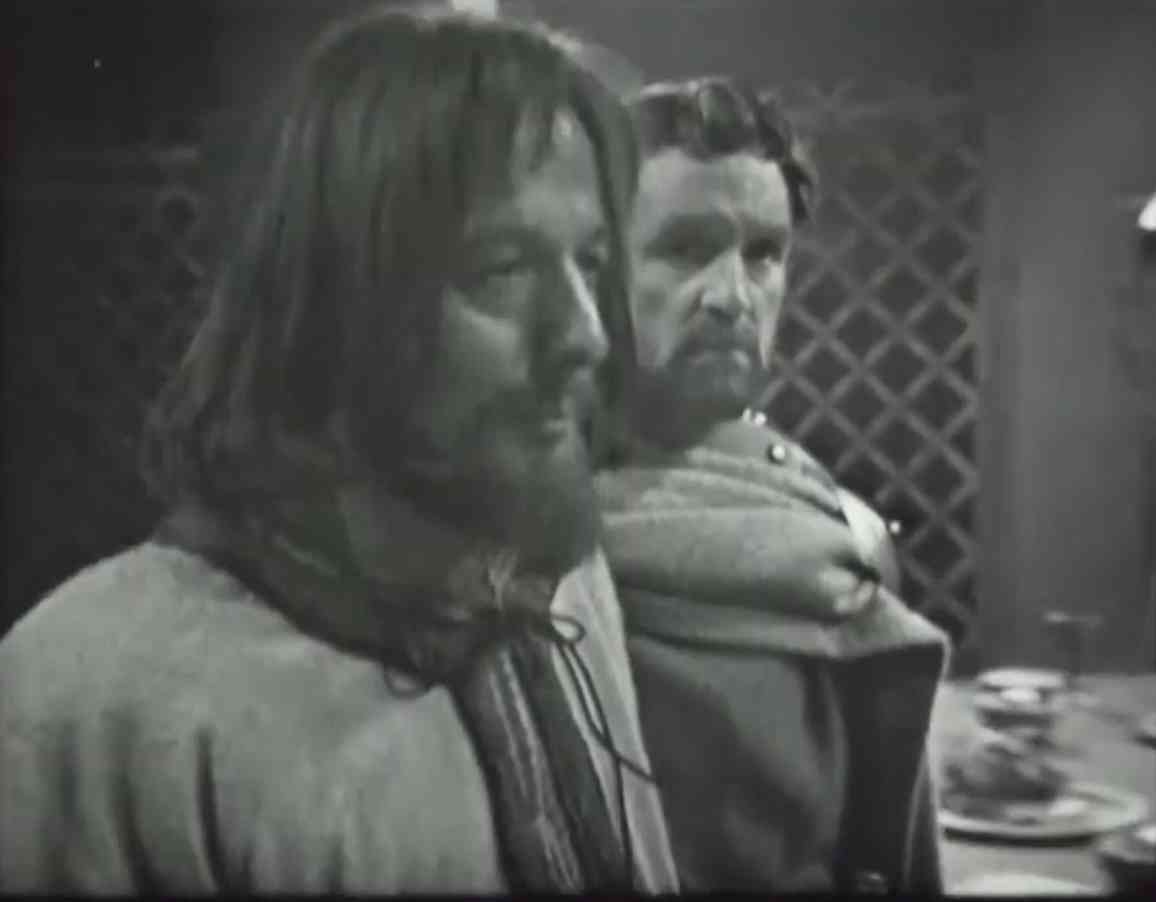
I’ve recently been watching the 1966 BBC Schools production of Macbeth, with Andrew Keir in the title role. For several decades, low budget but highly serviceable drama adaptations were tacked by the BBC schools department. A handful have escaped into the public domain, but most remain locked in the vaults (and no doubt a fair few were wiped shortly after transmission).

Having enjoyed what I’ve seen (this Macbeth features, apart from Keir, the likes of Anthony Bate and James Grout with familiar faces, like William Marlowe, filling out the minor roles) I’m always temped to dig a little deeper into their history to see exactly what was produced.

Michael Simpson, who produced and directed this version of Macbeth, was also responsible for a number of similar adaptations during the 1960’s such as Hobson’s Choice, Serjeant Musgrave’s Dance and The Government Inspector. Simpson was clearly one of those directors who liked to employ a ‘rep’ of actors, as a number of them appear in more than one of these productions.

Ronald Smedley produced a series of similar adaptations in the 1970’s and 1980’s. Heil Casear! (a modern language version of Shakespeare’s Julius Caesar), A Taste of Honey and another version of The Government Inspector (this time with Robin Nedwell in the main role).  Possibly Smedley’s best-remembered production is the 1982 An Inspector Calls with Bernard Hepton, partly because it earned the accolade of an evening repeat but mainly because it remains available on YouTube (albeit in rather low-quality form).

Exactly what remains in the archives is a bit of a mystery (even TV Brain draws a blank on some of the ones I know about). Hopefully the odd one might surface on BBC4 (unlikely though that is) or YouTube (slightly more likely, as you can never tell what might get ‘liberated’ from the archives).

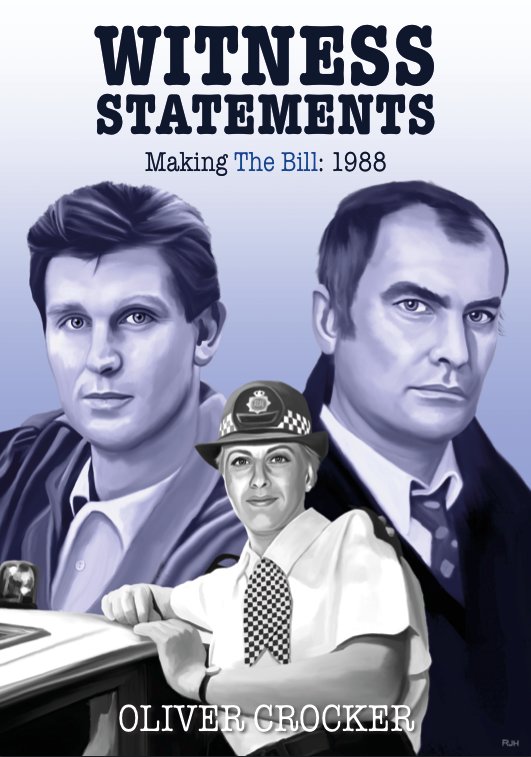
Witness Statements – Making The Bill: 1988 by Oliver Crocker

In July 1988, The Bill underwent a major format change – from a series running thirteen weeks each year (with a single 50 minute episode) to a twice-weekly “soap” format (with episodes now running for just 25 minutes).

The Bill wasn’t the first programme to have undergone such a transformation – something similar had previously happened to both Z Cars and Angels. However, it’s probably fair to say that the best years of both of those series were behind them at the time they were re-formatted.

With The Bill it was a different matter. Although the restricted running time and move to a pre-watershed slot concerned some, the series quickly moved from strength to strength. For many people, myself included, the late eighties and early nineties were a golden age for the show.

Following on from his previous volume, which chronicled the fifty minute episodes that comprised the first three series, Oliver Crocker’s new book takes an in-depth look at the 48 episodes broadcast in 1988 – from Light Duties in July 1988 to Taken Into Consideration at the end of December.

It’s something I’ve touched on before, but it’s very pleasing to have such a dense, oral history of a show like The Bill. Rare series – like Doctor Who – have an embarrassment of production information available for the curious reader. But the vast majority of other programmes are lucky if they have a single book dedicated to them – and even those that do, tend to offer general overviews rather than an immersive episode by episode analysis.

Witness Statements – Making The Bill: 1988 is in the same format as the previous volume. Each episode is given a brief teaser synopsis, cast and production listing, production notes and then ‘witness statements’ from an impressively wide variety of contributors (both actors and technical personnel). There’s so much value to be found in these interviews. Unlike some popular series, where people have been interviewed so many times that they now have little new to say, there’s a real freshness to this book.

To take just one example, whilst P.J, Hammond has been interviewed before, it’s almost always been about Sapphire & Steel. But I’ve always felt that Hammond’s work as a writer for hire (on Z Cars, Angels, The Bill, etc) to be an area of his career that’s worthy of more investigation, so it was very pleasing to hear from him.

Wilf Knight’s technical notes from 1988 (such as uniform protocol) were also fascinating, but to be honest there’s so much of interest in this book that I know I’ll keep on coming back to it.

For those beginning a rewatch of the 1988 series, this will serve as the ideal companion or you can simply open a page at random and find something to catch the eye. Witness Statements – Making The Bill: 1988 is an engrossing read and comes highly recommended. It can be ordered directly via this link.