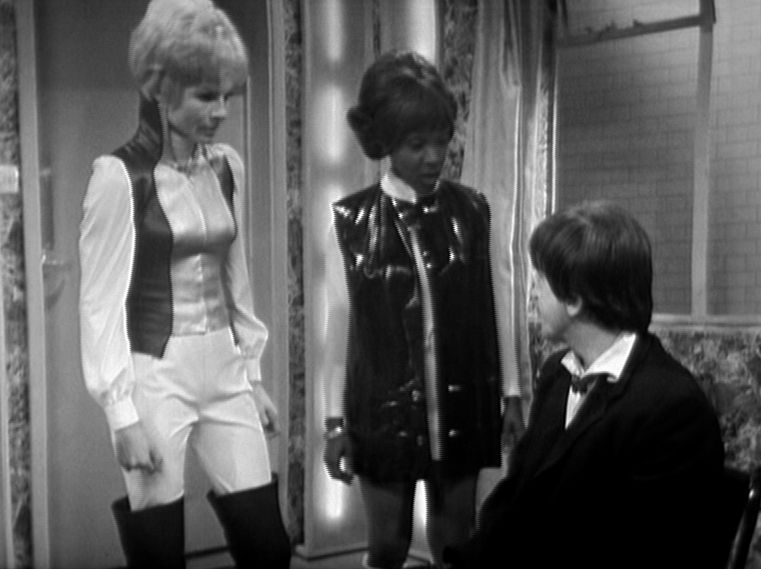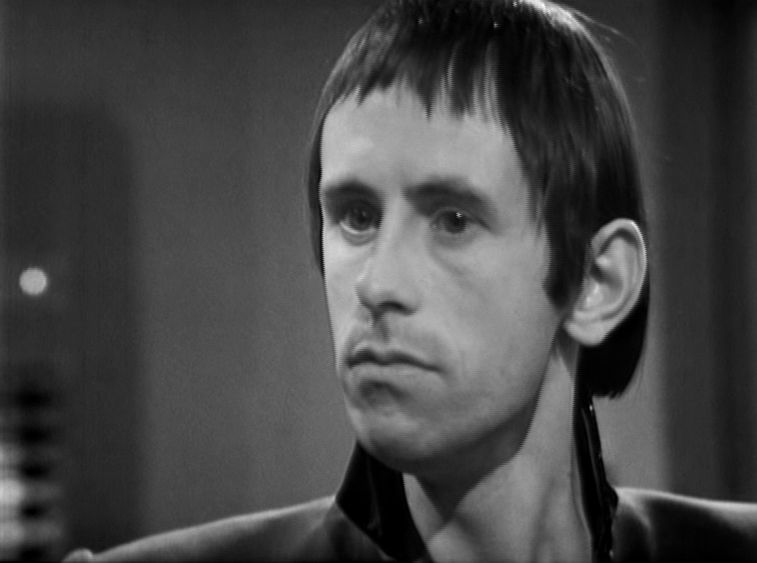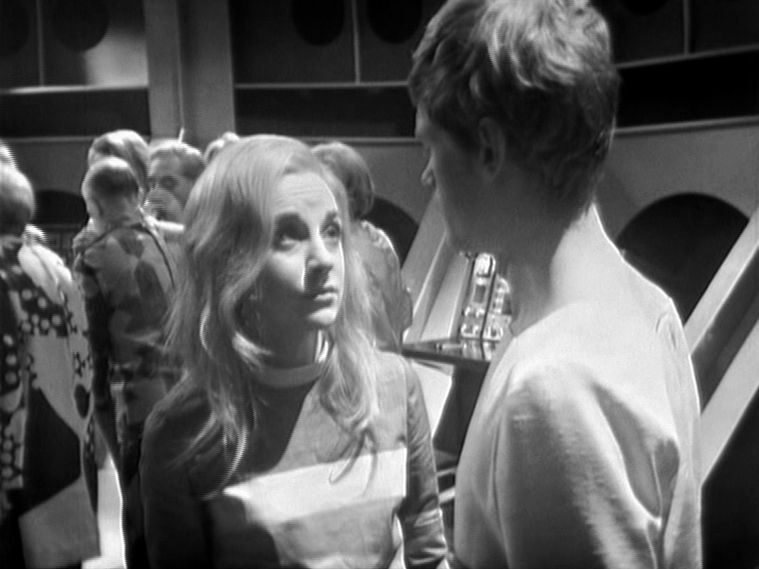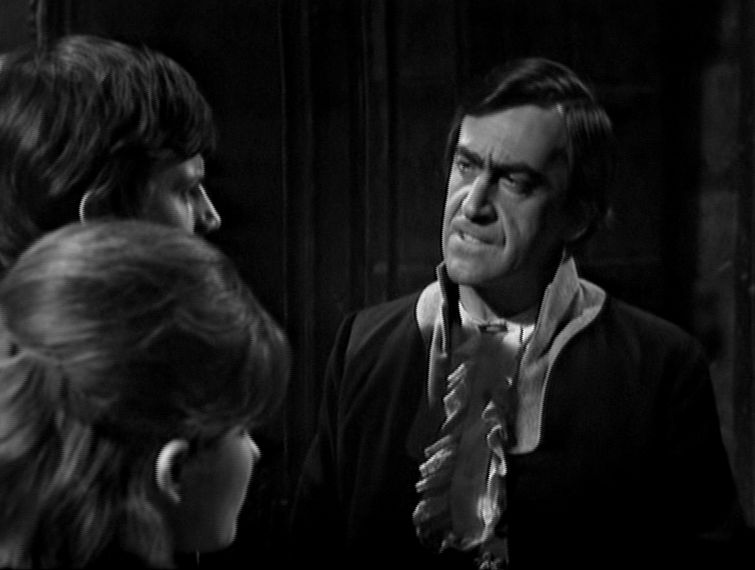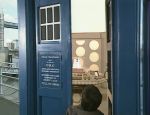
Doctor Who – The Enemy of the World – Episode Five

enemy 05

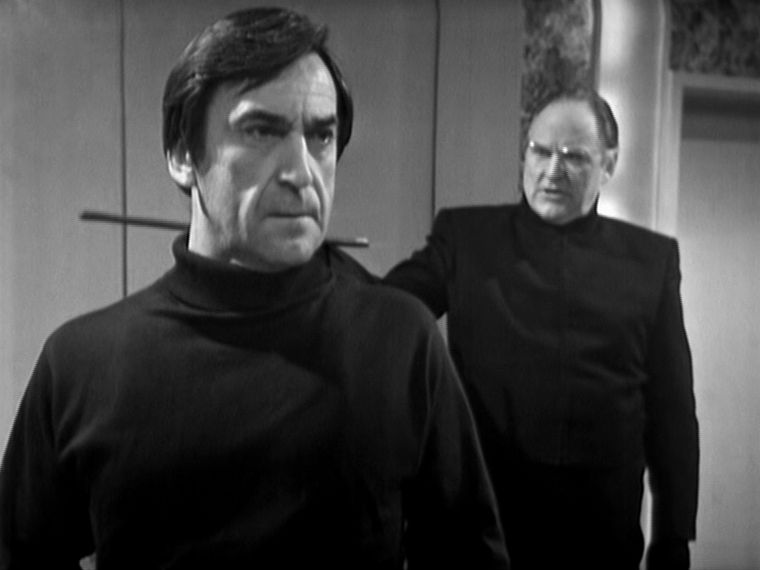
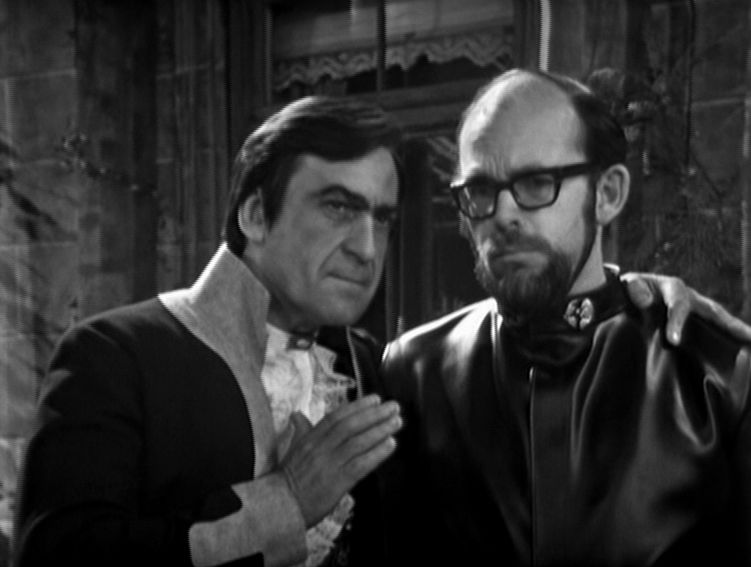
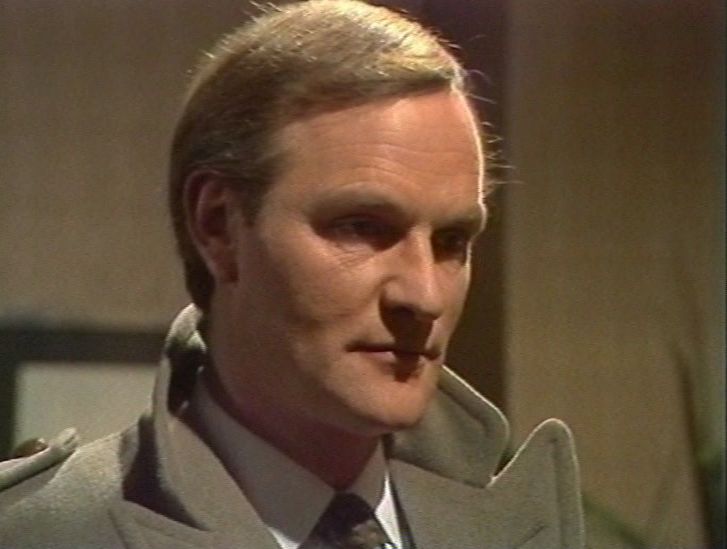
The mysterious visitor at the end of episode four is revealed to be Donald Bruce.  Although he’s Salamander’s head of security, he also seems to have a policeman’s instinct, as he’s willing to listen to the claims of Kent and the Doctor that Salamander is not the universal benefactor he claims to be (although anybody who’s spent time around him surely would have quickly picked up plenty of negative vibes).

Astrid disarms Bruce’s guard and the Doctor attempts to bring Bruce onto their side by handing the gun back to him.  As Bruce says, “you must be a complete fool or very clever.”  The Doctor responds that Bruce will “have to make up your mind to that right away.”  This fairly basic piece of psychology does the trick and Bruce agrees to accompany the Doctor as he attempts to enter the Research Centre.  But as insurance, Astrid and Kent are left behind – under guard.

Meanwhile, Salamander is still underground.  One of the slight problems with the underground scenes is that there’s only three speaking roles – Swann, Colin and Mary (there’s plenty of other people in the scenes, but they’re all just rhubarbing extras who rush around with clipboards, looking busy).  Adam Verney (as Colin) is still machine-gunning his lines, delivering them with an intensity that borders on the manic.  As the character is supposed to be somewhat stir-crazy, it’s a reasonable performance choice – although a little of him does go a long way.  Especially when delivering lines such as “I don’t think it’s right. Just work, sleep, eat, if there’s enough to go round. Like worms under the earth, sightless worms wriggling about without hope, without purpose.”

Mary (Margaret Hickey) has the thankless task of having little to do except react to Colin’s complaints.  Swann (Christopher Burgess) initially seemed also to be a rather uninteresting character, very much Salamander’s yes-man, but events take an unexpected turn when he discovers a fragment of newspaper which was stuck on their new boxes of supplies.  Salamander has told them all that there’s a global war occurring on the surface, and that their work (engineering natural disasters), is vital to the war effort.

But the scrap of newspaper has a report about the sinking of a holiday liner.  How can there be holiday liners in a world at war?  Swann confronts Salamander and it’s the first time that we’ve seen Salamander even slightly shaken.  He quick back-peddles and tells Swann that the war is over, but the survivors are deformed in mind and body.  “They have a kind of society, but it’s evil, corrupt. You don’t think I could expose you to that sort of thing? Think of Mary and the other women.”  Swann insists on going up to the surface with Salamander.  Salamander readily agrees and it’s not hard to understand why – Swann may go up, but he’s not coming down again.

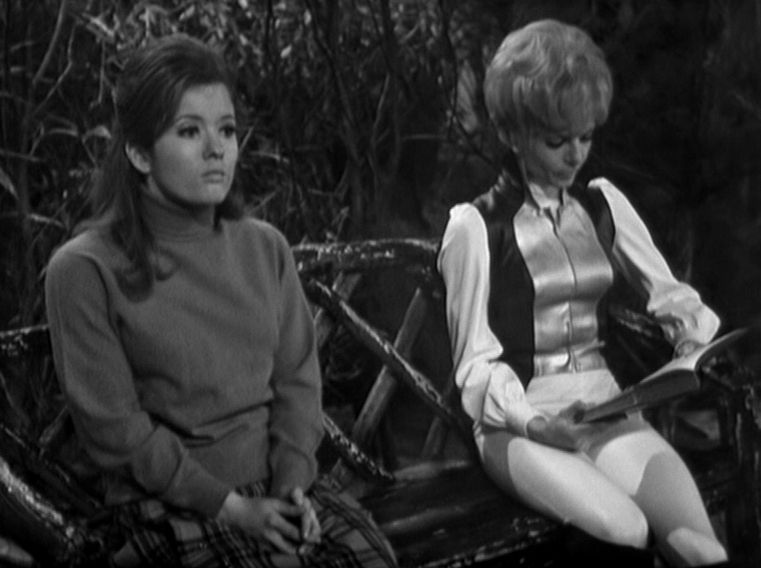
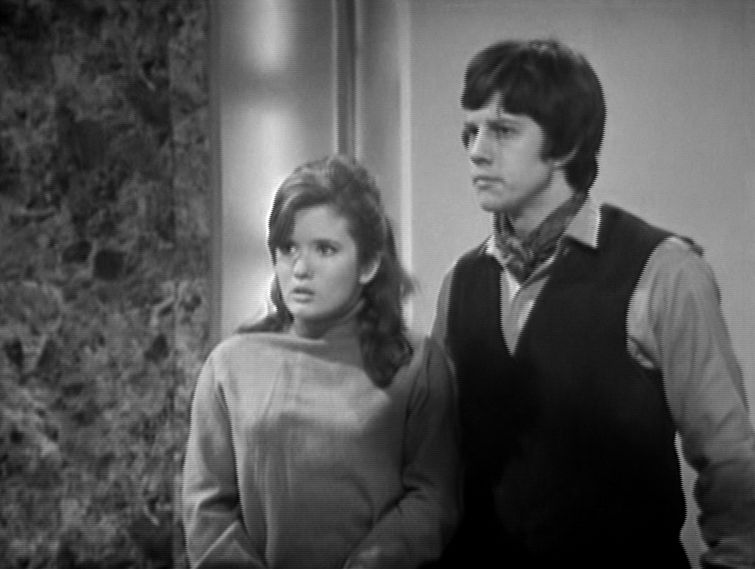
Jamie and Victoria were absent from the previous episode and in the first half of this one were only in a brief shot (as their unconscious bodies were carried past the camera).  Once they’ve woken up, they have to face the tender devotions of Benik.  Milton Johns excels in this scene.  So much is left unsaid, as it’s left to the viewer’s imagination to wonder exactly what Benik would be prepared to do to them.  Jamie tells him that he must have been a nasty little boy, Benik concedes he was, but that he had a very enjoyable childhood.”

enemy 05-01

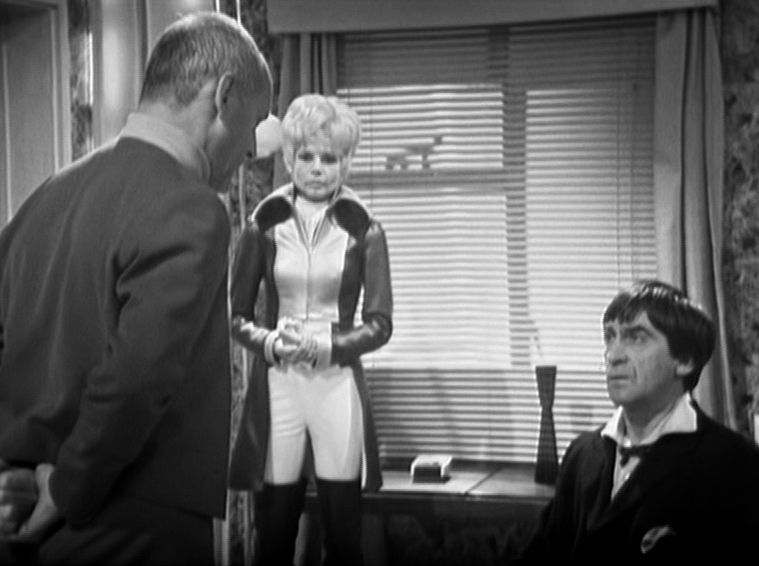
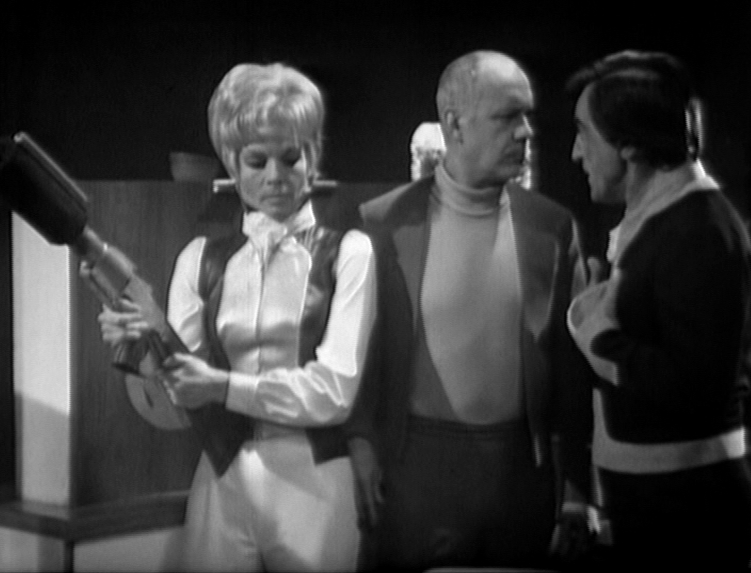
But he only gets as far as tugging Victoria’s hair when he’s interrupted by Bruce and (apparently) Salamander.  In order to convince Bruce that Salamander is as corrupt as he believes him to be, the Doctor stays in character for a while – and he’s convincing enough to fool both Jamie and Victoria.  The recovery of this episode allows us to see a few more nice visual touches – as Jamie and Victoria confront the man they believe to be Salamander, the Doctor takes fright and falls off his chair.  He’s then concerned that his friends don’t recognise him, but after miming playing the recorder he’s delighted to find they believe him after all.  Just before this, Letts manages to ramp up the tension as he rapidly cuts between close ups of Hines and Watling as they list some of Salamander’s crimes.

Kent and Astrid manage to distract the guard (thanks to some HP sauce, it appears) and Kent hot-foots it to the Research Station.  He says he’ll have no trouble getting in, since he has a pass (are we supposed to believe that Salamander wouldn’t have had it cancelled by now?!).

At the same time, Astrid is trying to shake off the guard (through a very unconvincing section of forest – alas, it’s too obvious that it’s a studio mock-up) when she hears a cry for help.  She stumbles across a mortally injured Swann, who clearly has come off second best in a tussle with Salamander.  It’s interesting that a few minutes earlier Salamander asked Swann if he was sure he wanted to go right up to the surface – the inference being that if he’d changed his mind, Salamander would have spared his life.   I’m not sure if that was the scripted intention or just how it was played, but it does make the character of Salamander a little more interesting (was he reluctant to kill?  And if so, was it just because he didn’t want to get his own hands dirty?)

As it is, we once again end on a cliff-hanger where neither the Doctor and his friends are in danger.  It’s another atypical ending to an atypical (but far from uninteresting) story.

vlcsnap-2015-05-10-19h00m34s183

Doctor Who – The Enemy of the World – Episode Four

enemy 04

Episode four is where the story takes a unexpected turn after Salamander’s underground base is revealed.  The Enemy of the World has often been likened to a James Bond film and the eventual reveal that Salamander has been engineering natural disasters (with the help of a group of duped underground workers) places him firmly in the Bond villain category.

It also helps to give the story more of a science fiction/fantasy slant, as up until now it’s been pretty much a contemporary thriller (although set in the future, it could have just as easily been set in 1967).  But before this mid-episode about-turn happens, we spend some time with the Doctor, who’s still a master of inactivity.

As a vehicle for Troughton’s Doctor, Enemy isn’t the best, since he’s absent for long stretches to enable him to play Salamander, which makes his limited screen-time when he does play the Doctor even more precious.  There’s a definite feeling that the Doctor is still at something of a disadvantage and he only agrees to the impersonation in order to rescue Jamie and Victoria.  Kent continues to be totally ruthless, telling the Doctor he has to kill Salamander – if he doesn’t then Kent won’t lift a finger to help his friends.  Naturally, the Doctor isn’t happy.  “Private justice, eh? Oh no, no. I’ll expose him, ruin him, have him arrested, but I won’t be his executioner. No one has that right.”

In the power struggle between Kent and the Doctor, at present you’d have to say that Kent has the upper hand.  Troughton’s Doctor may not quite be the fool that he sometimes appears, but the world of early 21st century politics isn’t his natural environment and he continues to be buffeted along by events, rather than shaping or initiating them.

More evidence comes Kent’s way when Fariah (who appears to be wearing a black bin-bag) offers her help to expose Salamander.  The hinted back-story between him and Fariah is teased a little further when she explains that “I have every reason to hate Salamander. He blackmailed me into being his personal servant. I even had to smile when he told me to.”  We never find out what he blackmailed her about, as the Doctor is happy to accept her at face value.

There then follows the main action sequence of the story, as Benik and his guards surround Kent’s office (which means that Kent, Astrid, Fariah and the Doctor are trapped).  The sequence does show the limitations of studio shooting – Astrid has a fight with a guard that looks terribly unconvincing, whilst the guards make something of an effort to break down Kent’s door, when the wobbles we’ve already seen would imply that just leaning on it would be enough to collapse it!

It’s also another opportunity to see the sadistic side of Benik.  He orders the guards to shoot to kill and one does – hitting Fariah.  Even when she’s dying, he continues to question her (much to the disgust of the guard captain).  And after the captain tells him that she can’t tell him any more, because she’s dead, he’s unruffled, simply saying “good”.

enemy 04-01

Bruce (Colin Douglas) has been something of a background figure for a few episodes, but the seeds are sown here for the action he’ll take later in the story. We’ve seen that he’s not a man who’ll blindly follow orders (and he lacks Benik’s pleasure in killing).  Douglas’ performance is rather bluff (and sometimes he seems to be struggling for his next line) but Bruce is a good counterpoint to the more hysterical Benik.
Prior to the episode being recovered, exactly how Salamander travelled underground was a bit of a mystery, the telesnaps didn’t really cover it and the camera script wasn’t very precise.  It’s actually quite an impressive few moments and does sell the illusion that Salamander has journeyed deep underground – where he meets a rather rum bunch of people.

Swann (played by Christopher Burgess, who’ll be cast again several times by Barry Letts in later Who stories) is the leader, whilst Mary (Margaret Hickey) and Colin (Adam Verney) are two of the younger workers.  Verney is incredibly earnest, delivering his lines as if his life depended on it.  “Don’t stop me now. I’ve got to see the surface, Mary, I’ve got to. I want to see the Sun again, walk on top of the Earth, not hide like a rat underground. I’ve got to do it, Mary. I’ve got to ask him.”  True, his dialogue is a bit ripe, but it would have been nice if he’d approached it in a more naturalistic way.

The story teases us as we learn that the underground workers believe the surface to be radioactive and that it’s not safe to leave the safety of the bunker.  They also believe Salamander to be their benefactor, risking his life to bring them supplies.  But the reason why they’re there isn’t revealed until the next episode, although those who’ve been following the story could probably work it out.

We end with the arrival of an unseen visitor paying a visit to Kent and the Doctor …..

enemy 04-02

Doctor Who – The Enemy of the World – Episode Three

enemy 03

Until late 2013, this was the only surviving episode of The Enemy of the World and it may be the reason why the story generally enjoyed a fairly low standing, pre-recovery.  There’s nothing particularly wrong with it, but it’s quite low on incident (which is quite typical for one of the middle episodes of a six-parter).

Salamander orders Denes to be arrested and he later tells Fedorin to kill him (thoughtfully he provides the poison to do so).  Given that Denes would obviously prove to be awkward if he was brought to trial, his removal is understandable – it’s just bizarre that Salamander would chose Fedorin to do it.  From his first scene he’s been presented as a weak link.  True, if he did murder Denes then it would tie him even closer to Salamander, but logically you would have expected that a hand-picked guard would be a better choice.

As has often been stated, it’s a little odd that Denes is kept under guard in a corridor.  This is because, apparently, it’s the easiest place to guard him.  What, easier than a room with a door they can lock?  In story terms, having Denes in the corridor means that he can easily interact with any passing character, but it’s a pity that they couldn’t come up with a better reason why he was there.

enemy 03-01

This episode is immeasurably livened up by Griffin the Chef (Reg Lye).  In plot terms he contributes nothing (and he doesn’t appear later in the story either) but his droll sense of humour is welcome in a story that’s been rather grim up until now.  Griff’s an eternal pessimist and with a long-suffering air agrees to take on Victoria as an assistant.  He asks her to write out the menus.  “First course interrupted by bomb explosion. Second course affected by earthquakes. Third course ruined by interference in the kitchen. I’m going out for a walk. It’ll probably rain.”

Jamie wonders if somehow Salamander managed to cause the earthquakes.  We then cut to scenes of the continuing earthquakes and rather neatly we pull away from this footage to show it was something the Doctor and Kent were watching on a monitor screen.  It seems like a nice directorial flourish, although it may have been scripted since Kent unconsciously continues the conversation that Jamie (many miles away) was having as he tells the Doctor he’s convinced that Salamander, via the Research Station, is somehow responsible for the earthquakes.

This is Troughton’s sole scene in episode three as the Doctor and he’s still not convinced.  “What you’re saying is that Salamander’s found a way of harnessing the natural forces of the earth. It’s a little difficult to accept. I’m not saying it’s impossible, mind you.”  Although the plot’s ticking away nicely and Troughton continues to entertain as Salamander, the necessity of the story means that the Doctor is once again placed in the background.  He gets to witness how unpleasant and ruthless Beink can be, but it’s still not enough proof for him.  “Unpleasant, yes, destructive, but not necessarily evil.”

There’s quite a high body count in this story and in episode three we bid farewell to both Denes and Fedorin.  Denes is shot in the back after Astrid attempted to rescue him and Fedorin is poisoned by Salamander.  I love Fedorin’s death scene, as you can clearly see that David Nettheim was milking it for all it was worth!  Denes’ death is a little more rushed though – it’s possible that time was a factor as there’s a swift cut after he’s shot straight into the next scene.  It’s a shame that Denes won’t take any further part in proceedings as George Pravda, especially in this episode, was rather good, especially the way he managed a wry tolerance of the madness occurring around him.

We end with Salamander becoming increasingly suspicious of Jamie and Victoria (which will conveniently remove them from the story for a week).  He’s also amazed to hear from Bruce that he’s recently met with Giles Kent ……

enemy 03-02

Doctor Who – The Enemy of the World – Episode Two

enemy 02

The Doctor manages to bluff Bruce into believing that he’s Salamander, but afterwards he’s still not convinced that he should help.  “I don’t know where you stand, Mister Kent, but you and this Salamander are obviously on opposite sides. That at least is clear. But which side is good? Which side is bad? And why should I interfere?”

Kent’s proposal is that Jamie and Victoria infiltrate Salamander’s HQ (using a plan he’d already devised for his own operatives) to find proof of his criminal activities.  Given the Doctor’s reluctance to get involved, it’s a little strange that he agrees so freely to this, as it will place both Jamie and Victoria in terrible danger.  We’ve seen the manipulative side of Troughton’s Doctor before, notably with his treatment of Jamie in Whitaker’s The Evil of the Daleks, but it’s still difficult to believe that he would agree to such a risky plan so readily.

As Jamie and Victoria leave for the Central European Zone, Kent suggests that he and the Doctor take a look at the Kanowa Research Station.  They won’t reach there until episode three, but we briefly see inside it this episode, as we meet a character who’ll become more central to the story later on – Benik (Milton Johns).  Before we go inside, there’s an establishing shot of the outside of the building.  Although it’s represented by a still photo, it’s a nice touch that a small piece of foliage is slowly waved very close to the camera, increasing the impression that it’s a live action shot.  It’s a very simple trick, but quite effective.

Like many of the actors in Enemy of the World, Milton Johns would make several appearances in Doctor Who as well notching up hundreds of other credits.  Frankly, he’s something of a national treasure – one of many, many actors of this era who could always be guaranteed to enliven whatever tv show or film he appeared in.  Never the lead, but always solid support.

He’s tended to specialise in playing odd, weak or ineffectual characters and Benik fits into all three categories quite nicely.  We’ll discuss Benik in more depth later on, but even in his single scene here it’s quite possible to get a good grasp of his character.  He occupies a position of some power and he’s no problems with exercising this authority (witness his confrontation with Bruce).  But there’s something slightly repellent about him and he certainly doesn’t give off a very trustworthy vibe.

enemy 02-01

We then move to the Central European Zone, where we get our first proper look at Salamander.  He’s got an interesting accent which at times does slightly rob the character of a little of his menace, but it’s Troughton, so you know that he’s always going to deliver a nuanced performance that will command the screen.

He’s meeting with the Zone controller Denes (George Pravda) and Fedorin (David Nettheim).  Salamander warns that the Zone will shortly suffer a devastating earthquake.  Denes is polite, but noncommittal, although he promises to have his experts check the data (much to Salamander’s irritation).  Denes is another of Kent’s allies, although when he speaks to Astrid later he mentions that the meeting he just had with Salamander was the first time he’d met him.  This would imply that Denes has only just been made controller, as surely he would have had contact with him on a regular basis.  And since he’s never met him, why is he so convinced that Salamander is evil?

Once Denes leaves, Salamander explains to Fedorin exactly what will happen next.  Denes will die and Fedorin will take over.  Salamander has incriminating evidence (faked, if we believe Fedorin) on Fedorin, but doesn’t plan to use it, “this just an insurance, hmm?”  It’s a joy to watch Troughton’s Salamander steamroller the ineffectual Fedorin and it gives us an early indication that he’s utterly ruthless – replace an honest man with one that you have a hold over and your power-base is immeasurably stronger.  David Nettheim’s role isn’t particularly large (he only appears in this and the next episode) but his twitchy, anxious turn is a memorable one.

Barry Letts elects to use back projection for the park scenes, which is an innovative, if not entirely successful, attempt to suggest the action is taking place outdoors and not in the studio.   After the initial location splurge at the start of episode one, the rest of the story is largely studio bound so it was reasonable enough to try and open things out.  When he became producer of Doctor Who, Letts would delight in using CSO in ways that few other directors would ever attempt, so it’s not surprising that he tried something similar here.  It looks just as fake as CSO often did, but we’ll give him points for effort.

The other major character introduced in this episode is Fariah (Carmen Munroe).  She’s one of Salamander’s servants, but Fedorin observes that she doesn’t appear to be an ordinary servant.  Fariah tells him that she’s his food taster, as there have been many attempts to poison him.  As her contempt for Salamander is barely concealed, Fedorin wonders why she decided to work for him.  Fariah tells him that Salamander has a way of persuading people and Salamander’s own comments on her are quite noteworthy.  “She was hungry. Only thing is, now she has all the food she needs, she’s lost her appetite. Both Troughton and Munroe are skillfully able to imply an intriguing back-story with just a few lines.

Meanwhile Jamie and Victoria have managed to win Salamander’s confidence (in a slightly unbelievable way, it must be said).  Salamander’s security must be really poor for Jamie to be able to get within touching distance of him without any of his guards being able to stop him.  Although his ruthless streak is made even clearer when he tells his guards to take the guard that Jamie overpowered away.  “Look after him.  Better still, get rid of him.”

Episode two ends with Salamander’s forecasted volcanic eruptions.  This is achieved, less than satisfactorily, via stock footage which doesn’t at all match with the clean VT studio sequences.  It’s also a little strange that Salamander quite calmly watches the devastation from the veranda in his Presidential Palace, which implies that that the eruptions can’t be too far away.  But at no time does anybody suggest that they should leave and move to a safer place.

Salamander orders Denes to be arrested and we then see a rather odd cliffhanger which ends on the worried face of Fedorin who’s clearly deciding whether to agree to Salamander’s plan or support Denes.  It’s a convenient place to pause the story, but rather atypical (normally we’d expect to see one of the regulars in peril).

enemy 02-02

Doctor Who – The Enemy of the World – Episode One

enemy 01

Even some eighteen months later, there’s a faint air of unreality about the recovery of The Enemy of the World and The Web of Fear.

Maybe this is because the notion of complete (or nearly complete) stories returning to the archives seemed to be such a remote possibility.  Yes, it had happened back in 1992 with Tomb, but as time went on that appeared to be a miraculous one off.  Post-Tomb, we’d become conditioned that the small (but very welcome) trickle of orphaned episodes would be all we could ever expect.

The recovery of these nine episodes changed that though and it allows us to reassess a substantial chunk of season five.  For most people, including myself, viewing these two stories was a very different experience from watching The Tomb of the Cybermen back in 1992.  Tomb might have been a legendary lost story, but in 1992 I didn’t even have a complete collection of the existing episodes (although I was well on the way).  So Tomb was just another story and I approached it with none of the baggage that some older fans would have had.

Enemy and Web were very different.  I’d had the orphaned episodes for twenty five years and the audios for nearly as long.  So the small amount of existing visual material and the audio of the remaining episodes were very familiar – meaning that finally being able to put pictures to the sounds was an exciting, if slightly nerve-wracking experience, first time around.

This was Barry Letts’ first brush with the series and it’s apt that episode one features both a hovercraft and a helicopter, given that the Pertwee era would show a similar love of hardware.  The opening ten minutes or so are mostly shot on film and they help to give the story a glossy, expansive start.  As a first-time director on the show, Letts was clearly keen to push as far as he could and there’s some impressive shots (such as the POV from the helicopter showing Anton and Rod firing as it pulls away) that maybe a more experienced (or jaded) director wouldn’t have bothered with.

The early minutes are peppered with some lovely visual moments – such as the Doctor stripping down to his long-johns to take a dip in the ocean.  This emphases the Troughton Doctor’s child-like nature although he’s also quick to sense that the approaching hovercraft means them harm (although this seems to be via a sixth sense as there’s no visual clue).

The hovercraft is piloted by Anton (Henry Stamper), Rod (Rhys McConnochie) and Curly (Simon Cain).  It’s Anton who gets the lion’s share of their dialogue, although sadly it’s not particularly memorable and Stamper’s unsubtle delivery doesn’t help.  Thankfully, all three are put out of our misery shortly afterwards.

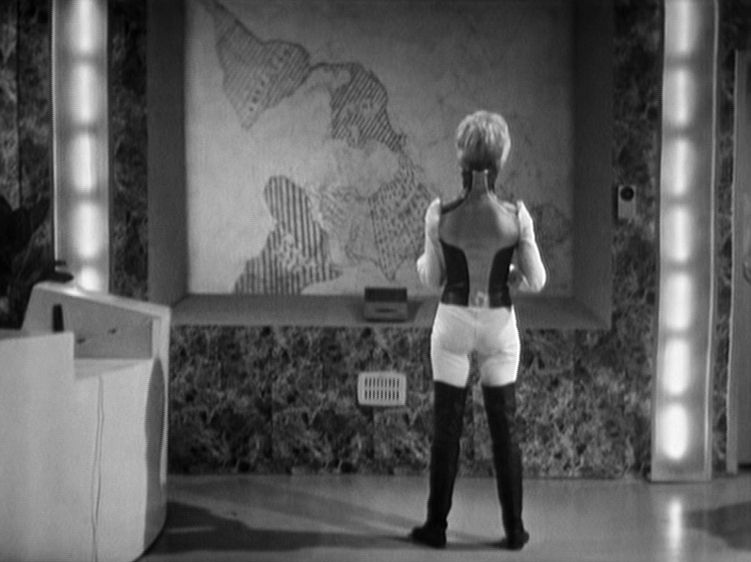
The Doctor, Jamie and Victoria are rescued by Astrid (Mary Peach).  Our first sight of Astrid is from the rear and it’s easy to believe that this was a deliberate shot-choice from Letts as Ms Peach does have a rather attractive derriere.  Certainly something for the dads there!

enemy 01-01

But although it’s impossible to deny that Astrid is an objectified figure right from the start, she’s also a strong, capable woman at a time when that was still something of a rarity in Doctor Who.  There are other examples in the Troughton era – Anne Travers in the next story and Gia Kelly in The Seeds of Death, for example – but they were still the exception rather than the rule.

After the Doctor attended to a flesh-wound she picked up during their escape, she begins to delicately pump him for information.  Once she learns he’s a Doctor, Astrid wonders in what field, possibly law or philosophy.  Troughton’s reply, with a faint smile playing around his lips, of “which law? Whose philosophies, eh?” is another of those lovely moments that only works when you have the visuals to match up to the soundtrack.  And it does make you wonder just how many more examples of Troughton’s magic are lost on the audio-only episodes.

Another nice moment comes shortly afterwards when she tells the Doctor that he’s “the most wonderful and marvellous man that’s ever dropped out of the skies” and asks if he’ll do something for her.  The Doctor’s quite taken with her compliment and dreamily tells her that, yes, he will.  But he’s brought up sharply when Astrid tells him it’ll probably cost him his life!  It’s a gag moment, as it’s impossible to believe that the Doctor would ever be taken in by such a cheap piece of flattery, but it’s still amusing.

What happens next is interesting.  The Doctor seems reluctant to meet with Astrid’s boss, Giles Kent (Bill Kerr) and wishes to leave.  It’s Jamie who for reasons unknown (perhaps he fancies Astrid?) tries to persuade him to stay.  The Doctor’s inaction during the story was mainly for practical reasons – an episode could either largely feature Troughton as the Doctor or as Salamander, but it would be hard to do both.  So the Doctor had to drop out of the narrative for a few episodes in order for Salamander to dominate. Therefore, if the Doctor had agreed to the impersonation straight away, then the story would have been over much sooner.

There could be another reason though – since the story was scripted by David Whitaker, the show’s original script editor, whose view of the series was very different from those who came after (especially Dennis Spooner).  Something very consistent in the Whitaker script-edited stories is that the Doctor never decides to stay and help purely out of a sense of moral duty (instead it’s generally because he’s unable to leave – the TARDIS is taken by Marco Polo, the lock of the TARDIS is stolen in The Sensorites, the TARDIS is trapped by a fallen girder in The Dalek Invasion of Earth, etc).  It’s therefore quite reasonable for Whitaker to script a Doctor who’s reluctant to act.

This is unusual for the series at this time though, where the Doctor is generally quite happy to pitch in straight away. But it’s an interesting move, as whilst Giles Kent is very convincing in painting Salamander as a villain, there’s little actual evidence to back this up.  For anybody familiar with the parameters of the series to date, it would seem clear that Salamander = Bad and Giles = Good.  As we’ll see though, things aren’t quite as clear cut and this is an early example of the series taking a more pessimistic world-view where few, if any people, can be trusted.  Possibly the best example of this is The Caves of Androzani which must be unique in lacking any characters (outside of the regulars) that could be said to be wholly “good”.

But even this early on, we have clear evidence that Kent is a ruthless manipulator.  He wants the Doctor to impersonate Salamander but obviously knows that he’ll take a great deal of persuading.  So he contacts Salamander’s head of security Donald Bruce (Colin Douglas).  Since they’re implacable enemies, quite what he says is something of a mystery, but Bruce turns up shortly afterwards and Kent gives the Doctor an ultimatum.  He has to impersonate Salamander and he has to be good enough to fool Bruce, otherwise the lives of Jamie and Victoria will be forfeit.

enemy 01-02<

Doctor Who – More than Thirty Years in the TARDIS

more than

One thing that the range of Doctor Who DVDs (from An Unearthly Child to the TVM) isn’t short of is documentaries.  Just about every release has a plethora of supplementary information – from story-specific features, interviews with people from both in-front of and behind the camera to more tangential featurettes (such as The Blood Show from the State of Decay DVD.  A twenty minute documentary on the use and meaning of blood in society?  No, me neither).

But back at the start of the 1990’s, things were very different.  The only British-made documentary screened during the series’ original twenty-six year run was 1977’s Whose Doctor Who.  Reeltime Pictures catered for the fan market during the 1980’s and 1990’s with the MythMakers series of interview videos, but these (like VHS releases of convention panels) were only preaching to the converted.  A mainstream documentary on BBC1 seemed like a remote possibility.

But 1993 was Doctor Who’s 30th anniversary and even if the show had been off the air since 1989, it still had a certain presence (thanks to healthy VHS sales).  Kevin Davies was keen to make a documentary celebrating the program and he had an impressive calling card – The Making of the Hitch-Hiker’s Guide to the Galaxy – a popular straight to video documentary that mixed archive footage, outtakes and new interviews.

Thirty Years in the TARDIS was to eventually take very much the same shape – although prior to this format being agreed Davies made numerous other pitches which were rejected.  These included Tomb of the Time Lords which would have featured Ace searching the Doctor’s memory in the Matrix – which would have provided the excuse for a series of clips.  Another intriguing possibility was The Legend Begins, a drama-documentary about the creation of the series (Davies suggested Pete Postlewaite as Hartnell).  We would have to wait another twenty years, and Mark Gatiss’ An Adventure in Space and Time, for this idea to eventually hit the screen.

Thirty Years in the TARDIS was produced by The Late Show team and although Davies had been given a free hand, some higher-ups became concerned with the approach used.  Davies wanted to take the nostalgic route to try and pinpoint why Doctor Who had been such as success whilst The Late Show team felt that the documentary should have a more factual basis and so additional interview material was shot.

In the end, this made the transmitted version a rather uneasy comprise between Davies and his producers.  But even though it was a bit of a hodge-podge, there were still plenty of impressive moments (especially the drama recreations).  However, Davies still felt that there was a better documentary that could be made from the material and so in 1994 More Than Thirty Years in the TARDIS was released on VHS.

Davies had free reign to re-edit the program to his wishes as well as adding an additional forty minutes (bringing the running time up to ninety minutes).  From the perspective of 2015 it’s just another documentary, but back in 1994 it was something rather special.

Although the pirate video network (see Cheques, Lies and Videotape on the Revenge of the Cybermen DVD for more info) was still flourishing at the time (which meant that some of the rarer material featured – studio outtakes, for example – were in circulation) not everybody had access to them.  So a major draw of the VHS were the snippets from studio sessions, including The Claws of Axos and Death to the Daleks , as well as ephemera like the Tom Baker/Lalla Ward Prime Computer adverts.  Even the end credits were fascinating, as they were packed with clips of studio off-cuts.

Jon Pertwee, Colin Baker and Sylvester McCoy were interviewed, but Tom Baker and Peter Davison were conspicuous by their absence.  Tom did make an appearance via archive footage though and given that many anecdotes were already calcified by this time (yes, Jon Pertwee does mention Yetis in Tooting-Bec!) this probably wasn’t too much of a drawback.

One notable new section concerned the thorny issue about who exactly created the Daleks (was it Terry Nation, Raymond Cusick or Davros?).  This discussion was intercut with Jon Pertwee’s appearance on the Anne and Nick show where he disagreed that it was Terry Nation (much to the amusement of the studio crew!).

The DVD release of More Than is pretty much a direct port of the VHS master which means that many of the clips look rather grotty.  Along with the staggering number of special features, the amount of restoration work carried out the DVD releases is really highlighted when you see exactly how badly the stories used to look.

If you didn’t live through the 1990’s as a Doctor Who fan, then More Than is probably not going to have the same special appeal today as it did then.  Just about every scrap of interesting material can be found in a more complete form somewhere on the DVD range (you want the whole studio spool from The Claws of Axos? You’ve got it) but More Than does manage to compress twenty six years of history into an entertaining ninety minutes.

This obvious nostalgia apart, it remains a very decent documentary that does its best to explain the magic of the series and I’m glad it ended up on DVD.

Village Hall – Mr Ellis Versus the People

jack

For visitors to the blog from outside the UK, today is General Election day.  Of course, those from the UK will hardly need reminding of this as it’s been a constant topic of conversation in the media for some time.  And should no party gain a majority tomorrow, no doubt the conversation will go on!  But since I’ve made my trip to the polling station and cast a vote, it seems apt to dig out this episode of Village Hall, written by the late, great Jack Rosenthal.

The Village Hall has been turned into a polling station and present are three very different people.  First there’s presiding officer, Mr Ellis (Ron Moody).  Mr Ellis is a veteran of every election since 1945 and there’s nothing that could possibly happen which would surprise him.  He’s assisted by the eager young Mr Martin (Brian Miller) and the equally young and eager Miss Robinson (Veronica Roberts).

Mr Martin is deeply aware of the solemn duty they are all undertaking and he’s incredibly keen to impress Mr Ellis (he’s also completely humourless and by-the-book irritating).  Miss Robinson, for some unfathomable reason, is rather smitten with Mr Martin and she tries her best to impress him – but he has his mind strictly on the job in hand.  As the day wears on, the three of them face an increasingly bizarre parade of characters, all of whom are keen to exercise their right to vote (even if many of them don’t understand even the basics).

Although this was made forty years ago, it’s interesting to see how little has changed.  My polling station might be in a church hall, rather than a village one, but it’s still run on the same low-tech lines (just a few booths, a piece of paper and a pencil).

It sounds like an unpromising topic to fill fifty minutes, but Jack Rosenthal always had a keen ear for dialogue and this gives a very decent cast plenty of scope.  There’s so many quotable lines, such as when Mrs Ellis (Majorie Yates) turns up and Mr Ellis tells her that he can tell she’s come for an row, because of her handbag!  Ron Moody is excellent as the permanently harassed Mr Ellis, whilst Brian Miller (Mr Elisabeth Sladen) and Veronica Roberts both offer good support as two more irritants who conspire to make Mr Ellis’ long day even longer.

The setting of a poling station means that a disparate group of characters can enter, briefly cause havoc, and then disappear.  During the day they have to deal with a woman who tells them she wants to vote Conservative but can’t grasp that she has to put a cross on the paper, a man who keeps on putting his cross in the wrong box and another woman who has to have the whole procedure explained to her (and then she further irritates Mr Ellis by asking him where to put the cross!).

There’s plenty of familiar faces, such as Bernard Hill (as a policeman), Michael Angelis, Liz Dawn and a young Richard Griffiths as Mr Ridealgh, who becomes rather belligerent when he’s told that he can’t vote (because Miss Robinson accidentally ticked his name off the list in error).

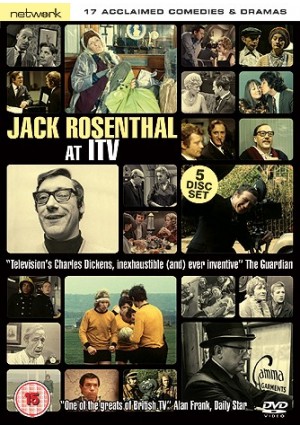
This is available either on the series one set of Village Hall or on the five-disc set Jack Rosenthal at ITV.  Personally, I’d go for the Jack Rosenthal at ITV release as it’s packed with some lovely one-off plays as well as episodes from various series (including Coronation Street and The Lovers).  For anybody who wants an introduction to his work, it’s warmly recommended.

Minder – Gunfight at the O.K. Laundrette

gunfight

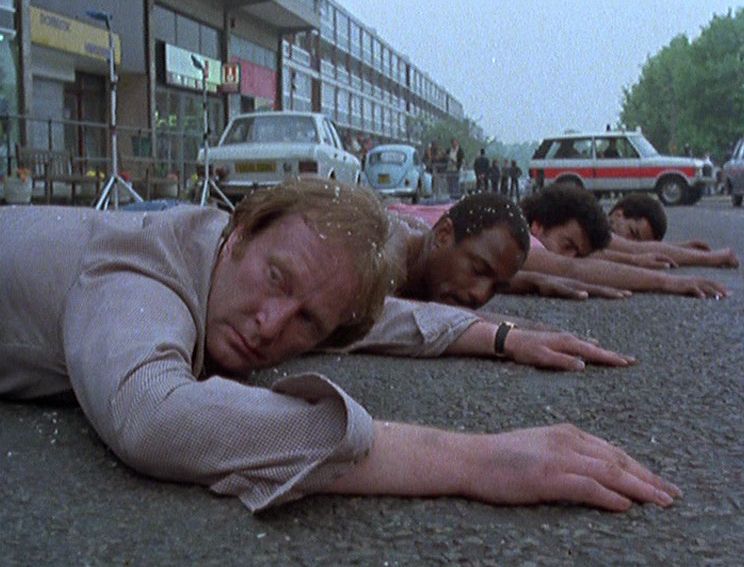
It should have been an easy job for Terry (Dennis Waterman) – a simple case of minding Alfie Cavallo (Dave King) as he collected the money from his string of coin-operated laundrettes.  But a bungled armed robbery, led by Stretch (Trevor Thomas), meant that Terry, Alfie and the unfortunate Mrs Mayhew (Hilary Mason) are taken hostage and a tense stand-off with the police begins.

Richard Marson’s recent book about Verity Lambert describes how she green-lit Minder after listening to a five minute pitch.  Her snap decision paid off as it remained one of ITV’s top-rated dramas for the next fifteen years.  During that time the tone of the series certainly changed, as it became a more comedic, family friendly series – which wasn’t to the liking of everyone (especially Dennis Waterman, who left after the seventh series mainly because he’d felt the show had lost its edge).

Gunfight at the O.K. Laundrette, the first episode (originally broadcast on the 29th of October 1979), retains more of the harder edge of the earlier series, but there’s still plenty of humour mixed in.  It does feel slightly odd though, mainly due to the library music used.  Stock music was often used in Waterman’s (and Euston Films’) previous series, The Sweeney, but it just feels out of place in the early episodes.

The immediate aftermath of the bungled robbery (the shotgun accidentally goes off, wounding Alfie) is probably the weakest part of the episode.  In story terms, it’s important that the police know what’s happened, but the timetable is too contrived.  A shot goes off, a police-car appears from nowhere, an officer sees the hostages being moved to the back room and then calls for reinforcements.  All this seems to take place in a matter of seconds!

Minder was originally planned to be a vehicle for Dennis Waterman and he’s certainly central to this story.  George Cole is much more peripheral, although he’s still highly entertaining.  I love the moment when he breaches the police barrier by the launderette, breezily telling a policeman that he’s with the serious crime squad.  His ability to make money is also readily apparent – he’s able to sell a photo of Terry’s fiance (in fact a girl he’s only spoken to twice) to the newspapers for a tidy sum.
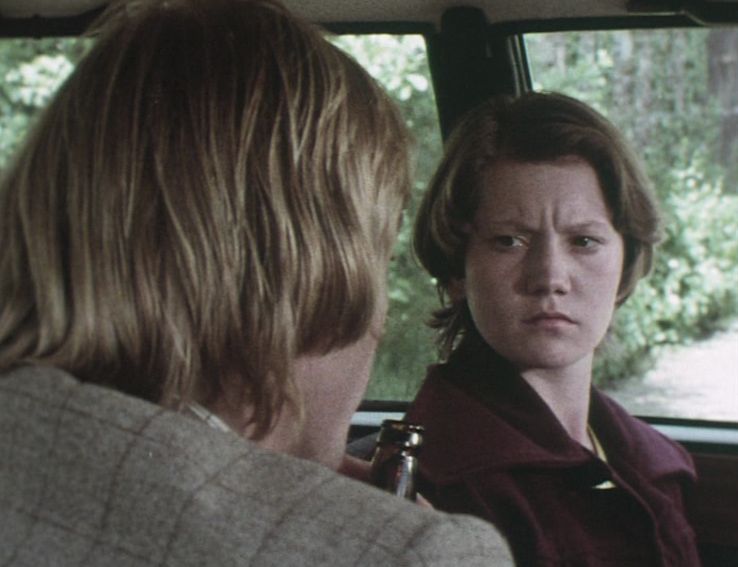
Terry, Alfie and Mrs Mayhew are moved into the back room by Stretch and his two accomplices, Winston (William Vanderpuye) and Cosmo (Leroi Samuels).  Both of them are little more than kids and it’s obvious that they’re in way over their heads.  Stretch is the dangerous one – as it seems likely that he’ll use the gun, Terry slowly begins to chip away at him.

He tells him that attempted armed robbery will get him seven years, but he’ll probably be out within five.  When Stretch asks him how he knows so much, Terry wryly tells him that he used to keep bad company whilst Alfie chips in that he was bad company.  Both Terry and Alfie are old lags, but they’ve done their time and have no wish to go back.

But whilst Terry is earning a (mostly) honest living, it’s one that he admits gives him little job satisfaction – since it consists of  throwing drunks out of strip clubs and providing people with a bit of muscle.  For someone who (as we’ll learn in more depth later on) could have been a contender, it’s something of a come-down.

Leon Griffiths (named after Leon Trotsky by his mother) had been contributing scripts to popular series since the early 1960’s.  The Four Just Men, The Adventures of Robin Hood, Ghost Squad, Out of the Unknown, The Return of the Saint and Hazel were just some of the shows that benefited from his scripting.

But Minder was the first time that he’d devised a show, rather than take on somebody else’s characters and situations.  Although in the end the number of episodes he wrote was fairly small compared to the total number made (15 out of 109) he still set the tone and template for all the writers who followed in his wake.

All the hallmarks of early Minder are contained within this one episode.  Grimy, seedy London (with Terry a regular around the strip-bars of Soho), Arthur’s subtle (and not so subtle) manipulation of Terry and a confrontational relationship with the police.  Terry might be straight now, but he knows that since he’s got a record, he’s a marked man and it’s his uneasy relationship with the law (as well as the conflict between him and Arthur) which would drive the series for a good many years.

Dixon of Dock Green – Conspiracy

conspiracy

No police series could ever hope to avoid the thorny topic of corruption within the force, but it’s fair to say that it was always a difficult one for Dixon of Dock Green to face.  This is due to the overwhelmingly positive picture of the police force always painted by the series (which by the mid 1970’s made it clearly something of an anachronism).

Z Cars’ first episode (Four of a Kind, tx 2/1/62) showed us coppers who made bets on duty and would think nothing of giving their wife a black eye.  So for all of Dixon’s strengths, Z Cars (and other later series including The Sweeney) did tend to be streets ahead when it came to showing the police’s weaknesses as well as their strengths.

But Dixon did occasionally tackle police corruption.  The most famous example is The Rotten Apple (1956), largely because it’s one of only a handful of episodes from the 1950’s and 1960’s to survive.  And the fact that the bent copper was a very young Paul Eddington also helped to keep it in the public consciousness (via clips in documentaries, for example).

A more recent episode, Eye Witness, also had an interesting throwaway moment – when the villain told his henchmen that they’d be able to track down the witness currently held in police protection since they had a pipeline into most police stations up and down the country.  Nothing actually comes of this in story terms (the witness is found another way) but it’s an subtle acknowledgment that corruption was rife in the 1970’s.

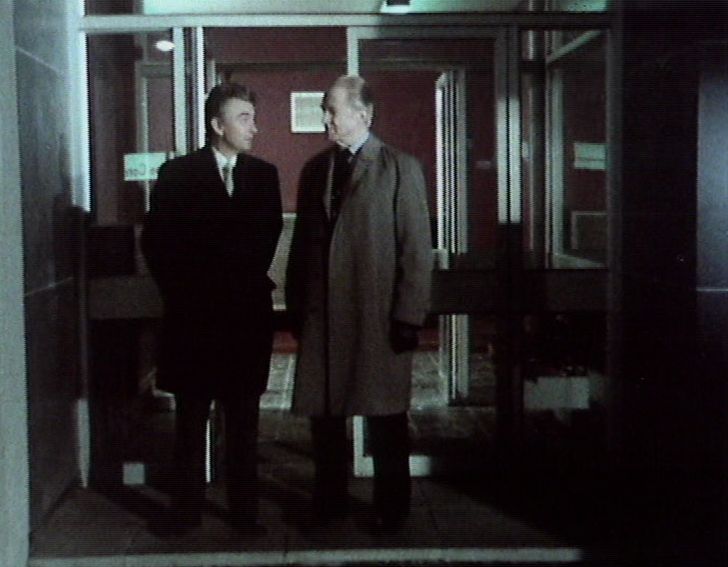
N.J. Crisp’s Conspiracy (originally transmitted on the 10th of May 1975) is essentially a three-hander – shared between Dixon, Crawford and PC Len Warren (Andrew Burt).  Dixon receives an anonymous letter claiming that Warren was seen drinking with a criminal out on probation, Ben Randall (Jon Laurimore).  Warren is the chief prosecution witness in Randall’s upcoming case, which makes the allegations even more damaging.

Dixon regretfully tells Andy that ten years ago they could have simply thrown this letter in the bin, but now it has to be investigated.  Andy’s keen to call in A10 (the department created to investigate matters like this) but Dixon wants to keep it in-house for now (which causes friction between them).

Warren is portrayed as an ambitious man, keen for promotion.  His over-zealous nature and his strict adherence to the law means that he has few friends (either within or outside the force).  He’s a loner, who likes to bend the rules occasionally, and Dixon tells Andy that he sees much of the young PC Crawford in him (although Andy doesn’t take this as a compliment!).

Although the circumstantial evidence of Warren’s guilt is strong (and the story does throw in a few scenes that seem deliberately designed to show him in a bad light, which is something of a cheat) eventually it’s proved that he didn’t accept a bribe from Randall.  But he’s already decided to resign, since he found the investigations into his private affairs (such as questions about how he could afford to buy a new car) to be incredibly intrusive.  Dixon tells him that it’s part of the price he has to pay for being a police officer, but for Randall it’s clearly unacceptable.

Conspiracy was originally planned to be the final Dixon episode (another series was only given the go-ahead very late in the day).  When you know this, it’s easy to see how it was crafted in order to conclude the series.  For one thing, Dixon is much much centre-stage than normal (by this time he’s usually relegated to giving sage advice from behind the station desk).  There’s also several key speeches from Dixon which make specific points.  The first is directed at Andy.

I remember, a long time ago now, a young copper on the beat pressing hard to get into CID. I remember that same young copper as a detective constable, always convinced that he knew best. And later as a detective sergeant who wasn’t above ignoring the book when it suited him. You, Andy. You’ve crossed your fingers and taken a few shortcuts in your time. Mostly they worked out but sometimes they didn’t. Do you know why it took you so long to become a detective-inspector? You got the reputation for bending the rules. But you’re a good copper. And so is Warren.

The second occurs a few minutes later and is directed at Warren.  It’s a signature moment for Jack Warner and it’s very clear that he feels every word.  As the camera slowly closes in on Dixon’s face, Warner seems to be struggling to hold his emotions together – as presumably he believed this would be the last time he’d play the role.  It’s a beautifully delivered monologue.

All the years I’ve spent as a copper, I think every minute’s been worth it. Oh, the police force isn’t perfect. It can’t be. It’s manned by ordinary men. I know we talk about red tape and frustration when a villain goes free and the harm done by the occasional bent copper. But, for all the criticism, the police are there to protect the public, and that’s what we do. We curb violence. We do our best to deal with villains who want to prey on society. I’ve been proud to have been a part of that. Even a small part. It’s been my life for a long time now and I don’t regret any of it.

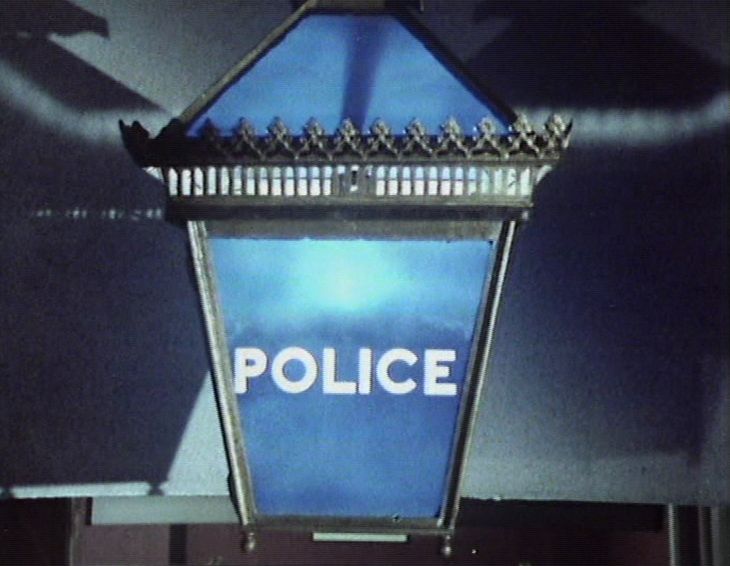
Dixon and Andy then exit the station as the camera tracks up to show the blue lamp above the door, which is followed by the end credits.  This is a subtle nod to the original film and had the series ended there then it would have been a very decent conclusion.

Instead, we’ve one more series to look forward to, although Conspiracy is still the end of an era as Peter Byrne decided not to return.  As a regular since the very first episode in 1955 (which was titled PC Crawford’s First Pinch) Crawford was as much a part of the fabric of the series as Dixon himself and his presence will certainly be missed.

blue lamp

Dixon of Dock Green – A Slight Case of Love

slight

A Slight Case of Love opens in a non-linear fashion, but the reason why quickly becomes clear.  We see a woman telling her fiance that their marriage is impossible, since she has to care for her invalid mother.  This is repeated twice more – with different men but the same woman (although her appearance changes each time).  We then see each of the men hand over a cheque for one thousand pounds.

And this is only the tip of the iceberg as the woman, Kate Harris (Moira Redmond), has also conned at least four other men.  Crawford and Brewer have little to go on – apart from the irate responses of her victims.  One of them, George Bunning (Alec Wallis), can probably be taken as typical, as he’s incredibly angry and demands immediate action from Crawford – warning him that if there’s not a satisfactory conclusion he’ll make Crawford suffer.  Needless to say, Andy’s neither impressed or cowed by this.

This makes the response of Harris’ eighth victim, Lewis Naylor (Julian Glover), even more extraordinary.  He’s also keen to find her, but he doesn’t want her to go to prison – he still wants to marry her and so wouldn’t want his wife to have received a prison sentence.

Naylor is a powerful man (a merchant banker) and it’s hard at first to know if his motives are quite what he claims them to be.  This is due to Julian Glover’s icily efficient and clipped performance.  It’s one we’ve seen from him many times before (his career has often consisted of him playing villains and rogues) so there’s a certain ambiguity in his playing.  But it soon becomes clear that he’s completely sincere and, though he knows he’s not the first she’s conned, to him it doesn’t matter.

Later, we see why Kate has carried out these deceptions – together with her sister Fleur (Isla Blair) she owns a pottery business that is suffering from considerable financial difficulties.  If they don’t find eight thousand pounds then the bank will foreclose on their loan.  It explains why, although when the law catches up with her it’ll hardly be a defence.

Naylor does visit Dock Green but it becomes clear to him that whilst they also want to find the woman, when they do she’ll suffer the full penalties of the law.  So he leaves to hire a private detective to track her down whilst Brewer ponders on the two mugshot pictures he’s picked out.  No other victims were able to identify anybody from the photos held by the police, which strikes Brewer as a little odd.  Dixon surmises that it may be because although Naylor knows they’re not the ones, he wants to question them to see if they know Kate’s true identity.

This is a reasonable assumption, but it’s never followed through and the true reason seems to be that it allows the Dock Green boys to visit the two suspects, add them both to the identity parades, and also bulk out the running time of the episode.  But both encounters are good fun, especially Andy’s run-in with Heather (Mela White).  Andy and Heather are old acquaintances, although she insists that she’s now going straight and tells him she’s writing a memoir of her colourful career entitled Horizontal Confessions.  Andy caustically responds that it should be titled A Hard Time Was Had By All (!).

A Slight Case of Love is an interesting tale of morality.  Both Kate and Fleur are unrepentant – they needed eight thousand pounds and they took it from people who wouldn’t miss a thousand each (Kate considers they would be able to write it off as petty cash).  As a hard-headed, rational businessman, Naylor’s desire to marry her (even though he knows that she’s a serial con-artist) seems inexplicable – and can only be explained away by the fact that he’s in love.

Naylor’s private detective manages to find Kate, which allows the Dock Green coppers to take her into custody.  Five of her victims are lined up to pick her out of an identity parade – four do so and one doesn’t (the one who doesn’t is, naturally, Naylor).  Dixon’s outro tells us that Kate was convicted but also that on her release Naylor was waiting and he closes by saying that it’s “not every discharged prisoner who comes out to spend her honeymoon in the Bahamas.”

Julian Glover gives an excellent performance and he’s the main reason why this episode works as well as it does.  A lesser actor might have struggled with the apparant contridications of his character, but Glover is never less than totally assured.  Moira Redmond (a familar face from both films and television) has a hard role to play – does she love Naylor or is she simply marrying him for his money?  But this ambiguity is something that Redmond can play with and it helps to provide a little spark to the story.  Glover’s real-life wife, Isla Blair, played Fleur.  It’s the less rewarding, more passive role, but it’s always a pleasure to see her.

This is one where the detection is pretty minimal (and it’s the private detective that does most of the work anyway, although Crawford is happy with that).  Instead, the focus is on the rather mismatched pairing of Kate Harris and Lewis Naylor.

Timeshift – Live on the Night: The Story of Live TV Drama

I’ve uploaded some bits and bobs to my YouTube channel over the last few days and one of them is this Timeshift documentary from 2004.

It tells the story of live British television drama – from the early days and then right up to date.  Covering programmes like the original Quatermass serials, Nineteen Eighty-Four, Dixon of Dock Green and Z Cars and featuring interviews with Nigel Kneale, Peter Byrne and Brian Blessed amongst others, it ties neatly into some of the shows that I’ve written about in recent months.

Dixon of Dock Green – Looters Ltd.

looters

Charlie Barnet (Sam Kydd) is an old time villain, newly released from prison.  In his prime he could scale any building – but a bad fall on his last job put paid to that and now he’s reduced to walking with a stick.  On the way back to his welcome home party he notices a man (played by Robin Ford) being mugged and intervenes.

He leaves his name and address with Sgt Wills and promises to pop into the station later to make a statement.  But when Dixon learns his identity, he realises that it’s unlikely that he’d make an appearance under his own steam, so he decides to gently gatecrash his party.

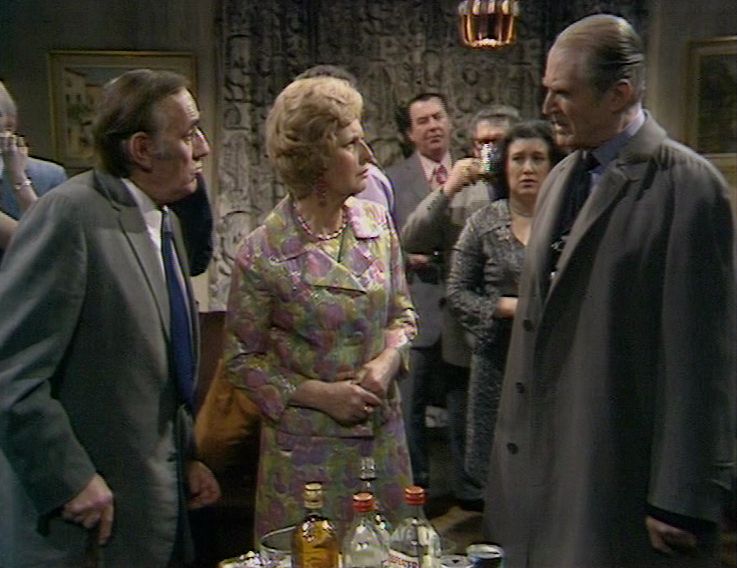
The relationship between Dixon and Charlie is a familiar one from the series (and in fact you can date it right back to the original film The Blue Lamp).  Charlie may be a criminal, but he’s an honourable one and there’s something of a grudging respect shown by Dixon towards him – one professional to another.  When Dixon crashes the party, there’s an awkward silence from most of the guests (mistrust of the police is obviously ingrained) but Charlie’s polite and hospitable, offering him a drink.  Dixon accepts (compare this to Harry’s Back where we see Dixon look askance at a drink bought for him by Harry).  George then offers to find Charlie some work.

At the start of The Blue Lamp, a voice-over contrasts the type of decent old-school criminal (like Charlie) with the younger, wilder criminal element who use violence without thinking.  It’s an interesting dichotomy –  which is also expressed in this story as on the one hand we have Charlie and on the other we see his son Ray (Terry Cowling).

By a remarkable coincidence, Ray was one of the muggers who attacked the man in the street (Ray later gave Charlie the mugged man’s gold wristwatch as a present).  Charlie tells his son he’s ashamed of him, but doesn’t want him to go straight.  “I’m talking about you learning a proper trade. I don’t want no son of mine to turn out to be a small-time mugger. A proper trade. Like I had.”  He offers to have a word with one of his friends, but he’s told that “the young-un’s today, they’re too wild.”  which reiterates the chasm between old-school career criminals and the younger ones.

The rest of the family are doing nicely – Charlie’s wife Olive (Margery Mason) and their daughter Diana (Gwyneth Powell) run a thriving business, offering virtually anything for sale at reasonable weekly installments.  Naturally, all of their stock is stolen – they’re prolific shoplifters.

Sam Kydd delivers a nice turn as the head of a thoroughly criminal household and Gwyneth Powell (previously seen in Eye Witness), Margery Mason and Terry Cowling offer very solid support.  And the opening party scene is great fun, with the sort of bad-taste visuals that clearly mark this as the mid seventies!

Gerald Kelsey was a prolific writer for Dixon (forty three episodes between 1963 and 1976) although the majority no longer exist.  But on the evidence of this one he had a good grasp of what made the series tick – namely the conflict between the police and their prey.

Dixon of Dock Green – Baubles, Bangles and Beads

baubles

Baubles, Bangles and Beads opens with a scene that could have come from The Sweeney.  A police car is in hot pursuit of another car which contains three dangerous-looking characters (played by Brian Glover, Johnny Shannon and Frank Jarvis).  They’re desperately looking for a place to stash a bag of stolen jewellery, but the police car is too close behind.  In desperation they fling it out of the window and it lands in somebody’s back garden.  Unfortunately for them, it doesn’t remain there for long …..

Given how much of Dixon is lost (only thirty two episodes exist from over four hundred made) it’s hard to get a feel for the variety of stories that the series might have tackled.  And one thing we haven’t seen so far with the colour episodes is one played for laughs, until Baubles, Bangles and Beads.

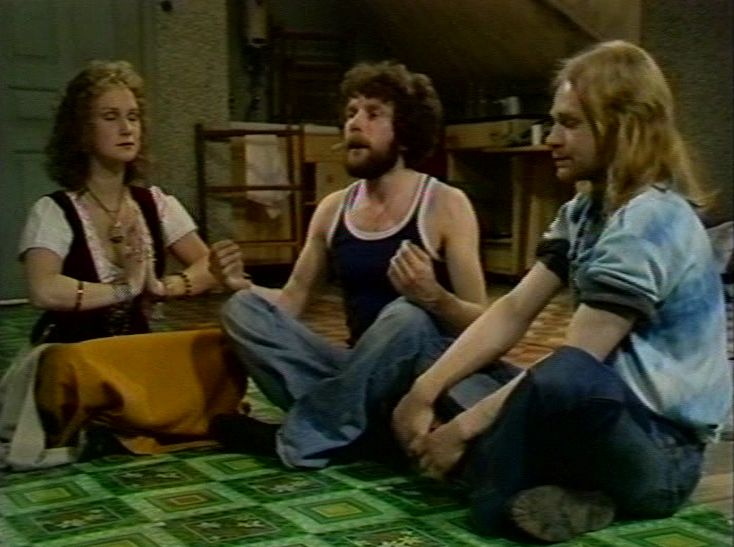
It’s an interesting culture clash as we see three old school villains – Chuck (Brian Glover), Bert (Jonnny Shannon) and Syd (Frank Jarvis) – confronted with the bewildering world of alternative religion.  The bag of jewellery was found by Eric (Leon Vitali) who has been squatting with Phil (Peter Denyer).  Both are seeking enlightenment – although Phil seems to be further down this road than Eric (which is something he takes great pleasure in pointing out to his unfortunate friend several times).

Eric’s a simple trusting soul whilst Phil is rather humourless and dogmatic.  When Eric expresses dismay over Phil’s purchase of tomatoes (Eric can’t eat them as they make him sick) Phil has no sympathy.  “That’s what I call giving in to your lower centres. Don’t you realise the body is always trying to subvert your higher consciousness?”

They move from the squat to another location and in the room opposite is Marion (Kitty Stevenson) and several of her friends.  Like Eric and Phil, Marion and the others are also seeking enlightenment, although they do so in ways that shock Eric.  When he pops over to ask for a match, he rushes back to Phil to tell him that they’re meditating – but with no clothes on.  Phil takes the news quite calmly.  “That’s nothing. That’s your trouble, that is. You’re carnal oriented. I’ll go see ’em.”  Marion later explains that “to deny the body, one must first see it as it is, in all its gross intransigence.”

She’s learnt this from Guru Rhum Rhaji.  His Temple – the Temple of Godly Effulgence – is close to their flat and Eric, iimpressed with what he’s learnt about him, joins Marion to pay homage.  Eric’s delighted to hear that Rhaji doesn’t charge people to enter his Temple (unlike Phil’s guru, Shashti Ap Davies, who requires 10% of all his disciples earnings).  Rhaji is pleased to accept gifts though – although he refuses the one offered by Eric (a rather indifferent picture).  So the next time he goes along, Eric takes something that he’s sure will be acceptable – the bag of jewellery.  And unsurprisingly, Rhaji accepts this offering.

Rhaji bears some similarity to the likes of the Maharishi Mahesh Yogi.  By the mid seventies, he would have been best known by many people for his brief association with The Beatles (and also for their later denunciation of him as a fake).  Baubles, Bangles and Beads also takes this line – that some religions are nothing more than a con.  As Sgt Wills says, the people who believe (like Eric, Phil and Marion) are decent enough, but the inference is they’re nothing more than fools being misled by tricksters.

This is made plain when Rhaji and his sidekick are exposed as two very English con-men – Ernie Bishop and Gus Todd.  This is a funny scene (although the fact they’re browned up and affecting cod Indian accents probably means that not everybody will see the joke).  Once they’ve been rumbled by Dixon, they remove their false beards and turbans (with Gus changing from an Indian accent to a Cockney one, telling Dixon that it’s “nice to get this clobber off. Don’t half make you sweat, you know.”)  Ernie’s unrepentant, telling Dixon and Wills that “we’ve all got to earn a crust haven’t we?”  He then admits that there’s “more money in religion, pays quite well.”

Although the message of the story may strike some as a little narrow-minded, the comedic performances of Peter Denyer, Leon Vitali and Kitty Stevenson make up for it.  Denyer (who died far too young, at just 62 in 2009) had two signature roles – Dennis Dunstable in Please Sir! and Ralph in Dear John.  Both of those characters were rather dim, as is Phil here, but the difference with Phil is that he doesn’t realise it.  Denyer perfectly captures Phil’s parrot-like nature (it’s clear that everything he says has been learnt by rote from Shashti Ap Davies and he has no original thoughts of his own).

Leon Vitali also appeared in Please Sir! (although just one episode) and later was a regular in the spin-off series The Fenn Street Gang.  He also seems to have been a favourite of Stanley Kubrick (appearing in both Barry Lyndon and Eyes Wide Shut).  Although Eric seems somewhat naive, he ends up in a much better position than Phil – since he elects to stay with Marion (who’s going to teach him mediation and maybe other things).  One delightful scene later in the story occurs when Marion decides that the only way for Eric to conquer his carnal thoughts is to confront them head on – and as the camera tastefully pans away, the audience can guess the rest.

This was Kitty Stevenson’s sole television credit, which is a little surprising since she gives a deft comic performance.  Elsewhere, Brian Glover, Johnny Shannon and Frank Jarvis are three very familiar television faces who help to enliven proceedings.

This is one of two episodes from series twenty one that only exists as an off-air recording (presumably made at the BBC, although domestic video recorders were available at the time).  There’s some picture interference, but for a recording of this age it’s not too bad.  It’s obviously several rungs down from the original VT, but it’s better to have it than not.

An unexpected comic episode, it may not be to everyone’s tastes but I found plenty to enjoy.

Dixon of Dock Green – Seven for a Secret – Never to be Told

seven

Seven for a Secret – Never to be Told has an eye-catching opening.  A man enters a house, cigarette in mouth.  Once inside he strikes a light and there’s a deafening explosion.  Gas is the culprit, but it wasn’t a leak – all the gas points had been deliberately turned on.  The discovery of a woman’s body points to suicide, but there’s a few things (such as an open window) which strike Dixon as odd.

The dead woman was called Mrs Pengelley.  Her neighbour paints a less than flattering picture of her – an alcoholic who also enjoyed the company of many male friends.  She did have a husband, Alf (Forbes Collins), but he claims not to have seen her for several years.  One of her recent liaisons, Ralph Harding (Andrew Bradford), has disappeared – and what concerns the Dock Green officers is that he has the Pengelley’s sixteen-year old daughter Chrissie (June Page) with him.

Dixon’s pieces to camera, which traditionally top and tail the programme, can often set the mood of the episode as well as informing the viewer about the type of story they can expect.  Here, Dixon’s quite upfront in telling us that there wasn’t actually a Pengelly case at all – which leads the viewer to suppose that no crime was committed.  That’s a nice piece of misdirection and it keeps the story ticking along until all the pieces of the puzzle are put into place right at the end.

It’s clear from the start that there’s a bond of secrecy between Ralph and Chrissie (hence the title).  The obvious inference is that he’s killed Mrs Pengelly and taken the girl away for reasons of his own.  There’s certainly several indications that this might be so and Bradford gives a nicely off-kilter performance.  Later, we learn that Ralph suffered as a boy at the hands of his abusive father and was institutionalised for several years.  As for Chrissie, her father told Crawford and Brewer that she was “a bit backward, like.”  June Page captures this well – giving her a child-like naivety and a blankness that marks her out as a potential victim.

This was another all-film episode and moving into the countryside in the second half (as Crawford and Brewer pursue Ralph and Chrissie) allows for a sharp change from the normal visuals.  The Dock Green environs are rather grimy and rundown, so the beauty of the open countryside is very different.  It’s just a pity that, as with all the film inserts we’ve seen, it now looks so poor (a decent restoration would have made a considerable difference).

Jack Warner has a few nice scenes, as he questions several witnesses, although his lack of mobility is pretty obvious.  He’s either very static or if he has to walk, we only see him take a few steps before the camera cuts away.  The most obvious example of this is at the fairground, where the brief shot of him walking makes it painfully obvious just how slow he now is.

Seven for a Secret – Never to be Told was the second story of the twenty first series (originally broadcast on the 22nd of February 1975).  It’s odd that it followed the series opener, Target, since that was another all-film production (you would have assumed they’d want to spread the few film stories out a bit).  It’s undeniably a slow, character piece but June Page and Andrew Bradford are both worth watching – as they’re a strangely mis-matched couple whose bond with each other only becomes clear right at the end.

Also good value is Denis Goacher as Sgt. Dawes, the country copper who assists Crawford and Brewer in tracking down Ralph and Chrissie.  His performance has a delightful slowness to it and this clashes with the urgency of the London officers.  But he’s no fool – he spots a clue that Crawford and Brewer miss and his knowledge of the area proves to be invaluable.

Not the most memorable Dixon episode to have survived, but Derek Ingrey’s script is not without merit.  He was quite a prolific writer for the series – penning nineteen episodes between 1972 and 1976.  Two more of his scripts from this series (Baubles, Bangles and Beads and A Slight Case of Love) exist as do all of the five stories he contributed to the final series in 1976.

Dixon of Dock Green – Target

target

Target was the opening story of Dixon’s twenty first series (originally broadcast on the 15th of February 1975).  It’s a slow burner of an episode, as it takes a long while to establish who the target is, but there’s plenty of interest before the plot really kicks into action.

We open in a supermarket and the camera follows a man we later learn is called Smith (Anthony Steel).  He’s clearly not a well man as he staggers outside in a barely conscious state.  Vere Lorrimer’s camerawork in the early part of the episode quite effectively illustrates Smith’s distressed state (the cameras of this era are too bulky to be used hand-held, but there’s more fluidity in some shots than you’d normally expect).

When Smith exits the supermarket, the sounds of drilling trigger a flashback – and for a split-second Smith believes he hears gunfire and that the young black man, Winston Dallas (Willie Jonah), who’s concerned for his well-being is an enemy.  Winston manages to get Smith back to his flat, but Smith then pulls a gun and Winston flees.  This is enough to involve the coppers at Dock Green, but when they arrive they find complications – as Smith’s flat is already being watched.

There’s some nice humourous touches in Ben Bassett’s script.  When Crawford realises that three Special Branch officers have been staking out the flat (complete with a tent, pretending to be workman) he takes great pleasure in telling them that every criminal worth his salt knows about that particular dodge.  Wills later remarks that they tried to catch Jack the Ripper with a tent!  Mike Brewer then waylays a French onion seller and offers him a tidy sum of money so he can borrow his bike, onions and beret.  Did French onion sellers, especially such cliched ones ever exist?  Well they do here.

The Special Branch officers tell Crawford that they’re waiting for the arrival of a man called Kumal (Yashaw Adem), who was responsible for a particularly brutal massacre in Central Africa.  Smith is a friend and colleague, so they’re confident he’ll show up.

Once Smith recovers from his bout of malaria, his character’s drawn out thanks to several conversations with the owner of the flat, Joyce Baird (Freda Knorr).  Anthony Steel is excellent in these scenes – Smith is a man who’s unrepentant that his profession is killing, but he’s not a mindless thug.  Mercenaries like him regularly featured in the news back in the seventies (and in films such as The Wild Geese) and whilst such a character has less resonance today, thanks to Steel’s performance it’s still compelling.

As for Dixon himself, he has little to do, which is rather surprising for a series opener – instead Crawford and Brewer handle most of the action.  Although there’s a little gunplay along the way, it’s still far removed from action-orientated series such as The Sweeney.   Instead, Target is a decent character piece and a solid start to this series.

Dixon of Dock Green – Firearms Were Issued

firearms

Crawford leads a raid on a suspected gang of armed robbers.  Due to the possibility that they may still be armed, the Dock Green officers are also issued with firearms.  Dixon, in his role as desk sergeant, is precise in ensuring that all the correct procedures are carried out before a single gun is issued.  But events go seriously wrong and an unarmed man is shot and later dies, which means that Crawford and the others find themselves under investigation.

Apart from Crawford, Det. Con Cox (Peter Tilbury), Sgt. Wills (Nicholas Donnelly) and PC Dewar (David Masterman) are the other officers issued with firearms.  Before the operation, we’re given some indication about how two of them may react. Wills is an experienced firearms officer and so it can be assumed he will be cool under fire.  Cox is much less experienced (he’s only ever fired a gun on the training ground) whilst Dewar is an unknown factor.

The raid takes place at night-time and is effectively filmed.  The darkness makes it harder to understand what happened when the fatal shot was fired (which was obviously the intention).

Part of the conflict in Firearms Were Issued is driven by the different policing styles of Crawford and Dixon.  The younger man has a willingness to bend or break the rules in order to achieve the right result – something which is anathema to Dixon.  This is highlighted when Crawford attempts to leave the station to try and contact the informant who phoned in the original tip off.  Dixon’s quite firm – if he leaves the station then he’ll have to let the appropriate people know.  It’s a nice character moment for both, especially Peter Byrne.

Dixon is an old school, by-the-book copper – and a major part of the character’s appeal has to be Jack Warner himself.  Since he’d been playing the part so long, he’d become a virtual embodiment of “the good old days”.  But this nostalgia for better, simpler times gone by isn’t always a good thing.  It may have provided reassurance for a section of the audience at the time, but in the decades to come it was probably a key factor in the less than flattering readings we’ve seen the series receive.

But though the episodes on the first DVD have been more diverse than the reactionary Dixon of legend, it’s fair to say that the resolution of Firearms Were Issued will give critics of the series some ammunition.  It’s a much less progressive message than, say, Sounds, but although it’s an eyebrow raising conclusion it’s far from the norm (based on the small sample available anyway).

The investigation is quite intense and it leads to some decent character conflict between the Dock Green officers and Det. Chief Supt. Donovan (Percy Herbert).  The officers are insistent that the gang were armed but an intensive search fails to locate any weapons.  Did one of them shoot an unarmed man?  And if so, why?

Percy Herbert’s an intimidating presence as Donovan (he had a long career, including notable appearances in films such as Bridge on the River Kwai and The Guns of Navarone).  The versatile actor/writer Peter Tilbury made the second of his two appearances as Cox whilst the ever reliable Cyril Shaps played the somewhat shifty Green.

Whether Kendrick was armed or not, when the fatal shot was fired he was running away.  But Dixon sums it up as follows.

The four men who went out that night had every reason to believe that they were going to deal with armed and dangerous men. Later, the report for ballistics confirmed that Sgt. Wills had shot Kendrick. An inquest was held and the jury returned a verdict of justifiable homicide.  I think I’d have done the same as Dewar and Wills in those circumstances.

Dixon of Dock Green – Sounds

sounds

A few mysterious sounds of the end of the phone are enough to spark major activity at Dock Green nick.  The story opens with Anne Turner (Marion Lines) and her daughter Janey (Lyn Doyle) returning home.  “Home” at present appears to be a rather dingy flat in a very run-down area.  Anne notices the door is unlocked, which concerns her.  She sends Janey downstairs to play and calls Dock Green police station.

But after only a few words, WPC Hawkins (Jacqueline Stanbury) hears a choking noise as if she’s being strangled.  Dixon takes over the call and a few moments later Janey picks up the receiver, telling Dixon that her mother’s asleep.  Then either Janey replaces the receiver or somebody does it for her.  It’s little enough to go on, but Crawford, Brewer and Dixon put their heads together to try and work out what they can establish from the few sounds recorded from the call.

Sounds (the sixteenth episode of series twenty, originally broadcast on the 13th of April 1974) is very much an episode of two halves.  The first is concerned with the hunt for Anne and Janey and the second (which is the more dramatically interesting) details what happens once they’ve been found.

To begin with, they scour the tape for clues – they can hear the sound of machinery and also the hooter of a tug on the river.  Officers at Dock Green obviously have an affinity with the river, as Crawford’s able to ascertain that two hoots means the tug is turning to starboard.  He then asks for the name of every ship on the river that sounded its hooter at the time the call was made.  This should help to narrow down the search field.

An expert, Dave (David Wood), is called in to examine the tape.  He’s the antithesis of Dixon – since he sports long hair and colourful clothes – but since he’s an expert in his field, there’s grudging respect.  Dave is able to isolate the machinery noises much more clearly.  Neither Dave or Dixon can quite put their finger on what the machinery could be, but WPC Hawkins is able to smugly tell them that it’s a Heidelberg Superspeed Platen printing press.

This impressive feat of deduction is explained when she tells them that the recording could be heard in the station office and at at exactly the time it was being played, a stationary delivery was made and the printer’s apprentice recognised the sound!  This is a little difficult to believe, but it’s necessary in terms of moving the plot forward, as by now we’re half-way through the episode.

This information allows Crawford and Brewer to locate the flat, but there’s no sign of anybody and all personal belongings have been removed.  One clue is that there’s two telephone numbers – one is the Dock Green nick and the other is a local security firm.

Whilst the search for the missing woman and child has been interesting, we now enter the dramatic heart of the episode.  One of the guards from the security firm, Davis (Michael Graham Cox), pays Dixon a visit.  He’s keen to help – frankly he’s too keen and it’s clear right from the start that he has his own agenda.  It doesn’t take too long for the story to emerge.  Anne is his wife (at present she’s reverted to using her maiden name) and whilst their marriage has obviously been punctuated with bouts of domestic violence, he considers himself to be untouchable.  He knows that there’s no case without Anne’s testimony and he also knows that she’ll say that her present injuries are due to her slipping on one of Janey’s toys.

This is what she tells Dixon, but he obviously doesn’t believe it.  When he asks her if he’s beaten her up before she tells him that “it’s just between him and me, isn’t it? A private matter, nothing to do with the police.”  Dixon counters by telling her to “stop repeating everything he tells you. There’s no need to be afraid of him.”  But it’s clear that Anne won’t change her story.  Although she may be frightened of him, there’s also a sense that she genuinely loves him and believes that things will change.  The unspoken inference is that things won’t get better, but without Anne’s testimony, the police are powerless.
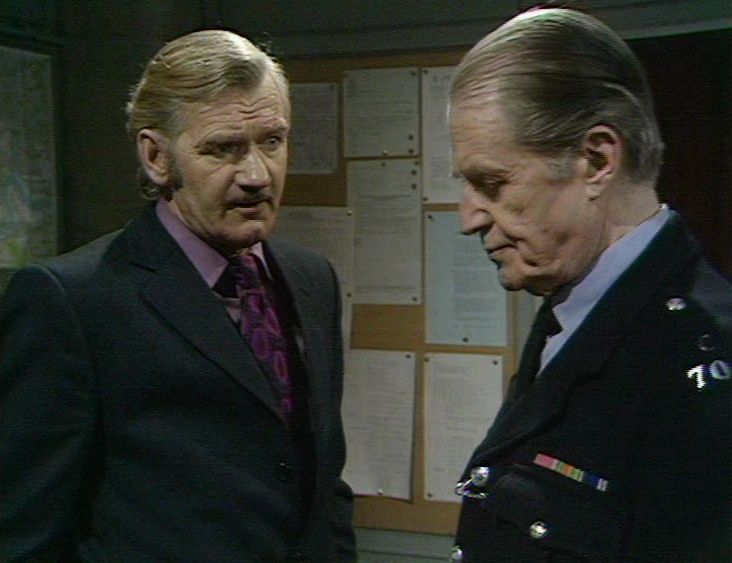
Davis is presented as a loathsome character – an arrogant man who’s sure he’s beyond the law’s reach.  And indeed he is – all Dixon can do is to tell him to leave the station before he gets thrown out.  It’s a small victory, but it’s all they have.

Sounds is a bleak little tale.  It gives us a glimpse inside an abusive marriage and we’re left to wonder what will happen in the future.  In his closing speech, Dixon hopes that Anne will someday pluck up the courage to make a statement (for Janey’s sake if for no one else’s) but that’s the only sliver of hope we’re left with.

This isn’t the first time that Dixon has touched upon the area of domestic abuse.  And due to the fragmentary nature of Dixon’s archive holdings, it’s difficult to know for sure when the series shifted from the viewpoint presented in the 1956 episode, Pound of Flesh.

There, Dixon observed that “if I arrested every bloke in Dock Green who clocked his wife, I’d be working overtime”.   Since Pound of Flesh is one of the rare episodes to exist from the early run, it’s hardly surprising that this quote and clip has been used on more than one occasion as a club to beat the series with.

It could be argued that Dixon’s comment was an accurate representation of the attitudes of mid fifties Britain.  In Sounds, which was made nearly twenty years later, it’s obvious that times have changed and spousal abuse is now taken more seriously.  But it’s still seen as a crime which is unlikely to result in a conviction, for the reasons that we’ve seen.

The lack of any positive solution might come a surprise to those who regard Dixon as a twee, predictable series – but as we’ve seen so far, the truth is somewhat different from the legend.

Dixon of Dock Green – Harry’s Back

harry's back

Harry’s Back (the third story of series twenty, broadcast on the 12th of January 1974) features a familiar plot which many police series have used from time to time.  An untouchable villain, who rarely makes a mistake, is doggedly pursued by a lone officer (even though he’s warned off by his superiors).

In Harry’s Back, Andy Crawford is the officer and Harry Simpson (Lee Montague) is his prey.  Harry’s a beloved figure in his local community (“one of the best”) and his early scenes help to establish his character.  To begin with, we see him return home after some months spent abroad with his new fiance Marion Croft (Susan Tebbs).  He’s greeted by an old man, who offers to carry his suitcases up to his flat – Harry agrees, even though he can see the man is struggling with the weight of the cases.  Harry slips him a few notes and tells him to take his time.  Andy later bitterly reflects that Harry’s a past-master in “buying admiration” and this is an early example.

Harry then runs into Sgt. Wills and although Wills is polite, he’s obviously not delighted to see that Harry’s back.  His disdain would seem to be shared by most of the Dock Green coppers, although Andy’s the only one who actively targets him.  This brings him into something of a conflict with Dixon – although the confrontation, if one can call it that, is very mild.

Dixon’s is an old-school copper.  He’d be happy to pursue Harry if there was clear evidence of wrongdoing, but there isn’t – so he’s content to let him lie.  The inference is that eventually Harry, like all criminals, will trip himself up and that’s the time when Dixon will pounce.  Andy takes the opposite view.  He has no hard evidence but his suspicions are enough to make him want to keep a very close eye on him.  Although this makes it easy for Harry to claim that he’s being harassed.

Throughout the story we see several more examples of Harry’s largesse.  He visits the wife of one of his old friends, Lenny Lane, and gives her a considerable sum of money.  This, he tells her, is simply what she’s owed (he says Lenny couldn’t give it to her himself because he’s lying low).  Later, he visits his local and buys everyone a round.  This is a scene that doesn’t quite work, mainly because everybody seems just a little too delighted to see him.  It just doesn’t ring true.

He also bumps into Dixon and Det. Sgt. Mike Brewer (Gregory de Polnay).  This is another interesting scene, more for what remains unsaid than what is actually said.  We’ve already had several examples of Harry’s generosity and been offered several different opinions about it.  Is he just a warm-hearted man or is he attempting to buy respect and favours?

His encounters with the various Dock Green officers are noteworthy in this respect.  He offers to send Brewer’s wife some perfume and later he tells Andy that he has a nice little house he can let him have, which will save him some money (the clear inference is that he’s offering him a bribe to lay off).

It also seems obvious why he doesn’t offer to buy Dixon and Brewer a drink – you know that Dixon would politely decline.  Harry returns to his friends and a few moments later two large whiskies are sent over to Dixon and Brewer – courtesy of Harry.  A simple generous gesture or his way of offering them a small bribe?  It’s down to the viewer to decide.
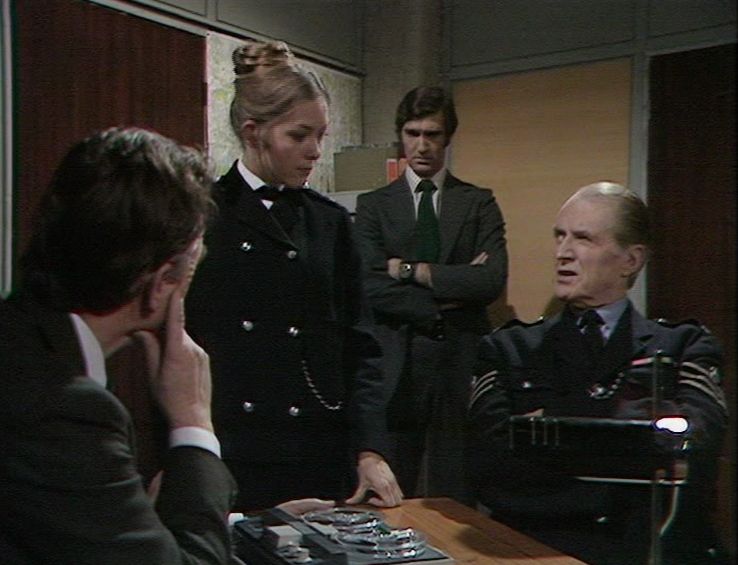
Another scene that’s open to interpretation occurs when Harry meets his prospective in-laws.  He’s only known Marion for a few weeks and this, together with the fact that he’s much older than her, makes Mr and Mrs Croft concerned that the pair of them are rushing into marriage.  Mr Croft (Peter Hughes) works in insurance and when Harry tells him it’s about time he took out some life insurance (say fifty thousand) the atmosphere changes instantly.
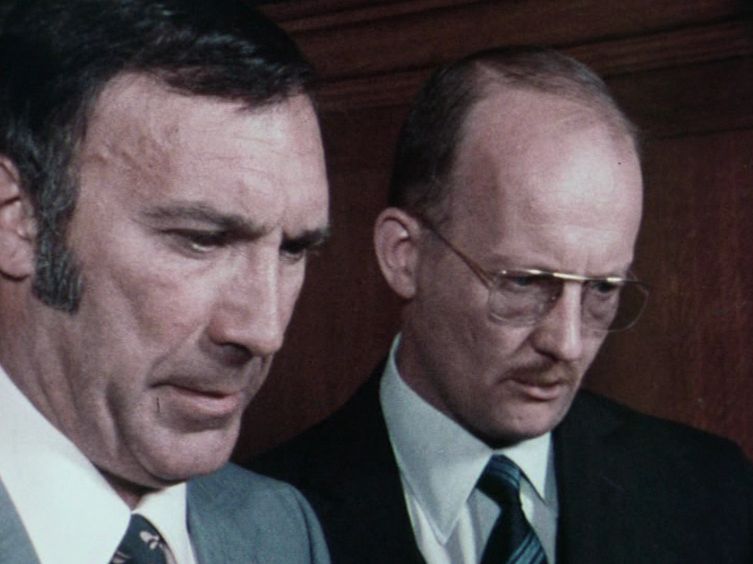
Is Mr Croft happy because he spies a rich commission or is he reassured that Harry’s demonstrated how responsible he is?  The tone of the story may suggest the former (Harry’s offering another bribe) but the scene can be taken either way.
N.J. Crisp was an incredibly experienced writer – penning 66 episodes of Dixon between 1964 and 1975 as well as contributing to numerous other popular series, such as Dr Finlay’s Casebook, Colditz and Secret Army.  It’s therefore a slight shame that Harry’s downfall occurs via two rather clumsy plot points.

The first concerns Harry’s unsmiling number two Bernard Moss (Michael Sheard).  Moss needs a clean driving licence and he buys one from Freddie Barnet (Esmond Knight) for fifty pounds.  Freddie suspects that there’s going to be trouble but when he knows that Harry needs it, he’s reassured.  Moss uses the driving licence to hire a car which is later used to rob a cosmetics van.

Freddie is presented right from the start as a weak link and therefore needs little persuading to tell the police that it was Moss who borrowed the licence.  Moss and Harry are known associates, so it clearly puts Harry in the frame.  Why didn’t they simply steal a car?  That way there would have been no link to Harry at all.

The second feels even more contrived.  Andy has a warrant to search Harry’s flat for evidence relating to the robbery, but the news that Lenny Lane’s body has been found (with a bullet hole in his head) makes him also keen to pin the murder on him.  But Harry’s flat appears to be spotless and it looks as if he’s going to walk away empty-handed – until (somehow) Andy realises that a safe deposit key is concealed inside a footstool.  When opened, the safety deposit box contains, amongst other items, a gun which ballistics confirm was the weapon used to murder Lane.

The way that Andy found the key is a little hard to swallow anyway, but the notion that Harry would keep such an incriminating piece of evidence beggars belief!  We’ve already seen that Dixon doesn’t always have to give us neat, happy endings, so there were several ways this one could have gone.

Harry gets convicted (as happened).

Harry walks away free, but Andy vows to get him next time.

Harry goes free, but divine intervention punishes him anyway (see Eye Witness for a good example of this.  Mr Colly isn’t convicted of the murder but shortly after is killed in a hit-and-run incident.  An accident or not?  Dixon leaves it for us to decide).

The second option may have been the best choice here, as finding the key and the gun occurs so late in the day that it can’t help but feel like something of an afterthought.

This apart, Harry’s Back has plenty to commend it, not least Lee Montague’s performance as Harry.  For most of the story he’s a relentlessly cheerful chap, but just occasionally his mask slips (such as when he suggests to Moss that the hapless Freddie needs to be persuaded not to talk to the police any more).  Michael Sheard is hardly stretched with the role of the taciturn Moss, but it’s always a pleasure to see him.

Susan Tebbs’ longest-running role was as Det. Con. Donald in the first few series of Softly Softly: Task Force.  Marion Croft is a fairly anonymous part, but since I enjoyed her appearances in SS:TF, it was nice to see her here.

Harry’s Back was one of Gregory de Polnay’s earliest appearances as Mike Brewer (and the first that exists).  He remained a regular until 1975, so as we move into a period where the archive survival rate is a little more healthy, we’ll be seeing more of him.  As a Doctor Who fan, I know him best for playing robot detective D84 in the 1977 story The Robots of Death.  But it’s only now, when I realised that he’d formally been a regular in Dixon, that it’s possible to surmise that his casting in Doctor Who was something of an in-joke!

Although the ending slightly lets it down, this is still a strong episode and it’s also notable for a late example of Dixon pounding the beat.  Soon, he’d be forced to mostly remain rooted behind the station desk.

1960’s BBC sitcom Hugh and I (Hugh Lloyd and Terry Scott) to be released by Simply HE in September 2015

hugh and i

Simply HE have announced that they will release a DVD of Hugh and I on the 7th of September 2015.

Hugh and I was a popular, if not first division, sitcom that ran on the BBC for six series, between 1962 and 1967, and starred Hugh Lloyd (a familiar face from Hancock’s Half Hour) and Terry Scott (later to enjoy sitcom fame, or infamy depending on your point of view, in Terry and June).

According to Lost Shows twenty four episodes exist, although the running time of the DVD suggests that it will contain eighteen.  Either the Lost Shows listing is incorrect or the running time is, as it doesn’t seem likely that Simply would only leave a handful of episodes for a second release.

Time will tell and if more information comes to light I’ll update this post.