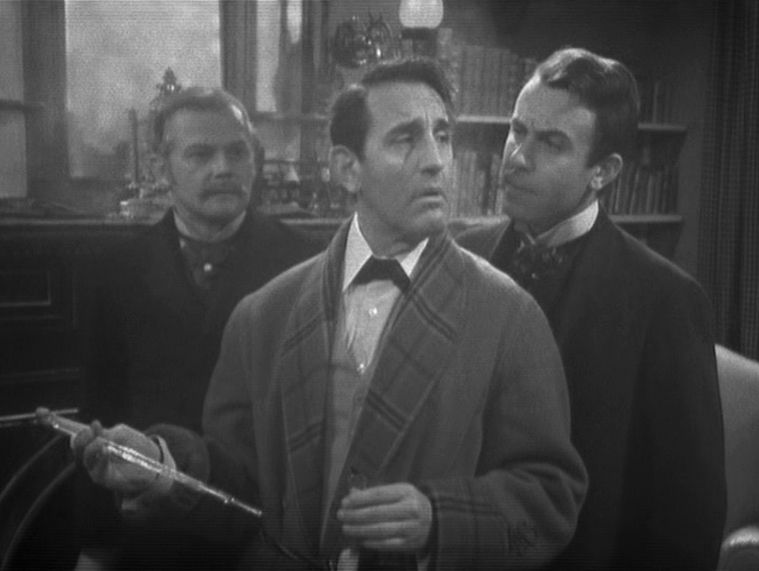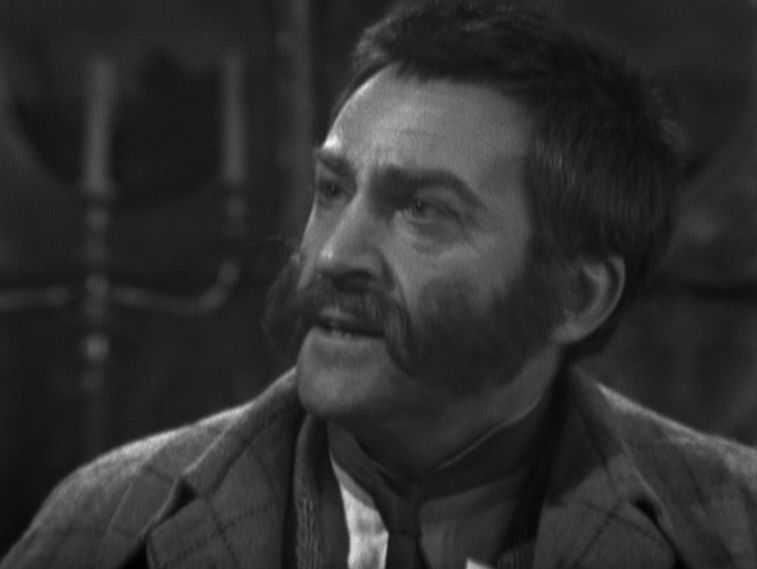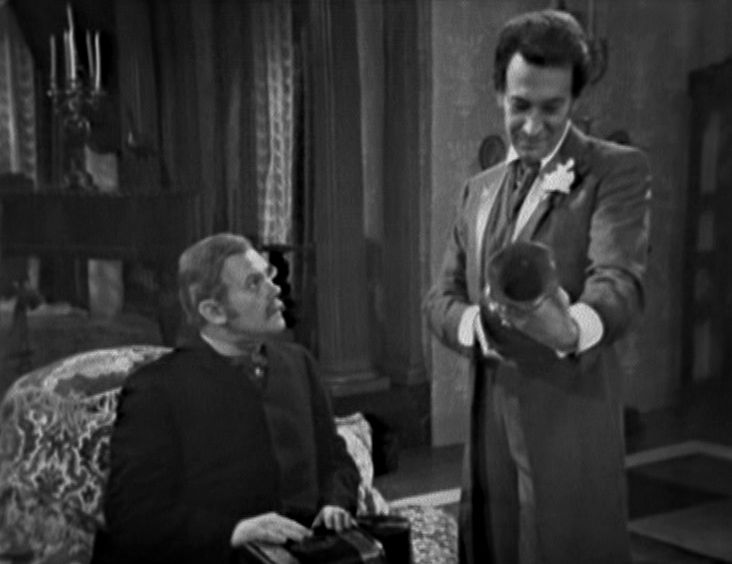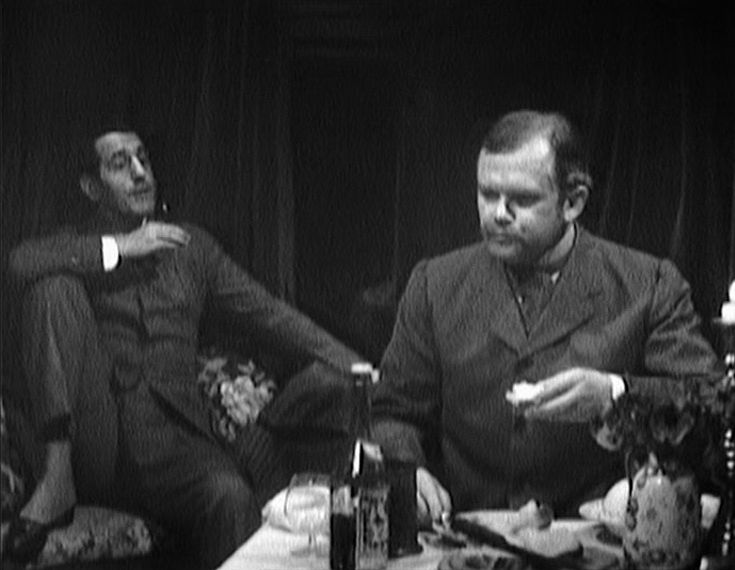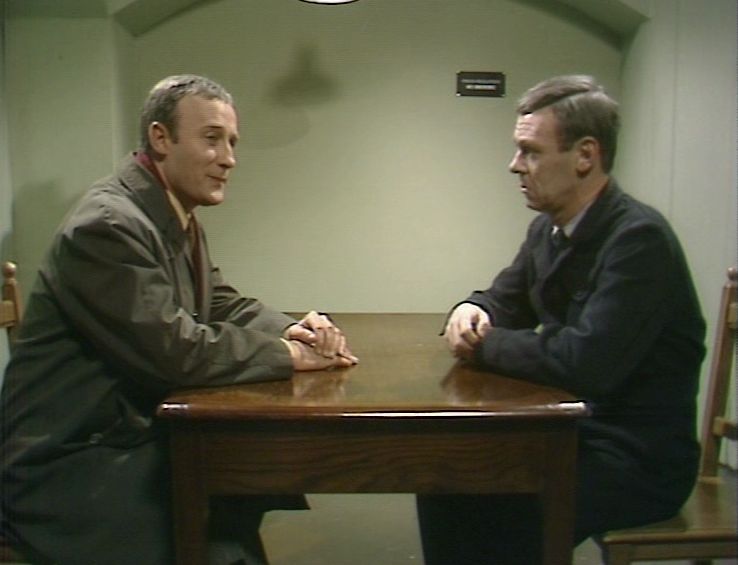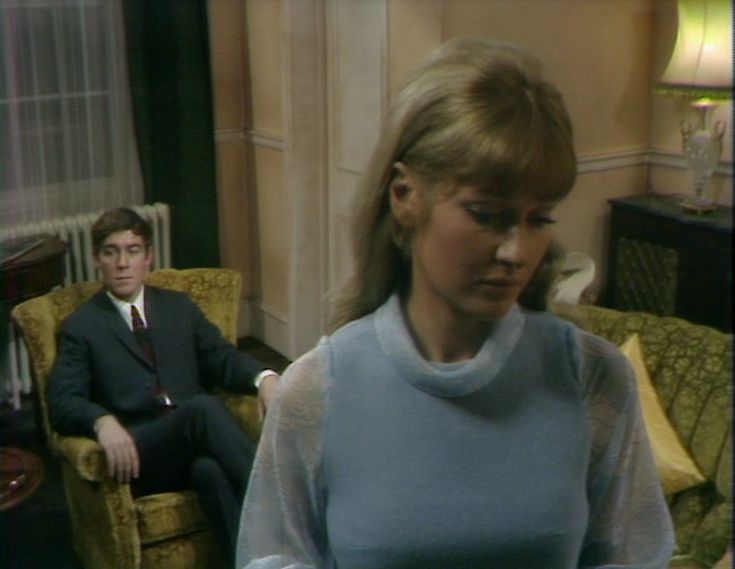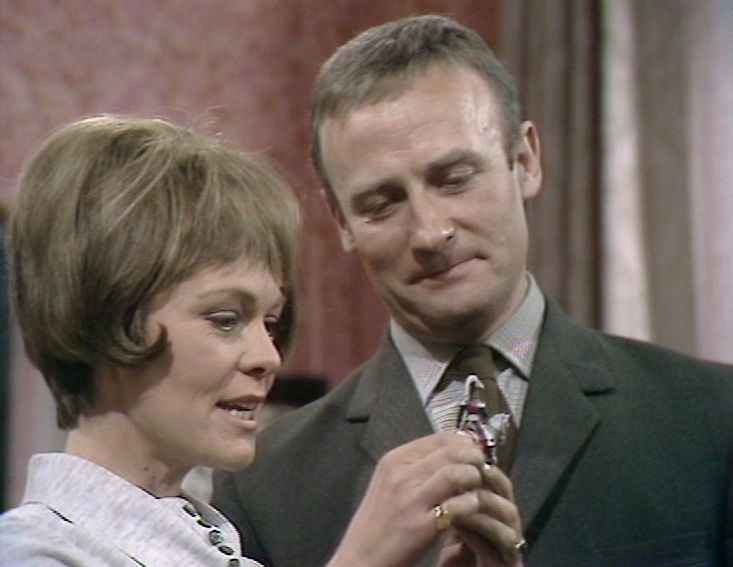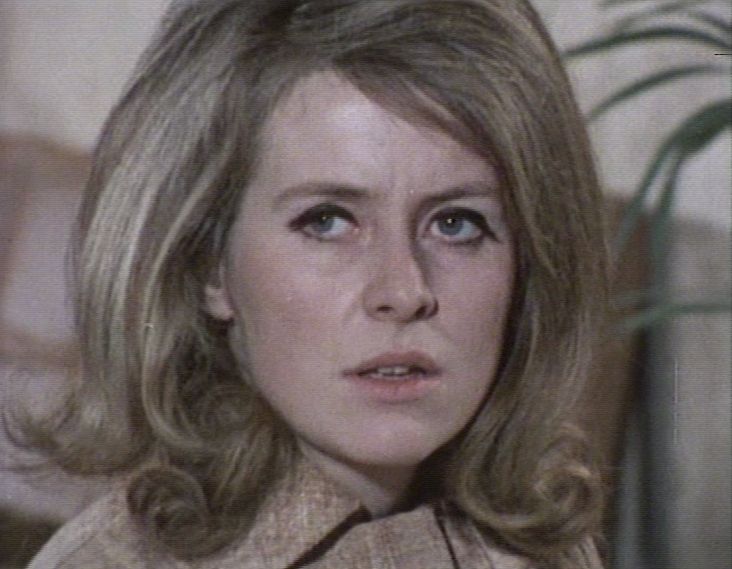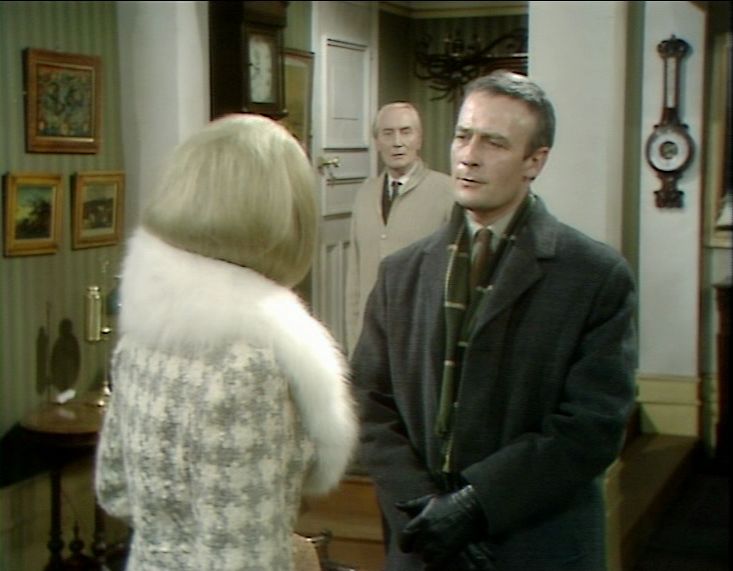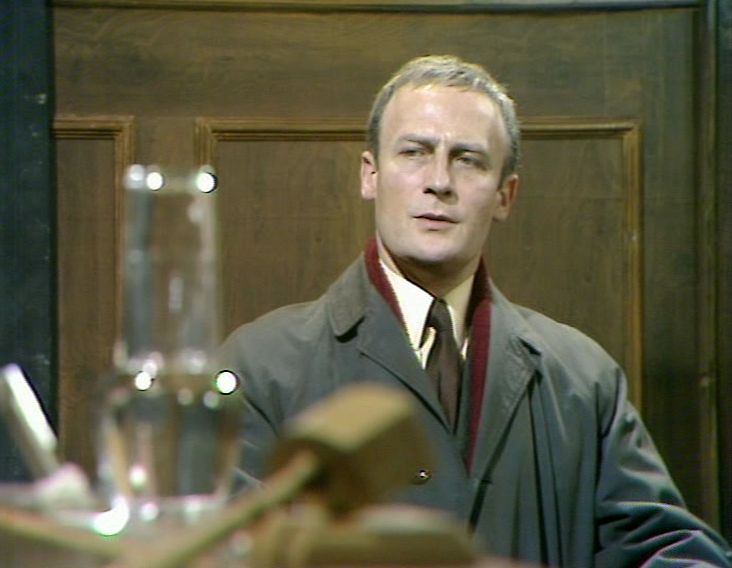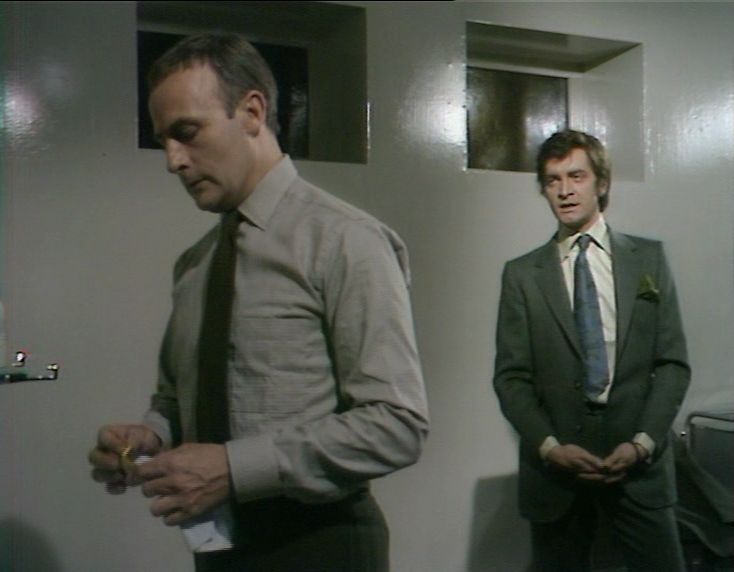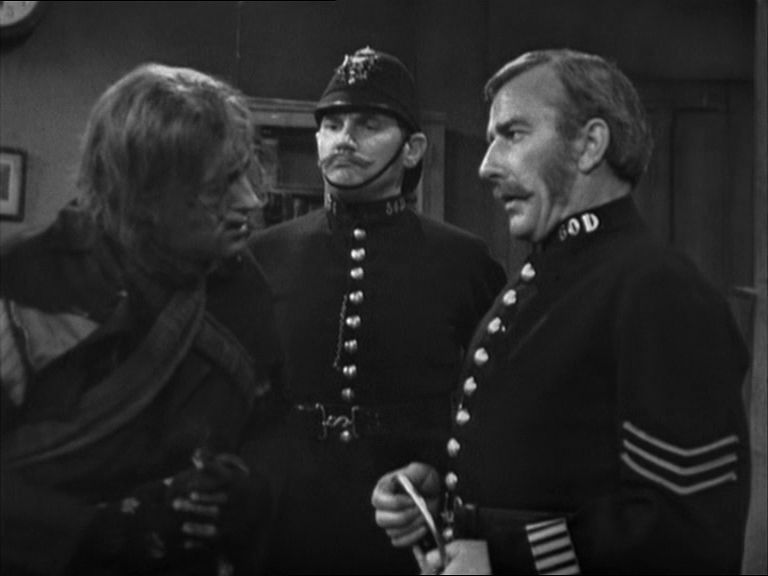
Douglas Wilmer in Sherlock Holmes – The Man with the Twisted Lip

twisted

Mrs St. Clair (Anna Cropper) has travelled to London to conduct some business.  On her way back to the train station, she passes through Upper Swandam Lane (home to a notorious opium den).  Mrs St. Clair is astonished to see her husband briefly at the upper window of this disreputable place – but a second later he vanishes (as if pulled back by some unseen hand).

Neville St. Clair is a respected journalist who would have no reason to visit such a dive – unless he was a secret opium addict.  When Mrs St. Clair returns with the police they find no trace of her husband, although in the upstairs room they do discover a box of children’s blocks.  Mrs St. Clair collapses, as her husband told her he planned to buy such a toy for one of their children that very day.  Mr St. Clair’s clothes are also discovered.

All the evidence suggests that a well-known beggar, Hugh Boone (Anton Rodgers), was with Mr St. Clair when he was spotted by his wife.  Boone is quickly picked up by the police, but he’s saying nothing.  Holmes is convinced that Boone holds the key to Neville St. Clair’s disappearance – which he does, although Holmes’ solution is a most unexpected one.

The Man with the Twisted Lip was one of the original batch of Sherlock Holmes short stories, published in the Strand Magazine in December 1891.  Jan Read’s dramatisation is pretty faithful to the source material, but it’s a pity that the original, striking, opening wasn’t used.  In Doyle’s story, Watson travels to the opium den to extract a friend of his, Isa Whitney, who has fallen under the thrall of the drug.  When he’s leading his friend outside, he’s accosted by an old man (who turns out to be Holmes in disguise).  Holmes then explains that he’s investigating the disappearance of Neville St. Clair.  In Read’s adaptation, Watson does discover a disguised Holmes, but it sits rather uneasily in the middle of the story (where it makes less sense).

Although his screen-time is quite limited, Anton Rodgers is very effective as the disfigured beggar, Hugh Boone.  Anna Cropper, as Mrs St. Clair, is the latest stoic beauty to turn to Holmes for help.  A sign that retakes were only undertaken in the gravest circumstances is demonstrated by the scene where Mrs St. Clair visits Baker Street.  After lifting the veil from her hat, it falls down again and she simply has to push it back up and carry on.

Given the small pool of ethnic actors working in the UK during the period, it was very common to see British actors playing characters of every nationality.  Here we see Olaf Pooley (as the villainous Lascar) browned up.  To modern eyes it may seem strange, but it wasn’t an unusual occurrence at the time.

The Man with the Twisted Lip benefits from some atmospheric location filming in the East End.  The story could have been shot entirely in the studio, but the real locations certainly add something to the end product.  Within a few years redevelopment would have changed the locations beyond all recognition, so they were used at just the right time.

The first story of the series to be made (it was recorded in September 1964) it’s a very efficient production.  Given that the majority of the stories adapted for this series were later also adapted for the Granada series, it’s difficult to avoid comparing the two.  It’s slightly unfair though, since the Granada series had a much larger budget and therefore it would always score highly, particularly in a visual sense.  But whilst the Wilmer series has more modest production values, it can certainly hold its own performance wise, and in the end it’s the performances that really matter.
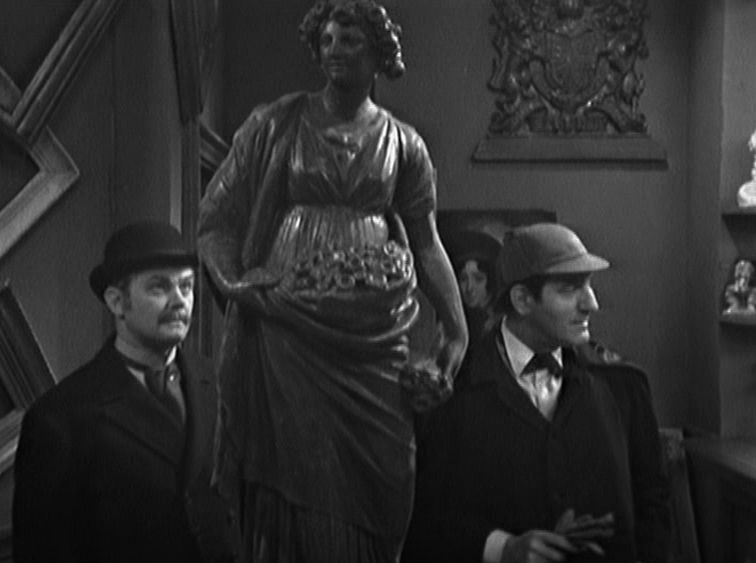
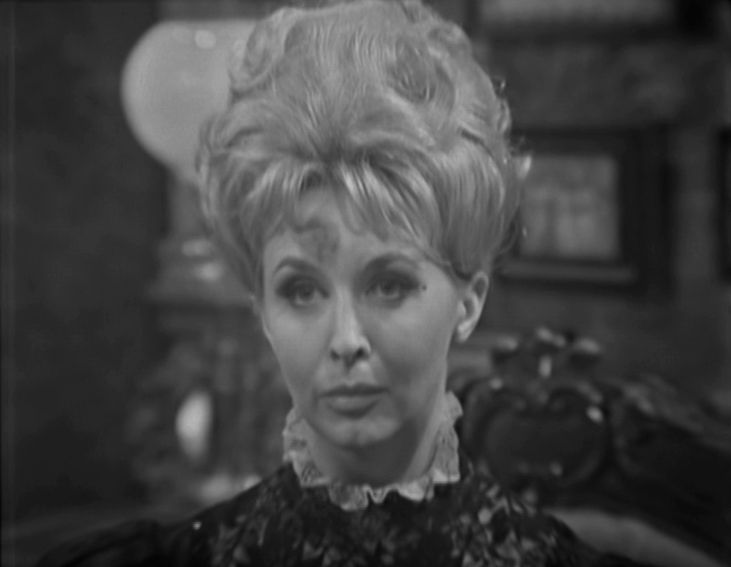
Douglas Wilmer in Sherlock Holmes – The Six Napoleons

six

Inspector Lestrade (Peter Madden) pays a visit to Baker Street and recounts a strange tale to Holmes and Watson.  Someone in London seems to have such a hatred of the late Emperor Napoleon that they’ve taken to smashing miniature busts of him.  What’s even odder is that they’ve resorted to burglary to do so.

Dr Barnicot (James Bree) is a collector of Napoleonic memorabilia, and he’s disturbed to find both his office and house have been burgled and in each case a bust of Napoleon has been smashed to smithereens.  When another burglary takes place, at the home of a journalist called Horace Harker (Donald Hewitt), Harker not only finds his statue smashed, but a dead body as well …..

Like The Abbey Grange, The Six Napoleons was one of the stories published after Holmes’ return from his tussle with Moriarty at the Reichenbach Falls (later collected in the volume entitled The Return of Sherlock Holmes).

The farcical side of the story is emphasied in Giles Cooper’s adaptation.  Bree’s Dr Barnicot is a character who’s certainly played for laughs – he’s depicted as a highly eccentric devotee of Napoleon who advances three theories (all of them bizarre) to Holmes, Watson and Lestrade in order to explain who could have committed such an outrage.

Wilmer, Stock and Madden have little to do in Bree’s scene – but Wilmer especially is a joy to watch as he rolls his eyes at Barnicot’s wild flights of fancy and beats a hasty retreat as soon as he politely can.  When Barnicot is alone again, he takes out a Napoleonic hat and, after putting his arm inside his jacket, strikes a suitably heroic pose by the mirror.  You get the feeling that he does this a great deal!  James Bree was certainly an idiosyncratic actor, capable of performances of depth and subtlety (series one of Secret Army) as well as turns which verged on the bizarre and unwatchable (the Doctor Who story, The War Games).  He’s quite odd here, but since he plays it as scripted and only has a small cameo appearance, it’s quite acceptable.  Had he appeared throughout, it might have been quite wearying though.

The opening of the next scene is nice – Watson is striking a Napoleonic pose back at Baker Street, to the amusement of Holmes and Lestrade.  It’s only a little throwaway moment, possibly worked out in rehearsal, but it does help to reinforce the bond of friendship between them.  Since Wilmer’s Holmes tends to be quite serious, the odd lighter moment is welcome.

The Six Napoleons sees the first appearance of Peter Madden as Lestrade.  Characteristically, Wilmer’s Holmes doesn’t pretend to be particularly pleased to see him at the start of the story – he offers him a chair with the air of a man who’d be equally happy if he left straightaway.  But as soon as he piques Holmes’ interest, the Great Detective is clearly much more kindly disposed to him!

It’s a studio-bound production, but director Gareth Davies does manage to make the most of the limited space and he offers the viewer a few good flourishes.  My favourite is the scene set immediately after the burglary at Harker’s house.  The camera tracks past a number of statues, as well as a policeman standing so immobile that he could be mistaken for a statue.  Which is almost what Watson does, as we see him walk down the line, identifying each statue to Holmes – before giving a double-take as he reaches the policeman.

Elsewhere, the limitations of the studio environment are more apparent.  There’s a brief scene set in the garden outside Harker’s house, which shows the sky to be a rather wrinkled backdrop.  Moving clouds are projected on it – had the backdrop not been so tatty it would have been quite effective.

The comic turns contunue throughout the story.  Later, Holmes finds himself caught in the middle of Josiah Brown and his wife (Arthur Hewlett and Betty Romaine) who are a rather voluble couple.  Wilmer’s pained expession is priceless.

Indeed, this is a story where the solution of the mystery is somewhat secondary to the performances.  Giles Cooper’s adaptation is good fun and certainly allows the cast plenty of scope to produce some ripe turns.

Douglas Wilmer in Sherlock Holmes – The Abbey Grange

abbey

Holmes and Watson are summoned to the Abbey Grange by Inspector Hopkins (John Barcroft) to investigate the murder of Sir Eustace Brackenstall.  His wife, Lady Brackenstall (Nyree Dawn Porter), was also attacked, but only received superficial injuries.

Holmes is irritated to have been called out as the solution seems obvious.  The district has been plagued by the Randall gang (a father and two sons) who have committed several burglaries in the neighbourhood.  After listening to Lady Brackenstall’s story, there seems no doubt that the Randall gang were responsible for this outrage as well.

But on the way back to London, Holmes isn’t happy.  It’s only a small point which worries him (concerning three wine glasses) but it’s enough to make him return to the scene of the crime and look again at the evidence.

The Abbey Grange was originally published in 1904 (it was one of the stories published directly after Holmes’ remarkable return from the Reichenbach Falls).  Sadly, this is one of two episodes which are incomplete in the archives.  Each story was made up of two 25 minute reels – and in the case of The Abbey Grange the first reel is missing (for The Bruce PartingtonPlans, the second reel has been lost).

The DVD has filled in the missing section in a novel way – with a reading by Douglas Wilmer.  Since the adaptation made a few changes to the original story, the text has also been slightly adjusted – but it’s basically the same as Conan-Doyle’s original.  This reading runs for around twenty minutes and works pretty well – although it might have been better to have reduced the text to a summary of around half the time.  But kudos to the BFI and Douglas Wilmer for making it happen, it’s certainly a nice bonus feature.

When we get to the existing section, it’s a chance to observe Holmes at his analytical best – puzzling over the three wine glasses and the severed end of the bell-rope.  His observations are enough to reveal the identity of the true murderer (which is something the police never discover).  As with several stories in the canon, Holmes elects to take the law into his own hands, calling on Watson to act as the jury.  Watson finds the man not guilty – so he’s allowed to go free.

The gorgeous Nyree Dawn Porter is effectively winsome as Lady Brackenstall, a woman who now finds herself freed from the clutches of a cruel and abusive husband.  Peter Jesson has the small (but important) part of Captain Croker, whilst Peggy Thorpe-Bates (later to be a formidable “She” opposite Leo McKern’s Rumpole) is Lady Brackenstall’s faithful maid.

With a large portion of the story missing, it’s difficult to assess how effective it is overall – but what we do have is impressive, and it works particularly well as a showcase for Wilmer’s Holmes.

Douglas Wilmer
Douglas Wilmer

Doctor Who – Rose

rose

It’s somewhat astonishing to think that ten years have elapsed since Rose was transmitted.  But then, as somebody once said, time is relative.  In many ways, it’s difficult to rewatch any Doctor Who story and not be aware of the place it holds in the history of the series (i.e. what came before it, what was to come later).

But for those new viewers tuning in on the 26th of March 2005, Russell T. Davies had written Rose in such a way that it was possible to have a clear grasp of the fundamental aims of the show without having seen any previous episodes.  He’d clearly learnt the lessons from the TVM nine years earlier (which was an uncomfortable continuity-fest in many ways).

For us old hands, there were plenty of nods to the series’ past (Autons breaking through shop windows!) but never at the cost of alienting the new audience.  Rose was therefore a clean slate – with no previous baggage.  Of course, over the next ten years, Doctor Who would start to load all of the baggage back on (as soon as the show was an established success.)

Whether this is a good or bad thing depends on your point of view.  There’s no denying, for example, that many people’s inner-fan was warmed by the return of Rassilon (and played by Timothy Dalton, no less) but too many returning elements from the series past will tend to stifle originality and creativity.  It’s often said that 1980’s Doctor Who was continuity-obsessed, but NuWho has been equally (if not more) guilty of the same crime.  But since NuWho is a ratings and critical success, it seems to be tolerated.

All this was in the future when Rose first aired.  Nobody knew how successful the series would be.  Many were convinced that the 2005 series would be the first and last of the revived show.  After all, Doctor Who (whilst it’s always maintained a small but vocal fandom) had been a critical punching-bag for the majority of time it had been on the air.  There had been good reviews from time to time (especially during the early Tom Baker years) but generally the show had acquired the air of a faded, shabby institution – tolerated at best, rather than loved by the BBC.  In its later years it still attracted love and affection from the fans – but more for what it had been, rather than what it was at the time.

The ratings success of Rose (9.9 million viewers) came as a surprise to many.  Of course, this was written off by some critics as simple curiosity – in the weeks to come, they said, the ratings would slide inexorably downwards.  But though there was the odd dip, usually during the weeks when the weather was at its best, the ratings held firm and the show was an undeniable hit.

Revisiting Rose after a number of years, it’s possible to see that it has many of the strengths (and the weaknesses) of NuWho in general.  It has a decent story (if a little vague in places) and it moves at a fast pace.  But this is part of the problem – as 45 minute stories will never allow for the same character development which the original series enjoyed.  Outside of the regulars, only Clive (Mark Benton) has any decent screen time – and his function is essentially to tell Rose (and the audience) exactly who the Doctor is.  NuWho would employ many fine guest actors, but the reduced running times of the stories tended to ensure that many were rather wasted.

Let’s rewind back to the start of the episode.  It hits the ground running and by the time we’re 120 seconds in, we have a good idea about Rose’s life.  She works in London (the big red buses are a giveaway!), lives with her mum, has a boyfriend and has a job in a department store.  Once these visual clues have been laid before us, the story proper can begin.

Rose is menaced by a collection of shop window dummies in the store’s basement and is rescued by a mysterious stranger.  He tells her that the dummies are living plastic and he intends to destroy their relay device on the roof.  Oh, and he introduces himself as the Doctor.

The Doctor does destroy the relay device (and most of the building as well).  It’s certainly a dramatic opening – although it begs the question as to whether the Doctor miscalculated the strength of the bomb or whether he simply didn’t care about the possible loss of life that might follow.

Christopher Eccleston was seen as a considerable casting coup, although the announcement (four days after the transmission of this episode) that he wouldn’t be returning for a second series did rather put a dampener on things.  He’s fine in this episode – not outstanding, just fine.  He never seemed totally at ease in the role – although this may be an inevitable consequence of knowing that his time in the role was already ticking away.

He does have some good moments though – the flat scene with Rose (where he’s in the background – examining his ears, fooling around with playing cards, etc) is nicely done as is the following scene which is clearly an important one, as it shows Rose beginning to understand who the Doctor is.  It starts with a long scene shot with no cuts (this lasts 1:20, which in modern television terms is an absolute age without a cut).

By this time, the idea that the Doctor has some connection to a small blue box has been made – although there’s still no assumption that the audience will know what it is or what it does.  That comes later, when it’s fully explained.

So now we’re 15 minutes in and the basics of the series have been established.  Mysterious plastic mannequins, a strange man who fights them (alone and without help) and a young shop-girl who’s been drawn inexorably into his orbit.  Although this is the second time that the Doctor’s left Rose behind, it’s inevitable that they’ll meet again – and already we’ve seen that they’ll make perfect travelling companions, as Rose appears to have little to keep her at home.  She obviously loves her mother (but is irritated by her at the same time) whilst her boyfriend is rather a dead loss.

This is one of the drawbacks of Rose.  It seems that the only way that Rose could be made such a strong character was by painting Mickey (Noel Clarke) as an ineffectual coward.  It really does him no favours at all, although later stories were able to redress the balance somewhat.

If the plot is gossamer thin (the Nestene Consciousness wishes to take over the world, because it can) it’s maybe inevitable this would happen, since establishing the main characters and the series format was the most important concern of story one.

In the end, it’s Rose that saves the day by rescuing the Doctor.  Did the Doctor actually need her help or was he subtly manipulating her?  It’s possible to view the scene in either way, but it’s true that once she has saved him, Rose feels more of a connection to the Doctor – which makes it more likely she’ll decide to accept his offer of travelling in the TARDIS.

Apat from the odd dodgy CGI effect, this has aged pretty well.  As the episode title suggests, Rose dominates and Billie Piper is pretty much perfect.  It’s a solid opener that didn’t attempt to be too ambitious and therefore gives the series a decent platform to build on.

Douglas Wilmer in Sherlock Holmes – The Red-Headed League

red

Holmes is distracted from the pursuit of a daring young criminal called John Clay (David Andrews) by the arrival of Jabez Wilson (Toke Townley) who has a most curious tale to tell.

Wilson makes a decent, if not particularly profitable living, as a pawnbroker.  But then his young assistant Vincent Spaulding draws his attention to the following newspaper advertisement.

On account of the bequest of the late Ezekiah Hopkins, of Lebanon, Pennsylvania, U.S.A., there is now another vacancy open which entitles a member of the League to a salary of four pounds a week for purely nominal services. All red-headed men who are sound in body and mind and above the age of twenty-one years are eligible. Apply in person on Monday, at eleven o’clock, to Duncan Ross, at the offices of the League, 7 Pope’s Court, Fleet Street.

Wilson and Spaulding duly apply and Ross (Trevor Martin), most impressed with Wilson’s fiery red hair, offers him the position on the spot.  His duties are quite straightforward – each day he has to copy out pages from the Encyclopedia Britannica.  But he has to remain within the offices of the League the whole time (if he leaves for any reason, then he forfeits his position).  Spaulding tells him that he’d be happy to run the shop whilst Wilson is working at the League, so all seems well.

For a while, everything is ticks along nicely.  But then, without warning, Wilson arrives one day to find that the office is shut and nobody else in the building has ever heard of the Red-Headed League.  Was it all just an elaborate practical joke or is there a more sinister purpose at play?

The Red-Headed League (originally published in 1892) is one of my favourite Sherlock Holmes stories, although I do find this adaption to be a little flat.  This is partially because it’s a tale that works better on the printed page than on the screen, but there are other problems.  The story rests on the notion that Jabez Wilson has such a head of fiery red hair that Duncan Ross, once he sees him, instantly sends all the other applicants away.  It’s difficult to show this in black and white though!

The major difference between Anthony Read’s teleplay and Conan Doyle’s original is that in Read’s version we know about John Clay from the start, whereas in the Doyle original we open with Wilson’s strange story and it’s only much later that Holmes realises that Clay is involved.  I’m not sure whether Read’s embellishment is an improvement or not, but it helps to bulk out the running time somewhat.

Toke Townley (best known as Sam Pearson from Emmerdale Farm) doesn’t look much like Doyle’s description of Wilson (he described him as a stout, florid-faced elderly gentleman) but he has decent comic timing and is quite a sympathetic character.  Although Carla Challoner (as Wilson’s maid) only has a small role, she’s rather striking and coincidentally one of her other 1965 television appearances (as Zenna Peters in the Out of the Unknown episode Thirteen to Centaurus) has also recently released by the BFI and is well worth a look.

The other notable guest turn comes from David Andrews as Vincent Spaulding/John Clay. He had an interesting career, and had begun to make the change from an actor to a director at around this time. Along with Trevor Martin, Andrews discusses this and numerous other matters on a chatty commentary track moderated by Toby Hadoke.

This is a wholly studio-bound production which is competently handled by Peter Duguid, although the opening scene does have some quick cuts which maybe don’t quite work as well as they should.  Whilst this episode has a certain charm, for me the later Granada version with Jeremy Brett edges it.

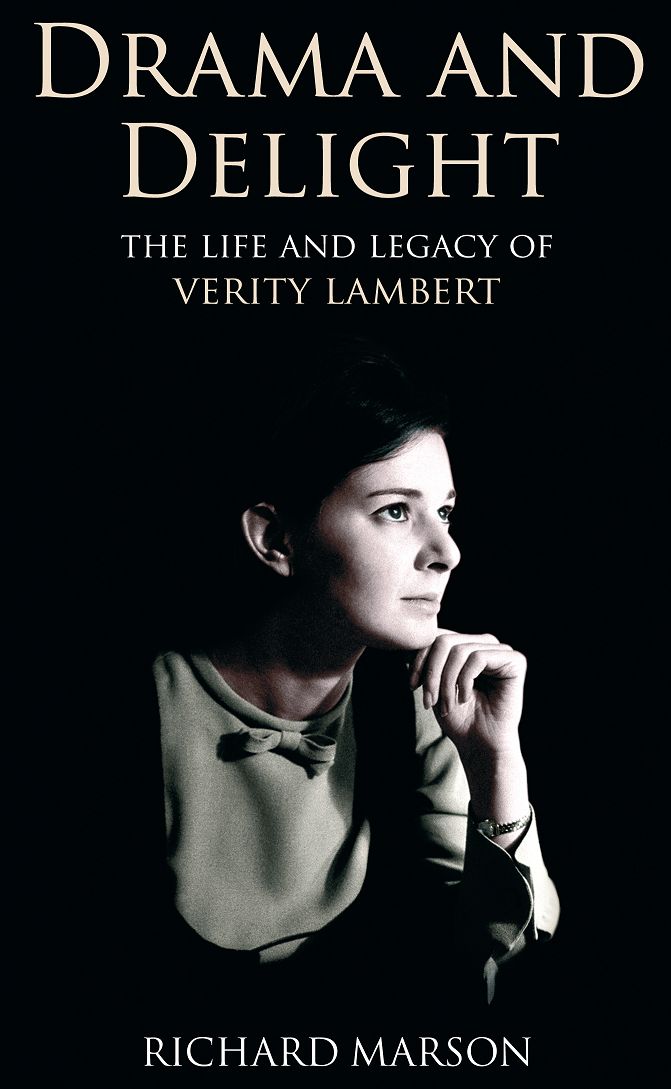
Book Review. Drama and Delight: The Life of Verity Lambert by Richard Marson (Miwk Publishing)

drama and delight

Drama and Delight: The Life of Verity Lambert is a rich biography of a woman who was at the heart of British television for five decades.

When Lambert first began to make her mark in television (during the early 1960’s) it was still a highly male-dominated preserve, so her appointment as the first producer of Doctor Who, in 1963, was met with a certain amount of resistance and gossip.

Richard Marson (drawing on an impressive list of interviewees as well as numerous archive sources) is deftly able to recreate the atmosphere of those early days.  Hired by the head of drama, Sydney Newman, there were many who blithely assumed that she had only got the job by sleeping with him.

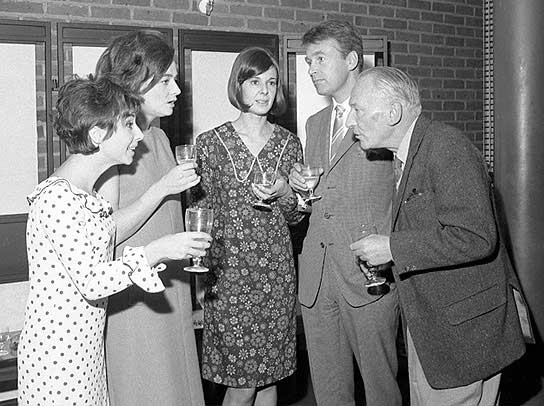
Verity Lambert (centre) with the original cast of Doctor Who

Doctor Who proved to be an ideal training ground and it launched a production career which only ended with her death in 2007.  After leaving Doctor Who, her major career highlights included the Adam Faith series Budgie (for which she cast Iain Cuthbertson as Charles Endell) and Minder (where she cast George Cole as Arthur Daley).

The story of Verity Lambert’s television career is also, in many ways, the story of how British television has changed between the 1960’s and today.  When Lambert was in charge of Thames’ film unit, Euston Films, she was able to green-light projects she liked straight away.  A good example of this is Minder – she read Leon Griffiths’ initial four-page outline, instantly saw it was a winner and the series went into production shortly after.

But from the mid 1980’s onwards (when she became an independent producer) she’d find herself at the mercy of an increasing number of executives and many decent-sounding ideas (which are discussed in the book) never got past the planning stage.

The 1960’s and 1970’s were Lambert’s peak years in many ways.  Firstly as a producer at the BBC (Doctor Who, Adam Adamant Lives!, the Somerset Maugham plays).  Then after the BBC decided to dispense with her services in 1970, she moved to LWT and scored a considerable hit with Budgie.  She then returned to the BBC as a freelance producer in 1974, with Shoulder to Shoulder (six 75 minute plays about the suffragette movement).

After this, she went to Thames as Head of Drama (overseeing production on programmes such as The Naked Civil Servant and Rumpole of the Bailey).  She would later fulfill the same function at Euston Films (amongst their greatest successes were Minder and Reilly: Ace of Spies).  But when she left Euston in the early 1980’s to take up a plum position as Director of Production for Thorn-EMI, it was to be the start of a frustrating period in her professional career.

She found it difficult to put the films she wanted into production, whilst some that she did back eventually proved to be less than satisfactory.  After several frustrating years (and once notable film success, A Cry in the Dark, as an independent film producer) she returned to television – with her own company Cinema Verity.

verity

As an independent producer she would sometimes have to battle with the television executives of the day, although her company did score some hits – such as May to December and Sleepers.  But her later career was rather overshadowed by one notorious failure – Eldorado.

Launched by the BBC as a thrice-weekly soap-opera in 1992, the series was bedeviled by problems.  The purpose-built structure in Spain had been hastily constructed and boasted poor acoustics, whilst many of the cast were young and inexperienced.  But it’s debatable whether the blame should rest with producer Julia Smith (painted by many contributors in the book as an intensely controlling character) or Lambert herself (who seems to have been a rather passive figure until late on, which for her was unusual).

But she was able to bring her career to a happier conclusion by producing Jonathan Creek from series two onwards, as well as forming strong friendships with both David Renwick and Alan Davies.

Indeed, friendship is at the heart of Richard Marson’s book.  The number of people who agreed to be interviewed is a long one and this is a clear testament to how loved Verity Lambert was.  The figure that emerges from this book is an energetic, driven, intensely loyal, occasionally volatile woman with a strong sense of humour.

Richard Marson is also content to let both the contributors and the numerous archive sources he’s assembled speak for themselves.  Some biographers seem to have a desire to have their voice dominate proceedings.  Not so with Marson, and the section concerning Lambert’s marriage to Colin Bucksey is a good example of this.

Their marriage in 1973 took many of her friends by surprise – Bucksey was not only some ten years her junior, but the fact that he was just a cameraman (whilst she was already a respected figure in the industry) was clearly also a problem for many of them.  But while there are numerous disparaging comments about Bucksey, these are countered by positive ones from other people.  Marson made the right decision in this case (and throughout the book) to not let his own voice intervene – which means that the reader can judge the merits of individuals encountered during the book for themselves.

Given that Richard Marson’s previous book was a biography of Doctor Who‘s last producer from the original run, John Nathan-Turner, it’s a nice dovetail that his next book is a biography of Doctor Who‘s original producer.  Drama and Delight is quite different in tone though.  JN-T certainly had his friends and admirers, but he was a much more divisive figure – and his biography reflects that.

The tone of Drama and Delight is much more upbeat – Verity Lambert had a hugely successful career (although inevitably there were setbacks and disappointments) and she was able to attract and keep a large group of loyal friends.  It’s not a complete love-fest though, as Verity’s long-running feud with fellow producer Irene Shubik is examined (their strained relationship culminated in the alleged BAFTA vote-rigging scandal).

Like the JN-T biography, Drama and Delight isn’t a book about Doctor Who, so anybody who buys it for that alone is likely to be disappointed. The series was a very important part of Lambert’s career (and is discussed in a very decent chapter) but in total it only took up two years of her life.  Where Drama and Delight really excels is in highlighting areas which are less well known (such as the frantic live performance of Armchair Theatre, which saw the cast and crew attempting to work around the death of one of the actors, mid-transmission).

Overall, this is as well-researched and comprehensive a book as you could hope to expect.  It’s a fine record of a true pioneer of British television.

Douglas Wilmer in Sherlock Holmes – The Copper Beeches

copper

When Sherlock Holmes proffers the letter he’s received from Miss Violet Hunter (Suzanne Neve) to Watson, he tells him that it marks a new low-point in his career.  Miss Hunter has been offered a position as a governess, but wishes to seek Holmes’ advice before accepting the post.

Although it initially seems like a trivial matter, once Miss Hunter begins her strange story it becomes clear that there may be more to it than meets the eye.  Miss Hunter has been offered a position by Jephro Rucastle (Patrick Wymark).  Rucastle seems to be a charming man and he makes her a very generous offer – a salary of one hundred pounds a year (a considerable amount, which is much more than many people in her position could ever expect to earn).

Rucastle goes on to tell her that he and his wife (faddy people, he admits) may ask her to sit in a certain chair or wear a certain dress from time to time.  This isn’t a problem, but when Rucastle insists that she has to cut her long hair very short, Miss Hunter protests.  When Rucastle later increases the salary to one hundred and twenty pounds, she weakens – but she wishes to consult Holmes first.  Miss Hunter decides to take up the post, but keeps in contact with Holmes as strange events begin to happen.

The Copper Beeches was originally published in June 1892 and later formed part of the first collection of Holmes short-stores, The Adventures of Sherlock Holmes.  Patrick Wymark (best known as the scheming Sir John Wilder in The Plane Makers and The Power Game) is wonderful as Rucastle.  Alternatively charming and sinister, it’s a very memorable performance.

Suzanne Neve, as the plucky young Miss Hunter, is another strong piece of casting (fans of UFO will remember her as Straker’s ex-wife Mary).  As with the original story, Holmes and Watson are very much on the periphery, so it’s Miss Hunter and Rucastle who dominate proceedings.

It’s certainly a strange household that she finds herself in.  Rucastle’s wife (played by Alethea Charlton) is polite, but seems somewhat under her husband’s thrall.  There’s a rather surly couple of servants, Mr and Mrs Toller (Michael Robbins and Margaret Diamond), whilst the Rucastle’s young son, Edward (Garry Mason), is a most peculiar child.

Although Rucastle insists that his son will grow up to be an important man, there’s little evidence of that in the very brief time we spend with him.  As per the original story, Edward doesn’t feature very much – but Vincent Tilsley’s adaptation does add a little something which sharpens the characters of both father and son.  In Conan-Doyle’s story, Miss Hunter tells Holmes that Edward delights in catching all manner of animals, such as mice.  Tilsley adds a scene where Edward bashes a mouse to death in front of Miss Hunter (with Rucastle looking on approvingly).  It helps to add another rather discordant note and it’s one of a number of good character moments for Wymark.

Although, as mentioned, Wilmer and Stock don’t have the largest of parts in this one, they do enjoy some decent byplay, especially at the end when Watson appears briefly convinced that Holmes had asked Miss Hunter to marry him!  We saw that Holmes was enamored of Miss Hunter’s analytical abilities, but his appreciation of her clearly went no further than that.

It’s a decent comic moment to end the story on and overall The Copper Beeches is a faithful and entertaining adaptation of one of the most atmospheric of the early Holmes stories.

Douglas Wilmer in Sherlock Holmes – The Devil’s Foot

devil

Stress and overwork have affected Sherlock Holmes’ iron constitution, so both he and Dr Watson have decided to take a holiday in Cornwall. Holmes, naturally enough, abhors inactivity and is keen to seize on any distraction – so when the vicar (John Glyn-Jones) bursts into their cottage early one morning with a tale of death and madness, he’s immediately interested.

Three members of the Tregennis family have been struck down in a most inexplicable way – the sister is dead whilst the two brothers have been driven quite mad. A fourth Tregennis sibling, Mortimer (Patrick Troughton), was present with them the previous evening, but he insists that when he left all was well.

Holmes and Watson risk their own sanity to solve this devilish puzzle ….

Originally published in 1910, The Devil’s Foot was one of Conan-Doyle’s favourite Sherlock Holmes stories (he ranked it ninth out of twelve favourites). With a very limited number of suspects it’s not really a whodunnit, rather it’s a howtheydunnit.

According to legend, when the script was delivered it was found to be dramatically under-running, so both Douglas Wilmer and Nigel Stock intensively worked on it and were able to bring it up to the correct length. This is mentioned in the BFI booklet, so there must be some credence to the story, but it’s hard to understand why the actors had to do this (rather than script-editor Anthony Read).

Douglas Wilmer does give his opinion about what Anthony Read was doing at the time (via the highly entertaining commentary track). I won’t reveal what he says, but it’s not terribly complimentary! The comm track on this episode is a must listen as though Wilmer is 95, he’s still as sharp as a tack. Although his dissatisfaction with some parts of the series was well known (this was the reason he didn’t do a second series) I wasn’t quite aware just how unhappy he was.

He seems to have had problems with the producer, some of the directors (who he considered to be far too inexperienced) as well as several of the adaptations. Overall, he doesn’t seem to have enjoyed himself at all – which is a pity, partly because it’s still an impressive series (despite whatever was happening behind-the-scenes) but also because it’s the programme he’ll always be best remembered for. But although making the series wasn’t always a happy one, he’s still got a sharp sense of humour and this helps to stop the commentary track from simply being a long list of complaints.

The story benefits from location filming in Cornwall (the jagged cliffs and stormy seas are particularly photogenic). It’s just a shame that the original film sequences no longer exist (as the telecine process has made the images rather murky).

There’s a remarkable performance from John Glyn-Jones as the vicar. I can’t decide whether he’s playing his initial scenes (where he describes the horror of the Tregennis house) for laughs or if he’s simply overplaying to a ridiculous degree. Much more assured is Patrick Troughton as Mortimer Tregennis. It’s always a pleasure to see Troughton and whilst it’s a fairly low-key part, Troughton’s class still shines through (although his Cornish accent is a bit hit and miss).

Mortimer Tregennis is a rather shifty type, so he appears to be the prime-suspect – meaning that his death (in an identical fashion to his sister) mid-way through the story is a good twist. Suspicion then falls on Dr Sterndale (Carl Bernard) who has already clashed swords with Holmes earlier on.

Holmes eventually divines the way the murders were carried out and elects to undertake an experiment to replicate the same effect. Watson is steadfast in accepting to stay with him and afterwards we see a very nice moment between Holmes and Watson (and Wilmer and Stock of course). If Wilmer’s Holmes is often rather detached and analytical (with not too much of the warmth and humour that some actors have brought to the part) then the aftermath of the experiment provides us with a telling scene.

Holmes berates himself for risking both his and Watson’s life, although Watson tells him that “it is my greatest joy and privilege to help you.” Any Holmes/Watson relationship will only work if you believe that they enjoy a strong bond of friendship – if Holmes is too remote or Watson too stupid, then it’s difficult to fully invest in the characters.

Some of Doyle’s stories, like this one, do feel slightly stretched when adapted for a fifty minute slot, but overall The Devil’s Foot is very decent fare – thanks to Troughton, the Cornish location and the continuing good work from Wilmer and Stock.

Douglas Wilmer in Sherlock Holmes – The Illustrious Client

client

Holmes is consulted by Sir James Damery (Ballard Berkeley) who is acting for an unnamed (but illustrious) client. Violet de Merville (Jennie Linden) is engaged to be married to Baron Gruner (Peter Wyngarde). Gruner has an evil reputation (several deaths, including that of his former wife, can be laid at his door – although he’s never actually been convicted of anything).

Many people have attempted to warn Violet off, but she is completely besotted with Gruner and won’t hear a word against him. Holmes agrees to act but Gruner is a very dangerous man, so by opposing him Holmes will put his life in danger …..

The Illustrious Client was one of Conan Doyle’s final Holmes tales (originally published in 1924). The majority of stories adapted for this series tended to be drawn from the earlier runs (which are generally considered to be stronger) but since this one has a formidable villain it’s no surprise that it was selected.

Peter Wyngarde (later to play the dandy writer and sometimes detective Jason King) is compelling as the malevolent Gruner. Yes, his accent is a little distracting, but he manages to display such a sense of menace that you can forgive him for that. Gruner’s relationship with the unfortunate Violet is an interesting part of the adaptation – he makes no attempt to hide his cruel streak, instead he seems to revel in mistreating her (and she either enjoys it or is so blinded that it simply doesn’t register).

Linden (who would play Big Screen Barbara later that year in Doctor Who and the Daleks) exerts an icy control over herself whereas Rosemary Leach (as Kitty Winter) barely has any control at all. Kitty was one of the Baron’s many previous conquests – used and then tossed aside. She agrees to help Holmes in his attempt to make Violet see exactly what sort of a man the Baron is, but she also has her own agenda.  It was one of Leach’s earliest television appearances and she’s very watchable as the bitter and damaged Kitty.

There’s plenty to enjoy in this one. Holmes and Watson take a trip to a music hall to visit one of Holmes’ underworld contacts. Although it’s only a studio set, it looks very impressive and clever camera angles manage to hide how small it is (and how few people are actually there).

Holmes and Gruner face off in a spellbinding scene (lifted virtually verbatim from the original story) which is a perfect showcase for both Wilmer and Wyngarde. The only thing that slightly spoils it is some rather wonky camerawork at the start (which was something that tended to happen in VT dramas of the period – a pity they couldn’t have gone back for another take).

Nigel Stock might be largely used for comic relief, but he still manages to instill Watson with a certain dignity. Although it must be said that one of the drawbacks of making his character seem a little dense is that when Holmes asks him to swot up on Chinese pottery (so he can distract Gruner, whilst Holmes burgles his study for incriminating evidence) it’s difficult to believe that he’d be able to pull it off.

But he does pretty well and the scene between Stock and Wyngarde is another good one – Wyngarde is arrogantly playful, whilst Stock falls back on bluster when he realises he’s on shaky ground.

Like some other Sherlock Holmes stories, there’s no real mystery here – rather the story revolves around the different characters and the way they interact with each other. And thanks to the first-rate guest cast (headed by Peter Wyngarde and Rosemary Leach) it’s a memorable fifty minutes.

Douglas Wilmer in Sherlock Holmes – The Speckled Band

speckled

Helen Stoner (Liane Aukin) leads a lonely existence in the rambling home she shares with her remote, forbidding father Dr. Grimesby Roylott (Felix Felton). Over the last few years, she’s felt even lonelier – ever since her beloved sister Julia (Marian Diamond) died in very mysterious circumstances.

Julia had been engaged to be married and was due to shortly leave them – but tragedy struck before this could happen. And her last whispered words to her sister (“the speckled band”) have stayed with Helen ever since.

Shortly before her death, Julia was convinced that something would happen to her (she claimed to hear strange whistles in the dead of night, which she found very unsettling). Now, two years later, Helen is engaged herself and it seems that the same pattern is happening all over again. In desperation, she consults the one man who can help her – Sherlock Holmes.

One of the most famous of all the Sherlock Holmes stories, The Speckled Band was originally published in 1892. Given its enduring appeal, and the fact it’s an intriguing “locked room” mystery, it was an obvious story to kick off the series. Although when it first aired, in 1964 as part of the Detective series, it wasn’t a certainty that a series would be commissioned. But this was clearly successful enough to ensure that another twelve stories followed in 1965.

The first twelve minutes take place in and around Dr Roylott’s house at Stoke Moran. Although this means we have a little wait before we get to see Wilmer, this scene-setting works well, since it establishes the claustrophobic location (which is certainly dark and forbidding) as well as Holmes’ client Helen and her father, the tyrannical Dr Grimesby Roylott.

When we do see Holmes for the first time, it’s a very low-key appearance. Helen has already clearly outlined the facts of the case to Holmes and our first glimpse of Wilmer is just a back view. Watson (Nigel Stock) then enters the room, greets Helen as Holmes steps out the frame and tells the Doctor that Helen “has brought a strange and tragic tale to our breakfast table.”

Holmes then offers Julia some coffee, but his face remains unseen until Julia tells Watson that she trembles not through cold, but fear. The camera then switches to a close-up of Wilmer as he assures the woman that “you must not fear. We shall soon set matters to rights, I have no doubt.” It’s an unshowy, but impressive introduction.

If Nigel Stock sometimes ventures into Nigel Bruce territory (he can lack the subtlety that later Watsons, such as David Burke and Edward Hardwicke brought to the role) it’s also clear that even this early on, Wilmer is pretty much perfect. He displays many of Holmes’ key attributes during Julia’s consultation him (being both charming and aloof).

Liane Aukin is very appealing as Helen and Felix Felton invests Dr Roylott with just the right touch of mania. It’s pleasing to see that one of the signature moments of the story – Dr Roylott warns Sherlock Holmes off by pending a poker, which Holmes then straightens – is present, correct and done well (although the poker does seem to bend rather easily!)

Any Sherlock Holmes adaptation tends to stand and fall on the interaction between Holmes and Watson. The Granada Watsons (especially Hardwicke) expressed their dismay at how the character had sometimes been portrayed in the past (as a buffoon, basically). It seemed to them quite clear that Holmes wouldn’t spend his time with an idiot.

There’s a touch of the idiot with Stock’s portrayal – as Watson, musing on the case, tells Holmes that “if the lady’s correct and the window was shuttered and the door was locked, then no-one could have entered the room.” Holmes’ response (delivered so well by Wilmer) of “marvellous, Watson” is clearly ironic, but we’ll also see plenty of good humour between the pair as we proceed through the series.

A sinister, atmospheric story, The Speckled Band serves as a fine introduction to both Wilmer and Stock’s interpretations of Holmes and Watson.

Callan – Amos Green Must Live

amos

Written by Ray Jenkins
Directed by James Goddard

Amos Green Must Live is a bit of a misfire.  Although Amos Green’s views are just as topical today as they were over forty years ago, a slightly incoherent script does tend to drag the story down.

Amos Green (Corin Redgrave) is a politician with a clear message – Britain is full to bursting point, so he advocates sending the immigrants back home.  He’s clearly a man who likes to court controversy and when his life seems to be under threat, the Section are tasked to protect him.

Corin Redgrave is by far the best thing about this story.  He’s very watchable in all his scenes and Ray Jenkins’ script provides him with plenty of good material.  Whether Green actually believes what he says or whether he’s simply making political capital is left to the view to decide.  Later in the story, Hunter (who for some inexplicable reason is attending one of Green’s dinner-parties) does make the point that before 1967 Green never spoke about immigration, which does visibly ruffle the politician’s feathers.

As for the worst, Annette Crosbie as Green’s housekeeper May Coswood, takes some beating.  It’s probably not Crosbie’s fault, rather it’s the way the part has been written.  May is besotted with a black man called Casey (Stefan Kalipha).  Naturally, she keeps this from Green, but she starts to act very oddly – stealing a dress, for example.  Her erratic behaviour only draws attention to herself (and Casey).

If May’s motivations are sometimes hard to understand, then the same can be said of Casey.  Towards the end we learn that he’s the prime mover behind the plot to kill Green – but there are various plot-holes along the way which are never resolved.

The Section are originally drawn into the case after a black civil rights activist from America called Arrillo is fished out of the river.  In his pocket was a book of matches with a picture of the Ace of Spades.  A similar book of matches is sent to Green, so it’s surmised that his life will also be under threat.

Casey admits that he was the taxi-driver who picked up Arrillo.  As the American was carrying a considerable sum of money, we can surmise that Casey killed him for it – which he planned to use to finance an attack against Green.  If this is so, why would he place the matches in Arrillo’s pocket and why send a similar matchbook to Green?  If it hadn’t been for the matches, then Green wouldn’t have known that his life was in danger.  But frankly, it’s a very obscure clue – what are the chances that somebody would have made the connection between Arrillo and Green?

Although Casey is organising the attack against Green (with gas weapons and guns) it’s actually carried out by several Americans (well, I think they’re attempting American accents, it’s hard to be sure).  Were they recruited with the money Casey stole from Arrillo?  Or since Arrillo was an American, did they follow him over?

Whilst there are a few nice moments (Lonely buying Callan the most hideous tie imaginable as a thank you present, for example) it’s certainly one of the less engaging episodes of the series.  When a General Election was called in 1970, the episode was pulled from the schedule and transmitted later in the run (as previously mentioned, Breakout should have been the series finale).  So there is a certain historical curiosity in watching this (albeit-temporarily) “banned” episode.

The character of Amos Green tapped into the debates of the day (he’s clearly a thinly-veiled portrait of Enoch Powell, notorious for his “Rivers Of Blood” speech) but whilst Redgrave is fine, the episode in general is just a little too heavy handed and from a modern viewpoint feels rather crude.

Callan – Breakout

break

Written by James Mitchell
Directed by Reginald Collin

Hunter wants KGB agent Lubin (Garfield Morgan) picked up.  He possesses a list of names that would prove incredibly damaging to the Section if he were able to deliver them to his masters.  And since Hunter knows that Lubin hasn’t had the chance to communicate with them yet, speed is of the essence.

But Lubin surrenders himself to the police.  He faces a lengthy spell in prison, but Hunter knows exactly why he’s done it (inside prison he’d be out of Hunter’s reach).  Hunter has a plan though – Lubin will expect to be broken out by the KGB, so he plans to arrange for Callan to spring him and then kill him.

Breakout is more of a straightforward action story than many episodes of Callan, but though it lacks the depth of characterisation that we usually see, it still has plenty of interest – not least for the central role played by Lonely.

In Where Else Could I Go? we saw Callan stand bail for Lonely.  Now, Lonely finally faces trial for his numerous petty crimes.  As ever, Russell Hunter is a pleasure to watch – even when he has no dialogue he’s capable of expressing so many emotions.  This is highlighted when the judge comments that Lonely’s crimes were carried out with “great expertise ” (a pleased expression plays across his face) but “little intelligence” (which instantly changes to downcast).

When he’s sentenced to six months imprisonment for each of the twenty-five offences (to run concurrently) he displays a whole range of shocked emotions, especially when he sees Callan laughing.  Eventually he understands that he only has to serve six months instead of twelve and a half years, but it’s clear that it doesn’t quite sink in (as he still asks Callan for reassurance later on).

If there’s a major flaw in Breakout, then it’s the idea that Lubin is untouchable in prison.  It’s hard to believe that Hunter lacks the ability to transfer him and it’s even harder to accept that he couldn’t pull some strings to infiltrate a man into the prison to eliminate him without having to break him out first.

But whilst these possibilities are never discussed, they are able to put a man on the inside – the unfortunate Lonely.  Lubin is on remand at Castle View (where Callan once spent “six lovely months”).  Lonely is dismayed to hear that he’ll be transferred there – but Callan is delighted, as he tells him that he’ll be able to do a little job for him.

Woodward and Hunter shared many lovely two-handed scenes during the four series of Callan and there’s another cracking one here.  When Callan tells him that he’s arranging a breakout from Castle View, Lonely’s first response is that he doesn’t mind doing his time.  Callan gently tells him that he’s not the person to be sprung – Lubin is.  Lonely is dismayed. “I don’t hold with spies. Mr Callan, that man is a traitor to the Queen.”  To which Callan ironically mutters “Rule Britannia”!

Russell Hunter continues to have good material to work with, especially in the aftermath of the breakout.  As Callan enters the cell, he says “good luck, Mr Ca-” before Callan brutally pistol-whips him.  This was because Lubin knew Callan’s name (although he didn’t know what he looked like) so it was vital that Callan silenced Lonely before he revealed all.  Of course, in the light of this, it was rather silly to put Lonely in his cell (as we later learnt he spent most of his time taking about Callan!).

Callan is the leader of the small group tasked to breakout Lubin.  Cross and Mellor (Billy Cornelius) are the others.  Something we’ve seen over the years is that the Section seems to have very few decent agents and Mellor is the latest, somewhat inept, example.  Lubin is easily able to deal with him – but Callan is a different proposition.  After a brief gun-battle, Callan finishes him off.

Breakout was originally intended to be the final story of the third series and this is reflected in the final scene which sees Hunter and Callan sharing a cup of tea on a cold and deserted beach.  Hunter tells him that the KGB now regard him as a top man and so in the future he’s bound to be targeted.  This would have lead nicely into the opening story of series four, That’ll be the Day, in which Callan was picked up by the KGB and underwent a harrowing interrogation.

Unfortunately, the running order was re-juggled at the last minute – so the rather less satisfying Amos Green Must Live was the last transmitted story of this series.

Callan – God Help Your Friends

god

Written by William Emms
Directed by Peter Duguid

In Callan’s world, the innocent often have to suffer. They frequently find themselves used as pawns, sacrificed in a game they don’t even know they’re playing.  God Help Your Friends is a prime example of this – it also demonstrates Callan’s disdain for the work he has to do.

Hunter tells Callan and Cross that the engagement between Beth Lampton (Stephanie Beacham) and Mark Tedder (Michael Jayston) has to be stopped.  Beth works as a top-level interpreter for NATO whilst Tedder is suspected of being an agent for the opposition.  Hunter accepts that they have no definite evidence about Tedder, but the merest hint of suspicion is enough to make their union highly undesirable.

It’s not a job that Callan relishes, so he spends the episode in a very bad mood, taking every opportunity to rile Hunter and Cross.  Callan and Cross spend their time digging for dirt on Tedder and then making sure that Beth knows about it.  This isn’t a problem for Cross, who shares none of Callan’s scruples,  although he does come to believe that if they end the relationship it will be for the girl’s benefit.

At the start, we see that Beth and Tedder are very much in love.  But once a little suspicion and paranoia are introduced, even the strongest relationships can be destroyed.  Hunter is keen for them to achieve this as quickly as possible, but he’s adamant that he doesn’t want anything untoward to happen.  Callan bitterly reassures him that “there are other ways of killing people than with a bullet.”

Hunter assigns Cross to keep an eye on Beth (posing as a time and motion expert) whilst Callan roots around for incriminating evidence.  Initially, Callan assumes that Hunter will want him to romance the girl, but by assigning Cross we can assume that the intention is to infer that Callan’s getting slightly too old to play the lover ….

Beth is a nice girl – possibly too nice and innocent for the world she’s found herself in.  She’s surprised that, despite her sensitive job, her immediate superior wants to know about her engagement.  Given this, it seems clear it would never occur to her that the security services would be at all interested in her or her fiance.

Mark Tedder is a smooth, charming man (played to perfection by the always impressive Michael Jayston).  We never discover if he was actually an agent or not, but that’s not the point of the story.  In the shadowy world of the Section, there’s no judge or jury (although there’s certainly plenty of executioners).

As good as Russell Hunter always was (and Lonely has some nice moments in this one, especially in his first scene, when he’s dressed in a very smart suit, complete with umbrella!) by this point it was sometimes difficult to include him in the episodes without stretching credibility to breaking point.  During the first series (when Callan was still officially out of the Section) Lonely was a useful character, since he could obtain things (such as guns) which Callan couldn’t get any other way.

But by series three he doesn’t fulfill any function that a trained member of the Section couldn’t provide – so it’s sometimes harder to justify his presence.  For example, Callan asks him to break into Tedder’s flat and look for anything that could be used against him.  Callan then waits in the street below and only goes up to the flat once Lonely signals that he’s found something.  Lonely’s ability as a burglar is well-known, but do we really believe that Callan couldn’t have picked the very simple lock on the door or that he’d let Lonely search the flat by himself?

This does, however, give us the one moment of levity in the story – as Lonely excitedly thrusts a series of red-hot letters into Callan’s hand.  “Now the bird that wrote that, that is terrible, that is shocking, she’s got no shame. Now read that, read that.”

But the letters (referring to an old love-affair before Tedder met Beth) don’t do the trick and so Callan has to resort to other methods.  Eventually they succeed, but by the end of the episode there’s no particular cause for celebration.  The final words of the story go to Woodward and once again he delivers the goods.

God Help Your Friends was William Emms’ second and final script for Callan (he also wrote the wiped story The Running Dog for series two).  Active as a writer during the 1960’s and 1970’s he contributed to a number of popular series, such as Redcap, Public Eye, Doctor Who, Mr Rose, Ace of Wands, Z Cars and Owen M.D.

Peter Duguid would eventually direct eleven episodes for Callan, of which this was the eighth.  His direction here is unshowy and straightforward, but he manages to capture good performances from both Beacham and Jayston (who carry many of the key scenes).  Woodward is pushed more into the background, but he’s a constant, brooding presence and plays  Callan’s disgust with the job (and with the way it turned out) to perfection.

Sherlock Holmes (BBC Douglas Wilmer series) – BFI DVD Review

wilmer

The Douglas Wilmer Sherlock Holmes series (broadcast during 1964 and 1965) wasn’t the first time that the BBC had brought the Great Detective to the screen. Alan Wheatley and Raymond Francis had starred as Holmes and Watson in a short series of six adaptations, broadcast live in 1951.

Wheatley would later call it the most difficult job of his career – the adaptations had been structured in such a way that little time was left for the actors to get from one set to the next or make costume changes. According to Wheatley, the worst example of this occured in one of C.J. Lejurne’s dramatisations when “in one particular scene she finished up with a sentence from me, and opened the next scene also with a sentence from me, in heavy disguise, with no time at all for a change!”

With no effective way for recordings to be regularly made from live broadcasts in the early 1950’s, we’ll never know exactly how good (or bad!) the 1951 series was, as no visual or audio record exists. But we’re much more fortunate with the Wilmer series – since eleven of the thirteen episodes exist in their entirety (later, we’ll discuss how the BFI have dealt with the two partly missing stories).

The stories adapted for the first series of Sherlock Holmes (a second, starring Peter Cushing as Holmes with Nigel Stock continuing as Watson was broadcast a few years later) are as follows –

The Speckled Band (18 May 1964). This was transmitted as an episode of the Detective series.

The Illustrious Client (20 February 1965)
The Devil’s Foot (27 February 1965)
The Copper Beeches (06 March 1965)
The Red-Headed League (13 March 1965)
The Abbey Grange (20 March 1965)
The Six Napoleons (27 March 1965)
The Man with the Twisted Lip (03 April 1965)
The Beryl Coronet (10 April 1965)
The Bruce-Partington Plans (17 April 1965)
Charles Augustus Milverton (24 April 1965)
The Retired Colourman (01 May 1965)
The Disappearance of Lady Frances Carfax (08 May 1965)

With the complete canon to cherry-pick stories from, the above list is an interesting selection. Some of the choices are no surprise, since they’re amongst the most popular of ACD’s tales (the likes of The Speckled Band, The Copper Beeches, The Red-Headed League, The Six Napoleons and The Man With the Twisted Lip) although it’s surprising that a few others (The Retired Colourman and The Disappearance of Lady Frances Carfax, for example) were chosen ahead of arguably stronger fare.

Of course, had the series continued, then maybe the ultimate aim would have been to record all of the fifty-six short stories and four novels. This is something that no British series has ever done (the Granada series with Jeremy Brett came close – but by the time Brett died, there were still more than a dozen unfilmed stories).

By the mid 1960’s, television no longer had to be transmitted live, since it was possible to pre-record. However, it was still often recorded “as live” (shot in long continuous takes with recording only pausing for serious technical problems or when it was impossible for the action to continue from one set to another without a pause).

01 - speckled
The Speckled Band

Sherlock Holmes, like the majority of BBC drama of the period, was made largely in the studio (captured on 405-line videotape with exteriors shot on film). Since videotape was very expensive, the tapes would be routinely wiped in order to record new programmes – so virtually everything that still exists from these years does so thanks to film copies that were made (either for overseas sales or because the programme was so technically complex that it had been decided to edit and transmit it from a film dub).

Anybody who knows a little about British television of this era will be aware that the survival rates of programmes can be frustratingly inconsistent – so we’re very lucky that virtually all of the Wilmer series exists (Cushing’s BBC Holmes run is sadly much less complete).

Something else which the archive television fan will be aware of is that the existing film prints of any series tend to vary in quality – which can be for several reasons. It may be because the prints were “biked” from country to country (when a particular country had finished broadcasting it, as per agreements with BBC Enterprises they then forwarded it onto the next country in the chain) and so the print would have suffered wear-and-tear (dirt, damage, etc). Or it might be due to the telerecording process used (The Speckled Band was the only one of the Wilmer series to be recorded with the ‘suppressed field’ process – a system that produces a noticeably lower picture quality).

The upshot is that whilst watchable, previous releases (such as the Region 1 DVD) left a little to be desired on the visual front. This BFI DVD features restored versions of all episodes and does offer a good upgrade. Although it’s true to say that it could be better (it’s not up to the standards of the frame-by-frame restorations and VidFIREd black & white Doctor Who stories, for example) it’s important to understand that the budget for restoration will only stretch so far.

If you have the BFI release of Out of the Unknown, then the restoration carried out here is comparable – certainly every story now looks better than it did on the Region 1 DVD and various picture flaws that were previously very evident (a tramline scratch on a long section of The Devil’s Foot, for example) have either been fixed or made much less obvious. With more time and money the episodes could have been improved even more – but when so many programmes of this era languish unreleased in the archive (and of the few that are released, many don’t receive any restoration) the picture quality of these episodes are generally very pleasing.  Peter Crocker, of SVS Resources, should be applauded for his efforts, considering the limited time and budget he had to work with.

If the improved picture quality is one reason to upgrade, then the strong selection of special features is certainly another. Chief amongst these are the inclusion of the existing footage from the two incomplete episodes – The Abbey Grange and The Bruce-Partington Plans (which is very welcome since neither story was represented on the previous DVD releases).

The first half of The Abbey Grange no longer exists, so it’s completed with a newly shot sequence of Douglas Wilmer reading an adaptation of the story. The second half of The Bruce-Partington Plans is missing from the archives and it’s been completed with an off-air soundtrack syncronised to extracts from the camera script. Neither is a substitute for having the complete episode (and it might have been wise to cut-down Wilmer’s piece to camera for The Abbey Grange) but it’s certainly much, much better than nothing.

Like Out of the Unknown, Toby Hadoke and producer John Kelly have assembled a mouthwatering series of commentary tracks with directors Peter Sasdy and Peter Cregeen as well as actors Douglas Wilmer, David Andrews and Trevor Martin across five episodes.

Wilmer’s involvement (on two commentaries, a 22 minute interview and the first half reading of The Abbey Grange) is particularly welcome. The BFI should be applauded for including so many good supplementary features, as these help to place the original programmes in their correct historical and cultural contexts.

From Tuesday onwards, I’ll be blogging a quick review of each story (where I’ll go into more detail about the merits of both Wilmer and Stock) but suffice it to say that if you’re a fan of Sherlock Holmes or simply a fan of 1960’s British television, then this is must buy. Good picture restoration and a quality selection of bonus features help to enhance a very strong series. Hopefully sales of this will be good enough to persuade the BFI that other BBC series of the same era deserve similar treatment.

But for now, I’d strongly recommend picking up a copy of this classic series.

Callan – Act of Kindness

act

Written by Michael Winder
Directed by Mike Vardy

Away from the Section, David Callan has one major interest – model soldiers and fighting war-games with them.  Given that his job involves killing (and usually it’s the dirtiest and most squalid kind) it’s worth wondering if his love of re-creating famous battles from history is a yearning for the time when conflict was maybe a more honest and chivalrous pursuit.

Like the Armchair Theatre pilot, A Magnum for Schneider, Act of Kindness sees Callan tackle an opponent across the tabletop field of battle and it provides us with a very interesting clash of personalities.  Heathcote Land (Anthony Nicholls) isn’t a spy or an enemy agent – he works for a company that exports tractors worldwide (one of their biggest markets is Russia).

When Land receives incriminating photographs showing Donovan Prescott (Ray Smith) in bed with a young woman, he demands Prescott’s resignation.  Prescott refuses and tells him that since the photographs (taken on his last trip to Russia) must have been made by the KGB, he should tread very carefully.

Smith (a familiar face, thanks to his appearances as the acerbic Spikings in Dempsey and Makepeace) is very Welsh here (the odd “boyo” is thrown into the conversation).  He’s presented as a laddish man-about-town, but he also appears to have a patriotic side (since he did some unspecified low-level work for British Intelligence).  It’s this connection that makes Hunter keen that Land shouldn’t make the photographs public and so Callan is tasked to stop him by whatever means necessary.

Since Land also has an interest in model soldiers and war-games (or “toy soldiers” as Hunter dismissively calls them, much to Callan’s irritation) Callan is the obvious choice to tackle him.  “You really are a bastard aren’t you?” he says, less than happy that the one pastime he has which is separate from the Section has now been compromised.  After Callan leaves the office, Hunter confides to Cross that whenever Callan is angry, he remembers what happened to his predecessor ….

There’s one very clumsy piece of plotting in the story. This occurs just after Callan has introduced himself to Land and the pair of them begin to chat about model soldiers and battles.  For some reason, Callan is using the alias of Tucker (which is odd, since we learn in Where Else Could I Go? that Callan isn’t his real name anyway).  As Callan and Land start fighting a practice battle at the model soldier convention, Lonely passes by and refers to him as Mr Callan.  This, of course, instantly sets alarm bells ringing for Land.  It’s a rather sledgehammer way to raise Land’s suspicions and it’s a pity that something more subtle couldn’t have been done.

Later, we see Callan and Land prepare to fight a battle in the business-man’s impressive war-room.  There are two battles going on at once (the one between the model armies and the other between Callan and Land themselves).  The pair indulge in a fair bit of verbal jousting, each of them skirting around the issues, but it becomes clear that both know exactly what the other is thinking.

Eventually, Land comes to the point and calls his opponent Callan.  But even with this acknowledgment that Callan isn’t all he says, the battle goes on.  For those who favour the more action-orientated episodes, this one might seem to be a bit slow – but the battles between Callan and Land (although they don’t involve guns) are fascinating nonetheless.

At one point in the story, Prestcott tells Callan that if he wants to blackmail Land then he’d have to create something, since he seems to lead a totally blameless life.  As the pressure increases to protect Prestcott, all possibilities are debated by Hunter, Cross and Callan.  Cross favours taking Land out of circulation (either temporarily or permanently).  But a visit by Land to a toyshop might just provide them with the leverage they need …..

Anthony Nicholls (probably best known for sporting a rather unconvincing beard as Treymayne in The Champions) gives an excellent performance as the moral and principled Heathcote Land.  He shares a fair amount of the story with Woodward and the pair spark off each other very well – their conflict is definitely the highlight of the episode.  Ray Smith is rather less convincing as his business rival, but then it wasn’t such a well-crafted part.  This was the second and last of Michael Winder’s scripts for Callan (he previously wrote the stunning series two finale Death of a Hunter).

Act of Kindness must be something of a rarity for a Callan story, since it doesn’t feature any deaths, but that doesn’t stop it from being another intriguing story – thanks to Woodward and Nicholls.

Callan – Suddenly – At Home

suddenly

Written by James Mitchell
Directed by Piers Haggard

Callan’s in love.  Those familiar with the parameters of the series will be probably be able to guess that his happiness is going to be very short lived.

Lady Lewis (Zena Walker) is the widow of Sir Colin Lewis, the youngest Foreign Secretary for a century.  Whilst his death hasn’t left her penniless, her financial situation is certainly a little strained (she has two sons to put through public school. which isn’t cheap).  So when the smooth-talking documentary film maker Rene Joinville (Tony Beckley) approaches her with an offer of ten thousand pounds to appear in a programme about her husband, it seems to be the answer to her prayers.

But Hunter doesn’t want the documentary to go ahead.  Sir Colin knew too many secrets and he fears that whilst Lady Lewis won’t deliberately betray any confidences, the skillful Joinville will be able to tease them out of her.  It’s interesting that. for once, the Section doesn’t have all the facts.  Joinville is a Russian agent, but this vital piece of information isn’t discovered by them until very late on.  Had they known, of course, then things might have turned out very differently.

Hunter assigns Callan to warn Lady Lewis off.  He thinks that blackmail might be a good method, but Callan is rather more subtle than that.  He appeals to Lady Lewis’ sense of duty and also hints that the establishment would view the programme with extreme disfavour.  Woodward is delightfully bashful in this scene –  he’s slightly hesitant and occasionally stumbles over his words.  We tend to see Callan as the forceful man of action, so this is a good insight into his softer side.

There’s an instant attraction between them, sparked by Callan’s love of model soldiers.  He promises to bring one to show her at a later date and once he leaves she starts to swot up on the subject.  Given how totally different they are as characters, it’s a little difficult to believe in this sudden romance – but Woodward and Walker are both so good that they make it work.

Unfortunately for Callan, he never progresses beyond a rather chaste kiss.  Since Lady Lewis won’t take part in the documentary, Joinville is ordered to kill her.  He’s told to use a gun favoured by the Section – that way they’ll be blamed and the resulting furore will be something of a propoganda coup.

The killing is carried out and when Callan receives the news it’s possible to see the light go out of his eyes.  He instantly changes back into the cold, remorseless killer and you’re left in no doubt that he will avenge her death.  Initially Cross is a suspect, but he’s cleared and when the truth about Joinville is discovered, Hunter gives the younger man the task of bringing him in.  Callan queries whether he has to be brought in alive and Hunter is quite clear that, yes, he’s not to be killed.

Cross’ bungled attempt to apprehend Joinville is another example of just how inexperienced he is.  He gives Joinville plenty of warning by making a hash of picking the lock on his hotel-room door and then is very easily disarmed.  Luckily for him (although Cross doesn’t see it like that) Callan is outside the window and deals with Joinville.  When he’s finished, Joinville is very dead.

Suddenly – At Home was James Mitchell’s third script for series three. I’ve always had a soft spot for this one – partly because, along with Breakout, they were the first episodes of Callan that I ever owned (they were released on video in the late 1980’s).  Whilst it’s a bit of stretch to accept the instant relationship between Callan and Lady Lewis, there’s plenty of incidental pleasures.  Tony Beckley sports an outrageous French accent as Joinville.  He gives a slightly off-kilter performance, but it does work (where a more naturalistic turn might not have).  Zena Walker impresses as Lady Lewis – she plays her as calm and charming, which makes her sudden, violent death all the more shocking.

Piers Haggard’s direction is quite noteworthy, with some well chosen shots.  At the start of the story we see Joinville preparing to accept an award for one of his films – and the camera shoots through the award as he’s speaking to Lady Lewis (creating a quadruple image).  Also, when Callan first meets Lady Lewis, part of the scene is shot directly at a mirror, so that we see a reflection of the characters, before the camera pans off to focus on them.  Plus there’s a number of close-ups (which help to create a claustrophobic atmosphere, especially in the immediate aftermath of Lady Lewis’ murder) and some interesting low-angle shots (these make fairly standard sets look a little more interesting).

It’s another very solid episode in an impressively consistent series.

Callan – A Village Called ‘G’

village

Written by James Mitchell
Directed by Mike Vardy

Hunter’s secretary, Liz, is an absolute model employee.  She’s never late and she’s never ill, so when she fails to turn up one morning it sets the alarm bells ringing.  Hunter decides to give her another hour and if she still hasn’t appeared then the department will be on red alert.  Cross queries whether that isn’t a little excessive, but Hunter spells it out to him.  “Liz has never been late here in her life, she’s never missed a day.  She’s an example to you all.  You think I’m fussing, but I’d sooner be foolish than careless.”

Hunter’s fear is that she’s been picked up by the opposition – she knows all of the Section’s secrets so she’d be an invaluable asset.  The truth of the matter is rather different though – she’s embarked on a personal mission of vengeance and Callan, naturally enough, is right in the thick of things.

Lisa Langdon made her first appearance as Hunter’s secretary at the start of series one.  It wasn’t a terribly auspicious start, as for the first few stories she was nothing more than a disembodied voice on an intercom.  After a while she started to appear in the flesh and gradually was given a little more to do.  During the black and white years, Heir Apparent is probably the best example of this – following the death of Michael Goodliffe’s Hunter, Liz was a useful character to place between Callan and Meres.

But A Village Called ‘G’ was the episode that put her firmly in the centre of the action.  Written by series creator James Mitchell, we find out about Liz’s background – and this provides the explanation for her disappearance.

After searching her flat, Callan reports on her lack of personal documents.  “There’s no letters, there’s no memos, there’s no diaries. Nothing. She’s a sad one, that. Yeah, well, it’s pretty sad if you’re that lonely.”  The lack of information means that Callan has little to go on, so he asks Hunter if he can see her file.  Hunter refuses, but fills him in on her history.

Liz was born in Poland.  Her village was totally wiped out by the Germans in 1944, when she was just three years old.  Every man, woman and child were killed (except for Liz, who had been hidden behind a bookcase by her father).  She was later adopted by a British couple called March in the early 1950’s.  March had worked as a cypher clerk, so the Section kept a watching brief on Liz.  When her foster parents were killed by a hit-and-run driver some five years earlier, it was decided that Liz would be an ideal employee for the Section (since she was fluent in numerous languages and had no family ties).  As Hunter says.  “The Section is all she has, David. Her mother, father, her home.”

Callan goes back to Liz’s flat and asks the caretaker (a wonderfully grimy performance by George Innes) if he’s noticed whether Liz has had any regular male visitors.  When he says yes, and that the man’s name was James Cross, this immediately catches Callan’s interest.  It becomes clear that Liz and Cross have been enjoying a relationship strictly against departmental regulations.  Callan, of course, makes it clear to Cross just how stupid he’s been (in the way that only Callan can!).

Cross tells Callan that he thought that Liz was worried about something, although she didn’t say what.   She did speak about her childhood though – which given what we’ve learnt, seems to be significant.  Cross and Callan hit the archive, looking for any recent activity regarding Poland.  They find a file on a war criminal called Klist and also discover that Liz checked out a file on a man called Sabovski (Joseph Fürst).

There’s evidence to suggest that Sabovski and Klist are one and the same and that Klist was involved in the massacre of Liz’s village. Hunter decided that no action would be taken and it’s this which pushes Liz over the edge as she decides to take the law into her own hands and kill Klist.

Fürst had previously appeared in the Armchair Theatre pilot A Magnum for Schneider.  Infamous in certain circles for his incredibly ripe performance as Professor Zaroff in the Doctor Who story The Underwater Menace, he’s much more restrained here.

Liz fails to kill Klist and Klist drugs her, takes her back to her flat and puts the gas on.  Luckily Callan, Cross and Lonely reach her in time (Lonely’s comment to Callan “you haven’t croaked her?” is priceless).  There’s also a nice cameo appearance by Graham Crowden as the Groper (a struck-off doctor who Callan calls in to check Liz over).  Quite why Callan didn’t call the Section is a bit of a mystery as surely they have medical staff, but if he had then we’d have missed out on Crowden’s remarkably camp performance!

Klist is dealt with by Cross, although Callan brutally tells Liz that Cross cares more about his job than he does about her.  “Listen darling, don’t you think Liz that he killed Klist for you. He didn’t. He killed him for himself. Killed him because he’s got to finish the case.”

This wasn’t the first story to feature a Nazi war criminal (see The Good Ones Are All Dead from series one).  But Klist is much less central to this story than Strauss was in that episode.  A Village Called ‘G’ is more about Liz, Cross and Callan.  It ends with Hunter and Callan sharing a drink and Hunter complimenting Callan on handling matters effectively.  The two wouldn’t always see eye-to-eye, so this is quite a notable moment.

Callan would be Lisa Langdon’s final television credit.  She only had a handful of other credits, such as a Jackanory appearance in 1968 and a few other minor roles (like ‘Woman in Street’ in an episode of Dixon of Dock Green).   But although her cv wasn’t particularly extensive, she was always worth watching in Callan – as Liz brought a welcome human touch to the often cold and unwelcoming Section.

Callan – The Same Trick Twice

same trick

Written by Bill Craig
Directed by Peter Duguid

Callan has been sent to oversee the exchange of a Russian prisoner for two British ones.  Also present is Mr Bishop (Geoffrey Chater) who apparently works for the Foreign Office.  The handover goes smoothly and Bishop welcomes both Surtees (Richard Hurndall) and Mallory (Patrick O’Connell) back to the free world.

Later, Mallory expresses his bitterness to Callan.  He’s spent five long years in a Russan jail, thanks to Surtees (who buckled under the initial interrogation and revealed everything).  And Surtees himself plans to go public and disclose how he was blackmailed into working for British Intelligence.

The only problem is that nobody in British Intelligence has ever heard of Surtees …..

The Same Trick Twice is a dense story, where nothing is quite as it seems.  It has some excellent actors and moves at a nice pace, but there are some flaws which are hard to ignore.

The first comes right at the start.  Callan tells Surtees that he’ll be looking after him and has a nice rest laid on at East Grinstead.  The clear inference is that this is a safe house where Surtees can be intensely debriefed.  Surtees seems not to care for this and throws a cup of coffee in Callan’s face.  This allows Bishop to take charge of Surtees and he’s later allowed to go public with his claim of blackmail.  If Callan had orders to keep a tight grip on Surtees, why did he let him walk free?

Shortly after, we find that Bishop doesn’t actually work for the Foreign Office, instead he’s connected with Intelligence – not directly in the Section, but he’s certainly able to come and go there as he pleases.  Geoffrey Chater would pop up during series three and four as a semi-regular and his languid demeanor ensures that Bishop enjoys some entertaining clashes with Callan, who has a much more down-to-earth attitude.  Callan asks several times exactly who Bishop is (and he’s ignored each time by both Hunter and Bishop).  It’s never made clear what his position is, but it’s obvious that he outranks Hunter.

If you’ve got a decent selection of television from the 1960’s, 1970’s and early 1980’s, then the odds are that you’ll have some programmes featuring Richard Hurndall.  Hurndall was an intense, compelling character actor who always gave striking performances.  Off the top of my head, I can pick down from my shelf appearances he made in The Power Game, Manhunt, Public Eye, Blakes Seven, Bergerac and of course The Five Doctors.

He’s very good here as a character whose motivations remain unclear for some time.  There’s several possibilities – he could be a British agent or a double-agent working for the Russians.  Or maybe he’s simply been duped into believing he was working for the British, when actually the Russians were controlling him.

This tangle leads us to our next plot flaw.  It later becomes clear that Surtees is something of an innocent – he believed that British Intelligence had blackmailed him to work as a spy, but instead it was actually the Russians who were feeding him disinformation.  But if this was the case, how was he able to blow Mallory’s network?  Only a genuine British agent would have known specifics about the network – so did the Russians give this information to Surtees?  And if so, why didn’t Surtees mention this when he was released?

Possibly the most problematic part of the story is Mallory’s reassignment to the Section.  Callan is appalled as in his opinion Mallory is far from stable – this is understandable, since he’s spent five years in a Russian prison.  It’s clear that Bishop has ordered Hunter to take Mallory on, but why?  As with Bishop steering Surtees away at the start, he seems to have his own agenda – but it’s not clear what it is.

Time’s running out and Surtees is ready to publish his story.  It’s all lies (disinformation fed to him by the opposition) but it sounds plausible enough and would certainly be damaging if it made the papers.  Hunter visits Callan’s flat (he expresses surprise that this was the best they could do for him) and speaks to him off the record.

He wants Surtees killed, but Callan is far from happy.  “You want a chopping done, you write out a chit.  You want a killing, you give an order direct, straight, in front of witnesses.”  The unofficial nature doesn’t please Callan, but he eventually agrees.

But he doesn’t have to kill him, since he’s able to convince Surtees that he was duped.  But somebody does murder Surtees later (and whilst there’s a moment of misdirection, it’s fairly obvious who did it).  There’s a droll moment when Hunter examines the body and declares that as he was shot in the back of the head it’ll be difficult to call it suicide, unless he was a contortionist!

Although the plot doesn’t quite hold together (especially the involvement of Mallory) there’s still a great deal to enjoy here, such as Lonely’s job as the lavatory attendant at Harry’s strip bar.  Or a “hygiene operative” as Lonely defensively tells Callan. Harold Innocent is delightedly camp as Freddie, the photographer who arranged the compromising photos of Surtees and Trisha Noble is gorgeous as Jean Price, who posed in those photos with a drugged Surtees.

Callan – Summoned to Appear

summoned

Written by Trevor Preston
Directed by Voytek

Callan faces a thorny moral dilemma in Summoned to Appear.  Needless to say, the other members of the Section (Cross and Hunter, for example) find it hard to understand why Callan is at all concerned …..

Callan and Cross are tailing a Czech operative called Palanka (Sylvester Morand).  Hunter doesn’t know exactly what Palanka’s up to, but it’s certainly something that needs to be stopped.  They follow him into a railway station, but lose him.  Callan takes one platform and Cross the other.  As a train pulls in, Palanka breaks cover on Cross’ platform.

Cross goes to intercept him, but barges straight into a man walking forward to catch the train.  The unfortunate man is accidentally pushed onto the tracks and is killed instantly.  Cross disappears, but the police are called, so Callan has to remain since he’s an eye-witness.

As he later tells Hunter, he was able to lie beautifully, telling Inspector Kyle (Norman Henry) that in his opinion the man committed suicide by throwing himself under the train.  But matters are complicated by another witness, Mrs Kent (Rhoda Lewis). who maintains that she somebody push the man off the platform.

It probably goes without saying, but Edward Woodward is excellent in this episode.  Callan is an oddity in the Section – a man with a conscience.  Both Hunter and Cross are only concerned with the man’s death insofar as how it affects the Palanka operation.  But Callan is more troubled that a man is dead – someone that would have left a widow and possibly children behind.

The fact that Cross doesn’t understand why Callan is upset provides us with some decent character conflict – and we’ll see this same conflict played out in various ways throughout the third series since Callan and Cross are two very different characters.

Callan is older and highly experienced.  Hunter admits that he’s the best operative in the Section (maybe the best they’ve ever had) although he regards Callan’s conscience as his one major flaw.  Cross is young and inexperienced.  His impulsiveness and rashness are highlighted in this episode and we also see, during the climax, how embarrassingly easily Palanka was able to deal with him.

Hunter elects to use a Czechoslovakian dissident called Karas (George Pravda) to lure Palanka into the open.  Callan and Hunter both know that Palanka won’t be able to resist the chance to kill Karas.  When Cross wonders how Callan can be so sure, he tells him that Palanka is “young and arrogant.  He’s got something to prove, just like you James.”

Lonely doesn’t have a great deal to do in this episode but I love the first flat scene where Callan asks Lonely to tail Palanka.  At once point Callan calls Lonely perceptive and there’s a great reaction from Russell Hunter, who makes it clear that Lonely doesn’t understand the word and is working out whether it’s an insult or a compliment!

Callan is summoned to appear at the Coroner’s inquest, which is a problem – and it’s further complicated when he’s visited beforehand by Mr Leach (Edward Burnham) who is the solicitor acting for the widow of the dead man.  He tells Callan that if a verdict of suicide is recorded then the widow, Mrs Arlen, will only receive a fraction of her husband’s insurance policy.

Callan is under no obligation to do anything.  The Section is in the clear since there’s not sufficient evidence to prove that Cross, or anybody else, pushed the man under the train.  He could simply repeat his original statement that the man committed suicide and that would be an end to it.  But of course he doesn’t – instead he changes his story (much to the annoyance of the Coroner) and a verdict of accidental death is recorded.

Meanwhile, Palanka very easily gains access to Karas’ apartment, knocking out Cross and disarming him.  In the end, it’s Karas who kills Palanka, whilst Cross looks on helplessly.  Since Karas is an invalid, it’s even more embarrassing for Cross.

Summoned to Appear is very much a human drama (both the unfortunate Mr Arlen and the dissident writer Karas).  Callan has several blazing rows with Hunter (and they won’t be the last!) which really highlight just how good an actor Edward Woodward was.  When he was on full-throttle, there was nobody better.

It’s always a pleasure to see George Pravda (as well as his real-life wife, Hana Maria Pravda who played Mrs Karas).  The supporting cast is typically solid, with the likes of Edward Burnham and Norman Henry, whilst a young Warren Clarke makes a brief appearance as a railway guard.

Callan – Where Else Could I Go?

where else

Written by James Mitchell
Directed by Jim Goddard

Where Else Could I Go? is something of a reboot for Callan.  Partly this was unavoidable.  Since a brainwashed Callan had killed his boss in the previous episode, Death of a Hunter, there had to a new Section head and William Squire fills the part perfectly.  And thanks to the fact that the colour Thames episodes were the most assessable during the last thirty years in the UK (repeats on C4 in the 1980’s and on UK Gold during the 1990’s) Squire would have been the first Hunter that many (including myself) would have seen – so he is Hunter.

His Hunter is very much in the Ronald Radd mode.  He has a respect for Callan’s abilities, but he also has no qualms in withholding information from him (especially when he knows that such knowledge would impair Callan’s ability to successfully carry out the mission).  Squire’s Hunter is also completely ruthless, able to compartmentalise his personal life from his professional duties (see God Help Your Friends for a good example of this).

We’re told that Toby Meres is on secondment in America (in reality, Anthony Valentine was filming Codename for the BBC).  Valentine is missed during series three, but it does provide an opportunity to create a new Section operative for Callan to battle with – James Cross (Patrick Mower).

As with the Callan/Meres relationship, Callan and Cross take a little time to form a reasonable working partnership.  Cross (unlike Meres) is younger than Callan, so there’s less of a feeling that the two are equals (Callan would later always call Meres by his first name, whilst Meres would usually refer to the older man as Mr Callan).

But this edge between them (like the earlier one with Meres) is useful for creating tension and drama.  Most series would have gone down the buddy route (like Bodie and Doyle) whereas Callan does something a little more interesting.  Cross is young, keen and desperate to prove himself to be as good, if not better, than Callan.  But his inexperience and rashness will often create problems (as the upcoming episodes Summoned to Appear and A Village Called G demonstrate).

There’s still some familiar faces though.  Liz (Lisa Langdon) remains Hunter’s secretary and she’ll enjoy some decent character development during series three and four (especially in A Village Called G).  Clifford Rose is still the icily amoral Dr Snell and, of course, the peerless Russell Hunter is back as Callan’s smelly friend Lonely.

Lonely is pivotal to this story, since Hunter uses him to see if Callan still has any fight or spirit left.  If he has, there’s still a place for him in the Section.  If not, then he’s finished – certainly in the Section, but also probably outside of it.  No doubt Hunter would have no qualms in ordering his permanent removal.

Where Else Could I Go? opens with Cross visiting Callan in hospital, where he’s still recovering from the events seen at the end of series two.  Although he’s clearly far from well, his ability for self-preservation is something that’s automatic.  Cross announces that he’s come from Hunter, but Callan (who’s never met Cross before) isn’t going to take anything on trust.  Unseen by Cross, he places a razor-blade in a bar of soap and keeps this weapon behind his back until he’s seen Cross’ written authorisation.

He’s then reassured enough to put his weapon down, but not before he silently shows it to Cross.  This ensures that their relationship starts off on a combative footing.  Cross knows of Callan’s reputation but considers him to be past it, nothing but a shadow of his former self.  Callan, whilst his dislike for the Section has been stated many times, still needs it – and he isn’t going to be trampled underfoot by a young upstart like Cross.

Physically, Calllan’s not in bad shape, but it’s his attitude when he meets the new Hunter that’s concerning.  He’s conciliatory and deferential – with little sign of the old, fiery operative.  Therefore Hunter decides to threaten the one person in the world (Lonely) who Callan has affection and friendship for and see what happens.

The first meeting between Callan and Lonely in this episode is very awkward.  With Callan hospitalised for several months, Lonely drifted back into crime and since he’s not the world’s brightest crook (although with Callan to watch his back, he’s a formidable thief) he’s ended up on remand and is looking at a lengthy prison sentence.  Callan offers to help, but a tearful Lonely refuses – since Callan wasn’t around when he was arrested, why should he help now?

It’s a cracking scene for both Edward Woodward and Russell Hunter.  Callan is still hurting, but the signs are there that he’s beginning to recover some of his spirit whilst Hunter manages to make Lonely seem even more pathetic than usual.  But eventually Callan is able to talk him round, thanks to the intervention of a high-powered lawyer called Henshaw (Gary Watson).

Henshaw and Callan know each other from their army days (Henshaw was Callan’s superior officer) and their meeting helps to shine a little light on Callan’s pre-Section career.  Back then he wasn’t called Callan, and was obviously far from a model solider, but he did save Henshaw’s life and now Callan is calling in the debt.  The fact that Callan chooses to use the leverage he has to try and get Lonely released is a good sign that Callan feels responsible for him (although he’s also well aware of how useful, as a thief, he can be).
The showdown between Hunter and Callan is the episode’s key moment.  Callan loses his temper when he realises that Hunter has targeted Lonely – but Hunter isn’t upset.  He’s been waiting for Callan to show some spirit and this convinces him that there’s a still a place for Callan after all.

Hunter agrees to stand bail for Lonely and then asks him if he’s happy to be back in the Section.  Anybody who knows the history of the character will also know the love/hate relationship he has with the Section in general and the various Hunters in particular.  Previously, we’ve seen that Callan was keen to leave and forge a life outside.  But this is an older, damaged Callan who knows that, at present, he needs the security that the Section offers.

So there’s no smile on his face, just bitter resignation as he says “where else could I go?”