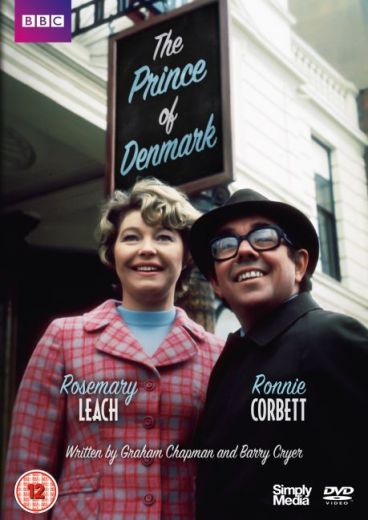
The Prince of Denmark – Simply Media DVD Review

167513.jpg

Although largely forgotten today, Barry Cryer and Graham Chapman had a lengthy sitcom partnership with Ronnie Corbett (they ended up penning three different comedy shows for him).  First, along with Eric Idle, they created No – That’s Me Over Here, which ran for three series between 1967 and 1970 on ITV.  The first two series no longer exist, although one episode is possibly held in private hands.   Series three is available from Network.

After Corbett and Barker moved from ITV to the BBC in the early seventies, Corbett’s sitcom career continued with Now Look Here (1971 – 1973).  Rosemary Leach, who had also appeared in No – That’s Me Over Here, returned, although since she was now playing Laura, rather than Rosemary, the series clearly wasn’t a direct continuation.  Mind you, Ronnie was still playing Ronnie and to all intents and purposes was pretty much the same character (unlike his long-time comedy colleague, Ronnie Barker, Corbett tended to stick with a very similar comic persona).

Something of a precursor to Sorry!, Corbett’s most popular sitcom success, Now Look Here saw Ronnie attempting to break free from the stifling influence of his mother.  The difference was that in Now Look Here he does (albeit his new house is just a few doors away) and by the second and final series he was married to Laura.  Although a release from Simply was announced, it was then pulled due to unspecified rights issues.  Hopefully these problems can be ironed out and it’ll reappear on the schedule at a later date.

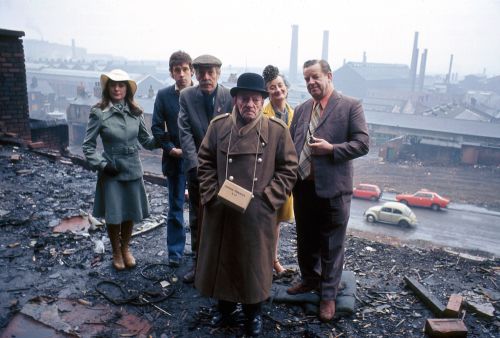
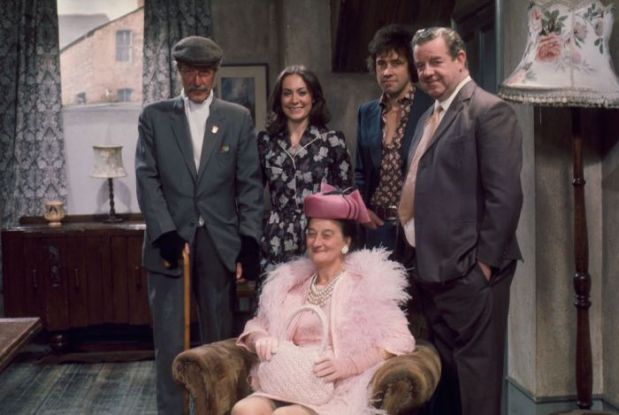
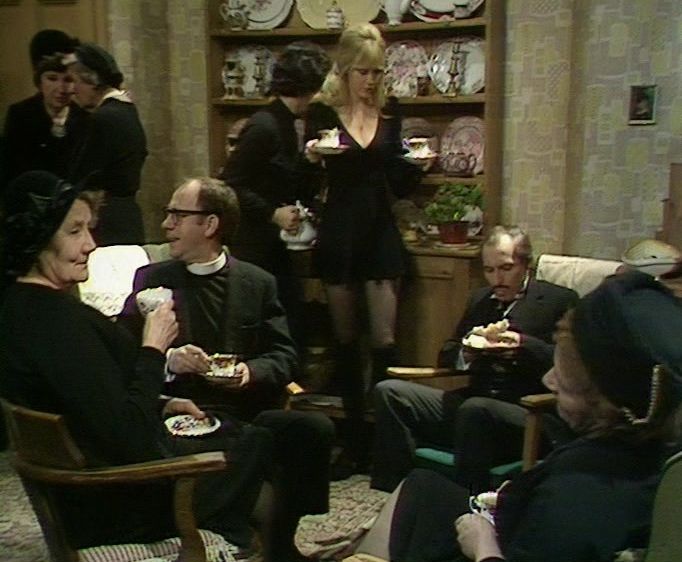
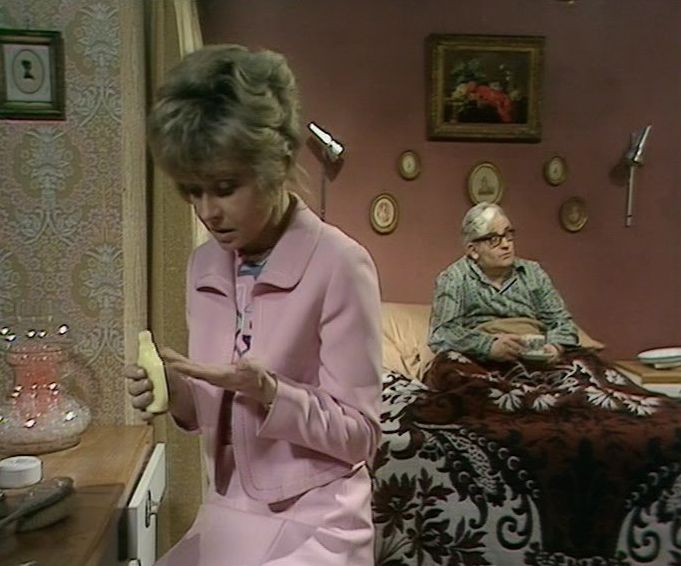
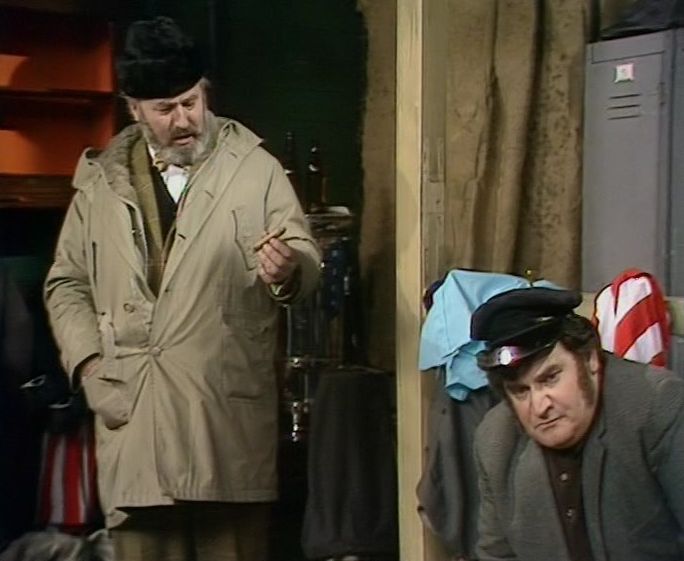
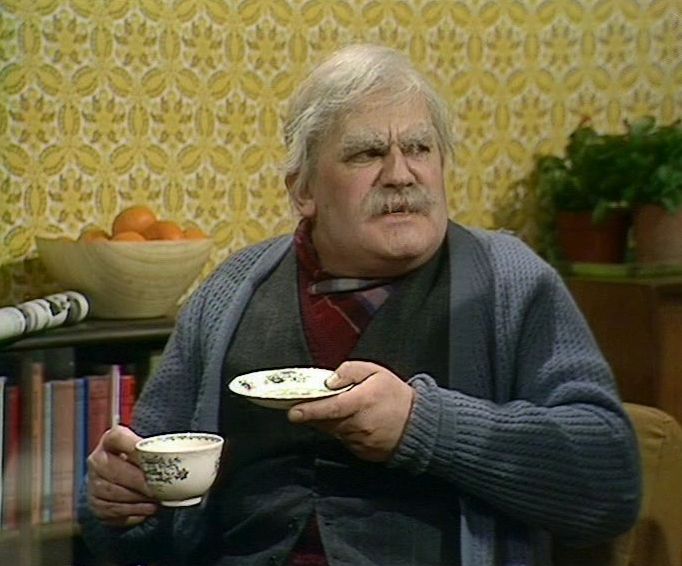
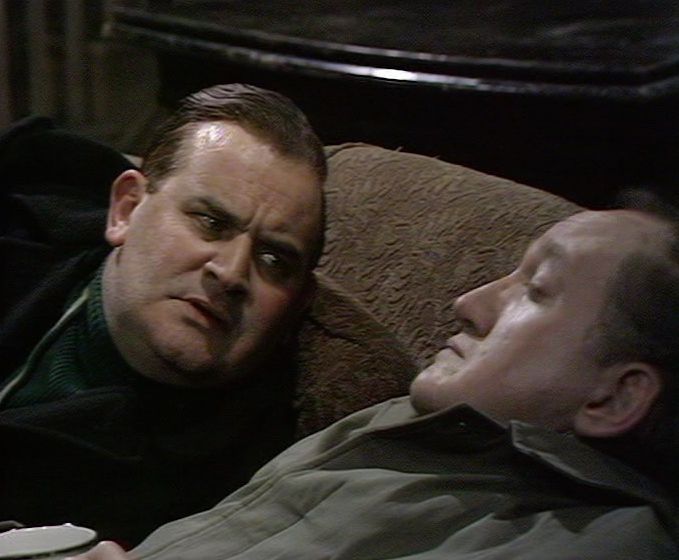
The Prince of Denmark (1974) followed on directly from Now Look Here.  This series saw Ronnie and Laura running a pub (hence the series’ title) which Laura had inherited.  Ronnie, despite knowing nothing about the pub game, blithely assumes he knows best and frequently overrides the good advice offered by those around him, with inevitably disastrous comic results.
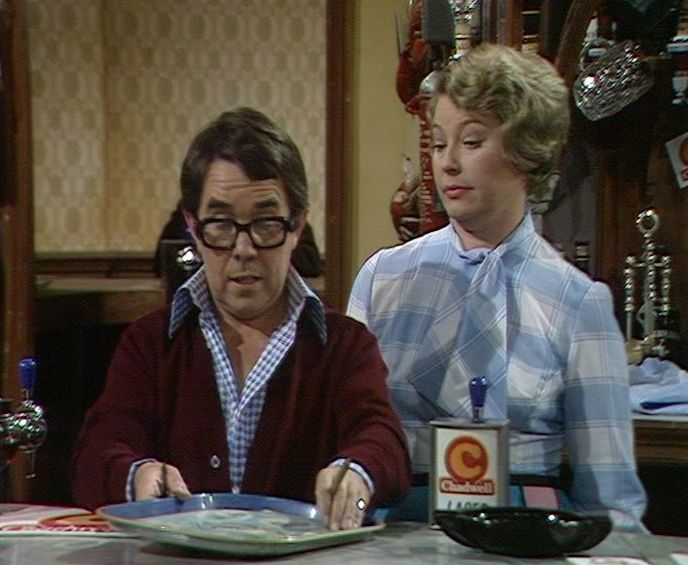
prince 01
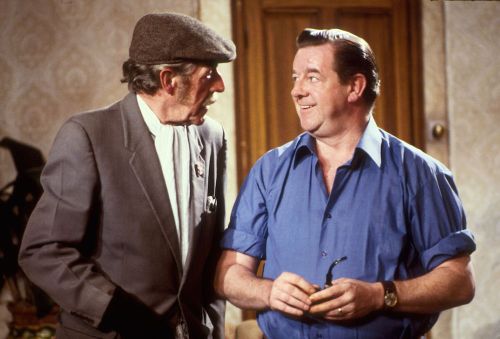
Ronnie Corbett & Rosemary Leach

The pub setting is a fruitful one, since it allows new comic characters to keep popping up in each show.  Making appearances were a host of familiar faces, including Derek Deadman, Richard Davies, Harold Goodwin, Mary Hignett, Claire Neilson (also a regular on The Two Ronnies) and Geoffrey Palmer. Penny Irving adds a touch of glamour as the pneumatic barmaid Polly.

The dependable David Warwick appeared in all six episodes as the long-suffering barman Steve whilst the pub also boasted several semi-regulars.  These included Mr Blackburn (Tim Barrett) who never manages to catch his train due to the fact he always stays for one more drink and a crossword addict (played by Michael Nightingale) who only talks in riddles.  The unmistakable Declan Mulholland, playing the abusive Danny, also helps to enliven a couple of episodes.

The first episode opens with Ronnie and Laura visiting their new pub incognito. Ronnie’s pedantic, uppity and pompous (complaining about the service and the fellow customers whilst also muttering darkly that there’s going to be changes) whilst Laura is much more patient and understanding. These traits will be repeated across the series time and time again.

And the price of Ronnie’s half a bitter and Laura’s small sherry? Twenty five pence, which is a bargain!

The start-up screen displays the following disclaimer. “Due to the archive nature of this material, modern audiences may find some of it editorially challenging. In order to present the content as transmitted, no edits have been made. We ask that viewers remain mindful of the period in which it was commissioned and transmitted”.

This seems to be due to the moment in the opening episode where we see a black customer, Reg (Lee Davis), tell the departing licensee, Mrs Bowman (Maggie Hanley) that her pies are disgusting (she suggests he eats a missionary instead). That’s the only slightly off-key joke I can find, which makes the disclaimer seem a little anti-climactic.

Since the first episode went out at 7:40 pm, it’s surprising to hear Declan Mulholland’s truculent troublemaker call Ronnie a bastard several times. Another interesting point is the later scene where Ronnie mistakes an ordinary customer for a Brewery bigwig and fawns over him whilst roundly abusing the real Brewery man.  Given Graham Chapman’s involvement, it’s highly likely that his old comedy partner John Cleese would have tuned in. Could this have inspired Cleese to pen the later Fawlty Towers episode The Hotel Inspectors?

By the third episode things are ticking along nicely. This one boasts a strong guest cast – Richard Davies, Claire Nielson, Geoffrey Palmer – and sees Ronnie cast as a confidant and sage to his customers. The only problem is his total lack of understanding.  For example, when Davies’ character mentions that he believes in a benign oligarchy, all Ronnie can do is nod sagely. Ronnie’s increasing desperation as he’s quizzed about his views on democracy is nicely done.
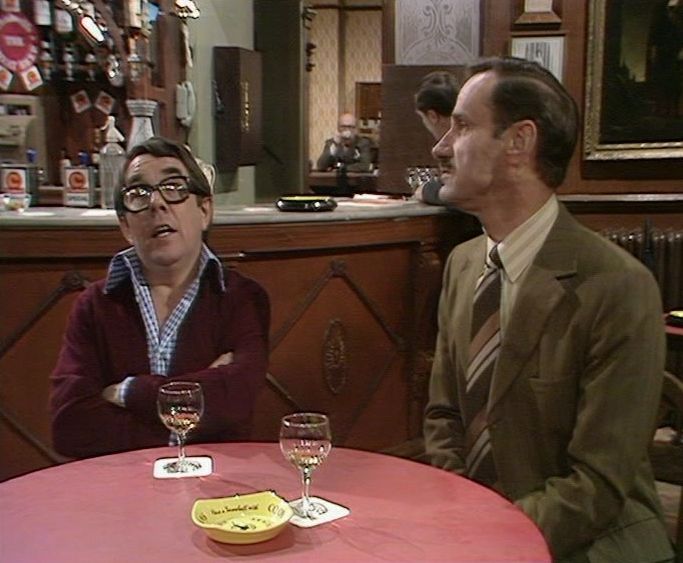
prince 02
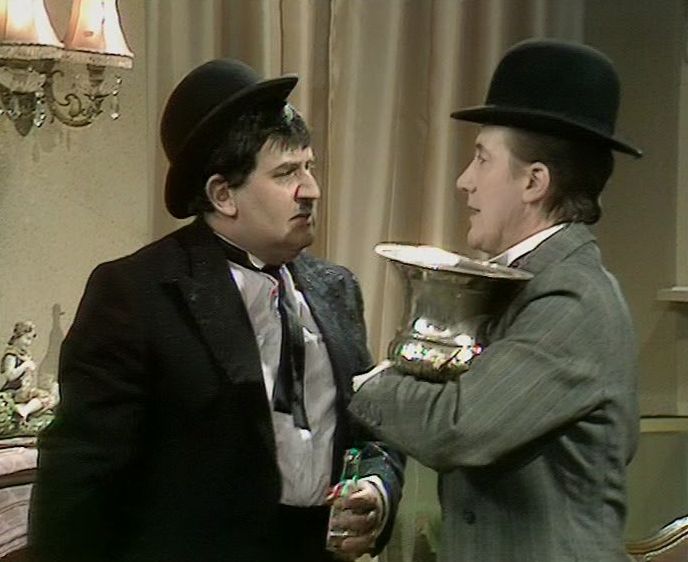
Ronnie Corbett & Geoffrey Palmer

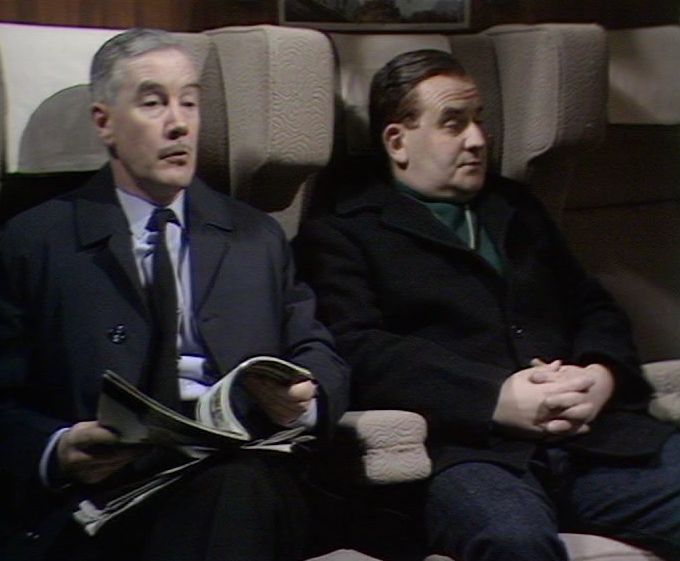
Ronnie’s exuberant cheeky-chappy persona is precisely what Martin (Geoffrey Palmer) doesn’t need as he’s suffering from marriage problems. And when Martin’s wife, Alison (Claire Nielson), turns up, Ronnie once again puts his foot in it. Corbett and Palmer play off each other very well (is it just another coincidence that both Palmer and Nielson would later check into Fawlty Towers?). Although Corbett overplays somewhat, Palmer is a model of restraint and it’s probably their differing styles which helps to make this one flow nicely.

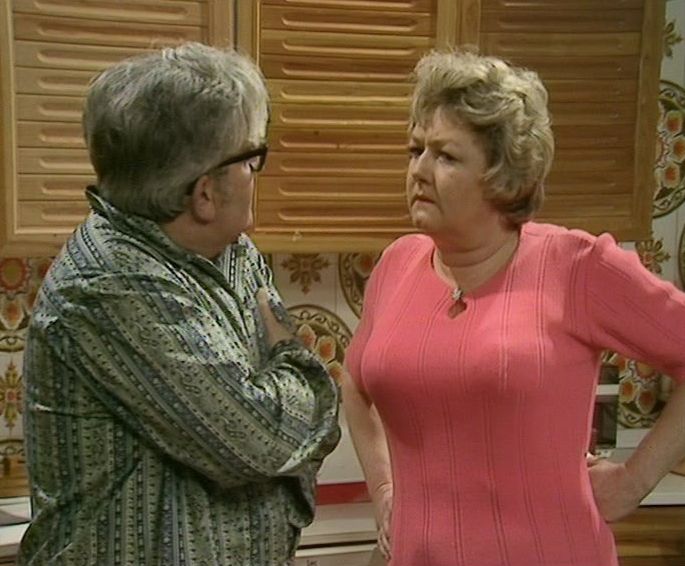
Show four opens with Ronnie in the kitchen, attempting (but failing disastrously) to make Laura a snack whilst she enjoys a quiet bath. Whilst it offers a change of pace from the bar scenes, the visual comedy on offer is somewhat laboured (and subject to some hard edits – one moment the pan is on fire, the next it isn’t).

Elsewhere, Ronnie’s prejudices are on display. He declares that all football supporters are hooligans unlike followers of rugby, who are gentlemen. Given this set-up, no prizes for guessing what happens when a large crowd of rugger fans turn up. The highly-recognisable Michael Sharvell-Martin pops up as Gerry, captain of the rugby team, whilst the equally-recognisable Harry Fielder and Pat Gorman (familiar background faces from this era of television) are also present.

Ronnie’s jukebox jiving in show five is a highlight and seems to briefly amuse what is otherwise a very muted audience. When Ronnie treats a couple of customers to his regular joke about the Irishman in the restaurant, the punchline doesn’t raise a titter either from them or the studio audience. This episode also seems to have the strongest Graham Chapman feel, as what begins as a quiet night quickly spins out of control. The comic escalation we see is a touch Pythonesque.

Although Ronnie’s character remains highly smackable throughout, Corbett’s timing ensures that he makes the most of the material he’s given. It’s just a slight pity that Rosemary Leach didn’t have more to work with.

This was an era where female members of comedy couples were often dominant (Terry & June, George & Mildred) and although Laura is clearly much more sensible and level-headed than her husband, she’s less well drawn than either June or Mildred. More often than not Laura isn’t called on to do much more than show exasperation at Ronnie’s latest flight of fancy.

No lost classic then, but The Prince of Denmark should be of interest to both Ronnie Corbett fans and devotees of seventies British sitcoms. Although the scripts can be a little weak in places (surprising given Cryer and Chapman’s track record) it’s still enjoyable fare, thanks to the familar faces guesting and Corbett’s energetic performance. Recommended.

The Prince of Denmark is released by Simply Media on the 17th of July 2017.  RRP £19.99.  It can be ordered directly from Simply here
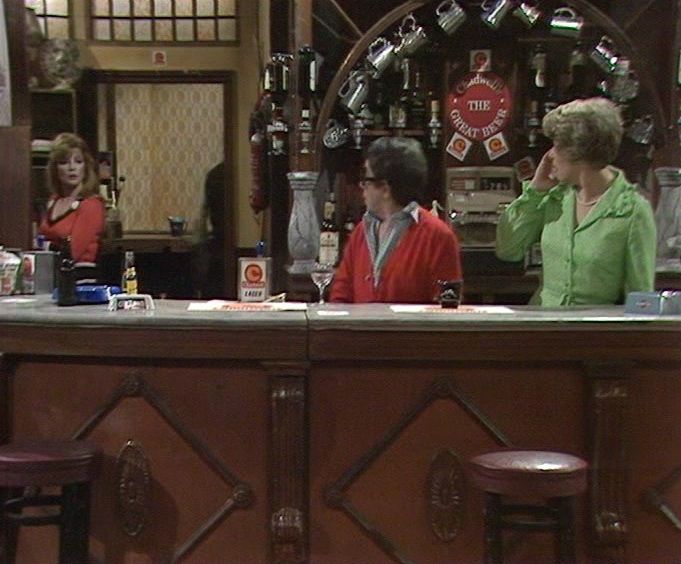
prince 03

The Two Ronnies – Series One, Show Eight

ronnies s01s08

Original Transmission – 29th May 1971

Written by Eric Idle, Spike Mullins, David Nobbs, Peter Vincent, Dick Vosburgh, Gerald Wiley. Additional material by Gary Chambers, Tony Hare, David McKellar.

Introduction/News Items
Doctor’s Sketch
Tina Charles – Remember Me
Ronnie B Solo – Statistics
Hampton Wick – Episode Eight
Class Sketch (with John Cleese)
New World – Tom Tom Turnaround
Ronnie C in the Chair
Christening Sketch
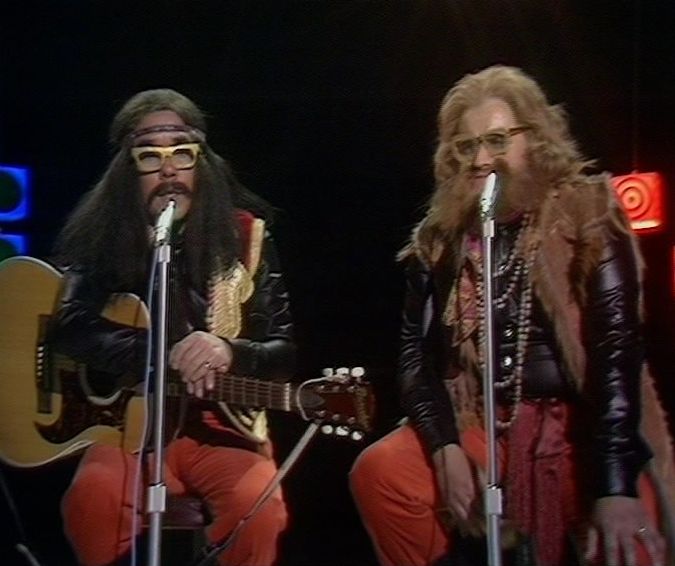
Big Jim Jehosophat and Fat Belly Jones

Notes: I rather like this news item. “The world’s greatest jigsaw puzzle designer was divorced today after his wife found he was keeping a piece on the side.”

No party sketch, instead it’s a sketch with Ronnie B as a doctor and Ronnie C as a patient who complains of not being there all the time (and promptly vanishes). He also tells the doctor that he gets this floating feeling sometimes and – via the magic of CSO – does just that. A fairly indifferent effort, although Cheryl Kennedy as a nurse with a very short skirt provides a brief moment of interest.

For only the second time, Tina Charles is up before New World. For this final show she tackles Diana Ross’ Remember Me. New World bid us farewell with their biggest UK hit, Tom Tom Turnaround, which made the top ten.

Ronnie B is in his familiar spokesman guise, this time as a Statistician. “A recent survey conduced in Bolton has proved conclusively that 10 out of 10 people who live in Bolton, live in Bolton. Although 3 out of 10 people who live in Bolton think they live in Birmingham. On further questioning, 5 out of 10 people agreed with us, agreed with us that they agreed with us. Of the remaining 5, 5 out of 10 remained out of the 10 from which the 5 out of 10 who agreed with us that they agreed with us remained.”

Hampton Wick concludes in a rather recursive way, with Henrietta waking up in 1971 after a long illness, realising that everything she’d experienced had been nothing but a dream. But Barker and Corbett, playing themselves, happen to be sitting on a bench outside the hospital, and after they see her leave both decide she’d be perfect for their show …

There’s another Class Sketch with John Cleese but once again there’s no speciality act. Double boo!

After Ronnie C in the chair and a christening sketch (Ronnie B as a vicar, Ronnie C and Cheryl Kennedy as parents who are surprised to find their baby is Chinese) we end as we began, with Big Jim Jehosophat and Fat-Belly Jones.

Although series one was a pretty mixed bag, the Python influence (and the appearances of John Cleese) make it pretty noteworthy. There might have been the odd production misstep, but even this early on the formula of the show is pretty much set in stone. That’s not a criticism, as whilst Python and Q might have delighted in unpredictability, there’s also a place for a series which delivers precisely what the audience expects and rarely lets them down – and The Two Ronnies is a perfect example of that.

The Two Ronnies – Series One, Show Seven

ronnies s01s07

Original Transmission – 22nd May 1971

Written by Barry Cryer, Eric Idle, Spike Mullins, David Nobbs, Michael Palin & Terry Jones, Bill Solly, Dick Vosburg, Gerald Wiley.  Additional Material by Garry Chambers, Tony Hare, David McKellar, Peter Vincent

Introduction/News Items
Party Sketch
New World – Cape Cod Boys/My Dear Mary Anne
Ronnie B Solo – Wedding Speech
Hampton Wick – Episode Seven
Dress Shop Sketch
Tina Charles – Wedding Bell Blues
Ronnie C in the Chair
Employment Sketch
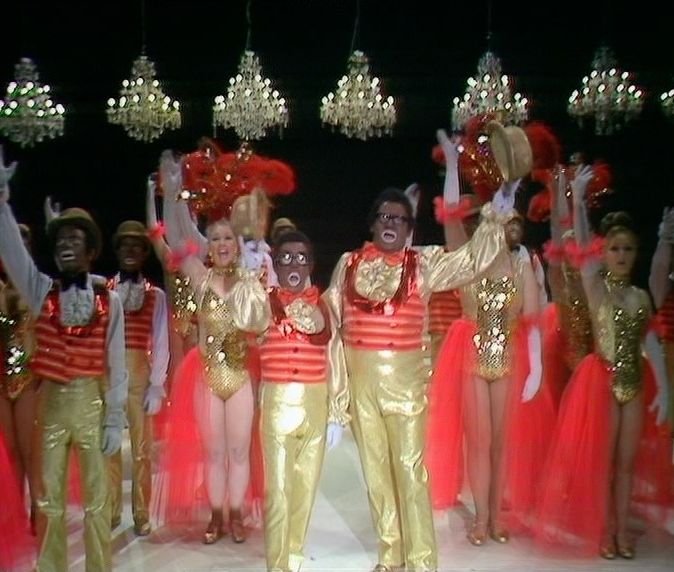
The Short & Fat Minstrel Show
Outro

Notes: I’ve previously touched upon how you can date the series by observing which female celebrity is most frequently mentioned in the news items. Another way to quickly identify that we’re definitely in the seventies is by totting up the number of jokes directed at lazy British workers, like this one. “At Ford’s Halewood plant today, a man was given a gold watch for long service …. after working for 25 minutes.” That it gets a round of applause from the audience clearly indicates that it struck a chord (expect much more of this throughout the decade).

For a change the party sketch doesn’t take place in somebody’s living room, instead we’re in the hall, which sees Ronnie B open a conversation with Ronnie C, who’s just come down the stairs. Set design is pretty minimal, with black drapes behind the staircase. Once again we see a mini obsession with chartered accounts – that’s Ronnie B’s occupation (who in time honoured Python fashion comes across as incredibly dull – well he’s a chartered accountant, so he must be). Ronnie C is completely different – he’s the world’s leading authority on impressionist paintings and therefore someone who has nothing in common with his fellow guest.

For example, Ronnie C lives in a converted monastery in the Outer Hebrides whilst Ronnie B lives in Hendon. The sketch continues to escalate nicely, before the final pay off is made. Corbett might be the one in control but Barker is delightful as a very dull man, so the honours are about even.

New World weld a couple of songs together, including My Dear Mary Anne which features this immortal line. “A lobster dies in a boiling pot. Oh, pity the blue fish too. Yet they’re quickly gone and they suffer not like the ache I bear for you, my dear Mary Anne.”  Tina Charles can’t hope to top this, but Wedding Bell Blues (yet another song from Laura Nyro) is pleasant enough fare.

Ronnie B is up next, as a drunken father toasting the happy couple at a wedding reception. “He has already shown that he can put her in the family way … the family way of life to which she has become accustomed. We drink to Arthur as he’s always drunk … to us.” Christopher Timothy gets to sit and suffer in silence as the unfortunate bridegroom. He’d briefly appeared opposite Barker earlier in the year in Six Dates with BarkerThe Removals Person.

Madeline Smith’s indomitable heroine Henrietta Beckett now finds herself in America as Hampton Wick slowly staggers towards a conclusion. She’s found gainful employment “as a slave-girl in the orgy scene of a film called Belshazzar’s Feast.” But for once this isn’t an excuse to dress her up in very little  ….

She does get to act though, opposite Ronnie C as a diminutive film-star who has to stand on a box in order to play scenes eye to eye with her. And when he slips off, he inevitably falls into her breasts. Subtle this isn’t, although a later section, shot in black and white and mingling new footage with vintage clips, is a little more inventive.

We then have a quickie sketch with Ronnie B as a man who’s come to by a dress. But not for his wife, it’s for him. He claims it’s only for fancy dress, but the assistant (played by Claire Neilson – a familiar Two Rons face) isn’t so sure. Once again, the sketch is played against black drapes, an indication that a spot of cost cutting was going on.

Following Ronnie C’s chair spot, there’s a sketch which features Corbett as Jenkinson, a man who’s come for a job interview but instead acts as if he’s the one in charge. As with the party sketch, Corbett dominates, but Barker – in the more passive role – is much more than a simple feed.

There’s no speciality act in this one. Boo!

We close with The Short & Fat Minstrel Show, which is the sort of sequence I’d expect to see pop up in one of those My Goodness Wasn’t Television Awful Back in the Old Days type shows, where modern comedians you’ve never heard of pour scorn on the crimes of their forefathers. True, it’s undeniably a little grisly but it’s very much of it’s time. And the Raquel Welch obsession continues. “Oh Raquel Welch, I love your left … doo-dah, doo-dah.  I sit and think of Raquel’s left doo-dah all the day.”

The Two Ronnies – Series One, Show Six

ronnies s01s06

Original Transmission – 15th May 1971

Written by Spike Mullins, David Nobbs, Peter Vincent, Gerald Wiley. Additional material by Garry Chambers, Tony Hare, David McKellar

Introduction/News Items
Party Sketch – Trends (with John Cleese)
New World
Ronnie B Solo – Appeal on behalf of the very clumsy
Hampton Wick – Episode Six
Class Sketch (with John Cleese)
Tina Charles – Got To Get You Into My Life
Ronnie C in the Chair
Wasta
Musical Number- Elizabeth Aa Ha
Outro

Notes: The party sketch simply screams early seventies. There’s a variety of bizarre fashions (Ronnie B has to be seen to be believed) whilst attractive women lounge around in hotpants.  A poster of Che Guevara on the wall is further evidence that it’s a hip and happening joint. The only person not hip and happening seems to be Ronnie C, dressed in a normal suit, but he’s doing his best to try and be in with the new scene, telling the others that jumping up and down is the latest, fun thing.

No-one else seems impressed with this as the sketch – a sly swipe at fashion and trends – continues. It’s only when a new guest appears (John Cleese) and starts doing Ronnie C’s hopping that it instantly becomes accepted. Nice to see Cleese, who pops up again later.

New World are standing up this week with a slightly more uptempo foot-tapper. But if they’re still operating in fairly gentle territory, which might lull some into a sense of slumber, there’s no chance of dozing when Tina Charles is around. She belts out the Beatles’ Got To Get You Into My Life with the sort of full-hearted gusto that’s already become her trademark, six shows in.

Ronnie B is in his element as a very clumsy man making an appeal on behalf of others equally afflicted. “I myself to tend to knock over the occasional table. In fact, last month I knocked over five occasional tables.” Although Barker never liked to appear as himself before an audience, once in character he was in total command.  This is seen here after an onscreen caption causes a little titter amongst the audience and slightly throws him off his stride. But he’s able to say “thank you” and carry on, keeping in character all the time.
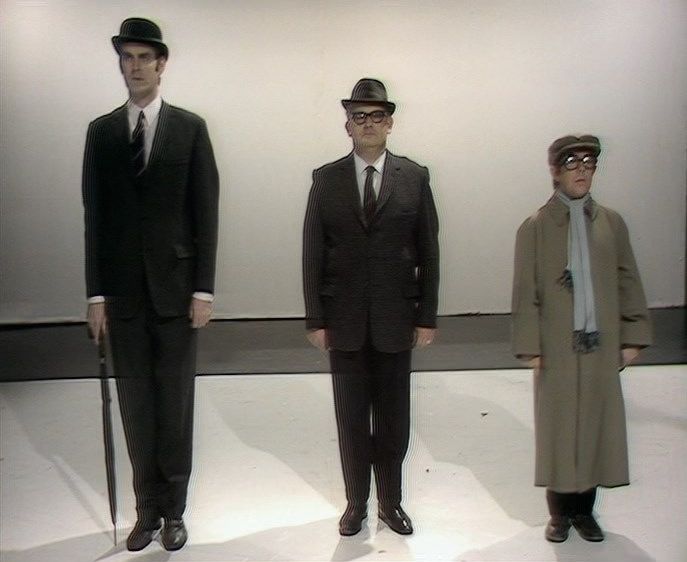
Next, there’s a reprise of the famous Frost Report sketch featuring Cleese, Barker and Corbett as examples of  the upper, middle and lower class members of society. As with the original, it’s Ronnie C who gets all the laughs whilst the other two play his straight men.

Wasta is this week’s speciality act. He’s a physical drunk act and is rather good (not a great many other credits I can find, apart from a few appearances in The Good Old Days, which would make sense – it’s the sort of non verbal comedy that would work well there).

The closing musical number is an Elizabethan costume drama set to music. Ronnie B as Queen Elizabeth I fairly takes the breath away, although Ronnie C’s Sir Francis Drake (sporting a very modern pair of glasses) is equally as eye-catching. Mind you, this sketch is probably best known for the impressive entry of John Owens.

Owens was a very dependable Two Rons performer (chalking up many credits between this one and their final Christmas special in 1987). He should have come running in and then slid to a kneeling position, but possibly the floor was a little too slippery, which meant he ended up on his backside. Ronnie B just about keeps it together, although the extras in the background are less restrained. They could have gone for another take, but since it’s a nice moment (the audience always likes to see a few fluffs and mishaps) it wasn’t surprising they kept it in.

The Two Ronnies – Series One, Show Five

ronnies s01s05.jpg

Original Transmission – 8th May 1971

Written by Garry Chambers, Tony Hare, Eric Idle, David McKellar, Spike Mullins, David Nobbs, Michael Palin & Terry Jones, Peter Vincent, Bill Solly, Dick Vosburgh, Gerald Wiley

Introduction/News Items
Party Sketch – Toilet Humour
New World
Ronnie C at the piano
Hampton Wick – Episode Five
Tina Charles – Time and Love
Doctor sketch
Chaz Chase
Rev Spooner – The Musical
Outro

Notes: In this party sketch, Ronnie C desperately wants to find the toilet, but can’t bring himself to actually say so – instead he uses a string of subtle hints (inspect the plumbing, etc) which Ronnie B totally fails to understand. It’s not a terribly long sketch, nor does it have a particularly good punchline, but you can’t beat a bit of good, honest toilet humour.

New World, a vision in matching blue sweaters, are as relaxing as always. Tina Charles ups the tempo a little with another Laura Nyro song, Time and Love.

Now this is odd. Even this early on, the Two Ronnies had a sense of order and tradition, so it’s jarring that Ronnie C’s solo spot is so early in the show (we’re only seven minutes in) and what’s worse he’s not sitting in his chair – he’s by a piano instead! Luckily the jokes are just the same, including this one which I’m sure had more than one outing over the years. “This morning we had an argument with the children about staying up late to watch daddy. They wanted to go to bed.”

Hampton Wick once again places Madeline Smith in low cut dresses as well as offering us the chance to see Ronnie C as Toulouse Lautrec.

Next up Ronnie B plays a confused Scottish doctor (he doesn’t seem to realise he’s a doctor) whilst Ronnie C is his patient attempting to get a little treatment. When Ronnie C gives his profession as a Chartered Surveyor, it’s impossible not to wonder if one of the Pythons scripted this (Chartered Surveyors tended to loom large in Python).   That the sketch veers off in an unexpected direction also supports this, as that’s a very Pythonesque trademark.

Chaz Chase, born in Russia in 1901, made a career out of eating practically anything – cigarettes, flowers – and he does so here as well. Definitely one of the odder spesh acts we’ve seen so far, but I’m rather glad we have it.

The closing musical number is something that’s archetypical Two Ronnies fare. Ronnie B is the Rev Spooner who has endless trouble with words. Here he is attempting to give his wife (Josephiner Tewson) a present.  “I knew you needed a scentle of bot. A sottle of bent. Perfume”. Ronnie C gets in on the act. “The manner of your speaking, it ounds it a little sod.” And so on and on.

There’s several ways to date the episodes. If you don’t want to do it by the suits the Rons wear, then you can always do so by observing which big-breasted celebrity is the butt (as it were) of many of the news items. Here it’s Raquel Welch, so it’s plainly early days. She’s been signed to play Quasimodo “in the new film entitled The Hunchfront of Notre Dame.”

The Two Ronnies – Series One, Show Four

ronnies s01s04

Original Transmission – 1st May 1971

Written by Garry Chambers, Tony Hare, Eric Idle, David McKellar, Spike Mullins, David Nobbs, Michael Palin & Terry Jones, Peter Vincent, Bill Solly, Dick Vosburgh, Gerald Wiley

Introduction/News Items
Party Sketch – Fancy Dress
Tina Charles – Stoney End
Ronnie B Solo – Smart Cooking
Hampton Wick – Episode Four
New World – Delia
Ronnie C in the Chair
Joe Andy
Marriage Sketch
Outro

Notes: The party sketch is a fancy dress affair, with Ronnie C making a very fetching Nell Gwynne, complete with copious oranges. His appearance certainly tickles the studio audience, leading to a round of applause. Ronnie B has apparently come as Richard the Lionheart, although he doesn’t quite look the part in a lounge suit (but apparently that’s what Richard wore when he wanted to relax).

Tina Charles tackles Laura Nyro’s Stoney End, which had been a hit for Barbra Streisand in early 1971, whilst New World offer rather soporific fare with Delia.

Ronnie B is Lionel Smart, who demonstrates Smart Cooking (this week bourguinon a la pouf celebre). That Smart is a grubby common type is the joke, of course.

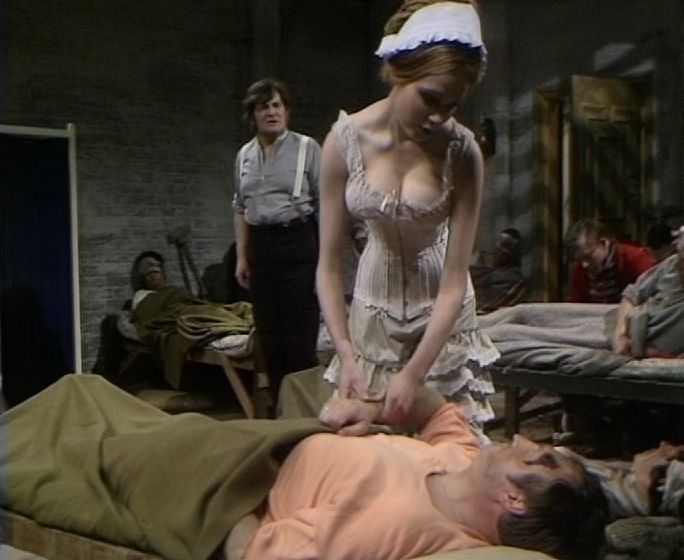
Hampton Wick continues, with Madeline Smith’s winsome heroine now ensconced in the Crimea, tending to the wounded. She has to make the ultimate sacrifice (her clothes for bandages) which certainly seems to bring a smile to the faces of the patients (and no doubt warmed the hearts of some of the viewers at home too).

Joe Andy balances swords on his chin and attempts to climb a ladder at the same time. Oddly, he doesn’t receive an introduction (not even an onscreen caption). As impressive as his feats are, what’s more interesting is that as he slowly climbs the ladder you can see the studio lights, transmission sign and the clock – which tells you exactly what time this was recorded. Well it interested me anyway.

Up next is a sketch with Ronnie B as a vicar attempting to marry Ronnie C and Josephine Tewson. If they all didn’t have various ailments (hiccups, sneezing fits) then no doubt things would be a lot easier. This is one of those sketches where because the joke is obvious straight away, the question is whether things will get more or less funny when the gag gets repeated numerous times.

No musical item in this one, so the marriage sketch leads into the closing items.

The Two Ronnies – Series One, Show Three

ronnies s01s03

Original Transmission – 24th April 1971

Written by Garry Chambers, Eric Idle, David McKellar, Spike Mullins, David Nobbs, Michael Palin & Terry Jones, Peter Vincent, Dick Vosburgh, Gerald Wiley

Intro/News Items
Party Sketch – Hello
New World – Listen to the Falling Rain
Ronnie B Solo – Weather Forecaster
Tina Charles – Close to Me
Hampton Wick – Episode Three
Ronnie C in the Chair
Doctor’s Sketch – Ronnie B as a man who’s caught Radio 4
Georges Schlick
Moira McKellar and Kenneth Anderson
Outro

Notes: Yet another party sketch with Ronnie B as the dominant force, in this case a man so sensitive that he reacts with suspicion to Ronnie C’s innocent greeting of hello.  For example, Ronnie B’s first response is to wonder whether Ronnie C really meant to say “hello, you boring old git, who invited you?” Given that most of the Pythons have writing credits on these early shows, it seems that some of the material had originally been earmarked for Monty Python. Indeed, in the past the Pythons have joked that if a sketch didn’t work then they’d send it onto the Ronnies!

This is one that could easily have fitted into Monty Python (and so seems a little out of place here) as the punchline sees the camera pull back to reveal that everyone in the party, expect for Ronnie C, is dead. Not quite the way you’d expect a Two Ronnies sketch to end.

New World are a vision in matching outfits whilst Tina Charles demonstrates she’s able to show restraint by tackling a quieter song in Close to Me.

There’s another typically convoluted chair monologue from Ronnie C, with plenty of incidental pleasures along the way.  “I was just stretching my legs there. Did you see that? Stretching my legs. Left it a bit late in life, haven’t I really?”

A short sketch features the Ronnies as doctor and patient (Ronnie B is a man who’s caught Radio 4). After he asks if it’s bad, there’s an obvious punch-line. “Bad? Have you heard it? It’s terrible.”

Georges Schlick is the latest speciality act – a rather good ventriloquism performance – which leads into the Ronnies as Moira McKellar and Kenneth Anderson. Any similarities to Kenneth McKellar and Moira Anderson must be purely coincidental then ….

The Two Ronnies – Series One, Show Two

ronnies s01s02

Original Transmission – 17th April 1971

Written by Tim Brooke-Taylor, Barry Cryer, Eric Idle, David McKellar, Chris Miller, Spike Mullins, David Nobbs, Michael Palin & Terry Jones, Bill Solly, Peter Vincent, Dick Vosburgh, Gerald Wiley

Introduction/News Items
Party Sketch – Ronnie C’s embarrassing baldness
New World
Hampton Wick – Episode Two
Tina Charles – Ruby Tuesday
Ronnie C in the Chair
Tarzan in Suburbia sketch
Jo, Jac and Joni
Gilbert and Sullivan
Outro

Notes: The desks are no longer at a weird angle and although a smaller CSO back screen remains – seemingly showing a shot of the universe – it no longer changes to display a picture for every news item.

The party sketch features Ronnie C as Mr Goldie, a rather bald man (wearing a not very convincing bald cap). After being told not to mention his baldness, of course Ronnie B can’t help himself (referring to him as Baldy, rather than Goldie to begin with). Ronnie B gets most the lines here as he attempts to dig himself out of this unpromising start, whilst Ronnie C is able to sit back and simply react. Such is Ronnie B’s over-sensitiveness, that even words like “wig-wam” are off limits – he quickly changes it to “wog-wam” (“you know, the wams where the wogs live”). Politically correct this is not …

Episode Two of Hampton Wick is chiefly memorable for Madeline Smith’s dress, which at times is unable to restrain her ample charms.  How they got away with some of the shots is anyone’s guess ….

New World warble an unknown (to me) song whilst Tina Charles continues her full-throttle attack on pop classics by tackling the Rolling Stones’ Ruby Tuesday. She certainly doesn’t hold back, that’s for sure.

Although some of the productions misteps from the opening show have been ironed out, there’s still a sense that this is early days – as sometimes sketches don’t finish with a musical flourish, as they do later on, but rather with a fade to black.

Ronnie B makes an unlikely looking Tarzan (but then Ronnie C would have been even less convincing). But the strange juxtaposition of Tarzan crashing into the suburban garden of Ronnie C’s Arthur Norris is an appealing one.

As with the first show, there’s a moment of fourth-wall breakage, as the end of this sketch is interrupted to prepare the way for the spesh act – in this case Jo, Jac and Joni. They demonstrate that variety isn’t dead with a spot of musical comedy.

For a long time, the show would often end with a musical number – in this case Gilbert and Sullivan entertain (or not) us with a some of their favourite numbers, albeit cunningly re-worded. At least this one doesn’t outstay its welcome.

The Two Ronnies – Series One, Show One

ronnies s01s01

Original Transmission – 10th April 1971

Written by Tim Brooke-Taylor, Barry Cyer, Eric Idle, Chris Miller, Spike Mullins, David Nobbs, Michael Palin & Terry Jones, Bill Solly, Peter Vincent, Dick Vosburgh, Gerald Wiley

Introduction/News Items
Party Sketch – Ronnie B finds it impossible not to keep attacking Ronnie C
Tina Charles – River Deep, Mountain High
Ronnie B Solo – A Doctor who has a cure for people who say everything twice
Hampton Wick – Episode One
Ronnie C – Interpol Sketch
New World – Rose Garden
Ronnie C in the Chair
Hearing Aid Sketch
Alfredo
Big Jim Jehosophat and Fat Belly Jones
Outro

Notes: Although the Ronnies had worked together for a number of years prior to this, there’s still a slight sense of nervousness on show (especially in Ronnie B’s case). This is evident in the opening news items which seem more than a little stilled – although the weird set design (angled desks) and CSO back projections don’t help. This would be swiftly amended for show two.

The first of many party sketches finds Ronnie B in an abusive mood, first slapping Ronnie C’s face and then kneeing him in the groin! And since the slaps sound real it seems that Ronnie B wasn’t holding back.

Some of the Ronnies serials tend to drag a bit and Hampton Wick is the first example of this.  Luckily Madeline Smith’s winsome beauty is some recompense for the fairly laboured comedy.

These early series have an abundance of guests (later on they’d be pared down to just a single guest spot). The sixteen-year old Tina Charles impressively belts out River Deep, Mountain High whilst New World offer a blend of laid-back acoustic warbling that’s rather relaxing – although the moustaches and hairstyles on display make it a little hard to take them seriously.  But Rose Garden was a hit for them in 1971, reaching no 15 in the UK charts.

As for Alfredo, well he’s the first in a series of speciality acts who pop up in most of the series one shows.  Where else are you going to see a man dressed in German military uniform playing the drums and (sometimes) catching ping pong balls in his mouth?  If that’s not entertainment I don’t know what is.

Q – Volume 2 (Q8/Q9). Simply Media DVD Review

164454- Chief Crazy Horse Sleeve.indd

Q  – Volume 2 contains the final two series of Spike Milligan’s highly distinctive (and that’s putting it mildly) comedy series – Q8 and Q9, broadcast in 1979 and 1980.  For those new to Q, I’ve discussed the first three series here.

The formula remains the same – scripted by Milligan and Neil Shand, Q8/Q9 offers up another twelve episodes of unique comedy.  Familiar faces from previous series – John Bluthal, David Lodge, Alan Clare, Stella Tanner, the remarkably curvaceous Julia Breck and Keith Smith – return for Q8, whilst Bob Todd makes his Q debut.  A familiar face from his years with Benny Hill, be slips seamlessly into the fold.

Todd was an excellent utility player and quickly became a key figure in many of the sketches (similar to Peter Jones in Q6), Bluthal’s gift for mimicking Hughie Greene and others is put to good use again, Keith Smith has some nice moments (most notably dangling upside down on a rope), David Lodge (he starred in Cockleshell Heroes you know) is always a joy, Stella Tanner handles all the non-glamorous female roles with aplomb, Alan Clare is still (deliberately) a terrible actor whilst Julia Breck unashamedly provides more than a touch of glamour.

hi026748651

Q8, like the three previous series, is almost impossible to characterise.  It delights and baffles – sometimes in equal measure, although sometimes the balance decisively tips one way or the other.

Q often seems to be teetering on the brink, with all the cast, especially Spike, frequently having to fight the giggles (often not very successfully). Most sketch shows tend to break the fourth wall occasionally, but few ever played about with the artifice and conventions of television like Q did.

Having said all that, some elements are quite trad. Proceedings tend to kick off with Spike behind the desk, reading a series of news items which depend on wordplay. Not too dissimilar from The Two Ronnies …..

But after the relative sanity of the news we rush headlong into the first sketch of Q8. Stella Tanner is a housewife, Spike is her husband. Out of nowhere a pantomime horse, wearing pyjama bottoms, comes clopping across the screen to the sound of The Onedin Line theme.

This gets a polite reception from the audience, but Spike clearly wanted more. “Well, that didn’t get much of a laugh, ladies and gentlemen. I don’t think you understood the full nuance of that joke.” This is typical Spike – toying with the audience (both in the studio and at home) by producing moments which aren’t particularly funny, but then forcing the laughs to come by various methods. Bringing an elephant on seems to do the trick here.

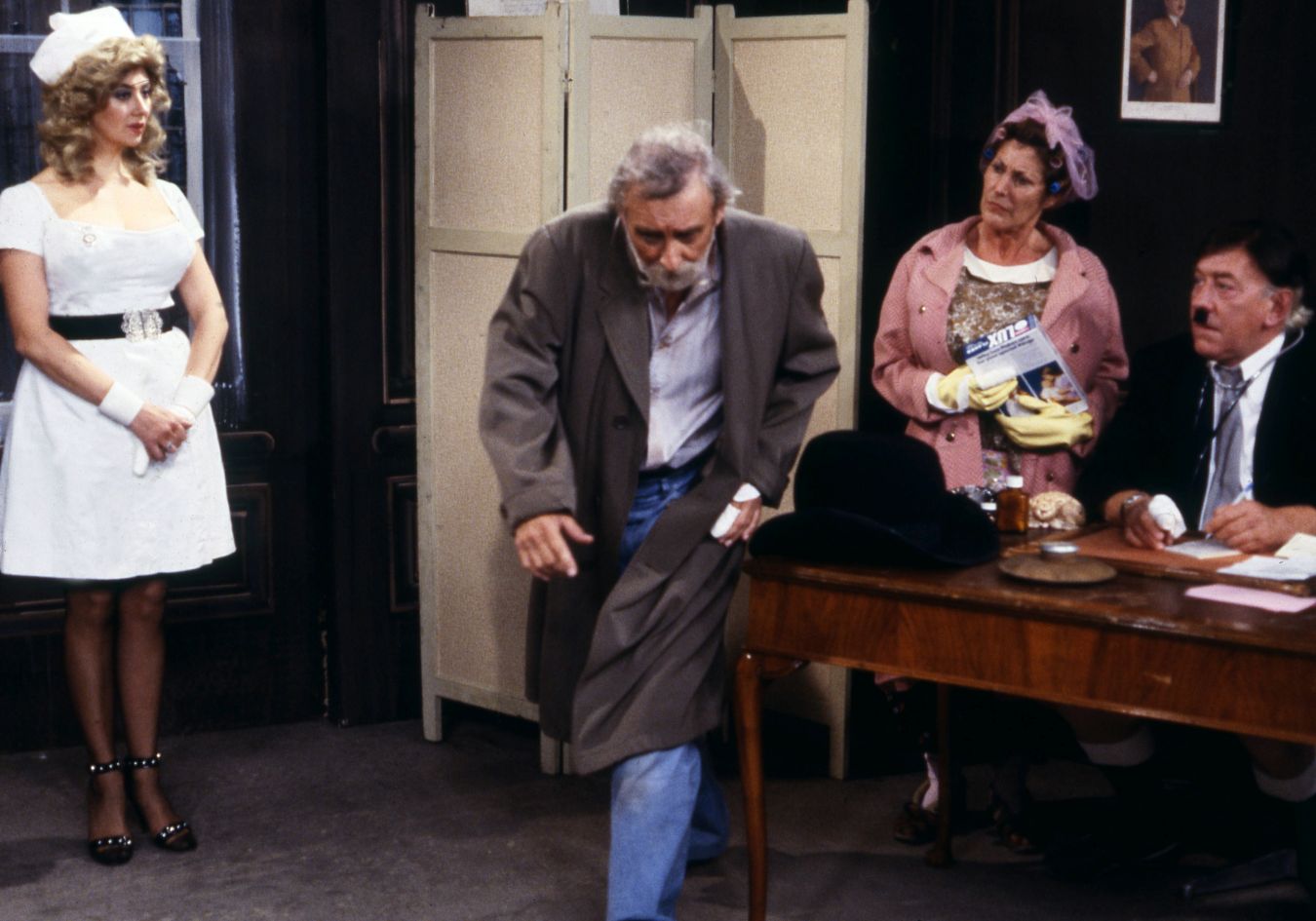
The sketch then moves to a doctor’s office, where the doctor (Todd) is, naturally enough, dressed as Adolf Hitler. Spike drops his trousers to reveal he’s wearing stockings and suspenders whilst a football theme (Tony Gubba on commentary duties) continues. And when there’s nowhere else to go, all the cast edge towards the camera, repeating the mantra “what are we going to do now?”

hi026746728

And that sketch, in a nutshell, sums up Q. You have to be prepared to buy into Spike’s world and go with the flow – if you’re looking for well constructed comedy with neat punchlines you’re very much in the wrong place. Staples of the previous series (such as blackface and Irish jokes) remain very much in evidence, meaning that those who are easily offended are definitely in the wrong place.

Spike’s obession with Adolf Hitler remains as constant as ever. Hitler highlights include his song and dance act as a contestant on Opportunity Knocks. The Royal Family are also regular targets (the sight of the Royals all wearing tubas on their heads is an unforgettable image).

The musical spots throughout Q8 and Q9 are provided by Spike and Ed Welch, who perform a selection of their own songs. Spike’s skills as a comic songwriter are well known, but here we have an opportunity to hear some of his non-comic material (as well as providing him with a chance to occasionally play the trumpet). These spots offer the audience a few moments of calm each week.

Later highlights of Q8 include a typically surreal sketch which mashes up traffic wardens and WW2 (and also features stripteases from both Julia Breck and Bob Todd – something for everyone then). Johnny Vyvyan, a highly distinctive stooge probably best known for his appearances with Tony Hancock, makes a few brief appearances. Spike’s tribute to the late Sir Edward Elgar, utilising the B-flat garden hose, is yet another typically unique Q moment.

After being absent for a few shows, David Lodge makes a welcome return for a sketch where he and Spike demonstrate how different nationalities would deliver that old chestnut, “there’s a fly in my soup.” With Katie Boyle on hand to provide scores, ala the Eurovision Contest, it’s a typically ramshackle few minutes with both Spike and Lodge (but especially Spike of course) barely able to control their giggles. Michael Parkinson pops up in the last episode of Q8 to take part in another ramshackle skit.

hi026746732

It’s business as usual for Q9. Spike and most of his regular band of contributors (apart from Stella Tanner) return.

The first Q9 sketch has a WW1 theme, featuring Alan Clare as an umpire (with ridiculously large shoes) overseeing a battle between the Germans (Spike) and the English (Todd). It gets much stranger from there on in, although since Julia Breck makes an appearance in a remarkably tight top it’s inevitable there will be a reference to knockers ….

Spike dresses as Max Miller for an undertakers sketch, whilst Breck is dressed in very little (there’s clearly something of a theme here). Lounging on the other side of the set is Raymond Baxter, yet another familiar BBC face making an unexpected appearance. Baxter, a long-time presenter on Tomorrow’s World, is the ideal host for a feature which promises to “defeat the cemetery shortage” by “firing your loved one into outer space”. Baxter’s authoritive persona and his scripted disdain at the lines he’s been given helps to make the sketch even funnier.

Later in the series there’s a sketch set in a British Rail lost property office. Spike is the attendant, dressed as the Lord Chief Justice of England, and proceedings kick off with Spike and Bob Todd conversing in morse code. Say what you like about Q, but it’s never predictable. Todd can barely control his giggles, whilst David Rappaport passes by purely so that Spike can make a groanworthy pun. Throw in a spot of blackface, Keith Smith as a ghost and David Lodge dressed as a woman and you’ve got everything that made Q the series it was in highly concentrated form.

hi026746720

One of the notable things about Q9 is the way in which the audience is involved. The news items feature regular cutaways to the audience and on other occassions Spike will stop a sketch if he senses things aren’t going well in order to seek feedback from the audience. It’s always interesting to see exactly who turned up to watch these shows (something of a cross-section it must be said, with both young and old represented).

Bracing and baffling, but never boring, Q8 and Q9 are further examples of the skewered genius of Spike Milligan.  Whatever era of British comedy you love, you’re bound to get something out of this set so, like Q Volume 1, it’s an essential purchase.

Hopefully There’s A Lot of It About (Q10 in all but name) will follow shortly, maybe with some of the Milligan miscellanea from his time at the BBC, but if even it doesn’t, at least all that exists of Q (bar a few small trims for rights reasons) is now available on shiny discs, something which just a year ago would have seemed highly unlikely.

Q – Volume Two is released by Simply Media on the 27th of February 2017.  RRP £19.99.

hi001918810

Christmas Night with the Stars 1972

stars.jpg

This was the final regular edition of CNWTS, with the Two Ronnies on hand on introduce Cilla Black, the Young Generation, Lulu, Mike Yarwood & Adrienne Posta, The Liver Birds, The Goodies and Dad’s Army.

Unlike David Nixon and Jack Warner, the Ronnies took a much more active role in proceedings, which means that it feels somewhat like an extended Two Ronnies show (most notably at the start, which opens in the time honoured way – news items, followed by a Two Rons party sketch).  This explains why the cut-down DVD version (excising all the other participants apart from Lulu and Cilla Black) still works pretty well as a Two Ronnies show in its own right.

The Young Generation back Lulu, as well as enjoying their own spot.  There’s rather a lot of them, aren’t there?  After Lulu and the Young Generation have leapt about for a few minutes, the Goodies arrive – via a film sequence which promises a grubby urchin the Christmas of his life (thanks to the Goodies Travelling Instant Five Minute Christmas).  Dialogue-free, it’s packed with typical Goodies sight gags as well as a healthy dose of comic violence (would they be able to get away with hitting a boy over the head with an outsized mallet today? Probably not).

Up next is The Liver Birds, which sees Beryl (Polly James) and Sandra (Nerys Hughes) reflecting on various aspects of Christmas – overindulgence and family relationships being top of the agenda.  The kind-hearted Sandra regards the remains of the turkey with sadness, whilst Beryl – always more pragmatic – has a different point of view. “Well, it’s his destiny isn’t it? I mean we’ve all got to die sometimes, it’s just that some of us go in black cars surrounded by flowers and some of us go in roasting tins surrounded by spuds.”

The Two Ronnies return for a some chat about their respective Christmases, which is notable for the number of times that Ronnie B stumbles over his lines. It’s a little odd that they didn’t do a retake, so either time was tight or it was decided that on Christmas Day the audience would be in a mellow mood and therefore more forgiving.

I’ve written elsewhere, about Mike Yarwood’s later career when his star was somewhat waning.  Here, a decade earlier, he’s pretty much at the top of his game – although this is a sequence that’s very much of its time (and if I’m being honest, a few of the impressions are a little weak).  The setting is a party at Number 10, so you won’t be surprised to hear that Harold Wilson and Edward Heath are in attendance (as is Frankie Howerd, for some strange reason).  Adrienne Posta provides support, but the topical nature of the piece makes it less effective than the more universal nature of the rest of the programme.

As a child, I tended to find Ronnie C’s chair monologues rather dull.  Now they’re often the highlight of their shows (funny how times and tastes change) so I’m glad one was included here.  Ronnie C also joins Cilla Black for a little crosstalk and a song, although how much you get from this part of the show will probably depend on how high your tolerance to Cilla Black is.

For me, we’re on firmer ground with Dad’s Army.  The platoon are incredibly proud to have been selected by the BBC to broadcast live to the nation on Christmas Day, but things aren’t as straightforward as Mainwaring would have hoped.  The rehearsals are slightly chaotic – thanks to the script provided by the BBC.  They’d assumed that the sergeant would be a cockney and the officer a gentleman, so Wilson is somewhat bemused that his part is full of slang whilst Mainwaring is incensed to be told that he doesn’t sound like an officer!  When the BBC man suggests that maybe they swop roles, the expressions on the faces of both Le Mesurier and Lowe are a joy!  With the rest of the platoon pitching in, notably to produce sound effects (Pike is in his element when asked to provide bird sounds) this is a nicely-written sequence with a decent pay off.

Following another quick Two Ronnies sketch, Cilla Black is back (along with a children’s choir – always a good bet at Christmas) to round things off before the Two Rons say goodbye with a selection of news item.

“And now it’s a Merry Christmas from me. And it’s a Happy New Year from him. Goodnight.”


Porridge – The Harder They Fall

harder

Upon hearing the news of Peter Vaughan’s death, I decided  to grab one of his performances off the shelf to watch as a tribute.  But as you’ll see from a quick skim of his résumé on IMDB, he was an incredibly prolific actor (over two hundred individual film and television credits), so which one to choose?

He’s solid throughout The Gold Robbers (1969) as DCS Craddock.  It’s a series that I’ve now moved a little higher up my rewatch pile and I’d certainly recommend picking it up if you don’t own it.  Another memorable performance came in the 1985 BBC adaptation of Bleak House, where he played Tulkinghorn.  Vaughan’s trademark menace is clearly in evidence as he dominates every scene he’s in (frankly he makes Charles Dance, Tulkinghorn in the more recent adaption, look very ordinary).

Vaughan also graced numerous series with fine guest appearances.  One such was The Casebook of Sherlock Holmes in 1991, where he played John Turner in The Boscombe Valley Mystery, opposite Jeremy Brett as Holmes .  Generally, the last few series of Brett’s Sherlock Holmes are a little patchy – partly this was because of various real-life factors (Edward Hardwicke’s availability, Brett’s illness) but it’s mainly because most of the really good stories had already been adapted.  The Boscombe Valley Mystery is something of a rarity then, a decent early tale that hadn’t been tackled, featuring a brief – but compelling – turn from Vaughan.

Having considered these and more, in the end I plumped for one of his signature roles – Grouty in Porridge.  That Vaughan remains indelibly linked to Porridge is all the more remarkable when you consider that he only appeared in three television episodes (this one, No Way Out and Storm in a Teacup) as well as the feature film.  But although his screentime is incredibly limited, it’s interesting how Genial Harry Grout casts a shadow over the whole series.  He’s mentioned in several episodes before he makes his debut (quite late in fact, The Harder They Fall came towards the end of the second series) so the audience has already been well primed about exactly who he is.

Genial Harry Grout’s place in the narrative is quite straightforward.  He always pops up to ask Fletch to do him a little favour, making Fletch an offer he can’t refuse.  As seen throughout the series, Fletch either likes to steer clear of trouble or initiate it himself – only Grouty has the power to manipulate him.  Most of Vaughan’s scenes in Porridge were played opposite Ronnie Barker and it’s a treat to watch the pair of them at work.

Grouty’s first scene is a case in point.  Unlike every other prisoner, he has an impressively decorated cell – pictures on the wall, a bird in a cage, an expensive hi-fi system – which are clear signifiers of his special status.  Quite why Mackay and the Governor turn a blind eye to this is a mystery that’s never answered (there are a few possibilities though – all of them sinister).

Offering Fletch a cup of cocoa and a Bath Olivier, Grouty settles down for a chat.  He reminisces about his time in Parkhurst, this provides Vaughan with a killer line as he tells Fletch what happened to the pigeon he kept there.  This is a mere preamble though, as Grouty soon makes his intentions clear – he has a rival (Billy Moffatt) who’s running a book on the inter-wing boxing tournament.  Grouty wants him taken to the cleaners – so they have to nobble one of the boxers. The scene’s desgned to set up the premise of the episode, but thanks to the writing and playing this never feels obvious – instead, the audience is invited to enjoy the dangerous charm of Harry Grout.

Young Godber is the one chosen to take a dive and it’s down to Fletch to break the bad news.  Both Barker and Beckinsale are wonderful throughout this later scene – capped by the revelation from Godber that he can’t take a dive for Grouty in the second round, because he’s already agreed to take a dive for Billy Moffatt in the first!

The exceedingly good Cyril Shaps plays the twitchy Jackdaw, the newest and weediest of Grouty’s gang, whilst Fulton Mackay has a couple of decent scenes (Brian Wilde only pops up briefly – on film – at the start though).

If the ending’s a little weak (it’s hard to believe that everyone – especially Grouty – was happy with the outcome) then thanks in no small part to the interplay between Barker and Vaughan, The Harder They Fall is still a classic half-hour.

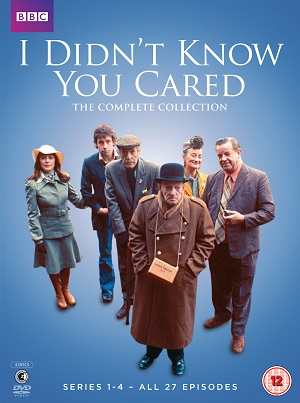
I Didn’t Know You Cared – Second Sight DVD Review

7067

Peter Tinniswood (1936 – 2003) first came to prominence in the 1960’s, collaborating with David Nobbs on The Frost Report and also penning Lance at Large, a sitcom built around the talents of Lance Percival.  He also pursued a career as a novelist and two of his books – A Touch of Daniel (1971) and I Didn’t Know You Cared (1973) – would form the basis of his most enduring television creation.

The television version of I Didn’t You Know Cared, adapted loosely by Tinniswood from his novels, ran for four series between 1975 and 1979 (a third novel, Except You’re A Bird, was published in 1976).  Although the series was popular at the time, it sadly doesn’t have a very high profile these days.  Some maintain this is because of its strong Northern atmosphere, but I’m not sure this is so – after all, it bears some similarities to Last of the Summer Wine, and that’s a series which has always had broad appeal.

The comparison with LOTSW is a fair one (and not least because John Comer appeared in both series).  They both depict worlds where married life is a constant battle, with neither side giving any quarter.  In I Didn’t Know You Cared it’s the formidable Annie Brandon (Liz Smith) who rules the roost with considerable relish.

The opening episode, Cause for Celebration, sees Uncle Mort (Robin Bailey) bury his wife Edna (who had the bad luck to fall off a trolleybus onto her head).  Mort doesn’t exactly seem heartbroken – fretting that because the funeral’s taking so long he’s going to miss the football results – but later does admit that he’ll miss her.  “She was a dab hand at plumbing you know. God knows who’s going to paint the outside of the house now she’s dead.”  But every cloud has a silver lining and he’s happy that from now on he’ll be able to wear his cap at the dinner-table.

Bailey tended to play upper-class most of the time, so the earthy Northerner Mort was something of a departure for him.  But he’s never less than excellent and thanks to Tinniswood’s pithy dialogue he’s always got plenty of good material to work with.

7090

Mort sneaks away from the funeral party with his brother-in-law Les (John Comer).  If Mort is starting to relish his new found freedom, then spare a thought for Les, shortly due to celebrate twenty five years of marriage to Annie.  She wants a second honeymoon, whilst Les doesn’t seem to have recovered from the first.  As Mort and Les seek refuge and a nice cup of tea in the comfortable hut at Mort’s allotment (Mort grows weeds, explaining to Les that they’re much better than sprouts) they muse over the mysteries of marriage.  Les believes that having to marry a woman is where the trouble starts – if he could have chosen anyone, he’d have picked King George VI!  They’re joined by Les’ son Carter (Stephen Rea), and after a few moments Mort decides that “t’fly in ointment is the human reproduction system.”

How much better would it be, Mort says, if a woman laid an egg and sat on it for nine months.  “Just think, she’d be stuck in t’house for nine months, sat on her egg. She’d have no excuse for coming to t’pub with you then.”  Carter sees a flaw in this admirable idea though – why couldn’t she put the egg in the oven for a bit?  After considering this, Mort decides that it wouldn’t work, not with the way that gas pressure is like these days.  “You couldn’t rely on it. Just think what would happen. You’d put your oven on at regulo 2, you’d stick you egg in it, you’d nip out for a couple of gills. When you come back you find t’gas pressure’s gone up and your potential son and heir’s turned into a bloody omelette.”

Alas, their peace and quiet doesn’t last for long as Annie tracks them down.  She depresses Mort by telling him that he’s going to come and live with her and Les (so he won’t be sneaking down to the pub every night and doing exactly what he pleases).  Carter also has the sense that the walls are closing in on him after he’s forced to stop prevaricating and propose to Pat (Anita Carey).  Well I say propose, but his mumbled words fall a little short of that – no matter to Pat though, she’s now steaming full ahead and starts by asking him if he’d like a son or a colour television first …

In the space of thirty minutes Tinniswood has set everything up nicely – Annie and Les, Carter and Pat, plus Uncle Mort.  Not to mention Uncle Staveley (Bert Palmer) hovering in the background, constantly asking “pardon?”

During the first series we see the preparations for Carter and Pat’s marriage.  Mort and Les, old hands in the marriage game, are keen to give him the benefit of their experience (they both think it’s a very bad move). Unsurprisingly Pat don’t find this terribly helpful. By series two they’ve tied the knot, although Carter’s finding it rather difficult to adjust to married life.  Both Rea and Carey left after the second series, so Keith Drinkel and Liz Goulding took over the roles for the final two series (Leslie Saroney replaced Bert Palmer as Uncle Stavely for the fourth and final series).

7093

The endless conflict between men and women is explored in the series two episode A Woman’s Work. Mort is depressed at having to spend all day trapped in the house with only Annie and Pat for company. He eyes Les and Carter with envy – they’ll soon be setting off to the factory for a day of filth and squalor (he tells them they don’t know how lucky they are!)

Familiar Tinniswood tropes come to the fore – not only do the women do all the housework (which goes without saying) but they also deal with the household maintenance as a matter of course. Annie recalls the problem they had with the guttering, which wasn’t helped by the fact she was stuck on the roof for six hours after Les took the ladder away. He tells her there was a good reason – he had to repair a hole in the snooker club roof – and he doesn’t seem to appreciate that she may have had different priorities.

Carter and Pat are now married and Pat is eyeing their new home. Anita Carey continues to impress as Pat, an upwardly mobile woman who embraces the new. She’s very taken with the qualities of their potential new neighbours (mainly because of the gadgets on their cars) and is also keen to mould the reluctanct Carter into a new man. This isn’t going to be easy though ….

Mort’s reminisces of his married life are another of the episode’s highlights – especially the moment when he recalls how Edna would demand her conjugal rights every Saturday evening. “Oh ‘ell, I’d say. Can I keep me pyjama jacket on? Undiluted bloody agony.”

Paul Barber pops up in a couple of episodes, including this one, as Les and Carter’s factory colleague Louis St. John. The dialogue Barber has is a little awkward (for example, when asked if he had a good weekend he says that he “took the awd lady to t’witch doctors on Saturday, had a couple of missionaries for Sunday lunch”). Another familiar face lurking in the factory is John Salthouse as the impressively-named Rudyard Kettle. Salthouse would later play DI Galloway in The Bill.

Tinniswood’s dialogue remains endlessly quotable. In a later series two episode, You Should See Me Now, Annie recalls that the last time her husband took her out alone was the week after the Second World War ended. “We went to hotpot supper at Moffat Street tram sheds.” With just a single line Tinniswood is able to paint a very vivid picture.

Taking over roles played by someone else is never easy, but both Keith Drinkel and Liz Goulding fit very nicely into the third series as the new Carter and Pat. The opening episode – Men at Work – develops the theme from A Woman’s Work. There we saw Mort going a little stir-crazy, trapped in the house all day, now matters are made even worse as he’s joined by Les and Carter, both of whom are out of work. They react to the spectre of unemployment in different ways – Carter is building a model battleship painfully slowly whilst Les becomes an efficient house-husband (Comer looking fetching in a pink pinny).

The fourth and final series opened with The Love Match. This sees the Brandons throw a posh dinner-partly at which Les mournfully notes that they must be having peas since there’s three forks on the table. Annie is in a much more positive mood though. “It must be years since I got dressed up in a long frock and squirted scent under me armpits.”  It must be said that Liz Smith does look rather, well rather …..

Other highlghts later in the series include Mort’s unexpected expressions of love (given all he’s previously said about the horrors of married life this is more than a little surprising). An especially strong episode is The Great Escape, which sees Pat tell Carter that she’s planning to spend two nights away on business. Poor Pat wants Carter to be absolutely incensed and jealous with rage, but the phelgmatic Carter is his usual calm self. There’s a darker tone to this one though, as Carter’s eyeing the voluptuous charms of Linda (Deidree Costello) even as he’s bidding Pat farewell. But when Pat is hospitalized shortly afterwards, a stricken Carter is forced to abandon his escape plans. Drinkel, sitting by the unconscious Pat’s bedside, plays the scene very well.

With uniformly strong performances from all of the main cast (especially Bailey, Comer and Smith) and sparkling dialogue from Peter Tinniswood, I Didn’t Know You Cared is an obscure sitcom gem.  But with writing and acting as good as this it deserves to be much better known.

I Didn’t Know You Cared is released by Second Sight on the 28th of November 2016.  RRP £24.99.

7087

Seven of One – I’ll Fly You For a Quid

quid-01

Count the number of Welsh clichés in the opening thirty seconds.  Male voice choir, check.  Shot of the village with the colliery prominent, check.  A full house at the chapel, check.  If this one had ever gone to a series then goodness knows how many more clichés it would have racked up.

At least it has a decent number of Welsh actors. Talfryn Thomas, at times the BBC’s stock Welshman, naturally appears as does the always watchable Emrys James as Reverend Simmonds.  Barker, of course, wasn’t Welsh but he manages a decent accent (which he’d later revive for the largely forgotten Roy Clarke sitcom The Magnificent Evans).  Barker plays Grandpa Owen (who doesn’t last long) as well as the younger Evan Owen.

Gambling fever has long gripped the village and the late Grandpa Owen leaves his family with a problem.  His son Evan realises that just before he died his father had a big win on the horses.  But where is the betting slip?  After searching the house with no success, Evan decides that the slip must be in the coffin, meaning that Grandpa Owen’s peace has to be disturbed ….

The second of two Seven of One scripts penned by Dick Clement and Ian La Frenais, this was the one that Barker felt had the best chance of going to a series (he had to be persuaded that a prison-based comedy had legs).  And if it had moved away from the rather limiting topic of gambling then the quality of the cast (including Richard O’Callaghan and Beth Morris as Evans’ son and daughter) would have been a major plus point.

O’Callaghan may not be Welsh, but he still makes a good impression as Mortlake, a man just as keen as his father to dive into the coffin to see if the betting slip is there.  Although since the coffin isn’t yet screwed down you have to wonder just why they just don’t open it up and be done with it.  The lovely Beth Morris doesn’t have a great deal to do except stand around and look lovely (especially at the end, where her low-cut dress has Talfryn Thomas’ Mr Pugh rather lost for words).

Apart from Prisoner and Escort and Open All Hours, Seven of One offers up fairly forgettable fair.  I’ll Fly You For a Quid is one of the stronger later entries, but overall the series lacks the consistency of Six Dates with Barker.

quid-02

Seven of One – One Man’s Meat

meat-01

Alan Joyce (Barker) has been put on a strict diet by his wife Marion (Prunella Scales) and is told that he has to last the entire day without any food.  When she leaves he naturally heads straight off to the kitchen, but is appalled to find she’s taken every last scrap of food away.  And heading out to the shops is going to be a problem, because she’s removed all his pairs of trousers too …..

Written by Barker, under the penname of Jack Goetz, it’s not a surprise that One Man’s Meat gives him the (ahem) plum role.  Despite the heavyweight supporting cast – Scales, Sam Kelly, Glynn Edwards, Barbara New and Joan Sims – Barker is by himself for a large part of the episode’s duration.

Scales tops and tails the episode.  It’s nothing to do with the story, but Marion mentions that they’ve recently seen a blue movie at Bill and Nora’s house – this shines a light into the ways that the respectable middle-classes entertained themselves during the 1970’s.  Did they then indulge in a spot of wife swapping?  That would have made an interesting story, but possibly a post watershed one.

There’s more touchstones to the 1970’s as Alan mentions that he plans to fight the flab with Terry Wogan.  He’s too late to catch him though, so has to put up with Jimmy Young instead.  And since JY is delivering his latest recipe it’s all too much (he dunks the radio in the sink).

Although Alan attempts to order a takeaway from a Chinese restaurant (cue slanty-eyed acting from Barker, another moment which helps to date the story) he appears to be unsuccessful.  Presumably there were no other takeaways in the area?  This is something of a story weakness.

His desire for food then causes him to pretend he’s been burgled.  Two policemen (Edwards & Kelly) turn up, with Alan eyeing their trousers enviously.  It’s nice to see Sam Kelly and Glynn Edwards, even if they’ve not got a great deal to do.  I wonder if this small role led to Kelly being cast as Bunny Warren in Porridge?

The inimitable Joan Sims fairs a little better as the Joyce’s housekeeper, Mrs Dawkins.  Barker gives her some good lines which allows Sims to deadpan with her usual skill, ensuring that her scenes with Barker are the undoubted highlight of the whole thirty minutes.  Alas, she don’t appear for very long as Alan decides to steal Mrs Dawkins’ clothes, dress up as a woman and head out to the shops.  When in doubt, drag up, I guess.

One Man’s Meat has a sparkling cast and is a lovely time capsule of the seventies, but, like Alan’s stomach for most of the day, is a rather empty affair.  However if the story doesn’t appeal then you always entertain yourself by counting how many times microphone shadows appear (director Harold Snoad must have been having an off day).

meat-02

Seven of One – Another Fine Mess

mess

Sydney (Roy Castle) and  Harry (Barker) are keen to head off to the talent night at the Dirty Dachshund, but Harry’s ogre of a wife – Doris (Avis Bunnage) – doesn’t want him to go.  A few extra sleeping pills helps to ensure she sleeps like a baby, enabling Sydney and Harry to transform themselves into the spitting image of Laurel and Hardy and slip out into the night  …

Even before they’ve dressed up it should be fairly to easy to guess the direction that this one will take (the episode title is a bit of a giveaway too).  It’s a little strange that Sydney and Harry both talk and act like Laurel and Hardy in real life (meaning that their characters stay exactly the same once they’ve got the clothes on).  The opening finds Doris mourning the death of her mother, who passed away earlier in the day.  This provides the opportunity for Doris and her guests to poor scorn on Harry, who we’re told was an American GI (that explains why he talks like Olivier Hardy).  This part feels a little stilted.  A family bereavement offers plenty of comic potential, but Hugh Leonard’s script never really sparks during these scenes.

But once Roy Castle turns up and the pair decide to head out for the talent show, things pick up.  Slapstick humour abounds, even if Castle’s Sydney is a lot duller than Stan Laurel.  En-route to the talent show they spot a damsel in distress, Edwina (Pauline Delaney), and go to her aid.  She’s rather intoxicated, and curiously also seems to be American, and the pair decide to see her home.  Delaney (Mrs Mortimer in Public Eye, alongside a good many other roles) is amusing as the vampish Edwina, and her arrival on the scene enables Leonard to spring the big setpiece ending as Sydney and Harry demolish her flat.

Setting her electric fire ablaze, fun with soda-siphons and a nicely cued sequence where a chain of events ensure that one disaster follows another – like a row of dominos – all draw appreciative laughter from the audience.  It’s the moment where Another Fine Miss really springs into life and both Barker and Castle seem to be having a ball.

It’s hard to imagine this one as a series, every week they’d dress up as Laurel and Hardy and get into scrapes?   Hmm, maybe not, but as a one-off it certainly has its moments.

Seven of One – Spanner’s Eleven

spanner

Albert Spanner (Barker) is coach of Ashfield Athletic Football Club, a team firmly stuck at the bottom of the local league.  Their lack of success has even reached the hallowed halls of the council, so much so that Councillor Todd (Bill Maynard) presents Albert with an ultimatum – unless the team win their next match he’s out.

Although written by Roy Clarke, Spanner’s Eleven is no Open All Hours.  The concept of a hopeless non-league football team is a decent one, but for some reason the players hardly feature in the story at all (apart from a training film mid-way through, we don’t really see them emerge as characters until the last few minutes).  This is something of a wasted opportunity, especially since the likes of Christopher Biggins and Louis Mansi are amongst their number.

Unsurprisingly, since the whole series was mainly a vehicle for Barker, football-mad Albert Spanner has the lion’s share of the action, interacting with his wife Vera (Priscilla Morgan), Horace (John Cater) who covets the manager’s job and the harassed Councillor Todd.  It’s hard to really identity with Albert or to ever feel on his side.  He seems to have taken the coaching job for two reasons – firstly because he hoped it would generate a little profit for his day job (as a taxi driver) and secondly because he’s got the hot-dog concession on match days.

He’s undeniably passionate about the game (ignoring Vera, dressed in an alluring nightie, when a match is on television, for example) but given the poor string of results Ashfield have suffered it’s easy to assume he’d be happy to walk away.  Maybe he really loves the game, even at this low level, so much that he simply can’t – but this doesn’t really come over terribly well.

Bill Maynard doesn’t have much to do, but it’s nice to see him nonetheless.  John Cater, one of those naggingly familiar character actions who racked up hundreds of film and television credits during a long career, has a decent role as Horace, a man who delivers first aid during matches and – according to Albert – spends his time waiting for one of the players to have a really nasty accident!

If Spanner’s Eleven had concentrated on Albert coaching his hopeless squad then there might have been some potential in a possible series, but what we ended up with was one of Roy Clarke’s misfires.

Seven of One – My Old Man

old.jpg

With his home of forty years scheduled for demolition, crusty old Sam Cobbett (Barker) is forced to move in with his daughter Doris (Ann Beach) and his uppity son-in-law Arthur (Graham Armitage).  Their flat has every mod-con, but Sam pines for the old days and the old ways ….

My Old Man is a generational comedy.  Given that Sam mentions he worked the markets as a boy before the first war, he has to be seventy plus, although Barker (in his mid forties at the time) does rather struggle to play up to Sam’s age, which is a bit of a problem.

It’s an eye-opener to go back to a time when living in a high-rise flat was seen as both modern and desirable.  The opening sequence has a nice filmic sweep as we go from Sam’s house to view the vista of demolitions beyond and then onwards to the brave new world of the high-rise flats looming in the distance.  Doris and Arthur may be seventeen flights up but their flat is immaculate – packed with numerous labour-saving devices as well as central heating in every room.

Arthur is proud of this, as well as his own upwardly mobile status, but the earthy Sam reacts with mild horror at their clean and pre-packaged world.  It’s obvious right from the start that Arthur and Sam have diametrically opposed viewpoints, but neither are terribly sympathetic characters, so it’s maybe not possible to immediately take sides.

The eleven o’clock cup of tea is an early flashpoint.  Arthur prefers coffee, since tea’s so common, but Doris (at pains to make Sam feel settled) serves tea instead.  Sam immediately pours it into his saucer and drinks it from there.  This vignette shines a light on both their characters – Arthur (born from the same working class stock as Sam) is maybe ashamed of his roots, whilst Sam continues to embrace them.

A visit to the local pub provides another interesting character moment.  It’s the sort of modern pub that Sam feels totally out of place in, especially when greeted by the effeminate barman.  Sam later catches his attention by calling him “poofy” which generates a gale of laughter from the audience.  This is Arthur’s local, a place where he feels at home, but he finds it disquieting when Sam, along with another old friend of his, Willie (Leslie Dwyer), begins to stamp his authority on the place – having a merry sing-song and entertaining the regulars.  Are the affluent clientele laughing with them or at them I wonder?

Sam’s given several opportunities to articulate why he considers the modern world is inferior to the one he knew and loved, but the best example comes towards the end as he has a tête-à-tête with his grandson.  “To hear your father talk you’d think I was born in a slum and lived all me life in a slum. Well let me tell you something, those ugly little houses, they used to have a fire in the grate. Your gran used to bake bread of a Sunday. The smell of it used to fill the house. Lovely. We used to have the back door open in the summer, see all the flowers. Garden used to be full of flowers, flowers you could pick. Grass you could walk on.”

Both Barker and the BBC passed on a possible series, so it ended up on ITV with Clive Dunn (another actor who tended to play older than his age) taking on the role of Sam.  Barker probably made a wise choice, as whilst My Old Man made a passable half hour, it turned out to be a rather forgettable series.

Seven of One – Prisoner and Escort

prisoner 01.jpg

Ronnie Barker’s most enduring comic character made his debut in this instalment of Seven of One, Prisoner and Escort (original tx 1st April 1973).  Norman Stanley Fletcher (Barker) is a habitual criminal and therefore someone who’s constantly in and out of prison.  It’s New Years Eve and Fletcher is being escorted to begin his latest prison stretch – in the company of two prison officers, Mr Mackay (Fulton Mackay) and Mr Barrowclough (Brian Wilde).

The three-cornered dynamic between Fletcher, Mackay and Barrowclough would yield plenty of comedy when the series proper launched, and the potential for humour and conflict is just as clear here.  Mackay is a Scottish martinet, unyielding in his contempt for all prisoners, but especially a cynical one like Fletcher.  After he nips off to buy some teas, the much more kindly Barrowclough decides that Mackay is upset because he’s missing the chance to celebrate the arrival of the new year.  Fletcher is rather lacking in compassion.  “Only one thing worse than a drunk Scotsman you know, and that’s a sober one.”

If Mackay is hard as nails then Barrowclough is soft as butter.  Mackay sees criminals as people who need to be punished, whilst Barrowclough wants to rehabilitate them.  It’s plain that his liberal nature is a gift for Fletcher, who begins to subtly manipulate him whilst at the same time he entertains himself by needling Mackay, but always ensuring that he stays just within the bounds of civility.

Barrowclough is proud of the prison, telling Fletcher that it’s an experimental one.  “We’ve got a cricket pitch and a psychiatrist.”  Fletcher’s not convinced but Barrowclough continues to evangelise, telling him that if he knuckles down he could come out as an intermediate welder or an accomplished oboe player.  Barrowclough paints a vision of the prison as a place where prisoners aren’t punished, but instead are treated with compassion and understanding.  This, of course, is far removed from the Slade Prison we see in Porridge, so either Barrowclough is hopelessly deluded or Clement and La Frenais decided to craft a more traditional prison environment when the show went to series.

After surviving a lengthy train journey, they’re now on the last lap – a prison van will take them the rest of the way, across desolate and isolated countryside, to their destination.  Fletcher, desperate to use the toilet, spies an irresistible opportunity after Mackay tells him to go behind the van – he unhooks the petrol cap and relives himself.  The combination of his urine and the van’s petrol is not a good mix and soon the van breaks down, leaving them stranded in the middle of nowhere.

Given that it’s clear, even this early on, that Fletcher has been in and out of prison all his adult life, there’s something not very credible about his attempt to launch a bid for freedom (as the voice-over states, he accepts arrest as an occupational hazard).  It works in the context of this one-off, but it’s impossible to imagine the series Fletcher ever attempting it.

With Mackay setting off to find help, Fletcher and Barrowclough hole up in a nearby empty cottage.  There’s more lovely interaction between Barker and Wilde as Barrowclough unburdens himself about his desperate homelife.  His wife isn’t a happy woman and this is manifested in different ways, such as “a bad temper and spots and sleeping with the postman.”  A great two-handed scene, which is really the core of the episode.

Fletcher’s escape attempt is dealt with quite neatly (if he’s as inept a criminal as he is as an escapee, then it’s no surprise he spends so much time in prison).  Ronnie Barker may have been initially unsure (as were Clement and La Frenais) that a sitcom set in a prison would work, but Prisoner and Escort clearly points the way ahead.

prisoner-02

Seven of One – Open All Hours

open.jpg

A couple of years after Six Dates with Barker aired on LWT, the very similar Seven of One was broadcast on BBC1.  Both the BBC and Barker hoped that several of these one-off comedy playlets might have the potential to be developed into fully fledged series and this proved to be the case as Seven of One would spawn both of Barker’s most successful sitcoms – Open All Hours and Porridge.

As good as the Seven of One pilot of Open All Hours is, it would be hard to imagine that such a restrictive and enclosed format would later spawn four popular series which ran between 1976 and 1985.  It’s even more amazing that Roy Clarke has revived the series in the 21st century with David Jason still going strong as Granville, now the spitting image of the late lamented Arkwright.

Roy Clarke (b. 1930) had contributed to a number of drama series in the late sixties and early seventies (The Troubleshooters, Mr Rose, The Power Game, Manhunt, etc) but comedy proved to be his enduring strength and in retrospect 1973 turned out to be a very significant year.  At this point he was a respected, if not terribly high-profile, writer.  But the Open All Hours pilot as well as the launch of Last of the Summer Wine would both help to launch him into the mainstream.

This Seven of One pilot presents the world of Arkwright and Granville to us pretty much fully formed.  All of the familiar tics are here – Arkwright’s first words are “fetch a cloth Granville” as he spies something nasty left by a passing bird on the shop-front window, Granville fears the bite of the unforgiving till whilst Arkwright lusts after the generously formed figure of Nurse Gladys Emmanuel (played here by Sheila Brennan, later replaced by Lynda Barron for the series proper).

Virtually all good sitcoms feature people trapped together (Porridge is the ultimate example of this, of course).  Mostly the ties are family or work-related, Open All Hours (like Steptoe & Son) neatly manages to combine the two.

Granville is twenty five and yearns for a life outside of the restrictive and stifling world of Arkwright’s corner shop.  How, he argues, can he possibly have any social life when they open in the early hours of the morning and don’t close until ten at night?  The grasping Arkwright rides roughshod over these concerns – after all, if Granville ever left then he’d probably have to pay his replacement a decent wage (it’s almost certain that Granville receives little more than a pittance).

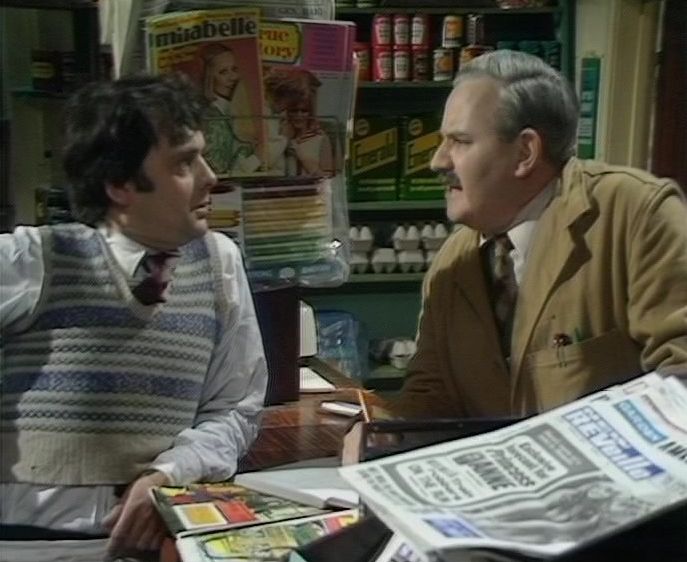
But there’s also some familial love shown by Arkwright (possibly).  It’s a harsh world out there and he’s convinced that Granville will eventually be happier if he stays with what he knows (plus all of Arkwright’s empire will eventually come to Granville).  Still Open All Hours has confirmed that despite all of Granville’s hopes and dreams he never managed to escape, turning into an Arkwright clone instead, which is something of a bitter joke.

Roy Clarke’s gift for wordplay is already in evidence.  Arkwright is more than a little perturbed that Nurse Gladys Emmanuel seems to spend more time than he considers proper dealing with Wesley Cosgrave’s bottom, whilst the corner shop setting allows for a stream of characters to pass through (here it’s Yootha Joyce with a Northern accent and a young Keith Chegwin).

Favourite line?  Mrs Scully (Joyce) asks Arkwright if she’ll give him half a bottle of sherry for her Claudine.  He tells her that it sounds like a fair exchange!