Minder – The Bengal Tiger

bengal 01

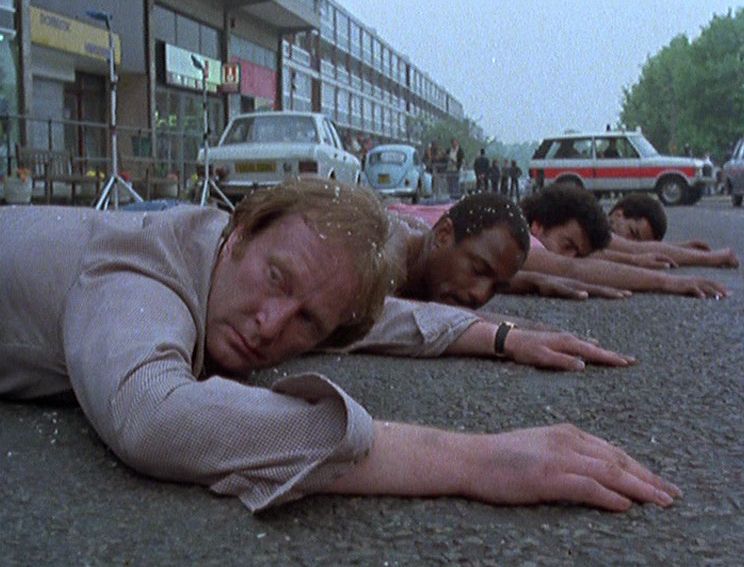
Mr Mukerjee (Saeed Jaffrey) is offered Terry’s assistance to help guard his newsagents shop following a series of attacks.  Initially it seems to be the work of kids, but it quickly becomes obvious that Mukerjee has been less than honest with either Arthur or Terry.

He’s offered his daughter’s hand in marriage to multiple families (collecting a hefty fee each time).  Unfortunately for him, Mr Aslam (Ahmed Khalil) was one of his victims and now he wants his money back.  And Mukerjee’s daughter, Indira (Shireen Anwar), doesn’t want to take part in an arranged marriage – she only has eyes for Kev (Mike Grady).

The Bengal Tiger is a fascinating time capsule of the period.  Partly because of Mukerjee’s newsagents shop, which is piled high with long vanished products.  For example, I spotted copies of the comic Misty on the shelves – this might have been a girls comic, but thanks to its spooky supernatural stories it was one I was happy to read back then!

The other thing that dates the story is, of course, the attitudes and opinions that we see expressed.  Mukerjee, although nicely played by Jaffrey, is something of a cliche.  He may, or may not, be an illegal immigrant (he’s been in the country for decades but can’t remember if he has official citizenship) and during this time he’s picked up certain English speech mannerisms which are intermingled with his strong Indian accent.  But although he’s a broad stereotype (reinforced by the fact he’s sold his daughter umpteen times) there’s a certain twinkle in Jaffrey’s performance which prevents him from being a totally unlikable character.

If Mukerjee still retains something of his ethnic roots, then his daughter Indira is the complete opposite.  She has a broad Cockney accent and has no interest in even contemplating an arranged marriage.  Shireen Anwar is delightful as the outspoken Indira and whilst it’s clear that she immediately captures Terry’s attention, she only has eyes for the gormless Kev.  Mike Grady has made a good career out of playing gormless characters (Citizen Smith, Last of the Summer Wine) and Kev is another addition to this list.  There doesn’t seem to be any obvious reason why the vivacious Indira should be attracted to him – so it must be love.

There’s some great banter between Arthur and Terry in this episode.  It doesn’t advance the plot at all, but it’s just lovely to see.  Early on, Terry tells Arthur that he’s thinking of jacking the job in – throwing drunks out of pubs and repossessing cars isn’t a fulfilling career for him.  He then mentions that he’s contemplating a career in computers, much to Arthur’s intense amusement.  Arthur tells him he can’t even work a pocket calculator, so how would he be able to deal with a computer?  After a moment, Terry reluctantly agrees, but remains convinced he could learn!

Later, Arthur drops off a number of frost-damaged freezers (yes, Terry wondered how freezers could be frost damaged as well!) to Terry’s flat in the early hours of the morning.  This is classic Arthur, as the notion that Terry may not be keen to take delivery of the freezers obviously never even crossed his mind.  And when Terry wonders why Arthur couldn’t store them at his house, he has plenty of decent excuses.  They wouldn’t go with the flock wallpaper for a start and what would happen when his friends from the Lodge came over for a drink?  It wouldn’t create the right impression, would it?

There’s some familiar faces on view.  Stanley Lebor, later to play Howard Hughes in Ever Decreasing Circles, here takes his more familiar 1970’s role as a heavy (his fight with Terry concludes the story).  Spencer Banks (probably best known from Timeslip) plays a young drunk who Terry throws out of a pub.  I knew his face was naggingly familiar, but it wasn’t until the credits that it clicked exactly who he was.  Roy Evans, a very recognisable face from this era in both films and television, has a small role as a customer in the newsagents.  He’s credited as “Elderly Man” which is interesting since he was only forty-eight at the time.  Clearly he had one of those lived-in faces.  And lastly, Graham Stark keeps on popping up to harangue Terry.  Stark gives a broad performance, but it’s a nice bit of comic relief (even if the story itself isn’t terribly serious anyway).

Thanks to Terry’s diplomacy, everything is sorted out in the end and Indira and Kev don’t have to elope.  Given the time that’s elapsed since the original broadcast (back in 1979) some of themes, especially the interracial marriage, would have seemed far more controversial back then than they do now.  Attitudes have certainly changed – for example, Kev is casually able to mention that he and Indira need to find a place of their own since they can’t stay with his mother (she doesn’t mind living next door to them, but she doesn’t want one in the house).

Another solid script from Leon Griffiths.
bengal 02

Minder – Aces High and Sometimes Very Low

aces

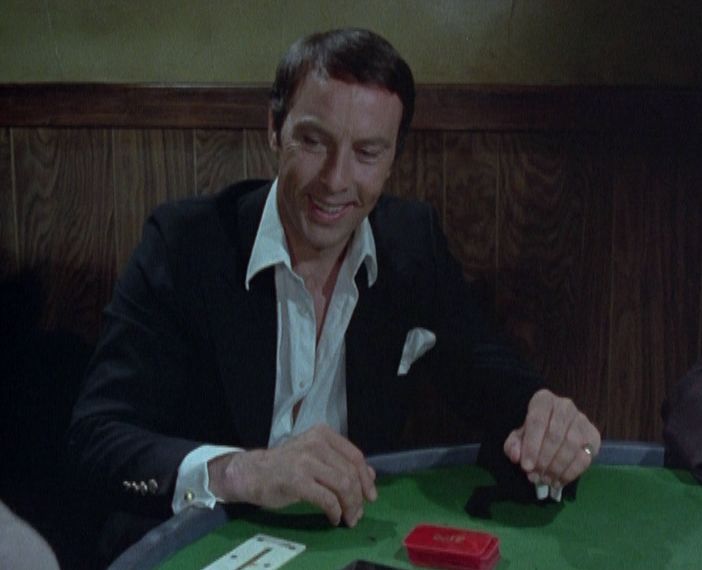
Professional gambler Maurice Michaelson (Anthony Valentine) has a problem – he’s simply too good at his job.  Because of his skill at poker, he’s found himself barred from a local casino and is later robbed of his winnings.  He’s convinced that he can make good though, thanks to a high stakes poker game run by some shady Greeks.

With Terry onboard as his minder, Maurice loses heavily.  Convinced the game was crooked he manages to persuade Arthur to advance him some more stake money (using his Jaguar as collateral) and prepares to do battle once more.

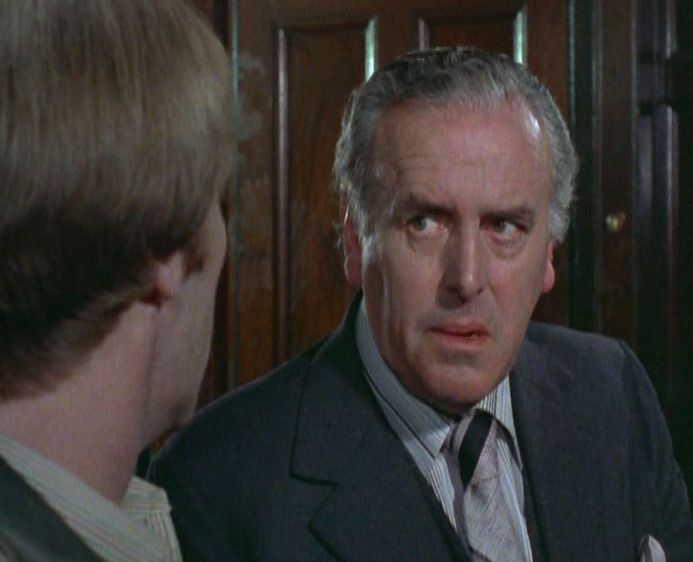
Some of the regular television characters that Anthony Valentine had played in the past tended to follow a familiar pattern.  For example, Toby Meres in Callan (charming and borderline psychotic), Major Horst Mohn in Colditz (not charming and borderline psychotic) and Raffles (charming and not borderline psychotic at all), etc etc.  Maurice Michaelson, on the other hard, is charming but he’s not really a criminal type or a sufferer of any form of neurosis – he’s just been blessed with a skill that he can’t exploit to the full.

Both Terry and Arthur take something of a back-seat in this one, as Maurice’s gambling exploits are the key focus.  But although they aren’t as prominent in the narrative as usual, they do have some good moments.  Terry tangles with the alluring Stella (a pre-Star Trek:The Next Generation Marina Sirtis) whilst Arthur naturally attempts to make the maximum amount of profit from Maurice’s car (much to Terry’s amusement).

This episode also gives us the unusual, if not unique, sight of Terry and Arthur sitting in the Winchester playing cards.  It’s obvious though that the scene only exists so that Maurice can turn up and criticise Arthur’s playing style (and their low stakes – a penny a point) and then demonstrate his own undoubted skills.

Maurice would return in the series two episode, You Lose Some You Win Some, and whilst the later episode is my favourite of the two since it has a more entertaining storyline (Maurice recruits a group of non-gamblers to work undercover at a casino he’s barred from) this one does have an authentic, seedy and smoky atmosphere – conjured up by Minder’s creator, Leon Griffiths.
Minder – The Bounty Hunter

bounty

When Arthur learns that an old friend of his, Jo (June Richie), is somewhat down on her luck he does his best to help.  Following her husband’s death, she decided to sink all her savings into a Spanish villa.  Unfortunately, the villa was never built as the company responsible, Sunworthy, went bust and all her money (along with a great many other people’s) was lost.

He knows just the man for the job – Terry, of course.  And after traipsing around the streets, Terry manages to run down Freddy Fenton (Derek Jacobi) – who was the brains behind Sunworthy.  He pleads poverty, but it’s clear that he’s a skilled con-man who’ll be a tough nut to crack.

The first episode of Minder to be filmed, The Bounty Hunter is chiefly memorable for Jacobi’s turn as Freddy Fenton.  Initially, he seems to be a broken man, living on social security, but it’s later revealed that he lives in a palatial house, complete with servants and a gorgeous lady-friend, Val (Rikki Howard – best known as a yellowcoat from Hi-De-Hi!).  And even when Terry tracks him down, Fenton remains as slippery as ever.  He tells Terry that he owns nothing – everything is leased.

Jacobi’s spot on as the arrogant wide-boy, convinced that Terry’s threats are meaningless.  In the immediate years following his career-defining appearance in I Claudius (BBC 1976) he only made a handful of television appearances, so there must have been something in the character of Fenton that appealed to him.  Speaking of I Claudius, I wonder if it’s just a coincidence that Christopher Biggins (who appeared as Nero) also has a role in this story?

George Layton, as Des the mechanic, would be a semi-regular during Minder’s early years.  Here we see him con Terry into stealing cars (Terry, trusting as ever, believes that Des has authorisation to remove them!).  But he’s able to later put Des’ skills as a thief to good use when they steal Fenton’s Rolls-Royce and refuse to return it unless he pays them the money he owes Jo.

Like some of the other early episodes, this one is fairly heavy on the library music tracks (which would tend to diminish in later series).  But although some of the cues are a little on the cheesy side and the story is quite slight, Jacobi’s presence makes it well worth watching.

Minder – A Tethered Goat

goat

Terry’s latest job is acting as a bodyguard for an Arab banker Bassam Sayin (Lee Montague) who has flown into the UK to transact some business deals.  Sayin and Terry don’t quite hit it off as he’s far from impressed with Terry’s skills as a bodyguard (mainly because he doesn’t carry a gun).

Naturally, Arthur’s convinced Terry that this will be easy money, so the idea that he would need to be armed instantly sets alarm bells ringing.  But perhaps he should have been, as later Terry and Sayin find themselves menaced by a group of armed men ….

A Tethered Goat is one of my favourite episodes from series one of Minder – not only for the sparkling script from Murray Smith (incredibly his only contribution to the series) but also for the first rate guest cast.  The pick of the bunch is Kenneth Griffiths as Sayin’s temporary valet, Dai Llewellyn.  Dai’s Welsh (in case you haven’t guessed) and also likes a drink (or two).  He’s pure comic relief and gets some of the best lines, such as when he spots armed men approaching the house. “Terry, shooters! Oh my god!”.  It may not sound like much, but it’s all in the delivery and Griffiths is first rate.

Lee Montague, an actor still going strong today, has a great deal of presence as Sayin.  His relationship with Terry is the key to this episode and it’s fascinating to chart how their opinions of each other change (from distrust to mutual respect).  Another couple of very familiar television faces, Michael Sheard and Nadim Sawalha, provide the menace whilst Jenny Lee-Wright (who was well-known at the time for the likes of The Benny Hill Show but is now a leading Foley artist, working on a score of major films) provides the glamour.

As for Arthur, he attempts to ingratiate himself with Sayin in such an obvious way that it’s almost painful to witness.  Sayin’s reaction to Arthur’s hustling is a joy to behold!  But you have to give Arthur credit, he keeps on trying to make a profit – even when the bullets are flying.

Minder – The Smaller They Are

smaller

When Scotch Harry (Phil McCall) and his faithful friend Big Stan (David Jackson) steal a case from the airport they get more than they bargained for – it contains half a million dollars. And when Arthur learns of this he’s keen to offer his services, for a small commission naturally.

He tells Harry they’ll have to give it back, whoever these people are for this sort of money they won’t hesitate to get very nasty indeed.  Arthur agrees to negotiate the case’s return, although the presence of DC Rycott (Peter Childs) is an added complication.

It’s clear that The Smaller They Are is a very early Minder episode for several reasons – one of the most obvious is Arthur’s lecherous nature.  He casts an appreciative eye over a young woman wearing a tight pair of jeans in the Winchester and later attempts to chat up the pleasant airline receptionist (played by Hilary Ryan, probably best known for playing Rodan in the Doctor Who story The Invasion of Time).  Arthur’s roving eye is something that’s phased out pretty quickly, shortly after this he’ll leave that sort of thing to Terry!

We also see the first appearance of Peter Childs as Rycott.  Another sign that it’s the early days of the series is the notion that Rycott is corrupt.  After nabbing Scotch Harry, Rycott delivers him to the gang – rather than taking him to the nick – and on the way offers an oblique justification why (after years of solid service he’s still only a DC, due to a previous indiscretion).  Maybe Rycott was planned as a one-off character and when it was decided to reuse him his previous corruption was forgotten.  There’s certainly no suggestion after this episode that he’s a wrong ‘un.

Scotch Harry is such an unlikeable character (especially when he’s drunk, although he’s pretty bad when he’s sober) that it’s no surprise Terry’s keen to give him a slap to sort him out.  David Jackson (Gan from Blake’s 7) is his loyal, but none-too-bright friend.  Hans Meyer (best known as Hauptmann Franz Ulmann from the classic BBC series Colditz) is suitably intimidating as Bonnett, the leader of the money smuggling operation.

Although Meyer radiates intimidation, the episode does rather end in farce after Arthur, Terry and Big Stan return the case to him.  Stan’s upset to find that Harry’s been badly beaten up and attempts to retaliate – he’s not very successful, but Terry’s rather more so.  In the melee, Arthur attempts to take the case back (given all he’s previously said about how dangerous these people are, that does seem rather reckless).  He doesn’t succeed, but in the general confusion Bonnett ends up dropping the case on his foot and hops around the room in pain, whilst Arthur manages to take another wad of money before leaving!

But it has to be shown that crime doesn’t pay and it’s down to Dave to break the bad news – the notes are forgeries and therefore worthless.  Even this early on, it’s clear that Arthur’s only going to end up on top very infrequently.

Minder – Bury my Half At Waltham Green

bury
After jumping ahead to sample from episodes from series seven, it’s back to series one and the second episode – Bury My Half at Waltham Green.

Arthur convinces Terry that it’s the easiest money he’ll ever earn – all he has to do is mind Albert Stubbs (Nicky Henson) for a few days.  Stubbs has just been released from prison and is keen to dig up a large stash of money stolen by him and his associates. Rose Mellors (Ann Lynn) is the formidable wife of one of Stubbs’ old colleagues and she, along with her gorilla of a minder Jack (Tony Selby), is hot on their trail.

Terry’s got problems though – Stubbs is erratic and unpredictable and he quickly makes Terry’s life a misery.  When Jack pays them a visit, he manages to extract him from Terry’s grasp and proudly takes him back to Rose.  She’s far from impressed though – she doesn’t know who he is, but he’s certainly not Albert Stubbs …..

Bury My Half at Waltham Green is an excellent early example of Arthur’s highly devious nature.  Knowing full well that Stubbs would be a hunted man from the moment he was released, he arranged for Terry to mind a decoy.  The man that Terry thought was Stubbs is actually a character called George Wilson.  It’s fair to say that Terry’s far from pleased at being manipulated in this way, but he’s going to have to get used to it as it’s going to happen on a regular basis from now on.

Nicky Henson’s good value as the ebullient Stubbs Mk 1 whilst the ever-dependable Kenneth Cope is just as solid as the real, if rather less jovial, Stubbs.  Ann Lynn is a memorable femme-fatale who’ll stop at nothing (including bedding Terry) to find out where Stubbs is.  When Arthur learns that Terry’s slept with Rose, his expression is a joy to behold!  Tony Selby rounds off the first-rate cast as the accident prone, but intimidating Jack.  Both Lynn and Selby would return as Rose Mellors and Jack in the series two episode Diamonds are a Girl’s Worse Enemy.

If you want to be picky, then it’s hard to believe the rather elaborate decoy scene which sees Arthur and Stubbs drive off in a car (watched by Rose, Terry and Jack).  Rose and Jack follow them, but don’t realise they’re actually following an identical car, which contains Terry and George.  This scheme seems to have been dreamt up by Terry within a very short space of time and it does beggar belief that he’d be able to rustle up two identical cars (plus a lorry to drive one of the cars into) so quickly .

After various adventures, Albert digs up the money, although his joy is short lived as Rose steps in to relieve him of it.  Arthur also manages to get a small share, but the sting in the tail is left until the end – as it’s revealed that the money (comprised of one pound notes) is no longer legal tender, because those type of notes were phased out the year before.

It’s maybe a coincidence that the very next episode also revolves around a large sum of money which turns out to be worthless.

Minder – Gunfight at the O.K. Laundrette

RIP George Cole, 1925 – 2015

archivetvmusings's avatarArchive Television Musings

gunfight

It should have been an easy job for Terry (Dennis Waterman) – a simple case of minding Alfie Cavallo (Dave King) as he collected the money from his string of coin-operated laundrettes.  But a bungled armed robbery, led by Stretch (Trevor Thomas), meant that Terry, Alfie and the unfortunate Mrs Mayhew (Hilary Mason) are taken hostage and a tense stand-off with the police begins.

Richard Marson’s recent book about Verity Lambert describes how she green-lit Minder after listening to a five minute pitch.  Her snap decision paid off as it remained one of ITV’s top-rated dramas for the next fifteen years.  During that time the tone of the series certainly changed, as it became a more comedic, family friendly series – which wasn’t to the liking of everyone (especially Dennis Waterman, who left after the seventh series mainly because he’d felt the show had lost its edge).

Gunfight at the…

View original post 621 more words

Quatermass (John Mills 1979) – Network BD/DVD Review

quatermass titles

After rewatching Euston Films’ 1979 production of Nigel Kneale’s Quatermass a few months ago I mused that it would be nice if Network were able to acquire the rights and release a restored version on BD.  And just to prove that wishes do sometimes come true, Quatermass will be released by Network on BD and DVD on the 27th of July 2015.  It’s especially welcome since the previous release, long since deleted, was only available on DVD and the picture quality left more than a little to be desired.

Quatermass was an unusual project for British television at the time, due to the fact it was filmed on 35mm.  Filmed programmes were becoming more common, but by the late 1970’s they tended to be shot on 16mm.  Because Euston wanted to recut the series for theatrical release in the US, it was obviously decided that it was worth investing the extra money to shoot on 35mm stock and that’s very good news.  Network have already released several impressive BDs sourced from 16mm material (The Professionals, The Sweeney, Robin of Sherwood) but since this was a 35mm series the resulting PQ will be even better.

Network were able to access the original film elements (the ClearVision release was only sourced from a 16mm print).  It’s interesting to compare screen caps from the ClearVision DVD against the Network BD.  Greg Bakun’s From The Archive blog has a number of examples and looking at the caps, the colours on the Network BD seem to be very muted compared to the ClearVision DVD.

Having watched the BD in motion I’m now more reassured – it is a less vibrant grade but it suits the nature of the story.  Quatermass was a bleak, post-apocalyptic tale so it shouldn’t really look bright and summery (and it’s probable that the ClearVision DVD was over-saturated anyway).  Colours on the BD look natural, which is the most important thing.

I’ve already written quite extensively on the programme starting here, so we’ll move on to look at the special features.  The key one is the 100 minute movie edit, The Quatermass Conclusion.  This basically cuts the running time in half (most of episode three is excised, for example) and it also includes some alternative footage and music.  It’s displayed in what I assume was the original theatrical ratio of 1:78:1 and it’s therefore interesting to compare some of the same shots against the 1:33:1 framing of the television series.  Possibly Network could have released the series in 1:78:1 as well, but since they’re sticklers to keeping to the original A/R it’s no surprise they didn’t (and it’s the right call, in my opinion).

The Quatermass Conclusion obviously loses some detail and character development, but on its own terms it works very effectively.  It’s certainly a very different proposition from the “movie edits” of series such as UFO, which bolted several unconnected episodes together and attempted to paper over the cracks with new incidental music.

Textless titles, (mute) episode recaps and a mute trailer for The Quatermass Conclusion are inessential, but nice to have anyway.  The image gallery runs to 2:51 and contains a varied selection of on-set photographs as well as some behind the scenes pictures.  Music only tracks across all four episodes are a very welcome extra as is the thirty-six page booklet of production notes by Andrew Pixley.  As might be expected, Pixley has been able to unearth a wealth of fascinating production detail.

The bleak tone of Quatermass might not be to everybody’s tastes but I’m glad that it’s finally back in circulation (and with such good picture quality) so that people can experience it for themselves.  A few more special features (commentaries, documentaries) would have been welcome but it’s still a very decent package at a good price (especially when ordered direct from Network) and is warmly recommended.

Village Hall – Mr Ellis Versus the People

R.I.P. Ron Moody (1924 – 2015)

archivetvmusings's avatarArchive Television Musings

jack

For visitors to the blog from outside the UK, today is General Election day.  Of course, those from the UK will hardly need reminding of this as it’s been a constant topic of conversation in the media for some time.  And should no party gain a majority tomorrow, no doubt the conversation will go on!  But since I’ve made my trip to the polling station and cast a vote, it seems apt to dig out this episode of Village Hall, written by the late, great Jack Rosenthal.

The Village Hall has been turned into a polling station and present are three very different people.  First there’s presiding officer, Mr Ellis (Ron Moody).  Mr Ellis is a veteran of every election since 1945 and there’s nothing that could possibly happen which would surprise him.  He’s assisted by the eager young Mr Martin (Brian Miller) and the equally young and eager Miss Robinson…

View original post 451 more words

Return of the Saint – The Poppy Chain

poppy

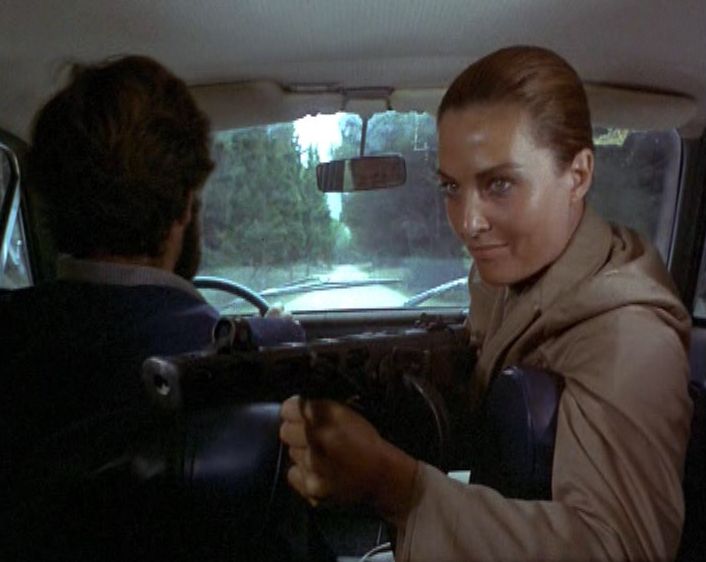
The episode opens with Simon Templar and Sandy Platt (Jenny Hanley) desperately racing across London to try and reach Sandy’s sister, Jane.  But they’re too late – when they get to her flat she’s dead (killed by an impure batch of heroin).

Sandy is naturally distraught, but her father, General Platt (Laurence Naismith), is even more so.  An old-school, but now retired, soldier, he vows to find and kill the pushers.  But he only serves to drive them underground.  So it falls to the Saint to risk his life by travelling to to Carmague region of France as he attempts to destroy the business at its source.

The Poppy Chain certainly has an arresting opening as Simon and Sandy discover Jane’s lifeless body.  It gives the episode a harder-edged feel than many of the others in the series.  Laurence Naismith’s pig-headed General Platt drives the action in the first half or so of the episode (with Simon trailing behind somewhat).  This plotline has the advantage of enabling the General to do all the spadework, but then allowing Simon to step in when things get really dangerous.

Along the way, the General tracks down the pusher who sold the drugs to his daughter.  A well-spoken, well-dressed man known as the Gent (Christopher Timothy).  He doesn’t get to kill him though, as the Gent’s wife intervenes (with a heavy object which knocks the General out).  It’s possibly just as well, since Simon tells the recuperating General that the pusher was just small fry – if you’re going to bring down the operation, then you need to aim for the head.

The Saint does this by posing as a member of the London connection, Rickman, and travels to France to meet the men responsible for supplying the raw drugs.  A change of location helps to keep the interest up and the different locale is quite interesting, as it’s probably not what might have been expected.  Scorbesi (Gregoire Anslan) and his son Dominic (Jonathan Burn) run the operation, but Scorbesi is an apparently friendly, gregarious chap and the patriarch of a village that appears to be happy and prosperous.  The fact that their idyllic lifestyle is founded on drug money is, no doubt intentionally, jarring.

Scorbesi’s realisation that he knew the General back in WW2, when Scorbesi was a Partisan, is a coincidence that’s possibly a little hard to take – especially since this revelation doesn’t really further the plot in any way.  Notwithstanding this, Anslan is good as the cheerful Scorbesi, although Burn is less impressive as his son.  I’m not quite sure why, it’s just a slightly off-key performance.

The best part of the second half of the episode is Simon’s infiltration of Scorbesi’s setup – although it’s rather bizarre that he takes no backup with him.  So it’s lucky that when the General learns about Simon’s efforts he makes the trip over and comes to the rescue.  It’s hard to believe that the Saint didn’t think that drafting in some younger assistance might have been a good idea, but this moment does allow the General a chance to prove that he’s not entirely over the hill.

I also like Ogilvy’s cockney accent when he’s pretending to be Rickman.  He makes a very effective criminal!

It’s a solid episode and rates three and a half halos out of five.

Return of the Saint – Yesterday’s Hero

yesterday's hero

Several years ago, Simon Templar, Roy Gates (Ian Hendry) and Diskett (Tony Vogel) were part of an unofficial mission in Aden.  Mid-way through the mission something went wrong and Gates was captured by the Yemenis.  Simon and Diskett weren’t aware of this though – they thought he was dead.

But Gates was alive and, having lost an arm during the fighting, languished in an Arab prison until he was bought by the Bader-Meinhoff gang of terrorists (who wanted his expertise to train their people).  Gates was initially reluctant, but he finally realised that any life was better than the life he currently had.

Eventually he was caught by the Germans and ended up in prison there.  He’s shortly due to be released and Simon pays him a visit to caution him not to directly approach his young son Michael (Matthew Ryan) before his ex-wife Sandy (Annette Andre) has had a chance to talk to him (as Michael has grown up believing that his father is dead).

But Gates is a bitter and vengeful man and once released he’ll be set on a course of revenge.  Which will inevitably bring him into direct conflict with the Saint …..

This is a bleak and atypical Return of the Saint story.  The usual humour and byplay is pretty much absent and it’s also notable that there’s few “good” characters featured.  Gates does have his compassionate side (especially when we see him spend time with his son) but it’s obvious that his various imprisonments have warped his judgement.

Normally, you’d expect the character of the ex-wife to be written in a sympathetic way, but that’s not the case here.  Simon tells her that “in your own way, you’re as crippled and bitter as Roy is.  And that’s a pity.”

It eventually becomes clear that Gates is targeting Cleaver (Gerald Flood) who ran the Aden operation and betrayed Gates.  Cleaver (now an arms dealer) is yet another unsympathetic character (which robs his death of some of its impact).  Prior to this, we see him demonstrating some weapons to the military – although the stock footage is so grainy it’s not terribly convincing,

At the centre of the episode is Ian Hendry.  In another unusual move, he dominates the action whilst the Saint has to react to events and remains, until the end, a few steps behind.  There’s an undeniable sense of melancholy hanging over the whole episode – partly because of the script, but it’s also down to Hendry’s performance (and the reading that anybody familiar with his personal life will bring to the viewing).

Yesterday’s Hero is an uncomfortable summation of Ian Hendry’s life and career.  In the early sixties, as the star of The Avengers, he seemed to have a glittering career ahead of him, but various factors (most notably a dependance on alcohol) ensured that whilst he remained a familiar presence in films and television, he never attained the heights he should have done (and he also died rather prematurely, aged just 53 in 1984).

The following comments from Annette Andre (as quoted in the book Send in the Clowns: The Yo-Yo Life of Ian Hendry by Gabriel Hershman) about her work with Hendry on this episode tend to bear these observations out.

I didn’t have many scenes with him. In the morning he was fine. Then we broke for lunch and Ian went off on his own to the pub for lunch. When we went to get him later to take him to the location for filming he was falling down drunk. We managed to get him into the car and into the make-up room and then he walked out and did it.

There was an unhappiness to him. I never really experienced Ian being unpleasant – I was fine with him and he really liked me – but I could see that when I was trying to get him out of the pub that he could get difficult. He didn’t want to eat. I sensed a deep hurt, a sense of dissatisfaction that affected his whole career. He looked older than his age, he’d lost his hair and was on a downhill spin.

This real-life unhappiness is very much mirrored in his portrayal of Roy Gates, which means that the lines between fantasy and reality become somewhat blurred.  There’s a point later in the episode where Gates breaks into Simon’s flat and is clearly drunk – it’s an uncomfortable thought that there may not have been any acting involved.

But although this knowledge does make Yesterday’s Hero a rather hard watch at times, Hendry is always solid and professional – so whatever turmoil he felt off-screen, he still commands the frame when the camera is rolling.  Thanks to his performance, this rates four halos out of five.

Return of the Saint – Assault Force

assault

Catching the bus at Heathrow, Simon notices that one of his fellow passengers is receiving unwelcome attention from several men.  And since the passenger is female and attractive, the Saint simply has to step in – he can never resist helping a damsel in distress.

Jeanette (Kate O’Mara) has information about Nodiam Mataya, the new strong-man of South-East Asia.  She plans to take it to the newspapers and expose Mataya’s appalling record of human rights (which include a group of nuns held captive and awaiting imminent execution).  Simon’s foreign office contact, Randolph Smith (Neil Stacey) is polite, but noncommittal.  He tells them that the British government is continuing to explore all diplomatic avenues, but that’s all they can do.

The Saint, however, is keen for more direct action.  A key member of Mataya’s government, Surinit, is due to land in the UK shortly.  Simon suggests to Jeanette that they kidnap him and offer to exchange him for the nuns.  Jeanette agrees and Simon assembles a crack force to carry out the plan.  But when Surinit disappears after the kidnap is successfully carried out, Simon bitterly realises that he’s been used …..

Assault Force sees the Saint team up with a group of mercenaries and it’s a departure from the episodes we’ve seen so far (where Simon is either operating on his own, or with limited help).  Here, he’s the leader of a well-drilled gang who abduct Surinit with military precision.  It’s the planning and the actual raid which forms the heart of the episode, and the realisation that Surinit is actually a good guy (and the one man who can expose Mataya’s crimes) drives the story onwards to its conclusion.

Kate O’Mara is suitably histrionic as the damsel in distress, whilst Carolle Rousseau (as Colonel Dibha) is rather alluring as a woman who appears to be on the side of the angels but turns out to be working for Mataya.  Although to be honest, this probably isn’t a great shock since she does give off a rather “evil” vibe in all of her scenes!

Elsewhere, we see the Saint recruit some colourful characters, such as O’Hara (Bryan Marshall) and Morgan (Norman Bird).  Marshall sports a broad Irish accent which occasionally crosses over into parody, but he’s still convincing as a resourceful mercenary.  Bird provides some welcome comic relief as the bookish Morgan.

Although everything is resolved in the end quite neatly (too neatly, you may say) there’s still a slightly discordant note struck which implies that the new status quo may not last forever.  Simon rescues Surinit, who returns to his country as leader after Mataya’s downfall.  Colonel Dibha seems unconcerned though, as she tells Simon that Surinit is a weak man (who clearly won’t last long in the bitter and dangerous world of South-East Asian politics)

The plot is driven by coincidences which means that it’s probably best not to examine it too deeply (although that’s not going to stop me!)  Surinit arrives in the UK to testify at a Human Rights Commission in order to expose Mataya’s crimes.  It seems obvious that Mataya’s people would try and silence him (but they don’t seem to have had any plans to do so).  Instead, rather fortunately they were able to learn of Simon’s plan to kidnap him and took advantage of this.  But had Simon not run into Jeannete at the airport by chance then nothing would have happened.  If Mataya’s men simply needed to silence Surinit why didn’t they, say, put a bomb on the plane?

Minor plot quibbles apart, the “caper” feel of the episode makes it a break from the norm and earns it three and a half halos out of five.

Return of the Saint – The Village That Sold Its Soul

village

Simon is travelling through a remote area of Italy when he witnesses a murder – he sees a woman thrown off a cliff by two men.  When Simon reaches her, she’s mortally injured but manages to tell him to “warn Vincenzo” before she dies.

Father Vincenzo (Tony Calvin) is the priest of the local village, Santa Maria.  When Simon makes his way there, he discovers that Father Vincenzo is away and that nobody else is interested in offering assistance (including the police).  There’s a sinister menace that seems to hang over the town.  What is the secret that binds everybody together and how is it connected to the patrone of the village, Prince Lorenzo Castracano (Maurice Denham)?

As with Duel in Venice, part of the success of the The Village that Sold Its Soul is down to the location. Filming took place mostly in Sermoneta, a hill town in the province of Latina.  Thanks to its twisting streets, it was a location that offered director Leslie Norman plenty of scope for interesting and atmospheric shots.

It’s also an unusual episode since Simon has to mostly operate on his own.  Often, he’s paired up with an attractive female and can also count on official or semi-official help from his friends in high places.  But as Santa Maria is an isolated village there’s no help for him to call on.  There is an attractive female, Sophia Castracano (Katia Christine), but she’s a relatively minor character.

It’s a solid production, although there are a few mis-steps.  The body thrown off the cliff in the pre-credits sequence is clearly a dummy and later we see Simon desperately running away from an out-of-control cart.  But even if it had hit him, it’s difficult to imagine it causing him much of an injury!

The concept of a whole village that’s complicit in a series of murders is an intriguing one (although it maybe owes something to The Avengers episode Murdersville).  Maurice Denham adds a touch of class as the Prince and it eventually becomes clear that he holds the key to the mystery.

Because of the location and Maurice Denham, as well as a solid script from John Goldsmith, The Village That Sold Its Soul rates four halos out of five.

maurice denham
Maurice Denham

Return of the Saint – One Black September

black

Abdul Hakim (Garrick Hagon) is a leading member of the Black September terrorist group.  It’s rumoured that he’s in London and is being pursed by his own people.  The Israelis are also desperate to pick him up and interrogate him (Hakim knows the names of all the top operatives in the organisation).

Simon Templar, due to his knowledge of London, is regarded by the Israelis as the ideal man to partner their leading counter-terrorist officer in a race against time to track Hakim down before his former friends find him.  Simon is initially reluctant, but when he learns that the officer is an attractive young woman (Prunella Gee playing Captain Leila Sabin) he becomes much more interested …..

One Black September is a slightly uneasy mix of real world politics and the usual escapist fare of an ITC adventure series.  For a modern audience, their name might not be instantly recognisable, but in 1978 they would have been very familiar.   Just six years earlier, Black September killed eleven Israeli athletes and a German police officer during the Munich Olympics.  During the early to mid seventies they also carried out numerous other attacks (and copycat activities were also attributed to them) which ensured that their name often featured in the headlines.

It’s the decision to use a real terrorist organisation that ensures One Black September has a slightly off-key feel, which is reflected in the attitudes of Simon and Leila.  Simon is his usual relaxed, flippant self whereas Leila is humourless and completely focused on the mission.

Matters come to a head later on, when Simon tells her she’s forgotten that she’s a woman (mainly because she seems to have no interest in sleeping with him!)  Leila counters this by telling Simon that her entire family were murdered by terrorists, so until Hakim is captured she cannot afford to let her concentration slip for even a moment.  Immediately prior to this, both Simon and the camera spend a little time ogling her shapely bottom as she bends over a map of London.  Both this, and Simon’s unsubtle efforts to romance her, mean that this is very much of product of its time.

Dodgy politics (both political and sexual) aside, this is a decent run-around.  Hakim’s former colleagues are led by Masrouf (Stephen Grief) and Rahaman (Nadim Sawalha).  Like everybody else, they’re lightly sketched characters, so the actors have to put the meat onto the bones (Grief is particularly effective with this).

Eventually Simon is able to pick Hakim up – but Leila is captured by Masrouf and the others.  Masrouf suggests a trade, which the Israelis strongly resist, but Simon gets his way.  In real life, of course, it’s impossible to imagine they would have acceded so readily to Simon’s request (he threatens to expose their illegal capture of Hakim, but it’s doubtful whether that would have really worried them).

Naturally, the Saint is able to extract Leila and keep Hakim – and in exchange for a plane ticket out of the UK Hakim gives the Israelis the names they need.  Leila bemoans that fact that a man like Hakim, responsible for countless murders, is simply going to get away.  But Simon has seen Rahaman in the airport terminal and makes no attempt to raise the alarm.

It’s another example of the Saint’s ruthless nature, which comes to the fore occasionally.  He knows that Black September will execute Hakim and is content to stand by and let it happen.  It’s a powerful moment and would have worked very well as the final scene (alas, a more conventional tag scene is added – with Simon and Leila heading off on holiday).

Although it’s not perfect, One Black September still rates three halos out of five.

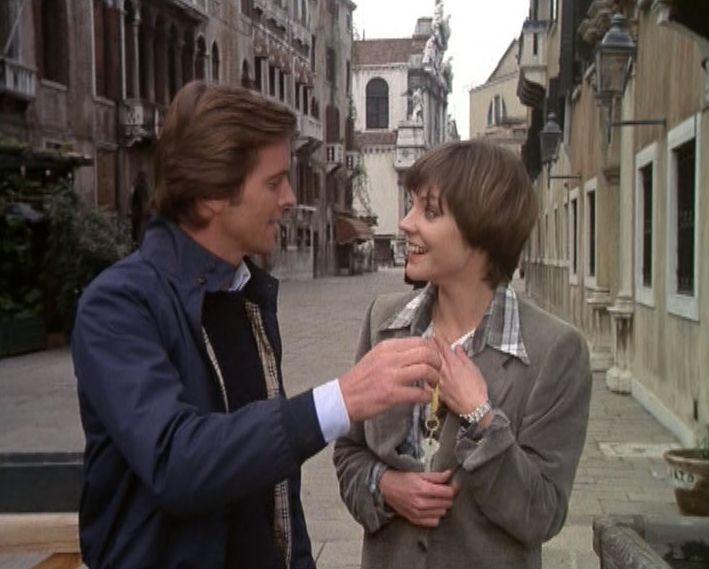
Return of the Saint – Duel in Venice

duel

When the daughter of one of his oldest friends is kidnapped in Venice, the Saint faces a desperate race against time.  Linda (Cathryn Harrison) has been abducted by Jed Blackett (Maurice Colbourne).  Blackett and Simon have crossed paths before – five years ago in Mozambique.

Ever since, Blackett has been waiting for the opportunity to exact his revenge and Linda finds herself the unfortunate bait in his trap.  Simon has just six hours to find the girl, but luckily for him he has assistance from an attractive gondolier called Claudia (Carole Andre) …

Ian Ogilvy’s favourite episode, it’s clear that the star of Duel in Venice is the city itself.  Had it been set in London it would have been a decent runaround but nothing special.  The gorgeous sights and sounds of Venice make all the difference.

It’s a pity that the storyline bears some similarities with the previously transmitted episode The Nightmare Man (an adversary from the Saint’s past is out for revenge) but that’s down to the vagaries of scheduling I guess.  And the problem of dubbing raises its head again – everybody (especially Maurice Colbourne) sounds like they’re dubbed for large parts of the episode.

Colbourne has a nice line in hysterical giggling and portrays Blackett as a completely deranged character.  It’s by no means a subtle performance, but since his screen time is quite limited (he mainly just pops up every now and again to taunt Simon) it’s not really a problem.  Cathryn Harrison has little to do except react to Blackett’s villainy with wide-eyed fear – such as when he fits her with an acoustic necklace (any loud sound would cause it to instantly tighten, killing her instantly).

So the bulk of the story is a two-hander with Simon and Claudia.  Carole Andre gives a lovely performance as the headstrong, argumentative Claudia and it’s her local knowledge which helps the Saint to eventually track Blackett down.

We never find out exactly how Simon and Blackett originally met.  Since Blackett is a mercenary and he claims that Simon left him for dead, the inference is that they were both fighting on the same side in some war.  It seems an uncharacteristic thing for the Saint to have done, but there’s another moment in the story which does hint at a darker side to Simon Templar.

Early on, Simon approaches Guido (Enzo Fiermonte) for assistance.  He’s a man of great knowledge and power (presumably a local gangster) but is initially reluctant to help, until Simon (with the aid of a gun) persuades him.  When the Saint threatens to put a hole in his head, it’s possible to believe that he’s bluffing – but he might not be.

It’s easy to believe that Leslie Charteris’ Saint would have been prepared to shoot, since the literary Saint was a much more amoral, violent character (when transferred to television, the Saint was greatly watered down).  This (and the reference to Mozambique) helps to imply that the relaxed, affable playboy that Simon Templar appears to be may not the whole picture.

Helped by the location, Duel in Venice scores four halos out of five.

Return of the Saint – The Nightmare Man

nightmare

Simon, together with the beautiful Gayle (Kathryn Lee Scott), is enjoying a weekend in Paris.  On the way back to their hotel room, he’s distracted by a series of screams from a nearby room.  The occupant is an Italian woman who tells Simon that she’s had a nightmare which foretold her husband’s death.

In her dream, they’re both riding in an open-top carriage in London (by her description, it’s clear that they’re travelling through Parliament Square).  She then hysterically tells Simon that during the journey her husband is shot dead.  Amongst the details she remembers is that the assassin has very blonde, almost white, hair.  When Simon learns that her husband is Dr Bernardo de Vallesi, Italy’s new ambassador to Britain (who is due to travel to the UK shortly) it appears that there may be some truth in her strange story.

The Nightmare Man is an odd one.  At first it seems that Mrs de Vallesi’s nightmare is simply a clumsy way of ensuring that the Saint takes an interest in the story.  But when Simon meets Dr de Vallesi, he’s introduced to his wife (who isn’t the woman from the hotel room) so the plot thickens.  But the main problem with the story is that all the action takes part in the last ten minutes or so and it’s a long slog to get there.

The real reason for the presence of the assassin is frankly bonkers and makes no sense at all.  It’s been organised by Colonel Ramon Perez (John Bennett).  He’s a bitter and vengeful man who lives for one reason only – to make the man responsible for his downfall pay.  That man, of course, is Simon Templar (but why he chose this plan is anybody’s guess).

Another problem with the story is the choice of Joss Ackland as the assassin, Gunther.  Ackland is an actor of many qualities, but this part doesn’t play to his strengths.  Gunther’s a cruel and psychotic man, but there’s never any sense of menace from Ackland.  The tone is set from his opening appearance – it’s hard to fear a man with such an obvious wig and flapping flared trousers!

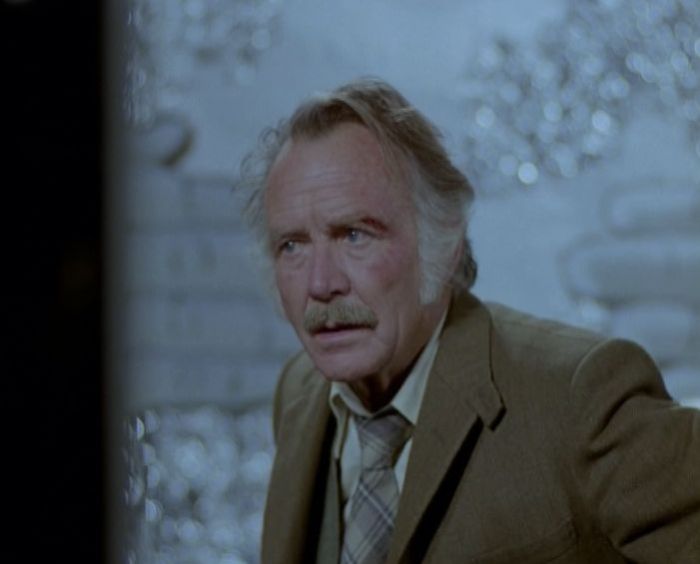
There’s some other unlikely casting too – the diminutive Welsh actor Roy Evans as a supplier of guns and Stanley Lebor as a mercenary.  Although in Lebor’s case, this may be because now he’s probably best known for the Richard Briers sitcom Ever Decreasing Circles (back in the seventies he did play his fair share of heavies).

His encounter with the Saint is rather amusing.  He’s holding court in what’s supposed to be a rather rough pub (in which Simon is obviously meant to stand out).  In fact, it doesn’t really look too threatening at all – social realism was never a strong point of Return of the Saint.

Some nice location shooting in London apart, there’s not much to recommend in this one.  Two and a half halos out of five.

Return of the Saint – The Judas Game

judas

When I was a child, I was always disappointed that the animated stick-figure who appeared in the opening credits wasn’t the one who had the adventures (Ian Ogilvy was obviously a rather poor substitute!)  Time is a great healer though and I’m now reconciled to the fact that Ogilvy is the star of the show, rather than the stick-man.

ROTS was the last gasp for the ITC adventure series.  It follows their other 1970’s shows such as The Persuaders! and The Zoo Gang in having the luxury of foreign location shooting (something their 1960’s counterparts had to do without) and it’s easily the strongest series in this genre since The Persuaders!  Although it’s rather variable in quality (like many of the ITC series) at best it’s a cracking little show that’s still very enjoyable today.  I’m going to take a look at the early episodes and blog a brief, capsule review of each – as well as awarding them a mark out of five.

Simon Templar’s holiday in Italy is brought to an abrupt end, courtesy of MI6.  Led by Dame Edith (Mona Bruce), they want Simon to undertake a dangerous rescue mission.  They seem sure he’ll agree, since the kidnapped woman is an old flame of Simon’s – Sarah Morell (Judy Geeson).

Sarah has been kidnapped by a group of revolutionaries who wish to use her knowledge of counter-intelligence to train their terrorists to operate even more effectively.  Simon reluctantly agrees and with the aid of Vlora (Olga Karlatos) manage to infiltrate the heavily guarded fortress.  But a surprise awaits the Saint …..

The Judas Game has a slightly stodgy opening.  Rather obvious dubbing (a trait of many ITC series) is a little distracting in the early scenes (it’s very obvious with Mona Bruce, for example).  But once Simon snorkels his way to the island, things pick up – especially when he runs into the lovely Vlora.  Whist Judy Geeson might be the nominal female lead, Olga Karlatos has more screen time and she and Ian Ogilvy make a very effective team.  She’s remarkably easy on the eye too, especially when dressed in uniform!

Olga Karlatos
Olga Karlatos

If bad dubbing is always an intermittent problem with ITC series, then day-for-night filming is the other regular irritant.  It’s bizarre that even a series like ROTS, which enjoyed extensive overseas shooting, couldn’t afford to film at night.  Instead, a filter is placed over the camera to give the impression that it’s night-time, although the blazing sky is a dead-giveaway.  Alas, this rather saps the tension out of Simon and Vlora’s escape from the beach.

Happily, they infiltrate the fortress during the day-time and Simon is easily able to rescue Sarah.  Suspension of disbelief is required here – as he single-handedly has to make his way past numerous guards and then has to carry the unconscious Sarah back to Vlora and the van.  Why is Sarah unconscious?  When they meet, she tells him that she wasn’t kidnapped – she defected.

At this point, there’s an interesting edit.  We cut away from them and what appears to be a punch is heard.  When we cut back, Sarah is unconscious and the clear inference is that Simon’s knocked her out.  It’s a slightly clumsy edit, so it might be that after the scene was shot it was felt it wasn’t a good idea to show Simon hitting a woman (even though it’s obvious what’s happened).  I also love the way they make their escape, with Simon blowing up the fortress gate with a rocket launcher!  It’s pure James Bond.

Sarah and Vlora don’t get on, mainly because Vlora regards her as a traitor and wants to shoot her.  When the guards catch up with them, Simon seems to be of the same opinion.  “It’s quite simple Major, she’s insane. Now why don’t you just treat her as a mad dog and put a bullet through her head?”

There’s a further twist to the tale though (as well as the reveal that one of the MI6 agents is a traitor).  Overall, this is a strong episode and it’s easy to see why it was chosen as the first to air in the UK.  It’s got action, foreign filming and two attractive female co-stars for Ian Ogilvy to tangle with.  The bad-guys don’t make much of an impression, but all in all this rates four halos out of five.

Village Hall – Mr Ellis Versus the People

jack

For visitors to the blog from outside the UK, today is General Election day.  Of course, those from the UK will hardly need reminding of this as it’s been a constant topic of conversation in the media for some time.  And should no party gain a majority tomorrow, no doubt the conversation will go on!  But since I’ve made my trip to the polling station and cast a vote, it seems apt to dig out this episode of Village Hall, written by the late, great Jack Rosenthal.

The Village Hall has been turned into a polling station and present are three very different people.  First there’s presiding officer, Mr Ellis (Ron Moody).  Mr Ellis is a veteran of every election since 1945 and there’s nothing that could possibly happen which would surprise him.  He’s assisted by the eager young Mr Martin (Brian Miller) and the equally young and eager Miss Robinson (Veronica Roberts).

Mr Martin is deeply aware of the solemn duty they are all undertaking and he’s incredibly keen to impress Mr Ellis (he’s also completely humourless and by-the-book irritating).  Miss Robinson, for some unfathomable reason, is rather smitten with Mr Martin and she tries her best to impress him – but he has his mind strictly on the job in hand.  As the day wears on, the three of them face an increasingly bizarre parade of characters, all of whom are keen to exercise their right to vote (even if many of them don’t understand even the basics).

Although this was made forty years ago, it’s interesting to see how little has changed.  My polling station might be in a church hall, rather than a village one, but it’s still run on the same low-tech lines (just a few booths, a piece of paper and a pencil).

It sounds like an unpromising topic to fill fifty minutes, but Jack Rosenthal always had a keen ear for dialogue and this gives a very decent cast plenty of scope.  There’s so many quotable lines, such as when Mrs Ellis (Majorie Yates) turns up and Mr Ellis tells her that he can tell she’s come for an row, because of her handbag!  Ron Moody is excellent as the permanently harassed Mr Ellis, whilst Brian Miller (Mr Elisabeth Sladen) and Veronica Roberts both offer good support as two more irritants who conspire to make Mr Ellis’ long day even longer.

The setting of a poling station means that a disparate group of characters can enter, briefly cause havoc, and then disappear.  During the day they have to deal with a woman who tells them she wants to vote Conservative but can’t grasp that she has to put a cross on the paper, a man who keeps on putting his cross in the wrong box and another woman who has to have the whole procedure explained to her (and then she further irritates Mr Ellis by asking him where to put the cross!).

There’s plenty of familiar faces, such as Bernard Hill (as a policeman), Michael Angelis, Liz Dawn and a young Richard Griffiths as Mr Ridealgh, who becomes rather belligerent when he’s told that he can’t vote (because Miss Robinson accidentally ticked his name off the list in error).

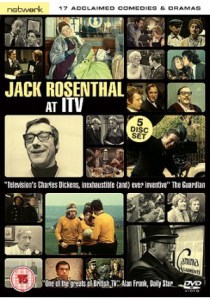
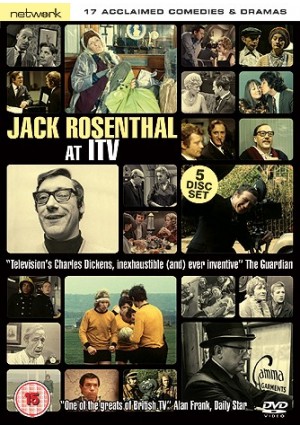
This is available either on the series one set of Village Hall or on the five-disc set Jack Rosenthal at ITV.  Personally, I’d go for the Jack Rosenthal at ITV release as it’s packed with some lovely one-off plays as well as episodes from various series (including Coronation Street and The Lovers).  For anybody who wants an introduction to his work, it’s warmly recommended.

Minder – Gunfight at the O.K. Laundrette

gunfight

It should have been an easy job for Terry (Dennis Waterman) – a simple case of minding Alfie Cavallo (Dave King) as he collected the money from his string of coin-operated laundrettes.  But a bungled armed robbery, led by Stretch (Trevor Thomas), meant that Terry, Alfie and the unfortunate Mrs Mayhew (Hilary Mason) are taken hostage and a tense stand-off with the police begins.

Richard Marson’s recent book about Verity Lambert describes how she green-lit Minder after listening to a five minute pitch.  Her snap decision paid off as it remained one of ITV’s top-rated dramas for the next fifteen years.  During that time the tone of the series certainly changed, as it became a more comedic, family friendly series – which wasn’t to the liking of everyone (especially Dennis Waterman, who left after the seventh series mainly because he’d felt the show had lost its edge).

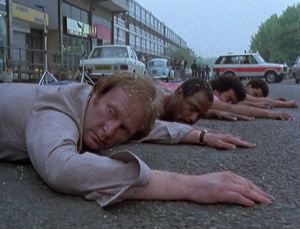
Gunfight at the O.K. Laundrette, the first episode (originally broadcast on the 29th of October 1979), retains more of the harder edge of the earlier series, but there’s still plenty of humour mixed in.  It does feel slightly odd though, mainly due to the library music used.  Stock music was often used in Waterman’s (and Euston Films’) previous series, The Sweeney, but it just feels out of place in the early episodes.

The immediate aftermath of the bungled robbery (the shotgun accidentally goes off, wounding Alfie) is probably the weakest part of the episode.  In story terms, it’s important that the police know what’s happened, but the timetable is too contrived.  A shot goes off, a police-car appears from nowhere, an officer sees the hostages being moved to the back room and then calls for reinforcements.  All this seems to take place in a matter of seconds!

Minder was originally planned to be a vehicle for Dennis Waterman and he’s certainly central to this story.  George Cole is much more peripheral, although he’s still highly entertaining.  I love the moment when he breaches the police barrier by the launderette, breezily telling a policeman that he’s with the serious crime squad.  His ability to make money is also readily apparent – he’s able to sell a photo of Terry’s fiance (in fact a girl he’s only spoken to twice) to the newspapers for a tidy sum.

Terry, Alfie and Mrs Mayhew are moved into the back room by Stretch and his two accomplices, Winston (William Vanderpuye) and Cosmo (Leroi Samuels).  Both of them are little more than kids and it’s obvious that they’re in way over their heads.  Stretch is the dangerous one – as it seems likely that he’ll use the gun, Terry slowly begins to chip away at him.

He tells him that attempted armed robbery will get him seven years, but he’ll probably be out within five.  When Stretch asks him how he knows so much, Terry wryly tells him that he used to keep bad company whilst Alfie chips in that he was bad company.  Both Terry and Alfie are old lags, but they’ve done their time and have no wish to go back.

But whilst Terry is earning a (mostly) honest living, it’s one that he admits gives him little job satisfaction – since it consists of  throwing drunks out of strip clubs and providing people with a bit of muscle.  For someone who (as we’ll learn in more depth later on) could have been a contender, it’s something of a come-down.

Leon Griffiths (named after Leon Trotsky by his mother) had been contributing scripts to popular series since the early 1960’s.  The Four Just Men, The Adventures of Robin Hood, Ghost Squad, Out of the Unknown, The Return of the Saint and Hazel were just some of the shows that benefited from his scripting.

But Minder was the first time that he’d devised a show, rather than take on somebody else’s characters and situations.  Although in the end the number of episodes he wrote was fairly small compared to the total number made (15 out of 109) he still set the tone and template for all the writers who followed in his wake.

All the hallmarks of early Minder are contained within this one episode.  Grimy, seedy London (with Terry a regular around the strip-bars of Soho), Arthur’s subtle (and not so subtle) manipulation of Terry and a confrontational relationship with the police.  Terry might be straight now, but he knows that since he’s got a record, he’s a marked man and it’s his uneasy relationship with the law (as well as the conflict between him and Arthur) which would drive the series for a good many years.

Callan: Under The Red File by Andrew Pixley. Network book review

callan

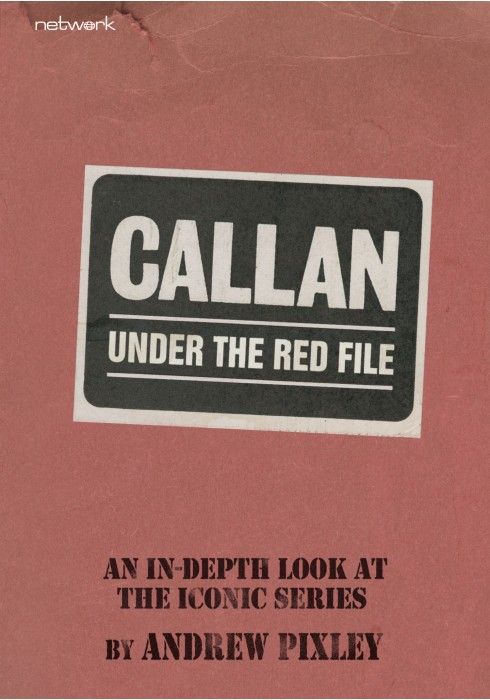
Callan: Under The Red File by Andrew Pixley is an exhaustive guide to the production of this classic television series and is now available for purchase via Network’s website.

For anybody who has an interest in British archive television, Pixley’s name should be well known.  He’s produced viewing notes for many Network titles over the years (most recently The Professionals) as well as for various BBC titles (such as their short-lived science-fiction releases).  He also penned the Archive feature in Doctor Who Magazine for many years.

The bulk of the research in the book was carried out some years ago and the intention was that the book would form part of a Callan boxset, together with all the existing episodes and some additional special features.  For one reason or another, the boxset has yet to appear – so now we have the opportunity to buy the book by itself.

If you’re familiar with Pixley’s work then you’ll know what to expect.  This is a highly factual, production-based work.  If you’re looking for a glossy, well-illustrated tome then this may not be for you.  But if you want facts, you’ve certainly got them here.

Callan is one of those programmes that has never really been examined in great detail before.  I can’t recall any previous books published on the show (although there is another, from Miwk, due out later in the year).  This means that there’s a wealth of material that was new to me – especially about the early (sadly incomplete) black and white episodes.

If you love Callan, this is an essential purchase.  It can be ordered direct from Network’s website here.  Network’s blurb on the book is below.

Nearly ten years in the writing, Callan: Under the Red File has been a labour of love for both Network and the book’s author, Andrew Pixley. Anyone familiar with Network’s releases will know our history with Andrew is a long one and he has done some excellent work for us over the years – with his books on The Prisoner, Danger Man, Public Eye and The Professionals all raising the bar for this type of archive research. Ahead of our upcoming Callan documentary, you can now buy Andrew’s new book exclusively from networkonair.com.

Initially a cult success before becoming one of British television’s most watched programmes, Callan brought the gritty, downbeat angle of Cold War espionage to 1960s British television. In stark contrast to the glamour of James Bond and the stylized capers of The Avengers, the man known as David Callan was a highly skilled killer, tasked by the Government to eliminate threats to national security. This reluctant, conscience-wracked assassin was brought to life in a remarkable performance by Edward Woodward, cementing his popularity as an actor many years before he achieved major international success in both Breaker Morant and The Equalizer.

This exhaustive book is the definitive look at the creation, production, broadcast and reception of all four series. From its conception as a one-off BBC play, through its development by ABC Television, its success as one of Thames Television’s highest-rated programmes, its subsequent ATV revival and its expansion into novels, short stories and movies – this single volume covers every aspect of James Mitchell’s most successful creation.