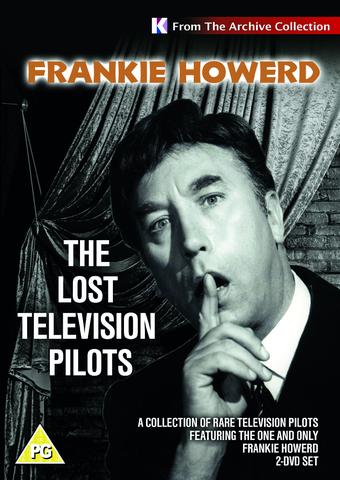
Frankie Howerd: The Lost Television Pilots – Kaleidoscope From The Archive Collection

188964_large.jpg

The third of the Kaleidoscope releases out this week, Frankie Howerd – The Lost Television Pilots offers easily the best value, both in terms of running time and content.

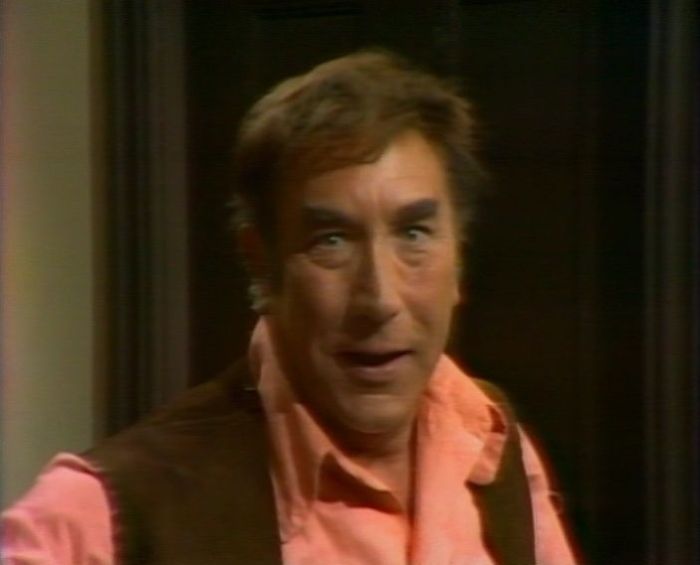
First up is episode three of Up The Convicts (although since it was the first to be recorded it does sort of qualify as a pilot). Up The Convicts was a short-lived (four episodes) series made for the Seven Network in Australia. Howerd is Jeremiah Shirk, a convict transported to a penal colony in New South Wales and put to work as the servant for a wealthy couple. Essentially Up Pompeii in different clothes, it’s a typically raucous fifty minutes of Howerd at full throttle.

The script might be corny, but Howerd was a past-master at spinning gold out of the thinnest material. His trademark style – pausing to berate the audience, either for not getting the joke or for reading dirty innuendoes into his innocent words – is present and correct and he seems to enjoy bouncing off the cast (Frank Thring is especially good value and it’s nice to see Wallas Eaton pop up as well).
f2.jpg

The plot of the episode is pretty thin. His thoughtful mistress arranges a marriage for him, but Jeremiah doesn’t (as he hopes) get to grips with a beautiful serving wench, instead he’s presented with a nightmare vision of a plump woman who never stops eating. But the story isn’t really important – when Howerd’s on, he’s on.

Although all four episodes are reported to exist, only episode three is included in this release – which is a shame, as based on this example I wouldn’t be averse to seeing the rest. Apart from a few brief seconds of tape damage, the videotape is in pretty good shape.

1976 was a busy year for Frankie. Apart from Up The Convicts in Australia, he was also to be found in Canada, where he made The Frankie Howerd Show. Another short-lived series, this DVD contains the pilot and first episode, which you have to assume are the only survivors from the thirteen made.

Frankie is a British ex-pat living in a run-down Toronto boarding house overseen by landlady Mrs. Otterby (Ruth Springford) and her son (Gary Files). Other residents include Wally Wheeler (Jack Duffy), a surly man with a shady past, and Denise (Peggy Mahon), an attractive young woman who inevitably catches Frankie’s eye.

f7.jpg

The series finds Frankie in typical form, bursting through the fourth wall at regular intervals – either to once again berate the dirty-minded audience for seeing innuendos where (he believes) there are none or to apologise for the poor performances of his fellow cast members. Nobody could work an audience like Frankie – had he played a sitcom in the traditional way (ignoring the audience) then the results wouldn’t have been half as interesting.

Mind you, it’s very much a series of its time. The pilot features several Indian stereotypes of an incredibly broad nature (one cast member browns up as Mr Singh, an employment exchange worker who attempts to find Frankie a job). It’s a breathtaking (for all the wrong reasons) performance, but it’s hardly unique from television of this era. As with Up The Convicts, if you like Frankie then you’ll like this – predictable it might be, but Frankie’s never less than a delight.

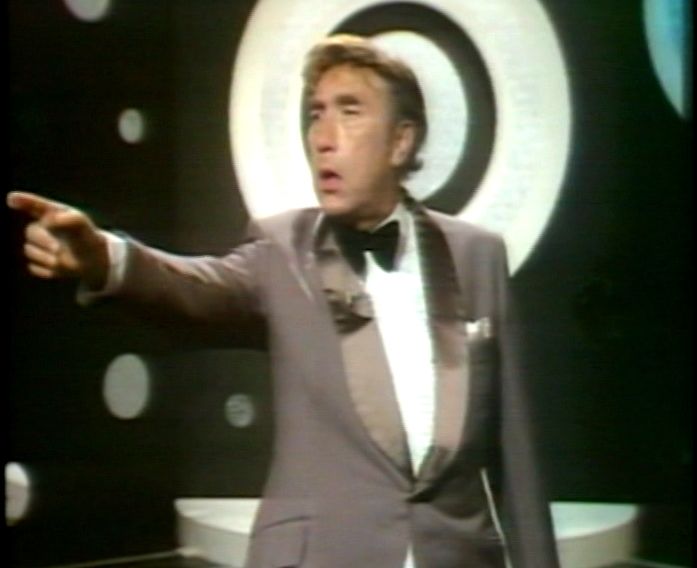
Although The Gong Show was a popular American format, there was never a hit British version – despite two seperate attempts to launch a series, both with Frankie as the host. The second pilot, made by Channel 4 in 1985, was transmitted to little acclaim – whilst the first (included on this disc) was produced by Southern in 1977 and appears not to have made it to air.
f9.jpg

Barry Cryer, who worked on the programme, noted in his autobiography Butterfly Brain that it didn’t really play to Frankie’s strengths. But whilst Frankie does occasionally feel a little adrift as the host, he’s always good value when interacting with the diverse range of performers. Frankie’s also in his element when crossing swords with the three panellists – Madeline Smith, Russell Harty and Diana Dors (especially Harty, who seems to relish being mean to some of the contestants). And with Caroline Munro as a hostess and Bella Emberg as the stone-faced scorer, you can’t say that the show lacked star quality.

As always with The Gong Show, there’s an incredible grab-bag of performers. From an elderly lady (decked out with a glittering union jack hat) singing God Save The Queen (she was quickly gonged off by all three) to a young eighteen-year old lad tackling Sweet Caroline very credibly via a middle-aged singing muscle-man you can’t deny that there’s something for virtually everyone (and that’s only scratching the surface – I won’t spoil the surprise of some of the odder acts).

This is an enjoyable curio which – had the fates been different – could easily have run to a series. Although it appears to be sourced from VHS, the picture quality is more than watchable.

The set is rounded out by three interviews (listed as special features). All were recorded at the same time – around 1978 – when Howerd was in America plugging his appearance in the Bee Gees’ ill-fated film version of Sergeant Pepper’s Lonely Hearts Club Hand. The first – with Merv Griffin – runs for 10″32′ whilst the second – with Mike Douglas – runs for 8″06′.

The most substantial is Ryan’s Roost (27″50′). This one looks to be sourced from VHS and is in black and white, which might be the reason why it was relegated to special feature status. All three have moments of interest, although Howerd – without a British audience to play off – does at times appear to be a little diminished.

Any admirer of Frankie Howerd will find plenty to enjoy across these two discs. Highly recommended.

Frankie Howerd – The Lost Television Pilots is available now. It can be ordered from Simply here (quoting ARCHIVE10 will apply a 10% discount).


Rare Chills – Kaleidoscope From The Archive Collection

164454- Chief Crazy Horse Sleeve.indd

Rare Chills collects together two spine-tingling tales. First up is The Fearmakers: The Shadow of Death. Easily the most obscure of the two, I’ve been able to track down very little information about it. The pilot for a proposed series, it was shot on location at Warwick Castle and featured just two actors – Jack Woolgar and Barry Stokes (Woolgar also introduced the story and was one of the producers, so he was clearly a man of many hats).

It’s an odd little piece. Every trick in the book is utilised in order to create an oppressive atmosphere – we’re at a deserted baronial house late at night, the wind is whistling and the thunder is crashing down – at the same time we are observing a man called Booth (Woolgar) searching for something.

Eventually he finds his prize (a diamond) but is later confronted by a younger man – Weaver (Stokes) – who also claims ownership. A brief tussle for supremacy then takes place, but the victor will have to face the supernatural forces which have been unleased by their actions ….

The Shadow of Death is content to take its time. Woolgar wanders around the house by himself for the first five minutes before finding anything and it’s only when Stokes turns up mid-way through that things really start moving. That it was made on a tight budget can be surmised by some of the shot choices, which don’t always match up to the previous ones (if the production ran out of time or money that would explain why they didn’t get all the coverage they wanted).

The plot is a little vague. If Booth stole the diamond sometime in the past, why did he hide it in the house? And how did Stokes know that Booth would return on that night? The mysterious shadow creature which stalks the house is never explained either.

c3

The print quality is passable, although there’s intermittent damage on the right hand side. A decent time-waster then and worth watching for Woolgar and Stokes, but the story is rather thin.

Much more substantial and enjoyable is Mrs Amworth. It’s certainly loaded with talent – adapted by Hugh Whitemore from the story by E.F. Benson, directed by Alvin Rakoff and starring Glynis Johns (not a bad line-up at all). The original short story by Benson can be accessed here.

Johns gives a lovely performance as the titular Mrs Amworth, a charming lady who’s recently moved into a sleepy English village. A hit with the residents, she’s quickly become the talk of the town, although a recent epidemic has set Francis Urcombe (John Phillips) pondering.

It seems too fantastic to be true, but could the kindly Mrs Amworth really be a vampire – flitting from person to person and draining their blood? Less of a moody chiller than The Shadow of Death, Mrs Amworth still has a few shocks along the way (mixed in with a few amusing moments – or at least I assume they were intended to be amusing). The notion of a vampire hiding out in a bucolic English village is an irresistible one and with the likes of Derek Francis offering strong support, the thirty minute running time clips by most agreeably.

This production of Mrs Amworth will probably be familiar to many, since it escaped onto the internet a few years back. The DVD release does offer an upgrade in picture quality – although by no means pristine (the colours are rather washed out) it’s certainly the best presentation of the materials I’ve seen so far.

A mixed bag then. The Shadow of Death might be the rarer of the two, but it’s Mrs Amworth which really appeals and makes Rare Chills worth a look.

It’s slightly surprising that there’s no contextual information about these programmes supplied with the DVD. Network’s range of curated releases – under the banner of Forgotten Television drama – includes substantial viewing notes which places the programmes in context. Some sort of background on these two dramas – The Shadow of Death especially – would have been welcome. Who made them, how were they lost, how they were rediscovered, etc. Hopefully future releases will contain some info – even if it’s only a brief note on the interior of the DVD case.

Rare Chills is released today by Kaleidoscope, RRP £12.99. It can be ordered from Simply here (quoting ARCHIVE10 will apply a 10% discount).

c10.jpg

Steptoe and Son (1965 American Pilot) – Kaleidoscope From The Archive Collection

164454- Chief Crazy Horse Sleeve.indd

Most people will probably be aware of Sanford and Son, the successful US version of Steptoe and Son which ran for a total of 136 episodes during the 1970’s. But an earlier attempt (by Joseph E. Levine in 1965) to adapt the series for the American market has remained, until now, little more than a footnote in the Steptoe and Son story.

This was due to the fact that no recording was known to exist – until, that is, researchers from Kaleidoscope stumbled on a film print in Ray Galton’s basement. This is touched upon in the brief special feature, which we’ll come to later, but what of the main course?

Whilst Ray Galton and Alan Simpson have a prominent “created by” credit on the opening titles, their voices are largely absent. Although the half hour does feature a squabbling father and son duo called Albert and Harold who run a rag and bone business, it has a very different feel from the BBC Comedy Playhouse pilot, The Offer.

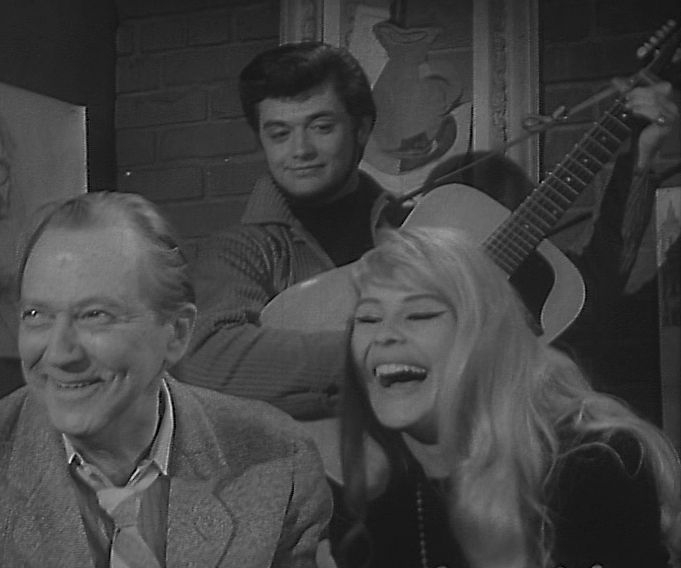
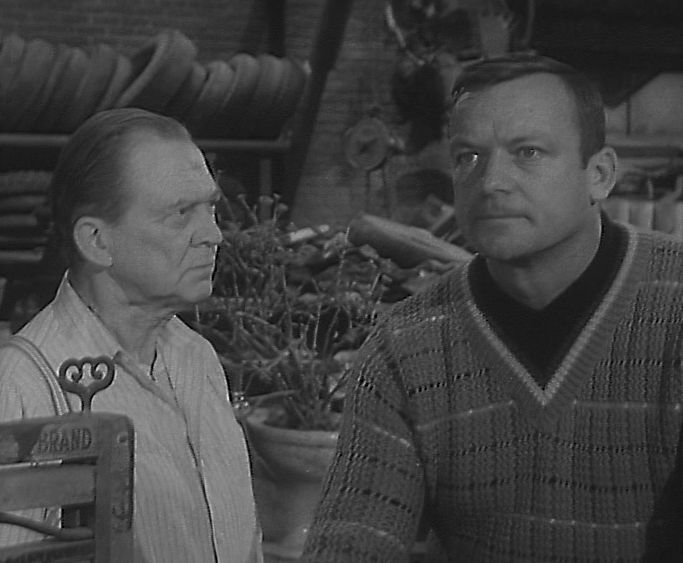
That was a claustrophobic two-hander, whereas this is more expansive (there are a number of other speaking parts, most prominently Jonathan Harris). Albert (Lee Tracy) is still the manipulative one, but Tracy doesn’t have Wilfred Brambell’s aura of pathetic defeat. Instead, Tracy’s Albert is a spry sort of chap, happy to hang out at the local café (singing along with the local beatniks, no less).

s2.jpg

Aldo Ray’s Harold has the same sort of put-upon air that Harry H. Corbett excelled at, although Ray doesn’t really have long enough to make his mark. There are a few brief moments when his anger comes bubbling to the surface though – had the show gone to a series then this might have been an interesting area to develop.

One part of the pilot which isn’t very effective is the soundtrack. The incidental music is very much in the “waa, waa, waaaaa” tradition – hammering the comedy points home with a lack of subtlety. The laugh track (I’m not sure whether it was canned or actually a genuine audience) also seems a little off.

Although Harold does call Albert a “dirty old man” several times, the context is quite different from the British original. It’s nothing to do with his lack of hygiene (this Albert is always very dapper) instead Harold’s cursing is aimed at the way his father always manages to outsmart him (with a “waa, waa, waaaaa” on the soundtrack, no doubt).

Although you might have expected Phil Shuken’s teleplay to be an adaptation of The Offer (and some of the pre-publicity suggested this was so) the pilot is a totally different story. Although Harold is keen to leave, he’s pre-empted by Albert who signs the business over to him. Of course this is only a ruse and the status quo is restored at the end after Albert tricks Harold into burning the agreement. Harold expresses mild exasperation at this – but there’s no room for the emotional distress displayed by Harry H. Corbett (“I can’t get away, I can’t break free”).

In one way it seems invidious to keep on referring back to the BBC original, but if it wasn’t for the Galton and Simpson connection then this pilot’s appeal would be very limited indeed. As a curio for those interested in Steptoe or G&S then it’s certainly of interest – provided you’re not expecting something as bleak and impressive as The Offer then it’s a diverting enough half hour.

Shot on 35mm film, either it’s undergone some restoration work or Ray Galton’s basement was the ideal place to store film materials, as it looks very nice with only a few intermittent seconds of damage here and there. The sole special feature is a four minute excerpt from the Kaleidoscope documentary The Native Hue of Resolution.

This sees Ray Galton and Tessa Le Bars (G&S’s agent) venturing down to Ray’s basement, where they just happen to stumble over a film can. No doubt this was a moment staged for the documentary, but it’s still nice to see them rummaging around this room of treasures for a few minutes.

Steptoe and Son is worth a look, but with a running time of only thirty five minutes it’s an expensive buy. If these archive releases continue, then there might be some merit in collecting various orphaned titles together – that would be one way of offering decent value for money.

Steptoe and Son – The “Lost” Unaired 1965 American Pilot Episode is released by Kaleidoscope on the 13th of August 2018, RRP £12.99. It can be ordered from Simply here (quoting ARCHIVE10 will apply a 10% discount).

s4.jpg

Longford – Simply Media DVD Review

longford.jpg

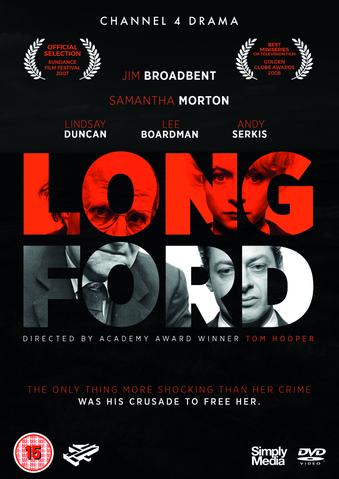
Lord Longford was a tireless supporter of prisoner’s rights. He believed that nobody was beyond redemption, but his dogged campaign to secure Myra Hindley’s release only served to bring him savage public vilification ….

Even after all these years, the Moors Murders remains a dark stain on the British psyche. And if this horrifying legacy still resonates today, how much more powerful must it have been in the late 1960’s, when Lord Longford visited Myra Hindley for the first time? But despite being dubbed by the tabloids as “Lord Wrongford” he wouldn’t be swayed and carried on tirelessly pleading her case for decades.

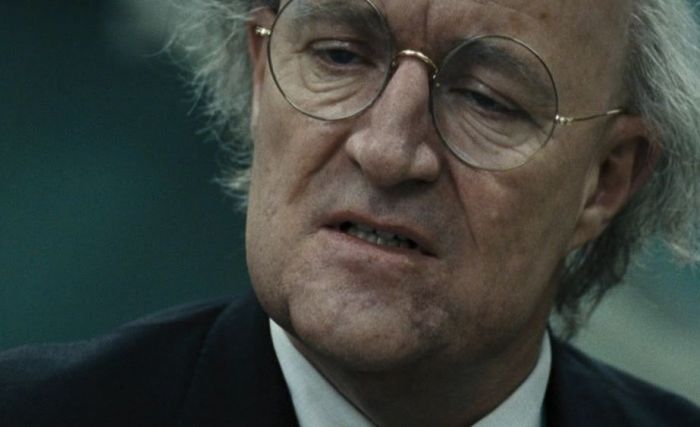
Even though he had to submit to several hours of prosthetic make-up each day, Jim Broadbent’s beautifully nuanced performance as Longford is nothing less than quietly stunning. It’s left to the audience to decide whether Longford was a good, innocent man or simply a gullible fool (or a little of both possibly). Broadbent certainly deserved all the plaudits and awards which came his way.

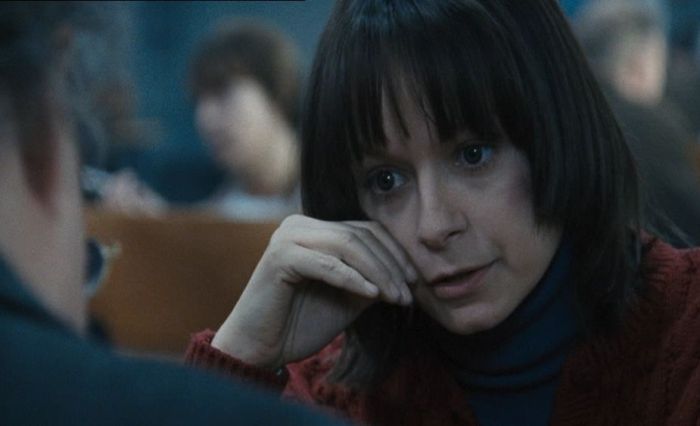
No less compelling and fascinating is Samantha Morton’s performance as Myra Hindley. As much of a victim as the murdered children, or an equal complicit partner with Ian Brady? She certainly seemed like a reformed character in Longford’s presence, but was that simply a ruse to gain his trust? As the film continues we begin to get an idea of the truth and Morton’s quiet, unshowy playing becomes increasingly more memorable.

l1.jpg

Ian Brady’s evil is palpable though. Andy Serkis’ screentime might have been limited but he is still able to create a deeply unsettling atmosphere which lingers even after he’s left the screen. Brady’s first meeting with Longford is a typical snapshot of the short time they spent together. “How good of you not to disappoint! Wonderful, isn’t it, when people look exactly as you imagined? So this is my competition? This is what I’m up against? Myra’s new boyfriend? She certainly picks them, doesn’t she? I did a little research before our first meeting. I’d say there’s great evidence of mental instability in your past and mine”.

Brady’s contention that Hindley destroyed ‘him’ is intriguing. An example of Brady’s manipulative skill, or does the comment contain a kernel of truth? “Take my advice. Go back to your other prisoners. Nice, uncomplicated ones with broken noses and knuckle tattoos. Stay clear of Myra, because she will destroy you. Certainly destroyed me. That’s a thought you’ve not had before – that Myra egged me on”. Before Brady’s furnace of hatred, the affable and kindly Longford could do little but wilt.

Later events, such as Hindley’s confession to several subsequent murders (which she did in order to trump Brady’s own pending confession) wasn’t enough to totally destroy Longford’s faith in her, nor was her description of the first murder. “I’m trying to know the God that you know. But if you had been there, on the moors, in the moonlight, when we did the first one, you’d know that evil can be a spiritual experience too”.

Scripted by Peter Morgan (also responsible for The Last King of Scotland, The Queen, Frost/Nixon and The Damned United) Longford is a concise ninety minute teleplay which doesn’t contain an ounce of fat. Strong supporting performances help (most notably Lindsey Duncan as Lady Longford) as does the inclusion of genuine archive television reportage. In certain clips (for example, where the real Lord Longford appeared alongside David Frost and Lord Hailsham) a skilful spot of editing ensures that Broadbent replies to the archival comments of Frost and Hailsham.

Posing the difficult, if not insoluble, question as to whether forgiveness should be extended to everyone, regardless of their crimes, Longford offers no easy answers but plenty of food for thought and therefore stands as an absorbing drama which repays repeated viewings. Highly recommended.

Longford is released today by Simply Media, RRP £14.99. It can be ordered directly from Simply here – quoting ARCHIVE10 will apply a 10% discount.

l2.jpg

Brond – Simply Media DVD Review

Out for an early morning jog, Robert (John Hannah) witnesses a shocking murder. A man later identified as Brond (Stratford Johns) casually pushes a young boy over a bridge. But this sudden act of violence is only the beginning as Robert finds himself embroiled in Brond’s scheme to trap an IRA killer ….

Adapted by Frederic Lindsay from his own novel and broadcast in 1987, Brond is one of those 1980’s thriller serials (along with the likes of Edge of Darkness and Dead Head) which eschew narrative clarity in favour of something much more non-linear. But given that Lindsay’s novel was rather baffling in places, it’s no surprise that his television adaptation was also opaque.

Brond’s first appearance is ridiculously memorable. Pushing the boy over the bridge without a second thought, Brond then casually winks at Robert as he passes by.  What’s especially interesting about this scene is that until the incident is revisited towards the end of the serial it’s possible to believe that Robert was hallucinating and that there actually was no murder.

Brond might have been John Hannah’s television debut (a major role for such a newcomer) but Alan Stratford Johns was an old hand. He’ll always be best remembered for playing Charles Barlow in a string of BBC police series (Z Cars, Softly Softly, Softly Softly: Task Force, Barlow) but he also had a rich and diverse career before and after his time with the police force.

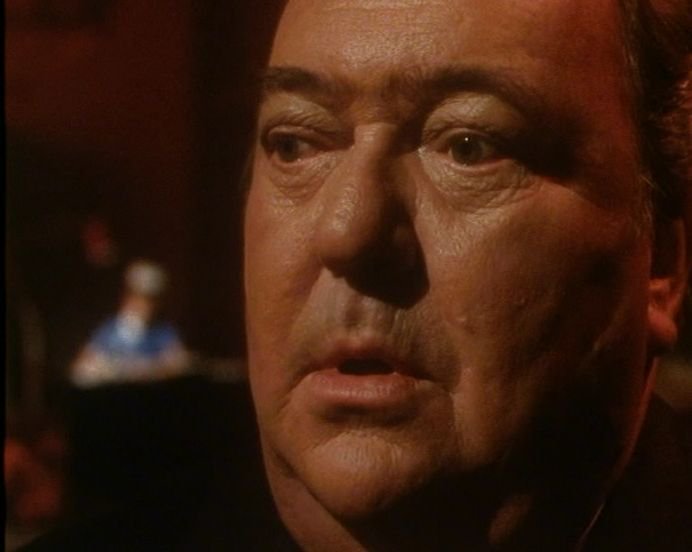
Brond was one of his later signature roles though – it certainly made a considerable impact at the time and it’s not difficult to see why. Brond is a peach of a part and it offers Johns a number of wonderfully constructed monologues and set piece scenes. The first occurs at a university party, where an increasingly disconnected Robert views Brond in a mirror. The framing is so non-naturalistic that the exact reality of the situation seems to be in doubt (as with the boy’s murder).

Satan must be defeated. But never is quite. So we owe red roses and sunsets to Satan’s joy in being master.

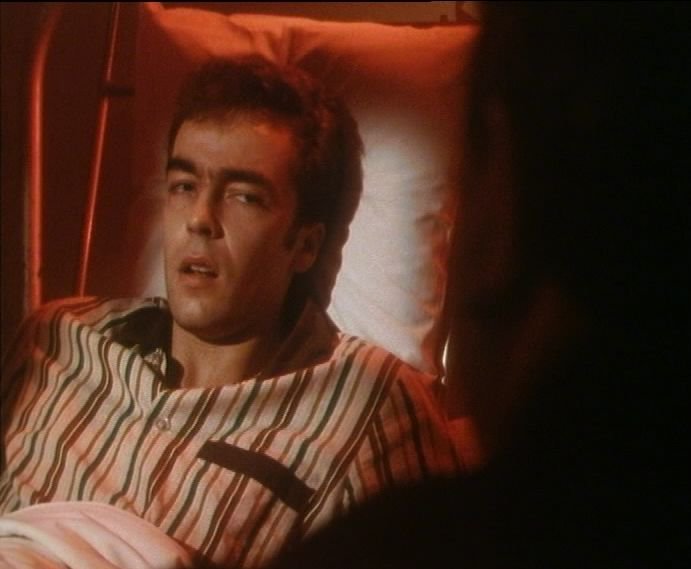
Brond’s materialisation by Robert’s hospital bed is another peculiar and jolting moment. Why the whole ward is suddenly bathed in an unearthly red light is a mystery which is never explained. And yet again Brond’s elliptical, gnomic utterances don’t help to make the situation any clearer.

I remember Paris, young men, far from home. The story was written to make a little money, concerning a lady and her victim who was quite willing – eager to suffer and obey. She did terrible things to him, she might have killed him. But it was all innocent daydreams, some wonder drug of science fiction. So when it was over, no blood, no regrets, just a man and woman and a warm summer evening. Wasn’t that a better world to live in?

In the wrong hands this sort of florid material could easily fall flat, but it’s testimony to Johns’ skill that he makes moments such as these utterly compelling.

Aside from Johns and Hannah, there’s a strong supporting cast. James Cosmo, as Primo, looms menacingly throughout. Although connected to Brond, he also latches himself onto Robert. Louise Beatty (Margaret) also impresses whilst it’s always a pleasure to see Christopher Ellison. A number of other familiar faces, such as Russell Hunter, pop up in minor roles.

As we proceed to the second episode, the plot only becomes more labyrinth. Robert’s mysterious landlord, Kennedy (Ian McElhinney), casts a menacing shadow whilst the murder of a fellow lodger, Kilpatrick (Laurie Ventry), and Robert’s discovery of a gun wrapped in a blood-soaked cloth are further pieces of the disorienting puzzle. Robert’s later police cell conversation with a gardner (Phil McCall) is another of those strange Brand moments.

Charged with the murder of Kilpatrick, Robert is interrogated by Frew (Christopher Ellison) a character who could be a close cousin of Frank Burnside. But the murder of Kilpatrick is clearly only a sideshow – the assassination of Sir Colin Fraser seems to be much more key ….

The final episode sees Robert released into Brond’s care. Stratford Johns is on fine form, especially when in interrogation mode. Things then go very strange after the pair pay a visit to high class brothel. Brond has some peculiar ideas about entertainment (and isn’t fussy about who might be looking in). There’s also an intriguing callback to the murder of the boy from episode one and some of the loose ends are tied up. Other aspects of the story (notably why Brond latched onto Robert) remain open to interpretation.

Critical reaction at the time was pretty positive.  The Stage (14th May 1987) reviewing the first episode, declared it to be “a jigsaw thriller, in which you are not expected to see the picture until most of the pieces have slotted into place”.  Johns’ performance (“Brond isn’t the sort of man you would want as a babysitter. He speaks in a calm, measured voice, at once chilling and reassuring”) drew praise as did John Hannah (“a likeable dupe, whose jokes always seemed to fall on deaf ears”).

The three episodes (each approx. 50 minutes) are contained on a single DVD.  The all-film production is unrestored, but for a thirty year old serial is in pretty good shape with no major picture issues.  There’s no special features and, as per Simply’s other recent C4 releases, no subtitles (it appears that Channel 4, unlike the BBC, don’t require subtitles to be added).

Featuring a haunting title theme by Bill Nelson and Daryl Brunswick, Brond lingers long in the memory. The lack of a clear narrative means it won’t appeal to all, but since there’s so much of interest – notably the performances of John Hannah and Stratford Johns – it’s hard not to be drawn into this dark, twisted world.

Brond is released by Simply Media on the 30th of July 2018, RRP £14.99. It can be ordered from Simply here, quoting ARCHIVE10 will apply a 10% discount.

Norbert Smith: A Life – Simply Media DVD Review

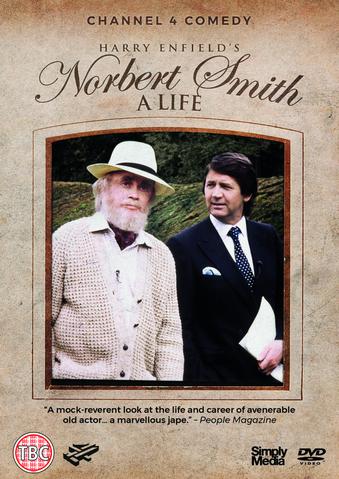
Harry Enfield (b. 1961) first came to prominence in 1986 on Channel 4’s Saturday Live. The two characters he created with Paul Whitehouse – Stavros and Loadsamoney – quickly became public favourites, especially the obnoxious Loadsamoney. But since they only offered limited possibilities for development it wasn’t surprising that Enfield eventually tired of them and moved onto other projects.

In 1990 he would debut Harry Enfield’s Television Programme on the BBC, but just prior to this Norbert Smith: A Life aired on Channel 4. It was the first time that his skill with multiple characters within the sketch format had been given free reign and therefore is a key moment in his early career.

The format is simple. Melvyn Bragg is interviewing the venerable British actor Sir Norbert Smith. In-between the rambling interview sections are clips from the great man’s many films (dating from the 1930’s up to the present day). This is obviously just a device to stop the programme from appearing to be nothing more than a series of film sketches (which it clearly is, but since everything works so well I’m not complaining).

The inspiration for the programme would have been obvious to most people at the time. Broadcast in 1983, Laurence Olivier: A Life found Britain’s greatest theatrical knight in conversation with Melvyn Bragg. In some ways Norbert is a wicked parody of the 1983 original, even down to the aged Norbert’s appearance (he’s the dead spit of the elderly Olivier). But although there’s a visual similarity (and some crossover in films, such as Hamlet) Norbert Smith isn’t a pastiche of Olivier’s career – the subject of this programme was an actor much lower down the food chain.

His film debut – appearing alongside Will Silly in Oh, Mr Bankrobber! – is a case in point. This first parody sets the benchmark for the rest of the programme – it’s a wonderfully observed Will Hay pastiche, capturing the tone perfectly (the crosstalk and ever-increasing verbal confusion is spot on). It’s visually very appealing too, with just the right amount of dirt applied to make it look like a fifty year old film (plenty of hiss on the soundtrack as well).

Another example of this attention to detail can be seen in Lullaby Of London. A 1940 American film featuring oodles of British clichés, not only does the picture have that odd washed-out colour tone of the era but the sound is a little tinny as well. Josie Lawrence joins Harry and a fair number of extras for this extravagant song and dance number.

The Noel Coward inspired Hamlet is another stand-out section – especially since it so closely apes the visuals of Olivier’s own classic version. The Brief Encounter skit (featuring Felicity Montagu) is given a little extra spin when it’s revealed that their over-earnest performances are only in respect of an advert for Sudso washing powder (which has the classic slogan “it washes clothes”).

It’s Grim Up North (1962) is a typically depressing kitchen sink drama, but the same year Norbert would also take on a very different role – that of the father in Keep Your Hair On, Daddio – so clearly Norbert was an actor of some versatility. And around this time an alcoholic Norbert found himself ruthlessly probed on Head to Head. “Why are you so hopeless? Forgive me for saying this, but you’re a complete alcoholic and a lousy actor”. The unmistakable tones of Geoffrey Chater help to make this Face to Face homage even more enjoyable.

There are many other gems scattered throughout (such as Rover Returns Home where Norbert shares the screen with a young Michael Caine) but rather than listing them all (and spoiling the gags) I’ll mention just one more. This is easily my favourite – Carry On Banging. Featuring three Carry On stalwarts (Barbara Windsor, Kenneth Connor and Jack Douglas) it manages to pack a breathtaking number of innuendoes into just two minutes.

“Now listen, we want you to pull them down and if you don’t, we will”.

“Those unsightly erections of yours are a danger to us all”.

“That man there, he threatened to give me a big stiff one”.

And the killer line ….

“Let us all have a little discussion, where you can all put over your points of view. Yes, let’s have a mass debate”.

With Paul Whitehouse not contributing, Enfield co-wrote Norbert Smith with Geoffrey Perkins, no slouch himself as a writer or performer. And although it only runs for 47 minutes, there’s so much packed in that it seems to be longer.

It’s a pity that there’s no special features or additional footage, which means that whilst this is a treat, it’s a very short one. But given the quality of the programme it’s certainly something I have no hesitation in recommending. A comic gem, it’s a joy from beginning to end.

Norbert Smith: A Life is released by Simply Media on the 16th of July 2018. It can be ordered directly from Simply here. Quoting ARCHIVE10 will apply a 10% discount.

Alan Bleasdale Presents: Self Catering

164454- Chief Crazy Horse Sleeve.indd

A plane crash leaves five survivors stranded on a desert island. It’s a paradise – or would be if it wasn’t for the absence of food. As the deeply mismatched quintet consider their options, they decide to adopt the names of their favourite film stars ….

Another entry in the short-lived 1994 C4 anthology series Alan Bleasdale Presents, Self Catering chugs along very agreeably thanks to the number of excellent lines contained within Andrew Cullen’s script. The ninety minute screenplay is packed with quotable moments, such as this reaction from the narcissistically self-obsessed Marilyn (Jane Horrocks) to the prospect of having to become a forager. “We’re not hunter/gatherers anymore, we’re shoppers. My idea of a marathon is walking from Boots to C&A, realising I’ve forgotten the deodorant and having to walk back to Boots”.

In addition to Marilyn (who has adopted the name of Marilyn Monroe), we also have a movie buff who has decided he’d like to be Henry Fonda (John Gordon Sinclair), the womanising Clint Eastwood (Andrew Schofield), the acerbic Joan Crawford (Noreen Kershaw) and the unconscious (although she wakes up eventually) Meryl Streep (Jennifer Ehle).

If Cullen’s script is good – creating a group of hopelessly incompatible people (Marilyn detests heavy lifting or indeed any sort of work, Clint can’t keep his eyes off all the females, Joan loathes Marilyn, Henry is a film obsessed bore, etc) – then the actors take the material they’ve been given and run with it.

s5.jpg

Jane Horrocks is a total treat as Marilyn as is Noreen Kershaw as the foul-mouthed Joan. All three females find themselves caught up in an unlikely love-quadrangle with Clint (Joan at one point telling him that he’s “got a great body. But you’ve got a sick mind. But you’ve got a great body”).

It’s hard to imagine any better than John Gordon Sinclair in the role of the deeply pernickety Henry. “Does no-one like Henry Fonda these days? Rocky, Rambo, Robocop. They are nothing compared to Henry Fonda”.

I also love Henry’s doom-laden pronouncement from the opening few minutes. After considering the unconscious Meryl, who appears to be dead, he declares that they shouldn’t bury her too deep. With the only food available being the limited supplies on the plane, pretty soon they’re going to have to tuck into human flesh. It gives a new spin to the title Self Catering.

Robin Lefevre would later direct Alan Bleasdale’s Jake’s Progress (he had also acted in Requiem Apache) whilst Andrew Schofield had earlier prominently featured in G.B.H as well as Requiem Apache, suggesting that Bleasdale liked to work with a core group of creatives on a regular basis.

Jennifer Ehle (who would also appear in another Alan Bleasdale Presents, Pleasure) has the hardest role, since Meryl (who wasn’t even granted the ability to re-christen herself – Henry chose the name Meryl Streep since he liked the actress) is insensible for the first half of the story. After Meryl wanders off and then wanders back, it does allow John Gordon Sinclair the chance to riff in an amusing manner (wondering if the approaching figure might be an android!)

But once Meryl does regain consciousness, she makes up for lost time by indulging in flings with first Clint, then Joan (who promises to teach her about the birds and the birds) before moving on to the voluble, if deeply sexually repressed, Henry. As she slowly unzips his trousers, she asks him if he minds. He responds that he has “the gravest doubts on the subject, by I intend to crush them”. This, like many of his other utterances, derives from one of his favourite films.

Although Self Catering is played as a comedy, it’s sometimes a rather dark one. Both Clint and Marilyn venture, at different times, into the wrecked cockpit. Moving their way through the dead bodies, Marilyn (to the strains of Elvis Costello’s I Can’t Stand Up For Falling Down) amuses herself by taking a selfie, whilst Clint is more interested in the contents of a ladies blouse.

Clint’s later madness (he elects to wall himself off from the others) and Henry’s bizarre dreams are some of the later highlights. Lacking a straightforward narrative, Self Catering is more of a collection of character set-pieces with an open-ended conclusion. This isn’t really a problem though – since the cast are firing on all comic cylinders it’s another DVD from the series which is well worth your time.

Alan Bleasdale Presents: Self Catering is released by Simply Media on the 4th of June 2018, RRP £14.99. It can be ordered directly from Simply here (quoting ARCHIVE10 will apply a 10% discount).

Alan Bleasdale Presents Requiem Apache

apache.jpg

Hamish (Alfred Molina) has left his former life as a getaway driver far behind. Now ensconced in a bucolic English village and living a contented existence with his wife and baby daughter, everything seems perfect. Which it is until his old friends come calling and ask him to join them in one final job. But with his wife away he’s been left holding the baby – so even if he wanted to, juggling the twin demands of a life of crime and baby care might turn out to be a little tricky ….

Alan Bleasdale Presents was a short series of C4 television films broadcast during 1994. With Bleasdale acting as producer and mentor, the series gave a handful of young writers valuble exposure and the opportunity to hone their talents. And there’s no doubt that his name on the project helped to attract the cream of the acting profession (Requiem Apache, for example, featured brief appearances from the likes of Julie Walters).

This appears to be Raymond Murtagh’s only script for either film or television, which is a slightly surprising since it’s a quirky and entertaining piece (Murtagth’s other credits were all on the acting front – he appeared in various series including Crown Court, Juliet Bravo and Doctor Who).

Once Hamish’s wife swiftly departs aboard for a foreign trip, he throws himself into the task of looking after his daughter Laura (Aimee and Lynsay Bullard) with gusto. There’s a definite “aww” factor to these scenes, helped no end by the baby actor. The scene where Hamish engages Laura in conversation and she turns to stare at him could clearly never be scripted, but is a lovely moment nonetheless!

r1

Elsewhere though, storm clouds are brewing. A mysterious individual, credited only as the Juice Man (Robin Lefevre) is putting the squeeze on Hamish’s old boss, Tony (Kenneth Cranham), who in turn decides to put the squeeze on Hamish. The Juice Man certainly makes an impact with his handful of scenes. He gets his name from the way he intimidates a hapless barman (Christopher Ryan – another well known face appearing in a fairly small role) into giving him an immaculately poured glass of orange juice. The Juice Man also has a unique way of disposing of people who displease him ….

As good as Alfred Molina is, Requiem Apache really springs to life whenever Kenneth Cranham is on the screen. Effortlessly stealing every scene he appears in, he gives a beautifully judged performance which adds an extra level of quality to the production. Andrew Schofield and Ralph Brown (as Tony’s fixers, Rocky and Mick) are also good value – they’re mainly cast as comic foils, but are also responsible for the occasional darker moment (these brief bursts of violence are especially jolting given that the majority of the story is played almost like an Ealing Comedy).

The climatic bank robbery, with Hamish as the driver and Tony, Rocky and Mick cast in the unlikely roles of three blind men (all the better for confusing the bank staff) then leads into a final payoff which I doubt many would have seen coming. But whilst it might be unexpected it’s also a satisfying conclusion which ties up all the loose ends.

As touched upon before, there’s plenty of quality in this cast. Along with Julie Walters’ cameo (which doesn’t advance the plot at all, but passes a few minutes very agreeably) it’s also nice to see Sam Kelly, Chris Ryan, Peter Benson and Jon Laurimore passing through and at just 77 minutes the story doesn’t outstay its welcome.

An amusing comedy romp which isn’t afraid to go dark at times, Requiem Apache is a brisk treat, powered along by the excellent cast. Recommended.

Requiem Apache is released by Simply Media on the 28th of May 2018, RRP £14.99. It can be ordered directly from Simply here (quoting ARCHIVE10 will apply a 10% discount).

Comics – Simply Media DVD Review

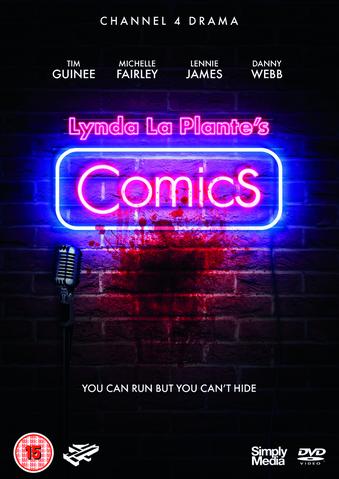
American comedian Johnny Lazar (Tim Guinee) recently arrived in the UK, observes a gangland killing on the streets of Soho. As a witness, Johnny finds he’s a person of interest from both sides of the law ….

Simply Media continues to trawl through the Channel 4 back-catalogue with this two-part serial from 1993, written by Lynda La Plante and produced by Verity Lambert.

Within the first few minutes Johnny’s character has already been deftly painted – he’s an uncontrollable loose cannon (shooting his mouth off on a top American chat show is one of the reasons why he finds himself unemployable in his own country).

Given the generous running time (two episodes each of approx. 107 minutes) it’s slightly odd that Johnny witnesses the murder so early on in the first episode. The story might have benefitted from having a little more time to set up the characters and the milieu.

But even though the first twenty minutes seems to fly by at breakneck speed, all the essentials are put in place. We meet some of Johnny’s fellow comics, such as the cynical Haggis (Alex Norton) and the firmly traditional Graham Redcar (Graham Fellows). Fellows, no stranger to comedy himself (Jilted John, John Shuttleworth) was a wonderful casting choice. Graham is a strictly old-school turn, dressed in a smart dinner jacket he seems very out of place amongst his shabbier fellow performers. His insistence that you don’t have to descend to gutter language in order to amuse (instead he puts his faith in his hand puppet) is another obvious way in which he differs from the crowd.

Whilst it’s true that Londoners are very phlegmatic, it slightly stretches credibility that somebody could be shot multiple times right in front of a crowd of people with nobody reacting. You’d have thought somebody might have screamed at least once ….

But then some of the plotting of Comics is slightly suspect. We see the murdered man, Johnny Fratelli, walking past Anthony Fratelli’s (Stephen Greif) car. Given that Johnny was shot on his cousin’s orders (and that a briefcase was the prize) why choose to murder him in such a public place? It would have been far wiser to dispose of him in secret, that way obtaining the briefcase would have been straightforward (whereas here it’s not picked up in the melee).

It’s always nice to see Stephen Greif and although he’s rather typecast as a villain, since it’s a role he always plays so well I’m not going to complain. A number of other familiar faces (some already established, others just making a start) also appear – such as Danny Webb and Lennie James.

Brian Duffield (Webb) thinks that Johnny has the potential to hit the big time. The culture clash between the two – Johnny’s never heard of the likes of Rik Mayal, Ben Elton or the BBC – is nicely done, leading us to the punchline where Brian proudly tells him that he should be able to get him a spot on the Des O’Connor show. Needless to say, Johnny’s never heard of Des either ….

One plus point of Comics is the way that it intercuts an examination of the comedy scene in the UK with a straightforward police procedural (as the hunt for Johnny Fratelli’s killer begins in earnest). There’s some spiky satire directed at the comedy world – Duffield, with his brick like mobile phone and his rampaging desire to make Johnny a star, is the archetypal manager whilst the appearance of Michael Aspel helps to anchor the serial to the real world.

Johnny’s meltdown on the Aspel show (launching into a routine about guns and sex which I assume was intended to be shocking but today seems rather tame) shows the way his mind is currently functioning, i.e. not very well. But with one of his fellow comics recently murdered (he was mistaken for Johnny) it’s possibly not surprising that he’s becoming increasingly flaky.

Tim Guinee had to tread a delicate line. Johnny is often boorish and monosyablic, but Guinee also has to make him sympathetic, otherwise Comics would be a slog with an unlikable character at its heart. Guinee succeeds in teasing out the more vulnerable side of Johnny’s nature from time to time, so overall he gives a very rounded performance.

Although a little unfocused in places, there’s still a great deal of interest to be found in Comics, especially the depiction of the seedier end of the comedy circuit featuring a disparate group of characters all dreaming of a chance to make it big. Having the likes of Graham Fellows in the cast helped to add a layer of authenticity and it’s interesting to learn that Jo Brand was also approached.

Comics features a female performer, Rebecca (Jenny Galloway), who has more than a touch of Brand about her. It looks as if the part was originally written with Brand in mind, as touched upon during this interview.

A favourite of LaPlante’s, Comics slowly ramps up the tension before climaxing with a more than satisfying conclusion (followed by a touching coda). Propelled along by a very strong cast, Comics is an intriguing drama from the earlier days of C4 and is well worth your time.

Comics is released by Simply Media on the 21st of May 2018, RRP £19.99. It can be ordered directly from Simply here (quoting ARCHIVE10 will apply a 10% discount).

Cinderella – Simply DVD Review

164454- Chief Crazy Horse Sleeve.indd

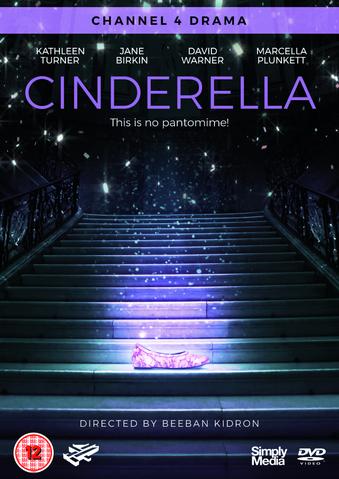
Nick Dear’s reimagining of Cinderella relocates the story to mid twentieth century Britain. Young Zezolla (Marcella Plunkett) tangles with her new stepmother, Claudette (Kathleen Turner), an evil woman who has the unsuspecting Martin (David Warner) firmly in her grasp.

Zezolla, nicknamed Cinderella after she’s given the task of stoking the coal boilers of her father’s sprawling mansion, also has to contend with Claudette’s two scheming sisters – Goneril and Regan (Katrin Cartlidge and Lucy Punch) A fairy godmother would be handy, but surely that would be expecting too much …

Whilst Cinderella draws much of its inspiration from the original fairy tale, it also delights in mixing and matching elements from various other stories. King Lear is an obvious inspiration – the names of Claudette’s daughters and the way that Zezolla becomes estranged from her father (in true Lear style) are the most obvious nods.

Kathleen Turner adds a touch of Hollywood glamour to the production. Bedecked in a series of eye-catching costumes, Claudette is depicted as a top class schemer. Although briefly disappointed when she discovers that her new husband might be aristocratic but is also pretty much broke, she soon recovers. Once she’s managed to dispose of him (poison should do the trick) she’ll be free to remarry and if one of her daughters could snag a young and handsome Prince, all the better ….

Karen Cartlidge and Lucy Punch as Goneril and Regan are a hoot. Just as wicked and narcissistically self-obsessed as their mother, they delight in taunting their new, downtrodden sister-in-law. An early scene, where the pair – cavorting on their bed in stockings – ponder whether they should corrupt the innocent Zezolla is nicely done.

As for Zezolla – or Cinderella as she becomes known – she’s deftly brought to life by Marcella Plunkett. Although this was an early screen credit for Plunkett, she doesn’t seem at all fazed by sharing the screen with vastly more experienced actors.

c1.jpg

The casting for Cinderella was very strong. David Warner has a tricky job as Martin (it’s difficult to believe that anybody could be quite as dim and trusting as he is) but Warner’s a class actor who just about gets away with it. Leslie Phillips has a nice role as Felim, Martin’s faithful family retainer. Although it does seem a bit harsh that a man as old as he is has been given the job of stoking the boilers ….

Felim acts as Cinderella’s confidant, which is perfect casting for Phillips who twinkles away very appealingly. When advising her about the pleasures and pitfalls of love, he lets slip that he has form in this matter – most notably Mab (Jane Birkin).

Another strong addition to the cast, Mab occupies the role of Cinderella’s fairy godmother, although she – like a great deal of the story – is far removed from the traditional image. Living in an underground cave, Mab’s delightfully disconnected (telling Cinders at one point that she can’t rustle her up a pair of shoes – she never bothers with them herself since shoes are only for people who don’t like the look of their feet). Several other familiar faces pass by later on, such as Sharon Maughan, Michael Medwin, Nickolas Grace and Jenny Tomasin.

Prince Valliant (Gideon Turner) enters the picture mid-way through. An unconventional Prince Charming, he’s portrayed as a bored and idle lounger. I’m not sure whether Turner’s playing is supposed to be off-kilter or if it was just a case of bad acting. I suspect the former, and this thought was strengthened by the memorable moment when the Prince elects to serenade the alluring Cinderella with a rock song and an energetic guitar solo. He does later roam the Kingdom (albeit on a motorbike) with a slipper, looking for a foot that will fit it – so at least in that instance he does conform to the traditional story.

With a woozy, non-naturalistic feel, Cinderella doesn’t outstay its welcome at 83 minutes. It may be fairly short, but is decidedly sweet and – thanks to the first-rate cast – is something of a treat. Recommended.

Cinderella is released on the 21st of May 2018 by Simply Media, RRP £14.99. It can be ordered directly from Simply here (quoting ARCHIVE10 will apply a 10% discount).
The Demon Headmaster – Simply Media DVD Review

164454- Chief Crazy Horse Sleeve.indd

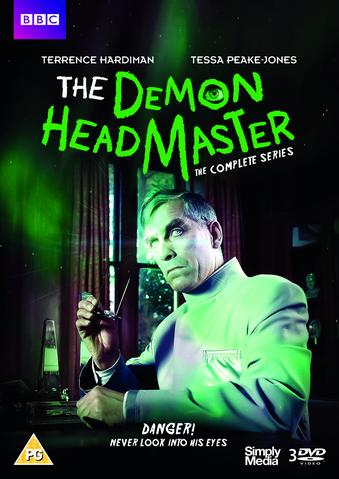
Starting a new school is traumatic at the best of times, but Dinah Glass’ (Frances Amey) first day is worse than most. Most of her fellow pupils seem uncharacteristically docile whilst the Headmaster is a very strange man indeed ….

Created by Gillian Cross, the Demon Headmaster has featured in a series of (to date) seven novels published between 1982 and 2017. When Cross’ books were adapted for television in the mid nineties (there were three series in total) four of her novels were used. The six episodes of series one utilised the first two books – The Demon Headmaster (1982) and The Prime Minster’s Brain (1985) – each running for three instalments.

Dinah, an orphan, has arrived at her new foster home. Mrs Hunter (Tessa Peake-Jones) is warm and welcoming but her two young sons – Harvey (Thomas Szekeres) and Lloyd (Gunnar Cauthery) – are far less enthused. This isn’t because they don’t want a girl around the house, it’s more to do with the fact that they’re members of a small group (five in total) who have somehow managed to escape the Headmaster’s control and fear that Dinah will end up as a spy in their camp.

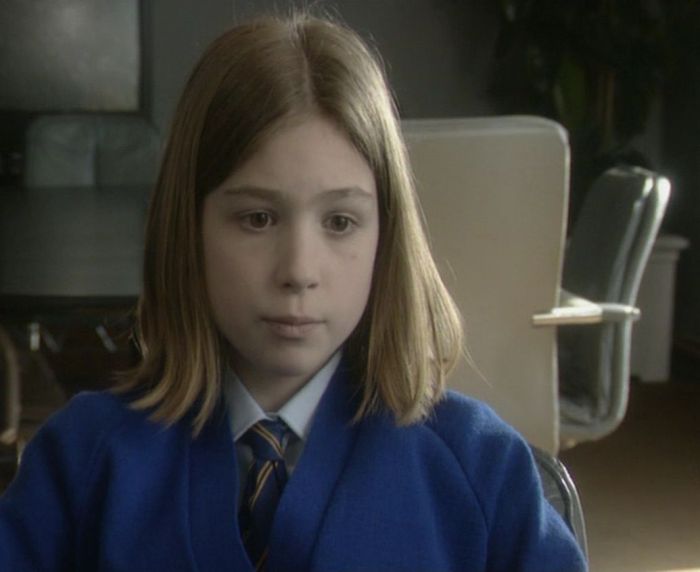
The central heroic protagonist of the series (subtly reinforced by the title sequence which depicts the other children on either side of the screen whilst Dinah – like the Headmaster – is placed in the centre of the frame) Dinah’s plight instantly captures the viewer’s attention, thanks to Frances Amey’s performance. As you might expect, the child cast are variable (some good, some not quite so) so it’s fortunate that the key role of Dinah went to a strong actor.

d1

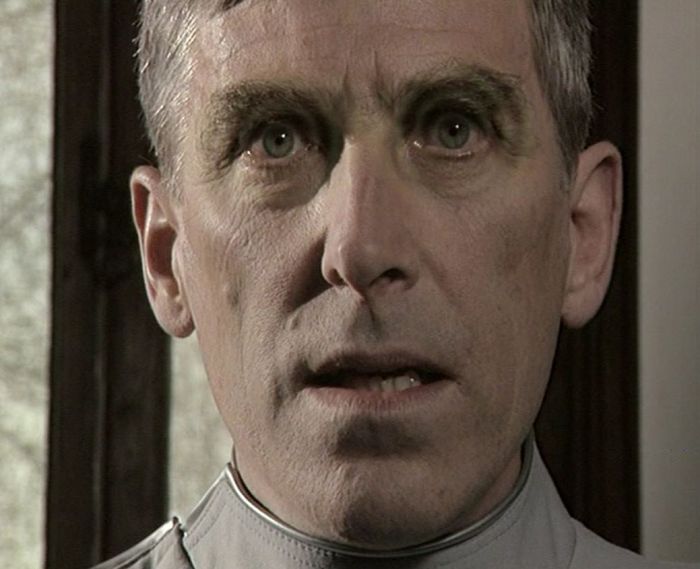
There’s no doubt who commands the screen though. Terrence Hardiman looks to be having a whale of a time as the thoroughly evil Headmaster who isn’t content with just controlling one school. “The man who can keep order can rule the world”. Effortlessly menacing, it’s easy to understand how he managed to traumatise a generation of children ….

Dinah, an incredibly intelligent girl, looks to be ideal fodder for the Headmaster, but her strong will means that she manages to break free of his control after something of a struggle. Quite how Harvey, Lloyd and several of their friends (Ian, Mandy and Ingrid) have been able to resist is never made clear. Possibly the reverse is true with them – they simply weren’t intelligent enough?

There’s an interesting moment in the third episode of series one when we see the Headmaster commanding a group of brainwashed pupils to dispose of Dinah and the others. He tells them that what they can see in front of them are a number of straw dolls who are no longer needed and can be ripped apart. The overlay effect is a simple one, but it’s nevertheless a disturbing little scene.

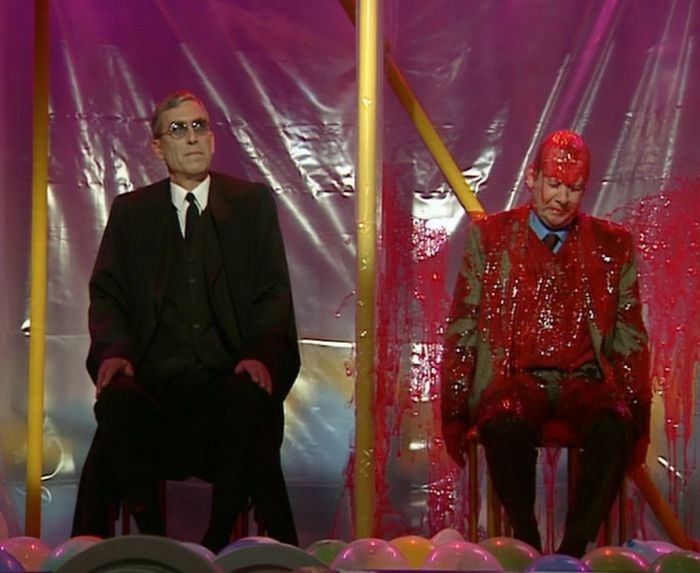
Danny John-Jules has an entertaining guest appearance in these early episodes as Eddy Hair, an energetic performer who runs a television game show which is the first step on the Headmaster’s path to power. Although with its screaming children and oodles of gunk it seems like the last place he’d want to be ….

d2.jpg

After Dinah manages to scupper the Headmaster’s plans at the conclusion of the third episode, he disappears. The reason for this isn’t quite clear since Dinah and the other members of SPLAT were the only ones who knew about his plans for world domination.

The remainder of series one sees the Headmaster – shock horror – making a surprise return whilst Dinah finds herself in thrall to a highly addictive computer game, Octopus Dare. Since Dinah had already foiled one of his schemes, it seems a little odd to find her recruited for the next one – joining a group of other children with equally high computer skills in an attempt to tap into the Prime Minister’s computer (the first step in taking over the world). Although not as engaging as the first story, there are various satirical swipes – at the addictive qualities of computer games and the dangers of automation – which are nicely done.

The toy helicopter, which the Headmaster escapes in, is possibly not the most convincing effect ever though ….

After speeding away in his helicopter at the end of series one, we pick up next time with the Headmaster coming back down to earth at the Biogenetic Research Centre. Shortly afterwards Mr Hunter takes up a new job at the Centre – as their public relations officer – which means that Dinah, Harvey and Lloyd will soon be tangling once again with their arch nemesis.

d3.jpg

Having skipped the third novel (The Revenge of the Demon Headmaster) the adaptations continued with the fourth, The Demon Headmaster Strikes Again. Given that Dinah had now defeated him twice, clearly the Headmaster was a glutton for punishment (he, of course, was responsible for bringing “Little Miss Dinah Hunter” back within his grasp).

The setting – a sleepy village – suits the story down to the ground (other series, such as Doctor Who and The Avengers, also made fruitful use of this type of environment). Having previously controlled (virtually) an entire school, the Headmaster’s now setting his net a little wider as he starts to bring the whole village under his spell.

Some familiar television faces, such as Annette Badland, pop up whilst Katey Crawford Kastin makes a welcome return as Rose Carter. During the early episodes of series one she was the Headmaster’s most loyal prefect – times might have changed but her loyalty remains constant (at least to begin with).

This second run, with a single story spread across seven episodes, feels more substantial than the first series. It certainly boasts the Headmaster’s strangest plan yet – with the power of evolution at his fingertips, he creates a human/lizard hybrid. The human part is a clone of Dinah, meaning that our heroine is forced to come face to face with an implacable foe – Eve – who looks identical to her (apart from possessing one lizard hand and a very long tongue). That’s not something you see every day.

Although the Demon Headmaster was killed at the end of the second series, the attentive viewer will probably have realised by now that a minor inconvenience such as death wouldn’t be enough to stop his evil plans. And so in series three (adapted from The Demon Headmaster Takes Over) we discover that a clone of the Headmaster, created at the Biogenetic Research Centre, proves to be just as troublesome as the original ….

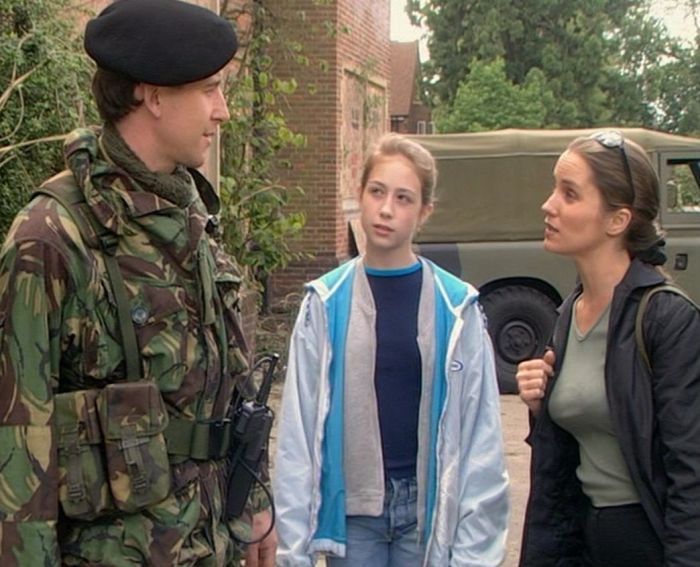
Nina Young, as Professor Claudia Rowe, is a strong addition to the regular cast as is Tony Osoba whilst Ed Bishop is amongst those making guest appearances. With the military called in to deal with the fallout at the Research Centre, there’s something of a Doctor Who/UNIT feel about the opening episode (indeed, at times The Demon Headmaster does have a rather late eighties Whoish feel).

d4.jpg

One of the themes of S3 – surveillance – feels just as topical today as it did back then. After Mr Smith (Osoba) is brought under the Headmaster’s control, he explains how the British government (whom he works for in a shadowy capacity) attempts to control and manipulate the population, both through the flow of information and through surveillance. For a children’s series, this is quite an adult theme.

The nascent internet is also a running thread as Hyperbrain – an artificial intelligence programme – proves to be vital to the Headmaster’s latest plan for world domination. The computer stuff may seem a little quaint today, but at the time no doubt it would have seemed cutting edge.

The Demon Headmaster might not have had a particularly large budget, but what it lacked in money it made up for in sheer imagination. Some of the effects don’t quite convince, but that’s not a problem – indeed, I love the fact that they weren’t afraid to think big.

All three series, nineteen episodes in total, are contained within this three disc set. Sadly there’s no special features (the 1997 CBBC Christmas Pantomime The Demon Headmaster Takes Over TV would have been an obvious thing to include). An interview with Terrance Hardiman would also have been nice, luckily there are a few scattered around the internet, such as this one.

Packed with plots which get ever more bonkers as the episodes click by, The Demon Headmaster is held together by the performances of Terrance Hardiman and Frances Amey. No matter how strange things get, both continue to play it completely straight – which helps to keep the show grounded in reality.

Given the paucity of science fiction/fantasy programmes on British television during the 1990’s, The Demon Headmaster is quite a noteworthy series. It stands up well today as good, pulpy fun and whilst this DVD will be a nostalgic treat for many, there’s no reason why the Demon Headmaster shouldn’t cast his spell over a new generation of children.

The Demon Headmaster is released by Simply Media on the 14th of May 2018, RRP £29.99. It can be ordered directly from Simply here (quoting ARCHIVE10 will apply a 10% discount).
d5

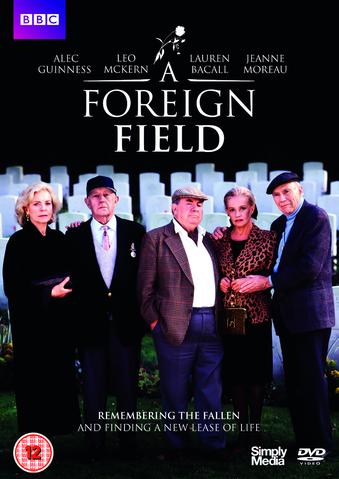
A Foreign Field – Simply Media DVD Review

foreign.jpg

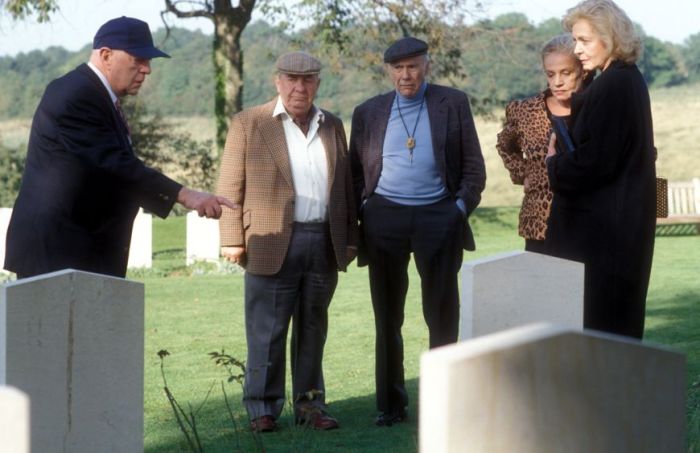
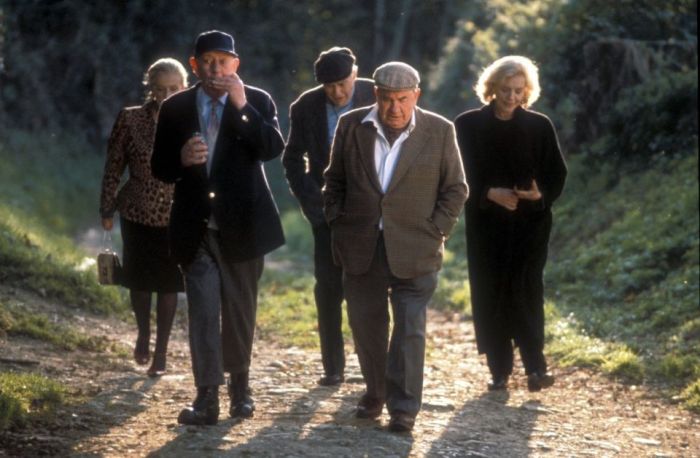
Cyril (Leo McKern) and Amos (Alec Guinness) are two British D-Day veterans who have returned to Normandy fifty years on in order to pay tribute to their fallen comrades. Whilst in the area, Cyril is determined to track down the alluring Angelique (Jeanne Moreau) who helped to keep the morale of the troops up during their stay back in 1944. The only problem is that he’s got competition – an abrasive American veteran, Waldo (John Randolph), has arrived on the same mission.

Roy Clarke might be best known for writing several comedy juggernauts (such as Last of the Summer Wine and Open/Still Open All Hours) but there are many less well known nuggets buried within his cv such as this Screen One, originally broadcast in September 1993. The ninety minute screenplay wastes no time in setting up the basics of the story – before we’ve reached the fifth minute we already understand that Amos is a shell of a man (possessing the mind of a child and a very limited vocabulary) with Cyril cast in the role of his exasperated carer. Meanwhile, Waldo is depicted as a short-tempered Limey-hating Yank ….

Amos is a gift of a role and Guinness milks it for all that it’s worth. With more than a touch of Stan Laurel, Amos breezes through the story with an air of benign innocence. As we proceed there are hints of hidden depths though – his skill with the mouth organ, say – whilst various mysteries (such as why he brought an empty jam jar all the way from Britain) are answered.

If Guinness’ screen presence is one reason why A Foreign Field is so compelling, then Leo McKern’s wonderfully judged performance as Cyril is another. Best known, of course, for Rumpole of the Bailey, there’s something of a Horace Rumpole feel about Cyril. They both might be abrasive on the surface but they contain hidden depths when you dig a little deeper. McKern was always a favourite actor of mine and this role – one of his final screen credits – only served to cement my respect for him. Cyril’s late monologue (where he explains to the others exactly why he’s so protective of Amos) is simply spine-tingling.

foreign 1

John Randolph has a slightly less well defined role. Waldo and Cyril might both be grumpy, but there’s no doubt that we’re meant to side with Cyril and find Waldo to be somewhat insufferable. The introduction of Angelique strikes the only off-key note in the story – it’s barely credible that Cyril and Waldo would be so shocked to discover that fifty years on she’s not exactly the same beautiful young girl she once was (and their desperate attempts to get out of the date they’d both arranged with her leaves a slightly bitter taste). Luckily this only lasts a fleeting moment and soon Angelique joins their ever-growing party.

Along with Guinness, McKern and Jeanne Moreau, Lauren Bacall is another incredibly strong addition to the cast. Forever linked to Humphrey Bogart – both on screen and by marriage – there’s no doubt that her casting was something of a coup. Her character, Lisa, has one of the most intriguing roles to play. Like the others she’s come to pay her respects to a fallen war hero (in her case, her husband) but there’s a late twist which you may or may not have seen coming. This is resolved in a beautifully understated way which fits perfectly with the rest of the story.

If Cyril and Amos exist without family ties (except the bond between them) then Waldo is luckier on this score (or unlucky, depending on how you view things). He’s arrived in France with his strident daughter, Beverley (Geraldine Chaplin), and her put-upon husband Ralph (Edward Herrmann). They enjoy a decent share of the narrative and both end the story in different places from where they started – Beverley is more relaxed (thanks to the influence of Lisa and Angelique) whilst Ralph emerges as a more assertive type. As with the others, Roy Clarke is skilful at drawing out various nuances and character moments.

Whilst A Foreign Field is a sentimental piece, it never feels mawkish or false. Roy Clarke’s screenplay, and the efforts of the cast, combine to produce something quite special. I’ve come back to it on numerous occasions down the years and I’m sure that I’ll continue to do so in the future. If you’ve never seen it, then I would very strongly recommend picking up a copy.

Originally released in the UK on DVD by Acorn, it’s now been brought back into print by Simply. Picture quality (4:3 full frame) looks fine with no significant issues (subtitles are included).

A Foreign Field is released by Simply Media today, RRP £14.99, and can be ordered directly from Simply here (quoting ARCHIVE10 will apply a 10% discount).

foreign 2

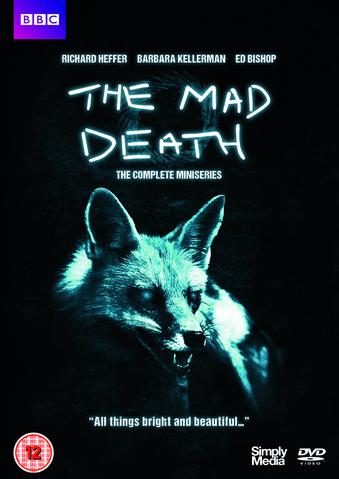
The Mad Death – Simply Media DVD Review

164454- Chief Crazy Horse Sleeve.indd

It always seemed that it could never happen here, but when a cat infected with rabies is smuggled into Britain it triggers a major crisis. Facing hostility from the public (angry that some of their pets have been impounded) the authorities struggle to stop the outbreak from spinning out of control ….

Tom Siegler’s (Ed Bishop) decision to befriend an apparently benign wolf he discovers at the side of the road has far-reaching consequences. By now the audience has already been primed to expect something awful to happen, although the tension is eked out for a few minutes longer (Tom, having cut his finger slicing a lemon, then goes over and pets the fox – although at this point there’s no reaction).

The boiling point isn’t far away though. Animal wrangling must have been an issue for the serial, as attempting to depict rabid beasts would require considerable co-operation from the animal actors (which no doubt couldn’t always be guaranteed). Director Robert Young keeps the tension bubbling along though, thanks to rapid cuts and close-ups, with the result that the action scenes feel viscerally real.

Young had cut his teeth on horror films (directing Vampire Circus for Hammer in 1971) before moving into television in the early eighties. Robin of Sherwood, Bergerac, Jeeves & Wooster and G.B.H. all benefitted from his presence. Possibly it was his work on The Mad Death which made him an ideal fit later for Robin of Sherwood, as both had – at times – a woozy, non-naturalistic feel.

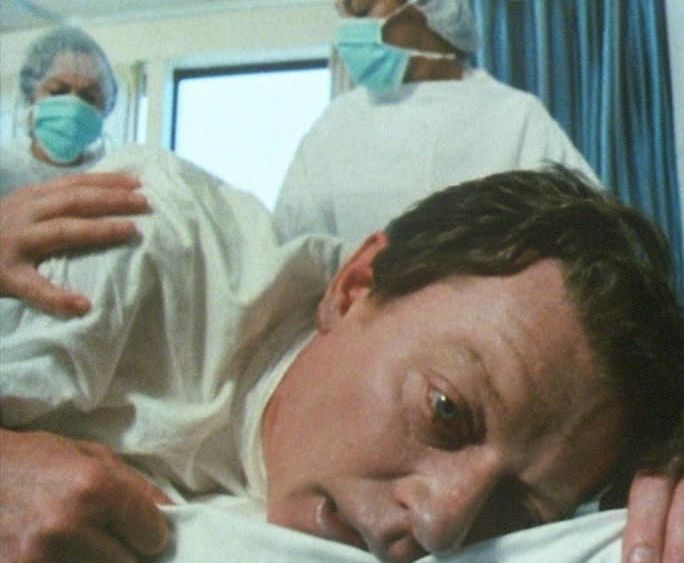
This is first seen in The Mad Death after Tom, by now seriously ill after being bitten by the fox, is hospitalised following a car crash. The hospital should be a place of safety and security, but instead it’s a hallucinogenic nightmare for him. The mere act of reaching for a glass of water becomes overwhelming (he’s then pictured drowning in a bed of water – a technically impressive shot) whilst other visions are equally as disconcerting (his wife and his mistress both pay him uncomfortable visits). It’s interesting that during these scenes we often switch in and out of reality (with the result that the viewer is privy to Tom’s fevered imaginings). This simply adds to the sense of horror.

mad 03
Ed Bishop

Bishop, a sometimes underrated actor, is excellent as the increasingly tortured Tom. Another stand-out scene for him occurs earlier in the opening episode when he attempts to dispose of the fox. First with a broom handle (that was never going to work) and later with his car. Eventually he does manage to drive him off, but by then the damage has been done.

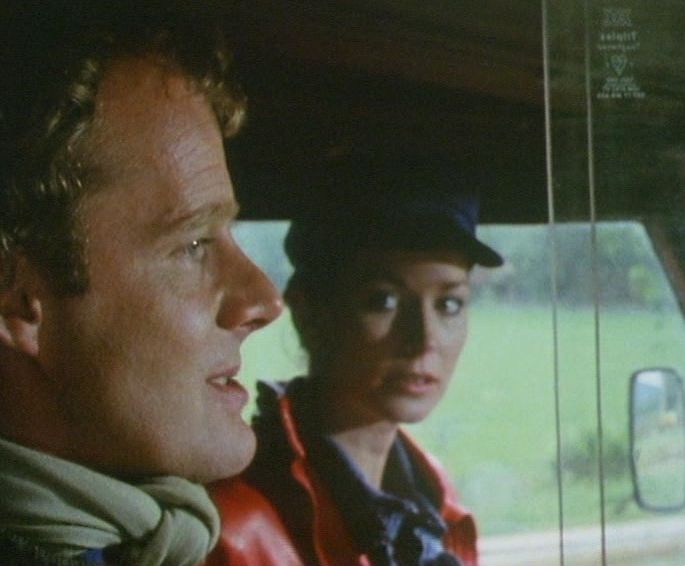
Although Tom’s story dominates the first episode, the two central characters of the serial – Michael Hilliard (Richard Heffer) and Dr Anne Maitland (Barbara Kellerman) – are also introduced. They first appear during the opening few minutes in a rather clumsy way. It might have been better to cut this scene and hold them back until they actually started to interact with the main plot (for example, when Anne was dispatched to the hospital to confirm the diagnosis that Tom is suffering from rabies).

If Anne has the medical knowledge, then Michael is her equal when it comes to the veterinary angle. But he’s refusing to get involved ….

Richard Heffer was by this time a very familiar television face. A regular in several 1970’s WW2 dramas (Colditz, Enemy at the Door) he’d also made several appearances in Survivors and had appeared throughout the final series of Dixon of Dock Green. Barbara Kellerman had also notched up some notable television appearances during the seventies (The Glittering Prizes, 1990, Quatermass) and would later go on to appear in the BBC’s C.S. Lewis adaptations during the late eighties and early nineties.

mad 06
Richard Heffer and Barbara Kellerman

The beginning of the second episode brings any latecomers up to speed with a summation of the events so far, before looking ahead to the current measures being implemented to control the outbreak. This is done quite neatly via a news report (a very effective way of info-dumping).

Episode two also sees a rabid dog terrorising a group of customers in a shopping centre. With a fair number of extras deployed, it’s a good indication that The Mad Death had a very decent budget. Robert Young once again crafts some striking shots – a slow plan past several shop window dummies (stopping eventually on what initially appears to be another dummy but turns put to be a heavily suited dog handler) is especially memorable. A series of jerky cuts gives these scenes a naturalistic, documentary feel.

Anne continues to prove that she’s no shrinking violet by driving a jeep containing Michael and a number of marksmen at high speed through the shopping centre (in a desperate attempt to get to the dog). This is something of a wish-fulfilment scene, since most of us have probably wanted to do this at some point.

Inbetween the moments of terror are longer periods of reflection. Animal lovers, such as Miss Stonecroft (Brenda Bruce), are appalled at the way their pets are being treated (chained up like prisoners twenty four hours a day, she says) whilst Michael and Anne eventually fall into each other’s arms. This always looked inevitable, but it seems sure to annoy Anne’s partner Johnny (Richard Morant). And the fact he’s an arrogant member of the landed gentry who isn’t prepared to take any precautions with his animals is guaranteed to get Michael’s back up ….

The third and final episode ramps up the action another few notches after Miss Stonecroft lets a whole pound full of dogs loose. With the animals roaming the countryside, Michael takes to the skies, coordinating a team of armed soldiers. Their instructions are clear – all animals are to be shot on sight. The filmic sweep of these scenes is another example of the serial’s healthy budget.

Meanwhile, Anne finds herself tangling with an increasingly detached Miss Stonecroft whilst Johnny, also doing his bit to deal with the dogs, eventually runs into Michael. The question is, will he use his gun on the animals or on his love rival? These interlocking plot threads help to keep the interest ticking along until the final few minutes.

Shot on 16mm film, the picture quality is generally pretty good considering the age and unrestored nature of the material. I did notice one picture glitch – at 18:38 during episode three there’s a slight picture breakdown (a brief loss of sound and a blank screen for a second or two).  After the blank screen, we see Michael raising a glass of scotch to his lips but before the glitch he wasn’t holding one, so a short section of this scene is missing (Michael being offered and then accepting a drink).  Luckily it’s not a vital moment, but If I learn any more about this issue then I’ll update this review.

Thirty five years down the line, The Mad Death is still a tense and disturbing watch, thanks to Robert Young’s skilled direction and the performances of the cast. It remains a powerful serial and is well worth adding to your collection.

The Mad Death is released by Simply Media on the 7th of May, RRP £14.99, and can be ordered directly from Simply here. Quoting ARCHIVE10 will add a 10% discount to the order.

mad 04
Barbara Kellerman

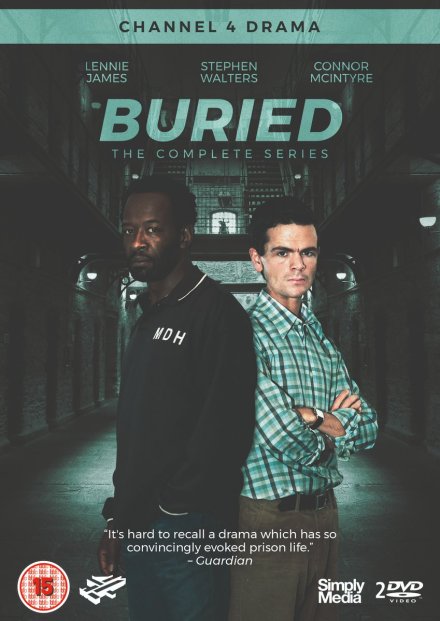
Buried – Simply Media DVD Review

Lee Kingley (Lennie James) finds himself sentenced to a lengthy stretch at HMP Mandrake. Despite his lack of prison experience he seems well equipped to survive its dog eat dog world, but he’ll need to watch his back ….

Broadcast on Channel 4 in early 2003, Buried garnered considerable critical acclaim during its short run (only eight episodes were made) but this didn’t translate into decent viewing figures (it averaged around one million per episode). This seemed to be the reason why a second series wasn’t commissioned, despite the fact that it won the BAFTA for Best Drama Series in 2004.

From the same stable as The Cops (BBC2, 1998 – 2001), Buried had a similar bleak, unsentimental tone allied to a realist style. It was produced by World Productions, a company who had made this style of drama their trademark during the 1990’s and 2000’s (Between the Lines and Cardiac Arrest, for example).

Following his television debut in 1988, Lennie James began to notch up an impressive list of credits during the next decade. He was part of the short-lived but memorable BBC1 police series Out of the Blue (1995/96) whilst prior to Buried he’d begun to make regular cinema appearances (Snatch, Twenty Four Hour Party People). America would then beckon (though we shouldn’t blame him for appearing in the forgettable remake of The Prisoner). More recently, he’s been a semi-regular on The Waking Dead.

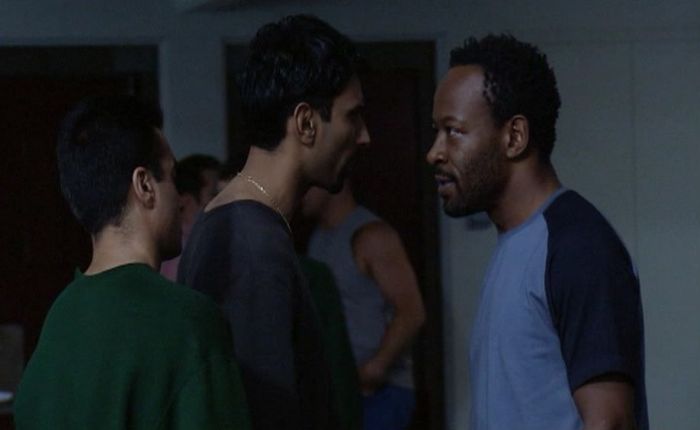
Although Lee’s sentence is for GBH and firearms offences, the opening of the first episode floats the notion that he’s been the victim of a miscarriage of justice (he’s waiting to hear about his appeal). Lee’s older brother, Troy (Dave Fishley), is the real criminal of the family and he suggests that Lee’s been targeted in order to get at him. The truth is rather more prosiac though.

There are some questions you don’t ask in prison – the reason why someone’s inside being the main one (Lee, by making this faux paus, betrays his inexperience). As a new face he finds himself being sized up by the old hands – some are clearly dangerous whilst others seem friendlier. This mix of characters (on both sides of the fence) is one of Buried’s main strengths.

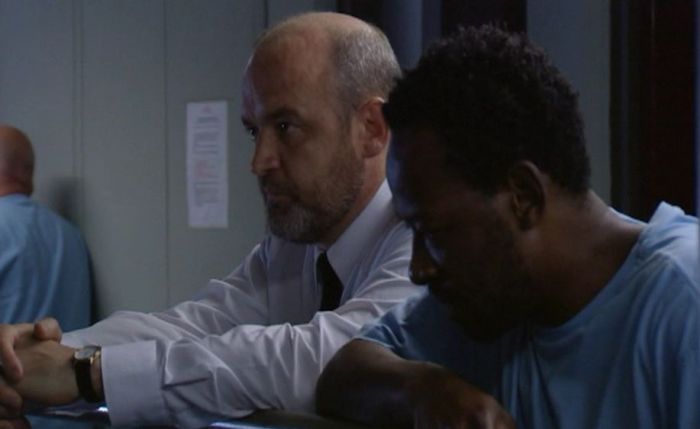
Teased out during the series is the uneasy relationship which exists between the immates and the prison officers. Detente is generally maintained (in some ways it’s not dissimilar to Porridge – do your time, keep your nose clean and you’ll be alright) with an ironic tolerance often shown from both sides. Some people, like psychiatrist Dr Nick Vaughan (Stephen Walters), are keen to try and dig a little deeper, but Lee – for one – keeps his distance.

buried 01.jpg

Although he settles into prison life quite easily to begin with, towards the end of the first episode we begin to see that Mandrake is a place where violence and physical abuse between inmates is shrugged off as a regular occurrence. The sadistic Ronaldo (Francis McGee) is knifed during an argument in the showers and Lee not only shields the perpetrator (a rather pathetic, drug-addled type) but also claims responsibility for the assault. There is method in this seeming madness though – the more vicious you are, the greater respect you earn. And with Lee having already upset some of his fellow inmates, it does no harm to have his legend bulked up a little ….

Possibly the most intriguing instalment sees Troy moved into the same cell as his younger brother. It does seem odd that Troy would be transferred to Lee’s prison, but whatever the reason for the move, the simmering tension which exists between the pair is deftly drawn out.

Putting the brothers together makes sense from an official viewpoint – it’s hoped that Lee will prove to be a stabilising influence on the uncontrollable Troy – but Lee begins to suspect that there’s another reason. He’s convinced that their cell has been bugged (another character later comments on the corrosive nature of prison – how it’s a breeding ground for all kinds of paranoia).

Troy’s new found fascination with religion (he takes on the mantle of Jesus Christ) is another manifestation of this. He’s clearly a man on the verge of a nervous breakdown, but his ultimate fate causes Lee to despise the system even more. Whilst Troy’s abdication means that a new King – Lee – is crowned in his absence ….

Lee may now be a well-respected man but his increasing loss of personal control is a feature of episode four. This happens after one of his trusted sidemen – Kappa (James Wells) – is accused of being a paedophile. The truth of the matter is never settled, since the “evidence” (Kappa is alleged to have a picture of Lee’s young daughter stashed away) is suspect to say the least. But Lee – who’s already had to face the news that his wife has left him – isn’t thinking clearly and attacks Kappa in a bloody frenzy.

The latter part of the series continues to explore various familiar themes. Drugs remain an ever-present problem, with Nick placed under pressure due to the fact that the inmates in his secure unit – who are supposed to be clean – keep failing their drug tests. Can he find out who the supplier is? For a man who likes to believe he has the trust of the prisoners this means treading a very fine line.

Nick also has a prominent role to play in the sixth episode. Female officer DD Burridge (Jane Hazelgrove) is assaulted by a prisoner. She’s later forced to speak to Nick about her experience, but it’s hardly surprising that she’s somewhat hostile towards him (“I’m the victim, but I’m the one who’s being punished” she tells him). Hazelgrove, having skirted around the perimeters of several previous episodes, moves more into the forefront here and is very good value.

Although Buried could have gone to a second series, there’s something pleasingly circular about the final scene of the concluding episode (Lee – now an old hand – gently tells a new arrival that you should never ask anybody what they’re inside for). His journey – from an innocent new arrival to a hardened old lag – is now complete.

Buried is something of a hidden gem. The harsh tone and generally unlikeable characters might have been the reason why it didn’t capture a larger audience but fifteen years on it’s aged very well. A series which doesn’t pull its punches, Buried is an absorbing watch and comes warmly recommended.

Buried is released by Simply Media on the 16th Of April 2018, RRP £29.99. It can be ordered directly from Simply here.

buried 02

The Price – Simply Media DVD Review

price dvd.jpg

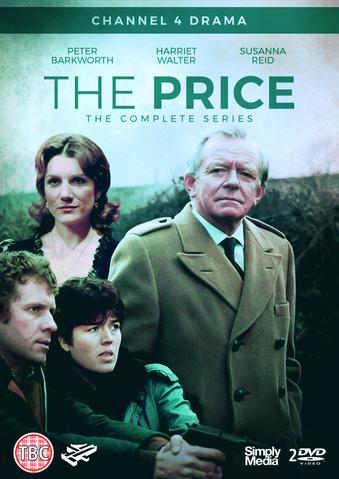
Geoffrey Carr (Peter Barkworth) might be a successful businessman (he’s a key player in the burgeoning computer industry) but his private life is far less straightforward. Recently married to Frances (Harriet Walter), their relationship is best described as testy. Possibly due to the fact that she’s much younger than he is, they struggle to find any common ground whilst Claire (Frances’ headstrong teenage daughter from a previous marriage) is a further complication.

Geoffrey dutifully continues trying to please Frances though – even going to the expense of buying a crumbling Georgian house in the place where she grew up – County Wicklow, Ireland.

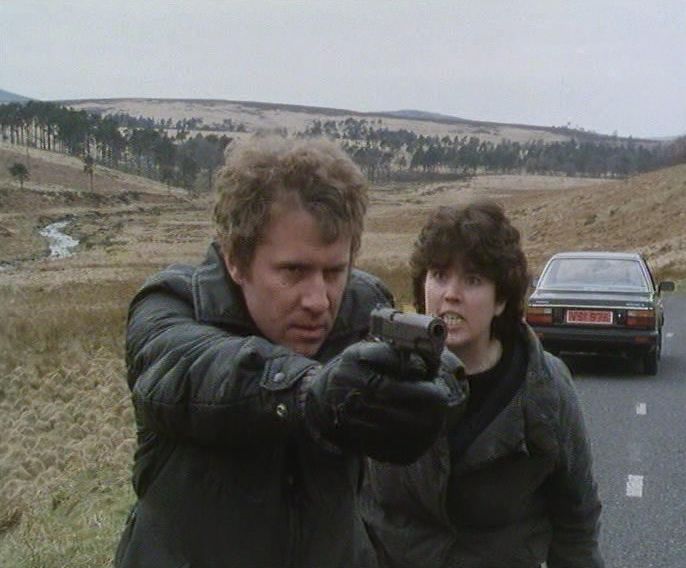
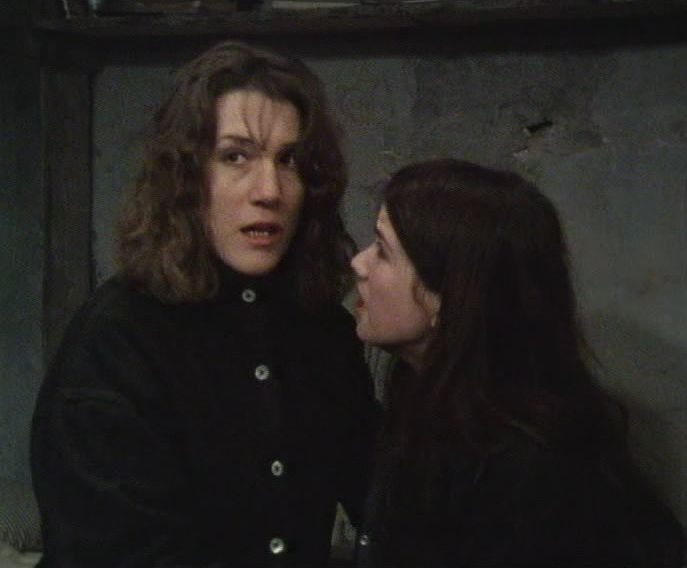
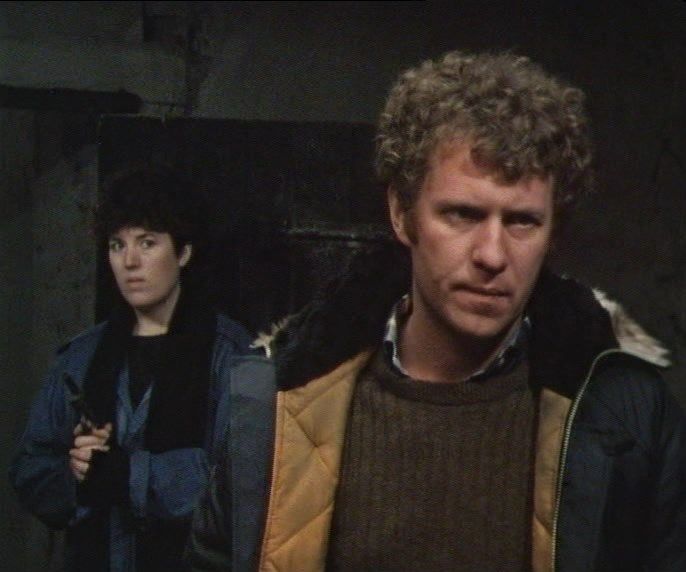
But the mid eighties is a period when the Troubles were at their height and as a wealthy Briton he proves to be an irresistible target. Frank Crossan (Derek Thompson), an IRA killer on the run, teams up with an idealistic teacher called Kate (Aingeal Grehan). Their plan is simple – kidnap Frances and Clare and demand a hefty ransom from Geoffrey. The resolution is far more complex though ….

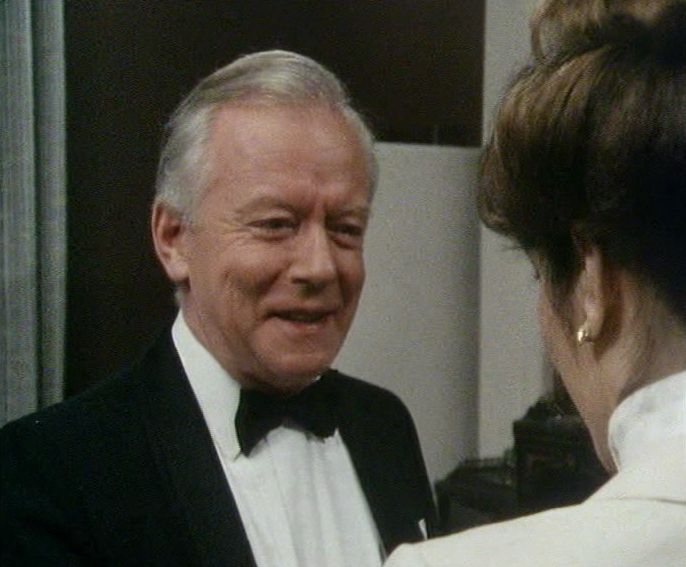
Broadcast in six episodes during early 1985. The Price boasts strong performances from all the major players. It should go without saying that Peter Barkworth (1926 – 2006) is exemplary as Geoffrey, a man caught between the twin pincers of police interference and the machinations of high finance. Barkworth rarely, if ever, gave a bad performance and Geoffrey is a typically layered creation.

DZPLX6ZW0AAQIAD
Peter Barkworth

It would be easy enough for Geoffrey – a self-centered but essentially decent man – to be portrayed in a fairly one-note manner, but Barkworth’s nuanced performance essays something much more subtle and ultimately much more satisfying.

Harriet Walter (b. 1950) continues to enjoy a very successful career (The Crown and Star Wars: The Force Awakens are amongst her recent credits). Frances is introduced as something of a contradictory person – she admits that she married Geoffrey for his money, but gets upset whenever he attempts to do any work. But once she’s kidnapped her character goes through a radical transformation.

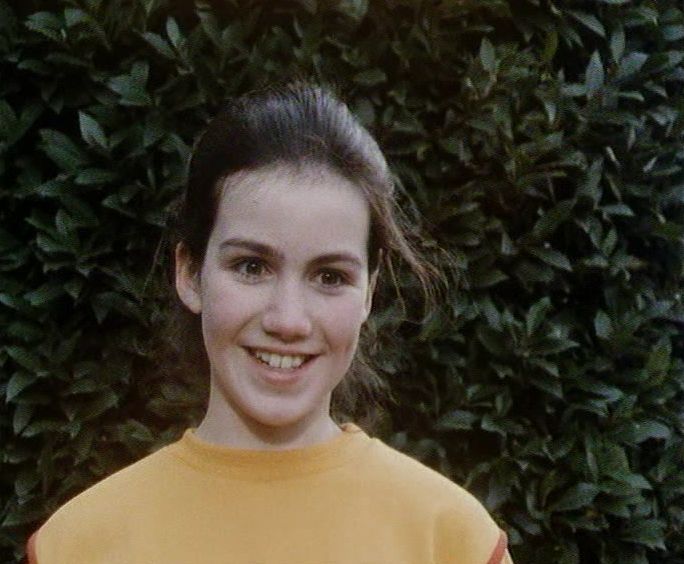
An interesting piece of casting, in retrospect, saw the fourteen year old Susanna Reid playing Clare. This was her only television acting role (during the last fifteen years or so she’s become a very recognisable British television face – first as a newsreader and then as a breakfast television host).

DZPL3nLW4AEAjgR
Susannah Reid

Derek Thompson may have seemingly been playing the level-headed Charlie Fairhead in Casualty since the dawn of recorded time, but prior to checking into Holby City back in 1986 he essayed a variety of roles on both sides of the law. He was a regular on The Gentle Touch between 1980 and 1982 (as DS Jimmy Fenton) but during the late seventies and the early to mid eighties he could often be found playing baddies (The Long Good Friday, The Wild Geese 2 and – of course – The Price). Since Thompson was born in Belfast, the role of Frank Crossan gave him a rare opportunity to drop back into the Irish idiom.
Familiar faces such as Simon Jones, Hugh Fraser and Adrian Dunbar are welcome additions to the cast.

The opening scenes of the first episode intercuts between Frances (trying on expensive jewellery in a swanky shop) and Frank (holed up in a house on a graffiti-ridden estate, picking off British soldiers with a high powered rifle). That they live in two totally different worlds is immediately obvious but the intercutting hammers the point home.

Early on we get a sense of the tensions that exist between Geoffrey and Frances. “I can’t stand you” she screams. Barkworth’s ability to express a world of hurt with a single expression is put to good use here.

The closing scene of the first episode explodes in a burst of violence as Frances and Clare are snatched from their car by a posse of masked raiders. Kate may have been initially presented as someone keen to pursue the struggle for Irish independence peacefully, but here she’s keen for Frank to shoot a fleeing child who witnessed the kidnapping. As Frank, a hardened IRA man, couldn’t bring himself to fire, it’s a character moment that should be filed away for later.

DZPMrBsWkAAhZyo
Derek Thompson & Aingeal Grehan

Old computer hands will probably appreciate the opening few moments of episode two. Not only are there some chunky PCs on display but there’s also the slow, but steady, report of a dot matrix printer. It’s printing out news of Frances and Clare’s kidnap (this is a neat way of recapping the events of episode one without having to spell it out verbally).

As the pressure begins to mount, Barkworth excels as Geoffrey – a fundamentally decent man – is pushed and pulled in numerous directions. The police advise him not to pay the ransom – at least not at first – but how can he refuse when lives are at stake? Lansbury (Simon Jones) and Simon (David Lyon) are both on hand to help and advise (Lansbury works for Geoffrey’s company, Simon is an insurance man and a kidnap specialist).

But even if he wants to pay the ransom, how can he afford it? He’s simply not as wealthy as the kidnappers believe him to be and if he attempts to unfreeze his assets or sell any shares then he faces the possibility of losing control of his company. Does he love his wife and step-daughter that much? As the title states, is he prepared to pay the price?

The grim surroundings that Frances and Claire find themselves in (plus Claire’s asthma attacks) makes their incarceration even more of a nightmare. They at least have each other for company, but things are far from easy. Walter and Reid shine during these scenes, especially since the relationship between mother and daughter is very fluid – one minute loving, the next combative.

price 01
Harriet Walter and Susannah Reid

As the serial wears on and Frances becomes grimier and more desperate, so the tension begins to ramp up even more. Her transformation – from spoilt society queen to a hardened fighter – is a highlight of the latter part of the story, thanks to Harriet Walter’s performance (in the last few episodes things get especially dark for Frances).

The twisted relationship which can often exist between captor and captive is well drawn out too. Frank despises Frances and all she stands for … and yet. On her side, she’s content to play along with his mood swings – she’ll do anything if it means she can guarantee freedom for herself and Clare. Meanwhile, Geoffrey and his team are making their way to the rendezvous point with the money whilst the police attempt to follow ….

Needless to say, things don’t go to plan and the concluding episode develops into a tense stand-off between the kidnappers and the police. The violence, when it comes, is short and ugly. This occurs about fifteen minutes from the end, which then leaves ample time for those left alive to reflect on events.

An all-film production, picture-wise The Price is in a pretty good condition.  The unrestored prints obviously show dirt and damage but it’s comparable to other releases of a similar vintage.

Despite being six episodes long, The Price never feels drawn out. Peter Barkworth, Harriet Walter and Derek Thompson all excel whilst the supporting cast provides solid support. A taut character-based drama, The Price grips throughout and comes highly recommended.

The Price is released on the 15th of April 2018, RRP £24.99 by Simply Media.  It can be ordered directly from Simply here.

price 02
Derek Thompson & Aingeal Grehan

Threads – Simply Media DVD Review

164454- Chief Crazy Horse Sleeve.indd

Threads may be nearly thirty five years old, but time has done nothing to dent its horrifying impact. Broadcast in 1984, during a period when the Cold War was still very chilly, it portrays in unflinching detail the aftermath of a nuclear attack.

Set in Sheffield, following the detonation of a 210 megaton bomb which has devastated the country and decimated the population, this docudrama (scripted by Barry Hines and directed by Mick Jackson) follows the path of several survivors, most notably Ruth Beckett (Karen Meagher).

Without fresh water or any form of sanitation, Sheffield quickly becomes a breeding ground for numerous diseases such as cholera and typhoid. And with food in short supply, a new class of scavenger criminal emerges and extreme measures – capital punishment – are applied in order to keep control.

But any form of control proves to be impossible as radiation sickness and damage to the ozone layer continues to thin an already shrinking population. Over time Britain returns to a state of medievalism – some toil in the fields using hand-held tools with the majority living in a state little better than animals. There are a few faint signs of hope – limited technology still exists – but the final scene (featuring Ruth’s daughter Jane) is as downbeat as it could possibly be.

Once the bomb drops, a remorseless, crushing feeling of despair permeates every frame as Ruth, the audience identification figure, finds herself buffeted through a series of horrendous adventures in which the normal rules of civilisation have been blown away. Images of a shell-shocked Ruth, wandering through a wrecked and nightmarish landscape, peopled with the dazed, disfigured and dying are incredibly affecting. The use of a narrator – Paul Vaughan – together with on-screen graphics and stills adds to the documentary feel and therefore helps to generate yet another level of unease. It’s also a useful storytelling device, since it enables key information to be clearly disseminated (had characters started reeling off reams of statistics it wouldn’t have worked as well).

threads 02

Utilising the real Protect and Survive Public Information Films, voiced by the unmistakable tones of Patrick Allen (he later provided something similar for Frankie Goes To Hollywood’s Two Tribes) was a well judged move. Produced in the 1970’s (although never actually aired) they offered a fairly optimistic picture of what life after a nuclear attack would be like. So the juxtaposition between Allen’s confident tones and the reality as depicted on screen is striking and bleakly ironic.

Many images from Threads will linger long in the memory (burning cats, mothers cradling the charred corpses of their babies or the fact that rat has now become a prized foodstuff). It’s interesting to learn that Mick Jackson originally planned to use the cast of Coronation Street – how much more horrifying would it have been if we’d witnessed the Weatherfield regulars in such distress?

After the original transmission, Jackson received a letter of support from Neil Kinnock and he later learnt that President Reagan had watched the American broadcast. It’s to be hoped that copies of the current editions make their way to today’s world leaders ….

Threads has been released on DVD before (and was also released on BD in America by Severin Films earlier this year) but Simply’s two disc DVD set looks to be, at the moment, the definitive release. Although it might be assumed that Severin’s BD would have trumped Simply’s DVD, there’s some evidence to suggest that’s not the case. The BD used the TX prints (which due to their age were somewhat worn and faded) as the starting point for their restoration whilst Simply’s DVD was granted access to the fine grain CRI films (which have been in storage since 1984 and were both unfaded and undamaged).

If Simply can licence a BD at a later date (rights issues have prevented them from doing so at present) then that will be the best of all worlds, but even at the moment it seems that the upscaled Simply DVD will trump the Severin BD in terms of picture quality. The colour palette is obviously very muted and the picture displays evidence of grain, but that’s what I’d have expected (a lighter grade and the elimination of grain would be somewhat against the bleak intention of the piece).

What makes this DVD particularly appealing is the range of special features assembled. Contextual extras are always welcome on any release, but in the case of Threads – a programme of considerable significance – they become even more valuable. The two audio commentaries (one with Mick Jackson and the other with Karen Meagher) both contain fascinating production details as do the four documentaries –

Auditioning for the Apocalypse (9″ 18′)
Destruction Designer (9″ 21′)
Shooting the Annihilation (8″ 39′)
Stephen Thrower on Threads (28″ 59′)

Although in total they only run to an hour or so, a fair deal of ground is covered and together with the two commentaries ensure that pretty much all of the bases are covered. The PDF material from the Radio Times is also worth a look, with the letters pages (featuring strong opinions both for and against) being especially notable. A shame though that the Newsnight Nuclear Debate, which ran the same week as Threads, presumably wasn’t able to be licenced, as it would have been a valuable addition.

Everybody should see Threads at least once, although it’s understandable that it won’t be something which many will revisit on a regular basis. But it’s a programme that needs to be kept in circulation and – thanks to Simply’s new restoration – is now available in greater clarity than before.

Chilling, devastating and emotionally draining, this is an exceptional piece of British television drama.

Threads is released on the 9th of April 2018 by Simply Media, RRP £14.99, and can be ordered directly from Simply here.

threads 04.jpg

Jossy’s Giants – Series One and Two. Simply Media DVD review

jossy dvd

Sid Waddell (1940 – 2012) might be best remembered as the voice of darts (“the atmosphere is so tense, if Elvis walked in with a portion of chips, you could hear the vinegar sizzle on them”) but there were several other strings to his bow – Jossy’s Giants being one of them.

Graduating from St John’s College, Cambridge with a degree in modern history, Waddell worked in academic circles for a few years before joining Granada Television in 1966 (moving to Yorkshire Television two years later). He produced the news programme Calender as well as creating the well-remembered children’s serial The Flaxton Boys in addition to the cult classic The Indoor League (which is available on DVD for the terminally curious).

The growth of darts in the late seventies kept him busy, but by the middle of the following decade he was obviously keen to spread his wings, so Jossy’s Giants was born. Running for two series on CBBC during 1986 and 1987 (both of five episodes duration) Jossy’s Giants is centred around a boy’s football team. Led by the charismatic Joswell ‘Jossy’ Blair (Jim Barclay) they may be somewhat lowly ranked when he takes charge, but he has big plans for them.

The series one opener, Hungry for the Game, establishes the parameters of the series. Albert Hanson (Christopher Burgess) is the manager of the beleaguered Glipton Grasshoppers but he’s having trouble moulding them into a cohesive fighting unit. Losing has become too much of a habit and it seems that only a miracle will save them …

But wait, who’s this singing stranger limbering up on the touchline? Why it’s Jossy, who’s been watching the Grasshoppers for twenty minutes and now ambles over to give them the benefit of his advice. He’s a plain-talking man, not backwards in handing out brickbats, but maybe this is precisely what they need.

jossy 01.jpg

We also get some backstory about Jossy. A promising youth player, during his first match for Newcastle United at St James Park he was tackled from behind and never played again. So the disappointment of his own curtailed playing career no doubt makes him keen to mould the next generation of hopefuls.

But what of his raw material? It doesn’t look promising. Goalkeeper Harvey McGuinn (Julian Walsh) seems to have an aversion to handling the ball (a slight problem) and would much rather go ice skating instead. Glenn Rix and Ian ‘Selly’ Sellick (Stuart McGuinness and Ian Shepherd) are the team’s two strikers – but they’re more memorable for their outlandish haircuts than their goal-scoring skills.

Ross Nelson (Mark Gillard) is the Grasshoppers flair player – but boy, does he know it. Best to say he’s a little conceited, whilst his ambitious bookmaker father, Bob (John Judd), is a complicating factor. Captain Ricky Sweet (Paul Kirkbright) tries to keep it all together whilst their number one fan – Tracey Gaunt (Julie Foy) – is always on hand with a touch of moral support or a magic sponge. You get the impression that she’d like to play for the team, but this seems unlikely. After all, she’s only a girl ….

It falls to Tracey – easily the most proactive of them all – to ask Jossy if he’d be interested in the job of manager. Some of the dialogue is a little eye-opening (when Tracey interrupts Jossy on his jog, she tells him that she’s been waiting for him – only for him to reply that she’s a little young for him). Hard to imagine that sort of implication, even if it’s only made in a subtle way, would be repeated today.

Tracey has a convincing argument for him though. They need a nasty and bossy manager, so Jossy seems ideal! This is a lovely comic moment, typical of Waddell’s style. Eventually Jossy’s worn down and so one change of name later (to the Glipton Giants) he begins to mould them in his image.

jossy 02.jpg

Foul Play sees star player Ross defect to another team (he’s disgusted at not starting their latest five a side match). Of course, Ross’ new team ends up meeting the Giants in the five a side cup final. Can Jossy’s boys win their first trophy? A lovely turn from Tony Melody as the rival manager (he’s something of a martinet) and some lengthy football action (shot on VT and cut very rapidly) are two reasons why this one’s entertaining.

The Battle of St James’ has some delightful moments as Jossy – anxious to prevent the council from redeveloping their football pitch – pays a visit to an amorous female councillor, Glenda Fletcher (Jenny McCracken), who may just be able to help. Mind you, it seems unlikely that when he goes along to her house (for some wine, nibbles and Sade on the stereo) he’d have invited the whole team plus Tracey (and all dressed in balaclavas) to maintain a watching brief outside the window. Never mind, it’s the excuse for some lovely character comedy. Unsurprisingly, the always-sensible Tracey eventually saves the day.

The Promised Land sees Glenda and Tracey take on Jossy and the boys at netball (no prizes for guessing who comes out on top). Although when Glenda is elected vice-chairman of the Giants, her female solidarity with Tracey begins to crumble (“give a dictator an inch” mutters Tracey darkly). Later, Jossy and the lads receive a guided tour of St James’ Park from Bobby Charlton. As a non-actor he’s a little stilted, but it’s still a wonderful scene.

jossy 03.jpg

A couple of familiar faces – Tony Aitken and Harry Towb – guest-star in the series one closer Final Demand. There’s a big match coming up, but Jossy’s gambling (a running thread throughout the series) comes to a head here. If Jossy agrees to throw the cup final, then his gambling debts will be written off. It’s another of those plot-lines that seems a little less than credible, but the performances carry the story along.

The rejigged theme tune at the start of series two indicates that girls will prove to be more of a distraction than they were during the first series. The opening episode, The Glipton Romeos, develops this, as Jossy discovers that all of his team have been bitten by a bug (of the love variety) and so have forsaken the beautiful game. Since Jossy’s only been gone two weeks, clearly the lads are all fast movers.

Mind you, if the concept of Jossy’s Giants as ladykillers is odd, then that’s nothing to the revelation that Jossy and Glenda have become engaged (at the end of series one they were barely speaking to each other!) The love bug means that Jossy has to recruit another team for a match on Saturday (otherwise they’ll lose their ground) and so with Tracey’s assistance rounds up a scratch team of girls ….

jossy 04

Like series one, the second series has a celebrity football cameo. Bryan Robson, no less, who Jossy and the Giants meet before the recording of A Question of Sport. Robson, like Bobby Charlton, is a little wooden, but that’s all part of the fun. It’s also a lovely treat to see inside the Question of Sport studio (and the legendary David Coleman too).

The Italian Take-Away find the Giants tackling a crack Italian team (although the lads are more concerned about the way these smooth-talking foreigners are making eyes at their girls) whilst Home and Away finds Jossy still attempting to corral his distracted team back into shape. Will a trip to the seaside (with plenty of fresh air) do the trick? Or will they find other distractions beside the sea?

The final episode, A Perfect Match, sees Jossy stretched to the limit. There’s a big match on Saturday, but there’s also the little matter of his wedding to Glenda on the same day. What could possibly go wrong?

Most of the youngsters weren’t terribly experienced, acting-wise, and occasionally this shows (some of the performances are a little broad). But they also feel natural and some – especially Julie Foy – handle the material very well, demonstrating real comic flair. Jim Barclay’s Jossy is the glue that binds the series together, the very experienced Christopher Burgess is another plus on the acting front whilst Tony Melody, always a joy, returns for several entertaining appearances during the second series.

Although some of the plotlines are a little unrealistic, the sheer fizz of Sid Waddell’s scripts, the number of good one-liners and the interplay between the cast more than makes up for this. Jossy’s Giants is a comic delight and comes warmly recommended.

Jossy’s Giants is released by Simply Media on the 12th of March 2018, RRP £24.99, and can be ordered directly from Simply here.

jossy 05

Ghost in the Water – Simply Media DVD Review

ghost dvd.jpg

Tess (Judith Allchurch) and David (Ian Stevens) are set a school project which involves researching the history of Abigail Parkes. Abigail died in the mid nineteenth century, aged just eighteen, and her gravestone (inscribed “Innocent Of All Harm”) intrigues the pair of them. Tess’ interest in Abigail deepens as the story wears on – especially since Abigail seems to be calling from the grave for redemption ….

Broadcast on the 31st of December 1982, this works almost as a junior Ghost Story For Christmas (a popular BBC strand of ghostly tales which had run during the seventies). Not that Ghost in the Water is at all juvenile in tone – it may have been broadcast at twenty to five, but it could have easily have run in peak time.

Shot on 16mm film, it’s moodily directed by Renny Rye. Rye had cut his directing teeth on Rentaghost a few years earlier and would go on to helm The Box of Delights in 1984. It’s easy to see why film was chosen – as it offers a range of visual options (such as rapid intercutting) that wouldn’t have been so effective on videotape.

With a running time of only fifty minutes, Ghost on the Water has to hit the ground running, which explains why the opening scene (Tess and David lurking about the graveyard looking for Abigail’s tombstone) is intercut with flashbacks of the classroom discussion which sparked their investigation. Quite why Tess and David have to visit the graveyard late at night (and when it’s raining) isn’t made clear, but it helps to make the scene much more atmospheric ….

ghost 01.jpg

A clever cut occurs after this scene, as we move to a spooky sepia shot of a horse and carriage careering down the path of a graveyard. It seems so in tone with the atmosphere already established that it comes as a shock to realise that Tess is now at home and watching an old horror movie on television! This movie might explain the strange dream she later had, but when the flashbacks become more and more regular (she seems to be present at the point when Abigail’s coffin is being laid to rest, for example) it’s plain that something very strange is occurring.

Although the cast was bolstered by some familiar senior actors (Paul Copley, Jane Freeman, Hilary Mason, Ysanne Churchman) the two main roles – Tess and David – were taken by novices. This presumably was an intentional move – it certainly helps to position them as real people (both Allchurch and Stevens are more naturalistic and unpolished than experienced stage-school trained actors would have been). Neither seem to have pursued acting careers afterwards, which makes their performances here especially interesting.

Allchurch has to carry most of the narrative. Her lack of acting experience is never a factor though, as – helped by Rye’s skilful shot choices – she’s allowed plenty of memorable moments. A few are a little eye opening though, considering this was broadcast so early in the day. The scene where Tess – lying in the bath – decides to re-enact the moment when Abigail drowned (by slowly submerging herself in her bathwater) is a disturbing one. And the follow-on to this scene – we see a back-view of a naked Tess standing up in the bath (albeit framed in such a way that her modesty is preserved) – isn’t one you’d imagine would be repeated today.

Although as touched upon, Tess and David are placed front and centre, there are good performances all the way down the cast list. Lynda Higginson (who like the principals was a novice actor) catches the eye as Tracy, a classmate of both Tess and David. She delights in teasing them about the considerable amount of time they’re spending in each other’s company.

Simply’s release looks to be a straight transfer of the 16mm master. There’s the usual intermittent signs of damage and dirt which you’d expect with material of this vintage, but overall it’s a pleasing viewing experience (the colours are quite bright and vibrant). With a running time of only fifty minutes, a little extra value is provided by a brief Blue Peter clip (a shame that it only runs for three minutes though).
Ghost in the Water may be short, but it’s always nice to see one-off plays like this exhumed from the archives. An intriguing mystery which drips with atmosphere, it’s plain to see why it made a lasting impression on so many at the time.

Ghost in the Water is released today with an RRP of £14.99 and can be ordered directly from Simply here.

ghost 02

The Eagle of the Ninth – Simply Media DVD Review

eagle.jpg

The year is 119 AD.  Former Roman officer Marcus Flavius Aquila (Anthony Higgins) is haunted by the fate of his father’s legion, the Ninth.  Four thousand men had been dispatched to fight the Caledonian tribes in Northern England, but they all vanished without trace.  Adopting the disguise of a Greek oculist and accompanied by the faithful Esca (Christian Rodska), Marcus is determined to locate the Ninth’s Golden Eagle, which symbolises the honour of the legion, and bring it back home.

Originally published in 1955, The Eagle of the Ninth was a children’s historical adventure novel written by Rosemary Sutcliff.  A prolific author, The Eagle of the Ninth has to rank as one of her most enduring works.  And although the bulk of her output was written for a juvenile audience, Sutcliff once stated that she wrote “for children of all ages, from nine to ninety”.

That her stories had universal appeal is demonstrated by this adaptation, which ran for six episodes during 1977.  Broadcast in the Sunday Classic Serials slot, there’s no sense that it was specifically tailored for a younger audience.  As was usual for adaptations from this era, it sticks pretty closely to the original source material (whereas the recent film – The Eagle, starring Channing Tatum – took more liberties and therefore rather diluted the impact of Sutcliff’s tale).

Episode one opens twelve years after the disappearance of the Ninth.  Marcus arrives in Britain to take up charge of an isolated garrison.  He’s still a little touchy about his father’s fate, but the rebellious Britons massing outside the fort might be more of an immediate problem.

eagle 01
Anthony Higgins

There’s some familiar faces lurking inside the garrison, such as the blunt Drusillus (played by Bernard Gallagher).  Gallagher, probably best known for appearing in the first few series of Casualty, gives Drusillus an entertaining dose of weary cynicism – he’s an older and a much more experienced soldier than Marcus, but it’s Marcus who’s in charge.

This first episode – Frontier – also boasts an early television appearance from Patrick Malahide, as Cradoc.  You may have to look twice to find him though, as he’s almost unrecognisable thanks to an impressive wig and beard.  Marcus attempts to foster good relations with Cradoc, a notable local, but his friendly entreaties are in vain.

Anthony Higgins impresses right from the start.  Marcus might be young and inexperienced, but he’s also honest and heroic, so it therefore seems natural that we immediately side with him against the influx of hairy tribesmen.  The episode has a generous film allocation, although the scenes of the tribesmen attacking the fort do look slightly comic (and tight camera angles have to be used in order to hide how few extras were available).  The hand to hand fighting is nicely directed though.

The injuries suffered by Marcus during the attack have left him unable to walk which means that his time as a soldier has come to an end.  Whilst recuperating at his uncle’s farm, they both elect to visit the local amphitheatre.  It’s not the coliseum, but it does introduce us to two important characters –  Esca and Cottia (Gillian Bailey).

eagle 02
Gillian Bailey

Esca is toiling in the pit – locked into a fight to the death with another slave – whilst Cottia, like Marcus, is a slightly queasy spectator (both were perturbed by the sight of a bear being gored to death).  When Esca is beaten, the crowd – overcome by bloodlust – all place their thumbs downwards, signifying that Esca should be put to death.  We can forgive this anachronstic moment – since it was widely believed to be accurate at the time – although quite how Marcus was able to persuade the crowd en-masse to spare Esca is a bit of a mystery.

Marcus needs a body slave and buys Esca.  Their relationship is a key part of the story and the interaction between Higgins and Rodska works well throughout the serial.  Esca is initially reserved and bitter, but it isn’t long before the pair form a tight bond.  Gillian Bailey also impresses as the proud Cottia.  She rails against being forced to act like a Roman maiden, rather than the Iceni tribeswoman she actually is.  There’s a lovely moment when, anxious to see the ill Marcus, she bites the arm of a slave blocking her way!

The second half of the serial sees Marcus and Esca set out to find the Eagle of the Ninth.  This quest results in Marcus suddenly gaining a rather unconvincing beard (but then fake face fungus can be found in most classic serials of this era).  He’s also haunted in his dreams by the long-dead soldiers of the Ninth – in his imaginings they’re a legion of walking skeletons (a brief, but quite effective nightmarish scene).

The Eagle of the Ninth was made in the usual way for a production of this era – film for the exteriors and videotape for the interiors.  Picture quality is as you’d expect for something that’s forty years old – some of the early film inserts are a little grubby and the studio scenes are a little soft – but overall it’s quite watchable.  Production design is very sound throughout, especially the studio farmhouse which features in several episodes (nicely designed by Campbell Gordon).

Although the serial features a number of battle scenes, this isn’t an action story – it’s more of a reflective, character-driven drama.  According to this webpage, Rosemary Sutcliff not only loved the adaptation, but was so taken with Higgins’ performance that she kept a photograph of him on her writing desk for decades afterwards.

It may be true that some of the tribal antics (and beards) are a little unconvincing, but overall this is a literate and well acted production which transcends its limited budget.  Running for six 30 minute episodes (spread across two discs) it’s released by Simply Media on the 16th of January 2018 and can be ordered directly from them here.  RRP £19.99.

eagle 03
Christian Rodska

Pathe: A Year to Remember (1948/58/68/78/88) – Simply Media DVD Review

pathe news

For most of the twentieth century, Pathe News produced newsreels and documentaries.  These were primarily designed for British consumption, although the topics covered ranged all over the world.  Pathe really came into their own during WW2 – since the BBC had closed their television service for the duration, Pathe ensured that the public could see (as well as hear) exactly what was going on.

The Pathe style is instantly recognisable.  A clipped, authoritative narrative style, allied to striking images (often mute and overlaid with music).  As their newsreels covered multiple events, there was never much of an opportunity to provide more than a brief soundbite of any given story, but it’s still notable just how vivid these short films can be.

As the decades wore on and television news became slicker, Pathe’s star began to dim a little.  It’s therefore interesting to compare the first three DVDs re-released here – covering 1948, 1958 and 1968 – to see if their style changed over time.  Later discs utilise BBC reports but are equally as fascinating.

164454- Chief Crazy Horse Sleeve.indd

Three main areas are covered on this disc.  World affairs, domestic British affairs and sports and entertainment.  Ghandi’s funeral is a noticeable highlight from the first section – not only for the sheer scale of the event, vividly captured by the Pathe cameras, but also for the narration, which carries a certain weight and gravitas.

The British section offers rich pickings, since it mostly covers events which might not be world shattering but are rich in historical detail. The highly sedate New Years Party at the Chelsea Arts Ball is a window into another world, whilst the sight of the King and Queen touring the Ideal Homes Exhibition is a treat. Not least for the many practical crafts on display – Britain in 1948 was still a nation in the grip of austerity, so although there are consumer goods aplenty, there’s also a demonstration of make and mend skills such as basket weaving. A hand loom is also shown and we’re told what to do if wool can’t be found (simply raise silkworms instead). It truly was another time.

Royal affairs feature heavily, with a strong dollop of due deference shown. Chief attractions are the King and Queen’s Silver Jubilee and the birth of Prince Charles.

The last fifteen minutes revolves around entertainment and sport, with the likes of Joe Louis, Ronald Coleman and Danny Kaye giving brief interviews. As with all the Pathe features, time was always tight, so these soundbite moments are rarely terribly revealing (the extreme deference of the interviewers is sometimes a problem too) but having said that, the Danny Kaye piece is quite memorable.

164454- Chief Crazy Horse Sleeve.indd

There’s plenty of interest across the 1958 volume. I was especially taken with the report from Expo 58 – also known as the Brussels World Fair – which served as a shop window for various counties (including Britain) to show off their technological wares. An attempt to foster harmony acrose diverse nations (although the narrator can’t help but make a slight dig against the Russians) it’s a reminder of a more optimistic age. Technological innovation – British, naturally – is something of a running theme throughout the year.

The Munich Air Crash – which saw twenty one people, including seven members of the Manchester United football team, perish – is probably the most famous piece of footage on the disc. But the sight of the stark, twisted wreckage of the areoplane, flecked by snow, still has a considerable impact. Also affecting is the way that the camera moves across a still photograph of the team, with the narrator naming each player and then informing us whether they were killed or injured.

Domestic British affairs are well covered again – with the racial tensions in Notting Hill and the rise of the teenager both standing out. The optimism of the Windrush arrivals (covered in the 1948 volume) had plainly disappated, leaving a bitterly divided community. The footage of the hip and happening teenagers (it’s all coffee bars, jazz and jiving for them) is another of those wonderful time-capsule moments which makes these newsreels so enjoyable to revisit.

164454- Chief Crazy Horse Sleeve.indd

Bob Danvers-Walker, Pathe News Commentator between 1940 and 1970, introduces this disc (which suggests it was assembled at a different time from the previous two discussed). Although we’ve nearly reached the end of the swinging sixties, the Pathe style (authoritative narration, jaunty backing music) remained unchanged. This makes for a slightly odd viewing experience, but one that’s even richer in cultural nuggets. Although it’s strange that most of the material is still in black and white.

The clash between the old (the Pathe narrators) and the new (practically everything else) is very marked. There’s something slightly incongruous about seeing the bright young things of the film world – “James Fox and delicious friend” – cavorting at the Playboy Club or people lounging about on PVC furniture, whilst Bob Danvers-Walker sets the scene for us.

But elsewhere the narrators have weightier material to get their teeth into (such as the assassinations of Martin Luther King and Robert Kennedy). The death of F1 ace Jim Clark is another sobering moment. The Pathe cameras were on hand to cover the race and the sight of his teamate, Graham Hill, staring at Clark’s wrecked car is something which lingers in the memory.

164454- Chief Crazy Horse Sleeve.indd

With Pathe having discontinued their newsreel service in 1970, the post 1970 years mainly utilises BBC reports which naturally results in a very different feel.  A modern narrator – Kenneth Kendall – is used to place the various clips in context (he essentially replaces the studio newsreaders).

For some of the longer clips, Kendall’s narration is augmented by footage of the original BBC reporters such as Brian Barron, Martin Bell, Sally Hardcastle and Larry Harris.  This is a welcome touch as it helps to anchor the stories in the era they were produced.  On-screen captions of the reporter’s names are also appreciated, as although some faces are familiar, others are less so.

As ever, the stories range from the serious (Bush Wars in Rhodesa) to the ridiculously trivial (Oklahoma’s annual cow chip throwing contest).  Some things – such as the theft of Charlie Chaplin’s body from his Swiss grave – were new to me.  Proof that you can always learn something.

Since these BBC reports have never been as widely disseminated as the classic Pathe newsreels, I found this disc to be especially fascinating.  What’s especially interesting is how these filmed reports aren’t too dissimilar from the Pathe style (although the musical soundtrack has gone).  For obvious reasons, film lacks immediacy (there would always be a transmisson delay, since the recording had to be shipped home in order to prepare it for broadcast).  It was when television news switched to videotape more regularly for live outside broadcasts that things changed ….
164454- Chief Crazy Horse Sleeve.indd

Another familiar newsreader – Michael Burke – takes over from Kenneth Kendall as the narrator of the 1988 disc.  There’s some extraordinary footage here – most notably the grenade and gun attack carried out at the funeral of the three IRA men who had been shot dead in Gibraltar by the SAS.

Entertainment (Comic Relief launches its first Red Nose Day, Ian Botham follows in Hannibal’s footsteps for another charity walk) rubs shoulders with more serious fare (Hurricane Gilbert causes devastation in the Caribbean, famine continues to cause strife in Ethiopia).  Royal stories – something of a running theme across all the discs – are well to the fore as well.

Originally assembled in the early nineties, these programmes have been released and repackaged by several different companies over the years.  Simply have brought many back into print, with these five DVDs being the most recent.  They’re obviously ideal birthday presents (it’s always interesting to see what happened in the year you were born) but they also stand up well as absorbing social documents in their own right.  The way that the reporting style changes over the course of the decades – from the clipped, deferential Pathe approach to the slightly more informal BBC coverage – is one reason why, but the front-line nature of the reportage (capturing events as they happen) is often highly compelling too.  And the variety of topics, from the trivial to the serious, ensures that there’s something of interest for everybody.

All five titles retail at £9.99 each and can be ordered directly from Simply via these links – 1948195819681978 and 1988.  They’re released on the 8th of January 2018.