Longford – Simply Media DVD Review

longford.jpg

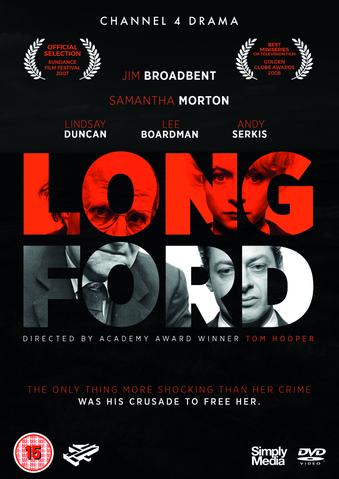
Lord Longford was a tireless supporter of prisoner’s rights. He believed that nobody was beyond redemption, but his dogged campaign to secure Myra Hindley’s release only served to bring him savage public vilification ….

Even after all these years, the Moors Murders remains a dark stain on the British psyche. And if this horrifying legacy still resonates today, how much more powerful must it have been in the late 1960’s, when Lord Longford visited Myra Hindley for the first time? But despite being dubbed by the tabloids as “Lord Wrongford” he wouldn’t be swayed and carried on tirelessly pleading her case for decades.

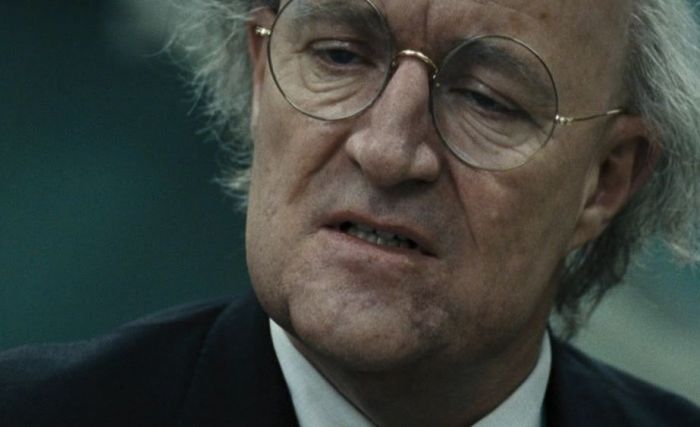
Even though he had to submit to several hours of prosthetic make-up each day, Jim Broadbent’s beautifully nuanced performance as Longford is nothing less than quietly stunning. It’s left to the audience to decide whether Longford was a good, innocent man or simply a gullible fool (or a little of both possibly). Broadbent certainly deserved all the plaudits and awards which came his way.

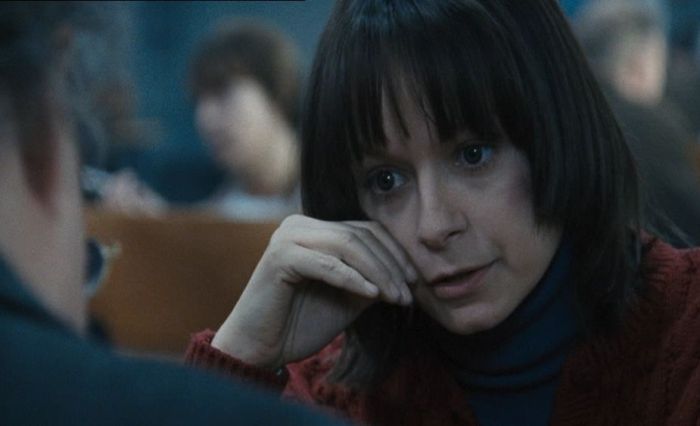
No less compelling and fascinating is Samantha Morton’s performance as Myra Hindley. As much of a victim as the murdered children, or an equal complicit partner with Ian Brady? She certainly seemed like a reformed character in Longford’s presence, but was that simply a ruse to gain his trust? As the film continues we begin to get an idea of the truth and Morton’s quiet, unshowy playing becomes increasingly more memorable.
l1.jpg

Ian Brady’s evil is palpable though. Andy Serkis’ screentime might have been limited but he is still able to create a deeply unsettling atmosphere which lingers even after he’s left the screen. Brady’s first meeting with Longford is a typical snapshot of the short time they spent together. “How good of you not to disappoint! Wonderful, isn’t it, when people look exactly as you imagined? So this is my competition? This is what I’m up against? Myra’s new boyfriend? She certainly picks them, doesn’t she? I did a little research before our first meeting. I’d say there’s great evidence of mental instability in your past and mine”.

Brady’s contention that Hindley destroyed ‘him’ is intriguing. An example of Brady’s manipulative skill, or does the comment contain a kernel of truth? “Take my advice. Go back to your other prisoners. Nice, uncomplicated ones with broken noses and knuckle tattoos. Stay clear of Myra, because she will destroy you. Certainly destroyed me. That’s a thought you’ve not had before – that Myra egged me on”. Before Brady’s furnace of hatred, the affable and kindly Longford could do little but wilt.

Later events, such as Hindley’s confession to several subsequent murders (which she did in order to trump Brady’s own pending confession) wasn’t enough to totally destroy Longford’s faith in her, nor was her description of the first murder. “I’m trying to know the God that you know. But if you had been there, on the moors, in the moonlight, when we did the first one, you’d know that evil can be a spiritual experience too”.

Scripted by Peter Morgan (also responsible for The Last King of Scotland, The Queen, Frost/Nixon and The Damned United) Longford is a concise ninety minute teleplay which doesn’t contain an ounce of fat. Strong supporting performances help (most notably Lindsey Duncan as Lady Longford) as does the inclusion of genuine archive television reportage. In certain clips (for example, where the real Lord Longford appeared alongside David Frost and Lord Hailsham) a skilful spot of editing ensures that Broadbent replies to the archival comments of Frost and Hailsham.

Posing the difficult, if not insoluble, question as to whether forgiveness should be extended to everyone, regardless of their crimes, Longford offers no easy answers but plenty of food for thought and therefore stands as an absorbing drama which repays repeated viewings. Highly recommended.

Longford is released today by Simply Media, RRP £14.99. It can be ordered directly from Simply here – quoting ARCHIVE10 will apply a 10% discount.
l2.jpg

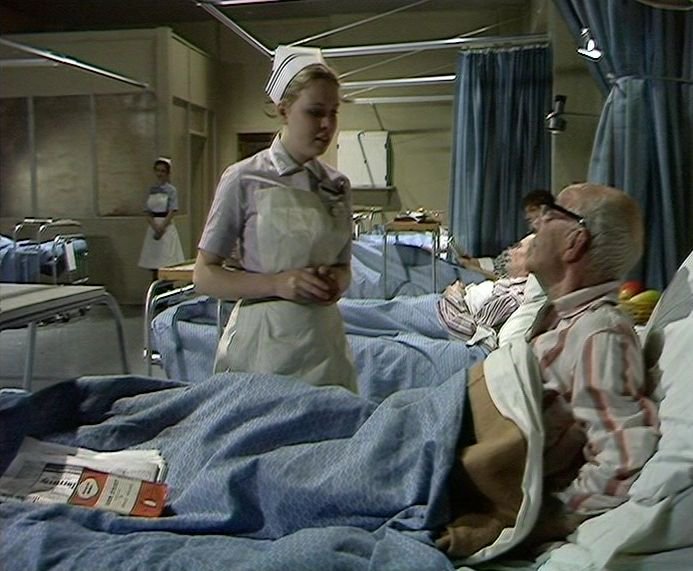
Angels – Commitment (8th December 1975)

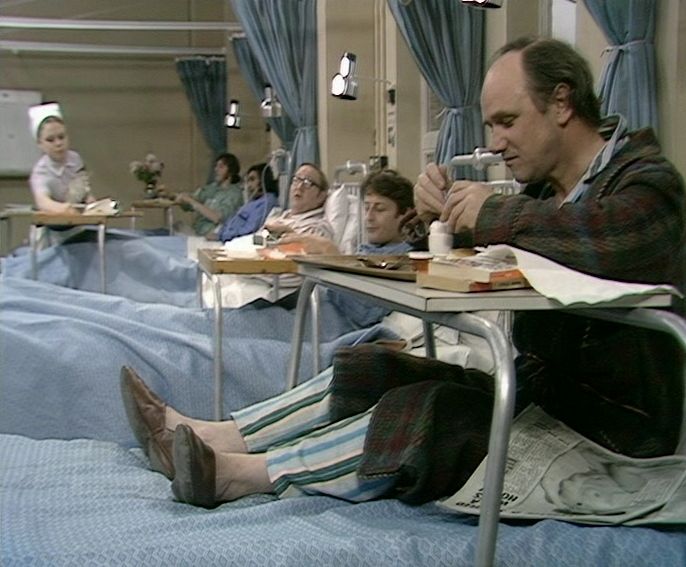
Commitment is split between the action on a female ward and the end of episode prize-giving, where two of our Angels – Ruth and Shirley – are receiving their SRN badges following three long years of study. And as the episode title implies, several of the regulars are considering their futures ….

Today’s ward activity is very bustling, with numerous patients all jostling for position. Chief amongst these is Mrs Ennis (Susan Field), a remarkably cantankerous type. Her highly objectionable personality clashes with Pat’s no-nonsense attitude and it isn’t long before the sparks start to fly in an entertaining fashion.

The chief flashpoint occurs when Mrs Ennis accuses Maureen of stealing her sponge bag. Maureen later finds it, but Mrs Ennis is far from convinced (declaring that Maureen simply had a crisis of confidence and returned it). This is the final straw for Pat who then gives Mrs Ennis both barrels.

Never the diplomat, Pat tells Mrs Ennis that she’s “really the most ungreateful, diabolical old bitch it’s ever been my misfortunate to meet”. Mrs Ennis, understandably, reacts in horror to this – but mainly because she’s been called old!

This one incident is enough to convince Pat that nursing isn’t for her, but the affable and tolerant chief tutor, Mr Farrar (Jeremy Wilkin), is able to talk her back from making any hasty moves. As touched upon before with other guest actors, it’s a pity he didn’t feature on a regular basis. Farrar’s lengthy one-on-one meeting with Pat (albeit broken up with a brief cutaway between Sister Young and Miss Windrup) places Pat in the centre of the action for once.

To begin with, I wondered why Miss Windrup wasn’t the one discussing Pat’s future with her. But the cutaway makes it plain that she continues to have a very low opinion of Pat (although she’s very much in the minority). The clash between tradition and modernity is another episode theme – as you might expect, Miss Windrup favours order and method (a loose cannon like Pat is anathema to her) whilst Mr Farrar is more understanding and therefore able to see that once the rough edges have been rubbed off there might be a more than decent nurse underneath.

If Mrs Ennis exists in the narrative mainly to generate a reason for Pat to question her future, then another patient provides a similar service for Maureen (although in not such a dramatic way). This other encounter makes Maureen consider the possibilities of becoming a home visitor, although as Miss Windrup tells her, she’s got years ahead of her to consider all the possibilities.

The contrast between Maureen (deeply committed to nursing) and Pat (deeply ambivalent) couldn’t be more striking. With Pat still looking unhappy as the episode closes, at this point you might have laid money on the fact that – out of the six – she’d be the one least likely to return for the second series.

With the two youngest Angels both considering their future, what of the older ones? There’s no movement from either Jo and Sita (although Jo is wistfully regretful that she’s yet to receive her SRN badge). Shirley is fully committed – her desire to work a split shift on Christmas Day speaks volumes for the fact that outside of nursing her life remains very undeveloped.

Although Ruth declares that she could earn much more as a secretary, her desire to remain a nurse seems strong. But since Lesley Dunlop decided against returning for the second series, Ruth’s story has come to an end. Was this known at the time the episode was scripted? Possibly not, as things seem very open-ended for her, with no suggestion that she wouldn’t be remaining at St Angela’s.

Sister Hammond (Pamela Duncan) is another who favours tradition (bunting in the prize-giving hall very much appeals to her). However, once she and Miss Windrup have partaken of a few sherries, both are able to turn back the clock and reminisce about their younger, more care-free days. Especially Miss Windrup (with a gobsmacked Jo looking on!).

Tradition continues to be upheld at the prize-giving, with the national anthem played prior to proceedings whilst the arrival of Ruth and Shirley’s parents serves as another character-defining moment. Only Shirley’s mother is present (the absence of her father clearly causes her some hurt) and whilst the pair converse politely, they don’t seem to have an especially warm relationship (although to be fair, Mrs Brent does seem pleased after Shirley receives her badge and certificate). Conversely, Ruth’s parents are both present and correct and are obviously incredibly proud of their daughter’s achievement.

An interesting nugget of trivia (thank you, the 1977 Angels annual) is that Shirley’s mother was played by Clare Clifford’s real mother, Nancy Gower.

With Michael E. Briant throwing in some unusual camera shots, Commitment closes the first series strongly. Coming to this run of episodes fresh, what’s remarkable is just how consistent they’ve been, with only a few minor dips along the way. This bodes well for series two.

Angels – Confrontation (1st December 1975)

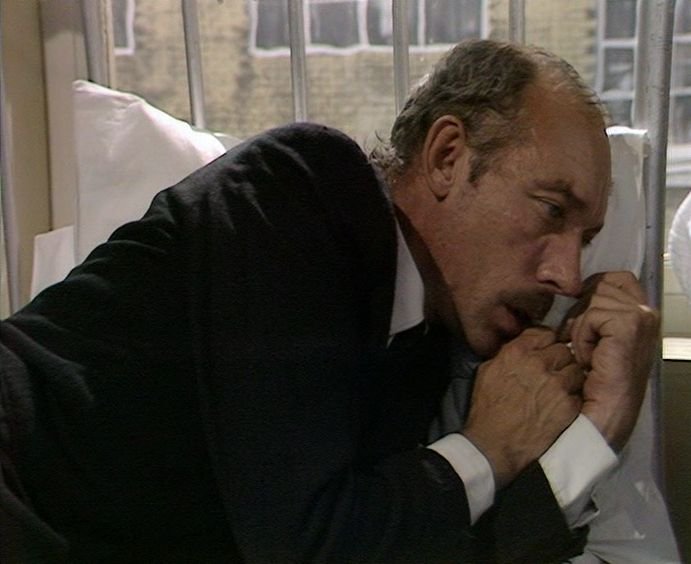
An argument between Sister Young (Nadia Catouse) and head porter Harry Jamieson (Bill Owen) quickly escalates into a full-blown crisis after he instructs all the porters to down tools. Ruth, present during the original incident, then finds herself with severely divided loyalties ….

Having briefly appeared in On The Mat, Harry is much more central to this story. The episode opens in his office, which is a treasure trove of trinkets. A model cenotaph on his desk suggests that he had wartime experience (confirmed later on after he mentions Tobruk) whilst a record player is cued up with foreign language lessons. At first it appears that he’s doing a little extra cramming for his holidays, but it’s then explained that due to the variety of nationalities working at the hospital (many of whom can’t speak English) he has to keep abreast of a variety of languages.

He’s clearly popular with the younger nurses – Pat and Maureen pop in to have a brief chat and a sweet – but his relationship with the more senior staff, such as Sister Young, is trickier. Anne Valery’s script develops how the various departments – especially the nurses and porters – can find themselves locked into bitter disputes.

Sister Young is quick to blame the porters when anything goes wrong, whilst Harry can justifiably claim that if the correct procedures aren’t followed then the whole system collapses. His military background (as an NCO?) is put to good use as he efficiently marshals the bewildering number of forms required to keep the hospital running. Possibly old military habits (a disdain for some of his superiors) can be seen in the way he crosses swords with Sister Young. He’s certainly unafraid to speak his mind and stand his ground.

Ruth and Claire were at each other’s throats in P.J Hammond’s Initiation, but we’re back to a more normal relationship today – cordial, but with occasional irritated barbs (Ruth once again referring to her colleague as surly Shirley). The fact they’re both keen to nab the Staff Nurse job on Sister Young’s ward is obviously going to bring them into conflict – although initially this is done in a comic way (both attempting to butter the Sister up by offering her cups of tea or watering her flowers ….)

It’s only when Ruth finds herself having to choose between Sister Young and Harry that the situation turns rather more dramatic. If Ruth doesn’t side with her nursing superior then the path would presuambly be left open for Shirley.

But there seems to be no doubt who was in the right (Harry) with Sister Young admitting in private that her temper often gets the better of her (her blazing confrontation with Harry is an episode highlight). Given this, the fact she still expected Ruth to back her up seems a little unfair. To deepen the complexities, it’s suggested that Sister Young’s recent promotion request was blocked because she stood up for one of her colleagues (this example of her good nature is then used as a lever in order to persuade Ruth to stand with her superior).

Ruth’s strong union links have been stressed before, so despite Sister Young holding the key to her possible promotion, it was always likely she would plump for Harry’s side. But even though she does so in the end, Ruth then bitterly declares that she’s been manipulated for other people’s ends. Harry, like Sister Young, seems to be blameless in this – both are simply hot-headed individuals who weren’t prepared to back down – so maybe the union rep, Tom Goddard (Harry Landis), could be the villain.

But that’s not really the case. Goddard is keen to press for Sister Young to receive an official reprimand (even though this will impact her already shaky promotion prospects) but he sees this as safeguarding their position in future disputes. Goddard certainly isn’t the raging union militant we sometimes see in seventies dramas.

Pat and Maureen are now an integral part of the ward, having quickly settled down from their initial, hesitant steps. Pat’s still a little shaky in some areas, although she gets little sympathy from Sister Young (still smarting from her bruising reprimand).

For the first time, a patient – Mrs White (Rita Webb) – returns for a second episode. There’s a slight mystery here, since something seems to have happened to her husband. We’re never told what precisely, simply that he won’t be home to meet her when she’s discharged. Is he away on work, has he left her or has he died? A strange moment. It’s equally strange that Mrs White is put to work after the porters go on strike. Watching one of the patients scrub the floors (even though it clearly cheers her up) is an oddity.

Although Ruth’s choice is the key part of the episode, Bill Owen’s performance makes it memorable. Like a number of other performers during the first series, it’s a shame his time on Angels was so limited.

Brond – Simply Media DVD Review

Out for an early morning jog, Robert (John Hannah) witnesses a shocking murder. A man later identified as Brond (Stratford Johns) casually pushes a young boy over a bridge. But this sudden act of violence is only the beginning as Robert finds himself embroiled in Brond’s scheme to trap an IRA killer ….

Adapted by Frederic Lindsay from his own novel and broadcast in 1987, Brond is one of those 1980’s thriller serials (along with the likes of Edge of Darkness and Dead Head) which eschew narrative clarity in favour of something much more non-linear. But given that Lindsay’s novel was rather baffling in places, it’s no surprise that his television adaptation was also opaque.

Brond’s first appearance is ridiculously memorable. Pushing the boy over the bridge without a second thought, Brond then casually winks at Robert as he passes by.  What’s especially interesting about this scene is that until the incident is revisited towards the end of the serial it’s possible to believe that Robert was hallucinating and that there actually was no murder.

Brond might have been John Hannah’s television debut (a major role for such a newcomer) but Alan Stratford Johns was an old hand. He’ll always be best remembered for playing Charles Barlow in a string of BBC police series (Z Cars, Softly Softly, Softly Softly: Task Force, Barlow) but he also had a rich and diverse career before and after his time with the police force.

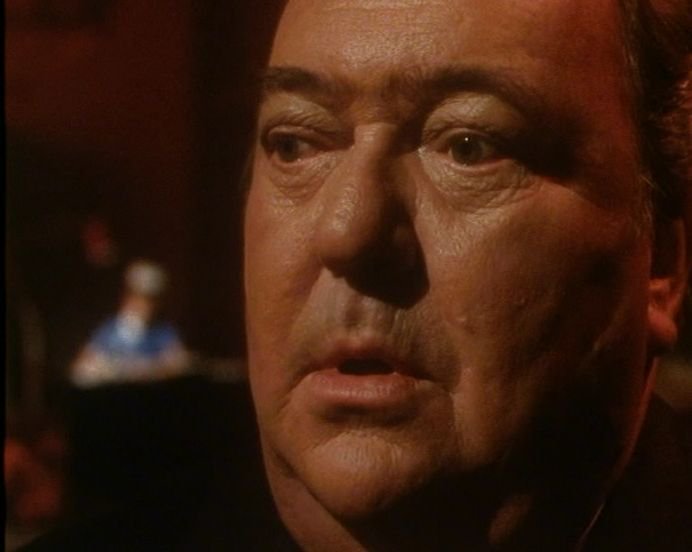
Brond was one of his later signature roles though – it certainly made a considerable impact at the time and it’s not difficult to see why. Brond is a peach of a part and it offers Johns a number of wonderfully constructed monologues and set piece scenes. The first occurs at a university party, where an increasingly disconnected Robert views Brond in a mirror. The framing is so non-naturalistic that the exact reality of the situation seems to be in doubt (as with the boy’s murder).

Satan must be defeated. But never is quite. So we owe red roses and sunsets to Satan’s joy in being master.

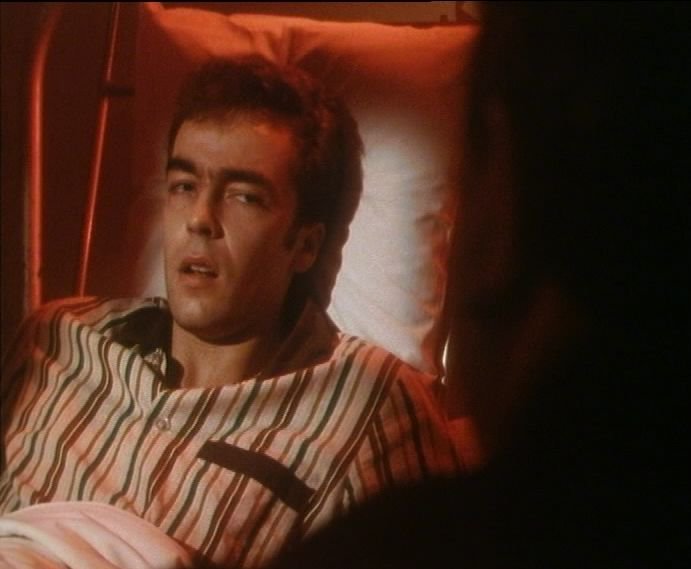
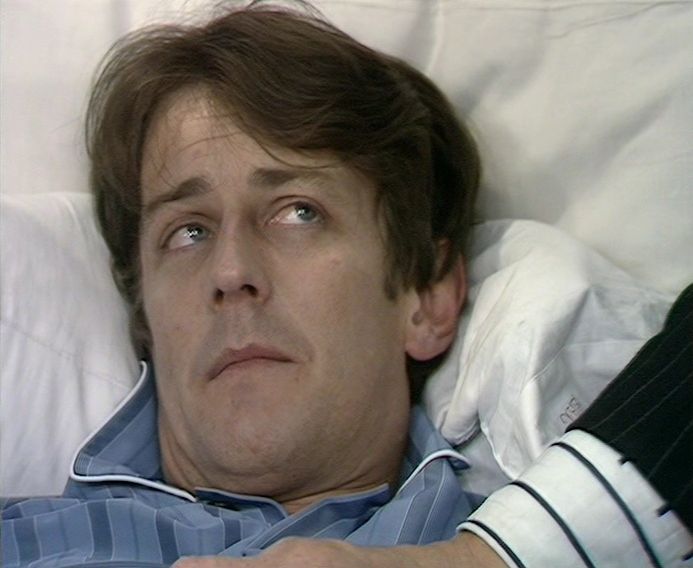
Brond’s materialisation by Robert’s hospital bed is another peculiar and jolting moment. Why the whole ward is suddenly bathed in an unearthly red light is a mystery which is never explained. And yet again Brond’s elliptical, gnomic utterances don’t help to make the situation any clearer.

I remember Paris, young men, far from home. The story was written to make a little money, concerning a lady and her victim who was quite willing – eager to suffer and obey. She did terrible things to him, she might have killed him. But it was all innocent daydreams, some wonder drug of science fiction. So when it was over, no blood, no regrets, just a man and woman and a warm summer evening. Wasn’t that a better world to live in?

In the wrong hands this sort of florid material could easily fall flat, but it’s testimony to Johns’ skill that he makes moments such as these utterly compelling.

Aside from Johns and Hannah, there’s a strong supporting cast. James Cosmo, as Primo, looms menacingly throughout. Although connected to Brond, he also latches himself onto Robert. Louise Beatty (Margaret) also impresses whilst it’s always a pleasure to see Christopher Ellison. A number of other familiar faces, such as Russell Hunter, pop up in minor roles.

As we proceed to the second episode, the plot only becomes more labyrinth. Robert’s mysterious landlord, Kennedy (Ian McElhinney), casts a menacing shadow whilst the murder of a fellow lodger, Kilpatrick (Laurie Ventry), and Robert’s discovery of a gun wrapped in a blood-soaked cloth are further pieces of the disorienting puzzle. Robert’s later police cell conversation with a gardner (Phil McCall) is another of those strange Brand moments.

Charged with the murder of Kilpatrick, Robert is interrogated by Frew (Christopher Ellison) a character who could be a close cousin of Frank Burnside. But the murder of Kilpatrick is clearly only a sideshow – the assassination of Sir Colin Fraser seems to be much more key ….

The final episode sees Robert released into Brond’s care. Stratford Johns is on fine form, especially when in interrogation mode. Things then go very strange after the pair pay a visit to high class brothel. Brond has some peculiar ideas about entertainment (and isn’t fussy about who might be looking in). There’s also an intriguing callback to the murder of the boy from episode one and some of the loose ends are tied up. Other aspects of the story (notably why Brond latched onto Robert) remain open to interpretation.

Critical reaction at the time was pretty positive.  The Stage (14th May 1987) reviewing the first episode, declared it to be “a jigsaw thriller, in which you are not expected to see the picture until most of the pieces have slotted into place”.  Johns’ performance (“Brond isn’t the sort of man you would want as a babysitter. He speaks in a calm, measured voice, at once chilling and reassuring”) drew praise as did John Hannah (“a likeable dupe, whose jokes always seemed to fall on deaf ears”).

The three episodes (each approx. 50 minutes) are contained on a single DVD.  The all-film production is unrestored, but for a thirty year old serial is in pretty good shape with no major picture issues.  There’s no special features and, as per Simply’s other recent C4 releases, no subtitles (it appears that Channel 4, unlike the BBC, don’t require subtitles to be added).

Featuring a haunting title theme by Bill Nelson and Daryl Brunswick, Brond lingers long in the memory. The lack of a clear narrative means it won’t appeal to all, but since there’s so much of interest – notably the performances of John Hannah and Stratford Johns – it’s hard not to be drawn into this dark, twisted world.

Brond is released by Simply Media on the 30th of July 2018, RRP £14.99. It can be ordered from Simply here, quoting ARCHIVE10 will apply a 10% discount.

Angels – Linda (24th November 1975)

It’s a momentous day for Pat and Maureen as they’re let loose on the wards for the first time. Meanwhile, Staff Nurse Linda Hollis finds that juggling her career and her marriage is becoming increasingly impossible ….

The second script by Deborah Mortimer, it’s also the second (and apparently last) to feature Janina Faye as Linda (possibly she was Mortimer’s creation). Long-term viewers who had already witnessed the first part of her story from episode four will be rewarded here, since the already established theme – her husband’s intolerance towards her career – is considerably developed.

Our first sight of Brian Hollis (Christopher Strauli) isn’t an encouraging one. He’s been forced to entertain their friends at the pub (Linda is working late) and whilst he clearly possesses a light charm, it’s also fairly brittle. These early scenes set the tone – Brian, having resigned from his job in order to study architecture, is reliant on the money Linda brings in but resents both this and the fact that she isn’t always available on tap.

The real flashpoint occurs when Linda agrees to work a split shift, with the result that she won’t be able to accompany Brian to a party. Intriguingly, the possibility is floated that she could have declined (Linda was asked if she’d already made plans) but the implication is that she elected to prioritise the hospital over her husband. If so, was it the right choice? Had Linda declined to work late then possibly somebody else could have done it, but we’ll never know for sure.

It’s hard to sympathise with Brian though, mainly because he’s so whiny and petulant. When, after one particularly blazing row, Linda suggests he leaves their basement flat, it’s notable how his face crumples like a child.

Nursing and marriage. It seems to be that you can do one but not both. Linda’s mother (played by Jessie Evans) makes this point very forcibly, but it’s also commented upon by Maureen and Pat. Pat, after observing that not many nurses are married, wonders if the point is significant (Maureen thinks not, but then it has been established that she’s maybe not the deepest thinker).

There’s an intriguing callback to Off Duty when Pat muses that the pair of them might end up as a couple of old spinsters stuck in a flat (like Sister Easby, agrees Maureen). Sister Easby’s relationship with Beryl in Off Duty could easily be taken as a lesbian coupling – but the tone of the exchange here suggests that neither Maureen or Pat have considered this. An example of their naivety maybe? Although the general theme of this episode does suggest that the spectre of middle-aged nurses married to their careers isn’t uncommon.

The histrionics between Linda and Brian might be today’s major plotline, but Pat and Maureen’s first faltering steps as nurses are also of considerable interest. Luckily they’ve got the capable Jo to keep an eye on them – instructing a slightly nonplussed Pat about the best way to deal with a bedpan, for example.

Patient interaction is fairly minimal today, although the formidable Rita Webb as Mrs White certainly makes an impression. From the opening few seconds it’s plain that Mrs White is a character (she loudly decides that tomorrow she’d rather enjoy toad in the hole for dinner). A quaking Maureen has to later give her a bed bath. After learning that it’s her first day Mrs White has a little cackle, but also reveals herself to be a friendly sort, putting the nervous Maureen at her ease.

George Tovey, as Mr White, has even less screentime but still manages to vividly bring his character to life (I love the way that Mr White chomps his way through a bunch of grapes, which he presuambly brought for his wife!) But Tovey’s major contribution occurs when Mr White asks Linda how long it’ll be before his wife is able to come home. He tells her that’s where she should be (he’s finding it increasingly difficult to cope by himself). It’s fairly obvious that this exchange exists in order to add a little more fuel to the Linda/Brian fire.

That’s resolved by Brian moving out – for the moment – and Linda electing to take a midwifery course, thereby embedding herself even further into her career. So the question about whether a happy balance between nursing and marriage can be struck remains unresolved – Linda chooses to pursue her job at the expense of her personal relationship.

Possibly this is only temporary or it might be that she has doomed herself to a life of spinsterhood. Thirteen episodes in, it does seem significant that she’s the only married nurse we’ve encountered so far (and whilst her marriage isn’t quite dead, it’s certainly on the critical list).

Angels – Interim (17th November 1975)

i2

Many of the third year students are eagerly awaiting their exam results. But not Shirley. Is this because she’s afraid of failure or is there another, darker reason?

Although best known for creating and writing the majority of Sapphire and Steel (five out of the six serials), P.J. Hammond also contributed to a number of long-running series (Z Cars and The Bill being two of the most notable). A Hammond script is always a item of interest – whatever the series, his unique style always comes through loud and clear.

Interim is a good case in point. Since it revolves around Shirley, you might expect it to be a little chilly (which it certainly is), but the emotional coldness stretches further than her. It’s very disconcerting to see Ruth, up until now positioned as a cheerful and positive character, acting so abusively towards her.

After Ruth witnesses Shirley repremanding a first year student (played by Chris Range), she reacts with uncharacteristic fury. “It’s the same old problem, with background. You middle-class bitches, it’s ingrained”. This seems especially unfair since Ruth only walked in on the end of the conversation, whereas the audience were able to gain a fuller picture and no doubt most would have concluded that Shirley was in the right.

The first year (not even granted a name) continues to be a mocking presence throughout the episode, occassionly appearing (or heard laughing in the distance) in order to disconcert Shirley a little further.

The episode isn’t as heavy on dialogue as some. The opening few minutes – Shirley breakfasting at home with only an inane DJ on the radio for company – begins proceedings in a low-key way. These early scenes aren’t just filler though.

A hurried conversation on the phone with her father, an equally hurried conversation with her landlady (who gently attempts to find out a little more about the painfully shy girl) and then a trip into work with the voluble Mr Wilkins (Lane Meddick) are all character developing moments. The encounter with Mr Wilkins is the most entertaining. He clearly has his eye on her (witness his obvious disappointment when he realises that she’s working a late shift the next day and so won’t need a lift).

In some respects he’s the perfect companion for Shirley – since he speaks so much (chuntering on about parking and the inconsiderate nature of other drivers) this means she doesn’t feel under any pressure to add much to the conversation. When he later mentions that she’s especially quiet this morning, it’s a little baffling. It’s hard to imagine that Shirley’s usually more voluble (or indeed that Mr Wilkins ever shuts up!)

A late scene, where Shirley invites him into her flat, provides the episode with a rare moment of levity. Clearly Mr Wilkins believes that his luck is in, but she’d only wanted him to open her results letter and tell her the news. Once he’d done that (she’d passed) the very disappointed man is wished a good evening ….

Given Shirley’s swot-like nature, it seemed unlikely she would have failed, so even though the episode doesn’t reveal her result until the end that’s not the main point of tension. Instead, the audience is slowly invited to understand how – just for today – Shirley is questioning her vocation.

“I can’t take death. I associate it with loneliness, my own loneliness. I can’t seperate the two means of thought”. Many of Interim‘s scenes are two handers – such as this pivotal encounter between Shirley and Miss Windrup. A terminal patient, Mr Allen (Roy Spencer), has provided the trigger for this outpouring. It’s nicely played, like the rest of the episode, although it does feel like the sort of thing you’d only find in a Hammond script.

Mrs Allen (Mela White) shares a brief scene with Shirley later on (yet another good two hander). Having played a patient a few episodes back, it was a little surprising to see Keith Jayne again so soon (this time as the Allen’s son). Although he doesn’t have any dialogue, he still makes an impression. Mr Allen’s reluctance to see his son (he doesn’t want the boy to witness him in such a feeble state) means that the lad is forced to take up a watching brief in the corridor. One memorable camera move opens on him before pulling back to observe the bustle occurring elsewhere.

An unusual episode then, and one that stands out from the more routine instalments.

i1

Angels – Casualty (10th November 1975)

cas 1

The new intake are approaching the end of their initial twelve week training period – which means they’ll soon be free to roam the wards and face real patients. This, suggests Miss Windrup, will come as a shock to some and their lack of life experience will turn out to be a problem. It’s certainly true that when we first drop in on them today, many are larking about like schoolkids.

But although the training room is the scene of high jinks, there are a few quiet corners. In one, Pat and Maureen are debating the future. Pat is chomping at the bit to get onto the wards whilst Maureen is more cautious. Both have expressed these viewpoints previously, so the training regime doesn’t appear to have changed their initial positions at all. Pat regards most of their training as pointless and simply wants to get stuck in whilst Maureen is keen to check and recheck every step of the way. Incidentally, Miss Windrup has a new nickname (Windy). Fairly obvious really, but it makes a change from Windbag.

Casualty gives us an insight into areas of the hospital we haven’t seen before. The Casualty department for one – although the familar face of Sita makes it a welcoming environment (I’m not sure why, but there’s something mildly amusing about the way she cheerfully speaks to a chap on crutches).

Another first is the fact that we ride out with an ambulance. A film sequence on the high street (featuring an RTA) gives us the opportunity to see the ambulance men at work. It’s notable that when they’re dealing with the patient they don’t speak at all. Also, one of them isn’t at all interested in conversing with the well spoken lady who witnessed the accident and phoned for the ambulance. The clear inference is that how the accident happened isn’t of interest to them (that’s a police matter) wheras dealing with the result of the crash is.

A few familar faces pop up in the Casualty department, such as Angela Crow as Miss Pritchett. She provides a breathing space between the more serious cases (she’s got a dicky ankle) whilst Christopher Coll’s brusque, questioning doctor is a perfect example of the way a doctor in that environment works (where an immediate diagnosis is the order of the day).

Another spot of light relief is provided by Mr Dooley (Allan McClelland). A drunken Irishman who fell into the fire and burnt his backside, he arrives at St Angela’s smeared with an ointment for burns which his landlady had kept since the Blitz ….

The episode intercuts between the realities of the Casualty department with the training room, where the stakes are obviously much lower. The sight of Pat enthusiastically bandaging up Maureen has a comic feel, add this to Miss Windrup’s school-marmish attitude (she reacts in horror at Pat’s stylish shoes) and it’s easy to see why some of the intake find it hard to take things too seriously.

The RTA victim, Mr Morton (Michael Burrell), eventually comes around. Physically he doesn’t appear to be too bad, but the fact he takes angina tablets is a concern. The doctors want to keep an eye on him for a while but he’s far from keen (he has a business to look after). Up to this point Casualty has flitted between several patients who provide a little dash of colour but little else, before the episode settles on Mr Morton. His case feels much more substantial, especially since there’s a mystery at the heart of it (just why did he crash his car?)

The ever-cheerful Sita (the only one of the ward students to feature in this episode) attempts to convince him that a stay in hospital is something of a treat. “You’ll have your meals served for you, hot drinks, televison, everything”. Sounds enticing!

Mr Morton’s decision to ignore the advice of the doctors and go home is the late dramatic highlight of the episode, especially since he collapses with a cardiac arrest as soon as he leaves.

Several later scenes with him in the resus room are played in complete silence. These are striking and help to effectively close an episode that, whilst not the strongest from the first run, still contains a fair few points of interest.

cas 2

Angels – Saturday Night (3rd November 1975)

night 01

Following directly on from the previous episode, Saturday Night centres around a party attended by Jo and Shirley. As you might expect it’s something of an exercise in awkwardness for Shirley – although the uncomfortable feeling starts long before she reaches the party.

At home, picking out the clothes she’s going to wear, there’s a strong sense of just how out of practice she is with this social interaction lark. Her eventual choice – pretty formal – confirms this (especially after we observe how casually Jo is attired).

When we first see the party flat – all groovy posters and copyright-free library music – it’s totally bereft of party-goers, which is something that concerns the three friends who’ve organised the shindig (they include Elizabeth Adare, best known for The Tomorrow People). They needn’t have worried though, as soon the joint is jumping ….

Across the course of the episode we meet three men – Brad (Brian Anthony), Gordon (Colin Higgins) and Mark (Graham Faulkner) – all of whom might be potential partners for three of our Angels. Are any of them suitable? Hmm, let’s see.

Brad rates highest on the irritant scale. Lasering in on Jo like a heat-seeking missile, he’s monumentally rude to everyone else – especially Gordon (who like most of the party-goers is training to be a nurse). One of the few non-medical staff at the party, Brad expresses incredulity that a man could want to be a nurse (jokes about having to wear stockings and homosexuality then follow).

Although Jo is quick to spring to Gordon’s defence, she does later admit that male nurses can be a bit off-putting. Her example – their hands seem so large when handling babies – is a little odd though.

Gordon couldn’t be more different from Brad. Quiet and reserved, he seems like the ideal companion for Shirley. It would at least save her from hovering around the fringes of other people’s conversations, looking lonely and left out. Shirley attempts to make conversation with Gordon, but it’s hard going at first. But then he’s in a pretty depressed state, having just returned from a funeral, so the jolly atmosphere of a party isn’t probably the ideal place for him. The two misfits do eventually bond though, united in their outsider status.

Meanwhile back at the hospital, Sita finds herself being chatted up by Dr Mark. Eschewing the party, Sita plans to spend a quiet night writing a letter home to her parents and relaxing by herself in the common room. But Mark has other ideas ….

If the sight of Shirley at the party generates a feeling of awkardness then so does the initial meeting between Sita and Mark. As previously seen, Sita is a nice, courteous and placid girl who therefore is totally unable to tell Mark to buzz off. He’s not downhearted by her initial lack of response though and ploughs on regardless. My favourite line of his has to be “has anyone ever told you what fabulous hair you’ve got?”

During Mark’s cross-examination we learn something of Sita’s background (she arrived with her family four years ago from Uganda). The revelation that Sita has never been to a party astounds Mark (by this point I was beginning to warm to him. Pushy he might be, but he also seemed genuinely interested in Sita as a person). This era of drama often featured young ethnic characters prevented from sampling the delights of Western civilisation by their parents, but it’s much more unusual for the youngster to be self-regulating, as Sita is.

Pat and Maureen attempt to get to the party, but it’s a cursed journey for them. They arrive at the train station, leave to get a bottle for the party, come back to the train station, leave again to go back to the off licence where Pat left her purse, come back to the train station, realise they’ve lost the address, wander about for ages, etc, etc.

Both Jo and Shirley receive knock-backs. Jo’s clearly well shot of the loathsome Brad but Gordon’s decision to pretend that his evening’s heart to heart with Shirley never happened feels much more significant. For Shirley, who rarely finds herself with male company, it’s an obvious blow. Her initial tears and later stony face (as she observes the newly arrived Sita and Mark) hammers this point home.

With no hospital action (we do see some beds, but no patients) Saturday Night continues to develop the characters of the regulars. Shirley and Sita benefit the most – since both are reserved and private people there’s obviously more to work with. Jo enjoys a decent slice of the narrative even if we don’t learn anything new about her, whilst poor Maureen and Pat, relegated to the comedy subplot, mainly reinforce their already established personas.

night 02

Angels – Model Patient (27th October 1975)

Three storylines – all about loneliness – form the backbone of this episode. The most substantial concerns Norman Pettit (Ron Pember), the seemingly model patient of the title. Following a hospital stay of some three and a half months he’s now due to leave, but the thought of this clearly terrifies him ….

With hundreds of credits to his name, Pember was one of those instantly recognisable actors. Often to be found playing chirpy types, the deeply disturbed Pettit offered him the chance to flex his acting muscles somewhat. It’s a excellent performance which begins slowly before working up to a final point of revelation.

Having locked himself into a toilet cubicle, it takes a little while before we first see him (those toilet doors were built to last). Once extracted, Pettit is totally uncommunicative, which results in Sita calling for social worker Sarah Tuddenham (Anne Kidd). To begin with this is a painfully slow exercise as Pettit is almost comatose (even the simple act of picking up a cup of tea requires considerable effort).

But over time Sarah is able to coax him back to life and he begins to confirm what the audience had possibly already guessed. It’s previously been established that he lives alone, so discovering that Pettit has become totally institutionalised (and therefore can’t bear the thought of leaving the bustle of the hospital behind to return to his empty house) shouldn’t come as too much of a surprise. There is a later revelation which is a little more unexpected though.

Pettit’s story is one from which it’s hard to gain much solace or hope for the future. Pember’s dialled-down economical playing is simply devastating and whilst I’ve appreciated him in many other quality programmes (Secret Army, say) I can’t recall many other performances from him quite as impressive as this one.

Also deeply lonely is Miss Windrup, although unlike Petitt she doesn’t have the chance to articulate her feelings. One of the notable things about this first series is the way that certain plotlines have been seeded well in advance. An earlier episode gently suggested Miss Windrup’s isolation, but Model Patient is where the theme is really developed.

Miss Windrup opens the episode via a dialogue-free scene. There’s a nice shot from outside her office, which has the camera positioned behind a bannister. Either by accident or design this gives the fleeting impression that her office is a prison with bars. Something that was scripted or simply a directorial choice by Ken Hannam?

The way that Miss Windrup lingers in her conversations with several colleagues, obviously hopeful that a more substantial dialogue will emerge, is an one example of how friendless she is. Visiting the wards to talk to the patients and nurses simply hammers the point home.

Her formidable training persona might turn out good nurses, but it doesn’t help to build up friendships. The moment when she invites Ruth, yet to begin her shift, round to her flat (only to immediatly realise that young Ruth would sooner be anywhere else) is a good example of this. The awkwardness of the scene is compounded by the fact that Ruth either doesn’t understand or doesn’t care that Miss Windrup, in her own way, had been making a cry for help.

Fair to say this episode is a bleak one. Apart from the plotlines of Mr Petitt and Miss Windrup, it’s also mentioned that a briefly seen patient is terminally ill (although neither he or his wife knows this yet).

The closest to light relief we get comes when Ruth playfully suggests to Jo that she should invite Shirley to an upcoming party. Ruth, stuck on the night shift, can’t go, but she seems to take great delight at the thought of Jo being lumbered with Shirley! This is the third of the three loneliness storylines – it’s already been established that Shirley is friendless – but at least this one gives us a sliver of hope for the future. Shirley’s eagereness to attend (after a brief moment of hesitation) provides a chilly episode with a rare moment of warmth.

With the scenes between Ruth, Jo and Shirley confined to the canteen and corridors, it’s Sita who’s required to carry the ward scenes today. She’s assisted by the cynical Antipodian Val James (Ginette McDonald) who contrasts nicely with Sita’s ingenious kindness and consideration.

Depressing it might be, but there’s no denying the quality of Model Patient, with Ron Pember’s performance lingering long in the memory.

Angels – On The Mat (20th October 1975)

a1

On The Mat opens at Jo and Ruth’s flat. As before, it’s a delightfully dishevelled environment (the attentive viewer can amuse themselves by observing the various knick knacks and posters scattered about). Their conversation ranges from the cruelty of keeping houseplants, Ruth’s infatuation with Dr Crozier (we may not actually see him again, but it’s a nice callback to the previous episode) to her old friendship with Clare Truman (Cheryl Hall). Clare is a former nurse who – post pregnancy – is now a patient at St Angela’s.

The way the camera lingers over a picture of Ruth and Clare (although we didn’t know who she was at that point) suggests she may turn out to be important. That’s the case and Len Rush’s script then proceeds to spell it out. Ruth has fond memories of her former flatmate (telling Jo she was the life and soul of every party, as well as a radical supporter of nurse’s rights). Ruth goes on to say that Clare’s still a cheerful type, but we then cross to the hospital to observe a very unhappy-looking Clare.

So within the first few minutes the disconnect between Ruth’s impression of her old friend and the reality is made plain. Another observation about this first scene, minor though it is, is that both Jo and Ruth look quite different with their hair down. Anyway, pressing on …

The pair elect to walk to work. Their journey takes them past the Thames with Julia Smith’s direction at this point being rather noteworthy. A film insert like this (which doesn’t advance the story) might be seen as an indulgence, but so is the fact that Smith elected to use some type of crane for a swooping tracking shot. Double indulgence maybe, but it helps to give the scene a little extra gloss.

Clare’s the ideal that Ruth aspires to – marriage, a baby, loving husband, nice house – except the audience knows that the cracks are already showing. She’s clearly a woman of means, demonstrated by the fact she has a private room. Different times, but the way Clare casually lights up a cigarette – with her baby only a few feet away – was slightly jarring.

The contrast between Clare’s room (with its air of angst) and the main ward is marked. There, everyone’s smiling: the patients, the nurses and maybe also – when they stop crying – the babies.

It seems odd that Ruth doesn’t seem to have picked up on the fact that Clare’s so unhappy, especially since her colleagues – Sita for example – have. It doesn’t really say much for her skills as a nurse (this is addressed towards the end of the episode). As for Sita herself, she has a very uncomfortable encounter with Clare (who wonders if she’s a man-hater). This is the first time that the normally placid Sita has been flustered and provides her with a welcome spot of character development.

Given the restrictions placed on the use of children and babies during studio sessions, the production could have taken the easy way out and used dummies, but luckily they didn’t. Indeed, Clare’s baby was clearly a talented little actor as they lustily cried throughout several scenes. My first thought was that these screams might have beem dubbed on, but I do think they were genuine.

After being absent for the last few episodes, Pat and Maureen reappear midway through. Maureen’s distracted and rather snippy towards Pat, but this isn’t connected to their falling out at the pub. It’s to do with Maureen’s money problems. Sensible Pat tells her they should go to the office and sort it out – possibly too much is being deducted from her pay packet.

These scenes are very incidental to the main plotline, but since both nurses haven’t featured recently they help to remind the viewers that they are still around. Given that their training is ongoing, I daresay there was only so much dramatic capital which could be mined from their current experiences. Hence the reason why the series has recently been concentrating on the likes of Ruth and Jo.

Bill Owen makes the first of two appearances as Harry Jameson, the head porter. His appearance here is quite brief though, it’s the second – Confrontation – where he really features.

Clare’s husband, Bob (Robert Gary) arrives to visit his wife. I’m afraid I was mesmermised by his moustache, which looks patently false. But musings about his apparently fake face fungus have to be put to one side after Clare disappears ….

It turns out that Clare’s not too far away, so her sudden absence only generates a few minutes of panic. It’s the following scene – when she tells Ruth exactly how unhappy she is – which is more interesting. Ruth’s comment (“if the doctor prescribes pills, then for god’s sake use your loaf and take the bloody things”) is an eye-opener.

The second Ruth-centric episode (Jo only tops and tails this one) is another strong vehicle for Lesley Dunlop. Concentrating mainly on Clare, On The Mat does appear to be inferring – either by design or accident – that her sort of post natal blues is fairly uncommon. The other mothers (only seen in passing) all appear to be quite jolly and well adjusted whilst Clare’s treatment – a handful of pills and an entreaty to pull herself together – implies that a non-physical illness isn’t really an illness at all.

a15

Angels – Nights (13th October 1975)

Having previously mostly acted as Jo’s confidant and sounding board, Nights is the first time that Ruth’s character has been placed centre-stage. Given the night-time setting, there’s a very different feel to this episode than previous ones – the subdued lighting and the general peace and quiet of the ward contrasts sharply with the bustle of the daytime environment.

Ambient noise is used effectively to reinforce this difference. The regular stream of traffic outside (presumably St Angela’s is close to a main road) is a good example – no doubt during the day it would be drowned out by the general hubbub of hospital life.

We check in on several patients (considerately they all wake up at different times, meaning that Ruth can attend to each of them in turn). All of these encounters – bar one – add a little extra colour to the episode but aren’t key. Mr Summers (Ken Parry) is first. Complaining of being hot (and also the fact that he’s hooked up to a very bulky looking monitor) he’s fairly easily dealt with. His mildly cantankerous nature does give Ruth an early opportunity to demonstrate her winning personality skills though.

When Mr Pointer (Richard Butler) heads out of the ward at one thirty in the morning (a regular occurrence for him) it seems that the audience is being invited to assume it’s a toilet related issue. But in fact he’s just nipping off to make a cup of tea – since his working life has been spent working the night shift, his body clock now operates differently from everyone else.

The arrival of Mr Wallace (Anthony Dawes) is an interesting moment. The only brief film insert during the episode occurs during the first few minutes when we see an ambulance pull up with yet another patient (presumably Wallace). This subconsciously suggests that Wallace is going to be a key figure, but it doesn’t turn out that way. Once he’s been loaded into bed he’s pretty much forgotten about.

The conflict in today’s episode is generated by Ruth and Audrey Steiner (Myra Francis). Audrey might be the senior, but Ruth is contemptuous of the fact that she’s an agency nurse. Ruth believes that her experience of the ward should trump Audrey’s greater knowledge of nursing (she also has a simmering resentment because Audrey is paid more). Nothing that Audrey does is particularly terrible, but decent drama is generated via her clashes with Ruth. Another plus of the night setting is the fact that even when they have an argument it has to be done sotto voce in order not to wake the patients.

During her break, Ruth discusses the dreaded Audrey with Sita and Sandra Ling (Angela Bruce, making her Angels debut). Sandra makes most of the running here – disagreeing with Ruth by pointing out the difficulties that an agency worker has to face (mainly the fact that they’re never in one place long enough to make friends). But this flashpoint is brief and there’s a later short scene which makes it plain that their friendship is unaffected.

The arrival of Dr Frank Crozier (John Duttine) breaks the routine. Duttine is another of those Angels performers who could have easily returned again as the same character, but sadly didn’t. Something of a letch (Crozier’s first action is to squeeze Ruth’s bottom) he’s obviously used to wrapping the nurses around his little finger. He later asks Ruth to rustle him up an omelette, even though he knows that nurses are strictly forbidden to cook (because of this she later fouls foul of the formidable sister). But Ruth’s not upset and her weekend date with Crozier remains unaffected.

The death of Mr Marshall (John Stuart) ends the episode on a bleak and reflective note. An elderly man with severe breathing problems, his poor health is stated throughout, but it still comes as a shock when he suddenly expires. Angels‘ first patient death, it’s all the more effective for the matter of fact way it’s handled. The pain felt by Ruth is obvious (losing a patient is always hard) but as Crozier tells her, you simply have to develop a hard shell and move on.

The travails of this particular night shift is one reason why Ruth and Audrey find some common ground by the end of it (Audrey’s offer of a cup of tea is something of an olive branch). Like Duttine, it’s a shame that Francis’ character was just a one-off.

Alan Janes’ script is economical with its dialogue (understandable during an episode set at night). Another strong episode though, and I look forward to seeing what he does with his next (Accident, from series two).

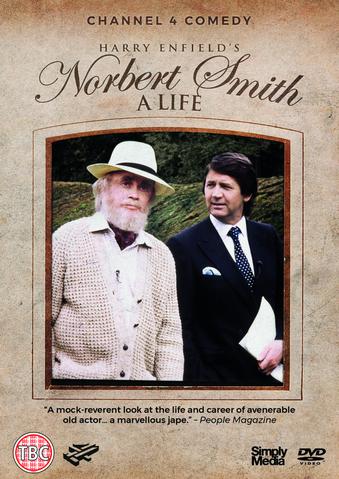
Norbert Smith: A Life – Simply Media DVD Review

Harry Enfield (b. 1961) first came to prominence in 1986 on Channel 4’s Saturday Live. The two characters he created with Paul Whitehouse – Stavros and Loadsamoney – quickly became public favourites, especially the obnoxious Loadsamoney. But since they only offered limited possibilities for development it wasn’t surprising that Enfield eventually tired of them and moved onto other projects.

In 1990 he would debut Harry Enfield’s Television Programme on the BBC, but just prior to this Norbert Smith: A Life aired on Channel 4. It was the first time that his skill with multiple characters within the sketch format had been given free reign and therefore is a key moment in his early career.

The format is simple. Melvyn Bragg is interviewing the venerable British actor Sir Norbert Smith. In-between the rambling interview sections are clips from the great man’s many films (dating from the 1930’s up to the present day). This is obviously just a device to stop the programme from appearing to be nothing more than a series of film sketches (which it clearly is, but since everything works so well I’m not complaining).

The inspiration for the programme would have been obvious to most people at the time. Broadcast in 1983, Laurence Olivier: A Life found Britain’s greatest theatrical knight in conversation with Melvyn Bragg. In some ways Norbert is a wicked parody of the 1983 original, even down to the aged Norbert’s appearance (he’s the dead spit of the elderly Olivier). But although there’s a visual similarity (and some crossover in films, such as Hamlet) Norbert Smith isn’t a pastiche of Olivier’s career – the subject of this programme was an actor much lower down the food chain.

His film debut – appearing alongside Will Silly in Oh, Mr Bankrobber! – is a case in point. This first parody sets the benchmark for the rest of the programme – it’s a wonderfully observed Will Hay pastiche, capturing the tone perfectly (the crosstalk and ever-increasing verbal confusion is spot on). It’s visually very appealing too, with just the right amount of dirt applied to make it look like a fifty year old film (plenty of hiss on the soundtrack as well).

Another example of this attention to detail can be seen in Lullaby Of London. A 1940 American film featuring oodles of British clichés, not only does the picture have that odd washed-out colour tone of the era but the sound is a little tinny as well. Josie Lawrence joins Harry and a fair number of extras for this extravagant song and dance number.

The Noel Coward inspired Hamlet is another stand-out section – especially since it so closely apes the visuals of Olivier’s own classic version. The Brief Encounter skit (featuring Felicity Montagu) is given a little extra spin when it’s revealed that their over-earnest performances are only in respect of an advert for Sudso washing powder (which has the classic slogan “it washes clothes”).

It’s Grim Up North (1962) is a typically depressing kitchen sink drama, but the same year Norbert would also take on a very different role – that of the father in Keep Your Hair On, Daddio – so clearly Norbert was an actor of some versatility. And around this time an alcoholic Norbert found himself ruthlessly probed on Head to Head. “Why are you so hopeless? Forgive me for saying this, but you’re a complete alcoholic and a lousy actor”. The unmistakable tones of Geoffrey Chater help to make this Face to Face homage even more enjoyable.

There are many other gems scattered throughout (such as Rover Returns Home where Norbert shares the screen with a young Michael Caine) but rather than listing them all (and spoiling the gags) I’ll mention just one more. This is easily my favourite – Carry On Banging. Featuring three Carry On stalwarts (Barbara Windsor, Kenneth Connor and Jack Douglas) it manages to pack a breathtaking number of innuendoes into just two minutes.

“Now listen, we want you to pull them down and if you don’t, we will”.

“Those unsightly erections of yours are a danger to us all”.

“That man there, he threatened to give me a big stiff one”.

And the killer line ….

“Let us all have a little discussion, where you can all put over your points of view. Yes, let’s have a mass debate”.

With Paul Whitehouse not contributing, Enfield co-wrote Norbert Smith with Geoffrey Perkins, no slouch himself as a writer or performer. And although it only runs for 47 minutes, there’s so much packed in that it seems to be longer.

It’s a pity that there’s no special features or additional footage, which means that whilst this is a treat, it’s a very short one. But given the quality of the programme it’s certainly something I have no hesitation in recommending. A comic gem, it’s a joy from beginning to end.

Norbert Smith: A Life is released by Simply Media on the 16th of July 2018. It can be ordered directly from Simply here. Quoting ARCHIVE10 will apply a 10% discount.

Angels – Case History (6th October 1975)

c1

Case History opens with Jo and Ruth making their way to work in something of a freewheeling style. It comes complete with an encounter on the bus with an old woman who presents them both with an orange and then praises the work they do! This early scene reaffirms their tight bond (it’s almost them against the rest of the world) and the lighthearted attitude to life that they share.

There’s some familar faces lurking on the men’s ward today. Mr Collins (Lewis Fiander) is a bitter man – angry at his illness and all those around him. Even Jo – who can charm most people – isn’t immune to the sharp edge of his tongue. The irrepressible Mr Slingsby (Richard Davies) also causes Collins some irritation, but it’s all water off a duck’s back for the voluble Welshman.

You know what you’re going to get with Davies. Slingsby is a loudmouthed joker, eager to share the delights of the page three lady with his fellow patients (and also Jo, who delightfully tells him that she’s just as well equipped as the paper lady is!). He also loves to discuss the gory details of his illness with the others. They’re not so keen ….

They clearly move Jo around the hospital on a regular basis. First she was on a male ward, then a female ward and now she’s back on a male ward. And for the first time Ruth is on the same ward as her. Given the rapport which has been established between them, this makes sense.

I’m afraid to say that my knowledge of Lewis Fiander doesn’t really extend beyond his idiosyncratic turn in the Doctor Who story Nightmare of Eden. Collins is a very different sort of character (he doesn’t have a silly accent, for a start). With Jo having selected him as one of her case studies, she makes an effort to get to know him, although his extreme reticence and hostility doesn’t make this easy.

The arrival of Mr Cooper (James Grout) is a major event. A great shame this was just a one-off appearance as he’s excellent as a traditional force of nature consultant. Breezing from bed to bed, dispensing the odd encouraging word, Grout is in his element. But he can also switch to serious in a heartbeat – witness the murmered conversation he has with Dr Khan (Tariq Unis) after they’ve seen Slingsby. It’s plain that (despite his cheerful front) Slingsby is far from well.
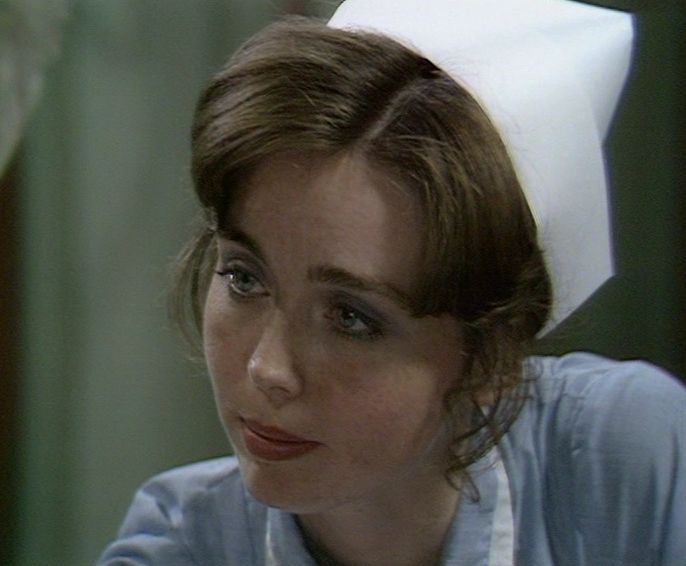
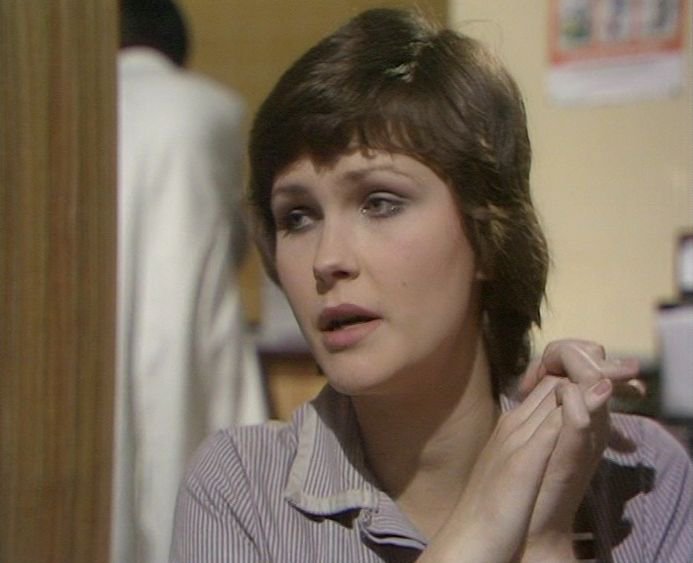
Collins’ bleak mood is seen again when he tells Mr Cooper that he’d be better off dead. Jo and Slingsby (both listening in) are given silent reaction shots. He’s still the topic of conversation when Jo and Ruth head off to the park for lunch. This is a nice little scene – it gets us away from the claustrophobic feel of the hospital and also allows the two girls to indulge in a spot of good natured bickering (Jo’s latest boyfriend and Ruth’s bunions are amongst the hot topics).

Coronation Street and Z Cars were the two series where writer Leslie Duxbury mainly plied his trade. His first Angels script is a decent character piece, with Collins’ fraying state of mind the centrepoint. Jo’s desire to find out why he’s so unhappy is also a major theme – for her, sending the patients home happy is just as important as sending them home cured.

Sister Easby takes the opposite view. Getting too involved with the patients is always a bad move since it’ll eventually wear your soul down. Much better, she tells Jo, to keep your distance. Once again we see the emotional Jo reduced to tears, although in this episode it’s only a brief sob which occurs in the privacy of the locker room.

And despite her previous words, it’s eventually Sister Easby who gets to the bottom of Collins’ angst. Across the episode Fiander is gifted some verbose speeches which he handles very well. And although this means that Case History is a little florid in places, it’s still a very engaging watch.

c2.jpg

Angels – Off Duty (29th September 1975)

n1.jpg

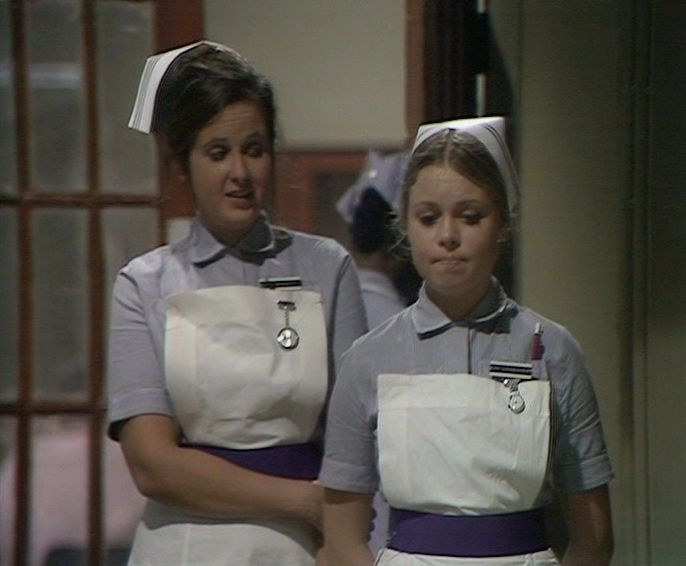
There’s a strong school vibe to the opening scene (the trainees are performing various exercises under the eagle eye of Miss Windrup). Maureen is her blue-eyed girl – making a bed with consumate ease – whilst Pat continues to be a problem pupil (her attempts at bandaging aren’t terribly impressive).

The school feel continues when Pat realises that they’ve gone past their allotted time by several minutes. Miss Windrup makes the point that if this was real life they wouldn’t just down tools and let their patient bleed to death. So the less than impressed Pat is told to have another go. Also disgruntled is Sarah Regan (Debbie Ash) who’s forced by Miss Windrup to clean the blackboard ….

Once we get past this scene, the hospital is left behind as Pat and Maureen go out for the evening, with the end result being that their friendship is severely tested. This shouldn’t come as too much of a surprise though – ever since they encountered each other for the first time it’s seemed plain that their relationship – due to their totally different characters and outlooks – is a rather brittle one.

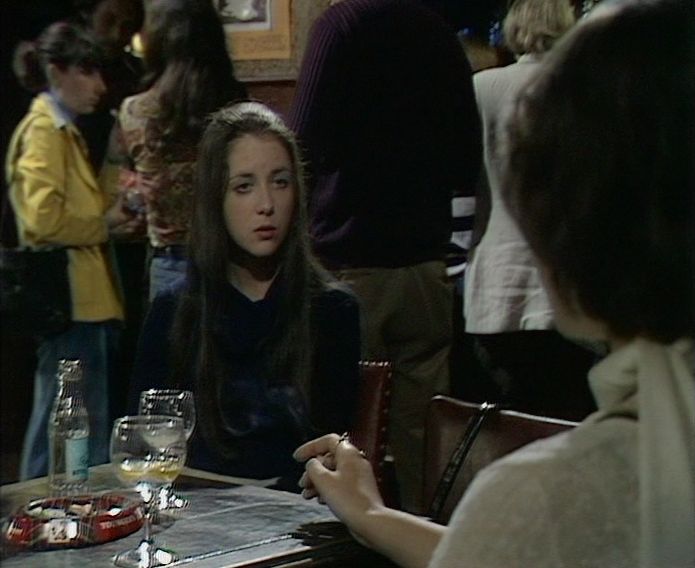
To begin with, their differences are teased out in an amusing way. Maureen is an incurable optimist (remarking that it’s a lovely evening) whilst Pat is an equal and opposite pessimist (she replies that it’s just started to rain). The girls are heading out to see Maureen’s aunt, Mrs Riley (Sheila Manahan). Although it’s a bit of a trek to reach her – she lives on the other side of London – Maureen assures Pat that it’ll be well worth it. The lovely food, the warm welcome they’re going to receive …

This exuberant build up suggests that the reality will fall somewhat short. And so it proves. The food appears to be average at best whilst Mrs Riley is a fairly dour conversationalist. These are nice scenes, with Maureen’s awkwardness and Pat’s irritation both being palpable.

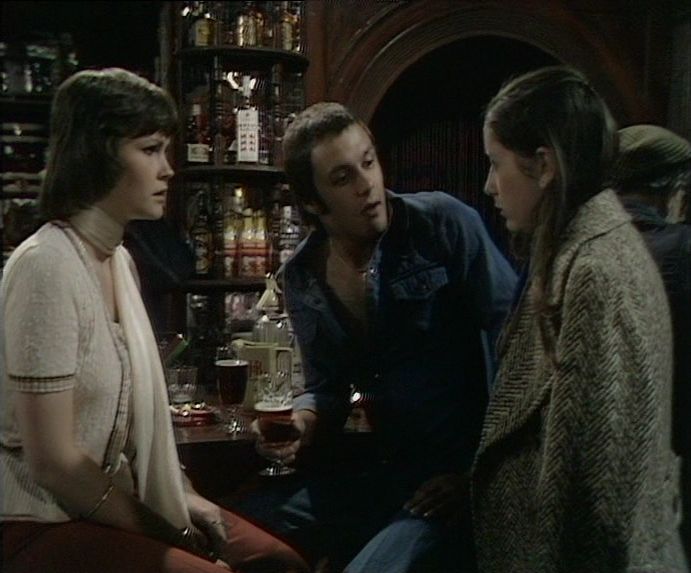
Things look up when Mrs Riley’s son, Barney (Karl Howman), returns home. Barney is something of a proto-Jacko (it only takes him a few seconds to laser in on Pat). It seems plain that Pat quickly organises a secret assignation with him (although we have to wait a while for this to be confirmed). But whilst the audience would have already picked up the vibes (Pat’s keen to pop in to a pub on the way home, but doesn’t really want Maureen around) it takes much, much longer for the penny to drop with Maureen.

Her painful lack of life experience is laid bare over the course of the lengthy pub scene, which lasts for the remainder of the episode. This is manifested in various ways (not realising that the singer is a man dressed as a woman, say). Another example is the fact that the strictly teetotal Maureen is later plied with alcohol by Pat and the recently arrived Barney in an attempt to get rid of her. A rather cruel act on Pat’s part (despite the fact she later tries to laugh it off as a joke) considering she knew that Maureen was abstaining on religious grounds.

The evening from hell then careers downhill a little more with the arrival of Beryl (Jane Lowe). A middle-aged nurse who trained at St Angela’s but now works at another hospital, she pours out her relationship woes to Maureen. This revolve around her friendship with someone called Alex, who does work at St Angela’s. The inference is that Alex is a married man, but the fact that Beryl never refers to them as “he” is more than suggestive.

When Alex turns up, we discover that it’s the formidable Sister Easby. The precise nature of their relationship remains nebulous though – are they still sharing rooms because that’s what nurses tend to do or is there a stronger bond? We’ve already seen with Shirley that certain nurses can find themselves isolated from their peers, so it wouldn’t be unusual if two such unloved people continued to huddle together for companionship.

If Maureen acts rather dimly for the duration of this episode, then Pat matches her by being boorish and insentive (the highlight being when she teases Maureen that all her family must be members of the IRA) . So whilst neither emerges with distinction from this one, possibly the showdown in the pub will help Maureen to toughen up and be a little less trusting. Time will tell.

n4.jpg

Angels – Staff (22nd September 1975)

staff 01.jpg

Four episodes in, Staff offers something of a change of pace. With Pat, Maureen and the other new trainees absent, the episode is solely centered around one of the women’s wards. This too is a departure as up until now we’ve only observed the male patients.

There’s also more of a sense of just how tiring and frustrating nursing can be – the night shift swopping notes with their day replacements, commenting on how hectic their shift has been – whilst the character of Staff Nurse Linda Hollis (Janina Faye) helps to illustrate the difficulties faced when attempting to juggle a career and a marriage. This is shown via a handful of fairly terse phone calls with her husband – from the tone of the one-sided conversation it’s plain that he expects her to be home bang on time ….

Previously we’d seen how Shirley, operating as a temporary Staff Nurse, sowed discord – thanks in part to her own inexperience (although the intransigence of Jo didn’t help). Linda runs quite a different ship though. All the nurses under her charge are made to feel part of a team and despite the hectic pace, Linda’s good humour and positive nature never flags.

No sooner does Jo transfer to this female ward, then Shirley also appears to lend a hand. This inevitably leads to the same sort of clashes observed in previous episodes. One of Jo’s fellow nurses – Elaine Fitzgerald (Taiwo Ajai) – suggests that she should make more of an effort and try to find some common ground with Shirley.

Up until now Clare Clifford’s been called upon to be mainly strict, hectoring and disapproving (with only a brief hint of vunerability). But Jo’s friendly overtures towards Shirley gives Clifford rather more to work with – for the first time we realise just how lonely and isolated Shirley is.

Most nurses who don’t live on site share rooms, but Shirley lives alone. Jo, attempting to find the positives, comments that it must be nice to have a bit of peace of quiet, but the truth is that nobody has offered to share with her. Jo, continuing to build bridges, tells her that she knows somebody who’s looking to share and suggests a meeting.

This one positive act causes Shirley to blossom – she allows Elaine to do up her hair and swops her severe glasses for contact lenses. But when Jo is forced to cancel the visit, the status quo is restored. This is marked by Shirley removing her contact lenses and putting her glasses back on. Back to square one.

The patients are a diverse group of individuals. They’re easily the most substantial characters we’ve seen so far (in the first episode the patients did little except add a spot of colour to proceedings). Mrs Wilson (Rosalind Elliot), having miscarried, is in a highly depressed state and the arrival of her mother (played by Hilary Wilson) simply makes her feel worse. Wilson, a highly distinctive actress who specialised in playing disapproving types, makes an impact with her brief scene. Mrs Wilson Snr’s parting words for her daughter, delivered via Linda (“tell her I love her”) is a rather heart-breaking moment.

Elsewhere, Mrs Joylon suffers a nasty nosebleed whilst Miss Beatty (Margaret Boyd) faces the prospect of moving into a nursing home. Having suffered a stroke she’s unable to speak, but is still able to express her feelings plainly enough. As ever, it’s Jo who’s the positive one – telling her that the place she’s going to is first rate – even if her later private thoughts are rather more pessimistic.

Toni Palmer, as Mrs Jones, offers a wonderfully vivid performance. Mrs Jones is a regular visitor to the hospital – thanks to a series of suicide attempts. She’s remarkably cheerful though, since none of the attempts have been serious (they’re simply designed to elicit some attention from her husband). Mr Jones has always rallied around in the past, but not this time. When she learns that he won’t be coming to visit, her collapse is dramatic. Like Hilary Wilson, Palmer was a very recognisable televison face, and is good value during all of her scenes (especially the last few).

If we can believe IMDB, then Staff was the first of only four Angels scripts penned by Anne Valery. That’s very surprising if so, since this episode is a very strong one. It may lack any major plotlines, but it’s rich in smaller character moments.

staff 02.jpg

Angels – Appraisal (15th September 1975)

It’s quite pleasing that the opening scene switches focus from Jo walking down to the corridor one way to Pat heading in the opposite direction. The pair don’t have any direct contact in this episode, but both – in their different ways – are later shown to be chafing against authority.

Pat’s only been in the hospital a few weeks, but already has fallen foul of Miss Windrup. Miss Windrup has tagged her as someone who is more than capable, but is also inclined to be lazy and unfocused. Pat later admits as much – she’d much sooner spend her free time enjoying herself than studying in the library with Maureen.

Incidentally, it’s notable how cosy and comfortable Pat’s room now is (compare it to the bleak chamber from the opening episode). Pictures on the wall, a record player, plants and a portable television are just some of the trinkets she’s surrounded herself with. This is a reminder that she’s more than comfortably well off, whilst Maureen’s comment that she can’t join her friend (since she has to make her meagre money last the week) reinforces the point that in contrast Maureen has to live under more straightened circumstances.

Pat’s main bugbear is that she considers the majority of the training they receive to be pointless. But if Pat is keen to get stuck in on the wards straight away, the more diligent and cautious Maureen is happy to soak up every last minute of the exercises. The fact that Pat later does well in a training exercise (gaining praise from Miss Windrup) suggests that the natural order has been restored – Pat briefly struggled against the system, but is now compliant. At least for the moment.

But this plot-thread is very much secondary to the continuing travails of Jo. The previous episodes have already established her main strength – she’s excellent with the patients – but Appraisal lays bare the faults in her professional character. Today she has more patient interaction – Jo becomes friendly with Nigel (Keith Jayne), a teenager who’s desperate to go home – but as we’ll see, Nigel’s presence in the episode is mainly to generate the latest crisis point for her.

The boy reacts badly to the news that he has to stay in hospital for a few more days and Jo does her best to cheer him up. A piece of cake, left in his locker by his mother, might do the trick – but Jo is well aware that he’s not allowed any food containing wheat products. That she elects to turn a blind eye to this is simply asking for trouble ….

But that’s only one of the negative comments which Sister Easby (June Watson) directs Jo’s way during her appraisal. The lengthy scene between the pair is this episode’s undoubted highlight. Given that visually there’s not a lot to work with – one small office, two actors – director Derek Martinus nevertheless manages to make this long scene flow nicely by employing a variety of camera angles. Close-ups are always effective – especially after Jo has been reduced to tears – but side-on shots (moving from Sister Easby to Jo) also work well.

Of course, most of the heavy lifting has to be done by the actors and neither disappoints. Last episode we’d had evidence that Jo wasn’t really a team player and today Sister Easby spells it out to her (Jo’s the sort of nurse who loves to chat to patients, but this means her colleagues are forced to do most of the mundane, routine chores). Jo doesn’t react well to this criticism (she considers the hospital to be a dehumanising place and that she’s one of the few who puts the patients first). Unsurprisingly, Sister Easby pours cold water on these idealistic comments.

But just like Pat, Jo is eventually brought back into the fold (although her teary impassioned diatribe is much more dramatic than Pat’s low-key griping). That Sister Easby sends Jo off to do what she does best – holding the hand of a newly arrived and deeply confused patient – suggests that the senior nurse knows where Jo’s strengths lie. The question is whether, over time, she can learn to become a team player ….

Angels – Initiation (8th September 1975)

a2.jpg

Training begins in earnest. Angels doesn’t shy away from the routine and mundane aspects of nursing (we’re treated to a demonstration of bed-making) but rather than being dull, these scenes help to create a sense of reality.

Whilst the new intake are learning the ropes under the tutelage of Miss Heather Windrup (Faith Brook), there’s more time to get to know the more experienced student nurses. Jo had already featured strongly in the previous episode, but today we meet her best friend and confidant, Ruth Fullman (Lesley Dunlop), for the first time. Both are also friendly with Sita Patel (Karan David), who is less well defined than either Jo or Ruth (her main character trait here is that she rarely uses speech contractions).

Their interlocking friendship excludes (either consciously or unconsciously) another student nurse – Shirley Brent (Clare Clifford). We saw Shirley briefly in the last episode, but today she really begins to emerge as a character in her own right. Due to sickness, Shirley has temporally taken over the duties of a staff nurse – something which the ebullient Jo is less than happy about.

The conflict between Jo and Shirley is easily the most engaging part of the episode. Jo might paint Shirley as humourless and petty, but it’s plain that she’s more than a little overwhelmed at suddenly being thrust into this position of authority. What she needs is support from her colleagues, but in Jo’s case there’s only a mild sense of hostility.

It’s good to be presented with a situation where neither Jo or Shirley are wholly right or wrong. The main flashpoint – they clash over whether a small child should be allowed onto the ward to visit their grandfather (Shirley says no, Jo says yes) – is especially instructive since it enables Shirley to be gently lectured by Miss Windrup. Jo may have overridden Shirley’s authority, but the net result is that the patient was cheered up (so it’s an instance where disregarding the rules and the chain of command had a positive impact). But how do you know when to break the rules? This is a sticky question …

It may not surprise you to learn that Miss Windrup is referred to as “Windbag” out of her earshot!

Pat and Maureen head out to see the sights of London. Once again, Maureen is reluctant to do anything that might be construed as fun, but Pat is eventually able to persuade her and both have an enjoyable day. There’s a sting in the tail though, as Maureen returns to find an ominous message has been left for her – she needs to ring home urgently.

A low-level of anxiety is created after she learns that her mother, still pining for her, is in a bad way. Will Maureen have to put her nursing plans on hold and return home to Ireland? No is the answer to that as no sooner is this thread established than we’re told that Maureen’s mother has now pulled herself together. This slightly anti-climatic storyline is a bit odd, but it’s the only misstep in a strong epiaode.

Jo’s faint pangs of remorse after her clash with Shirley then leads her to attempt to apologise. But when it comes to the crunch she simply can’t – leaving Shirley to walk off with her dinner to a table all by herself whilst Jo, Ruth and Sita continue to sit together. Unspoken though it is, Shirley’s isolation from the others is made quite plain.

a4.jpg

Angels – Arrival (1st September 1975)

Trainee nurses Patricia Rutherford (Fiona Fullerton) and Maureen Morahan (Erin Geraghty) arrive at St. Angela’s Hospital ….

Given that the viewer is discovering St Angela’s for the first time in this debut episode, it makes dramatic sense to follow Pat and Maureen on the same journey. The differences between the two are made abundantly clear during the first few minutes – Pat comes from an affluent English family whilst Maureen hails from humbler Irish farming stock.

Pat has the air of a dilettante – she could do almost anything she wished (provided she’ll allow her indulgent father to pull a few strings) but has decided on nursing. Partly this is because she believes it might be a “laugh” although she’s also aware of both the grimmer realities and the rewarding aspects. Her father, Lawrence (Geoffrey Palmer), is exasperated by her choice, but is ultimately supportive. The conflict between the two seems mainly designed to articulate the reason for Pat’s choice (the same sort of mild familial strife applies to Maureen).

Maureen lives in the bucolic Irish countryside, but has her heart set on moving to England in order to qualify as a nurse (she could do this in Ireland, but it would be a longer process). Leaving for England is the source of divergence between Maureen and her mother (played by Ronnie Masterson). Maureen is shown in various ways to be a quieter, more repressed and innocent character than the outgoing Pat (her reluctance to take a drink, for example). This is presumably why her mother is convinced that Maureen’s sojourn in England will change and corrupt her.

Both travel to St Angela’s by themselves, although Maureen’s is obviously the longer and much more arduous journey. Another obvious difference between their mindsets can be seen after they disembark from the train on the last leg of their trip. Pat, with her natural air of authority, finds a guard to help carry her bags but Maureen is forced to struggle on alone. Pat then hops into a taxi in order to travel to St Angela’s in comfort whilst Maureen makes her way via public transport.

Once they both finally arrive, they – along with the rest of the new intake – are introduced to the intimidating Sister Broomstock (Elspeth MacNaughton) who lays down some of the groundrules. Sister Broomstock (“Broomstock not Broomstick” she helpfully tells them) is the archetypical battle-axe figure (easy to imagine Hattie Jacques in the same role). These scenes are interesting mainly for the way we learn exactly what amenities are available to the budding nurses – a shampoo and set for a handful of pennies sounds very good value ….

Their induction continues later at a slightly awkward coffee evening. There’s plenty of polite laughter as the overawed new starters begin to take stock of their surroundings and the training schedule which lies ahead of them. The number of lines on a nurses’s hat (one for a first year trainee, two for two years, three for three years, no lines for a fully qualified nurse) is another interesting little touch.

Given all we’ve seen so far, it’s fair to say that Pat and Maureen have little in common. But – partly because they’re rooming next to each other – they find a friendship developing (initiated by Pat who, as per everything else we’ve witnessed so far, is clearly the proactive one).

Whilst Maureen, Pat and the others are adjusting to their new lives, work on the wards continues. Jo Longhurst (Julie Dawn Cole) would seem to be the ideal that they’re all seeking to emulate. Endlessly patient and cheerful, she corrals her ward with good humour and understanding. Effortlessly able to bat off some of the (good natured?) sexist banter from the patients, Jo makes an immediate impression.

A solid opening episode then. True, it’s a little stilted in places but all the building blocks of the series have been put in place. We know what sort of people Pat and Maureen are, the question is how they will change and adapt once the training process begins in earnest.

Sez Les – Series Four, Show Six

l1

Several times during the last series, Les took to the streets in order to confound the residents of Leeds with some hidden camera stunts. This idea gets another outing today – he’s disguised as a German tourist – although as before it’s difficult to believe that he wasn’t identified. This quibble not withstanding, the grimy film sequence does provide a brief window into a vanished world, so it’s of interest from that standpoint.

Today’s first studio sketch is a little different from the norm. It’s mainly just Dawson (as a police sergeant) on the phone to someone who may or may not be royalty. The answer to this question is provided when one of his colleagues walks in with a polo mallet. A break from the slapstick seen previously, but it’s hardly a rib-tickler. One innovation is that the same set is used again in part two for another sketch.

American singer Esther Marrow impresses with a rendition of the Love The One You’re With. The performance is given a little extra punch by the way that the camera moves around – at one point it’s positioned behind her, giving the viewers an unusual shot of the watching audience.

The Skylarks are back! With the assistance of the Syd Lawrence Orchestra they chug very nicely through We’re In The Money. Although since the Denys Palmer dancers were dressed in stockings and suspenders I’m afraid my attention wandered a bit …

After the break there’s something of a curio. Dawson had made a few attempts to break into the music business, but he would never enjoy the success of some of his contemporaries such as Ken Dodd. Promise Me, released by Decca in 1971, failed to set the charts alight but it’s still interesting to hear it (the song accompanies a filmed item featuring the journey taken by Dawson and his significant other – from childhood sweethearts to old age pensioners).

Peter Noone pops up with a jaunty version of the Buddy Holly classic I Guess It Doesn’t Matter Anymore.

Although the audience were generally very warmly approving towards Dawson’s convoluted monologues, occassionly the odd line fell flat. This happens today (“Pilbeam Bottlecrud was a strange looking woman. She was short, fat and always wore a black dress. When you first met her it was like shaking hands with a ginger beer”). But there’s something about the way Dawson pauses to acknowledge the sparse laughter, raises an eyebrow and then presses on which keeps the audience on his side.

l2.jpg

Tony Hancock (12 May 1924 – 25 June 1968)

608e273e4a0ec5b4ee1de9b0c9599a3b.jpg

Today marks the fiftieth anniversary of Tony Hancock’s death. This has generated a crop of newspaper and magazine articles, some – unsurprisingly – focussing on his sad demise.

The essential beats of the story should be familiar to most – the way his decision to gradually divest himself of all his comedy associates (first Kenneth Williams, then Sid James and finally Galton and Simpson) sparked a slow but inevitable decline. Spike Milligan’s famous quote (“he shut the door on all the people he knew, and then he shut the door on himself”) seemingly provides the final word.

And yet … this has always seemed to be not quite the whole picture. For one thing, it’s hard to argue against Hancock’s assertion that his comic character needed to grow and change. Sir Peter Hall (speaking in the Heroes of Comedy programme on Hancock) labelled the Lad as a product of the fifties (comparing him to Kingsley Amis’ Lucky Jim). If so, then carrying this persona unchanged throughout the next decade simply wouldn’t have worked.

The assumption seems to be that Galton and Simpson could just have continued churning out comedy classic after comedy classic for Hancock, but how many more stories were there left to tell? Possibly a move into a regular film career would have been best. It’s well known that Hancock grew to dislike and fear the pressure of the television studio environment – not least due to the problem of having to learn so many lines. Whilst The Government Inspector (bafflingly, still not available on DVD) suggests that – like Max Wall – he could have pursued a dramatic career.

It’s all what ifs of course, but the notion that if only Tony had stuck with the old team everything would have been fine does seem a little flawed. For those who want to dig into the story deeper, there are a number of books available (some much more lurid than others). John Fisher’s biography is by far the best – an unashamed fan and admirer, he nevertheless didn’t shy away from the darker moments. But he also made the observation (which few others have) that Hancock’s life, post Galton & Simpson, wasn’t all downhill. During the later years there were still high spots to be cherished.

But even when the details of Hancock’s final years have been picked apart for the umpteenth time, we still have most of his best work available to enjoy. And this should always be Tony’s enduring legacy.

For any newcomers, a few suggestions to get started.

The Blood Donor/The Radio Ham

These two television episodes, from his final BBC series, were later re-recorded for an LP release and it’s these audio re-recordings (released and re-released numerous times over the years) which are my preferred versions. Slightly tighter and better performed than the television originals (plus The Radio Ham has a little extra value – “If I’d had me key I wouldn’t have knocked on the door, would I?”) they’re an excellent introduction to the world of Tony Hancock.

The Last Bus Home

One of the later radio HHH‘s with the core team of Tony, Sid and Bill, this is simply a joy. Like Sunday Afternoon At Home, it makes a virtue out of the fact that very little happens (they wait for the bus, they can’t get on the bus, they have to walk home). But there’s still so much to enjoy – especially Tony and Sid’s punch-up (“at least I know where I stand”). The way that Sid dissolves into giggles after Bill announces that the bus is finally coming is a lovely unscripted moment.

The Missing Page

An obvious television HHH choice, but that’s because it’s very, very good. Tony and Sid work beautifully together and if the plot doesn’t quite hold water, with so many wonderful lines (not to mention Tony’s beautifully performed library mime act) I’m not complaining.

th