At the end of episode one the Doctor decided to join Doran in the pit. This was rather unexpected, although it appears that he merely planned to hang about until everyone had left and then climb out. Quite why no-one could spot him from the pit entrance is a slight mystery, but no matter.
There then follows the (in)famous scene where the Doctor attempts to climb his way out of the pit with the aid of a book, Everest in Easy Stages. Unfortunately it’s in Tibetan so he then pulls out another handy book – Teach Yourself Tibetan. If you’re not a fan of the humour present in the series at this time then I don’t think this gag is going to impress.
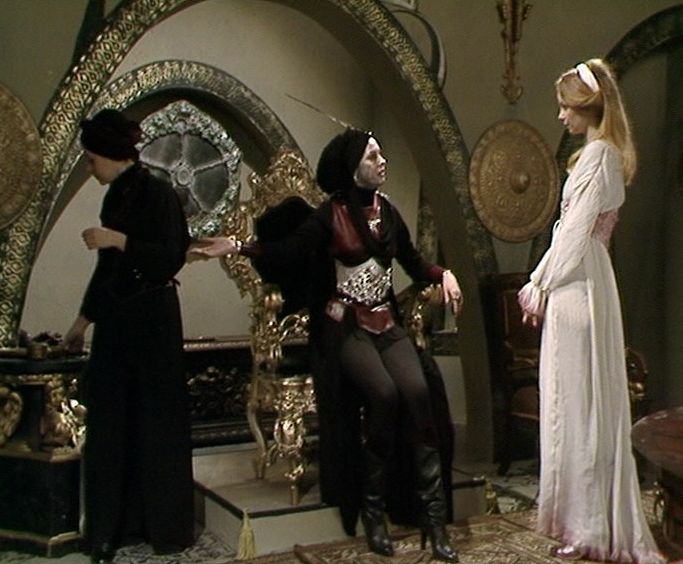
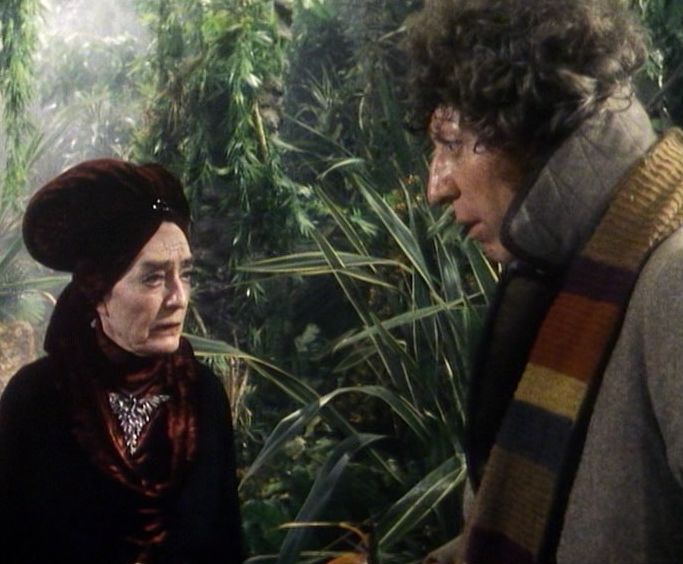
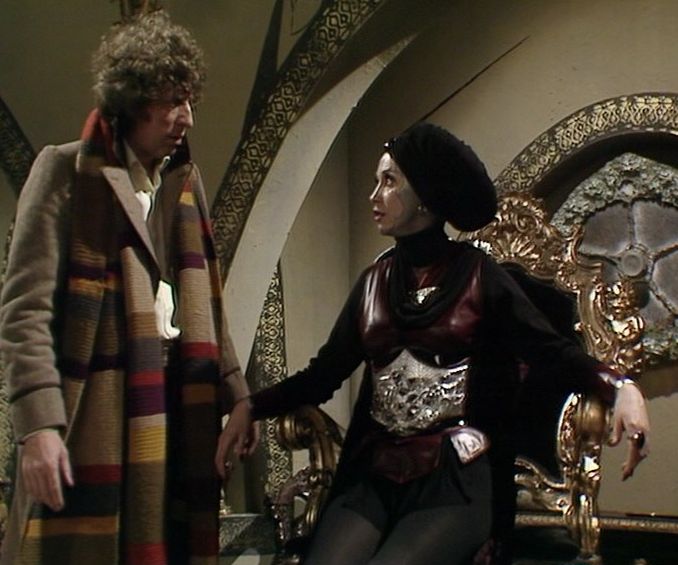
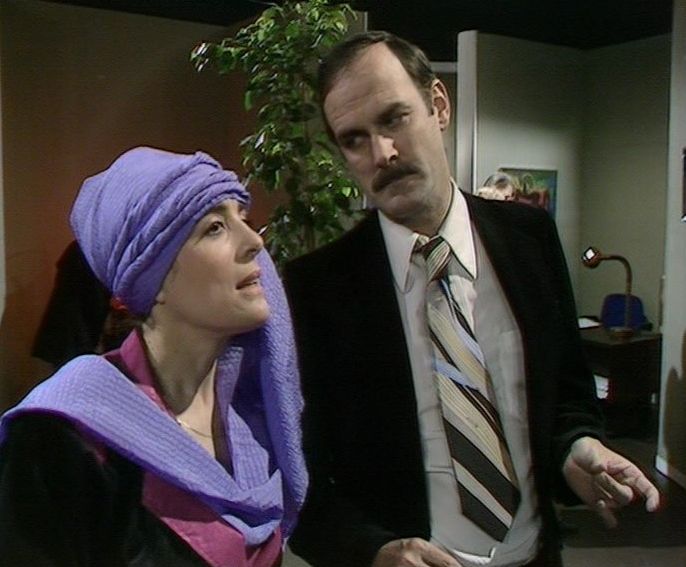
With the Doctor apparently dead, Adrasta is keen to utilise Romana’s knowledge to destroy the creature. There’s a nice hard edge to Adrasta, which is demonstrated after she gives the wise-cracking Romana a swift slap. Ouch!
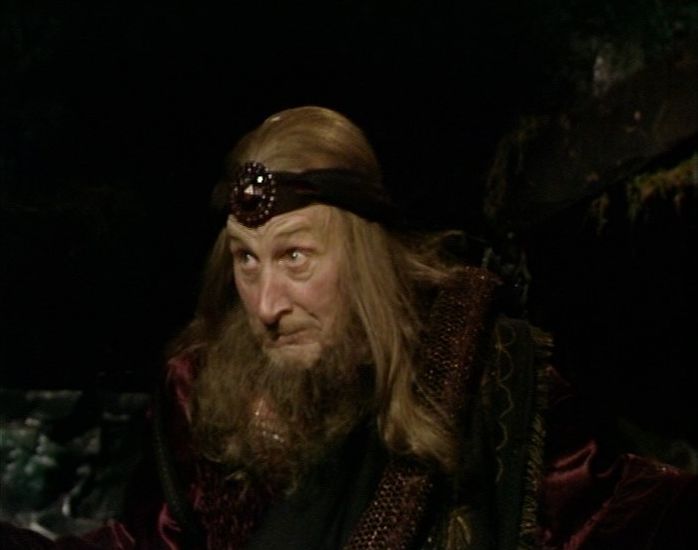
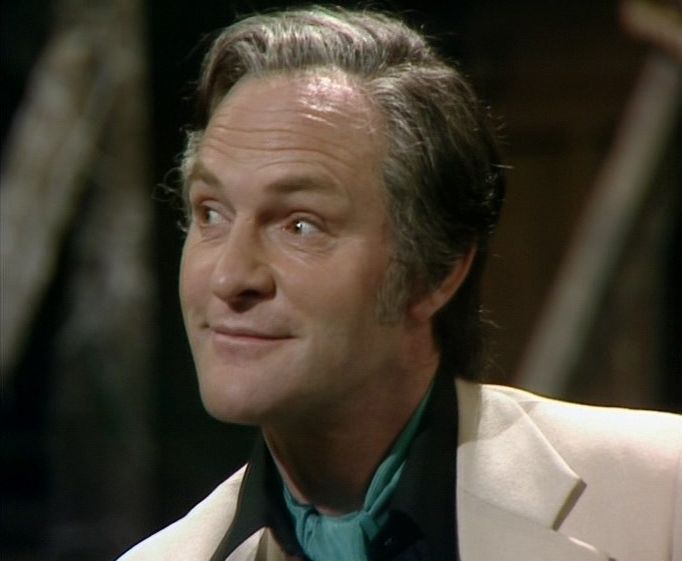
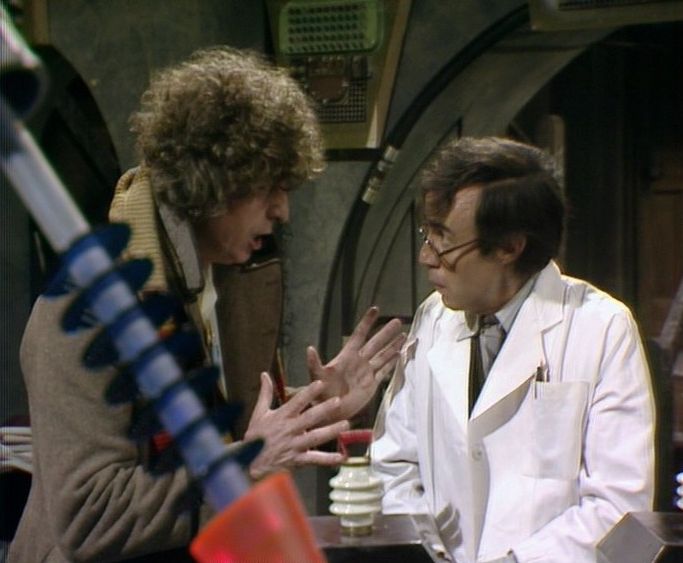
The Doctor, having fallen into the pit, then makes the acquaintance of Organon (Geoffrey Bayldon). Bayldon is simply delightful as the cowardly astrologer and is obviously one of the serial’s trump cards. He gets plenty of good lines (“Seer to princes and emperors. The future foretold, the past explained, the present apologised for”) and works excellently with Tom Baker. Tom always seemed to thrive when he had strong actors to bounce off against and Bayldon is a fine example of this.
And then the creature turns up. It’s not good (although the model shots don’t look too bad). What’s fairly astonishing is that none of the production team appear to have seen it before it was unveiled on the first studio day. You’d have assumed someone would have kept an eye on how things were going, but no. In the post-mortem that followed, Graham Williams put the blame firmly on the shoulders of the visual effects department, but this seems more than a little unfair. With a very limited budget, just how do you create a monster of almost unimaginable size?
That neither Williams or Douglas Adams ever stopped to ask whether such a creature could be effectively realised on Doctor Who’s budget is very perplexing. But whilst the monster doesn’t impress, the byplay between the Doctor and Organon does.
ORGANON: Ahem. What do we do when we find the monster? Have you thought of that?
DOCTOR: Shush. I don’t know.
ORGANON: You don’t know? What do you mean, you don’t know?
DOCTOR: I haven’t made up my mind yet.
ORGANON: Well, haven’t you got a plan?
DOCTOR: A plan? Oh yes, I’ve got a plan.
ORGANON: Well then?
DOCTOR: I just don’t know how to apply it, that’s all.
Watching episode one with no knowledge of the (very large) problematic monster to come, this is more than decent fare. The jungle filming at Ealing is glossy and well mounted (that Tom is made to look a little sweaty heightens the illusion that we’re in a lush, tropical environment).
Adrasta might be a rather one-note villain, but Myra Frances does her best with the material and the fact she’s rather easy on the eye doesn’t hurt. There’s also a gang of comedy bandits lurking about, led by Torvin (John Bryans). Torvin is the least subtle Jewish stereotype (“my lovely boys”) you’re ever likely to see, for all the world he seems to be playing Fagin from Oliver Twist.
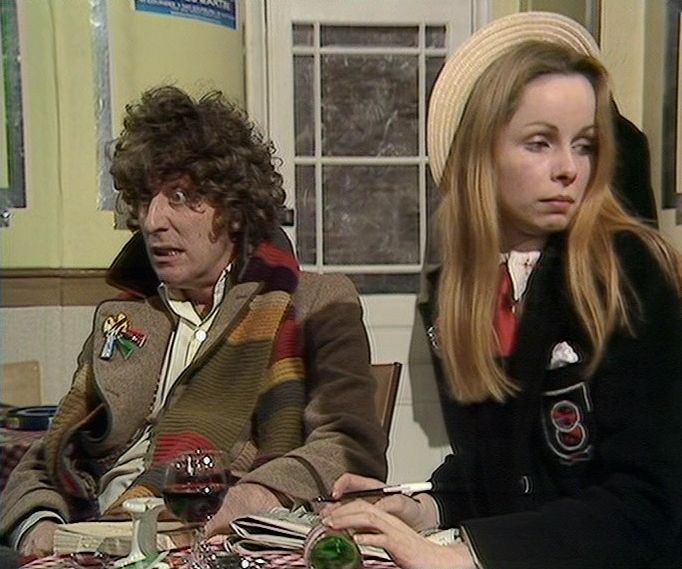
I have to confess it was only recently that I connected him to his Blakes 7 roles (Bercol and Shrinker) which just goes to show what a beard and a broad accent can do. Romana is captured by Torvin and his associates, although she’s not terribly impressed by them. “I’m a traveller. I’m a Time Lord. And I am not used to being assaulted by a collection of hairy, grubby little men”. Few actresses could do haughty like Lalla Ward, it just seems to come naturally ….
As an actor, Terry Walsh was a great stuntman. Bless him. But it makes sense to give him a speaking part, since his character, Doran, would be the next victim to be thrown into the pit to be consumed by the mysterious creature. And the sight of Walsh’s terror stricken face as he spies something off-camera, glowing green, is another well-mounted moment. At present, with the creature still unseen, the imagination can work overtime to create an impression of what it could possibly look like.
I wonder if the reality will match our imaginations? Next time we’ll find out.
Both the Doctor and Scarlioni have one last encounter with the Countess, although Scarlioni’s is rather more deadly. The Doctor once again switches from playful joshing to a more serious persona in a (double) heartbeat. Tom’s in full pop-eyed form here. Whereas the Count once again gets to show his true features, which comes as something of a surprise to his wife ….
This is another of those odd moments. The Egyptian scroll depicting a splinter of Scaroth had white skin with a green blobby face – was this a touch of artistic licence, or are all Scaroth’s splinters like that? It would make undressing a little easier, as surely otherwise the Countess would have noticed that her husband was not as other men. There’s the possibility that they shared separate bedrooms, but the way that the Countess went on the hunt for the Count at the end of the first episode implies otherwise.
I also have another burning question – how did Scaroth manage to make face masks throughout time and why did he always use the same face? I’d have assumed he’d have wanted a touch of variety.
John Cleese and Eleanor Bron pop up briefly and are excellent. But everybody knows that.
There’s a chance to luxuriate with Ian Scoones’ modelwork again as the story reaches its conclusion. Unlike the cut-price effects on, say, Nightmare of Eden, there’s no scrimping here – film, instead of videotape, was used and the difference is quality is startlingly obvious.
For once, Duggan’s propensity for hitting everything that moves turns out to be a good thing. It’s another gag moment, but it works – although the following brief scene (as Scarlioni returns to 1979) has always seemed to be something of a bodge. Possibly the clock was ticking ever closer to ten o’clock, which meant that something had to be cobbled together. What we have – a brief shot of Scaroth and Hermann, an even briefer explosion and then an abrupt jump cut to the Doctor and Romana saying farewell to Duggan – is a little disorientating.
DUGGAN: Where do you two come from?
DOCTOR: From? Well, I suppose the best way to find out where you’ve come from is to find out where you’re going and then work backwards.
DUGGAN: Where are you going?
DOCTOR: I don’t know.
They don’t make them like this anymore. Indeed, they didn’t really make them like this back then, which is all the more reason why City of Death should be savoured. Because it’s like a fine wine, with an attractive bouquet, etc, etc …
The Doctor jaunts back to 1505 in order to ask Leonardo Da Vinci why he painted so many copies of the Mona Lisa and runs into another mystery. A man – Captain Tancredi – who not only looks exactly like Scarlioni, but also has all of his memories ….
Peter Halliday is good fun as the harassed guard captain. Barely recognisable as the sadistic Packer from a decade earlier (maybe it was the hat) this is a character who’s no match for the wily Doctor. Even if Tom delivers one of the least convincing punches ever seen to knock him out. He should have taken lessons from Tom Chadbon.
Luckily for us, Tancredi is a very garrulous sort of chap who’s happy to stop and explain the plot (“the knowledge will be of little use to you, since you will shortly die”). This is something of a cop-out, but also a dramatic convention – how often does the villain not kill the hero, but instead chats to him about his wicked plans? Possibly Douglas Adams intended this to be an obviously groanworthy moment or it might just have been that the clock was ticking and he had to make an info-dump and quick.
Back in 1979, Romana and Duggan are too late to stop the Mona Lisa from being stolen. I haven’t mentioned how wonderful Lalla Ward’s Romana is yet, which is a terrible oversight. She’s wonderful. Whilst the debate about a female Doctor continues to rumble on, it’s plain that we pretty much had one right here – Romana as the Doctor with Duggan as her dim companion? Yep, I’d go for that.
The dialogue continues to sparkle as Romana propounds a theory. “Perhaps Scarlioni has discovered a way to travel in time. Yes, perhaps he went back in time, had a chat to Leonardo, got him to rustle up another six, came forward in time, stole the one in the Louvre, and now sells all seven at enormous profit. Sound reasonable?” To which poor Duggan can only respond that when he used to do divorce cases they were never like this!
Isolating the Doctor from pretty much all of the 1979 action during this episode obviously allowed Romana to take his place. She’s a more than adequate substitute, as seen when she dices with Scarlioni, but there’s still a hint of her inexperience (touched upon during the Key to Time season, where it was stated on more than one occasion that her knowledge lacked the Doctor’s practical edge). It’s hard to imagine the Doctor agreeing to build Scarlioni a time-field interface so readily, but since it needed to be done to advance the plot and also because Duggan was threatened it doesn’t make her seem too dim or easily duped.
One of my favourite moments of the entire story occurs right at the end of the episode. After Kerensky ages and dies before the horrified gaze of Romana and Duggan, the Count flashes them an amused stare. There’s something about Julian Glover’s coolness which appeals immensely.
The opening of this episode features some classic Tom Baker clowning (“what a wonderful butler, he’s so violent”) but back in 1979 many fans weren’t impressed. Browsing through the various fanzines which circulated during that era, it’s fascinating to take the pulse of Doctor Who fandom – for some it was pretty much a case of Tom Baker Must Go! The levels of humour during the Graham Williams era continues to be an issue which divides opinion – although this period of the programme has picked up in popularity somewhat in recent decades (this first occurred during the early nineties when JNT was firmly out of favour). That’s the nature of fandom, if someone’s out of fashion, like JNT, then that allows someone else (Williams) to be back in. Personally, I don’t have an issue with enjoying both Williams and JNT, but that’s a whole other debate ….
Let’s take a look at some of this Tom-foolery –
Doctor: Hello, I’m called the Doctor. That’s Romana, that’s Duggan. You must be the Countess Scarlioni and this is clearly a delightful Louis Quinze chair. May I sit in it? I say, haven’t they worn well? Thank you, Hermann, that’ll be all.
COUNTESS: Doctor, you’re being very pleasant with me.
DOCTOR: Well, I’m a very pleasant fellow.
COUNTESS: But I didn’t invite you here for social reasons.
DOCTOR: Yes, I could see that the moment you didn’t invite me to have a drink. Well, I will have a drink now you come to mention it. Yes, do come in, everybody.
DOCTOR: Romana, sit down over there. Duggan. Now, Duggan, you sit there. Do sit down if you want to, Count… Oh, all right. Now, isn’t this nice?
COUNTESS: The only reason you were brought here was to explain exactly why you stole my bracelet.
DOCTOR: Ah, well, it’s my job, you see. I’m a thief. And this is Romana, she’s my accomplice. And this is Duggan. He’s the detective who’s been kind enough to catch me. That’s his job. You see, our two lines of work dovetail beautifully.
The Doctor continues clowning as he, Romana and Duggan are escorted downstairs and locked into a small cell. It’s only then that his expression and manner changes and he becomes completely serious. This, for me, is key – I don’t have an issue with the Doctor mucking about if it’s made obvious (as here) that it’s just an act, designed to make his opponents underestimate him. So once Scarlioni’s gone, the Doctor reverts back to being business-like and focused.
I can’t see a great deal of difference between this style of performance and the clowning of Troughton’s Doctor (who could equally turn serious when it was required). In every Williams-era story that I can think of, the Doctor “earns” his right to clown, by demonstrating at various points that there’s much more to him than meets the eye.
The Doctor’s interaction with Kerensky is also interesting. Keresnsky tells him that although Scarlioni is a true philanthropist he doesn’t ask too many questions, to which the Doctor tells him that “a scientist’s job is to ask questions.” This harks back to similar exchanges in the past, such as with Sorenson in Planet of Evil, where the Doctor makes it quite plain that a scientist has definite obligations – not just to himself, but to the wider community.
Given the fact that the script was written at great speed (or re-written, depending on how many of David Fisher’s original concepts actually made the final cut) City of Death sparkles throughout. It would be easy enough to quote huge chunks of the script, but I’ll restrain myself to the odd choice selection, such as –
DOCTOR: What Paris has, it has an ethos, a life. It has …
ROMANA: A bouquet?
DOCTOR: A spirit all of its own. Like a wine, It has …
ROMANA: A bouquet.
DOCTOR: It has a bouquet. Yes. Like a good wine. You have to choose one of the vintage years, of course.
ROMANA: What year is this?
DOCTOR: Ah well, yes. It’s 1979 actually. More of a table wine, shall we say. Ha!
For the first time, the series had actually travelled abroad – which gave the production a considerable extra gloss. It was obviously something of a guerrilla operation though, as seen by the way that some members of the public appear to be a little dazed and confused as they pass through the various scenes (presumably Michael Hayes and the others just pitched up and started filming). This episode, as well as part four, certainly makes the most of the locations and – allied with Dudley’s music (the change of scenery seemed to have done him the world of good as well) – there’s a pleasing travelogue feel to these sections.
Yes, there’s nothing much going on during the first few minutes, but we’re in Paris! In the Springtime! The same trick would be repeated later, for example when Peter Davison’s Doctor spent the last episode of Arc of Infinity running around Amsterdam in a similar way to Tom’s Paris sprinting here. But it was very much a case of diminishing returns. Once you’ve seen the Doctor rushing through the streets of one town, you’ve rather exhausted that avenue ….
If one were being picky, I’ve never understood why the artist who sketches Romana was sitting directly behind her. Since that meant he couldn’t see her face, it seems a little odd. It’s mentioned in the script (“I wonder what he thought I looked like?”) but it’s still a slightly strange piece of staging. And his sketch (“a crack in time”) makes for a nice visual moment but goes unexplained otherwise.
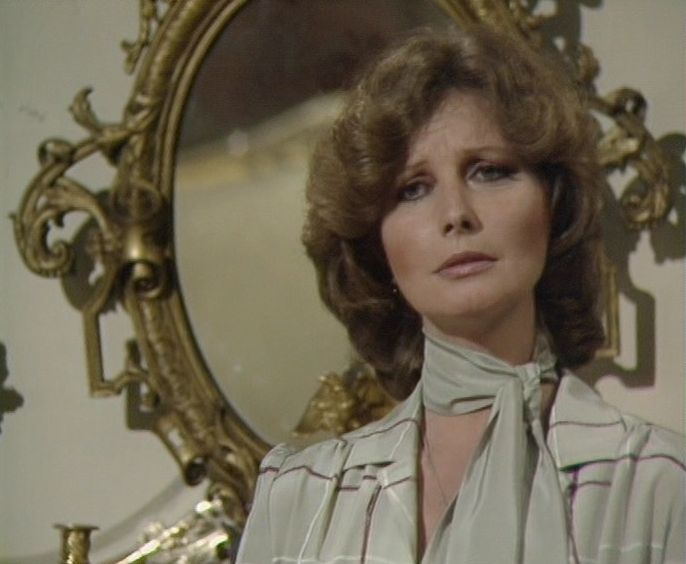
City of Death has two prime guest performances – Julian Glover as Scarlioni and Tom Chadbon as Duggan. Catherine Schell is also more than solid as the Countess, although her character does lie in the shadow of her husband throughout. David Graham’s Kerensky is amusing, although his comedy accent means that it’s impossible to take the character that seriously.
Glover just oozes class, charm and hard-edged villainy and without him the story would be much poorer. It’s possible to argue that he gives more of a James Bond style villain performance here than he did when he appeared in For Your Eyes Only.
There may be a few production missteps (tatty looking Daleks, David Gooderson squeezed into Michael Wisher’s old mask) and scenes which should have gone to a second take (“spack off!”) but the positives far outweigh the negatives.
Tom’s on fine form, switching from playful to serious in a heartbeat (for example, the moment when the Doctor learns he’s on Skaro). The Doctor might have plenty of gags, courtesy of Douglas Adams, but there’s also a pleasing somberness about him, especially in episode one as he and Romana explore the mysterious planet (the lack of incidental music increases this sense of unease).
Ken Grieve’s low-angled shooting favours the Daleks but it’s also used to good effect elsewhere. And these low angles make it clear that several sets, including the TARDIS, have ceilings – which is very unusual, especially during a period when the series was rather cash-strapped (you’d have assumed it was an extravagance the show could ill afford).
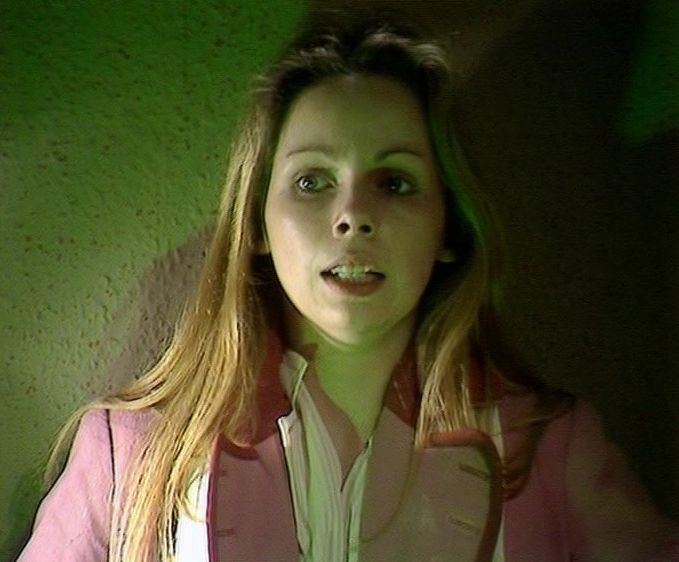
Lalla Ward is Romana. Within a few minutes any thoughts of Mary Tamm have been banished and although Romana II might be somewhat hysterical at times (especially when confronted by the Daleks) possibly we can put this down to post-regenerative trauma.
But her fear and panic during the Dalek interrogation scene does help to sell the notion that the Daleks are powerful and dangerous opponents, something which is rather negated as the story progresses. The nadir of this comes with the unforgettable sight of the sad suicide Daleks shuffling awkwardly across the Skaro plains.
Terry Nation ends as he began, with a trip to Skaro. Familiar Nation tropes are given a final outing – such as an obsession with radiation and the sight of the TARDIS made inaccessible. Although it’s a little bizarre that the radiation subplot goes nowhere (the Doctor warns Romana that they have to take radiation pills regularly, she’s then separated from the Doctor and the pills, but no matter since they’re never mentioned again). Also, it’s a little irritating that Nation seems to regard the Daleks as purely robotic, a far cry from David Whitaker’s devious schemers.
Holding back Davros until the end of episode two was a good move, since it gave the second half of the story fresh impetus. Although it does mean we have to consider the Davros problem.
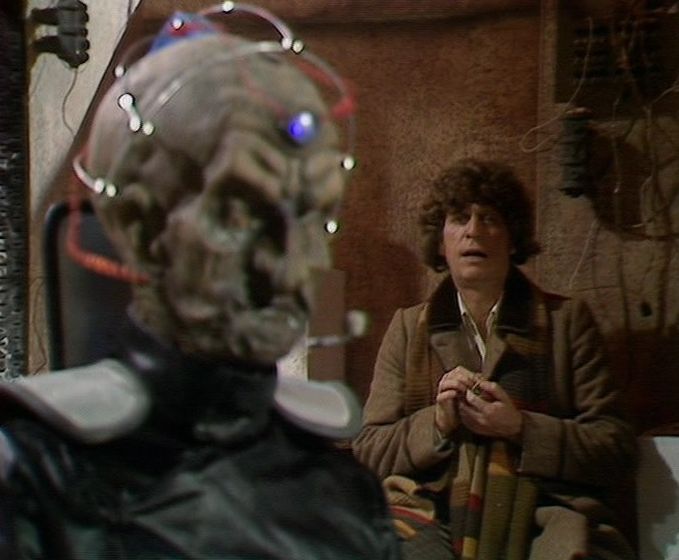
It seems that poor David Gooderson has never been regarded with a great deal of affection by the majority of Doctor Who fandom, although in his defence he was dealt a pretty rough hand. His Davros doesn’t have any of the signature moments that Wisher enjoyed and this – together with the reused mask – ensured he was always going to come off second best. But he’s by no means bad and is certainly closer to the original than Terry Molloy’s frustrated Ena Sharples from Resurrection was.
It may be comfortable and rather predictable, as only a Terry Nation story could be, but there’s plenty to love across these four episodes. So long Terry and thanks for all the scripts.
Go Girl was a thirteen part series from the early seventies about a crime-fighting Go-Go dancer (no really). The show was beset by financial problems and never made it to air. Most of it was then wiped, with only the pilot episode now known to exist (this did eventually surface on VHS a decade after it was made and is currently available as a bonus feature on the UK DVD of Take An Easy Ride).
Luan Peters is the eponymous go girl, Carol. Probably best known for playing an attractive New Zealand guest in Fawlty Towers, it’s obvious to see why Peters was cast – she’s perfect eye candy, capable of go-go dancing at the drop of a hat (and able to look remarkably cute in a bikini too).
It’s hard to work out whether Go Girl is a comedy, drama or something inbetween. Events kick off aboard a boat, where a group of well-heeled guests are eagerly tucking into a generous selection of food and drink. The direction favours extreme close-ups of the partygoers, which creates something of a claustrophobic feel. Meanwhile, elsewhere on board somebody’s rummaging through a safe ….
Following the title sequence (“when she moves, she is out of this world, she has got to be a go girl”) we cross to a swinging discotheque, where Carol and her friends are go-going like mad to Slade’s Coz I Luv You. After they take a break, a man called Juan (Walter Randall) trips her up and then plies her with champagne.
Long story short, he’s the man who’s stolen a pile of loot from the boat. Carol may be blonde, but she’s not completely dumb and doesn’t buy his smooth chat up lines (“you must think I’ve just fallen off a Christmas tree”). And the smile’s wiped off his face even further when he notices a man at the bar with a tattoo on his hand.
Juan disappears but he leaves behind an envelope. Carol and her boyfriend Adam (Simon Brent) open it to find …. a treasure map! They charter a boat to travel out to where x marks the spot, but by an incredible coincidence the boat is under the control of Rick (George Margo), who turns out to be the man with the tattoo (presumably Juan’s partner). Oh, and Juan’s on board, he’s just very, very dead.
It’s a ridiculous plot twist, which suggests this is more comedy than drama. The climatic fight on the very studio-bound island between Rick and Adam makes this even clearer.
Give Me A Ring Sometime is thirty minutes of gormless fun. It was never going to win any awards, but there’s plenty of incidental pleasures. Luan Peters is impossibly cute, medallion man Simon Brent (also the co-producer) is an effective sidekick whilst Randall and Margo both chew the attractive looking scenery with aplomb. The way the live-action gives way several times to brief animated sequences is also an interesting touch.
Shot in Spain, it comes across as an exploitation-style take on a typical ITC adventure series and whilst it’s no lost classic, it’s diverting enough.
One of the many joys of revisiting The Two Ronnies is the chance to hear Ronnie Hazlehurst’s iconic opening and closing music. It was just one of his many credits, as he also penned the themes for Are You Being Served?, Some Mothers Do ‘Ave ‘Em, Last of the Summer Wine, The Fall and Rise of Reginald Perrin, To the Manor Born, Yes Minister and Yes, Prime Minister amongst others. Not a bad CV to have ….
The below recording comes from his album, Sixteen Small Screen Greats, and is a fairly close approximation of the original (albeit with a Piggy Malone/Charley Farley sidestep in the middle).
Few themes, especially the closing section, are quite so evocative. It instantly conjures up a sense of warmth and security as the memories of decades gone by come flooding back. Thank you Ronnie H.
Written by Eric Idle, Spike Mullins, David Nobbs, Peter Vincent, Dick Vosburgh, Gerald Wiley. Additional material by Gary Chambers, Tony Hare, David McKellar.
Introduction/News Items
Doctor’s Sketch
Tina Charles – Remember Me
Ronnie B Solo – Statistics
Hampton Wick – Episode Eight
Class Sketch (with John Cleese)
New World – Tom Tom Turnaround
Ronnie C in the Chair
Christening Sketch
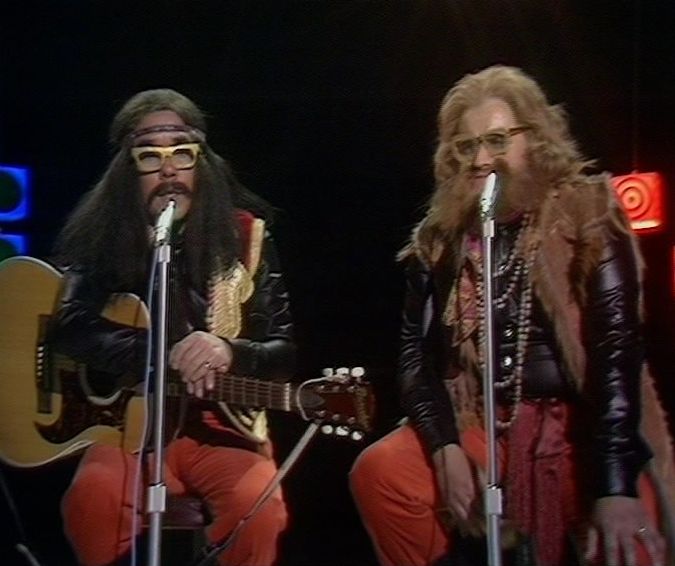
Big Jim Jehosophat and Fat Belly Jones
Notes: I rather like this news item. “The world’s greatest jigsaw puzzle designer was divorced today after his wife found he was keeping a piece on the side.”
No party sketch, instead it’s a sketch with Ronnie B as a doctor and Ronnie C as a patient who complains of not being there all the time (and promptly vanishes). He also tells the doctor that he gets this floating feeling sometimes and – via the magic of CSO – does just that. A fairly indifferent effort, although Cheryl Kennedy as a nurse with a very short skirt provides a brief moment of interest.
For only the second time, Tina Charles is up before New World. For this final show she tackles Diana Ross’ Remember Me. New World bid us farewell with their biggest UK hit, Tom Tom Turnaround, which made the top ten.
Ronnie B is in his familiar spokesman guise, this time as a Statistician. “A recent survey conduced in Bolton has proved conclusively that 10 out of 10 people who live in Bolton, live in Bolton. Although 3 out of 10 people who live in Bolton think they live in Birmingham. On further questioning, 5 out of 10 people agreed with us, agreed with us that they agreed with us. Of the remaining 5, 5 out of 10 remained out of the 10 from which the 5 out of 10 who agreed with us that they agreed with us remained.”
Hampton Wick concludes in a rather recursive way, with Henrietta waking up in 1971 after a long illness, realising that everything she’d experienced had been nothing but a dream. But Barker and Corbett, playing themselves, happen to be sitting on a bench outside the hospital, and after they see her leave both decide she’d be perfect for their show …
There’s another Class Sketch with John Cleese but once again there’s no speciality act. Double boo!
After Ronnie C in the chair and a christening sketch (Ronnie B as a vicar, Ronnie C and Cheryl Kennedy as parents who are surprised to find their baby is Chinese) we end as we began, with Big Jim Jehosophat and Fat-Belly Jones.
Although series one was a pretty mixed bag, the Python influence (and the appearances of John Cleese) make it pretty noteworthy. There might have been the odd production misstep, but even this early on the formula of the show is pretty much set in stone. That’s not a criticism, as whilst Python and Q might have delighted in unpredictability, there’s also a place for a series which delivers precisely what the audience expects and rarely lets them down – and The Two Ronnies is a perfect example of that.
Written by Barry Cryer, Eric Idle, Spike Mullins, David Nobbs, Michael Palin & Terry Jones, Bill Solly, Dick Vosburg, Gerald Wiley. Additional Material by Garry Chambers, Tony Hare, David McKellar, Peter Vincent
Introduction/News Items
Party Sketch
New World – Cape Cod Boys/My Dear Mary Anne
Ronnie B Solo – Wedding Speech
Hampton Wick – Episode Seven
Dress Shop Sketch
Tina Charles – Wedding Bell Blues
Ronnie C in the Chair
Employment Sketch
The Short & Fat Minstrel Show
Outro
Notes: I’ve previously touched upon how you can date the series by observing which female celebrity is most frequently mentioned in the news items. Another way to quickly identify that we’re definitely in the seventies is by totting up the number of jokes directed at lazy British workers, like this one. “At Ford’s Halewood plant today, a man was given a gold watch for long service …. after working for 25 minutes.” That it gets a round of applause from the audience clearly indicates that it struck a chord (expect much more of this throughout the decade).
For a change the party sketch doesn’t take place in somebody’s living room, instead we’re in the hall, which sees Ronnie B open a conversation with Ronnie C, who’s just come down the stairs. Set design is pretty minimal, with black drapes behind the staircase. Once again we see a mini obsession with chartered accounts – that’s Ronnie B’s occupation (who in time honoured Python fashion comes across as incredibly dull – well he’s a chartered accountant, so he must be). Ronnie C is completely different – he’s the world’s leading authority on impressionist paintings and therefore someone who has nothing in common with his fellow guest.
For example, Ronnie C lives in a converted monastery in the Outer Hebrides whilst Ronnie B lives in Hendon. The sketch continues to escalate nicely, before the final pay off is made. Corbett might be the one in control but Barker is delightful as a very dull man, so the honours are about even.
New World weld a couple of songs together, including My Dear Mary Anne which features this immortal line. “A lobster dies in a boiling pot. Oh, pity the blue fish too. Yet they’re quickly gone and they suffer not like the ache I bear for you, my dear Mary Anne.” Tina Charles can’t hope to top this, but Wedding Bell Blues (yet another song from Laura Nyro) is pleasant enough fare.
Ronnie B is up next, as a drunken father toasting the happy couple at a wedding reception. “He has already shown that he can put her in the family way … the family way of life to which she has become accustomed. We drink to Arthur as he’s always drunk … to us.” Christopher Timothy gets to sit and suffer in silence as the unfortunate bridegroom. He’d briefly appeared opposite Barker earlier in the year in Six Dates with Barker – The Removals Person.
Madeline Smith’s indomitable heroine Henrietta Beckett now finds herself in America as Hampton Wick slowly staggers towards a conclusion. She’s found gainful employment “as a slave-girl in the orgy scene of a film called Belshazzar’s Feast.” But for once this isn’t an excuse to dress her up in very little ….
She does get to act though, opposite Ronnie C as a diminutive film-star who has to stand on a box in order to play scenes eye to eye with her. And when he slips off, he inevitably falls into her breasts. Subtle this isn’t, although a later section, shot in black and white and mingling new footage with vintage clips, is a little more inventive.
We then have a quickie sketch with Ronnie B as a man who’s come to by a dress. But not for his wife, it’s for him. He claims it’s only for fancy dress, but the assistant (played by Claire Neilson – a familiar Two Rons face) isn’t so sure. Once again, the sketch is played against black drapes, an indication that a spot of cost cutting was going on.
Following Ronnie C’s chair spot, there’s a sketch which features Corbett as Jenkinson, a man who’s come for a job interview but instead acts as if he’s the one in charge. As with the party sketch, Corbett dominates, but Barker – in the more passive role – is much more than a simple feed.
There’s no speciality act in this one. Boo!
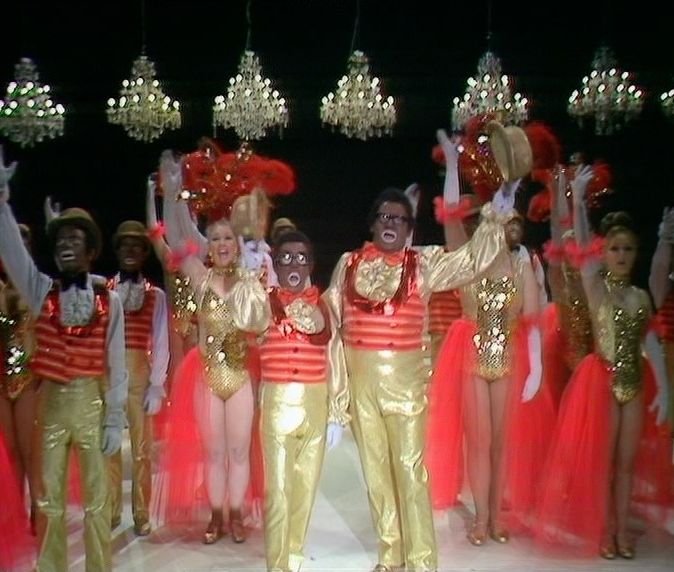
We close with The Short & Fat Minstrel Show, which is the sort of sequence I’d expect to see pop up in one of those My Goodness Wasn’t Television Awful Back in the Old Days type shows, where modern comedians you’ve never heard of pour scorn on the crimes of their forefathers. True, it’s undeniably a little grisly but it’s very much of it’s time. And the Raquel Welch obsession continues. “Oh Raquel Welch, I love your left … doo-dah, doo-dah. I sit and think of Raquel’s left doo-dah all the day.”
Written by Spike Mullins, David Nobbs, Peter Vincent, Gerald Wiley. Additional material by Garry Chambers, Tony Hare, David McKellar
Introduction/News Items
Party Sketch – Trends (with John Cleese)
New World
Ronnie B Solo – Appeal on behalf of the very clumsy
Hampton Wick – Episode Six
Class Sketch (with John Cleese)
Tina Charles – Got To Get You Into My Life
Ronnie C in the Chair
Wasta
Musical Number- Elizabeth Aa Ha
Outro
Notes: The party sketch simply screams early seventies. There’s a variety of bizarre fashions (Ronnie B has to be seen to be believed) whilst attractive women lounge around in hotpants. A poster of Che Guevara on the wall is further evidence that it’s a hip and happening joint. The only person not hip and happening seems to be Ronnie C, dressed in a normal suit, but he’s doing his best to try and be in with the new scene, telling the others that jumping up and down is the latest, fun thing.
No-one else seems impressed with this as the sketch – a sly swipe at fashion and trends – continues. It’s only when a new guest appears (John Cleese) and starts doing Ronnie C’s hopping that it instantly becomes accepted. Nice to see Cleese, who pops up again later.
New World are standing up this week with a slightly more uptempo foot-tapper. But if they’re still operating in fairly gentle territory, which might lull some into a sense of slumber, there’s no chance of dozing when Tina Charles is around. She belts out the Beatles’ Got To Get You Into My Life with the sort of full-hearted gusto that’s already become her trademark, six shows in.
Ronnie B is in his element as a very clumsy man making an appeal on behalf of others equally afflicted. “I myself to tend to knock over the occasional table. In fact, last month I knocked over five occasional tables.” Although Barker never liked to appear as himself before an audience, once in character he was in total command. This is seen here after an onscreen caption causes a little titter amongst the audience and slightly throws him off his stride. But he’s able to say “thank you” and carry on, keeping in character all the time.
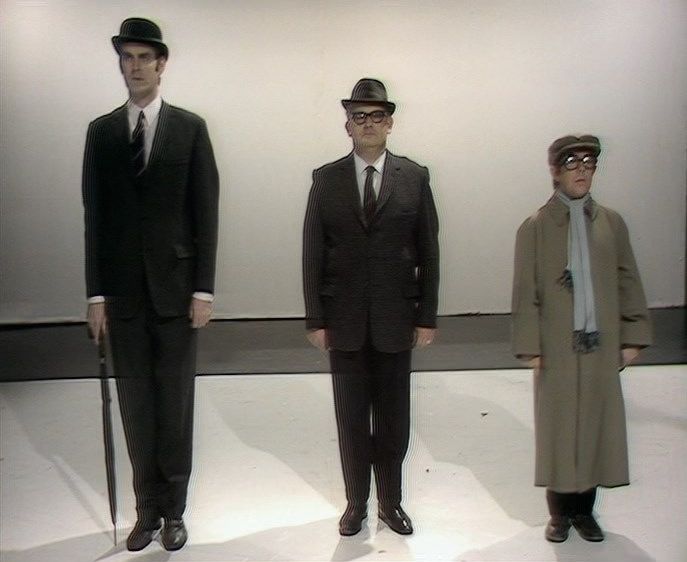
Next, there’s a reprise of the famous Frost Report sketch featuring Cleese, Barker and Corbett as examples of the upper, middle and lower class members of society. As with the original, it’s Ronnie C who gets all the laughs whilst the other two play his straight men.
Wasta is this week’s speciality act. He’s a physical drunk act and is rather good (not a great many other credits I can find, apart from a few appearances in The Good Old Days, which would make sense – it’s the sort of non verbal comedy that would work well there).
The closing musical number is an Elizabethan costume drama set to music. Ronnie B as Queen Elizabeth I fairly takes the breath away, although Ronnie C’s Sir Francis Drake (sporting a very modern pair of glasses) is equally as eye-catching. Mind you, this sketch is probably best known for the impressive entry of John Owens.
Owens was a very dependable Two Rons performer (chalking up many credits between this one and their final Christmas special in 1987). He should have come running in and then slid to a kneeling position, but possibly the floor was a little too slippery, which meant he ended up on his backside. Ronnie B just about keeps it together, although the extras in the background are less restrained. They could have gone for another take, but since it’s a nice moment (the audience always likes to see a few fluffs and mishaps) it wasn’t surprising they kept it in.
Written by Garry Chambers, Tony Hare, Eric Idle, David McKellar, Spike Mullins, David Nobbs, Michael Palin & Terry Jones, Peter Vincent, Bill Solly, Dick Vosburgh, Gerald Wiley
Introduction/News Items
Party Sketch – Toilet Humour
New World
Ronnie C at the piano
Hampton Wick – Episode Five
Tina Charles – Time and Love
Doctor sketch
Chaz Chase
Rev Spooner – The Musical
Outro
Notes: In this party sketch, Ronnie C desperately wants to find the toilet, but can’t bring himself to actually say so – instead he uses a string of subtle hints (inspect the plumbing, etc) which Ronnie B totally fails to understand. It’s not a terribly long sketch, nor does it have a particularly good punchline, but you can’t beat a bit of good, honest toilet humour.
New World, a vision in matching blue sweaters, are as relaxing as always. Tina Charles ups the tempo a little with another Laura Nyro song, Time and Love.
Now this is odd. Even this early on, the Two Ronnies had a sense of order and tradition, so it’s jarring that Ronnie C’s solo spot is so early in the show (we’re only seven minutes in) and what’s worse he’s not sitting in his chair – he’s by a piano instead! Luckily the jokes are just the same, including this one which I’m sure had more than one outing over the years. “This morning we had an argument with the children about staying up late to watch daddy. They wanted to go to bed.”
Hampton Wick once again places Madeline Smith in low cut dresses as well as offering us the chance to see Ronnie C as Toulouse Lautrec.
Next up Ronnie B plays a confused Scottish doctor (he doesn’t seem to realise he’s a doctor) whilst Ronnie C is his patient attempting to get a little treatment. When Ronnie C gives his profession as a Chartered Surveyor, it’s impossible not to wonder if one of the Pythons scripted this (Chartered Surveyors tended to loom large in Python). That the sketch veers off in an unexpected direction also supports this, as that’s a very Pythonesque trademark.
Chaz Chase, born in Russia in 1901, made a career out of eating practically anything – cigarettes, flowers – and he does so here as well. Definitely one of the odder spesh acts we’ve seen so far, but I’m rather glad we have it.
The closing musical number is something that’s archetypical Two Ronnies fare. Ronnie B is the Rev Spooner who has endless trouble with words. Here he is attempting to give his wife (Josephiner Tewson) a present. “I knew you needed a scentle of bot. A sottle of bent. Perfume”. Ronnie C gets in on the act. “The manner of your speaking, it ounds it a little sod.” And so on and on.
There’s several ways to date the episodes. If you don’t want to do it by the suits the Rons wear, then you can always do so by observing which big-breasted celebrity is the butt (as it were) of many of the news items. Here it’s Raquel Welch, so it’s plainly early days. She’s been signed to play Quasimodo “in the new film entitled The Hunchfront of Notre Dame.”
Written by Garry Chambers, Tony Hare, Eric Idle, David McKellar, Spike Mullins, David Nobbs, Michael Palin & Terry Jones, Peter Vincent, Bill Solly, Dick Vosburgh, Gerald Wiley
Introduction/News Items
Party Sketch – Fancy Dress
Tina Charles – Stoney End
Ronnie B Solo – Smart Cooking
Hampton Wick – Episode Four
New World – Delia
Ronnie C in the Chair
Joe Andy
Marriage Sketch
Outro
Notes: The party sketch is a fancy dress affair, with Ronnie C making a very fetching Nell Gwynne, complete with copious oranges. His appearance certainly tickles the studio audience, leading to a round of applause. Ronnie B has apparently come as Richard the Lionheart, although he doesn’t quite look the part in a lounge suit (but apparently that’s what Richard wore when he wanted to relax).
Tina Charles tackles Laura Nyro’s Stoney End, which had been a hit for Barbra Streisand in early 1971, whilst New World offer rather soporific fare with Delia.
Ronnie B is Lionel Smart, who demonstrates Smart Cooking (this week bourguinon a la pouf celebre). That Smart is a grubby common type is the joke, of course.
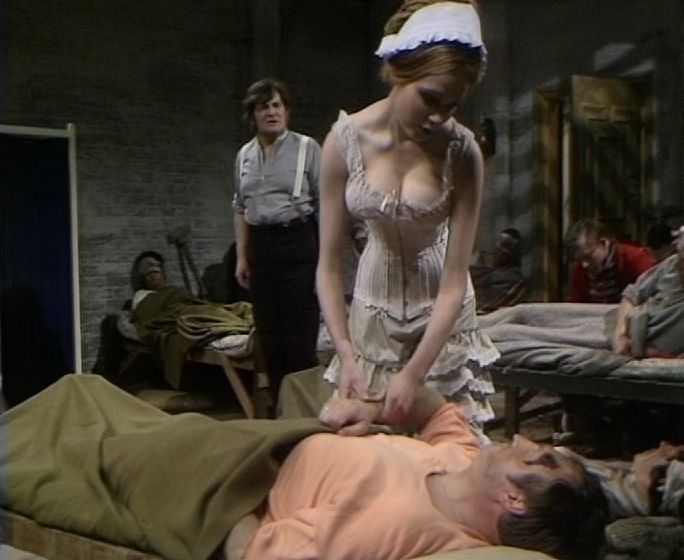
Hampton Wick continues, with Madeline Smith’s winsome heroine now ensconced in the Crimea, tending to the wounded. She has to make the ultimate sacrifice (her clothes for bandages) which certainly seems to bring a smile to the faces of the patients (and no doubt warmed the hearts of some of the viewers at home too).
Joe Andy balances swords on his chin and attempts to climb a ladder at the same time. Oddly, he doesn’t receive an introduction (not even an onscreen caption). As impressive as his feats are, what’s more interesting is that as he slowly climbs the ladder you can see the studio lights, transmission sign and the clock – which tells you exactly what time this was recorded. Well it interested me anyway.
Up next is a sketch with Ronnie B as a vicar attempting to marry Ronnie C and Josephine Tewson. If they all didn’t have various ailments (hiccups, sneezing fits) then no doubt things would be a lot easier. This is one of those sketches where because the joke is obvious straight away, the question is whether things will get more or less funny when the gag gets repeated numerous times.
No musical item in this one, so the marriage sketch leads into the closing items.
Written by Garry Chambers, Eric Idle, David McKellar, Spike Mullins, David Nobbs, Michael Palin & Terry Jones, Peter Vincent, Dick Vosburgh, Gerald Wiley
Intro/News Items
Party Sketch – Hello
New World – Listen to the Falling Rain
Ronnie B Solo – Weather Forecaster
Tina Charles – Close to Me
Hampton Wick – Episode Three
Ronnie C in the Chair
Doctor’s Sketch – Ronnie B as a man who’s caught Radio 4
Georges Schlick
Moira McKellar and Kenneth Anderson
Outro
Notes: Yet another party sketch with Ronnie B as the dominant force, in this case a man so sensitive that he reacts with suspicion to Ronnie C’s innocent greeting of hello. For example, Ronnie B’s first response is to wonder whether Ronnie C really meant to say “hello, you boring old git, who invited you?” Given that most of the Pythons have writing credits on these early shows, it seems that some of the material had originally been earmarked for Monty Python. Indeed, in the past the Pythons have joked that if a sketch didn’t work then they’d send it onto the Ronnies!
This is one that could easily have fitted into Monty Python (and so seems a little out of place here) as the punchline sees the camera pull back to reveal that everyone in the party, expect for Ronnie C, is dead. Not quite the way you’d expect a Two Ronnies sketch to end.
New World are a vision in matching outfits whilst Tina Charles demonstrates she’s able to show restraint by tackling a quieter song in Close to Me.
There’s another typically convoluted chair monologue from Ronnie C, with plenty of incidental pleasures along the way. “I was just stretching my legs there. Did you see that? Stretching my legs. Left it a bit late in life, haven’t I really?”
A short sketch features the Ronnies as doctor and patient (Ronnie B is a man who’s caught Radio 4). After he asks if it’s bad, there’s an obvious punch-line. “Bad? Have you heard it? It’s terrible.”
Georges Schlick is the latest speciality act – a rather good ventriloquism performance – which leads into the Ronnies as Moira McKellar and Kenneth Anderson. Any similarities to Kenneth McKellar and Moira Anderson must be purely coincidental then ….
The beginning of series five finds The Brothers in something of a transitional phase. Two key cast members (Gabrielle Drake and Hilary Tindall) had left the show at the end of the previous run, although fresh blood (most notably in the shape of Kate O’Mara as Jane Maxwell) would shortly arrive to shake things up.
The departures of both Drake (Jill Hammond) and Tindall (Ann Hammond) were used to good dramatic effect though. Ann and Brian had gone through the relationship mill during the previous series and even though their union was now at an end, Brian continues to suffer. But his broken marriage is just one reason why he goes severely off the rails in the early episodes.
Although Tindall was gone, her character was still alive and therefore a return was always possible (and indeed Ann did make a fleeting reappearance in a handful of episodes at the start of the seventh and final series). But Drake wasn’t so fortunate, as Jill is dispatched in the time-honoured way of dealing with soap actors who either can’t or won’t carry on (an off-screen accident). Talking about this decades later in The Cult of The Brothers documentary, it seems that Drake was a little taken aback at just how ruthlessly Jill was dealt with.
Another character, Martin Farrell, had also left, which results in both personal and professional consequences. Professionally, it means that the position of chairman is vacant – which seems tailor-made for the ambitious Paul Merroney.
And on a more personal note, it was plain that Ted Hammond’s nose was put out of joint last series by the interest Farrell had been taking in Jenny Kingsley (Jennifer Wilson). So with Farrell out of the picture, Ted (Patrick O’Connell) rekindles his own relationship with her. Lest we forget, Jenny carried on a lengthy and clandestine affair with Ted’s late father. Unsurprisingly this meant she has always been viewed with great disfavour by Ted’s mother – the indomitable matriarch Mary Hammond – but it seems that Ted has eventually summoned up the courage to defy his mother and make an honest woman out of Jenny. Although I’m sure there’s still going to be a few bumps ahead before they can enjoy a lifetime of wedded bliss.
Patrick O’Connell & Jennifer Wilson
The series opener, the aptly titled Life Goes On, finds Brian in a pretty poor state. This concerns the bank – they don’t want to see their investment in Hammonds put at risk because the new managing director is feeling flaky – but Paul Merroney has put plans in motion to protect their money ….
Although Merroney was a rather peripheral character during the last series, here he really starts to make his mark. For one thing, he’s gained an assistant – Clare Miller (Carole Mowlam). Apart from signifying Merroney’s increasing significance, Clare also emerges as a character in her own right – becoming close to David, for example.
Baker’s good value in these early episodes as Merroney begins his manoeuvres. Surprisingly, only the bluff Bill Riley realises that Merroney has his eye on the chairman’s job – which doesn’t say much for the business acumen of the others! There’s a delicious sense of duplicity on show from Merroney as he puts the blame for the recent ousting of Ted as managing director firmly on the shoulders of the departed (and innocent) Farrell.
The way the audience learns about Jill’s death is done in a very interesting way which makes a positive out of the fact that Gabrielle Drake was no longer a member of the cast. Jill isn’t mentioned during most of the first episode, although that wasn’t unusual (she was absent from the first few episodes of series four). It’s only right at the end of Life Goes On, when David runs into a friend who’s been out of town for several months that we find out Jill is dead. This is an incredibly jolting moment which provides us with a strong hook into the next episode where her fate is discussed in detail.
The dynamic between the three brothers – Ted, Brian and David – has been the motor which has powered the series to date. Whilst series five continues to play on their conflicts, the emergence of Paul Merroney as a major player refreshes this somewhat – as an outsider he has quite a different set of loyalties.
Colin Baker
But the brothers still dominate the storylines especially, in the early episodes, Brian. In many ways he’s now got everything he wished for – he’s become managing director of Hammonds, ousting Ted. Or has he? We’d seen in previous series that it was Ann who was the ambitious one, constantly pushing him forward. So the fact that he’s gained in business but lost out in his personal life must come as a bitter irony to him.
Richard Easton continues to impress as Brian, especially when he starts to lose the plot (the episode title Breakdown makes it fairly obvious what’s going to happen). As his drinking increases, Brian is encouraged to seek psychiatric help. And always around is Merroney, plotting to oust Brian at one point and then (so the others fear) attempting to buy Brian’s shares so he can gain overall control of the company. But as we’ll see, Merroney is no cardboard villain – he may be mainly motivated by self interest but he’s also not without compassion for the stricken Brian.
As Brian, ensconced in a nursing home, retreats into the background, so other plotlines begin to develop. The long-running will they/won’t they relationship between Ted and Jenny is now very much back in “they will” territory and moves forward at a rate of knots. The problem with Mary (Jean Alexander, as good as always) still has to be overcome though, as the icy disdain she feels towards the woman who conducted a long-term affair with her late husband continues to be a fruitful source of drama. Even when Mary and Jenny appear to be on civil terms there’s always the sense that at any moment things could change ….
Although the departure of both Hilary Tindall and Gabrielle Drake left something of a hole, two new female characters filled the gap nicely. Clare’s divided loyalties (between David and Merroney) generate a good source of drama which plays out as the series progresses whilst Kate O’Mara makes an immediate impression as Jane Maxwell. Debuting in episode six, Flight of Fancy, Jane is the hard-headed director of an air-freight business which Hammonds have an interest in. As a proactive business woman she’s something of a rarity in the world of The Brothers (Jenny might be a board member of Hammonds, but she’s a much more passive character).
Kate O’Mara
Also appearing for the first time in this episode is Mike Pratt as Don Stacey, a hard-drinking pilot. This would be Pratt’s final television role before his death in 1976 at the age of just 45. Don would appear throughout the remainder of series five and the first half of series six. Whilst it’s always a pleasure to see Pratt, it’s rather tempered by how ill and haggard he looks.
Yet again, things conclude in the boardroom (episode thirteen, Warpath) as Merroney continues to scheme although it’s possible that in Jane he’s finally met his match (a decade or so later Baker and O’Mara would once again lock horns, this time in Doctor Who). With Ted under pressure and Brian’s fate still uncertain, things are left nicely poised for the following series to pick up where this one left off.
By now, The Brothers had become a well-oiled machine and series five not only manages to develop the existing characters in a variety of ways but it also develops intriguing new ones as well. It continues to be highly addictive stuff, especially as the Hammonds, Merroney and Jane jostle for power and superiority. But there’s time for more personal stories as well (Jenny’s longing for another child) which ensures that the series isn’t completely boardroom and business based.
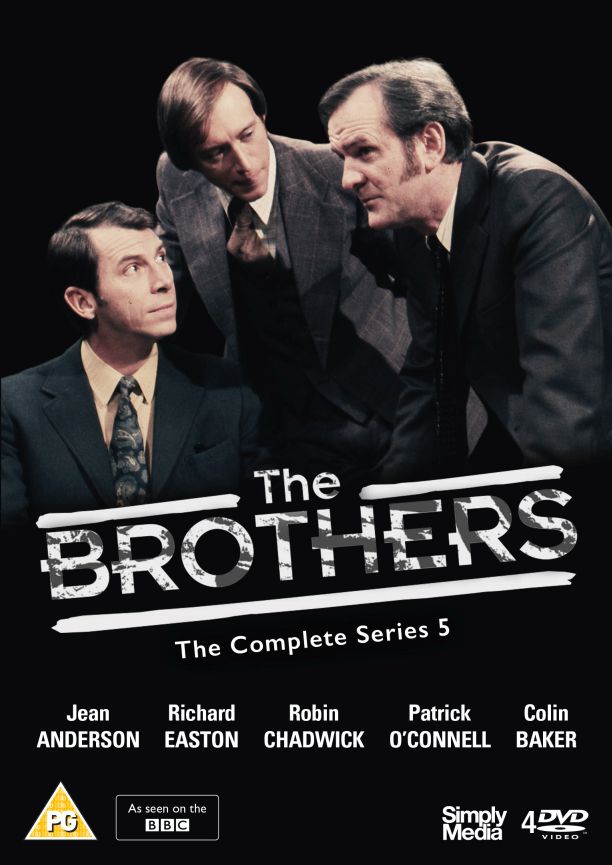
The Brothers – Series Five is released by Simply Media on the 27th of March 2017. RRP £29.99.
Richard Easton, Robin Chadwick & Patrick O’Connell
Written by Tim Brooke-Taylor, Barry Cryer, Eric Idle, David McKellar, Chris Miller, Spike Mullins, David Nobbs, Michael Palin & Terry Jones, Bill Solly, Peter Vincent, Dick Vosburgh, Gerald Wiley
Introduction/News Items
Party Sketch – Ronnie C’s embarrassing baldness
New World
Hampton Wick – Episode Two
Tina Charles – Ruby Tuesday
Ronnie C in the Chair
Tarzan in Suburbia sketch
Jo, Jac and Joni
Gilbert and Sullivan
Outro
Notes: The desks are no longer at a weird angle and although a smaller CSO back screen remains – seemingly showing a shot of the universe – it no longer changes to display a picture for every news item.
The party sketch features Ronnie C as Mr Goldie, a rather bald man (wearing a not very convincing bald cap). After being told not to mention his baldness, of course Ronnie B can’t help himself (referring to him as Baldy, rather than Goldie to begin with). Ronnie B gets most the lines here as he attempts to dig himself out of this unpromising start, whilst Ronnie C is able to sit back and simply react. Such is Ronnie B’s over-sensitiveness, that even words like “wig-wam” are off limits – he quickly changes it to “wog-wam” (“you know, the wams where the wogs live”). Politically correct this is not …
Episode Two of Hampton Wick is chiefly memorable for Madeline Smith’s dress, which at times is unable to restrain her ample charms. How they got away with some of the shots is anyone’s guess ….
New World warble an unknown (to me) song whilst Tina Charles continues her full-throttle attack on pop classics by tackling the Rolling Stones’ Ruby Tuesday. She certainly doesn’t hold back, that’s for sure.
Although some of the productions misteps from the opening show have been ironed out, there’s still a sense that this is early days – as sometimes sketches don’t finish with a musical flourish, as they do later on, but rather with a fade to black.
Ronnie B makes an unlikely looking Tarzan (but then Ronnie C would have been even less convincing). But the strange juxtaposition of Tarzan crashing into the suburban garden of Ronnie C’s Arthur Norris is an appealing one.
As with the first show, there’s a moment of fourth-wall breakage, as the end of this sketch is interrupted to prepare the way for the spesh act – in this case Jo, Jac and Joni. They demonstrate that variety isn’t dead with a spot of musical comedy.
For a long time, the show would often end with a musical number – in this case Gilbert and Sullivan entertain (or not) us with a some of their favourite numbers, albeit cunningly re-worded. At least this one doesn’t outstay its welcome.
Written by Tim Brooke-Taylor, Barry Cyer, Eric Idle, Chris Miller, Spike Mullins, David Nobbs, Michael Palin & Terry Jones, Bill Solly, Peter Vincent, Dick Vosburgh, Gerald Wiley
Introduction/News Items
Party Sketch – Ronnie B finds it impossible not to keep attacking Ronnie C
Tina Charles – River Deep, Mountain High
Ronnie B Solo – A Doctor who has a cure for people who say everything twice
Hampton Wick – Episode One
Ronnie C – Interpol Sketch
New World – Rose Garden
Ronnie C in the Chair
Hearing Aid Sketch
Alfredo
Big Jim Jehosophat and Fat Belly Jones
Outro
Notes: Although the Ronnies had worked together for a number of years prior to this, there’s still a slight sense of nervousness on show (especially in Ronnie B’s case). This is evident in the opening news items which seem more than a little stilled – although the weird set design (angled desks) and CSO back projections don’t help. This would be swiftly amended for show two.
The first of many party sketches finds Ronnie B in an abusive mood, first slapping Ronnie C’s face and then kneeing him in the groin! And since the slaps sound real it seems that Ronnie B wasn’t holding back.
Some of the Ronnies serials tend to drag a bit and Hampton Wick is the first example of this. Luckily Madeline Smith’s winsome beauty is some recompense for the fairly laboured comedy.
These early series have an abundance of guests (later on they’d be pared down to just a single guest spot). The sixteen-year old Tina Charles impressively belts out River Deep, Mountain High whilst New World offer a blend of laid-back acoustic warbling that’s rather relaxing – although the moustaches and hairstyles on display make it a little hard to take them seriously. But Rose Garden was a hit for them in 1971, reaching no 15 in the UK charts.
As for Alfredo, well he’s the first in a series of speciality acts who pop up in most of the series one shows. Where else are you going to see a man dressed in German military uniform playing the drums and (sometimes) catching ping pong balls in his mouth? If that’s not entertainment I don’t know what is.
For the first time we see Polly shaken out of her usual amused self-control. The sight of Abby being carted off in an ambulance is more than enough to finally bring her long-repressed maternal feelings to the surface.
They aren’t reciprocated though, as Abby screams when her mother attempts to join her in the ambulance. And Leo offers no comfort either – looking blankly at Polly when she insists that Abby’s tumble down the stairs was an accident. Since it clearly was (there’s not even a hint that she was pushed) why does Leo seems incapable of offering even a crumb of comfort?
The baby – a boy – is born, although Abby still refuses to have anything to do with her mother. This results in a tear-streaked Polly leaving her daughter’s bedside, convinced that Leo’s the one who’s turned her daughter against her. “I hold you responsible for this, Leo Howard. And you’ll regret it, I promise you. I’m going to make you pay.”
After a brief moment of self-insight last time, Jack’s back to his normal, bluff persona. Telling Avril that, in the words of Aristotle, “when the going gets tough, the tough get going” and plonking his shoes into the filing cabinet are two early signs of that.
He later refuses to be kowtowed when David Lloyd and the others visit the yard to inspect the prototype. Jack’s at his best here, refusing to stand on ceremony and inordinately proud of the craftsmanship of the Mermaid. The fact that the prototype is made out of wood is something that’s mollified him – it makes him content that although the Barracuda will be mass-produced, at least the original was hand-crafted in wood.
Jan asks Tom for a divorce (which rather oddly happens off screen). Ken’s delighted to hear this of course, although he has to ratchet down his joy when he realises that Jan’s more than a little traumatised. Bless Ken, his social skills tend to be somewhat limited.
Sir John invites Ken to lunch at the golf club. Once again there’s some lovely class-based comedy – Ken orders a gin and tonic (no doubt seeing it as the perfect drink for such an exclusive environment) whilst Sir John asks for a pint. Once again, this a small moment which illustrates the difference between them – since Ken is anxious to fit in, he attempts to modify his behaviour accordingly whilst Sir John is secure with his place in the world and sees no need to change.
Kate aptly sums Ken up later as “a wolf in wolf’s clothing” and is baffled why her daughter should prefer him over Tom. Minutes later they meet – briefly – for the first time. Kate flashes him an incredibly filthy look and refuses his outstretched hand, so they’re plainly not going to be friends anytime soon!
Relationship traumas in the Howard household continue with Lynne. She’s still besotted with Charles, even though he’s proving to be somewhat elusive (breaking their appointments). Poor Lynne spends her time moping by the phone and staring into the distance, waiting for him to call. Charles doesn’t seem at all bothered though.
There’s another example that Charles is a winner – we see him bouncing around the tennis court, playing a range of athletic shots, which eventually ends up with him emerging victorious.
Claude pops up again, much to Ken’s disgust. Ken does a nice impression of Claude’s accent though! Claude wants to purchase a fashion house. Jan’s keen, Ken’s not.
Howards’ Way, like The Brothers, always understood the importance of carrying forward certain plotlines to the next series as well as closing each run of episodes with a strong cliffhanger. The disputed ownership of the Mermaid Yard is something that’ll be settled early in series two (we see Jack enter the hearing, but aren’t told what happened).
As for the cliffhanger, an increasingly irate Lynne make her way to Charles’ yacht, only to find him in bed with another woman. He introduces her as “Honey Gardner, my wife” which rather takes the wind out of Lynne’s sails. She exits, sobbing, and in her haste to get away loses her balance on the jetty and falls into the water.
It might not be the best stunt ever mounted – rather than a simple stumble and fall, the stuntwoman falls to the ground and then seems to deliberately roll over into the water – but no matter, it’s still a strong way to conclude the first series.
Charles – a vision in white – is out for an early morning jog. By the way that Tony Anholt labours his way across the marina, I’d guess he wasn’t a regular jogger in real life. Once he’s puffed his way back to the yacht, Charles tells Lynne that he’s keen to spend the day with her – the fact she’s agreed to help her mother (it’s the grand opening of the boutique) doesn’t bother him.
If it hasn’t already been made obvious then here it’s explicit – Charles expects his own wants and needs to come first. It’s what’s made him a successful businessman, although with one (failed?) marriage, the floundering relationship with Avril and (as we’ll soon see) the odd illegitimate child lurking about, possibly his controlling nature is the reason why his personal life is chaotic.
Shellet is also looking for female company. His mild overture to Polly came to nothing (whilst the mind boggles at the pair of them together, a house-sharing comedy with Shellet as Polly and Gerald’s lodger would have been fab. That’s one spin-off show we were sadly denied). Anyway, he’s seeking solace elsewhere – eyeing the escort adverts in the local paper. He doesn’t seem interested in either Adam and Eve Escorts or Madame’s Escort Agency, instead he circles the Pussy Cats advert. I don’t know why, but this is a little detail that’s always amused. We then have further evidence of Shellet’s uncouth and unstable nature – he slops his tea in his saucer. Mind you, the strong hint later on that his relationship with his sister (Jack’s late wife) crossed familial bounds puts his tea slopping crime into perspective.
Avril and Tom are at Napier Marine, hopeful that the board will invest in Tom’s boat. They can count on some support, but David Lloyd (Bruce Bould) is the one they really need to convince. Bould was best known for playing the fawning David Harris-Jones (“great, super”) in The Fall and Rise of Reginald Perrin. It’s very hard not to think of Harris-Jones whenever Lloyd’s on the screen – the fact that we meet him in a boardroom environment doesn’t help.
Avril’s in her element dealing with the board, which makes it plain that she’s somewhat wasted at the Mermaid, just trying to make the books balance. Clearly the programme-makers thought so too, as in later years she’s shunted over to Relton Marine, where she became a high-flying executive.
Ken’s pushing to be an equal partner with Charles in the Marina development. Will Ken really be able to raise the capital needed? Time will tell, but at the moment all seems rosy. I like the way that when Ken extends his arm for a handshake to seal the deal, Charles imperceptivity pauses, looks down at Ken’s hand, looks up again with the faintest ghost of a smile and only then shakes. It’s subtle, but reiterates that Charles is still the dominant force.
Having packed in his job at the garage, Leo is looking for alternative employment. He wants to change the world, but first is considering a factory job on the Isle of Wight. Abby’s bump has expanded greatly (and she’s still happy, which is slightly unnerving).
Jack finally tells Avril about Shellet’s claim on the yard, which spells trouble for Tom’s boat (the Barracuda). The scene is also notable for showing a rare reflective side to Jack. Possibly it’s because he’s worried he’s going to lose everything, but there appears to be genuine regret from him about his disastrous marriage. “She never forgave me for the way I treated her. I could see it in her eyes the night she died. Sometimes I do feel guilty. I can’t help it. I can’t change the past, can I? God knows, sometimes I wish I could.” Glyn Owen is often called upon to act as comic relief, but occasionally – as here – he gets an opportunity to play something a little deeper.
Jan doesn’t approve of Lynne’s relationship with Charles. Mind you, as Lynne says, Jan can hardly talk – Ken Masters is surely nobody’s vision of a perfect partner. There’s another classic Ken moment in this episode – he pops Sade on the hi-fi and, all by himself, smooches around the room.
Orin’s sent Abby another letter which, in her continuing absence, Polly unashamedly opens and reads. Amusingly, Gerald initially registers irritation at Polly’s violation of their daughter’s secrecy, but a moment later can’t help but ask her what’s in it!
Polly agrees with Gerald that she’ll forward the letter on (although he doesn’t catch that she adds the word “personally”). Thanks to the efforts of a private detective, Polly’s tracked her daughter down. It’s not exactly a joyful reunion, since their brief squabble is followed by Abby falling down the stairs ….





 Archive Television Musings