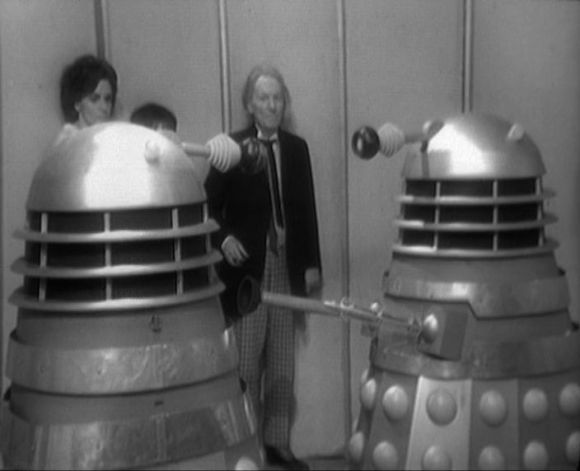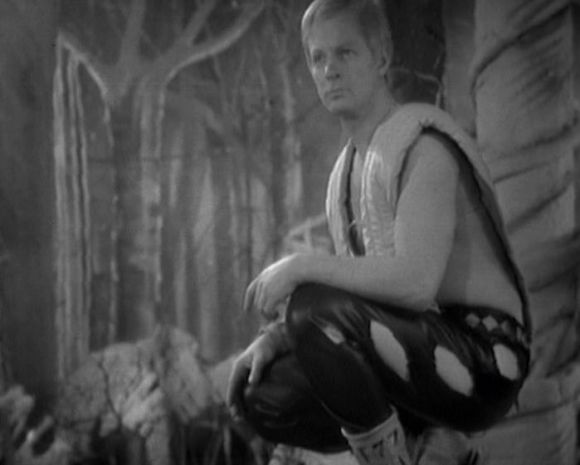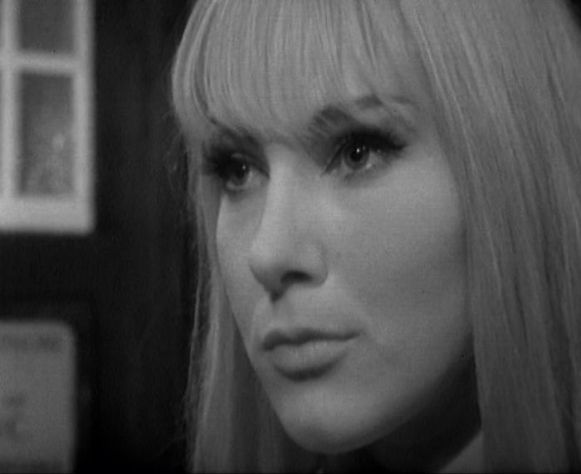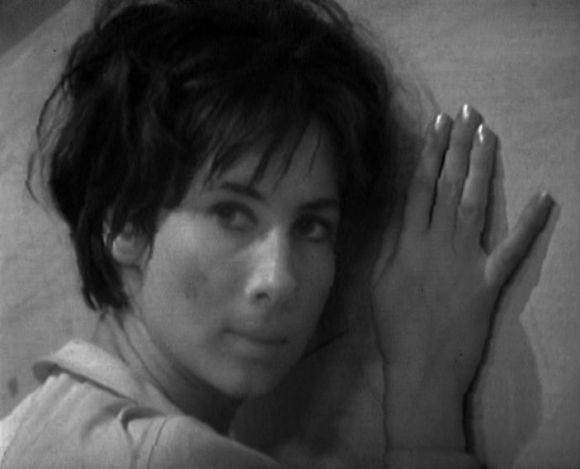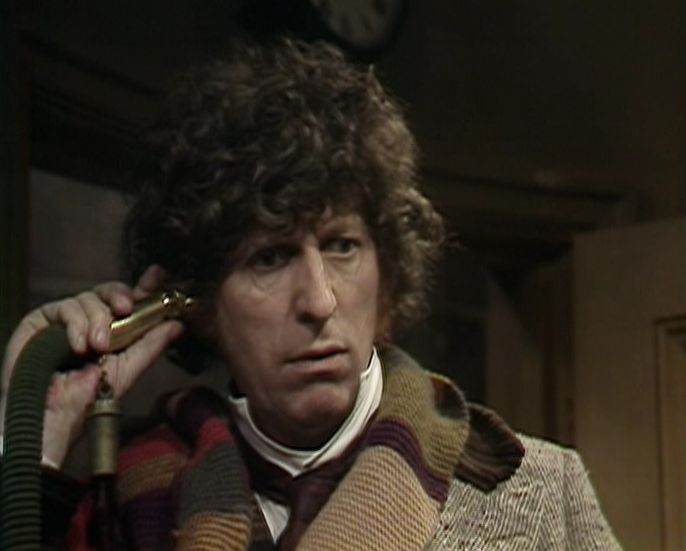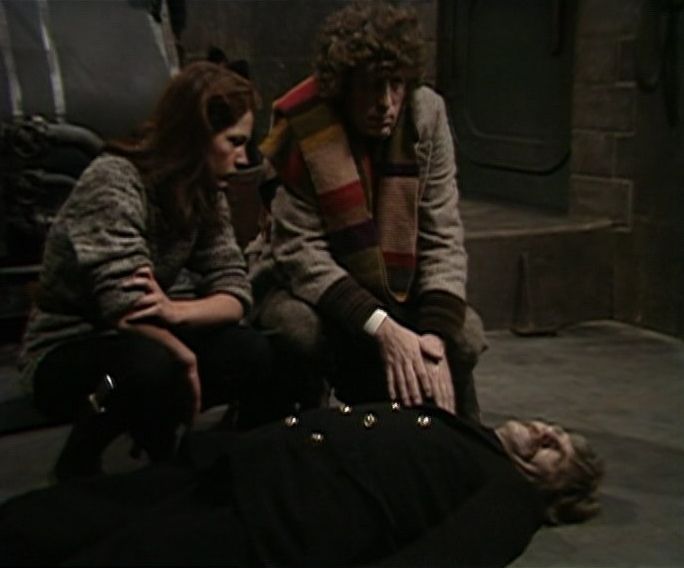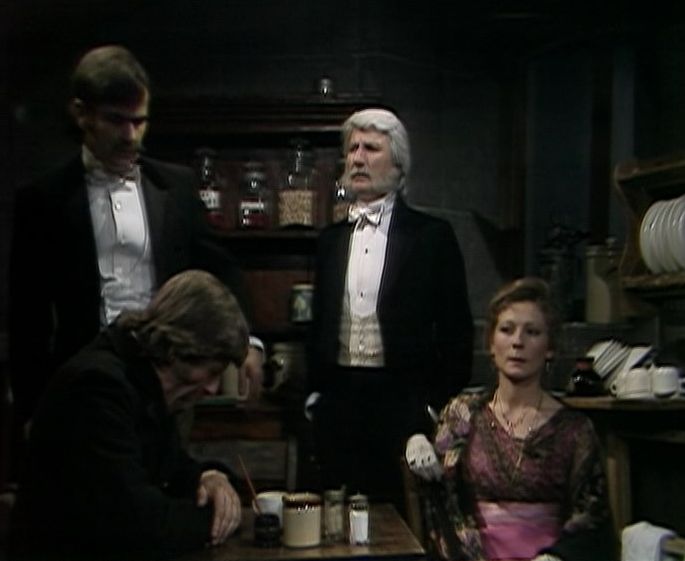
Doctor Who – The Daleks. Episode Four – The Ambush

ambush

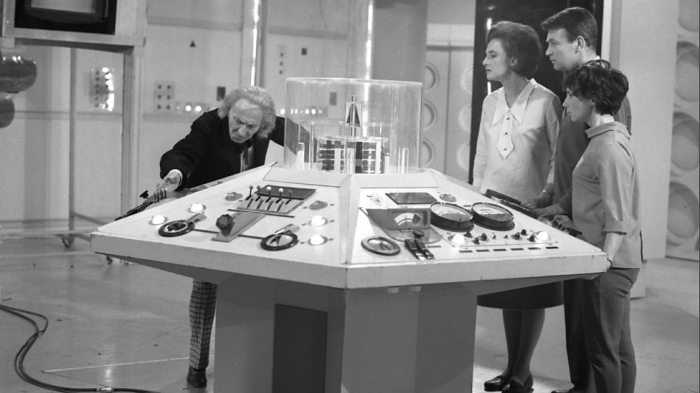
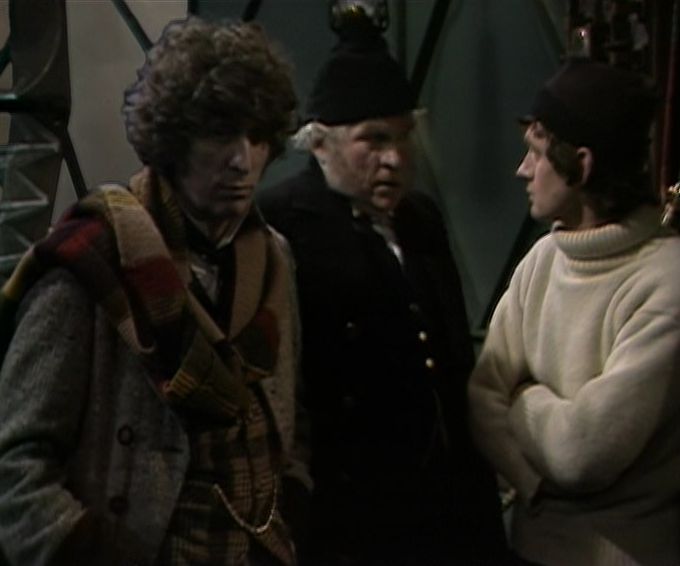
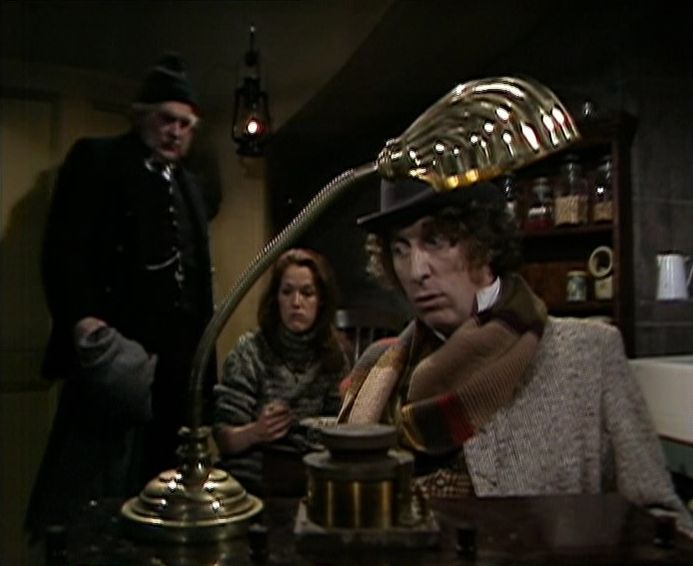
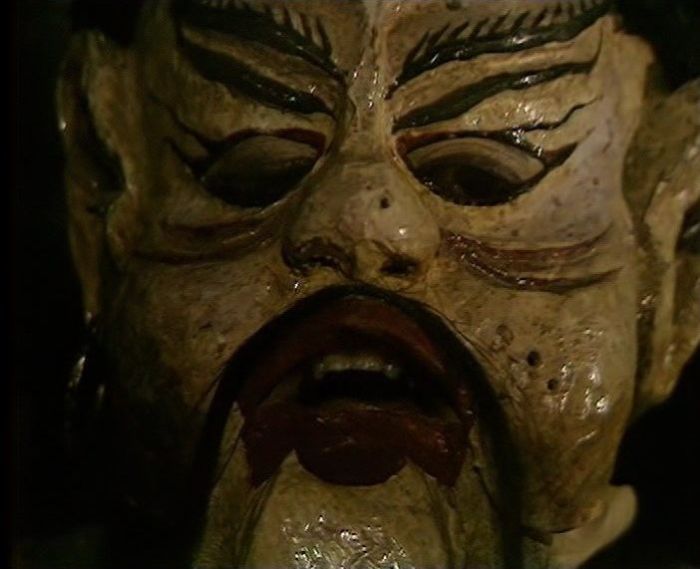
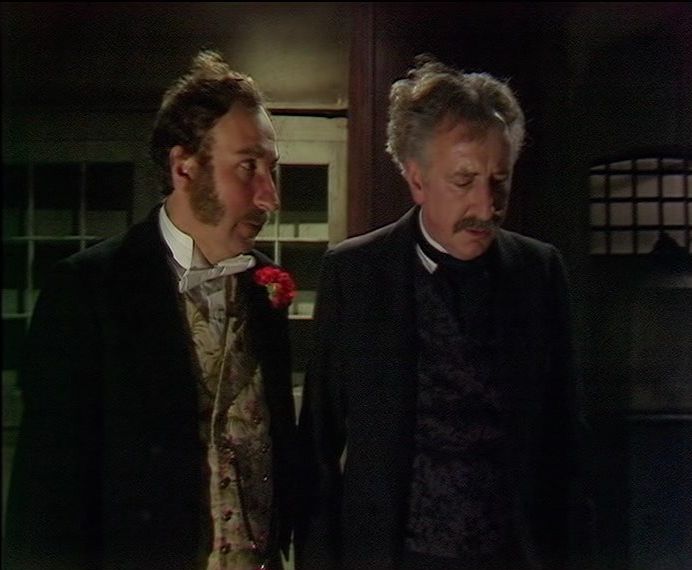
The range of camera effects at the disposal of the Doctor Who production team in 1963/64 was incredibly limited, but The Ambush has some very effective shots (which were also quite easy to achieve).  Inlay effects are used to show the Dalek lift moving up and down and also a section of wall scorched by a Dalek gun.  Simple stuff, compared to what can be achieved today, but it works very well.

The Doctor’s capacity for self-preservation is still very much to the fore –

DOCTOR: Lets get back to the ship.
SUSAN: No, no, I must warn the Thals.
DOCTOR: Susan.
SUSAN: We can’t let them walk into a trap.
DOCTOR: The Thals are no concern of ours. We cannot jeopardise our lives getting involved in an affair which is none of our business.
BARBARA: Of course it’s our business. The Thals gave us the anti-radiation drug. Without that, we’d be dead!

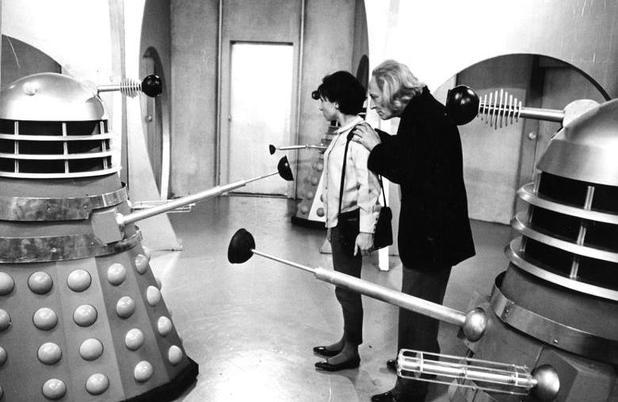
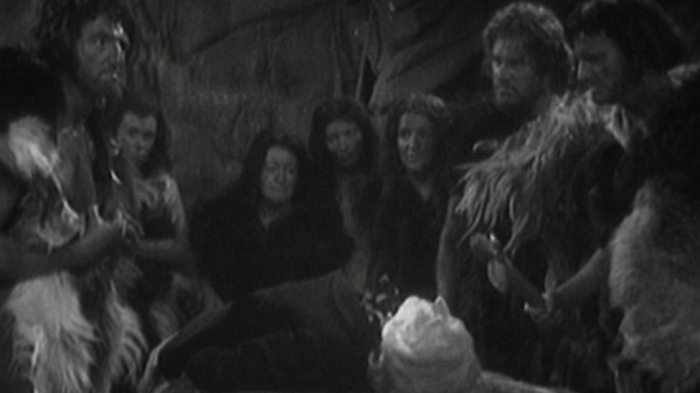
The ambush scene is a little odd. Before the Thals arrive there’s a creepy scene showing the Daleks slowly backing into the alcoves. If they had stayed there and killed the Thals from the shadows this would have made sense. But instead, as Temmosus makes his impassioned speech about working together, the Daleks move out into the open. Since the Thals would have expected to meet the Daleks, why would they hide themselves?  It makes the moment a dramatic one, but that’s about all.

Also, why does Ian just stand there waiting as the Daleks move into position? He seems certain that the Daleks mean the Thals harm, so it’s baffling that he doesn’t speak until after the Daleks have opened fire.

This is very much Ian’s episode and it goes without saying that William Russell is very solid. And as the Doctor spends his time researching the history of Skaro (seemingly caring little for the modern-day plight of the Thals) it falls to Ian to try and make them understand that they may have to fight to secure their future.

ALYDON: If only I knew why the Daleks hated us. If I knew that, I, I could alter our approach to them, perhaps.
IAN: Your leader, Temmosus.
ALYDON: Yes?
IAN: Well, he appealed very sensibly to them. Any reasonable human beings would have responded to him. The Daleks didn’t. They obviously think and act and feel in an entirely different way. They just aren’t human.
GANATUS: Yes, but why destroy without any apparent thought or reason? That’s what I don’t understand.
IAN: Oh, there’s a reason. Explanation might be better. It’s stupid and ridiculous, but it’s the only one that fits.
ALYDON: What?
IAN: A dislike for the unlike.
ALYDON: I don’t follow you.
IAN: They’re afraid of you because you’re different from them. So whatever you do, it doesn’t matter.
DYONI: What would you have us do? Fight against them?
IAN: I didn’t say that. But you must teach them to respect you. Show them some strength.
DYONI: But you really believe we ought to fight.
IAN: Yes, I think it may have to come to that.
DYONI: You understand as little about us as the Daleks do!

Barbara later comments that “I don’t understand them. They’re not cowards, they don’t seem to be afraid. Can pacifism become a human instinct?” But the Doctor’s not concerned about the fate of the Daleks and the Thals and is keen to leave.  Ian, Barbara and Susan may feel more invested in the Thals’ fate, but they also agree with the Doctor that it’s time to move on.

Indeed, at the end of this fourth episode it does feel that the story has come to a conclusion. We didn’t witness the fate of the Tribe of Gum, so would there have been an expectation of the audience back in 1964 that this story would have been any different?

The Doctor’s missing fluid-link is the only reason that he decides to stay – ensuring that he’s forced to help the Thals (although as we’ll see, he’s ruthless in using them to help himself).

Doctor Who – The Daleks. Episode Three – The Escape

escape-01

The Escape opens with Susan meeting Alydon (John Lee).  Born in Tasmania, Australia, Lee didn’t have a trace of an Australian accent and instead spoke in the RP tones that were so prevalent during this era of British television.  Every line he intones is spoken with deadly seriousness (and note how, in his initial scene with Susan, he stays remarkably still).  It’s the sort of performance that can so easily seem wooden and unnatural, but Lee manages, just about, to give Alydon a spark of life.

Much more naturalistic is Philip Bond as Ganatus.  Bond (father of Samantha) has more to play with in the script, since Ganatus has a mocking sense of humour as well as a questioning nature.  If their leader Temmosus (Alan Wheatley) is inclined to think the best then Ganatus is a more reflective character.

Temmosus might well have had cannon fodder written on his forehead.  He’s no fool, but it seems clear that the Daleks have no intention of helping the Thals – and that he’s ill-suited to lead them in the struggle that will follow.

TEMMOSUS: I believe the Daleks hold the key to our future. Whatever that future may be, we must accept it gracefully and without regret.
ALYDON: I wish I could be as objective as you. We’ve lived for so long a time.
TEMMOSUS: Perhaps we have lived too long. I’ve never struggled against the inevitable. It’s a vain occupation. But I should always advise you to examine very closely what you think to be inevitable. It’s surprising how often apparent defeat can be turned to victory.

Ganatus’ brother Antodus in mentioned, but we don’t see him in this episode (although he’ll play a key part later on in the story). The suggestion that he’s a flawed character is established when Dyoni (Virginia Wetherell) wonders if he’s still afraid of the dark. A small point, but it helps to sow a seed of doubt about his ability to deal with stressful situations.

escape-02

Terry Nation never really excelled when writing for female characters (except, maybe, for Servalan in Blakes 7 – and that was probably only because she was originally written as a man) and Dyoni is no exception.  Wetherell spends most of her time in this episode pouting and reacting jealously to any mention of Susan.  Dyoni’s comment that Alydon should have given the drugs to a man, not Susan, are slightly wince-inducing.  As we’ll see, Dyoni’s only value to the plot seems to be her relationship to Alydon (she’s the lever that Ian later uses to persuade the Thals to fight the Daleks).  Apart from this, she’s very much a cipher.

And what of our four heroes?  They remain prisoners, but they work together to devise a plan to escape.  These scenes are particularly interesting because all four characters contribute to the debate.  In years to come it’ll mainly be the Doctor who has the solution – with everybody else relegated to sitting on the sidelines.  But the Doctor doesn’t have all the answers here, and it’s only after they pool their resources that a workable plan is produced.

DOCTOR: Let’s concentrate on the Daleks. Have you noticed, for example, that when they move about there’s a sort of acrid smell?
SUSAN: Yes, yes, I’ve noticed that.
BARBARA: I know. A fairground.
IAN: That’s it. Dodgems.
DOCTOR: It’s electricity. I think they’re powered that way.
IAN: Yes. But just a minute. They have no pick-up or anything. And only the base of the machine touches the floor. How do they complete the circuit?
SUSAN: Batteries?
DOCTOR: No, no. I believe the Daleks have discovered a way to exploit static electricity. Very ingenious, if I’m right.
BARBARA: What, drawing power from the floor?
DOCTOR: Precisely. If I’m right, of course.

This is a good episode for Carole Ann Ford. She’s typically wide-eyed and appealing in her initial meeting with Alydon and later has an excellent scene with the Daleks when they dictate a letter promising to help the Thals. It’s plain that they don’t intend to keep their promise though, reinforced by the push one of them gives to Susan with their sucker arm once the letter is written. It’s just a throwaway moment (possibly worked out in rehearsal) but it helps to give the Daleks more of a human touch.

The scene where the Doctor and the others disable a Dalek and remove the creature (in fact, nothing more than a joke-shop gorilla hand) is a memorable one and it leads into a strong-cliffhanger as Ian (inside the Dalek) leads the others out into the corridors as they attempt to make their escape.

escape-03.jpg

Doctor Who – The Daleks. Episode Two – The Survivors

survivors.jpg

Once the Doctor eventually realises that the planet is contaminated with a very high level of radioactive fallout it’s chilling to see how keen he is to abandon Barbara to her fate –

IAN: We’re not leaving until we’ve found Barbara.
DOCTOR: Very well. You may stay and search for her if you wish, but Susan and I are going back to the ship. Now, come along, child.
IAN: All right, carry on, fine. How far do you think you’ll get without this? (he shows him the fluid link)
DOCTOR: Give that to me.
IAN: Not until we’ve found Barbara.
DOCTOR: Give it to me, I say.
IAN: No! It’s time you faced up to your responsibilities. You got us here. Now I’m going to make sure that you get us back.

The point’s a moot one anyway as they shortly all end up prisoners of the Daleks. The iconic nature of this episode is pretty much self evident – the first meeting between the Doctor and the Daleks – although it’s understandable that the mythos would only be added in later years. Nobody really expected in 1963 that the Daleks would ever be anything more than a one-shot monster (especially since the series was struggling for survival) so they’re presented here not as a universal menace, but simply as a group of frightened, scarred survivors.

The Daleks are all that remains of a civilisation who fought a deadly war with the Thals.  So Galactic conquest isn’t their aim – that would be difficult anyway, since they can’t move out of their city – they just want to survive. But their survival doesn’t include the Thals and this is how the story will develop.

As in An Unearthly Child, the four time-travellers are prisoners.  Thanks to radiation sickness they’re in a pretty wretched way and Ian (after a tussle with the Daleks) is unable to walk.  A mysterious package of drugs left outside the TARDIS by an unknown hand might be their salvation and suspiciously the Daleks are keen for one of them to bring them back to the city.

But who will get it?  Ian is keen to go – there’s an unspoken sense that he should, since he’s a man (why send a woman or a child out, when he’s there?) – but since he can hardly walk it seems impossible.  Both the Doctor and Barbara have been badly hit by radiation, so that leaves Susan.  She doesn’t want to face the terrors of the forest (we’ve seen how she was affected by a brief encounter with a stranger in the previous episode) but it’s clear that their survival depends on her.

Christopher Barry certainly makes the most of his limited resources and the scenes of Susan’s return to the TARDIS are memorable – thanks to close-ups of her frightened face and the flashes of lightening in the forest.  And the occasional flash of light only serves to make the forest more, not less, intimidating.

So far the story has had an interesting structure – in episode one we concentrated on the four regulars, episode two has introduced the Daleks (with mention of the disgustingly mutated Thals) and episode three will see the arrival of the Thals proper.  With seven episodes to play with, it makes sense to hold back certain elements for a while – but once we get to The Escape there’s the sense that the story can really begin.

Doctor Who – The Daleks. Episode One – The Dead Planet

dead.jpg

The Daleks was the second William Hartnell story I watched, a mere eight years after the Five Faces screening of An Unearthly Child.  The year was 1989 and BBC Video had released a double-pack of The Daleks on VHS.  With every existing episode now accessible at the touch of a button it’s difficult to describe just how exciting it was to own this story – something I could watch again and again (and those early Doctor Who VHS’s did get many, many plays!)

As part of the generation who became fans in the period before the programme was widely available, I’d grown up with a distinct picture of many stories via the Target novels and articles in DWM.  The Daleks had also featured in Jeremy Bentham’s lavish 1986 book Doctor Who – The Early Years.  I’d pore over the numerous photographs and Ray Cusick’s designs for hours, wondering whether I’d ever get the chance to see these episodes.

David Whitaker’s novelisation is a must read and equally recommended is the talking book read by William Russell.  Although it compresses the seven episodes down to about a hundred pages (the first few chapters are basically an alternative version of An Unearthly Child – lots of fog, Barnes Common, lorries, everlasting matches, etc) nothing vital from the teleplay is omitted and for me the book was instrumental in painting a vivid picture of the story.

But before that, my first exposure to this tale was via the Peter Cushing movie Doctor Who and the Daleks.  BBC Genome confirms my memory that it received an airing on my birthday (the 10th of June 1978) and although the film strips away much of the subtlety of the orignal, the vivid comic-strip nature of the film was very much what this seven-year old wanted.

Therefore, watching The Daleks for the first time I was approaching it with a good deal of baggage – the same way I initially viewed every story from the first three Doctors.  I knew how the stories should look (the images were crystal clear from the Target books) and there was sometimes disappointment when things didn’t match up.  No doubt I’ll touch on this again, probably when we get to Day of the Daleks, but over the years I’ve come to love the series for what it was and not what I’d expected it to be.

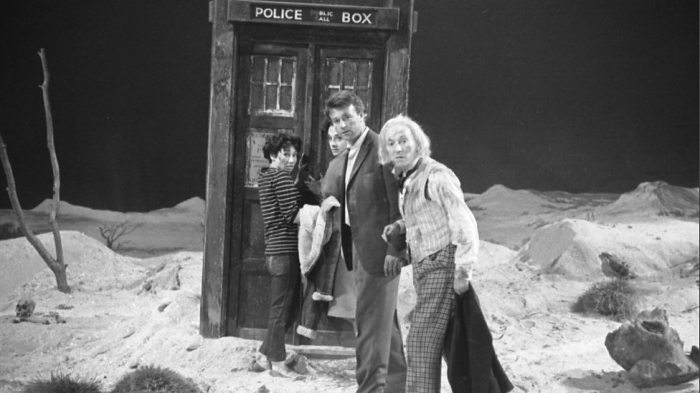
One thing that’s always slightly irked me about The Dead Planet is the way the Doctor never even considers that the planet might be radioactive.  There are not-so subtle hints (“The heat must have been indescribable. Look at this soil here. Look at it. It’s all turned to sand and ashes.”)  I do love the way that the TARDIS radiation meter only flashes that it’s dangerous once everybody leaves the console room (and presumably stops flashing as soon as they re-enter!).  Is this an early example of the TARDIS’ sentience and had it therefore decided to kill them all?!

Ian and Barbara are still very unwilling adventurers –

BARBARA: Ian, where are we?
IAN: I don’t know.
BARBARA: Well why doesn’t he take us back?
IAN: I’m not sure that he can.
BARBARA: What, ever?
IAN: I hate it as much as you. I’m just as afraid. But what can we do?

This is a far cry from 21st Century Who, especially the RTD incarnation, where the TARDIS at times seemed to be similar to Starfleet – only the brightest and best are allowed.  Contrast this to the original series – the likes of Ian, Barbara and Tegan were abducted against their will, Vicki, Victoria and Nyssa were orphans taken in by the Doctor since they had nowhere else to go, Leela and Adric were stowaways, etc.

At this point in the series there’s a compelling sense of dramatic tension as Ian and Barbara are positioned against the Doctor.  The Doctor is now firmly established as an explorer with an unboundless sense of scientific curiosity.  He wants to explore, but Ian is unhappy (if anything happens to the Doctor, who will operate the ship?)   This is of no concern to the Doctor, he has little interest in Ian and Barbara’s opinions and is determined to get his own way.  This plot-line could only really happen right at the start of the series, very soon we’ll see that everybody will be keen to explore any new location and no thought is ever given to how dangerous it might be.

Terry Nation.  The series owes him a great debt (without this serial the programme might very well have come to an end after just thirteen episodes) although there’s no doubt that he collected this debt – these seven scripts, written in a great rush, were instrumental in making him a very rich man.  Often mocked by fandom (sometimes affectionately, sometimes not so) for his reliance on rehashing his own scripts, The Daleks is where it all began.  If you want to see it again then there’s always Planet of the Daleks in 1973 (was this a homage by Nation, paying tribute to the series’ 10th anniversary, or simply another lazy plundering of past glories?  With Nation, it’s not always easy to tell).

The cliches start here though, especially when the four decide to split up to explore the strange city.  The division is distinctly odd though – Barbara goes one way and the other three head off in the opposite direction.  This doesn’t seem plausible at all – there’s no way that Ian would allow Barbara to go off by herself (but it had to happen, so we could have that cliffhanger).

Mention must be made of Raymond Cusick’s design work and Tristram Cary’s music.  Cusick, along with Barry Newbery, would define the early years of Doctor Who and it’s staggering to see what they achieved with so little money.  In this episode we have the petrified forest, impressive model-shots of the city and our first brief glimpse at the city itself.  Yes, the painted backdrops do look a little obvious (although they would have been less so on the lower resolution televisions in 1963) but it’s the small details that impress – such as the cameras that focus in on the increasingly distraught Barbara.

Cary’s series of cues were impressive enough to be used in three more stories (although it’s also possible to argue that this was a cost-saving measure).  But I’d like to think they were used again because they were so good – they certainly help to create a sense of unease and tension which climaxes as Barbara is menaced by a threatening sink plunger.

Doctor Who – An Unearthly Child. Part Four – The Firemaker

firemaker.jpg

During season one the Doctor is a rather self-centered sort of person – far removed from the champion of the oppressed that he’d later become.

Sydney Newman’s original concept had portrayed the Doctor as something of an anti-hero and this is maintained through the early stories. Yes, he does help the Thals defeat the Daleks (but only because he needs to retrieve the fluid link – otherwise he’d have happily left them to their own devices at the end of episode four). Other examples (in both The Keys of Marinus and The Sensorites the Doctor would have sloped off early if the TARDIS hadn’t been immobilised) aren’t difficult to find.

This first story is also concerned with the Doctor’s attempt to escape and return to the ship. He’s not interested in the power-struggles of the tribe (although the others are) and in the end it turns out that he was right not to get involved as it’s debatable what (if anything) Za and Hur learnt from Ian and Barbara.

In an earlier draft of Anthony Coburn’s script, Ian’s influence was much more explicit. He insisted that he’d only show the whole tribe how fire was made (Za agreed to this) and therefore the fight between Za and Kal was not just a battle for tribal supremacy. If Kal had won then he’d have carried on as an autocratic leader (jealously guarding the secret of fire) whereas Za offered a more inclusive, enlightened leadership.

But since this part of the script was later redrafted the contrast between Za and Kal was somewhat lost. Although there is one exchange between Za and Hur –

ZA: They are a new tribe. Not like us. Not like Kal. The young one, whose name is Friend, spoke to me.
HUR: Do you remember it?
ZA: He said, Kal is not stronger than the whole tribe.
HUR: I do not understand.
ZA: The whole tribe drove Kal away with the stones. The whole tribe can collect more fruit than one. The whole tribe can kill a beast where one of the tribe would die.

Which indicates that some of Ian’s words have struck home.

The question of leadership is settled when Za kills Kal in an excellently directed film sequence (shot by production assistant Douglas Camfield). Camfield’s obvious affinity with both film & VT cameras would be seen time and again (not only on Doctor Who but numerous other series during the 1960’s, 1970’s and early 1980’s). The shots of the time-travellers, lit by the flickering fire recently made by Ian, are especially impressive – and it’s their reactions to the fairly brutal fight which really help to give it an impact.

Thanks to a ruse with some skulls and Ian’s fire, the TARDIS crew manage to make their escape. The shots of them escaping through the forest (shot at Ealing) are simply done – stage-hands brush plants at their faces as they run on the spot. It’s not sophisticated, but it works, so who can ask for more? Indeed, the tight focus on their faces might have been borne out of necessity – since the forest set was rather small – but it also works to the benefit of the scene.

Although the three episodes of tribal antics have never been to everybody’s tastes, I’ve always found plenty to enjoy in them. The barren landscape strips the Doctor, Susan, Ian and Barbara of any sort of superiority (see how the Doctor’s link with technology – his scientific equipment – is lost at the start of the second episode) so if they’re going to survive then they’ll need to rely on just their wits and ingenuity.

It demonstrates the first faltering steps that they take together, although it won’t be until the end of The Edge of Destruction that they finally become a fully-functioning unit.

The Doctor has intelligence and wisdom, but at the moment he’s disinclined to help others unless it’s of benefit to him. Ian is practical and able to organise whilst Barbara is the moral centre of the party. Since the three of them all have very clear skills it does pose the uncomfortable question as to exactly what Susan contributes.

In many ways Susan is what the traditional companion will become – someone who’ll fall over, sprain their ankle and need rescuing. Over the years we’ll see how the Doctor inherits the character traits of both Ian and Barbara, meaning they’ll only be room for a Susan-type companion.

But as this point the Doctor is far from infallible and is capable of capricious judgements – as we’ll see as the four explore The Dead Planet.

Doctor Who – An Unearthly Child. Part Three – The Forest of Fear

fear

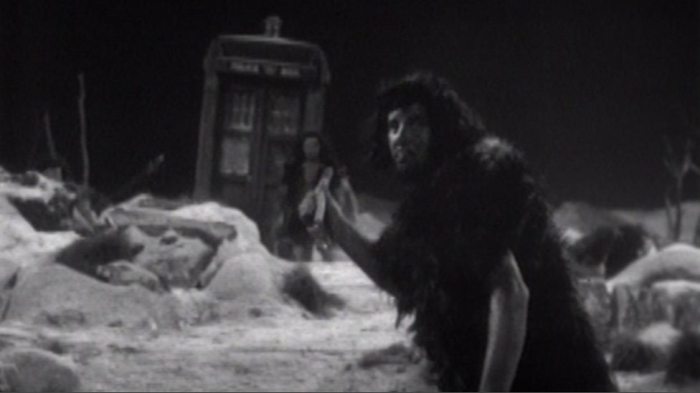
The early years of Doctor Who have some fine examples of caption acting. As the episode and writers credits were superimposed over the opening scene it often called for an actor to freeze in a suitably impressive way. Here, we see Eileen Way’s outstretched arm, holding Kal’s knife, remaining rock-solid for five seconds or so. There are plenty of others to look out for (The Firemaker is another good-un).

Inside the Cave of Skulls the Doctor is offering Barbara some moral support (“Fear makes companions of all of us”) whilst also offering more practical advice – he recommends that they all take it in turns to free Ian, since he’s the strongest and may have to defend them.

Another example of the lack of editing that was available at the time comes when the Old Mother breaks into the Cave. Either Carole Ann Ford was cued too early or the vision-mixer cut too soon, but there’s a pause of a few seconds before Eileen Way comes into view. A few years later this would have been easily tightened up, but given the restrictions on tape editing at the time it had to remain.

Old Mother sets them free and the four time-travellers make their way back to the TARDIS through the forest of fear. It’s very noticeable how dirty and disheveled they are – something we rarely see in the years to come – which helps to add an extra level of reality to their situation. This is no casual stroll back to freedom, there’s a sense of desperation and hysteria about their escape.

And the worst affected is Barbara – she’ll later become such a sold reassuring presence that it’s disturbing to see her in such a state (Oh, we’re never going to get out of this awful place! Never! Never! Never!”). Her breakdown is what you’d expect for a middle-class woman snatched from 1963 and planted down into a totally alien landscape, but her extreme reaction couldn’t have been repeated too many times. So you can contrast this with the casual way the time-travellers view the various sights they encounter a few stories later in The Keys of Marinus.

Za’s not a very good leader is he? And if it wasn’t for Hur, constantly guiding him, it’s clear that story would have ended in episode three. Hur is something of a Lady Macbeth, having to constantly prod and push her man in order for him to do the right thing. She isn’t evil though – and neither is Za – they just live on a totally different level to the Doctor, Susan, Ian and Barbara.

Although Za and Hur catch up with the Doctor and the others, when Za is attacked by an (obviously) off-screen animal it’s the perfect time for them to make their escape. It’s therefore intriguing that it’s only Barbara, the one who’s been the most desperate to escape, who decides to stay and help him.

Ian and Susan are initially reluctant, but acquiesce when they see that Barbara won’t be persuaded. This leaves the Doctor as the sole dissenting voice as he tells Barbara that “you’re trying to say that everything you do is reasonable, and everything I do is inhuman. Well, I’m afraid your judgement’s at fault.”

Barbara explains to Hur that “we will make him well again. We will teach you how to make fire. In return, you show us the way back to our cave.” It sounds like a decent plan but we’ll see that things don’t quite work out like that. The Doctor’s observation that the tribe’s minds change as rapidly as night and day seems to be quite astute.

The Forest of Fear also has the noteworthy moment when the Doctor picks up a rock and attempts to murder Ka. Or does he? The interpretation of this scene is certainly open to debate and it’s not as cut and dried as received wisdom would suggest. Yes, he picks up a rock and moves towards Ka but there’s not even a hint that he’s preparing to strike. And although he’s initially hesitant to explain himself when confronted by Ian, is that really enough to condemn him? In these early stories the Doctor was played as an elderly man, so it seems unlikely that he would have had the strength to bash Kal’s brains in, even if he’d wanted to.

I’ve always found the chronology of the cliffhanger to be odd. In the penultimate scene we see Kal and the others decide to set off after Za, Hur and the strange tribe – but how can Kal have caught up with them by the very next scene? Ideally Kal should have set off earlier in the episode, that way it wouldn’t seem so jarring to suddenly see him pop up to bar the way to the TARDIS.

Doctor Who – An Unearthly Child. Part Two – The Cave of Skulls

skulls.jpg

After acting in a malevolent and mocking way in the previous episode (the highlight being his attempt to electrocute Ian) the Doctor’s in a much more friendly and mellow mood in The Cave of Skulls. Was this inconsistent scripting or intentional – ensuring that the audience would be forced to keep guessing about his ultimate motivations?

But maybe he only mildly rebukes Ian’s continuing inability to accept the situation (“You really are a stubborn young man, aren’t you?”) because he’s now in command, having left London in 1963. Whatever the reason, the Doctor’s keen to explore (which will, for the first but not the last time, get him into trouble).

If the title of 100,000 BC is to be believed, then the Doctor’s correct in his assumption that they’ve travelled back in time. It’s interesting though that this is never confirmed on screen – it’s explicitly stated that the TARDIS’ “yearometer” isn’t functioning and so the date can’t be confirmed.

Had it been revealed at the end of episode four that this was actually a future vision of the Earth, following a nuclear holocaust, then it wouldn’t have come as a surprise. Maybe this was the original intention but got lost after one of the many rewrites? Not that it really matters, but it would have given the story an extra little frisson.

The tribe are a mixed bunch. Most mannered is Howard Lang as Horg who’s difficult to take seriously, although Derek Newark (Za), Alethea Charlton (Hur), Kal (Jeremy Young) and Eileen Way (Old Mother) are much better. All would return to the series in later years, as well as popping up in numerous other series of the time.

Za, Hur and Kal form an unlikely love triangle with Old Mother looking on ironically from the sidelines, constantly muttering that it would be better if Za never learns the secret of fire. It’s hard to understand her vehemence against fire, especially if one believes Za’s statement that without fire they’d die. Exactly why fire strikes such fear into her heart is never explained.

The initial TARDIS scene is notable for allowing the doors to open on the alien landscape. This wasn’t very common (although it would crop up again in The Sensorites) but I’m grateful they did it here since it really helps to sell the illusion of stepping from the ship into the unknown.

The forced perspective sets of the apparently endless plains may be obvious if you look too hard, but given the small amount of money Barry Newbery had to play with they’re still impressive. The wind sound effects help to create the impression that it’s freezing (although that makes the moment when Ian touches the sand and is astonished how cold it is, all the more strange).

We get the first of Susan’s hysterical fits, when the Doctor disappears – I really wish Barbara had slapped her hard as it might have discouraged her from doing it again! As for the Doctor, we see him enjoying a crafty smoke with a pipe – clearly this was only introduced so that Kal could see the Doctor make fire (or maybe the trauma in the Cave of Skulls was the moment he decided to kick the habit?)

Although Ian’s still in denial about everything, there’s also the first sign of his practical nature – after the Doctor disappears he automatically takes command. And when they’re all imprisoned in the Cave of Skulls it’s no surprise that Barbara is the one he checks on first (“Are you all right? Did they hurt you?”). Although never explicitly stated on-screen it seems obvious Barbara and Ian are very much a couple (as David Whitaker later confirmed in The Crusaders novelisation).

With the Doctor having seemingly lost all of his previous bluster (“Oh, I’m sorry. I’m sorry, it’s all my fault. I’m desperately sorry.”) things look bleak for our four heroes as they contemplate the myriad of skulls – all of which have been split open.

Doctor Who – An Unearthly Child. Part One

unearthly 01.jpg

If you’ve seen the pilot episode, then you’ll know that technically the transmitted An Unearthly Child was considerably smoother – although it’s still far from perfect.

For example, In Ian and Barbara’s first scene, as they discuss the mysterious Susan, it’s hard not to be distracted by the loud off-screen banging (is this the reason why Jackie Hill seems to raise her voice at certain times?)

It’s a pity that couldn’t have gone back to the start, especially since there’s an edit at 5:47, just after Susan says “I like walking through the dark. It’s mysterious”, which indicates that the original plan – to shoot continually from the opening to the point where the Doctor, Ian and Barbara enter the TARDIS – had to be abandoned.

But Jacqueline Hill and William Russell, pros that they were, were able to carry on and this initial scene clearly defines their characters. Barbara dislikes mysteries – and the puzzle of Susan Foreman is an itch that won’t go away. Ian is mildly intrigued, but he doesn’t seem to be bothered either way. He’s also presented as a sober rationalist – a man of science – and it’s instructive to watch how his certainties are stripped away as the episode progresses.

Ian knows that the TARDIS is a scientific impossibility, but that doesn’t explain how he comes to be inside it. His initial narrow-minded attitude is contrasted by Barbara. She has no more understanding of the situation than he does – but she simply accepts the situation.

An Unearthly Child might have been filmed in a cramped studio with ancient cameras, but the few limited tricks it uses do work well. It’s possible to believe that Ian’s car actually moves – thanks to the combination of sound effects, camera angles and some judicious shaking by the stage hands!

And as Ian and Barbara sit in the car, waiting for Susan to return home, we flashback to scenes in the school as they both remember instances of Susan’s strange behaviour. It’s shot in the only way possible – we see Susan and the other pupils in the classroom whilst hearing the pre-recorded voices of Ian and Barbara – but although this was borne out of necessity it does work to the strength of the scene. Since we can’t see the teachers, the camera has to stand in for them – creating an unsettling atmosphere as it focuses in on Carole Ann Ford’s face.

This episode is a good vehicle for Ford – but once the mystery of Susan is solved mid-way through the character will very much be relegated fourth in the pecking order. With an initial production block of fifty two episodes eventually confirmed she’ll have her moments – but she’ll rarely get the opportunity to be more than the fifteen-year old girl she appears to be.

I love William Hartnell. I think it’s hard to be a Doctor Who fan and not have a deep appreciation of the man – although some people seem to manage it. Although Hartnell’s off-screen behaviour is a problem for many, it is true that whilst there’s plenty of evidence that he was unpleasant and prejudiced, there’s also countless anecdotes that speak to the contrary. He may have been a flawed human-being, like all of us, but there’s something magical about his Doctor right from the start.

I tolerate this century, but I don’t enjoy it. Have you ever thought what it’s like to be wanderers in the fourth dimension? Have you? To be exiles? Susan and I are cut off from our own planet, without friends or protection. But one day we shall get back. Yes, one day. One day.

This episode was my first exposure to Hartnell’s Doctor, way back in 1981 as part of the Five Faces season of repeats. It does seem slightly staggering that back then the story was a mere eighteen years old (which today would be like watching something from 1997) as it seemed to come from another age entirely.

The odd technical imperfection apart, this episode is pretty much perfect. Certainly as an introduction to the four regulars it couldn’t be bettered, especially since they share all the lines between them. It was clearly important to delineate all their characters precisely before they became prisoners in The Cave of Skulls.

Ah, yes. If An Unearthly Child is an excellent opening episode, then the next three do have their critics – with the likes of Verity Lambert, David Whitaker and Waris Hussein being amongst the first to express reservations (even before they were transmitted).

Had more time been available then they may have done something different, but there’s plenty of drama to be found with the tribe (of Gum?) especially when contrasting their values against those of the TARDIS crew.

unearthy 02


Doctor Who – Delta and the Bannermen

delta.jpg

Back in 1987, the rock’n’roll stylings of Delta and the Bannermen seemed to be a quaint reminder of a far-ago age.  Yet more time now separates us from the original transmission (a shade under thirty years) than the gap between the first broadcast and its 1959 setting.  Funny thing time …..

Maybe it’s the retro setting, but time seems to have been pretty kind to Delta.  True, the story remains rather dreamlike and insubstantial, but it’s hard not to warm to it.  On the negative side, it’s a shame that Gavrok remains hopelessly undeveloped – he wants to exterminate the Chimeron race because he wants to – meaning that Don Henderson has to make bricks out of straw (Henderson has a nice line in simmering anger but little else, alas).  Delta herself, as portrayed by Belinda Mayne, is presented with a little more in the script to work with, but this is torpedoed by Mayne’s passionless performance.

I’ve also never been able to decide whether the fact that Weismuller can get straight through to the White House from a humble police box is supposed to be deliberately stupid or whether Malcolm Kholl just hoped nobody would notice.  But given that Weismuller and Hawk are given the job of tracking a satellite with the aid of a very basic telescope, I think it’s probably the former …..

But if the story is somewhat flimsy fare, then the performances more than make up for it.  Stubby Kaye is delightfully amiable as the bumbling Weismuller whilst Richard Davies brings to bear all his sitcom experience when delivering these sort of lines.  “Now, are you telling me that you are not the Happy Hearts Holiday Club from Bolton, but instead are spacemen in fear of an attack from some other spacemen?”

And there’s the rub.  If you believe that Doctor Who should be grim and gun-happy (like, say, Eric Saward) then Delta isn’t gong to appeal.  Otherwise, there should be plenty to enjoy here – although even I, unreconstructed Delta fan as I am, can’t sit through the honey/bees scene without squirming.  There should have been another way.

Had Sarah Griffiths toned down her “Welsh” accent then she might have made a very decent companion.  She certainly works well with Sylvester – the moment when a distraught Ray (miffed that the love of her life, Billy, is making eyes at the newly arrived alien lady) grabs the Doctor for an energetic dance is just one delight amongst many.

Always a pleasure to revisit this one.

Doctor Who – Horror of Fang Rock. Episode Four

horror 04-01

It’s slightly odd to think that during the eighties Horror of Fang Rock wasn’t a story with a terribly good reputation.  But then this was the decade (in British fandom certainly) when many of us only had very limited access to the series’ past, so we had to rely on what DWM or the fanzines of the day told us was true.

And since Graham Williams was still persona non grata for many, Horror was often lumped in with the majority of the other stories from this period as something of a disappointment.  Only City of Death managed to escape this chorus of disapproval.

It’s interesting that part four opens with what we later learn to be the shape-shifting Rutan (still looking remarkably like Rueben) running into Vince for a brief and (on Vince’s part) painful meeting.  Had Vince been killed at the end of part three then the actor wouldn’t have received a fee for the final instalment (this seems a trivial matter, but Doctor Who, like many other series of the time, tended to be quite frugal about matters like this).

I wonder if the original plan had been to end part three with Vince’s death?  It would have been a strong cliffhanger, especially since it would have immediately followed the Doctor’s weary statement that he’d been wrong all along about their mysterious foe.

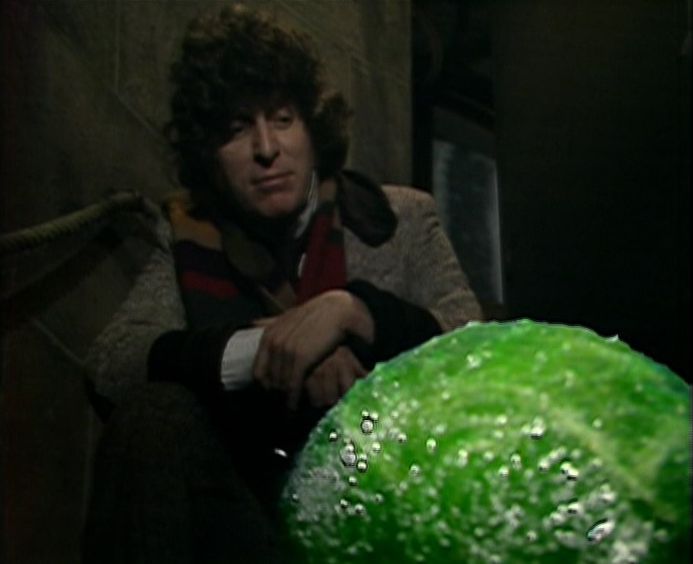
But no matter, Vince now bites the dust and Adelaide follows him shortly after.  This leaves Skinsale as the last man standing, apart from the Doctor and Leela.  Whilst Leela and Skinsale head off to find a weapon to use against the Rutan, the Doctor settles down for a friendly chat with the glowing green blob.

If one were being critical, then it’s probably fair comment that part four does somewhat dribble to a conclusion.  The Rutan (looking rather like – I’m sorry – a large piece of green snot) and the Doctor have a nice little natter for a few minutes which rather slows the story down.  That Dicks chose a Rutan as the monster is a nice nod to Holmes (Holmes had already named them as the age-old enemies of his creations, the Sontarans).  Or it could just be that Dicks was running short of inspiration …..

As is often the way with even the most repellent of monsters, they tend to be very garrulous once you get them talking (a fact which Dicks slyly drops into the script) and the Doctor now knows exactly what he has to do.  Destroy the Rutan mothership – which is shortly due to land – and the rest of the Rutan fleet will scoot off to look for easier pickings elsewhere.

This is a little hard to swallow, but it’s even harder to believe that the Doctor could rig the lighthouse’s lamp into a deadly ray with little more than a dash of ingenuity and a diamond from Palmerdale’s body belt.  It’s easy to criticise the modern series for plucking solutions out of the air, but this is just as bad.

Since Dicks wrote both the script and the novel, there’s one small change which has always interested me.  Skinsale dies because he stays behind and scrabbles for Palmerdale’s extra diamonds.  When Leela asks where Skinsale is, the Doctor tells her he died with honour.  This is obviously not so and Dicks – when he penned the novelisation – chose to make this plain.  Was it not originally played as Dicks wrote it, or did he take the later opportunity to tighten up a this slight plot oddity?

But even if the ending slightly disappoints, Horror of Fang Rock is still an essential story.  Base-under-siege stories always work (although familiarity did breed contempt a little during the Troughton era) and thanks to the unusual lighthouse setting this one works better than most.

Finishing with a touch of Wilfrid Gibson doesn’t hurt either.  “Aye, though we hunted high and low, and hunted everywhere, of the three men’s fate we found no trace. In any time, in any place. But a door ajar and an untouched meal and an over-toppled chair”.

horror 04-02.jpg

Doctor Who – Horror of Fang Rock. Part Three

horror 03-01

Horror of Fang Rock was the last time that Terrance Dicks and Robert Holmes worked together on the same Doctor Who story.  If one had to choose the most significant writer who ever worked on the series then Dicks and Holmes, along with David Whitaker, would surely have to be towards the top of the list.

All three had similar career paths – they had all served as script-editors and helped to broaden the mythos of the series in numerous ways (they weren’t too shabby as writers either).  If pressed, I might have to plump for Terrance Dicks – as not only did he help to stabilise the series in the early seventies (following the rocky road the show had trod in the later Troughton era) thereby ensuring that the programme had a long term future, but he also had the good sense to commission Robert Holmes.  And a Doctor Who cosmos without Robert Holmes scarcely bears thinking about ….

That’s a bit of a flip reason true, since Dicks was no slouch as a writer himself.  Fang Rock is probably his best solo script for the series – which is especially impressive when you consider that it was a last minute replacement for his rejected vampire story.  Compare and contrast with The Invasion of Time, which also had to be cobbled together at great speed.  True, the season closer also had to stumble through the production from hell, but had the script been sounder then things wouldn’t have turned out to be so shambolic.  But that’s a story for another time.

Rueben’s looking far from well, but isn’t actually dead (or so it appears).  Once again the Doctor’s still several paces behind the action and is working from a false premise – he believes that Rueben’s seen the creature and has valuable information, but the truth’s a little more complicated.

Whilst the Doctor attempts to contact Rueben through a locked door, Palmerdale is tempting Vince with a fortune (fifty pounds).  Palmerdale has a limited opportunity to make a killing on the stock exchange with the information supplied earlier by a reluctant Skinsale.  Skinsale would much prefer that he didn’t of course (since he would be ruined if the news leaked out).  Quite how this would be isn’t quite made clear – some kind of insider trading obviously – but it’s not really important.

The key fact is that Palmerdale attempts to bribe Vince to use the telegraph to broadcast a message to his brokers, so Skinsale destroys the telegraph machine to ensure this doesn’t happen.  This is clearly a very bad move as it isolates them from the mainland.  The Doctor helpfully spells this out.  “To protect your honour, you’ve put all our lives in danger”.

It’s a good dramatic moment and played well by Tom (the Doctor doesn’t display anger at Skinsale, only weary resignation).  But you have to wonder why the Doctor or indeed anybody else hadn’t thought to radio for help before.  And let’s be honest, even if Skinsale hadn’t wrecked the telegraph it’s impossible to imagine the Doctor ever lowering himself to request anybody’s assistance, certainly not turn of the century human beings.

Therefore the destruction of the telegraph is a bit of a red herring, although it serves a useful purpose in allowing us to see that Skinsale is just as corrupt and untrustworthy, in his own way, as Palmerdale.

We’re closer to the end of the story than the beginning, so it’s clearly time that the remaining humans are bumped off, one after another.  Palmerdale is the first to go, which sends Adelaide into a fit of hysterics (swiftly curtailed after Leela gives her a good hard slap!).  There then follows a nice exchange between the two, which sees Leela tell Adelaide that she shouldn’t put her faith in astrology.  “A waste of time. I too used to believe in magic, but the Doctor has taught me about science. It is better to believe in science”.

Before we’ve caught our breath from Palmerdale’s demise then Harker is also killed off and a couple of scenes later the Doctor and Leela discover Rueben’s cold, dead body. This is a bit of a mystery since Rueben has recently been seen alive and well.

The Doctor finally understands. “The chameleon factor, sometimes called lycanthropy. Leela, I’ve made a terrible mistake. I thought I’d locked the enemy out. Instead, I’ve locked it in, with us”.

It’s a slight oddity that the Doctor refers to lycanthropy, since that only refers to the change between a human and a werewolf, but the Doctor’s ominous pronouncement is an interesting point on which to end the episode. Having the Doctor or the others placed in danger would have been more of a hook, but the realisation that the Doctor’s been wrong all along is also frightening and disturbing – albeit for a different reason.

horror 03-02.jpg

Doctor Who – Horror of Fang Rock. Part Two

horror 02-01

I’ve previously mentinoed Terrance Dicks’ firm grip of basic storytelling principles and there’s further evidence of that here.  Our new characters – Lord Palmerdale, Skinsale, Adelaide and Harker – all have interlocking conflicts with each other which will help to keep the drama ticking along.

Palmerdale (Sean Caffrey) plainly sees himself as the top dog and is quite happy to boss young Vince about.  And although Adelaide (Annette Woollett) might be Palmerdale’s employee she too has no compunction in ordering Vince to do her bidding.  There’s a nice moment of class comedy played out during the scene where Adelaide asks Vince his name.  He replies Vince Hawkins and she graciously responds. “Thank you Hawkins”.  He’s pleased to have received kind words from a lady and the fact that she used his surname doesn’t register with him.  The mistress/servant divide is plain here (just as the opposite is in play with the Doctor and Leela, who always call Vince by his first name).

If Palmerdale and Adelaide both seem rather superior (although having to share a cramped lighthouse with a killer will no doubt wipe the smiles off their faces) then our first impression of Skinsale (Alan Rowe) is rather more favourable.  The audience is invited to view the arrogant Palmerdale with disdain and it’s Skinsale who is allowed to articulate these feelings.  That Skinsale is placed in opposition to Palmerdale (along with Skinsale’s wry humour) immediately makes him a likeable character although, as we’ll see, his ruthless self-interest will prove to be dangerous.

The Doctor continues to brood and Tom dominates the screen whenever he’s on.  The moment where he strides into the crew room and places his feet on the table (a Tom adlib possibly?) is one of those little touches which adds so much to the feel of the story.  The Doctor’s baiting of Palmerdale is another treat.

The arrival of Harker (Rio Fanning) ramps up the drama another notch.  The only survivor from the crew, Harker blames Palmerdale for the death of the others (this simmering resentment will eventually spill over).  For now though, he’s a handy man to have about – a practical sort, unlike the pampered upper-class types still bickering upstairs in the crew room.

The mystery of Ben’s death continues.  If he was dead, how did he find his way out of the lighthouse and into the sea?  The Doctor has an explanation for Vince.  “The shock simply stunned him, he partly recovered, staggered out onto the rocks, fell into the sea and was drowned”. It sounds reasonable, although the Doctor’s well aware that it’s not the truth. But, as he tells Leela, he can’t tell Vince the truth, because he still doesn’t know what the truth is. Whenever the Doctor is clutching at straws it helps to raise the tension just that little bit higher.

The relatively small cast and the confined space allows the Doctor and Leela to be paired together for long stretches (most stories would tend to see the Doctor and companion split up for an episode or two). Tom and Louise might have been struggling off-screen, but on-screen the Doctor and Leela make for an excellent team. Here, the Doctor shares his fears with her. “That creature, or whatever it is, will be getting bolder by now. It’s seen this primitive technology, it’s had time to calculate the physical strength of its enemies. I think we’re in terrible trouble”. Leela’s deadpan next line (“Do not be afraid, Doctor”) is another well-delivered moment as is the Doctor’s slow-burn reaction to it.

As I touched upon earlier, Terrance Dicks provided Leela with plenty of good material. Apart from her byplay with the Doctor, she gets to memorably threaten Palmerdale (“Silence! You will do as the Doctor instructs, or I will cut out your heart”).

This week’s cliffhanger is a tad more impressive than last week’s. A blood-curdling cry causes the others to stop their squabbles as it suggests that the Beast of Fang Rock has claimed another victim ….

horror 02-02.jpg

Doctor Who – Horror of Fang Rock. Part One

horror 01-01

Doctor Who fans tend to break down sections of the show into recognisable eras.  Usually this is done by producer and not lead actor (which is understandable when, say, analysing Tom Baker’s seven year stint as his three producers – Hinchcliffe, Williams, JNT – all had very different styles).

The only problem with this method is that the cut-off is never absolute.  Horror of Fang Rock is a prime example – in mood and style it can comfortably sit alongside Talons (that it shares the same Victorian/Edwardian setting doesn’t hurt on this score).  It’s also possible to find echoes of the Williams era in several Hinchcliffe stories (when the Doctor bumps into Styggron in The Android Invasion, his cheery greeting could easily have played virtually anywhere in S15/S16/S17).

This bleeding of styles was rarely acknowledged back in the day.  In the 1980’s, when Graham Williams was still beyond the pale for many, things seemed much simpler.  His three years in charge were plainly a disaster from start to finish, not least for the unsubtle humour and schoolboy larking about.  If the Doctor mocked his adversaries and didn’t treat them with fear or respect, why should the audience?

As we’ve seen, the line between Hinchliffe/Williams wasn’t absolute, but this distinction tended not to be acknowledged.  One of my favourite summations of Graham Williams’ producership can be found in issue three of the fanzine Mondas, published in 1984.  We’ll be kind and not name the writer (a familiar name from Doctor Who fandom).  Graham Williams was apparently the man “who (unwittingly or not) almost cold-bloodedly butchered our programme, leaving it only in a fit state for recycling as dog meat”.

Hmm.  I’m slightly more of a fan ……

When he took over as producer, Graham Williams had three immediate problems to contend with.

  1. A requirement to tone down the violence and horror in the show.
  2. Galloping inflation, which meant that in real terms he had less to spend on the show for each of his three years.
  3. Tom Baker.

All three were bequests from Philip Hinchcliffe in one way or another.  The first seems to be Williams’ overriding legacy on the show, but there’s also evidence to suggest that even if the BBC management hadn’t insisted on change he would have done so anyway.  Williams (like Barry Letts) had been critical of the sadistic tone which had crept into the show during the mid seventies and was keen to steer the programme in a slightly different path (one example quoted by Williams was the moment in Genesis where Sarah is dangled over the edge of the rocket gantry by a Thal guard – a scene he never would have countenanced).

Philip Hinchcliffe liked to overspend, but it was Graham Williams who had to face the consequences. When Williams took over he discovered that budgets now had to be strictly adhered to (which led to some sticky later moments).  If the Hinchliffe era had been made in the same cash-strapped environment then it’s probable we’d think a little less of it.

Tom Baker. Ah, where do you start.  Tom and GW didn’t enjoy the best of working relationships to put it mildly.  Many believe that because Tom was by now so firmly entrenched in the series he was disinclined to listen to anybody else’s point of view.  But it’s possible to argue that Tom was simply looking to do the best for the programme (railing against unimaginative scripts) and that his actions weren’t motived by pure self-ego.  The truth probably lies somewhere inbetween.

The series had suffered from testy relationships between the lead actor and producer before.  William Hartnell and John Wiles were never a marriage made in heaven whilst Patrick Troughton’s interactions with both Peter Bryant and Derrick Sherwin weren’t much better. Terrance Dicks’ portrait of Bryant – a barely functioning alcoholic – is a rather unflattering one, but it suggests the reason why the professional Troughton felt frustrated towards the end of his stint on the show.  That Sherwin and Troughton didn’t get on can clearly be evidenced by Sherwin’s commentary on The War Games.  Whenever Sherwin’s in the chair and Troughton’s on the screen an acid put-down is never far away.

But if the turmoil between Baker and Williams would spill out onto the screen in later stories, at this point in time there’s no hint of what was to come.  Part one of Horror of Fang Rock is a model of efficient storytelling – establish your location (a lighthouse), your first wave of principal guest characters (the three lighthouse keepers – Ben, Rueben and Vince), introduce the Doctor and Leela, mix well and stand back.

The three keepers are, handily, of different generations.  So we have the old man, Rueben (Colin Douglas), the middle-aged Ben (Ralph) and the youngster Vince (John Abbott).  That they’re of varying ages is an obvious touch as it quickly helps to differentiate their characters.  Say what you like about Terrance Dicks, but he understood the basics of storytelling.

Rueben might be the oldest, but he’s not the senior man in charge here (a point which no doubt rankles with him).  Ben and Rueben articulate two very different viewpoints – science and superstition.  Indeed, had Ben not met his imminent death then it would have been interesting to see him and Rueben develop through the serial, almost as a surrogate Doctor and Leela.

Ben embraces the brave new world of electric-powered lighthouses whilst Rueben harks back to the good old days of oil.  Both, in their own ways, are entrenched in their own positions, although we’re no doubt meant to side with Ben.  That partly helps to explain why he’s first for the chop – having a level-headed sensible chap around is far less fun than the doomy, superstition-ridden Rueben (“‘taint natural”).  Vince occupies the middle ground as he’s prepared to listen to both of them (and the Doctor as well).

Louise Jameson was never too enamoured of this script (mistakenly believing that it had been written for Sarah-Jane).  I can’t see many causes for complaint though as Leela’s provided with some good material throughout.  The moment when Leela changes out of her wet clothes in front of a scandalised Vince (“I’m no lady Vince”) is just one nice character beat.

Tom Baker is in full brooding mood.  This may be because the script required it, but the evidence seems clear that at this point in time he wasn’t enjoying a harmonious relationship with his co-star (the fact that a female director had been assigned simply darkened his mood even more).  But if his playing here is partly informed by his off-screen irritations, then no matter – it’s also the perfect choice for the story.

Another interesting wrinkle is the air of mystery that hangs over Fang Rock.  We have a dead body – Ben – but the Doctor doesn’t know who killed him or why.  And it’ll be a long time before he finds out (Tom’s Doctor might often characterised as an unstoppable know-all, but that’s not the case here).

The cliffhanger (a toy boat runs aground) might be a little anti-climatic, but there’s little else to complain about here.  Some forty years to the day when this episode was first broadcast, Horror of Fang Rock part one still engrosses.

horror 01-02

Doctor Who – The Talons of Weng-Chiang. Episode Six

talons 06.jpg

Finally the Doctor and Greel have a face to face meeting. The Doctor has dealt with Greel’s proxy – Chang – previously, but it’s not until now that Greel and the Doctor have the chance for a chat.

As time went on, Tom’s Doctor became more and more flippant (although to be fair, flippancy was always part of his character). Some dislike his mockery of the villains (maintaining that it diminished them) but I’ve never had a problem with it. Yes, the Doctor gives the impression that he’s not taking Greel seriously (“never trust a man with dirty fingernails”) but there’s still a palpable air of threat and menace from the masked man.

Jago and Litefoot continue their sojourn as prisoners of Greel. This brief dialogue exchange is lovely –

JAGO: Well, I’m not awfully. Well, I’m not so bally brave when it comes to it. I try to be but I’m not.
LITEFOOT: When it comes to it, I don’t suppose anybody is.
JAGO: Well, I thought I ought to tell you anyway, in case I let the side down.
LITEFOOT: You won’t, Henry. I know you won’t.

Jago’s cowardice has been evident right from the start, but the fact that he admits it (and Litefoot doesn’t think any less of him because of it) is nicely done.

If the Doctor was rather playful with Greel at Litefoot’s house, then the mood changes once both are back in Greel’s lair.  Once he discovers that the man masquerading as Weng-Chiang is actually Magnus Greel (“the infamous Minister of Justice. The Butcher of Brisbane”) there’s a definite gear-change.

DOCTOR: I know you’re a wanted criminal and that a hundred thousand deaths can be laid at your door.
WENG: Enemies of the state! They were used in the advancements of science.
DOCTOR: They were slaughtered in your filthy machine.
WENG: So, you are from the future, and I, for all my achievements, are only remembered as a war criminal. Of course, it is the winning side that writes history, Doctor. Remember, you would not be here if it were not for my work.

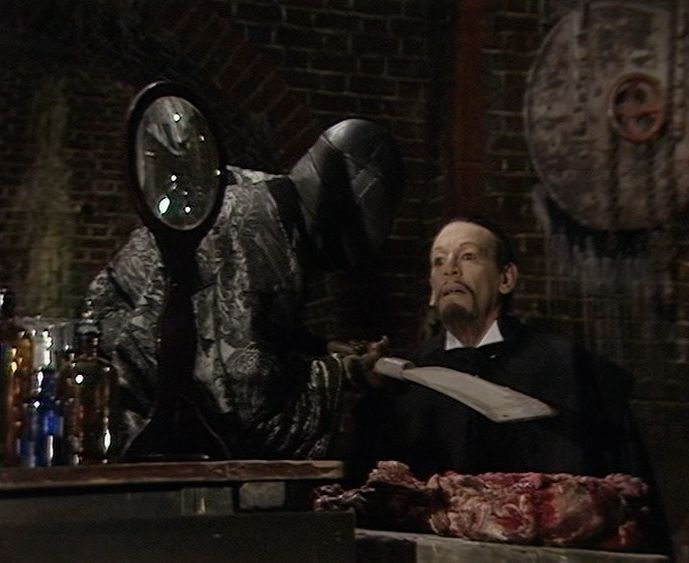
Both Baker and Michael Spice are sparking here. Spice, hidden behind a mask, has been somewhat hampered throughout the story but his skill as a voice actor means that Greel is still a fully-formed character, despite the fact we never (apart from one glimpse) see his features.

The Doctor is locked up with Jago, Litefoot and two young girls, Greel’s latest victims.  That they’re so very young is the sort of plot-point you probably wouldn’t see today (Holmes did have some dialogue explaining that their age – on the point of puberty – was the reason why Greel had abducted them).  Ah, it was a different time back then.

The Doctor might not carry a weapon, but he’s happy to improvise.  His home-made gas bomb is one such example – and the sort of thing that would vanish from the series once Graham Williams took over.

The final battle is a little anti-climactic (and the less about Tom wrestling with an obvious Mr Sin dummy the better) but it doesn’t detract from the fact that this is Who at its best.  It’s a real regret that they don’t make them like this anymore.

Doctor Who – The Talons of Weng-Chiang. Episode Five

talons 05

Amongst Tom Baker’s many skills as the Doctor was his ability to deal with strangest of dialogue.  The Doctor’s description of Mr Sin is a case in point – in a lesser Doctor’s hands it might have come across as a comic moment,  but there’s no such sense with Baker.  “The Peking Homunculus was a toy, a plaything for the Commissioner’s children. It contained a series of magnetic fields operating on a printed circuit and a small computer. It had one organic component. The cerebral cortex of a pig. Anyway, something went wrong. It almost caused World War Six”.

Now that Greel’s finally obtained the time cabinet he’s rather chuffed (“oh, how I have dreamt of this moment. To be free of this putrefying carcass”) but wouldn’t you believe it, he’s lost the key. All these years when he had the key but not the cabinet and now the position is reversed. You have to feel a little sorry for him, master criminal he is not.

But you have to feel sorrier for the unfortunate Ho, who left the bag containing the key behind at the theatre.  He takes the sting of the scorpion and dies horribly as the chuckling Mr Sin looks on. This is another of those nightmarish moments which many argued crossed the boundaries between children’s and adult’s television (although Holmes’ original draft – Greel takes out a revolver and shoots Ho multiple times – was even more uncompromising).

And finally … Jago and Litefoot meet. It’s easy to see why Robert Holmes briefly considered spinning these characters off into their own series and even easier to understand why the Big Finish series of audio plays has entertained so many. Benjamin and Baxter make for a wonderful team.

Litefoot, like he was with the Doctor, has to play the straight-man somewhat, but he’s more than simply a foil for Jago’s comic bumbling. Their first scene is a treat – Jago mistaking Litefoot for his own butler and then attempting to back out of a nocturnal adventure due to his weak chest!

Chang’s brief reappearance is something of a surprise, but the sight of him – doped up on opium and missing a leg – provides us with clear evidence that he’s not long for this world. Thanks to Bennett as well as Holmes’ script, Chang is much more than a single-minded villain. His wistful regret that he was shortly due to perform before Queen Victoria at Buckingham Palace (hopefully he would have kept Mr Sin under control) is a nice touch.

Bennett’s casting will always be a bar to some people, but I don’t find the oft-repeated accusation that Talons painted a strong negative portrait of the Chinese to be correct.

Jago and Litefoot may be many things, but they’re no match for Greel and quickly find themselves locked up. Their abortive escape attempt – via the dumb waiter – doesn’t really go anywhere though. Possibly this was a spot of padding from a now desperate and weary Holmes. Benjamin and Baxter still manage to entertain though.

But things pick up with the cliffhanger, as Leela (and the audience) views the unmasked Greel for the first time ….

Doctor Who – The Talons of Weng-Chiang. Part Four

talons 04.jpg

After being largely absent from the previous episode, Henry Gordon Jago comes roaring back in this one.  Once again, Robert Holmes’ skill at creating vivid characters even extends to the ones we never see.  Jago, once more delightfully teamed up with his factotum Casey (dumb and dumber), clearly has little love for his wardrobe mistress.

JAGO: The woman’s a bloodsucker. She’s trying to ruin me.
CASEY: Well she said.
JAGO: Don’t tell me, Casey. I’m an artiste. Every night at this time, I feel like an old warhorse scenting the smoke of the battlefield. As the house fills, the blood starts tingling through my veins. My public is out there waiting for me. I can’t talk about money at a time like this.
CASEY: But you don’t do anything, Mister Jago.
JAGO: I, I announce the acts, I count the tickets, I smile at people. You’ve no idea of the strain it puts on a fellow. Furthermore, she spend seventeen and threepence on the wardrobe last week.

Another lovely scene for Christopher Benjamin and Chris Gannon.

The moment when Jago and Litefoot will meet is coming closer, but for the moment they’re still apart.  The Doctor, having managed to rescue Leela (well, did you really imagine he wouldn’t?) is preparing for a night at the theatre.  Having decided last episode that the best way to locate Greel’s lair would be by the sewers, he’s clearly now knocked this plan on the head.

This is possibly a consequence of the way Robert Holmes had to cobble the scripts together at high speed, but since the Doctor was already aware that Greel’s bolt-hole was somewhere in the theatre, wouldn’t it have been easier just to walk in through the door?  Especially since he knew that large (albeit cuddly) rats were loose in the sewers?  True, he was on hand to rescue Leela, but that wasn’t the intention (just a fortunate coincidence).

Christopher Benjamin sparkles throughout.  His hero-worship of the Doctor, whom he’s convinced is a top private investigator, is delightful.  A decade or so later Holmes would recreate the character in The Two Doctors, as what is Oscar, if not a Jago clone?

One of my favourite Jago moments occurs when he pays a surreptitious visit to the Doctor and Leela’s box.  As an aside, did the Doctor pay for this first-class treatment, did Jago lay it on or did the Doctor just breeze in?  Anyway, Jago crawls into the box on his hands and knees, proud to be standing by the Doctor during his hour of need.  Alas, his pride gets a bit wobbly once the Doctor informs him that he’s quite alone and the theatre isn’t surrounded by a ring of policemen.  Jago’s plaintive “oh corks” as he shuffles out is wonderful.

It’s easy to see how The Good Old Days influenced this part of the story (a reference which wouldn’t have been lost on the contemporary audience and – thanks to the recent repeats – possibly not on a section of today’s viewership).

With Greel having tired of Chang’s bungling, Chang is now on his own.  Some might have attempted to flee, but he carries on his twice-nightly magic act.  What a trouper.  It’s a fascinating touch that Greel doesn’t kill him – instead he sabotages his act (something which no doubt would have hurt him more).

John Bennett’s been excellent throughout, but never better than when a defeated Chang tells the Doctor about how he, just a humble peasant to begin with, helped Greel.  Unless Greel was a student of Chinese folklore (slightly difficult to believe, but not impossible) then possibly Chang was the one who dubbed him Weng-Chiang.  But however it came about, Chang on one level does seem to believe that Greel is a reincarnation of his god.

With Chang defeated, it looks as if the story is coming to an end – but Holmes still has two episodes to fill so from the next episode he’ll spin events off into a different direction ….

Doctor Who – The Talons of Weng-Chiang. Part Three

talons 03.jpg

It’s fair to say that by Talons, Tom Baker’s Doctor has become something of a tyrant. Breezing through the story with an air of disdain, the Doctor might interact with the likes of Leela, Jago and Litefoot, but it’s rare that he ever seems interested in their opinions – this is a Doctor who always knows best.

How much of this was due to the scripting and how much was Tom Baker’s own input is a moot point. His dislike of Leela’s character is well-known (his personal relationship with Louise Jameson was also strained at the time) so it seems possible that some off-screen antipathy was bleeding onto the screen. But since the S14 Doctor is still far less objectionable than the breaktakingly rude Pertwee model from S8 it’s never been too much of an issue for me.

The attack on Litefoot’s house (an unsuccessful attempt to obtain the Time Cabinet) has two consequences – it takes Leela away from the Doctor’s side and puts her on a collision course with Greel as well as teaming the Doctor and Litefoot up as they attempt to locate Greel’s lair.

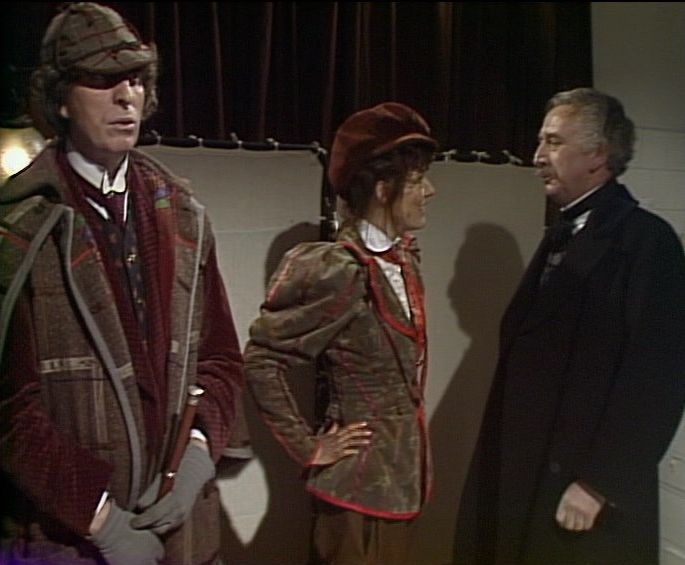
Since the Doctor’s dressed as Sherlock Holmes, it’s hardly surprising that he’s now been given his Watson subsistute in Litefoot. I surely can’t be the only person to wish that when Tom tackled Sherlock Holmes a few years later in the Classic Serial adaptation of The Hound of the Baskervilles, Trevor Baxter had been cast as his Watson.  A missed opportunity alas.

Holmes (Robert, rather than Sherlock) always delighted in expressive language, as can be seen several times across this episode.  The Doctor clearly has a low opinion of Greel and tells Litefoot why.  “Some slavering gangrenous vampire comes out of a sewer and stalks this city at night, he’s a blackguard. I’ve got to find his lair and I haven’t got an hour to lose”.

Many were of the opinion that this era of Who wasn’t really suitable for children and when Chang abducts a prostitute (the latest intended victim for his master) you have to admit that they might have had a point. Once again, Holmes delights in a spot of ripe dialogue as Teresa tells Chang that her plans don’t include him. “As far as I’m concerned all I want is a pair of smoked kippers, a cup of rosie and put me plates up for a few hours”.  Cor blimey guv’nor!

Although David Maloney was always a more than capable director – next to Douglas Camfield, he was probably the series’ best – the fight between Leela and Greel doesn’t quite convince. Possibly the studio clock was ticking, but Louise Jameson rather daintily steps around Greel’s lair (there’s little sense of a savage warrior here).  In story terms, it’s also not quite clear why she heads out into the sewer – true, Greel did have a gun, but Leela’s the type likely to have pressed her attack on regardless.

Ah, the sewers.  That means that giant rat is due to make another appearance.  Poor Leela – reduced to her underwear, soaking wet and gnawed by a rat, so not her best day ever.  And since Louise Jameson was suffering from glandular fever at the time it probably wasn’t one of her favourite days either.

At this point in the series’ history, it’s not a surprise that even the capable warrior Leela needs to be rescued.  The Doctor’s on hand, with a Chinese fowling piece (made in Birmingham), but how good a shot is he?

Doctor Who – The Talons of Weng-Chiang. Episode Two

talons 02.jpg

Although we learnt in episode one that the Tong of the Black Scorpion (“fanatical followers of an ancient Chinese god called Weng-Chiang”) seem to be involved in this devilish business, it now becomes clear that Chang is merely a subordinate character and his master – Weng-Chiang (or at least someone masquerading as him) – is the one directing events.

Weng-Chiang, or Magnus Greel to give him his real name, lives beneath the Palace Theatre.  Why he should do this – unless he’s a devotee of The Phantom of the Opera – is never made clear.  But since Chang is performing at the theatre it makes some sort of sense that Greel is close at hand – especially since Chang has been abducting girls off the street for him.

The science-fiction elements of the story now begin be pulled together as we learn that Greel is a refugee, afraid of the intervention of time-agents.  Why he wants the girls is also explained (“the disease grows worse. Each distillation lasts less than the time before”) and that until he recovers the Time Cabinet he’ll never be whole again.

It’s a remarkable coincidence that the Time Cabinet is in Lifefoot’s possession.  He’s unaware of its significance, regarding it as little more than a Chinese curio, although we’ll learn more about this in episode three.

For those who worry about such things, then the timeline of this story is very odd.  If Litefoot’s had the cabinet for decades, what has Greel been doing all this time?  We see that his body is in collapse, with only the life-essence from young female donors keeping him alive, so how has be survived during this period?  He can’t have been in London for more than a few weeks (based on the number of girls abducted) so are we really supposed to believe he’s only just decided that reclaiming the Time Cabinet might be a good idea?  And since Litefoot’s father was a notable member of the British government in China, surely it wouldn’t have been too difficult to work out that his family was the one gifted the Time Cabinet ….

Episode two sees the Doctor encounter Jago for the first time.  There’s a characteristic gear-change from the Doctor – to begin with he’s jovial – pretending to be a music-hall act ( “dramatic recitations, singing, tap-dancing. I can play the Trumpet Voluntary in a bowl of live goldfish”) – but in a double-heartbeat he turns serious.  As touched upon before, Tom could do this better than anyone and both he and Benjamin make these scenes – largely expository ones – sparkle.

Another signature moment occurs when Leela and Litefoot enjoy a bite to eat, with Leela’s table-manners being somewhat lacking.  Litefoot, the perfect host, elects to copy his guest in order not to make her feel awkward, which gives Trevor Baxter another nice character moment.

Doctor Who – The Talons of Weng-Chiang. Episode One

talons 01.jpg

Following the recent death of Trevor Baxter, I pulled Talons off the shelf for another rewatch.  For me, it remains the ultimate Who experience, Robert Holmes blending together a mix of literary sources in order to serve up a potent brew of Victoriania  menace.

It has its critics though, most of whom find John Bennett’s performance as Li H’sen Chang distasteful.  I think Bennett is wonderful, but the fact that he’s a British actor made up to appear Chinese is a stumbling point for many.  This was a common practice during this era of television though – the pool of ethnic actors in the UK being somewhat limited – and the fact that Timothy Coombe struggled to find good Chinese actors for relatively small parts in The Mind of Evil suggests that the problem had been a long-term one.

Had Bennett’s performance been a caricature (“me velly solly”) then it would be easier to side with the critics.  But Chang is a sharply-drawn, multi-faceted character who’s much more than just an Oriental heavy.  Throughout the story Bennett is able to give Chang considerable light and shade, meaning that by the end it’s possible to believe he was just as much a victim of Greel as everyone else was.

I’ve often wondered if Bennett’s casting was, in part, something of a sly joke.  The most famous Chinese magician on the early 20th Century British stage was probably Chung Ling Soo, remembered mainly for his dramatic on-stage death.  The fact that Chung Ling Soo was actually an American (William Ellsworth Robinson) makes it possible that the audience at home were being invited to wonder whether Chang was also pretending to be Chinese.  I may be over-thinking this though ….

Chang might have a heavy Chinese accent when performing on stage, but off-stage he’s quite different.  It’s never emphasised throughout the story, but there’s something of an irony in the fact that Chang – imbued with great powers by his master, Greel – can only utilise them on the music hall stage.  The fact that he’s a Chinaman in London means that any other doors (business, polite society) are barred to him.

Talons was written to a strict deadline, which might explain why Holmes was content to borrow so heavily from existing texts (especially The Phantom of the Opera and the tales of Fu Manchu).  But even given the pressure he was under, Holmes didn’t skimp on the dialogue, with the result that Talons is an actors gift – with Christopher Benjamin (as Henry Gordon Jago) the prime recipient.

Holmes liked to pair characters off and we can see this with Jago, as throughout the story he teams up with – in order – Casey (Chris Gannon), the Doctor and Professor Litefoot (Trevor Baxter).  With Casey, Jago is dominant (as befits his status as Casey’s employer), like everybody he’s immediately subordinate to the Doctor (Jago’s hero-worship of him is a delight).  He also defers to Litefoot to begin with (a question of social standing presumably) but the pair quickly forge a more equal relationship in the heat of adversity.

In this story, even the minor characters are vividly sketched.  Patsy Smart’s dribbling crone, on hand to watch the police fished a badly mutilated body out of the river, is a case in point.  “On my oath, you wouldn’t want that served with onions. Never seen anything like it in all my puff. Oh, make an ‘orse sick, that would”.

Earlier, the Doctor and Leela had stumbled across a Chinese gang carrying this body (cab-driver Joseph Buller).  Buller might not have been on-screen for long, but the scene immediately prior to his death – stalked by Chang’s knife-welding ventriloquist dummy Mr Sin (Deep Roy) – is a memorable one.

Tom Baker’s Doctor is treading a fine balance here.  When one of the Chinese gang dies a horrible death in front of his eyes (via a poison capsule surreptitiously supplied by Chang) his first reaction is to laugh uncontrollably.  The Doctor quickly becomes business-like, but it’s a jarring moment that possibly only Baker could have pulled off.

An interesting point about this episode is that there’s no tangible science fiction elements.  The giant rat (not terribly good, but I think we can take that as a given) might be the first indication that there’s more to this story than just a mysterious murder, but we’ll have to wait until part two before things become clearer.

Doctor Who – The Web of Fear. Episode Six

web 06-01

We’ve seen over the last few episodes how Lethbridge-Stewart’s fighting force has been somewhat decimated.  Apart from himself, only Evans and Arnold are still standing.  Evans remains an unreconstructed coward whilst Arnold continues to be a pillar of no-nonsense strength.

ARNOLD: Now look, lad, you’re scared, that’s understandable. But you’ve been in the Army long enough to know that orders is orders. There’s four people up there. If we don’t warn them, they’re for the chop.
EVANS: So? Four of them’s getting the chop. There’s no reason to make it six, is there?

There’s another surprise reappearance – that of Chorley – who was last seen in episode three. It’s suggested again that he’s the Intelligence’s agent, but since he’s been absent for so long that doesn’t quite scan.

Evans getting carried off by the Yeti (“Hey, steady on. Oh, going for a walk, are we? There’s lovely”) is an episode highlight as is the moment when he’s deposited by the Yeti next to the Colonel and the Doctor. He brazenly denies that he had intended to make a break for it. “Desertion? Me? Oh, good heavens, no. No, I thought I’d try a single-handed and desperate attempt to rescue Professor Travers and the girl”.

We’re entering the end-game, as everyone is brought to the Piccadilly ticket hall, where the Intelligence has set up its brain drain machine. And this is where the Intelligence’s agent is finally revealed.  Right up until the last moment we’re teased that it’s Chorley, but then the shock reveal of Arnold is made.

Jack Woolgar impresses as the passionless voice of the Intelligence, but this is another of those moments which doesn’t make any sense. The Intelligence state that he’s been hiding in Arnold’s lifeless body for some time – but exactly how long?

Arnold seemed no different when he reappeared than he did before, but it’s equally hard to believe that he’s been controlled by the Intelligence all along (although that’s what the story tells us). There’s a faint air of disappointment here, somewhat akin to the feeling you get when a whodunit doesn’t play fair.

The story dropped numerous red herrings along the way, hinting that the Colonel, Evans, Chorley, etc were all credible candidates, but suspicion never fell on Arnold for a minute. Maybe this was due to the Great Intelligence’s skill, but it still feels like a little bit of a cheat.

And if the Doctor’s final reckoning with the Intelligence is a bit of damp squib, then it doesn’t really alter the fact that The Web of Fear is a classic slice of Who. A few quibbles about the script apart, this is glorious stuff and something which is always a pleasure to revisit.

web 06-02