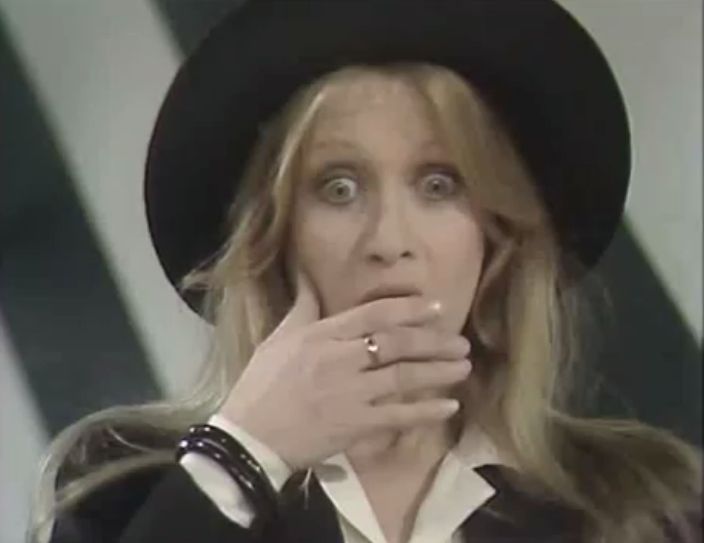
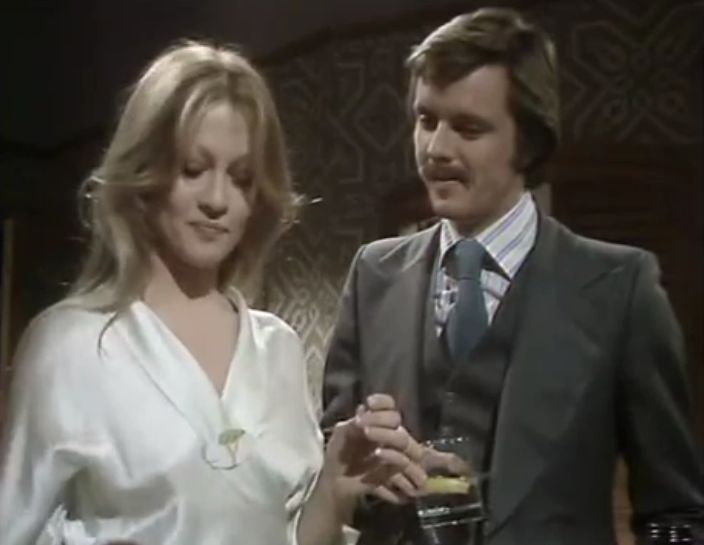
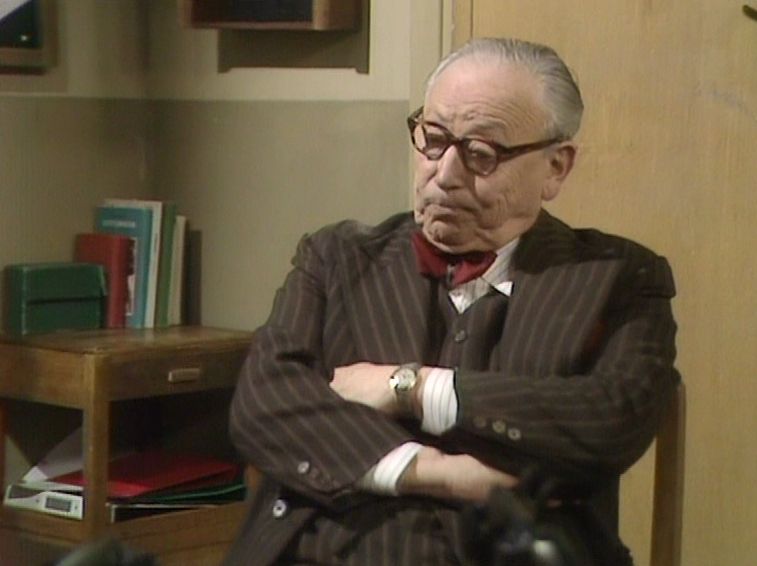
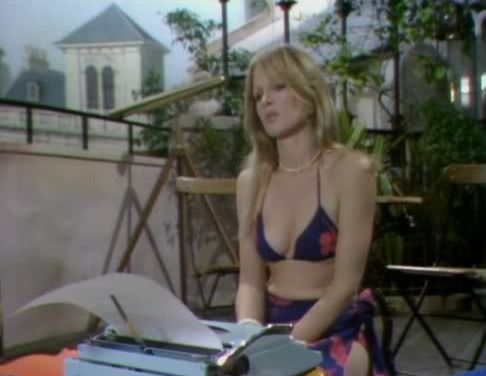
The Sandbaggers – A Feasible Solution

feasible

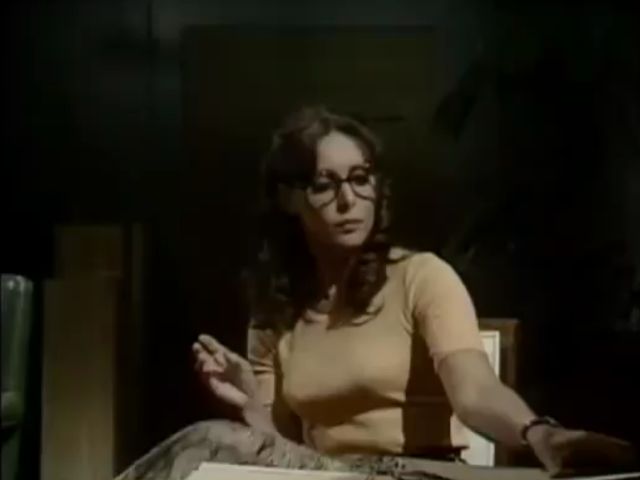
A top missile engineer, Professor Colby (Donald Churchill), has disappeared in Cyprus.  When news filters through that a Russian expert in missile guidance has also gone missing, it starts alarm bells ringing. Burnside, Laura and Willie kick around possibilities about who could have taken them.  In the end it seems that a group operating in Cyprus, such as the Greek Cypriot National Front, are the most likely suspects. Smuggling missiles into or out of Cyprus would be tricky – much better to have them prepared inside the country.

Another complication occurs when the deputy head of station in Cyprus is brutally killed. Logically, it makes no sense – until now it was only a theory that forces within Cyprus were responsible for kidnapping the scientists, but this murder seems to prove it. Burnside dispatches Caine to Cyprus and he’s accompanied by the replacement deputy, Jill Ferris (Sarah Bullen).

Wille’s not happy about minding a woman, but she quickly proves to be more than capable – which raises his suspicions, as she’s supposed to be fresh out of the training school. The answer is that she’s a Russian agent, who’s disposed of the real Jill Ferris (the Russians also killed the previous deputy head of station, so they could replace him with one of their own). Since the Russians only have a limited presence in Cyprus it makes sense for them to work covertly with the SIS. For now, Caine is told to play along with her – which may be a problem as he seems to find her somewhat attractive.

A Feasible Solution is a somewhat unusual episode of The Sandbaggers since it features quite a heavy amount of gunplay and plenty of dead bodies.  As soon as Caine and the bogus Jill Ferris arrive in Cyprus, they find themselves pitched into an intensive gun battle.  It’s interesting to hear Willie say that he doesn’t really like guns and Burnside comments that it’s the first time in over a year that Willie Caine has been armed.  Although he’s the chief Sandbagger, it seems that killing people isn’t something he particularly cares for – although he’s undoubtedly good at it.

Once again we see the UK doubling for a foreign country.  It works quite well here – thanks to the fact that the sun shone when the filming took place.  The soundtrack of chirping insects also helps to create the illusion of being abroad.  The missing scientists are almost a Macguffin, since the thrust of this part of the story is concerned with the relationship between Willie and Jill, as well as providing us with a more action-orientated episode than is usual.

Back in the UK, Burnside pays a visit to the section psychiatrist Philip Jeremiah (Richard Cornish).  Burnside tells him he’s convinced that Laura Dickens has some sort of hang-up and he wants to know what it is.  Jeremiah replies that she has no hang-up which will affect her performance as a Sandbagger, but there is something.  “She was dominated by her parents and told that all men are beasts, that sex is simply for the propagation of the species.”

The conclusion seems to be that Laura is very emotionally fragile. When Burnside asks how she would respond to kindness, say a dinner invitation, Jeremiah tells him not to try and hustle her into bed. “Incurable romantic” mutters Burnside in return. But he seems to have got the answer he wanted, and this is the clearest evidence yet that he’s interested in her as a person and not just as a Sandbagger.

Burnside and Laura have their dinner.  It’s another good scene from Marsden and Keen, with Burnside acting somewhat hesitant (a departure from his usual gruff, professional attitude).  When they return to his flat for a drink, she tells him that, given her past, he’ll have to be patient.  He replies that he can be, and the scene ends with Burnside laughing.  Which isn’t something you see every day!

By the end of the episode, he’s back to his usual, cold self though.  Caine has returned – and he’s managed to rescue Professor Colby.  The fake Jill Ferris also located the Russian scientist, Yugorov, although since he defected willingly she kills him.  Caine and Ferris go their separate ways, much to Burnside’s annoyance.  “You were alone with Colby and Yugorov whilst she made a dummy run with the ambulance. You didn’t think to put a bullet in Yugorov, blame it on the opposition? With Yugorov dead and out of the way, she’d have kept her cover and stayed on as the Cyprus number two and we could have fed her false information.”

A Feasible Solution is a good story for Ray Lonnen, as it allows us to see how well Caine works in the field.  It also develops the Burnside/Laura relationship – which is going to be resolved in the next story, which was also the final story of the first series, Special Relationship.
The Sandbaggers – Always Glad To Help

always

The M.O.D. are concerned about a Russian merchant vessel called the Karaganda.  They believe it may be a spy ship and want Burnside’s help to investigate it.  He considers that the Royal Marines and the S.B.S. (Special Boat Service) would be the best people for the job and refuses.  The Director General of Intelligence at the M.O.D. (Gerald James) threatens to go over his head, but Burnside, as usual, isn’t intimidated.

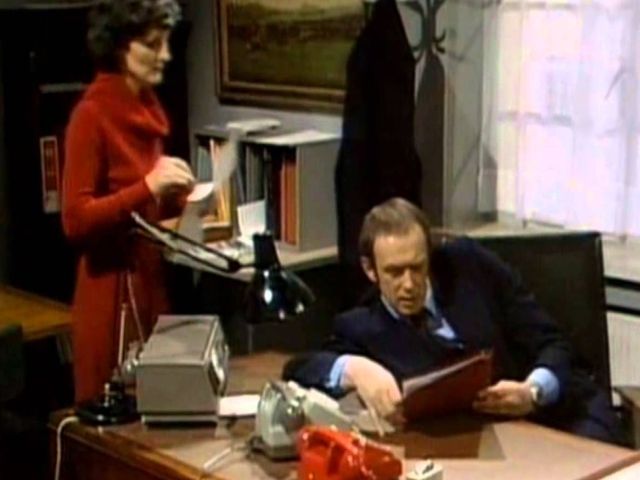
Back at HQ, we see Peele visit Burnside in his office.  It’s interesting to see how Caine and Burnside react.  Caine immediately stands up when Peele enters the room but Burnside doesn’t.  Since Peele outranks Burnside he should have stood up too, but he’s clearly got no time for such formalities.  He’s even less time for Peele’s request that they need to reduce the special section’s travel costs by 10%.  “If they go first class they arrive fit, if they go economy they arrive tired.  The difference could be their lives.”

Once again, Burnside ridicules Peele’s lack of operational experience.  Although Peele was the one-time head of the Hong Kong station, Burnside retorts that “the only thing you put at risk was your liver.”  This initial spat is merely the prelude for the main part of the episode, as we see Peele and Burnside once more cross swords.

Hamad (Peter Miles) is the Crown Prince of a small Middle Eastern nation.  He’s approached Wellingham and asked for his help in engineering a coup and thereby removing his father (a pro-Russian supporter) from power.  Wellingham is keen to assist, for various reasons.  “We help him get rid of his father, he turns the Sheikdom pro-West.  Buys British weapons, gets a British firm to build the new refinery.”

There’s no two ways about it – Peter Miles isn’t of Middle Eastern descent.  Sixties and Seventies television were full of British actors playing various nationalities (of varying believability) and The Sandbaggers was to be no differerent.  It’s difficult to take Peter Miles (especially when he’s slightly browned-up)  that seriously, which is a slight problem.  Also noticeable is the scene in Wellingham’s club, just after we’ve seen Hamad for the first time.  Roy Marsden’s face seems to be caked in orange make-up.  It’s very odd and doesn’t re-occur elsewhere during the story.

Anyway, back to the story.  Wellingham is keen to press ahead as quickly as possible, but Burnside is cautious.  He made his position clear in First Principles – a mission can only succeed when there’s clear and solid information.  At present, too much is unknown.  Most importantly, is it known for sure that Hamad would be sympathetic to the British government?  To overthrow a dictator and then put somebody worse in their place is far from desirable.

Burnside outlines some of the essential information he requires to Peele.  “How much support does Hamad have in the country, how well organised is it and how quickly can it be rallied?”  Burnside isn’t impressed by Peele’s statement that they should move ahead simply because Wellingham wants it to happen.  “To hell with Wellingham, he’s feathering his own nest as usual.”

In order to try and answer the question as to where Hamad’s sympathies lie, Burnside elects to find out by using Laura’s undeniable feminine charms.  But before this, they have a typically stormy meeting – Laura tells him she wants to leave the Sandbaggers at the earliest possible opportunity (mainly because he’s their boss).  Burnside responds by calling her a bitch once she’s exited the office.  Caine cheerfully tells Burnside that they’re clearly both in love with each other – they just don’t know it yet.

Laura makes an immediate impression on Hamad by rolling over her car in front of his.  They quickly begin a relationship and he seems besotted with her.  Peter Miles’ staccato delivery is oddly unnerving and the casual clothes that Hamad wears when they go bowling are interesting, shall we say.  Diane Keen does her best and it’s a memorable part of the story, but possibly not for the right reasons.

Much better is a scene between Burnside and Laura at his flat.  The fact she’s there at all is noteworthy – as you get the impression that not many people are invited around.  There’s some nice playing from both Marsden and Keen here.  Maybe Willie was right and there is a spark of attraction, but who will make the first move?

Burnside goes to make coffee and opens up a little.  “All of us have aspects of our lives with which it’s difficult to cope. In the office, I’ve learnt to survive. At home, I’m unprotected – from visitations, faces, eyes, voices.  Two more in the last few weeks.”

As the preparations for the proposed coup go ahead, Peele is dismayed to find the M.O.D. dragging their feet.  When he’s told it’s because Burnside refused to help them over the Karaganda, he promises to get it sorted, which he does – much to Burnside’s disgust.

Burnside’s slow and methodical information gathering regarding Hamad is proved to be the prudent course – eventually it’s proved that had the British intervened it would have been disastrous.  The Karaganda was discovered to have an underwater hatch as an outlet for divers, so according to Peele it’s shared honours.  “You were right about Hamad, I was right about the Karaganda.”  Burnside’s reply is cutting and it looks as if his frosty relationship with Peele isn’t going to thaw any time soon.

Always Glad To Help has some nice character touches for Burnside and an impressive car stunt (when Laura overturns her Mini in front of Hamad).  As I’ve said, Peter Miles is a bit of a weak link, but that’s more down to his miscasting then anything else.  Otherwise it’s typical Sandbaggers – the majority of the battles we see in the series aren’t fought overseas, but rather closer to home – and with words, not guns.

The Sandbaggers – The Most Suitable Person

suitable

There’s a lot going on in The Most Suitable Person.  Firstly, Des Yardley, a member of the Morocco station, is found murdered in Gibraltar.  He’s normally based in Tangier, so his presence in Gibraltar is a mystery – as is the reason for his death.  Burnside elects to send Willie Caine to investigate.  He knows that Caine isn’t the world’s best investigator, but he’s good at stirring things up – and this should enable him to flush out the murderer.

With Caine in Gibraltar, this makes finding replacements for Landy and Denison ever more pressing.  The problem is that Burnside has exacting standards and there doesn’t seem to be any trainees even remotely suitable.  Out of the current crop of active SIS agents, Caine knows that Colin Grove (Jonathan Coy) is very keen to join the special section, but Burnside is dismissive – he doesn’t think he’s even remotely suitable.  And when Bob Sherman tells him that Grove has been seeing a Hungarian psychiatrist, it raises the possibility that he’s a serious security risk – with both British and American secrets potentially passed over to a hostile power.

In addition to the mysterious death of Yardley and the investigation into Grove’s conduct we also have a third element to the story, the newest recruit to the Sandbaggers – Laura Dickens (Diane Keen).  Laura is by far the best of the new recruits, but Caine knows that the boss isn’t going to like it – because she’s a woman.

Laura Dickens (Diane Keen)

Burnside reluctantly agrees to see her (and there’s a nice moment when, just before she enters his office, he tidies up his desk and straightens his tie!).  He asks her if she’s interested in joining the special section and she tells him no, she’s not.  Her cool dismissal of a posting that most people would give almost anything to achieve, clearly intrigues him.  Laura explains the reasons why.

I’ve never been very good at playing Cowboys and Indians.  You see, I can’t help feeling that special sections exist because they create work for each other. You manipulate yours, so the other side manipulate theirs. It may keep everybody happy but what does it achieve in the long term?

It’s her belief that she’s wrong for the job than convinces Burnside that she’s exactly right.  “Volunteers for the special section usually see themselves as James Bond.  I’d rather have someone, male or female, who sees the job in perspective.  A while ago I tried to change the name, special section, into something less evocative.  As far as I’m concerned it’s only special because few people are right for it.”

Laura agrees to join the Sandbaggers on a temporary secondment – until Burnside can find permanent replacements for Sandbaggers Two and Three.  He then dispatches her to Tangier in order to discover what Yardley was working on.  Before she goes, he gives her his personal phone number and tells her she can use it to contact him anytime.  Professional or personal business?  The Burnside/Laura relationship begins here, and it’s something that will be a prime focus of the remaining series one episodes.

Meanwhile, Willie’s following up leads in Gibraltar (actually it’s filmed, like most of the foreign locations in the series, around the Manchester area!).  He gets to experience a bit of gunplay – although it’s clear that The Sandbaggers isn’t aiming at James Bond-style glamour and action.  When Caine returns a borrowed car to Detective Chief Inspector Gomez (Stephen Grief), he offers to clean it first – because he’s been sick in it (following the gun battle).  It’s a small character beat that helps to highlight that even the most experienced of agents are subject to normal stresses and strains.

The three plot-threads of this episode does mean that it feels a little fragmented and subsequently it’s not as compelling a drama as say, Is Your Journey Really Necessary?. Laura’s introduction is the obvious highlight and she quickly proves to be a more than capable officer – she uncovers the reason for Yardley’s trip to Gibraltar and this information helps to foil a terrorist attack on a passenger plane.

The truth about Grove is also established, which allows Burnside the satisfaction of getting one up on MI5.  He explains this to Peele at the end of the episode, thereby giving Jerome Willis a nice character moment.  Willis was absent from the previous episode, and is only on the periphery in this one, which is a shame as he was always a very watchable actor.  But the next episode does offer him a little more scope ….

The Sandbaggers – Is Your Journey Really Necessary?

journey

Is Your Journey Really Necessary? opens in the Ops Room, where Burnside, Caine and the others are following the progress of Operation Nightingale. Burnside mounted it as a favour for the CIA, but it ends in tragedy for the Sandbaggers.

Sandbagger Two, Jake Landy (David Glyder) is caught behind enemy lines with no possible means of escape. So Sandbagger Three, Alan Denison (Steven Grives) is ordered to shoot him, rather than let him fall into Russian hands.

Afterwards, “C” and Burnside have a postmortem meeting. “C” tells him that the mission was carried out without departmental or political clearance. Burnside is unabashed and also explains that Landy was killed on his orders. “To avoid giving the FCO and Number 10 the excuse they need to tie the other hand behind my back.”

When Denison returns, Caine offers him another reason why Landy had to die – if he’d been captured, then he would have been tortured, exhibited on a show-trial and executed. At least this way it was quick.

It’s interesting that there are only ever three Sandbaggers (agents trained to carry out “special” operations). With the whole of the globe to cover, this does mean that they are invariably spread very thin. The loss of Landy is therefore bad, but when Denison breaks the news he wants to quit, it throws Burnside into a tail-spin.

Denison wants to get married and doesn’t feel that he can carry on as a Sandbagger once he has a wife. Whilst Burnside is cordial to his face, behind his back he makes it quite clear to Caine they’re going to keep him, by whatever means necessary.

The obvious problem is Denison’s girlfriend, Sally Graham (Brenda Cavendish). She’s already been vetted, but Burnside wants her watched and he wants some dirt on her. The first couple of episodes have already demonstrated just how ruthless Burnside can be, but here it moves to a whole new level.

Caine follows Sally and photographs her enjoying a meal and staying the night with a male friend (whilst Denison is out of the country on a mission). At the same time, Burnside burgles her flat to look for anything incriminating. He’s happy with Caine’s pictures, as whilst Caine says they don’t prove anything, Burnside isn’t concerned with that. “I’m not interested in proof. Suspicion’ll do me.”

Burnside corners Sally, shows her the pictures and tells her to break off the relationship with Denison. Although Sally denies anything happened, Burnside brushes this off and then chillingly tells her “I can have you taken off the streets, drugged, stripped and into bed with a dozen different men. Then I can have you done for soliciting, shoplifting, breaking the Official Secrets Act.” And given what we’ve seen of him, it’s possible to believe this is no idle threat.

Events then take a tragic twist. Denison calls Sally to tell her he’s reconsidered and wants to stay with the Sandbaggers. Sally, still upset from her meeting with Burnside, doesn’t take the news at all well.  Shortly afterwards we learn that Denison is dead – he wasn’t killed on the mission, he was knocked down by a car in a simple accident. As Caine says, he obviously had things on his mind. And it’s interesting that we don’t even see this, as his death happens off-screen.

So in the course of one episode, two members of the Sandbaggers have died. First time viewers would probably have expected that both of these characters would be regulars, so their deaths are something of a jolt.  In the last episode we were told that the previous Sandbagger fatality happened three and a half years ago.  That was clearly a wrong-footing move to lull the audience into a false sense of security, as here we see just how dangerous the job of a Sandbagger can be.  Or are we meant to consider the culpability of Burnside?  He’s only been D-Ops for a short while, therefore both deaths occured on his watch.

Sally is also dead – from an overdose of sleeping pills. Although Burnside didn’t think he was too hard on her, it was obviously more than enough to push her over the edge. Had Burnside agreed to let Denison go, then they probably would have both still been alive. His decision to fight to keep him indirectly resulted in both of their deaths.

This is a bleak, bleak tale that brings into question the judgement of Neil Burnside. And it certainly won’t be the last time that he’ll have the deaths of colleagues on his conscience ….

The Sandbaggers – A Proper Function of Government

proper

A Proper Function of Government is an archetypal episode of The Sandbaggers – low on action but high on character and debate.  Although there is a mooted mission in Africa as well as an actual one in Vienna, the majority of the story is firmly based at the SIS HQ in London (and the brief scenes in Vienna were obviously not filmed there).

There’s plenty of pointers here about the character of Neil Burnside.  He’s quite happy to take decisions independently (sending one of the Sandbaggers to Iran, for example) without first consulting his immediate superior, Peele.  Peele has found out, but Burnside is able to talk him round.  Since neither Peele or “C” have any operational experience, Burnside is happy to trust his judgement over theirs and make unilateral decisions.  This is something that will cause him problems in the episodes to come ….

There are two main plot-threads in A Proper Function of Government.  The first concerns Sir Donald Hopkins (Lawrence Payne) who is the chief scientific advisor to the government.  He’s currently on leave and his leave form stated he would be fishing in Scotland.  But he’s been seen in Vienna – which raises the possibility that he’s preparing to defect.

Burnside approaches Wellingham to break the possible bad news.  Wellingham is appalled – Sir Donald is a personal friend and he finds it difficult to believe he could be a traitor.  Sir Donald Hopkins is portrayed as a typical establishment figure, with many friends in high places (including the Prime Minister).  The year after this episode was broadcast, Anthony Blunt was exposed as a Russian spy, although his treachery had been known in intelligence circles for many years prior to this. If Ian Mackintosh did have links with the intelligence community, then it’s possible that Hopkins was inspired by Blunt’s case.

The second plot-thread concerns a small African state headed by President Lutara.  He’s no friend of Britain and during the last year has executed several British citizens.  The latest murder brings back unhappy memories for Willie, which he relates to Sandbagger Three, Alan Denison (Steven Grivies).

About three and a half years ago, the boss was Sandbagger One, I was number two and Sandbagger Three was a lad called Bob Judd. He was younger than you are. It was the last time we lost a Sandbagger, so we do remember it quite well. He died in East Africa – one of Lutara’s ant-hills. He was alive when they put him on top of it, but they cut his stomach open and the ants found the cut.  And there was nothing we could do about that. Not even Neil Burnside could go for a head of state without permission.

Maybe the latest death will push the government into action?  Again, this is something that could have been taken from the headlines.  Stories of covert operations, such as the one Willie hopes to mount, have been rife for decades.  Willie, of course, wants to lead the mission (if one is agreed).  He makes this quite clear to Burnside, but Burnside has an agenda of his own.

He dispatches the two Sandbaggers in London to Vienna – so that they can monitor Hopkins.  He’s clearly done this deliberately, so that he can request the Lutara mission himself.  For a Head of Operations to go back into the field is unusual, to say the least, and Burnside is prepared to play every card he has in order to get his own way.  He sets up a meeting with Wellingham and tells him that he’ll go back to Belinda (his ex-wife and Wellingham’s daughter) if the mission is approved and he’s selected to carry it out.  This is a good insight into the single-minded focus of Burnside – he’ll do anything to achieve the result he requires.

In the end, it comes to nothing as the government refuses to green-light the mission.  “C” tells Peele and Burnside that the Prime Minster doesn’t approve of political assassination.  “He does not consider assassination to be a proper function of government.”

Later, Wellingham authorises Hopkins to be picked up.  He tells them that “the Prime Minster made a good point. He feels that Hopkins might start shouting on the way back. Say as he’s going through immigration and customs. Declare himself for what he is and tell the world he’s being forced out of Austria by the Secret Service. It would be almost as damaging to the government as if he actually defected.”  Wellingham spells it out – they have authority to kill him.

Burnside is quick to point out the paradox.  “We can’t knock over a lunatic who’s murdering ever day, but a man who threatens the government’s future, all the jobs and the perks that go with it, not only authority to assassinate, but instant authority.”

Late on, there’s a spellbinding scene between Roy Marsden and Alan McNaughtan.  Willie Caine’s reason for wishing to take the Lutara mission has already been established – but Wellingham knows that Burnside isn’t interested in vengenace for Bob Judd.  The sucessful assassination of Lutara would have significantly increased Burnside’s chances of promotion – and he judged that not only was a dangerous mission (where he might be killed) was worth it, he was also prepared to restablish a relationship with a woman that he clearly no longer loves.  For Burnside, the SIS is his whole life.

This is an absorbing fifty minutes of drama, which sets up many of the character dynamics and conflicts which we’ll see play out as the series progresses.

The Sandbaggers – First Principles

first

The Sandbaggers ran for three series, and twenty episodes, between 1978 and 1980.  Hailed by the New York Times as “the best spy series in television history” it’s a show that eschews the glamour of James Bond and instead is located at the more realist end of the genre, alongside the likes of Callan and Tinker Tailor Soldier Spy.

The series was created, and largely written by, Ian Mackintosh.  Mackintosh, a former naval officer, penned all the episodes from the first two series as well as four from series three.  However, during production of the third series, the plane he was piloting went missing near Alaska and neither Mackintosh, or his girlfriend, were ever found.  The authenticity of The Sandbaggers has led many people to suppose that Mackintosh had previously worked for the intelligence services and some also believe that his disappearance was not a simple accident.

His loss meant that several other authors were drafted in to provide episodes for the third series, but without Mackintosh’s guiding hand it was clearly felt that the series had run its course.

Rewinding back to the first episode of series one, First Principles acts as a strong introduction to many of the main characters.  Neil Burnside (Roy Marsden) is always at the centre of the series.  Burnside is the Director of Operations (D-Ops) for the Secret Intelligence Services (SIS).  In order to carry out the numerous dirty jobs requested by his masters, he has three highly trained operatives, codenamed Sandbaggers.

Burnside is humourless, totally driven, somewhat arrogant and seems to exist only for his work.  His marriage, to Belinda, foundered some time ago – although he still keeps in contact with his former father-in-law, Sir Geoffrey Wellingham (Alan MacNaughtan), who is the Permanent Undersecretary of State.  They enjoy a sometimes cordial relationship which is rather frowned upon by Burnside’s immediate superior, Matthew Peele (Jerome Willis).

Peele is the deputy director of SIS and is clearly presented as a man who lacks field experience, which means he’ll often clash with Burnside over operational matters.  Burnside previously served as a Sandbagger, so at least he understands the implications of the jobs he asks his men to carry out.

Head of the SIS is Sir James Greenley, referred to as “C” (Richard Vernon).  “C” is a diplomat, and not from an intelligence background, so is initially viewed with suspicion by Burnside – although they do later form a good working relationship.

Jeff Ross (Bob Sherman) is head of the London Station of the CIA.  Ross and Burnside are friends, although they’ll sometimes find themselves on opposite sides as their masters manipulate events for their own benefit.

As for the Sandbaggers, it’s a high risk job, so some last longer than others.  The one who remains during all three series is Willie Caine (Ray Lonnen).  Caine can be blunt and outspoken and isn’t content to follow Burnside’s orders blindly (as seen in this episode).  Had the show ran to a fourth series, there were interesting hints as to how his character would have been developed, but sadly this came to nothing.

As the episode opens, we see Burnside walking through the streets of London.  He stops from time to time, looks in shop windows, and then carries on walking.  When he gets to the office he wonders exactly who was tailing him – whoever it was, they didn’t do a very good job.  Caine says that he was tailed too, which raises a faint alarm bell with Burnside.  He muses as to whether MI5 are using his men to train their recruits.

It turns out that the shadowers are from the fledgling Norwegian secret service.  Burnside demands an explanation from their chief, Torvik (Olaf Pooley).  Torvik apologies, but tells him that “you belong to the oldest and most respected secret service in the world. I have charge of a rather newer and less professional one.”

Torvik does have another motive though.  The Norwegians have lost a spy-plane, which went down between the border between Norway and Russia.  The plane and its occupants are now within the Russian border and Torvik wants the Sandbaggers to go in and rescue them.  Burnside refuses, since it’s an incredibly dangerous mission that’s of no benefit to the SIS.

But Whitehall are keen.  If the Sandbaggers mount the rescue, then the Norwegians will buy the British Nemesis missile.  If the British refuse to help, the Norwegians will approach the Americans and buy their missile, the Warbonnet, instead.

Burnside’s far from happy, but he has no room for manuovure – so he reluctantly agrees.  He doesn’t move quickly enough for Torvik though – and just as the Sandbaggers are due to parachute into Russia, Burnside is appalled to receive a message from Torvik requesting he abort the mission.

It’s far too late though, as they’re already on the ground.  Ross fills him in on the details.  Since Torvik believed that Burnside was dragging his feet, he approached the Americans – who set up their own operation to rescue the crew. This they managed to do, but they ran directly into a Russian patrol and were all captured – but at least it allows the Sandbaggers to creep away undetected to the border.

For Burnside, it’s a complete mess although Wellingham is able to look on the bright side – as it was the Americans who were caught and not the British, maybe the Norweigans would still be interested in the Nemesis missile.  As Wellingham says, that after all, was what the mission was all about.

Burnside has one piece of unfinished business to attend to, as he tells Torvik exactly what is required to mount a Special Operation and his speech stands as a mission statement for the series.

Special Operations doesn’t mean going in with all guns blazing. It means special planning, special care.  Fully briefed agents in possession of all possible alternatives. If you want James Bond, go to your library. But if you want a successful operation, sit at your desk and think. And then think again. Our battles aren’t fought at the end of a parachute. They’re won and lost in drab, dreary corridors in Westminster.

Torvik suggests they have a drink, but Burnside tells him that “if I had a glass in my hand at the moment I’d shove it down your throat.”  Burnside is many things, but a diplomat he is not.

First Principles is a decent opening episode.  It’s true that the Russian/Norweigan border looks suspiciously like the English countryside, but you’ll have to get used to various foreign countries bearing a remarkable similarly to locations much closer to home (although they do manage foreign filming, in Malta, for a couple of episodes).

Zodiac – The Horns of the Moon

horns

Written by Peter Yeldham
Directed by Joe McGrath

General Weston (Peter Jones) is the autocratic chairman of a small merchant bank.  He wishes to initiate a merger (which effectively means selling the bank).  His fellow directors and his son Tony (Peter Egan) are against the plan, but the General always gets his way – and he does so again.

But shortly afterwards, he falls down the bank’s lift shaft.  As Tony later remarks, anybody else would have broken their neck, but he escaped with just a sprained arm.  However, it does seem to indicate that somebody at the bank wishes him harm.

There’s no shortage of suspects.  His son would inherit everything on his death, whilst the vampish Julie Prentiss (Michele Dotrice) seems to have the General wrapped around her little finger.  The other directors, Rodney Tyce (Graham Crowden), Ian Rentoul (Ronald MacLeod) and Agnes Courtney (Gillian Raine), could all have motives whilst the servant Dobbs (Norman Chappell) is another possibility.

Tony is a regular client of Esther’s and he calls on her to ask for advice.  He wants to leave the bank and break free from his father – but only if she confirms that the stars are correctly aligned.  She visits him at the bank to deliver the horoscope and he suggests they have a drink.  It comes as something of a surprise to find the General frozen solid in the fridge …..

The Horns of the Moon is by far the best mystery of the series since, as the above list indicates, there’s no shortage of suspects.  Once again, Esther is at the scene of the crime when the body is discovered, much to Gradley’s despair.  He’s also a little peeved at having to leave his dinner companion.  “You may not know it but I was at a charity dinner, escorting a debutante of the year.”  When Esther asks which year, he tells her it was quite a recent vintage.

Gradley quickly gets a feel for the list of suspects and it’s clear that Tony is his favourite.  Esther violently disagrees as she says it’s astrologically impossible for him to have committed the murder.  Gradley doesn’t arrest Tony straight away as he knows he’ll make his way to Esther’s flat in order to unburden himself.  This he does and what Tony says is pretty damming.  “What would you say if the files showed that I embezzled two hundred thousand pounds from the firm and the gun that killed the General was in my desk and that I wiped it clear of fingerprints and put it back in the boardroom and I took the files and put them in the cellar?”

Tony protests his innocence – he looks guilty, but that’s only because somebody has framed him.  Later on, even more evidence pointing to his guilt comes to light and Gradley arrests him.  Esther remains unconvinced and continues to nag at him to consider the other possibilities.

As with all the episodes, there’s a lovely group of actors here.  It’s a shame that Peter Jones doesn’t last longer as he’s got some nice comic business as the General.  Peter Egan is a bundle of nerves as the perpetually twitchy Tony whilst Graham Crowden is quite restrained as Tyce.  Tyce is a character that exists on the outskirts of the majority of the story, but he does have a part to play later on.

The banter between Gradley and Esther also helps to keep the interest chugging along.  Both of them, especially Anton Rodgers, have great comic timing and it’s their partnership which is one of the main strengths of the show.

The Horns of the Moon was the final story of this short series.  The real murderer is eventually found and Tony is set free, but that’s the end of the line for Gradley and Esther.  The premise of the series (detective and astrologer teamed up) was an intriguing one, although it’s fair to say that some of the plotting was a little loose in several of the episodes .

The partnership between Hempel and Rodgers as well as the guest casts more than made up for this though and there was certainly enough potential for a further run of episodes.  It wasn’t to be though, which is a shame since Zodiac is a nice little series and provided you don’t mind studio-bound drama (not a single location shot in the six episodes) it’s well worth tracking down.

Zodiac – Sting, Sting, Scorpio!

scorpio

Written by Roger Marshall
Directed by Piers Haggard

Madame Lavengro (Anne Dyson) is a fortune-teller who lives and works in Brighton. Two maids from a local hotel visit her for a reading. Brenda (Jeananne Crowley) waits in the other room whilst Peggy (Susie Blake) goes first.

Whilst she looks like the archetypal fake fortune-teller (complete with headscarf and crystal ball) it’s clear that she has genuine insight. She knows that Peggy has problems with her boyfriend and that he possesses money that doesn’t belong to him.  A moment later she realises that he’s the Brighton Hotel robber.

Like Peggy, her boyfriend Brian (Robert Powell) works at the same hotel. He knows that he has to silence the fortune-teller – which he does. The day after, Esther pays a visit to Madame Lavengro and discovers her body. Esther was a friend and admirer of Madame Lavengro, so she takes the lease on her shop and tells Gradley she’s determined to track down her murderer.

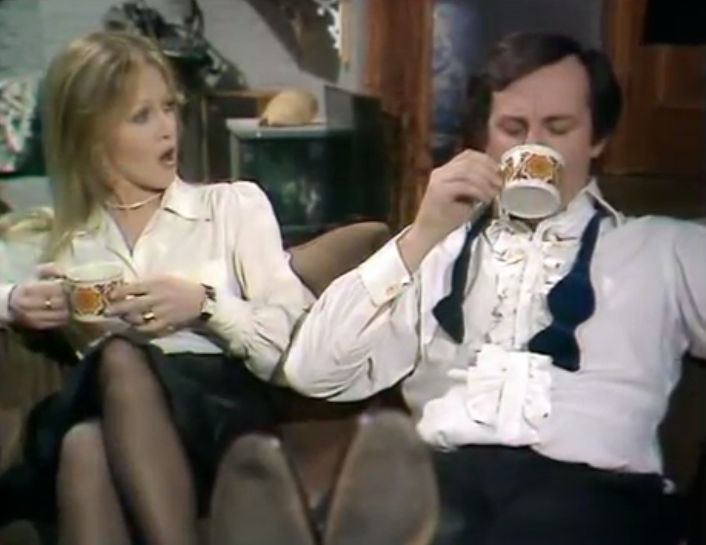
Esther’s in something of a huff with Gradley as he’s reluctant to get involved in the case (it’s well outside his patch). He does eventually travel down to join her, after taking some leave, but they still indulge in a good deal of bickering once they do team up. There’s also another sighting of Anton Rodgers in denim (not good) and later he sports an interesting cravat (also not good).

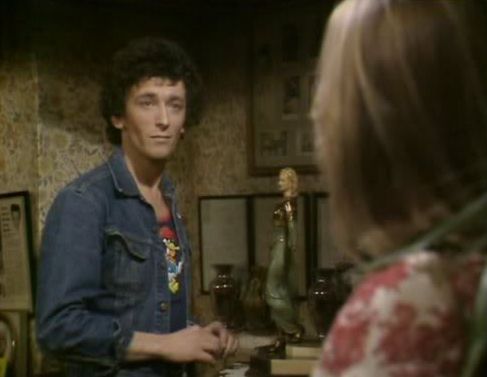
A curly-headed Robert Powell is the villain of the piece. He’s not really known for playing baddies, which is probably why the character doesn’t quite have the dangerous edge he should have. The rest of the cast also features some familiar faces. Wensley Pithey (a regular in the early series of Special Branch) is Inspector Duggan, Susie Blake is the sadly doomed Peggy and Frank Gatliff brightens up the screen briefly as the camp-as-anything Felix Pettigrew.

Another eyebrow raising performance is given by Bob Sherman as the hippy singer Bob Thomas. Sherman’s probably best known for playing an American spook in The Sandbaggers, so this role is something rather different. Although the 1960’s was long over by this point, Thomas is obviously a throwback (“Yeah baby, I’d really freak out man”). He doesn’t contribute anything to the plot, but he’s a nice bit of local colour.

Anouska Hempel obviously had a cold whilst the story was being recorded, as her voice is pretty strained at times. This is referred to right at the end, presumably via an adlib, as Gradley declines to kiss her because of her cold and she threatens to spit all over him!

Sting, Sting, Scorpion! is a nicely plotted tale. There’s one example of Esther’s special powers (she receives a vision that Peggy has drowned) but that doesn’t affect the solving of the crime too much, so it isn’t a particularly large cheat.

Another strongly-cast and well-acted story.

Zodiac – Saturn’s Rewards

saturn 1

Written by Pat Hoddinott
Directed by Don Leaver

Richard Meade (Peter Vaughan) is awoken by noises from the flat opposite.  He opens his bedroom window to investigate and is shocked to see a man attacking a woman.  He rushes to the phone, but then stops – the woman sharing his bed isn’t his wife and since he’s an MP he can’t afford any scandal.  Next day, Gradley visits him to ask if he saw anything the previous night.  Meade responds in the negative.

A few days later, Esther is entertaining Meade’s daughter Deborah (Joanna David), her mother Susan (Dinah Sheridan) and Deborah’s new boyfriend Martin Seacombe (Ian Ogilvy).  Martin is a smooth-talker, but he doesn’t believe in astrology – which causes Esther’s hackles to rise slightly.  One of her gifts is an ability to tell the star-sign of anybody, just by looking at them.  She declares that Martin is a Scorpio, but he tells her he was born in May – which would make him an Aries.

Esther simply doesn’t believe him or that she could be so wrong.  His insistence would already be enough to mark him out as a wrong ‘un, but he was also the man we saw at the start, committing the murder, so he’s clearly going to be the villain of the piece.  When Meade arrives to pick up his wife and daughter he’s shocked to see Martin with his daughter.  He knows the man’s a murderer, but if he tells anybody then the story of his infidelity will come to light, and this puts him in something of a quandary.

Anouska Hempel & Ian Ogilvy

Saturn’s Rewards isn’t the first episode of Zodiac to use some outrageous coincidences, but the ones here are worth repeating.  Meade’s daughter’s fiance chooses to commit a murder in the flat opposite Meade (it’s never explained why he’s in that flat).  Gradley is the detective assigned to investigate the murder, whilst Esther is an old friend of Meade’s daughter, Deborah, which is how Esther becomes involved.  Too many coincidences!

The studio-bound nature of the production becomes rather apparent when we see the murder committed.  The gap between the two flats isn’t very wide and it’s impossible to believe that Martin didn’t see Meade looking at him.  Obviously he didn’t, otherwise the story simply wouldn’t work, but the camerawork seems to imply otherwise.

Whilst the plot has its problems, we can take solace with the cast.  Peter Vaughan is good fun as a rather shifty, untrustworthy politician and Ian Ogilvy (complete with a moustache that may be fake, I think it is) is the charming, but dangerous Martin.  Joanna David and Dinah Sheridan have less to do, but having two good actresses in those roles is some consolation for their slightly underwritten parts.

Esther and Gradley are kept apart for a while, which is a pity, since the series really sparkles when the two of them are together.  When they eventually meet up, Gradley tells her a little about the murder case but then says he doesn’t need her help on this one.  Esther is incredulous. “It must be straightforward. What happened, did you find the killer drunk on the floor, prints all over the murder weapon and a signed confession in his top pocket?”

Undeniably, this is clumsily plotted, but once again the performances of both the regulars and the guest cast manage to make something out of the fairly thin material.

Hi-De-Hi! – The Partridge Season

partridge

One of the advantages of a series like Hi-De-Hi! is that the large ensemble cast enables each character, especially those who usually operate on the periphery, to have a chance to shine.  And as might be expected by the title, The Partridge Season (Series One, Episode Four, Tx 12/04/81) puts the spotlight on the perpetually grumpy Punch and Judy man Mr Partridge (Leslie Dwyer).

Dwyer was a veteran actor (born 1906) who had enjoyed a long career in films and television (although usually in supporting roles).  Therefore, his regular performances in Hi-De-Hi! gave him a late taste of fame (very similar to the experiences enjoyed by the likes of John Laurie and Arnold Ridley in another Perry/Croft vehicle, Dad’s Army).  Mr Partridge was never going to be a character who would be central to the series (he worked better as someone who confined himself to the odd withering one-liner delivered from the comfort of his chair in the staff-room) but every so often he could be moved more up-front, as here.

Jeffrey has received orders to sack him.  Mr Partridge’s contempt for all children has already been well established, but this time he’s overstepped the mark.  When Jeffrey calls him into the office, Mr Partridge knows why he’s there and he gives him his side of the story.

Well, I was packing up the Punch and Judy and I couldn’t find the sausages. So I looked around and there was this snotty-nosed kid sucking an ice-cream cornet. ‘Have you got my sausages?’ I said. ‘Get lost, Grandad’ he said, and I could see ’em sticking out of his pocket. So I grabbed ’em off him, snatched his ice-cream cornet, stuck it in his face, give it a twist, then I clipped ‘im round the earhole and kicked ‘im up the arse.

I’ve already mentioned in my post on Hey Diddle Diddle how an air of melancholy is sometimes not far from the surface.  The forced jollity of the holiday-camp environment has something to do with it, but Mr Partridge (like some of the others) is an individual who’s found himself washed up at Maplins, past his prime and unable to get a job anywhere else.

He gives Jeffrey a brief outline of his career (as the camera slowly closes in on Dwyer, an obvious, but a good way of focusing the audience’s attention).  He started off on the halls as Whimsical Willie, the Juggling Joker.  After he came out of the Army in 1918 he gave up the juggling and became a comic – but talking pictures killed variety so he became a children’s entertainer.  After a stint entertaining the troops with ENSA during WW2 he eventually found himself working at Maplins.

All this is enough to convince Jeffrey that deserves another chance.  Mr Partridge is delighted and promises that he won’t let him down.  He also asks for an advance on his salary – to buy a new cover for the Punch and Judy booth, he says.  Jeffrey agrees and this is where the trouble really starts.

Jeffrey’s mistakenly under the impression that the affair of the ice-cream cornet was an isolated incident, but Ted puts him straight and lists some of Mr Partridge’s numerous run-ins with his audience.  “What about the time he put syrup of figs in the pot at the tiny-tots tea party?”  Worse than all this though is the benders.  “Once or twice every season, he gets a load of whisky and locks himself in his chalet and he’s legless for three days.”  And Jeffrey’s given him the money to do just that.

As ever, it’s the decent and honourable Jeffrey who has to suffer.  Always thinking the best of people, he finds himself left down by Mr Partridge and as a consequence has to share his chalet with Fred Quilley (who apologies for the horsey smell).  Best of all, he’s pressured into covering the Punch and Judy show.  The man-eating Sylvia offers to help, which seems like a good idea, but there’s very little room in the tent for two, much to Sylvia’s delight!

Spike wants to help Mr Partridge, but Ted is unsympathetic.  “I’ve been covering up for him for ten years. And I’ve had it up to here. He’s a rotten, bad tempered old tosspot!”  Ted has never thought of him as anything other than a third-rate Punch and Judy man, but Spike tells him he’s seen the cuttings that record his earlier successes – topping the bill at the Holborn Empire and performing in a Royal Command Performance at Windsor Castle.

Of course, in the end all is well and whilst it’s inevitable that it won’t be long before Mr Partridge causes more trouble, his dysfunctional surrogate family at Maplins will no doubt rally round.  The reveal that he actually was as a big a star as he claimed is a nice, sentimental touch.  It would have been just as easy for him to really have been nothing more than a third-rate musical hall turn, but it’s his genuine (if faded) stardom, as well as the injury he sustained during WW1 (which was the reason he had to give up the juggling), that persuades Ted to talk Jeffrey into giving him another chance.

Zodiac – The Strength of Gemini

gemini

Written by Philip Broadley
Directed by James Ferman

Paul Derring (Norman Eshley) is a smooth-talking conman who targets beautiful, young, upper-class women.  He spies his latest mark, Elizabeth Charmont (Jenny Hanley), and moves in.  Elizabeth has never met him before – but he seems to know everything about her.  “Although we’ve never met, I know you. There is an empathy between us.”  He goes on to tell her things about herself that no stranger could possibly know.  Initially it seems that he’s an astrologer like Esther, but it turns out he’s been abusing Esther’s gifts for his own ends – which proves to be his downfall.

Since Esther writes a successful horoscope column (under the name of “Sibyl”) she receives many requests for personal horoscopes.  One such letter strikes a chord and she suddenly realises that recently she’s been sent numerous pleas for horoscopes – apparently from different people – but now it dawns on her that they’ve all come from the same person.  The names are different each time, but a handwriting expert called Toby (Charles Lloyd Pack) confirms that the signatures are all from the same hand.  So Esther calls in Gradley – she wants to find out who’s been doing this and why.

Since the opening of the story is Esther-centric, Gradley doesn’t appear until thirteen minutes in – but it’s worth waiting for, as Anton Rodgers is a vision in denim.  Maybe he was dressed down in order to make Hempel (who’s wearing a rather nice black evening dress) look even more stunning?  Esther shows him the letters and they decide that the first one – sent by a Paul Derring – is probably genuine.  So can they locate Derring?

Jenny Hanley & Norman Eshley

The system he’s worked out to provide himself with victims is quite neat – he has a confederate called Penny (Deborah Norton) who works at a flower shop which is frequented by the upper-classes.  Whenever somebody visits to buy flowers for a likely target’s birthday, Penny makes a note of their birth-date and address and passes the information onto Derring.  He then requests a horoscope from Esther and therefore is able to astound his latest conquest with a host of impressive facts about their life.

Philip Broadley’s script follows the template laid down by Roger Marshall’s first two stories.  There’s plenty of banter between the two leads and a general lightness of touch throughout.  Whilst Derring is a conman, he also has a sense of humour and the script and direction help to accentuate this by throwing in the odd, wrong-footing moment.  My favourite is the scene that opens with a close-up on Derring’s face.  He looks quite serious, but as the camera pans down it becomes clear that he’s merely standing in his underpants, ironing his trousers!

The obvious plan is for Esther to present herself to Derring as his latest victim, which causes Gradley a little pain as she artfully stokes up his jealousy by casually mentioning how charming Derring is.  Fashion-wise, Hempel sports a variety of costumes, from the aforementioned black dress to a towel (and looks good in all of them).  Thankfully, Rodgers’ denim interlude is quite brief and he spends the rest of the story more conventionally attired.

One unusual thing about the series to date is that it’s completely studio-bound.  It wasn’t unheard of for some 1960’s series (like Sergeant Cork) to be almost entirely recorded in the studio (although that, I assume, was probably due to the show’s Victorian setting – it would have been difficult to film outside without major redressing of most locations).  Since Zodiac was a contemporary series, that problem didn’t apply – and the lack of location work does make the programme feel a little claustrophobic at times.

The Lost Worlds of Gerry Anderson – Forthcoming from Network

gerry

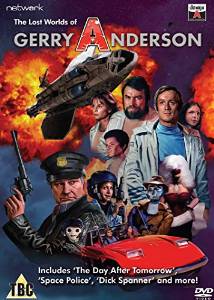
Due for release at the end of March is The Lost Worlds of Gerry Anderson, a grab-bag containing several pilots which never went to a full series, plus Space Police (an early incarnation of Space Precinct).  Also included are some interesting-sounding special features, details in the blurb below.

An alien being chooses two children to assist him in improving the Earth…

A spaceship on a scientific mission is flung into the far reaches of outer space…

A police lieutenant fights organised crime on a distant planet…

…these are The Lost Worlds of Gerry Anderson!

Creator of the legendary Thunderbirds, Gerry Anderson scored incredible successes throughout the 1960s and ’70s with Captain Scarlet, UFO, Space: 1999 and other series which appealed to both children and adults alike. Not all his ideas, however, went to a full series and this set contains the 1970s pilots for both The Investigator and The Day After Tomorrow, as well as the 1986 pilot for Space Police, which was eventually reworked as Space Precinct nearly a decade later. Alongside these rare and much sought after programmes, this collector’s set also includes:

Here Comes Kandy and You’ve Never Seen This – Gerry’s earliest work, from 1955

Image galleries for all three pilots

New transfer of remaining film elements for Space Police, alongside the 1992 “Reloaded” edit and test footage

Dick Spanner, PI – an unscreened episode with accompanying image gallery

Blue Skies Ahead and an accompanying Blue Cars advert, made by Gerry in partnership with Nicholas Parsons

Whodunnit? – Series Five – Forthcoming from Network

who 5

After something of a gap (mainly due to Network negotiating a new ten year licencing deal with ITV Studios) it’s pleasing to see a number of archive television titles are listed as forthcoming on their website.

Whodunnit? – Series Five is particularly welcome – it’s a lovely slice of 1970’s nostalgia with many familiar faces (both on the panels and featured in the playlets).  After a somewhat shaky start (I love Edward Woodward but he was never best suited to the role of panel-game host – see series one for evidence of this) the programme was firmly in the groove by this time, helped no end by Jon Pertwee.  As ever with Network, there’s always the possibility that release dates will slip, but at present it’s scheduled for release at the end of April 2015.

Doctor Who star Jon Pertwee is your host in this highly popular, light-hearted panel game which invites viewers to play detective – pitting their wits against a panel of celebrity sleuths to solve a fictitious murder mystery.

Devised by comedians Jeremy Lloyd and Lance Percival, the show’s brilliantly original formula presents short dramas laden with clues – and a few red herrings – to be pieced together by the panellists who, having grilled the suspects, point the accusing finger at the likely felon…

A star-studded guest panel for this volume includes Prunella Scales, Connie Booth, Liza Goddard, Terry Wogan, Dinah Sheridan, Patrick Mower and Jimmy Jewel; Françoise Pascal, Kate O’Mara, Josephine Tewson and Denis Lill feature among the casts.

Zodiac – The Cool Aquarian

cool

Written by Roger Marshall
Directed by Don Leaver

Whilst Gradley was a confirmed astrological sceptic in Death of a Crab, at the start of this episode he seems to have revised his opinion somewhat when he calls on Esther to ask her advice. Of course, it just might be that he wants to spend more time in the delectable Ms Jones’ company – which is completely understandable.

Gradley has received a tip-off that something’s going to happen on Thursday evening.  He doesn’t know what and he doesn’t know where, but he hopes that Esther will be able to provide him with the answers.  Esther is incredulous.  “You mean, 4:45 Lloyds Bank, Lower Sloane Street, a ginger-headed man with a thirty denier nylon mask and a left-footed limp? Of course I can’t. You really do have some strange ideas about astrology.”

Whilst Gradley is left to ponder on this problem, the episode develops two seperate plot-lines.  The first concerns two businessmen – Reuben Keiser (Michael Gambon) and Mark Braun (George Baker).  They’re very different types – Keiser is somewhat sharp and unscrupulous (as he says himself he’s “more barrow boy than Harrow boy”) whilst Braun is more refined and keener to do the right thing.

The second sees Gradley pay a visit on George and Paula Sutton (Bill Maynard and Betty Alberge).  Their niece, Sheila, has disappeared and shortly afterwards they receive a note to say she’s been kidnapped.  The two plot-threads converge when Kesier receives a ransom note.  He’s never met Sheila, but unless he pays one hundred thousand pounds the girl will die.

As the kidnap happened on Thursday evening, Esther wonders if this is the job that Gradley received a tip-off about.  Although that does seem unlikely, since it transpires the kidnap was a one-person job – why would they inform on themselves?

Remarkable coincidence number one is that Esther already knows Keiser and Braun (she’s supplied both of them with astrological readings).  Remarkable coincidence number two is that when Braun persuades Keiser to call the police, it’s Gradley who’s assigned to the case.

Like Death of a Crab, the solution to the mystery isn’t particularly taxing, but producing a baffling puzzle doesn’t seem to be this series’ raison-d’etre.  Instead, Marshall’s script focuses more on the characters, especially Gradley and Esther.  Just two episodes in, there’s an obvious “will they, won’t they” vibe about their relationship.

The story boasts a cracking guest cast.  Gambon and Baker are two actors that enhance any production and whilst Bill Maynard’s role is a little more serious than many of his signature parts, it’s still a pleasure to see him.  He does have one good comic scene though, when he and his wife manage to give a description of Sheila to Gradley that takes an age – mainly because they can’t agree on the most basic questions (her height, whether she’s pale or not, etc).

Also well worth watching is the ever dependable Trevor Baxter as Esther’s temporary butler, Neville.  He proves to be an invaluable help to Gradley (picking out a few clues from the ransom note) and Gradley’s way of thanking him seems to involve putting on an apron and helping him clean the silver!

Esther saves the day by casting a horoscope which leads the police to the place where Sheila is being held.  This is a slight cop-out and is probably one of the series’ main flaws.  As previously mentioned, the temptation to use Esther to pull a rabbit out of the hat can be damaging to the integrity of the narrative.

But although this is a problem and the mystery isn’t that mysterious at all, The Cool Aquarian is still an enjoyable fifty minutes.

Zodiac – Death of a Crab

"Death of a Crab" TX 25/02/1974 Thames Television Production

Written by Roger Marshall
Directed by Raymond Menmuir

Although not as familiar a name as, say, Brian Clemens, Roger Marshall is something of a British television drama legend. He co-created Public Eye and wrote many of its best episodes (including all of the first Thames series).  During the 1980’s he created and wrote two well received series, Travelling Man and Floodtide.

He was also very adept as a writer-for-hire, crafting quality episodes for programmes like The Avengers, Van Der Valk and The Sweeney.  Another outstanding Marshall script was provided for series two of Survivors (Parasites, tx 2nd June 1976).

Having said all this, I can’t put my hand on my heart and claim that Zodiac (which he created and wrote three of its six episodes) is a highlight on his CV, but it does have its moments – mainly thanks to the lead performances of Anouska Hempel and Anton Rodgers, some witty dialogue and a number of quality guest stars.

Rodgers is David Gradley (a most unusual policeman) and Hempel is Esther Jones (an astrologer) and together they solve crimes that hinge, more or less, on the signs of the Zodiac.  Alas, it seemed that public and critical indifference ensured that they only managed to cover six of the twelve signs.

The opening five minutes of Death of a Crab could be seen as an exercise in testing the patience of the audience. Since it’s a new series, you might expect a good, swift hook to capture their attention – instead we see Parker (Peter Childs) making himself at home at the luxury penthouse apartment owned by Aikman (John Rhys-Davies).  Aikman isn’t there, but he’s left a recorded message inviting Parker to treat the place as his own.

So Parker wanders about, examines the fixtures and fittings, pours himself a drink, has a cigar, draws a bath and settles down to enjoy his scotch.  By now, five minutes have elapsed – but just before you wonder exactly when the story will start, Parker slumps in his chair, unconscious.  Next morning, the maid discovers his dead body in the bath and the police, in the form of Gradley, are called.

Whilst this has the hallmarks of a police series (with a mystical edge) one thing that’s missing are (with the exception of Gradley) the police.  Unusually, he’s the only representative of the force we see.  He doesn’t have a sidekick (something later mentioned by Esther) and there’s no sign of fingerprint or forensic officers at the scene of the crime either.

When he and Esther meet for the first time she expresses incredulity that he’s a policeman (presumably because of his, by 1974 standards, natty clothing).  He responds that “we no longer sport the blue serge and silver buttons.”

Gradley is intrigued by Esther’s trade, but is unconvinced (at least to begin with).  “An astrologer?  Shouldn’t you be in gypsy kit, polishing your crystal ball?  I hear your union is pressing for a universal ban on tea bags.  Any truth in it?”  When Esther asks him if he’s a bigot or sceptic, he replies “neither, I just think it’s a load of old … Taurus.”

The clash between the rational police procedure of Gradley and the mystical intuition of Esther is obviously one of the series’ selling points, although the elements do sit rather uneasily together.  If the series had run for longer then maybe Esther’s skills could have been integrated better into the stories – on the evidence of the first episode she tends to deliver uncannily accurate predictions based on people’s astrological signs with the occasional leap into the unknown. Having somebody with that level of insight does create problems in telling a straightforward story – if the writer’s in a hole, then it’s tempting for Esther to have a vision and provide Gradley with previously unknown information.

The revelation that Esther was married to Parker does (briefly) make her an object of suspicion – but to be honest, this is a murder mystery with only one suspect.  That does sap a little of the interest, but Hempel is gorgeous and Rodgers is amusing, and their witty byplay is good enough to keep this viewer interested.

Tinker Tailor Soldier Spy (BBC 1979). Episode Seven

tinker 07

So after six and a bit episodes, the identity of the mole is revealed.  It’s interesting that they didn’t pad it out until later in the episode, instead the reveal happens at the ten minute mark.  Peter Guillam displays understandable anger at the lives lost. “You butchered my agents… How many since? How many? Two hundred?… Three?… FOUR?”  Smiley remains calm, although in his own undemonstrative way he does display the odd spasm of anger later on.

So Gerald the mole was Bill Haydon.  Smiley contacts Lacon, Alleline, Bland and Esterhase and plays them the incriminating recording which proves Haydon’s guilt.

Esterhase: Well, that’s that. Congratulations, George.
Lacon: Next step, gentlemen?
Smiley: Would you agree with me, Percy, that our best course of action is to make some positive use of Bill Haydon? We need to salvage what’s left of the networks he’s betrayed.
Alleline: [weakly] Yes…
Smiley: We sell Haydon to Moscow Centre for as many of our men in the field as can be saved – for humanitarian reasons. Professionally, of course, they’re finished.
Alleline: Quite.
Smiley: Then the sooner you open negotiations with Karla, the better. Well, you’re much better placed to talk terms than I am. Polyakov remains your direct link with Karla.
Lacon: The only difference is, this time you know it! It’s definitely your job, Percy. You’re still Chief, officially… for the moment.
Percy Alleline: Very well, George.

It’s a moment of triumph for Smiley, but there’s no overt display of emotion or triumphalism.  Indeed, as we’ll see, it’ll turn out to be something of a pyrrhic victory although as the above dialogue extract indicates, he must have displayed some pleasure in Alleline’s discomfiture, who is clearly on borrowed time as Chief.

Before Haydon is sent back to Moscow, the interrogators are keen to extract every piece of information they can.  The next time we see him, his face is covered in bruises, there’s blood on his shirt and he’s walking unsteadily – a clear sign of how he’s been “encouraged”.

It’s felt that he may open up more to Smiley, and in a way he does.  This enables Guinness to take up his usual role as the largely unspeaking observer – but it’s nevertheless quite easy to understand exactly what he thinks and feels just by the expressions on his face.  Ian Richardson takes centre-stage in these scenes as he explains why he became a Russian agent.

Haydon: What do you want to know?
Smiley: Oh… why? How? When?
Haydon: Why? You ask that? Because it was NECESSARY, that’s why! Someone had to! We were bluffed, George. You, me, even Control. Those Circus talent spotters, all those years ago. They plucked us when we were golden with hope, told us we were on our way to the Holy Grail… freedom’s protectors! My God! What a question… “why?”

Smiley learns that when Haydon had the affair with Ann, it was on Karla’s orders. He also keen to know about whether Haydon expected Jim Prideaux to be sent on the abortive Czechoslovakia operation. As the friendship between Haydon and Prideaux has been stressed several times, there’s an undeniable sense of emotion as he replies to Smiley’s questioning.

Smiley: Did you expect Control to send Jim Prideaux?
Haydon: Well… obviously we needed to be certain Control would rise to the bait. We had to send in a big gun to make the story stick, and we knew he’d only settle for someone outside London Station, someone he trusted.
Smiley: And someone who spoke Czech, of course.
Haydon: Naturally. It had to be a man who was old Circus, to bring the temple down a bit.
Smiley: Yes, I see the logic of it. It was, perhaps, the most famous partnership the Circus ever had: you and him, back in the old days. The iron fist, and the iron glove. Who was it coined that?
Haydon: I got him home, didn’t I?
Smiley: Yes. That was good of you.

The clearest sign that Haydon has got under Smiley’s skin is demonstrated by the angry way Smiley opens the door after he’s finished his questioning.  A small moment, like many of Smiley’s brief displays of anger, but it’s quite telling.

Haydon never made it back to Moscow, he was murdered before the exchange could be made.  The novel implies (but doesn’t overly state) that Jim Prideaux killed him, the television adaptation is a little clearer on this point.

This leaves a final scene, which effectively acts as a coda, in which Smiley and Ann discuss her latest (completed) affair as well as Bill Haydon.  She tells Smiley that she never loved Bill, and her final words “Poor George. Life’s such a puzzle to you, isn’t it?” is a bittersweet ending to an exceptional drama serial.

Tinker Tailor Soldier Spy (BBC 1979). Episode Six

tinker 06

Smiley’s hunt for the mole leads him to a rather dingy London drinking club.  There he meets Jerry Westerby (Joss Ackland).  Westerby is a newspaper reporter who’s done odd jobs for the Circus in the past – such as delivering packages to dead letter drops.  “Telephone kiosk, ledge at the top, dump a little package ready for collection.”

Westerby is clearly somebody who enjoys the cloak and dagger aspect of the job, as well as the glamour of operating on the fringes of the intelligence services, athough it seems that his usefulness has come to an end.  Possibly his fondness for alcohol is the reason.  “Firewater not good for braves. They think I’ll blab, crack up.”

Or it may be because of what he knows about the Jim Prideaux shooting.  Westerby was in Czechoslovakia at the time and he learnt that “the Russians moved in on Saturday, it was the day after they got Jim. Russians knew the lot, knew he was coming. They were lying in wait for him. Bad story, you see. Bad for big chief. Bad for tribe.”   When Westerby returned to England he told Toby Esterhase, but Toby professed not to believe it, dismissing it as nothing more than drunken ravings.

It’s a lovely cameo from Ackland and Guinness is his usual excellent self.  Whilst it’s clear from the outset that Westerby wouldn’t necessarily be Smiley’s first choice as a lunch companion, he’s easily able to tease the information out of the newspaper man.  As always, Smiley asks many more questions than he answers – witness the end of lunch, as Westerby wonders exactly what Smiley’s been after.  Guinness/Smiley remains inscrutable, offering very little.  At one point, rather than commit himself, he smiles – and the camera remains on him as the smile slowly fades away.  Tight close-ups (switching between Ackland and Guinness) are used in this scene, very effectively.  As they finish their lunch, Westerby muses about Toby Esterhase.

Westerby: Rum chap, Toby Esterhase.
Smiley: But good.
Westerby: God, brilliant! First-rate chap! But rum.

If Smiley has tended to be mostly passive so far, eliciting information rather than sharing it and not expressing too many of his own opinions, then that changes once he confronts Toby.  It’s the first time he’s spoken to one of the four suspects and it signals a major turning point in the story.

Toby meets Guillam at a safe house – apparently to see a potential agent – but instead he’s met by George Smiley.  Now it’s Smiley who does the majority of the talking, whilst the camera closes in on Toby’s increasingly pained face.  Guinness is, once again, excellent, as he’s able to fillet and humiliate Toby – but in the most gentlemanly way.

George Smiley: Ever bought a fake picture, Toby?
Esterhase: I sold a couple once.
Smiley: The more you pay for it, the less inclined you are to doubt its authenticity.

Eventually it becomes clear to Toby that source Merlin, and his London representative Polyakov, has deeply compromised the Circus.  He’s desperate to assure Smiley that he knew nothing about it, as well as downplaying his own involvement.

Esterhase: Why pick on the little guy? Why not pick on the big ones? Percy Allenine, Bill Haydon!
Guillam: I thought you were a big guy these days.
Smiley: You’re the perfect choice, Toby: resentful about slow promotion, sharp-witted, fond of money. With you as his agent, Polyakov has a cover story that really sits up and works. The big three give you the little sealed packets of chickenfeed, and Moscow Centre thinks you’re all theirs. The only problem arises when it turns out you’ve been handing Polyakov the crown jewels, and getting Russian chickenfeed in return. If that’s the case, Toby, you’re going to need some pretty good friends. Like us. Gerald’s a Russian mole, of course. And he’s pulled the Circus inside out.

Afterwards, Smiley commiserates with him.  “Poor Toby. Yes, I do see, what a dog’s life you must have had running between them all.”  It might be just another scene of people sat in a room talking, but in the context of the story it’s riveting stuff.  The result is that Smiley’s happy to discount Toby as a suspect, so that leaves the other three.

Now we’re into the endgame.  Toby has told Smiley about the location of the safe-house where Polyakov meets the representatives of the Circus.  In order to flush out the mole, a crisis needs to be created (so a crash meeting with Polyakov can be called).  He sends Ricki Tarr to Paris and instructs him to telex the following message back to London Station.  “Have information vital to the safeguarding of the service. Request immediate meeting. Personal.”

Tinker Tailor Soldier Spy (BBC 1979). Episode Five

tinker 05

LeCarre’s novel opens with Jim Prideaux taking up his new role as a schoolmaster.  Periodically through the book we return to Pridaeux and witness his growing friendship with one of the boys, Bill Roache, nicknamed “Jumbo” by Pridaeux.

Arthur Hopcraft’s adaptation chooses to hold back the school material until this episode, rather than scatter it throughout the story.  This was probably the right thing to do, although it does mean we lose a great deal of the interaction between Prideaux and Roach.  But a little does remain, such as the scene where Roach spies Prideaux digging up a package.  Roach can’t resist taking a peep through the caravan window (where Prideaux lives) and is shocked to see him holding a gun.

Prideaux: We’ve got a secret, haven’t we? I can trust you, I know that. We’re good at keeping secrets, loners like you and me.
Roach: Is it because of that man? Would you shoot him? Are you working undercover, like Bulldog Drummond in the book? Some of the boys wanted to call you Bulldog, but we thought Rhino was better. Bigger than a bulldog.
Prideaux: Well I, uh… I used to be a soldier, Jumbo. What you saw just now, that’s a souvenir, you know, it’s like this…
[he points to his back]
Prideaux: How I got it, they’re both secrets, I keep them to myself. Y’understand that, don’t you Jumbo?
Roach: Yes, sir.
Prideaux: Knew you would, knew you would.

Since getting shot, Jim’s turned into something of an eccentric, at least when the schoolboys are around.  He lets them drive his vintage car (an Alvis, his pride and joy) and has clearly made a deep impression on many of them (especially Roach).  But he still has wounds that haven’t healed (and not just physical ones) which will be examined later on, when Smiley visits him.

But before Smiley speaks to Prideaux, he makes a call on Sam Collins (John Standing) who was duty officer the night Jim Prideaux was shot.  When the crisis happened, Sam was unable to get much sense out of Control – so he recalls how relived he was when Bill Haydon turned up.  It’s been repeated several times already just how close Bill Haydon and Jim Prideaux were, and this is clear when Bill takes charge.

All right, Sam. Now, first thing you do, you call this number, it’s Toby Esterhase’s. Tell him you’re speaking for me, and he’s to pick up the two Czechos we’ve had our eyes on in London School of Economics, and lock them up. Now, right away, Sam. Jim’s worth a lot more than those two, but it’s a start. I’ll have a word with the chief hood of the Czech Embassy. If they hurt a hair on Jim Prideaux’s head, I’ll strip the entire Czech network in this country bare. You pass that on. I’ll make him a laughing-stock!

Later, Smiley finally speaks to Jim Pridaeux.  Given the number of flashbacks we’ve seen in the series so far, it was a little surprising that we don’t see Pridaeux’s interrogation by the Czechs – instead Pridaeux just tells us about it.  But in retrospect, that’s actually a plus – as it allows Ian Bannen full reign to describe exactly how bad it was.  And sometimes, words are more powerful than pictures – for example, when he describes the moment they finally broke him.  “I hoped I’d go mad. And no, they knew how to stop that. They left me alone for a couple of days; got me ready for the long one. That was when I ga… ga… gave… g… gave them what they wanted.”

Another interesting moment is when Smiley discusses the friendship between Haydon and Prideaux.  Haydon recommended Prideaux for the service and Smiley is able to quote verbatim from part of the letter that Haydon wrote to the Circus talent-scout, some thirty years earlier.  “He has that heavy quiet that commands. He’s my other half. Between us we’d make one marvelous man. He asks nothing better than to be in my company or that of my wicked, divine friends, and I’m vastly tickled by the compliment. He’s virgin, about eight foot tall, and built by the same firm that did Stonehenge.”

If Tinker Tailor Soldier Spy is a collection of great acting moments, then Ian Bannen’s in this episode must rate very highly.  And although his part of the story seems to be over, events might prove otherwise ….

Tinker Tailor Soldier Spy (BBC 1979). Episode Four

tinker 04

In many ways Michael Jayston is the glue that holds Tinker Tailor Soldier Spy together.  With Smiley remaining in the shadows until the end, it’s Peter Guillam who has to act as Smiley’s leg-man (for example, venturing into the Circus to obtain the information that he needs).  Guillam isn’t a showy part, but Jayston is perfect casting.  When Smiley’s People was made a few years later, Jayston presumably wasn’t available – so the role of Guillam was played by Michael Byrne.  Byrne’s a decent actor, but Jayston’s loss was keenly felt.

In episode four, Guillam is able to successfully liberate the Testify file from the Circus file-room, but his hopes for a quick getaway are scuppered when Toby Esterhase collars him in the corridor.  “Peter, I am very sorry to disturb you, but we have a crisis. Percy Alleline would like a word with you.”

Guillam finds himself confronted by the Circus’ top-men, with Alleline very much on the warpath.  He tells him he’s been seen with Ricki Tarr.  Guillam denies this and it becomes obvious that Alleline doesn’t have any proof – it’s more of a fishing exercise.  Source Merlin has divulged that Tarr’s wife and child are en-route to England, so logically Tarr must be here as well. And it’s clear that Alleline doesn’t believe Guillam’s denials.

Alleline: What the hell are you shrugging at us like that for? I’m accusing you of playing hooky behind our back with a damn defector from your own damn section, of playing damn-fool parlour games when you don’t know the stakes! And all you do is shrug at me? There’s a law, Guillam, against consorting with enemy agents! You want me to throw the book at you?

Guillam: I haven’t seen him! If anybody’s playing parlour games it’s not me, it’s you! So get off my back!

It’s another scene that throws the main suspects into sharp relief, especially Alleline, who is shown to be both patronising and condescending.  And when Guillam wonders exactly what use Tarr would be as a double-agent, Alleline can only respond with bluster.  “Well never mind what sort.  Muddying pools, poisoning wells maybe.  That damn sort.  Pulling the rug out.”

Whilst waiting for Guillam to return, Smiley and Mendel discuss him.  Mendel’s slightly concerned, since he’s heard some details about Guillam’s past operations – but Smiley remains confident in him.  It’s a scene that helps to give Peter Guillam a little more depth.

Mendel: He does sound jumpy. He might have overdone it a bit there. He was very loud. I’ve seen it all before, tough ones who crack at forty. They lock it away, pretend it isn’t happening, all of a sudden you find ’em sat in front of their desks, the tears pouring on the blotter.

Smiley: I think Peter will manage. You heard something about his murderous assignment in French North Africa, I suppose?

Mendel: Something. Whispers.

Smiley: Peter was over-matched, and lost. His agents were hanged. No one recovers entirely from that sort of thing. That is, I wouldn’t trust a man who did.

Later, Smiley and Guillam discuss Karla (Patrick Stewart) the man who is undoubtedly running the mole.  Smiley reveals that he met him once – in the mid 1950’s, long before Karla became the legendary figure he now is.  In the flashback scene of their meeting it’s notable that Stewart doesn’t have to utter a single word – Guinness does all the talking.

Look, I am not offering you money or hot women or fast cars, you have no use for such things. And I am not going to make any claims about the moral superiority of the West. I’m sure you can see through our values, just as I can see through yours in the East. You and I have spent our lives looking for the weaknesses in each others systems. I’m sure each of us experienced innumerable technical satisfactions in our wretched Cold War. But now your own side is going to shoot you, for nothing. For misdemeanors you have not committed, because of a power struggle within your own kind, because of someone’s suspicions or sheer incompetence.

Karla (Patrick Stewart)

Karla remains unmoved by Smiley’s offer and eventually returns to Moscow, where he wasn’t shot  – instead during the next few decades he was gradually able to increase his power-base.  When Guillam reflects that Karla’s fireproof, Smiley angrily responds that he’s “NOT fireproof!  Because he’s a fanatic! I may have acted like a soft dolt, the very archetype of a flabby Western liberal but I’d rather be my kind of fool than his. One day that lack of moderation will be Karla’s downfall.”

As there’s still three episodes to go, there’s a certain sense on running on the spot – but there’s still some important matters to be discussed.  The news that Irina has been executed in Moscow causes Smiley some concern.

Smiley: Ricky Tarr mustn’t know. It’s vital that he gets no wind of this! God knows what he would or would not do if he found out, and we may need to make further use of him.

Guillam: Do you really believe all that guff about Tarr being in love with her? The little homestead in the Highlands? The avenging lover, the honourable Ricky Tarr?

Smiley: He may be compelled, Peter, everyone has a loyalty somewhere. He mustn’t know.

It’s a moment that once again raises the question whether Ricky had any feelings for Irina or if he was purely interested in her for the information about the mole.  And Jim Prideaux has been tracked down (he’s teaching at a minor prep school) and it’s clear he’s somebody that Smiley needs to talk to urgently.  It’s emphasied that Prideaux and Bill Haydon were great friends.  Since this has been mentioned several times before, it’s obviously a point of some importance.

Tinker Tailor Soldier Spy (BBC 1979). Episode Three

tinker 03

Beryl Reid had an interesting career.  She first came to prominence in the 1950’s via the radio series Educating Archie, where she played several roles (the mischievous schoolgirl Monica and the Brummie Marlene).  During the 1960’s she continued to ply her trade as a comedienne and comic actress in a variety of different series.  She would later reflect that “comedy is the longest apprenticeship in the world.”

But it was a non-comic role, The Killing of Sister George, firstly on stage (for which she won a Tony award) and later on film (where she received a Golden Globe nomination), that bought her to critical prominence.  During the 1970’s she appeared in a number of films such Rosie Dixon – Night Nurse and Carry on Emmannuelle, which are pretty grim viewing, although they’re apparently comedies.  But there were also decent roles in several BBC Plays of the Month, such as Mrs Malaprop in Sheridan’s The Rivals and Amanda in Bernard Shaw’s The Apple Cart.

Her somewhat unpredictable career path would later lead her to the role of Connie Sachs in episode three of Tinker Tailor Soldier Spy.  Critically, both this and her later appearance as Connie (in Smiley’s People) can be considered career highlights – she was BAFTA nominated as Best Actress for Tinker Tailor Soldier Spy and won the BAFTA Best Actress award for Smiley’s People.

In Tinker Tailor she gives an effortless performance opposite Alec Guinness.  Smiley is the patient observer, gently guiding the voluble Connie to the topic he wishes to discuss.  Connie cuts a somewhat sad figure – disfigured by arthritis and living in rather shabby surroundings.  Like Smiley, she has been cast out of the Circus – and she still feels the pain.  “I was the best Head of Research the Circus ever had!  Everyone knew that! And what did they say the day they gave me the chop?  That personnel cow!  ‘You’re losing your sense of proportion, Connie.  Time you got out into the real world.’  I hate the real world!  I like the Circus and my lovely boys!”

With official Circus records not available to him, Connie is an invaluable resource, since she has instant recall of every case that ever passed her desk.  Smiley is interested in an agent called Polyakov and Connie recalls that when she tried to get Esterhase and Alleline to investigate him further, they declined.  And shortly afterwards Connie was retired from the Circus.  Another example of someone too close to the truth about the mole having to be removed?

Although her screen-time is only a little over seven minutes, it’s still one of the most memorable parts of the serial.  “Poor loves. Trained to Empire, trained to rule the waves. Englishmen could be proud then, George. They could… All gone.”

Smiley has entrusted Peter Guillam with the task of obtaining the log recording Ricki Tarr’s reports to London concerning the Russian agent Irina.  Smiley reminds him to exercise extreme caution.  “You must assume, Peter, the Circus has dogs on you twenty four hours a day. Think of it as a foreign country.”

The Circus, as befits Britain in the late 1970’s is somewhat shabby and tired-looking.  This is exemplified by the squeaky lift door.  When Guillam says it’s about time that it was sorted, the receptionist gloomily tells him that he’s asked for it to be dealt with on more than one occasion.

Guillam’s visit is fruitless – the log has been tampered with and a vital page removed, but along the way he bumps into Haydon, Bland, Esterhase and Alleline who all react to him with varying levels of suspicion.  Haydon seems the most amused.  “What the hell are you doing here, you pariah?”.  But like all spies, he’s not always easy to read.

These scenes give us our first proper look at the four top men at the Circus – one of whom is “Gerald” the Soviet mole.  They didn’t appear in episode two and their only appearance in the first episode was in the pre-credits sequence, when the four of them silently entered a meeting-room.

The scene in the first episode is worth looking at in a little more detail, as even though only Alleline speaks, the it still manages to clearly define all their characters.  First to enter is Toby Esterhase – the fact he’s early and that he gets up later to close the door behind Haydon clearly demonstrates his fussy, precise nature. Next is Roy Bland, cigarette dangling casually from his mouth. Percy Alleline is the third one in, sitting down with a pompous, self important air. Bill Haydon is last – balancing his cup of tea with the saucer on top, he betrays a sardonic, amused attitude

The remainder of the episode is told in flashback, some six months before Control’s death.  Alleline has just proudly unveiled his Witchcraft material, much to Control’s disgust.

Alleline: Merlin is the fruit of a long cultivation by certain people in the Circus. People who are bound to me as I am to them. People who are not at all entertained by the failure rate about this place. There’s been too much blown, too much lost, too much wasted. Too many scandals. I’ve said so many times, but I might as well have talked to the wind for all the heed he paid me.
Control: “He” means me, George.
Alleline: The ordinary principles of tradecraft and security have gone to the wall in this service. It’s all “divide and rule”, stimulated from the top.
Control: Me again.
Alleline: We’re losing our livelihood. Our self-respect. We’ve had enough. We’ve had a bellyfull, in fact.

Does Control distrust the material or Alleline?  He charges Smiley to speak to Haydon, Bland and Esterhase.  “Sweat them, George.  Tempt them.  Bully them. Anything damn thing.  Give them whatever they eat.  I need time.”

Smiley draws a blank with all three.  First he speaks to Toby Esterhase.

Esterhase: My problem is promotion. I mean the absence of it. I have so many years’ seniority that I feel actually quite embarrassed when these young fellows ask me to take orders from them.
Smiley: Who, Toby? Which young fellows? Roy Bland? Percy? Would you call Percy young? Who?
Esterhase: When you’re overdue for promotion and working your fingers to the bone, anyone looks young who’s above you on the ladder.
Smiley: Perhaps Control could move you up a few rungs…
Esterhase: Actually, George, I am not too sure he is able to.

Roy Bland, despite being a protegee of Smiley’s, is equally disinterested.

If there’s no deal, you’ll have to tell Control to get stuffed! I’ve paid, you see, you know that! I don’t know what the hell I’ve bought with it, but I’ve paid a packet. Poznan, Budapest, Prague, back to Poznan – have you ever been to Poznan? – Sofia, Kiev, two bloody nervous breakdowns and still between the shafts! That’s big money at any age. Even yours.

The relationship between George Smiley and Bill Haydon is tense, since Haydon had previously had an affair with Ann, Smiley’s wife. He does, however, argue quite convincingly that Control’s problem is with Alleline – not the Witchcraft material.

Merlin would do if he were my source, wouldn’t he? If dazzling bloody Bill here pottered along and said he’d hooked a whacking big fish and wanted to play him alone and sod the expense, what would happen then? Control would say, “That’s very nifty of you, Bill boy. You do it just the way you want, Bill Boy. Have some filthy jasmine tea.”

With the personalities of the four top men now firmly established, Smiley begins his investigation in earnest.