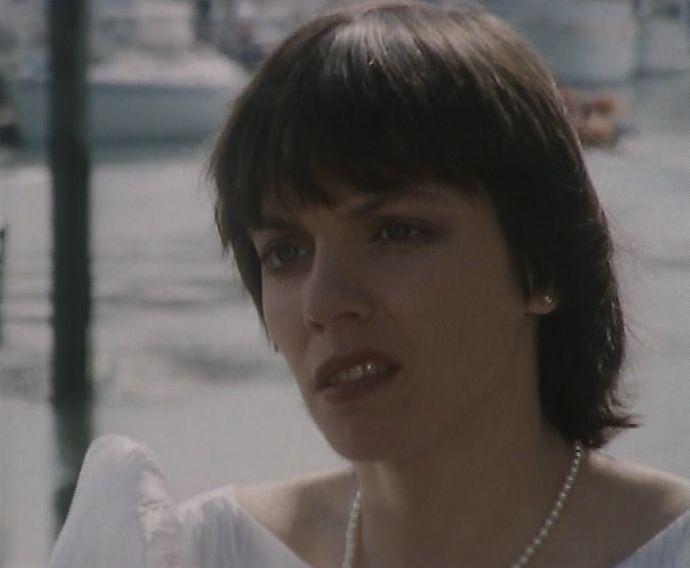
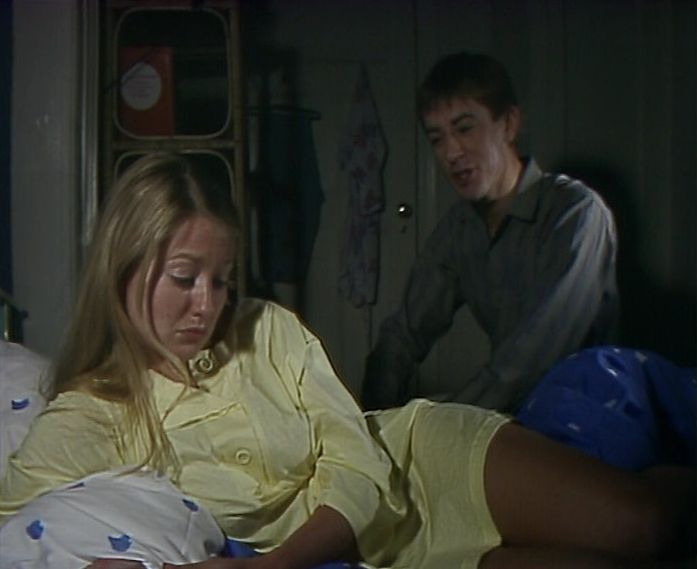
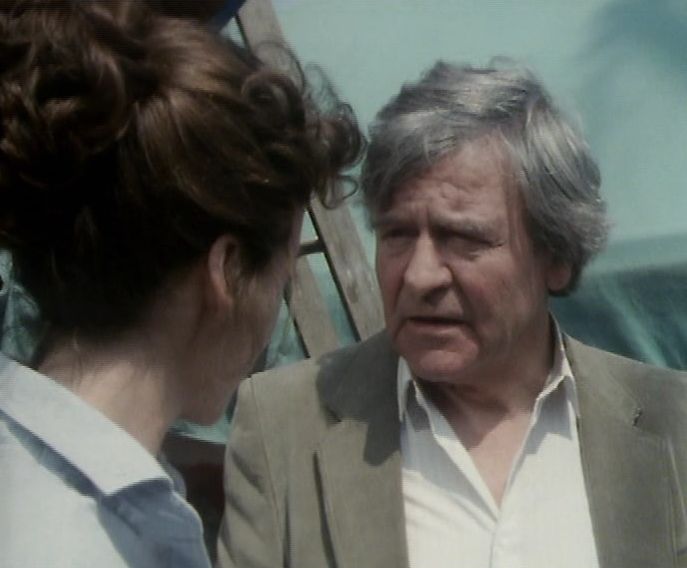
Shackleton – Simply Media DVD Review

Sir Ernest Henry Shackleton was a polar explorer who made three eventful expeditions to the Antarctic between 1902 and 1917.  His story has been tackled several times (for example, the 2002 mini-series starring Kenneth Branagh) but this 1983 BBC2 drama-documentary has long been regarded as one of the most authentic retellings of his exploits.

There are several reasons why this production is noteworthy.  Shackleton covered all of his Antarctic expeditions, not just the most well-known one (aboard the ship Endurance).  And since events are allowed to unfold over a number of years, this gives time for his relationships with other characters, such as Scott (Neil Stacey), to be explored in detail.  Also, it doesn’t shy away from the harsher aspects of life in the polar region (the toe amputation scene is authentically grisly).

Screenwriter Christopher Railing (who won an Emmy in 1971 for The Search for the Nile) worked from Shackleton’s journals to craft as accurate a picture as possible.  With location filming in Greenland, shot by BAFTA-award winner David Whitson, no expense was spared.

Although this ensured a visual treat for the audience, some at the BBC were less than impressed.  Will Wyatt, at the time the head of Documentary Features, recalls that “most years there was some sort of crisis. The worst was a four-part drama documentary about the Antarctic explorer Shackleton, shot on location in Greenland, around London, and at the BBC’s Ealing studios. The producer, an experienced drama production manager [John Harris], was unable to say ‘no’ to the director [Martyn Friend]. Shackleton went a disastrous record-breaking 50 per cent over budget. I told the producer he was finished with us and should return to drama, and I abandoned plans for all further drama docs.”

Whilst it’s a pity that this overspend seemed to have put paid to future productions (the same team had previously mounted the well-received Voyages of Charles Darwin) at least the money spent was put up on the screen for the viewers to enjoy.

David Schofield played Shackleton.  He made his television debut in a 1972 episode of Z Cars and worked steadily in television during the remainder of the seventies and early eighties.  After appearing in Shackleton his career continued to grow (later he chalked up appearances in Hollywood films such as Gladiator and Pirates of the Caribbean).

DAVID SCHOFIELD as Sir Ernest Shackleton.

Schofield is given strong support from an impressive supporting cast, which includes Michael Hayward, David Rodigan, Geoffrey Chater, Robert James, Robert Lang, Victoria Fairbrother, Stephen Tate, Michael Sheard, Kevin Whately and Anthony Bate.

Episode one, A Merchant Navy Man, opens with Scott’s Antarctic expedition of 1902.  Shackleton was a member of his party but due to ill health found himself sent home early.  These opening scenes sets up the tension that always existed between the pair.  Shackleton later discloses to his fiancé Emily (Victoria Fairbrother) that he found Scott to be a “button-up sort of fellow. Never manages to let his hair down.”  Shackleton, on the other hand, was approachable and friendly and seemed to be popular with the other members of Scott’s crew (there are some who contended that this was the real reason why Scott sent him home).

When Shackleton returns to London he’s invited to give several talks on their achievements and it’s here that Schofield really starts to make his mark, as Shackleton paints a vivid picture of life on the ice.  “I cannot leave you tonight without trying to convey to you something of the vast magnificence of the south polar regions. The immense forces of those contending elements – rock. wind, ice and water. The stillness of the Antarctic night. And the comradeship. The intensified feeling of life, of being alive, which men feel in those frozen wastes and which draws them back as if their souls belong there.”

With Shackleton now married to Emily and ensconced in Edinburgh, life for both of them is settled, but he regards the Antarctic as unfinished business.  With the backing of William Beardmore, a wealthy Clydeside industrialist, Shackleton mounts his own expedition, but finds that various obstacles – most notably Scott – have to be overcome first.  Scott insists he has a prior claim on the McMurdo Sound area and Shackleton agrees not to use it as his base of operations.  But when the heavy pack ice forces him into McMurdo, Scott – back in England – regards it as a personal betrayal.

The ominously titled Our Dead Bodies Must Tell The Tale sees Shackleton and his three companions, Frank Wild (David Rodigan), Jameson Adams (Kevin Whately) and Eric Marshall (Andrew Seear) set out for the South Pole.  Between late 1908 and early 1909 they made a trip of sixteen hundred miles, ending up just ninety seven miles away from the pole.  This feat turned Shackleton into a national hero and earned him a knighthood.

Rodigan is excellent throughout the series as Wild, one of Shackleton’s firmest friends and supporters whilst Seear adds a discordant note here as Marshall, a man who dislikes Shackleton intensely (he refers to him as “a moody vacillating boaster”).  A young Kevin Whately has a decent role as Adams.  There’s a nicely observed sense of desperation as the months tick by – they may have started sprightly enough (with plenty of supplies and horses to pull the sledges) but all four would have been well aware that the return trip would be the real test.

By then the horses have passed their usefulness, leaving the men to pull the sledges.  With dwindling supplies there’s a sense of anxiety that the others may have already left.  Will they return to base just to find an empty hut?  The stark beauty of the barren wastes, with Shackleton’s words in voice-over provided by Schofield, make the first half of this episode a memorable one.

Although not directly connected to Shackleton, Scott’s ultimately doomed attempt to reach the South Pole first was a key moment from this era of exploration and closes the second episode on something of a sombre note.

With the South Pole conquered by Amundsen, Shackleton needs a new challenge. He announces that he will mount a Trans-Antarctic Expedition to cover the entire continent – from a landing in the Weddell Sea, via the South Pole to McMurdo Sound.
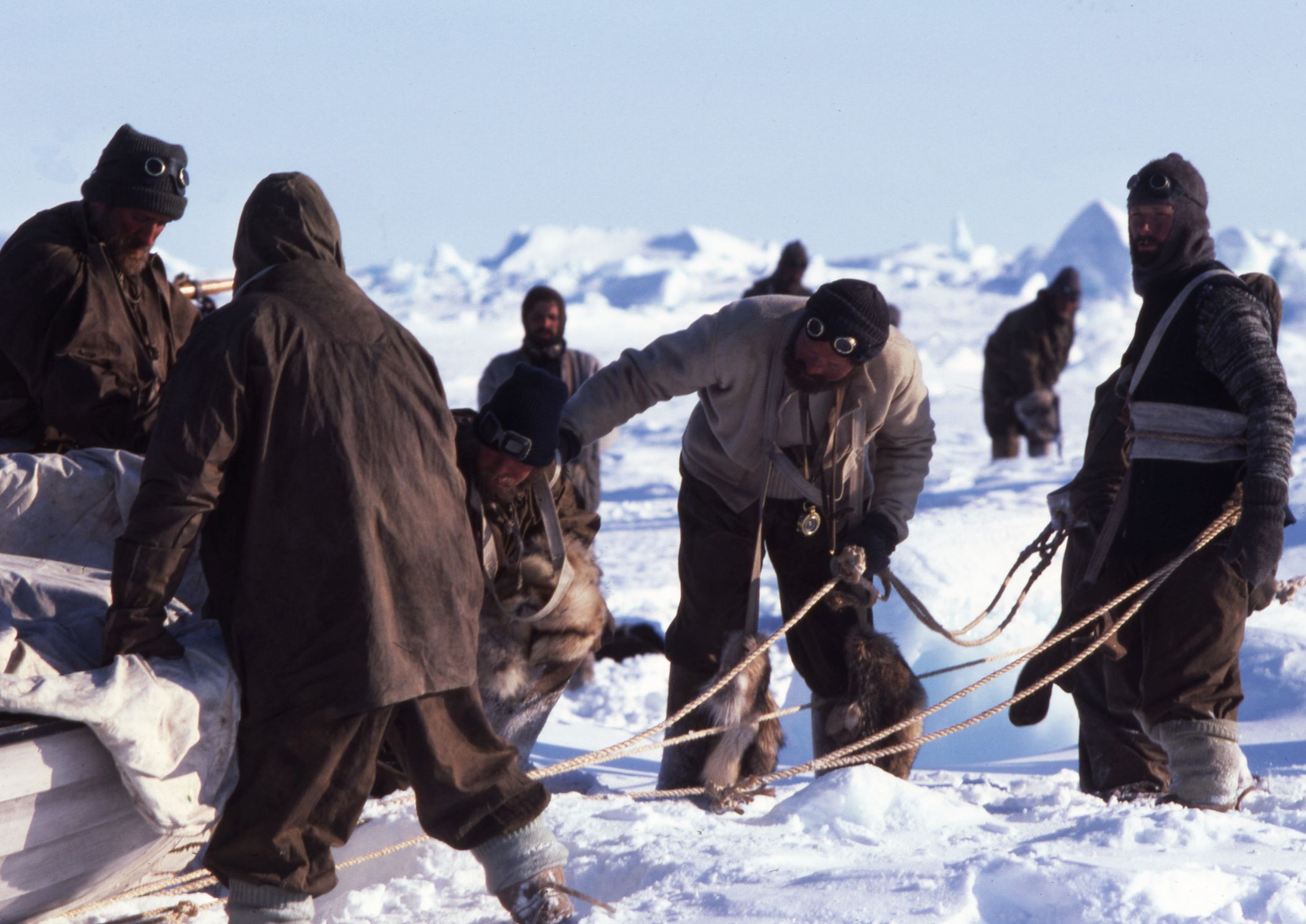
This journey, which begins in the boat Endurance, is by far the most compelling part of Shackleton’s exploits.  Episode three, Men Wanted for Hazardous Journey, starts with Shackleton’s recruiting drive and shortly afterwards his hand-picked crew (and the odd stowaway) are making good progress after departing from South Georgia.

But it doesn’t take long before the ice pack traps Endurance solid.  It’s an awe-inspiring sight and if Shackleton did go as far over budget as Will Wyatt claims, then it was worth every penny.  Trapped fast in the ice, the crew have to find ways to while away the time (and this they certainly do – with a variety of light-hearted jinks, including dog racing and a spot of cross-dressing).

When the Endurance is lost, Shackleton and the others are left stranded on a large ice floe which they hope might drift towards civilisation.  Even in such a desperate situation, Shackleton continues to be an inspired leader and David Schofield continues to impress in the title role.

The desperate plight of Shackleton and his men continues during the fourth and final episode, Cape Horn – Or South Georgia?  It covers an especially memorable part of the Shackleton story – which begins with a hellish 800 mile journey made by himself and five others in the open-lifeboat James Caird.  But when they reach their destination – South Georgia – that’s not the end of the story as Shackleton and several others have to make a land crossing over the island (through previously unchartered territory) in order to reach the Norwegian whaling stations and safety.

With the stakes so high – if Shackleton doesn’t succeed then the rest of his crew – (stranded on Elephant Island) – are sure to die, Cape Horn – Or South Georgia? engages the attention right from the start.  It’s a suitably dramatic conclusion to the series, leaving the fate of the men stranded on Elephant Island unresolved until right before the end.

The series is split between Shackleton’s Antarctic explorations and his life back in the UK. The first instalment has the least Antarctic footage (it tops and tails the episode) but the scenes in Britain are integral to understanding Shackleton the man, so they shouldn’t be regarded as mere filler.

Not only do they document his relationship with his wife (with hints that his restless spirit has placed a burden on their marriage) but his clashes with the establishment are also key to understanding his character. And it doesn’t hurt that the establishment is represented by character actors as good as Geoffrey Chater, Robert James and Anthony Bate – all of whom excelled at playing precisely these types of stuffy, patrician mandarins.

The contrast between Shackleton’s comfortable life in Britain and the hardships endured by himself and the others in the Antarctic is teased out in several unspoken ways. Firstly, the members of the Royal Geographical Society are shown to be frequently dismissive of Shackleton – even going so far as to suggest (not to his face, at least) – that his claims of nearly reaching the South Pole were exaggerated.  How can they, stuck in their comfortable existence, even begin to understand the hazards and joys of Antarctic exploration?  And when we see Shackleton on his lecture tours, it again highlights how his audience (smartly dressed, affluent) live in a totally different world from the one he’s describing so vividly.

One of the ways you know if a real-life drama or documentary has engaged your attention is if it inspires you to seek out more information about the subject. That’s certainly the case for me here, as I get the feeling that – even with four hours to play with – the surface of Ernest Shackleton had only been scratched.  David Schofield deftly brings to life all of his key characteristics though – his anti-authoritarian streak, the way he inspired trust and loyalty amongst his crew, etc – and the fact that Shackleton’s words, via Schofield’s voice-overs, are heard throughout the four episodes also helps to bring us closer to the man.

Shot on 16mm film, it’s a pity that the print looks rather tired-looking and faded in places. Restoration or a new print struck from the negative would have been welcome, but – as so often with niche archive releases – had this been done then it’s doubtful the title would have been economically viable.  What we have is certainly watchable though – and no worse than other material of the same vintage – so once the story begins to grip, it shouldn’t be much of an issue.

Classed as a drama-documentary, Shackleton is much more drama than documentary. Although we hear a voice-over at key points, since they’re Shackleton’s words (delivered by Schofield) it doesn’t break the drama feel of the programme.

Shackleton is an engrossing tale of old-fashioned heroism and friendship. David Schofield excels as Shackleton, but in many ways the real star is the unforgiving, forbidding Antarctic (there’s no doubt that without the Greenland material it would  be much the poorer).  A quality production, it grips from beginning to end.  Warmly recommended.

Shackleton consists of four 60 minute episodes across two discs.  It’s released by Simply Media on the 13th of March 2017.  RRP £19.99.
Howards’ Way – Series One, Episode Three

howard 03.jpg

After storming out of the house, Tom comes back and briefly – for a matter of seconds – there seems to be some possibility of rapprochement between him and Jan.  But when he tells her that he’s gone ahead and sunk all his savings into the Mermaid Yard they sail back into choppy waters …..

If Jan’s upset, then Lynne’s devastated to hear that the Flying Fish will have to be sold.  Cue tears and smudged mascara – for Lynne it seems that the world has ended.  She continues to pout away later after Tom learns that she’s got herself a job at the yacht club bar (he’s not pleased).

Leo is persuaded by Polly to escort an unwilling Abby to a glittering (for Tarrant anyway) society party.  I like the way that Polly is pathetically grateful to Leo for taking on this difficult task.  It’s also notable that despite the fact it only appears to be late afternoon, Polly has a drink in her hand.  Howards’ Way, like The Brothers, runs on alcohol.

Jack Rolfe practically lives in the pub, although most of the other characters also tend to have a drink close by most of the time.  For example, when Jan and Tom are going at each other hammer and tongs, Leo attempts to diffuse the situation by asking his mother if she’d like another drink.

Abby doesn’t want to go the party, so she and Leo have a quiet drink instead (see what I mean?!).  Leo is the first person we’ve seen so far who takes the time to listen to her, even though she remains withdrawn and guarded.

Tom arrives at the Mermaid Yard but isn’t exactly welcomed with open arms.  Apart from Jack’s ever-loyal factotum Bill Sayers (Robert Vahey), the workers at the yard tended to be fairly anonymous, although occasionally – beginning here – there was an effort made to turn some of them into characters.

Most notable amongst them is Davy Malik (Kulvinder Ghir), who has to face an inevitable trickle of racial abuse from his fellow workers.  Ghir was right at the start of his career (only a couple of appearances in Tucker’s Luck pre-dated his turn as Davy).  Later he’d be a regular in Goodness Gracious Me and would rack up a score of other credits, most recently appearing as Cyril in Still Open All Hours.

You have to love Jack’s optimism (expressed later to Bill) that it’s going to be easy to manipulate and sideline Tom.  Surely he’s realised by now that Tom’s not going to be a pushover?  Bill’s worried that he’ll want to change everything, bringing in new fangled computers and the like.

Jack and Bill are traditionalists – but we’re not invited to view this as necessarily a good thing.  Jack mutters that it doesn’t matter how long it takes to do a job (quality is all important) but it’s plain that Bill is shiftily aware that there’s long been a culture of inefficiency at the yard.  So in some ways Tom, with his crusading zeal, is a Thatcherite new-man, keen to start operating more effectively and efficiently.  But he’s not being totally unreasonable, since his plans are obviously in the interests of Jack, Bill and all the rest (otherwise the yard will go under and everyone will be out of a job).

It’s been touched upon before that Jack married his wife in order to gain control of the yard, but it’s restated here by Avril – and with the bleak caveat that she died possibly because Jack was such a terrible husband or possibly because of cancer.  It follows that Avril should despise him, but that’s not the case.  If Jack loathed his wife then he loves his daughter and when he loves something, he commits totally.

We meet Jan’s mother, the always sensible Kate Harvey (Dulcie Gray), for the first time.  Unlike Mary Hammond, the matriarch of The Brothers, Kate is much more down to earth and approachable.  From now until the end of series six she can often be guaranteed to pop up in order to dispense a dose of good old-fashioned common sense (her close encounter with Jack in a few episodes time is a treat).

There might have been a hint in the previous episode that Abby was contemplating suicide.  When she steps off the train with Polly, there’s a second or two where she lingers – just staring at the railway tracks.  Was this intended to signify an unconscious (or otherwise) urge to throw herself underneath an oncoming train?  It’s a subtle touch if so, but even if it wasn’t intentional, her hesitancy still suggests that she’s a deeply troubled young woman.

The end of episode cliffhanger, as she plunges into the sea, amply demonstrates this.

howard-03-02

Howards’ Way – Series One, Episode Two

howard 02.jpg

Tom is keen to go into partnership with Jack, but needs more capital – he has fifty thousand pounds, but needs another fifty thousand. Avril suggests he sells the Flying Fish.  Lynne’s not going to be pleased ….

Ken’s girlfriend, Dawn (Sally Farmiloe), feels a little threatened by Jan.  It’s always a little jarring to check out the status of less well-known actors who you don’t consider to be that old and find, like Sally, that they’ve passed away (back in 2014, aged sixty).

Ken’s sniffing around the Mermaid Yard, keen to snap it up if Jack goes bankrupt. This is the cue for another scene featuring a topless Ken lounging in bed, this time as he merrily plots away. At least Tom wears a pyjama top, much more restrained.

In many ways Jack is a horrible, selfish person but Glyn Owen’s ebullient performance means that you can’t help but side with him more often than not. He’s not keen to show Tom the company accounts, but Avril overrides him (“female Judas” he mutters).

So Tom is well aware how bad things are, but believes that his design skills and contacts will help to turn things round. As Jack is used to doing things his way, it’s plain that he’s not going to react well when someone else starts to tell him what to do. Since Avril is also a shareholder, her casting vote could prove be crucial in the future ….

The return of Abby from a posh Swiss finishing school is an episode highlight.  If I was Polly and Gerald I’d ask for my money back, as poor Abby isn’t really the finished article.  Possibly it’s not surprising, since Polly is as far from a nurturing mother as you could possibly expect whilst Gerald (when he finally makes an appearance) is clearly fond of Abby, but treats her with an air of absent-minded kindness, rather like one would deal with a family pet.  So Abby’s down in the dumps and will remain so for some considerable time.

Mother and daughter exist in self-contained vacuums. Polly wants Abby to make an effort and fit in with the glittering Tarrant social set, whilst Abby can’t think of anything she’d like less.

Lynne learns that her father and Avril have been taking quiet walks together.  She displays her disapproval by having a good pout (Lynne is a champion pouter, it must be said).

The first episode had seeded the notion that Avril’s heart had been broken by a relationship which ended badly.  No more information was supplied at that time, but a further piece of the puzzle is put into place here, as she contacts “someone” to see if they can help to sell the Flying Fish.  Keep an eye on this plotline.

Leo’s something of a contradiction.  He wants to save the environment, but has no qualms in taking a job at a petrol station.  If Tom (and later on Jan) are positioned as ideals of the Thatcherite Eighties – thrusting entrepreneurs – then maybe we can take Leo to be a warning about what might happen to those who leave school with poor qualifications (they end up in a dead-end job).  Or I may be seeing patterns that don’t exist, which is probably more likely.

Tom breaks the news that he wants to buy into the Mermaid yard. Jan’s not pleased but Tom, as always, goes his own way (cue an overdose of honking saxphones on the soundtrack, an odd musical choice).

Howards’ Way – Series One, Episode One

howard 01.jpg

Tom’s boat – the Flying Fish – wins the Commodores Cup. The whole family are delighted but their joy is pretty short-lived as Tom drops a bombshell. He’s been made redundant ….

The extent of the Howard’s victory feast (including lashings of champagne) is an obvious pointer that they’re well off – but for how much longer?  It’s hard to feel too sorry for them though (Boys from the Blackstuff this isn’t). Perhaps they could sell a few paintings (unless they’re all reproductions) or even the house and then downsize.

It’s interesting to see how the others process this news. Jan feels betrayed that Tom didn’t tell her earlier and then reacts with horror when he raises the possibility of a job overseas. How could she leave Tarrant and her friends and family? Jan doesn’t come over very well here I’m afraid, as she appears to be completely self-centered.

Maybe it runs in the family as Lynne is quite similar. Although she finds the news upsetting, as long as she can sail the Flying Fish she’ll be quite happy. Uh oh …

Meanwhile Leo decides that he doesn’t want to go to university and would much sooner get a job instead. Edward Highmore’s performance is often as wooden as Jack Rolfe’s beloved boats, but since Leo was initally written as somewhat gauche, it’s not entirely his fault.

We also meet Jack and Avril. Jack’s aware that the Mermaid Yard is in deep financial trouble, but Miwcawber-like simply assumes that something will turn up. Avril, desperately trying to dig her father out of his financial mess, finds it hard to be so calm.

Jack needs a hundred thousand pounds to keep the yard afloat, Tom has his redundancy money. It’s a perfect solution, at least to Jack. Avril’s appalled – how can they ask him to risk all his money in a business that still may go bust?

Our first sight of Ken Masters is a hoot. Jan rings him up to arrange a meeting (she already works for him two days a week and hopes he’ll agree to her going full time). He’s in bed (bare-chested, medallion on display) with a shapely blonde by his side. He tells his blonde companion not to worry, Jan Howard’s no competion – she’s just a housewife. How wrong can one man be.

We learn that Avril has a broken heart (she cuts a folorn figure, lying all alone in her bed in a rather attractive pair of pyjamas) but perks up when she runs into Tom for the first time in years. Meanwhile, Ken is clearly interested in Jan. It’s not hard to guess the direction the series will go in, but there’s still some unexpected twists and turns ahead ….

Howards’ Way – Series Introduction

howard-titles

Having recently been watching The Brothers (my posts about series three and four can be found here and here) I’ve had a hankering to rewatch the other soapy series co-created by Gerald Glaister, Howards’ Way.

Given how popular The Brothers had been, it wasn’t surprising that Glaister would eventually try his hand again at something similar (this time with Allan Prior as his co-creator).  There are clear parallels between the shows – the way that personal and business matters continually clash, for example – but there are also some notable differences.

Since Howards’ Way was a creature of the mid eighties, it’s not surprising that it has a strong air of conspicuous consumption – after all we’re deep in the heart of the Thatcher era, where a self-made entrepreneur was a most desirable thing to be.  And that’s one of the major differences between Howards’ Way and The Brothers – both Tom and Jan Howard start their business adventures pretty much from scratch, meaning that we’re with them as they try to make something happen (in Jan’s case she has a remarkable transformation from housewife to successful fashion designer, which is more a little hard to swallow.  This is something I’m sure to come back to …)

Contrast this to the Hammonds in The Brothers, who are the complete opposite of self-made.  They inherited the business from their late father, so all of the initial groundwork has been done for them – the drama comes from the conflicting dynamic between the three brothers as they squabble for supremacy.

Howard’s Way also has a glossier feel.  As it arrived in the wake of both Dallas and Dynasty, it’s easy to imagine this was the BBC’s attempt to mount something similar – so power-dressing, complete with shoulder pads and (worst of all) jackets with rolled up sleeves are to the fore.  The yachts and marinas of Tarrant provide the series with a visually pleasing gloss, a far cry from the grimy lorry depot where much of The Brothers was set.

Mmm.  Co-creator Allan Prior had worked on Blakes 7, I wonder if that could have provided the inspiration for naming the town Tarrant?

Before we get into the series posts, let’s take a look at the main characters.

Tom Howard (Maurice Colbourne).  He starts the series at a crossroads in his life – recently redundant, he’s pondering what to do with the rest of his life.  When he makes his decision it’s not one that pleases …

Jan Howard (Jan Harvey), Tom’s wife.  Tom’s decision to put all his redundancy money into a venture which Jan regards as risky in the extreme increases the pressure on their already rocky marriage.  Jan decides that she needs to find a job for herself, which moves her into the welcoming arms of ….

Ken Masters (Stephen Yardley).  You’ve got to love Ken.  As we’ll see, he gets kicked around by everyone else, but still manages to cling on, just.

Tom’s redundancy money is burning a hole in his pocket.  He decides to invest it in the Mermaid Yard, run by the bluff alcoholic Jack Rolfe (Glyn Owen).  Jack, like Ken, provides a great deal of the entertainment throughout the series.  The parameters of Jack’s character are set up right from the start – he’s a traditionalist at heart, to him boats should be made of wood (anything else just isn’t right).  Tom’s injection of funds comes at just the right time, as the Mermaid Yard is in dire financial straits, something which is apparent to Jack’s daughter ….

Avril Rolfe (Susan Gilmore).  It doesn’t take long before she and Tom are making eyes at each other.  This causes concern for his children ….

Leo (Edward Highmore) and Lynne (Tracey Childs).  Bless them, neither are particularly well-written parts (although Highmore stuck it out for all seventy eight episodes, Childs for about half that).  Leo is keen on the environment and Lynne is keen on the Flying Fish (all will become clear as the series progresses).

Charles Frere (Tony Anholt) doesn’t make an appearance until a few episodes in, but once he does the series shifts up a gear.  He’s Howards’ Way’s JR, a ruthless and successful businessman who thinks nothing of crushing the less fortunate under his feet.  Essentially, Charles is everything that Ken Masters wishes he was but so obviously isn’t – which means that any time Charles and Ken attempt to do business it’s a treat.

Charles’s right-hand man is Gerald Urquhart (Ivor Danvers), locked into a loveless marriage with the self-obsessed Polly (Patricia Shakesby).  Polly and Jan are best friends, whilst Leo would clearly like to be more than best friends with Gerald and Polly’s daughter ….

Abby (Cindy Shelly).  By the end of the final series her character had totally changed, but here she’s in her initial setting – sullen, withdrawn and deeply unhappy.

So join me next time as we take a look at episode one, which sees Tom drops a bombshell ….

howards.jpg

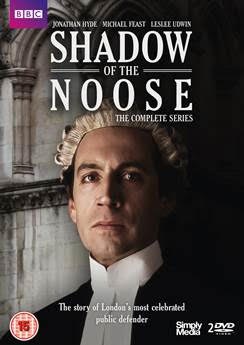
Shadow of the Noose – Simply Media DVD Review

shadow

Sir Edward Marshall Hall (1858 – 1927) was a barrister in the late Victorian and Edwardian eras who, thanks to the media, became a well-known public figure.  The most notorious court cases of the time – especially high profile murders – were reported in great detail by the newspapers, which meant that the exploits of Marshall Hall were keenly followed by millions of armchair criminologists.

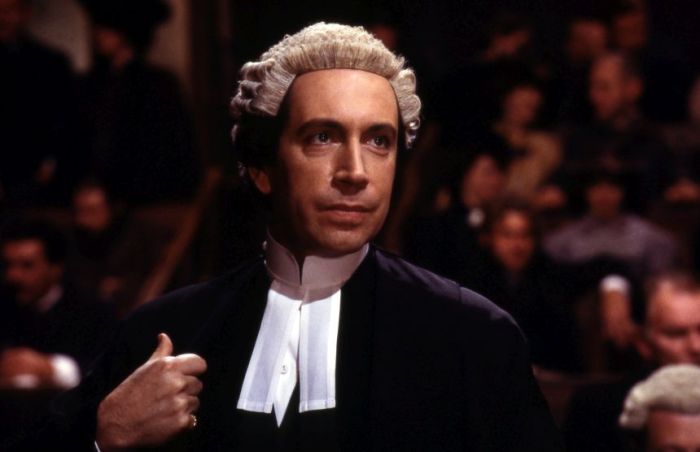
Marshall Hall’s cases have been adapted for both radio and television.  In 1996, John Mortimer presented a six-part BBC Radio 4 series starring Tom Baker.  Prior to this, in 1989, came Shadow of the Noose, with Jonathan Hyde as Edward Marshall Hall, which ran for a single season on BBC2.  All of its eight episodes are contained within this double DVD release.

Jonathan Hyde (b. 1948 in Brisbane, Australia) moved to Britain in the late 1960’s and graduated from RADA in 1972, winning the Bancroft Gold Medal.  His television career began in the late 1970’s with appearances in programmes like The Professionals, Thomas and Sarah and Agony.  Post Shadow of the Noose he continued to ply his trade in British television, in diverse series such as Lovejoy, Jackanory, The Memoirs of Sherlock Holmes, Peak Practice and Cadfael, before his profile was raised thanks to a string of Hollywood movies – Richie Rich, Jumanji, Titanic and The Mummy.

Appearing alongside Hyde in all eight episodes was Michael Feast as Edgar Bowker, Marshall Hall’s faithful assistant, whilst a host of quality actors made one-off appearances.  These include Peter Capaldi, David Bradley, Caroline Quentin, Gawn Grainger, Robert James, Sian Phillips, John Bird, David Schofield, Tony Doyle, David Rintoul, Alan MacNaughton, Michael Melia, Phil Rose, Philip Franks, Morris Perry, Derek Newark, David Graham, Tim McInnerny and Kevin Stoney.  An impressive roll call.

The series debuted with An Alien Shore (tx 1st March 1989).  Defending a prostitute discovered with one of her client’s bodies in a trunk seems like a hopeless case.  Everybody has already decided that she’s guilty, which explains why no barrister in London will take the case.  No-one, except Edward Marshall Hall.

Shadow of the Noose
Jonathan Hyde

We have to wait some eighteen minutes before sighting Hyde, but as soon as Marshall Hall is introduced the series wastes no time in deftly defining his character.  Newton (Terry Taplin), the solicitor representing the accused, Marie Hermann (Victoria Fairbrother), admits that it’s likely she’s going to hang, but tries to tempt Marshall Hall with the promise of fame (the trial is bound to be widely reported, so the defending barrister – even if he’s unsuccessful – will become a household name). He’s uninterested in fame, but is pained that Marie has no-one to defend her, and that’s why he takes the case.

When the focus switches to the courtroom then An Alien Shore, like the remainder of the series, really comes alive.  Marshall Hall thrives in this combative environment, becoming remorseless and implacable. An excellent example of this is the grilling he gives the murdered man’s son, Henry Stephens (Michael Melia).  Hyde excels whenever Marshall Hall is in cross-examining mode.

Despite the series title, not every case was a battle to save unfortunates from the gallows – for example, Noblesse Oblige finds Marshall Hall involved in a libel case. Lady Scott (Siân Phillips) alleged that her son-in-law’s marriage to her daughter foundered due to his homosexual tendencies. After a period of illness, Marshall Hall is desperate for any case to restore his fortunes, although this one is something of a comedown (and he’s not even the leading barrister).

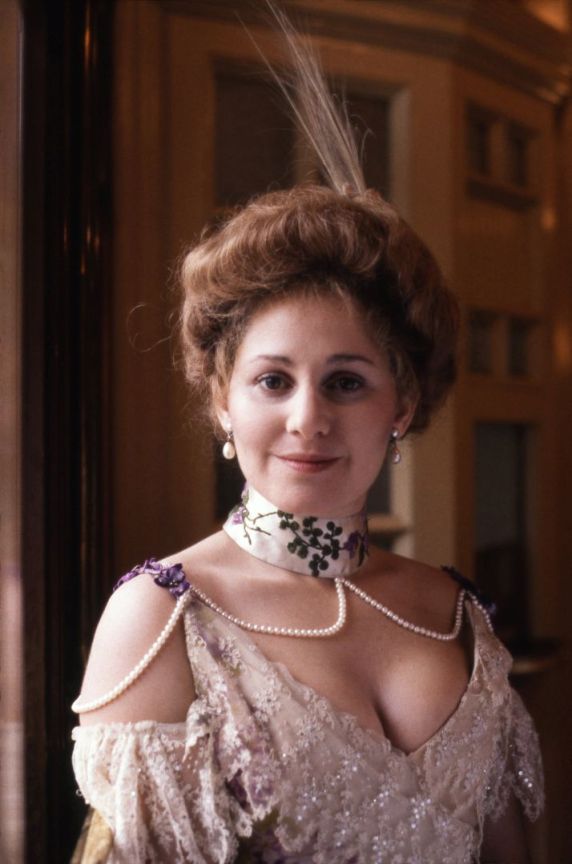
Phillips is as good as you’d expect and the appearance of John Bird as Mr Justice Hawkins is another treat.  This episode also introduces Leslee Udwin as Henriette Kroeger, who will shortly become Mrs Marshall Hall. John Leeson, sporting an impressive false beard, pops up as a private detective.

Shadow of the Noose
Leslee Udwin

Gone for a Soldier opens with Marshall Hall’s marriage to Henriette. This was either a whirlwind romance or a great deal of their courtship took place off screen (the latter I assume). David Rintoul guests as Captain James Fairbrother, a rich and privileged military man who had a brief but disastrous relationship with his wife’s maid, Annie Dyer (Natalie Forbes). Annie’s child, born out of wedlock, is found smothered, with Annie apparently confessing to the crime. Marshall Hall springs to her defence.

It’s a strong episode in which Forbes is compelling as an unmarried mother struggling to survive in a harsh world.  Particularly affecting is the short scene down in the cells mid-trial, where Annie cradles a bundle of rags, pretending that it’s her dead child.  The case also shines a light on Marshall Hall’s character, especially his tragic first marriage.

Another first rate guest cast – Caroline Quentin, Gawn Grainger, Tony Doyle, Morris Perry, Derek Newark – are assembled for Beside the Seaside.  This week, Marshall Hall is called upon to defend Herbert Bennett (Vincent Riotta) who is accused of killing his wife Mary (Quentin).  He’s a womanizer, a conman and a spy, but is he guilty of murder?

The opening few minutes of Gun in Hand are played at an extreme pitch of melodrama, not previously seen in the series.  Edward Lawrence (David Bradley) and his mistress, Ruth Hadley (Nicola Duffett), are engaged in a violent argument.  As Ruth taunts and attacks him (a wonderfully blowsy performance by Duffett), Lawrence rushes off to find a gun, whilst the poor downtrodden maid cowers in the corridor.  A few minutes later several shots are fired and we see Lawrence cradling the dying woman in his arms.

Lawrence, a big wheel in Wolverhampton, has many influential friends – including the Mayor – so he can call upon the best, such as Marshall Hall.  Bradley has several stand-out scenes, especially before the trial where Lawrence is briefly reunited with his wife (devotees of Survivors will  be pleased to see Julie Neubert as Mrs Lawrence).  This episode has a generous amount of courtroom action, featuring Marshall Hall in full theatrical flight.  It’s easy to see why John Mortimer admired him so, and it’s clear that he borrowed certain character traits for his most famous creation, Horace Rumpole.  Both loved to bait judges and Marshall Hall’s final speech to the jury here is pure Rumpole ….

Turn Again offers a change of pace, as Marshall Hall becomes the centre of the story.  After winning a libel case for an actress against the Daily Mail, he finds himself targeted by the paper.  He declared that his client’s reputation deserved the same degree of consideration as any lady in the land, including that of Mrs Alfred Harmsworth (the wife of the Daily Mail’s proprietor).

Shadow of the Noose
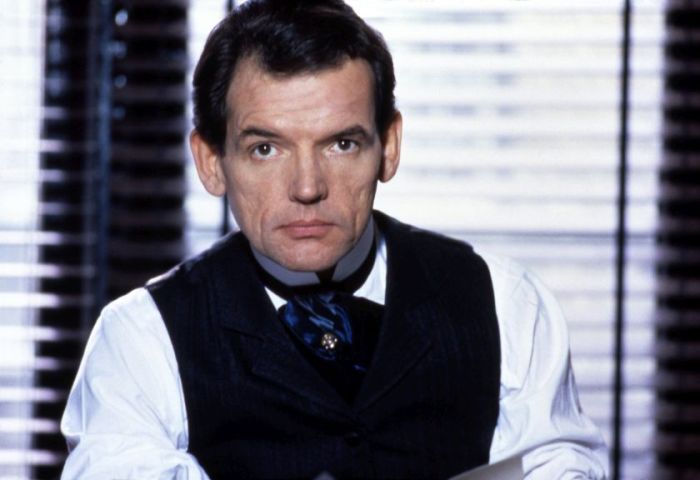
David Schofield

Alfred Harmsworth (David Schofield) doesn’t take kindly to this and vows to break Marshall Hall.  Another excellent cast (Alan McNaughton, Kevin Stoney, Philip Franks, David Neal, amongst others) enhance an absorbing episode which raises some interesting points about the power of the press (which are as relevant today as they were then).  Because Marshall Hall refuses to apologise to Harmsworth he has to sit and watch the entire press pack wage an intensive vendetta against him. Hyde really hits a peak here as an embattled Marshall Hall finds himself under extreme pressure.

Next up is one of his most famous cases, The Camden Town Murder.  Peter Capaldi plays Robert Wood, tried for the murder of a prostitute called Emily Dimmock.

The opening drags a little, probably because Wood is not a terribly likeable or sympathetic character, but once Marshall Hall gets involved the pace picks up. The trial – with a typically barnstorming performance from Marshall Hall – is a memorable one (the noise from the public gallery helps to ramp up the tension) whilst the legendary David Graham, as Mr Justice Grantham, is the latest familiar face to sit in judgement.

The series concluded with Sentence of Death.  Marshall Hall’s latest client is one of the most infamous murderers of the early twentieth century – Dr Hawley Harvey Crippen (David Hatton).

Hatton makes an impression, with limited screentime, as the diffident Crippen, whilst Marshall Hall’s recreation of the night of Mrs Crippen’s death is easily the standout moment.  But there are a few problems with the episode – firstly, most people will be well aware of Crippen’s fate and secondly, Marshall Hall’s involvement with Crippen turns out to be fairly negligible (uniquely, this is the only episode which doesn’t feature a setpiece courtroom scene).   Having said that, it still poses some interesting questions – had Crippen accepted Marshall Hall’s instructions, would he have hung?  It’s more than likely that Crippen may have ended up guilty of manslaughter only and therefore would have served a relatively short prison term.

By the late eighties, although an increasing amount of drama was being shot on film, videotape was still also widely in use.  Shadow of the Noose was shot entirely on VT, although the production was far from straightforward. An asbestos scare at BBC Television Centre meant that the studios were put out of action and the series was forced to relocate to a warehouse in Bristol. But not shooting in a dedicated studio certainly gave Shadow of the Noose a different feel – for example, the lighting feels more natural. The move may have been bourne out of necessity, but it ended up working in the series’ favour.

It’s a pity that the timeline between each episode is rather vague.  In real terms, the cases we see in the series took place over a period of a decade or more, but there’s never any feeling that time has passed.  And although we see his first marriage in flashback and are present for his second, Marshall Hall’s off-duty life isn’t really touched upon.

These small niggles apart, there’s little to fault across all the eight episodes.  Shadow of the Noose is a consistently strong series, powered by Jonathan Hyde’s electric performance.  His Marshall Hall is a pure showman – delighting in taunting judges and wooing juries – whilst the uniformly excellent guest casts help to bring the stories to life.  A wonderful series which I’m delighted to finally see released on DVD.

Shadow of the Noose is released by Simply Media on the 20th of February 2017.  RRP £24.99.

Shadow of the Noose
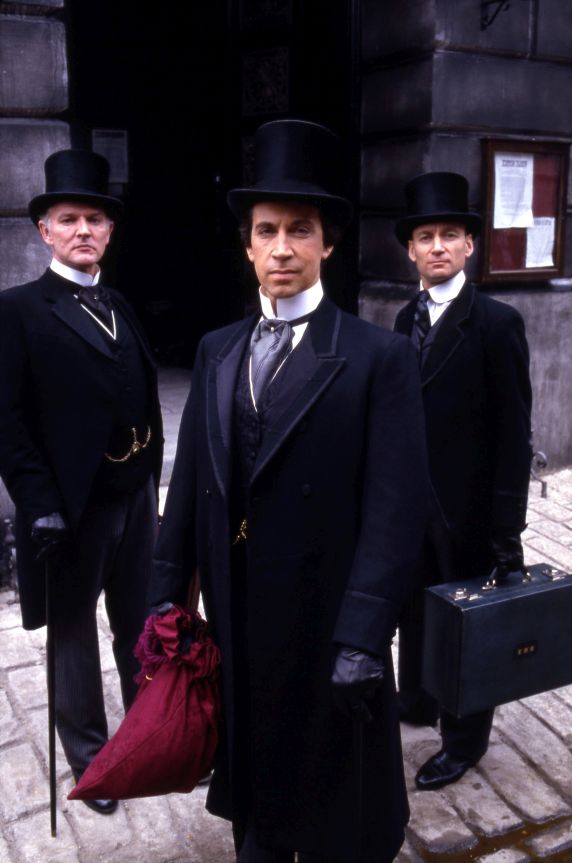
Terry Taplin, Jonathan Hyde and Michael Feast

Shadow of the Noose to be released by Simply Media – 20th February 2017

shadow.jpg

Shadow of the Noose is coming later in the month from Simply Media –

A must-see series for fans of period drama and courtroom drama. Featuring outstanding acting talent including Jonathan Hyde, David Bradley, Siân Phillips, David Schofield, Caroline Quentin, and early performances from Peter Capaldi and David Rintoul

Simply Media is delighted to announce the DVD release of BBC’s Shadow of the Noose: The Complete Series. First shown on BBC Two in 1989, this highly regarded eight-part drama series, with an outstanding all-star cast, will be available to own for the first time on any home video format from 20th February 2017.

Directed by BAFTA-winner Matthew Robinson (Byker Grove / Eastenders) and Sebastian Graham Jones (Cadfael), Shadow of the Noose tells the true story of the career and personal life of “The Great Defender” Sir Edward Marshall Hall. He was London’s most celebrated barrister and the first world-famous legal celebrity, whose gripping cases consistently made news headlines and drew crowds in to the public gallery of the Old Bailey during the late Victorian era and early Edwardian era.

Jonathan Hyde (Titanic) brings Marshall Hall’s style and personality to life on screen in an outstanding performance. Marshall Hall was known for his theatrics as he argued his cases with gusto and determination, keeping the Court audience on the edge of their seat, particularly at a time when a guilty verdict meant facing the rope.

Throughout the series, which is based on true cases, Marshall Hall tackles a variety of seemingly impossible and controversial cases, and defends a colourful array of characters. Whether championing a lowly German prostitute accused of murdering a client, dissecting an ugly libel battle surrounding accusations of homosexuality within an aristocratic family, or defending the accused in the infamous Camden Town Murder…it’s all in a day’s work for Sir Edward Marshall Hall! But when a maid is accused of killing her illegitimate baby Marshall Hall is forced to face his own personal demons when it brings back unhappy memories of his first marriage…

The series also features stellar performances from the supporting cast, which includes Michael Feast (Game of Thrones) as Marshall Hall’s clerk Edgar Bowker, Caroline Quentin (Men Behaving Badly) and David Schofield (Gladiator). Marshall-Hall’s clients are also played by renowned actors such as  Golden Globe nominee Siân Phillips (I, Claudius), BAFTA-winner David Bradley (Broadchurch) and an early performance from Academy Award winner Peter Capaldi (The Thick of It, Doctor Who).

Blakes 7 – Blake

blake 01.jpg

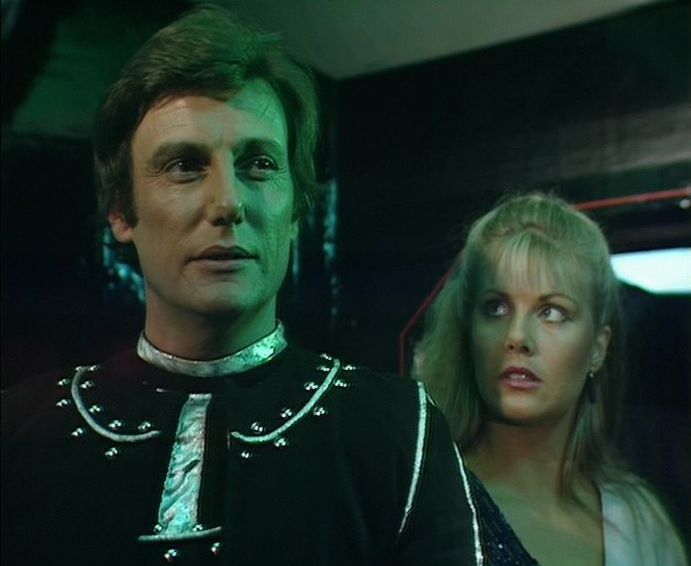
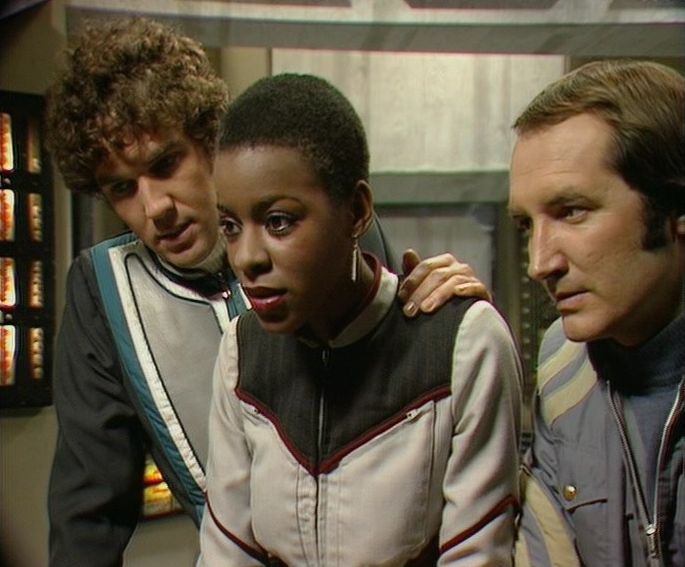
The opening of Blake, following on from the events of Warlord, finds Avon and the others at a low ebb.  They’ve been forced to destroy their base at Xenon, due to fears that either Zukan or one of the other members of their recent meeting might have betrayed its location to the Federation.

This rather begs the question as to why Avon decided to hold the meeting there, but by now it should be fairly clear that he’s not operating in the most rational manner.  He explains that the death of Zukan leaves them with a problem – they need to find another figurehead to lead their attack against the Federation.  This doesn’t quite tie back to the events seen in Warlord though as whilst Avon was keen to use Zukan, it wasn’t as a unifying leader.

No matter, it’s only a slight continuity error and it does neatly explain why Avon’s suddenly decided to track down Blake after all this time.  He explains to the others that Blake “is strongly identified with rebels, you see, and very popular with rabbles. They will follow him, and he will fight to the last drop of their blood.”

Blake’s apparently on Gauda Prime, a totally lawless planet which has recently made an application to restore its former legal status.  In order to do this they need to ensure that all criminals are caught as quickly as possible.  And this is Blake’s job.  As improbable as it sounds, Blake’s working as a bounty hunter.

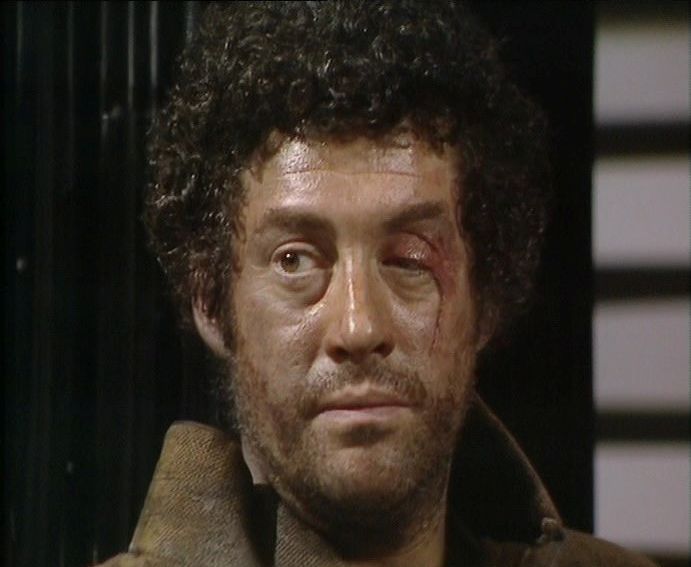
Our first sight of Blake is an arresting one.  Viewed from the side he appears to be the same man that we’d seen at the end of series two, but it’s only when he turns to face the camera that the wicked scar running down the right hand side of his face is visible.  It’s never explained how he came by this, but it’s clear that the last few years haven’t been easy for him.  Gareth Thomas instantly commands the screen as an older, wearier, bitterer Blake, seemingly reduced to catching criminals for money.

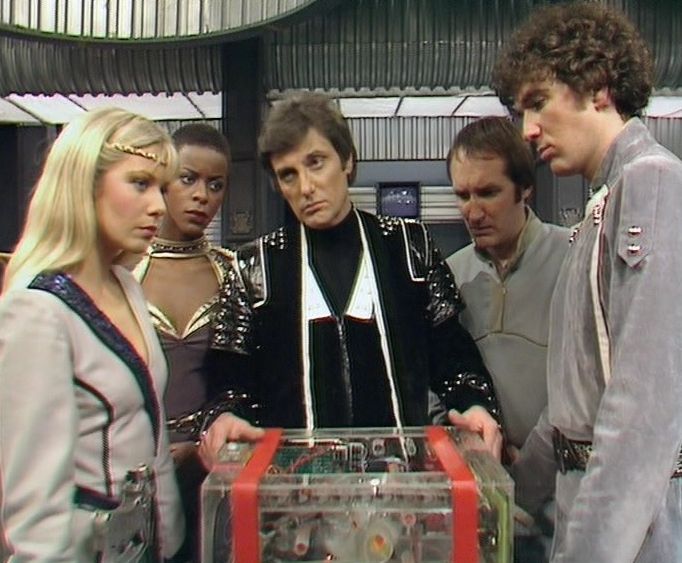
Humour is in short supply in this story, but I like the squabble between Orac and Slave, which sees Orac exasperated that Slave would have the temerity to interrupt him.  After a few minutes, Slave sounds the alarm and after everyone’s rushed about for a few seconds he admits that there’s no danger, he simply wanted to get their attention!  This moment of amusement doesn’t last long as Scorpio then really does come under attack and the painful descent to Gauda Prime begins.

blake-02

They all throw themselves around the set with abandon whilst fairly feeble explosions go off.  It all looks a little half-hearted, but once everybody except Tarrant has teleported to the surface the fun can really begin.  That’s when the ship is comprehensively destroyed and Slave speaks his final words.  If the model shot of Scorpio crashing through the trees looks a little underwhelming, then the full size destruction of the ship is impressively done.

If Blake has a problem then it’s the fact that nothing much really happens for the first forty five minutes.  Everything’s geared up for the meeting between Blake and Avon, meaning that everything else is just preamble – apart for one important revelation.  Blake captures Tarrant and manages to convince him that he’s a fearsome bounty hunter, but it’s all a sham, revealed in this conversation between Blake and Deva (David Collings).

DEVA: These stupid games you insist on playing, Blake, will get someone killed eventually.
BLAKE: I have to test each one myself.
DEVA: No, you don’t have to! I set up systems for that. I broke the security codes on their central computer. I got us access to official channels, information, everything we could possibly need! You don’t need to be involved at all.
BLAKE: All right, I find it difficult to trust. It’s a failing, I admit!
DEVA: And any one of our people could select the people you’ve collected. You don’t need to do the bounty hunter routine, either!
BLAKE: Indulge me.
DEVA: Do I have a choice?
BLAKE: Oh, there’s always a choice, Deva.

If some of Avon’s recent behaviour has been bizarre, then so is this. Blake couldn’t foresee that Avon wouldn’t listen to reason when they met up, but Deva was quite right when he told Blake that he was playing a dangerous game. This part of the story doesn’t quite hold water anyway – we assume that Blake is recruiting an army from the criminals on Gauda Prime to fight the Federation. But is picking the scum of the earth (a group of lawless murderers) really the wisest choice? Why isn’t he going from planet to planet, inciting rebellion?  This begs another question (sadly unanswered), namely is Blake’s scar as fake as his bounty hunter story?

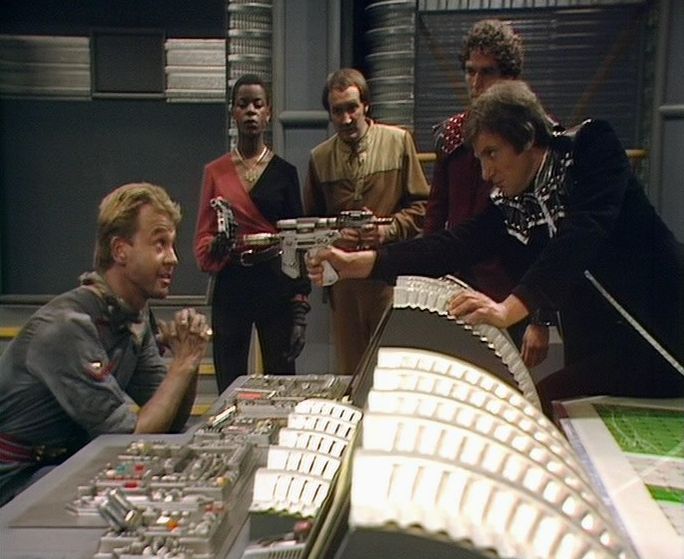
The fact that he doesn’t even have to be there at all – he’s simply playing games – is bizarre.  And pretending to Tarrant that he’s prepared to turn them all over to the Federation proves to be a fatal mistake. Tarrant rushes over to tell Avon (who has coincidentally just stepped through the door) which means that the reunion between Blake and Avon doesn’t quite end the way either of them hoped for.

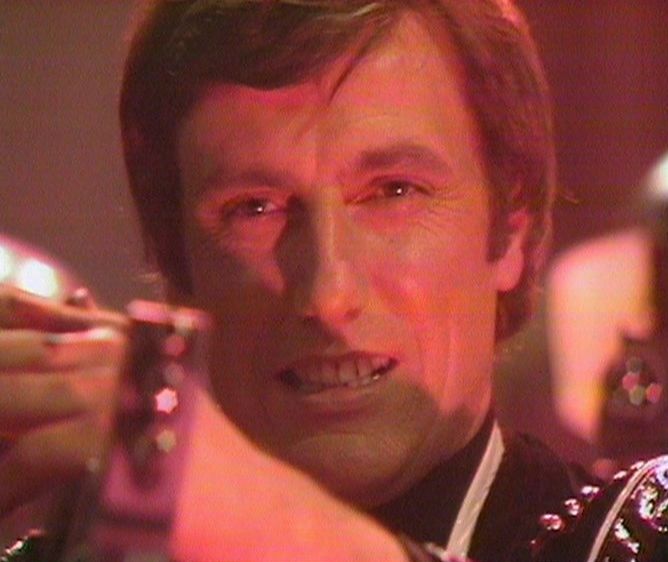
Darrow’s delivery of the line “have you betrayed us? Have you betrayed me?” has come in for a little criticism over the years. True, he’s more than a little arch here, but in context it works if you accept this is now an Avon at total breaking point.  As Avon repeatedly shoots Blake you can see a range of expressions play across Darrow’s face which indicate that Avon realises, almost as soon as he’s pulled the trigger, that he’s made a horrendous mistake. It’s a little too late though ….

Then all the others die (possibly) in slow motion. With the destruction of Scorpio and the entire crew seemingly dead, that would appear to have been a fairly final ending. But it’s always intrigued me that Gareth Thomas agreed to return only if Blake was shown to be 100% dead at the end – that way, he argued, he’d no longer have to worry that he’d lose parts due to people assuming he was still the star of Blakes 7.  But if the series was coming to an end this makes no sense.

Was a fifth series on the cards?  There’s always a way out – demonstrated by the oodles of fan fiction which states that the others weren’t really dead, they were merely stunned (even though we’ve never seen Federation guns set to stun in the series).  True, we don’t see Avon die, but unless the guards were really poor shots it’s pretty much a certainty.  And even though Blake appears to be very dead that can easily be explained away – it wasn’t Blake, it was his clone from Weapon.  Of course ….

Whether you like to believe that they all lived to fight another day or that this really was the final end, Blake offers as uncompromising a conclusion to the series as you could possibly ever expect to see.  It’s certainly worth sitting through the first forty five minutes for the final five.

blake-03

Blakes 7 – Warlord

warlord-01

The Federation’s pacification drug, Pylene 50, continues to spread through the galaxy – affecting more and more planets.  Avon calls together a number of interested parties in the hope that together they’ll be able to form an alliance.  Success seems to hinge on the cooperation of the notorious warlord Zukan (Roy Boyd).

Although Zukan’s thirst for war and conquest is well known, he tells the others that he’s here in good faith and has the means to produce a toxin to combat the pacification drug.  But matters are complicated after Zukan’s daughter, Zeeona (Bobbie Brown), is found to have stowed away on her father’s ship – especially since she and Tarrant have something of a history ….

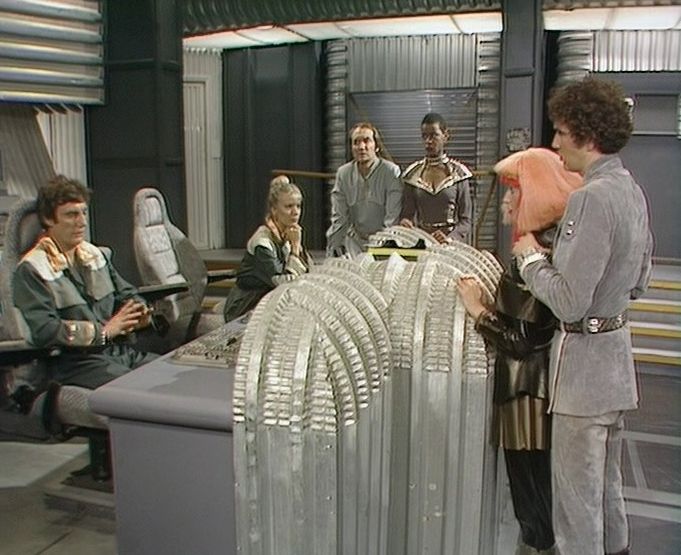
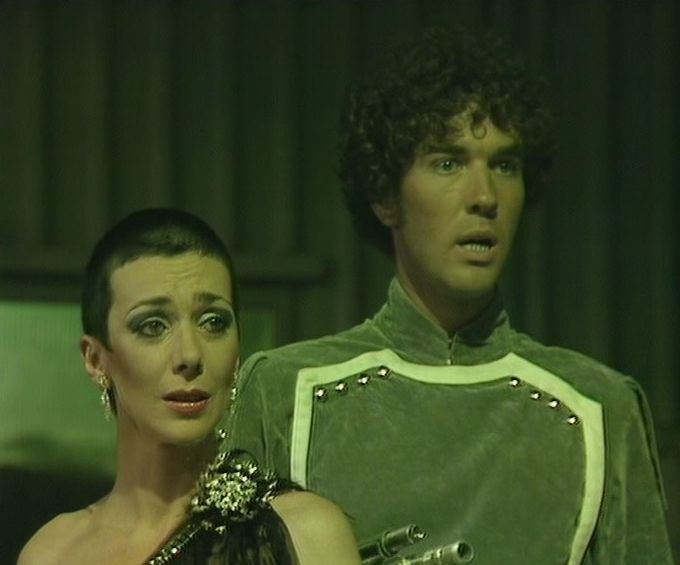
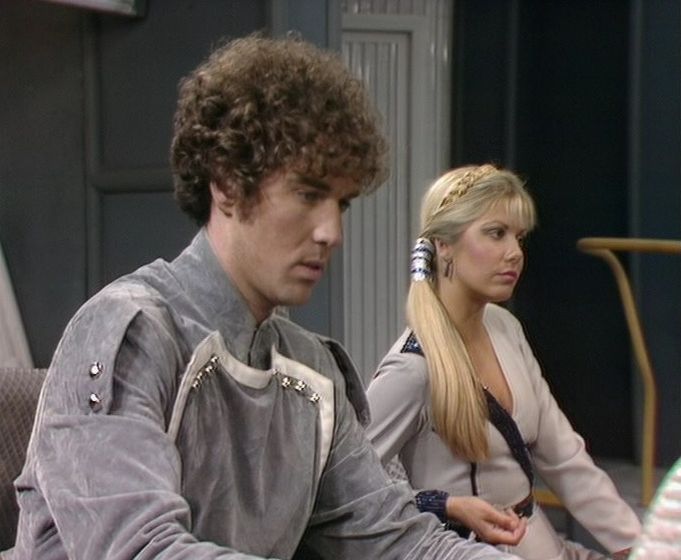
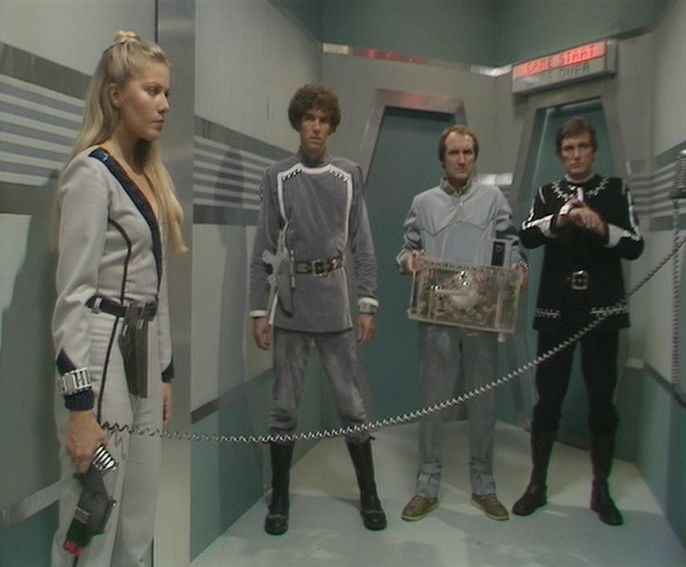
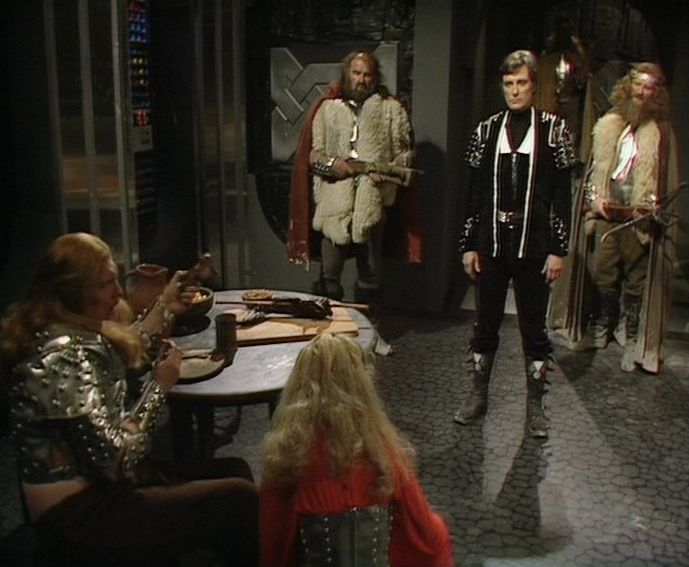
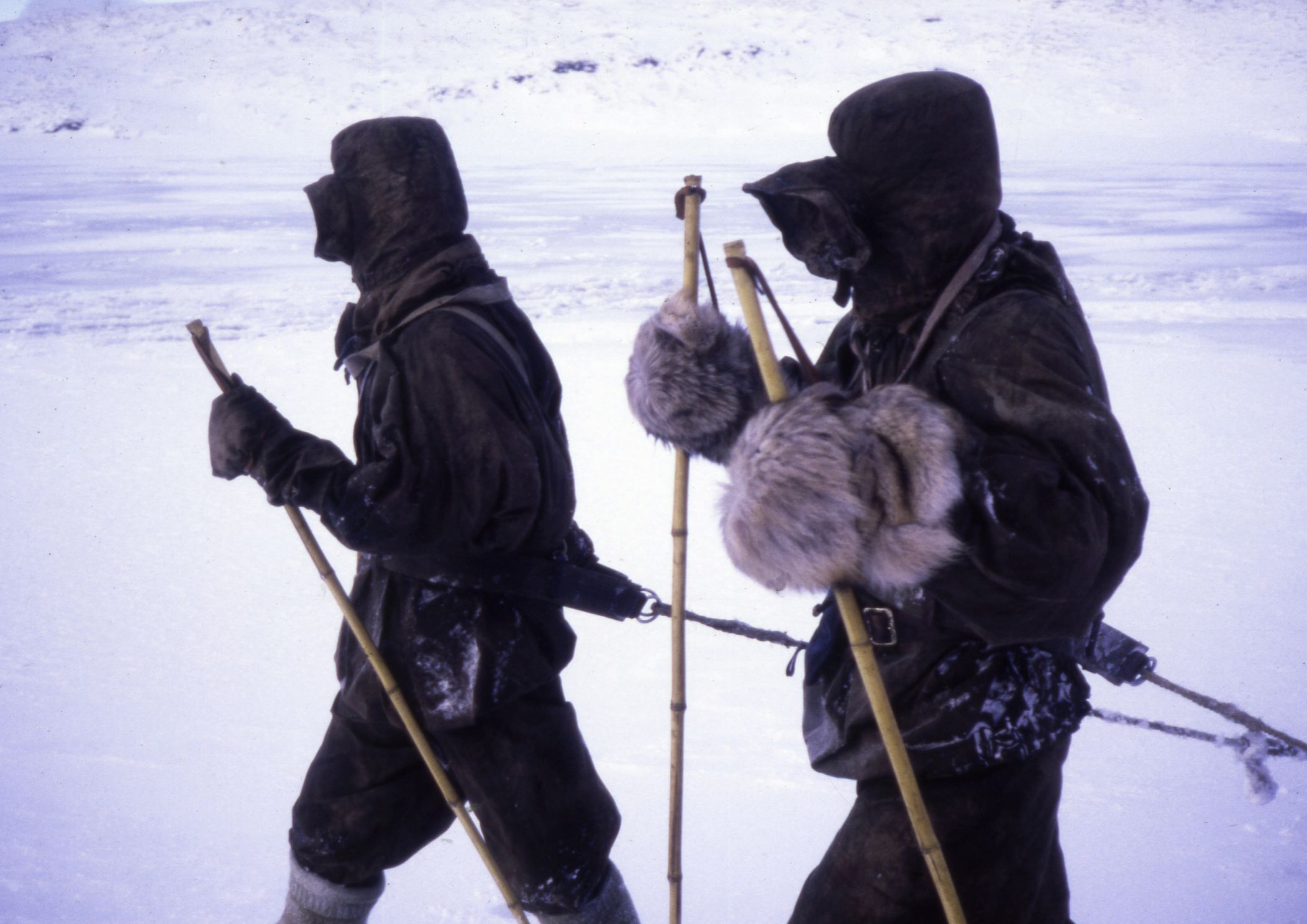
Warlord has never been a terribly well regarded B7 story, possibly because of the interesting clothes and hairstyles.  There’s no getting away from it, the delegates look if they’d be more at home at a fancy-dress party rather than a summit meeting which will decide the fate of the galaxy.  Zukan and Zeeona also sport the most amazing haircuts, especially Zeeona who looks like a cut-price Toyah.

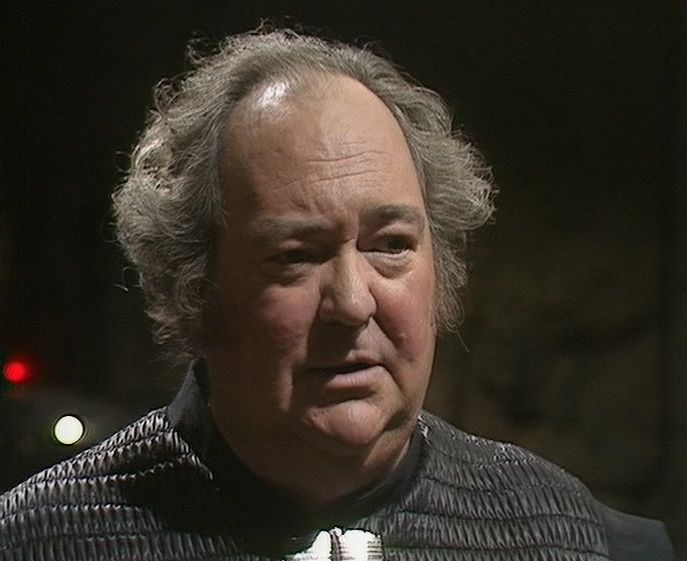
There’s also the Rick James problem.  If you’re a Doctor Who fan then you’ll probably be aware of his idiosyncratic performance in the 1972 story The Mutants.  Nearly a decade might have passed since that unforgettable turn, but James pretty much picks up where he left off – wooden doesn’t even begin to describe him.  Mind you, given what he’s wearing it’s no surprise that it’s hard to take him seriously.

But if you can put all that to one side, there’s plenty here to catch your attention.  After being touched upon earlier in the season, Pylene 50 makes a comeback – and in a very striking way.  The opening sequence, set on the latest planet to fall to the pacification process, is an eerie and disturbing one.  The population of Zondar, heavily drugged, are mown down by Federation troops, whilst all the time encouraging words (“You are cared for. You are loved”) can be heard over the tannoy.  This has elements of the harder-edged vision of a drugged future seen in The Way Back (although rarely glimpsed afterwards).

After enduring defeat after defeat, it looks as if Avon’s luck has finally turned.  But it shouldn’t come as any surprise to learn that Zukan’s a dirty double-crosser, secretly in cahoots with Servalan.  This is where we must bid farewell to Servalan and it has to be said that she exits with a whimper rather than a bang.  It’s long been debated as to why Jacqueline Pearce didn’t appear in Blake – you’d have assumed it would have been an obvious move, especially if it was known that the series definitely wasn’t coming back.  We’ll touch upon this again next time, but maybe Chris Boucher and Vere Lorrimer were eyeing a possible fifth series – that would certainly explain why Servalan’s final appearance is little more than a not-terribly-interesting cameo.

Simon Masters’ script (his only effort for the series) is well tailored for most of the other regulars.  Avon and Soolin carry the action, although Soolin’s proactive presence does mean that Dayna rather fades into the background.  Vila spends his time drinking and seemingly avoiding Avon.  A nod back to the events of Orbit maybe, as he tries to come to terms with Avon’s actions?

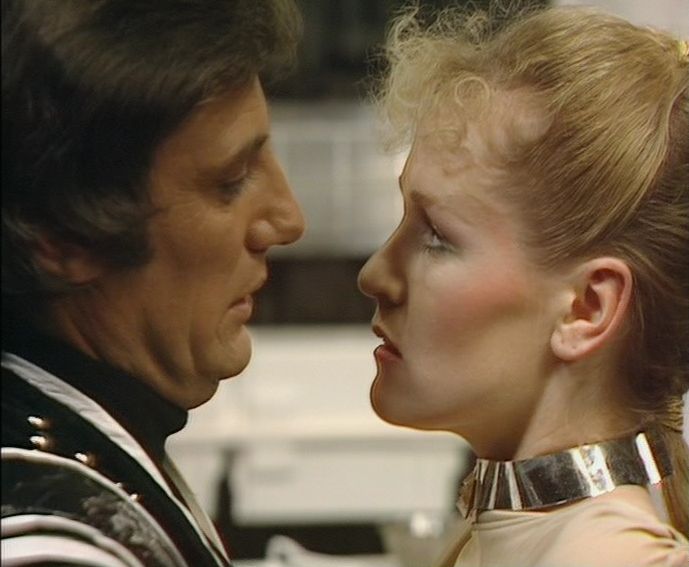
Tarrant spends his time making eyes at Zeeona, although just as Zukan is obviously a wrong-‘un, so it’s clear that Tarrant and Zeeona’s love is going to be somewhat on the short-lived side.  Her death is an interesting moment.  After learning of her father’s treachery she attempts to undo some of the damage he’s caused, but a flesh-eating virus puts paid to her.  Dayna tells Tarrant that she died because she took her glove off – was this an accident or did she, wracked with guilt about her father’s actions, decide to commit suicide?  Either possibility is valid.  Bobbie Brown may be saddled with a silly haircut but is still rather good as the doomed Zukan.

After a run of disasters, it seems that only one man can unify them, so next time Avon sets out to find Blake.  I wonder if this will be where his luck finally changes?  Hmmmm …….

warlord-02

Blakes 7 – Orbit

orbit-01

A renegade scientist called Egrorian (John Savident) has an offer that Avon can’t refuse – a weapon of incredible power (the Tachyon Funnel) in exchange for Orac.  You possibly won’t be shocked to hear that there’s a catch though ….

After his previous story, Traitor, failed to hit the mark, Robert Holmes certainly bounced back with Orbit.  Maybe one of the reasons why Traitor didn’t work that well was because it was the only one of Holmes’ four B7 scripts that didn’t team Avon and Vila up.  It’s plain that Holmes saw plenty of possibilities in the Avon/Vila relationship – it’s certainly of the reasons why this one works as well as it does.

Holmes’ Doctor Who scripts tended to feature double-acts, a tradition he carries on here – apart from Avon and Vila there’s also Egrorian and Pinder (Larry Noble).  Egrorian is the sort of role that’s a gift for an actor of a certain type – i.e. one who’s not afraid to go soaring over the top.  John Savident was clearly that sort of actor.  It’s a grotesque (in a good way) turn, totally lacking in subtlety but with the occasional hint of menace to counter the fairly flippant dialogue.

This must have been a fairly cheap show to make, with just a couple of new sets and only two guest stars.  But it never feels like a bottle show or something cobbled together on the cheap because the end of season was fast approaching and the money had run out.  Holmes concentrates on just four characters – Avon, Vila, Egrorian and Servalan (yes, of course she’s lurking about) – and gives them some sparkling dialogue, such as here when Egrorian lays eyes on Avon and Vila for the first time.

EGRORIAN: Surprisingly, you don’t look like the ruthless desperados of legend. But you have, of course, killed a great many people.
AVON: Only in the pursuit of liberty.
EGRORIAN: “O Liberty! O Liberty! What crimes are committed in your name!” Do you know the source?
AVON: No.
EGRORIAN: No, why should you? Natural leaders are rarely encumbered with intelligence. Greed, egotism, animal cunning, and viciousness are the important attributes. Qualities I detect in you in admirably full measure.

Larry Noble, as Egrorian’s assistant Pinder, has very little dialogue, but he still manages to catch the eye.  Noble manages to suffer incredibly well and his hangdog expression immediately engenders sympathy from the audience, something which is increased after we see how badly Egrorian treats him.  There’s a certain cruelty and sadism that runs through Holmes’ Doctor Who scripts which is also present here – best demonstrated after Pinder beats Egrorian at chess.  Egrorian doesn’t like this and proceeds to twist Pinder’s arm.  “Can you feel your extensor muscle tearing? Can you feel your humerus grating against your radius? Hmm.? Just a little more… a little more… now you’re feeling it, aren’t you?”

It’s more than a little unpleasant, but it helps to shine a light on their dysfunctional relationship.  Quite how they’ve entertained themselves during the last ten years (they’ve been in exile together) is probably best left to the imagination, although Egrorian’s comment that “naughty boys must be punished” offers a world of possibilities.

Hey, here’s a surprise – Egrorian plans to double-cross Avon and the others because he’s secretly working for Servalan.  Bet you didn’t see that coming.  So far, so familiar, but Holmes continues to give Savident some choice dialogue and he doesn’t disappoint.  Here, Egrorian outlines to Servalan his vision of a shared future.  “A connubial partnership, Servalan. Why not? Alone you are formidable enough, but together we would stand like mountains.”  Jacqueline Pearce also seems to relish the chance to play something a little different, as we see Servalan ever-so-slightly discomforted by the effusive and fulsome Egrorian.

The key part of the story takes place during the last few minutes.  Avon and Vila are heading back to Scorpio in Egrorian’s shuttle, but there’s a problem – they’ll never make the escape velocity as the shuttle’s carrying too much weight.  Frantically they jettison everything they can think of, but they still need to find another seventy kilos.  Avon wonders what weighs seventy kilos, to which Orac replies that “Vila weighs seventy-three kilos, Avon.”

Paul Darrow’s facial expression after Orac delivers this bombshell is a treat.  He shakes his head ever so slightly, but then seems to pull himself together and goes hunting for Vila.  Darrow’s S4 Avon was not known for its subtlety, and so it proves here, as he goes into “I’m not going to kill you, I’m your friend, honest” mode.  It’s not terribly convincing, so you can’t blame Vila for staying hidden.

All turns out well in the end, Avon stumbles (literally) against the problem – a microscopic fragment of a neutron star, planted by Egrorian to kill them – and is able to get rid of it.  But the damage has been done.  Vila might not have mentioned it to the others, but he now knows exactly how far Avon will go to protect his interests.  It’s a nice dramatic moment for Michael Keating, something of a rarity this late in the series.

This may be a talky, studio-based story, but it doesn’t really get any better than Orbit, thanks to John Savident’s exuberant performance and the way that Holmes skewers the Avon/Vila relationship.

orbit-02

Blakes 7 – Gold

gold-01

Avon is contacted by an old acquaintance called Keiller (Roy Kinnear), the purser of a pleasure liner called the Space Princess.  The Space Princess has a secret cargo – gold, mined from the planet Zerok.  Because it’s travelling incognito there’s very little security, so stealing it should be a doddle – except for one snag.

Before the gold is put aboard the ship it’s processed in such a way that it turns black and is therefore worthless unless you have the computer code which will change it back.  Keiller suggests they tamper with the processing machine on Zerok so that unprocessed gold is loaded aboard the ship instead.  It seems like a foolproof plan, what could possibly go wrong?

Roy Kinnear is great fun throughout as Keiller.  One of those actors who just seemed to generate goodwill from the audience, he plays rather to type as the cowardly Keiller.  Kinnear gives him such a shifty and untrustworthy air right from the start that it seems obvious he’s going to double-cross Avon and the others.  Or is that too obvious?  Since this is a heist tale there’s a number of twists and turns, so when it’s revealed that Keiller used to work for the Federation it’s possible to wonder if this is actually the truth or just more disinformation.

Keiller’s relationship with both Avon and Soolin has some nice comic moments.  He continually refers to Avon as his old friend and Soolin as my pretty one.  No surprises that Avon regards him as no friend or that Soolin is unimpressed with Keiller’s attempts at flattery.

We’re told that Vila doesn’t trust Keiller and wants no part of the scheme.  Michael Keating only has a handful of lines throughout the story, which is slightly strange – although the next episode is more tailored to his talents.  This leaves Avon and Soolin paired together whilst the familiar combination of Tarrant and Dayna also team up yet again.  All four teleport down to Zerok, Avon and Soolin travel down to the bowels of the planet with Keiller, whilst Tarrant and Dayna remain up top, keeping an eye on the guards.

The Zerok processing plant (actually a refuse disposal centre in Poole) is one of those typically industrialised Blakes 7 locations that featured regularly during the first few years of the show.  It gives Soolin a chance to demonstrate just how sharp a shooter she is as she merrily mows down multiple hapless guards.  The combination of Avon and Soolin is a good one – a slight pity it wasn’t seen on more occasions – his brain and her brawn (as well as the fact they both have a sardonic sense of humour) appeals.

It’s later revealed that the Space Princess is a fake cruise liner – it travels straight from Zerok to Earth whilst the passengers (all drugged up) are shown pictures of various sights which, in their chemically altered state, they believe to be real.  Whilst Avon busies himself with the gold, the others pose as passengers.  Stephen Pacey seems to be enjoying himself as a doped-out passenger.

Although Roy Kinnear provides the story with a veneer of comedy, underneath it’s quite a dark little tale.  The bodycount is quite high (at least a dozen or so guards are killed before the gold is stolen).  It’s also fair to say that the ending doesn’t really come as a great surprise – Servalan turned out to be behind the plan right from the start and turns up to taunt Avon.

SERVALAN: Congratulations, Avon. I see you worked it out.
AVON: Keiller was once on the personal security staff of the president of the Federation. That just had to be you. It wasn’t hard to work out. But it wasn’t meant to be, was it?
SERVALAN: I don’t know what you mean.
AVON: You wouldn’t leave me a clue like that. Not unless you really wanted to. You knew I wouldn’t be able to resist it. You planned everything, every move, you even knew that Keiller would disobey you, and you hoped that I would trust him because of that.
SERVALAN: Very good.
AVON: I almost did trust Keiller. When I found out it was you, I knew I was safe from him, at least. After all, he has nothing to gain from obeying you. Only in the end, it occurred to me that he might possibly imagine that you would keep your side of the bargain and pay him his reward instead of just killing him. He doesn’t know you as well as I do.

It’s the only time that Avon and Servalan have a meaningful face to face conversation during series four. Avon’s final reaction to their dismal failure is characteristic – he laughs hysterically whilst the others look on stony-faced. Another sign that Avon’s losing it? It could have been worse I guess, they all could have had a giggle, which thankfully only happened on a few closing scenes (Breakdown is probably my least favourite example of this).

Not quite the best that series four has to offer, but Kinnear is entertaining and the story is solid enough.

gold-02

Blakes 7 – Sand

sand 01.jpg

Servalan has elected to join a Federation mission dispatched to the sandy planet Virn. Together with Reeve (Stephen Yardley), Chasgo (Daniel Hill) and an unnamed assistant (played by Peter Craze), she intends to find out what happened to a research party last heard from some five years ago. They find the going treacherous after their ship crash-lands a fair distance away from the research base.  Avon is intrigued to learn that the Federation, after all this time, has decided to send a ship to investigate this most inhospitable of planets.  He decides that if there’s anything of value on Virn, they should have it rather than the Federation. It quickly becomes clear that the sand has a form of sentience as strange things start to happen ….

Like Tanith Lee’s previous script, Sarcophagus, Sand is something of a bottle show which delights in putting the regulars under the microscope.  Most interestingly, we see a much more human Servalan than usual.  The reason for her emotional state becomes clear after it’s revealed she’s come to the planet in order to find out what happened to Don Keller (Jonathan Gaunt).  Keller, via a recording, is the first voice we hear.

I know a land beyond the heart of time. The sun never comes there. No moon ever shines. And man, a grain of sand, nameless and lost, blows with the dust. I apologise, HQ, but that’s what this place makes me think of. The sun never comes here. Just sand and mist. Virn, the green planet. Never rains here either. There’s something strange. Not just the way the ship was affected when we came down. Not just the way all the machinery plays up. Not just the way we’re dying. You still listening, HQ? This is Don Keller, remember me? On Virn, where we have a plague on our hands. On my hands. So when do I get something from you?

Unlike Sarcophagus, this story boasts a guest cast – although not all of them make it to the final reel.  Unsurprisingly, Peter Craze’s unnamed assistant is the first to bite the dust (or sand) with Reeve following shortly after.  Yardley has the most substantial guest-star role, although Investigator Reeve isn’t a terribly interesting character – he’s an alpha male who takes a shine to Servalan (her disinterest is total and cutting).  It’s hard to command authority when you’re dressed in a shiny silver spacesuit, but Yardley does have some good lines and makes the most of the role.

The deaths of the ship’s crew enables the narrative to be split in two – Servalan and Tarrant remain isolated on Virn whilst Avon and the others are also trapped, but on Scorpio.

If Servalan was going to be locked up with anyone then Avon would have been the obvious choice.  But I’m glad that Lee avoided the obvious, since Sand gives Stephen Pacey a long overdue chance to do a spot of acting.  Throughout series three Tarrant was incredibly smackable, but this hasn’t been a problem during series four (mainly because Tarrant has been underwritten so badly that he’s hardly contributed at all).  Sand enables Tarrant to step out of Avon’s shadow and Pacey doesn’t disappoint.

Here, for example, he posits a reasonable explanation for the current state of affairs.  This is a rare occurrence – normally Avon would be the one with all the answers.  “The trace of life on Virn was the sand. Some emanation from it affects the atmosphere, even the magnetic fields of the planet, and causes the rest of the trouble: ships crash, instruments fail, nobody can protect himself. And when the sand comes into contact with a human body it sucks out the cellular energy, sometimes fast, sometimes slowly. I imagine that depends on how much sand is in the vicinity. But that’s what Keller’s plague was.”

Tanith Lee serves both Tarrant and Servalan well, delivering up some very quotable dialogue.  This is how Tarrant describes his room-mate.  “I’d say you’re possibly the most unscrupulously venomous woman in the galaxy. Being shut in here with you is rather like being locked in a cage with a panther: a black cat with large golden eyes and long silver talons.”  Servalan’s rejoinder is that she’s just the girl next door! Tarrant’s next line is a good one too.

Lee also takes the opportunity to fill in a few blanks, such as how Servalan escaped from the Liberator at the end of Terminal, but Servalan’s revelation that Don Keller was the only man she ever loved is the stand-out moment from this part of the story.

SERVALAN: Don Keller, he was my lover. I was eighteen.
TARRANT: He’s the reason you’re here.
SERVALAN: He left me. I grew up. Power became my lover. Power is like a drug. It is beautiful. Shining. I could destroy a planet by pressing a button. I loved him.

Do we believe her? She seems genuine, but we’ve seen before how Servalan is able to manipulate others with ease, so it’s possible that self preservation made her adopt the pose of a victim. That’s what Tarrant claims to believe at the end (although is he only saying this to appease Avon?)  Whatever the truth, Jacqueline Pearce impresses here – which proves that given good material, the character can still be as compelling as she once was.

If Tarrant and Servalan are having an interesting time down on the planet, then so are Avon and co up on Scorpio.  Vila is reduced to a drunken state (not the first time this has happened).  Michael Keating does drunk acting very well, but it’s rather an obvious choice – although the mention of Cally strikes a nerve.  “If I died it’d be a real joke. Who’d care? Who cared about Cally?” Orac’s acting very oddly too, telling everyone that he loves them!

Avon’s enjoying himself and so is Paul Darrow.  Avon has a theory that the sand eliminates the weak and keeps the strong alive in order to maintain a healthy breeding stock.  “Presumably the sand up here has compared Vila’s wits and stamina with mine and concluded that I am the dominant male. On the herd principle therefore, it decided that Vila was superfluous and it could kill him. You two, of course, would have been allowed to live”.  Vila’s not dead of course, but Avon doesn’t seem terribly unhappy at the thought of a ménage à trois with Dayna and Soolin ….

A solution is eventually found and Tarrant returns to face a less than warm welcome.  He’d allowed Servalan to escape, which is bad enough, but his intimacy with her disgusts Dayna (understandable since Servalan killed her father).  This is the sort of theme that would have been an interesting one to develop, but unfortunately B7 wasn’t the sort of series for complex character arcs, so as the credits roll a big reset button is hit and the matter is never mentioned again.

Haunting and well-realised, Sand is a memorable story.  Not quite as compelling as Sarcophagus maybe, but it’s still several cuts above the norm.

sand-02

Blakes 7 – Games

games 01.jpg

Avon’s hot on the trail of Feldon crystals, one of the most precious minerals in the galaxy, but it’ll come as no surprise to learn that so is Servalan.  Both the Scorpio crew and Servalan end up on the mining planet Mercol 2, which is run by the duplicitous Belkov (Stratford Johns).  Suspiciously low production yields and a tendency for members of the survey team to die in strange and unexplained ways are two reasons why Servalan is interested in Belkov, but he attempts to broker a deal – promising to deliver up the Scorpio crew in exchange for his life.

Games is another B7 tale which boasts a heavyweight guest star – in this case Stratford Johns.  Elsewhere on this blog I’ve waxed lyrical about how good Johns always is in Softly Softly: Task Force and indeed he’s such a fine actor that he even convinces as a frog with a funny hairdo in the Doctor Who story Four To Doomsday.  But he’s got his work cut out here as Belkov isn’t a character of great depth.

The basic concept of the story is sound enough though.  Belkov enjoys a good double or triple cross and he’s also an expert games player, so with the aid of his computer Gambit (voiced by Rosalind Bailey) he’s able to set multiple traps for the unwary.  There’s a similar vibe with Belkov/Gambit as there was between Ensor/Orac, only not as well defined.  Gambit seems to lack Orac’s free will and argumentative nature, but the ending suggests that Gambit was more than the logical machine she appeared to be, although this isn’t something that’s really developed.

Servalan once again does little of note.  Had Jacqueline Pearce been held back for three or four significant appearances per year then I think it would have benefited the character enormously.   There’s still the odd writer – such as Tanith Lee in the upcoming Sand – who are able to do something interesting with her, but that one’s pretty much the exception now rather than the rule. Having said that, Servalan’s first appearance is memorable – striking a pose whilst masked Federation troopers (who we haven’t seen very often recently) mass behind her.  But it’s odd that she never meets Avon or the others, meaning that her role could have been played by any Federation officer.

Vivienne Cozens’ direction is very sure-footed – there’s some nice film work and the odd gruesome death (one of the Federation troopers is reduced to pink dust after falling down a mine-shaft).

Vila gets to be a little more proactive than usual – rescuing Tarrant, Dayna and Gerren (David Neal).  Gerren’s been brought along for the ride by Avon, who’s blackmailing him into helping them (nice chap, Avon). It’s characteristic of Avon that he secretly made contact with Gerren, meaning that the others were none the wiser until he deigned to tell them what was going on. Neal’s a good actor, although he’s hamstrung with a painfully obvious fake beard. But it’s a nothing role, since Gerren doesn’t really bring any knowledge to the table that Avon didn’t already possess.

Games is a bit of a runaround but things pick up towards the end when Avon, Vila, Tarrant and Soolin play Belkov’s endgame.  The prize – should they live – will be the Feldon crystals, but first they all have to win their various challenges.  Conveniently, each game is suited to one of them (Soolin excels at the sharp-shooting challenge whilst Tarrant tackles a flight simulator with ease).  This section of the story reveals that the episode title has something of a double-meaning as eventually Avon realises that there won’t be any crystals at the end of their quest.  “There aren’t any damned crystals. There never were any damned crystals. They’re like everything else on this ship: a game.”

With no crystals and Belkov dead after Gambit initiates a self-destruct sequence, Games is a typically downbeat S4 yarn where everybody loses.  It should be a better story than it actually is, but some parts feel a little perfunctory (especially the games section at the end) which is a problem. And even Stratford Johns’ freewheeling performance can’t hide the fact that the plot is fairly pedestrian (the Scorpio crew get captured, escape, get captured again, etc).

But there are compensations – the location may be a quarry, but it’s a very nice one. And there’s a number of rather impressive explosions which are certainly more substantial than the standard BBC bangs of the time. It’s this sort of visual sheen which helps to make Games an above average S4 entry.

games 02.jpg


Blakes 7 – Assassin

ass-02

Assassin opens with Vila crowing to the others about the following message he’s intercepted from Servalan.  “Utilizer to Cancer, Utilizer to Cancer. Domo the ninth, five subjects.”  This allows Avon to glower and mutter “Servalan!” in a way that only Paul Darrow can, leaving the others wonder what on earth the message can mean.

Luckily it doesn’t take them long to work it out.  Domo is a planet, Cancer is an assassin who kills people for a great deal of money and the 9th must be a date.  And there’s five of them … so it looks like Servalan has hired Cancer to bump them all off.  Why she would want to go to all this trouble is a slight mystery, since Avon and the others haven’t exactly been striking many blows for freedom recently, but no matter.

Domo is a planet colonised by a gang of space pirates who capture unwary space travellers and sell them into slavery.  Avon elects to pose as one such unfortunate, which gives us an opportunity to marvel at Paul Darrow’s ability to wring pathos and emotion out of even the most innocuous lines.  Churlish folk might call this over-acting or simply bad acting, but I’ve always found there’s something compelling in Darrow’s S4 interpretation of Avon – a man constantly on the verge of a nervous breakdown.

Avon might start off by acting weak and feeble, but the goading he receives from Benos (Peter Atard) means that he can’t resist showing his true colours and so knocks a few of the pirates about for fun (I think it was the taunt about being skinny which pushed him over the edge).  Vila, watching from a safe distance, is asked by Soolin if all had gone well.  “Oh yes, wonderful. First they beat him to a pulp, then they dragged him off”. The unconvincing facial hair sported by the pirates is an early episode treat.

ass-01

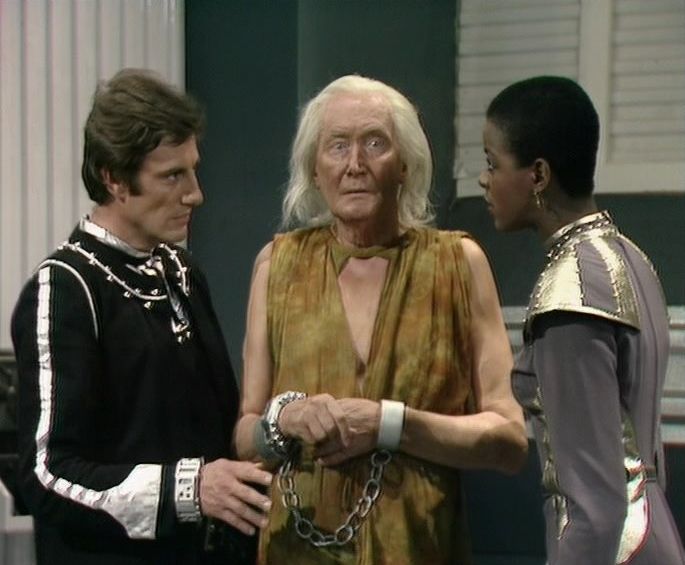
Avon’s thrown in a cell with an old prisoner called Neebrox (Richard Hurndall).  He tells Avon that Servalan is here and that she purchased a member of an entertainment troupe (a plot-point which will become important later on).  As probably everybody knows, this appearance led to Hurndall being cast as the First Doctor in The Five Doctors.  It’s easy to see why, with his long hair he does have more than a touch of Hartnell’s Doctor about him. Hurndall was always an actor of depth and dignity and his presence helps to lift the story no end.  Alas, the same can’t really be said for Verlis (Betty Marsden), the slightly tipsy slavetrader in charge of the slave auction.

The auction part of the story is rather … well, it’s just rather.  The notion of Avon being paraded in chains before Servalan no doubt pleased a section of the audience (and I’m sure led to numerous fan-fiction sequels) but the actuality is a little embarrassing. The various bidders look ridiculous, all clothed in fancy dress it seems (plus fake beards of course). Servalan wins the bid for Avon, telling him that he now needs to refer to her as mistress. That was a late-night spin-off show just waiting to happen.

We can now bid the slavers a fond farewell as Neebrox comes up trumps and he and Avon hot-foot it back to Scorpio. This leads us into the second (and better) part of the story as Cancer’s ship is tracked down and they get to grips with the galaxy’s finest assassin.  Everything seems rather straightforward at first- they find a ship which contains Cancer (John Wyman) and a young woman called Piri (Caroline Holdaway).  Piri might be a rather limp lettuce but she’s invaluable in helping Avon and Tarrant overpower Cancer. Tarrant’s fight with Cancer is a hoot.

After being rather anonymous during her first few stories, Soolin has more recently developed a sharp and cynical sense of humour, which Glynis Barber plays very well.  Soolin quickly becomes irritated with the weepy Piri and gives her a well-deserved slap.  Well done that woman! Tarrant is rather upset with this, but Soolin’s comeback line is rather good. “There are two classic ways of dealing with an hysterical woman. You didn’t really expect me to kiss her, did you?”

Tarrant isn’t well served by the script, turning into a rather gauche schoolboy whenever Piri’s around.  And since Piri is really Cancer, that makes him look more than a little foolish.  Yes, the mysterious assassin Cancer is a woman, who decided to masquerade as Piri whilst Servalan bought a slave (remember the earlier plot point) to pose as Cancer.  It’s fair to say that Caroline Holdaway’s performance has come in for a little bit of stick over the years and it’s easy to see why.  True, the hysterical Piri isn’t the easiest role to play, but Holdaway never really convinces as the ice-cold killer either.

But although her casting is a bit of a problem, the concluding half of the story, set aboard Cancer’s ship, is still strong – David Sullivan Proudfoot elects to keep the lighting low, thereby creating a nice sense of tension.  Generally the direction is solid (this was his third and final B7 story following Traitor and Stardrive) although he’s a little too fond of Star Wars style screenwipes ….

Rod Beacham’s sole script for the series, Assassin is another story which signifies that after a shaky start series four was finding its feet.  This was Beacham’s debut as a television script-writer (he’d previously been an actor) and he would go on to contribute to a number of series, most notably Bergerac, before his death in 2014.  For a television debut, it’s a very solid effort.

On the negative side, Assassin would have worked better without Servalan, who doesn’t do a great deal (mind you, there are quite a few stories we can say that about) but thanks to a nice guest turn from Hurndall and some sharply scripted lines for Glynis Barber it’s still a good ‘un.

ass 03.jpg

Blakes 7 – Animals

animals-01

Long regarded as one of the worst episodes of Blakes 7, I have to confess that my latest rewatch of Animals has found me in a generous mood.  But when you start with low expectations (it’s an Allan Prior script for goodness sake) the only way is up …

Now that Avon’s gang has a base there’s no need for all of them to venture out on each adventure, which explains why only Tarrant and Dayna are aboard Scorpio as the episode opens.  The downside to this is that we don’t see Avon, Vila and Soolin until we’re about twenty minutes in, but the opening part of the story is undeniably a good opportunity for Josette Simon, who gets a series of lengthy two-handed scenes opposite Peter Byrne (playing Justin).

We’re told that Justin was one of a number of specialist tutors who helped to educate the younger Dayna.  Given that Dayna’s father was a rabid isolationist, this is rather hard to understand – the later revelation that Justin was working for the Federation at the same time is another slight head scratcher.

If Animals is remembered for anything then it’s for the animals.  Mary Ridge makes no effort to hold them back for a shock reveal (we first see them head-on when the episode is only two minutes old).  I guess that when you’ve got a group of actors standing around in such ridiculous costumes you might as well just bite the bullet and show them in all their, well, glory.

Rather like the Space Rats in the previous story, the animals are a major problem.  If their design had been a little less comic then I’ve no doubt the story would have a slightly higher reputation.  It’s also interesting that there’s another obvious parallel with Stardrive – both stories feature an ex-Federation scientist working in secret on an obscure planet.  A pity Chris Boucher couldn’t have jumbled the running order up a little ….

With Tarrant limping back to base in the damaged Scorpio and the others yet to make an appearance, it’s Dayna who has to carry the narrative onwards.  Her relationship with Justin is an odd one which has attracted a certain amount of debate over the years.  There’s off-hand comments on both sides to suggest that they previously had a bond which went beyond teacher/pupil boundaries, which given Dayna’s age at the time strays into slightly uncomfortable territory.  Or was it unrequited love back then, which is now suddenly flourishing?  Either possibility is valid.

Before teleporting Dayna down, Tarrant offhandedly refers to Justin as a mad scientist.  Dayna shrugs this off, but his genetic experimentations on the animals certainly seems to cross the bounds of acceptable behaviour. She asks him why.

DAYNA: Look, what was the object of the work? It must have had some object, some war object if the Federation backed it and built this place.
JUSTIN: The war object was to create a species, not necessarily human, that could go into areas heavy with radioactivity and act as shock troops. The federation had suffered losses of up to sixty percent front line troops. Now just think what a few squads of radiation proof space commandos could do.
DAYNA: Oh, I’m glad you never succeeded. It was a horrible idea.
JUSTIN: No, it was justified by the times.

It’s all slightly heavy-handed, but it taps into similar debates regarding animal experimentations which have raged for decades. Dayna’s reaction is interesting – she starts off appalled but slowly changes her mind.  Is this because of her lingering respect and love for Justin or does she see a way that his research could be used by Avon and the others in their fight against the Federation?

Compared to Doctor Plaxton in Stardrive, who barely had a handful of lines to outline her worldview and motivations, Justin is generously given several lengthy speeches in order to present his case. He says that his experiments on both humans and animals (which included painful brain grafts) now distress him, but he has to carry on. “I’m trying in a way to make sense of it all, trying to get something good out of it all. Don’t you see that? If this discovery simply goes for war purposes, to kill, then it’s all been in vain.”  His desire to continue the work so that eventually he can achieve something good out of the pain, misery and suffering he’s caused is logical, even if we don’t necessarily have to agree with it.

Rather unexpectedly, Servalan’s lurking about and becomes interested in Justin’s research. She interrogates the only man left alive who knows about it – Ardus (Kevin Stoney). You have to feel a little sorry for Stoney, he appeared in two different episodes of B7 playing rather small and nondescript parts. And both were scripted by Allan Prior too, which seems a tad unfair!  Although it should come as no surprise to learn that Stoney’s cameo here is played very well – his character may exist simply as an infodumper, but Stoney was too good an actor not to impress even with a very minor role.

Servalan’s (or Sleer’s I should say) ship is piloted by a female crew who apper to be Mutoids – although if so they’ve undergone something of a glam makeover. She also has several male subornates on hand – who are very much the type we’ve seen so often in the series before. But there’s no point in taking too much interest in them as I’m sure they’ll have been replaced next time with almost identical characters.

Servalan’s manipulation of Dayna – first torture and then brainwashing to hate Justin – is ruthless even by her standards.  Josette Simon does seems a little stiff when she’s playing brainwashed Dayna, but luckily these scenes don’t go on to long.  The ending is a typically bleak late period B7 one – everybody loses, but Dayna loses the most.  Possibly Josette Simon might look back on her hysterical sobbing with a tinge of regret (that is if she ever rewatches her B7 episodes – which I guess is rather unlikely) but apart from her over emoting and the silly looking animals, this one stands up pretty well.

Peter Byrne, who’d played Andy Crawford on Dixon of Dock Green for twenty years, makes the most of a very substantial guest role, whilst the peerless Kevin Stoney livens up proceedings for a few minutes.  All in all this was pleasantly entertaining.

animals 02.jpg

Blakes 7 – Stardrive

star 01.jpg

Stardrive opens with Avon deciding to tangle with an asteroid.  He tells the others that if they want to keep Scorpio operational “we have to visit Altern Five in order to recover selsium ore to make fuel crystals. Hitching a ride into the Altern system on that asteroid is the only way we’re going to get past any Federation patrols and within teleport distance of Altern Five.”

Everybody else considers this to be a very bad idea indeed, but as usual Avon gets his way.  It’s a sign of things to come that Avon’s proven to be badly wrong, since all that happens (via some fairly shaky modelwork) is that Scorpio gets badly holed and so ends up in an even worse state than before.  The first ten minutes or so are somewhat superfluous to the rest of the story, partly existing to demonstrate two interesting character points.  The first, as we’ve seen, is that Avon is liable to shocking lapses in judgement and the second concerns Vila’s skills at manipulation.

After the ship is holed and all looks bleak, it’s not surprising to see Vila staggering about with a flask of alcohol, clearly more than a little merry.  In his drunken state he blurts out a possible solution, which makes perfect sense to Avon, who rushes off with Tarrant to apply the fix.  But Vila wasn’t drunk at all, he was simply pretending, the crafty devil!

The most important reason for this section of this story is that it allows a stranded Scorpio to observe three Federation pursuit ships apparently blowing up.  But they didn’t blow up, they were destroyed by a small craft travelling at standard by twelve – which is impossible.

Very quickly Avon realises that Doctor Plaxton (Barbara Shelley), formally head of the Federation Space Drive Research Centre, must have developed a new Stardrive.  Oh and she’s teamed up with the Space Rats who, according to Vila, “live for is sex and violence, booze and speed. And the fellows are just as bad.”

It’s impossible to ignore, the Space Rats look absolutely ridiculous even by Blakes 7 standards.  Goodness knows who thought their look was a good one, but it rather negates the little menace they possessed.  Apart from their dress sense their characters aren’t terribly well drawn either.  This possibly isn’t surprising since they’re supposed to be hedonistic speed-freaks who love to live life on the edge, but at least their leader, Atlan (Damian Thomas), is a little different.

He’s not a Space Rat, but he dresses like one and the others accept him as their leader because he’s able to give them what they want (the opportunity to pilot fast spacecraft and kill people I guess).  There was potential for Atlan to have a more interesting character motivation than the others but this opportunity is rather frittered away.  Thomas’ rather mannered performance doesn’t help either.

Doctor Plaxton is a rather pallidly drawn character too.  We learn that she’s no longer a member of the Federation, hence the reason why she’s teamed up with the Space Rats (they scour the galaxy providing her with the raw materials she needs in order to continue her work).  But it’s never made clear why she wants to complete the Stardrive.  The scientific challenge or because she plans to sell it and make a fortune?  Your guess is as good as mine.

Avon sends Dayna and Vila down to investigate, but it quickly becomes obvious that they’re simply diversions – the others land Scorpio and launch a second front.  Avon’s callous disregard for the others couldn’t be clearer – he’s hoping and expecting that Dayna and Vila will get captured, which will make his job of pinching the Stardrive a little easier.  And if they get killed, well that’s just tough luck.

Part of the problem with this part of the story is that whilst Dayna and Vila are already inside the base, tangling with the Space Rats, the others – Avon, Tarrant and Soolin – are some distance away.  And the three of them seem to move so very slowly, giving proceedings a rather lethargic air.  The scenery – a typical quarry in winter – isn’t terribly appealing either.

Vila’s done his best to big up the Space Rats but frankly they’re rubbish and Avon’s easily able to nab the Stardrive and make his escape.  Indeed, if they hadn’t been there at all then the story wouldn’t really have suffered (and maybe might be a little better regarded).

Doctor Plaxton’s returned to Scorpio with the others, although it’ll come as no shock to learn that she doesn’t last very long.  Just as there was no need for Ensor to stick around once Blake and the others had Orac, so we can wave goodbye to Doctor Plaxton now that the Stardrive is fitted.  But the manner of her death is another shocking example of Avon’s single-mindedness.

Doctor Plaxton volunteers to fix the Stardrive into place and Avon elects to fire the motors as soon as the final connection is in place, meaning that the unfortunate Doctor Plaxton ends up rather dead.  Avon does say that she’s dead either way, although it isn’t quite clear what he means by this.  After it’s over, Avon’s already put her out of his mind, saying “who?” when Dayna mentions her name.

A lack of characterisation (the Space Rats and Doctor Plaxton) means that Stardrive is rather disposable.  Better motivations might have made this a more compelling story, but as it is it’s just another episode where the regulars mooch about in a quarry.

star-02

Blakes 7 – Traitor

traitor

The Federation is beginning to expand agaim and Avon has decided that the planet Helotrix holds the key.  The native species, the Helots, are once again Federation members after a long period of resistance and Avon is keen to find out why their resolve crumbled so quickly.  Dayna and Tarrant teleport down to the surface but quickly lose contact with Scorpio.  The arrival of Federation Commissioner Sleer further complicates matters ….

Traitor is the most anonymous of Robert Holmes’ four Blakes 7 scripts.  Lacking the flamboyant characterisation of Gambit and Orbit or the rock-solid narrative of Killer, it’s simply there – solid enough, but a little uninspiring and never likely to be anybody’s favourite.  There’s some nice dialogue, but maybe Holmes felt straightjacketed by the various story elements he was required to include (the pacification drug Pylene-50 which becomes a running theme and Commissioner Sleer, who turns out to be, shock horror, Servalan).  It’s also a pity that his original title – A Land Fit For Helots – was rejected in favour of the descriptive, but dull, Traitor.

Avon’s transformation into Blake pretty much starts here – he suddenly decides to take the fight to the Federation.  After spending the first two series sniping at Blake from the sidelines for exactly this sort of gung-ho approach, it’s an unexpected move, although there are several possible reasons.  The boring real-life possibility is that since series three had been rather aimless, reintroducing the Federation as a tangible enemy helps to give the show a more cohesive feel.

There’s a more interesting fictional possibility though – Avon’s character is slowly being subsumed by Blake’s, meaning that he’s turning into a carbon-copy of his former colleague.  To support this theory, the final episode – Blake – provides us with plenty of evidence that Avon’s obsession with Blake is colouring his actions.  Can’t live with him, can’t live without him ….

There’s intrigue aplenty on Helotrix, although the downside of this is that the regulars, especially Avon and Vila, are rather sidelined.  Dayna and Tarrant have more to do, but Traitor is really concerned with the various squabbling factions who are jockeying for position on the planet’s surface.

Colonel Quute (Christopher Neame) and the General (Nick Brimble) are in charge of Federation operations.  They’re an odd couple, to put it mildly.  It’s easy to tell that Quute is a baddy – he’s got a scar down his face and an eyepatch (two dead giveaways).  The General doesn’t have any such facial embellishments, but he is caked in make-up.  Both also have uniforms which sport the most amazing shoulder pads.

This may all sound fairly unpromising, but Neame and Brimble are good enough actors to be able to transcend the fact they look faintly ridiculous.  They’re also aided by Holmes’ script, which isn’t content to paint them as simply another couple of faceless Federation killers.  The General (he doesn’t seem to have a name) is a military bore, forever droning on about battles from the past, meaning that Quute is forced to feign politeness on a regular basis.

GENERAL: Do you remember the Fletch expedition of twenty-nine?
QUUTE: No, I don’t think I do, sir.
GENERAL: Fletch used gas, against the Wazis. Hmm. Complete massacre, bodies everywhere. Took dinner with his officers that night, suddenly the Wazis came over the wall, butchered the whole expedition. Seems the Wazis are gill breathers – they can lie dormant for days.
QUUTE: Ahh, that’s very interesting sir.

Just before this, the General mentions that the best way to deal with these rebel types is with a dose of the cold steel. It’s very hard not to think of Corporal Jones ….

Star Major Hunda (Robert Morris) leads the rebels, but frankly he’s rather dull (as are his grimy cohorts). By a staggering coincidence, Tarrant and Dayna teleport down right beside him – which means that he’s able to fill them both in on the plot. Handy that.

Forbus is a cut-price Davros.  He looks a little like Peter Sellers (or possibly Lewis Fiander in the Doctor Who story Nightmare of Eden) and he’s there to explain to Dayna and Tarrant all about Pylene-50. His appearance suggests that the budget was running rather low, although there are also signs of penny pinching elsewhere. The Federation HQ features some very familiar-looking panels (if you watch far more Doctor Who and Blakes 7 than is healthy that is) as well as flashing disco lights which I assume are supposed to represent power lines. The unconvincing studio grassy knoll is at least lit quite low and covered in mist.

The return of Servalan (or Sleer as she’s now calling herself) is odd.

A few lines of dialogue confirm that the Federation is now under new management and those loyal to Servalan have been executed. This makes the idea that she’d have assumed another identity just about feasible, but it’s strange that she’s made no effort to disguise herself, meaning that everywhere she goes there’s the risk she’ll bump into someone who’ll recognise her. She was the President for goodness sake, it’s a safe bet that most people would have a fair idea what she looked like.

This happens here, as the new puppet leader Practor knew Servalan of old, which means he has to die. For some reason the story attempts to keep her presence a secret until the end, but earlier on her voice (albeit distorted) was heard, so I doubt many were shocked when she did turn up in the flesh.

Although the return of Servalan is a non-surprise and the rebels aren’t terribly interesting, thanks to Holmes’ dialogue for Quute and the General plus the location filming (I’m a sucker for a nice quarry) this isn’t too bad at all.

traitor 02.jpg

Blakes 7 – Power

power 01.jpg

Power opens with Avon being chased by some hairy tribesmen.  I don’t know about you, but whenever I see hairy tribesman in Blakes 7 my heart sinks a little – it suggests that the story is going to be a little disappointing.  And since this one was written by Ben Stead it’ll be no surprise to learn that we’re in for fifty minutes of dodgy sexual politics.  But it’s by no means all bad as Stead, for once, doesn’t always go down the most obvious routes.

Gunn-Sar (Dicken Ashworth) is the leader of the Hommicks and he wastes no time in introducing himself to Avon.  “I am Gunn-Sar, chief of the Hommiks. I rule by right of challenge, which means I’m the biggest, toughest, meanest son of a Seska on this planet.”  It doesn’t take long before you realise that there’s an air of mockery about Gunn-Sar.  He knows it and the others know it too.  Ashworth is clearly having fun with a role that’s a little bit more interesting than the male chauvinist leader of a hairy tribe that it first appeared to be.

Apart from Nina (Jenny Oulton), the Hommicks appear to be a totally male enclave whilst the Seskas are entirely female.  We therefore see a battle of the sexes play out which initially paints the Hommicks as oppressors and the Seskas as victims, although the truth is a little more complicated.  The revelation that the Seskas are captured and operated on in order to make them compliant breeding stock is somewhat horrific (as is the fact that any girls born are left out in the wilderness to die).

This is odd though.  If most of the girls are killed immediately after they’re born it stands to reason that eventually the Hommicks will die out.  We later learn that Nina is Gunn-Sar’s woman, as it were.  So what about the rest of the Hommicks, don’t they want a little female company as well?  There’s more than one answer to this, but I don’t think we’ll go any further down that road ….

We seen an operation being carried out – by Nina – which poses another question.  The Hommicks appear to be primitive, but they’re surrounded by advanced technology.  This becomes a little clearer after Avon runs one of Gunn-Sar’s men, Cato (Paul Ridley), to ground in a computerised observation room.  Avon realises that Gunn-Sar is ignorant about many things, including this room.

CATO: He thinks we have scouts posted everywhere and runners.
AVON :Impractical. So why do you keep up the illusion?
CATO: For the Hommicks, the people. If they see this they’ll want more. Hydroponic food, machines, neutron blasters.
AVON: And you don’t have them to give. Because your civilization died a long time ago.
CATO: Yes.
AVON: What killed it?
CATO: A war. Everything was lost. Industry, people. Afterwards, the Council of Survivors decreed that we should start again, from the very beginning. Wooden tools, flint arrowheads, the wheel. Ten thousand years advancement destroyed in a day.

There’s something quite pleasing about this. An apparently primitive society being subtly guided with the help of advanced technology.

power-02

Pella (Juliet Hammond-Hill) is the foregrounded Seska.  All the Seskas have mental and physical powers well in advance of the average woman, but of course she’s no match for Avon.  In a scene that I’m sure had Paul Darrow’s many female admirers swooning, Avon subdues Pella and then explains why he’s better than her.  “You see, Pella, it’s your strength, and however you use it, a man’s will always be greater. Unfair, perhaps, but biologically unavoidable.”  Score one for the male sex then.  But Pella later knocks him out by levitating a computer keyboard (this is probably the funniest thing in the episode, mainly for Darrow’s expression and the way he seems to plummet to the floor in slow-motion) so I think we’ll have to call it a draw.

Dayna later challenges Gunn-Sar to a duel (Avon also did this earlier but was unsuccessful).  Dayna fares better, although she did have the help of the Seskas , even if she didn’t realise it.   By the laws of the Hommicks, Dayna is now leader, although unsurprisingly she doesn’t stay for the coronation.  This raises another question – Dayna has effectively plunged the Hommicks into chaos (the revelation that only a handful of Seskas are still alive is another problem) so what will happen to them now?  Nina suggests they should leave, but do they have a ship?  Avon and the others certainly don’t stick around to see if they need a helping hand, which is a little unfriendly.

Pella turns out to be a wrong ‘un, which I’m sure proves something, although I’m not entirely sure what.  Avon sums up what we’ve learnt.  “You can have war between races, war between cultures, war between planets. But once you have war between the sexes, you eventually run out of people.”  A battle of the sexes script from Ben Stead could have turned out a lot worse, so I guess we have to be thankful for what we got.  Power isn’t perfect but it clips along at a good pace, even if it doesn’t make a great deal of sense.

Right at the end Soolin pops up from nowhere, offering to join the crew.  This is the sort of scene that really should have come at the end of Rescue as it does make you wonder what she’s been doing for the duration of this episode.  No matter, we’ve got a new crewmember and we’ve got teleport facilities (which was sort of what the story was about) so things are looking up.

power-03

Blakes 7 – Rescue

rescue-01

Although series four has its critics, I’ve always been rather fond of it.  For me it’s similar to the previous three series, since it has about the same mixture of good, bad and indifferent stories.  It’s been a couple of years since I’ve given them a spin so will I now be less or more forgiving?  Let’s find out ….

I’m not terribly impressed with the new title sequence.  The planetscape is nicely shot but there’s a distinct lack of menace.  The previous series titles had an element of pursuit and danger, here we just see a ship out for a joyride.  And the new logo appears in a rather muted, half-hearted way (very different from the bold appearance of the previous one).  Oh well, let’s press on.

Avon and the others are still marooned on Terminal.  The weather’s taken a decided turn for the worse, which is good news in one way as the snow makes the location look a little more interesting.  Paul Darrow’s snugly protected against the cold, but Josette Simon isn’t so fortunate.  When they both fling themselves to the ground (after a booby-trapped spaceship left by Servalan explodes) I can’t help but feel that the poor girl’s going to catch her death of cold.  Clearly coats for ladies were short supply on Terminal.

Avon’s worried that Servalan might have also booby-trapped the living quarters where the others are.  You may wonder why she just didn’t kill them all before she left, rather than leave elaborate traps scattered around the planet, but that would have been far too straightforward.  True to her character, Danya’s keen to rush off and warn the others whilst Avon, equally true to type, is more cautious.  Dayna does nip off and is menaced by a thing which actually looks rather good.  Avon deals with it, forcing Dayna to admit that Avon was right once again.

Alas, they don’t all make it out alive as Cally is killed in the explosion (it’s an off-screen death as Jan Chapell declined to return for series four).  Her final word is “Blake!” rather than “Avon!” which is interesting.  Vila has the chance to be a hero by rescuing Tarrant although Tarrant doesn’t seem to be terribly grateful (he later hits the bottle and is found by Avon lying face down in the snow).  Quite why Tarrant has gone to pieces isn’t obvious.

With no ship or escape route, what they need is someone to turn up and rescue them.  And fancy that, just a few minutes later Dorian (Geoffrey Burridge) and his ship Scorpio turns up.  Dorian claims to be a humble salvage merchant, but it’s plain there’s more to him that meets the eye.  Avon likes the look of his ship and decides to commander it.  It has a computer voiced by Peter Tuddenham (although Slave is no Zen that’s for sure) and there’s a space that would be just right for a teleport area.  Of course the fact we haven’t seen any other ship apart from the Liberator with teleport facilities would make it highly unlikely that they’d be able to lash up something from scratch.  That would just be silly, wouldn’t it?

Danya’s impressed with Dorian’s gun collection.  “Each of these is a different mode. You clip them into the basic handgun and you’ve got a weapon for every occasion. Laser, plasma bullet, percussion shell, micro grenade, stun, drug. They’re all here. I worked for nearly a year on a gun like this. I never did get it right.”  They do look a little lightweight though, much more plastic than steel.

We then meet Dorian’s associate, the feisty gunslinger Soolin (Glynis Barber) and after we’ve finished admiring her we can then admire the rather nice modelwork as Scorpio docks at Xenon base.  The destruction of the Liberator meant they could no longer use the same old stock shots that had been seen multiple times over the past three years.  So instead there’s some new footage which will become just as familiar ….

Once on Xenon base, Avon takes command.  He makes it plain that he’ll kill Dorian if he doesn’t do exactly what he says.  Danya succinctly sums him up.  “Beneath that cold exterior, beats a heart of pure stone.”

Things then get slightly odd as Dorian meets something menacing in the depths of the planet.  Burridge has the chance to indulge in some ripe over-acting whilst the thing writhes about in the dark.  I’ve a feeling that if we see it with the lights up it’s not going to look terribly impressive.

Those with a working knowledge of late 19th century literature should be able to work out exactly what Dorian’s secret is.  It’s a nice touch which serves as a decent in-joke for those who are aware of the original source material but the story still makes sense if you don’t.  Once Avon discovers Dorian’s secret, it’s plainly not a coincidence that he begins to speak as if he’s just stepped out of the pages of a Victorian melodrama.

DORIAN: You think I’m insane, don’t you?
AVON: It had occurred to me.
DORIAN: The room exists, Avon. And since I found it I haven’t aged one day. It cleanses me of all the corruptions of time and appetite.
AVON: Appetite?
DORIAN: I can do anything, Avon.
AVON: Most madmen can.
DORIAN: I can indulge any taste, any sensation, any vice I wish and the room …
AVON: Cleanses you.

Thanks to Geoffrey Burridge’s unhinged performance, Rescue is good fun, although a little disposable.  Given the small number of speaking parts it’s a little odd that Soolin didn’t have more to do – since she’s going to be a new member of the gang (although that’s not evident by the end of the story) you’d have expected her to be a little more foregrounded in the narrative.

rescue 02.jpg

The Justice Game – Simply Media DVD Review

7019

Dominic Rossi (Denis Lawson) is a Glasgow-based criminal lawyer with a thriving practice.  At present his attention is scattered in several different directions – the stabbing of an elderly man at a bus stop, an ex-soldier accused of multiple murders and the death of a private investigator whom he’d recently employed.  But he finds that all of these disparate crimes lead to Tim Forsythe (Michael Kitchen), a merchant banker who’s keen that Rossi should cease his investigations.  And since Forsythe has the intimidating Glen (James Cosmo) on his books, it seems that his silence will be rather permanent.

Airing on BBC1 during April 1989, The Justice Game is an efficient four-part thriller from the pen of John Brown (1944 – 2006).  The previous year Brown had written the well-remembered ITV serial The One Game, which featured Patrick Malahide as a manipulative games player.  Brown would go on to contribute scripts to a number of popular series such as Bergerac, The Ruth Rendell Mysteries, Inspector Morse and Taggart.

Denis Lawson (b. 1947) made his television debut in a 1969 episode of Dr Finlay’s Casebook and during the 1970’s was busy working across film, television and theatre.  One of his early film roles, in the original Star Wars (and then its two sequels), would ensure he would always maintain a certain cult status but it would be two very different 1980’s television roles that would establish him more firmly with the British public.  Dead Head (1986) was a BBC serial which attracted a huge amount of newspaper notoriety at the time, although thirty years on it seems rather tame.  The Kit Curran Radio Show featured Lawson as the eponymous radio presenter and whilst not a huge ratings-winner, ran for two well-received seasons.

In addition to Lawson, Kitchen and Cosmo, there’s a host of other quality actors who appear across the four episodes (Diana Quick, Iain Cuthbertson, Russell Hunter, Joss Ackland, Michael Culver and Ceila Imrie).

The first episode quickly establishes Rossi’s character.  He’s a man of contradictions – after a session working out on a treadmill his first thought is to reach for a pack of cigarettes.  We also observe his skills as a lawyer (he manages to get two prominent footballers off an assault charge).  The Amnesty poster on his office wall and his desire to take low-profile cases connected to social justice issues are clear pointers to his values and mindset.  Rossi is in a relationship with Kate Fielding (Diana Quick).  Like him she’s a professional (Kate’s a doctor).

It’s a pity that an actor as good as Russell Hunter exits the story relatively quickly.  He played Sandy Sadowski, a man who had information for Rossi but was brutally stabbed multiple times before he could pass it over.  John Brown is in no hurry to connect all the pieces of the puzzles he sets up, as with four episodes to play with there’s plenty of time to establish these various plotlines.  The well-dressed Tim Forsythe is a man of few words, but several are directed in the direction of Glen who organised the gang that killed Sadowski.

justice-01

Throughout the serial Denis Lawson impresses.  Dominic Rossi’s clearly something of a renaissance man, he’s not only a hot-shot, fast-talking lawyer but he can also belt out a mean rock ‘n’ roll tune (as witnessed at his parents wedding anniversary party).  The choice of Glasgow as the battleground was a good one.  Although the Glasgow-based Taggart had been running for a number of years, the location still offers a less familiar milieu than London. The last episode also makes a quick trip to New York as Rossi trails the money men behind Forsythe. Lurking in New York is Sir James Crichton (Joss Ackland). Ackland is characteristically still and sinister as the spider in the middle of the web.

The late eighties setting, deep in the dying days of Thatcherism, helps to inform the tone of the serial.  At the time Glasgow, like many other cities, was undergoing considerable redevelopment and renovation.  The first episode opens with Rossi taking Kate on a tour of his old house, located in one of the most run-down areas of the city.  But since the house has been demolished, Rossi contents himself with pointing at the bare ground where the various rooms had been.  Displaying a tinge of romanticism shared by many self-made men and women, he regrets the loss.

It’s hoped that something better will take the place of these levelled slums, but the likes of Tim Forsythe seem more interested in generating the maximum amount of profit for the company he works for.  Despite the fact that Forsythe remains a fairly nebulous figure (henchmen such as Glen do all the strong-arm stuff, leaving him distanced from the action) there’s a clear delineation between Rossi and Forsythe.  Rossi is concerned with people and justice whilst Forsythe is concerned only with profit.  Certain reminders of the era – mobile phones as big as housebricks, Forsythe’s cocaine habit – help to make it the perfect story for the consumerist eighties.

Roger Limb’s score sometimes eschews the familiar radiophonic soundscape he was well-known for. But it’s still atmospheric and the more sinister cues help to create a vague sense of unease which compliments the sometimes bleak and violent world presented across the four episodes.

The Justice Game is probably an episode too long and rather wastes good actors such as Iain Cuthbertson in small roles, but it still chugs along nicely to its inevitably bloody conclusion. As might be expected from the cynical worldview it presents, we find that “justice” is in very short supply.

The following year, the three-part Justice Game 2 was broadcast on BBC1 during March 1990.  The serial opens with Rossi in Italy, enjoying a holiday romance with the lovely Francesca (Anita Zagaria).  Rossi’s considering a career change – from lawyer to advocate – and this holiday was supposed to help him make up his mind, although he remains noncommittal by the end of it. I like the way the first scene has a number of quick cuts, showing Rossi and Francesca enjoying themselves in various different ways (driving an open-top car, him rubbing suncream into her back, riding a pedalo, riding bikes, eating icecream). It’s slightly corny, but it works.

Rossi returns to Glasgow and Francesca quickly becomes a fading memory, so he’s surprised (but pleased) when she unexpedically turns up. She’s a woman with a secret though. Back in Italy several of her friends have met violent deaths and the killings don’t stop when she travels to Scotland – meaning that Rossi’s right in the firing line.

There have been a few changes since the first story. Rossi’s moved into an impressive, if crumbling house (complete with a leaky roof) and has gained a new colleague, Eleanor Goodchild (Barbara Flynn). Flynn, as ever, is wonderfully watchable as the powerful Eleanor. She may only be Rossi’s junior partner but is she part of the reason why he’s considering a career change? Some have dubbed her “a female Dominic Rossi” which amuses him. He certainly seems to be going through something of a mid-life crisis (he picks up a prostitute in a bar, although it appears he wasn’t charged for her services).

Even though this serial is an episode shorter than the first, it still takes its time to get started. There’s action in the first episode – several bloody deaths – but these take place in Italy whilst Rossi’s back in Glasgow and yet to connect to this main plot. But the death of a young man (a potential client for Rossi) in a suspicious hit-and-run accident adds another layer to the narrative and also reconnects Rossi to the seamier side of life (something rather alien to the upwardly mobile lifestyle he’s been recently enjoying).

Justice Game 2 is slightly less satisfying than the first serial. Barbara Flynn and Denis Lawson have a good combative relationship, but this could have been developed a little more. Anita Zagaria works well as the lady with a dark secret, it’s just a shame this part of the story is rather stretched out.

But although it’s slightly inferior when compared to The Justice Game, it’s still a stylish thriller, held together by Lawson’s central performance. Both serials have a nice period feel (late eighties, early nineties) and if there’s the odd lull from time to time, you can be sure that another shock or twist is just round the corner to spice things up.

The Justice Game (containing both series) is released by Simply Media on the 10th of October 2016.  The picture quality is a little grainy, which isn’t too surprising considering that the source materials are unrestored 16mm film prints which are nearly thirty years old, but there’s no particular issues.  RRP is £19.99.
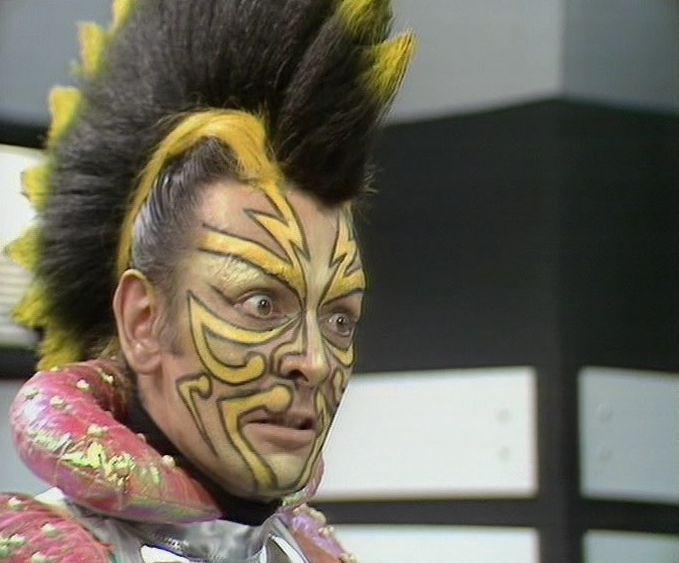
justice-02