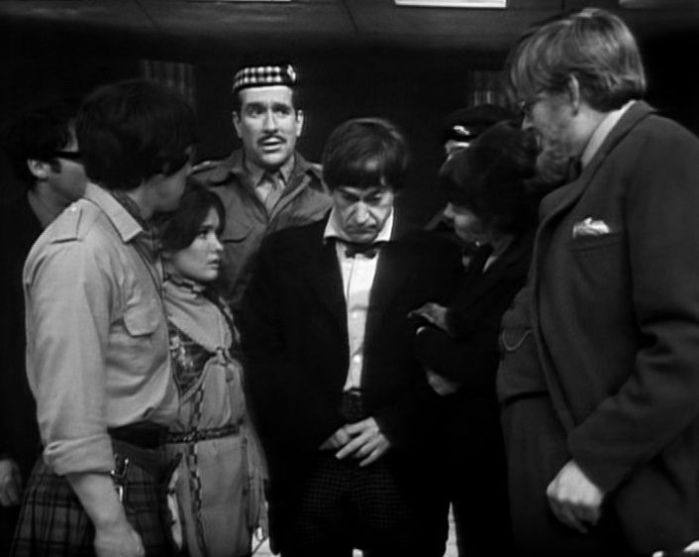
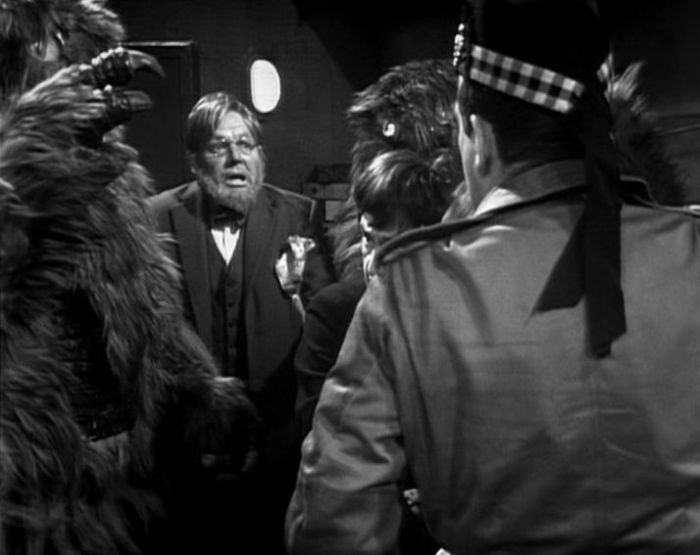
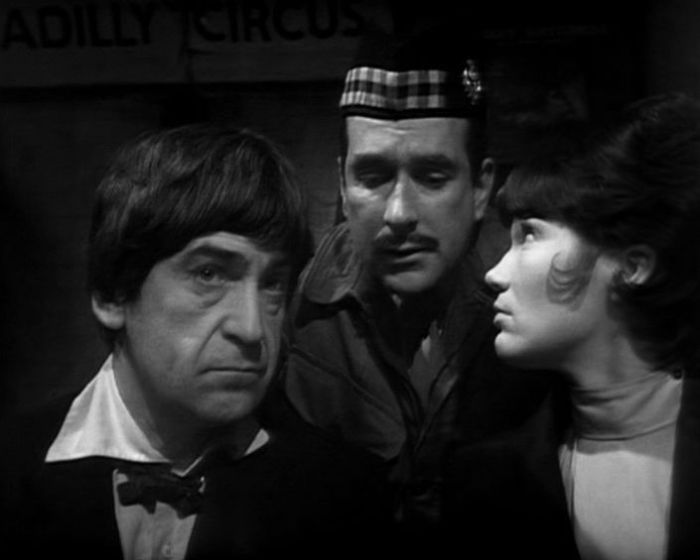
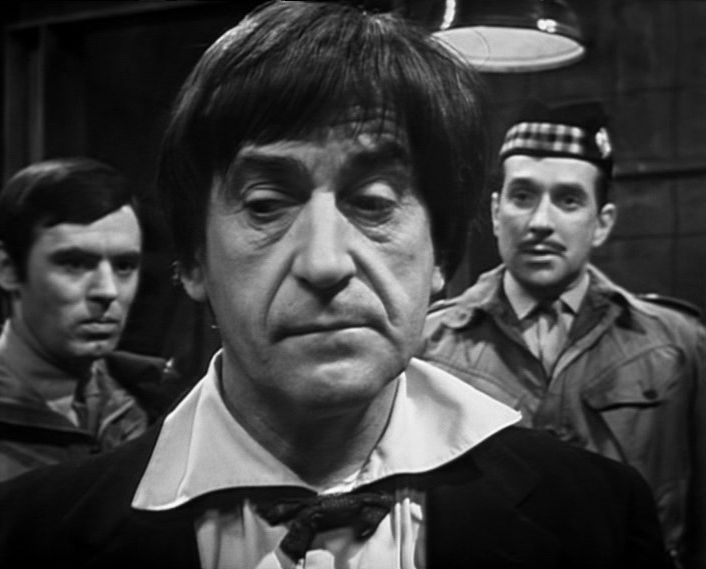
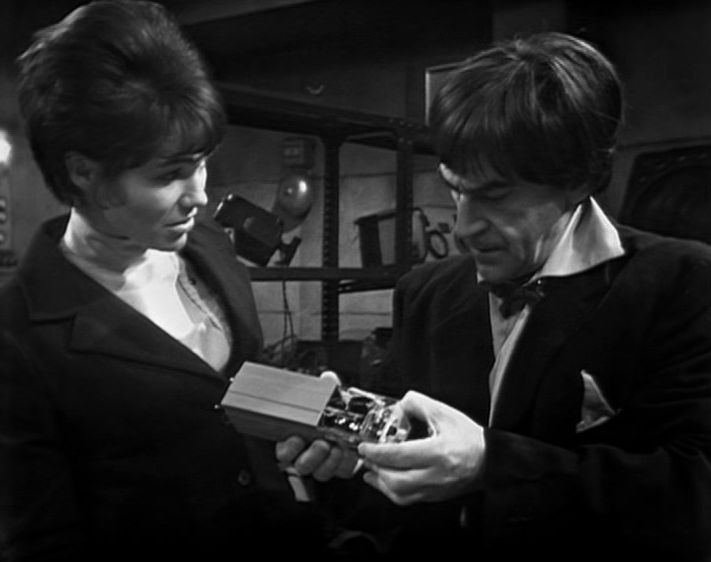
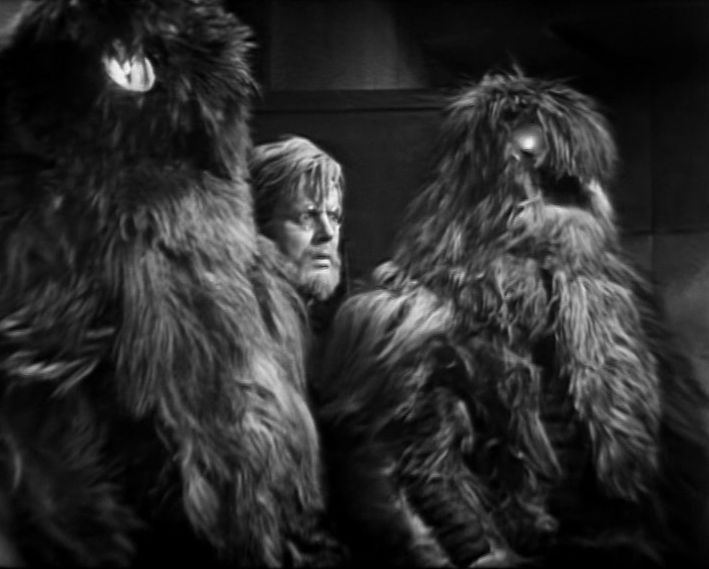
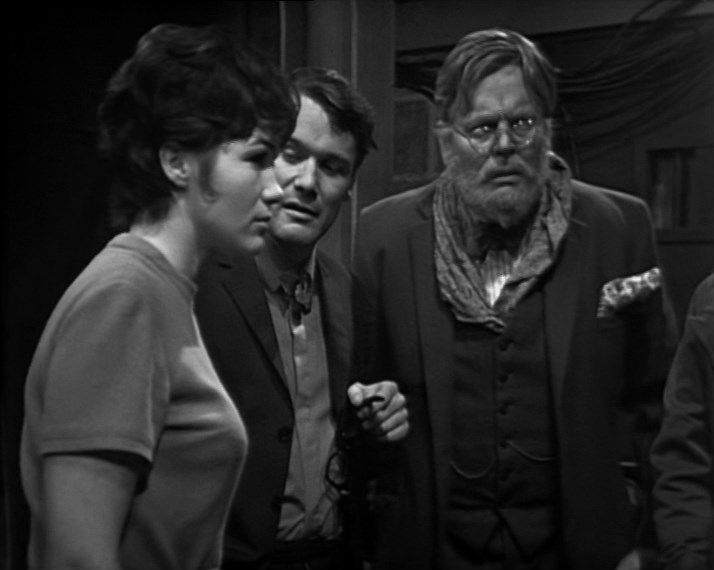
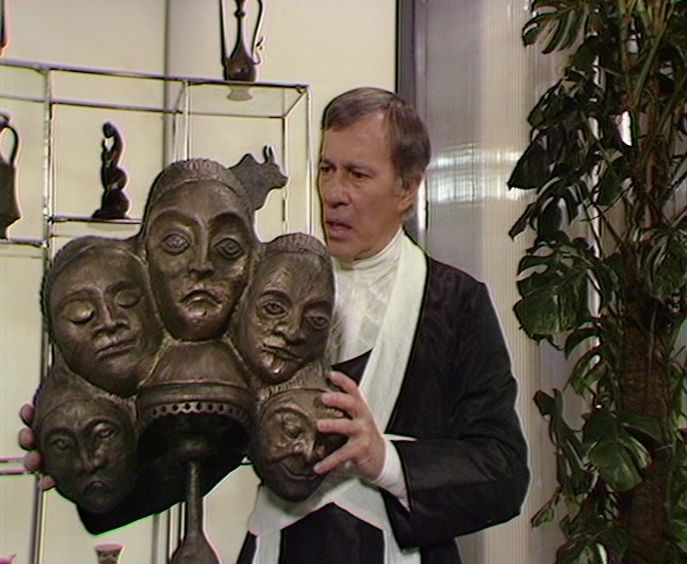
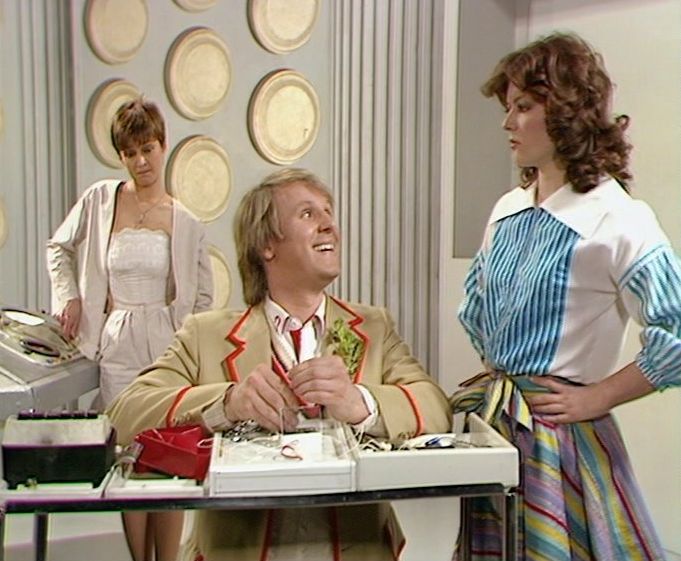
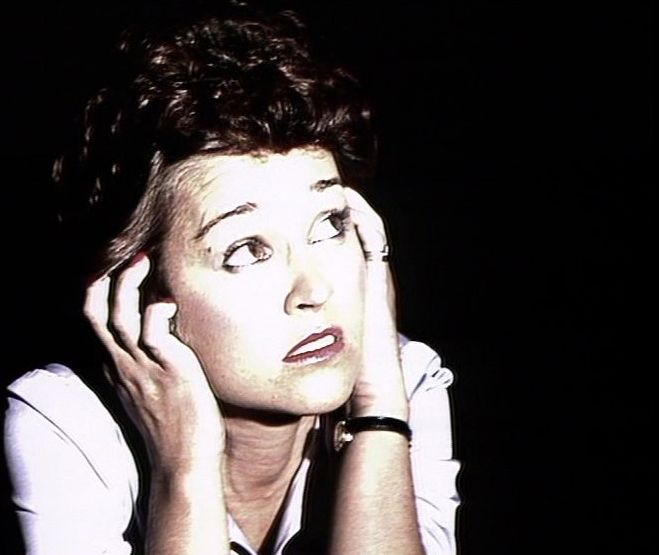
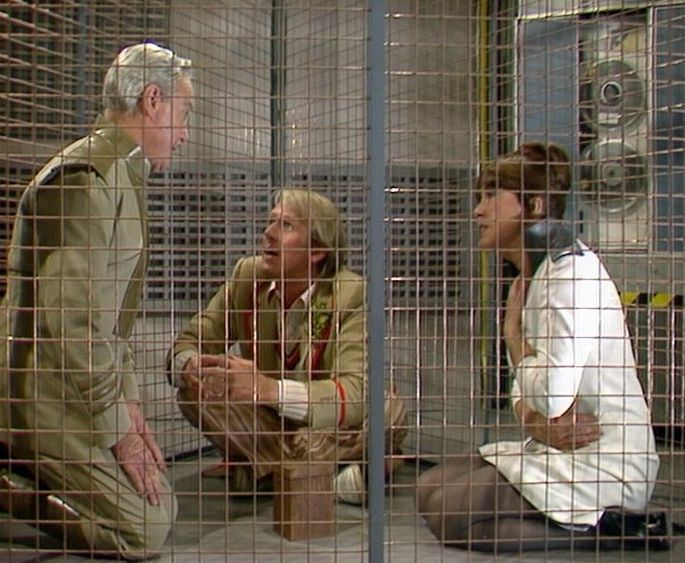
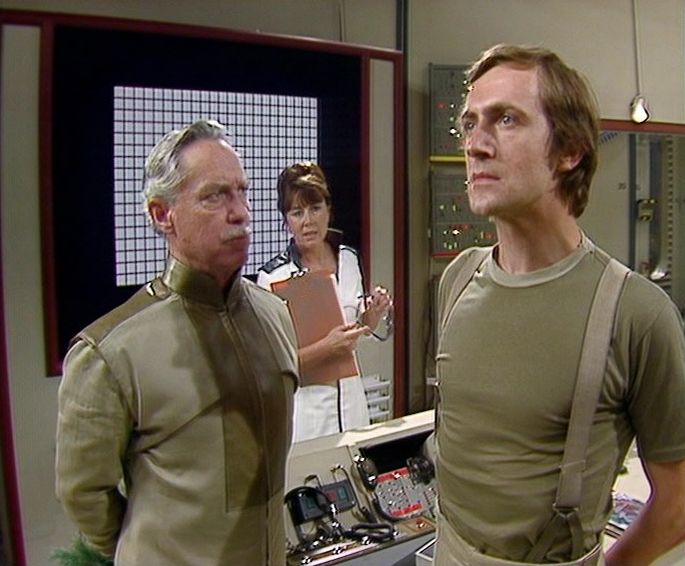
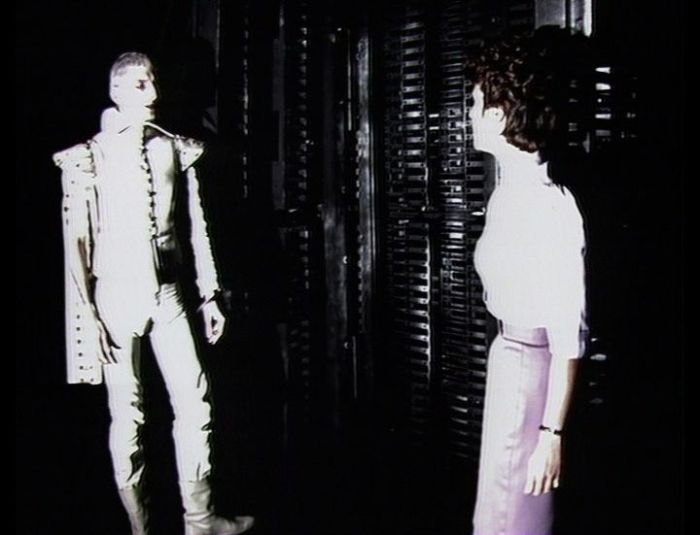
Doctor Who – The Talons of Weng-Chiang. Part Three

talons 03.jpg

It’s fair to say that by Talons, Tom Baker’s Doctor has become something of a tyrant. Breezing through the story with an air of disdain, the Doctor might interact with the likes of Leela, Jago and Litefoot, but it’s rare that he ever seems interested in their opinions – this is a Doctor who always knows best.

How much of this was due to the scripting and how much was Tom Baker’s own input is a moot point. His dislike of Leela’s character is well-known (his personal relationship with Louise Jameson was also strained at the time) so it seems possible that some off-screen antipathy was bleeding onto the screen. But since the S14 Doctor is still far less objectionable than the breaktakingly rude Pertwee model from S8 it’s never been too much of an issue for me.

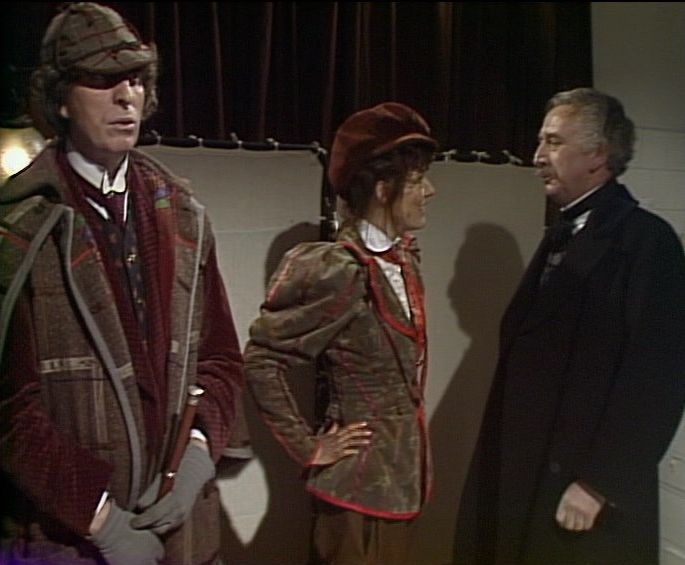
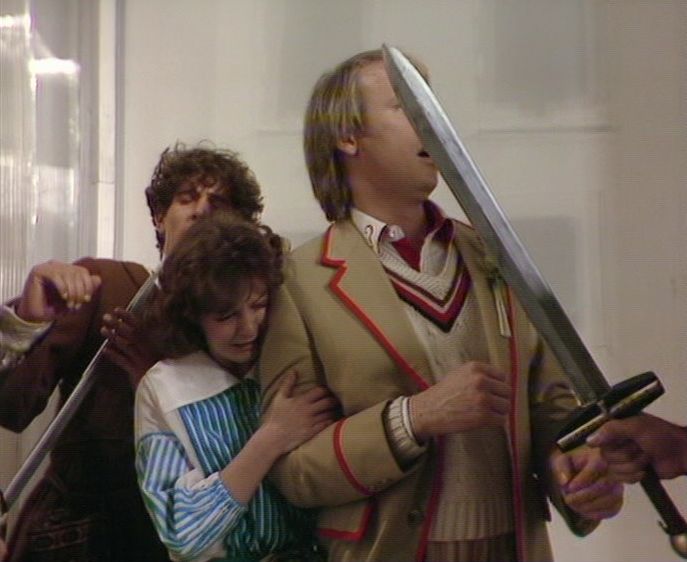
The attack on Litefoot’s house (an unsuccessful attempt to obtain the Time Cabinet) has two consequences – it takes Leela away from the Doctor’s side and puts her on a collision course with Greel as well as teaming the Doctor and Litefoot up as they attempt to locate Greel’s lair.

Since the Doctor’s dressed as Sherlock Holmes, it’s hardly surprising that he’s now been given his Watson subsistute in Litefoot. I surely can’t be the only person to wish that when Tom tackled Sherlock Holmes a few years later in the Classic Serial adaptation of The Hound of the Baskervilles, Trevor Baxter had been cast as his Watson.  A missed opportunity alas.

Holmes (Robert, rather than Sherlock) always delighted in expressive language, as can be seen several times across this episode.  The Doctor clearly has a low opinion of Greel and tells Litefoot why.  “Some slavering gangrenous vampire comes out of a sewer and stalks this city at night, he’s a blackguard. I’ve got to find his lair and I haven’t got an hour to lose”.

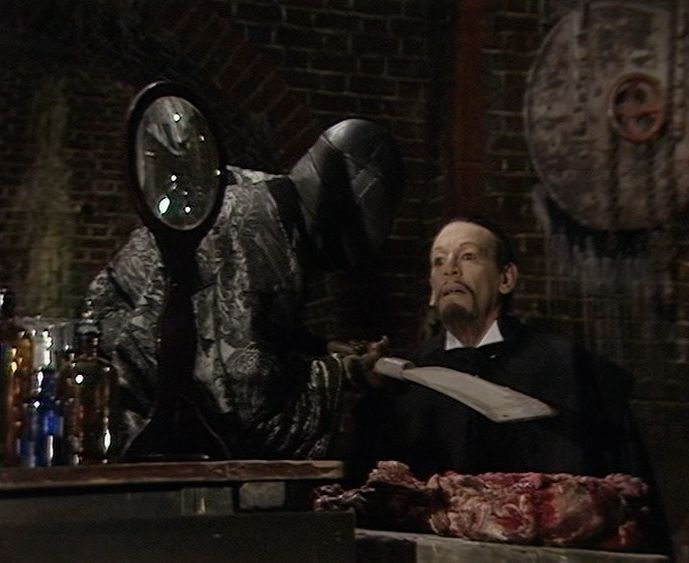
Many were of the opinion that this era of Who wasn’t really suitable for children and when Chang abducts a prostitute (the latest intended victim for his master) you have to admit that they might have had a point. Once again, Holmes delights in a spot of ripe dialogue as Teresa tells Chang that her plans don’t include him. “As far as I’m concerned all I want is a pair of smoked kippers, a cup of rosie and put me plates up for a few hours”.  Cor blimey guv’nor!

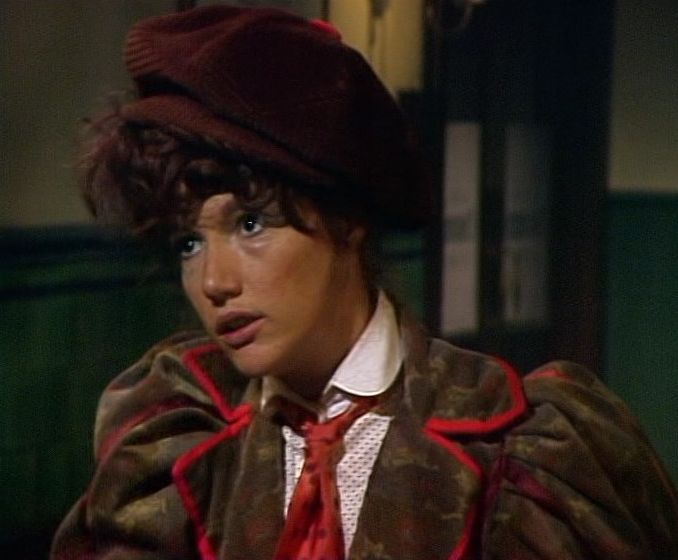
Although David Maloney was always a more than capable director – next to Douglas Camfield, he was probably the series’ best – the fight between Leela and Greel doesn’t quite convince. Possibly the studio clock was ticking, but Louise Jameson rather daintily steps around Greel’s lair (there’s little sense of a savage warrior here).  In story terms, it’s also not quite clear why she heads out into the sewer – true, Greel did have a gun, but Leela’s the type likely to have pressed her attack on regardless.

Ah, the sewers.  That means that giant rat is due to make another appearance.  Poor Leela – reduced to her underwear, soaking wet and gnawed by a rat, so not her best day ever.  And since Louise Jameson was suffering from glandular fever at the time it probably wasn’t one of her favourite days either.

At this point in the series’ history, it’s not a surprise that even the capable warrior Leela needs to be rescued.  The Doctor’s on hand, with a Chinese fowling piece (made in Birmingham), but how good a shot is he?

Doctor Who – The Talons of Weng-Chiang. Episode Two

talons 02.jpg

Although we learnt in episode one that the Tong of the Black Scorpion (“fanatical followers of an ancient Chinese god called Weng-Chiang”) seem to be involved in this devilish business, it now becomes clear that Chang is merely a subordinate character and his master – Weng-Chiang (or at least someone masquerading as him) – is the one directing events.

Weng-Chiang, or Magnus Greel to give him his real name, lives beneath the Palace Theatre.  Why he should do this – unless he’s a devotee of The Phantom of the Opera – is never made clear.  But since Chang is performing at the theatre it makes some sort of sense that Greel is close at hand – especially since Chang has been abducting girls off the street for him.

The science-fiction elements of the story now begin be pulled together as we learn that Greel is a refugee, afraid of the intervention of time-agents.  Why he wants the girls is also explained (“the disease grows worse. Each distillation lasts less than the time before”) and that until he recovers the Time Cabinet he’ll never be whole again.

It’s a remarkable coincidence that the Time Cabinet is in Lifefoot’s possession.  He’s unaware of its significance, regarding it as little more than a Chinese curio, although we’ll learn more about this in episode three.

For those who worry about such things, then the timeline of this story is very odd.  If Litefoot’s had the cabinet for decades, what has Greel been doing all this time?  We see that his body is in collapse, with only the life-essence from young female donors keeping him alive, so how has be survived during this period?  He can’t have been in London for more than a few weeks (based on the number of girls abducted) so are we really supposed to believe he’s only just decided that reclaiming the Time Cabinet might be a good idea?  And since Litefoot’s father was a notable member of the British government in China, surely it wouldn’t have been too difficult to work out that his family was the one gifted the Time Cabinet ….

Episode two sees the Doctor encounter Jago for the first time.  There’s a characteristic gear-change from the Doctor – to begin with he’s jovial – pretending to be a music-hall act ( “dramatic recitations, singing, tap-dancing. I can play the Trumpet Voluntary in a bowl of live goldfish”) – but in a double-heartbeat he turns serious.  As touched upon before, Tom could do this better than anyone and both he and Benjamin make these scenes – largely expository ones – sparkle.

Another signature moment occurs when Leela and Litefoot enjoy a bite to eat, with Leela’s table-manners being somewhat lacking.  Litefoot, the perfect host, elects to copy his guest in order not to make her feel awkward, which gives Trevor Baxter another nice character moment.

Doctor Who – The Talons of Weng-Chiang. Episode One

talons 01.jpg

Following the recent death of Trevor Baxter, I pulled Talons off the shelf for another rewatch.  For me, it remains the ultimate Who experience, Robert Holmes blending together a mix of literary sources in order to serve up a potent brew of Victoriania  menace.

It has its critics though, most of whom find John Bennett’s performance as Li H’sen Chang distasteful.  I think Bennett is wonderful, but the fact that he’s a British actor made up to appear Chinese is a stumbling point for many.  This was a common practice during this era of television though – the pool of ethnic actors in the UK being somewhat limited – and the fact that Timothy Coombe struggled to find good Chinese actors for relatively small parts in The Mind of Evil suggests that the problem had been a long-term one.

Had Bennett’s performance been a caricature (“me velly solly”) then it would be easier to side with the critics.  But Chang is a sharply-drawn, multi-faceted character who’s much more than just an Oriental heavy.  Throughout the story Bennett is able to give Chang considerable light and shade, meaning that by the end it’s possible to believe he was just as much a victim of Greel as everyone else was.

I’ve often wondered if Bennett’s casting was, in part, something of a sly joke.  The most famous Chinese magician on the early 20th Century British stage was probably Chung Ling Soo, remembered mainly for his dramatic on-stage death.  The fact that Chung Ling Soo was actually an American (William Ellsworth Robinson) makes it possible that the audience at home were being invited to wonder whether Chang was also pretending to be Chinese.  I may be over-thinking this though ….

Chang might have a heavy Chinese accent when performing on stage, but off-stage he’s quite different.  It’s never emphasised throughout the story, but there’s something of an irony in the fact that Chang – imbued with great powers by his master, Greel – can only utilise them on the music hall stage.  The fact that he’s a Chinaman in London means that any other doors (business, polite society) are barred to him.

Talons was written to a strict deadline, which might explain why Holmes was content to borrow so heavily from existing texts (especially The Phantom of the Opera and the tales of Fu Manchu).  But even given the pressure he was under, Holmes didn’t skimp on the dialogue, with the result that Talons is an actors gift – with Christopher Benjamin (as Henry Gordon Jago) the prime recipient.

Holmes liked to pair characters off and we can see this with Jago, as throughout the story he teams up with – in order – Casey (Chris Gannon), the Doctor and Professor Litefoot (Trevor Baxter).  With Casey, Jago is dominant (as befits his status as Casey’s employer), like everybody he’s immediately subordinate to the Doctor (Jago’s hero-worship of him is a delight).  He also defers to Litefoot to begin with (a question of social standing presumably) but the pair quickly forge a more equal relationship in the heat of adversity.

In this story, even the minor characters are vividly sketched.  Patsy Smart’s dribbling crone, on hand to watch the police fished a badly mutilated body out of the river, is a case in point.  “On my oath, you wouldn’t want that served with onions. Never seen anything like it in all my puff. Oh, make an ‘orse sick, that would”.

Earlier, the Doctor and Leela had stumbled across a Chinese gang carrying this body (cab-driver Joseph Buller).  Buller might not have been on-screen for long, but the scene immediately prior to his death – stalked by Chang’s knife-welding ventriloquist dummy Mr Sin (Deep Roy) – is a memorable one.

Tom Baker’s Doctor is treading a fine balance here.  When one of the Chinese gang dies a horrible death in front of his eyes (via a poison capsule surreptitiously supplied by Chang) his first reaction is to laugh uncontrollably.  The Doctor quickly becomes business-like, but it’s a jarring moment that possibly only Baker could have pulled off.

An interesting point about this episode is that there’s no tangible science fiction elements.  The giant rat (not terribly good, but I think we can take that as a given) might be the first indication that there’s more to this story than just a mysterious murder, but we’ll have to wait until part two before things become clearer.

Doctor Who – The Web of Fear. Episode Six

web 06-01

We’ve seen over the last few episodes how Lethbridge-Stewart’s fighting force has been somewhat decimated.  Apart from himself, only Evans and Arnold are still standing.  Evans remains an unreconstructed coward whilst Arnold continues to be a pillar of no-nonsense strength.

ARNOLD: Now look, lad, you’re scared, that’s understandable. But you’ve been in the Army long enough to know that orders is orders. There’s four people up there. If we don’t warn them, they’re for the chop.
EVANS: So? Four of them’s getting the chop. There’s no reason to make it six, is there?

There’s another surprise reappearance – that of Chorley – who was last seen in episode three. It’s suggested again that he’s the Intelligence’s agent, but since he’s been absent for so long that doesn’t quite scan.

Evans getting carried off by the Yeti (“Hey, steady on. Oh, going for a walk, are we? There’s lovely”) is an episode highlight as is the moment when he’s deposited by the Yeti next to the Colonel and the Doctor. He brazenly denies that he had intended to make a break for it. “Desertion? Me? Oh, good heavens, no. No, I thought I’d try a single-handed and desperate attempt to rescue Professor Travers and the girl”.

We’re entering the end-game, as everyone is brought to the Piccadilly ticket hall, where the Intelligence has set up its brain drain machine. And this is where the Intelligence’s agent is finally revealed.  Right up until the last moment we’re teased that it’s Chorley, but then the shock reveal of Arnold is made.

Jack Woolgar impresses as the passionless voice of the Intelligence, but this is another of those moments which doesn’t make any sense. The Intelligence state that he’s been hiding in Arnold’s lifeless body for some time – but exactly how long?

Arnold seemed no different when he reappeared than he did before, but it’s equally hard to believe that he’s been controlled by the Intelligence all along (although that’s what the story tells us). There’s a faint air of disappointment here, somewhat akin to the feeling you get when a whodunit doesn’t play fair.

The story dropped numerous red herrings along the way, hinting that the Colonel, Evans, Chorley, etc were all credible candidates, but suspicion never fell on Arnold for a minute. Maybe this was due to the Great Intelligence’s skill, but it still feels like a little bit of a cheat.

And if the Doctor’s final reckoning with the Intelligence is a bit of damp squib, then it doesn’t really alter the fact that The Web of Fear is a classic slice of Who. A few quibbles about the script apart, this is glorious stuff and something which is always a pleasure to revisit.

web 06-02


Doctor Who – The Web of Fear. Episode Five

web 05-01

After four episodes, the Great Intelligence – speaking through the voice of Travers – finally explains what his/her/its evil plan is.  Some might think that the Intelligence has been somewhat slow on this score, but with six episodes to fill it clearly couldn’t show its hand too soon.

TRAVERS: Through time and space, I have observed you, Doctor. Your mind surpasses that of all other creatures.
DOCTOR: What do you want?
TRAVERS: You! Your mind will be invaluable to me. Therefore I have invented a machine that will drain all past knowledge and experience from your mind.

And this is where the wheels of the story slightly come off. I think that one of the reasons why I enjoy 60’s Who so much is that much of the mythos which would later build up around the character of the Doctor is absent. He’s no god-like creature, known and feared throughout the universe, he’s simply a wanderer in space and time.

So stories where he’s targeted by the baddies are pretty rare (this one and The Chase spring to mind) meaning that it’s much more likely that wherever he appears nobody’s heard of him.

And anyway, if the Great Intelligence needs the Doctor’s intelligence than he/she/it can’t be that great anyway. The Almost Great Intelligence maybe?

We’ve previously seen that the Lethbridge-Stewart of this story is a pragmatist, happy to escape rather than fight to the last man.  So when Evans suggests that if they agree to the Intelligence’s plan (delivering up the Doctor) possibly everyone else will be allowed to go free. The stalwart Brigadier would never consider this of course, but as has been touched upon, the man here isn’t quite the man he’d become and there’s a palpable moment of ambiguity in the air.

The controlled Travers stomps off with Victoria as a hostage whilst the others debate what to do next. Given that the Yeti have decimated the soldiers, there has to be a good reason why the Intelligence simply didn’t take the Doctor. And there is – unless the Doctor submits willingly, the brain drain machine won’t work.  So the fact that the Doctor has been given a deadline to either give himself up or face the consequences provides him with a welcome spot of breathing time.

The Doctor once again teams up with Anne. I wonder if these scenes influenced the creation of Zoe? Zoe might have been younger and more frivolous, but the seed of partnering the Doctor with a scientifically-minded companion might have been sown here.

The scene where Evans deliberately disobeys Lethbridge-Stewart’s order is a fascinating one.  The Brig wouldn’t have stood for this sort of insubordination of course, but the Colonel – still somewhat shell-shocked by the events of the previous episode – accepts Evans’ flagrant disregard of his orders quite calmly.  For those who know Lethbridge-Stewart well, to see the character so out of control is quite disturbing.

Deborah Watling is a little out of the action, but she does get to share a few nice scenes with her father. And when Jamie, out in the tunnels with the Colonel, spots Victoria’s handkerchief it’s hard not to be reminded of one of Frazer’s most famous convention anecdotes.

The Web of Fear is one of those stories where characters tend to disappear suddenly and then reappear with the same lack of ceremony. Both Arnold and Chorley have been MIA for a while but then Arnold pops up out of nowhere, seemingly no worse for wear.

The Doctor and Anne’s lash-up (a device to control the Yeti) seems to work, but a mass of web seems to spell the end for the Goodge Street fortress ….

web 05-02

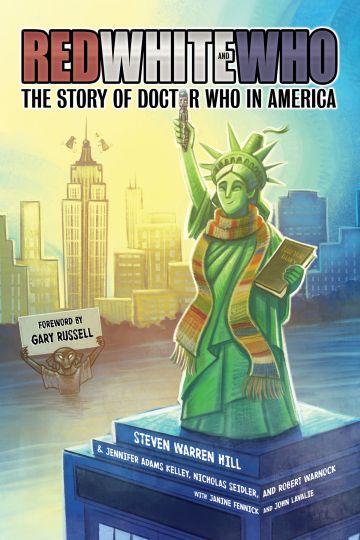
Red, White and Who – Book Preview

RedWhiteandWho

For many British Doctor Who fans, when considering America’s relationship with our favourite programme it’s the 1980’s which immediately springs to mind. That was the decade in which the show exploded in popularity across the US (in relative terms anyway) and whilst British fandom was beginning to turn on itself, becoming increasingly bitter and negative, in America there appeared to be only single-minded love for this newly discovered programme.

There was plenty of money too, as the stars of the programme quickly discovered. The leap from the fledgling and low-scale British convention circuit to the all-expenses paid, air-conditioned hotel experience of the American dream wasn’t lost on anybody. This helps to explain why just about anybody who was anybody in the Who world elected to celebrate the 20th anniversary of the programme at a massive American convention.

As Gary Russell explains in his brief, but amusing forward, this was one of the reasons why British fans regarded their American counterparts with jaundiced eyes. The fact that they also got The Five Doctors two days earlier than us simply rubbed salt into already bitter wounds. And then there’s the term Whovian ….

If you want to irritate an old-school British Doctor Who fan, just refer to them as a Whovian. It works every time. Coined by American fans back in the eighties, the new series has now brought this unlovely term back into common usage (something which continually irks me I have to admit, but then I’m an old-school British Doctor Who fan).

However, the story of Doctor Who in America began well before the 1980’s and continues right up to the current day, meaning that this mammoth book (704 pages, including 130 pages of appendixes) doesn’t leave any stones unturned in order to present us with the full picture.

I’ve had the chance to peruse several sample chapters from the book and what I’ve read has impressed me.  For example, whilst it’s fairly common knowledge that Doctor Who debuted on American television in the early 1970’s (with a package of Jon Pertwee stories) I wasn’t aware that the first faint flickers of interest in the series had occurred long before that.

In the mid 1960’s these mainly consisted of newspaper reports which took an amused look back over the pond during the period when Britain was gripped by Dalekmania.  For some American commentators there was plainly the fear that the Daleks might, following the Beatles, be the spearhead of another British invasion (something which filled certain writers with dread!)  An enthusiastic, if somewhat inaccurate, article from Famous Monsters of Filmland from 1965 is another early example of Doctor Who reporting in the US (these early chapters feature a plethora of fascinating press clippings and promotional material – both for the Dalek movies and the early television sales – which adds considerable extra value to the insightful text).

Chapter Eight – Love and Monsters – covers the PSB pledge drives as well as demonstrating early examples of fan-power.  This is another interesting topic for non-Americans – most of us have probably seen footage from various pledge drives over the years, but exactly how they worked (and the likelihood that money pledged for Doctor Who might not even go towards purchasing that series) was again another revelation.  I also loved Gail Bennett’s remembrance of John Nathan-Turner.   In the early eighties JN-T was, even in the UK, very much a fan’s producer, but it seems that he found greater acceptance in the US.  The notion of JN-T “holding court” at a convention with a group of fans in a hot tub sounds typical of the man, for good or for ill.

Chapter Ten – Doctor Who in Bits – discusses the way that American fans took to the brave new world of the internet whilst Chapter Fourteen – Creativity: Trippingly on the Tongue – exhumes another half-forgotten relic from the history of American Who.  John Ostrander’s stage-play The Inheritors of Time created a certain amount of interest in the mid eighties (not least for the fact that an American Doctor had been cast) but due to a lack of funds it was never mounted.  Ostrander teases the reader with a few hints about what the play contained, although he remains tight-lipped about many of the details (even after all these years it appears he hasn’t given up hope of resurrecting it).

Towards the end of the book, Chapter Twenty – It Couldn’t Have Happened to a More Deserving Fellow – examines the way that the series, in the Matt Smith era, really began to find a foothold in the public consciousness.  Which was a far cry from 2005, when American fans were frustrated that no broadcaster had picked up the Christopher Eccleston series.

Other chapters promise to cover Doctor Who’s first successful invasion, thanks to Tom Baker and Howard Da Silva (although possibly Da Silva’s help – via a series of narrations, designed to educate the American viewer about the series – was more of a hindrance).  As might be expected, the fan experience – via conventions and creative works – also looks to be covered in depth.

The sample chapters suggests that Red, White and Who will be the last word on this topic.  Although the list of authors – Steven Warren Hill, Jennifer Adams Kelley, Nicholas Seidler, Robert Warnock, Janine Fennick and John Lavalie – is a lengthy one, their voices seem to blend together seamlessly.

It’s available for pre-order here and whilst it isn’t cheap at $49.99, it does run to a hefty 704 pages and contains 600 images.  So whilst it’s true that the cost may be a little off-putting for some, what I’ve seen of it so far indicates that it’s no cheap cash in.  This looks to be something crafted with love and appreciation and should certainly be worth your consideration.

Doctor Who – The Web of Fear. Episode Four

,

Presumably sometime during the previous episode Anne decided to swop her mini-skirt and boots for a trouser suit, since that’s what see her wearing as the moving pictures start again.  Given all that’s going on it seems a little strange that she was such a slave to fashion.  She might be an independent young woman, making her way in a man’s world, but it’s possibly not too much of a surprise to find her portrayed as something of a clothes horse (a sign of those times).

When the Doctor and the others find her, she’s in a highly distressed state, which is pretty understandable since the Yeti have abducted her father.  Tina Packer rather overplays here, although given the situation Anne finds herself in that’s not too surprising.

Troughton continues to underplay though, which is notable in the early scene where Evans asks the Doctor if he believes that the Yeti have taken Travers.  The Doctor’s dialled-down, abstracted air makes it plain that he’s considering multiple possibilities, none of them good. When the Doctor later outlines what he knows about the Intelligence, it’s yet another wonderfully delivered few lines from Troughton. “Well, I wish I could give you a precise answer. Perhaps the best way to describe it is a sort of formless, shapeless thing floating about in space like a cloud of mist, only with a mind and will”.

Jack Woolgar continues to impress as well.  Look for the moment when Arnold tells Lethbridge-Stewart that Weams and the others are dead – Arnold’s voice cracks for a split-second, just enough to show the pain he feels at the loss of his men.  That Arnold later turns out to be the agent of the Intelligence, rather than the more obvious Chorley, is a cruel blow, possibly one of the cruellest of the story.

But red herrings continue to be spread about, since the Colonel doesn’t seem to remember meeting Evans (he was apparently his driver).  Does this mean that Lethbridge-Stewart is the agent or is Evans possibly the rotten apple?  No to both questions, but they’re nice misdirects.

Anne operates in this episode as pretty much a proto Zoe or Liz.  Like them, she’s able to speak to the Doctor on a similar scientific level (something that Jamie and Victoria were unable to do) which enables the Doctor to have a confidant who can also act as a sounding board for his theories.

One of the reasons why the Yeti work so well is that they’re not seen very often.  Keep them on screen for too long and their shortcomings become obvious.  But a few brief glimpses here and there, ideally lurking in the shadows, and they’re the stuff of nightmares.

But this episode sees them head out and about as they tangle with Lethbridge-Stewart and the others at Covent Garden.  This film sequence shouldn’t work at all – Yeti in the cold light of day sounds like a very bad idea – but Camfield pulls it off in a pulsating action scene that’s an obvious story highlight.

It’s interesting that Lethbridge-Stewart mounts the mission to Covent Garden for one reason only – to locate the TARDIS which will enable them all to escape.  The Brigadier would surely have remained and fought to the very last man, but the Colonel is much more of a pragmatist, keen to find an escape route.

During the scene you can play spot the stuntman – Terry Walsh, Derek Martin and Derek Ware should all be instantly recognisable and the minute they pop up you know that a spot of action is imminent.  It does seem a little odd that a very familiar piece of stock music (associated with the Cybermen) is used here, but maybe Camfield was unaware it had been used before or possibly it was felt that it didn’t matter that it had previously featured.

Favourite moment during this scene is Yeti who clutches his eyes before falling over.  Since we know that John Levene was playing one of the Yeti, I like to think that he was the one here who decided to go extra-dramatic.  Corporal Blake’s rather horrible death – mainly due to Richardson Morgan’s blood-curdling screams – is something which lingers long in the memory.

Knight and the Doctor head up to ground level to look for some vital electronic spares.  Alas, Knight doesn’t make it as he’s mown down by the Yeti.  The last shot we have of Knight – his lifeless body slumped across a table – is yet another unsettling choice from Camfield and Knight’s sudden, unexpected death helps to raise the stakes.  If Knight, one of those characters you’d have assumed would make it to the end, can be killed then no-one is safe.

This is also borne out when every member of the Covent Garden party – except the Colonel – is killed.  And with Knight also dead and Arnold missing, Lethbridge-Stewart is pushed to breaking point.  The cliffhanger – showing the arrival of the Yeti together with a catatonic Travers – ratchets up the tension several more notches.

Doctor Who – The Web of Fear. Episode Three

It’s a pity that this episode is still missing, although one day it might come back, yes it might come back ….

The major irritant is that it denies us our first glimpse of Nicholas Courtney as Lethbridge-Stewart (although since nothing from his debut existed in the archives before 2013 we can’t grumble about this too much).  And if there had to be a missing episode, then better this one than the next (the Covent Garden battle sequence would have been a much more serious loss).

Although Courtney’s characterisation as Lethbridge-Stewart is already pretty recognisable, the Colonel we see here isn’t quite the Brigadier that he’d become from The Invasion onwards.  Like some of the others (notably Chorley) he’s given the odd, off-key moment, suggesting he might have a secret to hide.   The fact that the story will shortly raise the spectre that the Intelligence must have a mole inside the fortress raises the possibility that the Colonel may well be a traitor ….

Chorley’s undergone something of a transformation from the previous episode.  Although things looked grim then, he was calm and in control. But now he’s suddenly become hysterical and desperate to leave.  Again, this suggests that he may be a man with his own agenda (or it could possibly be that he’s simply a coward, thinking only of his own survival).

The return of the Doctor energises the story – he quickly takes command and impresses the Colonel with his practical suggestions.  Lethbridge-Stewart also has ideas of his own – getting rid of the annoying Chorley by creating the superfluous job of “co-ordinator”, for example.

The Colonel is also in his element when leading a briefing.  Interestingly it’s Anne who is slightly riled when everybody’s presence is requested (“a briefing? We’re not in the army yet”) rather than the Doctor. It would be easy to imagine the Pertwee Doctor expressing a similar sentiment, but the Troughton incarnation was always much more easy-going.

But although the Doctor may appear to be pretty placid, it’s plain that there’s plenty going on under the surface. This was always one of the joys of Troughton’s Doctor. He didn’t need to dominate proceedings like Jon Pertwee or Tom Baker’s Doctors, he was content to sit, watch and wait. But when he spoke, people tended to listen – as seen with this short exchange between him and the Colonel.

DOCTOR: Someone here is in league with the Yeti. Maybe even controlling them.
COLONEL: What?
DOCTOR: The main door didn’t open by itself, did it? It may be any one of us.
COLONEL: Me, perhaps?
DOCTOR: Perhaps.

Based on what we later know, the idea of Lethbridge-Stewart as a traitor is laughable, but at this point we simply don’t know him, so it’s completely possible.  And the fact that Troughton doesn’t overplay this moment – he delivers his lines in very a matter-of-fact way – makes the scene even more powerful.  Unlike some of his successors, Troughton tended to understand that less was more.

Jamie spends most of the episodes stuck in the tunnels with the rather annoying Evans, whilst Victoria’s back in the fortress with the others. She doesn’t do a great deal in the episode sad to say, partly this seems to be because Anne – a more dominant character – is rather taking the limelight. And it’s a pity that as the episode draws to a conclusion we’re left with a whimpering Victoria and a slightly angry Doctor (she’s told Chorley about the TARDIS – a bad move if he’s the agent of the Intelligence).

The sudden death of Weams (the first – but not the last – of the established characters to die) and the cliffhanger shot of a terrified Travers tangling with the Yeti (who have been mostly off-screen during this twenty-five minutes) provides a strong hook into the next episode where – hurrah! – the pictures will move again.

Doctor Who – The Web of Fear. Episode Two

With Patrick Troughton on holiday, episode two allows the others, especially Frazer Hines and Deborah Watling, a little more screen-time.

Jamie and Victoria’s first encounter with the aged Travers is a treat.  Camfield favours lingering on Victoria’s delighted face as she instantly realises that the old man in front of them is the same person they encountered forty years earlier in Tibet.  It’s a nice touch that Victoria is several steps ahead of Jamie, who doesn’t recognise Travers to begin with at all (although when he finally twigs, his comment – “here, hasn’t he got old? Oh, but we’re very pleased to see you, Professor. Very pleased” – is lovely).

The formidable Anne tangles with another man and again easily bests him. Here, it’s the oily newspaperman Harold Chorley (Jon Rollason).

CHORLEY: Oh, for goodness sake, why is everybody being so evasive? Why won’t anybody answer any questions?
ANNE: Perhaps they’re afraid you’ll interpret them in your own inimitable style.
CHORLEY: And what does that mean, pray?
ANNE: It means you have a reputation for distorting the truth. You take reality and you make it into a comic strip. In short, Mister Chorley, you are a sensationaliser.
CHORLEY: You smug little redbrick university ….
ANNE: Don’t say it, Mister Chorley. I have a very quick temper and very long claws.

Ouch! It’s interesting that although Web was made some fifty years ago, Chorley’s character – a unscrupulous journalist – is still a very recognisable one. The more things change ….

Jack Woolgar gives a lovely performance as Staff Sergeant Arnold. Arnold is your archetypical NCO – a gruff, no-nonsense type who’s easily able to keep his subordinates in order. Amongst his charges is the familiar face of Richardson Morgan (as Corporal Blake). Morgan would later turn up in The Ark in Space. Also good value is Stephen Whitaker as Craftsman Weams.

The arrival of Driver Evans (Derek Politt) adds a little levity to the story. He’s a comic, cowardly Welshman (if his accent wasn’t obvious enough, then the fact he turns up singing the Welsh national anthem provides the audience with another clue as to his nationality. Not the subtlest of characterisations then).

The Yeti look very good when lumbering through the tunnels on film. When they pop up on videotape it’s fair to say that they’re slightly less impressive, but Camfield is still a good enough director to ensure that they don’t look completely ridiculous (other directors might not have been so successful on this score).

There’s already a nice sense of claustrophobia and unease throughout this instalment, which increases as the story progresses. Although the Troughton era tended to overdose on base-under-siege stories, when done well (as here) they’re gripping entertainment. By the end of the second episode, the parameters of the story have been established – a small group of heroes isolated in the underground and menaced by the Yeti on all sides.

With Victoria lost in the tunnels and the Doctor still missing, things are nicely set up for episode three.

Doctor Who – The Web of Fear. Episode One

Following the news of Deborah Watling’s death, I’m sure I wasn’t the only one to reach for this story.  Back in the mid eighties though, if you wanted to see Victoria in action you were limited to either the second episode of The Abominable Snowman, episode three of The Enemy of the World or the first episode of this one (and that was always supposing that you were able to obtain a pirate VHS from a friendly contact).

It’s very pleasing that season five is now much better represented than it was back then and, for me, it’s the two stories returned in 2013 – The Enemy of the World and this one – which are the real jewels in the crown.

I first encountered Web 1 back in the late eighties, on a pirate tape along with a selection of other orphaned Hartnell and Troughton episodes (a bit like an early Lost in Time then, although the picture quality sometimes left a little to be desired).  It’s therefore an episode which I’m very familiar with, having rewatched it countless times across the decades (always wondering whether the rest of the story would maintain this strong opening).

Non-controversial statement – Douglas Camfield was Doctor Who‘s best director.  It’s easy to see why he directed more stories than anybody else – his skill at crafting intriguing picture compositions (both in the studio and on film) was second to none and there’s plenty of examples to be found in this opener.

Since studio time was always limited, most directors wouldn’t spend too long on creating interesting visual images – simply getting the actors to hit their marks and deliver their lines without bumping into the scenery seemed to be the top priority.  Camfield, possibly due to the fact that he ran his productions with a military precision, was quite different as he was able to find the time to craft pleasing shot selections.

A good example can be found in the early TARDIS scenes.  The Doctor, Jamie and Victoria, staring at the scanner screen, are positioned with the Doctor in front, Victoria behind him and Jamie at the back.  In order to make this shot work, all three actors had to hit their marks exactly whilst the cameraman also had to be in precisely the right place.  If anybody was slightly off, then the composition wouldn’t work.  Many directors would simply have elected to line them up side by side (this would have been easier to shoot, but also would have looked unnatural – Peter Davison raises this point several times on his audio commentaries – the way that certain directors shot the TARDIS scenes very flatly).

I assume the reason why the confrontation between Travers (Jack Watling) and Julius Silverstein (Frederick Schrecker) is recorded on film was because the underground sets took all the available studio space.  Camfield always had an affinity with film (no surprise that he later graduated to all-film series like The Sweeney) which makes this scene a creepy pleasure.  It’s true that Jack Watling gives a very broad performance (“stubborn old goat!”) and his facial contortions are something to behold, but presumably he was playing the part as written.

Strong female characters aren’t terribly common during this period of the show, so Travers’ daughter Anne (Tina Packer) stands out rather.  A scientist in her own right, she’s acidly polite when the hapless Captain Knight (Ralph Watson) attempts to clumsily chat her up.

KNIGHT: What’s a girl like you doing in a job like this?
ANNE: Well, when I was a little girl I thought I’d like to be a scientist, so I became a scientist.
KNIGHT: Just like that?
ANNE: Just like that.

Compare and contrast this with The Invasion (which in its early drafts would have featured return appearances for Anne and Professor Travers). Anne’s replacement – Isobel – is a much more pallidly drawn character who’s happy to entertain romantic overtures from Knight’s counterpart – Captain Jimmy Turner.

Whilst I may love The Web of Fear dearly, it’s not a story that makes a lick of sense.  Firstly, if the Great Intelligence’s plan was to ensnare the Doctor, why envelop London in a web?  After all this wasn’t the early seventies – a time when the Doctor was resident on modern-day (to the viewers) Earth.

And the moment when the museum Yeti changes before our eyes from the cuddly Abominable Snowman version into the sleeker Web of Fear model might look good, but again it’s something which isn’t at all logical.

Quibbles apart, this opener effectively sets the story up.  We know what we’re dealing with (Yetis in the Underground!) and we’ve also been introduced to a varied cast of military characters who we’ll get to know better as the serial progresses.

For many long years there seemed to be little hope that we’d ever get to see the rest of the story.  And then in 2013 something remarkable happened …..

Deborah Watling (1948 – 2017)

image

I was very sorry to hear today that Deborah Watling has died at far too young an age. Whilst she’ll no doubt always be best remebered for Doctor Who, she had several other entries on her CV which are worth checking out.

Right at the beginning of her career was H.G. Wells’ Invisible Man (1958). Ten-year old Debbie played Sally, niece to Peter Brady, the invisible man of the title. Sally rarely played a central role in the stories but Debbie was always eye-catching and managed to steal more than a few scenes.

Her last dramatic television role was as the vampish Norma in Danger UXB (1979). Possibly not a series that’s terribly well-remebered today, but it’s a quality WW2 programme with a fine ensemble cast which I’ll have to dig out soon for a rewatch.

On the big screen, 1973 saw her act with two British pop stars from very different generations. Take Me High, a tale of Cliff Richard and brumburgers is a wonky guilty pleasure whilst That’ll Be The Day is in a different class altogether. Debbie played Sandra, a young girl used and rather abused by the feckless Jim MacLaine (David Essex). That’ll Be The Day is more than a David Essex star vehicle since it stands up as a decent film in its own right. It’s something else which I’ll no doubt be revisiting shortly.

Back In my convention-going days I had the opportunity to meet Debbie on several occassions and she was always a delight – an attentive and welcoming guest. Possibly my strongest memory of her comes from a small convention held in Weston-Super-Mare during the mid nineties.

As often happened, the timetable started to go a little awry which meant that nobody was terribly pleased when the auditorium was cleared for what appeared to be no good reason. But all turned out well in the end as it became clear that Debbie had been rehearsing a special entertainment – a song and dance routine where, showing a good deal of leg, she left most of us speechless! Happy days and a memory to treasure.

This is an obvious clip to end on, but it’s a very pertinent one. Thank you Debbie. RIP.

Doctor Who – Snakedance. Episode Four

snake 04-01

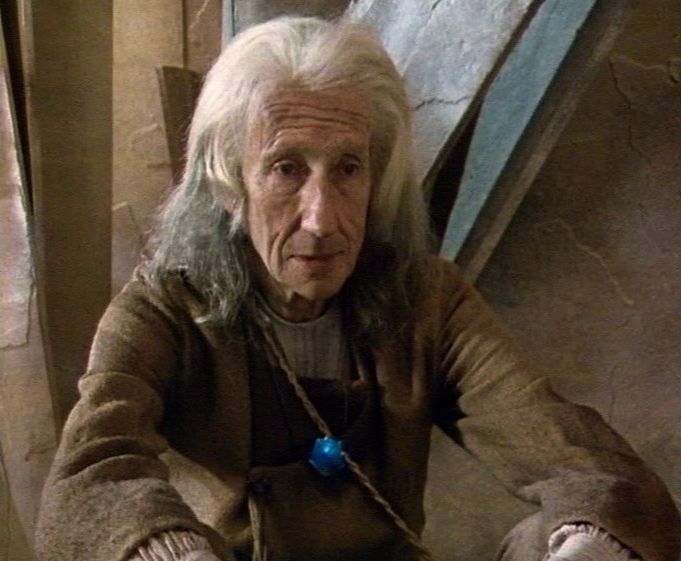
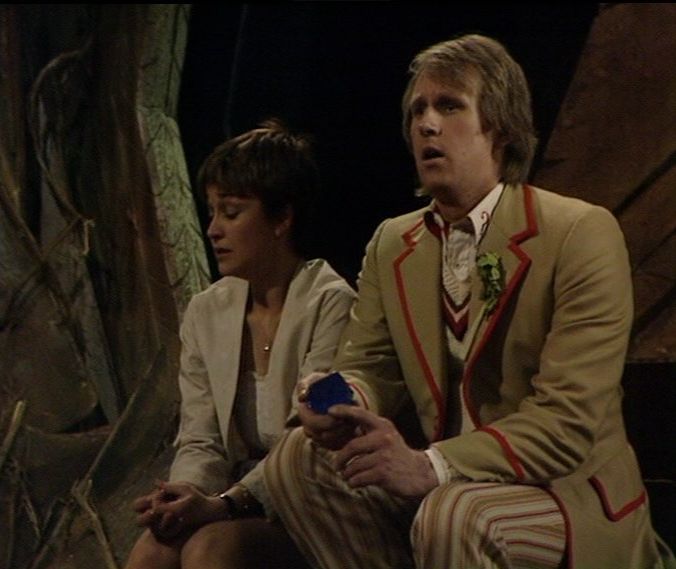
The Doctor’s meeting with Dojjen is this episode’s key scene.  Dojjen explains exactly how the Mara can be vanquished – the Doctor needs to find the still point.  “The still point is within yourself, nowhere else. To destroy the Mara you must find the still point”.

Earlier we were told that Dojjen had set off for the hills some ten years earlier to prepare for the day that the Mara would return. Given this, why didn’t he go back with the Doctor? Presumably he was confident that the Doctor was the right man for the job (and it also saved having to pay Preston Lockwood to appear in the studio scenes).

Although this episode was subject to some considerable editing, particularly at the end, the ceremonial section drags somewhat (even though it was originally much longer too). This is not necessarily a criticism though – the ceremony should be somewhat tedious and formal and the longer it’s dragged out, the more tension is created.

Eventually we get some acknowledgement from the Doctor that he’s concerned about Tegan. When mentally conversing with Dojjen, his priorities are saving Tegan first and destroying the Mara second.

Janet Fielding sits out a portion of this episode, as she did in the previous one. With Lon acting as the main conduit for the Mara’s plotting since the start of episode three, Tegan was left with little to do except pop up occasionally to menace the unfortunate showman Dugdale (Brian Miller). But she does get a nice scene at the end of this episode, pleading with the Doctor to help her. “Help me, Doctor. What’s happening to me? Please, look at me, Doctor. I need your help”.

But the Doctor know this isn’t Tegan – it’s still the Mara speaking through her – so continues to press until (apparently) the Mara is destroyed once and for all. The story ends with a distraught Tegan being comforted by the Doctor (a rare example of Davison’s Doctor having a brief moment of physical contact with one of his companions). Sadly, this moment is rather curtailed due to the overrunning issues – which is why it was decided to carry the discussion about the demise of the Mara into the first few minutes of the following story, Mawdryn Undead.

Snakedance is a slightly more conventional and a little less compelling story than Kinda, but it’s still full of interest. It has a stagey and unreal feel at times – for example, both the cave interior and exterior don’t look at all convincing – but it’s the story concepts (the notion that evil is contained within us all) and the performances which matter the most.  Unlike the Great Crystal, Snakedance has a somewhat flawed beauty, but a beauty nonetheless.

snake 04-02.jpg

Doctor Who – Snakedance. Episode Three

snake 03-01.jpg

After Lon is taken over by the Mara, it’s notable that his general attitude and appearance doesn’t change at all.  Compare this to Tegan, whose voice drops several octaves whilst her character also undergoes a radical adjustment (showing amusement at the distress of others).

In plain story terms it’s not hard to understand why.  Since Lon still has to interact with both his mother and Ambril, it would rather give the game away if he was cackling evilly in the corner.  But possibly Bailey missed a trick by not submerging Tegan’s possession – in a different version of the script she could have appeared to be her normal self until a suitably dramatic point of the story (a cliffhanger, no doubt).

Since Snakedance has a fairly similar story structure to Kinda – the Mara doesn’t attempt to make a full, physical manifestation until the end of episode four – this means a certain amount of running on the spot has to be done until we reach that point.  This is far from unusual in Doctor Who (unless you have a very episodic story like The Keys of Marinus) but Snakedance is still powering along with character development, so what we see here never feels like padding.

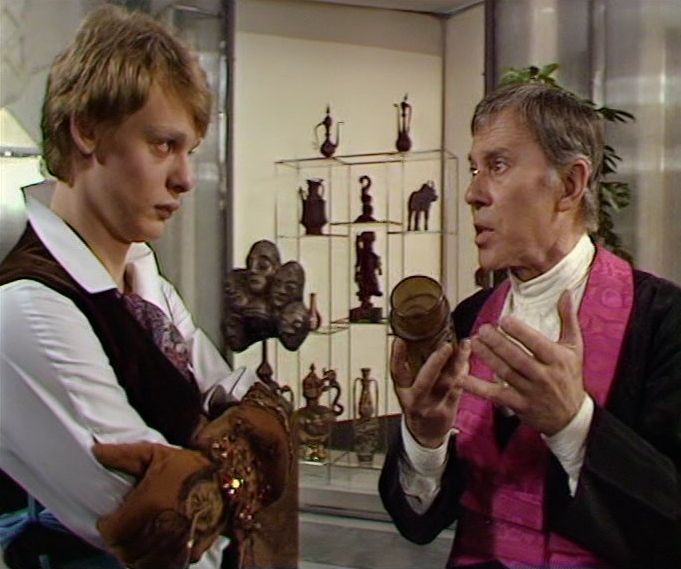
John Carson continues to impress and Martin Clunes also seems to feed off Carson’s quality playing (their two-handed scenes are something of a treat).  The Mara needs the Great Crystal in order to make a dramatic reappearance and Ambril is the one who can facilitate this.  It doesn’t take long for the Mara (presumably through the thoughts of Lon) to work out a way to tempt Ambril – a previously undiscovered cache of previous artefacts.

For Ambril, who has dedicated his life to cataloguing the treasures of the past, the prospect is a mesmerising one.  This is seen most clearly at the moment when Lon causally teases him about their value and importance.  Ambril’s face takes on a wistful expression as he wonders how many there are (“lots?”) which then switches to anger as Lon doesn’t give him a straight answer.  For the normally servile Ambril to lose his temper, it’s plain that something extraordinary has happened.

Christopher Bailey’s lyrical powers can be seen in this evocative excerpt from Dojjen’s diary. “Where the winds of restlessness blow, where the fires of greed burn, where hatred chills the blood, here in the Great Mind’s Eye, here in the depths of the human heart, here is the Mara”. Although it’s not just a piece of fancy dialogue, as it also serves as a pointer to the way the story will develop.

And where’s the Doctor been all this time? Locked up and slightly frustrated. Here, he explains to Nyssa precisely what the problem is. “The lock is extremely primitive. It’s practically a museum piece. There’s no electronic impulse matrix to decode, no sonic microcircuit to disrupt. Crude mechanical six barrel movement, key operated. Primitive but adequate. Well, it’s more than adequate, actually, because the key is what we don’t have”.

But although the Doctor is restrained, he’s still able to begin to understand how the Mara will return thanks to some vital information supplied by Chela. It’s possibly not unintentional that the Doctor is shown to be just as active behind bars as he would have been if he’d been at liberty. At this point in the story he’s operating as a Victorian/Edwardian “thinking detective” – someone who could find a solution to a seemingly imponderable mystery without having to leave the comfort of their armchair.

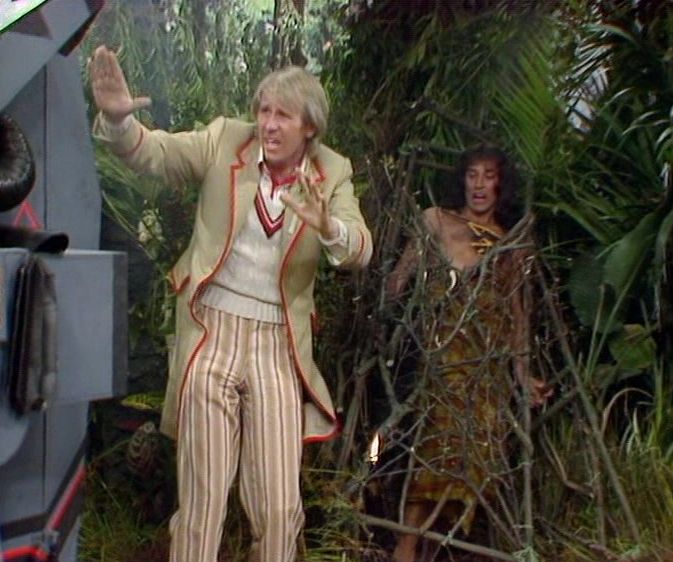
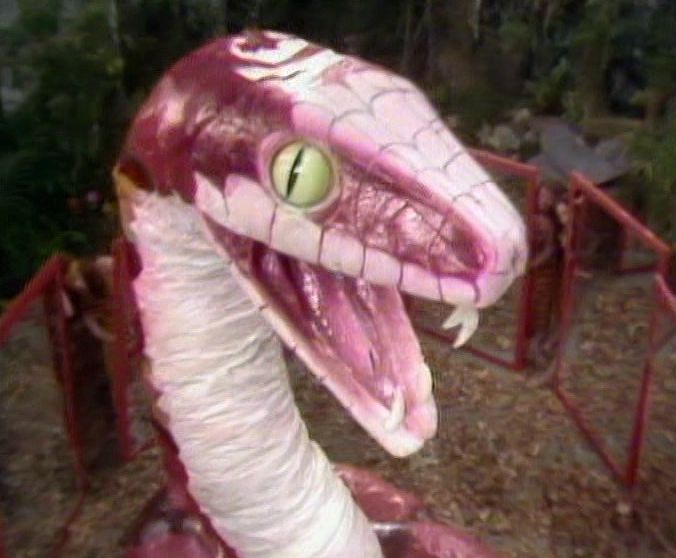
It appears that the locals enjoy Punch & Judy just as much as we do – albeit with a twist (their version has a snake instead of a crocodile).  The sight of the puppet snake menacing Mr Punch is no doubt a sly nod back to the less than perfect snake which made an appearance at the end of Kinda (a larger puppet, on sticks, makes an equally amusing later appearance).

Nyssa continues to be pro-active, but her attempts to help only lead her to the same cell occupied by the Doctor.  Once that happens the Doctor seems to lose his impatience to escape (which is transferred over to Nyssa).  Possibly the most telling moment occurs when Nyssa frets that the longer they’re incarcerated, the greater the possibility that the Mara will destroy Tegan.   The Doctor looks a little guilty, but doesn’t answer.

If this episode’s cliffhanger proves one thing, it’s that Sarah Sutton wasn’t one of the series’ natural born screamers …..

snake 03-02.jpg

Doctor Who – Snakedance. Episode Two

snake 02-01

In Kinda, it seemed like the Mara could only possess one person at a time – moving from Tegan to Aris, for example.  Snakedance is able to improve on that, as Tegan/Mara is able to corrupt Lon.

This makes sense – since Tegan spends the story possessed by the Mara she requires a confederate to talk to (she could spend it soliloquising but that would probably get somewhat tiresome rather quickly).  The fact that Lon is a man of status doesn’t hurt though – this means he would be able to open doors that are closed to others.

Martin Clunes’ performance is often seen as something of an embarrassment, but there’s no reason why it should be regarded as so.  Lon isn’t as deep a character as, say, Hindle, but Clunes doesn’t disgrace himself.

But it’s John Carson who really impresses.  This episode has one of my favourite Snakedance moments – the six faces of delusion – in which the Doctor manages to demolish Ambril’s superiority with almost indifferent ease.  True, it’s hard to believe that Ambril would never have considered the possibility that the ceremonial headdress which features five carved faces would only display six when worn, but given Ambril’s intractability, maybe it’s not too unreasonable after all.

The Doctor continues to be a thorn in Ambril’s side, but since the Doctor is babbling on about death and destruction it’s possibly not surprising that nobody (except young Chela) takes him seriously.  But it is rather refreshing that we’re halfway through the story and still the Doctor is positioned as an outsider.  This isn’t unique (it’s very late in the day during Frontier in Space before anybody listens to him) but usually by now he’s managed to convince someone of his bona-fides.  The early run of the new series, with its psychic paper, made this even less of a problem, but Snakdance takes us back to a time when the Doctor couldn’t simply stroll into any situation and simply take control.

snake 02-02

Doctor Who – Snakedance. Episode One

snake 01-01.jpg

Christopher Bailey didn’t find Kinda to be a very satisfying experience.  Mainly this was because his theatre background had made him accustomed to working in a collaborative environment – whereas television (particularly series like Doctor Who) were much more compartmentalised.  So once his scripts were finished the production pretty much carried on without him (something which he regretted).

But the fact that Kinda passed through the hands of three script-editors – Christopher H. Bidmead, Anthony Root and Eric Saward – probably didn’t help either.  In contrast, Bailey only had to deal with one script-editor during the creation of Snakedance – Saward – although it’s hard to imagine it was a great meeting of minds.

Saward favoured accessible and straightforward action adventure tales and Bailey …. didn’t.   Snakdance is therefore something of a hybrid – with the voices of both Bailey and Saward on show.  This wasn’t unusual for Doctor Who (the script-editor often had a considerable input into the stories commissioned) but it’s possibly more marked in Snakedance, given Bailey’s unusual style.

Saward’s influence can be seen right from the start.  He disliked the fact that Bailey had written lengthy scenes and so elected to cut them up – chopping and changing from one to another.  This didn’t work at all, since it spoilt the dramatic flow from scene to scene.  Too often we leave one location at an inopportune time in order to witness an equally brief and unsatisfying moment elsewhere before returning to our original point.

This is Snakedance‘s main drawback, but as the story progresses it becomes less of a problem.  This is either because the story becomes more engrossing, and therefore the narrative jumps are more tolerable, or simply because they decreased.

After a brief shot of a man we later learn is called Dojjen (Preston Lockwood) the action switches to the TARDIS.  When Nyssa enters the console room, wearing a new dress which the Doctor totally fails to notice, there’s a definite sense of change and development.  This was rare for Doctor Who companions during the 1960’s – 1980’s.  They tended to arrive fully-formed (or at least as formed as they’d ever be) and would remain largely in a state of stasis until they left.

There are exceptions.  Jo becomes slightly less dizzy and more capable during the later part of season ten (although this may simply have been a case of Letts and Dicks laying the ground for her imminent departure) whilst Ace would have even more of a pronounced story arc as she travelled from girl to woman.

Nyssa’s development is less substantial, but it’s there all the same.  With longer hair and new clothes (even if they’re not very flattering) she seems to be more confident and able to confront the Doctor head-on.  It’s only annoying that after spending most of S19 not doing much at all, Nyssa becomes a more interesting character just at the point in which she’s almost on her way out.

The TARDIS is usually a place of sanctuary.  Occasionally (The Mind Robber, for instance) this is reversed, but more often than not it’s the place where the monsters can’t reach.  So this makes Tegan’s trauma – menaced by the Mara in her dreams – all the more unsettling.  Also slightly perturbing is the way that the Doctor roughly questions her (or at least as rough as Davison’s Doctor tended to be).  As with his inability to praise Nyssa’s new look, this could just be a cause that he’s preoccupied, or you may wish to believe that he’s still a little upset at the way Tegan barged back into the TARDIS at the end of Arc of Infinity!

When watching the first episode of Kinda, it was possible to guess which of the characters would support the Doctor and which would oppose him.  In Snakedance it’s not so clear cut.  Tanha (Colette O’Neil) and Lon (Martin Clunes) are both powerful people – the wife and the son of the Federator respectively – but the reason for their presence isn’t obvious to begin with.   Tanha operates like a senior member of the Royal Family – she has ceremonial duties to perform and will always carry them out to the best of her ability (even if she sometimes has trouble in maintaining interest) whilst Lon is a junior Royal.  He doesn’t appreciate his privileged position, finding it to be restrictive, and therefore amuses himself by being less than diplomatic.

Flitting between the two is Ambril (John Carson).  As a noted archaeologist and a learned researcher into ancient Mannusan history, he should be the Doctor’s ally.  With the Doctor concerned that the Mara plans to make a return to this universe via Tegan, Ambril could supply vital information.  But Ambril is close-minded, pompous and disinclined to listen to anybody else.

So as episode one ends, the Doctor and Nyssa are separated from Tegan and somewhat lacking in allies. Meanwhile, there are definite signs that the Mara has returned ….

snake 01-02

Doctor Who – Kinda. Episode Four

kinda 04-01

The Mara may be somewhat malevolent, but it’s clearly only as effective as the person it currently occupies.  So maybe Aris wasn’t possibly the right person to jump into (had it chosen Hindle, no doubt the world of the Kinda would have ended up as a smoking ruin in double-quick time).

Although the possessed Aris talks a good fight (“The Not-we must be driven out and their dome destroyed!”) it’s plain that he doesn’t have a clue how to achieve this. His solution – to build a fighting machine out of wood – makes this plain.  This is another part of the story which some have found fault with in the past, but it makes complete sense – Aris is operating strictly under his own terms of reference. The Mara may possess him, but apart from granting him the gift of voice it doesn’t seem able to furnish him with any insight or knowledge.

Meanwhile back at the Dome, Hindle hasn’t got any saner. When the Doctor returns, he’s told by Sanders that they’ve been having fun. Davison’s delivery of the line “Have you? Oh, good. There’s nothing quite like it, is there?” is immaculate.

Hindle’s madness culminates in one of Simon Rouse’s signature moments (one of many throughout the four episodes). After the Doctor inadvertently breaks one of his cardboard figures, Hindle is inconsolable. Sanders tells him that it can be repaired with a spot of glue, but Hindle thinks otherwise. “You can’t mend people, can you.”

The DVD production subtitles then help to explain why (as Hindle lunges for the destruct button) the Doctor wraps his hands around Hindle’s mouth (in the original script, Hindle was going to issue a verbal command to one of his pliant Kinda servants). Quite why they didn’t change this I’m not sure, but it doesn’t really matter as it makes the melee rather messy (as it should be – the Doctor shouldn’t be that good a fighter).

The Box of Jhana then becomes a healing device (which it hadn’t previously).  Once Hindle opens it, the balance of his mind is restored (an “everyone lives” moment of redemption which the original series didn’t often tend to in go for).  This again poses some unanswered questions though – if Hindle had been sane, would the box have driven him mad?  And since the effect on Sanders was only temporary (by the end of the story he’s quite his old self too) why didn’t the missing members of the team regain their senses?  Or maybe they did, and they’re still wandering dazedly around the forest, hopelessly lost.

This final installment is where the wheels (of life, sorry) start to come off slightly. The fact the episode was underrunning somewhat meant that several filler scenes had to be shot later and inserted into the completed material. They’re not a bad fit, but the sight of Adric and Tegan standing in a corridor talking isn’t terribly dramatic.

During S18 Christopher H. Bidmead was ruthless in cutting any flab out of the scripts, meaning that often they didn’t get much beyond twenty minutes. But possibly that was more acceptable for a Saturday timeslot (where traditionally programmes had never started on the hour or half-hour) than for weekdays (where they always tended to).

We then have the appearance of the snake. I don’t think it’s that bad, although giving Matthew Waterhouse the line of wonder (“It’s fantastic. Where does it draw its energy from? It’s incredible.”) doesn’t help. If you want someone to sell a slightly dodgy effect, then Mr Waterhouse might not have been the best choice.

Provided you can disregard some of the production missteps (and if you can’t, then Doctor Who 1963 – 1989 really isn’t the show for you), Kinda is impressive stuff.  It may have nonplussed many younger fans (and possibly the rest of the audience) back in 1982, but it’s a story that’s only got better with age.  I’d certainly take it over the whizz-bang antics of Earthshock any day.

kinda 04-02

Doctor Who – Kinda. Episode Three

kinda 03-01

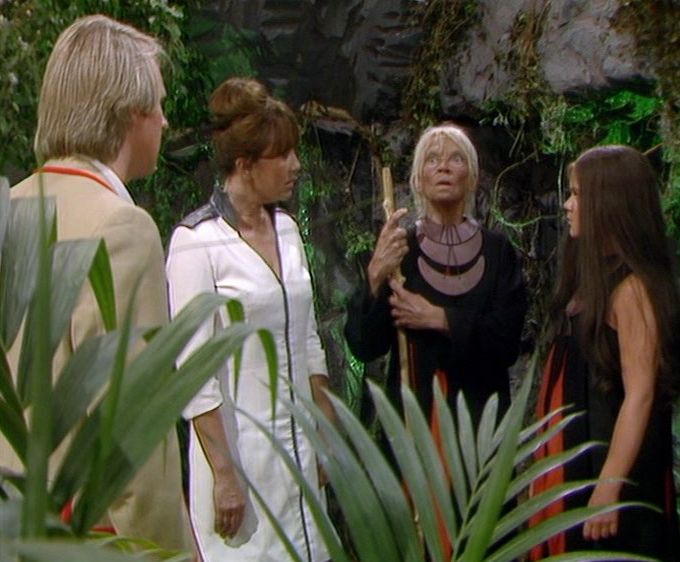
Although Mary Morris was only in the studio for a single day, they certainly got their money’s worth out of her.  She briefly appeared in episode two, but all of her key scenes are in this one.

There’s something delightful about the way that Panna crosses swords with the Doctor.  Knowing that no man (save an idiot) can look into the Box of Jhana and retain their senses, she has no hesitation in tagging the Doctor as such.  It’s a little hard to imagine some of the previous Doctors being so pliant (especially Pertwee – “Madam, I am no idiot” – or something like that) but it suits Davison’s Doctor well.

He’s no idiot, but rather like the Troughton Doctor it doesn’t bother him if other people think so.  The Fifth Doctor doesn’t need to be centre-stage, commanding the action, he’s just as happy watching quietly from the fringes.  After seven years of a Doctor who was always dominant, this was a refreshing change.

So after all the toing and froing with the Box (driving numerous men out of their wits) Panna and Karuna have finally managed to reach Todd – the woman who would be able to follow the vision. It seems a bit churlish (but I’m going to do so anyway) to wonder why the pair of them didn’t simply turn up at the Dome and explain in a more straightforward way. But whilst they may not be primitive, it’s possible they’re bound – like everybody else – to operate under certain parameters.

PANNA: It is all beginning again.
DOCTOR: What is?
PANNA: What is? What is? History is, you male fool. History is. Time is. The great wheel will begin to roll down the hill gathering speed through the centuries, crushing everything in its path. Unstoppable until once again
TODD: Until?
PANNA: I must show you. That is why you have been brought here. Then perhaps when you understand, you will go away and leave us in peace. If it is not already too late.
DOCTOR: You said once again.
PANNA: Of course. Wheel turns, civilisations arise, wheel turns, civilisations fall.

Whilst the Doctor’s seeking enlightenment, Adric is stuck with Sanders and Hindle. Matthew Waterhouse doesn’t do badly here, even though he’s sharing the screen with two actors who could run rings around him at any time. But the fact that both Sanders and Hindle are now childlike (Sanders docile, Hindle petulant) means that they fit rather well with Adric, who’s tended to act like a somewhat stroppy teen for most of his time aboard the TARDIS.

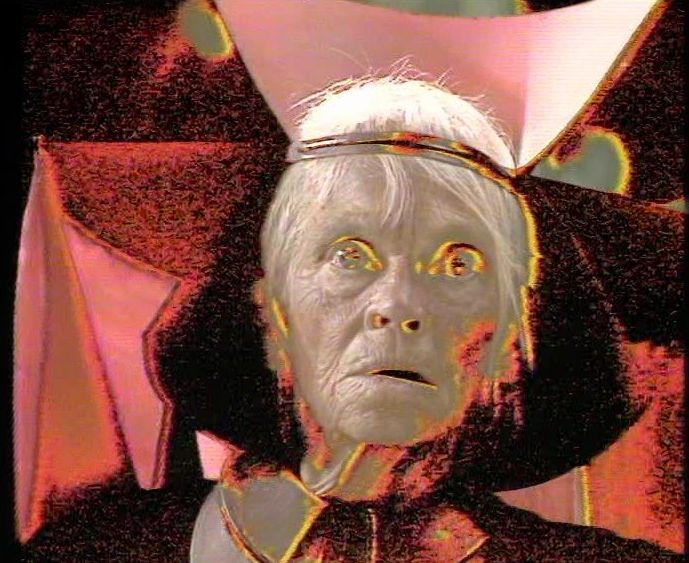
Those looking for faults could no doubt wonder why Panna’s projection features Earth-type clocks (although those of a more forgiving nature might decide that the images were drawn from the minds of the Doctor and Todd). Even given the limited budget this sequence is still suitably apocalyptic, although I’ve never quite understood why the episode didn’t close on the spooky close-up of Panna’s face.

Instead it trundles on for a few seconds more, leaving us with a cliffhanger where we discover that Panna’s dead. Which doesn’t seem nearly as dramatic.

kinda 03-02

Doctor Who – Kinda. Episode Two

kinda 02-01

Panna (Mary Morris) and Karuna (Sarah Prince) encounter Sanders in the forest.  They give him a box which somewhat alters his wordview ….

This has always been a slightly odd part of the story for me.  Panna and Karuna don’t wish the interlopers ill and clearly they intend that the box should be sufficient to explain why Sanders and the others should leave the Kinda in peace.  The only problem is that the box can only be understood by a women, which is unfortunate since Todd appears to be the sole female in the survey team.

Presumably this is the reason why several members of the expedition have mysteriously disappeared (driven out of their minds by what they’ve seen within the box?).  But if this is the case, why do Panna and Karuna insist that Sanders opens the box?  If they know he won’t be able to handle what he sees, it seems a very strange way of going about things.

There’s possibly an irony at work here as the concept of female superiority is one that hadn’t really been explored in the series to date (apart from fairly unsubtle examples such as Galaxy 4 and – given what we know about it – the thankfully unmade Prison in Space).  Apart from the later Mara-possessed Aris, Panna and Karuna are the only members of the Kinda tribe who can speak.  This could also be taken as a statement of female empowerment, although Panna only says that voice is a sign of wisdom – not that it’s exclusively a female trait.

And anyway, non-speaking extras are cheaper than speaking ones ….

Hindle’s madness is explored in more detail.  He now has a loathing of all life outside the dome (“Seeds. Spores. Particles of generation. Microscopic. Everywhere”) and proposes a fairly drastic solution. “I wish to announce the strategy for the defence of the dome, implementation immediate. We will raise to the ground and sterilise an area of forest some fifty miles radius. Objective, the creation of a cordon sanitaire around the dome. Method of implementation, fire and acid. Acid and fire”.

The return of Sanders should be the moment that normality returns, but his altered state – he now has the mind of a child – simply ensures that Hindle has one more person to dominate.  In a way, Sanders and Hindle are now a perfectly matched pair as Hindle has also regressed to childhood, although he’s done so without any help from the Kinda.  This point is hammered home when he spies Sanders returning to the dome.  “Go away! Somebody make him go away! Mummy! Mummy, make him go away!”

Whilst the main action has been taking place in the dome, Tegan’s remains a prisoner of Dukkha.  She’s offered a way out – he wants to borrow her body for a short while (“you would be suitably entertained by the experience”) – and eventually Tegan reluctantly agrees.  Doctor Who is no stranger to possession, but although many companions have been taken over in the past, no examples have been as overtly sexual as the Tegan/Mara hybrid.

And given that the sexual nature of Tegan’s possession was heavily toned down from the rehearsals, it’s intriguing to speculate just what it originally looked like.  Since the the story had space for two companions there was always the option that Nyssa (or god forbid, even Adric) could have been used by the Mara, although Tegan was the logical choice.  Nyssa would have been interesting, but since she’s written as younger than Tegan (in Black Orchid, Nyssa and Adric are referred to as children, presumably meaning mid teens) this no doubt would have been somewhat problematic.  Mind you, since both are aliens we don’t really know how old they are – just how they appear to human eyes.

So whilst the Mara in the form of Tegan is tempting its next victim (Aris) we leave the Doctor, Todd and Sanders with the Box of Jhana.  Hindle wants it to be opened, but the Doctor and Todd, having seen what happened to Sanders, are less than keen.  But open it they do, which leads to an ear-splitting scream from Todd.  Hmm, so even in the future it’s the women who screams.  Some things obviously never change …..

kinda 02-02

Doctor Who – Kinda. Episode One

kinda 01-01

It does seem astonishing that Kinda ended up bottom of the 1982 DWM Season Survey poll. Although it’s easy to argue that Kinda’s theme and subtexts wouldn’t have necessary engaged the (I assume) largely teenage readership of the magazine (no surprises that the straight-ahead thrills of Earthshock were much more to their tastes) it does appear that contemporary Doctor Who fandom also regarded Christopher Bailey’s story with less than open arms.

Although Kinda did have its supporters, some fanzine reviews at the time were also fairly negative and you do get a sense that those who praised the story were well aware they were ploughing a rather lonely furrow. The puppet snake was then and will probably forever be a source of irritation and embarrassment for a section of the audience, although it’s never bothered me (and for those who still haven’t learnt to forgive, forget and love the snake, they can always use the nice CGI option on the DVD).

Initially Kinda seems to be operating on fairly normal lines. The concept of a planet where the seemingly primitive indigenous population face unwelcome and seemingly technologically superior visitors is a familiar Sci-Fi trope whilst the fact that Sanders (Richard Todd) and Hindle (Simon Rouse) are decked out in vague military uniforms (and in Sanders case, a pith helmet as well) means that the parallels to the British Empire are as obvious as they’re unsubtle.

In their early scenes, the characters of Sanders and Hindle operate as familiar archetypes. Sanders is bluff and gruff (albeit with a faint sense of humour) whilst Hindle comes across as a humourless by-the-book martinet.  The third member of the team, Todd (Nerys Hughes) possesses a questioning nature, thereby providing her with an overview that the others (especially Hindle) lack.  Given her scientific background this isn’t surprising though (especially since the hand of Christopher H. Bidmead was on the tiller – at least initially).

So it’s clear that when the Doctor enters their world he’s going to have one ally (Todd) and one adversary (Hindle) with Sanders possibly wavering in-between these two positions. Numerous Doctor Who stories feature an authority figure who complicates the Doctor’s progress, but whilst Hindle certainly fulfils this standard role it’s his highly unstable nature which is strikingly original.

The first discordant note is struck after he demolishes Todd’s laboratory in a fit of pique. It’s a very childish act which nobody in their right mind would have carried out (so serves as an early pointer that all is far from well with him).  After Sanders heads out into the jungle, leaving the Doctor, Adric and Todd at his mercy, it’s not certain precisely what will happen next …

When Bailey was originally commissioned, Nyssa wasn’t part of the TARDIS crew, hence the reason why she’s written out (bar brief topping and tailing appearances). This is a shame, as with a spot of rewriting she could have taken on many of Todd’s responsibilities (both are questing scientists after all).  But Nerys Hughes formed such a good rapport with Davison that it’s impossible to complain about the way things turned out.

Kinda is often referred to as Tegan’s story, although it’s striking how minimal her involvement is. If you added up all her scenes during the first two episodes it’s doubtful they’d reach five minutes, she spends episode three asleep and only comes to life again during the final instalment where she returns to fulfilling her more traditional companion duties (and is consequentially less interesting than previously).

In this first episode she’s trapped in a strange netherworld, menaced by the mysterious Dukkha (Jeff Stewart). And even though Tegan only features in a handful of scenes, they’re all deeply unsettling.

TEGAN: Am I dreaming you, is that it?
DUKKHA: Are you?
TEGAN: Or imagining you?
DUKKHA: Possibly.
TEGAN: Then I can abolish you, can’t I?
(Tegan closes her eyes then opens them again.)
DUKKHA: Puzzling, isn’t it? And by the way, one thing. You will agree to believe in me sooner or later. This side of madness or the other.

kinda 01-02

Doctor Who – The Horns of Nimon. Episode Four

nimon 04

The Nimon’s hyperspace portal has transported Romana to the Crinoth (the previous planet occupied by the Nimons) where she meets Sezom (John Bailey).  Bailey adds an instant touch of class to proceedings: after some of the exuberant performances seen during the last few episodes he essays something which was much more subtle and grounded in reality

Needless to say, after what we’ve witnessed recently it’s somewhat jarring to have a decent spot of acting but never mind, this first scene brings into sharp focus the Nimon’s planet hopping and destructive capabilities.  Sezom, like Soldeed, foolishly believed the Nimon’s promises.

SEZOM: But I have caused the deaths of so many others. The total destruction of our planet and all its people. I am to blame.
ROMANA: Why? What did you do?
SEZOM: I allowed the Nimons to come here. I worked for them, became their creature. They promised us technology, peace, prosperity. It ….
ROMANA: Go on.
SEZOM: It seemed so easy. Such a small price.
ROMANA: Did you have to provide them with some sort of tribute?
SEZOM: How did you know that?
ROMANA: I’ve seen something similar.
SEZOM: There was only one of them to start with. I never knew what was to come. I swear, I never knew what was to come. It seemed such a small price to pay.
ROMANA: It always does.

It’s something of an egregious info-dump it has to be said. Romana just happens to stumble straight into the path of someone who can put the final pieces of the plot together, but no matter – at least now we know the fate that awaits Skonnos.

Elsewhere, the Doctor has a friendly chat with the Nimons, which features one of my favourite exchanges of the story.

NIMON 2: Later you will be questioned, tortured and killed.
DOCTOR: Well I hope you get it in the right order.

The other main point of interest is Soldeed’s death scene which has to be seen to be believed. And even then, I don’t quite believe it …

To be fair to Crowden, it does appear that he believed they were only rehearsing rather than going for a take, but as the clock was probably ticking round to 10 pm (when the plugs would be pulled) it presumably was felt to be “good enough”. Which rather sums up the end of season feel of the story (even if Nimon was never intended to finish S17). By this point it seems that time, money and inspiration had rather run dry.

The Horns of Nimon is certainly fun if you’re in the right mood – Tom Baker, Lalla Ward and Graham Crowden are always worth watching – but it also has a definite end of an era feeling.  Change was coming and for many it wasn’t a moment too soon.