Blakes 40. Blakes 7 40th Anniversary Rewatch – Rescue 

The first ten minutes or so are fascinating. Dayna and Tarrant – two people who you’d assume would both be good in a crisis – somewhat go to pieces. Dayna has to be rescued several times (first by Avon and then Dorian) whilst Tarrant seems to have turned into a drunk, wallowing face down in the snow. I might be doing him a disservice though, possibly the canister contained nothing stronger than water and he’s simply feeling the side-effects from their Terminal adventures.

Even more unexpected (although welcome) is the way that Vila’s temporarily recast as the hero – not only rescuing Tarrant (“If I’ve broken my back hauling a corpse about, I’ll never forgive you”) but also saving the day at the end of the episode.

As for Avon, well he’s still Avon, although given their reduced circumstances it’s maybe not surprising that he’s even more ruthless than usual. Although Dorian is later revealed to have unfriendly plans for them all, Avon wasn’t to know that at first – so the casual way he cheerfully hijacks Dorian’s ship is a reminder that he isn’t a very nice person at all ….

There’s not a great deal of plot in the episode, but I don’t have too much of a problem with this. Since there’s only six speaking parts everyone is given a good share of the action (although it’s ironic that Soolin – later to become a regular – comes off the worst). Geoffrey Burridge is more than memorable as Dorian, although things do go slightly awry around the thirty minute mark (when he starts to age). It’s then that all pretence at subtlety goes out of the window.

When Dorian tells Avon that “you really are most welcome here, my friend” it’s possible to read considerable subtext into those simple words. An acting choice or as scripted? I wonder.

I do like the way that once Dorian reveals the truth about his secret room he suddenly starts speaking like a character in a florid 19th century melodrama (“all the madness and rotting corruption which would have been mine”). There’s an obvious reason for that, but it’s nice that the script doesn’t feel the need to hammer the point home. Had this been a contemporary Doctor Who story it’s easy to imagine the Doctor muttering something about Oscar Wilde just before the TARDIS left the scene.

The plot isn’t exactly watertight. How fortunate that Dorian – who has been searching for Avon and the others for a while – happens to find them immediately after the Liberator has been destroyed (and therefore at a point when they’re at their most vulnerable. The reason why he needs them, rather than any other group, is a little puzzling too. Dorian requires people who are close to each other (“You care for each other. After what you’ve been through together, you couldn’t fail to care for each other. Even you, Avon”.). Only Avon and co fit this bill? Hmm, okay.

The cut price monster at the end is a bit of a disappointment and it’s a pity that Soolin isn’t given more to do, but all in all this is a solid season opener.

Doctor Who – The Web Planet. Part Six – The Centre

Picking the silliest moment from The Centre is difficult, mainly because there’s so many to chose from.  But Hilio, Hrostar and Hylina screeching “Zaaarrrrbbiiiii” whilst flapping their arms about in an attempt to distract the Zarbi does take some beating.  It’s a little over three minutes into this episode if you want to check it out for yourself.

Whilst the Menoptera and Barbara are fooling about with the Zarbi, the Doctor and Vicki are taken to the Centre.  The Animus is revealed in all its glory – a mass of writhing tentacles.  There’s an uncharacteristic spot of overacting from Hartnell, when he delivers the line “this infernal light is too bright for my eyes”.

The Doctor then collapses, which leaves Vicki to resist the power of the Animus by herself.  The set is quite moodily lit, which helps to sell the illusion that the numerous rubber tentacles are actually part of a controlling intelligence (and not just being pulled off-camera by the crew!)

A major disappointment is that revelation the Animus’ ultimate aim concerns the invasion of Earth.  “What I take from you will enable me to reach beyond this galaxy, into the solar system, to pluck from Earth its myriad techniques and take from man his mastery of space.”

Since this has been such a strange, other-worldly adventure it’s incredibly jarring to find that the Animus seems to be fascinated with the totally unremarkable planet Earth.  Although if it believes the Doctor to be human that might explain its assumption that human beings have mastery over space.

The defeat of the Animus is a bit of a damp squib (Barbara waves the Isotope around for a few seconds).  After six episodes you’d have hoped for something more impressive than that.  But at least it allows Barbara to save the day.

And then it was over.  I’ve developed a little more appreciation for the story thanks to this rewatch, but it still proved to be something of a trial (especially over the last few episodes).

Doctor Who – The Web Planet. Part Five – Invasion

Whilst the ratings for The Web Planet were high, the Reaction Index went on a decreasing slide week after week.  Things started brightly enough, with a rating of 56% for episode one (an improvement over The Romans, although a few points lower than most of the Doctor’s space adventures to date) but by episode six the figure had tumbled to 42% (the lowest RI rating the series had received so far).

It’s not hard to understand why the general reaction was so unfavourable.  As I said earlier, had it been a four-parter they might have just got away with it, but by Invasion there’s a real sense of treading water.  Watching Hartnell turn a Zarbi into his compliant pet does have a certain comedy value, but these moments only stretch so far.  Vicki’s quite taken with the friendly Zarbi though, nicknaming him Zombo.

But although parts of the story are painful and/or dull, there are still some occasional lyrical moments of scripting which almost makes it all worthwhile. In this scene, Prapillus (Jolyon Booth) and Barbara enter the temple of light.

BARBARA: It’s beautiful, Prapillus. Oh, it’s absolutely beautiful!
PRAPILLUS: It must be a Temple of Light. The ancient song-spinners of our race sang of their beauty, but I thought they could never be found again.
BARBARA: There are others?
PRAPILLUS: So the legends say. Sewn into the craters and plateaus of Vortis, been slowly un-woven by the silence of time and their entrances long forgotten by our species. But our Gods have not forgotten us, Barbara. This was indeed deliverance.

Another positive part of the serial is that Barbara, thanks to her association with the Menoptera, is probably the most proactive of all the TARDIS crew.  Although visibly frightened by the events of episode one, she quickly recovers and teams up with her new friends in order to find a solution to beat the Zarbi and the Animus.  The downside is, of course, that she spends most of her time surrounded by the ridiculously overacting Menoptera, but then you can’t have everything.

Something that’s noticeable about Invasion is how little ambient noise there is.  A slight echo effect is given to the cave and tunnel sets, but that’s about all.  Combined with very minimal incidental music it does create a rather “dead” atmosphere.  One plus point is that there’s very little Zarbi chirping in this one – although when that’s removed they do seem even less convincing than before.

The Optera make another appearance.  Pity anybody who happens to be watching these scenes when a non-fan enters the room.  How would you be able to explain them?  Not easily, that’s for sure.  But even though they still look very silly, as with Prapillus there’s the odd inspirational moment of dialogue.  “A silent wall. We must make mouths in it with our weapons. Then it speak more light.”

Whilst Barbara’s raised several possibilities about how the Menoptera could fight the power of the Carsinome, it’s only when she’s reunited with the Doctor and Vicki that the planning can begin in earnest.  The Doctor takes instant control in a very characteristic way.  He and Vicki then elect to return to the Animus, which provides us with a very unsettling cliffhanger – the pair of them are frozen into solidity, surrounded by gently bobbing Zarbi.

Doctor Who – The Web Planet. Part Four – Crater of Needles

crater

Uh oh, it’s the Optera. Underground cousins of the Menoptera, they look and sound ridiculous. During this story they’re hardly alone in that, but it was their hopping movements which proved to be the final straw for me. This is a pity, as their dialogue has promise. Here, Hetra (Ian Thompson) outlines the Optera’s philosophy. “We know that from the roof comes hate! The liquid death! Creeping destroyer of we Optera. Yet you stand upright. We will consult the chasm of lights and if you come from above, you will die!”

Last episode was quite Menoptera light, but they’re back in force in this one. That means plenty of dialogue delivered in a sing-song manner and excessive hand movements. And as the majority of the episode is set on the planet’s surface, it’s back to the vaseline-smeared camera shots, which continue to be somewhat distracting. This is undoubtedly the point of the story where you know it’s going to be a long, hard slog to the finish line.

There are a few amusing moments though, such the continuing question as to why the Zarbi are frightened of a tiny (and very dead) spider. Barbara and the Menoptera’s attack on one of the venom guns is another notable incident – the high camera angle enables the actor under the costume to crawl away, which allows one of the Menoptera to pick up the empty shell and squish it against the wall, rather like one would deal with a bug.

You have to respect William Russell – an actor who never gave less than 100%. Even when surrounded by the Optera he ensures that Ian doesn’t for a moment give the audience the impression that this is all faintly ridiculous. It’s a difficult balancing act – with a less skilled actor, Ian would simply become po-faced and unbelievable – but Russell manages to ensure that Ian keeps his credibility at all times.

By far the most notable new arrival is that of Hilio (Martin Jarvis). Over the last fifty years or so he’s become one of Britain’s most distinctive actors, thanks to numerous film, stage, television and radio appearances. It’s hardly surprising that he’s not so recognisable here, but his familiar vocal tones are present and correct.

This wasn’t the easiest of episodes to navigate, but at least we’re four down with two to go.

Doctor Who – The Web Planet. Part Three – Escape to Danger

Ah, Escape to Danger.  I wonder if Terrance Dicks tuned into this episode and mentally filed away the title for later use, as it often turned up as a chapter heading in his Target Doctor Who novelisations.  Indeed, just to read those three words transports me back to the 1970’s and that strange world where old Doctor Who was only accessible via the Target book range.  But that’s a blog post (or series of posts) for another time.

Back to this Escape to Danger, the Doctor finds himself quizzed by the Animus who is convinced that the Doctor and his friends are the Menoptra.  This instantly begs the question, does the Animus not know what the Menoptra look like?  Is the Animus blind or might the script implying that all humanoid shapes look the same to it?  In another story it may be reasonable to assume that this was just a case of sloppy scripting, but on the bizarre world of Vortis nothing can ever be taken for granted.

Speaking of sloppy scripting, a moment later Vicki stumbles on a control panel which, according to the Doctor, realigns the fluid link and thereby restores the TARDIS’ power.  Eh?  This is obviously a nod back to The Daleks – although had the fluid link been removed from the ship this would have made more sense (although the image of the Zarbi, with their flapping arms, burrowing under the TARDIS console doesn’t bear thinking about!).

We have to assume that the Animus is so powerful that it can disable a vital function of the ship from a distance.  It’s very convenient that Vicki’s blundering reverses this action, but that’s hardly the worst flaw in the story.

The Doctor’s pleased as punch about this and moves to the front of shot to deliver the following short speech.  “Trying to destroy my ship, you will achieve nothing. Nothing! I have great secrets in my ship. We could help you.”  After more than a few wobbles earlier in the story Hartnell is on much firmer ground here and – with his hands clasped – shows the Doctor at his imperious best.  With Vicki and Ian framed in the background it’s a nice, still, moment.

We then see the first flying Menoptra and also witness the Zarbi’s puzzlement as to where they might have gone.  They look at the ground rather than up in the sky, but due to their restrictive fibreglass costumes that’s hardly surprising!  This episode also has the immortal moment where one of the Zarbi rushes headlong into a camera, making an audible thump (although the noise was sadly toned down a little for the DVD release).

Whilst Ian nips off to look for Barbara, the Doctor and Vicki remain behind at Zarbi HQ.  Ian’s fight with a Zarbi has to be seen to be believed – and although brief it was obviously uncomfortable for poor Robert Jewell, stuck within the unforgiving Zarbi costume.

According to contemporary reports, after the scene was completed he was left in considerable pain following the moment when Ian knocks the Zarbi to the floor.  Ian’s escape is also the cue for the remaining Zarbi to rush about like headless chickens, beeping all the time.  As I’ve said before, a little of this goes a long way, but unfortunately  we’re only about halfway through the story.

Ian makes the acquaintance of Vrestin (who refers to him as Heron for the rest of the story).  Vrestin is able to fill in the backstory for the audience. “The Zarbi are not an intelligent species, but they were essential to the life pattern here. We lived at peace with them, until they were made militant by the dark power. The Animus. At that time, the Carsinome appeared. Grew like a fungus. We had no weapons. We had not had the need. And by the time we sensed the danger, the Zarbi were too strong.”

Had The Web Planet been a four-parter it might possibly be better regarded as I’m still just about hanging on in there.  But things might get rougher over the next few episodes …..

Doctor Who – The Web Planet. Part Two – The Zarbi

The Doctor’s being rather dense at the start of The Zarbi.  He spends several minutes totally perplexed at the disappearance of the TARDIS before Ian points out the rather obvious marks on the planet’s surface, which indicate that it’s been dragged away.  Let’s be kind and surmise that the lack of atmosphere has slightly affected his usually sharp intellect.

The model shot of the TARDIS moving over the surface of Vortis is rather sweet whilst inside the ship Maureen O’Brien does some sterling staggering-about acting.

The appearance of a Zarbi on the TARDIS’ monitor is an unsettling one.  Vicki’s expression conveys a nice air of silent dread (although it was scripted that she should scream).  If I’d been Richard Martin I would have chosen this as the moment to reveal the Zarbi for the first time.  This brief close-up would have been an intriguing moment – what does the rest of the creature look like? – before the full reveal of several of the creatures surrounding the Doctor and Ian a little later.

Barbara is rescued by the Menoptra.  Unlike the Zarbi they can speak and have personalities, although their strange hand movements and voices do get a little wearing after a while.  Roslyn De Winter, who played Vrestin, was responsible for their choreography, earning her the oddest credit on any Doctor Who episode (“Insect movement by Roslyn De Winter”).

When Ian and the Doctor are surrounded by the Zarbi, there’s a high shot which give a decent sense of scale to proceedings.  Such camerawork wasn’t often seen in the series at the time, no doubt because it would take too long to set up, so it’s welcome to see it here. A small recompense for many of the other, more clumsy, moments.

Hartnell’s been more settled in this episode, although his bizarre hand gestures when he attempts to communicate with the Zarbi is yet another oddity in this most odd of stories.

One of the obvious problems with the Menoptra all looking so similar is that when there’s several of them in a scene it’s hard to tell who’s who.  This was certainly the case earlier on when Barbara was surrounded by Hrhoonda, Hrostar and Vrestin.

But towards the end of this installment Barbara and Hrostar are captured by the Zarbi and although they don’t appear in episode three, they do share some decent two-handed scenes in episode four which allows time for Arne Gordon to give Hrostar a very definite personality.

There’s another strong cliffhanger as the Doctor, Ian and Vicki find themselves at Zarbi HQ.  A tube descends over the Doctor’s head and the voice of what we later learn to be the Animus (Catherine Fleming) asks “why do you come now?”

Two episodes down and I’m hanging on in there.

Doctor Who – The Web Planet. Part One – The Web Planet

web.jpg

There are very few Doctor Who stories made between 1963 and 1989 that I really struggle to watch. Underworld and The Invasion of Time have always been difficult for me – an overdose of CSO and lacklustre production values being the main reasons why. Timeflight and Arc of Infinity are also a problem – mainly because they’re both so crashingly dull.

But no story has ever posed more of a challenge than The Web Planet. During my last few sequential rewatches I made the craven decision to skip it altogether. Everything else I could manage – even five audio episodes of The Space Pirates – but Bill Strutton’s script was just a bridge too far.

It’s impossible not to respect the ambition though. In a couple of years, under producers Innes Lloyd and Peter Bryant, the series would become much more formatted – base under siege tales would be the order of the day and strange adventures would become increasingly rare (The Mind Robber was a notable exception). But although you can admire what Bill Strutton, Verity Lambert and Richard Martin were attempting, it doesn’t make watching it any easier.

But maybe this is the time when everything clicks and I finally understand what others see in it. Probably not, but let’s dive in and give it a fair hearing.

Hartnell seems rather distracted in the opening TARDIS scene and this continues throughout the rest of the episode. It could be an acting choice (as the Doctor is very concerned about the way that the ship’s been drawn off its natural course) but it seems more likely that it was just an off week for him.

We’re only three minutes in when we get our first sight of a Zarbi. Many Doctor Who stories hold back the full reveal of the monster until the episode one cliffhanger or even later – teasing the audience with a glimpse here and there – but possibly Richard Martin felt he might as well get it over with. They’re nicely designed creations although the very human legs sticking out are a problem. That and the noise they make, of course.

I think that’s one of my major issues with the serial, six episodes worth of Zarbi noises is a major irritation.

Ian and the Doctor put on their space anoraks and head out to investigate. Just prior to this, at 8:12, there’s a major Hartnell dry as he really struggles to get his lines out. He eventually gets back on track but it’s something that should have necessitated a retake – but during the show’s early days retakes were an uncommon luxury.

With the Doctor and Ian sampling the thin atmosphere of Vortis, that leaves Vicki and Barbara alone in the TARDIS. It’s the first time since the start of The Romans that they’ve shared a two-handed scene together. O’Brien’s excellent here at highlighting the slight oddness of the futuristic Vicki. After Barbara tells the girl that her school taught the three Rs (reading, writing, arithmetic) Vicki responds –

VICKI: Oh, it was a nursery school.
BARBARA: It was not.
VICKI: Oh. I wish I’d gone to your school. We had to take a certificate of education in medicine, physics, chemistry.
BARBARA: Now, wait a minute, how old were you?
VICKI: Well, I was ten when I took those.
BARBARA: Ten? What did you do in your time, live in the classroom?
VICKI: Live in the what?
BARBARA: Classroom. Lecture hall.
(blank look)
BARBARA: How long did you study?
VICKI: Almost an hour a week. We had these machines, you see, and we …..

The Doctor’s hysterical giggling is odd – but it sort of fits in with the strange Vortis landscape. The TARDIS should be a safe haven, but when Barbara’s arm starts acting independently of her it’s clear that it’s not.

The Zarbi chirruping starts again in earnest a few minutes before the end of the episode.

This is the sign for Barbara to find herself drawn out onto the planet’s surface. Ian gets himself caught in a net – well, sort of (it’s rather obvious he has to force himself into it) whilst the Doctor is perplexed to find that the TARDIS has disappeared. This is a neat triple cliffhanger that leads into the next episode.

So, all in all, this wasn’t too bad. Hartnell’s bizarre performance and the reveal of the Zarbi (there’s no reason why they couldn’t have been held back until the second episode, since they do nothing in this one) are the main problems. But we’ve yet to meet the Menoptra, so I fear we’ve got bumpy times ahead …..


Royal Marines At War – Simply Media DVD Review

164454- Chief Crazy Horse Sleeve.indd

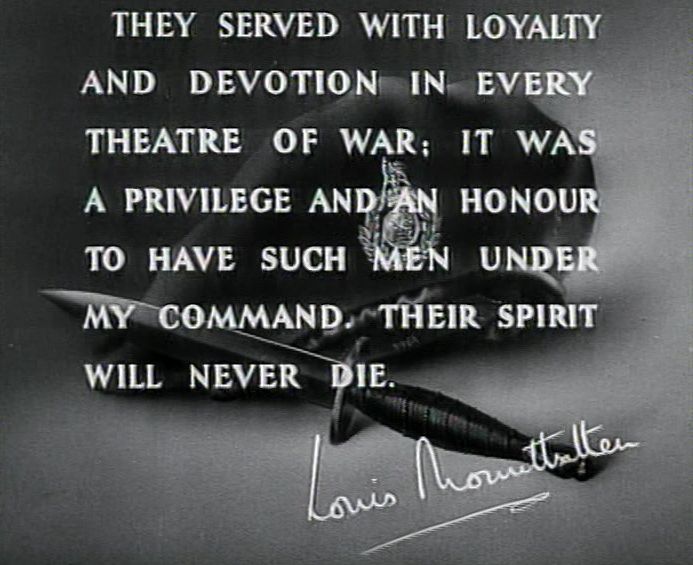
Commando: The Story of the Green Beret was a drama documentary produced in late 1945. Sponsored by the Admiralty, it follows the progress of Fusilier Gordon Blake as he undergoes the rigorous training schedule designed to turn him into a Commando (“the soldier of the future”).

After an establishing voice over, we open in a barbers shop where Gordon and his pal, ‘Stiffy’ Porter, are both having a shave.  There then follows some gloriously stilted dialogue as Stiffy and Gordon argue about the merits of this new fighting force. Gordon mutters that “I’ve been trying to drive into my mate’s thick head that the Commandos aren’t a lot of fancy bruisers” and over the next few minutes manages to argue his case pretty successfully.

The barber also pitches in with some wise words of wisdom and shortly afterwards Gordon sets off to begin his training at the Deal barracks in Kent.  Early on he attends a lecture from a Commando Captain who warns the new recruits that this isn’t the place to find “cheap glamour”.

As the hour continues we see Gordon tangle with the Tarzan course (“talk about Strength-through-Joy! I’m a new man already!”), face gruelling cross-country treks, tackle the essentials of unarmed combat and learn about the various Allied and Axis weapons he may well have to handle.

By dropping Gordon (who was presumably an actor) into the middle of a real Commando unit, the film is able to keep the interest level up as we follow his progress. There’s a varied mixture of newly shot footage and archive combat material and this is topped off with a typically jolly soundtrack (played by the Royal Marines band of course).

At just under an hour it’s the main feature and – notwithstanding some of the rather forced sounding dialogue early on – is a well put together piece of army propaganda.

Also included are three shorter documentaries, beginning with Rough Weather Landing (ten minutes). An experiment by No 4 Commando, it demonstrates how they’re able to launch a surprise attack on a seemingly impregnable coastline.  It may have been just off Cornwall – so they were under no threat from the Nazis – but the natural elements they had to face were dangerous enough ….

Jungle Mariners runs for fifteen minutes and revolves around the dangers faced by Marines in the Far Eastern jungles.  It’s another prime slice of propaganda, showing our boys happily interacting with a group of smiling natives as they all tuck into some nice slices of pineapple (elsewhere, things are a little more hairy of course). Jungle Mariners looks to be a mix of real footage and staged material, with multiple voice-over participants and the usual stirring soundtrack.

By Sea And Land – A Royal Marine Patrol In Normandy rounds off the disc.  Just under thirteen minutes, this short documentary follows the progress of a group of Marines as they attempt to maintain their position in occupied Europe following the D Day landings.  It’s another fascinating piece, full of interesting footage.

With a total running time of around 100 minutes, Royal Marines At War is another strong title released by Simply in association with the Imperial War Museum.  With Commando taking prime position, there’s plenty of worthy material to be found across all four documentaries.

Royal Marines At War has an RRP of £9.99 and can be ordered directly from Simply here. Quoting ARCHIVE10 will apply a 10% discount.

commando

The True Glory – Simply Media DVD Review

164454- Chief Crazy Horse Sleeve.indd

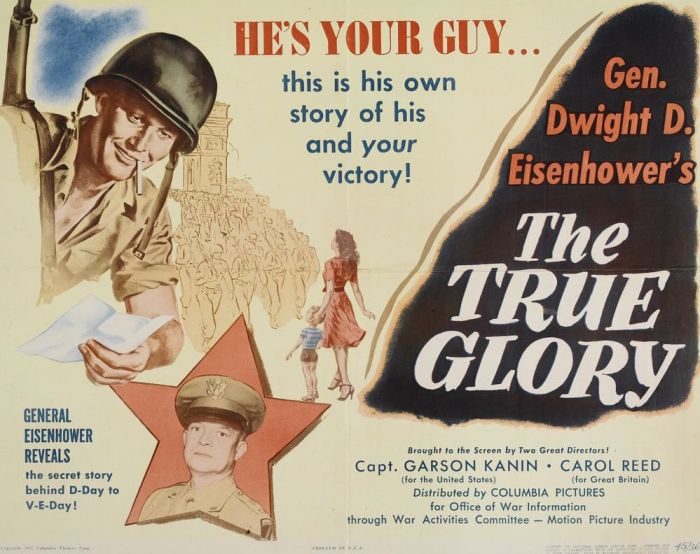
Released in 1945, The True Glory (a co-production between the US Office of War Information and the British Ministry of Information) documents the victory on the Western Front – from the D Day landings of 1944 to the collapse of the Nazi regime in Berlin the following year.

The footage – shot by some seven hundred front-line cameramen – remains highly impressive and in certain cases (shots of the wizened victims in the liberated concentration camps for example) gut-wrenchingly moving.

Although the film does use a narrator, the majority of the voices heard are a varied cross-section of fighting men and women drawn from many countries. This ‘oral history’ approach is a major plus point – it certainly helps to reinforce the notion that the war was won thanks to the efforts of millions of ordinary people rather than the select band of generals and commanders.  Indeed, General Dwight D. Eisenhower filmed an introduction making this very point.

All this is excellent propaganda of course – indeed, as the whole film is.  The True Story may still stand up today as a record of a vital year, but it’s not quite the whole story. However the authorised nature of the film does give us a totally different, but still valid, perspective on a host of key events compared to documentaries made decades later.

The Anglo-American nature of the production was reflected in the fact that two directors, one British and the other American, were assigned to the project (Carol Reed and Garston Kanin).  Although there were tensions in certain quarters about content and tone, Reed and Kanin got on very well and swiftly formed a harmonious working partnership. Kanin later said that his collaboration with Reed was “a kind of love affair from the start. I simply adored Carol Reed.”

Peter Ustinov, who had worked with Reed the year before on The Way Ahead, found himself sifting through some of the thousands of hours of raw footage sent back to London.  Ustinov remembered watching the material shot in Belsen. “One after the other, individual soldiers fell out, vomiting helplessly on all fours. The shock had felled these men with a blow to the stomach, and there was nothing discipline could do. Suddenly one soldier went berserk. He broke ranks for no visible reason. Eyes wild, he ran, and the camera followed him.”

Ustinov’s presence makes me wonder if other personnel from The Way Ahead were also utilised.  Certainly at one point there’s a voice-over from a British tommy who sounds very much like Leslie Dwyer – so maybe the voices were a mixture of actors and real people.

This two disc set from Simply is supplemented by four further documentaries produced by British Paramount News for the British MOI.  They don’t quite have the weight of The True Glory but are all still interesting in their own right and I’m glad they were included.

The True Glory is a fascinating slice of contemporary reportage which attempted to sum up the tumultuous events of 1944-1945 in just under ninety minutes.  This was obviously going to be a tall order, but the ‘now’ feel of the film helps to give it a great impact. Warmly recommended.

The True Glory has an RRP of £9.99 and a running time of 271 minutes. It can be ordered directly from Simply Media here (quoting ARCHIVE10 will apply a 10% discount).
Sources – the Kanin and Ustinov quotes were taken from this New York Sun article dated 5/2/08.

1118full-the-true-glory-poster

The Wheeltappers and Shunters Social Club – 8th March 1975

wheel

Tonight’s Turns:

The Flirtations
The Krankies
George Melly with John Chilton’s Feetwarmers
Richard and Lara Jarman
Joe ‘Mr Piano’ Henderson

There seems to be a never-ending line of girl groups who are available to be wheeled on to open the show. Today it’s the Flirtations, who have an impressive history and look to be another group that I’ll need to investigate further at a later date. Put Your Hands Together is the song they perform here – all three take turns to trade main vocal lines (although it’s fair to say that some seem better suited to taking the lead than others).

The Krankies are back. It’s slightly baffling now to understand quite how they managed to maintain such a long career, given the thinness of their act (possibly it was a mystery back then as well). The formula is as before – straight man Ian (lovely ruffled shirt, sir) finds himself continually interrupted by the highly irritating schoolboy Jimmy.

A sample joke will give you a flavour of their act. “Do you know anything about general knowledge? Yes, he was a soldier”. I don’t know why, but this time round I found their shtick to be somewhat creepy.

Still, things pick up with George Melly. Along with John Chilton’s Feetwarmers he rampages through The Boogie Woogie Man. They were an act surely good enough to be top of the bill, instead of being relegated to five minutes just before the advert break. Oh well.

Considering he wasn’t a name performer, Richard Jarman (together with the lovely Lara) gets a very generous chunk of the show (some thirteen minutes). It’s a perfect example of the sort of magic act you could expect to see in clubland, utilising props which don’t take up a great deal of floorspace.

Things don’t get off to the best of starts when Richard, preparing for the egg into dove illusion, drops the lid onto the floor. But quick as a flash he picks it up and things carry on. Once this minor miracle is out of the way it’s time to concentrate on the two main illusions.  The first is the very familiar Zig Zag Girl, although back then it was more current – having been invented just a decade earlier by Robert Harbin (one of his performances can be found on Network’s London Palladium release).

The trunk illusion is much older (it was a favourite of Houdini’s) and although it’s not too hard to work out how it’s done, the trick is still a good one.  Both illusions do take a while to set up (which helps to explain why the spot was so long) although it’s a slight surprise to me that Richard was allowed the two big tricks, rather than just one.

No act could be better suited to the Wheeltappers than Joe ‘Mr Piano’ Henderson (he plays the piano, you know). ‘Mr Piano’ leads the faithful in a number of sing-alongs (including You Made Me Love You which seemed to feature every other week). Joe’s amiable pub style of playing is the ideal way to close the show. Not an edition that’s particularly high on star power, but there are worse ways to spend forty minutes.

The Wheeltappers and Shunters Social Club – 1st March 1975

wheel

Tonight’s Turns:

The Settlers
Johnnie More
Bert Weedon
Keeley Ford
Steve Sabre
Jackie Trent and Tony Hatch

The Settlers. Well they’re colourful, if nothing else. Comprising three chaps – dressed in yellow, green and blue suits – and a young lady whose dress has all those colours and more, they open proceedings with a bang. The young lady (Andie Sheridan I believe) bangs a mean tambourine whilst the gentlemen all energetically strum their guitars. It seems to meet with the approval with the crowd who are nodding their heads in time to the music with mild gusto (especially the chap with a Tartan bobble hat). Oh, the song they’re singing today is called Shoes.

The group had teamed up with Cliff Richard and William Hartnell in the 1969 series Life With Johnny – a show so obscure it didn’t appear on Hartnell’s cv until a few years back (an episode had been sitting on YouTube for some time without anybody noticing). I think they’re a group to investigate further at a later date (their website looks to be a good place to start).

Johnnie More is an impressionist. He does Tommy Cooper of course (at least he doesn’t wear a fez). It might not surprise you to learn that there’s a little bit of Frank Spencer too, although he does throw in a few more unusual victims, such as Ian Paisley.

It’s Bert Weedon! His Play in a Day book was a bible for so many budding guitarists – Paul McCartney, Hank Marvin and Eric Clapton to name but three. A pity he’s only given five minutes, but Hava Nagila and Guitar Boogie Shuffle both go down very well with me. His sparkly top is a thing of beauty as well.

It’s a very music-orientated show today as after the break Keeley Ford appears to sing When You Smile. This seems to have been her sole television appearance, although she released a number of singles during the mid seventies.  She’s a performer quite happy to give the men in the audience the eye (one chap seems very taken with her). Keeley then decides to move amongst the crowd, encouraging them to “la, la, la” along with her.  Alas, she passes by Tartan bobble hat man, who I’m sure would have been up for it.

To break up the musical turns, Tony Sabre is on next. He’s a spesh act who balances sabres (see, the clue’s in the name) on his chin. He’s not a one-trick pony though as he balances axes on his chin as well. It’s when he does his balancing act in the middle of the audience that things really get interesting.

Tony Hatch and Jackie Trent are headlining today. Everybody knows they wrote the theme to Neighbours but I find it more interesting that they penned Positive Thinking for Morecambe and Wise. Their spot, considering that they’re bill toppers, is quite short – but it’s a nice trot through Two Can Make It Together, Everlasting Love and Together.  

Hatch was probably more suited to being a backroom boy than a front-man (he’s not the greatest vocalist ever) but Trench – resplendent in a canary yellow dress – certainly had an impressive set of pipes.

The Wheeltappers and Shunters Social Club – 22nd February 1975

wheel.jpg

Tonight’s turns:

The Vernons
Ray Fell
Paul Daniels
Elaine Delmar
Alvin Stardust

Bernard Manning’s introductions are almost always interesting. Sometimes he’s genuinely enthused about the acts whilst on other occasions he indulges in some good natured (?) banter and insults. Then there are the times when he bigs up a turn that would later sink without trace. How do today’s openers, The Vernons, fare? “Ladies and gentlemen, greet The Vernons”. Hmm, he didn’t put a lot of effort into that ….

The Vernons are an archetypical Wheeltappers opening act. Three attractive young ladies squeezed into tight purple outfits (to prove this point they make sure to turn around and wiggle their bottoms) the trio rather pleasingly belt out Automatically Sunshine in a little over two minutes. Short but sweet.

A comedian often filled the second spot of the evening and today it’s Ray Fell. He’s sporting a very impressive shirt and bowtie – better material than his gags anyway (I thank you).  For the second part of his spot he invites a pianist called Sydney onto stage. Sydney is just a little bit camp (I think it was the mincing walk and handbag that gave it away).  Their banter is very much of its time although the moments when both struggle to keep a straight face do raise the odd smile.

Elaine Delmar – still going strong today – takes no prisoners when tackling You Are The Sunshine Of My Life. Given that she – like all the turns – has to perform in a fug of cigarette smoke this is no mean feat.

He’s not yet topping the bill, but ‘unusalist’ Paul Daniels is still given a decent ten minute spot. Like his previous Wheeltappers appearance, Daniels displays his sharp and spiky club persona (honed after countless years trudging up and down the country in similar venues to this one).  Easily able to deal with the odd heckler, Daniels shuffles some cards, rips up a five pound note (causing the audience member who donated it to suffer a mild spasm) and does the cup and ball routine as entertainingly as ever.

I love the moment when Paul aims a dig at Bernard’s Embassy Club. We cut to a shot of Bernard with a rather forced smile on his face ….

Alvin Stardust is today’s top of the bill. Wearing a checked jumpsuit he certainly doesn’t hold back – kicking off with My Coo Ca Choo and Jealous Mind, Mr Stardust is a bundle of energy. Born Bernard Jewry in 1942, he’d already enjoyed some success during the 1960’s as Shane Fenton and whilst his 1970’s hit-making wouldn’t last long, he bounced back again in the early eighties (most notably with Pretend in 1981).

He’s certainly a wow with the ladies here – who want to divest him of his gloves (and possibly more). One chases him backstage (possibly staged, but maybe not) before he closes the show with Money Honey which certainly seems to leave the Wheeltappers faithful more than satisfied.

The Wheeltappers and Shunters Social Club – 15th February 1975

wheel.jpg

Tonight’s Turns:

Karl Denver Trio
George Roper
The Platters
Ronnie Dukes and Ricki Lee

Up first are the Karl Denver Trio. Born Angus Murdo McKenzie in Glasgow in 1931, Denver, together with his two associates, had a string of hit singles during the early sixties. The one they perform here – Wimoweh – was their biggest hit and judging by the appreciative audience reception was still fondly remembered a decade or so later.

Denver’s yodelling style will be something of an acquired taste (especially when he gets screechier and screechier) but at the very least it provides a rousing start to the show.

George Roper has to deal with a twin-pronged assault – Bernard Manning on one side, Colin Crompton on the other – but he still manages to come out ahead. A regular on The Comedians, Roper’s material isn’t exactly rib-tickling but he’s still very engaging (his pained expressions after withstanding yet another Manning barb is nicely done).

To close his act he invited Bernard up onto stage for an impromptu (i.e. obviously rehearsed) song and dance number. It’s a pleasingly shambolic ramble through Side By Side – no doubt they could have done another more polished take, but the rough and ready ‘live’ feel of the Wheeltappers is one of its strengths.

Despite his heckling (something he did to virtually all the comedians who dared to take to the Wheeltappers stage) Manning obviously had a great deal of affection for Roper, as proven by the tribute he wrote after Roper’s death in 2003 at the age of 69.

Up next are The Platters. Their non-musical history makes for fascinating reading – countless personnel changes, legal battles and rival versions of the group touring at the same time (I’m not sure how many – if indeed any – of the group present during their hit-making days made it to the Wheeltappers). But given that Buck Ram (who wrote many of their hits and guided their early career) was sitting in the audience, it looks like these ones were the ‘legit’ Platters.

Like many of the turns, they have to deal with the fairly primitive sound system (a spot of feedback to begin with) but like true pros they plough on through. Plenty is packed into their short spot – a medley of Only You, Smoke Gets In Your Eyes, The Great Pretender and My Prayer, finishing off with a rousing Put Your Hands Together.

There’s only four acts on tonight’s show, partly because the headliners – Ronnie Dukes and Ricki Lee – are given a generous fifteen minutes.  Introduced by Bernard as one of clubland’s top draws, they enjoyed only intermittent television exposure (although this did include a spot on the 1975 Royal Variety Performance) whilst Dukes was a big enough name to merit Eamonn Andrews handing him the big red book that same year.

Dukes (short and stout, but still a lovely little mover) and Lee (statuesque and long suffering, but a more than decent singer) were a good combination.   Ricki’s mother Vi was added into the mix – as a pianist and the inevitable butt for many of Ronnie’s jokes.  There’s some nice info on the act here – sad to hear that Ronnie ended up dying on stage in the early eighties with Rikki passing away a few years later.

There’s no ‘wow’ moments in tonight’s show, but a very solid evening’s entertainment nonetheless.


Angels – Walkabout (29th June 1976)

a2

Paula Milne’s Walkabout wastes no time in repositioning Maureen as both judgemental and close-minded.  In the first scene, which sees Pat tossing a few pennies towards a street busker (as she does every day), the division between Maureen and her closest friend is marked.  Despite previously being depicted as an open and embracing person, Maureen has now morphed into a much harsher character (for example, telling Pat that people living on the streets have made their own choice).

The new Maureen is discussed by Pat and Jo in a later scene. Pat is of the opinion that her friend has now become the perfect nurse (which isn’t a compliment – Pat contending that her responses to the patients are now mechanical rather than honest).

The reason for this set-up becomes obvious when we observe Maureen spending the majority of the episode shadowing community health nurse June Morris (Miriam Margolyes).  June is everything that Maureen isn’t – a freewheeling, impulsive person who thrives outside of the regimented hospital set-up (describing it as an isolating cocoon).

In the wide world there’s no doctor or senior nurse to turn to, meaning that the community nurse has to operate autonomously – June revels in this, but looks as if it’ll come harder to Maureen. June then explains that the patient/nurse dynamic is totally different when making a home visit – in hospital the patients are rather dependent whilst at home they’re in their own environment and therefore more confident.

Maureen, continuing to be written in a somewhat negative light, wonders why they simply aren’t all shipped off into care homes. This is a somewhat unfeeling attitude and is the type of comment that later causes Pat, in a moment of anger, to label her a bigot.

The first notable patient on June’s round is Mrs Faulkener (Natalie Kent).  Her health may be failing but she’s still gloriously combative.  As June gives her a bath, Mrs Faulkener reflects on old age and the poor quality of presents she receives. “That’s what happens when you’re older, people think all you want is lavender, talcum powder and manicure sets”.

Mind you, she has had an impressive present recently – a plant which is currently taking pride of place in the bathroom. A gift from her son, who otherwise apparently rarely seems to visit, Mrs Faulkener has elected to coat the leaves in nail varnish. When an appalled Maureen tells her that this will cause the plant to die, the old lady counters with the observation that at least it’ll look nice for a while. This is impeccable logic.

The lion’s share of the episode revolves around today’s major guest star, Maurice Denham (as Jack Knight). A former academic and a current alcoholic, Jack is gifted several well-written monologues by Milne as well as numerous other sharp lines. Here, he’s reflecting on the difference between his imaginary picture of nurses and what he actually discovered when he spent some time at St Angela’s.

On the one hand, the Florence Nightingale variety – a silent gowned figure gliding in and out of a dimly-lit ward, bearing a lamp to symbolise the virtue of her calling. And then there’s the other sort – the type depicted in low-budget comedy films with skirts up their backsides and a knowledge of the male anatomy gained through practical research, rather in the classroom.

But what did I find in reality? Heavy-legged girls, white with ferocious vocation, or off-hand creatures with one eye on the clock and the other on their unfortunate patient’s grapes.

Maureen, left alone with him for a while, crosses verbal swords with the combative Jack. No doubt by the end of their time together, as she witnesses Jack in all his many guises (from articulate to broken), she’s learnt something of value.  Denham is as good as you’d expect whilst Erin Geraghty more than holds her own.  The sight of a subdued Maureen, returning to the hospital to join the others in wishing a safe passage to Sita (who’s heading off to India), shows us that some of her dogmatic views have taken a knock.

This is the point of the story of course and whilst it could have come across as a little contrived, the fact that Denham was given so much material (and delivered it so well) proves to be a major plus.  And it was pleasing to close series two with a story centered around Maureen, a character who tended to be sidelined during most of this run.

Building on the groundwork of the first series, Angels continued to impress during this second series. That it’s not better appreciated is a shame, as the fusion of actors, writers and directors certainly produced something rather special. Maybe one day Simply will relent and release series three on DVD ….

a5.jpg

Angels – Celebration (22nd June 1976)

a1.jpg

Shirley amongst her psychiatric patients – who has the problems? (Radio Times Listing)

A P.J. Hammond script set in a psychiatric unit? This probably isn’t going to be average then ….

It’s worth remembering that Angels was a pre-watershed series (this one went out at 8.10 pm). There’s nothing graphically violent about the episode, but the elliptical conversations, allied to a feeling that something bad could happen at any moment, makes for an uncomfortable – if bracing – fifty minutes.

An initial group therapy scene with Shirley and a collection of disparate patients sets the tone.  Over the course of the episode they’re all allowed at least one moment which illuminates their character, but to begin with their interplay is so fractured that – as Hammond intended no doubt – the viewer is left slightly confused and breathless.

Familiar actors, such as Alan Lake and Joseph Brady, tend to catch the eye first.  Lake (as Tony) plays to type as an individual who can change from charming to threatening at the drop of a hat.  His antipathy towards Shirley (as someone who’s been institutionalised all his life, he believes that he’s better placed than her to pass judgement on his fellow patients) is a theme that’s teased out as the episode progresses.  Given Lake’s life and death, it’s very easy to wonder about which facets of Tony’s character were close to his own.

Joseph Brady (Jock) doesn’t have a great deal of dialogue but the sight of the perpetually rocking Jock, softly babbling away to himself, helps to deepen the already building sense of unease.  As does Arnold (Jack Chissick), who is plagued by murder thoughts and has now taken to jotting them down in a book whenever a new one arrives.  That he immediately reaches for his book after seeing Jo for the first time is an interesting little moment.

Angels was never averse to bleak stories, but most episodes with dark themes would also drop in another plot with a lighter tone.  There’s not a great deal of respite in Celebration, although the wrong-footing ending (we’re primed to expect a crisis which doesn’t occur) does at least enable the story to conclude with a sliver of hope.

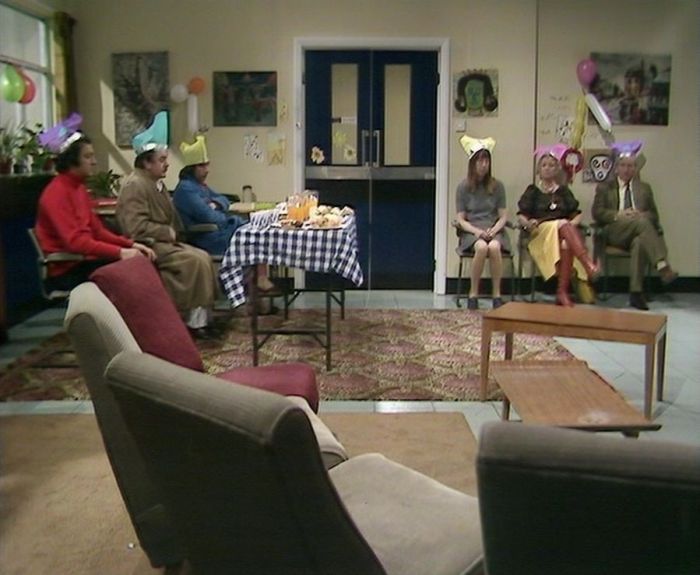
There is humour in the episode, although it’s of a rather dark nature.  Jo and Pat, corralled into helping Shirley organise a party for one of the patients, stumble into the room to find everybody dressed in party hats but sitting completely immobile.  It’s both comic and tragic, a feeling which is heightened when the two girls – neither of whom were terribly keen to attend – are forced to make excruciating small talk.

Shirley seems quite at home in the unit and treats the patients in a logical and rigorous manner.  Given that they can often act in deeply illogical ways this seems to be a risky policy.  Her style is commented upon by two people – first an Auxiliary nurse (Anne Ridler) and then Dr Fraser (Willie Jonah).

Both discussions are illuminating, especially the one with Dr Fraser. “We can’t just ask people,where does it hurt? The kind of wounds we’re looking for, they don’t show up on x-rays”. He then goes on to say that 90 percent of the work has to be done by the patients themselves with the remainder (“you and me and ECT and pills and Christian names and pots of paint and pictures”) supplied by the hospital staff

It’s slightly strange to see Pat and Jo teamed up (rather than one of the more usual combinations of Pat and Maureen or Jo and Sandra).  Pat seems to be acting slightly out of character (not unusual for a Hammond script, which often retooled the thoughts and views of the regulars) as she’s much more negative about Shirley’s work with the “loonies” than you might have expected.

It’s not totally out of character for her though and whilst she’s not central today, Pat is still gifted some fascinating moments – for example, the fact she so vehemently draws attention to her own complete normalness. Does the lady protest too much?

The episode is dotted with many items of interest, like George (George Waring) and Dianne (Mitzi Rogers).  Both day patients, they seem a good deal more “normal” than the others, although George’s cheerful and uncomplaining façade is brutally picked apart by Dianne.  But maybe this will prove to be beneficial for him in the long run – knocked to pieces so he can be rebuilt.

David Maloney’s direction is as assured as ever. There’s no particularly fancy shots, but in scenes – such as group therapy – where there’s around ten people present (and all contributing) it’s vital to be able to cut quickly and at the right time, otherwise you’re liable to lose a vital reaction shot.

Celebration is typical P.J. Hammond and therefore unmissable.

a9.jpg

Angels – Coming To Terms (15th June 1976)

a1.jpg

Having shared equal screentime in the previous episode, it’s a slight shame that Pat and Maureen have now reverted to type – Pat driving the main storyline with Maureen relegated to the role of observer and confidant.

Coming To Terms wastes no time in establishing the fact that Pat has bonded with a patient called Mrs Shepherd (Kathleen Byron).  For example, the way that Pat refers to her as “Shep”.  Their early scenes have a vague sense of foreboding – despite Pat’s bright and bubbly attitude, the seeds are already being sown about Mrs Shepherd’s terminal condition.

Mrs Shepherd is concerned how her son (referred to, but never seen) will react when he discovers that his mother and father never married. Pat’s decision to try and arrange a civil ceremony in the hospital then becomes the focal point of the episode.  There are various logistical hurdles to overcome as well as the thorny question of gaining the consent of Mr Shepherd (John Dearth).

Dearth only appears in a couple of scenes, but his imposing presence – both physically and vocally – creates an instant impression.  In his later career Dearth was cast on several occasions by Michael E. Briant (who directed this episode).

Rumours about Dearth’s issues with alcohol have made the rounds for decades and it’s hard not to think of that when watching his turn here. He does slur his words a little, but that sort of fits with Mr Shepherd’s character – who, after all, has just received the devastating news that his common-law wife is dying.

a3.jpg

Kathleen Byron also doesn’t have that many lines, but she makes the most of every moment.  A heavyweight actress (first in films, most notably Black Narcissus, and then later in a slew of television programmes) she gives Mrs Shepherd a sense of dignity and weary resignation. Although there are also moments of black despair and hopelessness.

By speaking to a social worker,  Pat kickstarts a chain of events which leads to an angry Mr Shepherd venting his frustration at the medical team.  This is a theme familiar from several previous episodes, just how involved should the nurses become with the patients? Other times it’s been more cloudy, but here there’s a definite feeling that Pat meddled for the good of all.

So this part of the story has a happy ending of sorts, with Mr Shepherd reconciled and happy to take part in the ceremony.  The wedding manages to close the episode on a positive note despite Mrs Shepherd’s terminal condition (which is an interesting trick).

Elsewhere, the other main plotline of Coming To Terms feels like it’s recycling a large chunk of the series one episode Case History. Both featured two male patients – one unfriendly (both to his fellow patients and the nurses) and the other voluble and somewhat irritating.

Today, the studious Keith Aldiss (Edward Wilson) is driven to distraction by a cheery and down-to-earth Northerner called Mr Kilshaw (Paul Luty).  Both were familiar faces (Wilson primarily from Rockcliffe’s Babies and Luty from All Creatures Great and Small and a host of other guest roles).  Mr Kilshaw’s good natured banter (telling Aldiss with grim enjoyment that he’s probably going to be sliced up!) helps to lighten the tone of an otherwise fairly sombre instalment.

The way they interact with Jo and Sita is the other reason why they’re present.  Both nurses clash with Aldiss, but whilst Jo is able to shrug it off, Sita reacts with anger.  As Sita’s been rather neglected recently, this episode goes some way to redressing the balance. She’s fretting about her upcoming exams and so hasn’t been eating or sleeping properly, which is beginning to impact her work on the wards.

It might have been nice to sow the seeds of this across a few episodes, as it all feels a little sudden (although it’s possible this might explain why she was so snippy at the start of series two).  Jo being temporarily put in charge of the ward causes a little friction between them, compounded after Sita makes an elementary blunder when treating Mr Kilshaw.

This is all good dramatic stuff for both Sita and Jo, although with Mrs Shepherd’s story dominating it feels a little rushed.

Apart from a brief film insert, Coming To Terms is studio-bound.  But Michael E. Briant keeps the interest up with a series of unusual shots.  He clearly liked shooting from behind the beds – this creates a bar-like, prison feel.

Easily the most notable sequence occurs when a stressed Pat staggers over to the rest room, only to find no succour there.  Thanks to an ever-increasing series of quick cuts (from one chattering nurse to another, over to the blaring television and then back to Pat) a nightmarish vision is deftly created.

Another very solid episode, Coming To Terms maintains the high standard of the second series.

a10.jpg

Angels – Home Sweet Home (8th June 1976)

a9

Holiday time for Maureen and Patricia. A whole week to see family, friends, boyfriends again. A week of discovery … (Radio Times Listing)

Having previously written the first series episode Off Duty, also a non-hospital story, Pat Hooker was clearly the ideal fit for this one.  Taking into account all we’ve learnt this year about Pat’s unhappy life with her parents, Home Sweet Home is an obviously ironic statement.

it also proves to be so for Maureen, although her week isn’t quite so bad. Maureen’s homecoming is however an excellent vehicle for Erin Geraghty, whose character this year has somewhat been shunted down the pecking order (Shirley, Pat and Sandra have been the three with the most interesting storylines so far).

Maureen’s arrival at the family farmhouse, set in the middle of the bucolic Irish countryside, has a faint air of tension due to the fact that there’s nobody home to meet her.  This feeling of unease is developed when Maureen’s youngest brother, Shaun (Gabriel Kelly), does make an appearance but shies away from her welcoming greeting.  That he doesn’t seem to recognise her is a signifier that she’s been away for a while and also that integrating back into the previously tight family unit might not be entirely straightforward.

Kate (Pauline Quirke) is equally unwelcoming, although it transpires that there’s several different reasons for this. Today’s episode is a rare opportunity for Erin Geraghty to use her comic skills – for example, I love Maureen’s delighted first sighting of her younger sister (“Kate!”) which quickly develops into a critical quizzing. “What in god’s name have you done to your hair?”. It may not sound much written down, but it’s a nicely played comedy moment.

Later, when all the family are gathered around the table, there’s another illustration of Maureen’s growing estrangement from her family after she discusses the latest television programmes (Maureen’s mother mistakenly believing that Michael Crawford is a friend of hers, rather than a top television star).  This scene also confirms that just about everybody in the seventies could be called upon to do a Frank Spencer impression, although Maureen’s has to be one of the worst.

The main dramatic meat of Maureen’s storyline begins when Michael Doyle (Aiden Murphy) pops his head round the farmhouse door.  A smooth-talking Irish caricature, they quickly pick up where they left off (presumably they’d been “walking out” before Maureen left for London).  Although it’s not confirmed until the end, the audience no doubt would have quickly twigged that Michael had turned his attentions towards Kate during Maureen’s absence (which explains some of Kate’s distant feelings towards her sister).

Aiden Murphy doesn’t quite convince – in an episode that feels very theatrical anyway, he’s easily the stagiest performer. But at least he’s considerably better here than he was as Hippias in the Doctor Who story The Time Monster.

Although Maureen has sometimes been portrayed as a little naïve, it’s pleasing to see that today she doesn’t fall for Michael’s spiel (I like the way she recoils when his hands begin to explore previously unchartered territory).  “Well you haven’t been learning technique like that at agricultural college” is another glorious line from Hooker.

Interspersed with Maureen’s travails, Pat is having an equally dramatic time of it with her family.  To begin with, the viewer is called upon to parse the meaning behind the outwardly polite, but obviously brittle, three way dialogue between Pat and her mother, Rose (Georgine Anderson), and father, Lawrence (Geoffrey Palmer).

Big reveals are slowly bubbling to the surface, but they drip out a bit at a time (frustrating for Pat, but dramatically satisfying for the viewer).  First we learn that Pat’s mother is leaving her father, although the reason is initially unclear. Both deny that there’s anybody else involved (although we later learn that Lawrence was previously seeing someone).

Rose doesn’t seem to be a well woman. At times somewhat disconnected from reality (telling Pat the same thing several times) as a student nurse possibly Pat should have picked up on these danger signals.  The fact that later, at a stifling party, she labels her mother as “crazy” is a tad unfortunate in retrospect ….

Rose’s dream (of going to London and completing her training to join the legal profession) is later offhandedly dismissed as a fantasy by Lawrence.  This is after Rose has taken an overdose at the party (following Pat’s “crazy” comment).  Incidentally, the off-screen overdose is played in such an understated way that for a moment it wasn’t clear to me whether Rose had left the house in a fit of pique or had overdosed.

It’s interesting how Rose’s delicate mental state (this isn’t the first time she’s attempted suicide, although Lawrence believes the others weren’t serious) doesn’t really seem to engender any more sympathy towards her.  Pat is still very much a daddy’s girl, although he’s hardly that admirable a character. The way he dangles a foreign holiday in front of her (with the promise that he’ll then find her a job more suitable than nursing) is an example of the controlling nature which lurks beneath his affable surface.

There’s plenty to chew on throughout Home, Sweet, Home. For example, Pat’s distant conversation with an old friend, which shows how little they now have in common.  It seems to be that both Pat and Maureen have changed and developed considerably since leaving home – and only because they have left their old lives behind.

a15

Angels – Accident (1st June 1976)

A1

An accident in a chemical factory … Nurses Sandra Ling, Jo Longhurst and Shirley Brent all have a part to play in what follows (Radio Times Listing).

A fair chunk of Accident, the first fifteen minutes especially, takes place outside of the environs of St Angela’s.  To begin with we’re back on the beat with Sandra (who’s continuing her occupational therapy placement).  Last time I commented about how everybody seemed just a little too nice to her, but today things are a tad more realistic – on the way into work she’s confronted by the leering Geoff Fenton (Graham Fenton) who declares that he needs a touch of massage.  Sandra’s fiery expression leaves us in no doubt about what she thinks of him ….

Fenton’s the rather lackadaisical safety manager at a local chemical factory which will prove to be central to today’s story.  Indeed, the fact that we’ve already been told that things are a bit slack there might explain why Bob Hubbard (Barry Lowe) was left to tend the machines all by himself.

So whilst Bob is getting squirted with a dangerous chemical called phenol, his number two – Charlie Masters (Andy Bradford) – and seemingly eveybody else are getting the once over from Sandra. It does slightly beggar belief that Bob’s left to suffer all by himself. Surely it would have been a good idea for someone else to be in the factory with him?

Despite the episode title, this was no accident – it was deliberate sabotage.  The sight of a twitchy David Troughton (playing John Overton) tinkering with the machines earlier on had already set us up to expect something bad to happen, but another plot niggle is the later reveal that Overton was deliberately targeting Bob. How could he have known that Bob would be tending that particular machine at the precise moment it blew?

Jo is currently working in the intensive care unit which puts her in a more subservient role than usual. On the wards she and the other nurses tend to pretty much rule the roost, but here she’s very much down the pecking order. First comes Dr Miles (Terence Conoley), then Sister Ashton (Marcia King) and then finally Jo.  Dr Miles tends to give Sister Ashton the rough edge of his tongue and Sister Ashton is equally snippy with Jo. Poor Jo, on the lowest rung of the ladder, has no one beneath her she can be horrid to ….

The relationship between Jo and Sister Ashton (presumably playing the same character as the unnamed intensive care Sister from Vocation) isn’t explored in any great depth.  We know that Jo loathes her (she calls her a “bitch” out of earsbot) although Vocation did suggest that Sister Ashton’s dispassionate nature was simply a coping device. When dealing with a never-ending stream of seriously ill patients, this seems reasonable.

The anxious Mrs Hubbard (Patricia Lawrence), waiting for news of her husband, is a type familiar to regular Angels watchers, although Lawrence still manages to tease some interesting nuances from what could otherwise be a fairly stock character.

The fact that Bob was having an affair with John Overton’s mother (played by Barbara Young) is something of a twist. It helps to explain why Overton, already presented as a disturbed type even before we learn that he’s attending the psychiatric clinic, decided to attack Bob. Young’s performance is somewhat broad – indeed, during the scene where Mrs Overton confronts her son it teeters over the edge somewhat.

Another slightly odd turn comes from Andy Bradford as Charlie.  He seems so hyperactive and annoying that you’d assume he would be the last person (apart from the homicidal Overton) who should be let loose on dangerous machinery. Although to be fair, he’s much more subdued after Bob’s had his accident.

Troughton is much more restrained than either Young or Bradford.  Overton is easily able to function normally on a surface level (Sandra doesn’t pick up that anything is wrong when she gives him a routine check-up) and he only starts to devolve later on when the (unseen) police begin to close in on him. Overton’s child-like nature (reinforced by the fact that comics are his favourite reading matter) is played well by Troughton, who’s as good as you’d expect.

Shirley has decided that she’s interested in combining geriatrics and psychiatry, which helps to explain why she’s currently working with Dr Berry in the psychiatric unit.  This feels slightly contrived, but it does allow the impressively bearded Dr Berry (Roy Holder) to question Shirley’s reasons for being there.  It’s previously been suggested that working in geriatrics was something of a retreat for her and psychiatrics might be even more so (especially if she’s using it to work out her own unresolved issues).

This is an intriguing possibility, although given that the story is quite busy there’s not a great deal of time to develop it.  Indeed, this is one reason why Accident doesn’t quite gel for me – there’s plenty of story potential in the various issues raised, but the script would probably have benefited from having a narrower focus.  It’s still perfectly watchable, but does feel somewhat bitty.

A2

Angels – Facing Up (25th May 1976)

a

Three very different stories relating to pregnancy unfold during the fifty minutes of Facing Up. The first features Ann Clark (Patricia Hassell) who is initially regarded with a jaundiced eye by Pat.  Maybe it was early in the morning, but Pat’s bedside manner seems decidedly rough and ready. When the slightly drippy Ann confesses that she doesn’t have a towel, Pat (through gritted teeth) tells her that she can probably find one.

Later, when a concerned Maureen discusses Ann’s case with Pat, Ms Rutherford doesn’t seem too bothered about the news that Ann could lose her baby – surely it’s easy enough to get another one ….

Mind you, all of the doctors and nurses are a little offhand with Ann.  Mainly they spend their time telling her not to worry, which only tends to make her worry even more.  Marc Zuber, as a breezily unconcerned doctor, for example.

At first, it’s hard to see the relevance of a later scene – Pat enjoying a slap up meal with her Uncle James (Frederick Jaeger) – but things quickly begin to make sense as pregnancy story number two is developed.  Pat is shocked to discover that both her parents never really wanted children (although Uncle James is quick to back-peddle a bit as he tells her that her father loves her now). Derek Martinus, as he’s done before, favours ever-tighter close ups of both Jaeger and Fullerton as the drama unfolds.

This scene impacts the reminder of the episode as Pat, ruminating bitterly over the fact that she was an unwanted child, then has to go back to the hospital and care for Ann, who wants a baby more than anything else in the world.  Her husband, Tom (Conrad Asquith), might be as equally drippy as she is, but there’s no doubting the love he has for her (or the fact that he’s equally as committed to their baby).

When Ann breaks down in tears, it’s an interesting touch that Pat freezes for a second before swiftly crossing over to comfort her.  From this point Pat’s earlier tension is erased and the pair bond.  Although there’s been some doubt throughout the episode about whether the baby will survive, there’s also been a feelgood vibe about this part of the story – so it’s not too surprising that everything goes well and Mr and Mrs Clark take charge of a healthy – albeit small – boy.

The scenes of Ann giving birth are, as you’d expect for a pre-watershed series, not very explicit but are still effective (Ann’s blurry POV reaction is especially well done). Derek Martinus really only blots his copybook when we quickly switch to stock film several times in order to show the child. Having a freshly born baby in the studio would have been very tricky of course, but this moment doesn’t convince at all.

Pregnancy story number three concerns Sandra, who’s out and about and developing her occupational heath skills.  Attached to a trading estate covering several factories, this gives her plenty of opportunity to interact with a wide range of people.  Everything seems a little too jolly and tidy to begin with though – as a female in a predominately male factory environment you’d have expected her to be on the receiving end of some hefty dollops of sexism.  But no, everyone’s as nice as pie ….

Although one worker (the distinctive Declan Mulholland) initially bristles at the way Sandra chides him about the strain he’s putting on his back, he quickly realises that she’s talking sense and begins to lift the boxes just like she suggests. Another worker (Ken Kitson) is quick to pop by with an offer of a cup of tea whilst Denis Swainson (John Bardon) seems equally as affable.

But there’s a sting in Swainson’s tale which is connected to his daughter, Barbara (Vanessa Paine).  Barbara is sixteen years old and devastated to be told by Sandra that she’s pregnant.

Vulnerable and worried, Barbara is insistent that her father can’t be told. But when Sandra unwisely drops some broad hints to Mr Swainson, it results in a black eye for Barbara (who is also kicked out of the family home).  I find it interesting that this storyline veers off in a rather unexpected way.  We seem to have been set up for another happy ending – Barbara and her father coming together thanks to Sandra’s intervention – but this is brutally snatched away in an instant.

The episode also deliberately doesn’t follow this story to its natural conclusion. Mr Swainson hits Barbara off-screen (and doesn’t appear again after the scene he shares with Sandra).  It’s made painfully clear to Sandra that she had no cause to meddle in the case and that her rash action has only made a bad situation much worse.

Angels always favoured storytelling from the nurses point of view. It would switch viewpoints as and when required, but since Sandra is prevented from speaking to Mr Swainson again it makes sense for the viewers to also be denied the opportunity to see him.

The three separate storylines – Ann, Pat and Barbara – are all decent enough when taken in isolation, but the way they meld into each other is the episode’s main strength.

a8

The Adventure Game – 24th May 1980

adv s01s01-01

Series One, Show One.  Originally broadcast BBC1, 24th May 1980, 09:30 am.

Contestants

Elizabeth Estensen.  Estensen first came to prominence via Wily Russell’s Beatles musical John, Paul, George, Ringo and Bert in the mid seventies.  A leading role in The Liver Birds, as Carol Boswell, would follow between 1975 and 1979.  Since 1999 she’s been a regular on Emmerdale.

Fred Harris.  A Play School stalwart between 1973 and 1988, Harris was also one of the Chokablokes in Chockablock, a regular on End of Part One (which had spun out of the Radio 4 series The Burkiss Way) and would become one of the BBC’s main IT faces during the 1980’s, presenting series such as Me and My Micro, Micro Live and Electric Avenue.

Mark Dugdale.  He’s got a red jumper and a beard.  Sorry, there’s not a great deal more biographical information I can share with you.

Argonds

Gandor (Christopher Leaver), Gnoard (Charmian Gradwell), Darong (Moria Stuart) and the Rangdo of Arg (Ian Messiter).

I know you shouldn’t really think about these things in too much detail, but it’s always puzzled me as to why Moria Stuart is credited as Darong but introduces herself as Moria Stuart.  Maybe it’s because some Argonds, when they take on human form, actually believe they’re the person they’ve “borrowed” their shape from.  Or perhaps it’s just a continuity error.  After all, Gandor does refer to Gnoard as Charmian at one point …

adv s01s01-02.jpg

This show gives us a rare opportunity to see what Christopher Leaver looks like before he puts on the white wig.  Would it have been clear at the time that this young chap was also the old butler?  Possibly not.  Again, thinking about this logically – if the Argonds can assume any shape, why does Gandor take on the form of a young man and then nip off to apply some make-up in order to make himself look older?  It surely would have made much more sense just to turn into an older chap to begin with.

The Games

We begin at the entrance hall.  Identifying the correct combination of colours and shapes will allow the contestants to pass from one side of the room to the other and this same combination will open the door to the next room.

There’s two very different ways of tackling this.  Methodical, logical thinking or step and hope.  They start well (Elizabeth is quick to spot that you can’t jump across two squares – something which Fred is slower to pick up on).  It’s interesting that after a few minutes we cut away to Gandor and Gnoard, busy setting up the puzzles for the next stage.  This cut handily covers the fact that when we return to the entrance hall they’re all in a different place (presumably this edit has removed a few minutes worth of faffing about).

Mark sounds like he knows what’s he’s talking about (muttering about geometric patterns) but eventually it seems that they get to the other side more by luck than judgement.  When faced with the door lock they’re somewhat baffled, so have to be rescued from this impasse by Gnoard, who skips across the board and opens the door in front of their eyes.  They simply have to repeat her door combination and they’re through, although Fred’s not happy.  “But why?” he says, as they enter – it’s not enough that the combination worked, he wants to know why it worked.  And he’s still chuntering about it a minute later (hopefully somebody set him straight off camera).

adv s01s01-03

Before the contestants enter the next room, Gandor and Gnoard explain some of the tricks and traps they will be encountering for the benefit of the viewers.  Everything in this room – a bolt, the clock, a cupboard, a corkscrew, etc – is left-handed.  And how do they unlock the door?  “Ping-pong balls!”  This involves a blower, and three people positioned in exactly the right place in order to bring the ping-pong ball to the top of the tube.  Variations on this puzzle would feature regularly during the first couple of series.

Fred’s quick to pick up on the fact that everything’s left-handed whilst one of my favourite unforeseen solutions to a problem comes when Elizabeth is able to reach down the tube and pick up the corkscrew.  It was supposed to be inaccessible, so clearly she has very thin arms!  Mark’s a bit quiet whilst Fred and Elizabeth are brainstorming whilst several sudden fade-to-blacks suggest that a fair amount of time where nothing much was happening has been excised.

Gandor, now looking older (although not as old as he’d appear in later shows – his look today is obviously something of a work in progress), returns to give them some blatant help.  Given that they’d worked out about the general left-handed nature of the room, it’s a little surprising they didn’t twig that the corkscrew had to be turned the opposite way from a normal one.

Elizabeth is the one to work out that they all have to stand at certain points in order to make the ping-pong ball rise.  But how can they grab it?  As soon as one of them moves the ball sinks down again.  Fred works out that they need a weight to simulate one of their positions and Elizabeth realises that it’s the weight from the clock they need, meaning that Mark again doesn’t contribute a great deal.

More fade to black moments again points to the fact that a considerable amount of editing had to be done in order to get something transmittable.  The varying durations of series one – this show lasts just under twenty seven minutes whilst the final show is a little over forty five – suggests that this might have been so.  No doubt all series one episodes could have filled a forty five minute slot, but if the contestants were slow at solving the puzzles then it wouldn’t have been much fun to watch.

The Vortex wouldn’t debut until series two, but the first series has a kind of forerunner – our trio have to cross back over the entrance hall floor.  If they remember how they got across in the first place then they’ve nothing to worry about.  If not, then they’re vaporised.  They work out that any green square or any triangle is safe.  Hurrah! Well done Mark, you came through in the end.

Overall, they was a pretty harmonious team – Mark may have been a little subdued but both Fred and Elizabeth pitched in with plenty of ideas and they all seemed to get on well.  Which, as we’ll see in later shows, didn’t always happen ….