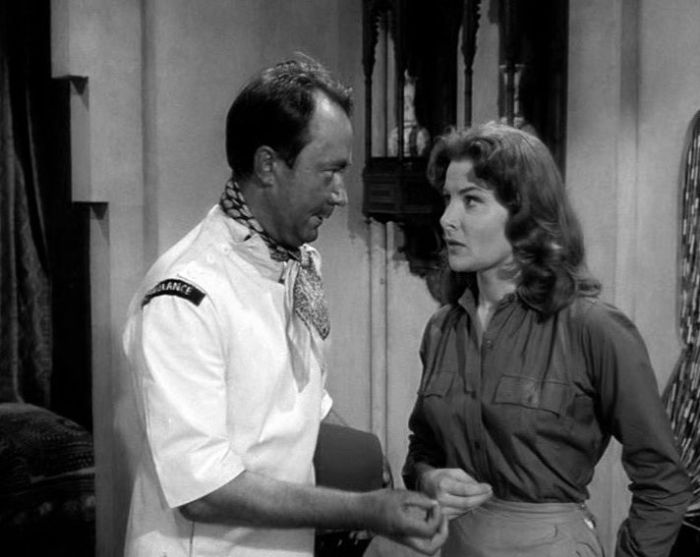
Bodyguards – Target

target 01.jpg

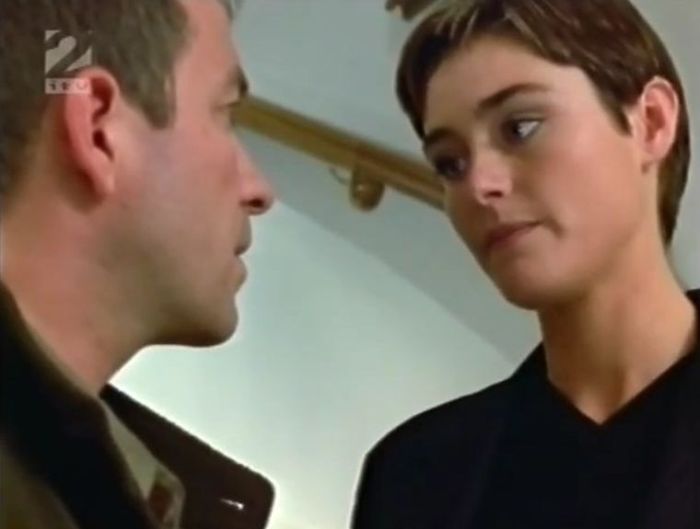
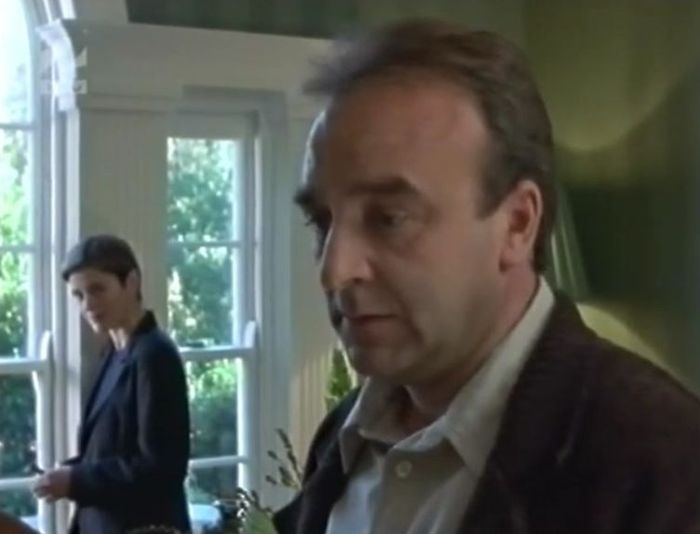
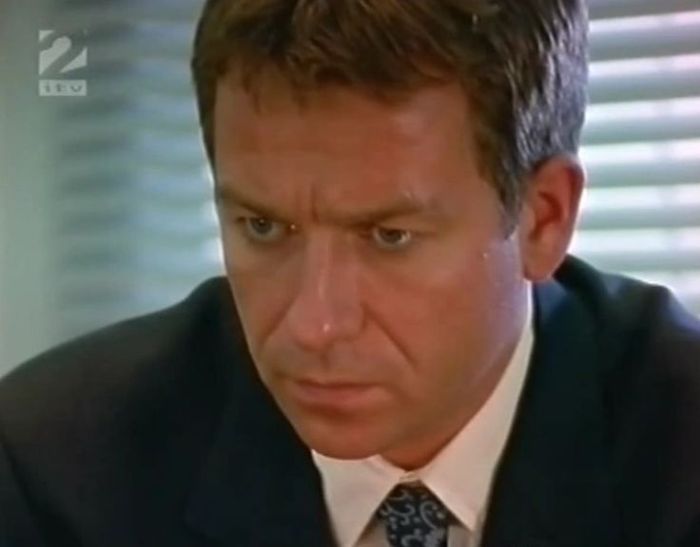
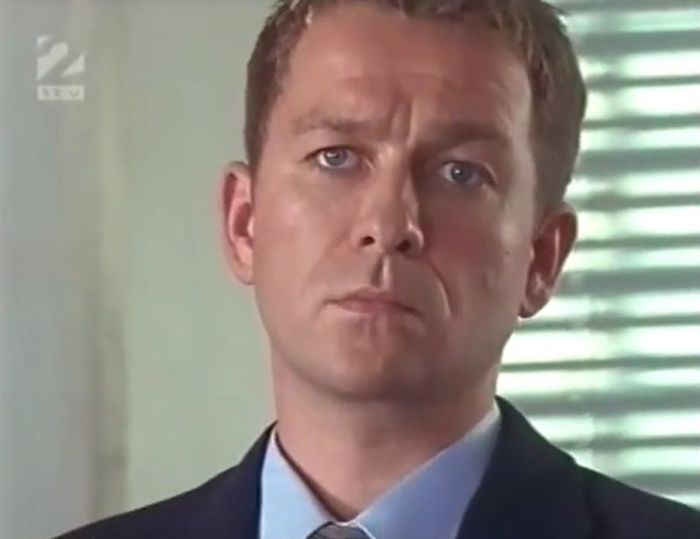
A shady businessman called Steven Ballard (John Bowe) is making a brief return to the UK in order to give evidence to a Commons Select Committee.  Various vested interests, apparently from the Middle East, would sooner he kept quiet, so he’s targeted for assassination …..

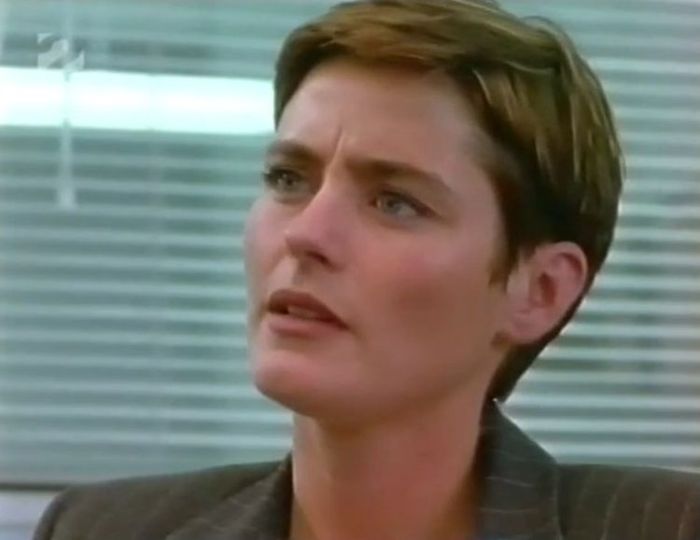
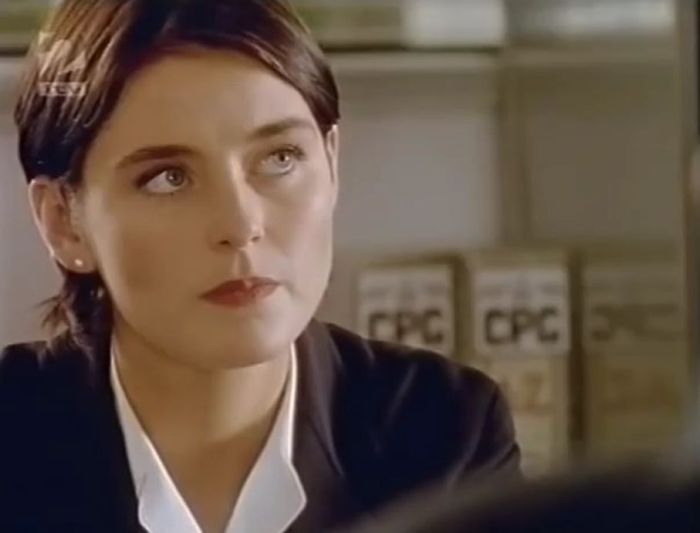
Ballard and Liz rather hit it off.  He might be a ruthless type in business, but he also possesses a considerable amount of charm and whilst Liz doesn’t bend, possibly she buckles ever so slightly.

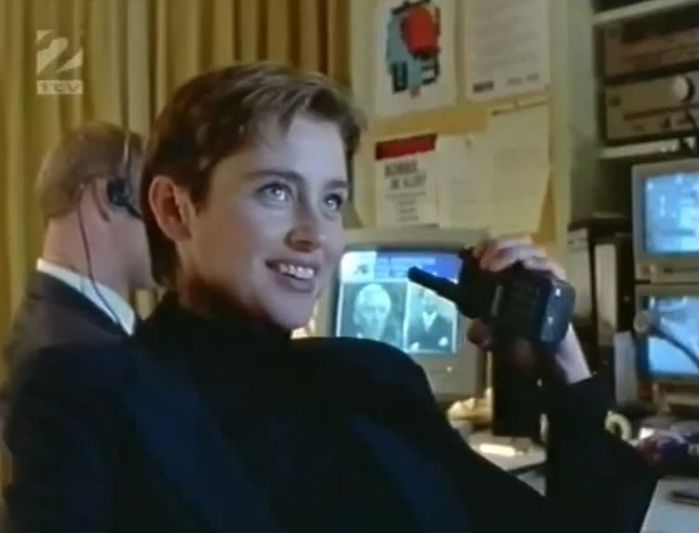
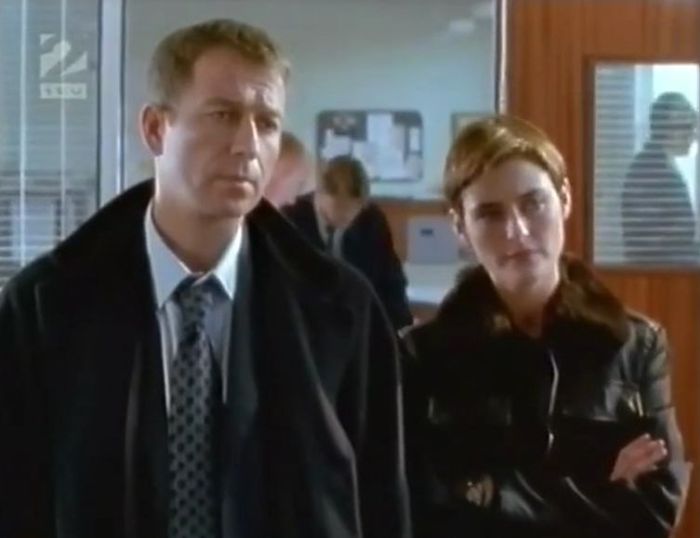
Liz, Worrell and a third agent, Stuart Robbins (Ashley Barker) take it in turns to guard Ballard.  Since we’ve not seen Robbins before it shouldn’t be too hard to guess the way things turn out (if he had been wearing a red shirt it would have been even clearer).

Once again, the way the Close Protection Unit handles their charge is a little eye-raising.  Ballard stays in his own property – a fairly substantial building – with only one agent guarding him.  When a cat apparently triggers the alarm sensors it rather highlights how stretched they are – if Liz is by the window shooing the cat, who’s looking after Ballard?

During Robbins’ tour of duty things go badly wrong.  An assassin breaks in, shoots Robbins, then shoots a figure in the shower (which turns out to be Ballard’s maid) and is only frightened off after Ballard hits the alarm.  Not exactly the Close Protection Unit’s finest hour ….

David Saville is on good form as Nigel Henderson, a rather shady government type who’s quite keen to sweep this unpleasantness under the carpet.  After all, the maid was an illegal immigrant so there shouldn’t be any problems there.  Liz later raises the intriguing possibility that the British government might be the ones who would be happy if Ballard didn’t testify.

There’s also the possibility that Ballard’s security was compromised by someone inside his own organisation.  We don’t see many of Ballard’s people, so it seems obvious that his trusted right-hand man Greg Burns (Nick Reading) is the guilty party.  Or is that just too obvious?

Julian Jones penned four episodes of Bodyguards in addition to contributing to a score of popular series during the nineties (Taggart, Perfect Scoundrels, Stay Lucky, Soldier Soldier, Between the Lines, 99-1, Wycliffe, The Bill, The Ambassador) and more recently created the popular Saturday evening drama Merlin.

Target, by playing up the angle that no-one (not even their own masters) can be trusted, ups the ante a little, and whilst the nature of episodic television means that the reset switch has to be hit at the end, it helps to make the episode a cut above the norm.  The gun-heavy climax is entertaining as well.

target-02

Bodyguards – Know Thine Enemy

thine

Worrell is designated to be the close protection agent on Robert Connor (William Hope), a right-wing Presidential hopeful.  Liz is put in overall command, which doesn’t please Golding (Aaron Swartz), a particularly aggressive American agent.  He doesn’t seem terribly impressed with the fact that she’s a woman, although the problem may be more that she’s British ….

Familiar tensions between the British and American agents are seen throughout Know Thine Enemy.  The Americans are all aggressive, trigger happy and unwilling to defer to anyone else – all clichés of course, but they help to stoke up the drama.

The way they approach the problem of Michael Aaronson (Peter Marinker) helps to highlight their differing approaches.  Aaronson holds Connor morally responsible (policy wise) for the death of his son and his arrival in Britain sets alarm bells ringing.  The Americans want him picked up and detained but MacIntyre – whilst happy to keep him under twenty-four hour surveillance –  won’t authorise this.

Given that Aaronson has no history of violence – he’s simply a political activist – the way he’s dealt with raises some interesting questions.  If they attempt to prevent his protest (he wants to present Connor with a petition requesting stricter gun control) then Aaronson’s civil liberties have obviously been interfered with – but is this the intention of the American agents?  Or do they truly believe he’s capable of violence?

Either way it’s slightly terrifying how the State apparatus is able to monitor him with ease, which raises the debate (not really touched upon here – the agents have already picked their side) about how far the liberties of the individual should be eroded in the quest to prevent terrorist attacks.

Liz intercepts and searches him and is happy that he presents no violent threat.  She then allows him to take his place outside the Queen Elizabeth Centre, where Connor is speaking, so Aaronson can hand over a petition.  But she doesn’t seem to have mentioned this to Golding and the other American agents, so when they see Aaronson reaching into a bag they naturally react promptly and violently.

You can’t blame them for their actions, which poses the question as to whether Liz deliberately didn’t tell them that Aaronson was present but not armed.  Given the storm of negative newspaper coverage it’s hard to imagine she would have done so, which leave us with the probability that Liz just screwed up.  She does tell MacIntyre that communications were fraught, but you’d have assumed this would have been a fairly vital piece of information to pass on.

Aaronson – hospitalized with a broken arm – isn’t unhappy though, as he’s gained the sort of publicity he previously could only dream of.  This enables him to give Liz a lead on a potentially dangerous threat to Connor.

Throughout the episode we’ve seen a nail-bomb being prepared.  Initially it seemed that Aaronson might be responsible, but after he’s put out of action – and the bomb-making continues – it becomes clear that the threat isn’t coming from him.  As with previous Bodyguards episodes, the hostile party is presented in a rather abstract way (we learn little about them).

Worrell and Liz are split up for most of the episode.  Worrell gets a few lighter moments – mocking Aaronson and the others (Worrell has a decent American accent) – but he’s rather placed into the background here.  Liz, fretting about her first taste of command, has more to do, but Know Thine Enemy never really sparks into life.  It’s decent enough fare, but lacks the personal edge of some of the previous stories.

Bodyguards – Out of the Mouths of Babes

babes

A thirteen year-old boy called Alan Taylor (Dean Steel) is the only witness to the murder of a priest and will therefore be vital in gaining a successful conviction.  Worrell, returning from compassionate leave, is assigned – along with Liz – to the job of protecting him in the run up to the trial.  MacIntyre considers it to be just the sort of routine mission which will gently ease him back into the swing of things, but events prove otherwise …..

Police intelligence seems to be somewhat lacking in this one.  MacIntyre doesn’t take the threats against Alan seriously and the investigating officers, lead by DCS Granger (Roger Blake), appear not to have linked the murder to a feral teenage Manchester gang, all of whom are skilled in the use of firearms.

That Alan and his family are under serious threat is made plain when his younger brother, Jamie (Dean Cook), is kidnapped.  But this is a strange part of the story – you’d assume that Jamie’s abduction would be the lever that forces Alan’s mother, Helen (Eve Bland), to withdraw her elder son from testifying – but not so.  Jamie is discovered, albeit dosed in petrol and traumatised, unhurt.

We never find out why they didn’t hang onto him, as the gang remain nebulous characters, little more than objects of abstract menace.  None of them have names or speaking roles, which skewers the narrative very firmly on the police’s side.  Programmes like The Bill also favoured this storytelling style, but it doesn’t work terribly well here.

Out of the Mouths of Babes continues to develop Worrell’s character – at the start he’s still somewhat emotionally fragile (MacIntyre wonders whether he should have returned at all) but seems to regain his equilibrium as the story progresses.  Most notably, we see how he and Liz form a bond with Alan.

For the first time we also start to probe a little deeper into Liz’s character as she relates the story about how she received a commendation for bravery – but since it concerned the death of her colleague it’s a bitter-sweet remembrance.  There’s another of the series’ action-packed sequences at the conclusion of the episode as the gang – via a forklift truck – force their way into the secure secret location where Worrell and Liz are guarding Alan.  Not much of a secret location then ….

The relative youth of the gang has already been stated, but it’s not been possible to really register this as they’ve been masked in their few, fleeting appearances.  So the moment when Worrell corners one and pulls off his mask only to reveal a child not much older than Alan is a suitably jarring moment.

Although it clips along at a decent pace, not allowing the gang a voice is a problem as is the pre-credits sequence which shows Alan observing the murder.  Since the murderer was masked, how exactly could Alan have identified him?  This is another puzzling part of the story which I’d hope would be addressed, but alas never was.

Bodyguards – A Choice of Evils

evils-01

Dusan Mesic (Anton Lesser) is a Bosnian-Serb leader who has come to London in order to participate in the ongoing peace talks.  Worrell is assigned to be his close protection agent, but he’s thrown into a spin when terrorists kidnap his wife, Pat (Kate Fenwick), and daughter, Gemma (Laura Harling).

They plan to assassinate Mesic shortly after he leaves a memorial service held aboard HMS Belfast.  If Worrell leaves enough space for the sniper to take a shot, then his wife and child will be released unharmed – which leaves Worrell with an impossible dilemma, his family or his duty?

Although we’re given a little background about Mesic, both from the man himself and the pair – Ivan (Boris Boscovic) and Marija (Yolanda Vazquez) – holding Pat and Gemma hostage, he’s not the focus of the episode.  Mesic maintains that he wasn’t responsible for the massacre in his home village whilst Ivan and Marija are convinced that he is.  Both Ivan and Marija lost their own children (later discovered in a mass grave) which answers Pat’s question as to how they could threaten a seven year old child like Gemma.  We do learn that Mesic is a skilled and charming politician, but it’s left to the audience to decide whether he personally had blood on his hands.

In many ways, Mesic simply exists in order to provide Worrell with a moral dilemma.  After he’s received the call from Ivan, we see him visibly sag – can he really go through the day pretending nothing has happened, or will he have confide in someone?  The tension is unresolved for a few minutes, but eventually he does speak to MacIntyre.  This then allows the narrative to be split in three directions – Worrell returns to guard Mesic, MacIntyre heads off to locate the sniper’s position whilst Liz and a number of others monitor Pat’s house

Once again, it’s Pertwee who dominates proceedings as events play out to their bleak conclusion.  The sniper is caught and killed before he can make an attempt on Mesic’s life, but when Liz and the others storm the house, Pat is killed in the crossfire.  It’s a jarring moment which causes both Worrell and Liz to reflect on the choices they’ve made.

Liz blames herself for Pat’s death, but then so does Worrell.  The ending, as Worrell comforts a distressed Gemma (reliving her mother’s death), is as downbeat a moment as you could hope for.  Worrell did the right thing professionally, but the personal damage has been immense.

Broadcast a year after the pilot, A Choice of Evils was an arresting way to open the series proper.  It increases Worrell’s emotional baggage and it’ll be interesting to see how this is dealt with as the series progresses.

evils-02

Bodyguards – Pilot

pilot-01

Broadcast in 1996/97, Bodyguards starred Louise Lombard and Sean Pertwee as Close Protection Agents Elizabeth Shaw and Ian Worrell. The opening episode, scripted by series creator, Jeffrey Caine, sets up the series parameters.

Liz Shaw (a nod back to Pertwee Snr’s Doctor Who?) is an experienced protection agent, whilst Ian Worrell is one of a number of new recruits. The newbies are put through the mill by the intimidating Commander Alan MacIntyre (John Shrapnel). MacIntyre’s unorthodox approach is made clear right from the start, after he calmly informs Worrell that he’s placed a bomb under his chair. You might expect that it was a fake bomb, but no – it was real (as demonstrated when it later explodes harmlessly in a sand bucket).

Worrell’s keen, but can he be relied upon? His training results are inconclusive, but MacIntyre takes a chance on him. Pertwee exhibits a nice stillness during these early scenes, his piercing eyes telling their own story.

As might be expected, both Shaw and Worrell are isolated figures – Shaw is cold-shouldered by her old colleagues after she leaves Special Branch to return to protection duties, whilst Worrell takes a call during training which quickly sketches out the fact that he’s divorced/seperated and struggling to maintain a relationship with his young child.

Plenty of familiar faces appear in this opening episode. Josette Simon (Blakes 7) and Stefan Kalipha (For Your Eyes Only) guest star as two foreign VIP’s who come under the protection of Shaw and Worrell. The likes of Geoffrey Beevers, Julian Coy, Trevor Cooper and Terence Harvey also pop up.

Although billed first, Lombard somewhat plays second fiddle in this one to Pertwee – Worrell’s journey from loose cannon to trusted team member is the main focus of the pilot. Shrapnel, as the uncompromising MacIntyre (he threatens horrible reprisals to the first person to call him “guv”!) impresses hugely. And there’s plenty of action, explosions and gunfire along the way. A solid opener.

pilot 02.jpg

Probation Officer – Series One, Episode Two

prob-01

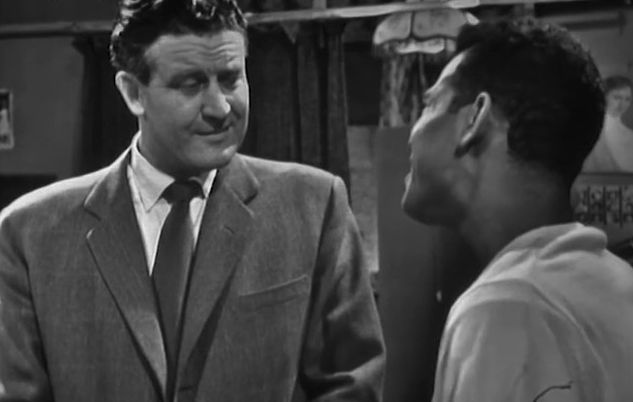
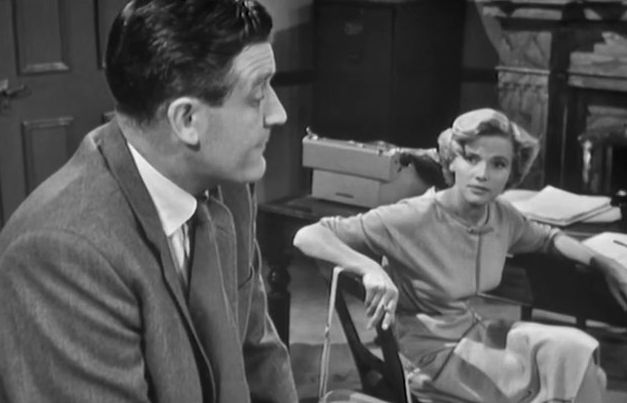
Running between 1959 and 1962, Probation Officer was a series that wasn’t afraid to tackle heavyweight topics – as seen in this episode (available on YouTube as a taster for the upcoming DVD release).  The colour problem was a fruitful area for television drama across numerous decades and we it tackled here by Julian Bond in a very uncompromising fashion.

Probation officer Philip Main (John Paul) is approached by a middle-aged black man called Mr Alexander (Earl Cameron).  Alexander is concerned about his son, Johnny (Lloyd Reckord), who’s in a relationship with a white girl, Mary Sadler (Felicity Young) and Alexander can only see grief ahead for the pair of them.  Cameron, a physically imposing actor, comes across well here as he expresses fear that the relationship will force Johnny to hit back against the wall of prejudice he is sure to meet (as we’ll see, this is exactly what happens).

The most notable thing about Paul in this first scene is how often he blinks.  Maybe this was a deliberate touch to suggest that Main (still very much a newcomer to the probation service) is keen, but a little out of his depth.  He agrees to talk to Johnny though, and he asks his colleague Iris Cope (Honor Blackman) if she’ll speak to Mary.

After Alexander exits the office, two of Main’s colleagues – Jim Blake (David Davies) and Bert Belman (John Scott) – enter.  Because this is only the second episode (and I’ve yet to see the first) it’s impossible to know how Bert was previously presented.  It’s probable though that he was positioned in episode one as just another member of the team – if so it makes his racial outburst all the more jarring.  Referring to Alexander as Sambo and a Darkie, he makes his views quite clear in just a few sentences.

It shouldn’t come as too much of a surprise to learn that Johnny is very touchy and quick to rise to offence (Main refers to the large chip on his shoulder).  Main’s conversation with him doesn’t achieve a great deal and it’s an eye-opener that Main suggests maybe he and Mary should move to a different part of the country where they’d be more accepted.  Truly the past is a foreign country.

Iris fares little better with Mary’s parents.  How they’re presented to us is another interesting touch.  First we see Mrs Sadler (Dee Duffell), who appears to be reasonable enough, but dig a little under the surface and she displays a strong racist streak.  The loud slam of the front door indicates that Mr Sadler (Toke Townley) has returned home.  It might have been expected that he’d be just as uncompromising as his wife, but instead he’s a mild man who – unlike Mrs Sadler – genuinely wants the best for his daughter.  If that means a relationship with Johnny, then so be it.

Johnny confronts a gang of youths (led by Larry Martin).  They are nebulous characters (lacking names for example) who exist only to further this part of the plot – the reason why they dislike Johnny aren’t articulated, presumably because they’re obvious.  Fight scenes in videotaped drama could often come across as rather amateurish, this problem is seen here as the gang give Johnny a beating.  He fights back – badly injuring one of them – and within seconds the police and a doctor are on the scene.  The others have vanished, leaving just the unconscious youth and Johnny.

With Johnny facing the prospect of prison, events have taken a dark turn.  But salvation is at hand from a very unlikely source.  Johnny is found guilty, but the Judge (A.J. Brown) is sympathetic and decides to put him on probation for three years.  “I urge you to govern your temper, to return good manners for ill, to meet insults with fair words.  It is because it is my sincere belief that only so will you shame my fellow countrymen into giving you the place which is rightly yours. Violence is a sign of weakness, Alexander. Your strength lies in the justice of your cause.”

This may be a little preachy, but it’s a noble sentiment nonetheless.  As to whether Alexander and Mary will have any sort of life together is left for the audience to decide.  We see the pair of them walk past the gang.  This time there was no confrontation, but if they continue to live in the same streets how long will it be until tempers boil over again?  And even if they move, will they encounter similar people elsewhere?

Julian Bond’s script offers no sugar-coated conclusion, but neither is it without hope.  This is a well-acted instalment which bodes well for the forthcoming DVD.  The guest cast, especially Cameron and Record are impressive and if the story feels a little contrived in places (the trial, and Mary’s last minute dash to give evidence, is dealt with rather hastily) it’s a still a thought-provoking piece.

prob-02

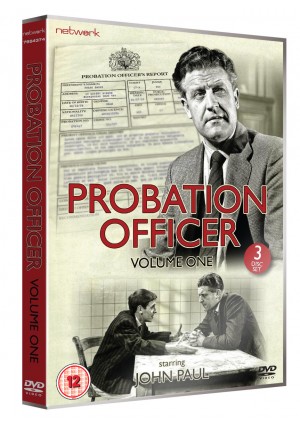
Probation Officer to be released by Network – January 2017

probation.jpg

Volume One of Probation Officer (containing the twelve earliest surviving episodes) can be pre-bought now at Network.  Payment will be taken immediately, although the DVD won’t be dispatched until late January. For Doomwatch fans, it’s a chance to see a young John Paul, but it also looks like an absorbing, black and white videotaped drama in its own right, with a mouth-watering roster of guest actors.

An early hit for ATV, this absorbing, rigorously researched and very human drama series centres on the work of a team of probation officers based in London, and the lives of the men and women of all ages and backgrounds who come under their care. Drawing on the documentary skills of creator Julian Bond and produced by Emergency – Ward 10’s Antony Kearey, Probation Officer was broadcast at a time – a time when the service was increasingly coming into focus as a progressive response to rising crime.

Future Doomwatch star John Paul stars as newcomer Philip Main, alongside The Avengers’ Honor Blackman as Iris Cope, the team’s only female officer. Guests include Alfred Burke, Susan Hampshire, Charles Lloyd Pack, Richard Vernon and Peter Vaughan – while Earl Cameron and Lloyd Reckord star in a blistering tale of racism and intolerance which features one of the earliest interracial kisses ever broadcast on British television.

Probation Officer does not exist complete in the archive – this volume contains the twelve earliest surviving episodes from series one.

Christmas Top of the Pops 1981

xmas-81

Although BBC4 are continuing to plug away with their archive TOTP repeats (we’ll shortly be hitting 1983) sadly there will continue to be considerable gaps.  It’s understandable why any that feature Jimmy Savile get chopped, although DLT’s continuing blacklisting is a little harder to comprehend.

The recent news that the late Mike Smith elected not to authorise repeats of any shows in which he featured (a decision supported by his widow, Sarah Greene) is another blow.  The reason for this isn’t clear, although it’s possible that Smith felt tainted by association with the likes of Savile.

Still, at least many of these “banned” shows are in circulation, although complete editions tend to get pulled quite quickly from YouTube (other video sharing sites tend to retain them a little longer).  But one that has remained on YouTube for a number of years is the 1981 Christmas Special, which I’ve recently been revisiting.

It opens with the Teardrop Explodes and Reward.  It’s still fairly early in Michael Hurll’s reign, so there’s not an excessive party atmosphere – Julian and the boys share the stage with a few depressed-looking tinsel Christmas trees and some balloons – but hey, with a song as strong as this you don’t really need much in the way of set dressing.

Up next are Ultravox with Vienna, which was held off the top spot by Joe Dolce (surely one of those facts that just about everybody knows).  The rest of the band decided to dress quite normally, but Midge went for the full biker look.  It means nothing to me (sorry).  We do get a ballerina though, which is nice.

The lovely Kim Wilde sings Kids in America.  Sigh …..

I’ve always liked the Human League, which means that this edition of TOTP is on a bit of a roll at present.  The League perform Love Action (“this is Phil talking”) and it’s back in the day when Philip had plenty of hair whilst Susan and Joanne haven’t really gone down the glam route (but look most attractive, nonetheless).

The good stuff keeps coming, with Godley & Crème and Under Your Thumb.  It’s not exactly a cheery party song, but the audience jig about a bit from side to side – which shows they’re attempting to get into the spirt of things.  Perhaps wisely the camera tends to focus on Kevin and Lol, especially Kevin who’s in full emoting mode at the end.

There’s a Guy Works Down the Chip Shop Swears he’s Elvis saw Kirsty MacColl labelled as something of a novelty artist, but in the years to come she’d more than prove her quality as a singer/songwriter (and there’s nothing wrong with this song anyway).  Thanks to Fairytale of New York she’s always present at Christmas, but MacColl shouldn’t just be for Christmas, she’s good enough to be enjoyed all year round.  Make it your New Year’s resolution to check out her back catalogue, you won’t regret it.

Awkward interviews were a feature of TOTP during this era and Simon Bates draws the short straw when he encounters Adam Ant.  Colin Blunstone and Dave Stewart are up next with their cover of What Becomes of the Broken Hearted.  If you don’t already have it, then a copy of Odessey and Oracle by The Zombies should be a last minute Christmas present to yourself.  The Zombies, with the core partnership of Blunstone and Rod Argent, are still going strong today – gigging and recording albums – and they’re well worth checking out.

Zoo dance to the Jacksons’ Can You Feel It.  Linx have got into the Christmas spirit (their keyboard player is dressed as Santa!).  Intuition is one of those songs that I haven’t heard for years, but it still sounds pretty good and fits perfectly into the Christmassy atmosphere.

Too Nice to Talk To is one of The Beat’s lesser-known hits, but it jigs along nicely.  Spandau Ballet are next, and the good news is that they haven’t yet turned into slick balladeers.  But the music (Chant No 1) wasn’t uppermost in my mind – where’s your shirt Martin Kemp?  You’ll catch your death of cold in that drafty studio ….

Nothing screams early eighties like Toyah does.  Why?  It’s a Mystery (sorry again).

Laurie Anderson’s O Superman defies description and it’s wonderful that a fairly short-lived (Peter Powell mentions that they never featured it on the regular TOTPs as it exited the charts shortly after entering) and decidedly left-field hit made the Christmas edition.

Clare Grogan’s covered in streamers as Altered Images perform Happy Birthday.  It’s another track that fits in perfectly with the happy, party vibe and it’s an undeniably slick slice of pop.

At this point in their career, Depeche Mode (with I Just Can’t Get Enough) look impossibly young and fresh-faced.  Sensible clothes (especially jumpers) are well to the fore.  Also well-turned out are OMD.  As they perform Souvenir some of the dancers do a bit of smoochy dancing (watch where you’re putting those hands!) whilst members of the audience, in time-honoured TOTP fashion, turn around to gawp at the camera.

We end with a big old singalong as the groups and the DJs join forces to warble through All You Need is Love.  Other familiar faces, like Justin Hayward, also pop up (was he just passing?) and it brings to an end an almost faultless edition of the show.  Pop perfection pretty much from beginning to end.

Sykes – Christmas Party

sykes.jpg

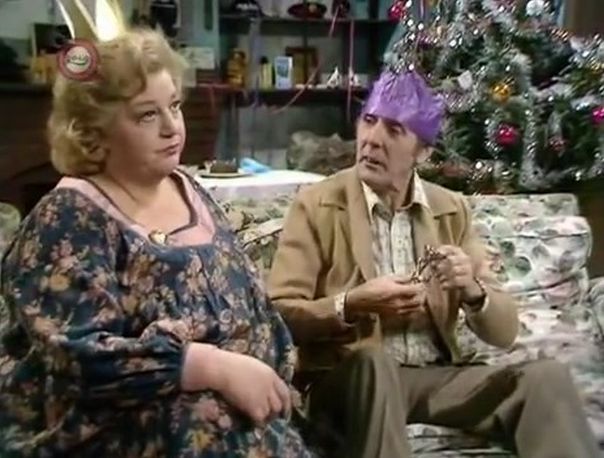
Running during the sixties and seventies, Sykes starred Eric Sykes and Hattie Jacques as identical(!) twins Eric and Hattie.  This episode, Christmas Party, was broadcast in December 1975 and finds them enjoying a touch of Christmas hospitality at Corky’s house (the wonderful Deryck Guyler, on fine form as ever).

The way that Eric and Hattie behave to their host highlights how different they are.  Eric, once they’ve finished eating, is keen to make their excuses and leave but Hattie, knowing how this would hurt Corky’s feelings, insists they stay for a while.  It’s clear that Eric’s more than a little cheesed off and Corky’s relatives don’t help to lighten his mood.  There’s the distinctly odd Clara (Sheila Steafel), who never seems to speak, as well as an annoying child, Marlon (Nicholas Drake), who delights in taunting Eric.

Eric Sykes’ writing style has always intrigued me.  Although he had a long association with Spike Milligan (Sykes pitched in during the 1950’s with Goon Show scripts to help ease Milligan’s workload) his own shows were always quite conventional in their tone and outlook.

So Sykes, unlike Milligan, was never an experimental comedian, which means that his work can sometimes be predictable, although – as with Christmas Party – there’s often a twist or two.  One example of using a well-worn gag can be seen when Marlon offers Eric his telescope.  You know (and the studio audience seem clued in as well) that in a minute his eye is going to be covered in black bootpolish – and so it is.  Was it the sheer predictability which appealed to Sykes?  Although his double-take means that he makes the most of it.

With most of the “action” taking place in Corky’s sitting room, there’s a definite feeling of being trapped – certainly most of the audience would probably sympathise with Eric’s sense of despair (he’d much sooner be back at home with his feet up, rather than listening to Clara plonk away on the piano).

Later, there’s a nice reversal of our expectations after Corky demonstrates his favourite card trick.  Eric doesn’t want to play along (he complains that Corky does the same one every year) and explains to Hattie that it’s just so obvious – every card in the deck is the Ace of Spades, so it’s no surprise when Corky’s confederate displays the same card.  Although he, yet again, picks the Ace of Spades he mischievously tells Corky that it was the Ten of Hearts, only for Clara to show him the Ten of Hearts!  Possibly this was the reason why Sykes had crafted the earlier, obvious, gags like the telescope – that way it makes the unbelievable card reveal more of a surprise.

The quick arrival and departure of Jimmy (Jeremy Gagan), a personable pickpocket, seems to provide an explanation as to where all their personal belongings (watches, wallets, etc) have gone, but once again there’s a twist in the tale.
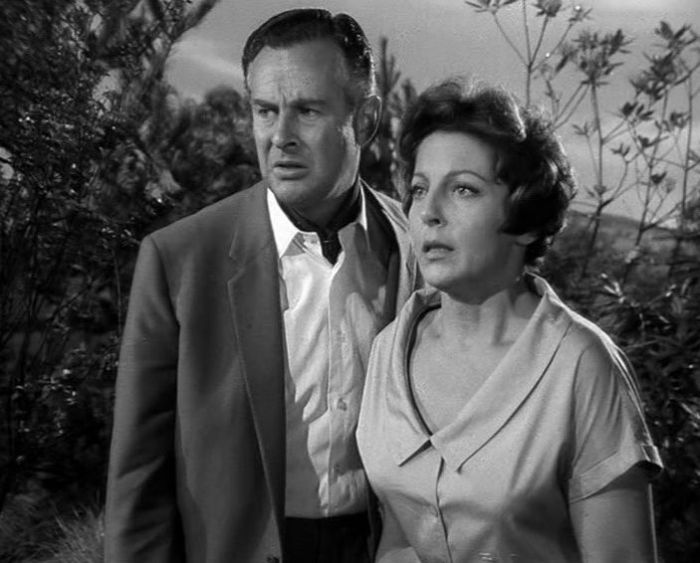
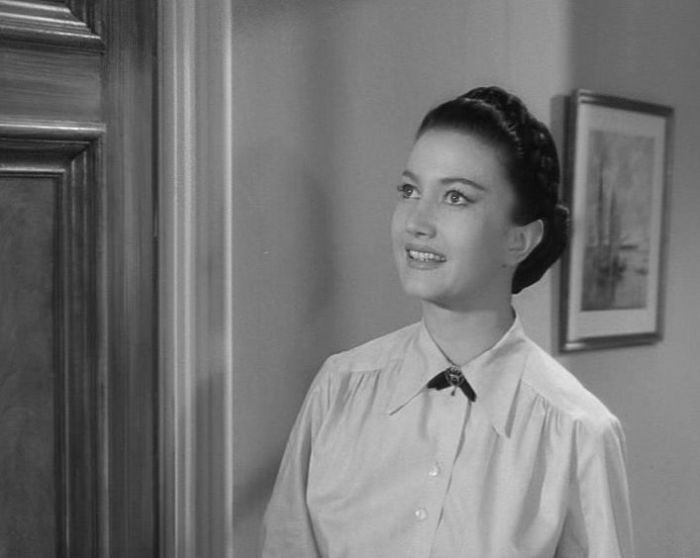
Christmas Party chugs along very nicely thanks to the talents of Sykes, Jacques, Guyler and the guest cast, especially Steafel.

That’s Christmas Sez Les!

sez.jpg

That’s Christmas Sez Les!, Les Dawson’s 1973 Christmas extravaganza, certainly doesn’t lack on the guest front.  Along with regular contributors Eli Woods, Roy Barraclough and the Syd Lawrence Orchestra, Clive Dunn, Jack Douglas and Ronnie Caroll are on hand for comic duties whilst Slade, David Essex, the Kessler Twins and Lynsey de Paul provide the music.

If you watch all the surviving episodes of Sez Les in sequence then there’s a considerable progression from series three (broadcast in early 1972) to this special in late 1973.  The third series shows were very tightly formatted – each twenty-five minute edition contained an opening and closing monologue from Dawson, a spot from the Syd Lawence Orchestra, a couple of musical guests, one studio sketch and possibly a brief bit of location filming.

By 1973 there was clearly more money in the kitty, as the regular shows had been extended to forty minutes (this special runs for an addtional ten minutes). Another change is that there’s now a considerable number of very short sketches rather than a couple of longer ones, which means that in some ways it feels like The Fast Show twenty five years early. You certainly can’t complain that the sketches are too drawn out, since many only consist of an establishing line and a punchline.

One slightly longer sketch features Dawson as a barman and Barraclough as a customer who’s confused when Dawson keeps throwing the drinks into his face.  A basic rule of comedy – repetition – is in play here, every time Barraclough complains, it appears that Dawson has finally understood, only for him to repeat the drink throwing once again.  There’s a predictable pay-off, but it’s pleasant to see a young Gordon Kaye pop up.

Dunn, Douglas and Caroll, along with Dawson and Barraclough, are good value as a group of wise-cracking vicars.  This enables them to rescue gags from the old jokes home (“do you save fallen women?”) but they’re good enough to get away with it, just ….

With so many very brief sketches,  Dawson sometimes struggles to make an impression whilst the deluge of guests also helps to reduce his screen-time. Still, at least the musical performers are pretty top notch, although was Noddy Holder really upset at Dawson’s trademark mocking introduction?  Noddy’s rejoinder (“ta for that introduction, fatty. Don’t call us, we’ll call you”) could be taken as good-natured banter, or maybe he really didn’t see the joke.

No matter, as Slade’s performance – lipsyncing to Merry Christmas Everybody – is just about perfect.  The average age of the typical Sez Les audience tended to be a little outside of Slade’s usual demographic, which explains why director David Mallet elected to surround the group with an enthusiastic young crowd.  With Noddy’s trademark mirrored hat and platform boots, together with Dave Hill’s gleaming Super-Yob guitar, this is a classic Christmas moment.

David Essex elected to sing live, the pick of his two songs being Lamplight.  He doesn’t have the teen audience around him, instead he’s on a darkened stage (rather apt I suppose, considering the song title) but showman that he is, he soldiers on regardless.  Lyndsey de Paul is possibly one musical guest too many, but her dancing with Les is a nice comic moment.

Actually thinking about it, Clive Dunn’s musical spot is definitely one too many.  The good news is that it isn’t Grandad, the bad news is that it isn’t as good as Grandad.  As with his earlier smash hit, he’s surrounded by a group of cute children, which is either endearing or sickly, depending on your point of view.  But it’s Christmas, so let’s be generous ….

More Les Dawson would have been welcome, especially some decent monologues (always his comic strength) but That’s Christmas Sez Les! is a compelling selection box of entertainment from a diverse group of performers.

Robin’s Nest – Christmas at Robin’s Nest

nest-01

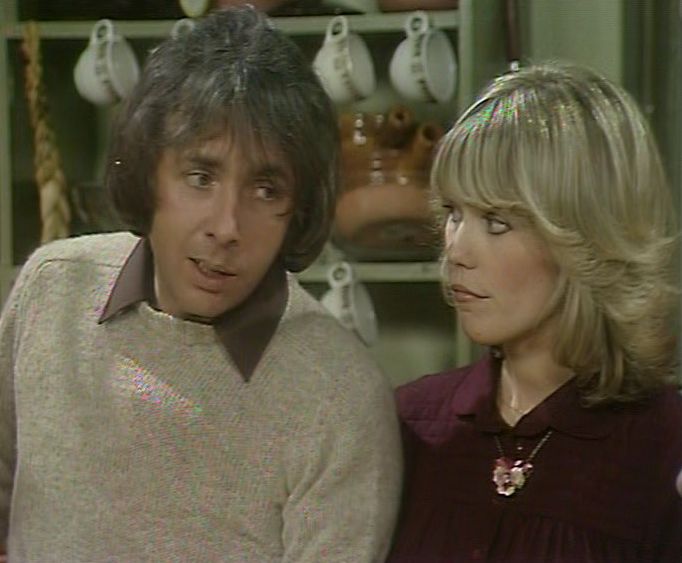
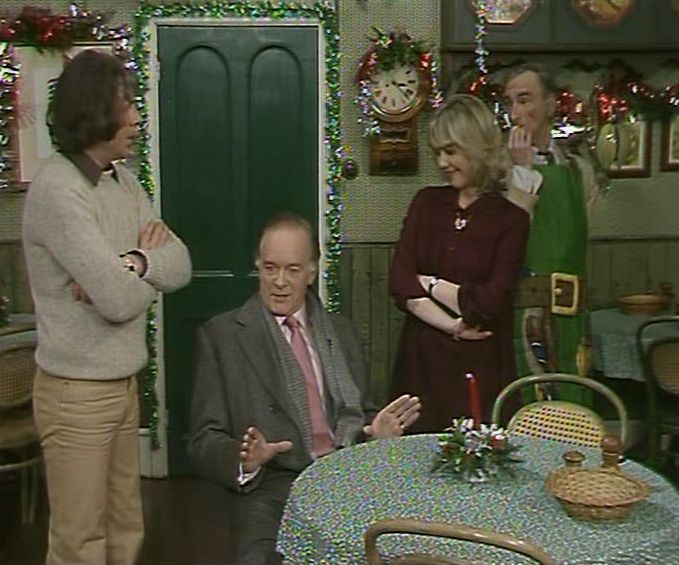
Airing on ITV between 1977 and 1981, Robin’s Nest (one of two sitcoms spun off from Man About The House) is centred around the restaurant of the title, run by Robin Tripp (Richard O’Sullivan) and his wife Victoria (Tessa Wyatt).  She provides him with moral support and able assistance whilst less able assistance comes from the enthusiastic but incompetent one-armed washer-upper, Albert Riddle (David Kelly).  Also on hand is Victoria’s father, James Nicholls (Tony Britton), a sleeping partner in the business who’s always keen to make the maximum amount of money from his investment.

Although the series was created by Brian Cooke and Johnnie Mortimer, by this time they’d stepped away from scripting duties, so Robin’s Nest at Christmas was penned by George Layton, the second of his thirteen contributions to the show.  Enjoying an equally successful career as both an actor and writer (with his writer’s hat on he’d be reunited with Britton on the middle-of-the-road but nonetheless popular sitcom Don’t Wait Up a few years later) Layton seemed to easily pick up the rhythms of the series.

Although guest actors drop by occasionally, Robin’s Nest concentrates on the four regulars – with Robin and Victoria usually playing the straight-men to the more comic characters of Albert (inept at whatever he attempts) and James (a mean skinflint, content to work Robin into the ground to generate a healthy profit).

Easily the most memorable character of the four is Albert Riddle.  Kelly effortlessly steals every scene he’s in and is an endless delight to watch – without him it would be a much more routine show.  Albert’s complete ineptness is clearly on display in the opening few minutes as he attempts to help Robin to put up the Christmas decorations in the restaurant.  Of course he’s no help at all, and his endless off-key singing of Christmas songs (“Jingle bells, jingle bells, jingle all the way. We are doing up Robin’s Nest, just for Christmas day”) doesn’t help to reduce Robin’s stress levels.

Albert then pops by at one o’clock in the morning on Christmas Day to deliver a bombshell – after coming into a small windfall he’s been able to buy a business of his own so will be resigning from Robin’s Nest forthwith …..

There then follows a rather tense Christmas Day meal at James’ house, with a glum Robin and Victoria and a rather merry Albert, whilst Peggy Aitchison has a nice scene as James’ domestic servant, Gertrude.  Many sitcoms tended to have an extended running time for their Christmas Specials, but this Robin’s Nest remains at its normal twenty-five minute format.  This means that it all feels quite compact (with more time, the Christmas meal could have been extended and made to feel even more awkward) but the one interesting wrinkle is that the reset button with Albert isn’t hit at the end.  His arrival back at the restaurant in the last few minutes seems to indicate that he’s had a change of heart, but the reason for his reappearance is quite different and a good comic moment to end on.

Coasting by for 48 episodes thanks in no small part to the regulars, Robin’s Nest is undemanding but always watchable entertainment.  As for this one, I’ve always been a little puzzled why Robin is so upset at Albert’s decision to leave – since he spends all his time complaining about him you’d have thought he’d have welcomed it!

nest-02


All This and Christmas Too!

all this 01.jpg

Headed by Sidney James and Kenneth Connor and featuring cameos from the likes of Janet Webb and Joe Gladwin, All This and Christmas Too! doesn’t lack for on-screen talent.

Sidney James is probably best known for his appearances in a string of Carry On films, but his film career in general (particularly during the 1950’s) was extensive – The Lavender Hill Mob, The Belles of St Trinians, Quatermass 2 and Hell Drivers are just a few highlights.  He also served as an excellent comic foil to Tony Hancock, both on radio and television, as well as starring in a number of different television series – such as Citizen James, Taxi!, George and the Dragon and Bless This House.

Kenneth Connor was also a familiar Carry On name, although prior to his appearance in the first of the series, Carry on Sergeant in 1958, he’d already amassed a diverse list of credits – appearing alongside Peter Sellers and Spike Milligan during their early forays into television, for example.

So by the time All This and Christmas Too! was broadcast in 1971, both had built up a considerable reserve of affection from the British public, which was probably just as well.  All This and Christmas Too! is a variable fifty minutes of pretty broad comedy – but thanks to the star quality of Sid James and Kenneth Connor I can’t help but feel a little indulgent towards it.

James plays Sid Jones (they must have spent hours thinking that name up) whilst Connor is his rather dim next-door neighbour, Willie Beattie.  Like the not completely dissimilar Sid Abbot in Bless This House, this Sid is also a devoted family man – with a wife, Peggy (Beryl Mason) and two daughters, Linda (Juliette Kempson) and Sally (Katie Allen).

The best gag is reserved for the opening scene, where – to the strains of Also sprach Zarathustra – a spaceman (Sid) makes his entrance.  The incongruity of a spaceman walking down the streer is quickly explained though, as Sid’s been entertaining the kids at a local party (although why he didn’t remove his costume before returning home is anyone’s guess ….).

With Sally shortly due to give birth, the hapless Sid is put in charge of keeping an eye on her whilst Peggy heads out to do some last minute Christmas shopping.  But any thoughts of a quiet few hours are quickly dismissed when Willie pops around – he wants Sid’s advice on negligees (for Willie’s wife, naturally).

I have to confess to being somewhat smitten with Juliet Kempson, who plays Sid’s non-pregnant daughter Linda. She’s really rather lovely and her presence helps to make the programme a little more enjoyable. Sam Cree’s script mines familiar generational tropes as Sid finds himself frequently baffled by his youngest daughter – the music she likes, the make-up she wears, etc. Watch out for the moment when Sid tells Linda to turn her record off, it stops several seconds before she reaches the player. The grams operator must have been a tad quick off the mark!

When Sally tells her father that it might be a good idea to call for a taxi, Sid goes into panic mode. The baby! James and Connor are both excellent at playing flustered – Willie rushes off to call a taxi whilst Sid runs round and round in circles, attempting to get Sally’s suitcase ready. Clearly forward planning isn’t big in the Jones’ household ….

Next day, Sid is surprised to find a baby in the hall. Even though it’s black, he decides that it must be Sally’s (it’s not of course). Cue more frantic activity from James and Connor as they attempt to stop the baby crying (the production clearly didn’t record a real child’s cries – it’s painfully obvious that what we can hear is an adult doing a baby impression).

When news of Sally’s baby comes through, Sid and Willie decide to toast its health, several times in fact. James and Connor both indulge in a nice spot of drunk acting, although the speed at which they become virtually insensible (mere seconds after taking a drink) is bizarre.

Unfortunately they have to try and pull themselves together and entertain Sally’s husband’s parents, Mr and Mrs Hall (the ever lugubrious Gladwin and the stoney-faced Rose Power).  What’s interesting about Sid’s attempt to make casual conversation with the foreboding Mrs Hall is that the same exchange (“I tried it once, didn’t like it”) also turned up in the following year’s Carry on Abroad.

Janet Webb, like Gladwin, has a nice comic cameo – she plays the flighty Aunt Maud. Her interplay with Gladwin’s vitually catatonic Mr Hall is something of a treat, as is the transformed Mr Hall after Sid’s special drink has taken effect.

A mixed bag then, with some of the farce elements feeling rather forced, but Sid James and Kenneth Connor do their best with the material on offer.

all-this-02

Christmas Night with the Stars 1972

stars.jpg

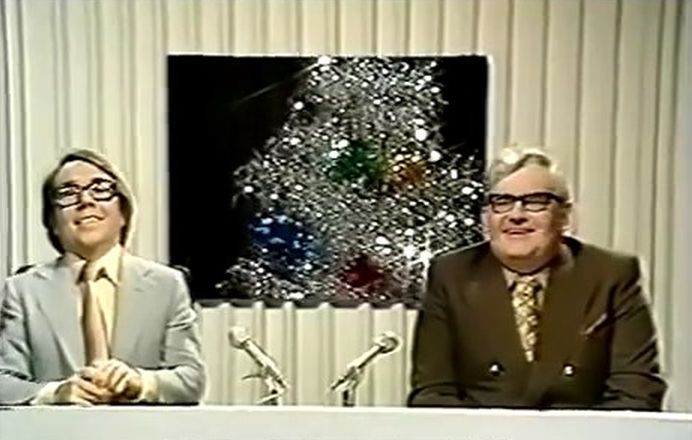
This was the final regular edition of CNWTS, with the Two Ronnies on hand on introduce Cilla Black, the Young Generation, Lulu, Mike Yarwood & Adrienne Posta, The Liver Birds, The Goodies and Dad’s Army.

Unlike David Nixon and Jack Warner, the Ronnies took a much more active role in proceedings, which means that it feels somewhat like an extended Two Ronnies show (most notably at the start, which opens in the time honoured way – news items, followed by a Two Rons party sketch).  This explains why the cut-down DVD version (excising all the other participants apart from Lulu and Cilla Black) still works pretty well as a Two Ronnies show in its own right.

The Young Generation back Lulu, as well as enjoying their own spot.  There’s rather a lot of them, aren’t there?  After Lulu and the Young Generation have leapt about for a few minutes, the Goodies arrive – via a film sequence which promises a grubby urchin the Christmas of his life (thanks to the Goodies Travelling Instant Five Minute Christmas).  Dialogue-free, it’s packed with typical Goodies sight gags as well as a healthy dose of comic violence (would they be able to get away with hitting a boy over the head with an outsized mallet today? Probably not).

Up next is The Liver Birds, which sees Beryl (Polly James) and Sandra (Nerys Hughes) reflecting on various aspects of Christmas – overindulgence and family relationships being top of the agenda.  The kind-hearted Sandra regards the remains of the turkey with sadness, whilst Beryl – always more pragmatic – has a different point of view. “Well, it’s his destiny isn’t it? I mean we’ve all got to die sometimes, it’s just that some of us go in black cars surrounded by flowers and some of us go in roasting tins surrounded by spuds.”

The Two Ronnies return for a some chat about their respective Christmases, which is notable for the number of times that Ronnie B stumbles over his lines. It’s a little odd that they didn’t do a retake, so either time was tight or it was decided that on Christmas Day the audience would be in a mellow mood and therefore more forgiving.

I’ve written elsewhere, about Mike Yarwood’s later career when his star was somewhat waning.  Here, a decade earlier, he’s pretty much at the top of his game – although this is a sequence that’s very much of its time (and if I’m being honest, a few of the impressions are a little weak).  The setting is a party at Number 10, so you won’t be surprised to hear that Harold Wilson and Edward Heath are in attendance (as is Frankie Howerd, for some strange reason).  Adrienne Posta provides support, but the topical nature of the piece makes it less effective than the more universal nature of the rest of the programme.

As a child, I tended to find Ronnie C’s chair monologues rather dull.  Now they’re often the highlight of their shows (funny how times and tastes change) so I’m glad one was included here.  Ronnie C also joins Cilla Black for a little crosstalk and a song, although how much you get from this part of the show will probably depend on how high your tolerance to Cilla Black is.

For me, we’re on firmer ground with Dad’s Army.  The platoon are incredibly proud to have been selected by the BBC to broadcast live to the nation on Christmas Day, but things aren’t as straightforward as Mainwaring would have hoped.  The rehearsals are slightly chaotic – thanks to the script provided by the BBC.  They’d assumed that the sergeant would be a cockney and the officer a gentleman, so Wilson is somewhat bemused that his part is full of slang whilst Mainwaring is incensed to be told that he doesn’t sound like an officer!  When the BBC man suggests that maybe they swop roles, the expressions on the faces of both Le Mesurier and Lowe are a joy!  With the rest of the platoon pitching in, notably to produce sound effects (Pike is in his element when asked to provide bird sounds) this is a nicely-written sequence with a decent pay off.

Following another quick Two Ronnies sketch, Cilla Black is back (along with a children’s choir – always a good bet at Christmas) to round things off before the Two Rons say goodbye with a selection of news item.

“And now it’s a Merry Christmas from me. And it’s a Happy New Year from him. Goodnight.”


Christmas Night with the Stars 1964

stars

Jack Warner is in the chair for the 1964 Stars, introducing Billy Cotton, Dick Emery, Top of the Pops, Andy Stewart, Terry Scott & Hugh Lloyd, The Likely Lads, Richard Briers & Prunella Scales, Benny Hill and Kathy Kirby.

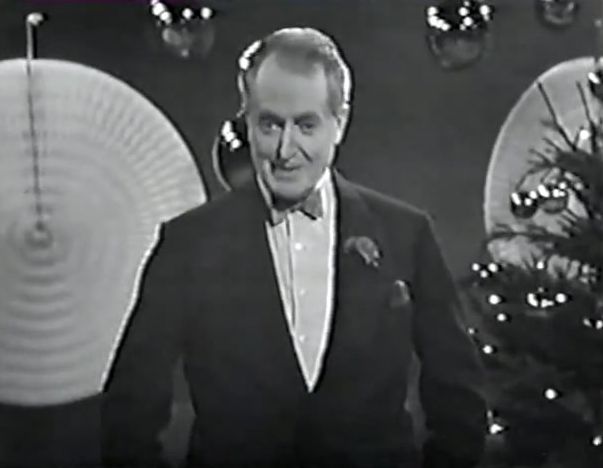
The first observation is that they’ve not exactly splashed out with the set dressings for poor old Jack, who has to present his links in the middle of a cold and deserted studio – with only an armchair, a table, some candles, a Christmas tree and a few other assorted decorations for company.  Still, pro that he is, he soldiers on regardless.

After Billy Cotton and his band gets the show off to a rousing start (“wakey, wakey!”) we move onto film as Dick Emery, in various guises, is stopped in the street and asked how he/she plans to spend Christmas.  It’s interesting to compare and contrast Emery with Benny Hill (who later in the show also plays a variety of characters).  I’d definitely have to give Hill the edge, although Emery has his moments, especially with the man-eating Mandy. “You are awful, but I like you”.

Top of the Pops are represented by …. the Barron Knights.  Well, if you can’t afford the real groups I guess they were the next best thing.  They’d had their first taste of chart success in 1964 with Call up the Groups and their Stars appearance isn’t too dissimilar – parodying popular groups and hits of the day by changing the lyrics, here with a Christmas theme.

Andy Stewart heads up to the North of Scotland for a bit of a toe-tapper, which is followed by Terry Scott and Hugh Lloyd in a seasonal Hugh and I skit.  As with the series, Patricia Hayes, Jack Haigh, Molly Sugden and the luvverly Jill Curzon provide strong support.  There’s more than a touch of Tony Hancock in Scott’s performance, meaning that it’s easy to imagine the curmudgeon of East Cheam in a similar situation – a house full of guests at Christmas that he’d sooner weren’t there (and the presence of Pat Hayes and Hugh Lloyd are obvious links to the Lad Himself).  Scott dominates proceedings as he attempts to persuade the others to take part in a parlour game.  A nice segment which doesn’t outstay its welcome.

As Jack Warner says, most of the shows and performers on CNWTS were household favourites, but The Likely Lads had only started a fortnight before – meaning that someone must have quickly spotted this was a series with potential.  And it’s definitely a highlight of the programme, as even this early on both Clement/La Frenais and Bolam/Bewes seemed perfectly comfortable with the characters.

Terry’s keen to head out for an evening’s liquid refreshment, pouring scorn on those who stay in.  “Catch me staying in. Bowl of nuts, box of dates and Christmas Night with the Stars. No thank you!”  But Bob and Terry’s evening out never gets started, thanks to an escalating argument about the name of the elephant in the Rupert annuals.  Bob maintains it was Edward Trunk whilst Terry is convinced it was Edward the Elephant.  So Terry fetches his annuals from the loft to settle the argument once and for all.

The desire of Bob and Terry to hark back to their childhood was a theme of the series that would only grow stronger when it returned in the seventies as Whatever Happened to the Likely Lads?  This small segment demonstrates that right from the start Clement and La Frenais recognised this aspect of their characters could produce comedy gold.  A pity that it’s not available on the DVD (like many of the other Stars segments sadly) but then 2E did leave a whole episode off the original release …..

Billy Cotton introduces Ralph Reader’s Gang Show, which is followed by Benny Hill.  It’s not surprising that the picture we have today of Benny Hill is from his years at Thames.  Not only because those shows were incredibly successful worldwide, but they’re also the ones that are readily available on DVD.  His 1960’s BBC shows are less accessible (although there is a R1 compilation).  Maybe one day all that remains will be released on DVD, I hope so – since they contain some strong material which gives the lie to the oft repeated claim that Hill was a fairly low-brow performer.

His Stars segment, The Lonely One, is a good case in point.  Shot on film, Hill not only plays the central character in the short mockumentary – a juvenile delinquent called Willy Treader – but all of the other parts as well.  It’s very nicely done and Hill’s creations (possibly because he wrote the script too) feel more like real people than Dick Emery’s more broad characters did.

Richard Briers and Prunella Scales are up next in Marriage Lines.  It’s cosy and twee, but Briers and Scales make it just about worthwhile.  George and Kate Starling are expecting their first child which is reflected in their presents to each other – Kate gives him a sleeping bag (in case the baby gets too noisy, he can move to another room) whilst George gives her a maternity smock (seemingly not realising that she’s due to give birth in a month).

Although billed second, Kathy Kirby appears last to sing Have Yourself a Merry Little Chirstmas.  It’s a fairly short and low-key ending, but overall the 1964 Stars is a consistently strong show with very little filler.

Christmas Night with the Stars 1958

1958

Running every year from 1958 to 1972 (with the exception of 1961, 1965 and 1966) Christmas Night with the Stars brought together some of the BBC’s top light entertainment and sitcom performers for a specially recorded program of seasonal highjinks.  Only three complete editions – 1958, 1964 and 1972 – now exist and whilst the complete shows are not commercially available (although a cut-down version of the 1972 show was included on the Two Ronnies Christmas DVD) thanks to YouTube they are viewable at present.

Magician David Nixon is your host for the 1958 Stars, with Charlie Chester, the Beverley Sisters, Charlie Drake, Perry Como, Ted Ray, Tony Hancock, Vera Lynn, Jimmy Edwards, Billy Cotton & his Band and Jack Warner providing the entertainment.

If Charlie Chester’s remembered today it’s probably due to his later radio career (he had a Sunday R2 programme which ran until 1996).  Possibly it’s a little unfair that Chester was labelled a cut-price Max Miller, but there’s a certain similarity in style – although Miller was undoubtedly better.  Chester’s spot is amiable enough though, even if he was already looking like a relic from another age back then.

After a rather jolly song (if you don’t listen to the lyrics) from the Beverley Sisters, Charlie Drake makes his appearance.  Drake plays a tuneless carol singer who gets short-shrift from his potential customers.  Hmm, Charlie Drake.  The studio audience clearly love him, collapsing into hysterics at the drop of a hat, but I have to confess that his shtick has always left me cold and this sketch didn’t change my opinion.  Thanks, but no thanks.

Perry Como warbles away for a few minutes before Ted Ray and Kenneth Connor enjoy a nice two-handed sketch – Ray is a patient, convinced he’s swallowed something nasty and Connor is the doctor.  Connor had worked with Ray both on radio and television and they clearly had a good working relationship which shows in the way they interact with each other.  The material is a little thin (a view which seems to be shared by the studio audience – listen how the laughs tail off towards the end) but anything’s an improvement after Charlie Drake!

Next, David Nixon plucks the fairy off the top of the Christmas tree, which then proceeds to dance in front of his eyes.  Today, this may look a little crude but considering how limited the technology was at the time, you have to admit that it’s very nicely done (CSO/Chromakey from a decade or more later sometimes didn’t look as good as this).

Up next is a real Christmas treat, Tony Hancock.  Rather than the East Cheam skit we might have expected, Tony’s contribution is very different – he’s a budgie in a cage, less than impressed with the treatment he’s receiving from his owner.  Because it’s such an unlikely scenario, this is possibly why it works – or maybe it’s just that Hancock was so good he could deadpan his way through a scene no matter how ridiculous he looked.  With his familiar mixture of weary resignation, Hancock is on fine form.  “Not good enough, stuck here all day with nothing to eat. Haven’t had a decent piece of millet since last Thursday.”  Hancock, with just a shrug and a glance (even when dressed as a budgie) can express so much and is a delight.

David Nixon shows Vera Lynn a quick magic trick before she pops off to sing a few songs.  Then we have Jimmy Edwards in Whack-O!  It’s a series that’s been in the news as three previously missing episodes have recently been found, meaning that there’s now seven in existence.  The premise of the series is something of an eye-opener (Edwards plays a headmaster who delights in caning the boys in his charge).  A Muir/Norden vehicle that’s historically interesting rather than amusing, if it succeeds at all then it’s thanks to Edwards’ performance.

Billy Cotton and his Band are on hand for a good old singalong and knees-up, he certainly seems to get the studio audience animated.  C’mon Simply/Network, etc – let’s get the remaining Billy Cotton shows on DVD, you know it makes sense!

It might seem a little odd to end in Dock Green as George Dixon (Jack Warner) toasts his family and friends around the dinner table, but Warner’s background was very much in LE – so much so that Dixon of  Dock Green was for many years made by the Light Entertainment Department rather than the Drama Department.  Warner delivers a lovely monologue and given that so little of Dixon exists, every little scrap is precious.  Maybe one day someone will scoop up all the existing B&W Dixon material to compliment the (mostly) complete colour stories released by Acorn.  C’mon again Simply/Network, etc – this makes sense too!

Christmas Night with the Stars 1958 has peaks and troughs, but overall it’s not a bad way to spend seventy minutes.

H.G. Wells’ Invisible Man – Play to Kill

play

A successful actress called Barbara Crane (Helen Cherry) accidentally knocks down and kills a tramp.  Another car, driven by a man known only as the Colonel (Colin Gordon), was passing at the time and he suggests that in order to prevent a scandal, they get rid him – after all, there’s a cliff nearby and it’s easy enough for him to tip the body over.  But if Barbara thinks the nightmare is over then she has to think again as shortly afterwards she starts to receive threatening blackmail calls ….

Play to Kill is quite a neat story, although it’s one where Brady is very much surplus to requirements.  When Barbara receives the blackmail messages we don’t see the face of the man making the call, so it’s easy to incorrectly assume that it’s the Colonel.  As so often throughout the series, the quality of the guest cast is a source of joy and the very recognisable Colin Gordon is no exception to this rule. That ITC were targeting American sales seems obvious when the Colonel refers to the dead man as a hobo. It’s such an odd word for an Englishman to use (although possibly it was intended as a signifier that the urbane Colonel wasn’t all he appeared to be).

And in a story with a strong theatrical atmosphere it shouldn’t come as any surprise to learn that not everything we’ve seen so far should be taken at face value. When the Colonel – who admits to Barbara that he is involved in the blackmail plot – is killed, it spins the story off in another direction. If the Colonel wasn’t the blackmailer (he was just a hired hand) who is?

Suspicion falls on the theatre where Barbara is rehearsing her new play. There’s quite a few possibilities such as the harassed director Simon Wallace (Garry Thorne) as well as Barbara’s disgruntled co-star Tom (Hugh Latimer), infuriated that she keeps fluffing her lines. Then there’s the photographer to the stars, Arthur Arthurson (Vincent Holman) or maybe it could be the charming Walter Manton (Ballard Berkeley).

Berkeley, forever to be known as the befuddled Major in Fawlty Towers, was an actor with a considerable pedigree before his late brush with fame at a Torquay hotel occurred. Here, he’s charm personified whilst Holman, another actor who appeared in many major British films (albeit in small roles), has a nice cameo as the eccentric photographer.

And what, you may ask, has Peter Brady been doing all this time? Not a great deal, it has to be said. He does get involved with the original blackmail payoff and is on hand to deal with the blackmailer at the end, but it’s Barbara who unmasks him – so with a little spot of rewriting this story could have dispensed with the Invisible Man altogether.

But it’s still entertaining and even if the plot twists shouldn’t take you by surprise, Play to Kill is another solid episode which coasts along thanks to the experienced hands in front of the camera.

H.G. Wells’ Invisible Man – Picnic with Death

picnic

Following a car accident, Brady’s invisible state becomes public knowledge.  Whilst he struggles to adjust to his new-found fame, one of Sally’s friends, Linda Norton (Margaret Court) approaches him with a strange story.  She claims that her stepfather and his sister are planning to kill her mother ….

Picnic with Death rehashes some material from the unaired pilot concerning Brady’s emergence as a public figure.  The reason for not keeping his invisible identity secret any longer is obvious in one way, since it widens the range of stories he can become involved in (as here, with Linda turning to him for help).

John Norton (Derek Bond) and his sister Carol (Faith Brook) are deeply attached to their family home, Foxgrange.  John’s wife, Janet (Maureen Prior), is a woman of independent means and John is hopeful that she’ll continue to pour more money into Foxgrange’s upkeep.  She refuses, as she can see there would never be enough money available to maintain it for any length of time.  Her refusal – and by this time we’re about half-way through the story – does seem to bear out Linda’s story, as John exits in a threatening manner.  But with Brady dismissing the tale as little more than adolescent jealousy, it falls to Sally to turn detective.

Margaret Court is remarkably squeaky and rather highly-strung as Linda, so it’s possibly not surprising that Brady dismisses her out of hand.  Sally’s decision to lurk around the bushes – where she overhears John and Carol plotting to murder Janet – is an unexpected turn of events but it’s nice that Deborah Watling is a little more involved in the story for once.

Derek Bond, the second Hunter (from Callan) to appear in the series, following Michael Goodliffe in Secret Experiment, glowers in a menacing fashion and helps to raise the story a little.  Part of the problem is that it’s hard not to believe that Brady will save the day once he’s been convinced that Linda and Sally know what they’re talking about.  Still, there’s an amusing cameo from Hammer stalwart Michael Ripper (“Eh Harry, that invisible man. He’s here!”) to sweeten the pill a little.

Of course, Brady turns up in the nick of time to prevent Janet from plummeting to her death over a cliff in a runaway car whilst Diane finds a gun from somewhere to keep John and Carol covered (this is odd, since Diane has never seemed the gun-toting type before).  A slightly messy tale then, but as with all the stories it clips along at a decent pace.

H.G. Wells’ Invisible Man – The Locked Room

locked.jpg

Brady finds himself drawn to the case of Professor Tanya Brofuri (Zena Marshall), a dissident scientist from a foreign, unfriendly power. Partly this is because he’s angry about the way her freedom has been curtailed, but also because he believes she might be able to help him become visible again …..

The opening of The Locked Room is interesting.  For the first time there’s a voice-over as Brady sets the scene about Tanya (after speaking out at a public meeting she’s been frog-marched back to her embassy).  It’s an obvious way to save time which, given the twenty-five minute format, is quite important and it also helps to thrust us straight into the story with very little preamble.

It’s never explicitly stated, but there’s a strong streak of self-interest in Brady’s actions.  Yes, he’s displeased that a fellow scientist should be treated so badly by her country, but he also wants her help with his continuing experiments to reverse his invisible state.  Had the story been longer then possibly this is a theme that could have been developed, unfortunately the brief duration of the story didn’t really make it possible.

Another undeveloped angle concerns Porter (Noel Coleman), the man from the ministry.  He expressly forbids Brady from rescuing Tanya, but after he does so anyway, there’s no comeback.  Instead,  Porter was happy to arrange American citizenship for her.

Rupert Davies casts an imposing shadow as Dushkin.  It’s never explicitly stated that Dushkin and Tanya are Russian but the implication is obvious enough.  He’s another lightly sketched character, but his threats (first to dispatch Tanya to a sanatorium for an extended stay and then later to send her home in a coffin) are chilling enough.

With Brady being invisible for most of the episode, Zena Marshall has to work hard to convince us that there’s a growing attachment between Tanya and Brady.  But this she does very well and Marshall (probably best known as the treacherous Miss Taro from the first James Bond film, Doctor No) is a pleasing presence throughout the story.

The “twist” is one that the audience should have seen a mile off – everything seems settled, Tanya is due to head off to the airport and Brady, Diane and Sally wave her goodbye as a car comes to pick her up (the invisible Brady represented by a floating hanky!).  But wait!  The car wasn’t sent by the Americans, it came from those pesky Russians (or whoever) and they aren’t kindly disposed towards Tanya.

Brady saves the day of course – the sight of an apparently riderless motorcycle and sidecar is an arresting image – and whilst The Locked Room lacks a great deal of depth, Davies and Marshall help to make it an amiable watch.

H.G. Wells’ Invisible Man – Behind the Mask

mask

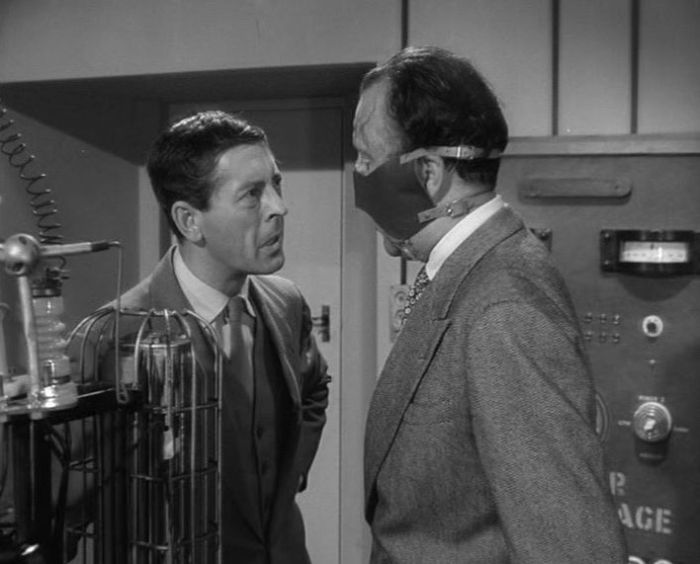
Brady is abducted and brought before Raphael Constantine (Dennis Price).  Constantine is a millionaire who’s surrounded himself with beautiful objects, but he tells Brady that this doesn’t negate the pain he feels (Constantine is horribly disfigured and has to wear a mask at all times).  He wishes to become invisible so that he no longer has to look at his ravaged visage and since he knows that Brady needs a human guinea pig for his continuing experiments it seems like the obvious solution.  Brady is initially unsure but is won around by Constantine’s arguments, although there’s more to this man than meets the eye ….

Behind the Mask opens with the Invisible Man having a shave, being watched by Sally.  This is a nicely mounted effects scene, although since they discuss how Brady’s experiments are floundering for the lack of a human subject, it quickly becomes obvious that it was no casual chat.

Price was a heavyweight guest star.  Probably best known for the classic 1949 Ealing film Kind Hearts and Coronets, his film career was still buoyant at the time.  He’d already appeared alongside Peter Sellers in The Naked Truth (1957) and would shortly do so again in another memorable British film, I’m All Right Jack (1959).  With his face partially hidden, Price had to fall back on his voice to convey Constantine’s full character, but since he had such a deep and expressive vocal range this was no problem.

Constantine’s monologue, where he pleads for Brady’s help, is one of the highlights of the episode, thanks to Price’s performance.  “To think that no-one, not even I, would ever again have to look on this mangled nightmare of a face. There’s nothing in the world I wouldn’t give for such a favour.”

If the script by Leslie Arliss and Stanley Mann has a flaw then it’s the early reveal that Constantine hasn’t been exactly honest with Brady.  He wants to become invisible so that he can kill Domecq – a visiting foreign dignitary whom he blames for his disfigurement.  A pity this revelation wasn’t held back until later in the story.

Constantine has surrounded himself with fellow dissidents, such as Max (Edwin Richfield), all of whom share the same hatred for Domecq – although Max is wise enough to see that Constantine’s burning hatred might endanger them all.  Oddly, Max sports a heavy foreign accent whilst Constantine’s tones are cut-glass English.  If they both come from the same country then how is this so?

The question of Brady’s public profile also seems a little inconsistent.  In the previous story Colonel Warren referred to him as a government secret, but here it appears that his story is in the public domain – Brady himself admits to Constantine that his bandages are a bit of a giveaway.

With a lovely guest turn by Price and the always dependable Richfield offering decent support, Behind the Mask is an above average effort.  And for once, Brady’s invisibility doesn’t help him – when he tackles the baddies he’s knocked out rather easily, allowing Max to take his clothes and bandages in order to masquerade as him.  A wonder nobody thought to do this before, since it allows Max entry into the research base without the guards batting an eyelid!

H.G. Wells’ Invisible Man – Crisis in the Desert

crisis.jpg

Brady is approached by Colonel Warren (Douglas Wilmer) of Military Intelligence as one of their top agents, Jack Howard (Howard Pays), is being held prisoner in a Middle Eastern country.  Howard, badly injured after an abortive escape attempt, is being guarded in a high security hospital and only the Invisible Man – along with the alluring local assistance of Yolanda (Adrienne Corri) – has any chance of freeing him ….

Fictitious Middle Eastern countries, forever teetering on the edge of instability, would be a staple of ITC adventure series during the next decade or so and Crisis in the Desert is an early example of this genre.  Naturally, foreign location filming was beyond the series’ budget, so instead we have a reasonably dressed backlot (which doesn’t look too shabby, it must be said).

Ethnic actors would also tend to be in short supply whenever an ITC series headed abroad, so it’s no surprise to see British performers in all the main roles.  The eagle-eyed will spot Derren Nesbitt in the background, but the bulk of the action is divided between Corri as Yolanda, Eric Pohlmann as Yolanda’s associate Hassan and Martin Benson as the villainous Colonel Hassan.

These three, along with Wilmer, make Crisis in the Desert a very enjoyable watch.  Wilmer oozes charm as he persuades Brady (rather easily it must be said) to undertake a dangerous mission in the Middle East.  It’s interesting that Warren reacts with horror when Brady tells him he thinks he’s close to reversing his invisibility – it’s obvious that Warren needs an invisible man to rescue Howard, but it’s odd that he doesn’t seem to have considered the possibility that once Brady has perfected his formula it could be duplicated.  Creating a whole army of invisible agents would have obvious benefits.  Given this, it seems a little foolhardy to risk Brady’s life (and the knowledge that only he has) on this jaunt abroad.

Corri had already racked up an impressive list of credits before appearing here as the glamourous freedom-fighter Yolanda.  She looks very nice in a nurse’s uniform as well.  Pohlmann has less to do, only react to Yolanda, but he’s effective enough.  Benson is great fun as the sadistic Hassan – he opens the story by slapping Howard about and later suggests to an unfortunate surgeon (played by Derek Sydney) that he performs a little brain operation on Howard in order to make him more pliant.

Several actors black up – most notably Peter Sallis as Nesib, the ambulance driver.  This probably isn’t a performance that’s going to be at the top of his cv, but for a working actor of this era playing the most unlikely nationalities was an occupational hazard (Sallis would later appear as an equally unconvincing Chinaman in an episode of Sergeant Cork).

The main problem with Crisis in the Desert is that there’s no real need for Brady to be there at all, as although he sneaks around the hospital in his invisible state, Nurse Yolanda is in plain sight all the time.  As we’ll see, this proves to be something of a problem for the writers – often the gimmick of having an invisible man tends to be sidelined as Brady is shoehorned into plots that don’t require his invisibility skills to be utilised.