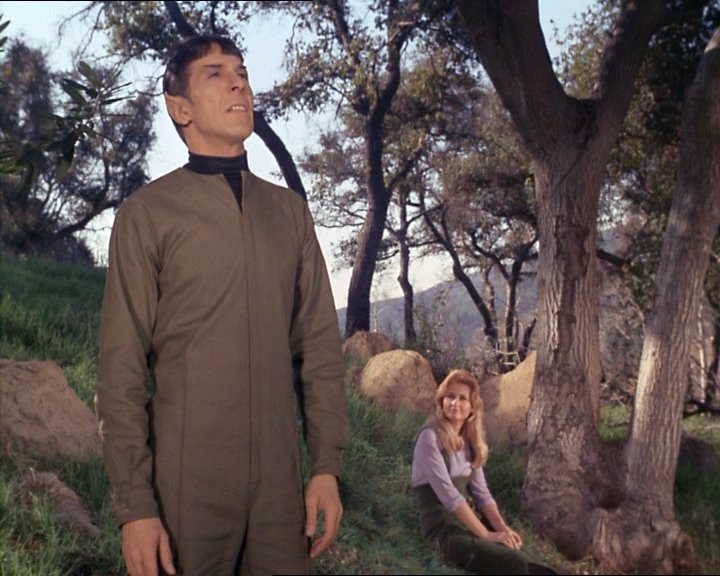
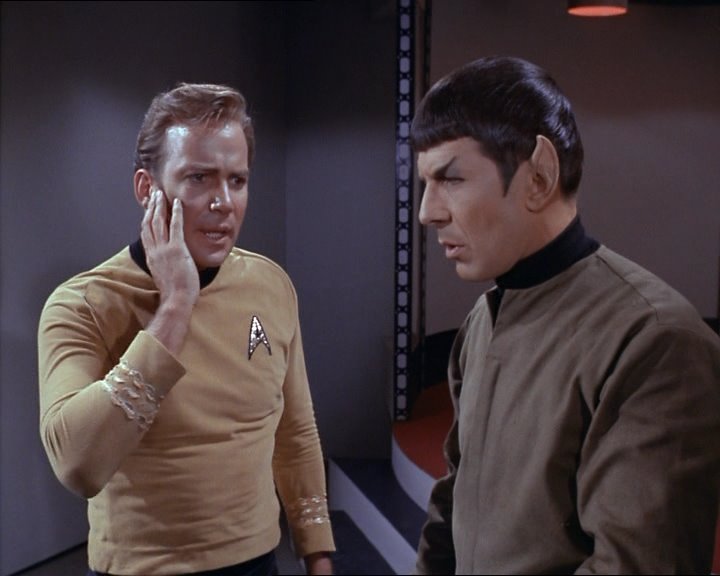
The Champions – Operation Deep-Freeze

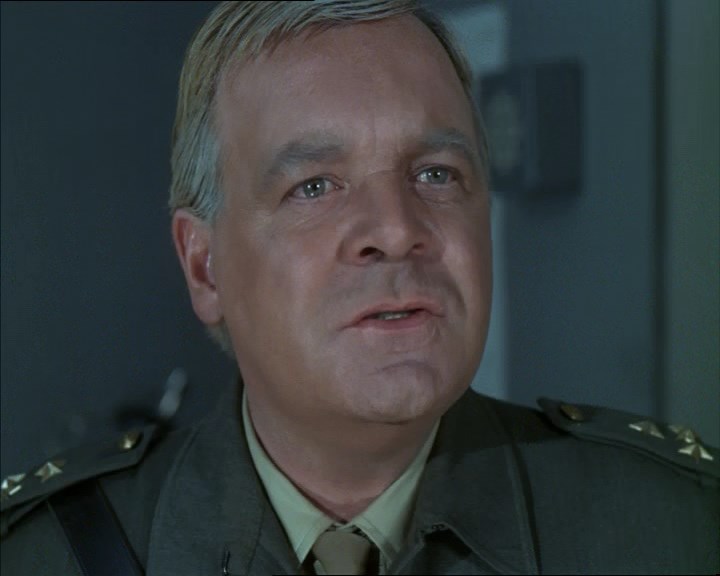
Reports of a mysterious explosion in Antarctica have reached Nemesis. Several scientists from the nearby Scott Base sent to investigate have failed to report back. When Craig and Richard arrive they discover that the scientists have been murdered and also run across General Gomez (Patrick Wymark), the despotic ruler of a small Central American state.

He’s established a secret Antarctic base stocked with atomic weapons and plans to establish his country as a great power on the world stage, unless Craig and Richard can somehow stop him ….

Operation Deep-Freeze is another episode enlivened by a first rate guest star.  I assume most visitors to this blog will be familiar with both The Plane Makers and The Power Game (if not then you should check them out straight away).  Wymark bestrides both series as the amoral businessman John Wilder, giving a performance which has provided me with many hours of entertainment.

He also seems to be enjoying himself today – Gomez is hardly a three dimensional character, but Wymark was always a very watchable actor and his full-throttle turn is certainly a memorable one. Subtle no, memorable yes.

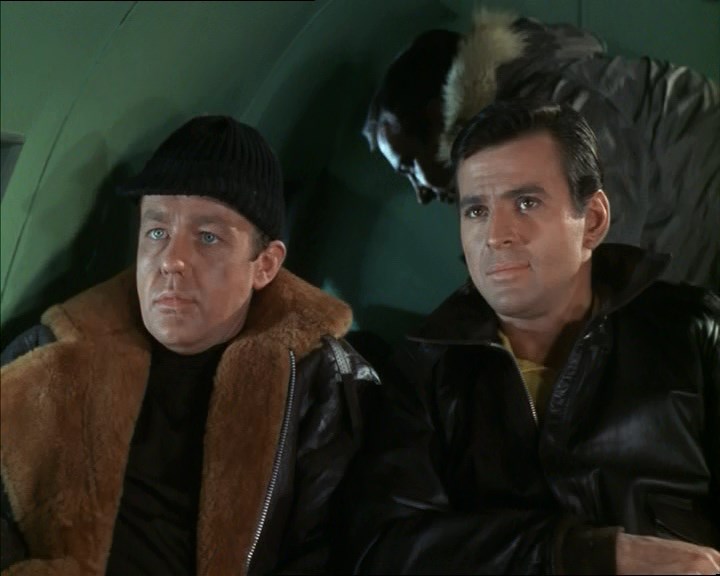
It’s very much a boy’s own adventure today as Richard and Craig get to handle all the action. I like the playful banter during their briefing with Treymayne (Richard promises to bring him back a penguin). It’s little moments like these which ensures their characters are slightly less cardboard than they otherwise might be.

Lashings of stock footage and some fairly effective studio work helps to create the illusion that we’re in Antarctica. Craig, Richard and Hemmings (Robert Urqhart) set out across the frozen wastelands, unaware – to begin with – that Jost (Walter Gotell) is stalking them.

It’s strange that Craig suddenly becomes realises they’re being followed whilst Richard remains ignorant. An example that all three Champions have different strengths and weaknesses when it comes to their powers, or a simple plot contrivance?

Robert Urquhart gives a nice performance as Hemmings (you get the sense that he’s not going to make it to the final reel). Walter Gotell made a career out of playing menacing types (well, apart from Softly Softly Task Force) and he’s typically good value in a fairly nothing role. The strength in depth of the cast is highlighted by the fact that George Pastell, no stranger to playing memorable villians himself, only has the briefest of brief roles.

The story picks up momentum in the last ten minutes or so after Craig and Richard are captured by Gomez. Before this happens, the boys stumble across the General’s stash of atomic weapons and decide it would be a good idea to set a timer and detonate them all. Yes, okay. I’m no expert, but I don’t think this will do the local environment any good.

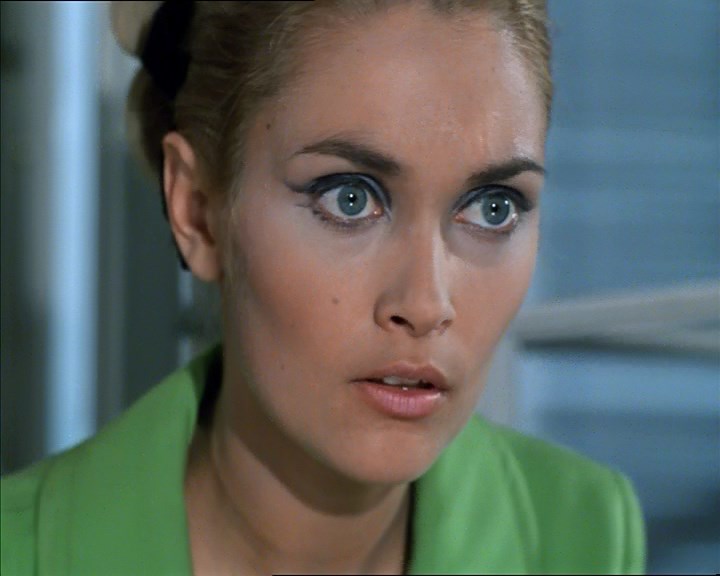
Forty minutes in and we finally see Sharron. Hurrah! Stuck in Nemesis HQ, she suddenly gets a mental image that Richard and Craig are in danger.Treymane isn’t buying it – he doesn’t quite pat her on the head and tell her not to be so silly, but it’s not too far removed from that.

Her sole scene isn’t really necessary as the plot could easily have moved on without her interjection. Possibly it was decided that Sharron had to be present somehow and this brief scene was the best they could come up with.

For the way that Richard and Craig have started to function as a wise-cracking double act, not to mention Patrick Wymark’s scenery chewing performance, I’ll give this episode four out of five.

The Champions – The Invisible Man

An amoral medico called John Hallam (Peter Wyngarde) has devised an ingenious plan to make himself a very rich man – he’s created a small device (the “invisible man” of the title) which when placed in someone’s ear can be used to relay instructions (and cause extreme pain).  Hallam uses it to force Sir Frederick Howard (Basil Dingham) to steal ten million pounds worth of gold bullion from the Bank of England.

Nemesis are on the trail, but bringing Hallam to justice won’t be easy – especially once Craig finds himself under the control of his own “invisible man” ….

The Invisible Man has a tip top guest star – Peter Wyngarde – which is a definite plus point in its favour. He’s not the dandy of the later Jason King years though – to begin with he’s smartly togged out in a three piece suit (he gets more causal later on). Wyngarde’s icily calm line delivery and stillness is very effective.

Screenwriter Donald James penned eight episodes of The Champions as well as various other ITC series including The Saint, Department S, The Protectors and The Adventurer. His list of writing credits (he was active between 1963 and 1981) tended to lean quite heavily towards the adventure series market, but he also wrote for Emergency Ward 10 and General Hospital.

You have to say that Hallam likes to make things complicated – melting down such a large stash of gold is a big job (couldn’t he have got Hallam to steal some diamonds instead?). Ah well, best not to worry about plot logic too much.

Sir Frederick has the pre-credits sequence to himself, but it’s not long before we clap eyes on Craig and Richard. Both are working out in the gym, when a muscle man (played by the instantly recognisable Dave Prowse) pops in and begins to preen himself. In response, Craig can’t help but show off a little. This rather makes a mockery of the fact they’re supposed to be keeping their super powers secret.

This is a Craig-centric episode, although Sharron and Richard do appear from time to time. It does mean that I’m feeling a little Alexandra Bastedo deprived today – especially since it would be easy to imagine Sharron going undercover as a nurse at Hallam’s private clinic. A missed opportunity ….

Craig gets a chance to use his super powers when – after escaping from Hallam’s clutches – he dives into a lake and holds his breath underwater for several minutes (thereby managing to convince Hallam that he’s dead). A pity he didn’t think about doing that when Hallam gassed him earlier in the episode. These super powers, they tend to come and go.

Hallam remains a rather nebulous character. We never really learn too much about him – why he wants to steal a fortune in gold, for example. Presumably we’re just supposed to accept that he does so because he’s a baddy and that’s what baddies do.

He’s given a sidekick – Charles (James Culliford) – who mainly exists as a line feed. But there’s an interesting moment when an irate Hallam slaps Charles quite hard. Knowledge of some of Wyngarde’s other roles gives the scene a faint homoerotic subtext. Hallam later tells Charles to use the vibrator on Craig, but luckily this is all quite family friendly.

Wyngarde’s performance helps to make both the character of Hallam and the episode in general a little more compelling than it otherwise would have been. Adding on an extra 0.5 for Peter Wyngarde, I’ll give The Invisible Man an above average score of three and a half out of five.


The Champions – The Beginning

The Champions rolled off the ITC production line in the late sixties (although it had been sitting on the shelf for a little while). It’s hard not to draw a comparison between it and Department S –  which also featured a team of two men (one an American) and a single woman – although the difference here is that none of our heroes have the flamboyance of a Jason King.

Craig Stirling, Sharron Macready and Richard Barrett are all agents in the employ of Nemesis, a United Nations law enforcement organisation based in Geneva. They seem an oddly mismatched trio in some ways, but that’s the world of ITC for you …

William Gaunt proved in Sergeant Cork that he had a flair for comedy, and as the series progresses sometime he gets little moments to demonstrate that skill once more (the same goes for Stuart Damon, who can deadpan very nicely). Alexandra Bastedo, as the token female, tends to get pushed into the background as the boys usually handle the more exciting rough stuff. We’ll keep an eye on that as the series progresses.

Despite the long working days, by all accounts it was a happy production with no clashes of egos between the leads. It’s always been a series that I’ve enjoyed revisiting, so let’s go back to the start once more with the aptly named The Beginning.

We open in China (although it’s more likely to have been Borehamwood). Our old friend – day for night filming – is in operation as our intrepid heroes (dressed in black and with camouflaged faces) wait outside a sinister looking research base. Why is Sharron the only one wearing a hat? These are the sort of questions which flit through my mind as Richard and Sharron, once they’ve snuck inside, very slowly extract a few bugs from a glass case.

All seems well, but then they’re rumbled. Cue plenty of Chinese extras running about with guns and the soundtrack going into bongo overload. One plus point about these scenes is that there’s no British actors yellowing up as Chinese (something which happened a lot during the sixties and seventies). The familiar face of Anthony Chinn is seen – albeit uncredited – as the guard commander.

There’s a wonderfully unconvincing bit of back projection as Richard, Sharron and Craig drive a jeep rather rapidly back to their waiting plane. The model plane also doesn’t quite convince, but you have to accept this sort of thing – ITC might have had decent budgets (they were still shooting on 35mm at this time) but buying a full-sized plane was clearly beyond them.

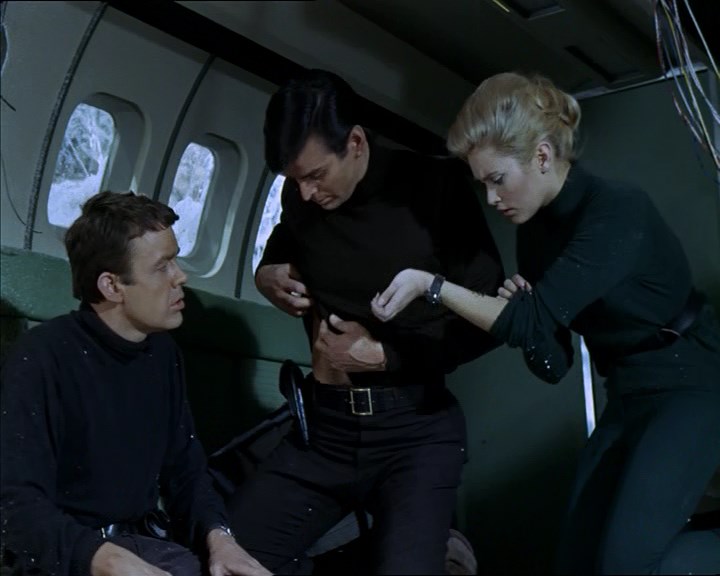
Craig – an ace pilot – gets them off the ground but they’ve sustained damage from the barrage of shots fired at them by the irate guards, so it doesn’t look like they’re going to be up in the air for long. Sharron goes to pieces immediately (wailing that they’re going to crash).

A pity (but maybe not surprising) that it’s the female who cracks first. Although there’s a spot of dialogue later on explaining that this is Sharron’s first mission, which makes her reaction a little more understandable.

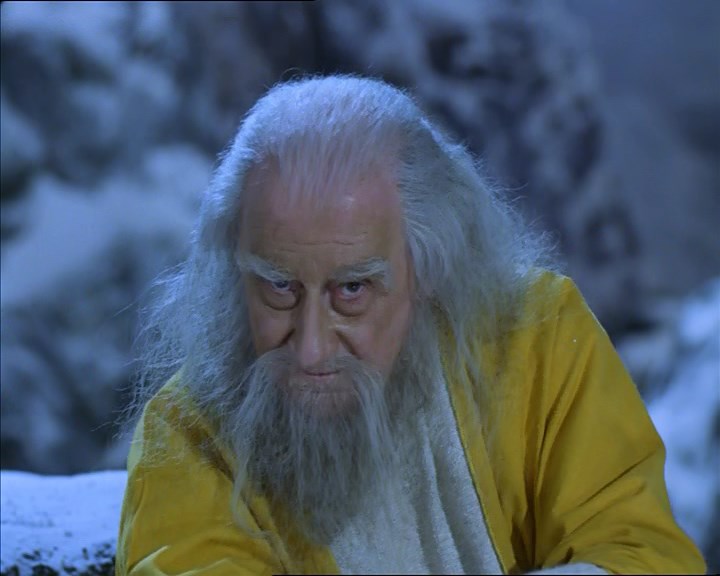
The plane crash-lands in the Himalayas, meaning we end up in an icy, studio-bound wilderness complete with lashings of fake snow.  Felix Aylmer pops up in a dressing gown (clearly his character doesn’t feel the cold) to assist the wounded trio.

This part of the story isn’t explained in any depth but you can fill in the blanks – a super civilisation patches up Craig, Richard and Sharron, giving them super powers in the process (well it would be rude not to).

Sharron and Craig decide to head off home (strolling through the snow as if they were simply out for a Sunday walk). Let’s be generous and say that post-op they now have considerably more endurance than they used to. Richard decides to remain, in order to find the mysterious city, but comes to the aid of his friends after they get captured.

Burt Kwouk (hurrah!) plays the implacable officer tasked with tracking them down. He might be good, but he’s no match for the Champions – especially after they learn to use their super powers.

This opening episode may be fairly simplistic in plot terms, but it does the job. We need to get to know our regulars and we also have to learn about the changes they’ve undergone. Dennis Spooner delivers this to us, the only downside being that there’s little for the guest cast to do (apart from Felix Aylmer, who shares a fine scene with William Gaunt).

The action’s fairly comic book stuff, although having said that it’s jarring to see Craig machine gun half a dozen or so Chinese extras. Once you’ve seen the episode, if you have the Network set don’t forget to switch on the commentary track with Damon, Gaunt and Bastedo – it’s a really fun listen.

I’ll give this episode a solid three out of five.

George and the Dragon – Merry Christmas (24th December 1966)

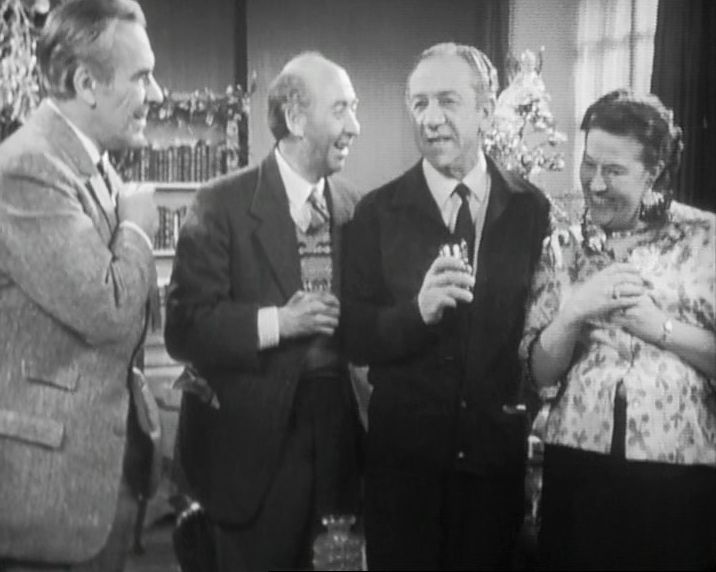
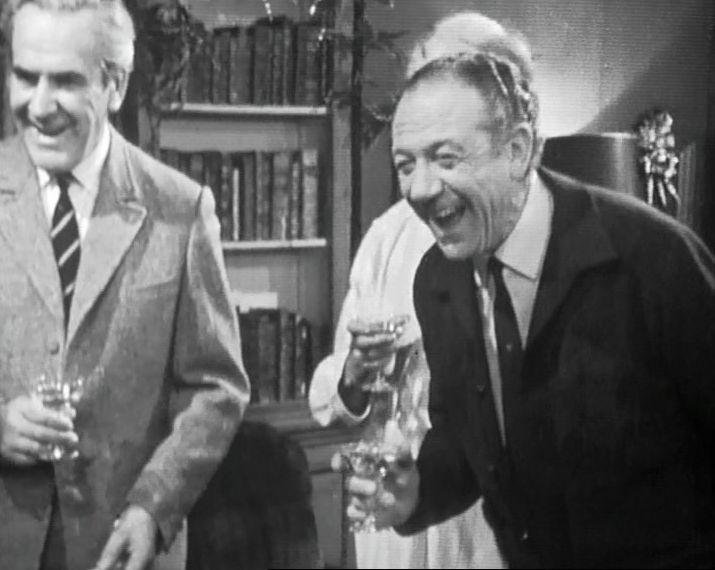
Given that it stars Sid James, Peggy Mount and John Le Mesurier, it’s a little surprising that George and the Dragon isn’t better known (especially since, unusually for a mid sixties series, all twenty four episodes still exist). Maybe its relative anonymity is down to the fact that it’s in black and white – had it been made a few years later in colour it might have been one of those selected series granted eternal life on ITV3.

Based on the opening titles (which feature the names of Sid James and Peggy Mount battling for supremacy) and the name of the programme itself, you could be forgiven for assuming that George and the Dragon revolves around George Russell (Sid James) and battleaxe Gabrielle Dragon (Peggy Mount) constantly being at each other’s throats.

The series isn’t really like that though – Gabrielle does raise an eyebrow at George’s philandering ways, but there’s a lot more humour in her character than you might expect. George, on the other hand, is not terribly loveable – the fact that it’s Sid James helps to cushion the blow, but George is rather a selfish type ….

Both George and Gabrielle (as driver and housekeeper) are in the employ of the affable but rather vague Colonel Maynard (a perfectly cast John Le Mesurier). A gardener called Ralph (Keith Marsh) rounds off the household.

As this episode opens, George is attempting to seduce a with-it sixties dollybird called Irma (Yootha Joyce). Interesting to see that before Yootha made her name as a seventies battleaxe, she had her share of more glamourous roles. Lecherous old George is deprived from taking things with Irma as far as he hopes after suddenly realising that it’s eight in the morning (Eh? What have they been doing all night?). So the race is then on to get shot of her before everyone else wakes up.

Gabrielle is up and about though and highly amused at the sweet nothings George is whispering into Irma’s ear. “She’s going to get her death of cold, that’s more like a belt than a skirt” mutters Gabrielle through gritted but smiling teeth, as Irma wanders off into the morning.

There’s a good example of George’s selfish nature during the scene where they all exchange presents.  Gabrielle has bought something nice for George, but his present to her is simply one of his unwanted gifts (and he’s so dim that he’s forgotten to take the original tag off).  As I’ve said, thanks to Sid James’ playing he’s able to soften moments like these, but it’s far easier to be on Gabrielle’s side than George’s.

I adore the moment when Gabrielle stands longingly under the mistletoe and the other three – after preparing themselves – all troop over to give her a kiss!

They then depart for their separate Christmas destinations – George for a spot of one-on-one time with Irma, Gabrielle to stay with her sister, Ralph to spend time with his niece whilst the Colonel is off to his club to meet his brother.

But all their plans fall through, one way or another. George discovers he has a rival for Irma’s affections (her sailor friend returns from the high seas). There’s a brief spot of bedroom farce as Irma attempts to juggle both of her paramours, but this isn’t really developed as much as it could have been.

Gabrielle’s sister had forgotten that she invited her – so after realising that there’s no room at the inn, Gabrielle silently slips away.  That feels slightly tragic, but not as tragic as Ralph’s admission that he doesn’t actually have a niece (he always spends Christmas alone in the big house after everyone else has left).

With the Colonel also returning, the mismatched quartet then resolve to spend Christmas together.  This is a rather touching moment, nicely played by all four. Vince Powell and Harry Driver’s sitcom work may never have been particularly subtle, but George and the Dragon is one which I still enjoy revisiting today. If you haven’t seen it, then you could do worse than spending some of your Christmas money on the DVD set.

Sykes At Christmas (22nd December 1977)

s01

Sykes isn’t necessarily the sort of sitcom you’d imagine would delight in breaking through the fourth wall – but this Christmas edition does just that. We open with Eric and Hattie addressing the viewers at home (which helps to make it plain that this won’t be a run of the mill show) before the action cross-fades back to last year’s Christmas.

We find a distinct lack of Christmas decorations (and indeed cheer). Eric does encourage Hattie to take a swig of wine, but from her expression it’s more of a chore than a pleasure.  Corky briefly pops around but doesn’t linger – which leaves Eric to wonder where the magic of Christmas has gone. And indeed, the magic of television ….

This is a good reminder that people complaining about the current state of television isn’t a new phenomenon.  Eric hankers for the good old days – a single channel with Muffin the Mule, the potter’s wheel and Sylvia Peters. She’s very much a name from the past, but I daresay the majority of the audience watching at the time would still have fondly remembered her. Even though her television heyday was already twenty years in the past.

Then both Eric and Hattie fall asleep (yes, I know, a little Christmas indulgence is required) and a good fairy (a dressed up Hattie achieved via the wonder of CSO) pops up and grants Eric a wish. He wishes for Sylvia and she duly appears.

If Sykes had been a modern sitcom, then no doubt there would have been plenty of mileage to be found in examining the character of the socially stunted Eric – a man whose one true love was a television favourite from a past decade.  This angle isn’t a feature of this seventies sitcom of course, instead we can either view Eric’s awkward attempt to kiss Sylvia as rather charming (or rather creepy, depending on your point of view).

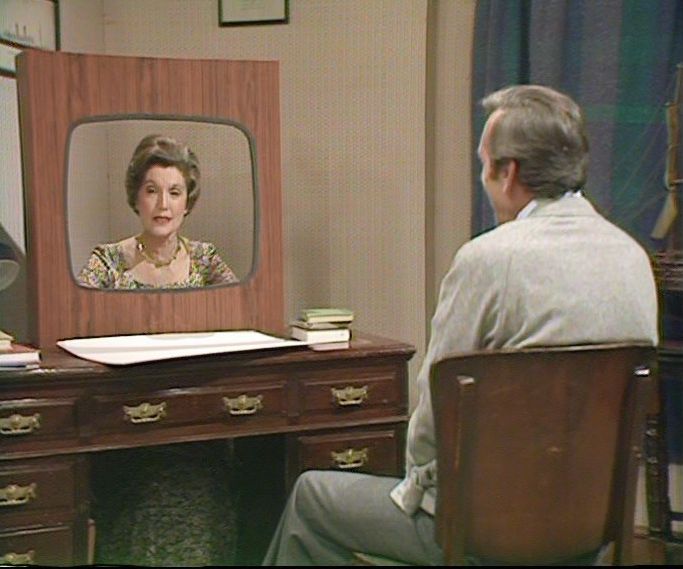
Even when he invites her up to his bedroom you know that no funny business (of a sexual type, anyway) will be going on – despite what Hattie, listening aghast on the other side of the door, might think.  The reason for him taking her upstairs is delightfully odd – he’s got a cardboard cut out television set and asks her to sit behind it, reading 1950’s news headlines ….

I like the way that when Sylvia begins by mentioning Mr Callaghan, Eric immediately stops her – he wants the comfort and security generated by names from the past, the unpleasant present isn’t required.  The ironic implication that old television can be used as a security blanket isn’t lost on me – although I don’t watch archive tv just for nostalgia purposes (honest).  Still, it was amusing to see an archive television programme reach back even further back in time to a previous “golden age”.

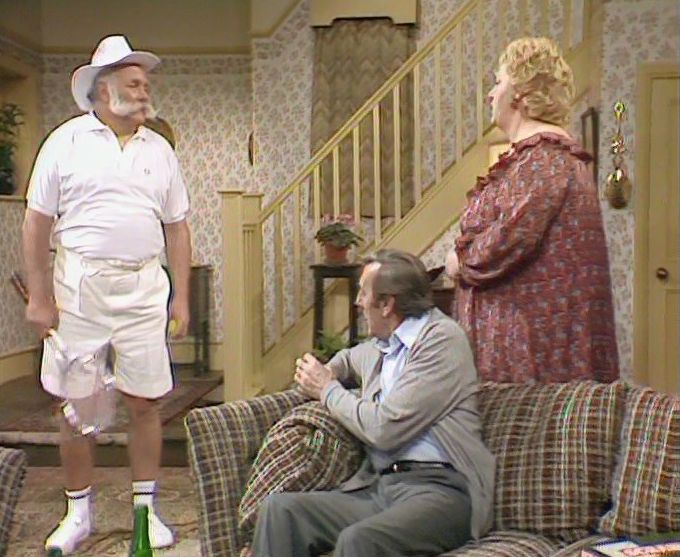
Hattie also gets a wish (from a fairy Eric) but her desire for Paul Newman goes awry – Jimmy Edwards in a tennis outfit doesn’t quite cut the mustard for her.  The arrival of Edwards delights the studio audience, although he doesn’t have a great deal of screentime.

The conclusion – Sylvia Peters is at a party next door, but Eric refuses to believe it (thereby missing the chance to really meet his heroine) – seems almost as unreal as the rest of the episode.  Are we still sleeping or has Eric finally woken up?

s02

Coronation Street – 26th December 1966

c01

As you might expect with a Jack Rosenthal script, there are so many sparkling dialogue moments scattered throughout the episode. But it also contains a very downbeat story thread which won’t be resolved until the New Year. Ena’s daughter, Vera, is terminally ill (Ena knows this, but Vera doesn’t).

The episode opens with Elsie attempting to push a little more food into her already stuffed friend, Dot (Joan Francis). Dot tiredly declines before Elsie moves on to contemplate a sausage lying on the floor. “You know there’s been a sausage lurking underneath that table just before dinner time. He knows I’m not going to shift it and it’s not going to shift itself so we’re just sitting here, staring each other out”. Dennis’ first stab at a fancy dress costume for tonight’s contest (Biggles) is good for a laugh.

It’s heartbreaking to watch Ena attempt to care for Vera, but the mood is lightened when Minnie turns up (she’s come dressed as Old Mother Riley). I love the way Minnie enthusiastically recites Christmas is Coming when she’s on the other side of the Vestry door. Once Ena opens it and Minnie claps eyes on her stern face, the singing gradually tails off ….

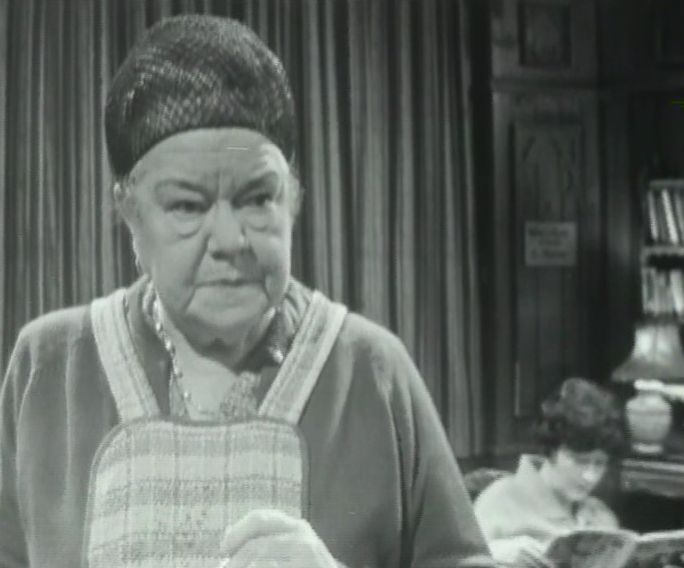
Any Ena/Minnie interplay is always welcome, although this brief scene is the only time they meet during the episode. The way that Violet Carson could machine-gun through her lines so rapidly is something that never fails to impress. A good example of this is when Ena caustically wonders why Minnie has decided to go to the party dressed up as her own mother.

A visit to the Ogdens is always a Christmas treat. There’s Stan, puffing away on a large cigar without a care in the world, whilst Hilda does all the work (although heating up frozen food possibly wasn’t the most taxing chore ever). Meanwhile their daughter Irma (by now married to David Barlow) delights in sitting on the sidelines, sniping at both her parents whilst David attempts to act as a peace-maker.

As the episode progresses more fancy dress suspects turn up.  Len and Jerry as Batman and Robin raise a smile – especially for the way a bashful Jerry attempts to hide his costume under a mac (leaving a perplexed Jack Walker to wonder if they’re actually wearing anything underneath). Len stirs the pot by saying they’ve got nothing on but fig leaves ….

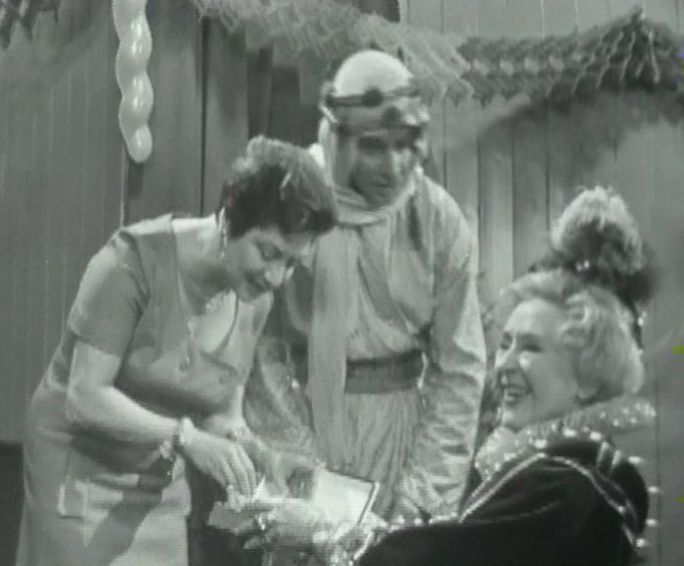
Ken, as Lawrence of Arabia, appears to be narcissistically proud of how dashing he looks, whilst Val is a fairly sedate Nell Gwynne.  Hilda hasn’t made much of an effort, instead she spends her time sniping at Elsie, who’s sporting a suitably vampish outfit.  Dennis also comes dressed as Batman, so there’s a brief Bat-off between him and Len.

Pride of place has to go to Annie though. She arrives quite late, but doesn’t disappoint – as Queen Elizabeth I she’s impossibly regal (perfect casting for Mrs Walker). As Elsie says to Len: “I don’t think she’s pretending. I think she’s always been Queen Elizabeth dressed up as Annie Walker.”

Who will be judged best in show? By the way that Annie casually calls the whole contest just a bit of fun, you can just tell that’s she’s incredibly keen to walk away with the prize (inconsequential though it is). So when Jerry is declared the winner it’s no surprise that she begins to storm out, sporting a face like thunder.

But all is well when Annie is then awarded a prize as the best dressed female (all her bonhomie comes flooding back).  She quite happily shares her spoils – a box of liqueurs – and harmony is restored.

This is a lovely one. As touched upon before, it zings with so many incisive lines (we can forgive director Michael Apted for the way microphone booms often pop into shot – given the production treadmill, it often happened).  Although most of the episode is very light, the spectre of Vera’s illness does cast a pall over proceedings, even though it’s only a minor plot-thread today.

In years to come, a death would be grist to the Christmas soap mill. It’s interesting to observe that back in 1966 it wasn’t something which was allowed to interfere with the optimistic post-Christmas tone.

c02

Coronation Street – 23rd December 1964

C1

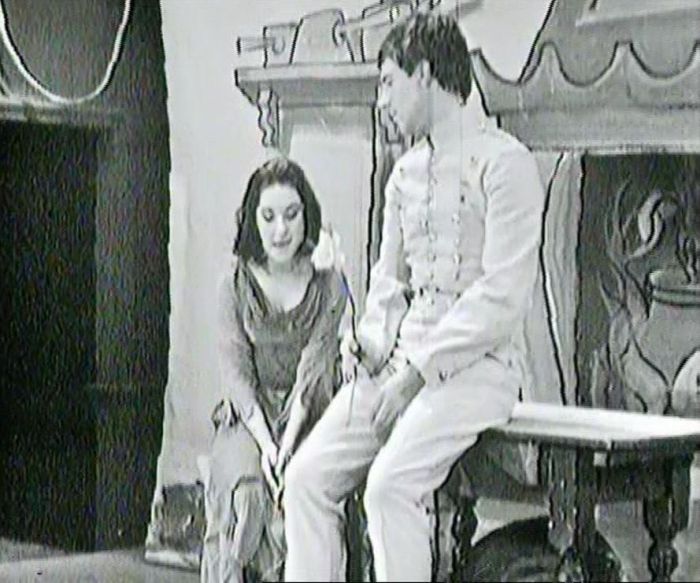
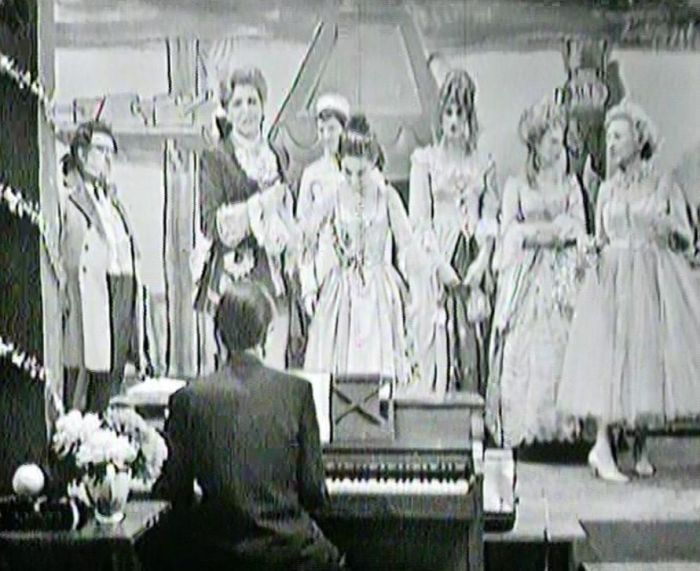
It’s panto time in the Street (Cinderella). This means several things, firstly that poor Miss Nugent is an absolute bag of nerves. Mr Swindley, cast in his familiar role of impresario, is implacable though – giving her, and the rest of the players, a very stirring speech before the curtain goes up.

Arthur Lowe was, of course, so good at this sort of comic business. And speaking of comic business, it’s easy to imagine that the way Swindley recoils after almost bumping into Ena following his impassioned homily was an unscripted extra.

Ena’s not been called upon to tread the boards and neither has Minnie.  But Minnie does have a vital role – she’s the prompt.  I love the fact that she’s spent all night memorising the play from start to finish, meaning that she can now recite everyone’s lines perfectly.  Another nice moment is the tender way Ena wakes up the slumbering Minnie – for all her bark, there’s clearly a caring side to Mrs Sharples.

The regulars have a packed hall of children to play to.  The camera often cuts away to their rapt faces and it seems like they were genuinely enjoying themselves (either that or they were very good actors).  The panto is a real time capsule of the period, with numerous pop culture references dropped in (most notably The Beatles and Ready Steady Go).

Both Elsie (Prince Charming) and Miss Nugent (Dandini) display fine sets of pins whilst Dennis is endearingly gormless as Buttons (not much acting required then) and Lucille makes for a winsome Cinders.

Any guesses who’s playing the fairy godmother? Mrs Walker of course.  There’s a nice moment early on when Annie asks Jack to serve her a crème de menthe (to steady her nerves before the show). Jack slyly enquires if she intends to pay for it, or whether he should simply make a note!

Also stocking up on Dutch courage is Albert, who seems to find the prospect of playing Baron Hardup more terrifying than living through two world wars ….

It’s not a highbrow sort of panto, but nobody wants highbrow at Christmas. We want to see Len get a custard pie in the face, don’t we boys and girls?

The sixth and final 1964 script by Tony Warren (he wouldn’t return to the series until 1967) it’s an episode very low on drama. This isn’t a criticism though – in recent decades it’s become de rigueur for Christmas soaps to ramp up the drama and excitement (and misery).

Today’s episode is a reminder of a simpler time, when all that was required during the festive period was a bit of indulgence on the part of the viewers as we watched our Coronation Street friends letting their hair down and enjoying themselves.

It’s a pity that the telerecording is so grotty, but it’s better to have it in this state than not at all.

Favourite exchange of the episode. Mr Swindley and Minnie are standing in the wings, admiring Lucille’s performance.

Mr Swindley: I wouldn’t mind adding my signature to a letter recommending her for the Royal Society of Dramatic Art.

Minnie: Last time I spoke to her she said she wanted to go on’t buses.

C2

Top of the Pops – 1975 Christmas Special

pops75-01

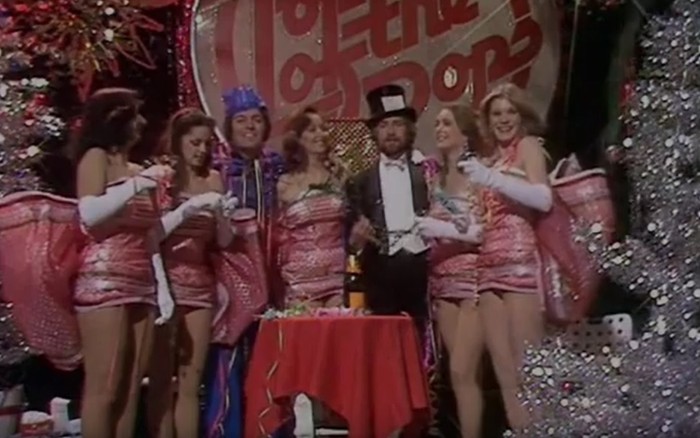
Noel Edmonds (dressed as Fred Astaire) and Tony Blackburn (dressed as Buttons) are our genial hosts today. Could be worse I suppose ….

First up are Pilot with January. It’s all quite bouncy and rather agreeable – live (or re-recorded) vocals and massive guitars are firmly to the fore. A good start.

Johnny Nash gives us Tears On My Pillow. There’s not a great deal to say about this performance, but luckily the next turn – Don Estelle and Windsor Davies with Whispering Grass – contains plenty of talking points.  Davies’ outrageous mugging to camera (well I guess he had to do something, since Estelle was handling most of the singing) still raises a smile today, whilst you have to tip your hat to Don Estelle – he was a very good vocalist.

Pan People’s are wearing candelabras on their heads. That was unexpected.

Ralph McTell with Streets of London is up next. Given the sentiment of the song, it fits well into the Christmas show. As expected, it’s a no-frills performance, but none the worse for that.

The Tymes, Ms Grace. I love everything about this performance – the red suits, the coordinated dancing, the off-screen parping of the TOTP orchestra.  Tammy Wynette, plonked next to half a dozen or so tinselly Christmas trees, belts out Stand By Your Man whilst the TOTP orchestra once again scrapes away as best they can.

The Bay City Rollers with Bye, Bye Baby would no doubt have whipped the teenage audience into a frenzy – but like last year, all the turns have to perform to an empty studio.  That’s a little odd, as it means that the party atmosphere seems even more stilted than usual. Mud then pop up for the second year running with Lonely This Christmas. This time Les is standing up, rather than pouring out his tale of woe at the piano.

Guys and Dolls, A Whole Lot of Loving. Consisting of three pairs of guys and (well) dolls, this is quite the performance. The chest hair (from the men you’ll be glad to hear), their stack heels, their impossibly tight trousers. Crickey. The dolls can’t compete with that sort of competition.

Telly Savalas, sporting the widest shirt collars I’ve ever seen, appears on film to intone If.  It’s quite remarkable. It’s not good, but it’s quite remarkable.

More Pan’s People, this time they’re dressed as Christmas parcels.

10cc, with I’m Not In Love, arrive in the nick of time with a quality pop song. That just leaves diddy David Essex, in maximum Cockney mode, with Hold Me Close.  Live vocals, the worst jacket seen in the programme and plenty of chest hair. That’s the way to bring the show to a memorable conclusion.

Top of the Pops – 1974 Christmas Special

totp74-01

Following on from the Glam-tastic treats of Christmas 1973, the 1974 TOTP Special does feel a little pale in comparison. Still, let’s press on ….

Tony Blackburn and Jimmy Savile are on presenting duties (which of course means that the chances of this one ever receiving another television airing are slim to zero).

Ignoring as best we can the spectre of Savile, first up are Mud with Lonely This Christmas.  Sincerity oozes out of Les’ every pore as he recounts this sad, sad tale. Not quite the jolly start to the programme you might have expected, and this early feeling of mild gloom is only enhanced by the fact that Mud are performing to an empty studio.

Tony chats to the Rubettes (well he asks them one question) before introducing the Osmonds on VT. Then it’s Sweet Sensation and Sad Sweet Dreamer which is quite jolly – and those purple suits are very impressive.  Still no sign of the studio audience, so maybe this was one of those strike-bound years where things had to be done in a rush.

Pan’s People dance to You Won’t Find Another Fool Like Me by The New Seekers. PP always favoured very literal song interpretations, so it probably won’t surprise you to learn that they’re all sporting red noses like very sad clowns. The whole sequence has to be seen to be believed – dignity at all times, girls ….

Thing are looking up, both on the Christmas and also on the music front.  Cheeky little David Essex, surrounded by tinsely Christmas trees, treats us to Gonna Make You A Star. This gets the thumbs up from me.

Paper Lace with Billy Don’t Be A Hero shuffle on next. This tragic story (war is hell and it’s best to never volunteer for anything) has always been one of those seventies novelty songs that I’ve never been able to forget (whether this is good or bad I’m not sure).  Possibly there were live vocals on this performance or maybe they were miming to a re-record.  Either way it helps to make it a little more interesting.

The Three Degrees, performing on a set with plenty of tinsel, give us When Will I See You Again? Like the rest of the show it’s far from cutting edge, but perfectly pleasant and undemanding – ideal Christmas afternoon fare in fact.

Throughout the show, Messrs Blackburn and Savile hobnob with the musical acts, asking them inane questions or (as with David Essex) forcing them to read Christmas cracker jokes. This does manage to raise a titter from the crew though – I guess it’s the way you tell them.

Everything I Own by Ken Boothe is another somewhat soporific hit, but the pace picks up about 75% with Waterloo by ABBA. It’s early days so their clothes don’t look ridiculous, but the song remains a cracking one.

After that bouncy interlude, we once again slow down the pace to a crawl with Charles Aznavour and She. Plonked in front of the same artificial Christmas trees as David Essex, Mr Charles certainly gives the song his all. A great favourite of grannies everywhere no doubt.

A double dose of Pan’s People today. They’re back to jig about to a Barry White song, You’re the First, the Last, My Everything. It’s a classy little dance, they keep their clothes on and everything.

We close with Slade and Merry Christmas Everybody. Like everyone else, Noddy and the boys don’t have an audience to perform to, but at least they amble off the stage towards the end of the song and join all the other acts who are still hanging about the studio. This does mean that a little bit of atmosphere is generated.

Not a classic Christmas year then, but not totally devoid of interest. I wonder what gifts 1975 will bring?

Doctor Who – The Space Museum. Episode Four – The Final Phase

sm4

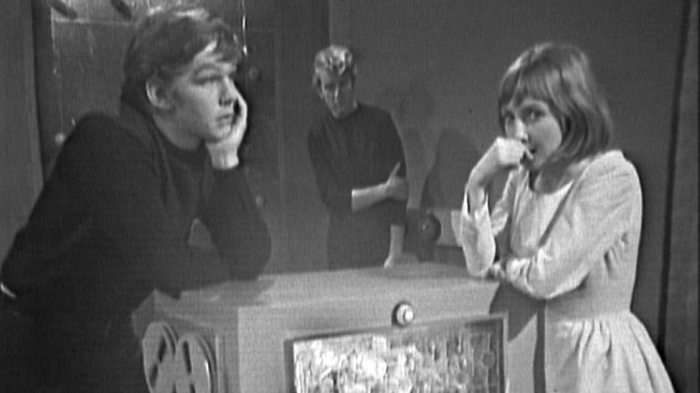
This episode brings The Space Museum to a less than thrilling climax. The first thing which stands out is the fact that Barbara and Dako have spent almost a whole episode (from the middle of episode three to the middle of episode four) coughing, spluttering and attempting to escape from the museum. This helps to give the impression that the museum covers a great deal of ground, but also that Jones had run out of anything remotely interesting to do with Barbara.

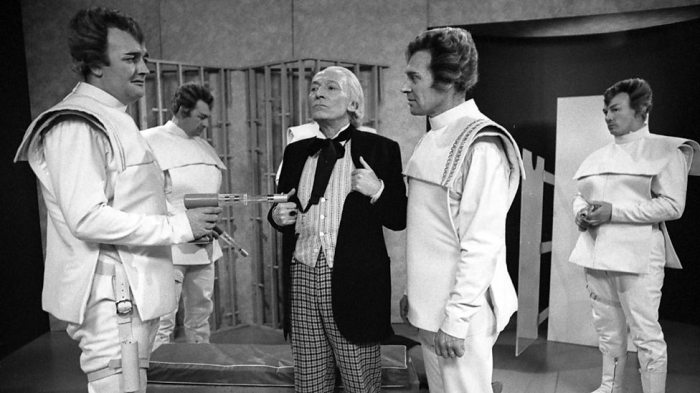
Once he’s unfrozen, the Doctor delights in asserting his superiority over Lobos. But as in episode two, his glee doesn’t last for long as he’s soon captured again. When Barbara and Vicki are also rounded up, the four time-travellers are together again once more. They debate whether they’ve done enough to change the future – or have all their actions just been moving them closer and closer to the exhibit cases? Ian attempts to smash the Morok’s freezing equipment (in a very ineffectual way, it has to be said) but the Doctor murmurs that he doubts it’s the only one they have.
The classic line “have any arms fallen into Xeron hands?” never fails to raise a smile. It surely must be intentional, surely nobody could write something that silly with a straight face? Maybe that’s The Space Museum‘s greatest failing – had it been made in the late 1970’s it would have been obvious that the Moroks and Xerons were faintly ridiculous stock characters and so more humour could have been developed from their interactions. Easy to imagine Tom having a ball with the script ….
We eventually get an explanation as to why the TARDIS jumped a time track. It’s tempting to wonder if this was a relic of David Whitaker’s work on the script (he commissioned it and later passed it to Dennis Spooner) as it has a definite echo of the gammy spring story from The Edge of Destruction. The Doctor waves a small object about and explains:

DOCTOR: You know, it’s a funny thing how it happened. It got stuck. I don’t know whether you’ve gone into a room and switched on the light and had to wait for a second or two before the thing lit itself up.
BARBARA: Yes, I have. I think most people have.
DOCTOR: Well, this is the same kind of problem, you see. We landed on a separate time track, wandered around a bit, and until this little thing clicked itself into place, we hadn’t actually arrived.
IAN: Ah. Well, thanks very much for explaining it.

Yes, that makes everything quite clear. Umm, maybe.

By far the most interesting part of The Final Test is the cliffhanger which teases us with the return of the Daleks. Although it’s fair to say that The Chase will turn out to be something of a bumpy ride …..

Doctor Who – The Space Museum. Episode Three – The Search

sm3.jpg

Introduced as a direct substitute for Susan, Vicki has – until now – rarely been a character who has initiated events. In her previous stories she’s spent most of her time with the Doctor, which has fostered the impression that she’s a young and inexperienced girl who needs guiding.

But whilst she may be young there’s also been various hints along the way that the schooling she received in the future was well in advance of anything that Ian and Barbara would have taught their pupils. In this way she’s very much a proto Zoe – immature but with a strong intellect.

This is the episode where she steps out of the Doctor’s shadow, as we see her organise the Xerons into a revolutionary force. Like the rest of the story this is a little hard to swallow (Vicki is an unlikely revolutionary) but by all accounts Glyn Jones’ original draft scripts were much more light-hearted (script editor Dennis Spooner removed most of the overt comic moments) which might explain why the end product feels a little disjointed.

The Xerons explain to Vicki that the Moroks devastated their planet. “They destroyed everything, even our people. Only the children were spared, to work.” This is slightly odd – quite how efficient children would have been as a working force is debatable, surely it would have been better to keep the adults alive to work as slaves? But it’s a heart-wrending story and provides Vicki with a good incentive to help them, although her desire to ensure that she and the others don’t end up as exhibits in the museum is an even stronger one.

Vicki’s skill with computers (another trait she shares with Zoe) is sort of demonstrated when we see how she bypasses the electronic brain which guards the Xeron’s armoury. The computer is designed to only open the door if the answers received to a set series of questions are both truthful and correct.

Vicki is able to bypass this by speaking the truth when she tells it that she’s Vicki and she wants the guns for revolution.  Best just to ignore this massive cop out I think. As you might expect, what we see is a typical 1960’s vision of a computer – a very bulky, solid-state affair, with whirring tapes spools housed in big cabinets.

Whilst Vicki’s running around having most of the fun, what of the others? The Doctor’s been sitting this one out and won’t return until the next episode, Ian has spent his time getting into fights and waving a gun around whilst Barbara hasn’t had a great deal to do (mainly she’s been attempting not to choke from the poison gas pumped in the museum by Lobos).

Peter Diamond, who teamed up with William Russell in The Romans, makes another appearance here – although this time, as a Morok soldier, he and Ian are on opposite sides. Once again working as both an actor and a fight arranger, Diamond was able to choreograph some reasonably decent fight scenes which allow Ian to throw various Moroks about in a nifty fashion.

Ian reaches Lobos’ office and he orders the Morok commander at gunpoint to release the Doctor. Lobos tells Ian that it’ll achieve nothing if he kills him. Ian responds “possibly, but it might be enjoyable.” This comment is so uncharacteristic that you have to assume he’s bluffing, or maybe all the fisticuffs and gunplay have made him imagine he’s James Bond?!

The episode ends with Ian horrified to see a frozen Doctor. Well sort of. Hartnell’s still on holiday, so Ian has to react to nothing and the audience is required to fill in the blanks.

Doctor Who – The Space Museum. Episode Two – The Dimensions of Time

sm2

It’s possible to feel the goodwill of the opening episode ebbing away during the first scene of part two. Lobos (Richard Shaw) is the Morok commander responsible for administering the Space Museum (on what we quickly learn is the planet Xeros). He’s given a remarkable opening speech.

I’ve got two more millums before I can go home. Yes, I say it often enough, but it’s still two thousand Xeron days and it sounds more in days. Yeah, I know, I volunteered, you were ordered. If the truth were known, I was just as bored on Morok. Still it was home and youth never appreciates what it has. Oh, I don’t know what I’m going to do now. Still, let’s get on with it, shall we? I have to make these reports. I don’t know.

Are the Xerons one of the most boring alien races we’ve seen so far, or are they just one of the most bored? There’s a train of thought which suggests they’re deliberately written in a tongue-in-cheek manner, and in some ways Lobos’ first speech does support this view.

The mighty Morok empire seems to be not quite as mighty as it once was and he’s clearly chafing at being stuck on the backwater of Xeros, running a museum that nobody ever visits. Of course, one of the reasons why the museum doesn’t seem to be very popular could be down to Lobos’ apparent desire to turn any newcomers into exhibits – that’s the sort of thing which would discourage passing trade!

Richard Shaw was a very decent actor (his turn as Sladden in Quatermass and the Pit is an excellent one) but he rather struggles here. He’s hardly alone in that though as the dialogue doesn’t do any of the guest cast any favours.

If the Moroks, with their funny hairdos, look a little strange, then the earnest young Xerons are even stranger. With a very limited budget how do you show that they’re aliens? Give them pronounced eyebrows of course! But this does become rather distracting, as your eye does tend to be drawn to their eyebrows all the time.

Tor (Jeremy Bulloch), Sita (Peter Sanders) and Dako (Peter Craze) are three Xerons with a burning desire to overthrow their Morok overlords. All of them are so impossibly wet that once again it’s possible to wonder if they’ve been deliberately written this way. Or am I being too generous and the end result is simply a combination of ineffectual scripting and acting?

One of the highlights of the episode is the meeting between the Doctor and Lobos. The Doctor is characteristically superior and isn’t keen to submit to Lobos’ interrogation. When he’s asked where he comes from, the Doctor projects an image of some walruses onto Lobos’ screen. He then displays an image of himself in a bathing costume. I’d like to think that this wasn’t just a primitive example of photoshopping and Hartnell really did dress up.

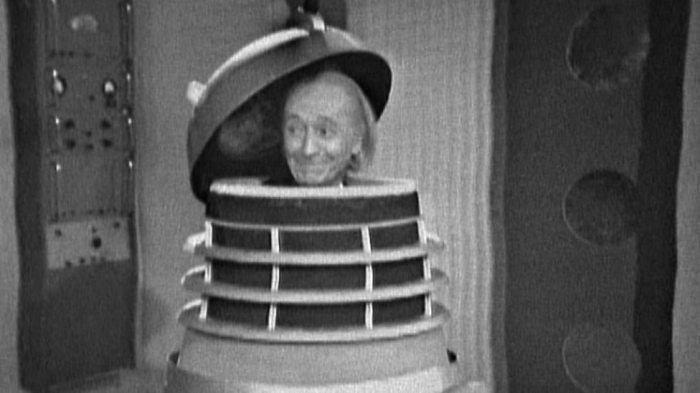
The other highlight is the moment when the Doctor decides to climb inside the Dalek exhibit. Naturally he can’t resist doing the voice as well! (“I fooled them all! I am the master!”) It’s a lovely moment and helps to make up for some of the less successful scenes elsewhere in the episode.

Doctor Who – The Space Museum. Part One – The Space Museum

sm1

The common consensus about this story is that it has an intriguing first episode but this early promise is then squandered as the remaining three installments consist of little more than a lot of tedious running about. Some, like Rob Shearman, have mounted vaillant defences on its behalf – but I think its reputation as an also-run is fairly safe.

Although saying that, it’s not a total disaster and it’s true that the opening episode does show plenty of promise. What’s unusual about this one is that it does attempt to show some of the consequences and paradoxes of time travel – an area which the series rarely tackled during its original run (Day of the Daleks, Pyramids of Mars and Mawdryn Undead are three fairly rare examples off the top of my head).

We open with a mystery – in the first few seconds the four time-travellers are still dressed in their garb from The Crusade, but seconds later they’ve changed into more familiar clothes. But since they don’t remember doing it, how has it happened?

The Doctor at first doesn’t quite get Ian’s drift when he tells him that they’re wearing their clothes (“well, I should hope so, dear boy. I should hope so”) but then airily dismisses their concerns. “You know, it’s so simple. It’s time and relativity, my dear boy. Time and relativity.” When asked to explain further, the Doctor claims he doesn’t have the time, but it’s obvious that he doesn’t have a clue!

Other strange instances – time runs backward after Vicki breaks a glass – are further puzzles, although these are harder to explain. If the Doctor’s later conjecture that they’ve jumped a time track is correct then that could explain the clothes issue – somehow the TARDIS has pushed them into their own future, so it would be reasonable they weren’t wearing their crusading costumes – but the glass/water mystery is more inexplicable.

Of course it could be that our old friend the TARDIS was attempting to raise the alarm that something was wrong (as it did during The Edge of Destruction). If that’s the case then it was with just as much success (i.e. not very much).

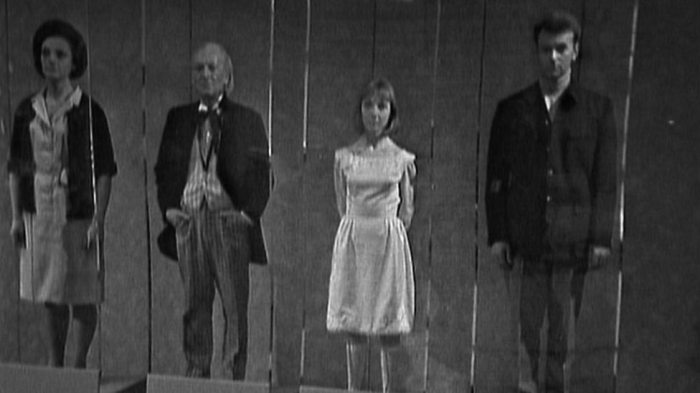
There’s an eerie feel to their initial investigation of the Space Museum. Although the four time-travellers seem corporeal and solid, it’s later revealed that they’re little more than insubstantial phantoms – unable to leave footprints in the dust, touch objects or speak to the inhabitants. When they find themselves displayed as immobile exhibits in the museum it’s a striking moment. In this version of the future the Doctor and his friends were captured and turned into exhibits, but that’s only a possibility – it doesn’t have to come to pass.

So they have the chance to change the future and ensure that this grisly occurrence doesn’t come to pass, but how to proceed? Should they go straight back to the TARDIS and leave? Or would that lead directly to the cases?

This part of the story is undoubtedly the highlight as it helps to raise the stakes of the adventure a little more (if they fail then they already know their fate). It’s also fair to say that had this started as just a normal adventure, without this timey-wimey subplot, then The Space Museum would be even less of interest than it currently is.

And we get to see a Dalek! Albeit as an immobile museum exhibit like everything else. It’s a nice foreshadowing of their imminent reappearance (you have to love Ian’s comment that it’s highly unlikely they’ll ever meet them again – I doubt many in the audience were convinced). What’s slightly odd is Vicki’s comment that she’s never seen an image of a Dalek, although she’s read about them in her history books. It’s hard to imagine that there wouldn’t be some visual evidence or photographs of them available during Vicki’s time.

The stock music is at times rather overpoweringly dramatic, although some of the tracks are successful in creating the required odd atmosphere. With the four regulars the only actors with speaking parts (at least speech that we can hear) it’s an excellent vehicle for all of them. For example, Vicki gets some dialogue which shows that whilst she (like Susan) may be sometimes written as a mid twentieth century girl, she’s most evidently not. “Time, like space, although a dimension in itself also has dimensions of its own.”

A more than decent opener, but what will happen when we meet the Moroks and Xerons?

Star Trek – Operation – Annihilate!

How do you follow The City on the Edge of Forever? Not easily, but Operation – Annihilate! does have a nicely grim tone (especially from Kirk) which given the events of the previous episode fits nicely.

Kirk is very snappy throughout. The reason is obvious (Jim’s brother, sister in law and nephew live on a colony planet called Deneva, currently in the grip of an outbreak of mass insanity) although it’s still jarring to see him snap at Uhura for no good reason.

This downbeat mood also infects McCoy, who later has a short argument with Nurse Chapel about the best way to treat Spock. All of these moments help to disguise the fact that there’s a rather pulpy science fiction idea at the heart of this episode.

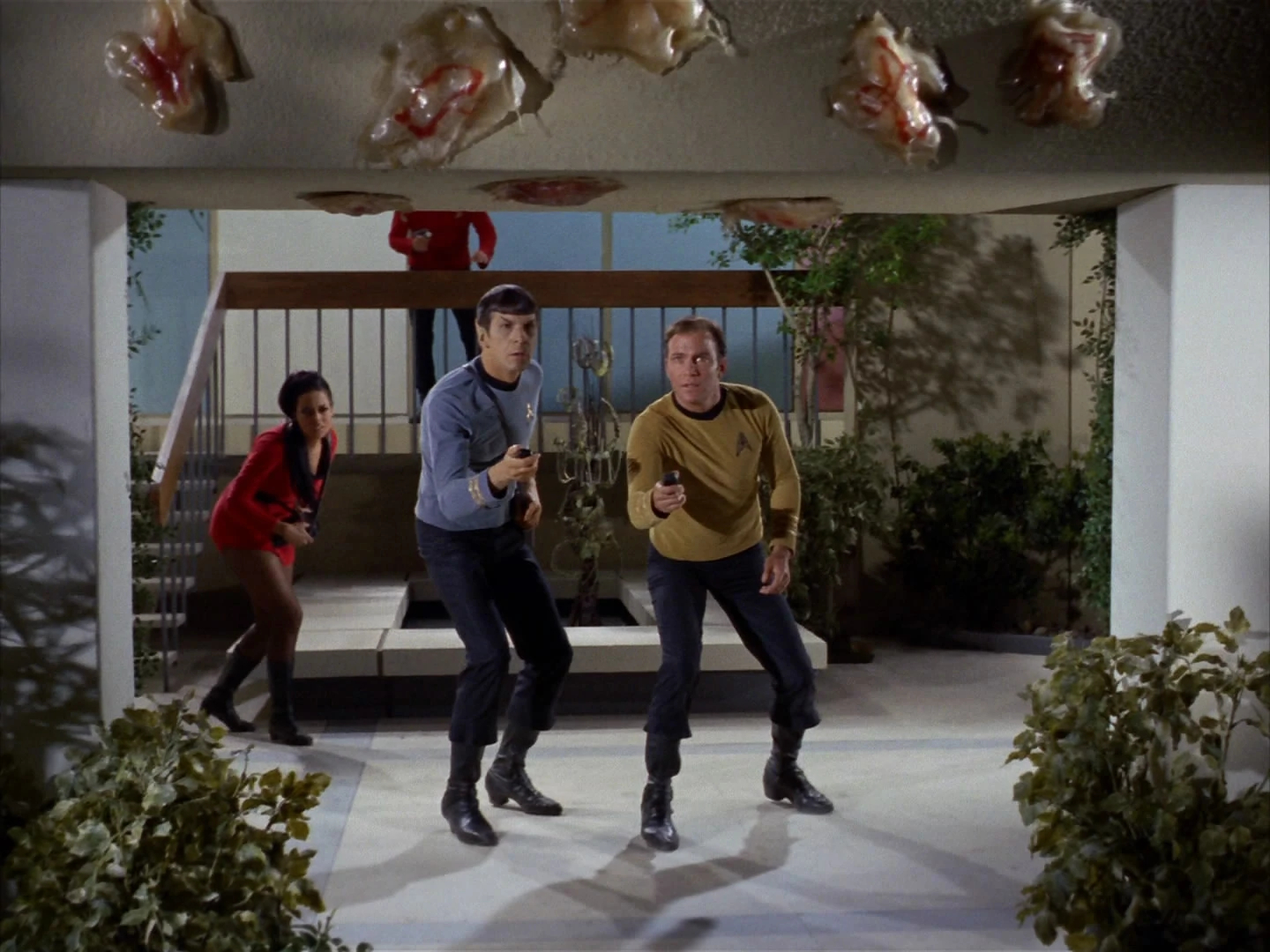
Whilst they may look less than impressive today (flying pancake-like objects moved around with fishing wire) back in the 1970’s the parasitic organisms who are driving planet after planet mad were the very stuff of nightmares.

We never learn a great deal about them. They just seem content to move across the galaxy in a straight line (why?) infecting each new planet they arrive on. Given that their rate of progress is quite slow (measured in years)  I’m not sure why it wasn’t decided to evacuate Deneva before they arrived.

I do like the way that today’s eye-candy Yeoman (played by Maurishka Taliaferro) ventures the opinion that the parasites don’t look real. It’s a dangerous game to play though – once you start pointing out how absurd or artificial things are, you’re on a slippery slope ….

As often with Star Trek, guest roles are few and far between. There may be a million colonists on Deneva, but they’re represented by several pipe-wielding types and Jim’s family. Kirk’s brother, Sam, is dead when he arrives and Sam’s wife, Aurelan, follows shortly afterwards. Although not before she’s done a great deal of screaming and wailing.

This leaves Jim’s nephew, Peter, and it’s maybe not surprising that Kirk’s focus is on him (and also Spock, after he gets infected). McCoy angrily (as already touched upon, there’s a fair few raised voices in this one) reminds him that all the colonists are his responsibility, not just these two, but it’s a plot point that doesn’t really go anywhere. A pity, as there might have been some dramatic capital to be mined our of Kirk’s personal/professional conflict.

Spock’s internal battle with the parasite is a highlight of the second half of the episode. As is Scotty preventing a rogue Spock from beaming back down to the planet. James Doohan, like all the second string regulars, often had very little to do – but he was always well worth watching anyway.

Operation – Annihilate! is a strange mixture of downbeat storytelling and pulpy SF (the fact that the episode title has an exclamation mark in it suggests that we shouldn’t take this one too seriously). It’s one of those episodes that tends to get overlooked (despite being the series one closer) but I’ve always enjoyed it.

Star Trek – The City on the Edge of Forever

Few Star Trek stories have generated quite the same level of debate and interest as The City on the Edge of Forever has.

It’s well known that the series often saw disgruntled writers irked at the way their scripts were reworked before they reached the screen, but no other scribe was quite as vocal about this issue as Harlan Ellison was. There’s plenty of additional reading for those interested – such as Ellison’s own book on the subject (which includes one of his draft scripts) and a graphic novel adapting his original screenplay.

Sometime, when I’ve a few days to spare, I’m going to investigate the whole saga in depth …

The television City opens with a mad McCoy on the rampage.  The way that McCoy accidentally skewers himself with a hypodermic full of Cordrazine feels a tad unsatisfactory. Cordrazine is an excellent plot contrivance drug, filling the subject with an overwhelming sense of paranoia and delusion (thereby turning the normally rational McCoy into the ideal sort of person to drive the story forwatd).

Bones beams down to a nearby planet filled with Ionic columns (for some unspecified reason) and a mysterious, if rather cheap looking, edifice who grandly proclaims himself to be the Guardian of Forever.

If a wacky, out of control McCoy is plot contrivance number one, then the Guardian’s time portal (a magic door which provides the user with a gateway to their own past) is number two. But let’s not niggle – once McCoy has jumped through the portal (and changed time in a dramatic fashion) we know that the preamble is over.

Kirk and Spock follow him through to 1930’s depression era America. Their mission? Find McCoy and ensure that time is placed back on the right track.

We’ve sort of been here a few times before (or rather alien planets which resembled this era) so it’s not quite novel. But it’s still fun to see Kirk and Spock – fishes out of water – learning to adapt to this strange new world. Stealing some clothes seems quite straightforward, until they run into a police officer ….

Shatner and Nimoy deadpan nicely as Kirk and Spock attempt to explain Spock’s strange appearance (he’s Chinese and caught his ears in a mechanical picker when he was a child). This is a bit silly (and ever so slightly racist) but there’s something appealing about the way the pair seem to be slightly more relaxed and off-duty in this new world.

The arrival of a soft focus Edith Keeler (Joan Collins), who runs the 21st Street Mission, changes the tone of the story. Immediately the soundtrack gets very string heavy and Kirk begins to pay close attention to Ms Keeler. Joan Collins! Her appearance is obviously one of the reasons why this story has retained a certain profile.

Edith turns out to be a prophet as somehow she’s able to picture a future where mighty starships explore the galaxy (Jim’s obviously impressed with this). Quite why she’s decided to share this news with the down and outs at the Mission is something I’ve never been able to work out. Presumably they view her ramblings as a reasonable price to pay for a bowl of soup and a warm fire.

Jim and Edith’s budding relationship is developed rather charmingly. The recurring musical motif of Goodnight Sweetheart is a nice touch from Fred Steiner and helps to bolster the romantic mood. 

The happy times they spend together makes the sucker punch in which Spock sees two futures for her (one where she lives, the other where she dies) all the more powerful. Even with a third of the story to go, it seems horribly likely that Edith will have to be sacrificed in order to put time back on the right lines again.

We then learn that Edith Keeler will later form the peace party and inadvertently help Hitler win WW2. Needless to say this is a tough thing to swallow (little Edith did that all by herself?) but it has to be something that substantial to explain why Kirk would be prepared to let her die.

The ending is as gut-wrenching today as it no doubt was back then. Shatner is spot on as Kirk wrestles with his dilemma – if he saves Edith then he will condemn countless unborn millions to death. We know that Kirk will do the right thing, but it’s plain that the cost will hang heavy with him. Shatner doesn’t overdo it, but still does enough to convince the audience that Kirk is a shattered man by the time the credits roll.

Few Star Trek episodes end in such a downbeat fashion as this one, but any attempt to lighten the mood just wouldn’t have worked. For all that the script was a heavily rewritten compromise, it still stands as one of the finest from all three series.

Star Trek – Errand of Mercy

mercy1

The Federation is at war with the Klingon Empire. This all seems a bit sudden (after all, we’ve never heard of the Klingons before) but that’s one of the drawbacks of episodic television ….

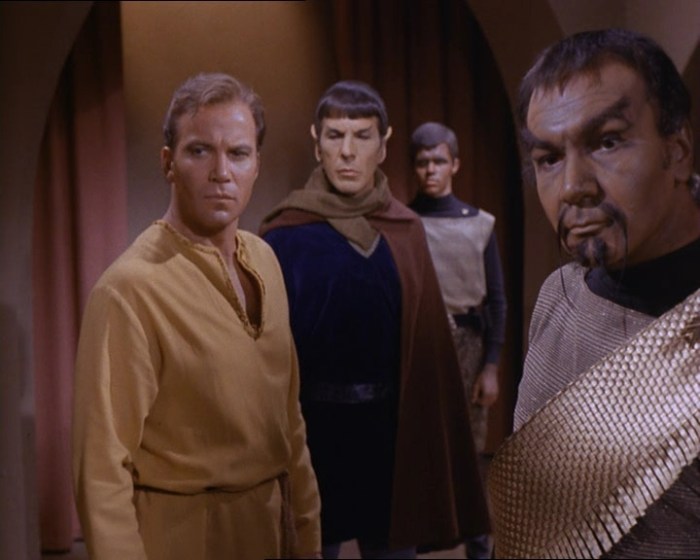
The Klingons are presented to us as violent, oppressive and cruel. You can take them to be either crude caricatures of the Russians or the Chinese (the original script highlighted their Oriental features).  We don’t learn a great deal about their Empire in this story (save that they love conquest) but it’s plain that they’ve been designed as the antithesis of the Federation.

Organia is the first battleground. A strategically important planet, Kirk has orders to ensure it doesn’t fall into Klingon hands (he is authorised to take any steps necessary).  As you might expect with a Gene L. Coon script, this is a pretext for a rather stinging anti-war story.

I can’t think of many other Star Trek episodes which so dismantles the character of Jim Kirk, revealing the flawed man behind the heroic image.  His bad day begins when we witness him being totally infuriated with the council of Elders, led by Ayelborne (John Abbott).  Their smiling passivity and total reluctance either to defend themselves or ally to the Federation baffles him.

Kirk attempts to paint a bleak picture about what life under the Klingons would be like (massive slave labour camps) and then counters this with a rosy vision about how they would flourish as a member of the Federation.

We can be of immense help to you. In addition to military aid, we can send you specialists, technicians. We can show you how to feed a thousand people where one was fed before. We can help you build schools, educate the young in the latest technological and scientific skills. Your public facilities are almost non-existent. We can help you remake your world, end disease, hunger, hardship. All we ask in return is that you let us help you. Now.

All this is no doubt true, but we’ve already been told that Kirk has to acquire the planet for the Federation, so his actions aren’t motivated by simple altruism.  And if the war intensifies, no doubt this planet would suffer no matter who was in charge. The way that the Organians politely decline with a tinge of sarcasm (“we thank you for your altruistic offer, Captain, but we really do not need your protection”) is delightfully done.

Errand of Mercy benefits enormously from two excellent guest performances.  Firstly, John Abbot as Ayelborne.  And secondly John Colicos, who is splendid as the Klingon commander Kor.  Shatner always worked well when put up against strong guest actors and one of the chief joys of this episode is watching Shatner and Colicos face off.  Kor is no simple-minded savage – he may be brutal (although like Kirk he’s only obeying orders) but he’s also articulate and bleakly amusing.

Kor finds Kirk to be a kindred spirit.  Once Kirk is in his power, Kor is keen for the pair of them to share a drink and have a chat about the concept of war.  And however much Kirk might protest that he’s nothing like the Klingons, everything we’ve seen so far would suggest otherwise ….

Coon delivers so many very quotable lines. As the story progresses, it’s difficult to work out who despises the Organions more – Kirk or Kor. Kor articulates his worldview. “Here we are on a planet of sheep. Two tigers, predators, hunters, killers, and it is precisely that which makes us great. And there is a universe to be taken”.

The climax of the story – Kirk, Kor and their two battlefleets are rendered null and void by the Organians – is a breath-taking moment, not least for the manic way that both Kirk and Kor react.  Kirk’s beside himself that someone has dared to stop him fighting (ironic, given how often he’s meddled in the affairs of other planets).

The end of the episode reveals that the Organians are impossibly highly advanced and only took human shape in order to give the Federation and the Klingons a reference point.  This leaves a few questions dangling (indeed there are a few plot holes throughout the episode) but these minor niggles don’t really affect the story too badly.

The Klingon make-up may not look too good today, but that’s about the only negative I can find in a story which I’ve always been happy to place in the top tier.

mercy2

Star Trek – The Devil In The Dark

On the surface The Devil In The Dark seems to be little more than a pulpy melodrama. Kirk and the others have beamed down to Janus IV, a mining planet under attack from a mysterious creature.

The incidental music is ramped up, everybody’s playing it very grim, and the luckless extras continue to die – fried to a crisp by something which lurks in the dark.

But since it become clear that the theme of the episode is concerned with not judging by appearances, maybe it’s best not to be too hasty about the nature of the story ….

The pre-credits teaser is an interesting one. There’s no sign of the Enterprise crew, instead we follow the beleaguered miners as they attempt to defend themselves. Chief Engineer Vanderberg (Ken Lynch) might be bullish, but you just know that one of his hapless subordinates (left all alone in the caves) is fated to have a very short lifespan.

The caves themselves look quite good  (although maybe the lighting is a little too bright). But there’s no disguising the smooth studio floor, which is a problem also encountered in many Doctor Who cave based stories.

These early scenes seem to be setting us up for a tense story in which Kirk and co battle it out with this unseen attacker. The importance of Janus IV is made clear – its mineral wealth keeps a number of Federation planets functioning – so any interruption to the mining schedule will cause untold deaths (in addition to the many fatalities already recorded on this planet).

At this point, nobody seems to query whether the indengeous creature has a greater claim to the bountiful natural resources of Janus IV than the Federation does. The imperialist nature of the Federation is clearly laid out – here’s a planet rich with mineral resources, the Federation needs them, the Federation will take them.

William Shatner’s father died during the recording of this episode. Always the pro, he carried on and turned in a really nice performance. I especially liked the non-verbal moment when Kirk viewed the charred remains of another dead redshirt. Grief, mixed with a determination to press on, was shown on his face.

The triumvirate of Kirk/Spock/McCoy are all working well today. Bones utters, for the first time, his signature “I’m a doctor not a …” . In this case a bricklayer (when he comes face to face with the silicon based Horta).

There’s some nice tension between Kirk and Spock. Kirk is initially in something of a bloodthirsty mood – the Horta has to be killed and as quickly as possible – whilst Spock is driven by a sense of scientific curiosity. At this point the audience can choose who they want to side with – Kirk for vegence or Spock for compassion.

Although when the Horta directly threatens Jim, Spock is quick to change his point of view (telling Kirk to destroy the creature immediately …)

There’s no getting away from the fact that the Horta looks very silly (its initial appearance is certainly one moment when the caves weren’t nearly dark enough). Spock’s mind meld with the creature is another eyebrow raising scene but all of this is worth it for the final reveal – the Horta isn’t naturally aggressive, it’s only been acting in self defence.

It’s a lovely twist, although you have to say that it’s taken a while for the series to have reached this point. For example, nobody shed any tears for the salt monster in The Man Trap, even though it was the last of its kind.

The Devil In The Dark is another quality episode from Gene L. Coon. As we’ve come to expect with his scripts, the Federation is far from the enlightened force for scientific good it would later become. Instead, it’s much more of a colonial power – ruthlessly annexing Janus IV and then preparing to beat off attacks from the natives.

There mighr be a happy ending – the miners and the Horta come to a friendly arrangement – but this doesn’t lessen the cynical nature of certain parts of the story. It’s just a shame that the design of the Horta itself means that many casual viewers will probably struggle to take the episode that seriously.

Star Trek – This Side of Paradise

The Enterprise arrives at Omicron Ceti III, a planet where it’s believed that – following a deadly bombardment of Berthold rays some years ago – the Federation colonists would have all perished. However that’s far from the case – everyone is hale and hearty and apparently living in a state of paradise.  Quickly all of the Enterprise crew, apart from Kirk, fall under the spell of some mysterious flowers and the tranquilising spores of peace and love they spurt out  ….

This Side of Paradise, a thinly veiled critique of the hippy movement, finds the series coming down firmly on the side of the establishment.  The fact that Omicron Ceti III is as close to an idyll you could hope to find cuts no ice with Kirk, who rarely has any patience with this sort of thing (see also The Apple, if you dare, in series two).

It’s interesting to note that the spores aren’t presented as controlling or evil. They need a human host to survive, but there’s no sense of malignancy. Indeed, the fact that they’ve given Sandoval (Frank Overton) a healthy appendix back to him has to be a mark in their favour.

The way that that everybody on the planet has elected to tune in and turn on seems to be the thing which most irritates Kirk (and no doubt Gene Roddenberry).  Star Trek may champion the individual, but also – especially in its first incarnation – strongly believed that the individual had an obligation towards society.  So by electing to cut themselves off from the rest of the universe, the inhabitants of Omicron Ceti III have abdicated this responsibility.

Kirk’s is later given a speech which sets out his vision of the universe. “Maybe we weren’t meant for paradise. Maybe we were meant to fight our way through. Struggle, claw our way up, scratch for every inch of the way. Maybe we can’t stroll to the music of the lute. We must march to the sound of drums”.  The phrase “sound of drums” has an interesting warlike feel to it.

One of the key parts of This Side of Paradise is observing how Spock transforms from his usual totally buttoned-up persona into the loving companion of Leila Kalomi (Jill Ireland).  It’s – of course – a great showcase for Nimoy, especially since you realise that this could only ever be a temporary escape for Mr Spock. The series format dictates that he’ll have to be locked back into his emotional prison by the end of the episode.

In some ways Kirk finds himself cast in the role of Spock’s spurned lover, desperate to break up the relationship between his second in command and Leila. And although Kirk is aware that his master-plan to snap Spock out of his loving daydream is dangerous (due to Spock’s great strength) he still goes ahead with it. Why not target McCoy or Sulu first?

Certainly if Kirk/Spock slash is your thing then there’s plenty of interest in this episode.  Not least when the pair decide to settle their differences by getting physical ….

This Side of Paradise is an acknowledgment of the way that Spock had become something of a sex-symbol by this point.  Kirk might be the more conventional leading man, but there was clearly something about Spock which caught the imagination of a good section of the audience (no doubt to William Shatner’s irritation).

The original draft centered around Sulu – which would have given his character a much needed boost – but I think that re-writing it for Spock was the right decision.  Jill Ireland gives a nice performance as Leila, even if her first scene rather overdoses on the soft focus. 

Kirk’s master plan to destroy the spores (he realises that anger is key) is a neatly ironic twist (fighting peace with violence). And the image of Kirk alone on the Enterprise is a memorable moment. With all of his crew having mutinied and transported down to the planet in double-quick time, he briefly cuts a desolate and defeated figure.

This Side of Paradise contains plenty of interest for the Spock fan, or indeed the Kirk/Spock fan. 

Star Trek – Space Seed

The Enterprise encounters an apparently derelict late twentieth century spaceship, the SS Botany Bay. On closer inspection it’s found to contain several hundred human beings who have been held in a state of suspended animation for over two hundred years.

Their leader, Khan Noonien Singh (Ricardo Montalban), is revived. Strangely charismatic to some, his dreams of conquest are as strong now as they were back in the 1990’s ….

Space Seed is held to be something of a classic, although it’s always been one that I’ve never really engaged with. Ricardo Montalban lights up the screen whenever he’s on, but Khan’s relationship with the hapless historian  Lt. Marla McGivers (Madlyn Rhue) has always irritated me.

It’s nice to have a meaty guest role for a female, but a shame that McGivers is such a limp and easily manipulated character. That she’s held in mild contempt by Kirk is made clear right at the start, when he struggles to get her name correct (his tone also implies that as a historian she doesn’t fulfil any useful function aboard the Enterprise).

This seems harsh, but when they beam over to the Botany Bay you have to concede that he may have a point. The moment McGivers claps eyes on Khan she goes more than a little weak at the knees. That she suddenly falls head over heels in love with him does stretch credibility a little (although it’s later explained that she has a thing for dominant men from history).

As you’d expect, there’s oodles of soft focus shots of Rhue as Khan effortlessly seduces McGivers. He pulls out the old “your hair would look better down” line which never gets old ….

If Khan had used some form of mind control on her, rather than simply his own ripling testosterone, possibly I wouldn’t have such an issue with the story. Especially since we then have to accept that McGivers is quite happy to betray her colleagues and help Khan take control of the Enterprise.

The moral of the story seems to be that women (even ones from the future) are easily dominated and require a forceful man to keep them in line. Hnm. It’s consistent with some of the previous first season stories, but no less easy to stomach.

Elsewhere, there’s some nice background to the Eugenics wars of the 1990’s (a far off period of time back in the sixties). Mind you, given that Khan ruled a large part of the world for a number of years, it’s slightly strange that nobody recognised him to begin with, not even the historian McGivers.

Remaining in nit-pick mode, the instrumentation of the Botany Bay doesn’t look any less advanced than that of the Enterprise (given the age of the vessel this is remarkable). And given how long it took Khan to wake up, it’s amazing that he’s able to nip over to the Botany Bay and seemingly revive all his crew in a matter of minutes.

Highlights of the episode include McCoy’s face off with Khan. Khan, having just woken up, puts one hand around Bones’ throat and holds a knife there with the other. “Well either choke me or cut my throat. Make up your mind”. I love Bones.

The latter part of the episode ramps up the action as Khan takes over the Enterprise. This he does with embarrassing ease, but since he’s already been described as a superman I suppose this sort of thing comes naturally to him.

The climatic fight between Kirk and Khan is a good one, provided you can ignore the rather obvious doubles. And McGivers does eventually come good, which gives Kirk the excuse to bundle her off with Khan to the inhospitable planet Citi Alpha 5 (we’d have to wait until 1982 to find out how things worked out for them).

A story of two halves then, with the second much more engaging than the first.