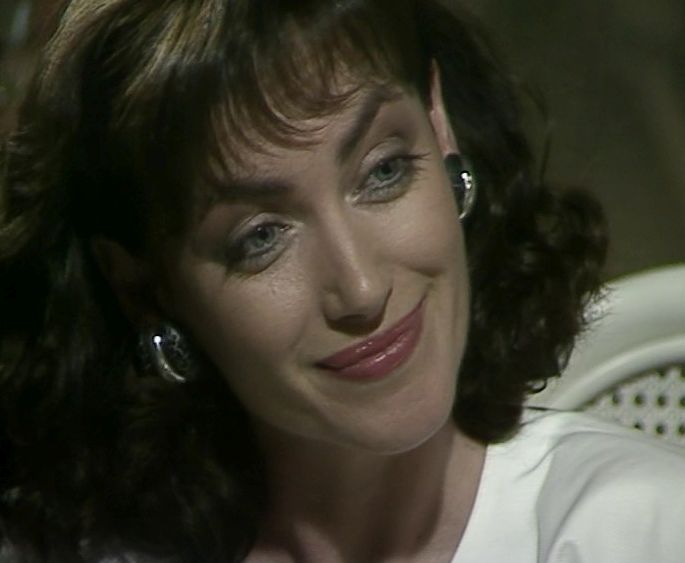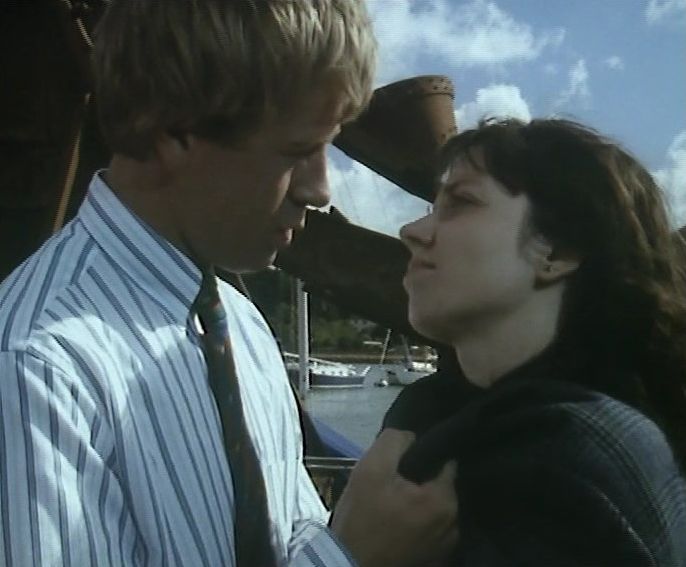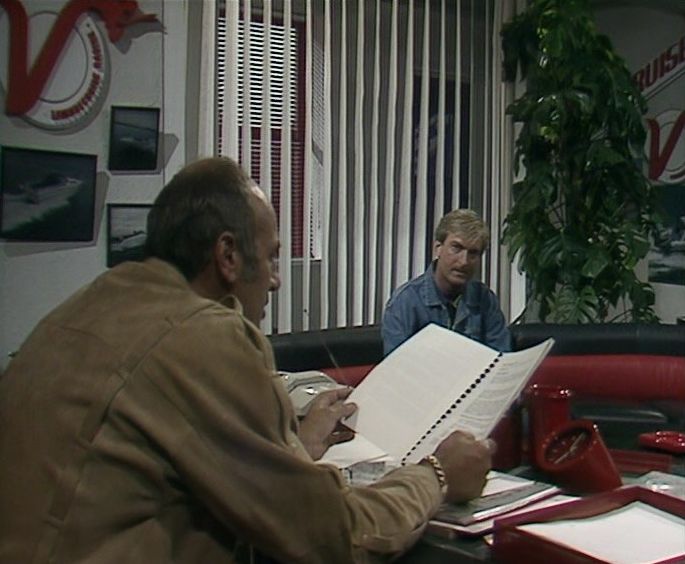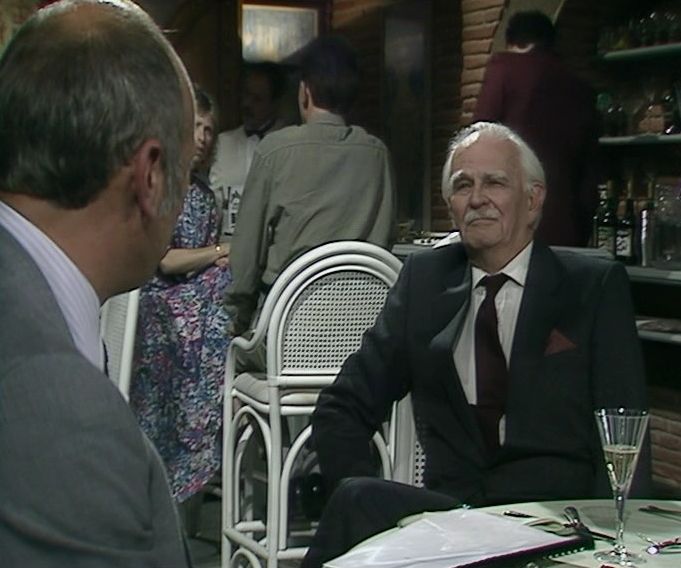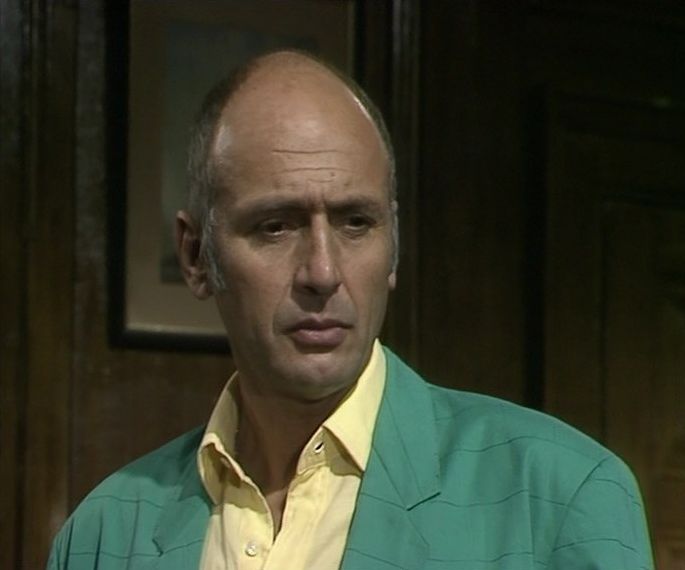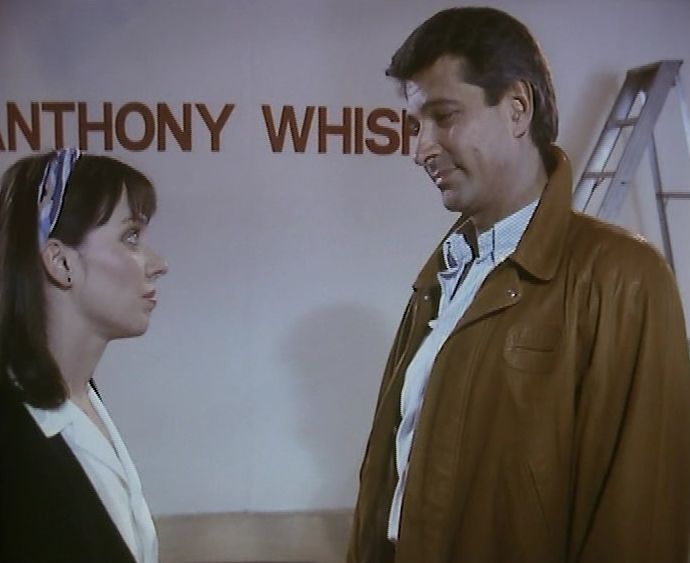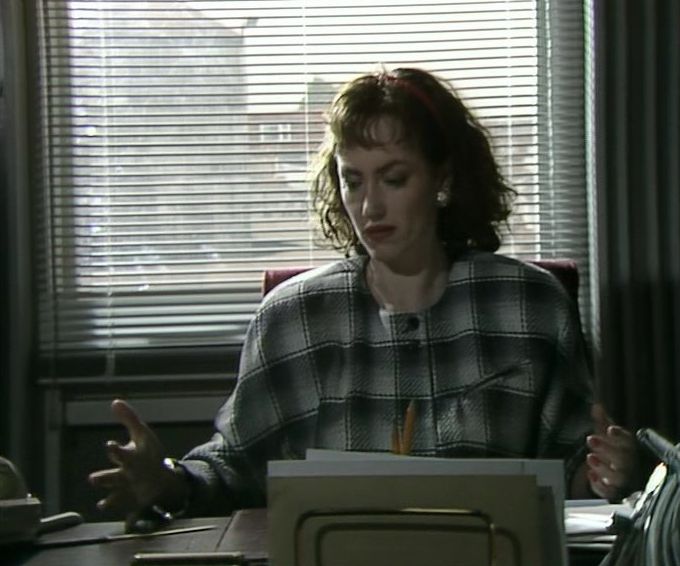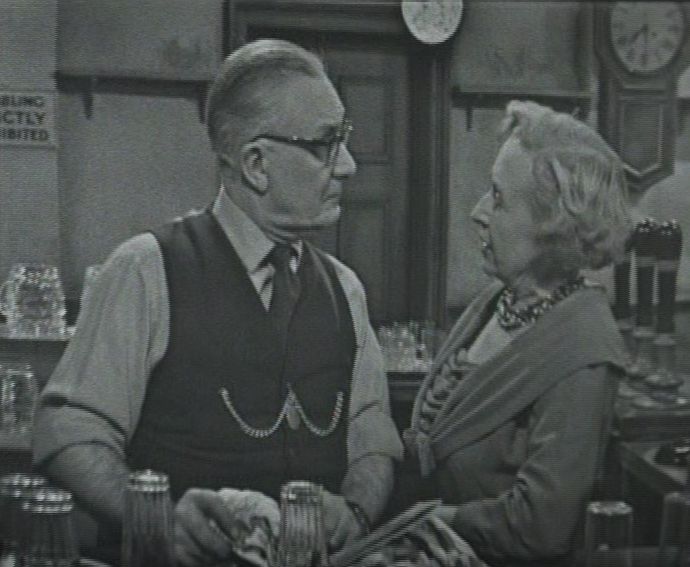
Coronation Street – 21st December 1960

corrie 601221

Poor old Jack’s in the doghouse.  Annie’s been giving him filthy looks since the second episode but it’s only at the start of this one that we find out the reason why.  Tucked in the back of his bowling bag was a copy of London Lovelies Number 4.  Annie is incensed – it’s not only a sure sign of moral deviance, but it also poses other disturbing questions ….

Is Jack entertaining a fancy woman?  Quite why Annie should jump to this conclusion isn’t quite clear (surely if Jack had another woman he wouldn’t need a magazine!).  But she’s also concerned about where he bought it from –  surely not from somewhere local.  As we see time and time again in these early episodes, many of the characters are very much concerned with the opinions of others.  This is very plain in Annie’s case – her social status would take something of a knock if it became known that her husband was a purchaser of off-colour books.

We never really learn too much about London Lovelies, although it does seem to be pretty tame stuff (pictures of young women in bathing costumes possibly).  And whilst Jack squirms for a few minutes, the truth soon emerges – Harry lent it to him, since they both believed that one of the Lovelies was the granddaughter of a hoity-toity chap down at the bowling club.  So all is well.

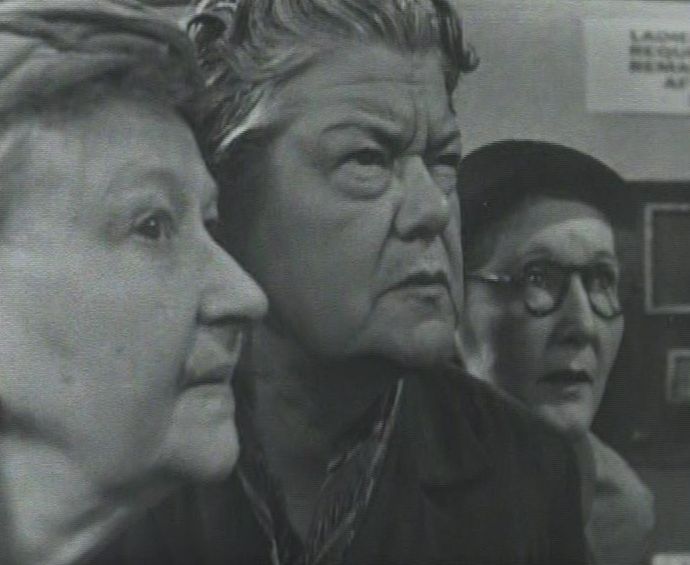
Ena, Martha and Minnie have taken up their usual position in the snug and are joined by a mysterious fourth woman.  Rather like Minnie in episode two, she’s mute (she also spends the scene with her back to the camera so we never see her face).  Director Michael Scott chooses a slightly unusual high angle for some of the snug shots – given the cramped nature of the sets it’s good to see something different being done.

With Christmas fast approaching, the weighty topic of Christmas cards is broached.  Ena’s incensed that Minnie’s not received hers (since she posted it the day before) and is also acerbic on the topic of carol singers.  Maybe the pennies and halfpennies donated to the church carol singers helps to explain why the vicar’s wife can afford a new fur coat ….

We then hear the sound of carols from the public bar, although this cue seems to have been a little bit late (both Violet Carson and Lynne Carrol take a few extra swigs of their drinks whilst waiting for the action to start).  It turns out that Mr Swindley is leading them – surely his only intention was to catch Ena in the act of forcing down a milk stout.  All of Ena’s defiance from episode three seems to have dissipated, as she now seems incredibly conscience stricken (a little odd, but maybe Ena’s just relishing being a drama queen).

Ena’s later rendition of My Drink is extraordinary.  Back in her room in the mission, she warbles “my drink is water bright from the crystal stream” for the benefit of Mr Swindley, ear-wigging from the other side of the door!  All this stress and singing is too much though and she swoons into Mr Swindley’s arms.  He calls for Miss Nugent, although the unnamed extra who pops her head around the door isn’t Eileen Derbyshire (who wouldn’t appear until episode fifteen).

Is Harry having his daughter Lucille (Jennifer Moss) home for Christmas?  Nope, he seems to think she’d be much better off in the orphanage.  This is very hard to understand – it’s true that Harry’s working over Christmas, so looking after her would be a problem (but if he really wanted to, surely he could have booked some time off?)  The inference seems to be that he’s decided to work because otherwise he’d be all by himself over the festive period.

So Lucille decides to take matters into his own hands by running away from the orphanage and back home.  Eventually a reluctant Harry does agree she can stay for Christmas, although his burden is lifted when the ever-understanding Esther Hayes (Daphne Oxenford) at Number Five offers to lend a hand.  Fair to say that so far Harry’s come across as a rather selfish and self-centered character.

As with the previous episode, the credits play out over a rolling caption of the street – stopping to flash up the names of the characters who live at each house. Although here the Mission Hall is shown to be next to the Rovers, not on the other side of the street.
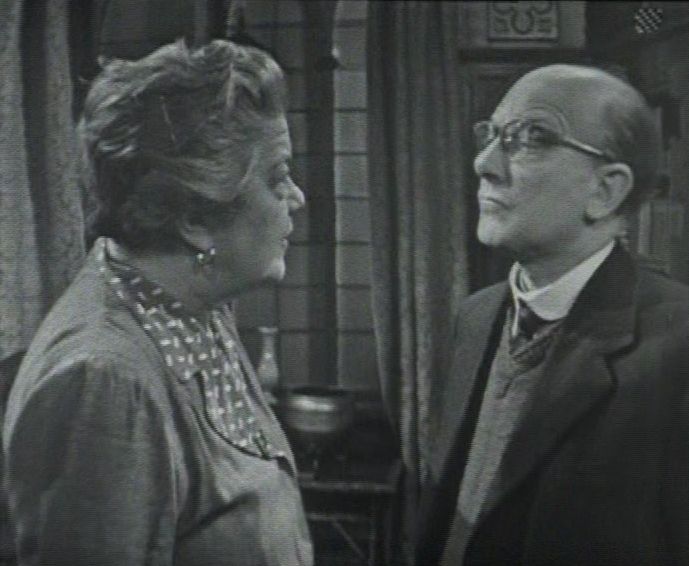
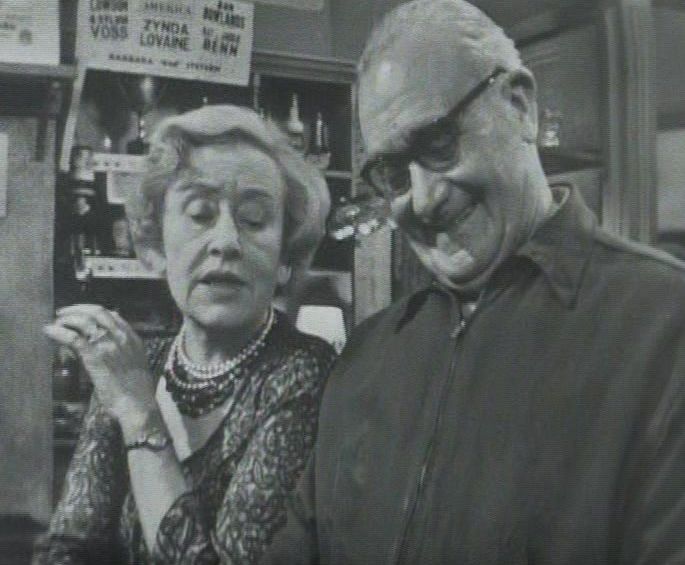
Coronation Street – 16th December 1960

corrie 061216

The opening of this episode has something of a Coronation Street rarity – a restaged cliffhanger.  This gives us an opportunity to marvel once again at the man who’s quickly become my favourite extra (you can’t miss him, he’s wearing a checked cap and has a habit of staring straight into the camera).

Linda and Ivan have a set-to in the Rovers bar, their every move observed by Ena, Martha and Minnie (watching from the safety of the snug).  As you might expect, the trio exhibit a mixture of prurient disapproval (the language!) and sadness that they can’t quite hear all the juicy details ….

Minnie gets to utter her first words, but it’s plain that she’s very much at the bottom of the pecking order at present – Ena first, then Martha, then Minnie.  When Ena decides to head home for a cup of cocoa, she invites Martha but doesn’t include Minnie.  Not that Minnie seems too bothered (presumably she’s used to this sort of treatment by now).

Ena and Martha’s cocoa is interrupted by Leonard Swindley (Arthur Lowe).  Making his debut here, Swindley is the chairman of the Glad Tidings Mission Hall (Ena acts as caretaker).   Although she’s not paid, she does receive free board (and coal) which is the reason why Swindley feels able to tell her that the committee aren’t at all happy with her conduct – namely the fact that she frequents licenced premises.  Oh dear ….

Ena’s not going to take this sort of thing lying down.  At one point she raises her arm as if to strike the unfortunate Swindley, but instead settles for a frank exchange of views.  Ena’s isn’t prepared to change her habits for anyone, something which she makes abundantly clear to the unfortunate Swindley.  Arthur Lowe only has a brief scene here, but it’s long enough to sketch out Swindley’s main character traits – he’s a pompous and officious type.  Of course, Lowe would later play a not dissimilar character in Dad’s Army, meaning that it’s easy to draw parallels between the two.

We finally learn why Linda’s been acting so erratically – she’s pregnant but was convinced that Ivan didn’t want children (hence the reason why she ran away).  But he seems more than happy with the thought of becoming a father, so all seems well.  For the moment.

The confrontation between Ivan and Dennis is interesting.  Dennis makes a disparaging comment about Linda’s unborn child, which infuriates Ivan.  Although Dennis cast a menacing shadow across the opening episode, when Ivan squares up to him he’s dramatically reduced in stature (it’s rather like a man facing a boy).

Once again, children provide a sense of discord.  Last time they vandalised Susan’s car, here they’re shouting abuse at May Hardman (Joan Heath).  May’s troubles (she’s suffered a nervous breakdown) were touched upon in episode two and it’s clear that she’s more than a little worried about the reception she’s going to receive from the neighbours.  Right from her first scene she’s marked as a victim – so it doesn’t come as too much of a surprise to learn that her time on the street will be very limited.

Coronation Street – 14th December 1960

corrie 601214-01.jpg

Poor Florrie hasn’t been in charge of the corner shop for more than a few hours and she’s already in trouble with the police.  Although you do have to say that the undercover officers (a man and a woman) were a bit naughty – acting as agent provocateurs, they asked for a packet of fire-lighters after 7.00 pm, knowing full well that such a sale would be illegal.  If Florrie had been a little more experienced maybe she would have picked up that the pair were acting in a somewhat shifty manner (I think it was the man’s moustache that did it for me).

What really upsets Florrie is the prospect that she might be fined and see her name in the newspapers.  The thought of such public humiliation causes her obvious pain.

More of the regulars are introduced in this episode.  I absolutely love Jack Walker (Arthur Leslie), the long-suffering husband of Annie.  Although this era of the series has a strong matriarchal streak, which reflects Tony Warren’s own experiences when younger, most of the men are more than simply fall-guys.  Jack may find himself somewhat under the thumb of the dominant Annie, but there’s always more of a dash of humour and lightness in Leslie’s performance.

Ken continues to fret that Coronation Street is no place for a girl like Susan.  More than once he tries to dissuade her from visiting the Rovers, but eventually she has her own way (another sign of female dominance?).  She’s made a good impression with Ken’s parents (Frank seems especially taken with her) although Ken himself is still incredibly tense (ashamed of his humble surroundings, no doubt).

Susan’s borrowed her father’s car to visit Ken.  It would have been impractical in such a small studio to show it, but the illusion is neatly created when we hear, off screen, a number of small urchins playing with the horn.  They also scratch the bonnet and shove nails into the tyres – making it plain that Coronation Street is very much at the wrong end of town.

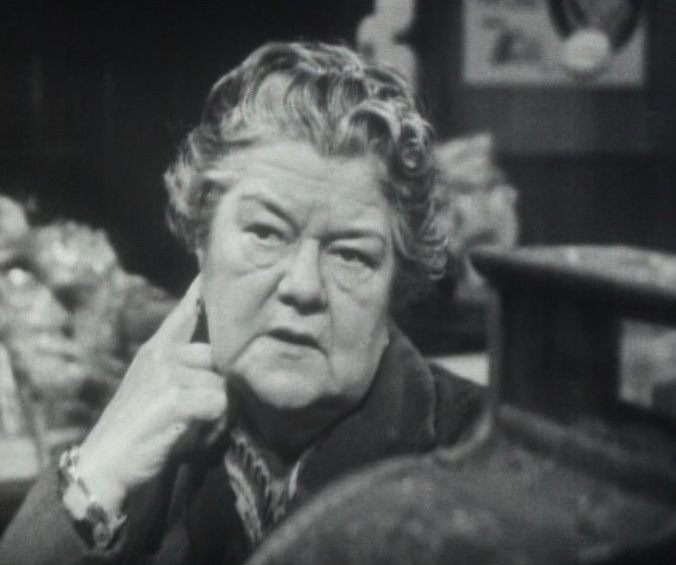
Ena continues to dominate every scene she’s in.  She’s incensed when Florrie refuses to serve her with some ham, but even better is to come when Christine Hardman (Christine Hargreaves) pops into the corner shop to give Ena a piece of her mind.  One of Ena’s defining character traits – she’s a woman who speaks her mind, irrespective of the hurt it might cause others – is made plain here.

Christine’s mother has suffered a nervous breakdown, but Ena seems to have displayed little sympathy (on the contrary, we can assume that she’s relished talking about it).  Ena uses the phrase “pots for rags” to describe Christine’s mother (presumably anybody who gives away good pots to the rag and bone man in exchange for rags must be a little loopy).  There’s little else you can do but just stand back and admire Ena in full flight.

Over at the Rovers we meet Harry Hewitt (Ivan Beavis) who seems rather cheerful, despite the fact that his daughter’s stuck in an orphanage.  We later learn that Harry’s wife died the year before and since he was unable to cope with his daughter, Lucille, the poor girl was placed in care.

Also at the Rovers, the triumvirate of Ena, Martha Longhurst (Lynne Carrol) and Minnie Caldwell (Margot Bryant) take up their positions in the snug.  It’s noticeable that Minnie doesn’t speak a single word – all she does is nod vigorously as the other two make various points.  A pity, but she’ll make up for it later with a score of deliciously vague bon mots.

We’re denied that here, but Ena and Martha do have this wonderful, oft quoted, exchange.

Ena: You know sometimes I think I’m just about ready to go off down to that cemetery, but if I had my way I’d just like to go like me mother did.
Martha: Eee, that were a beautiful ending.
Ena: Oh, lovely. She just sat up, broke wind and died.

What can you say? Simply wonderful.

Elsie and Linda spend a quiet evening in (although this illusion is somewhat spoilt by the sound of someone coughing elsewhere in the studio). Their scenes help to put a little meat on the bones of both their characters – especially Elsie, who doesn’t appear to have adjusted to the fact that the war is over. Back then, with a GI on her arm, she was someone. Now she’s just another faded woman with ever decreasing horizons.

Both decide to go for a drink at the Rovers Return, where they find Ivan waiting …..

corrie 601214-02.jpg

Coronation Street – 9th December 1960

corrie 601209.jpg

Coronation Street‘s debut episode (it, like the following eleven, was written by series creator Tony Warren) uses Florrie Lindley (Betty Alberge), a newcomer in Coronation Street herself, as the audience identification figure.  So as she slowly begins to learn about her new neighbours, so do we.  Florrie’s just taken over the corner shop and is strongly advised that whilst a little credit isn’t a bad thing, there are some she has to watch.  The Tanners at Number Eleven for example ….

It’ll be a little while before we see a full street set, so for the moment Coronation Street consists of a brief exterior shot of the corner shop whilst the rest of the street is represented by photo captions.  Jumping to Number Eleven immediately after we’ve been warned about the Tanners wayward ways is an obvious touch, but it serves as a decent primer for the audience.  This is clearly a family to watch.

Head of the household Elsie (Patricia Phoenix) is middle-aged and regards herself with a critical and weary air (“Ee, Elsie, you’re just about ready for the knacker yard”).  Her general air of stress isn’t helped by her wayward son Dennis (Philip Lowrie).  As the sixties wear on, Dennis will become a much lighter, comic character but at this point he’s firmly cast in the role of a juvenile delinquent.  Just out of prison, unemployed and facing an uncertain future, he radiates teenage angst.  And in another fairly seamless transaction, he mockingly tells his mother that no doubt she’d much prefer if he was like that nice young Kenneth Barlow at Number Three ….

It doesn’t take long to realise that we’ve now cut to that household, which sees Ken (William Roache) and his father Frank (Frank Pemberton) and mother Ida (Noel Dyson)  having their tea.  As with the Tanners, Warren wastes no time in developing generational conflicts (Elsie might believe that the Barlows never argue, but as we’ll see, she’s a little wide of the mark).

Frank is an honest-to-goodness, blunt, plain-speaking man – working-class to the core and proud of it.  Ken – thanks to his scholarship – has a chance to better himself and the fact he’s already started to move in rarefied circles is causing a little tension between him and his father.  But it’s not as simple to say that Frank’s an ogre and his son is the innocent party – since we see that, even this early on, Ken’s somewhat insufferable.  For example, the way Ken rolls his eyes as his father sloshes sauce onto his food does support the suggestion made later by next-door neighbour Albert Tatlock (Jack Howarth), that he’s turning into something of a snob.

True, Frank does lay down the law in no uncertain terms – telling Ken that he can’t meet his lady-friend at the Imperial Hotel (since Ida works in the kitchens, it goes against his principles for a son of his to fling money about in the place) – but this is something he later regrets.  But it’s plain that Frank’s much more connected to his other son, David (Alan Rothwell).  Frank and David can easily bond (chatting casually and repairing a puncture on David’s bike) in a way that Frank and Ken can’t.

There’s a brief visit to the Rovers Return (where the extra at the dartboard makes the most of his five seconds of fame).  Annie Walker (Doris Speed) has a brief scene, although it exists mainly to develop the characters of both Dennis and Ken.  Their meeting is as awkward as you might expect, with Dennis (chip firmly on shoulder) gently mocking the young wonder-kid Ken.

Later we learn that Dennis was unfairly accused by Elsie of pinching two bob out of her purse. Instead it was her daughter, Linda Cheveski (Anne Cunningham), who took it (in order to buy some ham from the corner shop). Linda’s marriage problems are touched upon, but we’ve yet to meet her other half – Ivan.  This scene has another example of Warren’s fine ear for dialogue (something which later writers would mimic).  Elsie gently tells Linda that her legs are nothing to get exited about.  ” I’m afraid you’ve got the Tanner side of the family to thank for that. You know, without a word of a lie, your grandma Tanner were that bandy she couldn’t have stopped a pig in an entry”.

There’s one more notable person that we have to meet in this opening episode, Ena Sharples (Violet Carson). Ah, Ena. Right from this first scene, Violet Carson makes an indelible impression. Here she’s discussing religion with Florrie (who’s non-committal on the subject).

Oh, it’s like me sister’s husband. You know he were made head of the plumbing where they live and it give her ideas. She said, ‘We’re civic dignitaries now, we must head for t’church’. Within a week they were received, christened and confirmed and within a fortnight she was sitting up all night sewing surplices. I’ll take a packet of baking powder.

A star is born.

There’s just time to twist the knife about Ken’s angst concerning his common family once more as we observe that his lady-friend, Susan (played by Patricia Shakesby, later to be a Howards’ Way regular), has turned up at his house.  She’s had to sit and watch Frank and David’s bicycle repairs (although she seems fairly unconcerned, even when David offers her a greasy hand to shake).


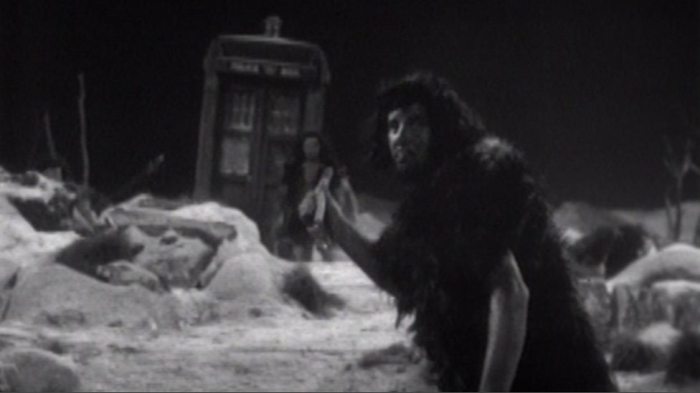
Doctor Who – An Unearthly Child. Part Four – The Firemaker

firemaker.jpg

During season one the Doctor is a rather self-centered sort of person – far removed from the champion of the oppressed that he’d later become.

Sydney Newman’s original concept had portrayed the Doctor as something of an anti-hero and this is maintained through the early stories. Yes, he does help the Thals defeat the Daleks (but only because he needs to retrieve the fluid link – otherwise he’d have happily left them to their own devices at the end of episode four). Other examples (in both The Keys of Marinus and The Sensorites the Doctor would have sloped off early if the TARDIS hadn’t been immobilised) aren’t difficult to find.

This first story is also concerned with the Doctor’s attempt to escape and return to the ship. He’s not interested in the power-struggles of the tribe (although the others are) and in the end it turns out that he was right not to get involved as it’s debatable what (if anything) Za and Hur learnt from Ian and Barbara.

In an earlier draft of Anthony Coburn’s script, Ian’s influence was much more explicit. He insisted that he’d only show the whole tribe how fire was made (Za agreed to this) and therefore the fight between Za and Kal was not just a battle for tribal supremacy. If Kal had won then he’d have carried on as an autocratic leader (jealously guarding the secret of fire) whereas Za offered a more inclusive, enlightened leadership.

But since this part of the script was later redrafted the contrast between Za and Kal was somewhat lost. Although there is one exchange between Za and Hur –

ZA: They are a new tribe. Not like us. Not like Kal. The young one, whose name is Friend, spoke to me.
HUR: Do you remember it?
ZA: He said, Kal is not stronger than the whole tribe.
HUR: I do not understand.
ZA: The whole tribe drove Kal away with the stones. The whole tribe can collect more fruit than one. The whole tribe can kill a beast where one of the tribe would die.

Which indicates that some of Ian’s words have struck home.

The question of leadership is settled when Za kills Kal in an excellently directed film sequence (shot by production assistant Douglas Camfield). Camfield’s obvious affinity with both film & VT cameras would be seen time and again (not only on Doctor Who but numerous other series during the 1960’s, 1970’s and early 1980’s). The shots of the time-travellers, lit by the flickering fire recently made by Ian, are especially impressive – and it’s their reactions to the fairly brutal fight which really help to give it an impact.

Thanks to a ruse with some skulls and Ian’s fire, the TARDIS crew manage to make their escape. The shots of them escaping through the forest (shot at Ealing) are simply done – stage-hands brush plants at their faces as they run on the spot. It’s not sophisticated, but it works, so who can ask for more? Indeed, the tight focus on their faces might have been borne out of necessity – since the forest set was rather small – but it also works to the benefit of the scene.

Although the three episodes of tribal antics have never been to everybody’s tastes, I’ve always found plenty to enjoy in them. The barren landscape strips the Doctor, Susan, Ian and Barbara of any sort of superiority (see how the Doctor’s link with technology – his scientific equipment – is lost at the start of the second episode) so if they’re going to survive then they’ll need to rely on just their wits and ingenuity.

It demonstrates the first faltering steps that they take together, although it won’t be until the end of The Edge of Destruction that they finally become a fully-functioning unit.

The Doctor has intelligence and wisdom, but at the moment he’s disinclined to help others unless it’s of benefit to him. Ian is practical and able to organise whilst Barbara is the moral centre of the party. Since the three of them all have very clear skills it does pose the uncomfortable question as to exactly what Susan contributes.

In many ways Susan is what the traditional companion will become – someone who’ll fall over, sprain their ankle and need rescuing. Over the years we’ll see how the Doctor inherits the character traits of both Ian and Barbara, meaning they’ll only be room for a Susan-type companion.

But as this point the Doctor is far from infallible and is capable of capricious judgements – as we’ll see as the four explore The Dead Planet.

The Blue Peter Diaries by Richard Marson. Miwk Book Review

bp diares

Covering the period from 1997 to 2008, The Blue Peter Diaries offers a fascinating insight into the production processes of one of the BBC’s flagship programmes.  At different times amusing, raw and poignant, as the book wears on it becomes clear just how fiercely devoted Richard Marson was to the show.

The candid nature of the entries makes for compelling reading.  Which presenter could be something of a diva?  And which were the best and least prepared?  All will be revealed ….

When pouring through the diary entries, it becomes clear that there are several running themes.  Marson’s disdain for the pop world is one (visitors to the studio such as S Club 7, Steps, Westlife, Sugababes and Britney Spears all receive less than glowing write-ups) whilst you also get a real sense of the way he had to fight his corner against BBC executives keen to downsize or marginalise the programme (especially during his final years as editor).

That Richard Marson was a staunch gatekeeper, resolute in his determination that BP should never be compromised or have to play to the lowest common denominator, may be why he was eventually eased out of his dream job.  The various scandals that dogged his last year (the naming of the BP cat, the phone-in debacle) seem more like excuses than reasons.

But whilst there’s plenty of behind the scenes wrangling – not only from the execs but also from members of the production team less invested in the show than Marson himself (they tended not to last long) – it’s also interesting to have a ground-level view of the off-screen dynamics of the presenters.

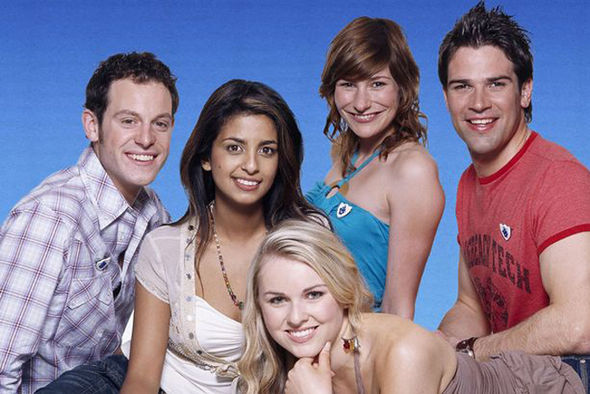
Konnie Huq, Simon Thomas, Matt Baker and Liz Barker became something of a dream-team, easily able to stand alongside the classic line-ups of the past (such as Singleton, Noakes and Purves).  But when that team began to break up, their replacements (Zoe Salmon, Gethin Jones) sometimes struggled to connect with the senior presenters (Matt had little time for Gethin or Zoe, Liz wasn’t particularly enamoured of Zoe).  But none of the presenters suffer hatchet jobs in the text, and any occasional bad behaviour can often be explained away by having to work at such an intense level.

Having enjoyed his previous books (including a detailed history of Upstairs Downstairs and candid biographies of John Nathan-Turner and Verity Lambert) I’d always hoped that one day Richard Marson would write about his experiences on Blue Peter.  That he’d kept such a detailed diary was an unexpected bonus, since it gives us an immediate and visceral lowdown on proceedings (had the whole book been written today, decades or more later, then it obviously would have been very different).

Running to 448 pages, this is an absolutely essential read and comes highly recommended.  It can be ordered directly from Miwk here.

bp team.jpg

Doctor Who – An Unearthly Child. Part Three – The Forest of Fear

fear

The early years of Doctor Who have some fine examples of caption acting. As the episode and writers credits were superimposed over the opening scene it often called for an actor to freeze in a suitably impressive way. Here, we see Eileen Way’s outstretched arm, holding Kal’s knife, remaining rock-solid for five seconds or so. There are plenty of others to look out for (The Firemaker is another good-un).

Inside the Cave of Skulls the Doctor is offering Barbara some moral support (“Fear makes companions of all of us”) whilst also offering more practical advice – he recommends that they all take it in turns to free Ian, since he’s the strongest and may have to defend them.

Another example of the lack of editing that was available at the time comes when the Old Mother breaks into the Cave. Either Carole Ann Ford was cued too early or the vision-mixer cut too soon, but there’s a pause of a few seconds before Eileen Way comes into view. A few years later this would have been easily tightened up, but given the restrictions on tape editing at the time it had to remain.

Old Mother sets them free and the four time-travellers make their way back to the TARDIS through the forest of fear. It’s very noticeable how dirty and disheveled they are – something we rarely see in the years to come – which helps to add an extra level of reality to their situation. This is no casual stroll back to freedom, there’s a sense of desperation and hysteria about their escape.

And the worst affected is Barbara – she’ll later become such a sold reassuring presence that it’s disturbing to see her in such a state (Oh, we’re never going to get out of this awful place! Never! Never! Never!”). Her breakdown is what you’d expect for a middle-class woman snatched from 1963 and planted down into a totally alien landscape, but her extreme reaction couldn’t have been repeated too many times. So you can contrast this with the casual way the time-travellers view the various sights they encounter a few stories later in The Keys of Marinus.

Za’s not a very good leader is he? And if it wasn’t for Hur, constantly guiding him, it’s clear that story would have ended in episode three. Hur is something of a Lady Macbeth, having to constantly prod and push her man in order for him to do the right thing. She isn’t evil though – and neither is Za – they just live on a totally different level to the Doctor, Susan, Ian and Barbara.

Although Za and Hur catch up with the Doctor and the others, when Za is attacked by an (obviously) off-screen animal it’s the perfect time for them to make their escape. It’s therefore intriguing that it’s only Barbara, the one who’s been the most desperate to escape, who decides to stay and help him.

Ian and Susan are initially reluctant, but acquiesce when they see that Barbara won’t be persuaded. This leaves the Doctor as the sole dissenting voice as he tells Barbara that “you’re trying to say that everything you do is reasonable, and everything I do is inhuman. Well, I’m afraid your judgement’s at fault.”

Barbara explains to Hur that “we will make him well again. We will teach you how to make fire. In return, you show us the way back to our cave.” It sounds like a decent plan but we’ll see that things don’t quite work out like that. The Doctor’s observation that the tribe’s minds change as rapidly as night and day seems to be quite astute.

The Forest of Fear also has the noteworthy moment when the Doctor picks up a rock and attempts to murder Ka. Or does he? The interpretation of this scene is certainly open to debate and it’s not as cut and dried as received wisdom would suggest. Yes, he picks up a rock and moves towards Ka but there’s not even a hint that he’s preparing to strike. And although he’s initially hesitant to explain himself when confronted by Ian, is that really enough to condemn him? In these early stories the Doctor was played as an elderly man, so it seems unlikely that he would have had the strength to bash Kal’s brains in, even if he’d wanted to.

I’ve always found the chronology of the cliffhanger to be odd. In the penultimate scene we see Kal and the others decide to set off after Za, Hur and the strange tribe – but how can Kal have caught up with them by the very next scene? Ideally Kal should have set off earlier in the episode, that way it wouldn’t seem so jarring to suddenly see him pop up to bar the way to the TARDIS.

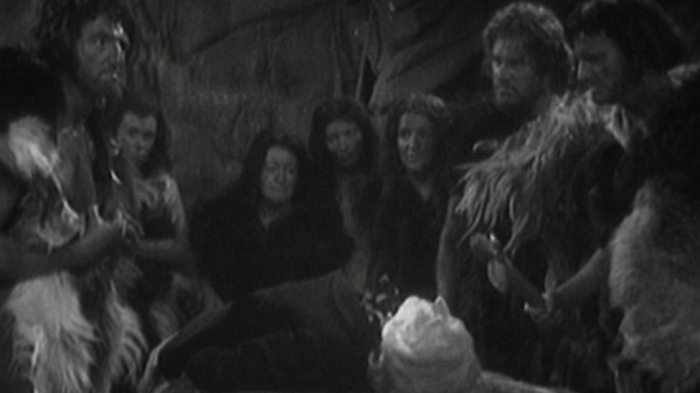
Doctor Who – An Unearthly Child. Part Two – The Cave of Skulls

skulls.jpg

After acting in a malevolent and mocking way in the previous episode (the highlight being his attempt to electrocute Ian) the Doctor’s in a much more friendly and mellow mood in The Cave of Skulls. Was this inconsistent scripting or intentional – ensuring that the audience would be forced to keep guessing about his ultimate motivations?

But maybe he only mildly rebukes Ian’s continuing inability to accept the situation (“You really are a stubborn young man, aren’t you?”) because he’s now in command, having left London in 1963. Whatever the reason, the Doctor’s keen to explore (which will, for the first but not the last time, get him into trouble).

If the title of 100,000 BC is to be believed, then the Doctor’s correct in his assumption that they’ve travelled back in time. It’s interesting though that this is never confirmed on screen – it’s explicitly stated that the TARDIS’ “yearometer” isn’t functioning and so the date can’t be confirmed.

Had it been revealed at the end of episode four that this was actually a future vision of the Earth, following a nuclear holocaust, then it wouldn’t have come as a surprise. Maybe this was the original intention but got lost after one of the many rewrites? Not that it really matters, but it would have given the story an extra little frisson.

The tribe are a mixed bunch. Most mannered is Howard Lang as Horg who’s difficult to take seriously, although Derek Newark (Za), Alethea Charlton (Hur), Kal (Jeremy Young) and Eileen Way (Old Mother) are much better. All would return to the series in later years, as well as popping up in numerous other series of the time.

Za, Hur and Kal form an unlikely love triangle with Old Mother looking on ironically from the sidelines, constantly muttering that it would be better if Za never learns the secret of fire. It’s hard to understand her vehemence against fire, especially if one believes Za’s statement that without fire they’d die. Exactly why fire strikes such fear into her heart is never explained.

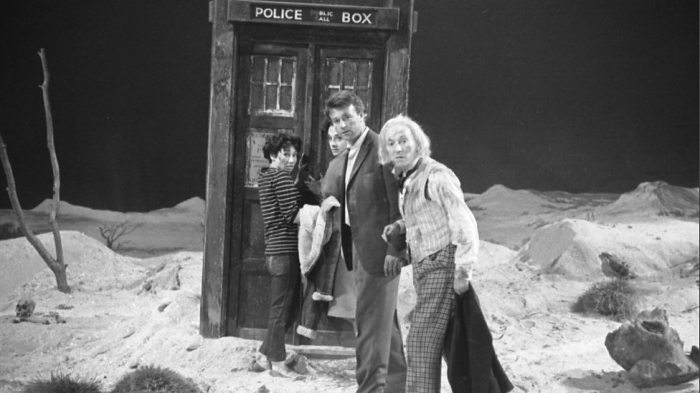
The initial TARDIS scene is notable for allowing the doors to open on the alien landscape. This wasn’t very common (although it would crop up again in The Sensorites) but I’m grateful they did it here since it really helps to sell the illusion of stepping from the ship into the unknown.

The forced perspective sets of the apparently endless plains may be obvious if you look too hard, but given the small amount of money Barry Newbery had to play with they’re still impressive. The wind sound effects help to create the impression that it’s freezing (although that makes the moment when Ian touches the sand and is astonished how cold it is, all the more strange).

We get the first of Susan’s hysterical fits, when the Doctor disappears – I really wish Barbara had slapped her hard as it might have discouraged her from doing it again! As for the Doctor, we see him enjoying a crafty smoke with a pipe – clearly this was only introduced so that Kal could see the Doctor make fire (or maybe the trauma in the Cave of Skulls was the moment he decided to kick the habit?)

Although Ian’s still in denial about everything, there’s also the first sign of his practical nature – after the Doctor disappears he automatically takes command. And when they’re all imprisoned in the Cave of Skulls it’s no surprise that Barbara is the one he checks on first (“Are you all right? Did they hurt you?”). Although never explicitly stated on-screen it seems obvious Barbara and Ian are very much a couple (as David Whitaker later confirmed in The Crusaders novelisation).

With the Doctor having seemingly lost all of his previous bluster (“Oh, I’m sorry. I’m sorry, it’s all my fault. I’m desperately sorry.”) things look bleak for our four heroes as they contemplate the myriad of skulls – all of which have been split open.

Doctor Who – An Unearthly Child. Part One

unearthly 01.jpg

If you’ve seen the pilot episode, then you’ll know that technically the transmitted An Unearthly Child was considerably smoother – although it’s still far from perfect.

For example, In Ian and Barbara’s first scene, as they discuss the mysterious Susan, it’s hard not to be distracted by the loud off-screen banging (is this the reason why Jackie Hill seems to raise her voice at certain times?)

It’s a pity that couldn’t have gone back to the start, especially since there’s an edit at 5:47, just after Susan says “I like walking through the dark. It’s mysterious”, which indicates that the original plan – to shoot continually from the opening to the point where the Doctor, Ian and Barbara enter the TARDIS – had to be abandoned.

But Jacqueline Hill and William Russell, pros that they were, were able to carry on and this initial scene clearly defines their characters. Barbara dislikes mysteries – and the puzzle of Susan Foreman is an itch that won’t go away. Ian is mildly intrigued, but he doesn’t seem to be bothered either way. He’s also presented as a sober rationalist – a man of science – and it’s instructive to watch how his certainties are stripped away as the episode progresses.

Ian knows that the TARDIS is a scientific impossibility, but that doesn’t explain how he comes to be inside it. His initial narrow-minded attitude is contrasted by Barbara. She has no more understanding of the situation than he does – but she simply accepts the situation.

An Unearthly Child might have been filmed in a cramped studio with ancient cameras, but the few limited tricks it uses do work well. It’s possible to believe that Ian’s car actually moves – thanks to the combination of sound effects, camera angles and some judicious shaking by the stage hands!

And as Ian and Barbara sit in the car, waiting for Susan to return home, we flashback to scenes in the school as they both remember instances of Susan’s strange behaviour. It’s shot in the only way possible – we see Susan and the other pupils in the classroom whilst hearing the pre-recorded voices of Ian and Barbara – but although this was borne out of necessity it does work to the strength of the scene. Since we can’t see the teachers, the camera has to stand in for them – creating an unsettling atmosphere as it focuses in on Carole Ann Ford’s face.

This episode is a good vehicle for Ford – but once the mystery of Susan is solved mid-way through the character will very much be relegated fourth in the pecking order. With an initial production block of fifty two episodes eventually confirmed she’ll have her moments – but she’ll rarely get the opportunity to be more than the fifteen-year old girl she appears to be.

I love William Hartnell. I think it’s hard to be a Doctor Who fan and not have a deep appreciation of the man – although some people seem to manage it. Although Hartnell’s off-screen behaviour is a problem for many, it is true that whilst there’s plenty of evidence that he was unpleasant and prejudiced, there’s also countless anecdotes that speak to the contrary. He may have been a flawed human-being, like all of us, but there’s something magical about his Doctor right from the start.

I tolerate this century, but I don’t enjoy it. Have you ever thought what it’s like to be wanderers in the fourth dimension? Have you? To be exiles? Susan and I are cut off from our own planet, without friends or protection. But one day we shall get back. Yes, one day. One day.

This episode was my first exposure to Hartnell’s Doctor, way back in 1981 as part of the Five Faces season of repeats. It does seem slightly staggering that back then the story was a mere eighteen years old (which today would be like watching something from 1997) as it seemed to come from another age entirely.

The odd technical imperfection apart, this episode is pretty much perfect. Certainly as an introduction to the four regulars it couldn’t be bettered, especially since they share all the lines between them. It was clearly important to delineate all their characters precisely before they became prisoners in The Cave of Skulls.

Ah, yes. If An Unearthly Child is an excellent opening episode, then the next three do have their critics – with the likes of Verity Lambert, David Whitaker and Waris Hussein being amongst the first to express reservations (even before they were transmitted).

Had more time been available then they may have done something different, but there’s plenty of drama to be found with the tribe (of Gum?) especially when contrasting their values against those of the TARDIS crew.

unearthy 02


Only Fools and Horses – Big Brother

fools

As is well known, Only Fools and Horses took a little time to establish itself as a comedy favourite.  Series one, originally broadcast in 1981, was politely received but it didn’t seem to spark a great deal of interest amongst either the critics or the audience.   This may have been something to do with the Minder effect (Del-Boy Trotter and Arthur Daley trod similar paths to begin with).

But revisiting the early episodes, it’s plain that right from the start all the pieces were in place.  Episode one, Big Brother (8th September 1981) is a good example of this.  As an establishing episode it’s not surprising that it concentrates on the three regulars – Del (David Jason), Rodney (Nicholas Lyndhurst) and Grandad (Lennard Pearce).  Joyce the Barmaid (Peta Barnard) gets a few reaction shots and we encounter Trigger (Roger Lloyd Pack) for the first time, but John Sullivan’s main intention here is to set up the relationship between Del and Rodney.

Familial discord has always been a fruitful source of sitcom material, possibly best exemplified by Steptoe and Son.  Is it fanciful to draw parallels between Big Brother and the original Steptoe pilot, The Offer?  Both see the youngest member of the family desperate to break free from their home environment (although neither are eventually able to do so).  The tone here is quite different though – Harold Steptoe is crushed by his failure to escape from his father’s clutches whilst Rodney and Del, for all their bickering, are happy to be reconciled at the end.

Younger brother Rodney has had a lifetime chafing about how he always gets the short end of the stick, but Del has an instant comeback.

Oh I embarrass you do I? You’ve got room to talk. You have been nothing but an embarrassment to me from the moment you was born. You couldn’t be like any other brother could you, eh, and come along a couple of years later after me. Oh no, not you, you had to wait 13 years. So while all the other Mods were having punch-ups down at Southend and going to the Who concerts, I was at home baby-sitting! I could never get your oystermilk stains out of me Ben Shermans – I used to find rusks in me Hush Puppies.

So Del, following the death of their mother and the disappearance of their father has been in loco parentis since Rodney was a young child. But now, at the age of twenty three, Rodney wants a better future than selling hankies from a suitcase in Oxford Street. Del can’t understand this – to him wheeling and dealing is his lifeblood. It’s a just a pity that he’s so bad at it. This is clear right from the start and it’s his inability to spot a dodgy deal (one-legged turkeys, attaché cases which don’t open) which make him just as a big a victim as his brother. But Del, with his lethal blend of pride and self-assurance, doesn’t realise this.

Tonally, it’s plain that this is very early days. Del is less than gallant when referring to Joycie whilst Trigger carries a faint air of menace. The reason for his nickname (it’s not that he carries a gun, it’s because he looks like a horse) has become a familiar archive clip, although since Del and Trigger have been friends since childhood, quite why Rodney had to ask this question is (in the Only Fools universe) a mystery.  In the real world it’s probable that Sullivan had yet to consider the likes of Trigger and Boycie as regular characters – so their backstories were something that could be sorted later.

Grandad is somewhat cast in the Albert Steptoe role. Fairly housebound and dependent on the others, he’s content to remain a passive observer. But whether it’s mulling over the qualities of Sidney Potter (an actor who always got the black roles), the inability of their computerised chess machine to play a good game of draughts or complaining that Rodney’s bought him a cheeseburger instead of an emperor burger, Lennard Pearce is nothing less than a delight.

Rodney’s plan to run away to Hong Kong doesn’t pan out (since he didn’t take his passport he wasn’t even able to leave the country). Del knew this, but allowed him to wax lyrical about the imagined foreign sights he’d experienced anyway. A little cruel? Not really and by the times the credits roll, the status quo has been restablished as the brothers are reconcilled.

That’s how sitcoms tend to operate, but Only Fools was different.  As the years wore on the characters would develop and grow (whereas most sitcom characters tend to exist in a form of stasis). Big Brother was therefore an important first building block as it gave both Del and Rodney clear backstories and a firm foundation to develop future stories.

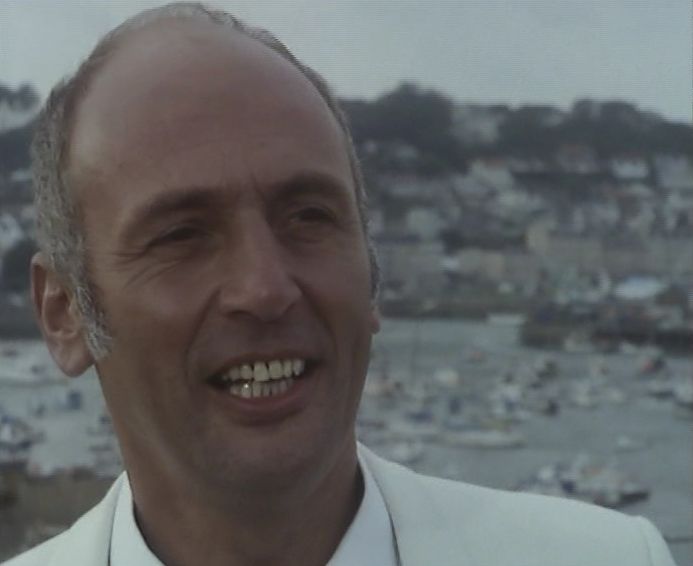
Howards’ Way – Series Four, Episode Thirteen

howards s04e13-01.jpg

If the final episode of series four has a theme then it seems to be shattered/shifting allegiances.  Sir John Stevens is up first, telling Sir Edward that he’s managed to hang onto his position at the bank (although he forgot to mention that he’ll have to resign in six months time).  So although it’s something of a hollow victory, it’s a victory nonetheless – but no thanks to Sir Edward, who threw him to the wolves without a second thought.  But his partial triumph does allow Sir John to waggle his eyebrows in trademark fashion whilst telling Sir Edward that they probably won’t meet again.

The swooping camera movement, as Sir John’s car moves away, helps to isolate Sir Edward (who’s still reeling from Jan’s absolutely final refusal).  But maybe he spies a kindred spirit in Polly.  Or is their relationship purely business-related?  Hmm, a little of both maybe.  Polly might appear to primarily motivated by a desire to help William and Abby, but it’s plain that she’s also interested in helping herself.  The last we see of them, they’re heading off to America in Sir Edward’s jet (with Polly looking very chic, compete with a stylish little hat).

But whilst Polly and Sir Edward are a new pairing, Polly and Jan have finally split up.  They have a cracking little ding-dong, with Jan taking great pleasure in firing her.  With Sir Edward as her new backer though, she’s probably not going to be down for long though ….

Ken’s on the up and up.  Not even another visit from the menacing Roy (a wonderfully melodramatic scene) can dampen his enthusiasm for long.  He’s got his eye on Sir Edward’s country pile (Sir Edward seems to want to sell – thereby excising his ghosts maybe) and (now that she’s free again) possibly Jan too.  I’ve said it before, but surely Jan’s not silly enough to fall for his feckless charm?  Maybe or maybe not.  She certainly enjoys his company, so it seems that the fire still burns between them.

But the fire between Charles and Avril has long gone out.  I think we’re meant to identify with Avril, but there’s not much to choose between them.  Avril’s certainly gone on a journey since the start of series one – over time she’s changed from an idealist into a hard-bitten businesswoman, virtually Charles’ mirror image.  He makes this observation to her – she’s just as much addicted to power as he is – and it’s telling that she doesn’t deny it.  They have one last meal – at Tarrant’s ever popular eatery – where she delights in telling him that (via some share juggling) she’s now gained control of Relton Marine.

So Charles has been bested in business.  But he’s not downhearted – Avril may have a majority shareholding, but she doesn’t have complete control.  Expect this plotline to pick up again during series five.

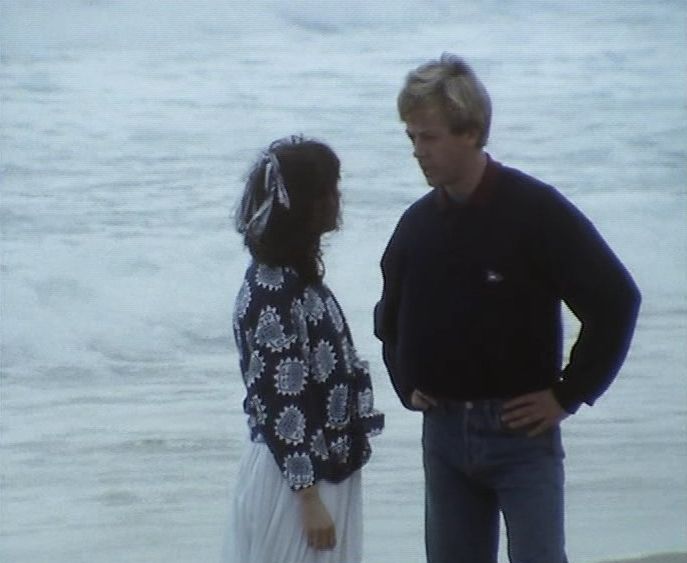
Charles and Avril are history, but what about Abby and Leo?  Prior to the big race in Guernsey, they have a quiet lock of the lips, but it does seem that once again Abby sees her future in America (where the saga of William continues to rumble on).  As for Leo, he seems to be something of a loose cannon.  Avril’s concerned that he’s being unduly reckless during his powerboat trials, although she isn’t able to convince him of this (not that she tries too hard).  Avril and Leo do have a nice pouting scene as he glowers at the suggestion he’s pushing too hard.

Or maybe Avril’s simply mistaken.  Jan doesn’t notice that anything’s wrong with him (although this could just be another example of Jan’s lack of interest/empathy in her son).  Maybe Leo’s trying to prove something to Abby.  Or does he just want to win the big race?

We’re in Guernsey.  There’s a host of boats on the start line, but it quickly boils down to a head-to-head between Ken and Leo.  Things drag on a bit, but eventually Ken crosses the line first.  And then it’s revealed that this is only the first race, so we’ll have to go through the whole rigmarole again.  Boo!

But the second race is rather more dramatic as Leo’s boat overturns and Abby – snapping from a helicopter – reacts with horror.  It doesn’t look good for Leo’s co-pilot (taken away in a bodybag) whilst Leo himself is conscious, but immobile.  This means that we’re in cliff-hanger territory – will Leo walk again?  Tune in next series to find out.

Gerald’s problems also look set to run and run.  I thought it was out of character for him to indulge in a spot of insider dealing – mainly because he’s (for a businessman anyway) so transparently honest. When the police come a calling, poor Gerald folds like a pack of cards.  And they’re interested in Charles too!

The final scene is one of the most celebrated HW‘s moments.  Ken, having won the race after Leo self destructed, finds himself alone on the quayside.  Alone, that is, apart from Avril.  His opening gambit (“why, Miss Avril Rolfe”) merely softens us up for an amazing scene from Stephen Yardley as Ken boasts that he’s beaten them all (ha, ha, ha).  The sight of Ken, now all alone after Avril flounces off, toasting his success is a sublime touch and, like all the other dangling plot threads, sets us up nicely for series five.

howards s04e13-02.jpg

Howards’ Way – Series Four, Episode Twelve

howards s04e12-01

There’s a few strangers round Tarrant way this week. First to pop up is Roy Johnson (Pip Miller), an old buddy of Ken’s. Although perhaps “buddy” is stretching it a bit far (the fact that the soundtrack is set to ominous and threatening makes this rather obvious). Johnson has an absent brother (if you think of the Piranha brothers then you won’t be too far off the mark) although it’s the present Roy who helps to shine more light on Ken’s dodgy earlier life.

A more convivial and real buddy is Scott Benson (Paul Maxwell) who gives Jack the surprise of his life. They were old war comrades back in Korea and Scott explains to a slightly rapt Abby and Leo just how much of a hero Jack Rolfe was back then. Scott’s story seems to be such a cliché (Jack saved his life under heavy enemy fire) that it’s slightly hard to take seriously, but it is presented dead straight.

Jack Rolfe as a military hero, complete with medals, takes a little processing – although Scott, still mourning the recent death of his wife, hasn’t returned to publicise his old friend’s former gung-ho ways. Instead, his presence adds to the general reflective nature of the episode, as many of the regular characters – not just Jack – seem to be at something of a crossroads in their lives.

Leo is bluntness personified with Abby, telling her that any court would probably decide that William would be better off with his American family.  After all, what can a penniless Abby offer in return?  Leo seems rather to be ignoring the wealth and influence of both Charles and Sir Edward, but maybe he was deliberately being harsh in order to try and snap Abby back to reality.  Telling that that he’s prepared to walk away from her might be part of the same plan …..

Now that the story about Sir John Stevens’ financial mismanagement has been made public, he needs friends.  He’ll always be able to rely on good old Sir Edward won’t he?  Nigel Davenport flashes a wide crocodile grin that should give you the first inkling that poor Sir John’s going to be thrown to the wolves.  They might be old, old friends, but there’s clearly no room for sentiment in business.  This may appear to be the end of Sir John’s story, but not so – he remains a regular in the series right up until the end, although – as with many characters – his allegiances shift over time.

Avril – disgusted at the way Charles fires Sarah – is still considering a take-over of Relton.  Remember when Charles didn’t want any truck with business, instead he was content to potter around the art galleries, operating as a bountiful benefactor?  That all seems an awfully long time ago, as we see him and Avril enter yet another round of sniping and name-calling.  There still something of a spark between them (Charles optimistically considers that they have a relationship still worth saving) but maybe it’s just the last flickering embers ….

Sir Edward’s latest cosy chat with Jan is one of his most fascinating.  We learn for the first time that (contrary to the picture painted by his PR people) his family haven’t owned Highfield for generations, instead his grandfather sold coal from a market barrow.  That Sir Edward had such a combative relationship with his father seems, possibly unconsciously, to have affected the way he’s always treated his son.  Even though Sir Edward can still recall the only time his father struck him, no lesson seems to have been learned from this moment.  Instead, he was as equally distant to Charles when he was growing up, resulting in their current, frozen, relationship.

Rather uncharacteristically, Gerald indulges in a spot of insider-trader to make a tidy profit.  The way he explains this to Polly (in a slightly shamefacedly way) does rather make the point that – despite his protestations – he knows he’s been a little naughty.  An odd thing for Gerald to have done, as he’s always seemed to be above that sort of thing (so either we don’t know him as well as we think we do, or the scriptwriters have suddenly decide to spice him up a little).

Tom and Jack start the episode all smiles.  Tom finally tells Jack that he thinks his Orkadian design is first-rate – which pleases Jack no end (Tom might not be a designer of wooden boats, but his opinion is still worth something).  The long-term HW watcher will probably be asking themselves exactly what Jack will do to break this fragile entente cordiale.  Why, he offers the American rights of the Orkadian to Scott of course, managing the neat trick of irritating both Tom and Avril at the same time.  I love Jack.

How many times has Jan refused to marry Sir Edward?  I almost wish now I’d kept a tally as I worked my way through these episodes, but this most recent one (“I am not for sale”) must surely be her last word on the matter.  Mind you, I did think that last time.

Ken and Avril form a potentially unholy alliance. All business of course, but the possibility that they might start a relationship is so mind-bogglingly bizarre that I’d love to see it. They’re hanging out in what I’ve now decided must be Tarrant’s only restaurant, and when Ken spies Sir Edward and Jan close by (of course, remember what I said about the lack of eating facilities elsewhere) he tells Avril that his own designs on Jan are all in the past. So was the end of the previous episode just a false cliffhanger or is Ken lying again? Time will tell.

howards s04e12-02.jpg

Howards’ Way – Series Four, Episode Eleven

howards s04e11-01

The Barracuda pulls into harbour and Robert Hudson (Bruce Boa) emerges.  Abby’s father-in-law, he instantly casts an imposing presence (we’d previously seen him back in series two and he hasn’t changed since then).  He’s a genial chap on the surface, but it’s plain that underneath there’s an even more ruthless and implacable type than Sir Edward or Charles put together.  And this is the man who Abby hopes will meekly hand William back to her?  The omens don’t look good ….

Hudson’s come complete with a small entourage – a female secretary whom he quickly dispatches to London and a male assistant who seems to be multi-skilled (does one of his attributes include functioning as a bodyguard?).  Sir Edward is on hand to welcome him and for the moment it’s all smiles.

Later, the pair have a horseback chat.  I have to say that Bruce Boa doesn’t look terribly comfortable in the saddle – he rather wobbles around from side to side, even though the horse is barely clip-clopping along.  Nigel Davenport, by contrast, looks much more secure.

The soundtrack for this episode is a little different from the norm – with no sailing scenes to speak of, the usual score – honking saxophones – isn’t called for.  Instead (and reflecting the tone of this instalment) there’s a subdued, twanging guitar feel – which compliments the anxious feeling generated by Hudson’s presence.

A good example of the thorough way Hudson operates is demonstrated when a photographer (hiding in the bushes) snaps Abby and Leo, mid-embrace.  Previously we’ve seen how Leo was offended by Sir Edward’s suggestion that he should steer clear of Abby (at least until the question of William’s custody has been decided) but moments like this make it plain that he knew what he was talking about.

The meal between Hudson, Sir Edward, Jan and Abby is as monumentally awkward and awful as you might expect.  Abby’s gone to some trouble – cooking Hudson’s favourite food, doing her hair, popping on a nice dress – but none of that is going to cut any ice with him.  And when Abby impatiently wonders why they’re sitting around chit-chatting, rather than discussing William, the fragile peace shatters.

Hudson’s not interested in negotiation and decides that Abby – especially now he has evidence of her canoodling with Leo – doesn’t have a legal leg to stand on.  And what does Sir Edward do?  Not a lot really.  It’s strange to see him so impotent and unable to respond, but as he later admits to Jan, there was nothing he could do.  Both he and Charles had independently attempted to find some chink in Hudson’s armour – a way (via business) to bring him to heel, but there was nothing doing.

And so it’s goodbye to Bruce Boa again (until the twelfth episode of series six). Hudson’s appearance here may be brief, but the discord he sows lingers for some time.

Elsewhere in Tarrant, the question of Sarah Foster’s position at Relton is causing friction between Charles and Avril.  First their personal relationship ruptured, now it looks as if their business relationship might go the same way.  Charles wants Sarah fired, Avril doesn’t.  If Charles pushes, then Avril threatens to resign – although she won’t stop there.  She’s mulling over the possibility of launching a bid to take over Relton herself.

She discusses this with Jack over dinner (where else? At our favourite restaurant of course).  Now that I’ve started to notice how often the great and good of Tarrant use the same very small restaurant each episode, I can’t un-notice it.  Michael and Sarah were in there earlier on, although at least they did sit by the teeny-tiny bar (which isn’t seen too often).

Jack continues to be on fine form.  There’s a lovely scene in the Jolly Sailor where – yet again – he’s extoling the virtues of orange juice.  Kate eyes him suspiciously,  meaning that you can possibly guess the punchline.  She takes a sip and it turns out to be practically neat vodka!  This is just one of a number of occasions when Jack’s called upon to give us a hangdog look.

The dinner-party from hell seems to signify the end of the teetering relationship between Jan and Sir Edward.  She returns his gift – the flashy sports car – and sets off on the long walk home.  But then Ken happens to drive by and she gladly accepts a lift.  Even though she knows that Ken can’t be trusted an inch, there’s a little frisson between them.  Could they hook up again?  Surely Jan wouldn’t be that stupid.

The day after the night before, Abby ends up on the dockside, rather the worse for wear.  She’s tired and emotional, telling Leo that the chances of her regaining William seem remote.  Wailing that she hasn’t got a friend in the world, it’s the cue for the ever-loyal Leo to her that she’s got at least one ….

howards s04e11-02

Howards’ Way – Series Four, Episode Ten

howards s04e10-01.jpg

Ace journalist Michael Hanley, now working for Ken at Leisure Cruise, is beavering away on his latest scoop – an expose of Sir John Stevens.   This is another example of Ken’s deviousness – having had his business ventures scuppered once too often by Sir John, he’s now out for revenge.  But rather than do it himself, he’s decided to get Michael to do his dirty work for him.

Michael’s an up-to-date sort of guy, as he’s typing his words of wisdom on a word processor.  The camera briefly lingers on the screen (allowing us to see that he can’t spell whizz kid ….).

This is another example of a HW plot oddity.  If the scandal they’ve unearthed, from 1963, has been buried so deeply, how exactly has Ken been able to piece it together?  Or if the information has been available in the public domain for some time, why has nobody else broken the story?

Another plot weakness occurs after Tom learns that their proposed new yard has already been sold (Sir Edward gazumping his son).  Emma believes this may be a blessing in disguise – since being tied too closely to Charles might inhibit them.  She suggests they buy a new yard with their own money (possibly asking Jack to join them).

But Charles – via Relton Marine – has been involved closely in the day-to-day financial operation of the Mermaid Yard for several years, so it’s not clear exactly why working at a new yard, backed by Charles’ money, would be any different from their current situation.  Remember that the Mermaid was dependent on Relton manufacturing the Barracuda, etc.  Without their support surely the Mermaid would have gone to the wall year ago?

But whilst Tom, Emma and even Jack (who now sees the logic of a second yard) are considering their future, there’s a diversion to enjoy.  Jack’s organised a marine treasure hunt – although he’s a little upset that some (Leo & Abby, Michael & Sarah) aren’t taking it terribly seriously.  Mmm, that’s another thing – at the end of the previous episode Michael and Sarah were established as a couple, but unless I’ve forgotten it, I don’t remember this ever being a plotline previously.  Oh, and Sarah looks really rather lovely when she and Michael are out and about on the treasure hunt.

Sir Edward and Jan have lunch (that restaurant set is getting used an awful lot this year).  He wants Jan to join him and Abby when Hudson Snr comes calling from America.  His reason?  Hudson might be more inclined to let William go if he knew that Abby’s family was extensive – i.e. Jan making an appearance as the Lady Frere to be.  Yes, this seems like just another bare-faced attempt by Sir Edward to force Jan into accepting his marriage proposal, but even he – after she refuses – seems finally to realise that she’s slipping away from him.

They’re all very mature types down Tarrant way.  Later, Jan returns to the restaurant for a drink and a meal with Emma.  Tom is naturally enough the topic of their conversation, with Emma firmly of the opinion that Jan remains the most important woman in his life.  Jan modestly demurs, telling Emma that she’s exactly the sort of person Tom needed years ago – somebody who shares his interest in boats (it was established right from the first episode, this has never been Jan’s forte).  It’s hard to imagine Jan and Avril having such a convivial chat a few years back (or indeed Tom and Ken – the mind positively boggles on that ever happening.  Pity, as it would have been entertaining).

Jan and Polly continue to enjoy an icy relationship.  Jan’s still smarting over the fact that her exclusive haute couture range has been sullied with cheap, mail-order stuff (it’s selling very well and therefore making a tidy profit, but that seems to be by the by).  Poor Polly keeps attempting to build bridges, but Jan’s content to keep twisting the knife – although she eventually proposes a solution.  Polly buys the franchise from Periplus and she can therefore go into business herself (it also means that Jan’ll be shot of Polly, so everyone’s a winner).

This is a great episode for Ken, with two scenes standing out especially.  The first occurs after he disturbs a late night intruder at Leisure Cruise – it’s Sarah, come to find the file about Sir John that Michael’s been working on.  Although she too has an interest in ruining Sir John (it would help to solidify her position at Relton) she has scruples – unlike Ken – so isn’t here for that reason.  She’s more interested in protecting him (and Michael’s reputation too).

Ken’s in full alpha-male mood – grabbing her roughly (by the throat at one point) and generally being incredibly unpleasant.  These are the moments when the real Ken Masters surfaces.

He may be smartly suited the next day, when he and Sir John meet for lunch (yes, once again we’re back in the same restaurant – one day I’m going to add up exactly how many times it featured this year) but scratch under the surface and nasty old Ken’s still there.  Sir John is his usual affable self and is little more than mildly amused at Ken’s attempt to blackmail him (Willoughby Gray plays the scene excellently).

If Ken was expecting his dinner guest to be cowed into submission then he’s disappointed – Sir John tells him to “publish and be dammed” leaving Ken with much to ponder (and a decent end of episode close-up for Stephen Yardley).

howards s04e10-02.jpg

Howards’ Way – Series Four, Episode Nine

howards s04e09-01.jpg

Jack’s still hopping about on the quayside (“somebody’s nicked my bloody boat”) although it quickly becomes clear that it hasn’t been stolen – Emma, smarting after her tiff with Tom, has taken it out for a test run.

But since she should have been back by now, Tom’s worried that she’s run into trouble. So it’s Jack and Tom to the rescue, with Jack piloting a motorised dingy at high speed. Glyn Owen was clearly a decent sailor, since he – rather than a stuntman – was at the wheel. Oh, and I like Jack’s white bobble hat too.

It doesn’t take long before they find her – repairing a minor fault – so everyone can breathe a sigh of relief.  Tom is the most relieved and he admits this to Emma.  This moment of crisis helps him to finally admit his feelings for her, although he goes on to explain his commitment issues (he’s got twenty years of marriage and two children to consider).   But this didn’t seem to be an issue when he had an affair with Avril, so I’m not entirely sure that his protestations hold water.

Poly’s continuing to avoid Jan.  Jan is getting very, very annoyed with her (former?) friend’s shenanigans.  Tip-tapping on her high heels, Jan is clearly out for vengeance whilst Polly seeks solace with Ken, of all people.  I love the fact that Polly refers to Jan as a snob! (this is Polly we’re talking about, remember).  Although to be fair to Polly for just one second, there may be some truth in her suggestion that Jan’s not keen on her range of German leisurewear solely because it’s a tad downmarket.

Ken’s very devious in this episode.  In fact, he’s so devious and calculating that it seems rather out of character – usually Ken’s not as subtle as this.  He tells Polly that Sarah is secretly working for Sir John, knowing that she will tell Gerald who in turn will tell Charles.  Both Gerald and Charles (although not Avril, interestingly) then believe that Sarah could be a spy, although there’s one fatal flaw conerning these machinations.  Gerald knew full well that this information came from Ken, so why would he believe it?  That two such astute businessman as Charles and Gerald would be prepared to believe this unsubstantiated rumour seems a little hard to believe.

Sir Edward and Jan are currently estranged (he’s even stopped leaving messages on her answering machine) but he’s keeping it in the family by entertaining Kate to dinner. No, he hasn’t decided to move up the family tree with someone more his own age – he wants to sound Kate out to see if she knows whether Jan will change her mind about marrying him.  Kate, of course, isn’t backwards about speaking her mind and so is bluntness personified (naturally, her opinions aren’t really what Sir Edward wants to hear).

Michael comes in second in the transatlantic race – a good result, although Tom – ever the perfectionist – was a little ticked off he didn’t win.   Michael quickly returns home (by plane) and, with Tom’s agreement, allows a chap called Hudson to sail the Barracuda back to the UK.  Hang on, Hudson?  It would be a remarkable coincidence if this was a member of Abby’s estranged American family ….

As for Abby herself, it’s the day of her exhibition but she’s not looking forward to it.  On the one hand, she wants to make a career out of photography (therefore it’s important that she demonstrates what she’s capable of) but on the other, too many negative vibes are swishing around her head.  As always, it’s sensible Leo who’s on hand to offer her support and gently guide her through the minefield.  With his assistance she’s able to mix and mingle with the great and good of Tarrant society (she was all set to slip out quietly and go straight home).

But for long-term Leo/Abby watchers, it’s the aftermath which is the key moment.  Everybody else has left, leaving them alone in the gallery.  She tells him that “all that matters to me is that the three of us are going to be together. You and me and William”.  She may be jumping the gun a little here since William’s future hasn’t been decided.  It’s also a little unexpected (given their recent fractured relationship) that she’s decided that the pair of them have a future – which they seal with a long and very loving kiss …..

Since everybody who’s anybody in Tarrant is at the gallery, there’s a few awkward meetings.  Leo and Ken bump into each other (and then quickly move away) but even better is the encounter between Sir Edward and Charles.  It’s the first time that they’ve been in the same room since Sir Edward visited his son in hospital and it’s plain that their relationship is still on the critical list.  They do have a brief conversation, although Charles pointedly turns his back on his father and instead speaks to the other side of the room.

Tom breaks the news to Jack that he’s thinking of leaving the Mermaid for larger premises.  He wants Jack to come with him, but it’s hardly going to come as a surprise to learn that Jack isn’t interested – the Mermaid is in his lifeblood.  Surprisingly, Jack doesn’t erupt with fury when Tom tells him, instead he’s quite sanguine about it all.  These scenes have some lovely Tom/Jack byplay – Maurice Colbourne and Glyn Owen both seemingly relishing the material they’ve been given.

howards s04e09-02

Howards’ Way – Series Four, Episode Eight

howards s04e08-01

The crane operator was clearly working overtime this episode, as there’s a couple of nice swooping shots – at the Mermaid Yard and over at Polly and Gerald’s house – both of which allows the action to pause for a second.

Tom, Emma and Bill decide – in Jack’s absence – to fit a new engine into Jack’s newly designed boat.  What will the typically fiery Jack make of this tinkering?  He’s aware of it, since he’s observing proceedings – with a telescope! – close by, but he seems remarkably mellow at present.

Meanwhile, Gerald is less than enthused to discover that his house is filled with boxes, many, many boxes.  It’s been a while since Polly and Gerald shared a decent comedy scene (last year their plotline was sombre, to say the least) so this makes for a welcome change.  Polly has decided to launch a new mail order line (German casual wear) under the Periplus banner.  Unfortunately she hasn’t mentioned this to Jan ….

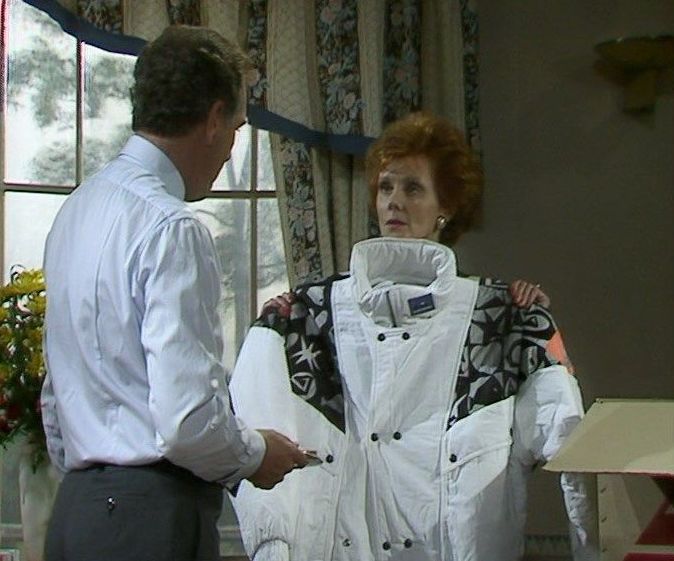
Gerald’s patient reaction to this house invasion is a delight, as is his nonplussed reaction when Polly holds up a puffy jacket for his inspection.  A pity that Polly didn’t insist he try it on – that would have made a good scene even better.

That Polly has decided not to tell Jan, but then goes ahead with newspaper advertising is a little bizarre.  Surely this would mean that Jan would eventually find out anyway?  As it is, it’s Abby – of all people – who tips Jan off, which leaves her hurt and wounded.  Polly’s supposed to be her oldest friend, so how could she do this?  Everything’s set up for a confrontation next episode.

Tom and Jan’s relationship continues to intrigue.  They have another convivial lunch which sees Tom reject Jan’s cheque (she borrowed a hefty sum from him during Periplus’ recent business traumas).  Instead he asks if he can have shares in her company (since she owns a stake in the Mermaid it seems only fair).  And although Jan has jealously guarded control of her empire (it still irks her that Ken has a small shareholding and she blocked Polly’s attempt to grab a stake) she quickly and happily agrees.

I’m not quite sure what Jan’s feelings for Tom are (we know that she’s still very uncertain about Sir Edward’s proposal, so is she contemplating a reunion with her ex-husband?).  On the other hand, Tom’s status seems much more clear-cut.  He’s happy in his relationship with Emma (although maybe she’s not – more on that in a minute) with the result that he treats his ex-wife with indulgence and more like a sister than a former partner.

This is demonstrated after Jan shows him her new present from Sir Edward – the flashy sports car.  Tom jocularly tells her that “you need a bit of a talking-to, my girl” and is prepared to skip a meeting with Charles in order to do so.

Emma isn’t pleased when she later learns that Tom cancelled the meeting for a spot of quality time with Jan and is even less chuffed when he later asks her to step out of the office for a moment after Jan brings round the paperwork relating to his new shareholding in Periplus.  Tom seems not to display the slightest hint of jealousy about the relationship between Jan and Sir Edward, but Emma clearly finds it harder not be irked whenever Tom and Jan spend time together.

A more empathic man would understand this, but as we’ve seen so often, Tom – for all his good qualities – is somewhat lacking in this department.  The way he raises his eyebrows after Emma storms out of the office makes it plain that he doesn’t really understand that he’s treading on very thin ice at present.

Ken’s boat continues to sink and Leo is the next rat to leave it.  That’s a tad unfair of course, but Leo’s loyalties are definitely split.  He’s desperate to race in the world powerboat championship but if he stays at Leisure Cruise will he get the chance?

This is another of those plot oddities which creep up in HW from time to time.  It only seems like a few days ago when Leo raced a powerboat for the first time and now he’s good enough to contest the world championship?  Either the championship field is very small or he’s become very good very quickly.

But whilst he does have loyalty towards Ken, racing powerboats is now his life (apparently) so the chance of a guaranteed seat in the race if he goes to Relton is just too good an opportunity to pass up.  So he bids farewell to Ken in a scene which sees both of them raise their voices – nothing new for Ken of course, but it’s always nice to see a touch more animation from Leo.

Leo and Abby have minimal contact in this episode.  When she hears that Sarah paid him an evening visit (to discuss jumping ship to Relton) there was maybe just a twinge of jealousy from her, but Leo didn’t rise to the bait and both were prepared to laugh it off.

Charles dangles a carrot in front of Tom – a new yard, with much better facilities than the Mermaid.  With these resources behind him, the possibilities are endless – although Tom’s still convinced that, since it’s Charles, there must be a catch.

Elsewhere, Sir Edward continues to sniff around Jan (he’s taken to popping up in the least expected places and frightening the life out of her), the saga of William continues to rumble on, Michael Hanley’s doing rather well in the transatlantic race whilst Jack is doing less well at the bookies.  Surely by now he’s realised that he shouldn’t back his own hunches – instead he needs to rely on Kate’s tips.

Jack’s return to the Mermaid doesn’t quite go the way he planned.  The others have completed the Orkadian in his absence, but there’s just one question – where is it?  Bill points “there she is” as he, Tom and Jack watch it sailing away.  This leaves Glyn Owen with a classic end of episode line.  “Somebody’s nicked my bloody boat!”

howards s04e08-02.jpg

Howard’s Way – Series Four, Episode Seven

howards s04e07-01.jpg

This episode pretty much picks up where the previous one finished, so we see Barracuda pulling into port with an ambulance crew waiting for Jack. Although the incidental music is still set on “sinister and anxious” at least he’s awake and is his usual cantankerous self (which is a good sign). “Where are you guys taking me? I’m not going to St Hilda’s. I had a wisdom tooth out there”.  Three guesses which hospital he ends up at …

I like the way that Tom later insists that Leo should stay with Jack at the hospital (Tom never seems to stop and consider that maybe he should stay). Leo is slightly whiny (“why me?”) but you know that since he’s such a good natured-soul he’ll be happy to do so. And so he does.

The way that the episode deals with Avril’s reaction to the news is very interesting. Tom calls her (she’s at Jan’s house – helping to investigate the saga of the stolen designs) and when she takes the receiver we see her face suddenly fall. But then we cut to Tom (“oh, no, no, Avril, it’s all right”) and we don’t cut back to Avril again.

What’s very notable is that after this moment Avril doesn’t mention her father for the remainder of the episode. All of her scenes are business related – jousting with Charles and Gerald, wining and dining new recruit Sarah – meaning that her father seems to be low on her list of priorities. Harsh? Maybe, but whilst we’re told that she does visit Jack in hospital, we don’t actually see it (whereas we are witness to Kate’s visit – where she dishes out a typical dollop of good old-fashioned common sense, much to Jack’s disgust!)

This foregrounding of Avril-as-businesswoman may have been intentional or it could just be the way the scripting turned out – but it does seem odd that we never learn what she thinks about her father’s hospitalisation (even Polly – hardly Jack’s biggest fan – is given a moment to react with dismay at the news).

Jack, you’ll be glad to hear, isn’t too bad at all. He does have an ulcer, but as long as he lays off the booze, cigars and adopts a healthy diet then all will be well. Yes, I can see three things wrong with that picture too.

Dr Bishop (Alexandra Mathie) is something of a tarter, but the fact she’s a woman (something which Jack can’t help but blurt out) seems to stun him the most. Has he not visited many hospitals recently? When she quizzes him about his habits, can you guess what he says when she asks him about drink?

“Oh that’s very kind of you, I’ll have a small scotch please”.

Predictable, yes. But it still raised a smile.

I can’t help but be intrigued by the fact that Alexandra Mathie’s fairly limited cv includes the film Paper Mask (set in a hospital) and television series such as Doctors, Casualty and Coronation Street (where she played a doctor). Was it just coincidence that she seemed to so often play roles which were medically based?

Abby and Polly are continuing to get on well, something which is slightly surprising (I’d have thought by now they’d have regressed to their usual habits). The question of William does slightly divide them, but once again Polly’s attempting to help, as seen when she later visits Charles and asks if he can intercede. This he’s disinclined to do – whatever else he thinks of his father, he knows that he’s more than capable of wresting William away from the Hudsons.  Although he does advise that if William arrives in the UK it would be advisable to prise him out of Sir Edward’s clutches. Abby doesn’t seem to have appreciated that Sir Edward may have an agenda for his grandson which is different from hers.

Things are not going well for Ken. He asks Sir John if the bank will front for him on Guernsey since he can’t apply for trading status directly. As he bitterly admits, he doesn’t wear the old school tie (an ironic comment, especially as he wasn’t allowed into Sir John’s club straightaway since he wasn’t wearing a tie). Ken’s status as an outsider – barely tolerated but never accepted by those he wishes to emulate – is never clearer than in this episode.

There are some fine cardigans on display in this episode. One is worn by John Reddings (Stephen Greif). Yay, Travis Mk1! He may lack the eyepatch, artificial hand and psychopathic tendencies of Travis, but Reddings is still dangerous in his own way.

Ken employs him to recover Jan’s stolen templates and we learn here that it was Ken who paid for them to be pinched in the first place. The rotter. But he’d intended that the designs would be destroyed, not taken to Taiwan and copied, which suggests that Ken wanted to ruin Jan a little, but not too much.  That sort of makes sense I guess (since he wanted to buy back into her company).

Reddings does the job, but at a price. He has a tape-recording of Ken’s admission he organised the theft and is unabashed at requesting hush money. A pity that Reddings doesn’t reappear, since an actor as good as Stephen Greif shouldn’t be wasted with just a handful of scenes.

Here’s something I never thought I’d see – Tom and Charles all pally. They too are sporting nice cardigans as they head off to Charles’ tennis court for a quick game. Charles is still attempting to woo Tom to accept the design job so it’s not entirely a pleasure trip, but the fact that Tom accepted shows that he’s mellowed (or that despite himself he’s interested in the offer). We only see the first point of the game – Charles thunders an ace past Tom – but it may serve not only as an indication of who won, but also Charles’ desire to win everything at any cost.

We don’t see much of Sir Edward. Apart from leaving yet another plaintive message on Jan’s answering machine, he doesn’t pop up until the last ten minutes or so. Am I the only one to find his constant endearments (“hello, my love”) slightly intimidating? The man’s not taking Jan’s “no I won’t marry you” as an answer, so has bought her a flashy sports car as a blatant bribe. Jan initially pulls a face (she’s standing by the sink, filling the kettle whilst he’s waggling the car keys behind her back!) but we don’t see her categorically refuse the present ….

Michael sets off in the Barracuda – one of a score of boats making a solo transatlantic crossing.

Sarah breaks the news to Ken that she’s leaving to take a plumb job at Relton. He doesn’t take it well. “That bitch doesn’t let the grass grow under her feet, does she?” he mutters, referring to Avril. And he doesn’t seem to rate Sarah herself any higher. “What the hell does Charles Frere want with deadwood like you?”

He then roughly prevents her from slapping him (holding firmly onto her arm) but although he’s physically stronger, it’s Sarah who seems to have won the business battle. He does tell her not to come crawling back to him for a job when Relton have no further use for her, but this just seems to be a case of Ken trying to keep his own spirits up. This year hasn’t been a good one for Ken, will his luck change anytime soon?

howards s04e07-02

Howards’ Way – Series Four, Episode Six

howards s04e06-01

Jan’s business woes move up a notch as she discovers that all her major suppliers now regard her to be a bad credit risk.  She spies the evil hand of John Soames at work – miffed that she wouldn’t share his big bed – but is disinclined to ask Sir Edward for help.  So Jan faces having empty shops with nothing to sell unless she can find a solution ….

Meanwhile, interest in the marina at L’Ancesse over on Gurnsey is hotting up.  Ken is keen to buy it as it’ll provide him with a nice little tax haven and so has persuaded Sarah to put a bid in (Ken’s, ahem, colourful past means that he has to stay in the shadows).  But Charles wants it too as Sir John explains to Sir Edward.  “Well, she wants it because Masters wants it. Masters wants it because Charles wants it. And god alone knows why Charles wants it”.

Charles’ reasons quickly becomes clear.  The America’s Cup, he says, is not the showpiece event it once was (thanks to the way that the Americans have excluded many top performers) so he plans to establish his own world class race – to rival, or even surpass it.  And where better to start the race from than the picturesque L’Ancresse?

Charles wants to assemble a team to build a world class boat too, which means he needs the very best designer – so naturally he approaches Tom.  Mmm, I know what you’re probably thinking – since Charles could pick just about any designer in the world, why would he choose Tom?  Lest we forget, they’re not exactly the closest of friends.  In story terms it makes perfect sense, but in the real world it’s slightly harder to swallow.  But as I’ve said before, there’s no point in equating HW with real life.

And as it happens, Tom’s at a loose end as he’s just angrily resigned from Sir Edward’s America’s Cup team.  The final straw came when Tom received a package which was full of photographs of their rival’s boats.  Sir Edward sees nothing wrong in this – all’s fair in business – but Tom, always a moral man, won’t have any truck with stealing.  So in a rather good little scene, Tom and Sir Edward face off.  Tom’s implacable whilst Sir Edward, radiating menace, murmurs that not many people cross him.  Watch this space, as I daresay Sir Edward has a long memory.

It’s a remarkable coincidence that Charles happens to ask Tom (via Emma – Charles isn’t foolish enough to approach Tom direct) to be a part of his team on the very day that he walks out on Sir Edward …..

Tom’s yet to agree, but another personnel movement seems much more likely.  Avril offers Sarah a job – helming Relton Power.  This serves several purposes – as Sarah’s already been negotiating for the L’Ancresse site, having her at Relton would strengthen Charles’ bid, and as a bonus it’ll tick Ken off.  And Ken’s been in a filthy temper today, shouting at Sarah and generally treating her like dirt.  So she’s more than keen to jump ship, question is will Leo join her?

Jack’s still in a good mood, although he’s been getting a few twinges which are worrying him.  With a sense of the dramatic, he tells Kate that he’s not long for this world, although Kate – sensible as ever – takes no nonsense from him, telling him to see a doctor and pull himself together.  It doesn’t seem to be too serious, but as we’ll see things take a dramatic turn later.

But before that happens there’s one of my favourite Jack scenes from all of the six series.  Jan, desperate for clothes to sell, elects to send Kate out to buy up stock from other shops.  She persuades Jack to help her and this leads to the wonderful sight of a bashful Jack – arms full of ladies clothes – desperately attempting to reach the car before anybody spots him.

Unsurprisingly he doesn’t make it as Bill happens to ride past on his bike (Tarrant’s a very small place) and despite Jack’s best attempts to hide, the terrible truth about Jack Rolfe and women’s clothing comes to light!  Glorious stuff.

Abby and Leo continue to have a distant relationship.  Although they agree to call a truce, they’re finding it increasingly difficult these days to connect in the same way that they used to.  Possibly this is because Leo now has his own interests and responsibilities and is no longer able (or willing?) to always be on call.  This is demonstrated when he’s unable to stay in and watch a video of William (Sarah’s invited him to dinner).

It’s difficult to blame him – Sarah’s one of his bosses after all – but it leaves an emotionally fragile Abby alone with only her memories of her son.  Luckily, Kate later pops up to hear Abby’s story and wipe away her tears.

Tom and Jan have another meal.  As Leo tells Sarah (they’re sitting a stone’s throw away in the same restaurant – remember, Tarrant’s a very small place) it’s slightly strange to see – they couldn’t live together and now they can’t seem to live apart.  Sarah drops her bombshell about leaving, forcing Leo to contemplate his own future.

Another series, another top fashion designer.  In this episode Jan confirms what the audience had probably already suspected – Anna won’t be returning.  So Jan needs another young, gifted (and cheap!) world class designer to fall in her lap.  Does Julian Fitzsimons (Jamie Roberts) fit the bill?  The fact that he only appears in this episode suggests that from now on Jan’s designers may be talked about, but they’ll rarely be seen.

If Jan’s business finally seems to be picking up (Sir Edward, much to Jan’s irritation, deals with her credit problem), then her personal life is still somewhat messy.  She finally plucks up the courage to tell Sir Edward that she can’t marry him.  He’s quite calm about this – mainly because he’s confident that over time he’ll be able to change her mind.  Sir Edward is not a man who takes no for an answer (a cliché I know, but it’s absolutely true).

The episode concludes in a highly dramatic fashion as Jack suffers an attack whilst he, Tom, Leo, Abby and Michael are out on the water.  Heart attack?  Testament to Glyn Owen’s quality as an actor, but seeing Jack – someone we’ve grown to love – in such distress is uncomfortable.  No doubt he’ll bounce back, but it’s a very unsettling scene.

howards s04e06-02

Howards’ Way – Series Four, Episode Five

howards s04e05-01

Whatever happened to all the environmentalists down Tarrant way?  A few years back the proposed Marina development had them out in droves, but Ken’s new plan to turn a bird sanctuary into an oil field doesn’t attract even a murmur of protest.

Not even Leo, once upon a time the Earth’s friend, seems bothered.  Although it may be that he doesn’t know that Ken has earmarked the sanctuary (and presumably most of the birds) for destruction, even though he is aware that Ken’s interested in oil.

Another episode, another argument between Leo and Abby.  This one takes place at Leisure Cruise and only the sudden arrival of Ken puts an end to hostilities.  I do like the way that Ken mutters “don’t mind me” and then daintily walks past them.  A little bit of Stephen Yardley business maybe?

Ken’s feeling very pleased with himself.  If Gerald and Sir Edward decide to join him in his oil venture then he’s convinced they’ll all make a great deal of money.  And even though he’s yet to get their signatures on the dotted line, he’s already eyeing up ways to spend his new fortune.  Do you get an inkling that this is all going to come crashing down very soon?

Avril and Gerald are also having a humdinger of an argument, although this is business, not personal.  The arrival of Charles, in a natty blue suit, gives them pause – although both are a little disappointed that he’s not returned to take over the reigns.  But Charles does say he will be back “sometime” which is something of a change from the previous episodes, where he seemed to have retired for good.  A slight inconsistency in the scripting or is it more that we should never believe everything Charles says?  Like his father, Charles Frere can be a devious man.

Jack’s in a jolly mood today.  A very jolly mood.  Singing Yellow Submarine, he’s a little ray of sunshine (something which isn’t appreciated by everybody – especially Emma).  Sir Edward pops by the Mermaid and although he’s disappointed that Tom isn’t there, decides not to waste his time and asks Jack to dinner at Highfield.  Bill may not have any lines during this unexpected invitation, but Robert Vahey steals the scene anyway – mainly due to the way his eyes dart from Jack to Sir Edward and then back again.  Those eyes speak a thousand words.

By rights Jack should be a little down in the dumps, since Gerald has rejected his new boat proposal.  But he’s not at all downhearted and decides to raise the money via a three horse accumulator.  Kate, of course, is the racing expert, so he heads off to the boutique to seek her advice.  Jack/Kate scenes are always a joy and this one is no exception – plus we have the added bonus of Polly in the middle (who clearly regards Jack as the lowest form of life imaginable).  When he ever-so-politely asks Polly if he can use their phone, she tells him that no, he can’t.  “This is a boutique, Mr Rolfe. It is not the tap room of a pub, or the billiard hall”.

Jan’s in Italy (although the production clearly never left the UK).  Quick stock shots of the colosseum and a policeman do their best to create a continental atmosphere.  Jan’s popped over to speak to Anna and we later learn that they had a good conflab, although we never actually see her (she’s not a character who returned this year).

Jan then encounters John Soames (David Saville), an English accountant working for a top Italian fashion house.  He’s smooth (very, very smooth) and Jan is happy to accept his invitation to lunch.  Soames quizzes her about her marital status – Jan tells him that she’s divorced and admits that it’s something she regrets (was this the first gentle step to paving the way for an eventual Jan/Tom reconciliation?).  It’s telling that she doesn’t mention Sir Edward …..

Everything’s going swimmingly until Soames casually tells her that he’s got a company flat with a very large bed.  Would she like to stay over for a couple of days?  Uh oh.  She tells him not to be so silly and in an instant he switches from convivial to menacing, muttering that he’s going to ruin her company (given the already perilous state it’s in, he may not have to bother).  A little hard to believe that Jan, already with more than her share of bad luck, would instantly make such an implacable enemy, but this is Howards’ Way, not real life.

Sir Edward’s rather jealous when Jan, back in Blighty, tells him about Soames although their argument (today’s episode is a very combative one) is cut short when Tom arrives.  It’s all a bit awkward, Tom walking in on a tiff between his ex-wife and her (possible) new beau, but Tom’s more concerned with Sir Edward’s autocratic handling of the America’s Cup team.  Earlier he told Emma that Sir Edward was “a madman” and this meeting doesn’t do anything to ally his fears.  Tom wants to pick the people he works with, but Sir Edward isn’t having it.  Not at all.  Something’s got to give here.

Avril seems quite recovered after her funny turns last time, but now that her memory has returned in full she tells Charles she can’t marry him after all.  Like everything else these days, he takes it well.  Will nothing shake him out of his torpor?  Ah, maybe ….

And it’s all quite clever.  Sir John (on Sir Edward’s urging) lets Charles know that Gerald is considering a joint venture between Frere Holdings, Sir Edward’s company and Ken Masters.  What does Charles think of this?  “Ken Masters and my father? It’s a perfect description of hell on earth”. So this serves as the trigger to bring Charles back to his senses.  Gerald’s gratefully back to being a dutiful second in command, whilst Charles regains the hotseat.

What’s clever about this is that Sir Edward had no interest in Ken’s plan, but he knew exactly how Charles would react once he learnt that a joint venture was in the offing.  So it was Sir Edward who was able to manipulate Charles back into business (something which he’s blissfully unaware of at present).

This leaves Ken holding the baby.  With the clock ticking, he’s sitting in the bank waiting for his partners to show up.  They don’t of course, and since he can’t afford to seal the deal by himself, it’s all off.  Poor Ken – used and then tossed aside by Sir Edward.  For a brief few minutes he had the taste of the high life (expensive yachts, bikini-clad totty) but now he’s been brought back to earth with a bump.

howards s04e05-02

Howards’ Way – Series Four, Episode Four

howards s04e04-01.jpg

The start of this episode sees Avril trying – and failing – to reach Charles.  He’s out for an early morning jog, meaning that she’s forced to leave (another?) message on his answering machine.  But they’re not only separated by distance as they now hold very different outlooks and philosophies.

Compare and contrast to when we first met them.  Back then Charles was a hard-bitten businessman, interested in little else but the profit margin, whilst Avril, working at the Mermaid, was content to idle away her time.  Post accident, both have reacted in very different ways.  Avril has been keen to get back into business mode (in some ways she’s as focused now as Charles was then) whilst Charles himself has completely rejected his old life.

Referring to it as a cage, he now cuts a relaxed figure, pottering about in his new house or down at his new arts centre.  This is so completely unlike the Charles Frere we’ve come to know that it’s no doubt as incredibly jarring for the audience as it is for Avril.  It’s hard not to imagine that he’ll suddenly snap back into being a ruthless tycoon sometime, but at present there’s no sign of it.

Avril later makes a flying visit to the Mermaid, where she finds Bill manning the office.  This is a nice two-handed scene which gives Bill a little more material than usual to work with.  Generally Bill’s not called upon to do much else than act as a foil for Jack or feed the others with the occasional line.  But here he gets a little character time, as he tells Avril that he “can remember the day you were born. And Jack’s face. Like he’d finally seen a mermaid”.

Tom and Emma are heading off to see Ian Cartwright (Michael Simkin).  Ian’s another member of Sir Charles’ America’s Cup team and he and Tom instantly seem to be on the same page.   They launch into some technical talk.  “I reckon we’ve reduced the drag coefficient on the keel by 2% at least”.  No, me neither.  But luckily there’s not too much of this chat, human drama is much more to the fore.

Ian’s a talented designer but by his own admission is no politician.  The innocent and trusting Tom doesn’t think that’s a problem though – Ian’s keel design is a winner and he tells Sir Edward so.  Sir Edward smiles his usual crocodile smile and all seems well.  At least until later when Tom learns that Ian’s been fired.  Sir Edward Frere is not a predictable man ….

It’s notable that just before their meeting with Ian, Tom mentioned to Emma that he was a little concerned about Leo’s new career as a powerboat racer.  Conversely, Jan doesn’t seem to have registered that her son is now risking his life – no doubt her own business traumas are occupying all of her time.  This is also a characteristic touch, since we’ve seen before that Jan tends to be rather blinkered and, dare I say it, self-centered.

Polly makes another attempt to persuade Jan that she should buy into the business and once again she’s rebuffed.  Jan then mentions the “vultures” circling round, making it clear that she considers Polly to be one of them.  They’re supposed to be old friends, but it’s plain that Jan doesn’t trust her one little bit – which is possibly quite wise ….

Abby seeks out Charles.  Partly to thank him for the gift of a camera (Abby’s become quite the budding photographer) but mainly to try and establish a connection.  This is another fascinating scene in which the human side of Charles, so often buried, is now firmly out in the open.  Their parting is particularly nice – he holds out his hand for a formal handshake, but seconds later both laugh at this and embrace instead.

Ken’s on the up and up.  Gerald and Sir Edward are considering going into partnership with him, and if they do then all three will be hoping to strike black gold on the coast.  This is bad news for Sarah, who – having rejected a lucrative deal with some Russian clients – finds herself facing the full wrath of Ken.  She’d hoped that it would prove to him that she still had a voice in the company, but Ken – stripped of his thin veneer of politeness – makes it quite clear that she’s made a bad mistake.

Leo goes powerboat racing.  Cue an up-tempo soundtrack with plenty of honking saxophones and a very lengthy film sequence with a score of boats which obviously took a while to film (and also didn’t come cheap).  Truth be told, it’s ever so slightly dull (when you’ve watched one boat chop through the waves, you’ve watched them all) and by the time the chequered flag was waved, I was past caring whether Leo was first or second.

He’s second.  And he’s not happy about it, so he congratulates the winning driver by punching him!  Wouldn’t you know it, he turns out to be Michael Hanley, the Aussie journalist now turned powerboat racer.   This isn’t the first time they’ve come to blows (previously it was over Amanda) but any differences are soon buried as they crack open a bottle of champagne or two.

Prior to Leo’s race he’d had another Jolly Sailor bust up with Abby (this is getting to be something of a regular occurrence).  Once again it’s centered around Abby’s desire not to rock the boat (she’s not bothered that Sir Edward had told Leo to leave Abby alone, since Sir Edward is her best chance to regain custody of William).  We’ve previously heard from Leo that he’d hoped they’d be able to get together and now Abby seems to agree.  “I thought you and I were made for each other, that we’d end up living together, and I still do”.  This is promising, but Leo immediately shuts her down and rushes off to do battle on the waves.  So yet again their relationship, such as it is, will have to be deferred for another time.

Last time we saw Jack decide to walk away from the Mermaid Yard for good.  And now he’s back.  What did I say?!  It’s an interesting touch that it was Emma (not exactly his favourite person) who was able to coax him back, by suggesting that he design a new boat (made in wood, naturally).  There suddenly seems to be a market in wooden boats, although if this is so, why hasn’t Jack already designed one?  Still, ignoring the fact that this doesn’t make a lick of sense, it’s nice to have Jack back.  Now how long will it be before he has another tantrum?

Until now, Avril’s intermittent loss of memory hasn’t played a part in the story.  But at the end of this episode it’s featured with a vengeance.  First we see a very sweaty Avril tossing and turning in bed, haunted by the image of herself and Charles getting married.  With the incidental music tuned to “menacing” it seems to end with Avril in the water, post-crash, which would explain why she told Charles that was what her nightmare was about.  But it’s very significant that she doesn’t mention anything about wedding bells.

The next day she’s sitting in her office when she has another flashback.  This time she and Charles are on the plane and he’s just asked her to marry him.  Presumably before the events of the previous night, Avril hadn’t remembered this. So is she delighted to be reminded of his happy moment?  Um, not really – as she uses her paperknife to gouge a jagged line in her desk.

The way that the camera quickly pulls back (and also moves upwards) serves as a visual cue that all’s not well with her at present …..

howards s04e04-02